When you use DPReview links to buy products, the site may earn a commission.
Image: Sony
Sony announced its a7 V camera today, and included in that announcement was the new version of its standard zoom kit lens. The FE 28-70mm F3.5-5.6 OSS II is a subtle upgrade to meet the demands of Sony's latest camera, making it a well-rounded kit for creatives who do it all.
The primary update in the FE 28-70mm F3.5-5.6 OSS II is improved autofocus capabilities that allow it to handle the faster burst shooting rates of the new a7 V. Sony says it is capable of up to 120 fps with AF/AE tracking and it can track and focus while zooming. It also offers breathing compensation to reduce shifts in angle of view for smooth rack focusing.
Beyond the improved autofocus, the new lens keeps the design and features of its predecessor. That includes the same optics, which are comprised of nine elements in eight groups, with three aspherical elements and one ED (Extra-low Dispersion) glass element. It features the same seven-blade aperture and offers Sony's Optical SteadyShot image stabilization. It can focus as close as 0.3-0.45 m (0.99-1.48').
Image: Sony
Given that the optical design remains the same, the new version retains the same size as the previous iteration. It weighs 293g (10.4 oz) and measures 72.5 x 83mm (2.875 x 3.375"). It uses a 55mm filter thread. It offers weather sealing to protect against dust and moisture, and features a fluorine coating on the front element to repel water and oil. There are no on-lens controls, except for a zoom and focus rings.
The FE 28-70mm F3.5-5.6 OSS II will be available in February 2026 for $449, which is the same as the current list price of the original version. A kit with the Sony a7 V and FE 28-70mm F3.5-5.6 OSS II will also be available in February 2026 for $3099. You can pre-order both now.
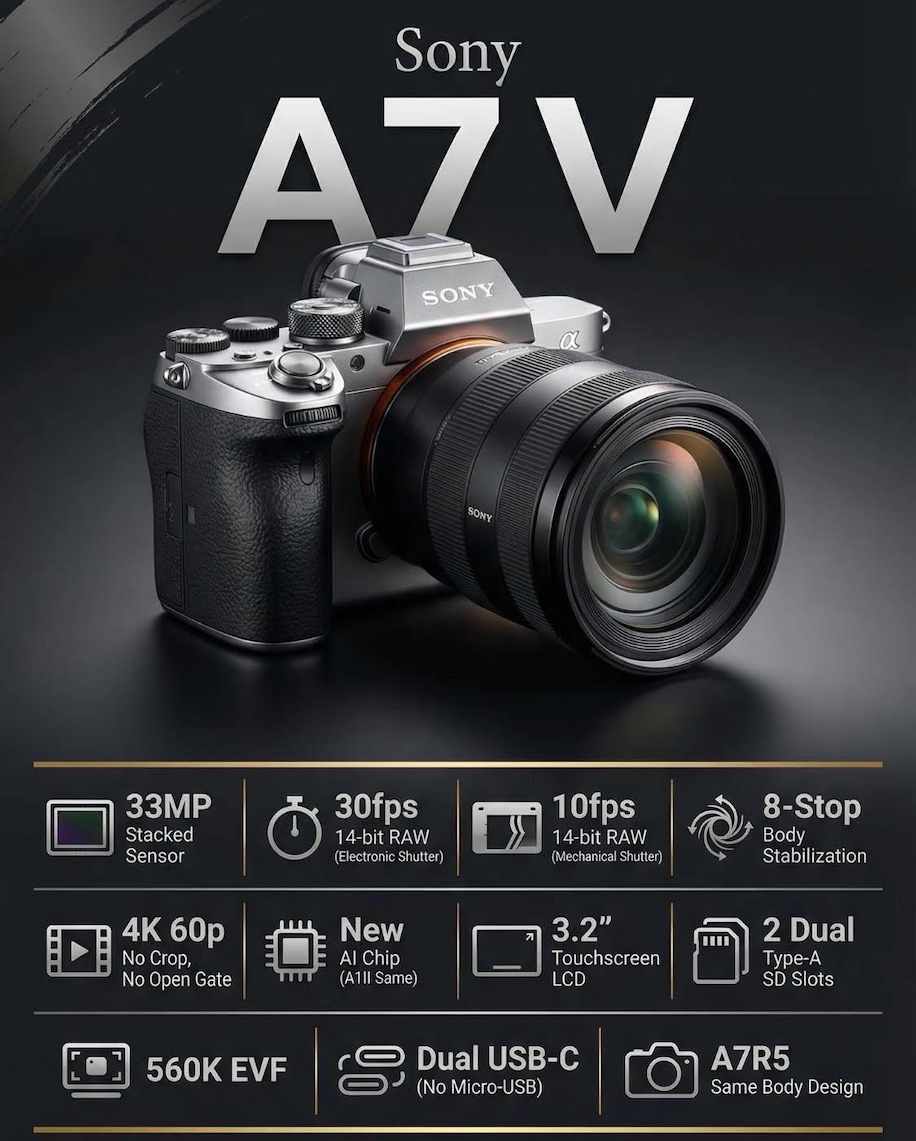
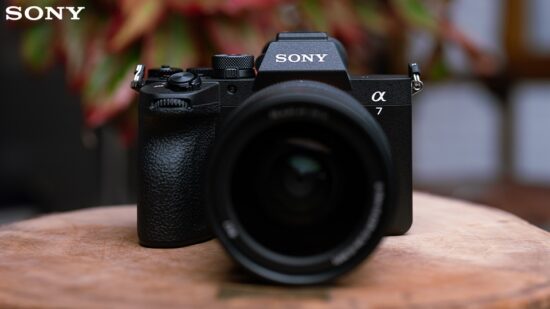
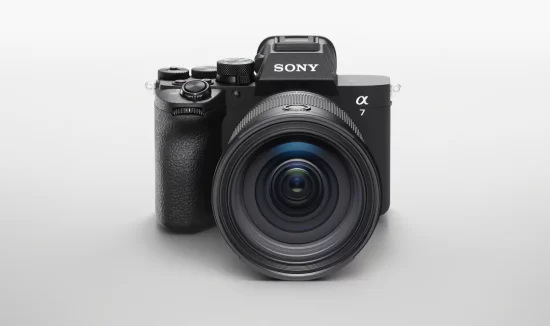
The new Sony A7 V maintains the 33 MP sensor, which is now stacked with integrated AI, blackout-free bursts at 30 fps, and 1-second pre-capture. It also offers significantly stronger stabilisation (7.5 stops vs the A7 IV’s 5.5), and filmmakers will love the uncropped 4K60 and 4K120 in Super 35, plus LUT import and smarter auto white balance. The new model also has a sharper, articulating screen, a better grip, quieter shutter control, and longer battery life.
33MP stacked sensor with integrated AI
Improved autofocusing speed and accuracy
Enhanced 7.5 stops of image stabilisation
Blackout-free shooting at up to 30fps
Full-frame 4K60 video, 4K120 in Super 35
Sharper, articulating LCD screen
Full details after the break:
AI-Powered Performance Boosts
The Alpha 7 V integrates the AI processing unit into the BIONZ XR2 engine, delivering a substantial leap in autofocus speed, accuracy, and reliability. The Alpha 7 V has up to 30% improvement4 in Real-time Recognition AF that instantly recognizes targeted subjects and continues to capture them with high precision. With 759 phase-detection points and up to 94% frame coverage, the camera ensures precise subject tracking across nearly the entire image area, even in challenging low-light conditions down to EV -4.05. High-resolution RAW processing is now supported through Imaging Edge Desktop application6 for unparalleled post-production flexibility.
No compromise High-speed Continuous Shooting
The combination of a partially stacked Exmor RS CMOS image sensor with approximately 4.5 times faster7 readout speed increased and the BIONZ XR2 processor results in high image quality with minimal distortion. Additionally, high-precision tracking with up to 60 times AF/AE calculations per second and blackout-free continuous shooting up to 30 fps8 with AF/AE tracking9 ensures no missed opportunities even with fast-moving subjects moving in complex patterns, such as in wildlife and sports photography. Even during 14-bit RAW shooting, it achieves high-speed continuous shooting at up to 30 fps with AF/AE tracking. The Pre-Capture function10, which can record up to 1 second before the shutter is pressed, captures decisive moments even with subjects whose movements are difficult to predict, such as pets and sports.
Outstanding Still Image Performance
Engineered for maximum creative control, the Alpha 7 V achieves up to 16 stops of dynamic range11, ensuring remarkable tonal detail across highlights and shadows. Even in scenes with extreme contrast, it expresses natural and smooth gradations from dark to bright areas. The newly introduced AI-driven Auto White Balance (AWB) leverages advanced scene analysis for consistent color rendering and uses light source estimation through deep learning technology. By automatically identifying the light source in the shooting environment with high precision and adjusting to appropriate color tones, it enables natural and stable color reproduction, resulting in more faithful colors and reducing post-production workload.
Versatile Video Capabilities
Expanding creative possibilities for hybrid creators, the Alpha 7 V introduces additional 4K recording modes, including 7K oversampled 4K 60p recording12available in full-frame mode and 4K 120p13 recording in APS-C /Super 35mm mode, delivering rich, detailed footage with exceptional flexibility in editing. Full pixel readout without pixel binning enables highly detailed video recording, down to the finest details. The image stabilization features Dynamic Active Mode14, enabling smooth and stable video expression even when handheld. Users can enjoy high-quality video recording in a wide range of scenes, from vlogs and creative productions to capturing family memories. The camera also features an Auto Framing function that automatically maintains optimal composition of subjects during recording through AI-powered subject recognition. This enables stable composition video recording in various scenes. New in-camera noise reduction and improved internal mic functionality15 ensures high-quality audio recording by reducing steady background noises, minimizing interference, and maintaining natural sound.
Enhanced Operability and Usability
Designed with efficiency in mind, the Alpha 7 V offers Wi-Fi® 6E GHz compatibility16 for high-speed, stable wireless transmission, along with dual USB Type-C® ports for improved workflow and flexibility. Vertical format support and an adjustable electronic shutter sound make shooting adaptable across diverse environments. The 4-axis multi-angle monitor combines tilt and vari-angle design, offering unrestricted horizontal and vertical adjustment for greater shooting freedom. A better finger fit on the grip provides improved comfort, stability, and control during extended sessions.
Built for Reliability
The Alpha 7 V features upgraded power management and enhanced stamina performance, enabling longer shooting sessions without interruption. A new Monitor Low Bright mode extends battery life17 even further, while improved thermal management supports extended18 4K recording with uncompromised quality, approximately 630 shots when using the viewfinder, per CIPA standards.
FE 28-70mm f/3.5-5.6 OSS II – The All-Around Lens
Compact, lightweight, and engineered for speed, the FE 28-70mm f/3.5-5.6 OSS II is designed to fully leverage the continuous shooting19 capabilities of the Alpha 7 V sensor. When combined with compatible cameras, this new lens offers up to 120 fps AF/AE tracking20, continuous shooting, seamless body-lens coordinated image stabilization, AF available even during zooming, and built-in breathing compensation support. From dynamic action shots to fast-paced events or high-quality video capture, this lens delivers smooth, dependable responsiveness and flexibility.
Notes:
4 The 30% improvement is a value from Sony’s internal measurement comparing the eye recognition performance for human eye with the real-time Eye AF of the Alpha 7 IV. 5 AF-S, ISO 100 equivalent, F2.0 lens. 6 The latest version of Imaging Edge Desktop is required. Download Creators’ Cloud Web page. Network services, content, and operating system and software subject to terms and conditions and may be changed, interrupted or discontinued at any time and may require fees, registration and credit card information. 7 Compared to the Alpha 7 IV. Based on Sony measurement conditions. 8 When using the electronic shutter. [Hi+] continuous shooting mode. A software update may be required for some lenses. See Sony’s support web page for information on compatible lenses 9 When using electronic shutter, based on Sony measurement conditions. Continuous shooting speed may decrease depending on shooting conditions. When focus mode is set to AF-C, continuous shooting speed varies depending on the attached lens. For details, please check the lens compatibility information support page. 10 Still image shooting only. 11 Applicable only in mechanical shutter mode. 12 When [4K angle of view Priority] is ON. 13 When [4K Angle of View Priority] is ON. 14 Angle of view is reduced more than in Active Mode. Clear Image Zoom is not available when using Dynamic active Mode. Maximum ISO sensitivity is ISO25600. 15 The effectiveness of reducing lens power zoom noise varies depending on the type of lens used. Even with the setting turned on, it may take some time for the noise reduction function to take effect. 16 5 GHz/6 GHz communication may be restricted in some countries and regions. Requires compatible wireless network. 17 Actual performance varies based on settings, environmental conditions, and usage. 18 4K recording time @ 25 deg is approximately 90 min; 4K recording time @40deg is approximately 60 min. 19 Up to 30 fps AE/AF tracking. 20 For compatible cameras, please refer to the support information. 21 Paper material made from bamboo, sugarcane fibers, and post-consumer recycled paper. 22 Excluding materials used in coatings and adhesives.
When you use DPReview links to buy products, the site may earn a commission.
Sample gallery
This widget is not optimized for RSS feed readers. Please open this article's permalink in a browser to view this content.
Product photos: Mitchell Clark
The Sony a7 V is an enthusiast-tier camera with a new, full frame, 33MP 'partially stacked' CMOS sensor, with a focus on high burst rates, capable autofocus and a complete suite of video features.
Key Specifications
33MP full frame 'partially stacked' sensor
IBIS rated to 7.5EV in the center
AI-derived recognition for six subject types
"Blackout-free" continuous shooting at 30fps
Configurable pre-burst capture up to 1 second
3.2" tilting/fully-articulating display
Dual USB-C ports for power and data
4K 60p derived from 7K capture, 4K 120p with 1.5x crop
AI-based auto-framing in video
Sony says the a7 V will be available from late December 2025 at a recommended retail price of around $2899.
Like its predecessor, the a7 V features a 33MP sensor, but with extra readout circuitry to improve readout speeds (which were one of the a7 IV's weak points). We've seen this "partially stacked" technology in 24MP cameras like the Nikon Z6III and Panasonic S1II, but here it's being applied to a higher-resolution sensor.
Sony says this allows the a7 V to achieve much higher burst rates than its predecessor – 30 fps, up from 10 – and to do so with a full 14-bit readout, rather than requiring Sony's destructively lossy Raw compression. The maximum e-shutter speed has been increased to 1/16000 sec, too. The company also promises it won't have the same dynamic range reduction we saw with the Z6III, where increased read noise was evident if you pushed the shadows in post. Though we'll have to see if these claims are borne out in testing.
The IBIS system has also been upgraded, now stabilizing the sensor by 7.5EV, up from 5.5EV with the a7 IV.
New processor, new autofocus
The sensor is paired with a new "Bionz ZR2" processor, bringing Sony's most up-to-date autofocus system to the a7 line. While the previous camera had human and animal recognition, the a7 V gets the autofocus system found on most of Sony's other modern cameras, with support for recognizing six subject types, as well as a configurable 'Auto' mode.
The Subject Recognition: Auto mode can be fine-tuned so that it only looks for the types of subject you expect to encounter. You can also select how specific the focus is (eg whether it looks for birds' eyes)
The Human / Face / Eye recognition is significantly upgraded from the previous camera, with the a7 V trained to recognize humans in all sorts of different positions, so that it continues to track the same person and re-finds their face faster, even if they are partially obscured.
The camera also gains a few new focus area settings, and Sony says it performs autofocus calculations 60 times per second. (It hasn't shared the a7 IV's rate, but says the a1 II does 120 calculations per second.)
The processor is an update to the one found in Sony's earlier cameras, such as the a1 II, a7R V and a6700, which paired their image processors with an "AI" coprocessor to handle autofocusing duties. Now, both functions are bundled onto one chip. Rather than providing for new features, this seems to be a play to make the system more efficient when doing the same tasks.
New Raw format
In among the new features, Sony says there's a new, 'lightweight' Raw system. We weren't given any more information than this, and there isn't any third-party support for them, yet. The only thing we can say is that they end up being a similar size to Sony's old, damagingly lossy Raw format, but hopefully without the potential pitfalls.
AI-powered features
Apart from autofocus, the new processor allows for several other features that are based on complex algorithms created by machine learning. The first is Auto Framing: a video mode that crops in and then follows your subject around the frame. This lets you set up a wide-angle shot, then have the camera pan around the scene to make it look like you had a camera operator. The feature offers three levels of crop and includes options to show the wide shot first before punching in shortly after your subject enters the frame.
There's also a framing stabilizer option that uses the digital video stabilization to not only move a crop within the sensor to counteract shake, but also to maintain your subject's position in the frame (either centrally or in a position you've defined). In both cases, the video is then upscaled to your chosen resolution.
Pre-burst capture
The a7 V gains the pre-burst capture system that first appeared in the a9 III. This lets you capture images for up to one second between the time you initiate AF and the time you fully press the shutter button. You get quite fine-grained control over the period of time before the full shutter press that gets retained. 1 second is the maximum, 0.03sec (i.e., 1 frame at the camera's maximum 30fps) is the minimum, so you can tune it to match your response time, rather than always capturing a full second's worth of images prior to full-press.
Despite the minimum duration being based on 30fps shooting, you can use pre-burst with any of the camera's shooting rates.
A video upgrade
The faster sensor lets the a7 V capture most of its video modes at up to twice the framerates its predecessor could deliver. It also gains the auto-framing and framing stabilizer modes discussed above.
There are a few other nice-to-haves, too, such as the option to upload your own LUTs to let you preview the scene with your intended grading. The camera can also embed the LUT alongside your footage, so that it's also available to whoever's editing the project. However, unlike the FX series cameras, there's no option to simply burn the LUT onto your video.
In context
The a7 V lands in the most competitive part of the market: between the out-and-out pro models and the somewhat pared-back entry-level models. This puts it up against some very good opposition: the recently-released Canon EOS R6 III, the recently firmware-boosted Panasonic S1II and Nikon's Z6III.
We don't have room to compare all five here, so we're going to include the more expensive Panasonic S1II here, as it's built around a similar sensor to the Nikon Z6III but gets a bit more out of it, in terms of image quality, video and speed. We'll include more about the Nikon in a follow-up article, soon.
The table works as a striking illustration of just how far behind the latest generation of cameras the a7 IV was, a situation the a7 V has mostly rectified. Sony's E-mount also remains a leader in terms of openness and the availability of a wide range of first and third-party lenses, though it's worth noting that several big players have recently promised to start producing options for L-mount. Sony also only allows third-party lenses to continuously autofocus at 15fps and below, a limitation that wasn't a factor on the a7 IV, but that a7 V users may bump up against.
Other companies are also offering more video options than Sony; both the Canon EOS R6 III and Panasonic S1II have modes for open-gate recording, DCI 4K and internal Raw video, all of which the a7 V lacks. Sony also hasn't implemented exposure assistance tools such as a waveform monitor or false color overlay, though it has AI tricks that Canon and Panasonic don't offer.
Body and handling
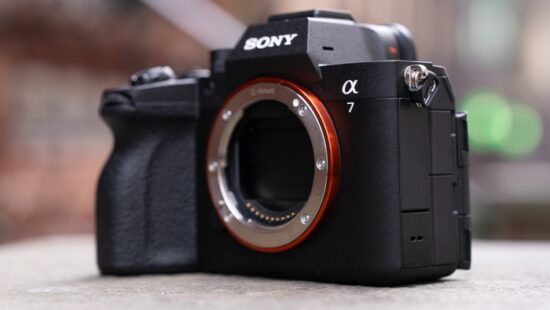
The a7 V uses an updated version of the body from the a7 IV. This means it has two main command dials, a toggle-lockable exposure comp dial on its shoulder and a third, fiddly command dial on its rear plate. However you wish to shoot, the a7 V can be set up to put the parameters you care about at your fingertips.
The front grip has been redesigned to make it feel more comfortable, though it doesn't gain the tilted-forward shutter button design that the company's pro-grade a9 III and a1 II benefit from.
We're still not great fans of the new grip: it's large enough, but the two of us shooting with the camera both found it dug into our fingers a little. This isn't helped by the unyielding grip texture on the camera that does nothing to cushion the hand.
Menus
The a7 V uses Sony's latest generation menus, which are certainly an improvement on the ones used in earlier models. They definitely have their foibles still, though.
The a7 V uses Sony's newer menu system, which represented a big step forward from the a7 III. It's been updated slightly from the previous model through the addition of a Home/Status Panel screen at the top of the menu. We're not fans, as it's easy to navigate away from by mistake (not ideal for quick settings changes), and it can get in the way of reaching the actual menus. The ability to minimize it as you navigate to the left-hand tabs serves no obvious purpose, beyond reinforcing the sense that it's a potentially good idea shoehorned into a context where it doesn't quite fit.
As with any menu system, you can learn it in time, or use the My Menu system and Fn menu to circumvent the need. But the a7 V's very high level of customization comes with the price of a long, complex menu frequently featuring an odly trunctd nmng systm.
EVF / rear screen
The a7 V uses the same 3.69M dot viewfinder as its predecessor, with the optics giving 0.78x magnification.
It gains a tilting cradle on which its slightly larger, fully articulated rear screen is mounted. This means it can be tilted up or down, close to the back of the camera for waist-level or overhead stills shooting as well as flipping out to the side for videos or selfies. The added movement also lets you move the screen away from the camera, reducing the risk of the screen fouling your cables when you flip it out. The new panel has around 2.1M dots, giving around a 1024 x 682px resolution.
Flipping the screen out over-rides the viewfinder's eye sensor by default, so the rear screen won't black-out if you bring the camera too close to your body when working at waist level. We had occasional issues getting the finder to work when the screen was re-stowed, though (closing the screen seems to put the camera to sleep).
USB ports
The a7 V becomes the second camera we've encountered to have two USB-C ports: one for high-speed data transfer, one for charging, using the USB-PD standard. It's worth remembering which is which: the upper port can transfer files at up to 10Gbps, the lower one is around one twentieth of this speed.
It's perhaps noteworthy that many recent Sony cameras had retained a USB Micro B socket alongside their USB-C data port, to maintain compatibility with the company's "Multi Terminal" accessories. The second slot on the a7 V appears to essentially be a continuation of this USB 2.0 socket in a new shape.
Battery
The a7 V uses the same NP-FZ100 battery that the a7 series has used for several generations, now. It's a fairly substantial 16.4Wh unit that powers the camera to a rating of 750 shots per charge if you rely on the rear screen and 630 shots per charge if you use the viewfinder.
These are both impressive figures for a camera in this class, especially given that the CIPA-defined tests tend to significantly underestimate the number of shots most people find they actually get. Everyone's usage differs, of course, but so long as you don't spend lots of your time reviewing the images you just shot, it's not unusual to get double the rated number of shots.
Video
The Sony a7 V records full-width UHD 4K footage at up to 60p, downsampled from 7K capture, and also offers 4K 120p recording from an APS-C-sized region of the sensor.
The camera can also use the sensor's extra resolution to power its AI Auto Framing mode, which will recognize a human in the scene and crop in on them, like a camera operator might if they were zooming in and panning around to keep a subject in frame. You can configure how tight you want the framing to be and how quickly you want the camera to move the frame to keep up with the subject. Similarly, the highest tier of digital stabilization also has a 'Framing Stabilizer' option, which aims to keep your chosen composition locked onto a selected subject, even while the camera is moving.
There's also a slight caveat to the full-width 4K 60p mode; to actually get full-width recording, you have to turn on a mode called Angle of View Priority, which Sony says turns off in-camera noise reduction. The company claims it doesn't affect dynamic range or oversampling, but we'll have to test it out more once we have a production unit.
Sony includes its S-Log3 and S-Cinetone color modes in the a7 V. The former is designed to capture as much dynamic range as possible, but will require color grading before delivery, while the latter is designed to have a subtle, movie-like appearance that's flat enough to provide a little editing latitude.
Recording Modes
Compared to its competitors, the a7 V actually has relatively few recording modes, since it only records compressed, 16:9 video. However, it offers a few choices of codecs and compression types, which you can choose between depending on what you're shooting and how capable your editing computer is.
Resolution
Rates
Crop
Compression Type
3840 x 2160
23.98, 25, 30, 60*
1.0x
H.265 Long-GOP H.264 Long-GOP H.264 All-I
120
1.5x
1920 x 1080
23.98, 25, 30, 60, 120, 240
1.0x
Sony's menus for choosing your recording mode aren't the nicest to navigate, but they get the job done. You start by choosing your file format to determine your resolution and compression, and which are named using Sony's somewhat cryptic branding (XAVC HS 4K for 4K H.265, XAVC S-I 4K for 4K H.264 All-I, etc). Then, you can go into a separate menu to choose your frame rate and bit rate/depth and chroma subsampling settings.
*1.0 crop only with Angle of View Priority on
Rolling shutter
As with other partially stacked sensors we've seen, the a7 V manages to get excellent rolling shutter rates for video. In 4K/24, it reads out the full-width of the sensor in 14.5ms, with similar results for its 4K/60 modes. The 4K/120 mode with its APS-C crop is, obviously, much faster, reading out in 6.9ms.
Temperature limits
While the a7 V doesn't have a fan, it has the graphite heatsink introduced with the a7S III built into the IBIS unit for better thermal performance in the camera's more demanding video modes. At roughly room temperature (20°C, 68°F), the company says you can expect to get around 90 minutes of recording time at 4K/60. At a torturous 41°C (105°F), the company claims it should still be able to manage up to 60 minutes of 4K/60. Though it doesn't specify, we assume these figures are for indirect heat and with the overheat warnings relaxed.
Initial assessment
by Richard Butler
The a7 V should mean no Sony user need look jealously at other brands. But the reverse is also likely to be true.
The Sony a7 V looks like a hugely capable all-rounder, promising high resolution for its class, paired with fast shooting, the latest AF features and the ability to shoot fast, smooth video. It represents an appreciable step forward for Sony shooters, and perhaps it needed to.
Mitchell's take
"The a7 V fills a gap in Sony's lineup; it's had a camera that's good at video, a camera excellent at stills, but the only one that really did both well cost $7000. Now, you can get a genuine hybrid priced for mortals." – Mitchell Clark
The a7 IV was the first mid-range full-frame camera to push beyond 24MP, but this somewhat undercut the video, where any gain in detail was offset by levels of rolling shutter higher than its preexisting rivals. And while, back in 2021, you could fairly confidently address the impossibly complex question: "which of these models has the best autofocus" with the simple answer: "the Sony," much has changed since then.
In the four years since its launch, the rival offerings from Canon and Nikon have caught up in term of generic subject tracking, and moved ahead in terms of the range of subjects they recognize. Both brands have also made big advances in video, offering faster speeds, smoother readout and Raw video capture. Canon's recent EOS R6 III finally matched the a7 IV's remaining standout quality: photo resolution.
Sony FE 35mm F1.4 | F1.4 | 1/1000sec | ISO 100
Photo: Mitchell Clark
The a7 V moves the series forward in several ways. It maintains the resolution of its predecessor but adds a lot more speed. We'll need to confirm Sony's claims that there are no image quality costs to its move to a faster, 'partially stacked' CMOS sensor, but it's certainly not impossible, given what Panasonic achieved with the S1 II. This speed is backed up by the arrival of the company's latest subject recognition modes, along with a tunable Auto subject mode to make it easy to make the most of them. All of which should be welcomed by Sony stills shooters, because it'll only expand the range of photographic scenarios at which the a7 V should excel.
E-mount video shooters also gain some significant improvements. Frame rates and rolling shutter performance are given a boost by the faster sensor and processor, and the a7 V gains the clever auto-cropping mode from the full-frame ZV-E1 vlogging camera, which should be good for single-person projects. These improvements, supported by good battery life and promises of decent thermal performance make should make the a7 V's video competitive with its peers.
It's worth noting, though, that options such as open gate shooting, native resolution video and internal Raw capture that are becoming common elsewhere aren't present here. Maybe Sony doesn't believe enough mid-market hybrid shooters are going to need these features, or perhaps they're being saved for a future FX series camera. Either way, it feels like the a7 IV story all over again, with the a7 V looking competent, rather than excellent for video.
That's why I keep stressing the a7 V's appeal to existing Sony shooters, because while it looks to do pretty much everything very well, there's not a lot, beyond its impressive battery life, that you can point to that screams "it's better than its peers at..."
Maybe we're past the point at which each new camera reaches greater heights than the competition, but Sony's latest feels like a camera that clears the current bar, rather than raising it. The Sony a7 V looks like a hugely capable all-rounder, but that's likely to be more exciting to Sony users than to the wider market, because so do its peers.
Please do not reproduce any of these images on a website or any newsletter/magazine without prior permission (see our copyright page). We make the originals available for private users to download to their own machines for personal examination or printing (in conjunction with this review); we do so in good faith, so please don't abuse it.
Sample gallery
This widget is not optimized for RSS feed readers. Click here to open it in a new browser window / tab.
After careful consideration, healthy debate and a few heated arguments, we're proud to announce the winners of the 2025 DPReview Annual Awards.
While innovation in the camera industry is often a gradual process, the steady pace of advancement has yielded a diverse range of cameras and lenses this year. We've seen the expected upgrades to mainstream camera models, but also an array of fascinating niche offerings. On the lens side of things, the big camera makers continue to expand and strengthen their mirrorless-mount lineups, while emerging Chinese manufacturers push to challenge them on both price and quality.
Which is to say, it's been a difficult year to pick winners. But a fun one, too. Let us guide you through the products that stood out to us as award-worthy this year.
Like our favorite zoom lens from last year, Sigma's 17-40mm F1.8 DC helps push APS-C systems forward, letting you achieve the same depth of field that you would with a venerable F2.8 full frame lens. Despite its super-fast minimum aperture, it's a reasonable size, weight and price, and unlike Sigma's 18-35mm F1.8 DC HSM Art from 2013, modern cameras are fully capable of focusing with it, so you won't have to second-guess taking it out with you. We're also delighted to see that it has a physical aperture ring (or control ring on the RF mount version) and weather sealing, and that it's coming to a range of mounts, so (almost) any APS-C shooter can pick one up if it matches their shooting style.
Sony has been releasing some impressive lenses in the past few years, but few have been as attention-grabbing as the 50-150mm F2 GM. The combination of wide, constant aperture and telephoto zoom range isn't something we've seen before, at least not with this degree of optical quality. The result is sharp images with impressive levels of background separation, taken with a lens that doesn't ask you to give up the versatility of a zoom or to break your back carrying it around. Of course, something has to give; it's eye-wateringly expensive, but we're still excited to see what's possible at the highest end of optical engineering.
The Canon 45mm F1.2 STM isn't a great lens. In some regards, it's not radically different from what Nikon did last year with its 35mm and 50mm F1.4 lenses that cost around the same amount but are both sharper. But for Canon users, the ability to get their hands on a very fast normal prime for a sensible amount of money is groundbreaking. It's worth acknowledging that part of what makes it seem so special is that Canon limits what other options are available, but, like the 50mm F1.8 in the DSLR era, it allows a large number of Canon users to explore more of what their camera can do.
Sigma wasn't the only company to introduce a 35mm F1.2 lens this year, and the Nikon version appears to have the edge in terms of optical performance. But the Sigma is 25% shorter, 30% lighter and 45% less expensive and, for us, that makes up for the differences in bokeh rendering.
A super-fast 35mm isn't going to be to everyone's tastes, but if it's a focal length you like, it's a fabulous option to be able to turn to. It's been a great year for lenses, but ambitious lenses like the Sigma 35mm F1.2 II stand out.
The GFX100RF is such an audacious camera that it'd be hard not to give it kudos here. It's designed to be an everyday camera that's as compact as possible... while still being immaculately built and containing a 100MP medium format sensor. In good light, you can get stunning image quality with it (though you'll struggle a bit in lower light thanks to the lack of stabilization and relatively slow fixed lens), but that's not all the big sensor is for. The camera also encourages you to play with your frame, giving you direct controls over aspect ratio and digital zoom, which can dramatically alter the image, at the cost of absolute image quality. Sure, it makes a lot of compromises in the name of size and weight, despite still being relatively large and heavy, but it's such a singular offering that we can't help but appreciate it.
If we had an award for consistency, the GR series would be a contender for first place. Throughout the years, Ricoh has released new versions of its beloved street photography camera, making small changes each time and introducing new tech to keep it competitive. The GR IV is no exception to that, with a bigger battery, refined controls that let you change your most important settings one-handed and a sensor and lens combo that provides image quality unmatched by any other truly pocketable cameras. It's not perfect, but if you want a camera with a big sensor that you can carry around with you anywhere, there are few better options.
PowerShot may be one of the longest-running brands in digital photography, but the PowerShot V1 is Canon's first high-end vlogging compact. Built around a Type 1.4 sensor, similar to the G1 series, with a wide 16-50mm equiv. F2.8-4 lens, its announcement garnered significant attention. The V1 unashamedly prioritizes vlogging, delivering excellent 4K video and features like a built-in 3EV ND filter and Canon's C-Log3. Its controls aren't optimized for photography, making it more of a point-and-shoot than an enthusiast's compact, but it produces excellent images, and its ultra-wide-angle lens offers creative possibilities not found in other compacts, provided you don't expect it to handle like the G series.
As its name implies, the Fujifilm X-T30 III is an iterative upgrade to a camera that was, itself, an iterative upgrade, and it maintains its position as the least expensive SLR-shaped model in Fujifilm's lineup. The camera features Fujifilm's newest processor, subject recognition autofocus, and 4K/60p video, but a highlight is the dedicated Film Simulation dial. Putting one of Fujifilm's most popular features front and center, with direct hardware control, makes a lot of sense on an entry-level model. It offers a fun, creative way to engage with the camera, particularly for budding photographers experimenting with their own film recipes, at an accessible price. It also serves as a great small camera for travel or as a backup body for established Fujifilm users.
The EOS R6 III feels like an ambitious camera, in the sense that it seems like Canon was trying to match each of its competitors spec-for-spec. And while we're still working on fully testing it, we've seen enough to know that it's one of the most capable hybrid cameras out there, with its 33MP sensor providing great image quality and burst rates, while still being quick enough to offer open gate and full-width high-framerate 4K. Paired with Canon's excellent autofocus system, it's a camera that can handle almost anything you throw at it, at a price that's similar to its competitors.
The Nikon Z5II is a testament to just how spoiled we are when it comes to cameras these days. Ostensibly, it's Nikon's budget full frame option, and there are clear benefits to more upscale models. But in reality, it asks you to give up very little. It has IBIS, excellent ergonomics and controls, dual card slots, AI-derived subject recognition for autofocus, decent burst rates and preburst capture, good video specs... we could continue, but you get the point. Despite being launched as the fifth cheapest full frame mirrorless camera ever, we suspect most enthusiast photographers would have difficulty finding a situation in which the Z5II limits them. And in a year where seemingly everything got more expensive, we really have to appreciate a budget option that's only stingy with its compromises.
From the wrong angle, the Sony a1 Mark II can look like an overpriced EOS R5 II or Z8 competitor, but stand pitch-side with one and it's much more apparent that it's an EOS R1 and Z9 rival. Along with the lower-res, global shutter a9 III, this is an expression of the most advanced camera Sony can currently build. Which is to say that it's one of the most advanced cameras anyone can currently build. It's a camera that feels almost foolproof in its ability to support you when you need to get the shot. And if you're someone committed to, and familiar with, the Sony system, it's the best camera you can buy.
Fujifilm and Hasselblad revitalized the idea of medium format digital, with the introduction of 44x33mm sensored mirrorless cameras, back in 2016. But whereas Fujifilm's GFX system has increasingly stretched to video, Hasselblad has focused on photography.
The X2D II is built around HDR photography, delivering files that work as standard JPEGs on older equipment but with more lifelike rendering of light on newer, HDR displays, including the panel on the back of the camera. It also becomes the first XCD camera to offer continuous AF, backed by a LiDAR-based AF system borrowed from parent company DJI. It also benefits from a price cut during a period of inflation and trade disputes. The lenses are still quite expensive, but medium format is again looking thrilling like a proper two-horse race.
Honorable mention: Godox iT32/X5 modular flash system
After a fast prime lens, one of the best ways to get more light into your camera is to provide your own. However, the cost and complexity of flash photography can prompt beginners to focus their attention on 'available light' shooting.
Until recently, you would, at the very least, need to buy a remote flash and some kind of controller. This could easily mean hundreds of dollars for two strobes or a flash head and commander unit, if you wanted to use your brand's TTL flash metering system. Then having to spend a similar amount again if you shoot with more than one brand of camera.
Godox has solved all these issues: an affordable modular flash system where a single flash head can attach to one of six brand-specific on-camera bases. Those hot-shoe bases can work as a wireless trigger, so you can get off-camera lighting with just an iT32 flash and X5 transmitter set.
It builds on the work Godox has been doing in recent years, where it's made its on-camera flashes wirelessly compatible with one another, regardless of which brand each was programmed to work with. But, whereas you previously needed two flashguns if you had two systems, now you just need two ∼$20 X5 transmitters.
The iT32 has a rechargeable internal battery, so there's no faffing around with handfuls of half-dead AA batteries, removing yet another hurdle to taking control of your light.
Whatever you think of it – and we suspect part of that will come down to whether you've had a chance to really use one – the Sigma BF is a remarkably innovative camera. Don't let the re-use of the sensor from the six-year-old fp model fool you.
Because, while it's true that the Sigma BF is based around a very familiar sensor, it's also one of the most radical cameras to have been launched since the earliest days of digital. Look past the Braun-esque minimalism of the body and you'll find a genuine attempt to create a UI for modern digital photography. Sigma has clearly looked at which aspects of photography need to be easily accessible and which don't matter, rather than just adding a handful more menu items with each iteration. It's not going to appear on any sidelines or movie sets, but if you just want to take photos, it's refreshingly focused.
Then there's the use of control points that give artificial haptic feedback: making them feel like pressable buttons despite being fixed (think of the implications for weather sealing). But, above all of this, there's the implementation of true HDR photography using a format that people can actually access: the same JPEGs-with-gain-map approach that Google has adopted for its Pixel phones. This last feature alone would have got the BF onto the shortlist, but it's the combination of so much original thinking that takes the prize.
We've always appreciated the work that Sigma's done to let APS-C shooters get the most out of their cameras and, for a long time, the high point of that was the company's madly ambitious 18-35mm F1.8 DC HSM Art from 2013. It was a huge step up compared to an F2.8 zoom, but without being an unreasonable size or price. There was just the slight downside that DSLRs had tremendous difficulty focusing it, especially with off-center AF points. We weren't surprised when it developed a second career as an adapted lens for video on mirrorless cameras.
Twelve years later, and mirrorless is well enough established for Sigma to release a successor: the 17-40mm F1.8 DC Art, an updated version that stretches a touch wider, reaches a little further without spoiling the original concept. It's still sensibly small, still usably light and still aggressively priced (it's appreciably less expensive, in real terms, than the original). The difference is, it focuses really well on every format Sigma's been allowed to release it for, so Fujifilm, Sony and Canon APS-C users suddenly get the option to expand their cameras' capabilities.
This year has seen the release of some excellent mid-price full-framers, with the Panasonic S1 II and Canon EOS R6 III both raising the level of what can be expected from cameras in their class. But it's the more humble Nikon Z5II that stood out to us more because, while it's not quite as fast as the more expensive models and can't match them for video specs, it comes surprisingly close.
The Z5II, launched for $1700 and now selling for less than that, outperforms the Z6 II, which was Nikon's mid-range model until late last year. Unlike its predecessor, it's adept at both stills and video shooting and, unlike Canon's EOS R8, it offers in-body image stabilization. The ergonomics and handling are transposed almost directly from Nikon's other models, and there are no blatant segmentation plays such as imposing a smaller battery. With Nikon's latest AF system, it's a hugely capable all-rounder and, as we said in our review: very few of us truly need anything more.
Mt. Jefferson, a volcano in the Cascade Mountains, is illuminated at sunset near Sisters, Oregon, on November 18, 2025. I had my Olympus OM-1 with me when the sunset suddenly became very intense, and I managed to snap this photo in the brief time before the light faded away.
Photo: Dale Baskin
The DPReview community is full of talented photographers, and we want to showcase your best photos of 2025 on DPReview.
What was your top shot this year? Share one image you captured in 2025 and tell us about it. Make sure to tell us the story behind the photo in the caption and why you chose it as your photo of the year. Pick carefully – you can only submit one photo!
Submissions will open on Monday, December 8th, and you have until Sunday, December 14 (GMT) to submit entries. You can read the full rules on the 'Your best photo of 2025' challenge page.
Essential details: All entries must include a title and a caption that tells us the story behind the picture and why you chose it (minimum of 25 words). Please read the full rules before submitting your photo.
DPReview editors will review every photo you submit, and we'll publish our favorites in a slideshow on the DPReview homepage.
We're using our challenge system to host submissions, so other readers can also vote for your photo. User voting will inform DPReview Editors' picks, but will not select them. They are one factor in our evaluation.
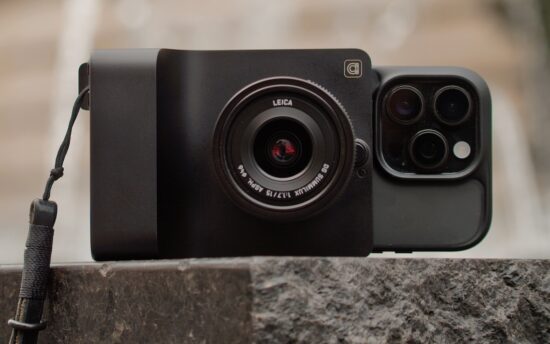
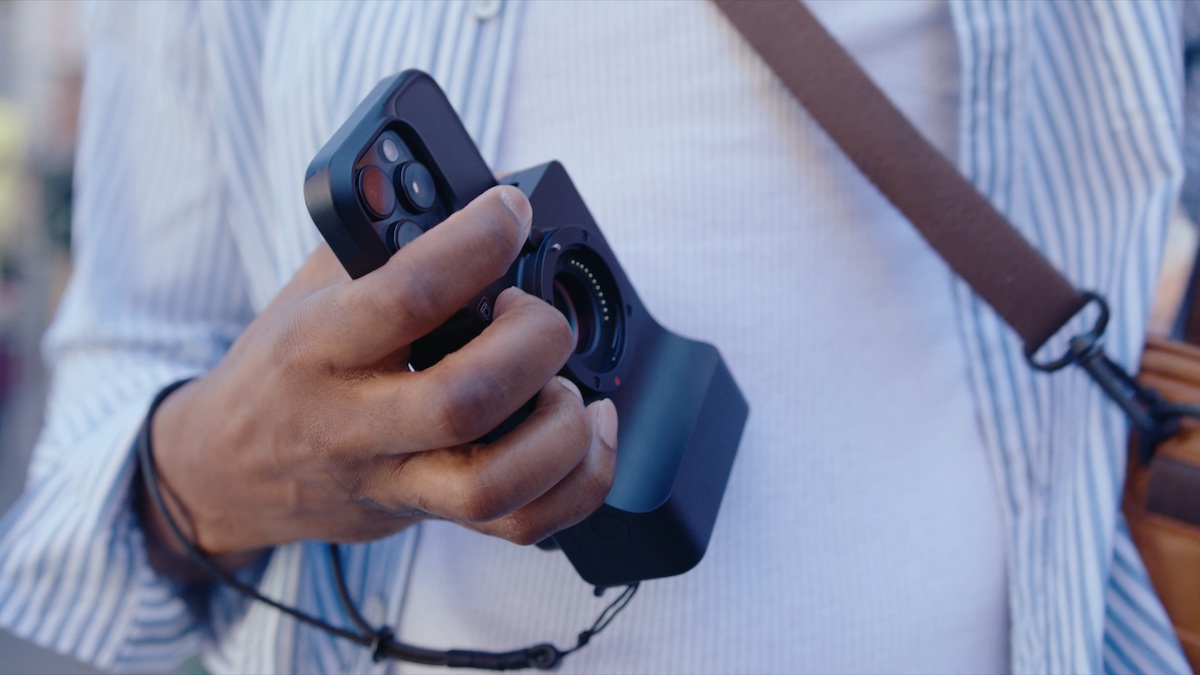
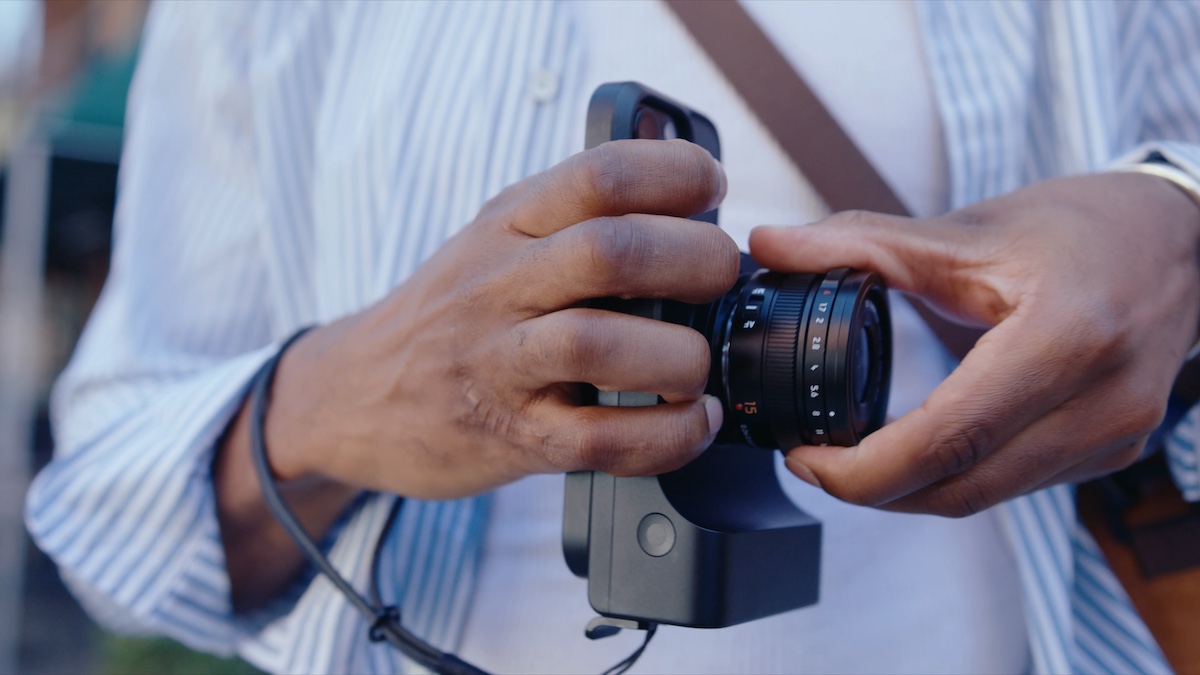
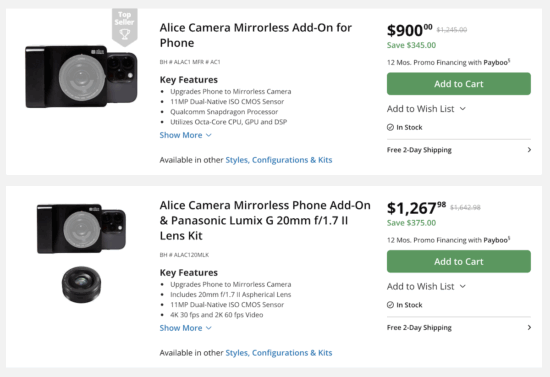
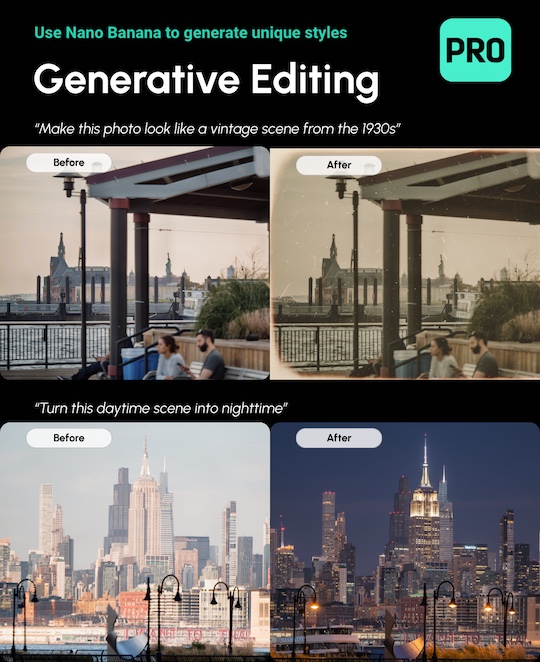
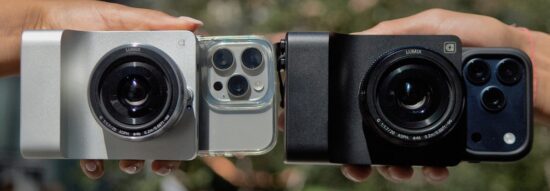
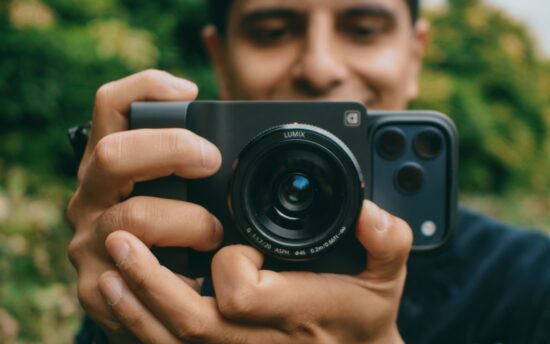
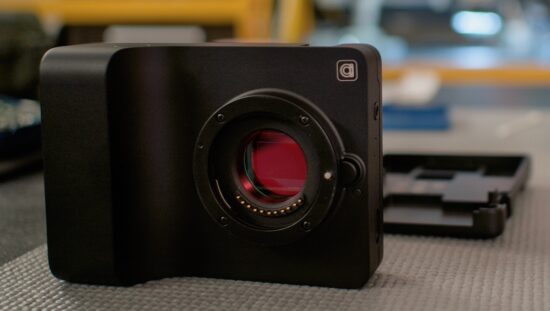
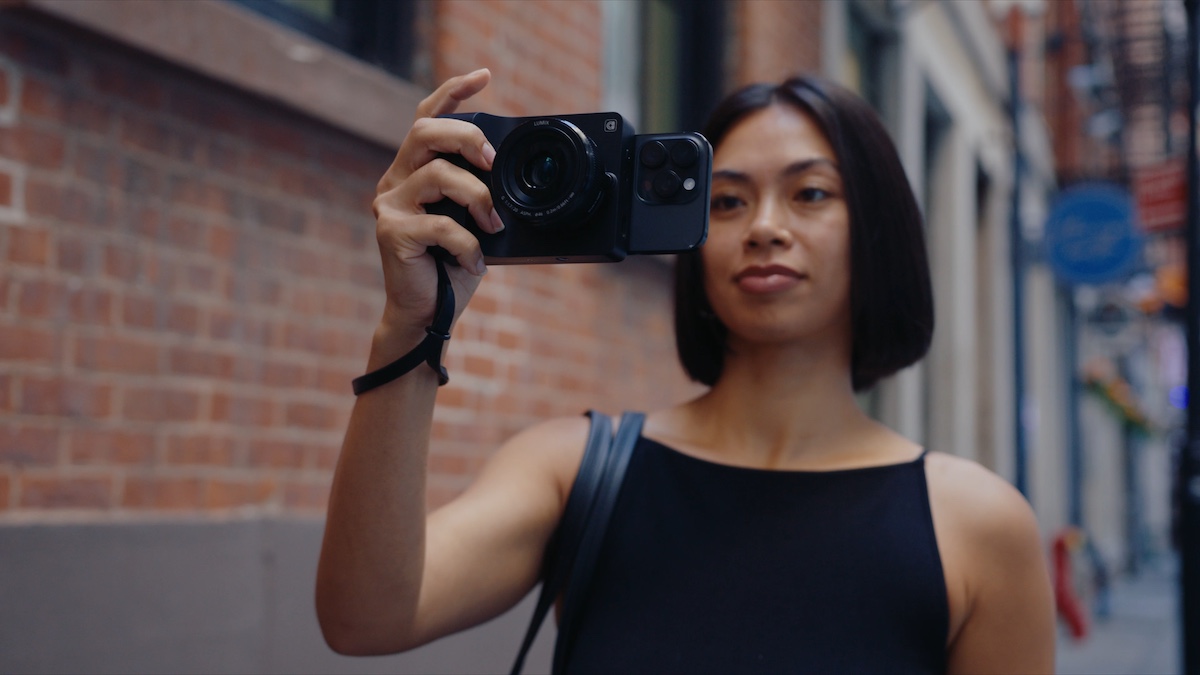
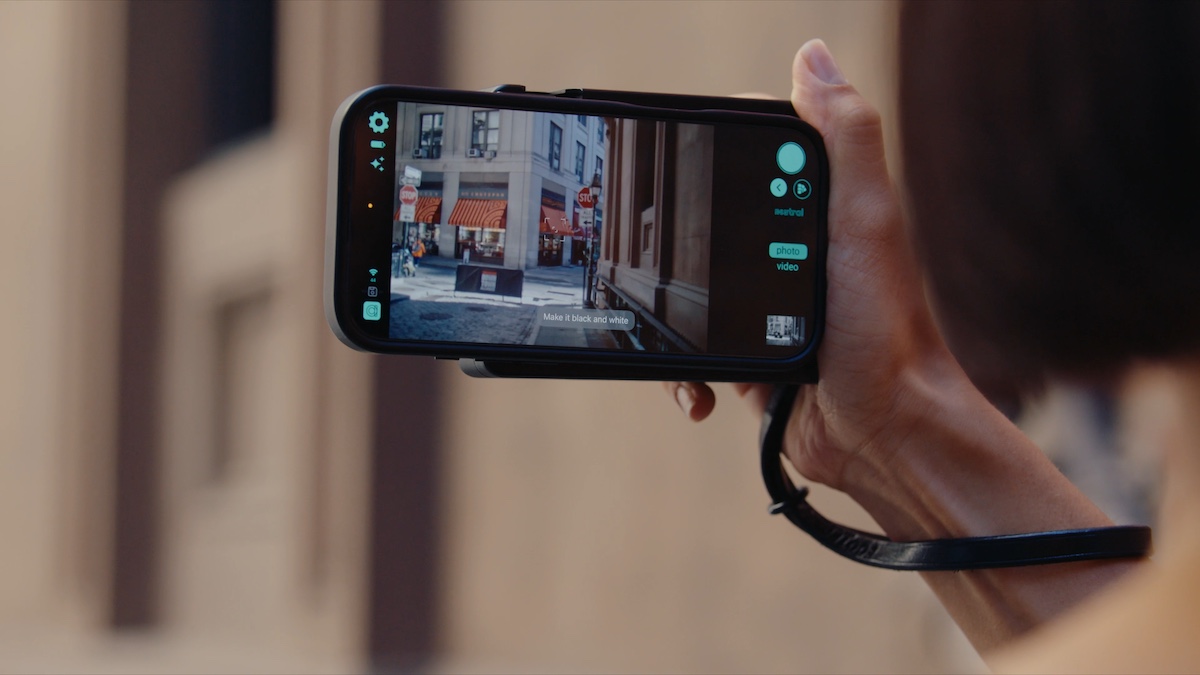
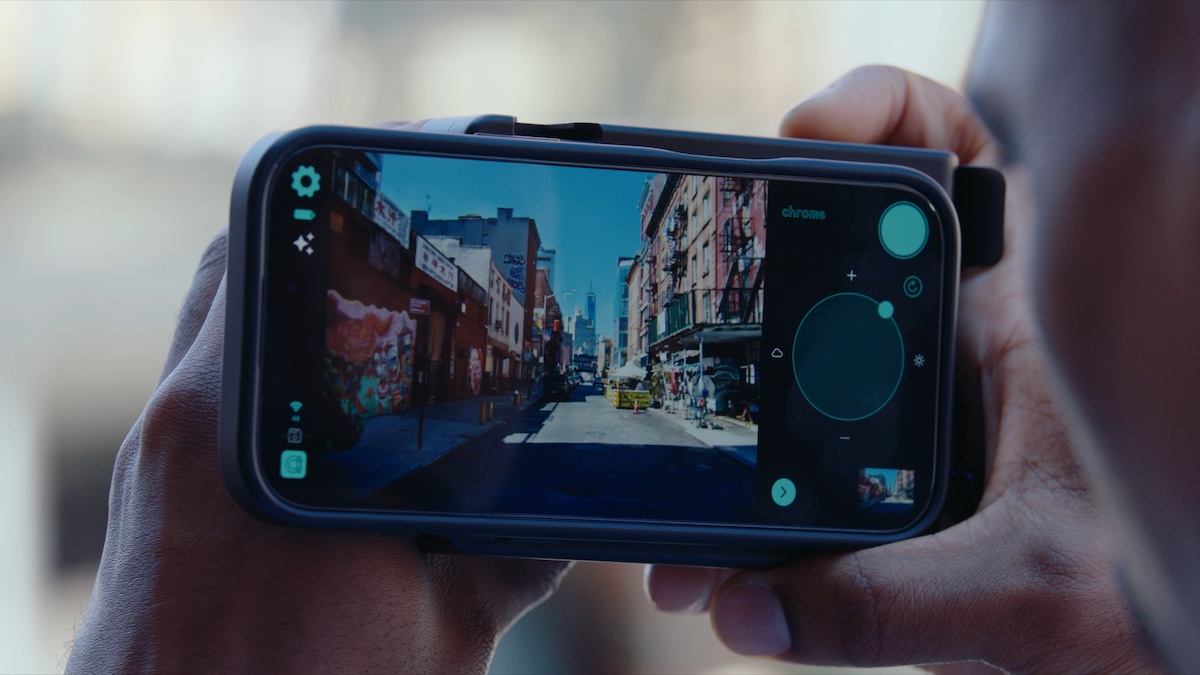
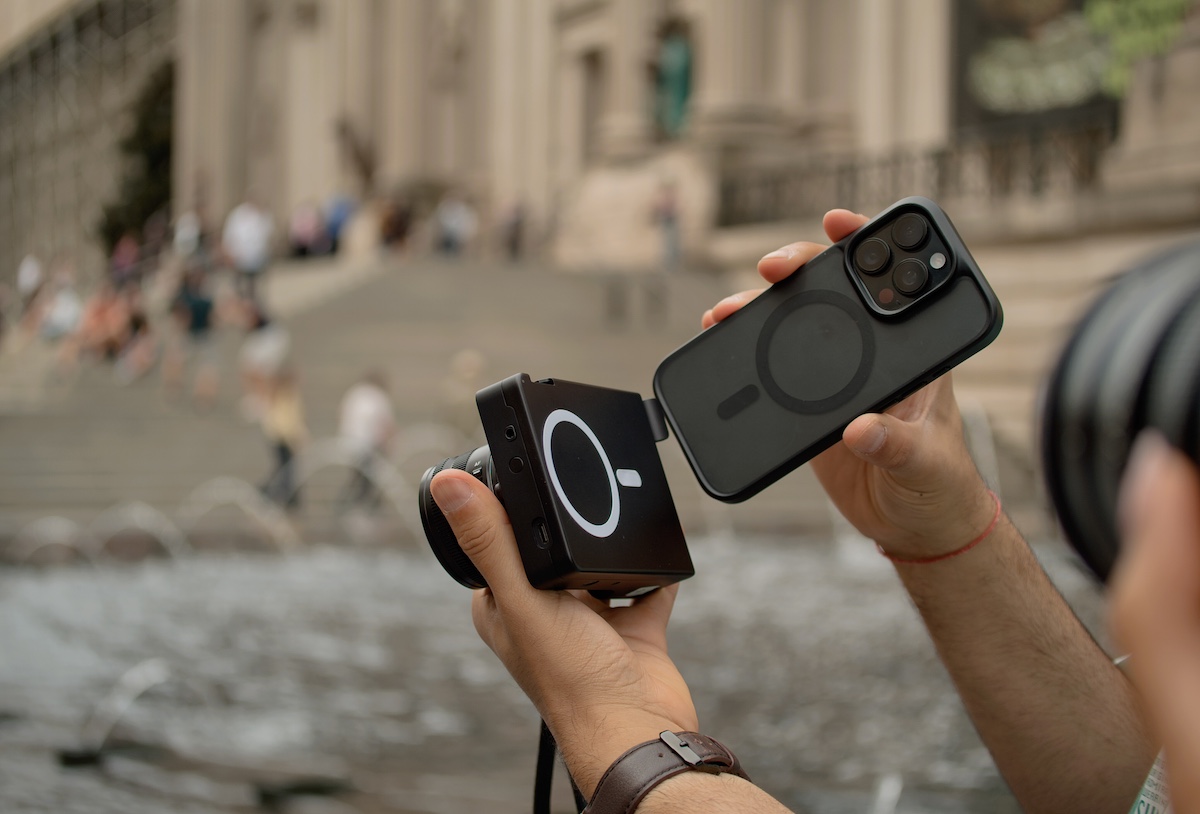
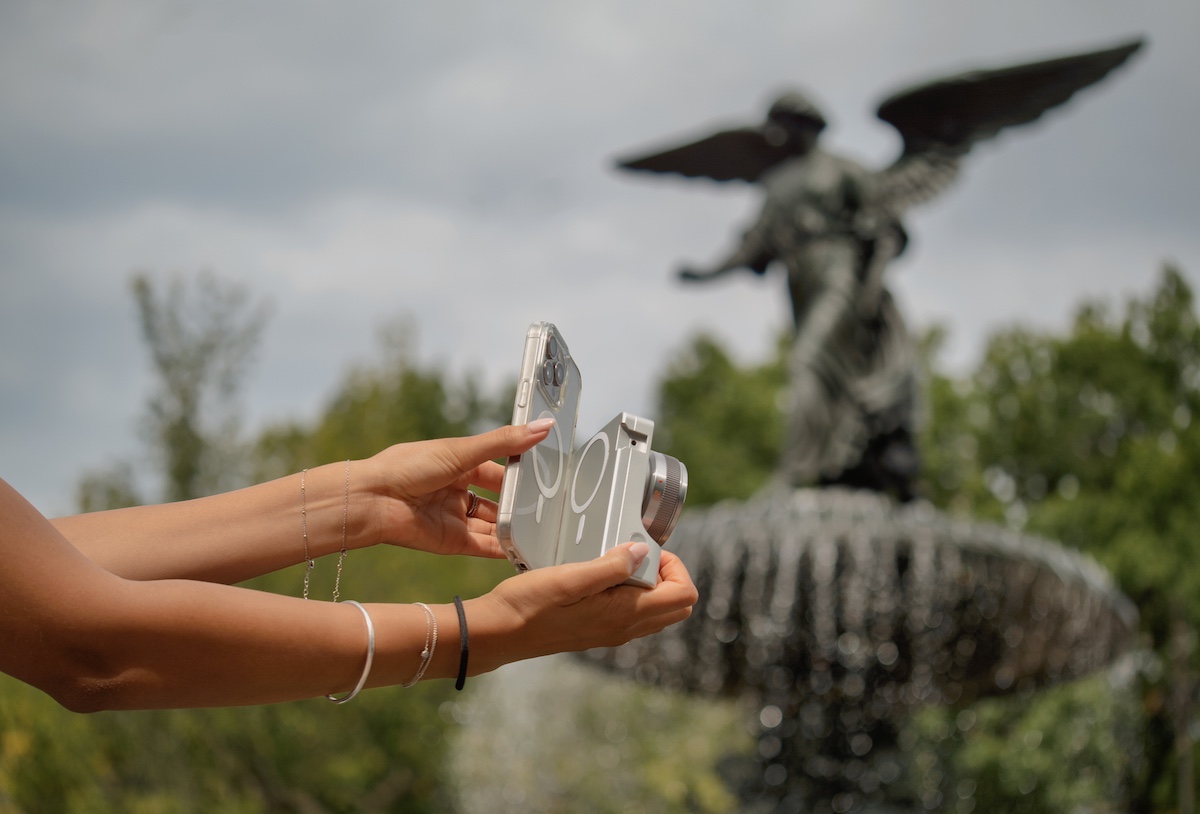
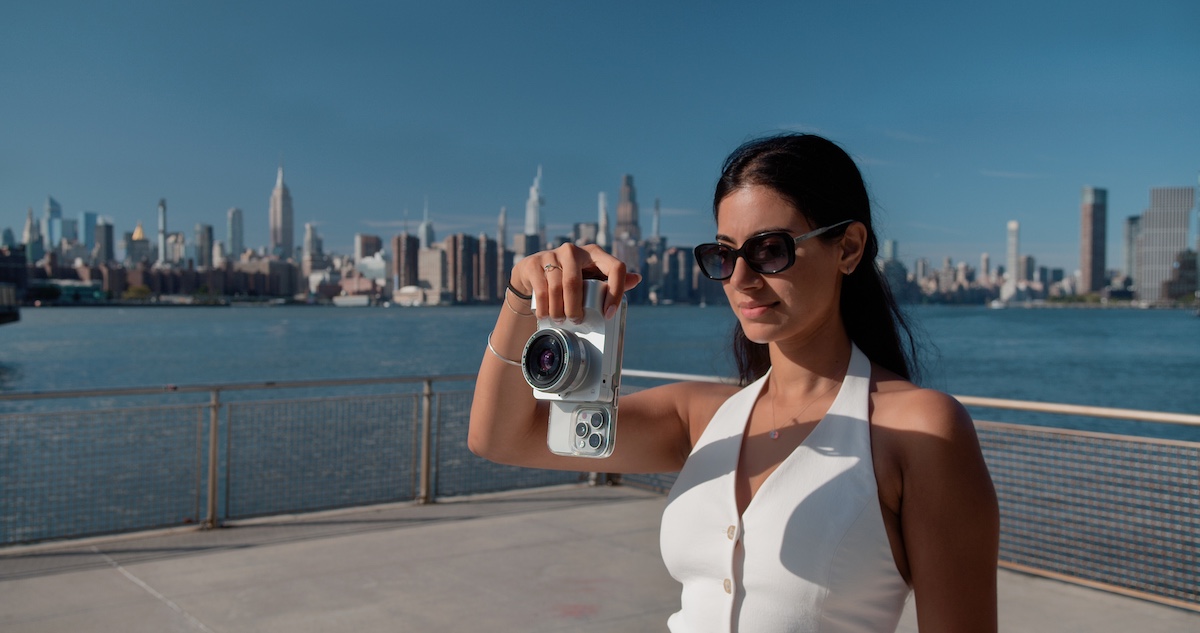
The Caira module (aka Alice Camera, previously reported here) connects to iPhones via MagSafe, and it’s the first mirrorless camera in the world to integrate Google’s “Nano Banana” generative AI model. All Kickstarter supporters will receive a free 6-month Caira Pro Generative Editing software subscription (priced at $7 per month, extendable to 9 months if the fundraising goals are met). The full press release can be found here. See also current listings at B&H Photo:
For this challenge, we asked you to share photos taken with compact, or fixed-lens, cameras, and wow, did you deliver! We've become accustomed to seeing outstanding photos in these challenges, but this month's entries were particularly impressive. One thing is clear: in the hands of talented photographers, a compact camera can be a powerful creative tool.
As usual, we were overwhelmed with great pictures – many more than we can present here. Our favorites, showcasing a diverse range of vision and talent, are presented in random order.
Photographer's statement: This photo was taken in a dark room. The tangerine was sitting on a mirror, illuminated by a flashlight positioned behind it. The "clockworks" were inserted to add interest.
Photographer's statement: Immediately after surfacing from scuba diving, I spotted this colorful boat. The wake from my ascent gives a dramatic front. Only when viewing on a large monitor did I spot the man in the water between the boat and me.
Photographer's statement: In May 2024, we spent a week in Tuscany, Italy. Upon arrival in Florence we took a stroll through the streets of the neighborhood of our hotel. All of a sudden, a beautiful scene materialized before my eyes. Luckily, the small Sony RX100VII was ready to shoot. And so I managed to take the picture.
Photographer's statement: I would never grab a photo during a performance, but when the curtain call took place, I grabbed my camera and made this quick frame at the Paris Opera House.
Photographer's statement: It was about -10 degrees F when I took this picture of my friend skiing in front of snow- and ice-blasted radio towers on top of our favorite local mountain to ski. We had climbed for about 90 minutes to this spot and only had moments before our sweat turned to ice.
Photographer's statement: Lower Antelope Canyon is generally dark and poses a challenge for any slow lens. However, this image surprised me, shot with a Type 1/2.3 point-and-shoot camera in auto mode and came out just perfect.
Photographer's statement: Long-tailed macaques are pretty widespread throughout Malaysia and are well adapted to humans. This one was located at the Batu Caves Hindu temple, posing beautifully while I took its photo.
Photographer's statement: On an evening stroll in Brussels, I saw this shoe polisher and his client on an enlarged plateau silhouetting against the setting sun. Just below the horizon and therefore not visible was the skyline of the lower part of Brussels.
Photographer's statement: Taken whilst on an exploratory caving expedition in Borneo in 2013 (to find, explore and survey new cave passages). The mist and formations were a good opportunity to try out a lightweight photography setup.
Photographer's statement: A photo taken during the Leica architecture at night workshop in Rotterdam, my very first experience of shooting with Leica. The image is the view from below the famous cubic houses and into the sky near Rotterdam Blaak station.
Photographer's statement: This was taken in Malmö, Sweden, a few days ago. I had just left my favorite film camera shop in town, Fotoaffären, when it suddenly started to snow for the first time this year. The scene seemed interesting, with the bright car lights cutting through the night and casting dark silhouettes against the snowfall. So I grabbed my camera, noticed the cyclist struggling to keep his balance, and took the shot.
Photographer's statement: I wanted to capture a single drop of water with a rainbow refracted in it to symbolize the importance of this seemingly abundant, but actually rare, vital resource for all life on earth.
Photographer's statement: Every day, I walk my dog in my neighborhood, Asokoro, in Abuja, the capital of Nigeria. One day, I saw this construction worker, and asked him to pose like a fighter.
Photographer's statement: A moment of reflection in the middle of a wedding ceremony taking place in the Jvari Monastery in the old Georgian capital of Mtsketa. I like the light of the candles on the woman's face. I like her extended fingers as she holds the candle. I like the calm demeanor of the man behind the candle stand. I like the icon of St Nino, almost seeming to float in the air. I even like the blown-out brightness of the doorway, though there was a time when it bothered me.
Photographer's statement: Delicate Greta oto butterfly displaying transparent wings that blend perfectly with the surroundings. Its subtle form and gentle posture emphasize natural camouflage, creating a soft, nearly invisible presence in the scene.
Photographer's statement: Laguna Parón, in Peru, 4155m (13,600 ft) above sea level. In the background, in the center, the imposing Piramide de Garcisalo peak. After a few hours of van travel along the narrow and winding gravel roads of the Cordillera Blanca, we arrived at the trailhead. From the parking lot, we already had this spectacular view. It was May 2019. After taking the photo, my favorite of the whole trip, we climbed the mountain to the right to see the landscape from another point of view. The climb was strenuous, as there were many large and loose rocks. Every step was worth it.
Equipment: Sony Cyber-shot DSC-RX10
Three elegant ladies waiting for a lift in front of a mural
Photographer's statement: The decisive moment shows up without warning and never comes back. Location: Lyon, France. This painting is part of a group of murals called "le Mur du Cinéma" (the Cinema Wall). It's about the brothers Auguste and Louis Lumière, who were living in Lyon and invented the movie camera. It shows the first movie theater: Le Cinématographe, where you could watch "animated photographs". Since then, this mural has been vandalized by taggers.
Photographer's statement: The photo was taken at the annual post-Tour criterium, which always takes place on the first Tuesday after the Tour de France and is attended by a few of the top riders from that race. I had an accreditation for this event too, but it wasn't a paid assignment for me. So there I was with my Leica Q3 43 among the other press photographers with their zoom lenses. My intention that day was to get as close to the action as possible and capture the speed by using long shutter speeds and following the action. All this, of course, without posing a danger to the cyclists. Virtually nothing is in focus in this photo. But I love the colors and the composition and framing of the cyclist in the wheel of the other cyclist.
Photographer's statement: While about to enter an exhibit at the Art Gallery of Ontario, I saw a young child skipping through the atrium. I had to lean over the railing to capture it with my Fuji X100T, as the fixed lens didn't allow for any zooming. The scene reminded me of something that might be captured by Cartier-Bresson.
Photographer's statement: I was swimming at the 40-foot at low tide and saw this group taking turns at diving in from the rocks. It took a few attempts to get one of them in midair.
If you're a beginner photographer who spends any time on the internet, chances are you've been bombarded with content saying that you need to learn Manual mode immediately. It's a frequent refrain that "real" photographers exclusively shoot with manual controls, even from day one. While Manual mode certainly has its advantages and is something to work toward, Auto mode doesn't need to be so vilified. There's a time and a place for it, especially as you learn.
Auto is a good starting point
Photo: Abby Ferguson
Photography can be an overwhelming activity when you're new. There's a lot to balance and consider when managing technical aspects such as exposure and stylistic choices like depth of field, motion and composition. While some people learn best by throwing themselves into the deep end, that's not the case for everyone. That's where Auto mode comes into play.
You can focus your energy on learning light, composition, timing and storytelling.
In Auto mode, your camera automatically sets core settings based on the scene you're photographing, which takes some of the pressure off as you learn. Instead of having to juggle exposure right from the start, you can focus your energy on learning light, composition, timing and storytelling. After all, each of those aspects have a significant impact on how successful or impactful your image is. If you dedicate yourself to improving those right away, you'll be off to a great start on your photographic journey.
Automatic mode can also help you learn about manual controls, provided you pay attention. If you notice that your portraits don’t have the blurred background you see in others’ photos, that’s a clue that depth of field and aperture are topics to dig into next. Likewise, if you're consistently getting blurry results when photographing action, that's a sign you may want to dedicate time to learning about shutter speed. Auto mode doesn't just take the guesswork out of exposing images; it can highlight specific knowledge gaps you may want to fill when you're ready to learn about manual controls.
Auto mode can make the difference between missing out or taking the photo.
On the practical side, there are times when getting the shot is the most important thing. Auto mode can make the difference between missing out because you're fiddling with settings or taking the photo. Using Auto (especially as you learn) for everyday snapshots, travel and fast-moving moments can help ensure that you have a photo of the moment. If the prospect of using your camera in Manual mode is intimidating, spend time regularly using Auto mode first, and work your way up to manual controls over time.
Yes, manual mode is important
Photo: Abby Ferguson
While Auto mode is useful, photographers actively seeking to grow will eventually encounter limitations and frustrations with it. That's because Auto doesn't know what you want in terms of depth of field (how much of a scene is in focus) or what you're trying to achieve with motion. It may also struggle in tricky lighting conditions, such as backlighting and night scenes, leaving you with disappointing photos.
At a certain point, as the photographer, you'll want to take creative control.
At a certain point, as the photographer, you'll want to take creative control, and learning the impact of the different camera settings unlocks just that. There are other modes in between full Auto and Manual that can also help you learn while taking some of the pressure off: Aperture Priority and Shutter Priority are all beneficial tools for photographers of all levels.
Choosing an aperture and shutter speed based on the visual impact of each will help you create an image that more closely aligns with your vision and adds to the photograph's impact. Ultimately, Manual mode gives you the most control and can help you prioritize proper exposure where you want it in challenging light, such as keeping your subject bright enough even if the light is behind them.
Learning how (and why) to control aperture, shutter speed and ISO can be tricky, but it just takes time. Each has an impact on your image, so it takes balancing all three to achieve what you want.
Use your resources
At the end of the day, Auto mode is a tool, just like any of the other modes. It isn't "cheating" or a badge of ineptitude if you use Auto. It can be a useful resource for beginner photographers, helping to keep the pressure off as you learn other aspects of photography. Plus, photography doesn't always need to be so serious; sometimes it's okay to turn your camera to Auto and just have fun.
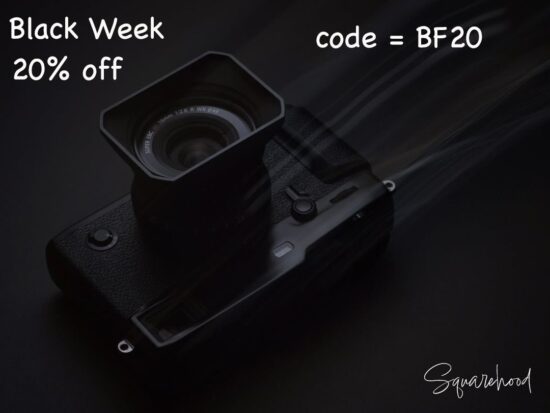
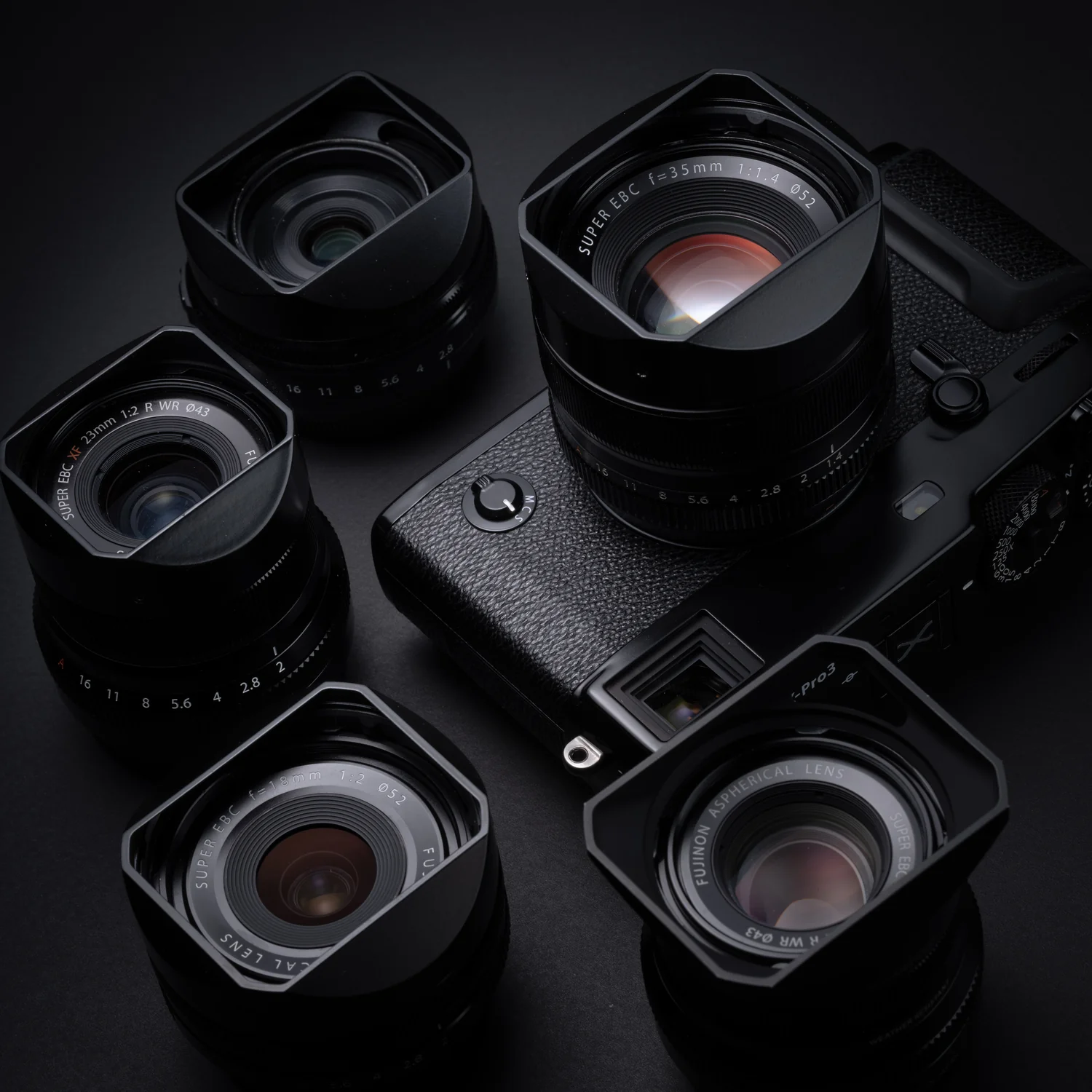
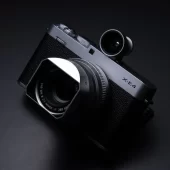
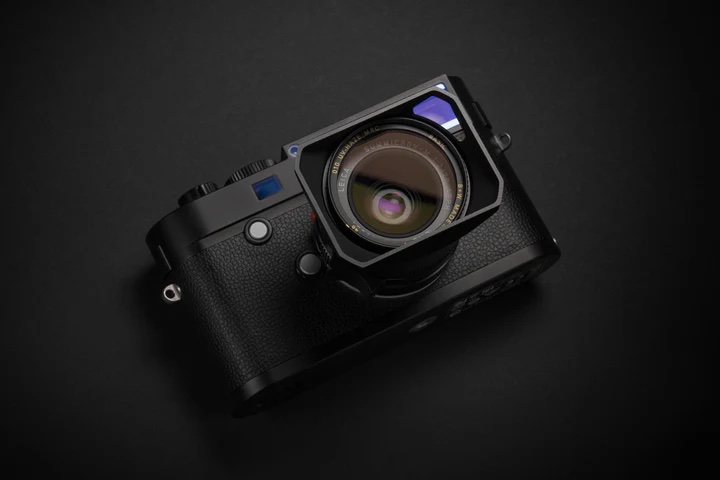
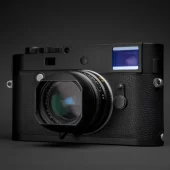
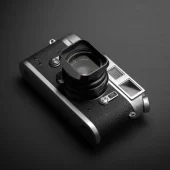
For Black Friday, Squarehood is offering a 20% discount on everything in its store. Squarehood sells several different lens hood solutions for Fuji, Leica, Nikon, and Ricoh cameras and lenses. Visit their website for more information and a list of products. Here are some of the Fuji lens hoods:
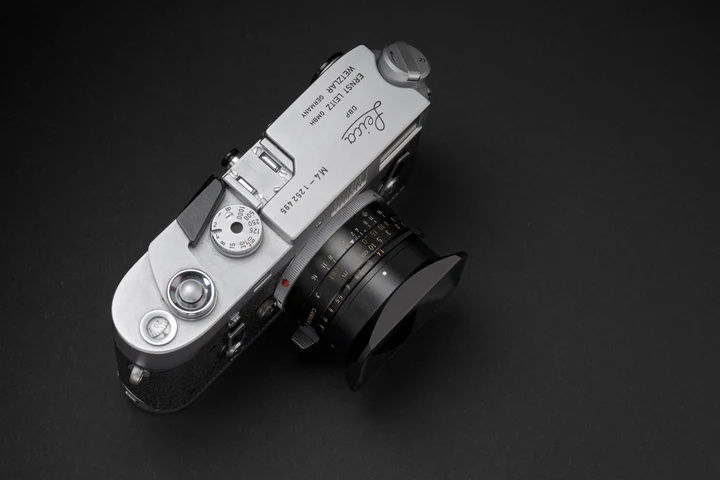
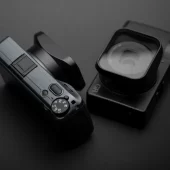
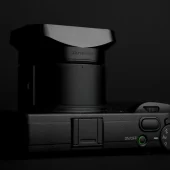
Next are a few examples of the Squarehood lens hoods for Leica and Ricoh:
When you use DPReview links to buy products, the site may earn a commission.
Product photos: Mitchell Clark
We've had the chance to spend some time with Nikon's updated 24-70mm F2.8 S II, which was announced earlier this year. It's an update to an already-solid offering, but one that's substantially lighter than its predecessor, while still promising solid build and image quality.
Since the lens is designed to be a workhorse for a wide variety of users, we also wanted to share some of our impressions on what it was like to use, compared to both its predecessor and the options available on other mounts.
In use
Photos don't always tell the whole story. While the Nikon 24-70mm F2.8 S II isn't noticeably more compact than Canon's stabilized, extending zoom offering, it is substantially lighter.
This lens's big trick is that it's the first of its kind to zoom internally. While that's likely to be more important for videographers using it on a gimbal who want to avoid their setup's center of gravity shifting, it's also a definite nice-to-have for photography, too. The lens not shifting as you zoom makes it that bit easier to control and faster to get the composition you're trying to achieve.
Having also spent a lot of time with Canon's 900g (31.7oz) 24-70mm F2.8 IS USM L recently, I was also very pleased with the Nikon's light weight: 675g (23.8). I found myself throwing it in a bag or taking it out on hikes that I'd normally be hesitant to bring a full 24-70mm F2.8 on, and I could comfortably carry it around without absolutely needing a neck strap. Nikon isn't the first to release this kind of lens at this size and weight, but it's nice that Z-mount users now have it as an offering, since the Sigma version isn't available.
The ability to click and declick the lens at will is a big upgrade.
While I typically prefer dedicated aperture rings, most shooters will likely be happy with the programmable control ring on this lens. It's right where you'd expect an aperture ring to be, so you can set it as that and use it like you typically would (albeit without hard stops at each end) if you want, but you can also use it to control things like ISO, exposure compensation, autofocus selection point and more. We also deeply appreciate the ability to click or declick it; while the clickless control or aperture rings Nikon and others include are good for video, they can be frustrating to use for stills. With this lens, neither side has to give anything up.
Speaking of video (just for a moment, promise), focus breathing is well-controlled throughout the lens's zoom range. Its included lens hood also has a door that you can use to adjust filters without taking it off, though my variable ND filter and its magnetic adapter ring wouldn't fit on the lens with the hood mounted. Photographers using more sensible filters will likely be pleased that it has a 77mm thread, rather than an 82mm one, though, assuming they haven't already heavily invested in larger filters.
This lens' autofocus is quick and decisive, even when shooting moving subjects wide open.
Nikon Z8 | Nikkor Z 24-70mm F2.8 S II | 70mm | F2.8 | 1/80 sec | ISO 64
Finally, there's autofocus. Nikon claims the motors are five times faster than the ones on the previous model, and that they should be much better at retaining focus while zooming. In my experience, they are extremely quick, even when shifting from close focus to infinity, and I never found a situation where I felt like the lens, rather than my skills, was the bottleneck (though I didn't get to test it out in any of the pro-level situations that it's designed for, such as shooting a wedding).
Optics
This isn't a full-fledged review, but it's at least worth touching on a few things that I noticed while shooting the 24-70mm F2.8 S II. The biggest was the relatively intense vignetting that shows up throughout its focal length when shooting wide-open, which makes the image look a fair bit darker than at other aperture settings. However, it clears up relatively quickly, being relegated to the corners at F4, and almost completely gone by F5.6. This doesn't seem to be a compromise to achieve the internal zoom, though, as I noticed similar levels of vignetting at F2.8 using its predecessor as well.
70mm
F2.8
F4
F5.6
F8
As for sharpness, the 24-70 F2.8 S II is, unsurprisingly, quite good; it captures fine details from edge-to-edge, even wide open. Longitudinal chromatic aberration appears to be well-controlled, too, only showing up in the most challenging of situations.
24mm
F2.8
F5.6
F8.0
70mm
F2.8
F5.6
F8.0
I found the bokeh to be relatively pleasing in most scenarios, without too much distracting businesses. However, I wouldn't say that rendering specular highlights is this lens's specialty. While the bokeh is relatively clean, at the long end, you see some pretty intense cat's eye effect wide open, where lights are rendered as more of an eclipse than a circle. It's present throughout the range, though less noticeable at the wide end. At all ranges and apertures, you'll likely see some bokeh that isn't perfectly circular, but by the time you're at F5.6, it starts to take a decidedly octagonal shape across the frame.
Versus the original
The II is larger than its predecessor's retracted state, but is smaller than it extended to 70mm. It also has much larger focus and zoom rings.
Design-wise, I consider this lens an improvement in almost every way; it's only fractionally longer than its predecessor's fully retracted state, but it stays that size even if you want to walk around with it zoomed to 70mm. It's also hard to complain about the small status display being replaced by a portrait-orientation function button, as I never found it to be particularly useful, since I'd often have to move my head to look down at the top of the lens.
I also found the command dial much more useful, now that there's a clicked mode; I always ignored the clickless-only version on the original 24-70mm F2.8 S, but found myself frequently using the clicky one on the II. The lighter weight is also immediately noticeable when comparing the two side-by-side, and makes it nicer to carry around.
I also appreciate the focus limit switch added on the II. While I didn't find myself reaching for it as often as I would with a more telephoto lens, there were a few times when it was handy to have.
The II's closer minimum focusing distance is also noticeable in real-world use, though optically it doesn't appear to be at its best at those distances.
Sample Gallery
Please do not reproduce any of these images on a website or any newsletter/magazine without prior permission (see our copyright page). We make the originals available for private users to download to their own machines for personal examination or printing; we do so in good faith, so please don't abuse it.
Sample gallery
This widget is not optimized for RSS feed readers. Click here to open it in a new browser window / tab.
DxO Black Friday 2025 – up to 50% off. Get an additional 5% off the already reduced prices with the coupon code RUMORS when you purchase from this link (valid for new customers only).
The 2025 DxO Black Friday offers up to 50% off their products. You can get an additional 5% off DxO products, in addition to the already reduced prices, with the coupon code RUMORS when you purchase from this link (valid for new customers only). Here is the breakdown of the deals (those offers will end on Tuesday, December 2):

 Connexion



 CMOS image sensor with approximately 4.5 times faster7 readout speed increased and the BIONZ XR2