Vue lecture

Researchers Build a Talking Robot Guide Dog to Help Visually Impaired People Navigate

"Only about 2% of visually impaired people in the United States use guide dogs," notes StudyFinds.com, "partly because breeding and training takes years and fewer than half the dogs in training actually graduate." But someday there could be another option: What if you could ask your guide dog where the nearest water fountain is and hear it answer back, complete with directions and an estimated walk time? Researchers at the State University of New York at Binghamton have built a robotic guide dog that can do something close to that, holding simple back-and-forth conversations about navigation with its handler, describing the surrounding environment, and talking through route options as it leads the way... Their work, presented at the 40th Annual AAAI Conference on Artificial Intelligence, pairs a large language model, a system that understands and generates language, with a navigation planner. Together, the two let the robot understand open-ended requests, suggest destinations, and adjust plans on the fly. Thanks to Slashdot reader fjo3 for sharing the article.

Read more of this story at Slashdot.

  •  

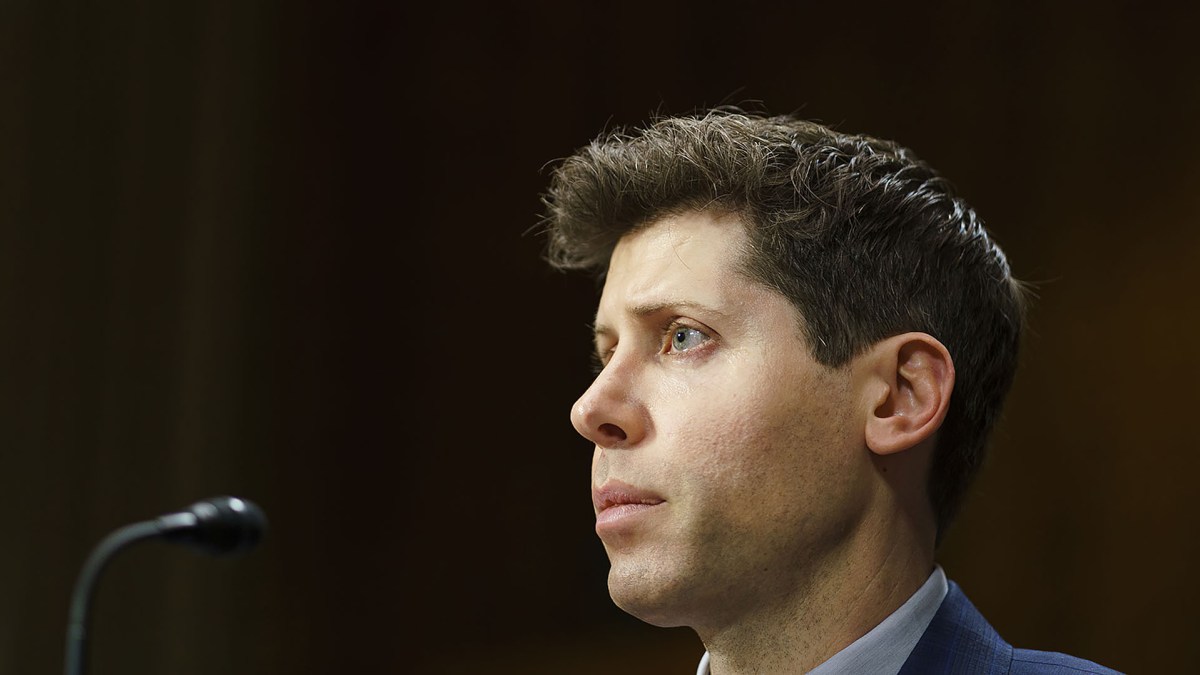
Omissions, Deceptions, Lying. The New Yorker Asks: Can Sam Altman Be Trusted?

A 17,000-word expose in the New Yorker reveals "several executives connected to OpenAI have expressed ongoing reservations about Altman's leadership." Reporters Ronan Farrow and Andrew Marantz spoke to "a hundred people with firsthand knowledge of how Altman conducts business," including current and former OpenAI employees and board members. Among other revelations, internal messages from a few years ago show that OpenAI executives and board members "had come to believe that Altman's omissions and deceptions might have ramifications for the safety of OpenAI's products..." At the behest of his fellow board members, [OpenAI cofounder] Sutskever worked with like-minded colleagues to compile some seventy pages of Slack messages and H.R. documents, accompanied by explanatory text... The memos, which we reviewed, have not previously been disclosed in full. They allege that Altman misrepresented facts to executives and board members, and deceived them about internal safety protocols. One of the memos, about Altman, begins with a list headed "Sam exhibits a consistent pattern of . . ." The first item is "Lying".... In a tense call after Altman's firing, the board pressed him to acknowledge a pattern of deception. "This is just so fucked up," he said repeatedly, according to people on the call. "I can't change my personality." Altman says that he doesn't recall the exchange.... He attributed the criticism to a tendency, especially early in his career, "to be too much of a conflict avoider." But a board member offered a different interpretation of his statement: "What it meant was 'I have this trait where I lie to people, and I'm not going to stop.' " Were the colleagues who fired Altman motivated by alarmism and personal animus, or were they right that he couldn't be trusted? Friday Altman responded in part to the article. ("I am not proud of being conflict-averse, which has caused great pain for me and OpenAI," he wrote in a blog post. "I am not proud of handling myself badly in a conflict with our previous board that led to a huge mess for the company.") But the article also assembled similar stories from throughout Altman's career: - At Altman's earlier startup Loopt, "groups of senior employees, concerned with Altman's leadership and lack of transparency, asked Loopt's board on two occasions to fire him as C.E.O.," according to Keach Hagey, author of the Altman biography The Optimist. - During Altman's time as president of Y Combinator, "several Silicon Valley investors came to believe that his loyalties were divided. An investor told us that Altman was known to 'make personal investments, selectively, into the best companies, blocking outside investors.'" The article adds that in private, Y Combinator co-founder Paul Graham "has been unambiguous that Altman was removed because of Y.C. partners' mistrust... On one occasion, Graham told Y.C. colleagues that, prior to his removal, 'Sam had been lying to us all the time.'" - "In a meeting with U.S. intelligence officials in the summer of 2017, he claimed that China had launched an 'A.G.I. Manhattan Project,'" the article points out, "and that OpenAI needed billions of dollars of government funding to keep pace...." But one intelligence official "after looking into the China project, concluded that there was no evidence that it existed: 'It was just being used as a sales pitch.'" - As California lawmakers considered safety testing for AI model, one legislative aide complained of "increasingly cunning, deceptive behavior from OpenAI". OpenAI later subpoenaed some of the bill's top supporters (and OpenAI critics), in some cases asking for their private communications to investigate whether Elon Musk was funding them. [The article notes an ongoing animosity between Altman and Musk. "When Altman complained on X about a Tesla he'd ordered, Musk replied, 'You stole a non-profit.'"] And "Multiple prominent investors who have worked with Altman told us that he has a reputation for freezing out investors if they back OpenAI's competitors." [M]ost of the people we spoke to shared the judgment of Sutskever and Amodei: Altman has a relentless will to power that, even among industrialists who put their names on spaceships, sets him apart. "He's unconstrained by truth," the board member told us. "He has two traits that are almost never seen in the same person. The first is a strong desire to please people, to be liked in any given interaction. The second is almost a sociopathic lack of concern for the consequences that may come from deceiving someone." The board member was not the only person who, unprompted, used the word "sociopathic." One of Altman's batch mates in the first Y Combinator cohort was Aaron Swartz, a brilliant but troubled coder who died by suicide in 2013 and is now remembered in many tech circles as something of a sage. Not long before his death, Swartz expressed concerns about Altman to several friends. "You need to understand that Sam can never be trusted," he told one. "He is a sociopath. He would do anything." Multiple senior executives at Microsoft said that, despite [CEO Satya] Nadella's long-standing loyalty, the company's relationship with Altman has become fraught. "He has misrepresented, distorted, renegotiated, reneged on agreements," one said... The senior executive at Microsoft said, of Altman, "I think there's a small but real chance he's eventually remembered as a Bernie Madoff- or Sam Bankman-Fried-level scammer."

Read more of this story at Slashdot.

  •  

Qu’est-ce que le « tokenmaxxing », nouvelle obsession des salariés de la Silicon Valley ?

Dans la Silicon Valley, l’usage de l’intelligence artificielle est devenu un marqueur de performance. Sous l’effet du phénomène de « tokenmaxxing », certains salariés des géants de la tech multiplient les dépenses en tokens pour grimper dans des classements internes, alimentant à la fois le débat sur la productivité et la croissance des fournisseurs d’IA.

  •  

Manipulateur, menteur, imposteur ? L’enquête qui accable Sam Altman, le patron d’OpenAI

Sam Altman

Sam Altman, l’un des visages les plus influents de l’intelligence artificielle, fait l’objet d’un portrait particulièrement critique dans une enquête du New Yorker. Le magazine y relaie des accusations de manipulation, des doutes sur sa maîtrise technique et une affaire familiale grave, contestée par l’intéressé.

  •  

ChatGPT lance un nouvel abonnement à… 103 euros par mois

Comme Claude, OpenAI sépare désormais son abonnement ChatGPT Pro en deux niveaux, à 103 euros par mois (5 fois moins de limites) ou 229 euros par mois (20 fois moins de limites). L'entreprise veut s'adresser aux utilisateurs les plus demandeurs, notamment pour son outil de développement Codex, mais qui n'ont pas besoin du ChatGPT Pro le plus cher.

  •  

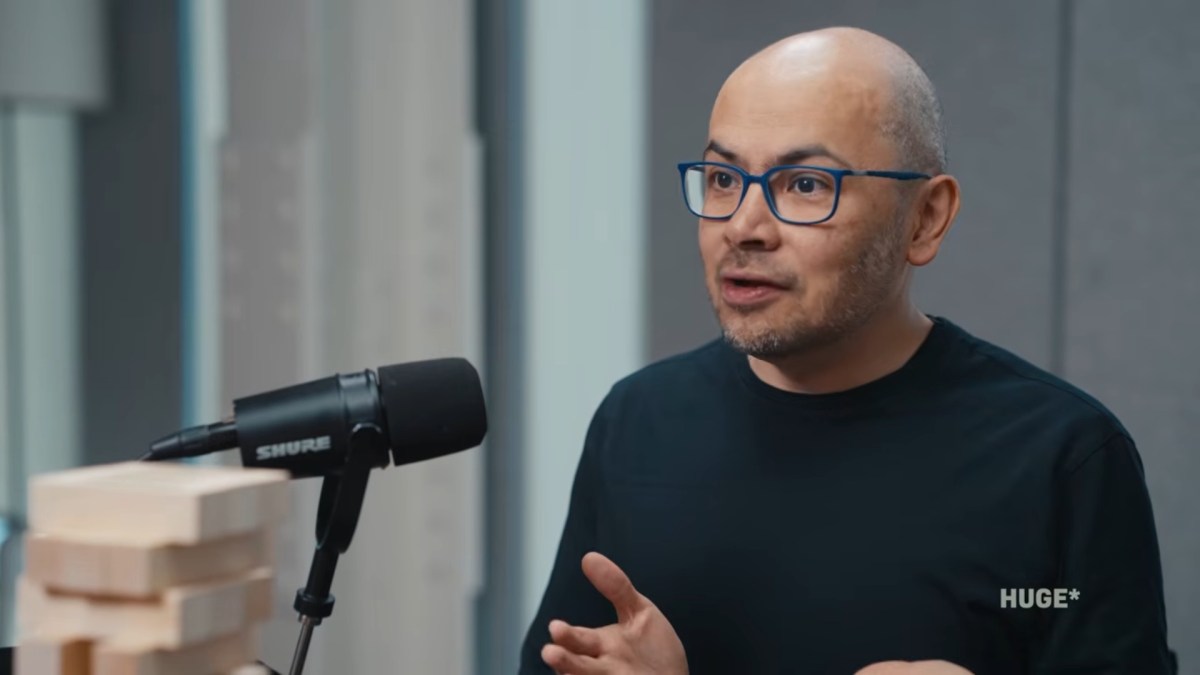
L’IA aurait dû rester en laboratoire : le patron de Google DeepMind regrette que ChatGPT soit sorti trop vite

Invité du podcast de Cleo Abram, Demis Hassabis, le patron de Google DeepMind, est longuement revenu sur l'émergence de l'IA générative commerciale en 2022, qui a d'abord pris Google par surprise. Le prix Nobel de chimie s'interroge sur l'intérêt d'avoir publié aussi rapidement cette technologie au grand public : les laboratoires auraient peut-être utilisé leur temps autrement si la lutte acharnée pour avoir le meilleur modèle n'avait pas commencé.

  •  

Amazon May Sell Trainium AI Chips To Third Parties In Shot At Nvidia

Amazon CEO Andy Jassy says the company may eventually sell its Trainium AI chips directly to outside customers, not just through AWS, which would put Amazon in more direct competition with Nvidia. "There's so much demand for our chips that it's quite possible we'll sell racks of them to third parties in the future," Jassy wrote in his annual shareholder letter Thursday. He also revealed the company's chip business is already running at more than $20 billion annually, with demand so strong that current and even future generations are largely spoken for. Quartz reports: Access to Amazon's chips is currently limited to Amazon Web Services, with customers paying for cloud-based usage rather than owning any physical hardware. Selling to AWS and external customers alike, as standalone chipmakers do, would put annual revenue at around $50 billion, up from the $20 billion the company estimates for the year, Jassy said. The $20 billion figure spans three product lines: Trainium, the AI accelerator chip; Graviton, a general-purpose processor; and Nitro, a chip that helps run Amazon's EC2 server instances. All three are growing at triple-digit rates year over year, Jassy claimed in his letter. Jassy said demand for Trainium has outpaced supply at each generation. Trainium2 is essentially unavailable, with its entire allocated capacity spoken for. Trainium3 started reaching customers in early 2026, and reservations have filled nearly all available supply. Even Trainium4 -- which is not expected to reach wide release for another year and a half -- has substantial pre-orders committed. Jassy argued that a full-scale Trainium rollout could shave tens of billions off annual capital costs while meaningfully widening profit margin.

Read more of this story at Slashdot.

  •  

Skilled Older Workers Turn To AI Training To Stay Afloat

An anonymous reader quotes a report from the Guardian: [Five skilled workers aged 50 and older spoke] to the Guardian about how, after struggling to find work in their fields, they have turned to an emerging and growing category of work: using their expertise to train artificial intelligence models. Known as data annotation, the work involves labeling and evaluating the information used to train AI models like Open AI's ChatGPT or Google's Gemini. A doctor, for example, might review how an AI model answers medical questions to flag incorrect or unsafe responses and suggest better ones, helping the system learn how to generate more accurate and reliable responses. The ultimate goal of training is to level up AI models until they're capable of doing a job as well as a human could -- meaning they could someday replace some of these human workers. The companies behind AI training, such as Mercor, GlobalLogic, TEKsystems, micro1 and Alignerr, operate large contractor networks staffed by people like Ciriello. Their clients include tech giants like OpenAI, Google and Meta, academic researchers and industries including healthcare and finance. For experienced professionals, AI training contracts can be a side hustle -- or a temporary fallback following a layoff -- where top experts can, in some cases, earn over $180 an hour. But that's on the high end. For some older workers [...], it represents another thing entirely: a last refuge in a brutal job market that is harder to stay in, or re-enter, the older they get. For many of them, whether or not they're training their AI replacements in their professions is besides the point. They need the work now. [...] "There's just a lot of desperation out there," Johnson said. As opportunities narrow, many turn to what Joanna Lahey, a professor at Texas A&M University who studies age discrimination and labor outcomes, calls "bridge jobs" -- lower-paying, less demanding roles that help workers stay financially afloat as they approach retirement. Historically, that meant taking temp assignments, retail and fast-food work and gig roles like Uber and food delivery. Now, for skilled workers -- engineers, lawyers, nurses or designers, for example -- using their expertise for AI data training is becoming the new bridge job. "[AI] training work may be better in some ways than those earlier alternatives," Lahey told the Guardian. AI training can offer flexibility, quick income and intellectual engagement. But it's often a clear step down. Professionals in fields such as software development, medicine or finance typically earn six-figure salaries that come with benefits and paid leave, according to the US Bureau of Labor Statistics. According to online job postings, AI training gigs start at $20 an hour, with pay increasing to between $30 and $40 an hour. In some cases, AI trainers with coveted subject matter expertise can earn over $100 an hour. AI training is contract-based, though, meaning the pay and hours are unstable, and it often doesn't come with benefits.

Read more of this story at Slashdot.

  •  

Meta dévoile Muse Spark, son premier modèle propriétaire depuis le départ de Yann LeCun

Après des mois à recruter dans toute la Silicon Valley pour former le Superintelligence Labs, Meta vient de dévoiler Muse Spark, un premier modèle propriétaire présenté comme supérieur à Claude Opus 4.6 et Google Gemini 3.1 Pro dans plusieurs tests. Mais l'entreprise a-t-elle encore une chance dans la course à l'IA générative ?

  •  

Remove Complex Backgrounds with Precision: Aiarty Image Matting for Photographers (Exclusive Deal Inside)


Beyond the Pen Tool: A Faster Way to Handle Complex Masking with Aiarty Image Matting (guest post)

We’ve all been there: the shoot was perfect, but now you’re zoomed in at 400%, wrestling with a stray strand of hair that just won’t stay in the selection. It’s the least creative part of photography, yet it’s often where the professional polish happens.

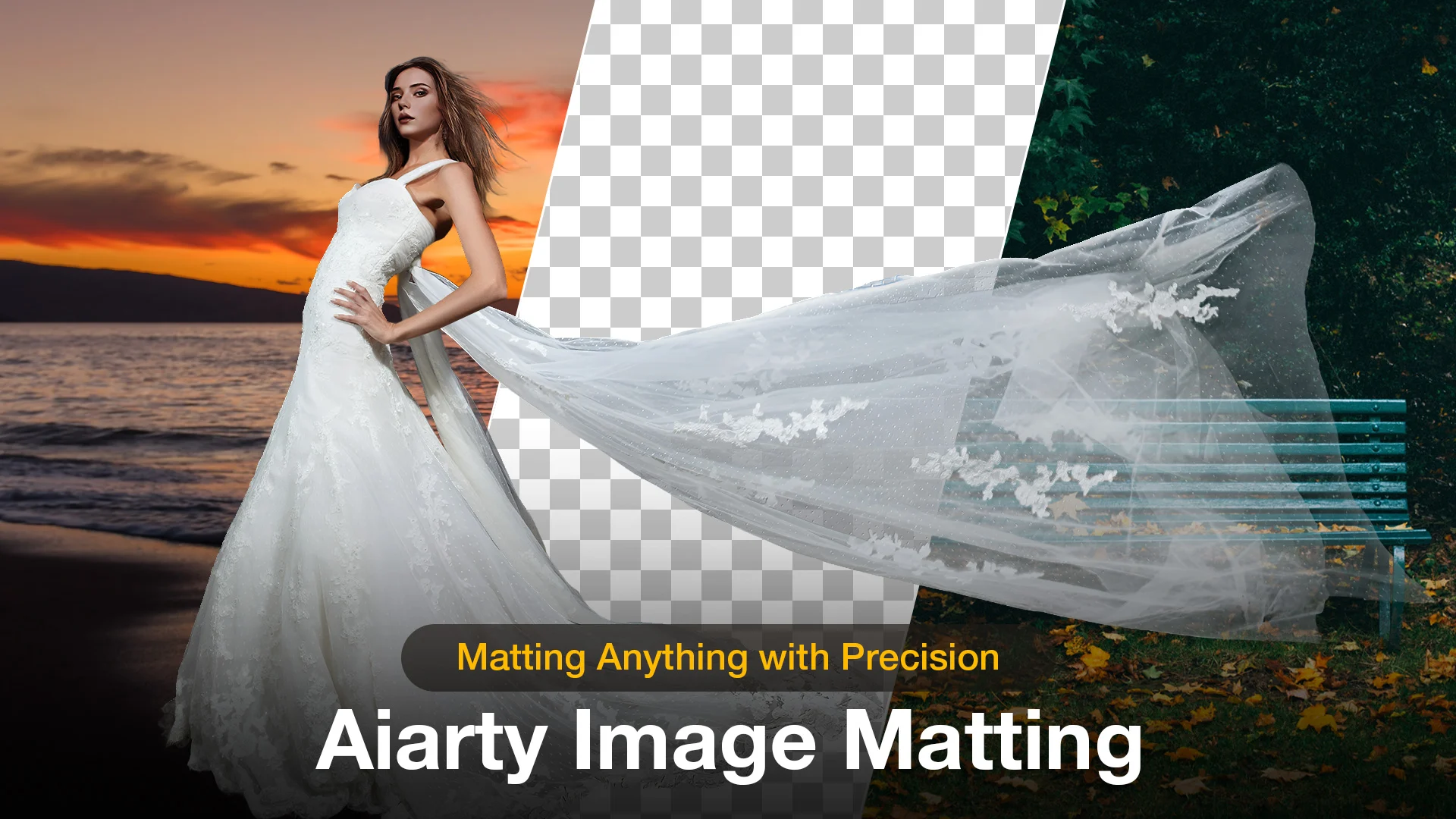
The irony of the current AI boom is that while it’s easier than ever to remove background from photo files with a single click, the results rarely hold up on a high-res monitor. Even when you remove background in Photoshop using the latest Select Subject features, the AI tends to treat edges as a binary choice. It works for a clean product shot, but it falls apart on a bride’s translucent veil or a portrait against a leafy backdrop, leaving that jagged, “cut-out” look.

This is when the distinction between a simple “remover” and true Image Matting becomes critical. What I was really looking for was something that understands the physics of light and transparency – the sub-pixel details that make a subject feel natural in its environment. In testing different tools, I came across Aiarty Image Matting, which stood out in how it handles these “impossible” edges with a level of nuance I haven’t seen in most standard plugins.

It’s worth a look for photographers who frequently deal with complex selections and high-resolution workflow. Now PhotoRumors readers can access an exclusive offer to get Aiarty Image Matting Lifetime License at up to 43% OFF, with benefits including:

  • Use on 1 Windows + 1 Mac, 3 Windows or Mac computers
  • Unlimited access to all features
  • Permanent free upgrades and technical support
  • No subscription, no recurring cost

Why Aiarty Image Matting is the Secret to Professional Composites

The term “background removal” is a bit of a misnomer in professional circles. Most tools – from the built-in best background removal app on your phone to standard web filters – simply use a mask to hide pixels. This often results in a “cookie-cutter” effect where the edges look harsh and artificial.

Aiarty Image Matting operates on a different level. It uses dedicated AI models to calculate an “alpha matte,” which essentially determines the exact transparency of every single pixel on the boundary. Instead of a binary “in or out” choice, it understands that a stray hair or a glass edge is partially transparent. If you’ve ever wondered which ai tool is best for background removal for high-end work, the answer lies in how it handles these “soft” edges. Aiarty doesn’t just cut the subject out; it extracts it.

This extraction process achieves a level of sub-pixel precision that identifies details thinner than a single pixel – think individual eyelashes or the fuzz on a woolen sweater. It also solves one of the biggest headaches when you remove background from photo: color decontamination. We’ve all dealt with that annoying color spill, like a green tint on a model’s skin from a forest backdrop. Aiarty’s AI is trained to “clean” these edges, ensuring the subject looks natural when placed in a completely different lighting environment.

For things like steam, smoke, or a translucent bridal veil, the software preserves the true, semi-transparent nature of the material. This is a game-changer for anyone trying to make background transparent without losing the ethereal, airy quality of the original shot. By moving away from simple “erasing” and toward “intelligent extraction,” it finally bridges the gap between a quick social media edit and a gallery-ready composite.

Key Features: How Aiarty Streamlines Complex Masking

When you’re looking for the best background removal software, you’re really looking for consistency. You want a tool that doesn’t require you to go back in with a layer mask to fix 20% of the edges. Most standard matting tools rely on simple edge detection that often fails the moment things get slightly out of focus or highly detailed. Aiarty Image Matting differs by using deep-learning models that actually understand the “semantic” structure of a photo – it knows the difference between a strand of hair and a stray digital artifact. Instead of just tracing a line, it reconstructs the edge data based on real-world light and texture.

In my time testing the software, four specific capabilities stood out as legitimate game-changers for a professional workflow:

  • Hair-Level Fidelity: This is the ultimate stress test. Whether it’s a high-fashion portrait with flyaway hair or a wildlife shot of a wolf’s fur, Aiarty’s AI models are trained on millions of real-world edge scenarios. It identifies individual strands that traditional “Select Subject” algorithms usually blur or chop off. If you’ve ever wondered how to remove white background from image files with fine texture, this level of detail is a massive relief.
  • Complex Transparency Awareness: Most “one-click” apps treat glass, smoke, or veils as solid objects or just erase them. Aiarty actually understands the transparency levels. This means if you have a shot of a bride in a lace veil, the software preserves the semi-transparent layers, allowing the new background to show through naturally. It’s easily the best ai tool to remove background from delicate, translucent subjects.

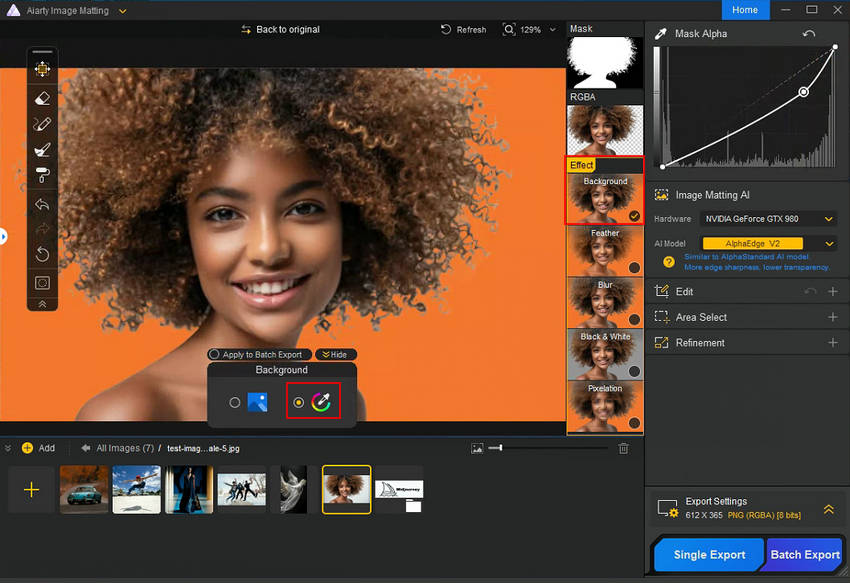
  • Seamless Background Replacement: Beyond just cutting things out, the tool makes it remarkably easy to change background of photo assets for creative composites. It handles the edge blending so well that you don’t get that “pasted-on” look. You can drop in a solid color for a clean e-commerce shot or a complex landscape for a fine-art piece, and the lighting and transparency on the edges remain believable.
  • Privacy and Speed via Local Processing: This is a big one for me. Many “best free ai background remover” tools are browser-based, meaning you have to upload your high-res (often sensitive) client work to a cloud server. Aiarty runs entirely on your local GPU. It’s faster, more secure, and allows you to automatically remove background elements from an entire folder of RAW files in a single batch, without hogging your bandwidth.

Instead of just being another best background removal app for casual use, it feels like a specialized instrument designed to handle the 10% of “impossible” masking jobs that usually take up 90% of our editing time.

Aiarty Image Matting Real-World Scenarios

In practice, a tool like this isn’t just about saving a few minutes; it’s about enabling shots that would otherwise be a nightmare to edit. I’ve been testing Aiarty across a few common scenarios where most “best background removal app” contenders usually fail:

  • Portrait & Fashion Photography: We’ve all struggled with how to remove background from a subject with flyaway hair or fur. Standard AI usually “muds” the edges. Aiarty preserves individual strands, making the transition to a new background look organic. It’s a lifesaver for high-end beauty retouches where the halo effect is a deal-breaker.

  • Commercial & Still Life: If you’ve ever tried to make background transparent for a glass bottle, a liquid splash, or a watch face, you know the refraction usually gets ruined. This tool actually maintains the transparency of the material, allowing the new environment to show through naturally. It’s much faster than manually painting alpha channels for product composites.

  • High-Volume E-commerce: For those of us who need to remove background elements across a hundred RAW files locally, the batch processing feature is a massive win. You aren’t tethered to a slow cloud upload, and the consistency across the set – keeping the same edge softness – is much higher than manual masking.

By handling the heavy lifting of the selection process, it lets you get back to the creative part: the color grading, the composition, and the storytelling.

Final Thoughts

In an industry that’s increasingly shifting toward subscription-based tools, having a reliable one-time purchase option still feels refreshing—especially for something as time-consuming as precise masking.

For photographers who regularly deal with fine details like hair, transparency, or complex backgrounds, tools like Aiarty Image Matting can make a noticeable difference in both speed and final image quality.

It’s not just about saving time—it’s about getting results that hold up under close inspection.

At the time of writing, PhotoRumors readers can access an exclusive 43% discount on the lifetime license, making it a relatively accessible addition to a professional editing workflow.

The post Remove Complex Backgrounds with Precision: Aiarty Image Matting for Photographers (Exclusive Deal Inside) appeared first on Photo Rumors.

  •  
❌