Vue lecture

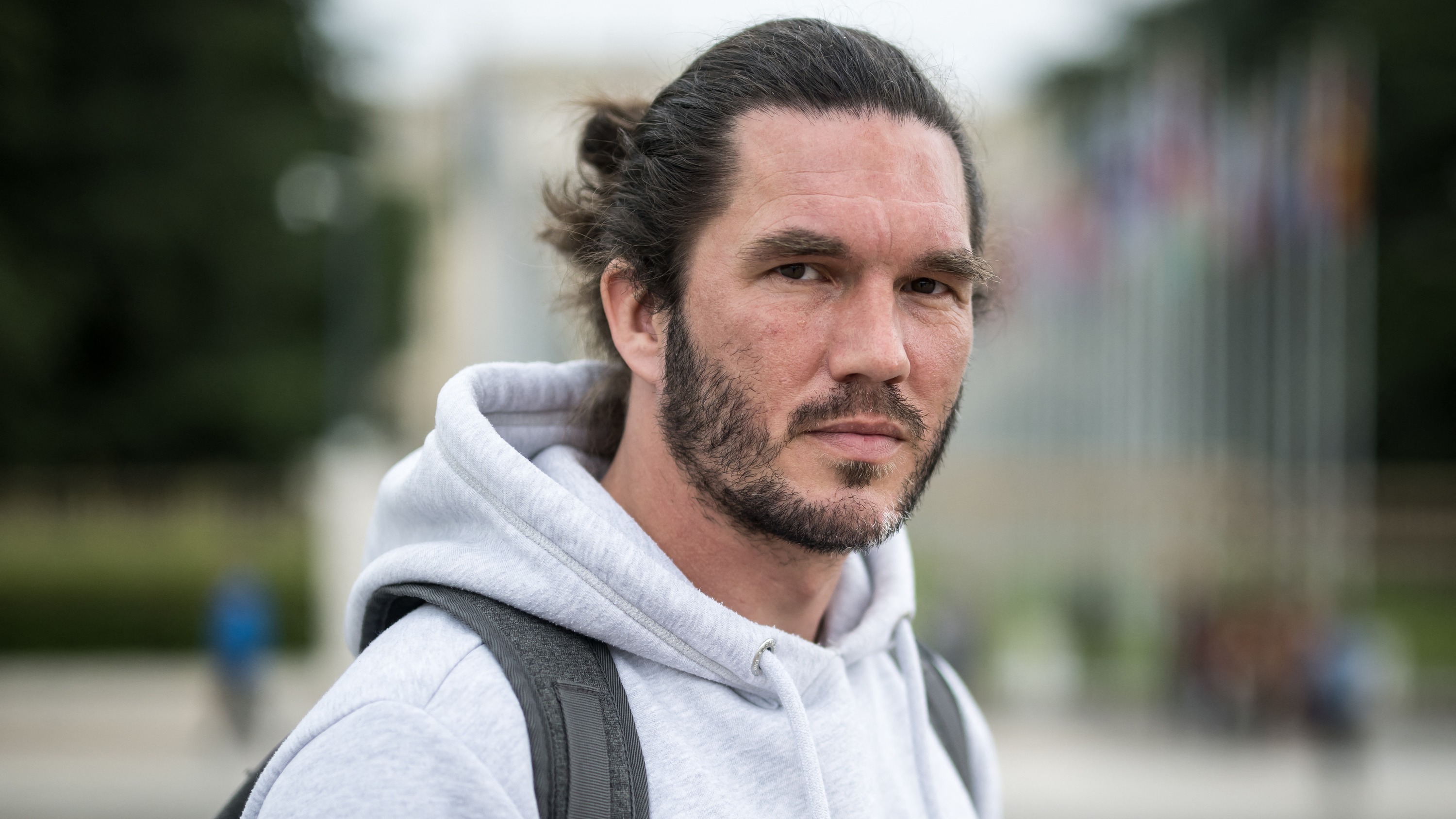
«Même en prison, on fait sa déclaration» : le fisc tente d’éteindre la polémique après le témoignage de l’ex‑otage Benjamin Brière sur ses impôts

Critiquée pour avoir sermonné l’ancien otage pour ses déclarations manquantes durant ses 1079 jours de captivité en Iran, l’administration fiscale assure avoir tout mis en œuvre «pour s’assurer que ce type de situation ne puisse pas se reproduire.»

© FABRICE COFFRINI / AFP

Depuis sa libération le 12 mai 2023, Benjamin Brière se bat pour faire reconnaître un statut «d’otage d’État».
  •  

La moitié des Français pensent qu’il n’est pas possible de réduire la dette sans baisser les pensions de retraite

Ils sont par ailleurs majoritaires à considérer que le niveau de vie des actifs doit être supérieur à celui des retraités, selon un sondage Ifop pour Les Actifs anonymes, révélé par La Tribune Dimanche.

© Robert Kneschke / Robert Kneschke - stock.adobe.co

La réduction de la dette devra-t-elle nécessairement passer par une réduction des pensions de retraite ? Les Français sont divisés. 
  •  

Travail le 1er mai : huit syndicats demandent à Sébastien Lecornu de renoncer à la commission mixte paritaire

Dans une lettre commune, CFDT, CGT, FO, CFE‑CGC, CFTC, Unsa, FSU et Solidaires exhortent le chef du gouvernement à ne pas accélérer l’adoption du texte élargissant le travail ce jour férié, au nom du respect de «l’histoire sociale».

© Gonzalo Fuentes / REUTERS

La traditionnelle marche des syndicats du 1er mai à Paris, France, le 1er mai 2025.
  •  

Two-Week Social Media 'Detox' Erases a Decade of Age-Related Decline, Study Finds

Critics say social media is engineered to be as addictive as tobacco or gambling, writes the Washington Post — while adding that "the science has been moving in parallel with the court's recognition." A growing body of research links heavy social media use not only to declines in mental health but to measurable cognitive effects — on attention, memory and focus — that in some studies resemble accelerated aging. Science also suggests we have more control than we realize when it comes to reversing this damage, and the solution is surprisingly simple: Take a break... "Digital detoxes" can sound like a fad. But in one of the largest studies to date, published in PNAS Nexus and involving more than 467 participants with an average age of 32, even a short time away produced striking results — effectively erasing a decade of age-related cognitive decline. For 14 days, participants used a commercially available app, Freedom, to block internet access on their phones. They were still allowed calls and text messages, essentially turning a smartphone into a dumb phone. Their time online decreased from 314 minutes to 161 minutes, and by the end of the period the participants had improvements in sustained attention, mental health as well as self-reported well-being. The improvement in sustained attention was about the same magnitude as 10 years of age-related decline, the researchers noted, and the effect of the intervention on depression symptoms was larger than antidepressants and similar to that of cognitive behavioral therapy. But two things were even more mind-blowing... Even those people who cheated and broke the rules after a few days seemed to have positive effects from the break; and in follow-up reports after the two weeks, many people reported the positive effects lingered. "So you don't have to necessarily restrict yourself forever. Even taking a partial digital detox, even for a few days, seems to work," Kushlev said. The article also notes a November study at Harvard published in JAMA Network Open where nearly 400 people 'found that even a short break can make a measurable difference: After just one week of reduced smartphone use, participants reported drops in anxiety (16.1 percent), depression (24.8 percent) and insomnia (14.5 percent)..." "Other experiments point in the same direction — whether decreasing social media use by an hour a day for one week or stepping away from just Facebook and Instagram."

Read more of this story at Slashdot.

  •  

Two-Week Social Media 'Detox' Erases a Decade Age-Related Decline, Study Finds

Critics say social media is engineered to be as addictive as tobacco or gambling, writes the Washington Post — while adding that "the science has been moving in parallel with the court's recognition." A growing body of research links heavy social media use not only to declines in mental health but to measurable cognitive effects — on attention, memory and focus — that in some studies resemble accelerated aging. Science also suggests we have more control than we realize when it comes to reversing this damage, and the solution is surprisingly simple: Take a break... "Digital detoxes" can sound like a fad. But in one of the largest studies to date, published in PNAS Nexus and involving more than 467 participants with an average age of 32, even a short time away produced striking results — effectively erasing a decade of age-related cognitive decline. For 14 days, participants used a commercially available app, Freedom, to block internet access on their phones. They were still allowed calls and text messages, essentially turning a smartphone into a dumb phone. Their time online decreased from 314 minutes to 161 minutes, and by the end of the period the participants had improvements in sustained attention, mental health as well as self-reported well-being. The improvement in sustained attention was about the same magnitude as 10 years of age-related decline, the researchers noted, and the effect of the intervention on depression symptoms was larger than antidepressants and similar to that of cognitive behavioral therapy. But two things were even more mind-blowing... Even those people who cheated and broke the rules after a few days seemed to have positive effects from the break; and in follow-up reports after the two weeks, many people reported the positive effects lingered. "So you don't have to necessarily restrict yourself forever. Even taking a partial digital detox, even for a few days, seems to work," Kushlev said. The article also notes a November study at Harvard published in JAMA Network Open where nearly 400 people 'found that even a short break can make a measurable difference: After just one week of reduced smartphone use, participants reported drops in anxiety (16.1 percent), depression (24.8 percent) and insomnia (14.5 percent)..." "Other experiments point in the same direction — whether decreasing social media use by an hour a day for one week or stepping away from just Facebook and Instagram."

Read more of this story at Slashdot.

  •  

«Un passage en force qui se paiera très cher» : les syndicats vent debout contre le projet d’extension du travail le 1er mai

Ouvertement opposées à la proposition de loi visant à autoriser certains salariés à travailler le 1er mai, examinée ce vendredi à l’Assemblée, la CGT comme la CFDT appellent les parlementaires à ne pas voter ce texte.

© JC MARMARA / Le Figaro

La proposition de loi donne la possibilité d’élargir le travail le 1er mai aux boulangeries, fleuristes, jardineries et entreprises culturelles.
  •  

«Sécurité juridique» ou «indécence» ? Le projet d’extension du travail le 1er mai arrive à l’Assemblée nationale ce vendredi

Soutenue par le gouvernement, la proposition de loi visant à autoriser certains salariés à travailler le 1er mai doit être examinée ce vendredi. Les débats s’annoncent agités.

© Gonzalo Fuentes / REUTERS

Initialement porté par les Républicains, le texte a été repris par les députés du groupe parlementaire présidentiel «Ensemble»
  •  

Absentéisme: un «bouton d’alerte» permettra bientôt aux chefs d’entreprise de déclencher un contrôle en cas de suspicion d’abus

À quelques heures de l’annonce d’économies ciblées sur les arrêts de travail de longue durée, le ministre du Travail Jean-Pierre Farandou a confirmé le souhait du gouvernement de renforcer les contrôles.

© ANNA KURTH / AFP

Le ministre du Travail Jean-Pierre Farandou, à son arrivée à Matignon le 1er avril dernier.
  •  

Barrage à Nantes, ports bloqués en Corse... La colère gronde en France face à la flambée des carburants

En Corse, les six principaux ports de l’île sont bloqués par des pêcheurs qui souhaitent mettre fin à la «spirale mortifère» de l’augmentation du prix des carburants, déjà plus chers sur l’île que sur le continent, en raison du conflit au Moyen-Orient.

© Stephane Mahe / REUTERS

À Nantes, des blocages avaient lieu sur le périphérique ce mardi matin pour protester contre la hausse du prix des carburants. (Image d’illustration)
  •  
❌