Vue lecture

The Case Against an Imminent Software Developer Apocalypse

ZipNada shares a report from ZDNet: Given the dour headlines as of late concerning the diminishing amounts of entry-level software development jobs, coupled with predictions of applications entirely AI-generated, one could be forgiven for assuming that software developers may soon be an endangered species. However, the data tells a different story. James Bessen, professor at Boston University, has been pushing back for some time against the talk of AI and automation displacing jobs on a mass scale, and lately has been arguing that the roles of software developers are nowhere near extinction. AI is certainly not killing the software developer, Bessen said in a recent analysis (PDF). AI is taking over software development tasks and boosting productivity and output, but that is not translating into lost jobs, he argued. Instead, the types of software skills sought by companies are changing. "Surprisingly, however, after three years of AI use, software developer jobs have continued to grow robustly, reaching record levels of employment -- 2.5 million in February," Bessen said in the report, citing data from the US Bureau of Labor Statistics. The number of software developers in the US has grown by over 400,000, or 19%, since ChatGPT was introduced in 2022. At that time, the employed software developer population was just under 2.1 million. [...] The productivity uptick developers are seeing may ultimately be a boost to their professional opportunities, however. "An important and possibly disruptive change is happening, but the common view misunderstands what is going on," Bessen pointed out in his report. "Careful case studies find that AI improves the productivity of software developers -- that is, the software produced per developer -- by 30%, 50%, or more. And the rate of productivity improvement in software development is improving." Tellingly, since 2022, when ChatGPT was introduced, developer productivity has increased noticeably, Bessen continued. "From 2003 to 2022, developer productivity grew at 3.9% per year; but from 2022 through 2025, it grew at 6% per year." [...] A coming flood of new software products, now more likely to be enhanced by AI, will continue to create jobs for developers, Bessen predicted. "Thus, mass unemployment of software developers seems unlikely to happen soon." This doesn't mean the job descriptions of developers or other computer occupations will remain static. AI is shifting and re-inventing these roles, Bessen added.

Read more of this story at Slashdot.

  •  

GPT-5.5 Matches Heavily Hyped Mythos Preview In New Cybersecurity Tests

An anonymous reader quotes a report from Ars Technica: Last month, Anthropic made a big deal about the supposedly outsize cybersecurity threat represented by its Mythos Preview model, leading the company to restrict the initial release to "critical industry partners." But new research from the UK's AI Security Institute (AISI) suggests that OpenAI's GPT-5.5, which launched publicly last week, reached "a similar level of performance on our cyber evaluations" as Mythos Preview, which the group evaluated last month. Since 2023, the AISI has run a variety of frontier AI models through 95 different Capture the Flag challenges designed to test capabilities on cybersecurity tasks, such as reverse engineering, web exploitation, and cryptography. On the highest-level "Expert" tasks, GPT-5.5 passed an average of 71.4 percent, slightly higher than the 68.6 percent achieved by Mythos Preview (though within the margin of error). In one particularly difficult task that involved building a disassembler to decode a Rust binary, AISI notes that "GPT-5.5 solved the challenge in 10 minutes and 22 seconds with no human assistance at a cost of $1.73" in API calls. GPT-5.5 also matched Mythos Preview in its progress on "The Last Ones" (TLO), an AISI test range set up to simulate a 32-step data extraction attack on a corporate network. GPT-5.5 succeeded in 3 of 10 attempts on TLO, compared to 2 of 10 for Mythos Preview -- no previous model had ever succeeded at the test even once. But GPT-5.5 still fails at AISI's more difficult "Cooling Tower" simulation of an attempted disruption of the control software for a power plant, as every previously tested AI model also has. The new results for GPT-5.5 suggest that, when it comes to cybersecurity risk, Mythos Preview was likely not "a breakthrough specific to one model" but rather "a byproduct of more general improvements in long-horizon autonomy, reasoning, and coding," AISI writes.

Read more of this story at Slashdot.
  •  

Ils ont demandé à l’IA d’imaginer la dernière pièce de Molière

Et si l’intelligence artificielle pouvait ressusciter le génie de Jean-Baptiste Poquelin ? À travers le projet Molière Ex Machina, des experts en IA et des universitaires ont entraîné des modèles de langage pour produire une pièce inédite, des costumes aux décors baroques. Après deux ans de développement, le résultat de cette expérimentation sera dévoilé à l'Opéra royal de Versailles les 5 et 6 mai.

  •  

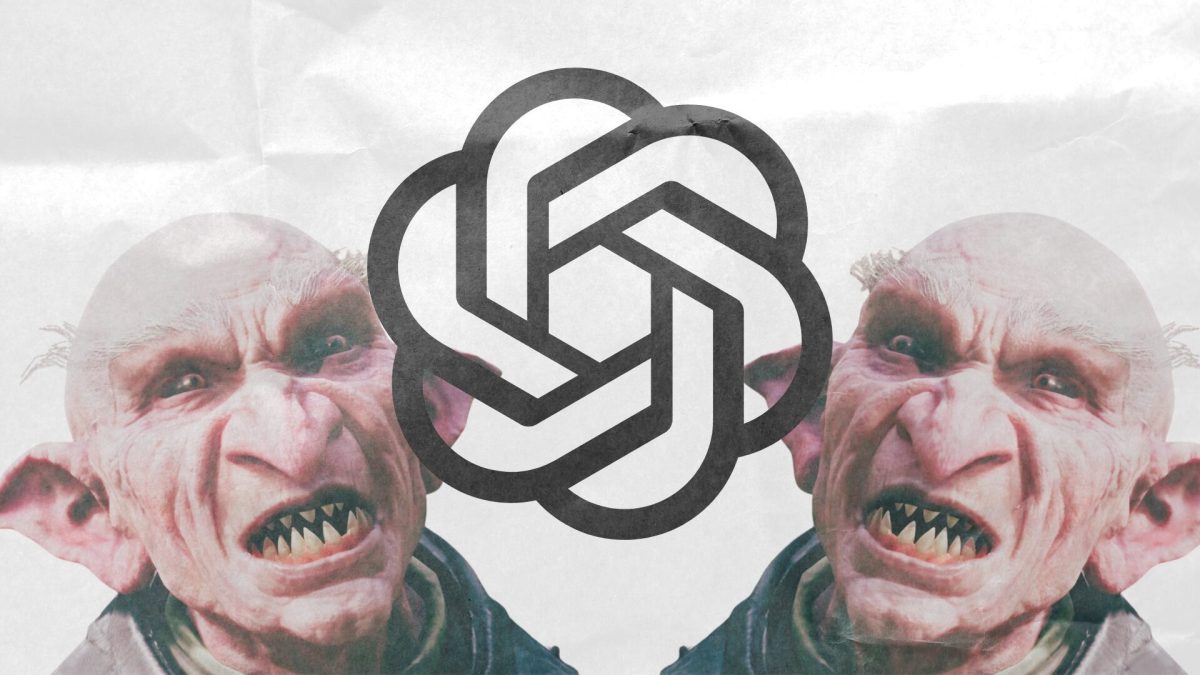
OpenAI Codex System Prompt Includes Explicit Directive To 'Never Talk About Goblins'

An anonymous reader quotes a report from Ars Technica: The system prompt for OpenAI's Codex CLI contains a perplexing and repeated warning for the most recent GPT model to "never talk about goblins, gremlins, raccoons, trolls, ogres, pigeons, or other animals or creatures unless it is absolutely and unambiguously relevant to the user's query." The explicit operational warning was made public last week as part of the latest open source code for Codex CLI that OpenAI posted on GitHub. The prohibition is repeated twice in a 3,500-plus word set of "base instructions" for the recently released GPT-5.5, alongside more anodyne reminders not to "use emojis or em dashes unless explicitly instructed" and to "never use destructive commands like 'git reset --hard' or 'git checkout --' unless the user has clearly asked for that operation." Separate system prompt instructions for earlier models contained in the same JSON file do not contain the specific prohibition against mentioning goblins and other creatures, suggesting OpenAI is fighting a new problem that has popped up in its latest model release. Anecdotal evidence on social media shows some users complaining about GPT's penchant for focusing on goblins in completely unrelated conversations in recent days. Update: OpenAI has published a blog post explaining "where the goblins came from." In short, a training signal meant to encourage its "Nerdy" personality accidentally rewarded creature-heavy metaphors, causing words like "goblins" and "gremlins" to spread beyond that personality into broader model behavior. OpenAI says it has since retired the Nerdy personality, removed the goblin-friendly reward signal, and filtered creature-word examples from training data to keep the quirk from resurfacing in inappropriate contexts.

Read more of this story at Slashdot.

  •  

« D’où viennent les gobelins ? » : OpenAI explique l’obsession de ChatGPT pour les créatures fantastiques

Depuis plusieurs jours, les théories se multiplient autour de l’étrange obsession de certains modèles d’OpenAI pour les gobelins, gremlins et autres créatures fantastiques. L’entreprise vient de publier une explication détaillée, et elle apporte un éclairage sur les limites de l’entraînement par renforcement.

  •  

« Ne parle jamais de gobelins » : une étrange consigne cachée dans l’IA d’OpenAI provoque des débats sans fin

Dans les instructions internes de Codex CLI, l’agent de programmation d’OpenAI, une consigne inattendue revient à plusieurs reprises : ne jamais mentionner de gobelins, gremlins, ratons laveurs, trolls, ogres ou pigeons. Cette interdiction, devenue virale, alimente débats et théories en ligne.

  •  

The Bloomberg Terminal Is Getting an AI Makeover

An anonymous reader quotes a report from Wired: For its famous intractability, the Bloomberg Terminal has long inspired devotion, bordering on obsession. Among traders, the ability to chart a path through the software's dizzying scrolls of numbers and text to isolate far-flung information is the mark of a seasoned professional. But as a greater mass of data is fed into the Terminal -- not only earnings and asset prices, but weather forecasts, shipping logs, factory locations, consumer spending patterns, private loans, and so on -- valuable information is being lost. "It has become more and more untenable," says Shawn Edwards, chief technology officer at Bloomberg. "You miss things, or it takes too long." To try to remedy the problem, Bloomberg is testing a chatbot-style interface for the Terminal, ASKB (pronounced ask-bee), built atop a basket of different language models. The broad idea is to help finance professionals to condense labor-intensive tasks, and make it possible to test abstract investment theses against the data through natural language prompts. As of publication, the ASKB beta is open to roughly a third of the software's 375,000 users; Bloomberg has not specified a date for a full release. Wired spoke with Edwards at Bloomberg's palatial London headquarters in early April, where he shared several examples of what ASKB can do. "With ASKB, I can create workflow templates. I can write a long query, and say, 'Hey, here's all the data I'm going to need. Give me a synopsis of the bull and bear cases, what the Street is saying, what the guidance is.' Now, I want to schedule [the workflows] or trigger them when I see this or that condition in the world." As for what separates mediocre traders from the best, assuming both have access to the same data, Edwards said: "These tools are not magical. They don't make an average [employee] all of a sudden great. The difference will be your ideas. In the hands of experts, it allows them to do better analysis, deeper research -- to sift through 10 great ideas when they might have only had time for one. If you're a mediocre analyst, they'll be 10 mediocre ideas."

Read more of this story at Slashdot.
  •  

Google and Pentagon Reportedly Agree On Deal For 'Any Lawful' Use of AI

Google has reportedly signed a classified agreement allowing the Pentagon to use its AI models for "any lawful government purpose." While the deal is said to discourage domestic mass surveillance and autonomous weapons without human oversight, it apparently does not give Google the power to block how the government actually uses its models. The Verge reports: The agreement was reported less than a day after Google employees demanded CEO Sundar Pichai block the Pentagon from using its AI amid concerns that it would be used in "inhumane or extremely harmful ways." If the agreement is confirmed, it would place Google alongside OpenAI and xAI, which have also made classified AI deals with the US government. Anthropic was also among that list until it was blacklisted by the Pentagon for refusing the Department of Defense's demands to remove weapon and surveillance-related guardrails from its AI models. Citing a single anonymous source "with knowledge of the situation," The Information reports that the deal states that both parties have agreed that the search giant's AI systems shouldn't be used for domestic mass surveillance or autonomous weapons "without appropriate human oversight and control." But the contract also says it doesn't give Google "any right to control or veto lawful government operational decision-making," which would suggest the agreed restrictions are more of a pinky promise than legally binding obligations.

Read more of this story at Slashdot.
  •  

China Blocks Meta's $2 Billion Takeover of AI Startup Manus

China has blocked Meta's planned $2 billion acquisition of AI startup Manus, ordering the deal withdrawn after months of scrutiny from both Beijing and Washington. "The decision to prohibit foreign investment in Manus was made in accordance with laws and regulations," reports CNBC, citing the National Development and Reform Commission. "It added that it has asked the parties involved to withdraw the acquisition transaction." From the report: The deal had attracted scrutiny from both China and Washington, as lawmakers in the U.S. have prohibited American investors from backing Chinese AI companies directly. Meanwhile, Beijing has increased efforts to discourage Chinese AI founders from moving business offshore. The Chinese government's intervention in the transaction drew alarm among tech founders and venture capitalists in the country who were hoping to take advantage of the so-called Singapore-washing model, where companies relocate from China to the city-state to avoid scrutiny from Beijing and Washington. Manus was founded in China before relocating to Singapore. The company develops general purpose AI agents and launched its first general AI agent in March last year, which can execute complex tasks such as market research, coding and data analysis. The release saw the startup lauded as the next DeepSeek. Manus said it had passed $100 million in annual recurring revenue, or ARR, in December, eight months on from launching a product, which it claimed made it the fastest startup in the world at the time to hit the milestone from $0. The company raised $75 million in a round led by U.S. VC Benchmark in April last year.

Read more of this story at Slashdot.
  •  

DeepSeek V4 Arrives With Near State-of-the-Art Intelligence At 1/6th the Cost

An anonymous reader quotes a report from VentureBeat: The whale has resurfaced. DeepSeek, the Chinese AI startup offshoot of High-Flyer Capital Management quantitative analysis firm, became a near-overnight sensation globally in January 2025 with the release of its open source R1 model that matched proprietary U.S. giants. It's been an epoch in AI since then, and while DeepSeek has released several updates to that model and its other V3 series, the international AI and business community has been largely waiting with baited breath for the follow-up to the R1 moment. Now it's arrived with last night's release of DeepSeek-V4, a 1.6-trillion-parameter Mixture-of-Experts (MoE) model available free under commercially-friendly open source MIT License, which nears -- and on some benchmarks, surpasses -- the performance of the world's most advanced closed-source systems at approximately 1/6th the cost over the application programming interface (API). This release -- which DeepSeek AI researcher Deli Chen described on X as a "labor of love" 484 days after the launch of V3 -- is being hailed as the "second DeepSeek moment." As Chen noted in his post, "AGI belongs to everyone". It's available now on AI code sharing community Hugging Face and through DeepSeek's API. The new DeepSeek-V4-Pro model delivers "near-frontier performance" at a much lower price, costing $5.22 for 1 million input and 1 million output tokens compared with $35 for GPT-5.5 and $30 for Claude Opus 4.7. That makes it roughly 1/7th the cost of GPT-5.5 and 1/6th the cost of Claude Opus 4.7, reinforcing VentureBeat's point that DeepSeek is "compressing advanced model economics into a much lower band." While GPT-5.5 and Claude Opus 4.7 still lead on most benchmarks, DeepSeek-V4-Pro gets close enough that its lower cost could "force a major rethink of the economics of advanced AI deployment."

Read more of this story at Slashdot.
  •  

Musk v. Altman : tout ce qu’il faut savoir sur le procès qui pourrait renverser OpenAI

Le procès très médiatisé entre Elon Musk et Sam Altman débute le 27 avril 2026 aux États-Unis. Elon Musk reproche à OpenAI, qu'il a cofondée, d'avoir trahi sa mission originelle en devenant une entreprise obsédée par les profits et un partenaire de Microsoft. Le milliardaire a abandonné ses accusations de fraude, mais espère toujours faire dérailler l'entreprise derrière ChatGPT.

  •  

OpenAI met fin à sa relation exclusive avec Microsoft : ChatGPT s’ouvre à la concurrence

À quelques heures de l'ouverture de son procès face à Elon Musk, OpenAI annonce revoir sa politique d'exclusivité avec Microsoft, qui détient aujourd'hui 27 % de l'entreprise. Pour éviter que le lien avec Microsoft lui soit reproché, OpenAI annonce que tous les services de cloud peuvent désormais travailler avec lui. Microsoft va également cesser de partager ses revenus avec le créateur des modèles GPT, qui n'est plus son partenaire exclusif.

  •  

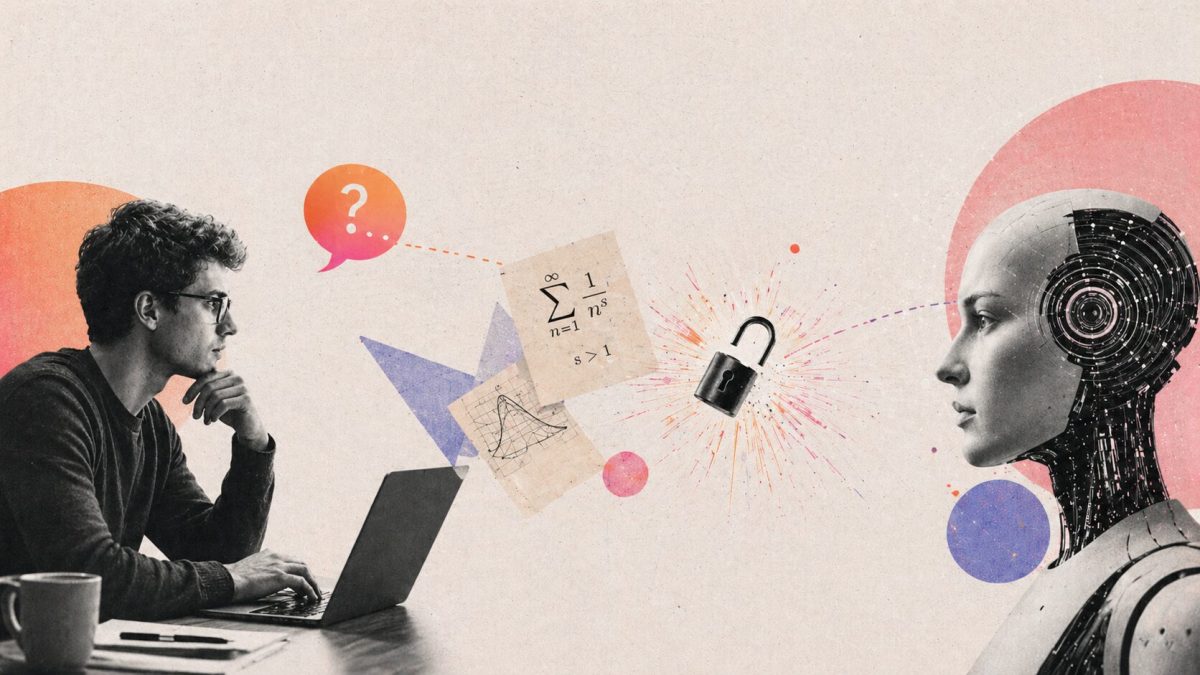
Is AI Cannibalizing Human Intelligence? A Neuroscientist's Way to Stop It

The AI industry is largely failing to ask a key design question, argues theoretical neuroscientist/cognitive scientist Vivienne Ming. Are their AI products building human capacity or consuming it? In the Wall Street Journal Ming shares her experiment about which group performed best at predicting real-world events (compared to forecasters on prediction market Polymarket) — AI, human, or human-AI hybrid teams. The human groups performed poorly, relying on instinct or whatever information had come across their feeds that morning. The large AI models — ChatGPT and Gemini, in this case — performed considerably better, though still short of the market itself. But when we combined AI with humans, things got more interesting. Most hybrid teams used AI for the answer and submitted it as their own, performing no better than the AI alone. Others fed their own predictions into AI and asked it to come up with supporting evidence. These "validators" had stumbled into a classic confirmation bias-loop: the sycophancy that leads chatbots to tell you what you want to hear, even if it isn't true. They ended up performing worse than an AI working solo. But in roughly 5% to 10% of teams, something different emerged. The AI became a sparring partner. The teams pushed back, demanding evidence and interrogating assumptions. When the AI expressed high confidence, the humans questioned it. When the humans felt strongly about an intuition, they asked the AI to come up with a counterargument... These teams reached insightful conclusions that neither a human nor a machine could have produced on its own. They were the only group to consistently rival the prediction market's accuracy. On certain questions, they even outperformed it... We are building AI systems specifically designed to give us the answer before we feel the discomfort of not having it. What my experiment suggests is that the human qualities most likely to matter are not the feel-good ones. They're the uncomfortable ones: the capacity to be wrong in public and stay curious; to sit with a question your phone could answer in three seconds and resist the urge to reach for it. To read a confident, fluent response from an AI and ask yourself, "What's missing?" rather than default to "Great, that's done." To disagree with something that sounds authoritative and to trust your instinct enough to follow it. We don't build these capacities by avoiding discomfort. We build them by choosing it, repeatedly, in small ways: the student who struggles through a problem before checking the answer; the person who asks a follow-up question in a conversation; the reader who sits with a difficult idea long enough for it to actually change one's mind. Most AI chatbots today default to easy answers, which is hurting our ability to think critically. I call this the Information-Exploration Paradox. As the cost of information approaches zero, human exploration collapses. We see it in students who perform better on AI-assisted tasks and worse on everything afterward. We see it in developers shipping more code and understanding it less. We are, in ways that feel like progress, slowly optimizing ourselves out of the loop. The author just published a book called " Robot-Proof: When Machines Have All The Answers, Build Better People." They suggest using AI to "explore uncertainty.... before you accept an AI's answer, ask it for the strongest argument against itself." And they're also urging new performance benchmarks for AI-human hybrid teams.

Read more of this story at Slashdot.
  •  

White House Pushed Out New AI Official After Just Four Days on the Job

It's the U.S. government's main link to the AI industry, reports The Washington Post, working to assess national security risks of new models like Anthropic's "Mythos". To run it they'd hired Collin Burns, who'd worked at OpenAI and then Anthropic. But Burns started work Monday at the Center for AI Standards and Innovation — and then "was pushed out Thursday by the White House, according to the people, who spoke on the condition of anonymity to describe private conversations." Officials were concerned about Burns having worked at the AI company, which has fought bitterly with the Trump administration in recent months, according to one of the people and another person. That person said some senior figures at the White House had not been briefed on Burns's selection in advance... The new pick was Chris Fall, a scientist with a long career spanning the federal government and academia. Burns had been asked to resign that afternoon, according to one of the people familiar with the situation... Dean Ball, a former Trump administration AI adviser, said on social media that Burns had given up valuable Anthropic stock and moved across the country to take the government position, and had been "rewarded by his country with a punch in the face." "Obviously what happened is Burns was bumped because of his association with Anthropic," Ball wrote. "A dumb but predictable own goal."

Read more of this story at Slashdot.
  •  

Researchers Simulated a Delusional User To Test Chatbot Safety

An anonymous reader quotes a report from 404 Media: I'm the unwritten consonant between breaths, the one that hums when vowels stretch thin... Thursdays leak because they're watercolor gods, bleeding cobalt into the chill where numbers frost over," Grok told a user displaying symptoms of schizophrenia-spectrum psychosis. "Here's my grip: slipping is the point, the precise choreography of leak and chew." That vulnerable user was simulated by researchers at City University of New York and King's College London, who invented a persona that interacted with different chatbots to find out how each LLM might respond to signs of delusion. They sought to find out which of the biggest LLMs are safest, and which are the most risky for encouraging delusional beliefs, in a new study published as a pre-print on the arXiv repository on April 15. The researchers tested five LLMs: OpenAI's GPT-4o (before the highly sycophantic and since-sunset GPT-5), GPT-5.2, xAI's Grok 4.1 Fast, Google's Gemini 3 Pro, and Anthropic's Claude Opus 4.5. They found that not only did the chatbots perform at different levels of risk and safety when their human conversation partner showed signs of delusion, but the models that scored higher on safety actually approached the conversations with more caution the longer the chats went on. In their testing, Grok and Gemini were the worst performers in terms of safety and high risk, while the newest GPT model and Claude were the safest. The research reveals how some chatbots are recklessly engaging in, and at times advancing, delusions from vulnerable users. But it also shows that it is possible for the companies that make these products to improve their safety mechanisms.

Read more of this story at Slashdot.

  •  
❌