Vue lecture

WEC / 6 Heures de Spa : l’Aston Martin Valkyrie encore plus forte en course ?
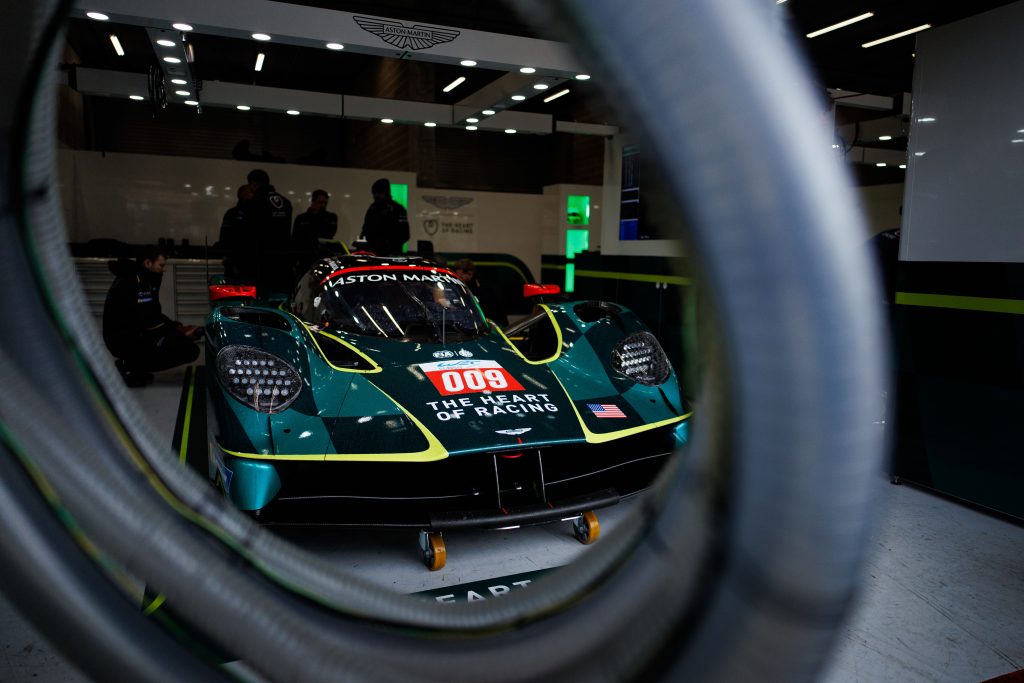
Elle était très bruyante. La voici désormais très performante. Un peu plus d’un an après ses débuts dans la catégorie Hypercar, l’Aston Martin Valkyrie LMH a démontré l’étendue de ses progrès lors des qualifications des 6 Heures de Spa-Francorchamps.

Les deux voitures engagées par l’équipe The Heart of Racing s’élanceront depuis les 6e et 7e positions sur la grille de départ, samedi à 14 heures. Marco Sorensen et Harry Tincknell ont notamment exploité astucieusement leurs pneumatiques tendres pendant la qualification de ce vendredi.

« L’objectif était de nous qualifier pour l’Hyperpole, nous confie Harry Tincknell, pilote de la voiture n°007 à propos de cette séance qui détermine les dix premières places au drapeau vert. Et à partir de là, le but était de voir jusqu’où nous pouvions aller ». 

Mais ce pourrait être tout aussi bien en course poursuit devant nous l’ex-pilote Ford : « Pendant les essais libres, nous avons vu que notre rythme en condition de course est l’un des plus rapides. Voire le plus rapide ». 

Le meilleur résultat d’une Aston Martin en championnat du monde d’endurance (WEC) était jusqu’ici une cinquième place, au Japon, en septembre dernier. « Je pense qu’on peut faire mieux, juge Harry Tincknell. Je l’espère en tout cas »

Des progrès sensibles

Pour mieux comprendre les améliorations apportées, rembobinons. L’an dernier, à la même époque, le pilote britannique nous dressait un premier état des lieux de la Valkyrie, alors à court de kilomètres : « Nous sommes très bien en entrée de virage. Nous avons un arrière très stable et nous pouvons vraiment entrer très fort dans des virages plutôt lents. »

Douze mois plus tard, l’Hypercar à la livrée British Racing Green a considérablement évolué. Parmi les gros gains enregistrés ces derniers mois figure l’électronique. Rappelons ici que le couple aux roues arrière est limité par le règlement et contrôlé en permanence par les organisateurs grâce à des capteurs. Se rapprocher au plus près de la puissance maximale grâce au logiciel sans jamais la dépasser est devenu un sujet clé de l’endurance moderne.

« Jusqu’au Mans en juin dernier, nous nous sommes concentrés sur la fiabilité, témoigne Alex Riberas, pilote de la n°009. Une fois que nous avons fini les 24 Heures sans problème majeur et coché cette case, nous avons poussé côté performance. »

Les Aston Martin au V12 atmosphérique avaient surpris dans la Sarthe, terminant aux 12e et 14e places à l’arrivée. Puis les performances de la Valkyrie ont décollé à partir de la manche d’Interlagos. La n°009 s’est qualifiée dans le top 10 pour la première fois à Austin (États-Unis), en août dernier. La fin de campagne fut particulièrement concluante, avec une 5e place à l’arrivée à Fuji (Japon) et une 7e position sous le damier à Bahreïn.
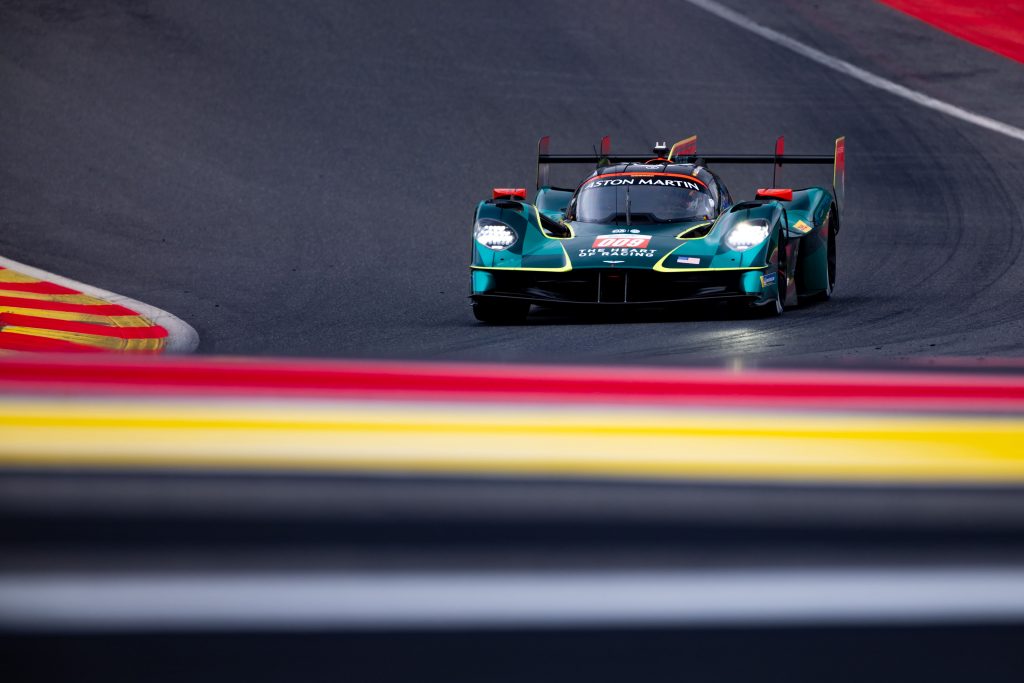
Photo : Aston Martin

Moins de surprises

« Nous n’avons plus de surprise en termes de réglage », confirme Alex Riberas. Aston Martin doit pourtant s’adapter à une nouvelle donne. Cette campagne 2026 est marquée par l’arrivée de la nouvelle gamme pneumatique pour piste sèche de Michelin. Le manufacturier intègre désormais 50 % de produits recyclés ou renouvelables dans son mélange. La mise en température est plus facile — domaine où l’Hypercar britannique peinait l’an dernier.

Engagée en WEC mais aussi dans le championnat nord-américain IMSA, Aston Martin THOR a éprouvé ces nouvelles gommes dès les 24 Heures de Daytona, en janvier, accumulant des données. Là où Ferrari, Peugeot, Alpine ou Genesis ont débuté en compétition il y a trois semaines lors de la manche d’ouverture à Imola.

« Pour moi, c’est un meilleur pneu, décrypte Alex Riberas. La montée en température a beaucoup progressé lorsque l’on sort des stands. Et la conduite est plus naturelle : on arrive à mieux combiner les actions. En entrée ou en sortie de virage, le pneu absorbe mieux l’énergie lorsque l’on mélange les forces longitudinales et latérales. La confiance dans la voiture est accrue. »

Et la confiance est souvent facteur de résultats. Aston en administrera-t-il la preuve à l’occasion de ces 6 Heures de Spa ?

Première pole position de Peugeot aux 6 Heures de Spa

Le Lion a aussi le sourire. La Peugeot n°94 s’élancera en pole position grâce à une nouvelle performance exceptionnelle du Danois Malthe Jakobsen en Hyperpole. C’est une première fois qu’une 9X8 s’élancera en tête au départ depuis le lancement du programme, en 2022. « Je suis très heureux pour toutes les personnes qui composent l’équipe, s’enthousiasmait le poleman. On a connu un début de saison compliqué et ces deux dernières années ont été difficiles. Nous avons montré que tout est possible et qu’il ne faut jamais abandonner. » La séance de Jakobsen avait pourtant mal commencé avec un demi-tête-à-queue en haut du Raidillon au début de la séance : « Heureusement, je n’ai rien heurté, rembobinait le pilote. Nous avons décidé immédiatement avec l’équipe de rentrer aux stands pour passer de nouveaux pneus et refaire une tentative de zéro. »

A lire sur Le Blog Auto :

Le grand bloc-notes des 6 Heures d’Imola

L’article WEC / 6 Heures de Spa : l’Aston Martin Valkyrie encore plus forte en course ? est apparu en premier sur Le Blog Auto.

  •  

Au tour de la Nintendo Switch 2 de voir son prix augmenter, mais pas tout de suite en France

Fin mars 2026, et alors que la firme avait peu avant laissé entendre le contraire, Sony décidait finalement d'augmenter les prix de ses PS5. Aujourd'hui, le 8 mai, c'est au tour de Nintendo d'officialiser une hausse de prix sur sa console Switch 2. La nouvelle est tombée via le site japonais de la f...

  •  

Steam Controller 2026 : les commandes reprennent ce soir, avec réservation !

Ce lundi, le 4 mai 2026, Valve débutait à 19 h 00 en France la mise en vente de la nouvelle version de son Steam Controller. Comme on pouvait s'y attendre, le périphérique n'est resté disponible que quelques minutes. Il y avait évidemment de nombreux passionnés qui voulaient vraiment leur manette, m...

  •  

[Bon plan] SSD PCIe 4.0 TLC : 1 To à 99,99 € livré ou 4 To à 329,99 € livré

Si vous êtes en cette fin de semaine à la recherche d'un SSD NVMe au prix le plus doux possible dans les conditions actuelles, mais sans pour autant rogner sur les performances, voici probablement les offres qu'il vous faut. Enfin, si vous êtes à la recherche d'un modèle de 1 To ou 4 To de capacité,...

  •  

Ventes de cartes mères en 2026 : ASUS, GIGABYTE, MSI ou ASRock, les prévisions ne sont bonnes pour personne !

Les ventes de cartes mères ne sont pas mirobolantes en 2026. Cette phrase sonnera surement comme une évidence pour beaucoup d'entre vous, comment pourrait-il en être autrement alors que la flambée des prix de la RAM et des SSD fait passer bien des envies de changer de configuration et nous pousse à...

  •  

Votre AMD Radeon est maintenant optimisée pour 5 jeux de plus, dont PRAGMATA

AMD a sorti hier, le 6 mai 2026, la nouvelle mouture de ses pilotes graphiques : les Adrenalin 26.5.1. Si vous ne les avez pas encore installés, n'hésitez pas à le faire surtout si vous jouez par exemple à PRAGMATA. En effet, le jeu a beau être sorti il y a quasiment trois semaines, il n'avait pas e...

  •  

Q1 2026 d'AMD : un bon trimestre, et des prévisions qui plaisent aux investisseurs !

Au début du mois de février, AMD nous présentait les résultats de son 4e trimestre 2025. Ils étaient très positifs, mais l'action de la société avait tout de même chuté dans la foulée. En cause, les prévisions de la firme pour son 1er trimestre 2026, qui avaient un peu déçu les investisseurs. Nous s...

  •  

16% of Parents Help Their Children Bypass Online Age Checks, Study Finds. One 15-Year-Old Just Uses a Fake Moustache

The Independent reports that "more than a third of children in the UK have found a way around age verification measures" for social media sites and other online platforms. And new research from online safety organisation Internet Matters "suggests one in six parents have helped their child to get past age verification checks, with children reporting 'tricking' platforms into thinking they are older. " Parents also said they had caught their children drawing on facial hair in a bid to evade the technology. One mother said: "I did catch my son using an eyebrow pencil to draw a moustache on his face, and it verified him as 15 years old"... From a sample of 1,000 UK children, 46% said they believed age checks are easy to bypass, while 32% admitted to having done so. 49% of the children surveyed said they'd still encountered harmful content, according to the online safety activists. The group called the figure "unacceptable," and complained that age verification measures "are often ineffective in practice or easy to bypass."

Read more of this story at Slashdot.

  •  

Can Investors Trust AI Sales Figures? Asks Wall Street Journal Opinion Piece

A Wall Street Journal opinion piece warns of "a troubling trend" in AI's growth. "Rather than selling software, some AI companies are paying their partners to use it." It cites OpenAI's $1.5 billion joint venture with private-equity firms, Anthropic's $200 million contribution to a private-equity firm joint venture, and Google's $750 million subsidization of Gemini's adoption by consulting firms. "These agreements muddy the distinction between a company's sound growth trajectory and artificial financial engineering." [T]he scale and structure of the recent AI deals go beyond standard incentive mechanisms... When a seller pays customers to buy its products, it is unclear if its revenue growth reflects vibrant demand or a willingness to accept subsidies. Slashdot reader destinyland writes: This warning comes from a prominent figure in the investing community. For six years Robert Pozen was chairman of America's oldest mutual fund company, after five years at Fidelity. An advocate for corporate governance, he's currently a lecturer at MIT's business school (and the author of the book Remote Inc.: How to Thrive at Work...Wherever You Are). "As AI companies prepare initial public offerings, investors should scrutinize their numbers closely," Pozner writes, warning about "time-limited financial support". "In evaluating AI sales figures, analysts should consider the distorted incentives that the recent financing deals create," writes Pozner: Private-equity firms, enticed by promised returns, might demand rapid rollouts of AI products, rather than ensuring their orderly and safe development. Portfolio companies of private-equity firms may embrace AI tools not because they are needed but because adoption is mandated by their owners. Consultants may favor one set of AI models based on the subsidy instead of the merits. If guarantees and subsidies are major factors in the rapid adoption of AI tools, investors should be skeptical of AI companies' revenue projections. Many of their customers enticed by consultants will stop paying full price when the financial incentives are gone. Many of the portfolio companies of private-equity firms could back away from selected AI tools once these joint ventures expire. The challenge with evaluating these AI financing deals is the lack of transparency. At present, AI vendors don't separate revenue driven by subsidies or joint ventures from standard sales. The lesson from the telecom debacle is that financial engineering can obscure, for years, the difference between real customer demand and demand driven by incentives. When AI companies begin to finance their own product distribution, guaranteeing returns to investors and subsidizing sales, it's a signal for investors to dig deeper. Investing in an AI company? Ask what percentage of enterprise revenue is coming from subsidized channels or joint ventures, Pozner suggests. And the renewal/retention rate for customers not supported by subsidies or joint ventures...

Read more of this story at Slashdot.

  •  

[VIDÉO] Essai Suzuki e-Vitara de 174 ch

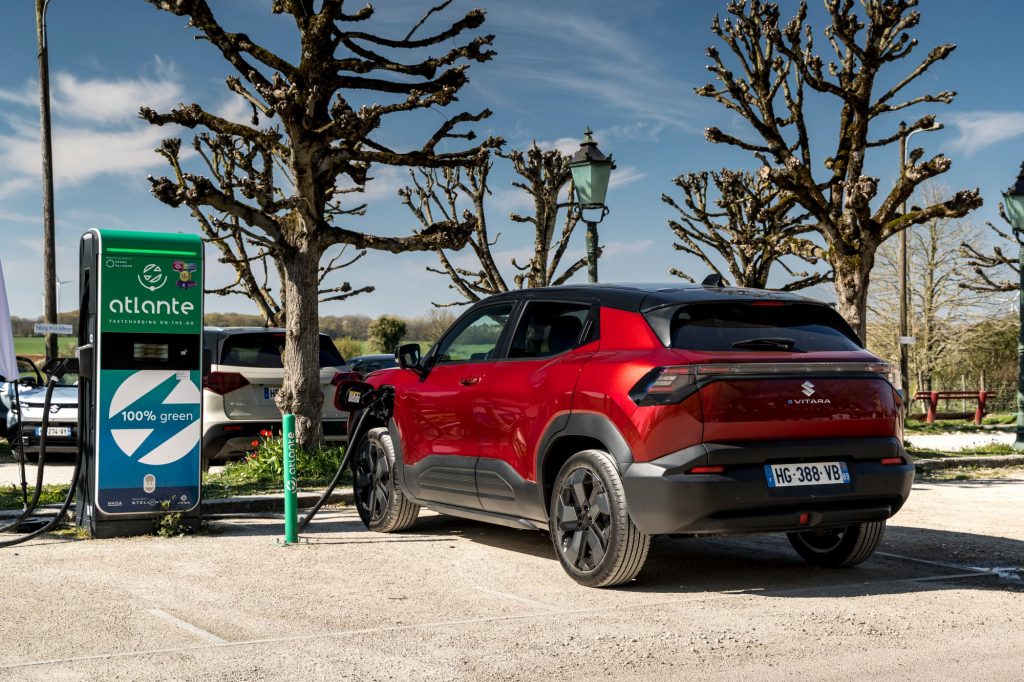
Elle s’est fait attendre, mais la voici maintenant disponible sur le marché français. Suzuki présente sa première voiture 100% électrique. Après une précédente rencontre dans un environnement contrôlé, nous l’avons conduite sur les jolies routes de la campagne bourguignonne, idéales pour se faire une bonne idée de ce que vaut l’e-Vitara.

Comme le concept-car

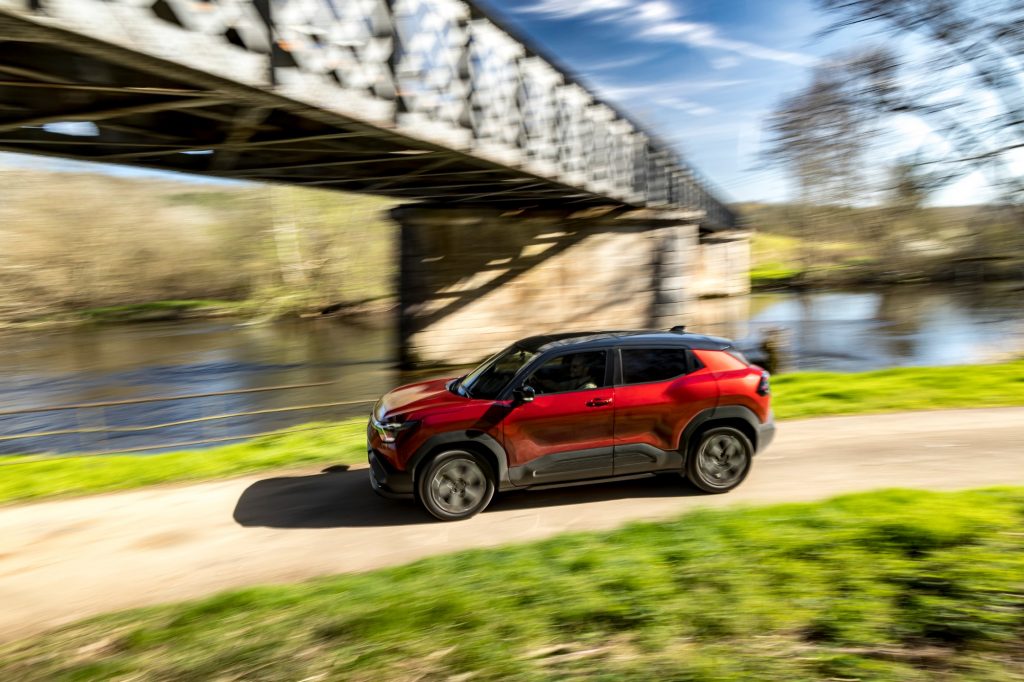
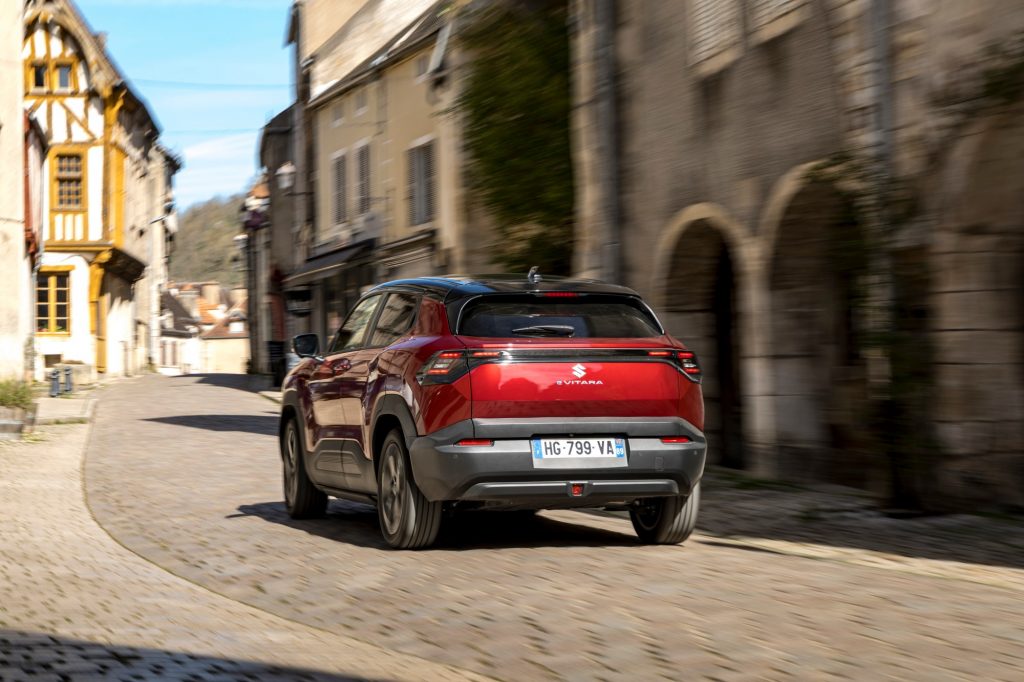
On a déjà à peu près tout dit sur le physique de la toute nouvelle Suzuki e-Vitara. Son design devait être en partie compatible avec celui de son cousin, l’Urban Cruiser. Pour faciliter son intégration dans le catalogue, le constructeur japonais s’est appuyé sur son best-seller, le Vitara, qui continue d’exister à ses côtés pour le moment. Il ressemble quasiment trait pour trait au concept-car qui l’a précédé. Il paraît à la fois robuste et plutôt moderne. Avec ses épaulements, il semble vouloir bousculer les autres sur la route.

Ce SUV a une garde au sol relativement élevée, qui lui permet non seulement de franchir les trottoirs, mais aussi de s’aventurer parfois sur des chemins. Car, tout Suzuki qu’il est, il a droit aussi à une version à transmission intégrale, avec un moteur sur le train arrière sur la version AllGrip. Il a son petit look et, il faut bien l’avouer, il donne un sacré coup de vieux à son frère thermique, qui commence véritablement à accuser le poids des ans. La génération de ce dernier existe depuis 2015 et s’est, au passage, écoulée à plus de 54 000 exemplaires. On ne sait pas si c’est l’objectif que se fixe la marque pour l’e-Vitara.

Un intérieur de voiture, pas de vaisseau spatial

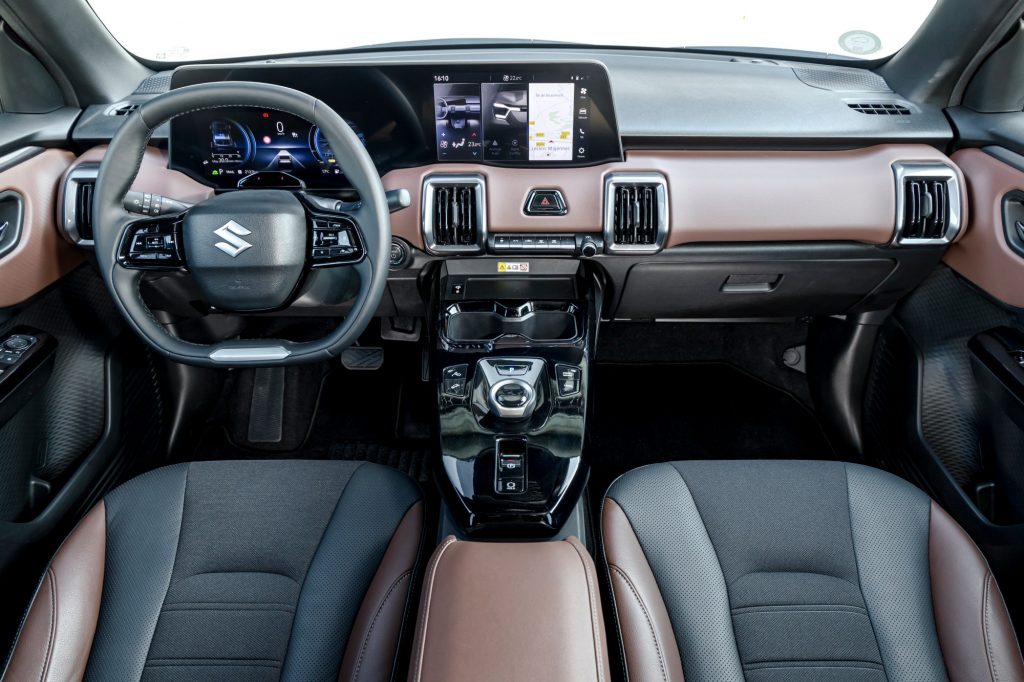
À bord, on retrouve cet intérieur que nous avions découvert l’an passé. Oui, Suzuki a pris son temps pour ajuster sa production dans son usine indienne. D’ailleurs, il précise que la pleine cadence n’interviendra pas avant juin. En tout cas, on évolue dans un environnement qui, ici aussi, marque l’écart avec l’autre Vitara. L’atmosphère s’avère plutôt moderne, avec une instrumentation 100% numérique. Quelques revêtements moussés rendent l’ambiance un peu plus chaleureuse. Pas d’écran XXL (Apple CarPlay/Android Auto embarqués), mais disons qu’il est à la bonne taille pour ne pas avoir à faire de grands gestes au moment de le manipuler. Un chargeur à induction, une prise USB-C et USB-A sont présents à l’avant.

Aussi bête que cela puisse paraître, Suzuki a agencé la plupart des commandes comme auparavant dans la plupart des voitures, avec des boutons physiques pour la gestion de la climatisation en premier lieu, et une molette rotative pour le son. Basique ? Loin s’en faut dans l’industrie automobile actuelle. On comprend assez rapidement où se trouvent la plupart des fonctions. On se sent bien à l’avant, et pas trop mal à l’arrière en ce qui concerne l’espace aux jambes. Méfiance tout de même, pour les grands gabarits, au niveau de la garde au toit. Le coffre dépasse à peine 300 litres, mais offre un plancher plat. On peut ajuster sa contenance grâce aux sièges coulissants sur 16 cm.

Temps de recharge long en DC

Après nos premiers tours de roues, on constate une régénération manifestement réglée sur un niveau intermédiaire. On cherche alors à la modifier. On se rappelle alors, lors d’une prise de contact avec un prototype l’an passé, avoir recommandé aux ingénieurs japonais un accès rapide à ce réglage. Malheureusement, ce n’est pas le cas : il faut passer par plusieurs étapes sur l’écran, et surtout être à l’arrêt pour choisir l’un des trois niveaux. Dommage ! Pour le reste, on profite, sur notre version deux roues motrices, d’un moteur de 128 kW (174 ch) couplé à une batterie de 61 kWh (LFP). La voiture ne manque pas d’entrain ; globalement, elle se comporte bien dans toutes les situations de conduite, que ce soit en ville ou sur route.

Néanmoins, on remarque assez rapidement que l’on doit utiliser le mode ECO et fluidifier sa conduite si l’on veut maintenir une consommation raisonnable. Cela se fait sans grande difficulté, mais on voit nettement la différence si on la mène tambour battant. Le chiffre WLTP dépassant les 400 km nous paraît plutôt optimiste. Cependant, il est probable qu’en faisant attention, elle s’approche des 300 km. Avec son chargeur embarqué de 11 kW, on peut espérer une recharge complète en un peu plus de 5 heures. Suzuki refuse de communiquer sur la puissance en courant continu, mais le constructeur annonce un temps de 45 minutes pour passer de 10 à 80%. Il va clairement falloir que cette donnée s’améliore par la suite.

Bon comportement routier

Même si la puissance paraît faible, notez que l’on peut préconditionner manuellement la batterie. Nul besoin, comme chez certains concurrents, de devoir obligatoirement entrer une destination dans le GPS. En tout cas, on ne passe pas un mauvais moment à son volant. La voiture se montre plutôt bien amortie, ce qui sert assez bien le confort. Son couple confortable lui assure notamment des reprises de bon aloi. On doit aussi son bon comportement routier à ses suspensions arrière multibras. Soyons clairs : elle n’a pas pour autant des accents de compacte sportive.

En se perdant sur quelques chemins ici et là, on apprécie la garde au sol de 18 cm. On se sentirait encore un peu plus à l’aise avec l’e-axle associé à la version AllGrip. Mais honnêtement, par temps sec, cela ne nous manque pas outre mesure. L’insonorisation à haute vitesse aurait mérité un peu plus de soin. Même si cela ne s’avère pas trop gênant, on l’a tout de même remarqué. On oublie aussi son poids, proche des deux tonnes, qui ne se fait pas trop ressentir. Il se rappelle parfois à nous lorsque l’on rebondit sur une imperfection du bitume que l’on n’aurait pas anticipée.

Un rare SUV compact électrique 4X4

D’entrée de jeu, se sachant désavantagé en Europe à cause de son assemblage en Inde, l’e-Vitara bénéficie d’une ristourne maison de 4 000 € à son lancement. Ses tarifs vont de 32 500 à 40 800 € hors réduction constructeur. La version AllGrip à transmission intégrale se distingue comme l’une des rares 4×4 sur le segment. Au-delà de la garantie classique de 3 ans, elle peut grimper jusqu’à 10 ans si l’entretien est réalisé dans le réseau selon les préconisations. D’ailleurs, n’importe quelle Suzuki déjà vendue est éligible à cette garantie étendue, après un diagnostic de la marque. L’e-Vitara a mis du temps à arriver avec certaines qualités, mais il faudra progresser, notamment sur la recharge.

L’article [VIDÉO] Essai Suzuki e-Vitara de 174 ch est apparu en premier sur Le Blog Auto.

  •  

Roblox Blames Age-Verification Rollout for Lowered Growth. Stock Tumbles 22%

Age verification became mandatory for chat access on Roblox in January — and Friday morning Quartz reported it's apparently impacted the company's financials: Roblox cut its full-year 2026 bookings forecast by roughly $900 million at the midpoint on Thursday, blaming stronger-than-expected headwinds from its mandatory age-verification rollout on an audience that skews heavily toward children and teenagers. Full-year 2026 bookings are now projected at $7.33 billion to $7.60 billion, a range that sits roughly $900 million below the prior guidance of $8.28 billion to $8.55 billion; analysts had expected $8.38 billion, according to Yahoo Finance. Roblox stock fell almost 22% in premarket trading.... Daily active users rose 35% year over year to 132 million, while hours engaged climbed 43% to 31 billion hours... Daily Active Users and hours engaged fell below forecasts of 143.8 million and 33.68 billion, respectively, according to Yahoo Finance... Users who have not completed age checks have faced restricted communication features, and the process has weighed on the platform's ability to bring in new users. Russia's blocking of the platform, which took effect in December 2025, added further drag on user growth, according to Yahoo Finance. As of the end of the first quarter, 51% of global daily active users had completed age verification, with 65% of U.S. users having done so, Roblox said.... The safety push has come with legal costs. Roblox accrued $57 million in the first quarter for settlements and settlement proposals with certain states over youth-related consumer protection and digital safety matters, with payments structured over multiple years, the company said. Roblox acknowledged in a letter to shareholders that "our aggressive push to enhance safety lowers our expectations for topline growth in 2026." But they argued that it also "makes our platform fundamentally better and amplifies the long-term growth potential of Roblox through more effective content targeting, tailored communication experiences, and improved community sentiment."

Read more of this story at Slashdot.

  •  

NetHack 5.0 Released

"So yesterday the Devteam (it is always the Devteam) released version 5.0 of legendary and venerable rogueike compuer game NetHack," writes the Rogue-like games column @Play. "It is 39 years old..." MilenCent (Slashdot reader #219,397) writes: In addition to play changes it's left for players to discover, this version updates the code to compile with C99, makes it much easier to cross compile the code for other systems than the one running, and now uses Lua for its dungeon generation. Happy hacking! For new players, "Nethack 5.0 now has an optional tutorial in the early phases of the game that might help you," notes the Rogue-like games column @Play: Three systems binaries are provided: Windows, MS-DOS and Amiga. Yes, Nethack still supports MS-DOS, and yes, it still supports classic Amiga: it explicitly supports AmigaDOS 3.0, meaning it can still run on 68000 machines... That these are the only systems they provide binaries for shouldn't be seen as an indication that these are the "most important" platforms for Nethack, it's more that, since it's entirely open source, building it yourself is entirely possible, and more expected than with most software. Nethack can be built for Linux, Windows 8-11, AmigaDOS, MacOS (I'm not sure if this includes classic Mac too but it might), Windows CE (wow), OS/2 (additional wow), BeOS, VMS and multiple Unixes... Another option is to play through public Nethack servers. The most popular of these are probably alt.org and Hardfought.

Read more of this story at Slashdot.

  •  

OpenAI Introduces AI-Generated Pets for Its Codex App

"Vibe coding just got a whole lot more adorable," writes Engadget: OpenAI introduced AI-generated pets to the Codex app, its agentic tool that helps with coding. These "optional animated companions" don't do any coding themselves, but serve as a floating overlay that can tell you what Codex is working on, notify you when Codex completes a task or whether it needs your input on something. The new feature lets developers see Codex's active thread, without having to switch away from your current open app. "The feature ships with eight built-in variations — including a cat and dog," reports Mashable. "But the more interesting play is the custom pet creator." Users can prompt Codex directly to generate their own companion, then share it online. A quick scroll through the homepage reveals the community has already gotten to work. Current creations include Goku, Patrick Star, Microsoft's long-retired Clippy, OpenAI CEO Sam Altman, Anthropic CEO Dario Amodei, and — naturally — a goblin. There's also Grogu, Dobby, a tiny Bob Rossi, and a "Doge-style Shiba Inu dog"...

Read more of this story at Slashdot.

  •  

AI Cameras are Being Deployed Across the Western US for Early Detection of Wildfires

The Associated Press reports: On a March afternoon, artificial intelligence detected something resembling smoke on a camera feed from Arizona's Coconino National Forest. Human analysts verified it wasn't a cloud or dust, then alerted the state's forest service and largest electric utility. One of dozens of AI cameras installed for the utility Arizona Public Service had spotted early signs of what came to be known as the Diamond Fire. Firefighters raced to the scene and contained the blaze before it grew past 7 acres (2.8 hectares). As record-breaking heat and an abysmal snowpack raise concerns about severe wildfires, states across the fire-prone West are adding AI to their wildfire detection toolbox, banking on the technology to help save lives and property. Arizona Public Service has nearly 40 active AI smoke-detection cameras and plans to have 71 by summer's end, and the state's fire agency has deployed seven of its own. Another utility, Xcel Energy in Colorado, has installed 126 and aims to have cameras in seven of the eight states it serves by year's end... ALERTCalifornia is a network of some 1,240 AI-enabled cameras across the Golden State that work similar to the system in Arizona.... Pano AI, whose technology combines high-definition camera feeds, satellite data and AI monitoring, has seen a growing interest in its cameras since launching in 2020. They've been deployed in Australia, Canada and 17 U.S. states, including Oregon, Washington and Texas... Last year, its technology detected 725 wildfires in the U.S., the company said... Cindy Kobold, an Arizona Public Service meteorologist, said the technology notifies them about 45 minutes faster on average than the first 911 call.

Read more of this story at Slashdot.

  •  

Carbon Pollution Is Making Food Less Nutritious, Risking the Health of Billions

A new meta-analysis found nutrients in food decreased over the last 40 years, reports the Washington Post. "Many of humanity's most important crops — including wheat, potatoes, beans — contain fewer vitamins and minerals than they did a generation ago." "The invisible culprit behind this damaging phenomenon? Carbon dioxide pollution." Surging concentrations of carbon in the atmosphere, caused largely by burning fossil fuels, have produced potent changes in the way plants grow — from increasing their sugar content to depleting essential nutrients like zinc... "The diets we eat today have less nutritional density than what our grandparents ate, even if we eat exactly the same thing," said Kristie Ebi, a professor at the University of Washington's Center for Health and the Global Environment. People in wealthy countries with strong health care systems will have many tools to cope with the change, experts said. But for the world's poorest and most vulnerable, the consequences could be devastating. One study concluded that by the middle of the century the phenomenon could put more than a billion additional women and children at risk of iron-deficiency anemia — a condition that can cause pregnancy complications, developmental problems and even death. Meanwhile, some 2 billion people across the globe who already suffer from some form of nutrient shortage could see their health problems grow even worse. "The scale of the problem is huge," Ebi said. Plants depend on carbon dioxide to perform photosynthesis — but that doesn't mean they grow better when there's more carbon in the air, scientists say. A sweeping survey of changes among 32 compounds in 43 crops found that nearly every plant that humans eat is harmed by rising CO2 levels... On average, they found, nutrients have already decreased by an average 3.2 percent across all plants since the late 1980s, when the concentration of carbon dioxide in the atmosphere was about 350 parts per million. Thanks to long-time Slashdot reader GameboyRMH for sharing the news.

Read more of this story at Slashdot.

  •  

Robots Are Building Clay Homes In Texas Using Dirt From the Ground

A startup south of Austin is using robots to build homes out of clay pulled directly from the ground, reports a local news station: The materials are gathered on site, mixed, and placed on a build plate. From there, a robot lowers from above, picks up the clay with a claw, carries it to the wall and drops it into place. Later, the same robot switches tools, using a hammer attachment to pound the material into shape. "It's kind of trying to replicate how a human might build an adobe house," said software engineer Anastasia Nikoulina... Using machine learning, the system constantly evaluates the wall, adjusting how it builds to create a flat, solid surface... The project is underway at Proto-Town, a ranch between Lockhart and Luling where startups test new technologies, from anti-drone systems to nuclear reactors. The company plans to build their next home on the property, with hopes to do more than 20 homes over the next year.

Read more of this story at Slashdot.

  •  

It's Goodbye Time for Jeeves and Ask.com - Relics of Yesterday's Internet

A 1999 press release bragged "Jeeves" answered 92.3 million questions in just three months. "In the digital wilds of Y2K, we came to him with our most probing questions," remembers the New York Times — whether it was Britney Spears or tamagotchis: We asked, and he answered: Jeeves, the digital butler of information, the online valet who led us into the depths of cyberspace. Now, like so many other relics of yesterday's internet, Jeeves — and his home, Ask.com — are no more. After almost 30 years, the question-and-answer service and former search engine shuttered on Friday. "To you — the millions of users who turned to us for answers in a rapidly changing world — thank you for your endless curiosity, your loyalty, and your trust," the company said in a notice posted on its now-defunct website... Created in Berkeley, Calif., in the days of the dot-com gold rush, Ask Jeeves first appeared on computer screens in 1996.... Their mascot, Jeeves, was modeled on the clever English butler character from the famed P.G. Wodehouse book series. Its search function was simple — type in a question, get an answer. But the quality of its responses was uneven, and the website was quickly eclipsed by Google and Yahoo as the world's go-to search engines. The site was bought by InterActive Corp. for more than $1 billion in 2005, and was given an injection of cash to help it compete as a search engine. It rebranded as Ask.com and as part of the reimagining, the site also ditched the character of Jeeves in 2006. Scrappy but inventive, the site was one of the first to introduce hyperlocal map overlays to its searches and incorporate thumbnails of webpages. "They are doing a lot of clever and interesting things," a Google executive noted of Ask.com at the time. Still, Ask.com struggled to compete and returned in 2010 to its bread and butter: question-and-answer style prompts. Even then, it faltered against newer, crowdsourced iterations like Quora and Google's unyielding march to the internet fore — the platform now dominates search traffic, and the world's general experience of the internet. A statement at Ask.com ends "by thanking its millions of users, and saying, 'Jeeves' spirit endures'," notes this article from Engadget: As sad as it is to see a relic of the early Internet days fade into obscurity, we still have Ask Jeeves to thank for why some users still punch in full questions when querying Google. On top of that, Jeeves was built to provide detailed answers in natural language, which could have arguably acted as a precursor to today's AI chatbots like ChatGPT. "Now, Ask.com joins the Internet graveyard that includes competitors like AltaVista, which shut down in 2013," the article points out. "With Ask.com gone, alongside AIM and AOL dial-up services also sunsetting, we're truly coming to an end of a specific era of the Internet." And the New York Times argues the memory of Jeeves now rests somewhere between Limewire and Beanie Babies... Slashdot reader BrianFagioli calls it "a quiet reminder of how quickly the web moves, and how even widely recognized names can drift into obscurity once the underlying technology leaves them behind."

Read more of this story at Slashdot.

  •  
❌