Vue lecture

Rocket Lab Reports Growing Demand for Commercial Space Products. Stock Surges 34%

For just the first three months of 2026, Rocket Lab's launch business reports $63.7 million in revenue, reports CNBC — plus another $136.7 million from its space systems business. Besides beating Wall Street's expectations, Rocket Lab also announced that its backlog has more than doubled from a year ago to $2.2 billion, and that it's buying space robotics company Motiv Space Systems. Friday its stock price shot up 34% in one day... Rocket Lab's stock has more than quadrupled over the past year, benefiting from skyrocketing demand for businesses tied to the space economy ahead of SpaceX's hotly anticipated IPO later this year. Demand for space systems and satellites is also escalating as President Donald Trump pursues his ambitious Golden Dome missile defense project and NASA's crewed Artemis missions rev up. Rocket Lab said Thursday that it signed its largest contract ever with a confidential customer for its Neutron and Electron rockets through 2029, weeks after landing a $190 million deal for 20 hypersonic test flights... "The demand signal is clear," CEO Peter Beck said on an earnings call with analysts, calling the pace of new product releases from the company this year "relentless".... Rocket Lab's good news lifted other space companies. Firefly Aeropspace and Intuitive Machines both jumped more than 20, while Redwire gained 19%. Voyager Technologies rose 14%. "The company anticipates revenue between $225 million and $240 million during the second quarter."

Read more of this story at Slashdot.

  •  

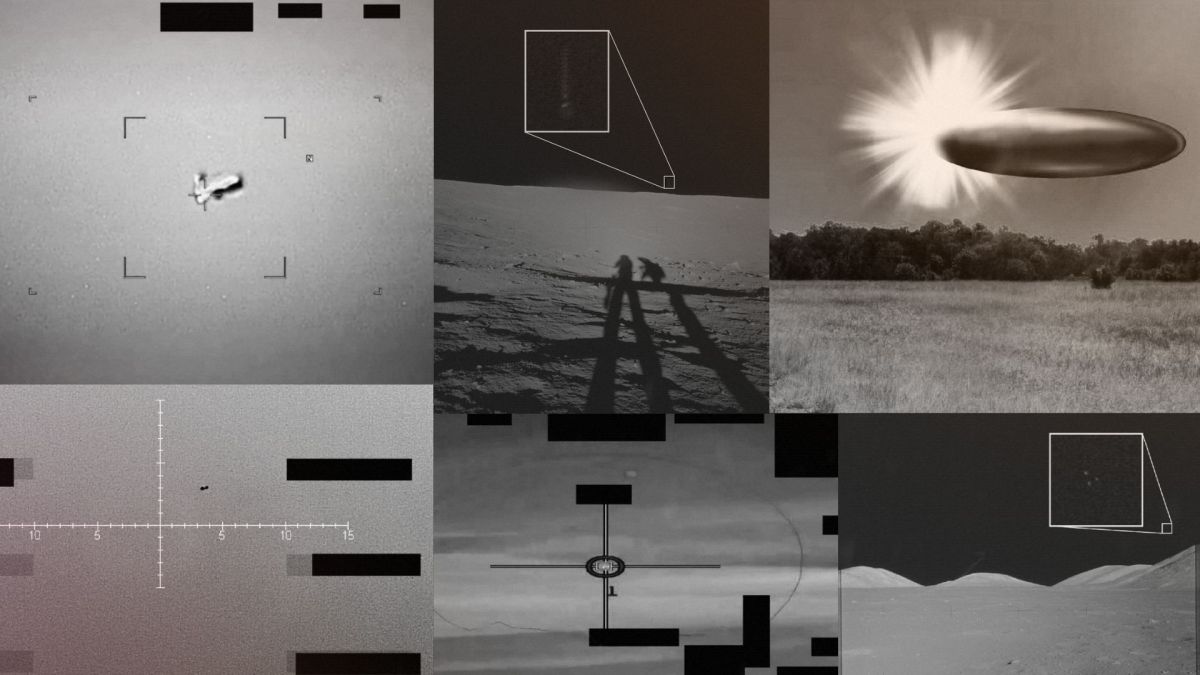
« Trois lueurs au-dessus du relief lunaire » : les USA ouvrent leurs premiers X-Files sur les OVNI

Ce qui n’était qu’une pique de Donald Trump contre Barack Obama en février dernier vient de se transformer en séisme d’État. Ce 8 mai 2026, le Département de la Guerre a lancé le portail War.gov/UFO, livrant au public les premières pièces d’un puzzle de 161 archives déclassifiées sur les phénomènes aérospatiaux non identifiés.

  •  

Une méta-analyse sur les effets positifs de ChatGPT dans l’éducation rétractée 1 an après

Recherche précipitée
Une méta-analyse sur les effets positifs de ChatGPT dans l’éducation rétractée 1 an après

Une méta-analyse sur les effets de ChatGPT sur les élèves qui soutenait « un impact positif considérable » a été rétractée. Des chercheurs ont rapidement pointé des problèmes méthodologiques importants mais la revue n’a réagi qu’un an après.

En mai 2025, la revue Humanities and social sciences communications publiait une méta-analyse effectuée par les chercheurs chinois Jin Wang et Wenxiang Fan sur les effets de l’utilisation du chatbot d’OpenAI sur l’apprentissage à l’école qui affirmait que celui-ci avait « un impact positif considérable sur l’amélioration des résultats scolaires ». Près d’un an après avoir cautionné le sérieux de l’étude en l’ayant publiée, la revue, éditée par le géant Springer Nature, a décidé de la rétracter.

« L’éditeur [membre de l’équipe qui gère la revue] a décidé de rétracter cet article en raison de réserves concernant des incohérences dans la méta-analyse. Ces problèmes remettent en cause la confiance que l’éditeur peut accorder à la validité de l’analyse et aux conclusions qui en découlent », explique la note de rétractation publiée le 22 avril dernier. « Les auteurs n’ont pas répondu aux courriers concernant cette rétractation », ajoute la revue.

Un article cité déjà 500 fois

Entre-temps, selon Google Scholar, la méta-analyse a été citée plus de 500 fois dans des travaux scientifiques (relus par les pairs ou pas). Si ces travaux reposent de façon importante sur cette méta-analyse, les auteurs devront aussi se poser des questions sur la solidité de leurs travaux. Par exemple, elle était encore citée dans un article publié en février dernier dans la revue Scientific Reports, éditée aussi par Springer Nature.

Pourtant des critiques sont vite apparues. Ainsi, on pouvait trouver un commentaire sur la plateforme Pubpeer (qui permet de relever d’éventuels problèmes dans des articles déjà parus dans des revues scientifiques) dès juillet dernier.

Des chercheurs norvégiens ont sonné l’alarme


Il reste 61% de l'article à découvrir.
Vous devez être abonné•e pour lire la suite de cet article.
Déjà abonné•e ? Générez une clé RSS dans votre profil.

  •  

Blue Origin dévoile des images inédites après l’échec de sa fusée géante, qui a causé la destruction d’un satellite

fairings new glenn

Malgré la perte de son satellite et l'interdiction de vol qui frappe sa fusée géante New Glenn, Blue Origin veut retenir le positif de sa mission NG-3. Le PDG de l'entreprise a dévoilé une vidéo vertigineuse de la chute de la coiffe, confirmant le test réussi d'une technologie indispensable à sa future récupération.

  •  

À défaut d’atteindre la bonne orbite, la coiffe de la fusée New Glenn de Blue Origin sait tomber avec style

fairings new glenn

Malgré la perte de son satellite et l'interdiction de vol qui frappe sa fusée géante New Glenn, Blue Origin veut retenir le positif de sa mission NG-3. Le PDG de l'entreprise a dévoilé une vidéo vertigineuse de la chute de la coiffe, confirmant le test réussi d'une technologie indispensable à sa future récupération.

  •  

Astronomers May Have Detected an Atmosphere Around a Tiny, Icy World Past Pluto

"The Associated Press is reporting on a new study in Nature Astronomy suggesting that a tiny, icy world beyond Pluto harbors a thin, delicate atmosphere that may have been created by volcanic eruptions or a comet strike," writes longtime Slashdot reader fahrbot-bot. From the report: Just 300 miles (500 kilometers) or so across, this mini Pluto is thought to be the solar system's smallest object yet with a clearly detected global atmosphere bound by gravity, said lead researcher Ko Arimatsu of the National Astronomical Observatory of Japan. This so-called minor planet -- formally known as (612533) 2002 XV93 -- is considered a plutino, circling the sun twice in the time it takes Neptune to complete three solar orbits. At the time of the study, it was more than 3.4 billion miles (5.5 billion kilometers) away, farther than even Pluto, the only other object in the Kuiper Belt with an observed atmosphere. This cosmic iceball's atmosphere is believed to be 5 million to 10 million times thinner than Earth's protective atmosphere, according to the the study [...]. It's 50 to 100 times thinner than even Pluto's tenuous atmosphere. The likeliest atmospheric chemicals are methane, nitrogen or carbon monoxide, any of which could reproduce the observed dimming as the object passed before the star, according to Arimatsu. Further observations, especially by NASA's Webb Space Telescope, could verify the makeup of the atmosphere, according to Arimatsu.

Read more of this story at Slashdot.

  •  

Scientists Discover 27 Potential New Planets That Orbit Two Stars

Astronomers have identified 27 potential new circumbinary planets -- worlds that orbit two stars, like Star Wars' Tatooine. "To date, only about 18 circumbinary planets ... had been identified in the universe," reports the Guardian. "More than 6,000 planets have been discovered that orbit single stars, like Earth does around the sun." The Guardian reports: In a timely publication for May 4, also known as Star Wars Day, scientists have identified nearly 30 more candidate planets, whose distances range from 650 to 18,000 light years away from Earth. [...] More than half of the stars in the universe exist in binary or multiple star systems. The researchers instead used a method known as "apsidal precession," searching for a wobble between stars that orbit around and eclipse each other. "If we monitor the exact timing of these eclipses ... that can tell us that there's something else going on in the system," said Margo Thornton, the study's lead author and a PhD candidate at UNSW. After eliminating other factors such as the rotation and gravitational pull of the two stars, the team identified 36 star systems out of 1,590 whose behavior could only be explained by a third body. For "27 of those objects, it is possible that they are planet mass," Thornton said. More research into their spectra -- the light they emit -- was needed to formally confirm them as circumbinary planets, she said. "It's just a matter of: what is the mass of it? Is it a planet? Is it a brown dwarf? Is it a star?" The team discovered the potential planets -- which likely range from Neptune-sized to ten times heavier than Jupiter -- using data from Nasa's Transiting Exoplanet Survey Satellite, a planet-hunting space telescope that launched in 2018. The research was published in the Monthly Notices of the Royal Astronomical Society.

Read more of this story at Slashdot.
  •  
❌