The Independent reports that "more than a third of children in the UK have found a way around age verification measures" for social media sites and other online platforms. And new research from online safety organisation Internet Matters "suggests one in six parents have helped their child to get past age verification checks, with children reporting 'tricking' platforms into thinking they are older. "
Parents also said they had caught their children drawing on facial hair in a bid to evade the technology. One mother said: "I did catch my son using an eyebrow pencil to draw a moustache on his face, and it verified him as 15 years old"... From a sample of 1,000 UK children, 46% said they believed age checks are easy to bypass, while 32% admitted to having done so.
49% of the children surveyed said they'd still encountered harmful content, according to the online safety activists. The group called the figure "unacceptable," and complained that age verification measures "are often ineffective in practice or easy to bypass."
A Wall Street Journal opinion piece warns of "a troubling trend" in AI's growth. "Rather than selling software, some AI companies are paying their partners to use it."
It cites OpenAI's $1.5 billion joint venture with private-equity firms, Anthropic's $200 million contribution to a private-equity firm joint venture, and Google's $750 million subsidization of Gemini's adoption by consulting firms. "These agreements muddy the distinction between a company's sound growth trajectory and artificial financial engineering."
[T]he scale and structure of the recent AI deals go beyond standard incentive mechanisms... When a seller pays customers to buy its products, it is unclear if its revenue growth reflects vibrant demand or a willingness to accept subsidies.
Slashdot reader destinyland writes:
This warning comes from a prominent figure in the investing community. For six years Robert Pozen was chairman of America's oldest mutual fund company, after five years at Fidelity. An advocate for corporate governance, he's currently a lecturer at MIT's business school (and the author of the book Remote Inc.: How to Thrive at Work...Wherever You Are). "As AI companies prepare initial public offerings, investors should scrutinize their numbers closely," Pozner writes, warning about "time-limited financial support".
"In evaluating AI sales figures, analysts should consider the distorted incentives that the recent financing deals create," writes Pozner:
Private-equity firms, enticed by promised returns, might demand rapid rollouts of AI products, rather than ensuring their orderly and safe development. Portfolio companies of private-equity firms may embrace AI tools not because they are needed but because adoption is mandated by their owners. Consultants may favor one set of AI models based on the subsidy instead of the merits.
If guarantees and subsidies are major factors in the rapid adoption of AI tools, investors should be skeptical of AI companies' revenue projections. Many of their customers enticed by consultants will stop paying full price when the financial incentives are gone. Many of the portfolio companies of private-equity firms could back away from selected AI tools once these joint ventures expire. The challenge with evaluating these AI financing deals is the lack of transparency. At present, AI vendors don't separate revenue driven by subsidies or joint ventures from standard sales.
The lesson from the telecom debacle is that financial engineering can obscure, for years, the difference between real customer demand and demand driven by incentives. When AI companies begin to finance their own product distribution, guaranteeing returns to investors and subsidizing sales, it's a signal for investors to dig deeper.
Investing in an AI company? Ask what percentage of enterprise revenue is coming from subsidized channels or joint ventures, Pozner suggests. And the renewal/retention rate for customers not supported by subsidies or joint ventures...
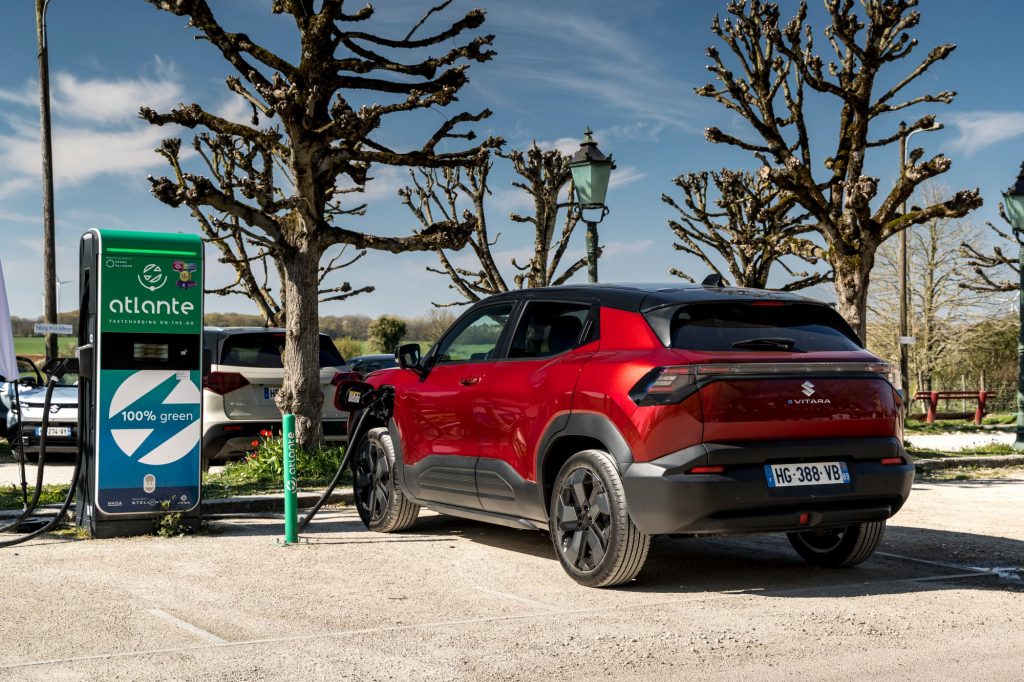
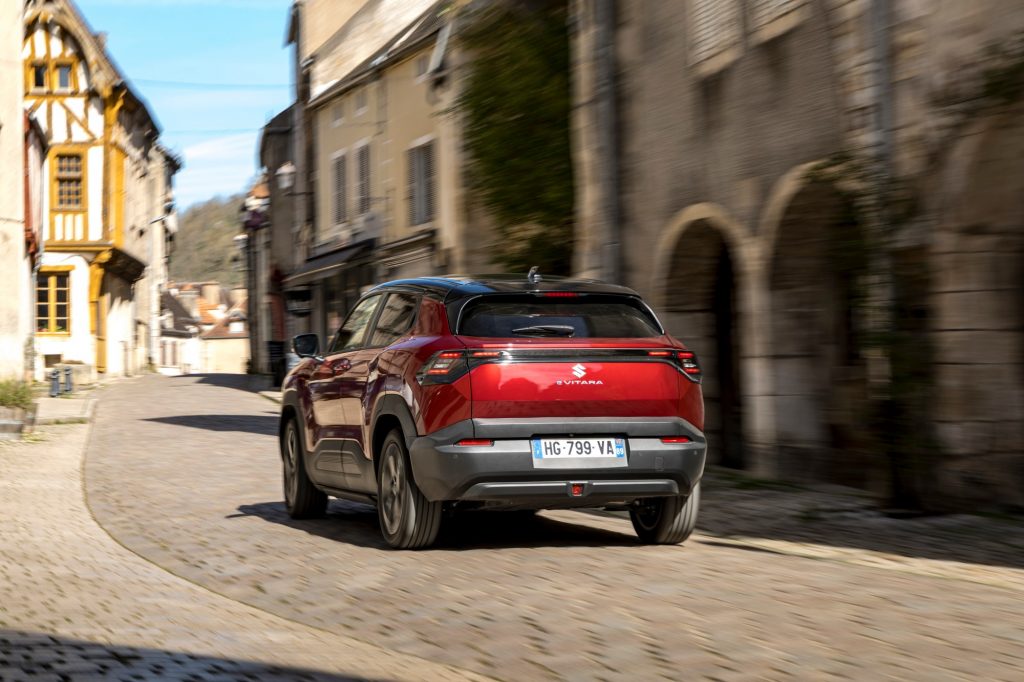
Elle s’est fait attendre, mais la voici maintenant disponible sur le marché français. Suzuki présente sa première voiture 100% électrique. Après une précédente rencontre dans un environnement contrôlé, nous l’avons conduite sur les jolies routes de la campagne bourguignonne, idéales pour se faire une bonne idée de ce que vaut l’e-Vitara.
Comme le concept-car
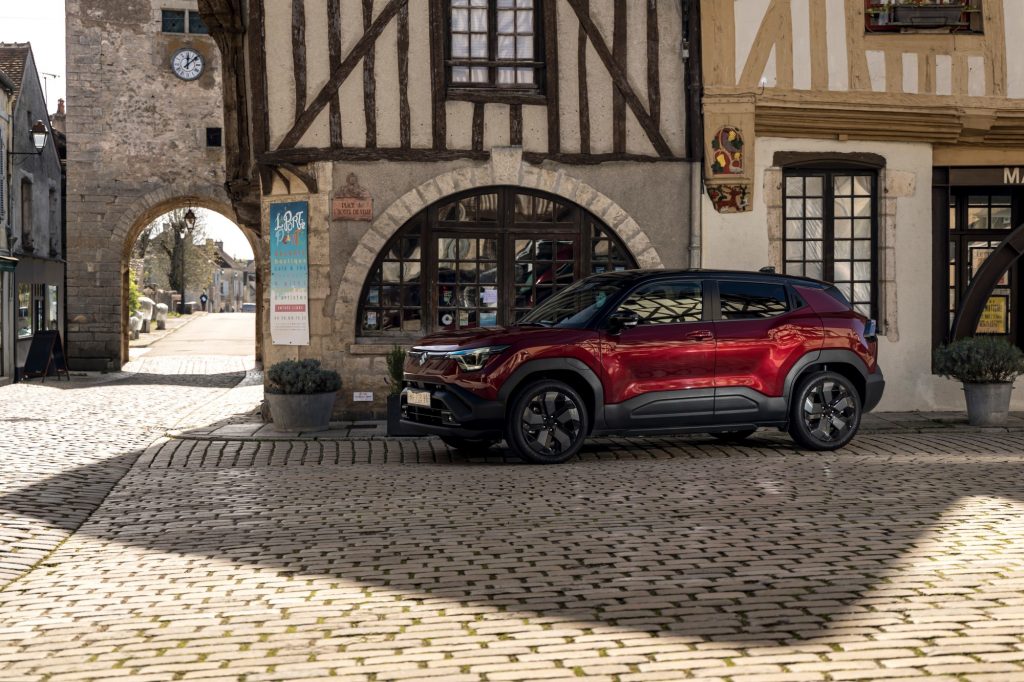
On a déjà à peu près tout dit sur le physique de la toute nouvelle Suzuki e-Vitara. Son design devait être en partie compatible avec celui de son cousin, l’Urban Cruiser. Pour faciliter son intégration dans le catalogue, le constructeur japonais s’est appuyé sur son best-seller, le Vitara, qui continue d’exister à ses côtés pour le moment. Il ressemble quasiment trait pour trait au concept-car qui l’a précédé. Il paraît à la fois robuste et plutôt moderne. Avec ses épaulements, il semble vouloir bousculer les autres sur la route.
Ce SUV a une garde au sol relativement élevée, qui lui permet non seulement de franchir les trottoirs, mais aussi de s’aventurer parfois sur des chemins. Car, tout Suzuki qu’il est, il a droit aussi à une version à transmission intégrale, avec un moteur sur le train arrière sur la version AllGrip. Il a son petit look et, il faut bien l’avouer, il donne un sacré coup de vieux à son frère thermique, qui commence véritablement à accuser le poids des ans. La génération de ce dernier existe depuis 2015 et s’est, au passage, écoulée à plus de 54 000 exemplaires. On ne sait pas si c’est l’objectif que se fixe la marque pour l’e-Vitara.
Un intérieur de voiture, pas de vaisseau spatial
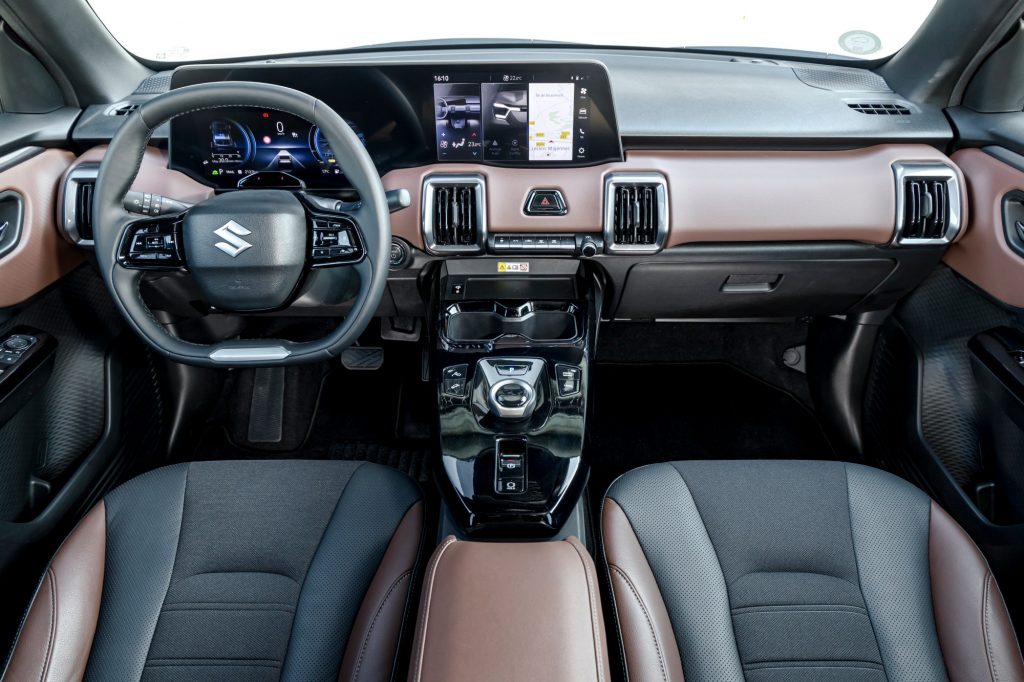
À bord, on retrouve cet intérieur que nous avions découvert l’an passé. Oui, Suzuki a pris son temps pour ajuster sa production dans son usine indienne. D’ailleurs, il précise que la pleine cadence n’interviendra pas avant juin. En tout cas, on évolue dans un environnement qui, ici aussi, marque l’écart avec l’autre Vitara. L’atmosphère s’avère plutôt moderne, avec une instrumentation 100% numérique. Quelques revêtements moussés rendent l’ambiance un peu plus chaleureuse. Pas d’écran XXL (Apple CarPlay/Android Auto embarqués), mais disons qu’il est à la bonne taille pour ne pas avoir à faire de grands gestes au moment de le manipuler. Un chargeur à induction, une prise USB-C et USB-A sont présents à l’avant.
Aussi bête que cela puisse paraître, Suzuki a agencé la plupart des commandes comme auparavant dans la plupart des voitures, avec des boutons physiques pour la gestion de la climatisation en premier lieu, et une molette rotative pour le son. Basique ? Loin s’en faut dans l’industrie automobile actuelle. On comprend assez rapidement où se trouvent la plupart des fonctions. On se sent bien à l’avant, et pas trop mal à l’arrière en ce qui concerne l’espace aux jambes. Méfiance tout de même, pour les grands gabarits, au niveau de la garde au toit. Le coffre dépasse à peine 300 litres, mais offre un plancher plat. On peut ajuster sa contenance grâce aux sièges coulissants sur 16 cm.
Temps de recharge long en DC
Après nos premiers tours de roues, on constate une régénération manifestement réglée sur un niveau intermédiaire. On cherche alors à la modifier. On se rappelle alors, lors d’une prise de contact avec un prototype l’an passé, avoir recommandé aux ingénieurs japonais un accès rapide à ce réglage. Malheureusement, ce n’est pas le cas : il faut passer par plusieurs étapes sur l’écran, et surtout être à l’arrêt pour choisir l’un des trois niveaux. Dommage ! Pour le reste, on profite, sur notre version deux roues motrices, d’un moteur de 128 kW (174 ch) couplé à une batterie de 61 kWh (LFP). La voiture ne manque pas d’entrain ; globalement, elle se comporte bien dans toutes les situations de conduite, que ce soit en ville ou sur route.
Néanmoins, on remarque assez rapidement que l’on doit utiliser le mode ECO et fluidifier sa conduite si l’on veut maintenir une consommation raisonnable. Cela se fait sans grande difficulté, mais on voit nettement la différence si on la mène tambour battant. Le chiffre WLTP dépassant les 400 km nous paraît plutôt optimiste. Cependant, il est probable qu’en faisant attention, elle s’approche des 300 km. Avec son chargeur embarqué de 11 kW, on peut espérer une recharge complète en un peu plus de 5 heures. Suzuki refuse de communiquer sur la puissance en courant continu, mais le constructeur annonce un temps de 45 minutes pour passer de 10 à 80%. Il va clairement falloir que cette donnée s’améliore par la suite.
Bon comportement routier
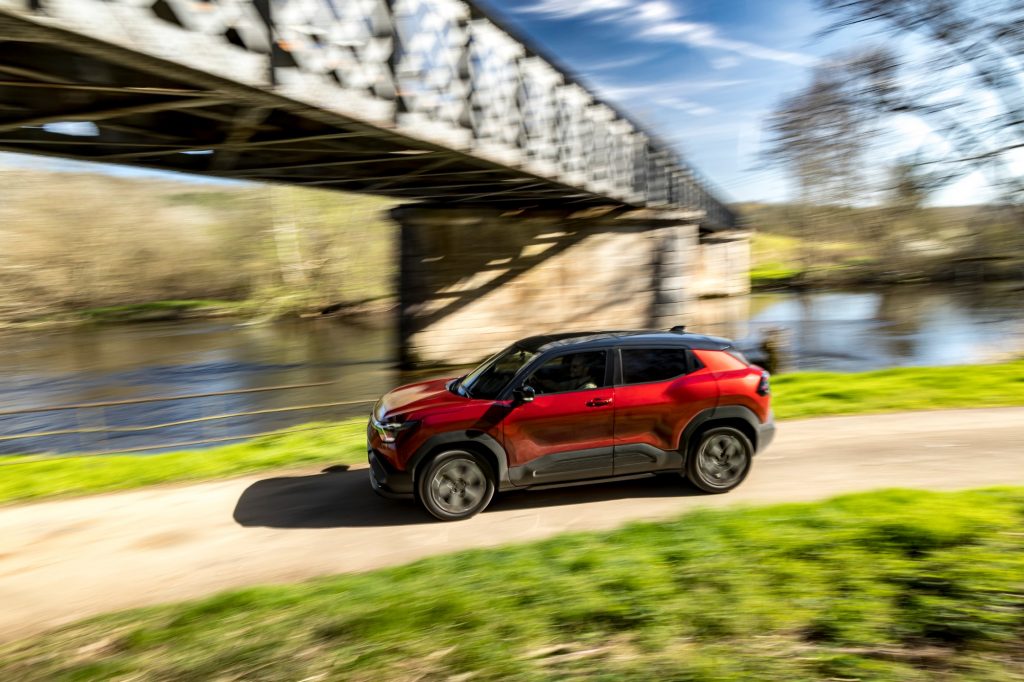
Même si la puissance paraît faible, notez que l’on peut préconditionner manuellement la batterie. Nul besoin, comme chez certains concurrents, de devoir obligatoirement entrer une destination dans le GPS. En tout cas, on ne passe pas un mauvais moment à son volant. La voiture se montre plutôt bien amortie, ce qui sert assez bien le confort. Son couple confortable lui assure notamment des reprises de bon aloi. On doit aussi son bon comportement routier à ses suspensions arrière multibras. Soyons clairs : elle n’a pas pour autant des accents de compacte sportive.
En se perdant sur quelques chemins ici et là, on apprécie la garde au sol de 18 cm. On se sentirait encore un peu plus à l’aise avec l’e-axle associé à la version AllGrip. Mais honnêtement, par temps sec, cela ne nous manque pas outre mesure. L’insonorisation à haute vitesse aurait mérité un peu plus de soin. Même si cela ne s’avère pas trop gênant, on l’a tout de même remarqué. On oublie aussi son poids, proche des deux tonnes, qui ne se fait pas trop ressentir. Il se rappelle parfois à nous lorsque l’on rebondit sur une imperfection du bitume que l’on n’aurait pas anticipée.
Un rare SUV compact électrique 4X4
D’entrée de jeu, se sachant désavantagé en Europe à cause de son assemblage en Inde, l’e-Vitara bénéficie d’une ristourne maison de 4 000 € à son lancement. Ses tarifs vont de 32 500 à 40 800 € hors réduction constructeur. La version AllGrip à transmission intégrale se distingue comme l’une des rares 4×4 sur le segment. Au-delà de la garantie classique de 3 ans, elle peut grimper jusqu’à 10 ans si l’entretien est réalisé dans le réseau selon les préconisations. D’ailleurs, n’importe quelle Suzuki déjà vendue est éligible à cette garantie étendue, après un diagnostic de la marque. L’e-Vitara a mis du temps à arriver avec certaines qualités, mais il faudra progresser, notamment sur la recharge.
Age verification became mandatory for chat access on Roblox in January — and Friday morning Quartz reported it's apparently impacted the company's financials:
Roblox cut its full-year 2026 bookings forecast by roughly $900 million at the midpoint on Thursday, blaming stronger-than-expected headwinds from its mandatory age-verification rollout on an audience that skews heavily toward children and teenagers. Full-year 2026 bookings are now projected at $7.33 billion to $7.60 billion, a range that sits roughly $900 million below the prior guidance of $8.28 billion to $8.55 billion; analysts had expected $8.38 billion, according to Yahoo Finance. Roblox stock fell almost 22% in premarket trading....
Daily active users rose 35% year over year to 132 million, while hours engaged climbed 43% to 31 billion hours... Daily Active Users and hours engaged fell below forecasts of 143.8 million and 33.68 billion, respectively, according to Yahoo Finance... Users who have not completed age checks have faced restricted communication features, and the process has weighed on the platform's ability to bring in new users. Russia's blocking of the platform, which took effect in December 2025, added further drag on user growth, according to Yahoo Finance. As of the end of the first quarter, 51% of global daily active users had completed age verification, with 65% of U.S. users having done so, Roblox said....
The safety push has come with legal costs. Roblox accrued $57 million in the first quarter for settlements and settlement proposals with certain states over youth-related consumer protection and digital safety matters, with payments structured over multiple years, the company said.
Roblox acknowledged in a letter to shareholders that "our aggressive push to enhance safety lowers our expectations for topline growth in 2026." But they argued that it also "makes our platform fundamentally better and amplifies the long-term growth potential of Roblox through more effective content targeting, tailored communication experiences, and improved community sentiment."
"So yesterday the Devteam (it is always the Devteam) released version 5.0 of legendary and venerable rogueike compuer game NetHack," writes the Rogue-like games column @Play. "It is 39 years old..."
MilenCent (Slashdot reader #219,397) writes: In addition to play changes it's left for players to discover, this version updates the code to compile with C99, makes it much easier to cross compile the code for other systems than the one running, and now uses Lua for its dungeon generation. Happy hacking!
For new players, "Nethack 5.0 now has an optional tutorial in the early phases of the game that might help you," notes the Rogue-like games column @Play:
Three systems binaries are provided: Windows, MS-DOS and Amiga. Yes, Nethack still supports MS-DOS, and yes, it still supports classic Amiga: it explicitly supports AmigaDOS 3.0, meaning it can still run on 68000 machines... That these are the only systems they provide binaries for shouldn't be seen as an indication that these are the "most important" platforms for Nethack, it's more that, since it's entirely open source, building it yourself is entirely possible, and more expected than with most software. Nethack can be built for Linux, Windows 8-11, AmigaDOS, MacOS (I'm not sure if this includes classic Mac too but it might), Windows CE (wow), OS/2 (additional wow), BeOS, VMS and multiple Unixes... Another option is to play through public Nethack servers. The most popular of these are probably alt.org and Hardfought.
"Vibe coding just got a whole lot more adorable," writes Engadget:
OpenAI introduced AI-generated pets to the Codex app, its agentic tool that helps with coding. These "optional animated companions" don't do any coding themselves, but serve as a floating overlay that can tell you what Codex is working on, notify you when Codex completes a task or whether it needs your input on something. The new feature lets developers see Codex's active thread, without having to switch away from your current open app.
"The feature ships with eight built-in variations — including a cat and dog," reports Mashable. "But the more interesting play is the custom pet creator."
Users can prompt Codex directly to generate their own companion, then share it online. A quick scroll through the homepage reveals the community has already gotten to work. Current creations include Goku, Patrick Star, Microsoft's long-retired Clippy, OpenAI CEO Sam Altman, Anthropic CEO Dario Amodei, and — naturally — a goblin.
There's also Grogu, Dobby, a tiny Bob Rossi, and a "Doge-style Shiba Inu dog"...
The Associated Press reports:
On a March afternoon, artificial intelligence detected something resembling smoke on a camera feed from Arizona's Coconino National Forest. Human analysts verified it wasn't a cloud or dust, then alerted the state's forest service and largest electric utility. One of dozens of AI cameras installed for the utility Arizona Public Service had spotted early signs of what came to be known as the Diamond Fire. Firefighters raced to the scene and contained the blaze before it grew past 7 acres (2.8 hectares).
As record-breaking heat and an abysmal snowpack raise concerns about severe wildfires, states across the fire-prone West are adding AI to their wildfire detection toolbox, banking on the technology to help save lives and property. Arizona Public Service has nearly 40 active AI smoke-detection cameras and plans to have 71 by summer's end, and the state's fire agency has deployed seven of its own. Another utility, Xcel Energy in Colorado, has installed 126 and aims to have cameras in seven of the eight states it serves by year's end... ALERTCalifornia is a network of some 1,240 AI-enabled cameras across the Golden State that work similar to the system in Arizona....
Pano AI, whose technology combines high-definition camera feeds, satellite data and AI monitoring, has seen a growing interest in its cameras since launching in 2020. They've been deployed in Australia, Canada and 17 U.S. states, including Oregon, Washington and Texas... Last year, its technology detected 725 wildfires in the U.S., the company said... Cindy Kobold, an Arizona Public Service meteorologist, said the technology notifies them about 45 minutes faster on average than the first 911 call.

 Connexion