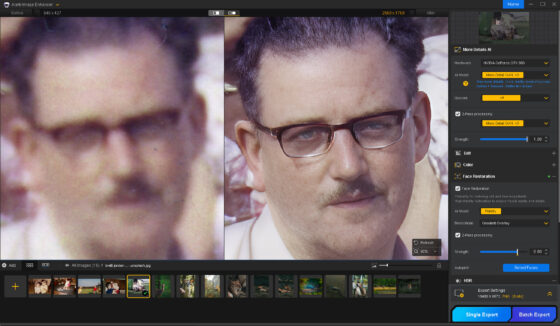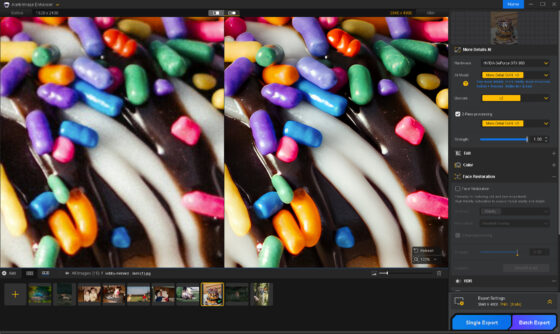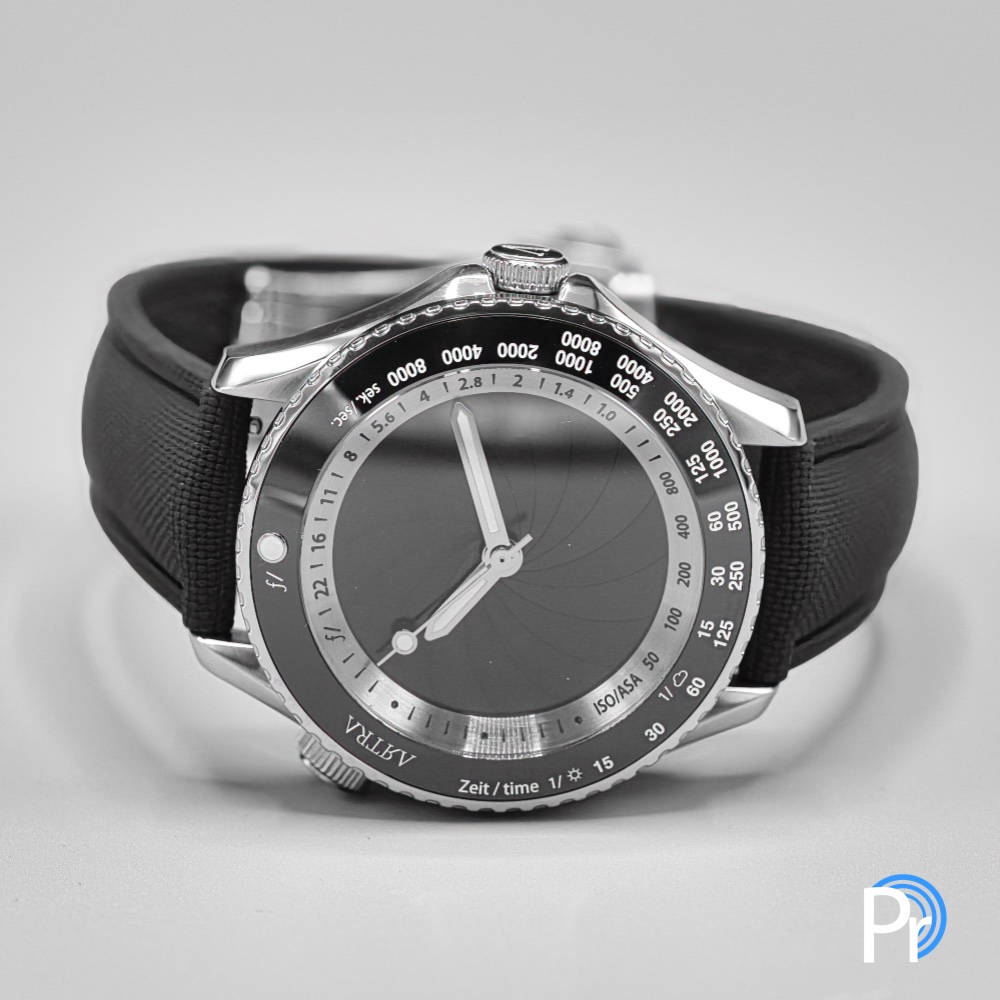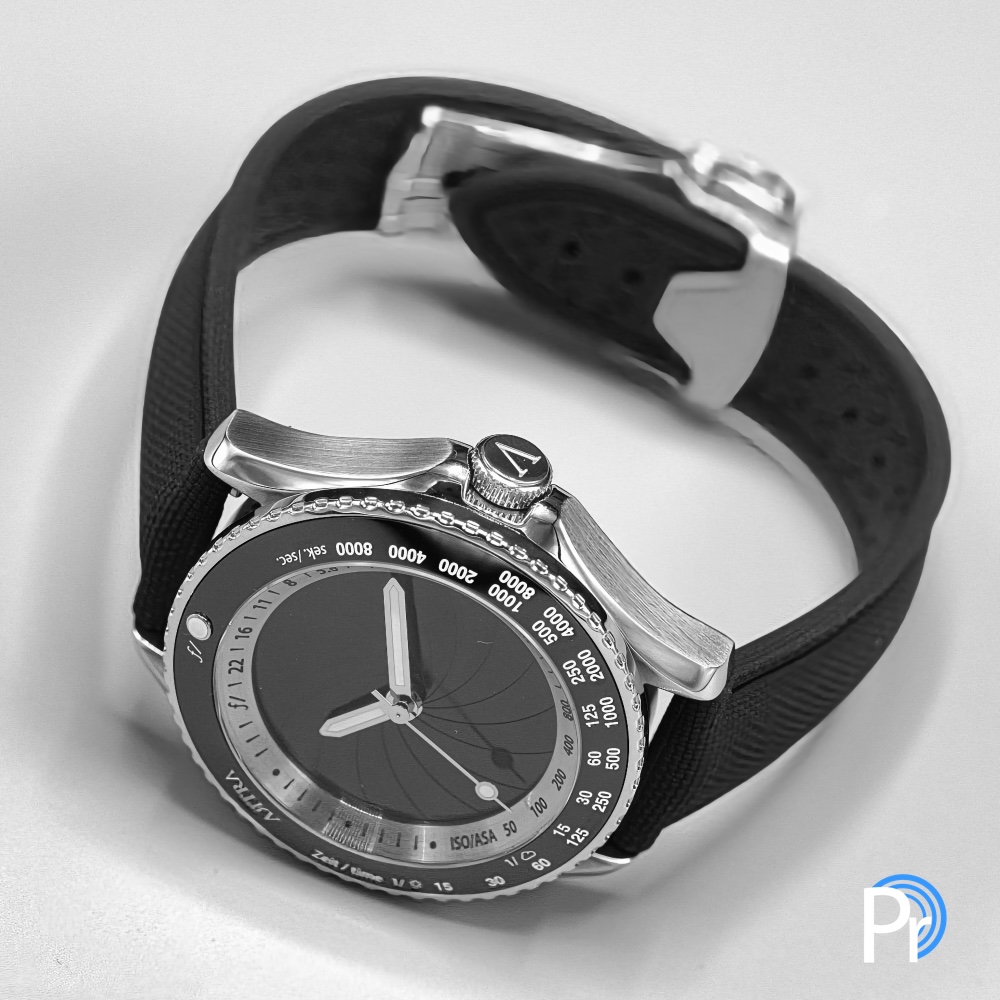
Modern camera setups—such as the Canon EOS R1, R3, and R5 Mark II, Nikon Z8/Z9, and Sony Alpha series—require meticulous power management. During fast-paced events or intense field assignments, tracking battery health and rotation is critical. Traditionally, photographers and filmmakers have relied on messy gaffer tape or marker lines to distinguish fresh packs from depleted ones—a makeshift solution that degrades under heavy use. The Field Made Battery Indicator Collection replaces this friction with an elegant, highly functional workflow.
Key Product Specifications & Design Details
Tailored Dimensions: Each set is precision-cut to match the exact physical footprint of specific battery models without obstructing contacts or battery doors.
Premium Materials: Built from high-durability, scuff-resistant, outdoor-rated matte vinyl designed to withstand weather and friction in the field.
Zero Residue: Applies securely but can be removed cleanly without leaving adhesive residue on high-value gear.
Airtight Workflow Numbering: Features bold, high-contrast sequential numbering (01, 02, 03, etc.) to allow creators to maintain a strict “First In, First Out” rotation.
Asset Protection: Fully customizable text fields allow users to print their Name, Website, and Phone Number directly onto the label, ensuring misplaced gear finds its way home.
Supported Ecosystems & Availability
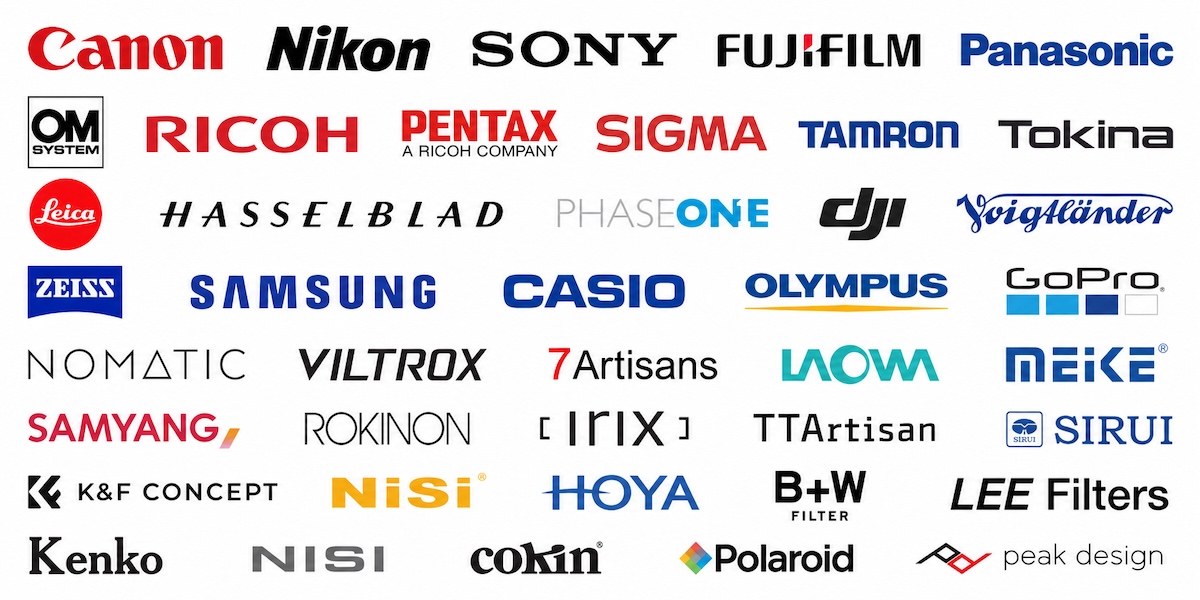
The collection covers a vast professional footprint, ensuring visual continuity across mixed-brand gear fleets:
Apple Photos is getting two new AI-powered features, along with updates to the existing "Clean Up" tool. Image: Apple
Apple has announced iOS 27, the latest version of its mobile operating system, which focuses more on stability and refinement rather than loading up with new features. However, it shared a few additions, including one that raised a few eyebrows at DPReview: generative AI-powered photo editing.
The first change is an update to the "Clean Up" tool, which lets you remove unwanted elements in your image. Apple says the new version will provide "better quality and more realistic infill," even in complex scenes. The company is also adding an "Extend" tool, letting you effectively do a negative crop and use AI to add a simulacrum of what was outside the frame of your original image. Apple pitches it as a way to give your subject a bit more space, or to level an image without changing the composition.
When using Spatial Reframing, the blurry areas indicate where the photos app will have to use generative Extend.
While both features likely sound familiar to anyone who's spent any time in modern Photoshop, the company's last feature, "Spatial Reframing" is a bit more advanced. It uses AI to essentially change perspective, letting you virtually move the camera around to reframe a subject, and having AI fill in the background needed to sell the effect.
While the "Spatial" branding makes it seem like it uses the depth data that powers other features like virtual bokeh, that doesn't seem to be the case. Apple says you'll even be able to reframe older images, and ones taken using other cameras.
Apple says any images made using these features will include "a hidden SynthID watermark" to mark them as having been edited with AI. The company also says that some AI features, like image generation, will have "daily usage limits" because they rely on server-side processing. It's currently unclear what those limits are, exactly which features they'll apply to, or how much they'll be extended if you pay for the company's iCloud+ plans.
In many ways, this is Apple playing catch-up with other phone makers, as companies like Google and Samsung have introduced slews of AI-powered features*, like the ability to add the photographer into a group photo, combine several photos into a single image where everyone is smiling and looking at the camera, and resize/move elements of an image and clean up the background. But it's also interesting that there's one line Apple isn't crossing in the Photos app: giving you a tool to add generated imagery into your pictures, something both Google and Samsung let you do.
When it was introducing the features, Apple said it had a "deep respect for the craft of photography," and that it wanted to give photographers AI tools that "enhance their images in ways that respect the original moment."
This isn't a new take from Apple – in 2024, it said photos should be things that "really, actually happened" – but it's also not a hardline one. It's hard to ignore that, literally less than two minutes earlier in the presentation, there was a demo of using Apple's Image Playground app to add an AI-generated cake into someone's hands to create a birthday party invite. So while that functionality may not exist in the Photos app, it's clear Apple isn't taking a fundamental stance against using generative AI to completely alter an image and the context around it.
If there has to be a dedicated Siri mode in the camera app, surely it shouldn't come before actual photographic options like portrait and panorama mode. Image: Apple
Aside from the editing tools, it doesn't seem like Apple's making too many changes to the photography experience, which isn't necessarily a surprise given it completely redesigned the camera app last year. It's adding a new Siri mode to the camera, which may be annoying for those who already find the interface cluttered, though we'll have to wait for the beta versions to be released to know for sure whether it can be removed as an option.
It's also possible we haven't seen everything new with iOS 27 yet. Apple will occasionally hold back announcing new features tied to hardware, so it's possible that there'll be further changes if, say, the company announces a new form-factor phone later this year (whatever that may be).
* Arguably, one of Google's most useful AI features is a virtual "Coach" that suggests how to improve your image as you're taking it; who needs Spatial Reframing when your phone was smart enough to tell you how to frame it in the first place?
Sony registered a new digital camera with the Indonesian certification body POSTEL, but the entry was later removed. The new WW308784 will be made in China (not Thailand), and DCLife speculates it could be a new RX or APS-C model becuase it was registered as “Digital Camera” rather than “Interchangeable Lens Digital Camera.”
Here is a leaked Sony sensor roadmap from a few months ago – you can see what is expected in 2026 and 2027 :
Somy Indonesia will hold an Alpha event on June 26-28, which is a weekend, so I doubt they will announce a new product:
The “Sony Alpha Event” scheduled for June 26–28 is the Alpha Festival 2026 hosted by Sony Indonesia, taking place at the Sports Hall in Agora Mall, Central Jakarta. It is a multi-day regional community and product showcase rather than a global broadcast.
When you use DPReview links to buy products, the site may earn a commission.
Photo: Viltrox
Viltrox has announced two new APS-C entries to its "Evo" line of lenses, a 75mm (113mm equiv.) F1.8 and a 90mm (135mm equiv.) F2.2, available for Fujifilm X, Nikon Z and Sony E mounts.
The 75mm uses 11 elements in 9 groups, with two high-refractive index elements and two extra-low dispersion elements. The 90mm has the same mix of special glass, but with 10 elements in 8 groups. Both can focus as close as 0.74m (29"), and use stepper motors for autofocus.
They can also be fitted with 58mm filters and have aperture rings. The Sony E and Nikon Z versions have the ability to click and de-click that ring, as well as a function button, both of which are absent on the version for Fujifilm.
A bit unusually, the version of the lens for Fujifilm has fewer physical controls and switches than the Z and E-mount versions. Image: Viltrox
The E mount version of the 75mm F1.8 weighs 335g (11.8oz) and is 76mm (3") long. The 90mm is the same length, but weighs 320g (11.3oz). The Z and X mount versions are slightly different weights and lengths, but are effectively the same size. They have rubber seals on their lens mounts to protect against moisture and dust, and have a water resistant coating on their front elements.
The AF 75mm F1.8 Evo costs $329, while the AF 90mm F2.2 costs $369. They are available today.
Viltrox Launches AF 75mm F1.8 EVO & AF 90mm F2.2 Lenses
Exceptionally portable lenses with versatile everyday performance, optimized for portrait photography and video
Shenzhen, China, Jun 8(th), 2026 – Viltrox today announced the launch of two new APS-C portrait prime lenses: the AF 75mm F1.8 EVO and AF 90mm F2.2 EVO. Designed for APS-C mirrorless cameras, the new lenses combine professional telephoto portrait performance with compact, lightweight construction.
Versatile For Everything, Ideal for Portraits
With the introduction of the two new EVO lenses, portrait photographers can achieve strong spatial compression and smooth, atmospheric bokeh that naturally isolates subjects from distracting backgrounds. With a minimum focusing distance of just 0.74m, these lenses also enable tighter framing and immersive close-up shots for more expressive portrait compositions.
The AF 75mm F1.8 EVO offers a versatile 112.5mm-equivalent focal length that balances strong background blur with flexible everyday usability for street photography, half-body portraits, and urban shooting. The AF 90mm F2.2 EVO provides a classic 135mm-equivalent portrait perspective with enhanced compression and subject isolation, making it particularly well suited for outdoor portraits, wedding photography, and cinematic portraiture.
Improved Image Consistency Across the Frame
Viltrox has developed new optical designs incorporating ED (Extra-low Dispersion) and HR (High Refractive Index) elements to reduce chromatic aberration and contribute to improved overall image consistency. Even at maximum aperture, the lenses deliver sharp, high-resolution image quality from center to edge, while effectively helping maintain bright, consistent illumination across the frame. This results in natural tonal transitions and refined rendering characteristics.
Both lenses are equipped with Viltrox’s STM autofocus system, delivering fast, accurate, and quiet focusing performance for both photography and video. Stable, highly responsive continuous autofocus tracking helps creators maintain focus on subjects, even in dynamic shooting environments.
Both lenses also feature a customizable Fn button, an AF/MF switch, and a switchable click/de-click aperture ring** for seamless transitions between photo and video workflows.
The Everyday Carry: Compact and Lightweight Designs
The two EVO lenses continue the series’ design language with a clean exterior, compact construction, and durable build quality. Each lens weighs under 355g*, providing a lightweight alternative to traditional telephoto portrait lenses without compromising performance. With a rubber-sealed lens mount and a smudge and water-resistant coating on the front element, they are well suited to outdoor conditions.
Pricing and Availability
For more information, please visit:
AF 75mm F1.8 EVO:https://bit.ly/4dQ56Kl
AF 90mm F2.2 EVO:https://bit.ly/4fFqiVE
Amazon Store US:
AF 75mm F1.8 EVO:https://www.amazon.com/dp/B0GR419VPM
AF 90mm F2.2 EVO:https://www.amazon.com/dp/B0GR3ZQ92S
Amazon Store Europe:
AF 75mm F1.8 EVO:https://www.amazon.de/dp/B0GR419VPM
AF 90mm F2.2 EVO:https://www.amazon.de/dp/B0GR3ZQ92S
AF 75mm F1.8 EVO (E / Z / XF) - USD $329 / GBP £319 / EUR €389
AF 90mm F2.2 EVO (E / Z / XF) - USD $369 / GBP £359 / EUR €429
*Weight may vary slightly depending on the lens mount version
** XF mount version does not include the CLICK switch, Fn button, and AF/MF switch
With the introduction of the two new EVO lenses, portrait photographers can achieve strong spatial compression and smooth, atmospheric bokeh that naturally isolates subjects from distracting backgrounds. With a minimum focusing distance of just 0.74m, these lenses also enable tighter framing and immersive close-up shots for more expressive portrait compositions.
The AF 75mm F1.8 EVO offers a versatile 112.5mm-equivalent focal length that balances strong background blur with flexible everyday usability for street photography, half-body portraits, and urban shooting. The AF 90mm F2.2 EVO provides a classic 135mm-equivalent portrait perspective with enhanced compression and subject isolation, making it particularly well suited for outdoor portraits, wedding photography, and cinematic portraiture.
Improved Image Consistency Across the Frame
Viltrox has developed new optical designs incorporating ED (Extra-low Dispersion) and HR (High Refractive Index) elements to reduce chromatic aberration and contribute to improved overall image consistency. Even at maximum aperture, the lenses deliver sharp, high-resolution image quality from center to edge, while effectively helping maintain bright, consistent illumination across the frame. This results in natural tonal transitions and refined rendering characteristics.
Both lenses are equipped with Viltrox’s STM autofocus system, delivering fast, accurate, and quiet focusing performance for both photography and video. Stable, highly responsive continuous autofocus tracking helps creators maintain focus on subjects, even in dynamic shooting environments.
Both lenses also feature a customizable Fn button, an AF/MF switch, and a switchable click/de-click aperture ring** for seamless transitions between photo and video workflows.
The Everyday Carry: Compact and Lightweight Designs
The two EVO lenses continue the series’ design language with a clean exterior, compact construction, and durable build quality. Each lens weighs under 355g*, providing a lightweight alternative to traditional telephoto portrait lenses without compromising performance. With a rubber-sealed lens mount and a smudge and water-resistant coating on the front element, they are well suited to outdoor conditions.
This isn't the type of photo that usually wins a photo contest. Unless it's Icelandair's contest to find the world's worst photographer.
Photo: Blance Mortemard
Back in March, we shared news of one of the more intriguing photography contests we'd come across in some time: Icelandair's hunt for the most terrible photographer it could find. The premise was that Iceland is so breathtaking that even the world's worst photographer couldn't help but come home with beautiful photos.
The campaign was clever. It was also, apparently, far more successful than the airline expected. Icelandair says it received 127,642 entries from 178 countries, all vying for the title of "World's Worst Photographer." That's a lot of terrible photographers. It is, in fact, almost as many bad photographers as there are people in the city of Reykjavík.
'Winning' photographer Blanche Mortemard of Paris, France, learns of her victory and shares some of her photographic masterpieces. Video: Icelandair
This must have been one of the most arduous photo contests to referee in history, with judges spending more than 2,000 hours screening pictures that were, by all accounts, terrible before narrowing the field to 13 finalists. The irony of the number 13 – historically associated with bad luck – is not lost on us.
The winning photographer (and we use the word 'winning' loosely) was Blanche Mortemard from Paris, France, who claimed victory in what the airline termed "a highly competitive selection process," and impressed the judges "with her admirable lack of skills and knowledge of basic photography."
High praise. But maybe the kind you'd want to think twice about before putting it on your LinkedIn page.
"Blanche Mortemard... impressed the judges 'with her admirable lack of skills and knowledge of basic photography.'"
Speaking about the ineptitude that secured her victory over what was, evidently, a deep and competitive field, Blanche said, "For years, friends and family have asked why my photos always look disappointing. I'm thrilled to finally have an answer: I was training for this role." She added that this was "probably the only photography competition I ever stood a chance of winning."
As long as we're clear that winning means losing. Or, in this case, that losing at photography, for years, means winning a 10-day trip to Iceland, along with getting paid $50,000 to do something you're terrible at.
So perhaps winning does mean winning. It's honestly hard to keep track.
Sample gallery
This widget is not optimized for RSS feed readers. Click here to open it in a new browser window / tab.
A selection of images submitted by Blanche Mortemard to prove her photography skills – or rather, lack of them. Photos: Blanche Mortemard
Whether being declared the worst photographer from a pool of 127,000 self-identified bad photographers is something you want covered by the world's press is questionable, but now that the genie is out of the bottle, Blanche might as well own it.
The story isn't over, of course. Blanche will hit the road for Iceland this summer to put her terrible photography skills to the ultimate test: to see whether she can manage to take a bad photo in a country that we can all agree is pretty magical. We'll make sure to report back to let you know how that works out.
The company has evolved from an AI culling-focused tool into a full all-in-one platform for culling (Select), AI + manual editing (Edit), retouching (Retouch), and client delivery via Aftershoot Galleries. This shift eliminates the need to switch between multiple apps (e.g., Lightroom for editing/delivery).
Use coupon code RUMORS for a 15% discount at Aftershoot.
Here are the details:
Key Elements of the May 2026 Update
Built-in RAW Editing: New dedicated RAW editor with manual tonal adjustments, batch processing, sliders, and fine-tuning of AI edits. You can now edit RAW files directly in Aftershoot and export JPEGs or TIFFs without leaving the app. This includes self-improving AI profiles that learn from your adjustments, plus pipeline tools such as advanced masking, denoising, object removal, HSL/color grading, and more precise cropping/straightening (including aggressive, subject-focused crops).
Aftershoot Galleries (new, highlighted with “New” on the homepage): Integrated client delivery platform with 100 GB free storage. Features include built-in proofing, face detection/filtering by person, favorites, branded galleries, and direct export from Aftershoot (no re-uploads or downloads needed). It integrates print sales via labs like WHCC, Bay Photo, and Atkins Pro Labs. The goal is a better client experience than basic shares or Google Drive links.
Culling (Select) Enhancements: Smarter duplicate/variation detection (distinguishes intentional variations from true duplicates, ~20% tighter culls), improved blur/closed-eye detection, key subjects prioritization, binary selection states, and “cull to target” (specify how many keepers you want). UI now clearly distinguishes AI Automated Cull vs. AI Assisted Cull.
Editing & Retouching Improvements: More consistent white balance/exposure across albums, better before/after previews, enhanced acne/blemish/hair/glare detection with texture preservation, Background Replacement (beta with custom uploads), Cloth Dewrinkle, object removal, and subtle body reshaping. Retouching works on RAW files.
The update positions Aftershoot as a privacy-focused (local processing), non-destructive workflow tool that learns your style via training on your edits/presets or imported Lightroom profiles. It includes 30+ pro styles in the marketplace.
2026 Roadmap
Aftershoot also published its 2026 Roadmap (full AI Retouching rollout with one-click skin/hair/glare tools, advanced culling, smarter editing, and expanded creator styles/marketplace):
Further AI refinements in culling (smarter technical detection, key subjects, cull-to-target).
Enhanced editing (better profile accuracy, advanced masking/cropping, more marketplace styles with previews).
Expanded RAW Editing (histogram, tone curves, deeper masking, etc.).
More AI Retouching tools (one-click object removal, body reshaping, background removal, natural skin work).
Tethered shooting (sneak peek): Planned rock-solid tethering with fast/stable connections, broad camera support, auto-import/organization, on-set proofing, and instant gallery pushes. Not yet released.
The company claims users save significant time (e.g., 60+ days per year in repetitive work across their user base) while maintaining creative control and style consistency.
Pricing Updates
Aftershoot introduced more flexible modular pricing aligned with the complete workflow:
Aftershoot outlines three firm commitments: they will never create tools to replace you, they will always ask explicit permission before using your images (with easy opt-out or deletion), and they will build the product together with their Founders Community of photographers who help shape the roadmap. A personal note from founder Harshit explains how the company started in 2019 with a simple request to reduce culling time and has stayed true to its mission of returning time to creators ever since.
MAX Perpetual – $109.99 / €99.99 + free Neo video course + free gift
Luminar Neo is an AI-powered photo editor that makes it easy to achieve professional results with simple and fast edits (available on both desktop and mobile). All plans are perpetual (one-time purchase) licenses with no subscriptions required. The Max plan unlocks the complete experience: desktop + mobile apps, plus access to the creative assets library (skies, overlays, LUTs, presets, and more to fuel your creativity). Here are the main benefits:
Being in my line of work means that I'm exposed to all sorts of products and companies. Because of that, it's not often that I'm truly surprised by something. Recently, though, I had the opportunity to visit Supersense in Vienna, Austria, and I was left surprised and, frankly, delighted by a company doing something rather special.
I first heard of Supersense a few years ago through the An Impossible Project documentary. Supersense describes itself as an "all analog palace manufactory," focusing on analog products for each of the senses (hence the name). Indeed, if you're someone who loves old technology, Supersense is a dream come true. Chris Holmquist, the Production Manager at One Instant (a part of Supersense), graciously offered to show me around the entire space and share more about what makes Supersense tick.
Found in a historic, Venetian-style building in Vienna, the Supersense space is filled to the brim with analog processes of all types: a print shop with printing presses and die-cutters (touch), vinyl cutting tools (hearing), a restaurant (taste and smell) and One Instant, the makers of the world's only peel-apart packfilm (sight). The space also houses one of just seven 20x24 cameras in existence – a Wisner-based large format giant capable of producing the world's largest instant photographs.
As a photographer who loves anything film-related, I was especially keen to learn more about One Instant. The project was born out of Supersense's founder, Florian 'Doc' Kaps' love of photography and his mission to bring back instant film (which previously led to the revival of Polaroid).
Each piece of Type 100 film takes 20 minutes to assemble, at minimum.
One Instant is a tiny team making peel-apart instant film by hand. None of the process is automated at this point, and so every single step is handled by the team. If you think that sounds painstakingly slow and tedious, you're not wrong. Each piece of Type 100 film takes 20 minutes to assemble, at minimum. And that's only if all of the components are perfectly lined up and ready to go, which is rarely the case, so realistically, it takes much longer.
The handmade process naturally means the film is expensive: a pack of three Type 100 sheets costs $60, and a single sheet of 8x10 film will run you $66. Those are all pre-assembled options, but One Instant also offers DIY kits to offer a somewhat more affordable option, saving users just over $6 per sheet of film. These kits let photographers handle the final assembly process, minus the darkroom-reliant steps, thus keeping costs down.
At this point, One Instant is still using legacy Polaroid materials, including negatives, paper, and the pods that contain the chemistry. The goal is to gradually move away from that, so they aren't relying on old-stock materials, thus making the peel-apart film more future-proof. Given the success of Polaroid film's revival, I look forward to seeing what the future holds for the One Instant project.
You can learn even more about the process and the DIY packfilm specifically in the video below.
Exactly 20 years ago today, on June 5, 2006, Sony announced the Alpha 100, the camera that launched the Sony Alpha system. What began as an outsider’s entry into the DSLR market, built on the Konica Minolta A-mount platform acquired by Sony, has evolved into one of the most innovative and influential camera lines in the history of photography and videography.
Two decades later, Sony Alpha stands as a benchmark for hybrid photo/video performance, autofocus intelligence, resolution, and speed. From the groundbreaking in-body stabilization of 2006 to the global-shutter flagship of 2023 and the highest-resolution Alpha camera yet in 2026, the journey has left a significant mark on the industry.
The Early Years (2006–2012)
Sony entered the digital camera arena by acquiring Konica Minolta’s camera division, inheriting the A-mount lens ecosystem. The Alpha 100 (10.2MP APS-C CCD) introduced SteadyShot INSIDE in-body image stabilization- a major first for compatible lenses at the time, along with the BIONZ processor and an accessible price point for enthusiasts.
The system quickly expanded:
2007: Alpha 700 brought a 12.2MP CMOS sensor, better AF, and a magnesium body.
2008: The Alpha 900 became Sony’s first full-frame DSLR, featuring a 24.6MP sensor and the world’s first full-frame in-body stabilization.
2009–2010: Entry-level and mid-range DSLRs proliferated (A200/A300 series, A500/A550). Then came the revolutionary SLT (Single Lens Translucent) cameras: the Alpha 33 and Alpha 55 in 2010, which used a fixed translucent mirror for continuous phase-detection autofocus during both stills and video.
The SLT line peaked with the Alpha 99 (2012), the world’s first full-frame SLT, delivering 24.3MP and full-time phase-detect AF.
The Mirrorless Revolution Begins (2013)
In 2013, Sony fundamentally changed the industry with the launch of the Alpha 7 and Alpha 7R – the first full-frame mirrorless cameras. Compact, lightweight, and featuring hybrid AF and the new E-mount, they proved that professional image quality no longer required a bulky DSLR body. This was the true turning point. The E-mount system offered a shorter flange focal distance, enabling smaller, sharper lenses and paving the way for the vast native FE lens lineup we have today (while still supporting legacy A-mount glass via adapters).
Rapid Innovation and Category Leadership (2014–2022)
Sony didn’t rest. Key milestones followed at an impressive pace:
2014: Alpha 7 II introduced 5-axis in-body stabilization (IBIS) to full-frame mirrorless.
2015: Alpha 7R IIbrought a 42.4MP back-illuminated sensor and excellent 4K video.
2016: APS-C models like the Alpha 6300 and Alpha 6500 delivered class-leading autofocus speed and point counts.
2017: The Alpha 9 introduced blackout-free 20fps shooting with advanced tracking, redefining action and sports photography.
2019: Alpha 7R IV hit 61 megapixels; real-time Eye AF became a Sony signature.
2020–2021: Alpha 7S III redefined low-light video; the Alpha 1 combined 50MP stills with 8K video and 120 AF/AE calculations per second.
2022: Alpha 7R V introduced AI-based autofocus with subject recognition and improved ergonomics.
Pushing Boundaries: 2023–2026
Sony continued to break new ground:
2023: The Alpha 9 III became the world’s first full-frame global shutter camera (24.6MP), enabling true 120fps blackout-free shooting and pre-capture.
2024-2025: Refinements across the lineup, including the partially stacked sensor in the Alpha 7 V.
2026: The Alpha 7R VI arrives as the highest-resolution Alpha camera to date, further extending Sony’s dominance in the high-megapixel segment:
Why Sony Alpha Matters
Sony didn’t just compete; it often forced the entire industry to accelerate. The shift to mirrorless, the emphasis on hybrid video capabilities, compact pro bodies, advanced real-time AF (Eye AF, animal/bird/vehicle tracking), and stacked/global-shutter sensors all trace their significant momentum back to Sony’s Alpha developments.
Previous coverage of Sony cameras (all 1,633 blog posts) going back to 2009 can be found here.
Most photographers strive to find a camera system that fits easily into a small bag when traveling. But the people behind the 20x24 Project are traveling the world with a camera so big that it doesn't fit in a plane. The above video from the group is a fantastic introduction to the project, along with the camera's wild history.
The video very briefly walks through the general story of Polaroid and instant photography, but the main focus, of course, is the behemoth of a camera. It touches on the camera's surprising origins, its unlikely rise to fame among some of the most celebrated artists of the 20th century, and how it ended up back in action after years in storage. It's also an exciting look at what's to come from the camera.
The video at the top of the article was the project's introduction, but it is well underway now, and the team has since released several episodes featuring the artists they have worked with so far. You can check out one of those below and see all their videos on the 20x24 Project channel on YouTube.
When you use DPReview links to buy products, the site may earn a commission.
Updated June 3, 2026
By the time you're spending over $3,000, you're looking at getting one of the best cameras around. You should expect it to deliver exceedingly detailed images and capture high-end video, all without having to compromise much on speed for when the action picks up.
For most applications, a camera around $3000 will be more than enough, but if you and your photography need the very highest image quality or some specialist capability, the cameras in this guide are among the best we've yet seen. There are a handful of dedicated sports/photojournalism cameras or luxury models above the $6000 upper limit we've set ourselves, but these are usually such singular offerings that we're assuming you don't need our help in choosing if you're seriously considering them.
At this level, there aren't really any bad picks, so if you have any investment at all in the lens system of one company, this should probably be the deciding factor for you. But we'll highlight the particular strengths we found in each camera, just in case you are planning to switch systems.
Slight reduction in dynamic range in extreme scenarios
Temperamental eye control
Temperature limits in heaviest video modes
Canon's EOS R5 II is the company's latest high-end, full-frame mirrorless camera, built around a 45MP Stacked CMOS sensor.
The grip is very well-shaped and proportioned, and the controls are all well-placed and comfortable to use for extended periods. Eye Control for autofocus is excellent when it works, which isn't always
The EOS R5 II does a vast range of things, most of them extremely well: it's impressive for action, landscapes, video, you name it.
The EOS R5 II has excellent tracking and subject-tracking autofocus performance. The subject detection is effective without getting in your way. It can shoot Raws at up to an extremely rapid 30fps.
The 45MP Raws are highly detailed, and the JPEG sharpening and noise reduction are sensible. It can't quite match higher-resolution cameras like the A7R V, but performs well in its own right.
It has plenty of video options up to Raw 8K/60p, offering high levels of detail, though it can overheat when shooting in its most impressive modes. Its rolling shutter rates are generally quite good.
The EOS R5 II excels at almost everything it tries to do, and that's a long list. It's hard to imagine what photo or video need it won't support you in.
This widget is not optimized for RSS feed readers. Please open this article's permalink in a browser to view this content.
Should I still buy the EOS R5?
Short answer: yes. It lacks some of the newer camera's features like eye-controlled subject selection, action priority modes and AI noise reduction, but if those don't matter to you – or aren't worth the $400 MSRP premium of the EOS R5 II – the EOS R5 is still plenty capable in 2026.
The Nikon Z8 is a fast-shooting stills and video-capable mirrorless camera with a 46MP Stacked CMOS sensor. It's an extremely strong competitor compared to the EOS R5 II, but Canon's action sports settings and eye control push it over the edge.
If those things don’t matter much to you, you can pretty much base your decision on whether you prefer Nikon or Canon’s lens lineup. They’re broadly similar, and both brands tightly control which options third-party manufacturers can offer.
The Z8 has a large, comfortable grip with well-placed controls. There's a good level of customizable controls and ergonomics that match the pro-focused Z9. The viewfinder resolution is low but the brightness and lack of lag make it one of best-suited to action.
Video quality is excellent with a choice of Raw and 10-bit gamma/compressed formats with up to 8K/60 or 4K/60 derived from it. There's also a less-detailed 4K/120p option. Tools such as waveforms and dependable AF make it easy to shoot with.
The Nikon Z8 is a hugely capable all-rounder, combining resolution, autofocus performance and video capabilities not seen before at this price. It's not a small or light camera but it makes you feel ready for anything, photographically while you're carrying it.
This widget is not optimized for RSS feed readers. Please open this article's permalink in a browser to view this content.
A cheaper option?
At $3300, the Panasonic Lumix S1RII retails for substantially less than the Z8 and EOS R5 II while offering similar resolution, speed and video features. But while we found it to be a quite capable camera, its autofocus UI and performance are a fair bit behind what Canon and Nikon offer, to the point where we'd recommend paying the extra if you think you'll be frequently shooting moving subjects. If you mostly shoot still subjects and/or videos, though, it may well be worth considering for the savings.
The Sony a7R VI is a 66.5MP full-frame camera capable of high-speed and high-resolution shooting.
It's a camera that focuses mainly on image quality – something it does better than any other full-frame options – but with a sensor fast enough to stretch to shooting action, wildlife and video if needed. Sony has also been less restrictive with what lenses can be made for its mount, meaning you have plenty of options.
It has a reasonably comfortable grip with extensive, well-placed controls around the body. It lacks the shoulder dial of the a9 and a1 models, but generally lets you gain fast access to the settings you want.
It delivers higher resolution and higher dynamic range, backed with an impressive AF system and best-in-class battery life
The a7R VI's autofocus is very fast and extremely reliable, with very effective tracking and subject recognition. It can shoot at up to 30fps in e-shutter mode, but you'll need to use lossy compressed Raw to maintain the best AF and least distortion at those speeds. Battery life is excellent, thanks to a large new battery.
The Sony a7R VI isn't the same kind of high-res, high-speed allrounder as rivals such as the EOS R5 II or Nikon Z8, despite what its specs imply. But it delivers higher resolution and higher dynamic range, backed with an impressive AF system and best-in-class battery life, making it a formidable photographic tool in all but the most frenetic circumstances.
This widget is not optimized for RSS feed readers. Please open this article's permalink in a browser to view this content.
Should I still buy a Sony a7R V?
The Sony a7R V isn't as fast, but, unlike the a7R IV before it, has Sony's latest menu system. If you're only planning on shooting landscapes or other slow-moving subjects, and aren't that interested in video, it may be worth going with the older model and rolling the savings into a nice lens or two.
The compact option: Sony a7CR
61MP BSI CMOS sensor | 4K/60p video with 10-bit color | Dedicated ‘AI’ processor for AF system
You can't do much to shrink the lenses, but the a7CR is both the smallest and least expensive camera here.
The Sony a7CR is a compact, full-frame camera with a 61MP BSI CMOS sensor. Despite its small size, it packs in most of the features found in Sony’s larger bodies while still delivering stunning detail, without sacrificing much performance.
The a7CR is impressively small for a full-frame camera. The addition of a front control dial improves handling significantly. Notably, there’s no joystick for positioning the AF point, and the viewfinder is small and very low resolution for a camera costing this much.
"If you're looking for maximum resolution in a travel-sized body, the a7RC is tough to beat."
The a7CR's 61MP sensor can capture a lot of detail, putting it ahead of most full-frame rivals; though it is a little noisier in low light. JPEG colors are pleasing, and excellent sharpening makes the most out of the 61MP sensor. Raw files provide plenty of latitude to pull up shadows at base ISO.
The a7CR delivers impressive results for its size. It essentially provides the same level of image quality, and most of the same features, as Sony's a7R V, but in a smaller package. In exchange for the small size, you make a few compromises, like no AF joystick, but if you're looking for maximum resolution in a travel-sized body, the a7CR is tough to beat.
The Fujifilm GFX 100S II is a 100MP medium format mirrorless interchangeable lens camera with built-in image stabilization.
This camera is perhaps the most specialized pick on this list: it's not especially fast or versatile but in terms of image quality, it essentially offers the best levels of detail we've ever seen. It's a true step up over even the best of its full-frame rivals (some of which comes from its lenses - the GF primes often being particularly good).
Sample gallery
This widget is not optimized for RSS feed readers. Please open this article's permalink in a browser to view this content.
Why you should trust us
This buying guide is based on cameras used and tested by DPReview's editorial team. We don't select a camera until we've used it enough to be confident in recommending it, usually after our extensive review process. The selections are purely a reflection of which cameras we believe to be best: there are no financial incentives for us to select one model or brand over another.
When you use DPReview links to buy products, the site may earn a commission.
"Another trail hike, another opportunity to photograph my knife and kuksa. This is a Bark River Knives Puukko in CPM-3V steel, and the kuksa is the one I made from cherry burl. The checkered item on the left is the fire steel rod with a handle I made with multiple wood types: maple, black walnut, and padauk."
Nikon Z8 | NIKKOR Z 24-120mm F4 S | F4 | 1/320 sec | ISO 320 Photo: Alberto Tanikawa
Alberto Tanikawa specializes in creative still-life photography, with a particular focus on knives and whisky bottles. Much of his work is created in carefully controlled nighttime setups, where he uses RGB lighting, grids and diffusers to craft dramatic scenes and unique color combinations. The images he shared for this article highlight his passion for lighting and detail-oriented product photography.
"I've been a visual guy since childhood, getting started with a film point and shoot in the 80s-90s, then starting a career as a wedding photographer in the early 2000s, and eventually moving to the service side of photography in 2014. I may not shoot professionally anymore, but I think I enjoy my photography even more now that I shoot for myself, not for clients."
This story is part of our What's in your bag? community spotlight series. The series showcases the diverse gear and photography of our community, and shares their stories of how that gear helped them to capture the perfect shot.
"This is a custom Spyderco Paramilitary 2 (PM2) pocket knife, lit by three Kelvin RGBACL lights. The deep amber light helped bring out the texture of the knife's shredded carbon scale, while a dark cyan light helped create a sharp line/plane for the knife to stand on. A “bluerple” light overhead helped fill in some of the contours on the dark top area."
Nikon Z8 | NIKKOR Z 50mm F1.2 S | F5.6 | 1/60 sec | ISO 800 Photo: Alberto Tanikawa
Meet Alberto Tanikawa
Home base: United States
Favorite camera and lens: "I had been shooting forever with my Nikon D3, but yearned for higher res AND fast frame rates. When rumors of the Z8 began circulating, I started saving for the day it would be released. It's a very capable hybrid camera."
"I would say today's mirrorless autofocus is so good that I can now get so many more keepers when shooting fast lenses than I ever could in my DSLR days. But I've become more selective of what I keep, sometimes to a detriment. Lens flares, for example, were something I always avoided like the plague, but recently I saw that they could add interest to my photos."
Support gear: Alberto's kit varies depending on the shoot. For still life and light painting work, he relies on Kelvin Play RGBACL lights, using grids and diffusers to precisely control lighting and create a wide range of color effects. For video projects, he rigs out his Nikon Z8 and carries an external monitor, sound recorder, microphones, cables and a V-mount battery. When light painting, he uses PocketWizard III radio triggers along with multiple Kelvin RGBACL lights, valuing their dependability and range.
Camera bags: Alberto typically carries either a Think Tank Photo DarkLight 20L or a Retrospective 30 V2. The DarkLight 20L is his choice for hikes and travel because it remains compact while carrying plenty of gear and fits under an airplane seat. The Retrospective 30 V2 serves as his everyday shoulder bag, offering space for camera equipment and essentials like a water bottle, plus additional lens storage.
"Steel and caffeine. A deep blue light overhead set to its lowest setting helps give the knife blade the tint I desired. The knife is a Bark River Knives JX6 II in Magnacut steel. Two opposing 5600K lights with diffusers (top left and bottom right) help light the coffee beans and shine a light on the rest of the knife materials."
Nikon Z8 | NIKKOR Z 50mm F1.2 S | F5.6 | 1/100 sec | ISO 12800 Photo: Alberto Tanikawa
What caught your eye with knives and whiskey bottles as a main theme?
"I've always enjoyed landscapes, and by extension all things outdoor related, including hiking and bushcrafting. Hiking and bushcrafting require you to bring a lot of survival tools, so those naturally eventually made their way into a shot. I do a lot of knife and bourbon/whisky bottle photography these days, as well as macro and focus-stacking. On occasion, I shoot some video and also do some light painting."
How do you adapt your setup to different situations?
"If I'm hiking for a while, or am limited in some way on what I can bring, I carry my Z8, Z 24-120 F4 S, and an extension tube for closeups. If shooting video, however, I bring my Z8 in a rig, and the accessories (external monitor, sound recorder, mics, cables, lenses and V-mount battery) in my backpack. For light painting, I use my old Pocket Wizards IIIs along with multiple Kelvin RGBACL lights. Radio triggers are great for their bulletproof dependability and range, by the way."
"Shot of my Bark River Knives JX6 II out on a trail. I found a tree stump, stuck the knife there and started shooting. This was shot on my Nikon Z8 and Z 24-120 F4 S. I noticed a ladybug crawling on the knife, so I kept shooting. I composited five images to give the impression of multiple ladybugs, when in fact it's the same one."
Nikon Z8 | NIKKOR Z 24-120mm F4 S @ 120mm | F4 | 1/400 sec | ISO 200 Photo: Alberto Tanikawa
When capturing that perfect shot, what techniques come to mind?
"If shooting a still subject, take the time to fix any undesirable reflections, hairs, dust, etc, during the shoot. Thinking 'I'll just fix it in post' might sound easy in this age of AI editing, but I would rather fix things right there and then. Besides, I don't want to subcontract my thinking or creativity to AI – hopefully that keeps my brain active and sane for longer."
How should other photographers capture the best light possible?
"Don't be afraid to experiment, but do it safely, and think things through. There are apps like PhotoPills, which help photographers figure out location and time to shoot that perfect Manhattanhenge, for example, and other apps that help locate astronomical events. There are so many sources of knowledge around the web, DPReview being a prominent one."
"Don't be afraid to experiment, but do it safely, and think things through."
"Kuksas and hazmat whiskey. Kuksa is the Finnish word for wooden cup, and I carved these two by hand out of cherry burl and apple wood (left to right). The board, the kuksas, and the bottle were also among my creations (in black walnut). I used all of my Kelvin RGBACL lights and one small camping light to get this look in my darkened living room."
Nikon Z8 | NIKKOR Z 50mm F1.2 S | F1.8 | 1/50 sec | ISO 3200 Photo: Alberto Tanikawa
"One thing I did while learning the ropes of wedding photography was to look at magazine photos and try to figure out how they were lit. This served as a great exercise and also helped me curate the lighting styles I found most pleasing. I've used this knowledge to apply to my current photography of still life subjects."
Alberto really enjoyed writing the content for this spotlight article and would be grateful for you to join him in discussion in the forums. Thanks, Alberto, for being featured!
If you'd like to share your photography, tell us about your main camera, lens choices, key settings and strategies. Your photos and story could be featured in the next article!
Editor's note: This article continues a series, 'What's in your bag?', highlighting DPReview community members, their photography and the gear they depend on. Would you like to be featured in a future installment? Tell us a bit about yourself and your photography by filling out this form. If you're selected for a feature, we'll be in touch with next steps.
The Rialto 65 sensor block will mount on Sony's Venice 2 camera, which currently offers modules based around 50MP and 24MP full-frame fully-stacked sensors.
Image: Sony
Sony has announced the Rialto 65: a large format sensor module for its Venice 2 cinema camera. The "Rialto" will be built around a 53.75 x 35.83mm sensor, making it comparable in size to the 53.4 x 40mm (essentially 645) sensors its semiconductor division makes for the likes of the Phase One IQ4.
More to the point, it's very close in size to the dimensions of the Arri Alexa 65, a rental-only cinema camera used in very high-end Hollywood productions. That has a 54.12 x 25.58mm sensor. The Rialto sensor uses a taller 3:2 aspect ratio than the Arri camera.
Sony UK says the module will be able to shoot 9.6K open-gate footage, which would imply a resolution of around 61MP, which isn't an obvious multiple of any common output formats, perhaps suggesting it could be used for applications other than just video. There's no word on technology, but it's probably safe to say it won't be the relatively slow readout designs used by Phase One and Fujifilm's smaller-sensor GFX Eterna cameras.

Sony says the sensor "block" will be available in the first half of 2027, with it being on show at the Cine Gear Expo show in Los Angeles later this week.
At present, the Venice 2 is available with stacked 35 x 24mm sensors that closely match the spec of the a1 II and a9 II photo cameras.
What is 65mm?
The Arri 65 uses a ∼54 x 26mm sensor which, like the Rialto 65, mimics the size of a vertically-fed strip of "65mm" film.
Image: Arri
As if we weren't having enough fun judging digital cameras by the dimensions of film formats over on the stills side of things, Sony is careful to point out that "65mm" refers to "a class of imaging area derived from the 65mm film format," rather than actually being a dimension of the sensor size (a footnote the camera industry might consider applying to its inch-type sensor size nomenclature).
As with "35mm" film, 65mm can be used in a variety of ways. Both Arri and Sony are mimicking the 5-perf vertical usage when they refer to 65mm.
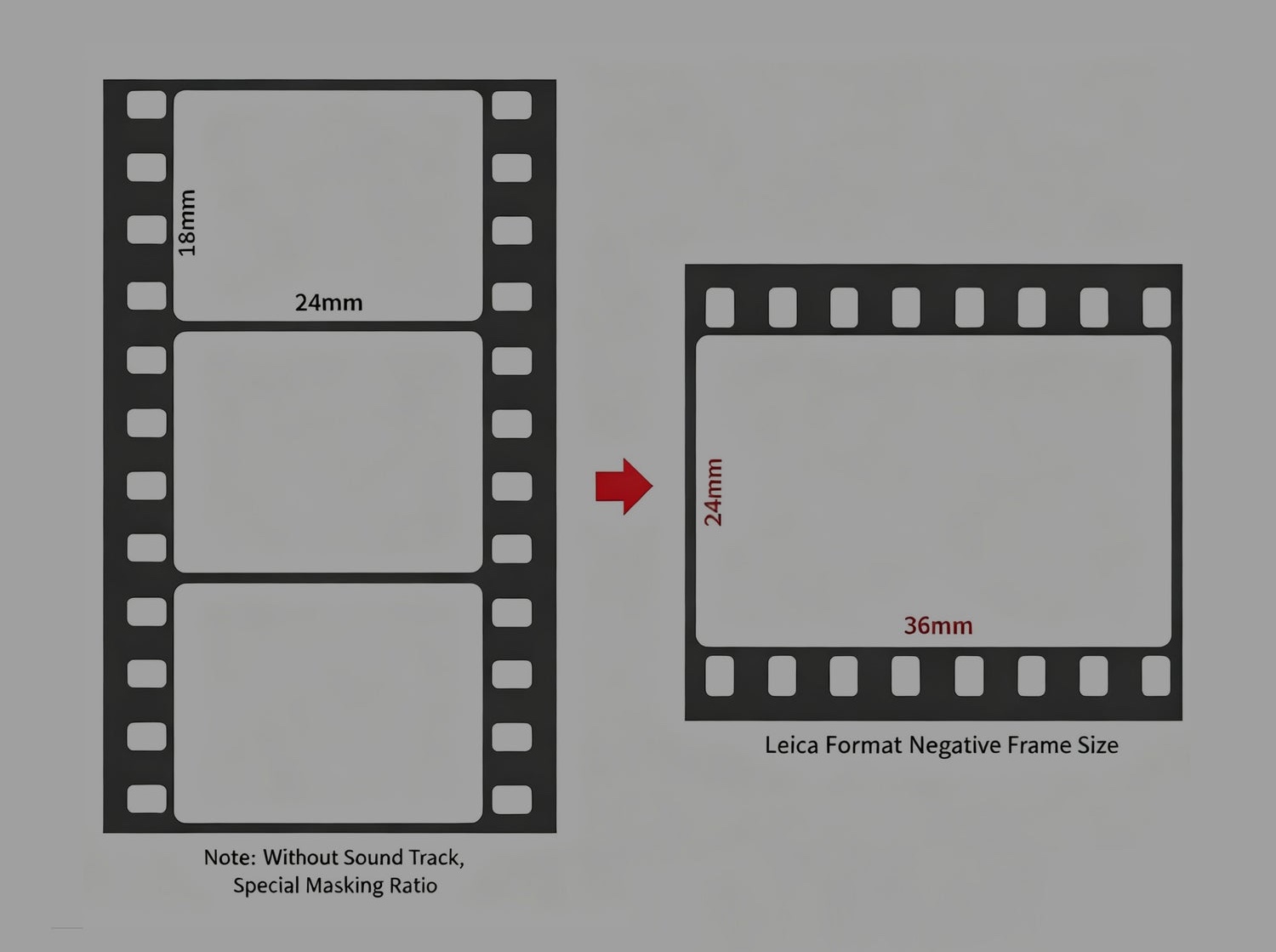
As with "35mm" film, the 65mm format is named after the full width of the film, including the sprockets. And, as with 35mm, which can be used vertically, using four perf(erations) to give the "Super 35" movie format, that's roughly the same size as APS-C, or horizontally, using eight sprocket holes per frame to give the 36 x 24mm format we call full-frame, 65mm can be used in a number of ways.
The most common are 5-perf vertical, giving a roughly 52.6 x 23mm widescreen frame, or the vast 15-perf horizontal IMAX format that Christopher Nolan seems determined to maintain, single-handedly. This is a vast 70.4 x 52.6mm. If you know anything at all about the exponential costs of making larger sensors, you'll understand why Sony is mimicking the former.
Why Rialto?
While, for Brits at least, the world 'Rialto' may evoke crumbling former cinemas in faded seaside towns, the name actually derives from Venice's historical theatre district. And this sensor block fits into the Venice 2 camera. Clever, eh?
Sony hasn't given details of price but we'd assume it's as close to the cost of one of Venice's islands as the price of your current camera.
A recent report from Pinzuba News highlights how the resurgence of compact digital cameras in Japan is driving a massive price increase in the used market for vintage models from the 2000s and early 2010s. According to the article, demand for older compact digital cameras has exploded, leading to prices roughly quadrupling in the second-hand market.
Key Data from KOMEHYO (Major Used Goods Retailer)
Sales volume of “old compact digital cameras” has increased approximately 5 times compared to 5-6 years ago.
The average selling price has risen to about 3.5 times higher
Models that sold for 5,000-10,000 yen five or six years ago are now fetching 20,000–40,000 yen.
Quote from KOMEHYO Expert
Yasuhiro Hara, Camera Sales Floor Manager at KOMEHYO’s Nagoya main store, commented on the surge:
“Demand for old compact cameras has grown significantly compared to 5 or 6 years ago. At our store, sales volume has increased about 5 times, and the average price range has surged to about 3.5 times.”
He went on to explain the unique appeal these older models hold:
“Many compact cameras sold in the 2000s were equipped with CCD sensors. These provide warmer colors than the CMOS sensors in current cameras and smartphones, especially producing a film-like quality in still photos. These ‘old compact cameras’ have qualities that current cameras don’t have.”
Why the Comeback? CCD Sensors and Nostalgic Appeal
The boom is driven by a growing appreciation for the distinctive characteristics of CCD-equipped compact cameras. Unlike modern CMOS sensors (dominant in today’s smartphones and new cameras, which prioritize video performance and efficiency), older CCD sensors deliver warmer color rendition and a nostalgic, film-emulating look in still photography.
While new compact camera (lens-integrated) shipments in Japan are projected to increase about 30% year-over-year to roughly 2.4 million units in 2025, this remains a small fraction of the 2008 peak of 11 million units (and up from the 2023 low of 1.7 million). Limited new supply plus the irreplaceable charm of vintage CCD models has created strong demand in the used market.
This latest development continues the trend I reported on in November 2024, when prices for many old compact digital cameras had already jumped dramatically (up to 20 times in some cases):