Vue lecture

Beyond the light: Mastering shadows in landscape photography

j Swakopmund Aerials 28-6-2022 p5

What role do the shadows hold in this image?

Canon 5D IV | Canon 70-300 F4-5.6 | 128mm | ISO 400 | 1/500 sec | F7.1
Sandwich Harbor, Namibia

Today, I'd like to dive into the use of shadows in landscape photography. Shadows are almost always part of nature: we often shoot using a (almost-)point light source (the sun or the moon), and even if the light is soft (like it is after sunset or during a cloudy day), the light is almost always directional, which means that some areas of the image are darker compared to others.

So, if shadow is an almost integral part of photography, we ought to at least give it some attention and understand how it works in comparison to other components of the image, and perhaps see how we can use its characteristics to enrich our photography, which is what I intend to do here.

I would say that the first function of shadows is to promote separation and thus depth. As I've mentioned in the past, separation of the different image layers is important to help viewers discern the actual distance between the subjects, thus helping them perceive the scene's depth, which is present in 3D reality but can be absent in the 2D image.

j Swakopmund Aerials 28-6-2022 19

This image of dunes in Sandwich Harbor, Namibia, would be absolutely flat without the shadows. The dunes are the same exact color, and without the dark areas, it would be impossible to understand the shapes in the scene and its depth, rendering it flat and boring.

Canon 5D IV | Canon 70-300 F4-5.6 | 70mm | ISO 400 | 1/1250 sec | F8

Below are two aerial images of Cono Arita, Argentina. One was taken before sunrise, with flat light, and the other after sunrise. I'm not trying to claim that one is better than the other, but I'd like to urge you to see how different they are, and why. There is some difference in color, sure, but the main source of change is most definitely the cone's shadow. What role does the shadow serve here?

j Cono Arita 27-6-2019 2 j Cono Arita 27-6-2019 6
DJI Mavic II Pro | 1/15 sec | F3.2 | ISO 400 DJI Mavic II Pro | 1/60 sec | F8 | ISO 100

There is a similarity and a difference between the roles I mentioned above. The shadow creates depth. Clearly, it stretches from the cone to the very edge of the salt pan, thus making it easier to perceive the distance between them. But it isn't really the factor separating the different layers – it's the difference in color and texture which does that in this example. By the way, can you understand what problem I have with the composition in the second image?

The second image above leads us to a second use of shadows: extending the subject and changing its shape. If used correctly, the shadow of a subject can help the photographer manipulate the shapes in an image to better fit the composition and the photographer's vision. Take, for example, the following image, which I took a long, long time ago in Jerusalem.

j Jerusalem 12-11-2010 5a

Ultra-orthodox Jews walking back from the temple in the early morning. You could say that the shadow is the main part of the subject, being larger and more prominent (different from its surroundings). In any case, it helped me balance the compositional masses in the image. Without the shadow, there would be nothing to counterbalance the person's compositional weight, and the image would be right-heavy. (Jerusalem, Israel)

Canon 7D | Canon 70-200mm f/4 | ISO 200 | 1/1000 sec | F4

j Sossusvlei 24-6-2022 2

In this image from Deadvlei, Namibia, the shadow again extends the subject and allows me to have a good foreground element. It also parallels the tree itself (which is a bit obvious since their shapes are naturally similar), but moreover, it parallels the sunstar flare on the top part of the image. In addition, the dune's shadow on the horizon adds a layer and enhances depth. It also prevents the background trees from grabbing too much attention and overlapping the main tree.

Canon 5D IV | Canon 16-35mm f/2.8L III | 31mm | ISO 100 | 1/80 sec | F16

I'd like to divert now and talk about the use of shadows to create and enhance the atmosphere in a landscape image. Shadows have a tendency to interfere and appear inside lit parts of an image, thus enhancing the texture and diversifying the light, which may appear minor but is, at least in my opinion, not so at all.

j Jargant Aerials 25-1-2025 16

Trees' shadows enrich the lighting and add texture to this image, balancing the viewer's attention between the different compositional elements. (Jargant River, Mongolia)

DJI Mavic III Classic | 1/400 sec | F10

j Jargant River 25-1-2025 8

Again, the shadows add texture to the light, making the image more interesting. (Jargant River, Mongolia)

Canon R5II | Canon RF 24-105mm f/4 | 80mm | ISO 100 | 1/320 sec | F11

This can also appear in much, MUCH larger scale:

j eclipse 2-7-2019 7

The gradient of light on the top right shows us that the total solar eclipse is, in fact, just a huge shadow cast on Earth by the moon. I claim that the image wouldn't be half as good without this gradient, since it's not only a compositional element but also an extension of the subject, drawing a link between the faraway eclipsed sun and the Earth's sky. As homework, take a good, long look at this image and try to understand the roles of the different subjects, how they counterbalance each other, and how they contribute to the overall composition. (Lake Cuesta Del Viento, Argentina)

DJI Mavic II Pro | 1/10 sec | F2.8 | ISO 100

Lastly, I'd like to present the rare case of the shadow being the actual subject. This is hardly common, but if you use it right, it could be very interesting and curious to the viewer. Take a look at the image below.

j Deadvlei 27-6-2025 5

In order to take this shot without my shadow appearing in it, I had to hide in the shadow of the tree on the right.

Canon R5II | Canon RF 24-105mm f/4 | 58mm | ISO 100 | 1/80 sec | F14

Instead of including both the tree and its shadow in the image, I chose only to include the shadow. By doing this, I selected a totally different subject in terms of shape, compositional weight, color, and, most importantly, in essence. This subject could be viewed as a negative of the other trees in the frame.

Firstly, the shadow is almost perpendicular to the other trees. Moreover, it's dark on a light surface, whereas the background trees are light on a somewhat-darker surface. These harsh differences enhance the image and cause it to be much more interesting. The fact that you usually don't see a shadow as a subject draws the viewers' eyes and makes them try to understand what exactly it is they're seeing. All this can take a very simple composition and elevate it into something greater.


Erez Marom is a professional nature photographer, guide and traveller. You can follow Erez's work on Instagram and Facebook, and subscribe to his mailing list for updates.

If you'd like to experience and shoot some of the world's most fascinating landscapes and wildlife with Erez as your guide, take a look at his unique photography workshops in Zambia, Greenland (solar eclipse), Colombia and more.

Erez has recently published his first e-book, "Solving the Puzzle," thoroughly explaining his views about composition in landscape photography and beyond.

Selected Articles by Erez Marom:

  •  

Canon EOS R6 III video stills: the pros and cons of a high-res sensor

When you use DPReview links to buy products, the site may earn a commission.
canon eos r6iii video

Canon's recently announced EOS R6 III is aimed at hybrid shooters and has a strong suite of features for both stills and video shooting. We've already analyzed its still image quality, but now let's take a look at how its video modes perform in front of our studio test scene.

As a reminder, the EOS R6 III can do full-width DCI or UHD 4K* video up to 120p. At 60p and below, you have the option of using Canon's "Fine" mode, which delivers oversampled footage from 7K capture, though the company adds the intriguing caveat that the 60p fine mode won't be quite as detailed as the lower framerate ones. The R6 III can also shoot open-gate footage using the entire sensor, and supports internal Raw recording using Canon's C-Raw format.

* - The camera performs the same in its UHD and DCI modes, so whenever you read about the EOS R6 III's "4K" performance in this article, know it applies to both.

Image Comparison
This widget is not optimized for RSS feed readers. Click here to open it in a new browser window / tab.

Starting with the open gate mode, the 6912 x 4608 image the EOS R6 III produces captures lots of detail, appreciably more than the 5952 x 3968 open gate image from the Panasonic S1II. The difference will almost certainly be less noticeable in motion, but the EOS R6 III's higher resolution allows for a bit more room to crop in if you're delivering a vertical or horizontal 4K video (or if you shot a bit too wide, and are trying to take a 9:16 vertical crop without using the full height).

The increased detail versus the S1II is still there, though slightly less obvious, when you're using the oversampled 4K mode. The Z6III offers similar levels of detail, though at default settings, it appears to apply more or less subtle sharpening than Canon does.

However, the EOS R6 III loses its edge in detail when you bump up to 4K/60. The oversampled fine setting is massively more detailed than the line-skipped standard mode, but, as Canon said, it's less detailed than the oversampled footage from 24p mode. Interestingly, the rolling shutter figure is the same, so its perhaps a processing difference, rather than a readout one, presumably for reasons of heat.

Rolling shutter
7K open gate 17.9ms
4K24/60/120 standard 7.2ms
4K24/60 "fine" 14.3ms

The Nikon Z6III's output is again sharper (and more sharpened), but it's not far off the output of the Panasonic S1II. This isn't because Nikon and Panasonic's 60p modes are more detailed than the 24p ones; it's because Canon's oversampled 60p mode isn't as detailed as its 24p one. Perhaps most painfully, though, is that even the EOS R6 II's 4K/60 footage has a slight edge in detail over its successor's.

The sensor isn't fast enough to offer an oversampled 4K/120 mode, but the EOS R6 III's is at least full-width, so switching to it won't change your field of view like it will with the S1II, which has a 1.24x crop for UHD, or the Z6III, which has a 1.5x crop. The 4K/120 capture is as detailed as the EOS R6 III's other line-skipped modes, but this leaves it a long way behind the S1II's 4K/120 footage, and even the Z6III's. Despite those being derived from a smaller area of the sensor, it's very likely they're derived from more pixels that aren't spread as far apart as they are on the EOS R6 III.

Raw Video

As always, when discussing Raw video options, it's worth keeping in mind that the difference between Raw video and Log video is nowhere near as stark as the difference between Raw and JPEG for stills when it comes to editing flexibility. While shooting in Raw for video gives you control over noise reduction, sharpening* and white balance, it doesn't offer substantially more latitude to adjust your footage's lightness than Log footage does.

With that in mind, the EOS R6 III's Raw footage looks good, capturing a lot of detail from either the entire sensor in open gate mode, or from a 7K 1.89:1 crop derived from that footage. The latter can be shot in up to 60p, though going above 30p will require switching to Canon's Raw Lite format, which compresses the footage more. If there are compromises to detail that come from that, they're not evident in our test scene.

It's also worth pointing out that, unlike with the S1II's Raw modes, Canon applies lens distortion corrections to its Raw footage. That arguably makes them a bit less Raw, but means you won't have to manually apply them after the fact, which is especially important for those RF-mount lenses that heavily rely on those corrections as part of their optical formulas.

* - Put another way, shooting in Raw puts the onus of noise reduction and sharpening on you.

Summary

canon eos r6iii front view sensor
The EOS R6 III's higher resolution sensor has its benefits, but its slower readout speeds hurt its full-width slow-motion performance.

The EOS R6 III's open gate mode provides exceptional amounts of detail for this class of camera, as does its oversampled 4K/24 mode. Its 4K/60 mode isn't quite as strong as those of its competitors with faster, lower resolution sensors, though, and you'll pay a significant detail cost to gain full-width 4K/120. The convenience of maintaining your field of view is definitely a benefit, but its partially stacked sensor rivals will maintain more consistent detail levels for your slow-mo shots.

Still, it's hard to complain about the quality of the video we've been able to capture with the EOS R6 III outside of the studio. Annecdotally, when I sent Mykim, our director of video and platforms, a cut of a video we'd shot using the EOS R6 III, she asked which camera we had used, saying the footage had a "really nice visual quality to it, distinct from other videos we have done." (It is worth noting that we shot it at golden hour on a beach, so it was quite literally being shown in its best light.)

We'll cover other aspects of the video shooting experience in our full review, but in terms of image quality, the EOS R6 III has a lot to offer.

  •  

Sony a7 V pre-production sample gallery: updated with converted Raws

When you use DPReview links to buy products, the site may earn a commission.
worker reaching for fish
Sony a7 V | Sony FE 24-70mm F2.8 GM II | 70mm | F2.8 | 1/80 sec | ISO 250
Photo: Mitchell Clark

This week, Sony announced the a7 V, its latest hybrid camera which uses a 33MP 'partially stacked' sensor to achieve high burst rates. We got the chance to use a pre-production model, which luckily coincided with what may have been the last few sunny days of the year in the Pacific Northwest. We used the opportunity to take some street portraits, action shots of animals, and more.

We've just got access to a build of Adobe Camera Raw that supports the camera's losslessly compressed Raw files and have added a couple of conversions of images shot in that format.

If you want to read more on the a7 V, you can check out our review of it here, or watch our video on it below. It contains a few sample videos shot with the a7 V, though look forward to seeing more footage from it in the future.

Sample Gallery

Please do not reproduce any of these images on a website or any newsletter/magazine without prior permission (see our copyright page). We make the originals available for private users to download to their own machines for personal examination or printing (in conjunction with this review); we do so in good faith, so please don't abuse it.

Sample gallery
This widget is not optimized for RSS feed readers. Click here to open it in a new browser window / tab.

  •  

Antigravity A1 drone officially released with 8K 360 video, just weeks before DJI drones are banned in the US


The new 249g Antigravity A1 drone by Insta360 with 8K 360 video is now officially released (see previous coverage), just weeks before DJI drones are banned in the US (December 23rd):

DJI drones will be banned in the US next month – here is your last chance to get one (DJI Black Friday deals)

The new Antigravity A1 drone is priced between $1,600 – $2,000 in the US.


Additional pictures, information, and complete specifications (see also this page):

Immersive Flight Like No Other

A1 defines a new class of drone: the 360 Drone. Unlike traditional quadcopters, A1 relies on a headset-first configuration. where the Vision Goggles are a vital component of the experience, rather than just being an accessory.

This system is designed to be intuitive from the first takeoff. The Grip controller’s FreeMotion Mode translates hand movements into precise flight paths, allowing users to steer simply by pointing the controller.

This “point-to-fly” simplicity makes A1 significantly easier to master than traditional dual-stick drones, removing the steep learning curve that often prevents people from experiencing flight. However, A1 grows with you; FPV Mode remains fully accessible for pilots who demand classic control dynamics.

The experience is fully realized when the Grip is paired with the Vision Goggles. Powered by industry-leading Pancake optics and dual 1-inch Micro-OLED (2560×2560) displays, the goggles mirror the pilot’s head movements in real-time. Together, these three elements combine to create a seamless interface that allows users to have a truly immersive experience of the sensation of flight, rather than simply piloting a drone.

8K 360 Capture Made Simple

At the heart of A1 lies a dual-lens 1/1.28-inch sensor system capable of recording 8K30fps, 5.2K60fps, or 4K100fps in full 360 degrees. Every flight captures the entire environment in one pass. No gimbal adjustments, no missed angles. The “fly first, frame later” workflow lets users choose perspectives in post, from cinematic pans to creative effects like Tiny Planets or deep subject tracking. FlowState Stabilization ensures the footage remains smooth and steady, even in windy conditions.

Compact, Compliant, and Ready for Travel

Weighing just 249g with the standard included battery, A1 fits in the palm of your hand and complies with EU C0 class and similar sub-250 g regulations worldwide. It offers up to 24 minutes of flight time, or up to an extended 39 minutes of flight time via an optional high-capacity battery, combining portability with performance.

A retractable landing gear system protects the bottom lens during takeoff while maintaining an unobstructed view for invisible-drone shots.

Share the Adventure with Sky Path

The new Sky Path system gives you ultimate control over your flight. It allows pilots to design, save, and automate complex flight routes. Once you’ve configured the perfect path, you can let A1 fly itself. This frees you to sit back and simply enjoy the immersive journey without touching the controls, or focus purely on creative direction. Creators can execute precise, repeatable flight paths to stitch together the same route at different times for stunning transitions and effects.

Sky Path also transforms the A1 into something that can be shared. As the drone flies its route autonomously, hand over the Vision goggles to friends or family. It allows anyone, regardless of skill level, to instantly access the joy and immersion of 360 drone flight, turning a solo passion into a group adventure.

Intelligent Flight, Limitless Creativity

A1 comes packed with intelligent tools that make professional results accessible to everyone.

  • Sky Genie: Sky Genie takes what professional pilots usually master in years, and offers it in seconds. With a single tap, A1 executes complex 360 maneuvers like Orbit, Spiral, and Comet, delivering instant, cinematic results.
  • Deep Track: Powered by Insta360’s renowned tracking technology, Deep Track locks onto your subject with unwavering precision, handling framing of your shot, keeping a target centered with superior accuracy.
  • Virtual Cockpit: Flight meets fantasy. Through an immersive overlay, take flight in real-time with a dragon, turning a standard flight into a mythical journey. Expect more skins over the coming weeks as A1 releases.

Built for Longevity and Responsibility

A1’s user-replaceable lenses and propellers make the drone easy to repair, cutting down on return shipping and material waste. For added peace of mind, Antigravity Care offers affordable replacement and flyaway protection, keeping everyone flying with confidence.

A core part of this design is the payload detection system, a first for consumer drones in this class. This smart safeguard actively detects excess weight or unsafe modifications, preventing the drone from being used for purposes it was not designed for. This technology ensures the A1 remains a force for fun, creativity, and exploration, never the opposite.

A Creative Ecosystem Across Mobile and Desktop

A1 integrates seamlessly with the Antigravity app and Antigravity Studio desktop software. The software supports quick transfers, automatic reframing, color correction, and auto editing tools. From instant social-ready clips to professional-grade exports, creators can manage their 360 workflow in one connected ecosystem.

The editing process is designed to be powerful yet easy to use. The software’s automatic highlight editing finds the best moments from your flight, allowing creators to get polished, ready-to-share videos with just a single tap.

Recognized Worldwide

Since its unveiling, Antigravity A1 has received some of the industry’s highest honors, including the Red Dot Award: Design Concept 2025, TIME’s Best Inventions 2025, the Good Design Award 2025, and the ‘Best of Innovation’ title in the CES Innovation Awards 2026. A1 was also the recipient of 20 awards from top media outlets at the recent IFA 2025.

Specifications

A1 Drone

Class

EU C0 (with Flight Battery)

EU C1 (with High-Capacity Flight Battery)

Takeoff Weight

249 g (8.78 oz) (with Flight Battery)

291 g (10.26 oz) (with High-Capacity Flight Battery)

Dimensions

Folded: 141.3 × 96.2 × 81.4 mm (5.56 × 3.79 × 3.20 in) (L×W×H)

Unfolded (propellers extended): 308.6 × 382.3 × 89.2 mm (12.15 × 15.05 × 3.51 in) (L×W×H)

Max Flight Time

24 minutes (with Flight Battery)

39 minutes (with High-Capacity Flight Battery)

*Tested in a controlled windless environment at 25°C (77°F), 5.2K 30fps (video recording disabled), with the drone flying forward at 6 m/s (13.4 mph) at an altitude below 50m (164 ft) until low-battery auto-landing was triggered. Flight time may vary under different conditions.

Max Flight Distance (per charge)

13 km (8.0 mi) (with Flight Battery)

23 km (14.3 mi) (with High-Capacity Flight Battery)

Max Ascent Speed

8 m/s (17.9 mph) (S Mode)

6 m/s (13.4 mph) (N Mode)

3 m/s (6.7 mph) (C Mode)

*Tested in a controlled windless environment at 25°C (77°F) at an altitude below 50m (164 ft).

Max Descent Speed

8 m/s (17.9 mph) (S Mode)

6 m/s (13.4 mph) (N Mode)

3 m/s (6.7 mph) (C Mode)

*Tested in a controlled windless environment at 25°C (77°F) at an altitude below 50m (164 ft).

Max Horizontal Speed (at sea level, no wind)

16 m/s (35.8 mph) (S Mode)

12 m/s (26.8 mph) (N Mode)

3 m/s (6.7 mph) (C Mode)

*Tested in a controlled windless environment at 25°C (77°F) at an altitude below 50m (164 ft).

Max Wind Speed Resistance

10.7 m/s (24 mph) (Level 5)

Max Takeoff Altitude

4,000 m (13,123 ft) (with Flight Battery)

3,000 m (9,842 ft) (with High-Capacity Flight Battery)

Global Navigation Satellite System

GPS + Galileo + Beidou

Hovering Accuracy Range

Vertical:

±0.1 m (0.33 ft) (with vision positioning) | ±0.5 m (1.64 ft) (with GNSS positioning)

Horizontal:

±0.1 m (0.33 ft) (with vision positioning) | ±0.5 m (1.64 ft) (with GNSS positioning)

Operating Temperature

-10°C to 40°C (14°F to 104°F)

Internal Storage

20GB

Internal File System

exFAT

Supported Storage

microSD (up to 1TB)

Recommended Memory Cards

SanDisk

SanDisk Extreme PRO 64GB V30 U3 A2 microSDXC

SanDisk Extreme PRO 128GB V30 U3 A2 microSDXC

SanDisk Extreme PRO 256GB V30 U3 A2 microSDXC

SanDisk Extreme PRO 512GB V30 U3 A2 microSDXC

SanDisk Extreme PRO 1TB V30 U3 A2 microSDXC

Lexar

Lexar Silver Plus 64GB A2 V30 microSDXC

Lexar Silver Plus 128GB A2 V30 microSDXC

Lexar Silver Plus 256GB A2 V30 microSDXC

Lexar Silver Plus 512GB A2 V30 microSDXC

Lexar Silver Plus 1TB A2 V30 microSDXC

Kingston

Kingston CANVAS GO! Plus 64GB A2 V30 microSDXC

Kingston CANVAS GO! Plus 128GB A2 V30 microSDXC

Kingston CANVAS GO! Plus 256GB A2 V30 microSDXC

Kingston CANVAS GO! Plus 512GB A2 V30 microSDXC

Kingston CANVAS GO! Plus 1TB A2 V30 microSDXC

Camera

Image Sensor

1/1.28-inch

Lens Aperture

F2.2

Video Resolution

8K: 7680×3840@30/25/24fps

5.2K: 5248×2624@60/50/30/25/24fps

4K: 3840×1920@100/30/25/24fps

4K Slow Motion: 3840×1920@30/25/24fps

Photo Resolution

55MP (10496×5248)

14MP (5248×2624)

Video Format

INSV (Exported through Antigravity App or Antigravity Studio)

Photo Format

INSP (Exported through Antigravity App or Antigravity Studio)

DNG

Video Modes

Standard Video, Slow Motion

Photo Modes

Standard Photo, HDR, Burst, AEB

Video Encoding Format

H.264H.265

Max Video Bitrate

170Mbps

ISO Range

100-6400

Shutter Speed

14MP Photo: 1/8000-1/2 s

55MP Photo: 1/8000-1/20 s

Sensing

Sensing Type

Forward and downward binocular vision system, supplemented with a 3D infrared sensor at the bottom of the drone.

Forward

Measurement Range: 0.5–18 m (1.6–59.1 ft)

Effective Sensing Speed: Flight Speed ≤ 12 m/s (26.8 mph)

FOV: Horizontal 93°, Vertical 104°

Downward

Measurement Range: 0.3–7.5 m (1.0–24.6 ft)

Effective Sensing Speed: Flight Speed ≤ 6 m/s (13.4 mph)

FOV: Front and Back 107°, Left and Right 90°

Operating Environment

Forward:

Surfaces with discernible patterns and adequate lighting (lux > 15)

Downward:

Surfaces with discernible patterns, diffuse reflectivity > 20% (e.g. cement pavement, stout trees), and adequate lighting (lux > 15)

Video Transmission

Video Transmission System

OmniLink 360

Live View Quality

2K@30fps

Operating Frequency

2.400 GHz – 2.4835 GHz

5.170 GHz – 5.250 GHz

5.725 GHz – 5.850 GHz

*5.150–5.250 GHz and 5.725–5.850 GHz can be used only in countries and regions where permitted by local laws and regulations.

Transmitter Power (EIRP)

2.4GHz:

<33dBm (FCC)

<20dBm (CE/SRRC/MIC)

5.1GHz:

<23dBm (CE/FCC)

5.8GHz:

<33dBm (FCC)

<30dBm (SRRC)

<14dBm (CE)

Max Transmission Distance

(open, free of interference)

10 km (6.2 mi) (FCC)

8 km (5.0 mi) (SRRC)

6 km (3.7 mi) (CE)

4 km (2.5 mi) (MIC)

*Tested outdoors at 25°C (77°F) in an open, interference-free environment. Data reflects maximum one-way transmission distance without return-to-home under each standard. Actual performance may vary depending on environment, usage, and firmware.

Max Transmission Distance

(open, with interference)

Strong Interference (urban/industrial): approx. 1–4 km (0.6–2.5 mi)

Medium Interference (suburban): approx. 3–6 km (1.9–3.7 mi)

Low Interference (seaside/suburb): approx. 5–10 km (3.1–6.2 mi)

*Tested under FCC standard in open environments with typical interference. Used for reference purposes only.

Max Transmission Distance

(obstructed, with interference)

Low Interference/Buildings: approx. 0.1–0.5 km (0.06–0.31 mi)

Low Interference/Trees: approx. 0.5–3 km (0.31–1.9 mi)

*Tested under FCC standard in obstructed environments with typical low interference. Used for reference purposes only and provides no guarantee for actual transmission distance.

Max Transmission Rate

30Mbps

Average Latency

Approx. 150ms

*Tested in an open, interference-free environment. Actual latency may vary depending on environmental differences.

Antenna

4 antennas, 2T2R

Wi-Fi

Protocol

802.11 a/b/g/n/ac

Operating Frequency

2.400–2.4835 GHz

5.170–5.250 GHz

5.725–5.850 GHz

*5.150–5.250 GHz and 5.725–5.850 GHz are only available in select countries and regions in accordance with local regulations.

Transmitter Power (EIRP)

2.4 GHz: < 20 dBm (CE/SRRC/FCC)

5.1 GHz: < 20 dBm (FCC/CE/SRRC)

5.8 GHz: < 20 dBm (FCC/SRRC) | < 14 dBm (CE)

Bluetooth

Protocol

Bluetooth 5.0

Operating Frequency

2.400 GHz – 2.4835 GHz

Transmitter Power (EIRP)

<10 dBm

Flight Battery

Weight

< 67.5 g (2.38 oz) (Flight Battery)

< 108.6 g (3.83 oz) (High-Capacity Flight Battery)

Capacity

2360mAh (with Flight Battery)

4345mAh (with High-Capacity Flight Battery)

Energy

16.9Wh (with Flight Battery)

31.1Wh (with High-Capacity Flight Battery)

Nominal Voltage

7.16V (with Flight Battery)

7.16V (with High-Capacity Flight Battery)

Charging Limit Voltage

8.6V (with Flight Battery)

8.6V (with High-Capacity Flight Battery)

Battery Type

Li-ion 2S

Charging Temperature

5°C to 45°C (41°F to 113°F)

Charging Time

Flight Battery: Approx. 45 mins (Hub) | Approx. 58 mins (Drone)

High-Capacity Flight Battery: Approx. 60 mins (Hub) | Approx. 103 mins (Drone)

*Charging times are measured in a controlled environment at 25°C (77°F).

Charger

Recommended Charger

Antigravity 65W GaN Fast Charger

Charging Hub

Weight

118.5 g (4.18 oz)

USB-C Input

PPS: 5–10V 5A

PD: 5V 3A, 9V 5A, 12V 5A, 15V 4A

Output

PD 3.0: 30W

15V 2A, 12V 2.5A, 9V 3A, 5V 3A

Compatibility

Antigravity A1 Flight Battery

Antigravity A1 High-Capacity Flight Battery

The post Antigravity A1 drone officially released with 8K 360 video, just weeks before DJI drones are banned in the US appeared first on Photo Rumors.

  •  

Leica brings its Safari green finish to a trio of M-mount lenses

four leica prime lenses sit on a light wood surface
Image: Leica

Leica has introduced new color variants of select lenses in its lineup, bringing its popular olive green colorway to three M-mount primes. The company has also announced a glossy black 50mm lens in its Classic lineup.

The new Safari lineup of lenses includes the Summilux‑M 35mm F1.4 ASPH., Summilux‑M 50mm F1.4 ASPH. and Summicron‑M 28mm F2 ASPH. All three lenses feature a silver-chrome brass focus tab, the feet scale in red and the meter scale in white. Otherwise, the lenses keep the same optical design and features as the standard black and silver versions, but with the matte olive green finish found on Safari edition camera bodies.

a leica camera with glossy lens sits on a glossy black table next to black books
Image: Leica

Leica is also offering a glossy black finish of the Summilux‑M 50mm F1.4 Classic. The glossy finish is meant to wear through to brass over time, giving a vintage look to the lens with use. As with the Safari edition lenses, the finish is the only change on the Summilux‑M 50mm F1.4 Classic.

In addition to unveiling the Safari and glossy black lenses, Leica also announced that the M EV1 is now available for purchase in the US. The camera was already available elsewhere, but a delay in FCC approval meant it was not cleared for sale in the US at the time of launch in October.

The Leica Summilux‑M 35mm F1.4 ASPH. Safari is available now for $6795, the Summilux‑M 50mm F1.4 ASPH. for $5495 and the Summilux‑M 50mm F1.4 Classic in glossy black for $4595. Those interested in the Leica Summicron‑M 28mm F2 ASPH. Safari will have to wait a bit longer; it will be available on February 12, 2026, for $5995.


Buy now:

35mm F1.4 Safari
50mm F1.4 Safari
28mm F2 Safari
50mm F1.4 Glossy Black

Press release:

Four Leica M-Lenses Available as Coveted Product Variants Leica Camera AG launches three M-Lenses in the Leica Safari Design as well as a variant featuring a glossy black finish

Teaneck, December 4th, 2025 – Leica M-Lenses are legendary, embodying exceptional performance, masterful craftsmanship, and iconic design, recognized around the globe. Developed and manufactured in Germany, they epitomize the essence ofthe Leica philosophy through precision, resilience, and enduring value. Leica Camera AG is expanding its portfolio with four M-Lenses that stand out for their special design: the Summilux-M 35 f/1.4 ASPH., the Summilux-M 50 f/1.4 ASPH., and the Summicron-M 28 f/2 ASPH. in the olive-green Leica Safari design, as well as the Summilux-M 50 f/1.4 from the Classic line featuring a glossy black finish.

Leica Safari Editions

By launching these three lenses in the Leica Safari look, the company is continuing the longstanding tradition of this popular design variant. It is characterized by a striking color scheme featuring a highly durable matte olive-green finish, making it the perfect match for the Leica M11-P Safari. Further design features – such as the silver-chrome brass focus tab, the feet scale in red, and the meter scale in white – add stylish accents. As the Leica Safari Edition, the three fast M-Lenses – Summilux-M 35 f/1.4 ASPH., Summilux-M 50 f/1.4 ASPH. and Summicron-M 28 f/2 ASPH. – featuring extended close focus distance represent an exclusive highlight. In terms of performance and build, they match the respective series models and, as compact wide-angle, reportage, and standard focal lengths, offer maximum freedom and flexibility in image composition.

Design Variant with Glossy Black Paint Finish

The elegant, glossy black paintfinish has long been among the most coveted Leica looks and now lends the design variant ofthe Summilux-M 50 f/1.4 its distinctive aesthetic. Thanks to its picturesque bokeh when shooting with a wide aperture, the image aesthetics of this fast classic lens are as emblematic of the Leica look as the exclusive glossy black finish. Over the years, frequent use creates a unique patina on the paintwork, partially revealing the brass underneath. In this way, each single unit of this M-Lens, which belongs to the Classic line, gradually reveals its very own story. The design variant is perfectly complemented by a classic round lens hood, likewise finished in glossy black paint.

The retail prices are: $6,795.00 for the Leica Summilux-M 35 f/1.4 ASPH. Safari, $5,495.00 for the Leica Summilux-M 50 f/1.4 ASPH. Safari, and $4,595.00 for the Leica Summilux-M 50 f/1.4 glossy black paint. The three special editions are now available worldwide at Leica Stores, on the Leica Online Store, and from authorized dealers.

The Leica Summicron-M 28 f/2 ASPH. Safari will be available worldwide starting February 12, 2026, at all Leica Stores, in the Leica Online Store, and from authorized dealers. The retail price is $5,995.00.

  •  

Enthusiast hybrid showdown: the Sony a7 V vs. Nikon, Panasonic and Canon

When you use DPReview links to buy products, the site may earn a commission.
sony a7v in hand top plate
Product photos: Mitchell Clark

This week, Sony announced the a7 V, the latest enthusiast-class mirrorless camera to use a 'partially stacked' sensor to achieve the fast readout speeds required for high-speed bursts and video. It's entering a market segment with stiff competition, both from other cameras using similar sensor technology and ones that achieve pretty similar performance even without it.

To see how it competes, we'll compare it to similarly positioned cameras – the Canon EOS R6 III, Panasonic S1II and Nikon Z6III – in a variety of categories. We'll largely leave out comparisons with the a7 IV for now, as we'll be discussing it in more depth in an upcoming article.

Price

sony a7v logo orange background

As this segment of the market has become more capable (and as inflation and, in the US, tariffs have continued to raise costs), the price tags on the cameras have also risen. The a7 V is in the same ballpark as competitors like the Canon EOS R6 III and Nikon Z6III, though it's the most expensive among the three. And not just because it's the most recent release.

Sony a7 V Canon EOS R6 III Panasonic S1II Nikon Z6III
MSRP (US/UK) $2900 / £2800 $2800 / £2800 $3200 / £2900 $2700 / £2500

It is, however, still a fair bit cheaper than the Panasonic S1II, at least in the US. In the UK and EU, the prices for all four cameras are more evenly matched, with the Z6III being the only one that really stands out as considerably cheaper.

Resolution and speed

sony a7v sensor

Like its predecessor, the a7 V has a 33MP sensor, which provides 16% more linear resolution than the 24MP models used by Panasonic and Nikon. Sony has joined those companies in using a "partially stacked" sensor, though, which uses more complex circuitry to increase readout speeds.

Sony a7 V Canon EOS R6 III Panasonic S1II Nikon Z6III
Resolution 33MP 33MP 24MP 24MP
Stills rolling shutter rate (e-shutter) ∼15.1ms (14-bit) ∼13.5ms (12-bit) ∼14.6ms (14-bit) ∼14.6ms (14-bit)

Canon's sensor in the EOS R6 III provides a similar level of resolution and, at first glance, speed, despite the company using an FSI design. However, it's worth noting that in e-shutter mode, it drops to a 12-bit readout rather than a 14-bit one, which is a concession the other models don't have to make in most circumstances.

It's hard to say whether that difference will end up being mostly academic, though. The Canon's lower bitrate readout hurts dynamic range, resulting in more noise in the deepest shadows. But while the specs make it seem like the a7 V will maintain more dynamic range during continuous shooting, we've also seen that partially stacked sensors can have less dynamic range in their e-shutter modes, which may make the difference in bit depth less consequential in practice.

The issue is most prevalent on the Z6III, as it happens in all of its shooting modes, whereas the Panasonic S1II can achieve better dynamic range when using its mechanical shutter. However, it can't maintain that performance while using its electronic shutter because of the impact it would have on its rolling shutter rates. Sony says the a7 V will also be able to get great dynamic range when using its mechanical shutter, but early reports indicate that its DR drops in e-shutter mode, suggesting there'll be a price to pay there, too.

Viewfinder and screen

sony a7v three quarter rear 1
The tilting/articulating mechanism on the a7 V and Panasonic S1II also gives you plenty of clearance for microphone, headphone and HDMI plugs when shooting video.

The a7 V hasn't made any big strides with its viewfinder, which, like the Canon's, is starting to feel a little dated, but its rear display is among the best in class. Not only is it larger and higher resolution than the ones Canon and Panasonic use, but it features a mechanism that lets you tilt it in line with the sensor, while also being able to fully articulate it for shooting at odd angles, or taking video of yourself, all without fouling the ports on the side of the camera.

Sony a7 V Canon EOS R6 III Panasonic S1II Nikon Z6III
Viewfinder res/magnification/eyepoint 3.69M dot
0.78x
23mm
3.69M dot
0.76x
23mm
5.76M dot
0.78x
21mm
5.76M dot
0.8x
21mm
Rear screen 3.2"
2.1M dot
Tilt + Fully articulating
3.0"
1.62M dot
Fully articulating
3.0"
1.84M dot
Tilt + Fully articulating
3.2"
2.1M dot
Fully-articulating

All four companies give you the option to run the EVFs at a very responsive 120fps. Panasonic and Nikon's are higher resolution, which can be nice when reviewing photos, and the Z6III's can reach up to 4000 nits peak brightness, making it more visible even in harsh sunlight. Sony advertises that the a7 V has "blackout-free" shooting, though we'll have to test whether it truly continues to live refresh the preview as you're pressing the shutter, or if it's achieving the blackout-free effect by displaying the previously shot frame, as competitors like the Z6III and EOS R6 III do.

Autofocus

The a7 V gains Sony's latest autofocus system, which we've found to be one of the most capable around when it comes to tracking and overall reliability. It offers a wide array of autofocus selection points, for both tracking and non-tracking, and like with Canon and Nikon, its general tracking system works in conjunction with its subject recognition one. If the camera recognizes a subject under or around your selection point, it'll track it using the dedicated algorithms for it; otherwise, it'll attempt to track whatever is there. Panasonic takes a different approach, requiring you to switch between generic tracking and subject recognition.

Speaking of, like all the cameras in this comparison, the a7 V can recognize several subject types: humans, animals, birds, vehicles and planes, and is alone in offering a dedicated insect mode. It also has part recognition, narrowing in on a person, animal, or bird's eye, or the nose of an airplane.

Sony also offers an "Auto" mode, like Nikon and Canon, and allows you to select which subject types you'd like to be included in it.

Continuous shooting and pre-capture

sony a7v from front with lens

The a7 V can shoot at a very respectable 30fps with its electronic shutter and, like most of its peers, has an option for pre-burst capture, where the camera will start saving images to the buffer when you initiate autofocus, and then write them to the card once you've fully pressed the shutter button, which can help you capture a moment even if you're a bit late to the draw. Its framerates aren't quite as high as those from Canon and Panasonic (though again, see the discussion about the EOS R6 III's 12-bit readout in burst rate, and the Sony's potentially reduced DR despite its 14-bit readout), but they should still be sufficient for all but the quickest action.

Sony a7 V Canon EOS R6 III Panasonic S1II Nikon Z6III
Maximum burst rate

10fps mech.
30fps e-shutter

12fps mech.
40fps e-shutter (12-bit)

10fps mech.
70fps e-shutter (12 bit)
60fps e-shutter (14 bit)

14fps mech.
20fps e-shutter
60fps JPEG-only
Pre-Capture Up to 1 sec Up to 0.5 sec Up to 1.5 sec Yes (JPEG only)

Sony's edge is in its pre-capture configurability. Panasonic only lets you use pre-capture with its "SH" burst rates (so 30, 60, or 70fps), and Canon is even more restrictive, with its pre-burst capture setting only usable with its 40fps mode. Sony, meanwhile, lets you use it in each of its e-shutter burst modes, and lets you fine-tune how far back you want it to save, from a mere 0.03 seconds (1 frame at 30fps) before you fully pressed the shutter to a whole second. Both options make it easier to avoid having to sort through dozens of pictures taken before the most important moment.

Battery

sony a7v battery

When it comes to battery life ratings, Sony is clearly the standout. The a7 V is rated to get over double the number of shots using the EVF compared to the EOS R6 and S1II, and has a 75% lead over the Nikon Z6III. We're looking forward to testing it more to see if it has to make compromises, such as dimming the screen after a very short period of inactivity, to get such a high rating, but we're used to Sony squeezing a lot from its large NP-FZ100 batteries.

Sony a7 V Canon EOS R6 III Panasonic S1II Nikon Z6III
Battery life EVF / LCD 630 / 750 270 / 510 310 / 350 360 / 390

While the CIPA ratings aren't typically reflective of the literal number of shots you'll get out of a charge, they work as an indicator of what kind of experience the camera will provide, and it seems like the a7 V will let you go a long time without having to use a charger...

Ports, storage and connectivity

sony a7v ports
The a7 V is the only camera in this comparison to lack a dedicated remote trigger terminal... though theoretically you could use the second USB-C socket as one, provided Sony updates its remote to use the more modern cable type, instead of the microUSB / Multi terminal one that this replaces.

... which is funny, since it has double the number of charging ports as its competitors. The a7 V features two USB-C ports, one mainly meant for data, which supports speeds up to 10Gbps, and one for power delivery, which tops out at 480Mbps. This setup will let you charge the camera while tethering, without draining your computer's battery, or let you plug in potential USB-C accessories while also charging the camera or transferring data from it.

Canon, Panasonic and Nikon's cameras each only have a single USB-C port; the EOS R6 III and S1II's at least run at the same 10Gbps, while the Z6III's is 5Gbps.

The a7 V is also the first mirrorless camera we've seen to support the Wi-Fi 6E standard, which should let you transfer images off your camera wirelessly using the faster (and less crowded) 6Ghz spectrum, provided the standard is certified in your country. The rest of the cameras can only use the 2.4 and 5Ghz bands.

Outside of these two standout specs, the a7 V has the same set of ports that's become standard on this class of camera: 3.5mm jacks for microphones and headphones, and a full-size HDMI port.

HDR shooting

Like the rest of its competitors, the Sony a7 V has the option of shooting 10-bit HEIF files encoded with a high dynamic range tone curve, which will look more vibrant and capable of more realistic highlights when shown on a display capable of HDR playback*. However, you can't capture HDR output files and Raws at the same time on the Sony; it's one or the other. Neither Canon, Nikon, nor Panasonic require this same trade-off, so you don't have to give up editing flexibility for straight-out-of-camera HDR.

* - which may be easier said than done, as HEIF files don't enjoy nearly as broad compatibility as JPEGs do.

Video - resolution, framerates and workflow

sony a7v video
The list of video modes in the a7 V is spartan compared to the ones on other cameras, but the ones it has are well-executed.

The Sony a7 V can record full-width UHD 4K footage oversampled from 7K capture at up to 60p, and can do 120fps at 4K with a 1.5x crop. Unlike its competitors, there's no option to natively record the higher-resolution capture, nor is there an open gate recording mode or internal Raw recording (or, indeed, external Raw recording via HDMI), if your shooting requires these arguably niche features.

What will likely matter to everyone shooting video is overheating performance. The a7 V has an apparently very impressive heatsink, with Sony saying you can expect to be able to record 4K/60 footage for up to 90 minutes, while Canon only quotes 23 minutes for the EOS R6 III (though you can get more out of it if you switch out of the oversampled mode). Panasonic promises essentially no limit for 4K/60 recording on the S1II following its most recent firmware update, though that camera has an internal fan to keep things cool, while the Sony does not.

Sony a7 V Canon EOS R6 III Panasonic S1II Nikon Z6III
Video resolutions

UHD 4K/60 (full-width, oversampled)
UHD 4K/120 (1.5x crop)
1080/240

7K DCI/60 (Raw)
7K/30 open-gate
4K/120 (full-width)
1080p/180 (full-width)

6K/30 3:2 (Raw / open gate)
5.7K/60 DCI (Raw)
5.9K/60 (16:9)
DCI 4K/120 w/ 1.17x crop

6K/60 (Raw)
5.4K/60 (full-width)
UHD 4K/60 (full-width)
UHD 4K/120 (1.5x crop)

Uncompressed video No C-Raw
Over HDMI
ProRes Raw
Over HDMI
N-Raw
ProRes Raw
Video assist tools

Log view assist
Custom LUTs
Auto Framing
Framing
Stabilizer

False color overlay
Waveform
Log view assist
False color
Waveform
Vectorscope
Anamorphic desqueeze
Shutter angle
Log view assist
Custom LUT recording
Waveform
Log view assist
Shutter angle

The a7 V lacks the variety of assistance tools that some of its competitors have; shutter angle and waveform monitoring feel like particularly notable omissions, as they make it easier to avoid mistakes in fast-paced shooting environments.

A feature Sony includes that others don't is its "AI Auto Framing" mode, which lets you set up the camera on a tripod and have it crop in on you or another recognized subject, following it around the scene. This can automatically give you a more dynamic shot where you would've had a static one if you're shooting without a camera operator. There are also several controls for it, letting you choose how tight you want it to punch in and how quickly you want it to follow you.

Video - rolling shutter

Given the a7 V's fast sensor, it's no surprise that its rolling shutter is very well-controlled, despite the fact that its 4K modes are derived from higher-resolution capture.

Sony a7 V Canon EOS R6 III Panasonic S1II Nikon Z6III
Rolling shutter rate (4K/24) ∼14.5ms (oversampled) ∼14.3ms (oversampled)
∼7.2ms (standard)
∼12.5ms ∼9.5ms

We consider rates below 15ms to be excellent, so we wouldn't expect to see jello-like artifacts in anything but the whipiest of pans, or on the fastest of moving subjects, from any of these cameras. As such, it's unlikely the differences between these cameras will matter for almost all shooting.

The extras

sony a7v in hand front
We wouldn't have minded a customizable front-plate button or two.

While Sony has tweaked the ergonomics of the a7 V, those of us at DPReview who've had the chance to hold it still don't find it to be quite as comfortable as the other cameras in this comparison or Sony's high-end models like the a1 II or a9 III. And while you won't find yourself starved for control points, most of the other cameras in this category do have an extra customizable button or two compared to the a7 V.

Sony has implemented a multi-shot high-resolution mode in the a7 V, which promises to capture more detail with less noise. However, as with the similar mode on the Z6III, you have to combine the photos after the fact using desktop software. The Panasonic S1II has a similar feature, but it works both handheld and with a tripod, and is combined in-camera, making it much more versatile. None of these systems will work that well with moving subjects – Sony's and Panasonic's have some level of motion correction, but you lose the benefits in areas of movement – but with the S1II's, it's easier to just try it to see if it works; if not, you'll still capture the image, just without the bump in image quality. Canon doesn't have a comparable mode on the EOS R6 III.

Summary

sony a7v three quarter with lens

It's clear that the a7 V is a much better competitor to the latest crop of enthusiast cameras than its predecessor was, and is a strong hybrid offering. And while it's not the most versatile video camera out there, for those without very specific requirements, it looks to be a hugely competent all-rounder, and one that can last all day on a single charge at that. It'd be hard to pick the wrong camera in this category (or, by the same token, to declare one as head and shoulders above the rest).

We'll have to put it through more testing to see if it delivers on its promises of excellent image quality despite its speed, and to see if its autofocus meets our expectations for what Sony is capable of. If it does, it'll be a very strong contender in the market.

  •  

From Lumix G to PZ: making sense of Panasonic lens names

panasonic lenses are lined up in a v shape in front of a blue and black Grid background-copy
Image: Panasonic

Many of Panasonic's lens names can look downright intimidating. Case in point, the Panasonic Lumix G X Vario PZ 45-175mm F4-5.6 ASPH POWER O.I.S. lens. It's certainly a mouthful, and can be a head-scratcher in terms of what everything means. In this article, we'll be breaking down Panasonic's lens terminology to help you read its lens names with confidence.

Mounts, lens class and collaboration branding

Like many other companies, Panasonic starts its lens names with letters or terms that indicate the mount, lens class or any collaborative branding.

Lumix G and S

Panasonic makes cameras with two different mounts: Micro Four Thirds (MFT) and L-mount. The Lumix G lineup consists of lenses specifically designed for its MFT mirrorless cameras, and therefore, they utilize the MFT mount and are not compatible with L-mount cameras. Lumix S lenses are L-mount lenses made for the company's full-frame mirrorless cameras.

Pro and X

a panasonic zoom lens is on a white background

The Lumix S Series Pro 70-200mm F4 is an L-mount full-frame lens that's part of Panasonic's Pro lineup.

Image: Panasonic

After the letter identifying the mount may come an 'X' or 'Pro' designation, such as in Lumix G X Vario PZ 14-42mm F3.5-5.6 Power O.I.S and Lumix S PRO 24-70mm F2.8. The 'X' series of lenses is exclusive to the MFT system, so you will only see that designation on Lumix G lenses. They sit at the top of Panasonic's MFT lens lineup, offering better build and image quality than those not in the X series.

The Pro series also encompasses top-tier lenses, though Pro lenses are designed for full-frame L-mount cameras. As the name suggests, they are meant for professionals. As a result, they promise more advanced optics with improved weather-sealing and autofocus compared to non-Pro lenses.

Leica DG, Summilux, Vario-Elmarit and Nocticron

the panasonic leica dg summilux 9mm lens is on a white background
The Leica DG Summilux 9mm F1.7 ASPH lens features Leica's Summilux branding.
Image: Panasonic

Lastly, some lenses will have Leica-related branding that references collaboration between Panasonic and Leica. The two companies began collaborating in 2000 and have renewed their partnership multiple times since then.

If you see 'Leica DG' on a Panasonic lens, that indicates it was designed and manufactured by Panasonic to Leica's quality standards. Leica DG lenses are designed specifically for MFT systems. In addition to the Leica DG designation, you may see other Leica terms on Panasonic lenses that reference specific features.

Summilux is a Leica name that combines the Latin words 'summi' (maximum) and 'lux' (light). Lenses with 'Summilux' in their name offer a wide maximum aperture, typically ranging from F1.4 to F1.7 on MFT lenses.

Vario-Elmarit combines Leica's 'Vario' (meaning zoom) prefix with 'Elmarit,' which refers to lenses with a maximum aperture of F2.8. Lenses with this phrasing are Panasonic Leica DG zoom lenses for MFT cameras that offer a maximum aperture of F2.8 or F2.8-4 in the case of the Leica DG Vario‑Elmarit 12–60mm F2.8–4 ASPH Power O.I.S. lens.

Lastly, some Panasonic lenses feature the Nocticron branding, which is a Leica trademark that refers to premium lenses with a fast F1.2 maximum aperture.

Lens technology

the panasonic g x vario pz 45-175mm lens is on a white background
The Lumix G X Vario PZ 45-175mm F4-5.6 ASPH Power O.I.S. offers power zoom capabilities (PZ), aspherical elements (ASPH) and Panasonic's enhanced stabilization (Power O.I.S.).
Image: Panasonic

Panasonic also includes various lens technology features in its lens names, when applicable. These can refer to zoom, stabilization or optical design features.

PZ

PZ is a brand-agnostic term that stands for Power Zoom. These lenses offer an electronic, variable-speed zoom that's designed for video use.

O.I.S and Power O.I.S

O.I.S. stands for Optical Image Stabilizer, which is Panasonic's stabilization system that aims to reduce blur that results from camera movement. The company also offers lenses with Power O.I.S., an enhanced version of O.I.S. for even better stabilization.

ASPH and Nano Surface Coating

Some lenses feature 'ASPH' in the name, which refers to the fact that the lens uses aspherical elements to correct optical aberrations for improved image quality. Aspherical lens elements are a general optical technology used across manufacturers, but Panasonic sometimes calls attention to the feature in the lens name. If you don't see it in the lens name, that doesn't mean aspherical lens elements aren't in use; some lenses simply don't feature the term in their name.

Finally, Panasonic's 'Nano Surface Coating' is a multi-layer anti-glare coating that it applies to lens elements to reduce ghosting and flaring for improved light transmission and color rendition.

  •  

Mitchell's Photo of the year: a morning at the market

3542299076
My favorite photo I took this year is a reminder that being in the right place at the right time can make all the difference between a good shot and a great one.
Sony a7R V | Sony FE 50-150mm F2 GM | 150mm | F2 | 1/320 sec | ISO 800

Picking out your favorite photo that you took in a given year can be a difficult prospect, especially if you're then trying to write something meaningful about it. Which will make for the best article? The one with the best story? The one that taught me something? Or maybe the most aesthetically pleasing?

Thankfully, the choice was relatively easy this year, since there was one that had all three. Our studio in Seattle is only a few train stops away from Pike Place Market, so often when I'm testing a camera or lens, I'll leave for work a bit early so I can walk through it to get some pictures.

DSC07860
Another photo I took that morning. These hallways would usually be packed shoulder-to-shoulder with people during normal hours.
Sony a7R V | Sony 50-150mm F2 | 110mm | F2 | 1/250 sec | ISO 2500

I must've woken up extremely early this particular morning, though, because I was there at 7:30, well before the crowds arrived and before most shops even opened. At first, I thought that would make things more difficult; if no one's here, what is there to take pictures of? I was wrong on two counts, though; one, there were at least a few people out and about, and two, being relatively alone in a place usually packed wall-to-wall with people lets you see things that you wouldn't normally see.

This brings us to the fruit stand in question. Normally, the hall behind them would be bustling with people, making it difficult for anyone in particular to stand out, and blocking many of the beautiful neon signs from most angles. This time, though, there was none of that, so I was able to spot the two people standing at the stall, their faces lit by its warm lighting, contrasting the cool dawn light that was just starting to creep into the market.

being in the right place at the right time doesn't do much for you if you don't have the right tool to capture it

Of course, being in the right place at the right time doesn't do much for you if you don't have the right tool to capture it. Thankfully, this time around, I was testing out Sony's 50-150mm F2 GM lens, which is still one of my favorite pieces of photography gear released this year (spoiler alert?). Shooting at 150mm let me really isolate the shoppers from the background, and the fast aperture works wonders with all the artificial lights, melting them away as swirls of beautiful, vibrant color. If someone asked me to sell them on this lens, this picture would be one of my opening arguments.

Of course, it would then have to be followed by some more extremely strong points, since this lens is bonkers expensive. This picture also reminds me how lucky I am that getting to test high-end photography equipment is part of my job; I absolutely could've captured something similar with a much cheaper (not to mention less bulky) setup, but I'm not sure it would've had all of the magic. That means there's almost no chance I would've gotten this picture without this job, so it's hard not to feel at least a little thankful when I look at it.

Not that it's entirely luck. That lens and the a7R V it was attached to would've done me no good if I just spent the morning sleeping in and watching YouTube on the couch. I was only able to get the photo because I made the effort to wake up early and go to a photogenic place. It's an obvious lesson, but one I'll remember going into the new year; the pictures or videos that only exist in my head won't become real unless I go out and make them real. And once I'm out, I may find things I hadn't expected that also make for a great photo.

Honorable mentions

While it was relatively easy to pick a favorite this year, there were a few other shots I took that I feel are worth highlighting. You can check them out in the gallery below.

Sample gallery
This widget is not optimized for RSS feed readers. Click here to open it in a new browser window / tab.

  •  

Canon is rumored to register a new high-end EOS camera


Canon is rumored to be registering a new high-end EOS camera with dual-band Wi-Fi 6. The camera is currently undergoing wireless certification in Asia (China). This wireless system was previously used in the Canon EOS R1 and Canon R5 II (now $500 off). The following are some possibilities of what this new came may be:

  • The new device could be a flagship-level model like the EOS R1 or R5 Mark II, but it might be the EOS R5C Mark II. Perhaps they’ll bring back the 8K oversampling to 4K 60p capability that was present in the original R5C?
  • A lower-end model with newer wireless specifications. After all, Wi-Fi 6 (or even Wi-Fi 6E/7) isn’t particularly groundbreaking anymore. Given the recent release of the EOS R6 Mark III, it’s hard to predict which body will get the upgrade next – the R6C successor, R7 Mark II, or R8 Mark II.

  • A video-specialized EOS R3C? The LC1720 sensor has a wide range of potential applications. They could combine it with the C80’s card-slot layout and encoding options while putting it in a C500/C300-style cinema body.

Source: E8M_8888

The post Canon is rumored to register a new high-end EOS camera appeared first on Photo Rumors.

  •  

Question of the week: What had the most impact on your photography in 2025?

a red and silver camera is in a brown box while a hand holds the lid with a red bow
Image: Westend61 / Westend61 via Getty Images

Welcome back to our Question of the Week series! This reader-focused series aims to get our photographic community to share thoughts on all sorts of photography-related topics in our forums. We pose questions about gear, favorite camera stores, advice, problem-solving and more, and you share your thoughts and opinions.

This week, we’re leaning into the holiday spirit! The season of giving (and occasionally re-gifting) is upon us, and that means it’s time to unwrap some memories – both heartwarming and hilarious.

What are the best (and worst) photography-related gifts you've received?

What’s the best photography-related gift you’ve ever received? Maybe it was a dream lens that caused you to take on an adventure deep in the mountains, or a handmade camera strap that’s now an essential part of your kit. And what about the worst? Perhaps someone thought you needed yet another "World’s Best Photographer" mug, or that odd lens filter set that turned every photo a shade of green.

In this edition of our Question of the Week series, we want to hear your gift stories: the memorable, the useful and the truly baffling. Share your favorites (and flops) in the forum link below. Photos of the gifts (or what you created with them) are also more than welcome! We'll highlight some of your most entertaining and heartfelt responses in next week's roundup.

Click here to answer the Question of the week

  •  

Gear of the Year - Richard's choice: the elegantly esoteric Sigma BF

When you use DPReview links to buy products, the site may earn a commission.
Shooting with the Sigma BF

The Sigma BF isn't a template all other cameras should follow – there are plenty of times a camera designed around a viewfinder is valuable – but it's a fascinating take on what a picture-taking device can be.

Photo: Al Power

No, I'm not trolling you. If I'd wanted to just prompt incredulous or angry comments, I'd have opted for the Sony RX1R III: a camera I genuinely really like, but recognize only appeals to a very narrow group of photographers that happens to include me.

The Sigma BF is simply a really good camera. This may not be obvious if you can only view it from the perspective of how other cameras work, but if you're able to put your preconceptions to one side and try to look at things anew, it's a consistently elegant piece of design. And I don't just mean the eye-catching body.

Ignore the looks, look beyond the basic specs and stop worrying about how many dials you think a camera should have. Ask yourself, instead, what is a camera for? It's to take pictures, perhaps to inspire or encourage you to take pictures, and to capture the light emerging from the scene as best it can.

Sigma BF with lens cap

Completely aside from the exterior design, the ability to shoot more true-to-life images without having to switch modes or worry about compatibility would probably be enough to make the Sigma my Gear of the Year.

Photo: Richard Butler

Most modern cameras are built on well-established conventions. They may have done away with the mirror and the film, but a lot of them are still shaped like SLRs from one end or other of the 1980s. Or, perhaps, they resemble 1960s rangefinders, but they're all products of established thinking. They are a series of decisions made long ago, repeated out of habit with any new ideas and features (often clumsily) lumped into already overwhelmed menu systems.

Opinion: the Sigma BF is not the revolution I'd hoped for, but the effort that's gone in it is obvious

After a flurry of experimentation in the early 2000s, cameras settled back into a series of familiar shapes and archetypes. And, right back to some of those early models, they shot 8-bit JPEG images designed for printing or viewing on the CRT monitors of the day.

The Sigma questions all of this. It isn't designed to fit in with the established camera aesthetic, its interface isn't an outgrowth of design decisions made twenty years ago and it doesn't think photos are solely about prints or playback on a type of monitor people no longer have.

Instead, it's a body designed to appeal to people who don't think of themselves as photographers. It doesn't obscure your view of the scene behind a bewildering head-up display of incomprehensible icons, but instead is designed to just show you your framing. And it shoots images optimized to make the most of modern displays and phones.

We've been stuck using standard-DR JPEGs since the dawn of digital. Almost all modern cameras have an option to capture true HDR imagery, but do so in the HEIF format that remains poorly supported and awkward to share. The BF shoots HDR photos with every shot, and embeds this additional tonal information into otherwise standard JPEGs, so you have universal compatibility with added vibrancy and realism when viewed on an increasing number of modern devices.

Technology: the Sigma BF brings a breakthrough for photography

This 'Ultra HDR JPEG' approach has also been adopted by Google for its Pixel phones, and is central to the marketing push behind Hasselblad's X2D II camera (which takes the extra step of providing an HDR-capable rear monitor). In any other year, the Hasselblad might have been my Gear of the Year for this feature alone, but it was just one element of what makes the Sigma so original.

Shooting with the Sigma BF close


I was asked, when I first wrote about it, whether I was only excited by the Sigma because it's a refreshing change after nearly twenty years of using and writing about cameras that, for better and worse, operate in a broadly similar manner. It's a question I'd already asked myself while I was using the camera. I genuinely believe it's not.

Photo: Al Power

None of which is to say the BF is perfect. The interface would definitely benefit from another round of refinement, now it's been in more people's hands. Image stabilization would certainly be a benefit, as would a faster sensor, better suited to use without a mechanical shutter. A less sharp lip along the leading edge of the camera and a less comically small battery wouldn't go amiss, either.

Experience: What's the most interesting camera of 2025 like to live with?

Ultimately, though, these Gear of the Year articles aren't necessarily meant to be about the best equipment released in any given year, but the one we had an enjoyable or memorable experience with, and the BF excelled in that regard. Not just because it accompanied me on some enjoyable travels, not just because it's interesting, but because, when I looked back at my photos to write this article, they really jumped out at me.

BF 00821

I liked this photo already: well worth all the antihistamines I had to take to take to visit a pub with cats, but downloading it and viewing it on my phone recently made me realise I'd never seen it in full HDR. Download it, look closely in the cats' eyes and tell me the BF doesn't make sense.

Sigma 35mm F2 DG | F2.2 | 1/40 sec | ISO 250
Photo: Richard Butler

I published a gallery of images from the Sigma before we discovered is HDR feature, and I realised I'd not gone back and re-examined my shots on an HDR display. All of a sudden, the steam rising from the Punjabi meal I'd enjoyed in London caught the sunshine again, making my mouth water; the eyes of the pub cat I'd photographed glowed a liquid green to grab my attention. The photos I already knew were illuminated afresh.


Richard's Sigma BF sample galleries:

Please do not reproduce any of these images on a website or any newsletter/magazine without prior permission (see our copyright page). We make the originals available for private users to download to their own machines for personal examination or printing (in conjunction with this article); we do so in good faith, so please don't abuse it.

Sample gallery
This widget is not optimized for RSS feed readers. Click here to open it in a new browser window / tab.
Sample gallery
This widget is not optimized for RSS feed readers. Click here to open it in a new browser window / tab.

  •  

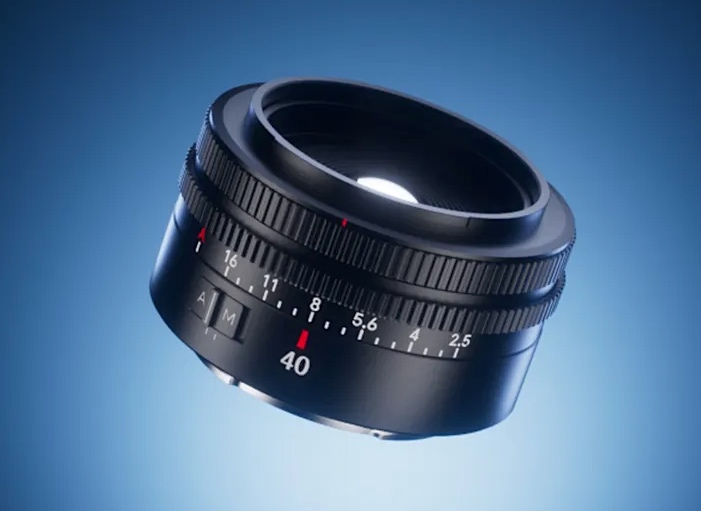
New retro Pergear 50mm f/1.2 APS-C lens for X/E/Z/RF/MFT cameras announced ($99)


Pergear announced a new retro 50mm f/1.2 APS-C manual focus lens for X/E/Z/RF/MFT cameras. Orders are now open at Amazon and Pergear. Here are the details on the new lens:

  • Professional Bokeh: The large F1.2 maximum aperture with 11 rounded aperture blades creates exceptionally smooth, circular bokeh with creamy background separation—perfect for portraits and artistic storytelling
  • Low-Light Champion: Capture clean, vivid images in challenging lighting conditions where other lenses struggle
  • 7 Elements in 5 Groups: Advanced optical configuration ensures sharpness, enhanced contrast, and true-to-life color reproduction
  • DeClick Aperture System: Smooth, clickless aperture ring enables seamless exposure transitions—ideal for video work
  • Precision Manual Focus: Experience the satisfying ritual of perfecting your focus, from soft blur to crystal-clear sharpness
  • Luminous Scales: Innovative fluorescent coating glows in darkness, allowing easy reading of settings for night photography and astrophotography
  • Retro Inspiration: Draws design cues from legendary 1981 AIS 50mm F1.2, blending vintage aesthetics with contemporary manufacturing
  • Compact & Lightweight: 360g Perfect balance of performance and portability for everyday carry
  • 75mm Equivalent: On APS-C cameras, provides ideal portrait focal length with beautiful compression


Technical specifications:

Attribute Specification
Focal Length 50mm (75mm equivalent on APS-C)
Maximum Aperture F1.2
Aperture Blades 11 rounded
Optical Construction 7 elements in 5 groups
Minimum Focus Distance 0.7m (2.3ft)
Aperture Ring DeClick design
Focus Manual
Special Feature Luminous distance scales
Mount Compatibility Sony E, Fujifilm X, Nikon Z, Canon RF, M4/3 (APS-C)

The post New retro Pergear 50mm f/1.2 APS-C lens for X/E/Z/RF/MFT cameras announced ($99) appeared first on Photo Rumors.

  •  

Sony's updated kit lens is ready for action

When you use DPReview links to buy products, the site may earn a commission.
the sony 28-70 lens is placed against a blurry gray background
Image: Sony

Sony announced its a7 V camera today, and included in that announcement was the new version of its standard zoom kit lens. The FE 28-70mm F3.5-5.6 OSS II is a subtle upgrade to meet the demands of Sony's latest camera, making it a well-rounded kit for creatives who do it all.

The primary update in the FE 28-70mm F3.5-5.6 OSS II is improved autofocus capabilities that allow it to handle the faster burst shooting rates of the new a7 V. Sony says it is capable of up to 120 fps with AF/AE tracking and it can track and focus while zooming. It also offers breathing compensation to reduce shifts in angle of view for smooth rack focusing.

Beyond the improved autofocus, the new lens keeps the design and features of its predecessor. That includes the same optics, which are comprised of nine elements in eight groups, with three aspherical elements and one ED (Extra-low Dispersion) glass element. It features the same seven-blade aperture and offers Sony's Optical SteadyShot image stabilization. It can focus as close as 0.3-0.45 m (0.99-1.48').

a person wearing a green jacket holds a sony lens in their hand
Image: Sony

Given that the optical design remains the same, the new version retains the same size as the previous iteration. It weighs 293g (10.4 oz) and measures 72.5 x 83mm (2.875 x 3.375"). It uses a 55mm filter thread. It offers weather sealing to protect against dust and moisture, and features a fluorine coating on the front element to repel water and oil. There are no on-lens controls, except for a zoom and focus rings.

The FE 28-70mm F3.5-5.6 OSS II will be available in February 2026 for $449, which is the same as the current list price of the original version. A kit with the Sony a7 V and FE 28-70mm F3.5-5.6 OSS II will also be available in February 2026 for $3099. You can pre-order both now.


Preoder now:

Lens preorder
Sony a7 V kit preorder

Specs:

Principal specifications
Lens typeZoom lens
Max Format size35mm FF
Focal length28–70 mm
Image stabilizationYes
Lens mountSony E, Sony FE
Aperture
Maximum apertureF3.5–5.6
Minimum apertureF22–36
Aperture ringNo
Number of diaphragm blades7
Optics
Elements9
Groups8
Special elements / coatings1 ED, 3 aspherical
Focus
Minimum focus0.30 m (11.81)
AutofocusYes
Motor typeLinear Motor
Focus methodInternal
Distance scaleNo
DoF scaleNo
Physical
Weight293 g (0.65 lb)
Diameter74 mm (2.9)
Length86 mm (3.4)
SealingYes
ColourBlack
Power zoomNo
Filter thread55 mm
Hood suppliedYes
Tripod collarNo

  •