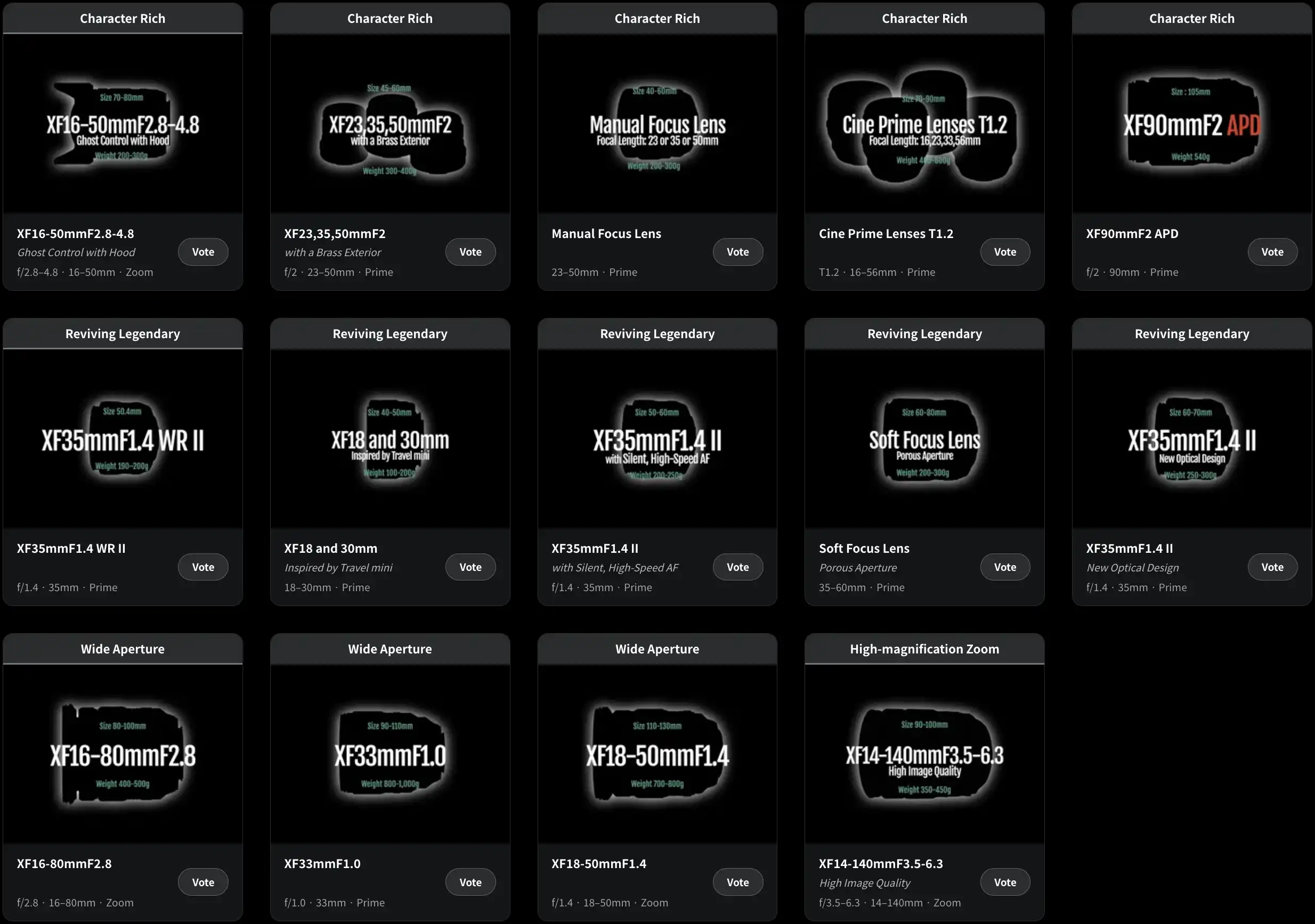
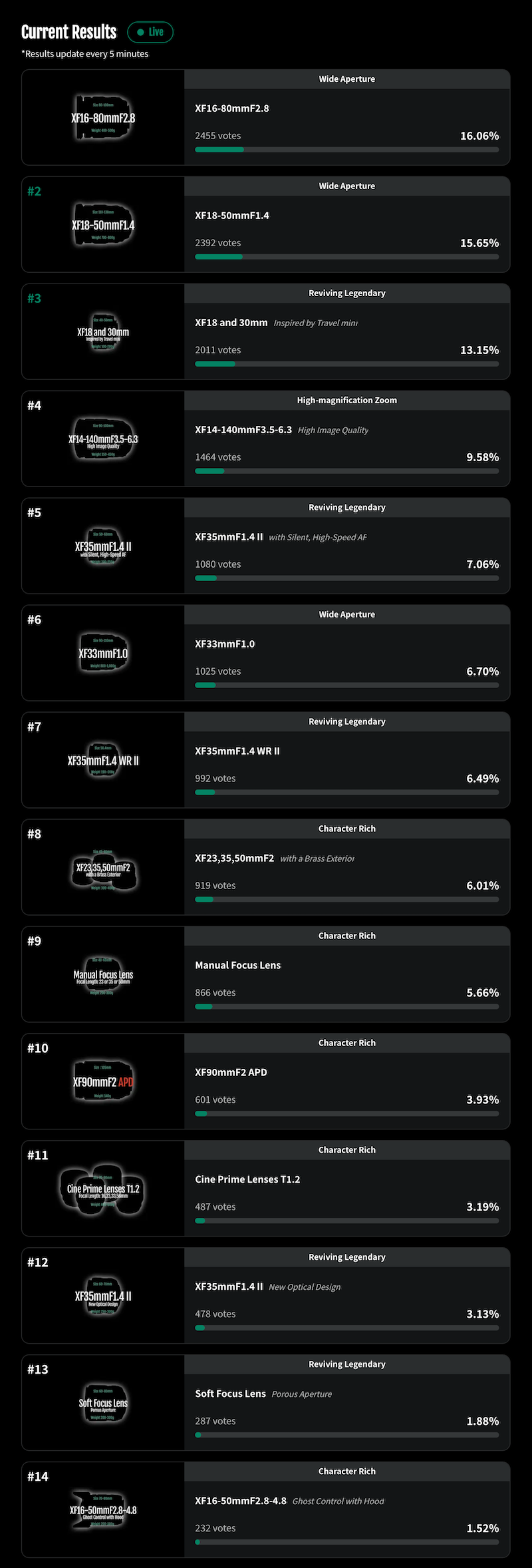
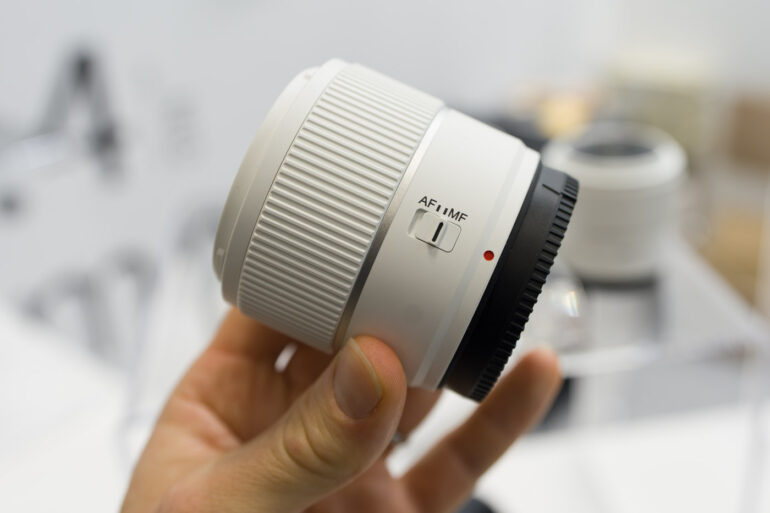
Fujifilm invites users to explore and vote on potential future XF lenses for the X-mMount system, based on 14 concept ideas proposed by Fujifilm’s product planning team. None of these concepts are currently in development, but the voting helps gauge community interest to influence future priorities. Users are prompted to select their top three favorite lens ideas after reviewing details like focal length, aperture, size, weight, and unique features. The page includes sorting options for the lenses (by category, aperture, focal length, or size) and likely interactive elements, such as checkboxes or buttons to submit votes. There’s also a link to view live voting results, which update every 5 minutes:
Early voting trends show strong interest in the wide-aperture zooms like the XF18-50mm f/1.4 and XF16-80mm f/2.8. The 14 concept lenses are grouped into four categories: wide-aperture lenses, high-magnification zooms, special-effect or updated classics, and other innovative ideas. Here’s a breakdown of each, including estimated specs and key notes from the event:
Lens Concept
Category
Key Details/Description
XF33mm F1.0
Wide-aperture prime
Revisited from a canceled past plan due to excessive size; aims for ultra-bright standard focal length. Size: 90-110mm, Weight: 800-1,000g, Filter: 80-90mm.
XF18-50mm F1.4
Wide-aperture zoom
Ambitious constant-aperture standard zoom; technically challenging but possible with tech advances; f/2 version more feasible. Size: 110-130mm, Weight: 700-800g, Filter: 80-90mm.
XF16-80mm F2.8
Wide-aperture zoom
5x zoom extending the 16-55mm concept; targets compact form similar to existing F4 version. Size: 80-100mm, Weight: 400-500g, Filter: 80-90mm.
XF14-140mm F3.5-6.3
High-magnification zoom
Superzoom with emphasis on high image quality; single entry in this category. Size: 90-100mm, Weight: 350-450g, Filter: 75-85mm.
XF35mm F1.4 II
Updated prime
New optical design for the classic 35mm; focuses on improved performance. Size: 60-70mm, Weight: 250-300g, Filter: 65-70mm.
Soft Focus Lens
Special effect prime
Uses porous aperture for creative soft focus effects; focal length not specified. Size: 60-80mm, Weight: 200-300g.
XF35mm F1.4 II (Silent High-Speed AF)
Updated prime
Enhanced autofocus version; aims for silent, faster operation while maintaining character. Size: 50-60mm, Weight: 200-250g, Filter: 65-75mm.
XF35mm F1.4 WR II
Updated prime
Weather-resistant update; retains original optical design for classic rendering. Size: 50.4mm, Weight: 190-200g.
XF18mm and 30mm (Switchable)
Switchable prime
Non-zoom lens that switches between two focal lengths (inspired by old Fuji cameras); compact, potentially fast aperture. Size: 40-50mm, Weight: 100-200g, Filter: 60-65mm.
Cine Prime Lenses T1.2 (16mm, 23mm, 33mm, 56mm)
Cine primes
Set of four cinema-style primes with ultra-bright T1.2; geared for video production. Size: 70-90mm each, Weight: 400-600g each, Filter: 75-85mm.
XF90mm F2 APD
Special effect prime
Incorporates Apodization (APD) filter for smoother bokeh, similar to XF56mm F1.2 APD. Size: 105mm, Weight: 540g, Filter: 75mm.
Manual Focus Lens (23mm or 35mm or 50mm)
Manual focus prime
Compact, autofocus-free option; choice of standard focal lengths. Size: 40-60mm, Weight: 200-300g, Filter: 60-65mm.
XF23mm, XF35mm, XF50mm F2 (Brass Exterior)
Primes with premium build
Updated F2 primes with brass exterior for aesthetic appeal; relatively easy to produce. Size: 45-60mm each, Weight: 300-400g each, Filter: 43-46mm.
XF16-50mm F2.8-4.8
Zoom with ghost control
Standard zoom with deliberate flare/ghosting control via removable hood for creative effects. Size: 70-80mm, Weight: 200-300g, Filter: 65mm.
2026 Sony World Photography Awards Professional Finalists
The World Photography Organization has announced the professional finalists and shortlists for the 2026 Sony World Photography Awards. While the Open competition (for which the 2026 category winners were announced last month) celebrates standout single images, the Professional awards focus on cohesive series that tell a story over multiple frames. The professional finalists offer a counterpoint to the Open winners, revealing how photographers are using image sequences to deepen storytelling beyond what a single photo can achieve.
This year's announcement highlights long-form projects across 10 categories, from Documentary Projects and Portraiture to Landscape and Wildlife & Nature. For the 2026 edition, 30 photographers have been named finalists, and more than 65 others have been shortlisted for series that range from intimate personal narratives to wide-ranging explorations of social and environmental change. The judges evaluated each body of work on its narrative strength, visual consistency and conceptual ambition, rather than on a single standout frame.
Selected images will be exhibited at Somerset House in London from April 17 to May 4, alongside hundreds of images from across all divisions of the World Photography Awards. Category winners and the overall Photographer of the Year, who receives a substantial cash prize and gear from Sony, the sponsor of the competition, will be announced at a ceremony in London on April 16. Work from the Photographer of the Year will also be shown in a solo presentation at next year's exhibition.
We've included a small section of the finalist images below, but you can see all of the finalists and shortlisted images at the contest website.
Architecture & Design
Photographer Name: André Tezza
Image Name: Loja e Mercado Marielen
Year: 2026
Image Description: Named after one of the owner's daughters, this store in Campo Largo is a family-run business integrated into the same building where the family lives, merging domestic space and commercial architecture into a single, everyday structure.
Series Name: Everyday Structures
Series Description: This ongoing project documents small neighbourhood grocery stores on the outskirts of Curitiba, in southern Brazil. These modest structures form an architecture of resistance that persists even as large retail chains reshape the city. Often family-run and linked to domestic spaces, the stores merge work, memory and dwelling into a single building. While the city centre undergoes gentrification, the periphery remains culturally dense and visually vibrant. This series reflects a belief that architectural beauty exists in ordinary, overlooked places.
Image Description: There is no record of the first disappeared woman in Mexico, but official figures state that 23 per cent of cases correspond to women.
Series Name: The Black Album
Series Description: With more than 130,000 individuals currently reported missing in Mexico, and a new disappearance occurring approximately every 40 minutes, The Black Album transforms archival imagery into a haunting collective portrait of absence, loss, and unresolved grief. Rather than documenting disappearance directly, this photographic essay reinterprets the past to question the future. Through an intervention in a photographic archive, the project constructs a symbolic 'album' of Mexico's disappeared — an unsettling reflection of a country living through a prolonged dark era in which absence has become routine and invisibility systemic.
Series Description: The Palm, On Piru is a photographic series exploring the spiritual connections and collective identities of rappers from South Los Angeles with Pirus/Bloods gang affiliations. The work focuses on the people and places central to the origins of West Coast hip-hop's G-funk music genre, and California's parallel gang culture, examining the interplay of their environment, community and artistic expression. The series was shot on colour infrared film, with its distinctive red and pink tones creating links between the environment and the artists, members, and families that form the Red side of the cultural divide, and the backbone of West Coast Hip Hop.
Image Description: Darwin, a young Venezuelan coca leaf picker (raspachín), rests on freshly harvested coca leaves in Putumayo, Colombia, before they are processed. The raspachíne's work is physically demanding, but the shifts are usually only half a day and are paid in cash. For many migrants, coca harvesting is one of the few reliable sources of income.
Series Name: Under the Shadow of Coca
Series Description: In the southern Colombian department of Putumayo, coca cultivation remains one of the few economic options for rural families in this neglected border region. This project follows farmers and families whose livelihoods depend on an illicit economy shaped by poverty, weak state presence, and armed control, as well as members of Comandos de la Frontera, the armed group that controls the territory and the cocaine trade. While some families try legal alternatives, coca often provides the only stable income. Under the Shadow of Coca shows that many of the local producers are not traffickers, but campesinos (farmers), and that it is usually armed groups who profit from the trade of coca.
Image Description: The photograph happened quickly. The flowers, the same colour as the detainee's sneakers and cap, immediately motivated him to pose. Many young people have experienced a similar scenario: drug dealing, then prison. He tells the photographer his story with ease: 'I started at 10 o'clock, in a small park, with a bag. Inside, there was really a big package. A lot of money.'
Series Name: Sixteen and a Half: Eight Months in a Juvenile Prison
Series Description: Over a period of eight months, Alexandre Bagdassarian documented the daily lives of young detainees in one of France's six juvenile prisons, one of the country's least visible institutions. The photographer sought to understand what it means to be young and confronted with prison, not from the perspective of legal texts or institutional discourse, but by observing the trajectories, voices, and bodies of those living this reality. Often relegated to silence or the margins, their stories are rarely told, and when they are, they reach us through a media or political lens, the photographer explains, sometimes 'shaped by security driven ideologies.'
Image Description: A family footing turf for domestic use. Ticknevin, County Kildare, Ireland.
Series Name: Beneath | Beofhód
Series Description: Beofhód — 'life beneath the sod' in Irish — evokes the primal significance of bogs in Celtic tradition. The series examines the cultural and environmental aspects of bogs in Ireland and contemplates themes of social and environmental justice, topographical mapping and the evolving perception of peatlands in an era of de-industrialisation. Although urgent ecological imperatives have ended large-scale peat extraction, they have also created tension with small-scale harvesting for domestic use, which still persists. Referencing Joseph Beuys' assertion that bogs are 'the liveliest elements in the European landscape' and 'preservers of ancient history,' this work reflects on the endangered status of these habitats in the artist's post-industrial surroundings. In this project, bogs are used as 'a metaphor for Ireland and the Irish psyche, and for local, human and personal exploration of a global issue.'
Image Description: Jinwar is an eco-feminist village founded during the Syrian war as a refuge for women. The village, powered in part by solar energy, was built collectively and inaugurated in 2018. Amal arrived here a year ago and says that 'the relationships among women are beautiful; I love everything here. I hope to be reborn here, with a clear mind, and to live in peace — here it's possible.'
Series Name: Jinê Land: Where Women Keep the Earth Alive
Series Description: Jinê Land: Where Women Keep the Earth Alive tells the story of women shaping the ecological and social future of Rojava in northeast Syria. In a region that is still recovering from war and fragmentation, women lead the fight for environmental restoration, sustainable agriculture, and community self-governance. Since 2012, Kurdish, Assyrian, Arab, and Armenian communities have self-organised under a model inspired by democratic confederalism, integrating women's liberation and ecology. Women manage schools, cooperatives, health centres, and local councils, ensuring their leadership in both social and ecological spheres. Villages such as Jinwar embody this vision: female-led, sustainable, and resilient, offering a space for education, self-reliance and communal life. Through photography, this project captures the intersection of freedom, ecology, and community, revealing a radical social experiment where women are both the stewards of the land and the architects of a new society.
Image Description: The first mountain climb ever traversed by the Tour de France has earned its mythical status as one of the hardest cycling climbs.
Series Name: Mountain Roads
Series Description: Mountain Roads is a series of photopolymer etchings of iconic European mountain roads. This ongoing project aims to document the greatest cycling roads spanning the Alps, the Pyrenees, the Dolomites, the Picos and the Spanish Islands. It celebrates the permanence of mountains and the feats of engineering and construction required to navigate and build a route through and over these formidable climbs.
Series Description: This series of abstract landscapes depicts oyster farming on the French coast of Normandy and Brittany, where the farms stretch along the entire coastline, shaping the character of the landscape. With a tidal range of up to 12 metres, the oyster beds disappear from view at high tide but are fully exposed at low tide. Yet it is only from a bird's-eye view that the vastness of these abstract landscapes, reminiscent of Roman legions, can be appreciated.
Image Description: Sheriff Knight (centre), the 'Dancing Cowboy,' leads the line dance during International Cowboy Day.
Series Name: Country Music in Kenya
Series Description: This series was photographed over an 11-month period, with the highlight being the International Cowboy Day festival, in Nairobi, Kenya. The festival drew around 3,000 country music fans to Ngong Racecourse in the final week of July. Country Music has been played on the radio in Kenya since colonial times and the popularity for the genre is growing, with shows being held by various artists in local bars a few times per week.
Series Description: 'My wife and I lost our child to stillbirth at 18 weeks of pregnancy. In the days leading up to the cremation we spent time together at home, during which time I took many photographs. In contemporary society, photographs are easily shared, generated and consumed, and with the rise of social media and artificial intelligence, the meaning of photography as a medium continues to shift. However, pressing the shutter in front of my child brought a renewed awareness of photography's fundamental qualities — its relationship to time and to the body. These photographs were not taken for the purpose of record or explanation. They are made simply to face the time that undeniably existed in that place. For me, looking at these photographs is an act of reaffirming the sensation of being alive.'
Image Description: A priest distributes communion during Pope Francis's funeral mass. Some 4,000 priests concelebrated the mass for approximately 200,000 mourners. Ritual persisted through the institutional transition, with the Eucharist administered regardless of papal presence.
Series Name: The Faithful
Series Description: Between the death of one pope and the election of the next, crowds gathered in St. Peter's Square, Vatican City, for an event that functions simultaneously as sacred ritual and global spectacle. The photographers explain that pilgrimage took on the traits of fandom, as rosaries, flags and prayer gestures were performed with full awareness of the attendant cameras and media. Individual devotion unfolded 'within a choreography shaped by mass attendance and global broadcast.' The portraits in this series capture that 'doubled consciousness': believers performing acts of faith within a mediated public space, where personal conviction merges with stadium-scale performance.
Image Description: The K-pop group Blue Flame, established in 2023, during a rehearsal in the Bucheon University gym. Bucheon University in Tashkent is a branch campus of a Korean university and has become one of the main meeting points for this scene, bringing together young people from different backgrounds who share the same enthusiasm.
Series Name: Koryo-Saram: How Descendants of Deported USSR Koreans Are Rediscovering Their Roots in Uzbekistan
Series Description: Koryo-saram are the descendants of ethnic Koreans from the former USSR who were forcibly deported to Uzbekistan through Stalin's ethnic cleansing policies. Over time, they became an integral part of Uzbek society, but their connection to Korea gradually faded, and by the 1990s, few could even read or write Korean. Today, most Koryo-saram identify as Uzbek citizens, with only faint traces of Korean cultural heritage remaining. However, a new generation, influenced by the 'Korean Wave,' is rediscovering its roots through music, film, dance and language, particularly in Tashkent, where this revival also includes many young Uzbeks.
Image Description: Taken during the same buzkashi match, this series shifts from a strict documentary approach towards an 'emotional truth grounded in real events.'
Series Name: Buzkashi
Series Description: Buzkashi (literally meaning 'goat pulling' in Persian) is the fierce, ancient sport of Tajikistan. It is similar to polo, but there are no teams and no boundaries. The ball is the eviscerated, headless carcass of a goat and the aim is brutally simple: seize it, hold it, break free. The game was born among the nomadic horse cultures of Central Asia, where strength and horsemanship were measures of identity. For centuries, chapandaz (riders) have hurled themselves into this churning mass of hooves and bodies, fighting for honour and a moment of clear sky among the dust.
Series Description: In the shadowed arch of an underpass in Lagos, Nigeria, far from the gleam of professional rings, a raw and resonant rhythm of ambition pulses. Beneath the Bridge documents a makeshift gym where amateur boxers — boys and girls alike — forge their discipline and dreams with nothing but tyres, rope, water and willpower. The project creates an intimate, visceral portrait of grassroots aspiration, exploring universal themes of resilience, gender equality in traditionally male spaces, and the profound human need to carve a place of purpose from the margins. Photographed in the natural light of the underpass, shadows and hard light sculpt the boxers' bodies, as textures of rust, rope and sweat become central to the narrative. This is not a story about winning or losing, but of preparing; a testament to the unadorned, potent moments where character is built before a single punch is ever thrown.
Image Description: A pistachio remains encased in its natural husk, left on the fruit beyond its ideal time. The husk has gradually darkened and started to break down, showing wrinkles, irregularities, and the first signs of decay. The contrast between the pale shell and the darkened husk highlights the pistachio's natural transformation, from fresh to weathered by time.
Series Name: The Bronte Pistachio
Series Description: For almost a year, Daniele Vita photographed the pistachios of Bronte, Sicily, from the trees to the harvested nuts. Studying them one by one, he realised that although they seemed alike, each was unique. This experience became a reflection on a society 'that tends to standardise and erase differences', and the photographer set out to capture the individuality of every natural element. In the final stage presented here, the pistachio stops being immediately recognisable and becomes an open image, where anyone can find their own perspective and meaning.
Series Description: Talking Without Speaking is a series of photographs of everyday objects that have become symbols of protest. Each of the objects can be connected to a specific historical period, a particular rights struggle or a particular country. Some have been intentionally brought to the streets to support a cause, while others have unexpectedly found their place in the public sphere, revealing their symbolic power over time.
Image Description: All of the images in WILD were taken with wildlife cameras set up in forests and along rivers in the UNESCO Rhön Biosphere Reserve in Northern Bavaria, Germany. The image titles indicate the time at which it was captured.
Series Name: WILD
Series Description: The photographs in this series were taken by a wildlife camera. Exposures were made when animals activated the camera via motion sensors, in the absence of the photographer and without his intervention. He was responsible for the preparation and follow-up work; installing the wildlife cameras in carefully selected locations and evaluating and processing the images that were generated over a period of months. The finished work is thus a co-production with the wild animals, whose decisive part — the moment the image is created — was not chosen by the photographer.
Image Description: Passengers in a car watch a capybara eating grass by the side of a road running through the private city. The animals attract attention, and many people stop during the day to take photographs of them.
Series Name: Capybaras at the Forefront of the Dispute and Resistance in Buenos Aires
Series Description: Nordelta is one of the best-known private developments in Buenos Aires, Argentina. It was built on a wetland, an ecosystem in which the land is covered by water, which is the main factor controlling plant and animal life. In recent years, the development's 45,000 upper-class residents have seen numerous capybaras enter the neighbourhood. Social media has been flooded with videos and photographs of the area's original inhabitants in swimming pools, crossing the street, or, more tragically, run over or trapped in drains or sewers. In a little over three years, the capybara population tripled to 1,000, leading the Buenos Aires government to approve population control plans that include selective sterilisation and contraception. At the same time, the presence of capybaras has divided the community, with neighbours arguing for and against the capybaras; for the rights of nature and against uncontrolled urban growth on natural land.
Canon EOS 5D Mark III | 135mm | F7.1 | 1/1600 sec | ISO 200 Photo: DianeMiller
DPReview community member DianeMiller (Diane D. Miller) is an active participant in our wider community and a talented self-taught photographer. Although she earned a Ph.D. in biochemistry and pursued a career in science, she always had a love of photography.
Her life took a different turn early on, though, after meeting her future husband, a pilot and adventurer. For their honeymoon, the couple flew around the world in a single-engine Beechcraft Bonanza – the first around-the-world flight not intended to set a record.
After years spent on aviation adventures and raising two daughters, Diane returned to working on her photography. Today, she is rooted primarily in nature, from studies close to home to expansive and beautiful landscapes and stills of the quiet night skies.
Favorite camera and lens: Canon R5 with the Canon RF 100-500mm – her favorite for its remarkable, handholdable reach.
Typical photo scenes: Nature close to home, birds, flowers, landscapes, and, increasingly, astrophotography including the Milky Way, deep-sky objects and celestial events.
“I've been playing with cameras since I was 10 or younger. I love being able to capture things I see and things beyond what I can see," she says.
Diane describes herself as a self-taught photographer who prefers to work alone or with a very small group of like-minded people. While she has traveled around the globe, she has found deep satisfaction in exploring familiar places, discovering beauty in nearby wetlands and in mystical views of the night sky.
Over the last decade or so, she has become much more serious about astrophotography, building a deep-sky setup while also experimenting with wide-angle Milky Way scenes. Recently, she developed a method of using astrophotography software to overcome limitations of shooting with regular cameras – a tutorial she is publishing on her website.
M31, the Andromeda Galaxy, shot with my astro rig.
Bag: A well-worn LowePro backpack (model long discontinued)
DianeMiler's camera bag.
Photo: DianeMiller
What other gear makes a difference?
"For my birding expeditions, I find the Spider hip belt holster and Olympus EE-1 dot sight for fast aiming at extreme focal lengths especially useful," she says.
Diane admits that her bag is usually packed to capacity. “Maybe I'm too ‘focused’ on photography and I can barely lift the bag as configured for most shoots, so not much else goes along except water.”
Recently fledged Western Bluebird.
Canon EOS R5 | 726mm | F13 Photo: DianeMiller
How do you adapt your setup to outdoor challenges?
Diane frequently repacks and reconfigures her bag depending on whether she is heading out to capture birds, flowers, macro shots or landscapes. For wildlife, the long lens and teleconverters dominate. For flowers and insects, macro tools and specialized lighting take priority. For landscapes and night skies, wide-angle lenses or her full astrophotography rig come along.
“It depends on the season and on what I am doing," she says. "If I travel alone like an explorer, I reduce everything to the minimum. If I have to photograph an organized event and stay in one place for three or four hours, I bring what makes the wait comfortable."
"My strength is that I always have the right focal length ready. The cameras are set in manual mode, usually with the aperture wide open. If necessary, I close it, but I like to isolate the subject and react quickly.”
Laguna de Santa Rosa on a foggy morning.
Canon EOS 5D Mark III | 170mm | F10 | 1/320 sec | ISO 200 Photo: DianeMiller
Diane's advice for other photographers
Diane’s philosophy is simple and ongoing: “The paint never dries.” She embraces photography as a lifelong process of refinement, curiosity and discovery. She also jokes that she loves her “dimroom, Lightroom and Photoshop!” where the creative process continues after the shutter is pressed.
If you’d like to share your photography setup, tell us about your main camera, lens choices, key settings and photography strategies. You could be featured next!
Editor's note: This article continues a series, 'What's in your bag?', highlighting DPReview community members, their photography and the gear they depend on. Would you like to be featured in a future installment? Tell us a bit about yourself and your photography by filling out this form. If you're selected for a feature, we'll be in touch with next steps.
When you use DPReview links to buy products, the site may earn a commission.
Updated March 5th, 2026
Well over a decade after Panasonic introduced the first mirrorless camera, it's a design that now dominates the interchangeable lens camera market. They include cameras designed for a wide range of photo and video pursuits and models at everything from budget to professional price points.
We've used and tested just about every current mirrorless camera on the market and picked out what we think are the stand-out models. We'll start with the most affordable models, then work our way up from there. In general terms, as you move up the price ladder, you'll see larger sensors with better image quality, higher resolution, faster burst rates, and more capable video specs. We'll explain why we've chosen each camera and try to explain the advantages and disadvantages of each choice.
Rolling shutter 'jello effect' present in 4K video
Crop when recording 4K/30p video
The Sony a6100 is an entry-level APS-C mirrorless camera. While it's one of the older cameras still available, its 24MP sensor, touchscreen for easy focus placement and Sony's excellent autofocus tracking, which especially excels at focusing on people and pets, still make it an excellent value for its price.
It's happiest if you prefer to point-and-shoot in an auto mode. The wide range of lenses available for it provide room to grow if you find yourself catching the photography bug and, if you shop smart, you can get the body and a lens for around $1000 (though we'd recommend staying away from Sony's default 16-50mm F3.5-5.6 II kit option).
The a6100 is the most basic model in the a6000-series and doesn't feel quite as robust as its step-up siblings. It offers a lower-resolution electronic viewfinder, and twin control dials that are both thumb-operated. Its touchscreen flips upward 180-degrees for easy selfie framing and vlogging.
Sony's autofocus system has been trained to recognize people and pets as subjects, and will follow them flawlessly throughout the frame. Coupled with the ability to touch the screen to place a focus point, it's a system that will serve beginner users very well, whatever they're shooting.
"The a6100's autofocus can effortlessly track whatever you point it at"
The a6100 makes it easy to record 4K footage or slow-motion 1080 video. There's a socket to connect an external mic but no way to connect headphones for monitoring. It can be set up for tap-to-track autofocus in video, too. There's significant 'jello-effect' distortion in the 4K footage though, especially in 24p mode.
The a6100 is a good entry-level camera with a very powerful, easy-to-use autofocus system. We're not huge fans of the kit zoom and the interface isn't especially welcoming, but with a few settings changes, it can help you get excellent shots, easily.
The Nikon Z50II is an entry-level APS-C mirrorless camera, built around a 21MP CMOS sensor. It features Nikon's '3D tracking' autofocus system, and can recognize nine subject types.
It represents a step up over the a6100, offering similarly powerful autofocus (though with more autofocus subject recognition types) and much more welcoming controls for when you want to be more involved in the photo-taking process. Nikon places some restrictions on what lenses third parties can make, but there are increasingly more sensible options; if the ones you want are available for it, the Z50II is the best option at this price point.
It has a solid grip, twin top-plate control dials, and a wide variety of customizable buttons, including one that, by default, controls color mode. Focusing is handled using the touchscreen or four-way controller.
Autofocus is very good with subject detection being especially good. However, human detection doesn't seem as sticky and 3D Tracking isn't as dependable as on Nikon's higher-end models. Otherwise, the camera is snappy and can even do 30fps pre-capture, though it's JPEG only.
The Z50II delivers on the basics without breaking the bank.
The Z50II can shoot Log or HLG video and has a waveform monitor to help set correct exposure. A headphone socket helps maintain audio quality but the lack of in-body stabilization counts against its use for video.
The Z50II is a solid hybrid camera, with several features from Nikon's higher-end cameras. The lack of a stabilized sensor is the one mark against what are otherwise very good video specs, and you may find the lens selection limited if you want a camera to grow with you.
The Fujifilm X-T5 is an enthusiast-level APS-C mirrorless camera built around a stabilized, 40MP BSI CMOS sensor with the company's X-Trans color filter array. It has plenty of features for both photo and video shooters.
What really lands it on this list, though, is how lovely it is to use. There are physical controls for all your exposure settings alongside configurable top-plate command dials, a big, bright EVF, and its JPEG colors are especially pleasing with a wide range of sensible (and more out-there) "Film Simulation" color modes. Though there are more technically capable APS-C cameras on the market, for a lot of photography, we'd give up a bit of AF tracking performance and speed for the X-T5's user experience.
The X-T5 features dedicated control dials for ISO, shutter speed and exposure compensation, along with a film-era SLR-style low-profile front grip. Its rear screen tilts up and down but also hinges outward for portrait-orientation shooting.
The X-T5 can detect a variety of subjects from animals to vehicles, and tracking performance is quite good with these. Tracking for unrecognized subjects is less dependable and eye detection is prone to false positives. Buffer depth while shooting at 15fps is reasonable.
The X-T5 foregoes some of the X-H2's video features to offer a more photo-centric experience with classic styling
Video performance can be either full width but less detailed, or oversampled from a crop of the sensor. The use of SD cards means it doesn't share the X-H2's high-data-rate ProRes options. There's no headphone jack but audio can be monitored through the USB port with an included adapter.
Having the X-H2 and X-H2S available to meet the needs of videographers allows the X-T5 to fulfill photographers' desires for stills-centric handling and features. For photographers who enjoy Fujifilm's traditional dial-based controls, there's no more capable body than the X-T5.
This widget is not optimized for RSS feed readers. Please open this article's permalink in a browser to view this content.
What are my other APS-C options?
The Sony a6700 is the most capable APS-C camera on the market, with extremely strong autofocus performance, image quality and video capabilities. Sony's E-mount also has the most complete array of APS-C lenses after Fujifilm's, largely thanks to support from third parties. However, we don't find it as pleasurable to use as the X-T5 – its viewfinder is smaller and lower-res, and the lack of an AF joystick makes picking a focus point a bit more of a chore – but if technical prowess is what you seek, the a6700 is your best bet.
Fujifilm's X-T50 is also worth considering if you're looking at APS-C cameras
Photo: Richard Butler
Finally, if you were enticed by the X-T5 but are on a budget, we'd suggest considering the Fujifilm X-T50. It packs the same sensor and processor into a smaller, lighter design. While the viewfinder isn't as nice, and the controls are a little more fiddly, in return, you get the film simulation dial, which encourages you to play with different looks. It can also be kitted with the excellent 16-50mm F2.8-4.8 OIS zoom, which is significantly better than the lenses bundled with other companies' APS-C offerings
Full-frame cameras (those with image sensors the same size as traditional "35mm" film) offer the potential for better image quality than smaller formats, simply because they have a larger area on which to capture light. However, you don't get something for nothing: even if you can find an affordable, compact full-frame camera at a good price, the lenses needed to make the most of it will be larger and will typically cost more than those for APS-C or Four Thirds sensors. Broadly speaking, there's a balance to be struck between image quality, size and price, which is worth contemplating before you make the assumption that full-frame is the best (or even 'better') format.
The Nikon Z5II is a full-frame mirrorless camera built around a 24MP BSI CMOS sensor.
Don't be scared by the "value" part of this pick; the Z5II doesn't feel cheap, and there aren't obvious features cut for cost. In fact, we suspect most photographers would struggle to push its limits, and unless you must absolutely have faster or higher-resolution shooting or top-end video, it's hard to argue that most people truly need anything better.
The Z5II is a solid camera with a deep grip and plenty of customizable buttons. It's comfortable to use, even for long sessions using a relatively large lens.
The autofocus is very good, especially in subject recognition modes. It's not quite as dependable at recognizing people in low light, but it's very competitive and light-years better than even higher-end cameras from just a few years ago.
The Nikon Z5II is almost unimaginably good for a camera priced under $2000.
Video quality is good, though with a decent amount of rolling shutter, and it offers advanced options like Log, HLG HDR and N-Raw capture. Autofocus isn't as dependable as it is in stills.
Image quality is excellent, and the Z5II can capture HLG HDR images using HEIF files for a more life-like viewing experience.
The Z5II is an impressive all-rounder that delivers excellent image quality and good video, underpinned by very good autofocus in a body that's well-designed and comfortable to use. It's hard to see what more an enthusiast photographer could want from a camera.
This widget is not optimized for RSS feed readers. Please open this article's permalink in a browser to view this content.
What are the other entry-level full-frame options?
We also think the Canon EOS R8 is worth considering if you're looking for a comparatively affordable full-frame camera. Like Nikon's Z-mount system, Canon's RF lens ecosystem is also somewhat short on affordable lenses to pair with an entry-level camera.
Its usability is what keeps it from topping this guide; it has shorter battery life and a smaller viewfinder than the Z5II, and lacks in-body image stabilization, a second SD card slot and an AF joystick. However, it can shoot 4K60 video without a crop, which could be interesting to videographers, though, unlike the Z5II, it doesn't offer any Raw options.
Good autofocus tracking with auto subject recognition mode
Extensive choice of video resolutions and codecs
What we don't:
Peak dynamic range lower than peers
N-Raw video format has limited support
Nikon controls 3rd-party lens options
The Nikon Z6III is Nikon's third-generation full-frame enthusiast mirrorless camera, with a 'partially stacked' 25MP CMOS sensor.
The Nikon Z6III is a significant step up for the Z6 series, and is a very capable camera for both stills and video. Its main benefit over less expensive models are its sensor readout speeds – and, therefore, rolling shutter performance in video. At its MSRP, at least in the US, it's not quite as good as its similarly priced rivals, but it's routinely available for hundreds of dollars off, a price that makes it a bit more attainable as this category gets increasingly expensive.
The Z6III has an ample grip and easy-to-use control scheme. Nikon's menus and touchscreen layout are also well-refined, but the camera lacks the company's traditional AF mode button or front-corner switch.
The Z6III is a genuine do-anything camera with excellent video and photo capabilities.
Autofocus is generally reliable, and the camera includes Nikon's 3D-tracking system and plenty of subject recognition modes. It can shoot 20 raws per second, or 60fps in JPEG mode.
The Z6III shoots many video formats, including Raw, and has dependable subject-tracking autofocus and a waveform display. Its 4K and 5.4K modes produce excellent detail, even in 60p, and its rolling shutter performance is outstanding.
Image quality is very good, with lots of detail and acceptable amounts of noise. There is a recognizable dynamic range tradeoff for that speed, but it's only noticeable in extreme situations.
The Z6III is a significant step-up from its predecessor and is to-date the most all-round capable camera in its class. It excels in both stills and video.
Full suite of video recording modes and assist features
What we don't:
Overheating in ambitious video modes
Dynamic range isn't as strong as its best competitors'
Hitting buffer's limit slows camera down
The Canon EOS R6 III is a full frame enthusiast camera, with a 33MP sensor.
It earns its place on this list by being a complete package that's enjoyable to use. Its image quality, burst rates and autofocus are capable of helping you tackle pretty much any subject, and it's also a powerful video camera. No matter what your needs it's hard to imagine you'll find that the EOS R6 III holding you back.
It has plenty of customizable buttons and a decent range of settings for them. It's comfortable to hold, but its viewfinder and display aren't the nicest around.
The EOS R6 III has very dependable autofocus across its selection of tracking and subject recognition modes. It can shoot at bursts up to 40fps (though with reduced dynamic range), and supports pre-capture for up to 0.5 sec before you press the shutter.
Rather than "jack of all trades, master of none." It's a master of most.
Images from the EOS R6 III have very good levels of detail and pleasing colors. The camera's peak dynamic range can't match the best of its competitors, and it'll struggle a bit more in e-shutter mode, but it's good enough for most use cases.
The video quality from the camera's open gate, Raw and oversampled 4K modes is quite good at 24p, though its higher-framerate and subsampled modes suffer a bit. Its rolling shutter performance is great, and it's quite nice to use for shooting video. However, its overheating performance could limit its most ambitious modes in hot shooting environments.
The EOS R6 III is an abundantly capable camera for most kinds of stills and video shooting. It pairs great performance with excellent ergonomics and a refined user experience.
This widget is not optimized for RSS feed readers. Please open this article's permalink in a browser to view this content.
The enthusiast rivals
The category of mid-range enthusiast full-frame cameras is perhaps the most competitive in the industry: each option is very capable, but with different strengths and weaknesses. Depending on your needs, the Sony a7 V or the Panasonic S1II may be slightly better options than the EOS R6 III or Z6III, but for most users, it's hard to go wrong with any of them. For more info on the subtle differences between them, check out our full best cameras under $3000 buying guide.
Some other notable mentions: if you shoot outside a lot and need a compact system with excellent weather sealing, the OM System OM-1 II is worth considering; outside of that use case, it's probably worth considering other options unless you're heavily invested in Micro Four Thirds lenses.
Sony'sa7C II is also a reasonable choice, as its high-resolution sensor is good for stills, though its slow readout speeds limit its video capabilities. Its autofocus isn't quite as advanced as that of the a7 V, but it's appreciably smaller than its rivals. This does mean that the viewfinder is small, and there's no AF joystick, though, which are the main reasons it's not one of our main picks: it's better on paper than in the hand.
Best high-end mirrorless camera: Canon EOS R5 II
45MP Stacked CMOS sensor | Eye-controlled AF subject selection | Up to 30fps continuous shooting
Slight reduction in dynamic range in extreme scenarios
Temperamental eye control
Temperature limits in heaviest video modes
The Canon EOS R5 II is one of the most capable cameras we've ever tested and will almost certainly be up to any task that most photographers can throw at it. It shoots at high resolution, has an excellent autofocus system and sports plenty of video features.
The grip is very well-shaped and proportioned, and the controls are all well-placed and comfortable to use for extended periods. Eye Control for autofocus is excellent when it works, which isn't always
The EOS R5 II has excellent tracking and subject-tracking autofocus performance. The subject detection is effective without getting in your way. It can shoot Raws at up to an extremely rapid 30fps.
The EOS R5 II does a vast range of things, most of them extremely well: it's impressive for action, landscapes, video, you name it.
It has plenty of video options up to Raw 8K/60p, offering high levels of detail, though it can overheat when shooting in its most impressive modes. Its rolling shutter rates are generally quite good.
The 45MP Raws are highly detailed, and the JPEG sharpening and noise reduction are sensible. It can't quite match higher-resolution cameras like the A7R V, but performs well in its own right.
The EOS R5 II excels at almost everything it tries to do, and that's a long list. It's hard to imagine what photo or video need it won't support you in.
This widget is not optimized for RSS feed readers. Please open this article's permalink in a browser to view this content.
A worthy competitor
The strongest competitor to the EOS R5 II, besides the original EOS R5, is Nikon's Z8. And, frankly, there's very little to choose between them. Canon's high-end model has some features that could be useful to certain photographers, like Action Priority AF and Eye Control, but outside of that, your choice should again be dictated by lens selection, as they're both supremely capable cameras.
The Sony a7CR takes most of the features of the more expensive a7R V and provides them in a smaller package. The viewfinder is disappointing for such an expensive camera, but nothing gives you so much image quality in such a small, capable package.
The a7CR is impressively small for a full-frame camera. The addition of a front control dial improves handling significantly. Notably, there’s no joystick for positioning the AF point, and the viewfinder is small and very low resolution for a camera costing this much.
Autofocus performance on the a7CR is very good and is helped by a dedicated processor for crunching complex machine learning-trained algorithms. Subject recognition is quick, and the AF system tracks subjects tenaciously around the frame in either stills or video. 8 fps burst shooting with continuous AF results in a dependably high hit rate.
"If you're looking for maximum resolution in a travel-sized body, the a7RC is tough to beat."
The a7CR captures 4K video at up to 60 fps. The most detailed, oversampled footage results from a 1.2x crop of the sensor, which makes it challenging to maintain wider focal lengths. Auto Framing mode uses AI algorithms to mimic the way a camera operator might punch in on subjects, keeping them framed and in focus.
The a7CR's 61MP sensor can capture a lot of detail, putting it ahead of most full-frame rivals; though it is a little noisier in low light. JPEG colors are pleasing, and excellent sharpening makes the most out of the 61MP sensor. Raw files provide plenty of latitude to pull up shadows at base ISO.
The a7CR delivers impressive results for its size. It essentially provides the same level of image quality, and most of the same features, as Sony's a7R V, but in a smaller package. In exchange for the small size, you make a few compromises, like no AF joystick, but if you're looking for maximum resolution in a travel-sized body, the a7CR is tough to beat.
The Fujifilm GFX 100S II is a 100MP medium format mirrorless interchangeable lens camera with built-in image stabilization.
This camera is perhaps the most specialized pick on this list: it's not especially fast or versatile, but in terms of image quality, it essentially offers the best levels of detail we've ever seen. It's a true step up over even the best of its full-frame rivals (some of which comes from its lenses - the GF primes often being particularly good).
Sample gallery
This widget is not optimized for RSS feed readers. Please open this article's permalink in a browser to view this content.
What are the other high-end options?
Just about all the cameras that cost $3000 and up are, unsurprisingly, rather good. We go into a little more detail about their relative merits in our High-end camera buying guide. As with any budget, the key things to consider are what types of photography you plan to do (and hence, which features and capabilities are most important to you), and whether the lenses you need are available at a price you're willing to pay.
Why you should trust us
This buying guide is based on cameras used and tested by DPReview's editorial team. We don't select a camera until we've used it enough to be confident in recommending it, usually after our extensive review process. The selections are purely a reflection of which cameras we believe to be best: there are no financial incentives for us to select one model or brand over another.
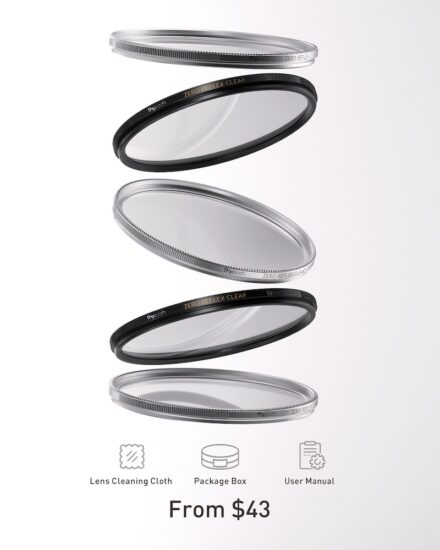
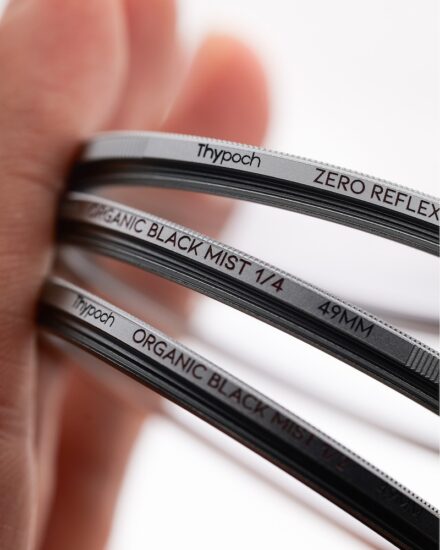
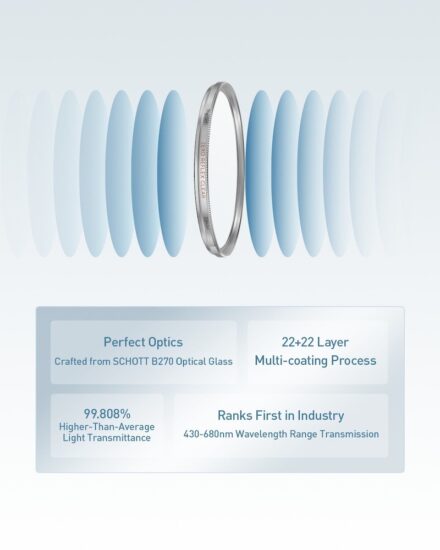
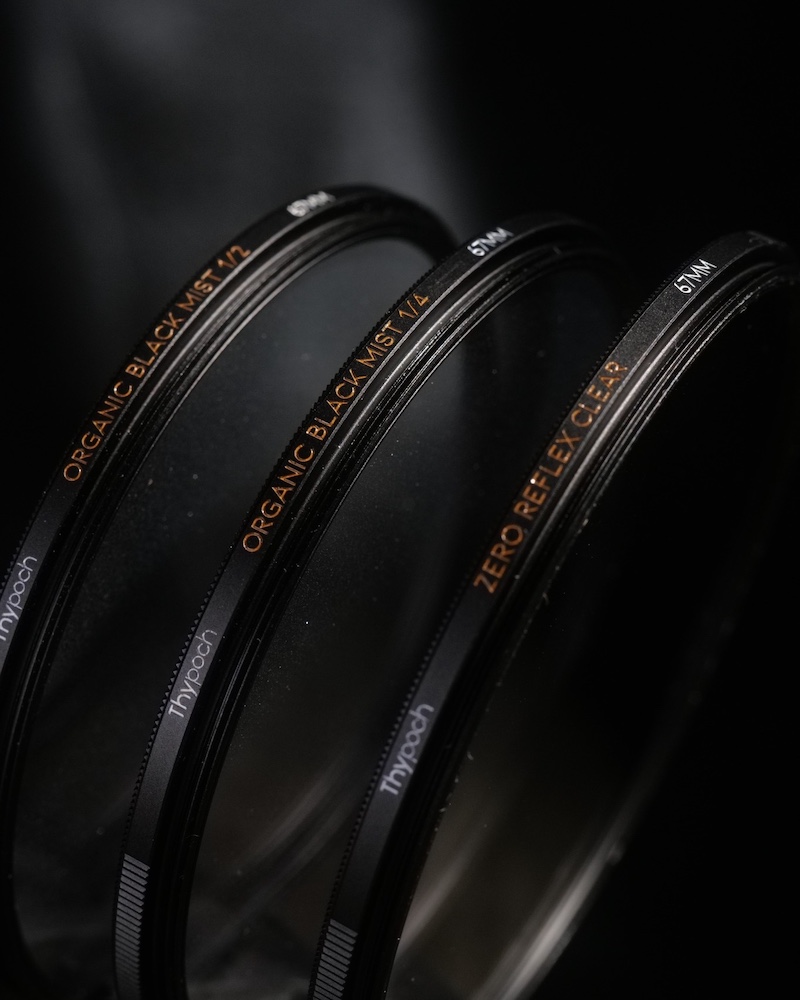
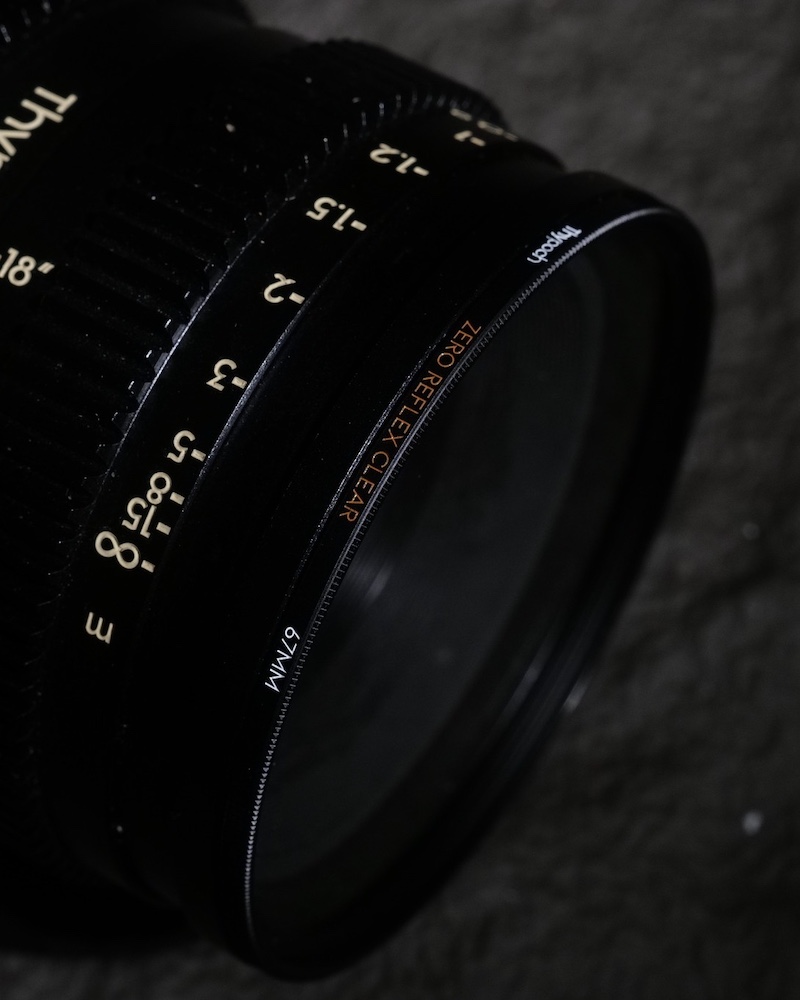
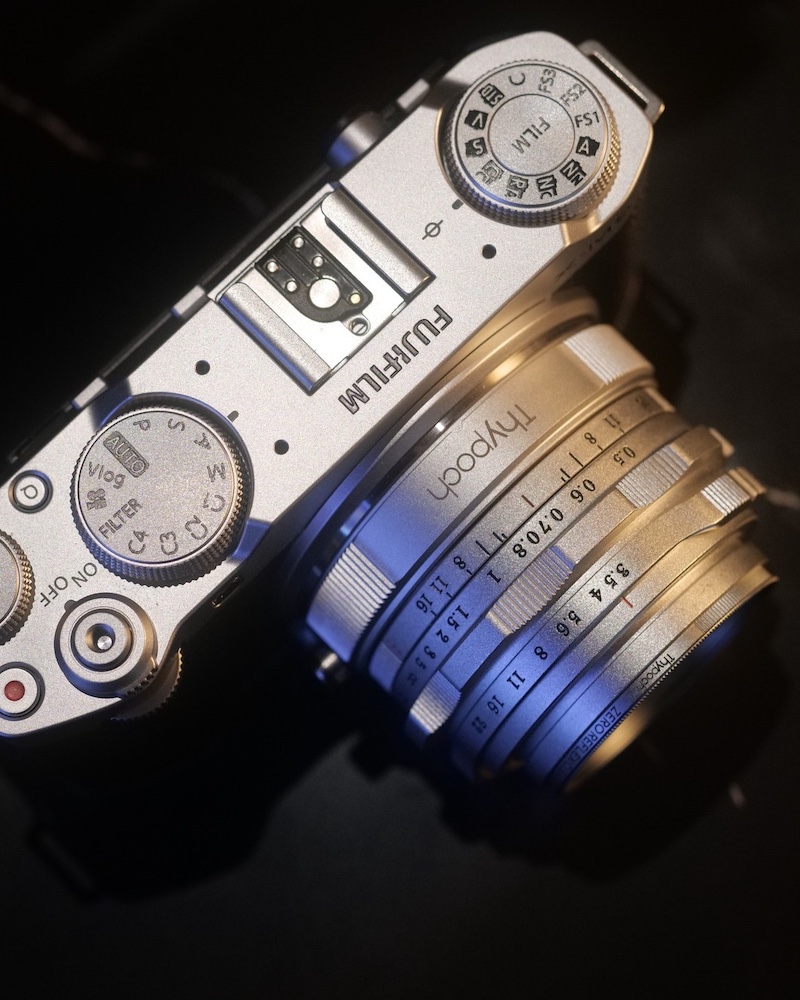
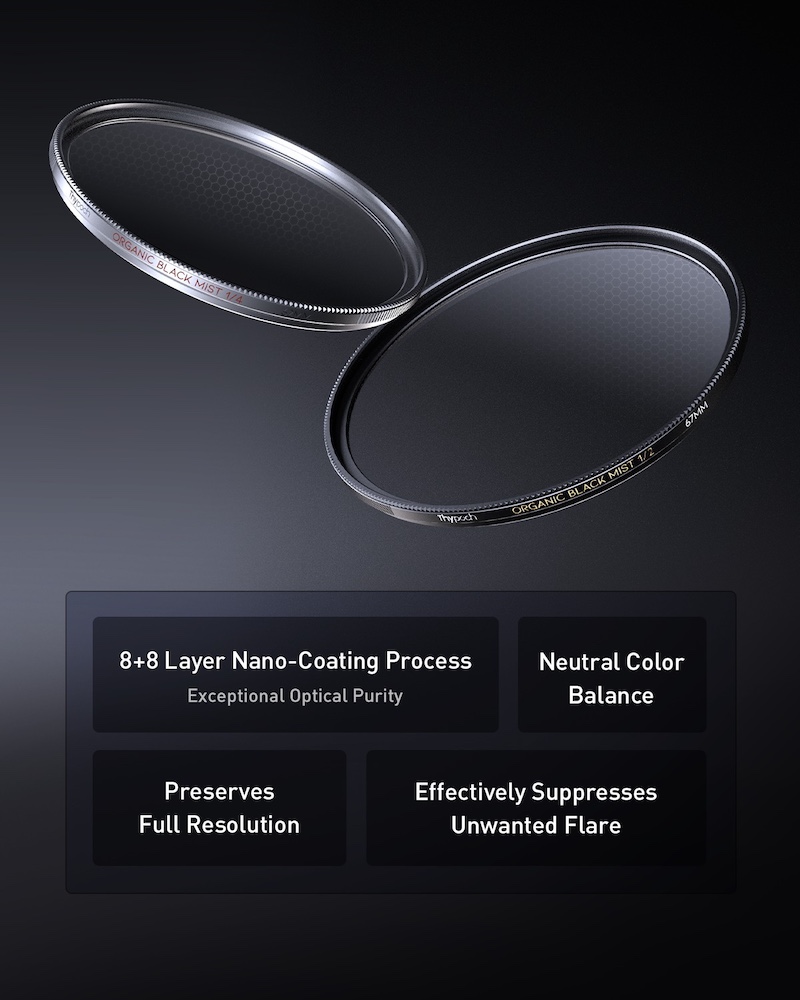
The previously reported new Thypoch Zero Reflex filters are now officially announced, featuring 0.01% ultra-low reflectivity with 1/4- and 1/2-strength, and available in 39mm | 49mm | 52mm | 58mm | 62mm | 67mm | 72mm | 77mm sizes:
Ultra-Slim & Lightweight Frame
Crafted with high-strength aluminum alloy, this camera filter features an ultra-slim, lightweight build—ideal for wide-angle lenses and long-term daily mounting. The anti-slip textured design ensures smooth, jam-free rotation, striking the perfect balance between rugged durability and sleek, premium aesthetics.
Near Bare-Lens Sharpness
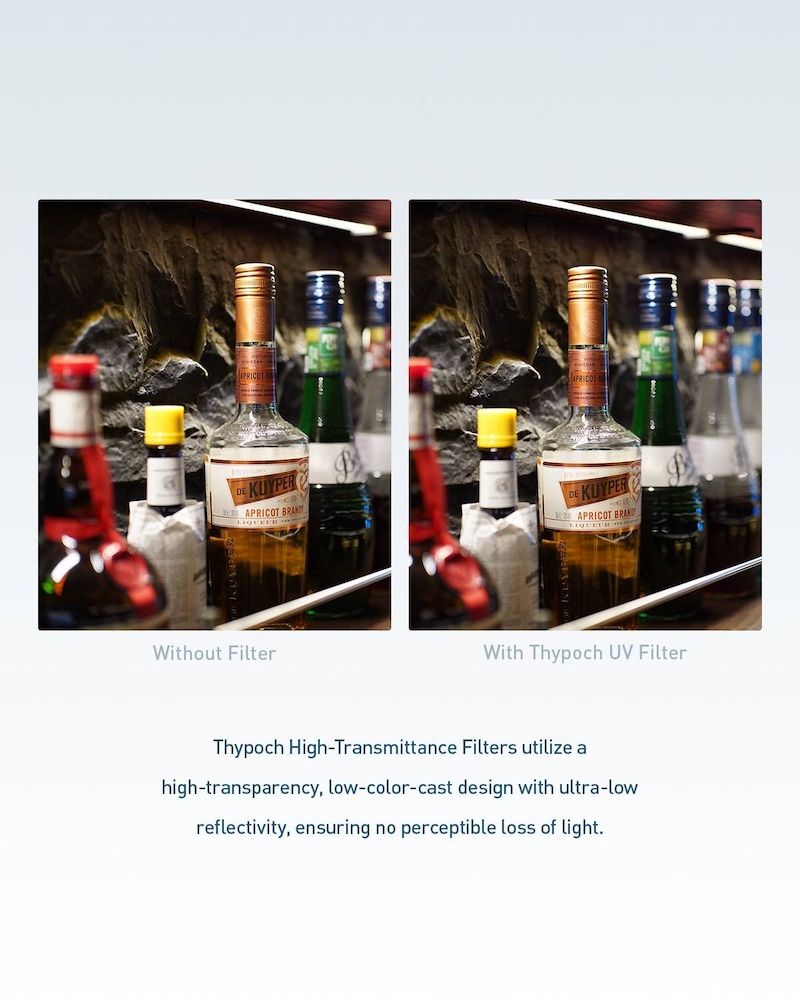
Engineered with premium SCHOTT B270 optical glass and precision ground & polished, the TP filter is coated with 22+22 layers of multi-directional nano-coating. Boasting class-leading high transmittance in the 430–680nm visible light spectrum, it delivers zero sharpness loss, zero color shift, zero flare and ghosting, with high light transmission and low reflection. Experience near bare-lens shooting performance that fully unlocks your lens’ native optical potential.
True Color Fidelity, Zero Image Interference
Dual optimization of high transmittance and minimal color shift ensures uncompromised white balance and accurate color reproduction. Effectively suppresses flare and ghosting for crystal-clear imagery, perfectly suited for high-megapixel mirrorless cameras and video shooting.
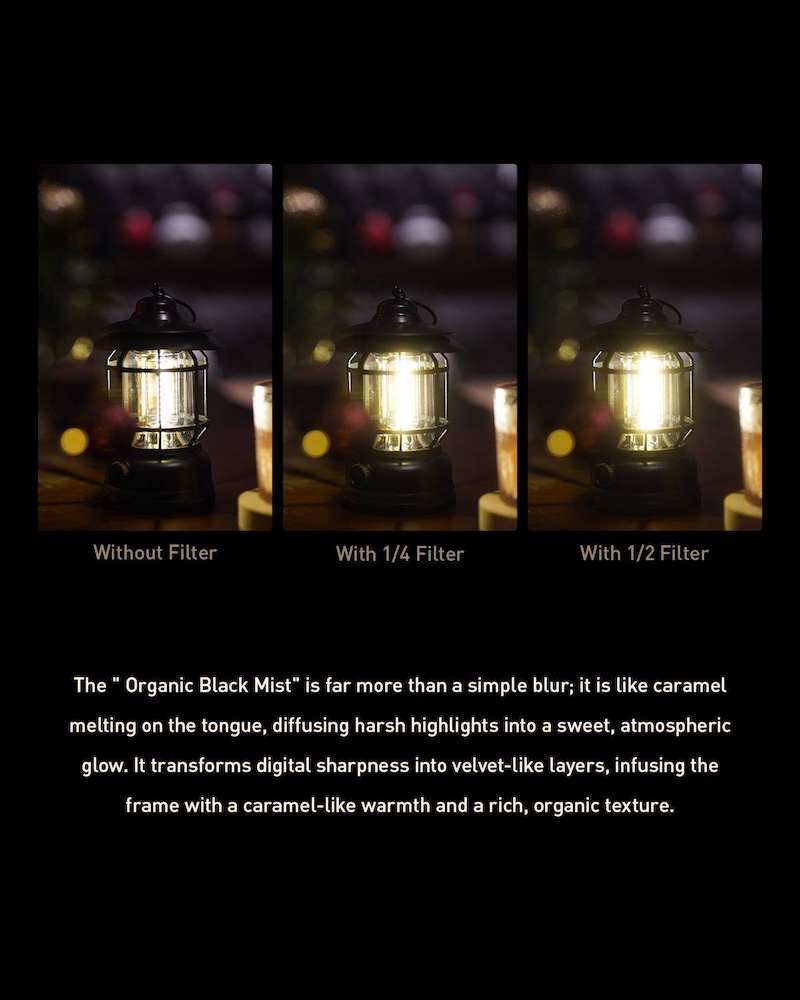
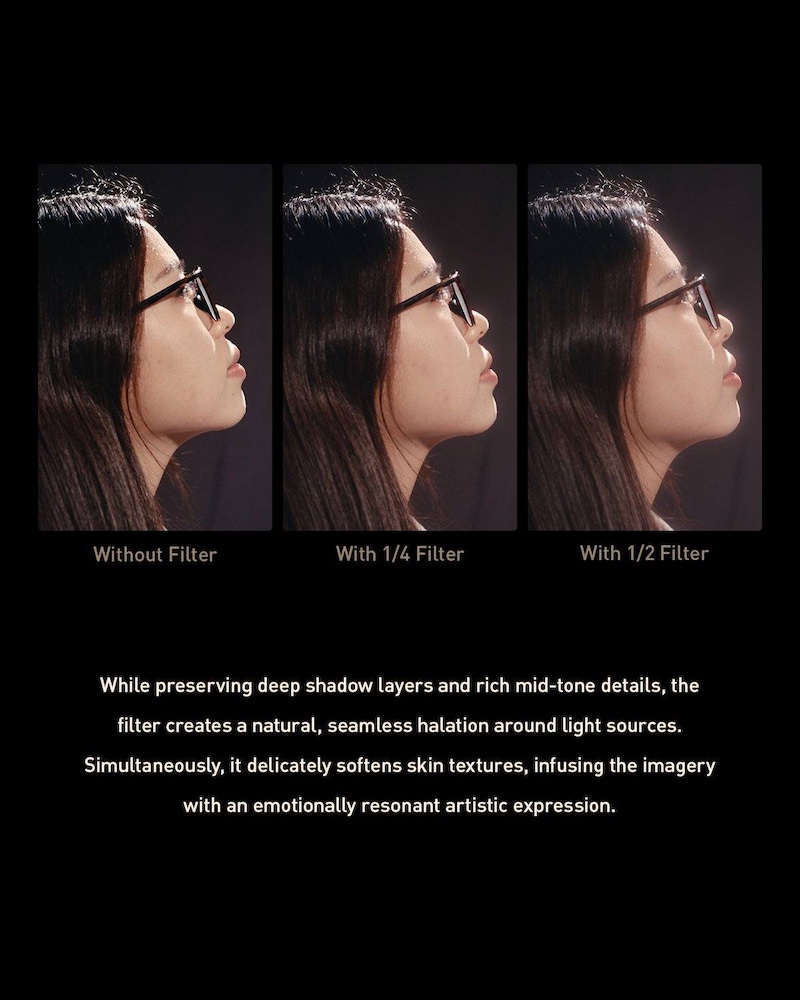
Organic Black Mist Effect
This black mist filter softens harsh light and highlight edges, creating a natural, film-like gradation texture. It gently blurs skin blemishes and fine lines without distorting skin tones, resulting in softer, more pleasing visuals. Available in multiple filter thread sizes for universal lens compatibility.
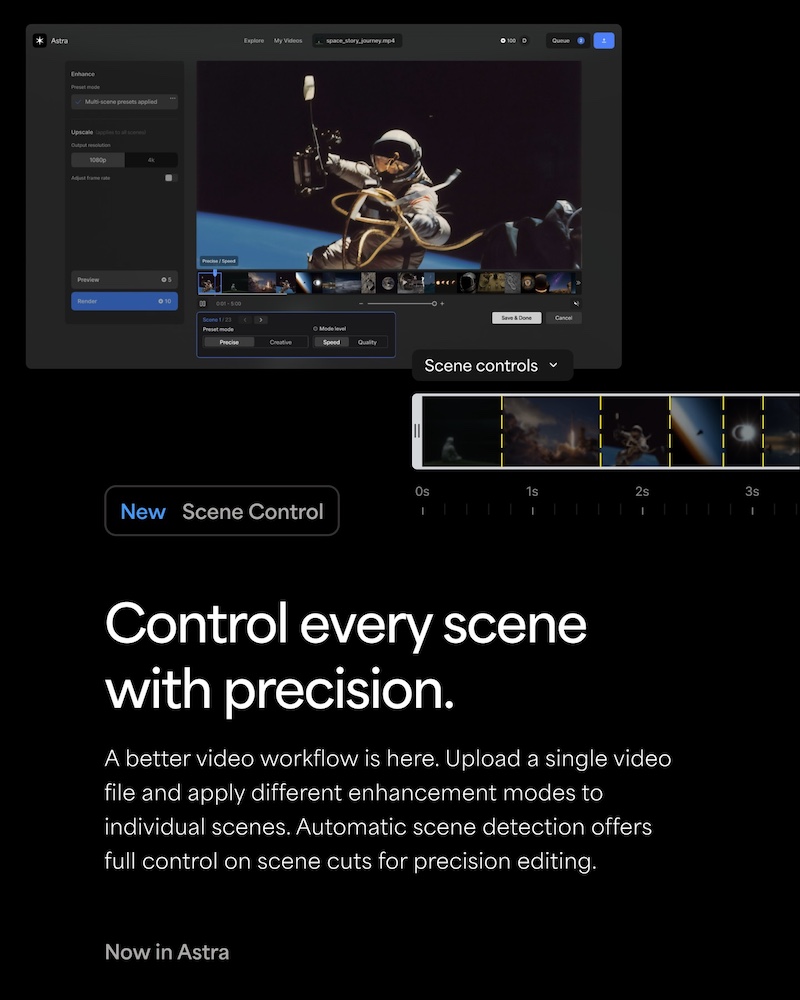
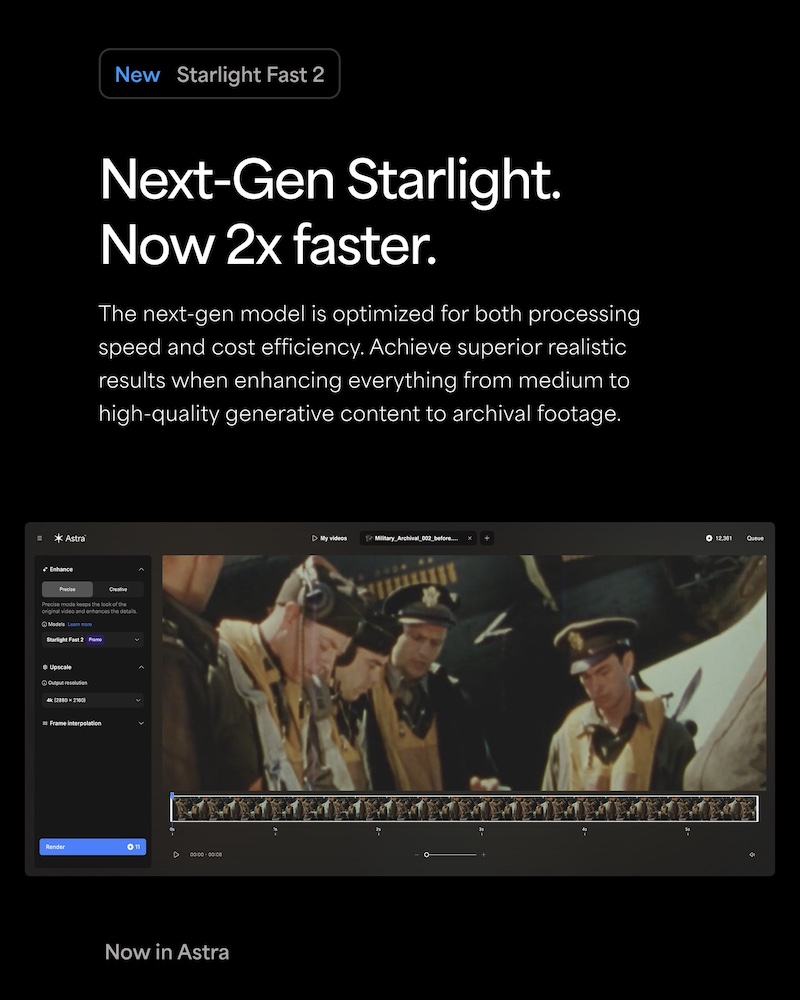
Topaz Labs released major upgrades to Topaz Photo and Astra: Wonder 2 is now local, plus Starlight Fast 2 and Scene Controls are now in Astra. Here’s what’s new:
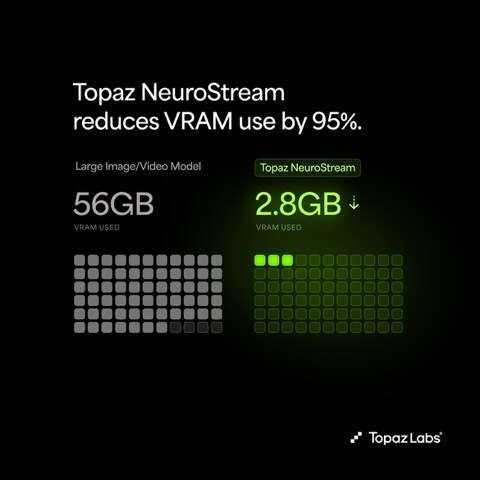
Topaz Wonder 2 (now runs locally in Topaz Photo): Wonder 2 is our newest image enhancement model that denoises, sharpens, and upscales in a single step, with no sliders or tuning required. It is a giant, powerful model that now runs locally thanks to our proprietary NeuroStream technology, which dramatically reduces VRAM usage and allows powerful AI to run on standard creator hardware.
Topaz Astra update: Astra now includes Starlight Fast 2, along with new scene detection and batch rendering. These updates allow creators to enhance videos faster and process multiple files more efficiently, making Astra more powerful for real-world workflows.
Additional information:
Topaz Labs Introduces Topaz NeuroStream–Breakthrough Tech for Running Large AI Models Locally
DALLAS, March 3, 2026 – Topaz Labs, the leader in AI-powered image and video enhancement, today announced Topaz NeuroStream, a proprietary VRAM optimization that allows complex AI models to be run on consumer hardware. This announcement comes alongside a new local image enhancement model, Wonder 2 (Local), that would not be possible without NeuroStream optimization.
Designed as foundational technology, NeuroStream will not be limited to only Topaz Labs models in the future, and has the power to change local AI model use across the entire image and video industry.
“We envision a world where AI models are simply on your device—no cloud needed, no additional usage costs, no specialized hardware, and no security gaps” says Topaz Labs CEO Eric Yang. “Our pro customers have been asking for this since we launched our first large, generative model. And now, we’re very excited to make it a reality.” Without rendering costs, NeuroStream democratizes the use of large AI models. “Creators shouldn’t need specialized hardware or complex workflows to achieve professional results.”
Optimized for NVIDIA Hardware
With a focus on local processing, Topaz Labs has collaborated with NVIDIA to optimize NeuroStream. Very few consumer systems can run a large video model, but with NeuroStream implemented, that same model can be used on every NVIDIA GeForce RTX and RTX PRO GPU.
“As the demand for local processing on RTX GPUs continues to grow, NeuroStream provides an opportunity to run complex AI models on nearly all hardware,” said Gerardo Delgado Cabrera, director of product for AI PCs at NVIDIA. “This latest collaboration with Topaz Labs is part of ongoing efforts to help develop technology optimized for use with NVIDIA-powered devices.”
About NeuroStream: Industry-First VRAM Optimization
NeuroStream is a proprietary technology that reduces VRAM usage by up to 95%, enabling large, complex AI models to run locally on consumer-grade GPUs without sacrificing performance, speed, or output quality. This breakthrough dramatically expands hardware compatibility, democratizing advanced image and video enhancement models previously limited to high-end systems or cloud-only usage.
About Wonder 2 Local: Denoise, Sharpen & Upscale Instantly
Announced in January 2026, the Wonder 2 model represents a fundamental shift in AI image enhancement. It is the first model to denoise, sharpen, and upscale an image simultaneously, eliminating the need for multiple tools, sequential processing, or parameter tuning. Wonder 2 (Local) is now available in Topaz Photo.
For last week's Question of the week, we’re turning the spotlight on something photographers love to debate: what’s your favorite camera brand? Some of you swear by one trusted name and have used it for decades, while others have explored multiple brands before finding 'the one'. There were quite a few of you who also talked about your experience in switching from one camera brand to another – a brave decision.
What I personally found interesting was how many of the responses talked about camera and lens brands that aren't often discussed on our forums. The Mamiya, Bronica, Siruis or TTArtisans of the world.
Keep reading to see which camera brands our readers chose as their favorites.
Your favorite camera brand
Skinma: OM System / Olympus. Nothing else comes close. I love the size of the cameras, as I can take a body and two lenses, a water bottle, food, and a flash all in my Lowepro sling bag. Performance is also great. I still have my original Olympus E-M5 as a backup body, and its image quality is fantastic compared to that of more modern cameras.
capanikon: A friend showed me his Nikon F3. I was impressed with the industrial rawness of it, the metal and hardness. The haptic shutter speed dial, buttons and switches. It felt like a real machine. I like the style of the F-mount lenses with their clicky aperture rings and bunny ears, helicoid focus, and rubber focusing rings. So, I sold my EOS and switched to Nikon. First, a used N8008; later, an F4s and an F3hp.
Satyaa: None! Every time I started to like a brand, they lagged in something I needed, and I had to switch. I like different bodies and lenses for different reasons, but no favorite brand right now. I am speaking as a hobbyist on a budget. If money is no constraint, I guess one could get anything in any brand. Leica might be my favorite brand at that point.
Photo: maoby
Kipplemaster: I have used a lot of different stuff and am definitely not a brand loyalist. Currently have a selection of Sonys as well as a couple of Nikon 1s. Out of ‘millions’ of lenses I've owned, that one is surprisingly easy to call. Probably my ‘sweet spot’ for loving my camera kit was the original Canon 5D and associated L lenses. My second-favourite lens is the Canon 200mm F2.8L.
I like trying weird stuff like the original Lytro and the Nokia 808 PureView, a 40MP camera on a weird Nokia phone in the days when 40MP wasn't even available on any DSLR. Most of them have been fun. All of which is a long-winded way of saying I don't really have a favorite brand. I almost forgot to mention that some of my other favourite lenses have been Sigmas.
greycell: I've followed DPReview for at least 15 years, and weirdly never felt compelled to comment before. I even hesitate to say Olympus (slash OM System) is ‘my favorite’, but it's what I'm used to and work with within my own means and limitations. I chose it originally because it's what my dad used, and I inherited all his classic manual lenses from the OM-1 era onward. I know it's not even the best for the low-light concert photography I like to do, but it feels good enough with modern processing tools.
SimonV: Having tried and owned almost all brands, there's only one that stands out and doesn't feel like it does things the same as others, and that's Fujifilm. I wouldn't call myself a fanboy in any regard since many of their models are a bit too fiddly for me and seem built for smaller hands and fingers, but they're the only company I've found that is both capable (albeit not at the top of any category) and, most importantly, Fun to shoot with.
If I were a pro, I'm sure it would be different, but I'm a hobbyist, and the most fun I've had has been with Fujifilm. Especially their later models like the X100VI and GFX100RF, which provide both fun and excellent image quality.
Photo: dimpsey
sportyaccordy: I shoot Sony because I'm just super picky about lenses and will compromise everything else for that. I really loved shooting with Canon. On paper, yes, sometimes Canon isn't the best, but the shooting experience/build quality, etc., make up for that. And now on the body side, at least I think they are basically back on top. Lenses are getting better, but still not where I want them (and even if/when they get there, I'm not switching again).
LLW902: I've got a Sony a7c II with a 24-70mm F2.8 and a Fujifilm X-E5 with a 23mm pancake lens, both sitting on my desk right now. Both are great cameras, but I'd reach for the Fujifilm first for almost anything, except a professional opportunity where it was absolutely critical I not miss focus on the first try. I guess that's a rather roundabout way of saying that Fujifilm is my favorite, even though, on the merits, it is a less accomplished device.
Tony5D: Currently using Nikon Z7II, but decided to change from Fujifilm (XE2, XT2, then XH1) mainly because my main subjects are landscape and architecture. The Nikon offers full-frame and 42MP, and is not much bigger than the X-H1. I have also used just about everything else because I was in the industry. Old favorites? Minolta CLE is easy to pack for flights, and the Canon G5 X Mark II, which I carry at all times, is a backup.
dizzeeK: Let's be honest, for someone shooting stills that aren't birds or sports, anything will work. I can only speak for me personally, though. I have to say, Canon. I have been through many cameras/systems since the film days, and I am most happy with Canon, despite the RF system not being the ‘best’ on paper. It is a joy to use, and the results are great. Who else has a 70-200mm F4 that is that compact and well featured?
So many other stories we couldn't fit in this article are shared in the forums. Thanks to everyone who took the time to explain why your favorite camera brand stands out to you.
Keep watch for the next Question of the week every other Wednesday to participate in this series. New questions are posted here on the homepage and in the forums. We can't wait to read and share your stories!
At the 2026 Mobile World Congress (MWC), the Hong Kong-based company Tecno showcased its new “Modular Magnetic Interconnection Technology,” a concept designed to transform a standard smartphone into a photography tool. The system relies on a remarkably slim base device that magnetically snaps onto various hardware modules to expand its capabilities:
Core Concept: “The Phone That Grows on Demand”
Ultra-Thin Base: The main smartphone is just 4.9mm thick, featuring a matte glass back divided into eight modular zones to guide accessory alignment.
Hybrid Connection: It uses a rectangular magnetic array for physical attachment, pogo-pins for power delivery, and a combination of Wi-Fi, Bluetooth, and mmWave for high-bandwidth, low-latency wireless data transfer.
Dual Aesthetics: Two design variants were presented: the Atom Edition (clean, silver-aluminum with red accents) and the Moda Edition (a bolder, “geek-inspired” look).
Key modular attachments:
Telephoto Lens: Acts as a standalone imaging system with its own sensor, using the phone’s display as a live viewfinder for professional-grade photography.
Action Camera: A module designed for rugged, versatile shooting angles that can even function independently from the phone.
Power Bank: At 4.5mm thick, these 3,000mAh packs are stackable, allowing users to combine multiple units to significantly increase battery life without excessive bulk.
Gaming & Utility: Other modules include a dedicated game controller, a high-performance microphone (with an attachable “dead cat” for wind noise), storage expansion, and a Wi-Fi router extension.
Press release:
HONG KONG, Feb. 25, 2026 – AI-driven innovative technology brand TECNO is set to unveil its groundbreaking Modular Magnetic Interconnection Technology at MWC 2026. This concept, embodied by TECNO Modular Phone, represents TECNO’s pioneering exploration of the next-generation form of smartphones, where hardware expansion is instantaneous through magnetic attachment and intelligent connectivity. Designed to bridge the gap between escalating AI computing demands and the spatial constraints of modern smartphones, the platform will allow users to transform their devices into modular powerhouses. Attendees will witness a customizable modular suite, enabling the seamless attachment and removal of slim, high-performance modules tailored to individual needs.
Unlike traditional smartphones locked into fixed feature sets, TECNO’s modular system offers ultra-thin, flexible modules that empower creators and professionals to tailor their devices to any scenario. This reconfigurable vision is embodied in two distinct design interpretations of the Modular Phone. The ATOM edition of TECNO Modular Phone follows the philosophy of “Rational Order with Personal Expression,” featuring a clean silver-aluminum body and signature red accents. The MODA edition of TECNO Modular Phone offers a bold, geek-inspired aesthetic. Both models frame modularity as a platform for lasting personal choice, embodying TECNO’s commitment to technology that grows with its users.
“We believe the ultimate goal of technology is not to create a static masterpiece, but to offer an extension of human freedom. By pioneering this modular architecture, we are breaking the constraints of fixed hardware and returning the power of choice to the user,” said Leo Li, TECNO Product Head of Modular Magnetic Interconnection Technology. “This is more than a leap in connectivity; it is an experiment in mobile liberation, where the device is no longer defined by its factory form, but by the user’s intent in every moment.”
A Moment-To-Moment Modular Ecosystem
Built on TECNO’s Modular Magnetic Interconnection Technology, the ecosystem currently features around ten high-performance modules, designed to meet users wherever they are in life and evolve alongside their shifting needs and surroundings. Whether capturing professional photography, gaming, communicating off-grid, or extending battery life, the modular system offers unmatched freedom to configure a personalized stack.
The ultra-thin POWER BANK effectively doubles usable power, supplying energy seamlessly to both the smartphone and attached accessories. Complementing this is the ACTION CAMERA, which unlocks new creative workflows and shooting angles without compromising the phone’s lightness. For professional imaging demands, TECNO’s TELEPHOTO LENS acts as a standalone system using the phone’s display as a viewfinder, providing low-latency live previews and instant captures. This Customizable Modular Suite is not just a collection of accessories, but a dynamic toolkit, allowing users to carry only what they need, when they need it.
Innovative Design and Effortless Connectivity
Central to TECNO’s modular concept is a breakthrough in ultra-thin industrial design that redefines how expandable hardware feels in daily use. The base smartphone measures just 4.9mm thick, with the POWER BANK at an ultra-slim 4.5mm. Even when combined, the total thickness remains comparable to typical smartphones, ensuring modular expansion feels natural, preserving portability and simplicity.
The smartphone features a high-quality glass back panel with a laminated anti-glare treatment, creating a soft, matte finish, while a polished metal frame adds durability and refined visual contrast. Subtle lines across the phone’s back divide it into eight modular zones, guiding accessory placement and alignment without sacrificing the clean aesthetic.
A hybrid connection architecture supports this design, featuring a precision-engineered rectangular magnetic array for secure, intuitive module attachment, paired with physical pogo-pin connectors for efficient, low-heat power delivery. Data transmission seamlessly switches among Wi-Fi, Bluetooth, and millimeter-wave (mmWave) communication, enabling higher bandwidth and lower-latency interaction. This invisible, automatic process allows users to enjoy instant pairing, freeing them from technical complexity to focus on their experience.
Building a Modular Platform for the Future
TECNO’s Modular Magnetic Interconnection Technology is designed as a scalable platform built to evolve with future innovations. By establishing a consistent physical and connectivity foundation, TECNO opens possibilities for expanded modular experiences across AI-powered tools, storage expansion, lifestyle-focused accessories, and beyond. While the interface is proprietary, TECNO envisions the potential for future solutions that extend beyond its ecosystem, enabling broader compatibility and utility across use cases.
Presented as a concept platform at MWC 2026, the modular ecosystem demonstrates TECNO’s long-term design thinking and commitment to technology that is adaptable, personal, and responsive to real-world needs, as technologies, materials, and ecosystems continue to mature.
The latest MacBook Pros are familiar on the outside, but have some interesting changes on the inside. Image: Apple
This week, Apple announced its latest generation of MacBook Pros, which also marks the debut of its high-end M5 Pro and M5 Max chips. The company says the new processors are up to 30% faster in "pro workflows" than its previous CPUs, which is good, since the laptops' starting prices are a bit higher than their predecessors'.
Part of that uplift likely comes from the M5 Pro and Max simply having more CPU cores. The Pro starts with 15, upgradable to 18, while all Max models have 18. These represent an addition of three and four cores, respectively.
It's not just a matter of adding more slightly upgraded cores, though. Previous generations of M chips, and the standard M5 that's been around for a while, have had a mix of what Apple calls Power and Efficiency cores. The M5 Pro and M5 Max follow a similar paradigm, but rather than using the same types of cores as the standard M5, as previous Pro and Max chips did, they use the M5's performance cores for their less intensive processing and introduce "all-new performance cores." In other words, the M5's most powerful cores are the M5 Pro and Max's weakest ones.
Performance > Super > Efficiency
The company has rebranded those as "Super" cores across its lineup; the M5 has a mix of Super cores and Efficiency cores, while the M5 Pro and Max have Performance cores and Super cores. The new branding is a little hard to keep track of*, especially since it's not necessarily clear how the previous-gen "Performance"-branded cores compare to the apparently new and improved Performance cores. However, in the current M5 generation, it boils down to: Performance > Super > Efficiency.
M4 Pro
M5 Pro
M4 Max
M5 Max
M5
12 cores 8 Performance 4 Efficiency GPU 16 core
15 cores 10 performance 5 Super GPU 16 core
14 cores 10 Performance 4 Efficiency GPU 32 core
18 cores 12 Performance 6 Super GPU 32 / 40 core
10 cores 4 Super 6 Efficiency GPU 10 core
14 cores 10 Performance 4 Efficiency GPU 20 core
18 cores 12 Performance 6 Super GPU 20 core
16 cores 12 Performance 4 efficiency GPU 40 core
While GPU core counts have remained largely the same, the company says they have a "next-generation architecture," higher memory bandwidth, and higher performance in AI tasks (in fact, the press release mentions "AI" around 25 times). The company also promises that its latest GPUs have greater performance in compute and ray-tracing.
For those interested in the intricacies of chip design, Apple says the M5 Pro and Max feature a new "Fusion Architecture" that combines two 3nm-class dies. It's reminiscent of the chiplet design that's served AMD's Ryzen series so well, and it could make it possible for Apple to more easily offer a bit more freedom when it comes to configuring your mix of CPU and GPU cores in the future. Image: Apple
Beyond the new processors, the laptops are relatively similar to their predecessors, with the same displays, three Thunderbolt 5 ports, SDXC card slot, and dedicated coprocessors for encoding and decoding codecs like H.264, HEVC, ProRes and ProRes RAW. However, there are some other small upgrades: the 2026 MacBook Pros have Apple's N1 wireless chip, providing an upgrade to Wi-Fi 7 from the Wi-Fi 6E found in the previous generation. The chip also includes Bluetooth 6, updated from Bluetooth 5.3.
Apple has also tweaked the default storage and memory configurations. The M5 Pro laptops all now start with 1TB of storage (the 16" version used to start with 512GB), and the M5 Max ones start with 2TB. The company also promises that the computers' SSDs will run up to two times faster than those of their predecessors.
The M5 Pro laptops can also now be optioned with 64GB of memory, up from 48GB, though doing so will cost a pretty penny; you have to spend $200 to get the higher-end Pro chip, then add on $600 to upgrade from the base 24GB of memory (though, given what's happening with the rest of the industry, those prices seem less egregious than they once did).
You certainly don't need a Pro or a Max chip to edit photos... but it doesn't hurt. Image: Apple
For most photographers, the standard M5 MacBook Pro will be plenty powerful, as will the cheaper M5 MacBook Air (though it misses out on the SD card reader and HDR-capable screen). But those doing heavy edits on high-resolution files, or who want to configure their machines with ludicrous amounts of memory or storage, will appreciate these higher-end options. The extra horsepower may also be useful to anyone who edits video; the standard M5 is no slouch, but the extra CPU cores, GPU power and SSD speed will make the process that much smoother.
The M5 Pro MacBook Pros start at $2199 for the 14" model, and $2699 for the 16" one: a $200 premium over the starting prices of their corresponding M4 models. Upgrading to the Max chip will add $1400 to the price. Preorders open on March 4th, and the laptops will be available starting on the 11th.
* As is tradition. I'm sure there are even folks at Apple who have a hard time keeping the relationships between Studio, Ultra, Pro, and Max products straight.
Focal length & aperture: 28-135 mm f/2.8 (constant)
Mount: Sony E (FE)
Key points: New linear VCM autofocus motor (faster and quieter than previous stepper motors, ideal for video/action); more versatile range than competing 28-105/35-100 mm f/2.8 zooms
Status: Already in production; prototype shown at IBC 2025; earliest release late 2026
No detailed optical formula, size or weight figures yet
Key points: First Samyang lens with optical image stabilisation (OIS); built-in 1.4× teleconverter (becomes 420 mm f/5.6); multiple custom controls; positioned as a lighter/cheaper wildlife/sports alternative to 70-200 mm f/2.8 zooms
Status: Early development; competitive pricing targeted
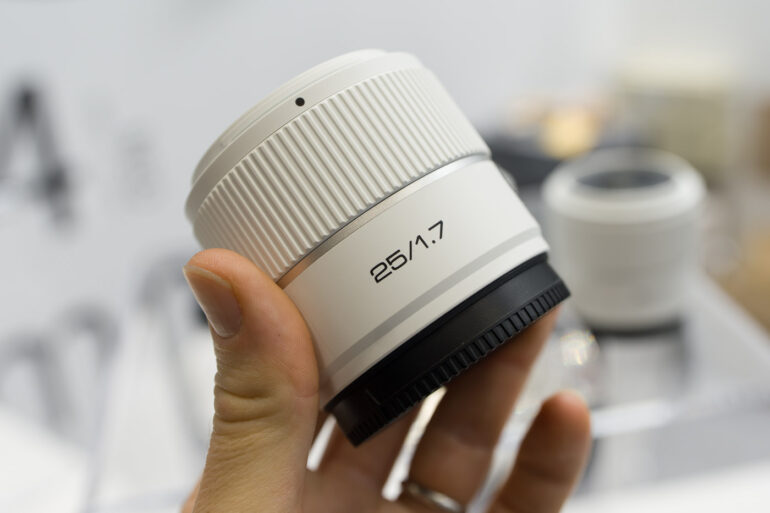
At the 2026 CP+ show in Japan Meike had on display their upcoming Meike AF Air 25mm/35mm/56mm f/1.7 compact APS-C lenses for Sony E, Fujifilm X, Nikon Z (previously reported here). Here are the new details from Phototrend:
Meike Air Series new ultra-light APS-C prime lenses
Mounts: Sony E, Fujifilm X, Nikon Z
Aperture: f/1.7 (all models)
Autofocus: STM motor (quiet and fast for photo/video)
Apple announced the Studio Display XDR, a new pro-level entry in its display lineup aimed at photographers and video editors, thanks to its HDR and wider color gamut support. In addition to the new display, the tech giant unveiled an updated version of its standard Studio Display.
The Studio Display XDR effectively replaces Apple’s 32‑inch 6K Pro Display XDR in the lineup. It uses a 27-inch 5K Retina XDR display, with added mini-LED backlighting. It features 2304 local dimming zones and an impressive 1000 nits of SDR brightness and 2000 nits of peak HDR brightness, making it well‑suited for HDR workflows. It also offers a 1,000,000:1 contrast ratio.
The Studio Display XDR is meant for creative professionals. Image: Apple
The monitor supports P3 and Adobe RGB color gamuts with over 80 percent coverage of Rec. 2020, making it ideal for those who need highly accurate colors. Additionally, it offers a 120Hz refresh rate and a continuously variable refresh rate between 47Hz to 120Hz, making it smoother for video playback than the outgoing Pro Display XDR.
In terms of connectivity, the Studio Display XDR can function as a Thunderbolt hub, offering one port with 140W of charging power, enough to charge a 16-inch MacBook Pro. It also includes a second port for connecting high-speed accessories or daisy-chaining other displays and two additional USB-C ports. The display features a 12MP Center Stage camera with Apple's Desk View support, a three‑mic array and a six‑speaker system.
Apple also updated its standard Studio Display, though it's more of an iterative update rather than a redesign. Like the previous generation, it is a 27-inch 5K Retina display with 600 nits of brightness and support for P3 wide color. However, it now offers Thunderbolt 5 connectivity, allowing users to connect high-speed accessories or daisy-chain displays. It maxes out at up to 96W charging, which is enough to fast‑charge a 14‑inch MacBook Pro.
The Studio Display XDR is still pricey, but at least it comes with a tilt- and height-adjustable stand this time. Image: Apple
All of the advanced features on the Studio Display XDR come at a steep price; the monitor starts at $3299, or $3599 with anti-reflective nano-texture glass. The good news is that it now includes a tilt- and height-adjustable stand, unlike the Pro Display XDR. The Studio Display keeps the same $1599 price as the previous generation. Preorders for both the Studio Display XDR and Studio Display begin tomorrow, March 4.
Press release:
Apple unveils new Studio Display and all-new Studio Display XDR
Studio Display XDR is the world’s best pro display, featuring a 27-inch 5K Retina XDR display with a mini-LED backlight, 2000 nits of peak HDR brightness, and a 120Hz refresh rate
CUPERTINO, CALIFORNIA Apple today announced a new family of displays engineered to pair beautifully with Mac and meet the needs of everyone, from everyday users to the world’s top pros. The new Studio Display features a 12MP Center Stage camera, now with improved image quality and support for Desk View; a studio-quality three-microphone array; and an immersive six-speaker sound system with Spatial Audio. It also now includes powerful Thunderbolt 5 connectivity, providing more downstream connectivity for high-speed accessories or daisy-chaining displays. The all-new Studio Display XDR takes the pro display experience to the next level. Its 27-inch 5K Retina XDR display features an advanced mini-LED backlight with over 2,000 local dimming zones, up to 1000 nits of SDR brightness, and 2000 nits of peak HDR brightness, in addition to a wider color gamut, so content jumps off the screen with breathtaking contrast, vibrancy, and accuracy. With its 120Hz refresh rate, Studio Display XDR is even more responsive to content in motion, and Adaptive Sync dynamically adjusts frame rates for content like video playback or graphically intense games. Studio Display XDR offers the same advanced camera and audio system as Studio Display, as well as Thunderbolt 5 connectivity to simplify pro workflow setups. The new Studio Display with a tilt-adjustable stand starts at $1,599, and Studio Display XDR with a tilt- and height-adjustable stand starts at $3,299. Both are available in standard or nano-texture glass options, and can be pre-ordered starting tomorrow, March 4, with availability beginning Wednesday, March 11.
“Apple has led the industry in delivering the world’s most advanced displays for pros to do their life’s best work, and today we do that once again with the introduction of the new Studio Display family,” said John Ternus, Apple’s senior vice president of Hardware Engineering. “Studio Display gets even better with a new 12MP Center Stage camera and powerful Thunderbolt 5 connectivity. And the Studio Display XDR is a huge leap forward for XDR technology, with a mini-LED backlight, 2000 nits of peak HDR brightness, advanced color accuracy, and a 120Hz refresh rate, transforming workflows like filmmaking, design and print, and 3D animation. It’s by far the world’s best pro display.”
Studio Display — the Perfect Companion to Mac
The new Studio Display pairs excellent visual quality with compelling features that deliver a great experience when connected to a Mac across a range of professional workflows — from photo and video editing to coding, music production, and everyday tasks. The stunning 27-inch 5K Retina display boasts over 14 million pixels, 600 nits of brightness, and P3 wide color for rich, true-to-life imagery. Studio Display includes a 12MP Center Stage camera, now with Desk View; a studio-quality three-microphone array; and an incredible six-speaker sound system with four force-cancelling woofers that deliver 30 percent deeper bass than the previous generation, plus two high-performance tweeters for immersive audio. Studio Display also brings Thunderbolt 5 connectivity with two ports, so users can daisy-chain up to four Studio Display models for a combined nearly 60 million pixels, or connect high-speed accessories.1 In addition, two USB-C ports can be used for peripherals and charging. With the included Thunderbolt 5 Pro cable, users get a convenient all-in-one connection that offers up to 96W of charging power — enough to fast-charge a 14-inch MacBook Pro.2 Studio Display is available with standard glass or optional nano-texture glass for challenging lighting conditions. It comes with a tilt-adjustable stand, or can be configured with a tilt- and height-adjustable stand or a VESA mount adapter for custom desk setups.
Studio Display XDR — the World’s Best Pro Display
The all-new Studio Display XDR delivers the most advanced display technology and a robust set of features for pro users who need the ultimate front-of-screen performance. With 2000 nits of peak HDR brightness, a 1,000,000:1 contrast ratio, P3 and Adobe RGB wide color gamuts, a 120Hz refresh rate, Adaptive Sync, new DICOM medical imaging presets, a powerful combination of camera and audio, and Thunderbolt 5 connectivity, Studio Display XDR is designed for workflows like HDR video editing, 3D rendering, and diagnostic radiology.2
Advanced XDR Display Technology
Studio Display XDR features a stunning 27-inch 5K Retina XDR display with 5120-by-2880 resolution, offering exceptional detail and clarity. The mini-LED backlight utilizes 2,304 local dimming zones that enable extreme contrast. Studio Display XDR also delivers up to an outstanding 1000 nits of SDR brightness, 2000 nits of peak HDR brightness, and a 1,000,000:1 contrast ratio. This wide dynamic range — from the brightest brights to the deepest blacks — makes HDR content pop off the screen while virtually eliminating distracting halo and blooming effects.
Enhanced Color Accuracy
Ideal for print and design professionals, Studio Display XDR adds Adobe RGB color gamut support, in addition to P3 wide color, making it an even better reference display. This results in more than 80 percent Rec. 2020 coverage for HDR video editing and color grading. Both P3 and Adobe RGB are accessible from the same default preset, streamlining pro workflows that frequently switch between color spaces.
Smooth 120Hz Refresh Rate and Adaptive Sync
Studio Display XDR features a 120Hz refresh rate, enabling smooth, ultra-responsive motion. Adaptive Sync supports a continuously variable refresh rate between 47Hz to 120Hz, making gaming more fluid with faster frame delivery and lower display latency.
Innovative DICOM Medical Imaging
Today, Apple introduces new DICOM medical imaging presets and the Medical Imaging Calibrator to enable use in diagnostic radiology, allowing radiologists to view diagnostic images directly on Studio Display XDR.2 Many medical professionals already use Mac for their office or home setups, and Studio Display XDR offers a versatile alternative to single-purpose medical imaging displays, with seamless display mode switching. The Medical Imaging Calibrator on macOS is pending FDA clearance and is expected to be available soon in the U.S. For decades, healthcare professionals and developers have taken advantage of Apple’s innovative products and frameworks to help achieve better patient outcomes, broaden research opportunities, and improve efficiency across healthcare systems. Apple continues to innovate and collaborate with the healthcare community on solutions to ultimately improve care for their patients.
Powerful Combination of Camera, Audio, and Thunderbolt 5 Connectivity
Studio Display XDR features a 12MP Center Stage camera that keeps users centered in the frame as they move. Video calls become more engaging with Desk View, which simultaneously displays the user and a top-down view of their desk — great for demonstrating a creative project. It also includes a studio-quality three-microphone array with directional beamforming and an immersive six-speaker sound system with support for Spatial Audio.
Studio Display XDR also features Thunderbolt 5 connectivity, with a second port for connecting downstream high-speed accessories or daisy-chaining other displays. And with two additional USB-C ports for even more connectivity, it can act as a Thunderbolt hub, keeping a workspace free of clutter while offering up to 140W of charging power through the included Thunderbolt 5 Pro cable — enough to fast-charge a 16-inch MacBook Pro.3
Versatile Stand and Accessories
Studio Display XDR includes a tilt- and height-adjustable stand to meet the needs of a variety of workspaces. With a height range of 105mm, the stand features a sophisticated counterbalancing arm that makes the display feel weightless, and as users adjust it, the display stays precisely in place. An optional VESA mount adapter is available for those who prefer to use VESA-compatible stands, mounts, and arms for a customized desk setup. Studio Display Family and the Environment
Studio Display and Studio Display XDR were built with the environment in mind, and bring Apple even closer to reaching its ambitious plan to be carbon neutral across its entire footprint by 2030. Both are made with recycled content, including 100 percent recycled aluminum in the stand and 80 percent recycled glass in the standard glass option. Studio Display and Studio Display XDR are designed to be durable, repairable, and also offer industry-leading software support, while meeting Apple’s high standards for energy efficiency and safe chemistry. The paper packaging is 100 percent fiber-based and was designed to collapse so it can be easily recycled.4
Pricing and Availability
Customers can pre-order the new Studio Display and Studio Display XDR starting tomorrow, March 4, at apple.com/store and in the Apple Store app in 35 countries and regions, including the U.S. They will begin arriving to customers, and will be in select Apple Store locations and Apple Authorized Resellers, starting Wednesday, March 11.
Studio Display starts at $1,599 (U.S.) and $1,499 (U.S.) for education. Studio Display XDR replaces Pro Display XDR and starts at $3,299 (U.S.) and $3,199 (U.S.) for education.
Additional technical specifications, including nano-texture glass and a choice of stand options, are available at apple.com/store.
Magic Keyboard with Touch ID and Numeric Keypad ($199 U.S.), Magic Trackpad ($149 U.S.), and Magic Mouse (starting at $79 U.S.) in black or white color options are available at apple.com/store.
1 Users can daisy-chain up to four Studio Display models with a MacBook Pro with M5 Max.
2 The Medical Imaging Calibrator is pending FDA review and is expected to be available soon. The medical imaging presets should not be used for diagnostic purposes unless the display has been calibrated using the Medical Imaging Calibrator on macOS and paired with a compatible DICOM viewer. The presets are available on Studio Display XDR and are intended for use by medical professionals. Not intended for use in mammography.
3 Charge time varies with settings and environmental factors; actual results will vary.
4 Breakdown of U.S. retail packaging by weight. Adhesives, inks, and coatings are excluded from calculations.
Today, GoPro unveiled its new GP3 custom imaging processor. This is a 5nm System-on-a-Chip (SoC) with a dedicated AI Neural Processing Unit (NPU). Key upgrades vs. the GP2:
More than 2x pixel processing power.
Superior AI-driven image quality and low-light performance.
Real-time scene recognition, subject detection, and automatic setting adjustments.
Better power efficiency and thermal management for longer runtimes in tough conditions.
Supports higher resolutions, frame rates, and overall pro-level performance in small form-factor cameras.
It debuts in new GoPro cameras launching in Q2 2026. The processor isn’t limited to action cams — GoPro explicitly confirmed it’s heading to:
Action cameras
360 cameras
Vlogging cameras
Ultra-premium compact cinema-grade cameras
Sample images from the next-gen GP3-powered system already show big leaps in low-light and overall quality. GoPro’s CEO has called 2026 “the year of GP3” with new flagships, heavy AI focus, and a major comeback push:
No Hero 14 in 2025 — the first time in a decade GoPro skipped an annual flagship Hero Black update. The Hero 13 Black stays the top model for now.
GoPro’s SVP of Global Marketing confirmed: “The Hero Black story isn’t over.” They’re taking extra time for meaningful upgrades instead of iterative ones.
Expected 2026 arrival (likely Q1/Q2, tied to GP3) with a possible 1-inch sensor for huge low-light gains, redesigned body, and bigger resolution/framerate jumps – but nothing confirmed beyond the GP3 integration.
Honor and Arri have announced a "strategic technical collaboration" to bring Arri's image science and workflow features to Honor phones. The two companies unveiled the partnership at the Mobile World Congress (MWC) 2026, promising that the results will be showcased in the smartphone maker's upcoming Robot Phone.
The collaboration between the smartphone maker and high-end cinema camera manufacturer aims to bring pro-level video features to smartphones. The companies explained that they will combine Honor's mobile imaging capabilities with Arri's cinematic image quality, making high-end video creation more accessible.
Image: Honor
They didn't provide many details about the upcoming phone or how Arri-specific features will be integrated into it, beyond saying it will use Arri's "image science foundation." In theory, it may be similar to how Leica and Hasselblad have collaborated with phone companies to enable their color profiles on phones, though there could be other workflow features as well.
"The challenge is not to replicate cinema hardware, but to translate the underlying principles into compact, real-time mobile architectures," says Dr. Benedikt von Lindeiner, Vice President at Arri and responsible for the technical collaboration with Honor. "Our goal is to bring a true cinematic aesthetic to smartphone imaging – natural color, gentle highlight roll-off and a sense of depth that feels authentic to how stories are meant to be seen."
Honor first showed off the Robot Phone in October of last year with a CGI teaser. The video showed a concept smartphone with a gimbal-mounted camera that extends above the phone, resembling a DJI Osmo Pocket 3 with a phone in place of the handgrip. At the time, the company said it would share more at MWC. This collaboration announcement mentions the Robot Phone again, but doesn't include any new details. Honor did say, however, that the phone will be coming later this year, so it may be closer to reality than we originally thought.
Press release:
HONOR and ARRI announce strategic technical collaboration to bring ARRI Image Science into next-generation consumer devices
ARRI and HONOR extend cinematic image science and production workflows into consumer devices
A bridge from the world of high‑end filmmaking to the next generation of creators
ARRI technology will debut in HONOR’s upcoming ROBOT PHONE
[Barcelona, Spain – March 01, 2026] Leading AI device ecosystem company HONOR has entered into a strategic technical collaboration with ARRI, the world-renowned designer and manufacturer of professional camera technology for cinematic storytelling. This landmark partnership marks a significant step in extending established cinematic standards into the rapidly evolving world of mobile imaging.
By uniting HONOR’s advanced mobile imaging capabilities with ARRI’s centurylong heritage in defining cinematic image quality, the collaboration reflects a shared ambition to unlock new creative possibilities and extend cinematic standards for visual expression from the world of high-end filmmaking to the next generation of content creators.
"HONOR is pioneering a new era of mobile imaging, where technology exists to inspire creativity and storytelling," says James Li, CEO of HONOR. "ARRI has defined the visual language of cinema for generations. Through this collaboration, we are bringing those cinematic standards and professional workflows into mobile imaging, enabling creators to craft stories with greater authenticity and emotional depth."
A Century of Cinematic Excellence as Foundation for Mobile Content Creators
For more than a century, ARRI has helped shape how cinematic stories are told — from the early days of film to today’s most advanced digital camera systems. A commitment that’s been recognized with 20 Scientific and Technical Awards from the Academy of Motion Picture Arts and Sciences.
"Today, consumer smartphones have already become a serious tool in professional filmmaking, being used on blockbusters across the globe. That’s why we believe it is time to bring these worlds even closer together. For the first time ever, core elements of ARRI Image Science are being integrated directly into a consumer device," says David Bermbach, Managing Director at ARRI.
Translating ARRI Image Science into Mobile Technology
In cinema, image science is not a filter or an effect — it is the foundation of how an image is created. It determines how colors feel natural, how highlights and shadows are rendered, and how images consistently behave from capture to final screen. Drawing on ARRI’s Image Science foundation, the collaboration applies core cinematic imaging principles to HONOR’s mobile imaging architecture.
"Smartphones operate under fundamentally different constraints: smaller sensors, highly integrated SoCs, different optical stacks, and different bandwidth limits. The challenge is not to replicate cinema hardware, but to translate the underlying principles into compact, real-time mobile architectures," says Dr. Benedikt von Lindeiner, Vice President at ARRI and responsible for the technical collaboration with HONOR. "Our goal is to bring a true cinematic aesthetic to smartphone imaging — natural color, gentle highlight roll-off, and a sense of depth that feels authentic to how stories are meant to be seen. Creators should be able to move seamlessly from mobile capture into professional post-production workflows."
The first results of this collaboration will debut in the upcoming HONOR ROBOT PHONE later this year.
Reviewing the a7 V reminded me of the challenges, and the importance, of including subjective assessment in reviews.
Photo: Mitchell Clark
Reviews are, by most definitions, subjective: ultimately they always have some degree of opinion. An informed opinion, subject to careful consideration of any inherent biases and critically assessed by other editors, we'd like to think, but still, ultimately, subjective.
This is especially true of camera reviews. A camera isn't a simple device that can be summarized by conducting objective performance tests in an analytical report. For a start, the comfort and usability of a camera are important factors, that can't be objectively assessed. All the more so because a camera is a device that can be used for self-expression. Enjoyment is absolutely critical.
All of this was at the front of my mind as I wrapped up our recent review of the Sony a7 V, and as I, as lead reviewer on this camera, start to build my case for arguing its position in our various Buying Guides. It's a really difficult task, because the a7 V is an extremely capable camera, but one that competes against some of the most all-round capable cameras we've ever seen, battling it out in arguably the most competitive part of the market. There are a few differences in objective spec and performance, but they won't be significant enough for most people to help them make a choice.
The Sony a7 V: so good. And yet...
The a7 V was a particularly challenging camera to review in that regard. It's supremely capable and is an obvious choice for existing Sony users. It'll be a huge step up for anyone using an a7, a7 II, a7 III or a7C, and will be a better camera for some a7 IV users, especially if they shoot video. But for someone without a brand commitment, it's more difficult.
The first thing you have to do is check your own biases.
The easiest thing to do would be to look at how many lenses are available for the Sony E-mount, stop the count and brush any awkward concerns about usability or ergonomics under the carpet. But I feel that would be both simplistic and dishonest. Because, by the end of my review, I found myself thinking that I enjoyed using the Canon EOS R6 III more.
I have an annoying habit of admonishing my colleagues for using the term 'intuitive.' Almost no aspect of camera operation is intuitive: it's learned. And if you're thinking that it's intuitive, it might just be that it's something you learned so long ago that you've forgotten doing so. And that's where familiarity bias can creep in.
Photo: Richard Butler
This puts me in perhaps the most uncomfortable position that you encounter, in reviewing: having to work out how much or how little your personal experiences and opinion count, and how much weight to give them. I spent a lot of time asking myself why I was impressed with the camera more than I was enjoying it. Could I point to why I found the interface of the camera rather more awkward than its rivals'?
How objective can you be?
The first thing you have to do is check your own biases. Do I dislike this interface because I haven't taken the time to learn it? Do I prefer a different way of working purely based on familiarity? I don't believe so: I've used Sony cameras just as much as any other brand, and have no more connection to, say, Canon's cameras than to Sony's.
I kept asking myself those questions, the whole time I was using the camera, to make sure I was being fair. And I kept looking to see if I could put my finger on why I found the interface so distancing.
The color-coded sections in Nikon's setup menu makes it easy to learn and navigate, but plenty of the rest of the menu structure is struggling under the weight of the feature set and level of customization.
Composite image: Richard Butler
In the end, I'm not sure I found it. I can point to plenty of details I don't like: the strangely phrased and oddly truncated menu names (are Sony's menus still subject to the same character limits as MS DOS?), the superfluous control panel built awkwardly into the new menus, the clumsy handling of features with interacting settings. But I can't be sure that it's the sum total of these annoyances that left me feeling disconnected from what the camera was doing.
But, all the while I'm quizzing myself on this, I'm also very aware that lots of people don't find this a problem. Or simply don't mind. As I've written in just about every Sony review I've ever written: with a bit of customization, you rarely have to use the main menus. Equally, there'll be plenty of people whose primary experience of digital photography may be with Sony cameras: they won't find any of this a problem, because that's just how cameras work, from their perspective. And it's a completely valid perspective.
The interactive settings panel, shoehorned into Sony's latest menu system manages to be both too easy to inadvertently navigate away from, while simultaneously always feeling like it's in the way. I'm not sure a prompt to contemplate the nature of paradox is what I'm looking for in a user interface, but I have to assume it's possible that someone finds it useful.
Composite image: Mitchell Clark / Richard Butler
Beyond the user interface, I also found the grip somewhat uncomfortable. Much of the time you tend to support a camera's weight by cradling the lens in your left hand, but I found that myself having to release the camera, relax and stretch my fingers, at regular intervals. Again, this risks being specific to my hand size or shape, or the way I try to grip the camera, but my colleague Mitchell seems to have had the same experience.
Conversely, I don't remember having the experience I've seen some people report, where the proximity of the mount to the hand grip means your knuckles can grate against some of the more stout E-mount lenses. Did I only avoid this through lens choice? Or, again, is this just another personal factor that didn't particularly make apply to me?
How do you proceed?
Is the Canon EOS R6 III's grip objectively better (for everyone) than the Sony a7 V's? It's impossible for me to know. But would it help anyone if I pretended there was no difference in my experience with each?
Photo: Mitchell Clark
So what's the correct way to report these issues? I've seen some Sony users insist that they shouldn't be mentioned at all, because they may be personal, rather than universal. But it would be dishonest to omit a factor that might put me off buying a camera, if there's a chance someone might go and spend their money, based on what I wrote (or didn't write).
Instead I did what this job requires: I reported my concerns but was careful to present them proportionately and in context. I made clear which concerns and criticisms I felt would apply to everyone and which wouldn't. And I endeavored to stress that part of the reason the menus have become so overwhelmed, and potentially overwhelming, is that the camera does so many things and offers such a high degree of customization.
Subjective factors like usability aren't trivial complaints, they're fundamental
These are the questions we'll be wrestling with this, as a team, as we look to update our Buying Guides. Because, even on reviews with only my name at the top, we try to represent more than just a single perspective or opinion, in our coverage. But our decision will still factor-in the subjective, because cameras aren't simple devices where you can test a couple of metrics and report which one is objectively "best." And we'd be failing you if we treated them as such.
I saw the subjective concerns about the a7 V dismissed as "all they've got to complain about." And this is a position I don't need to be so introspective about: it's utterly wrongheaded. It's true that the a7 V is a really good camera (hence the Gold award) but at a time where some of the most significant things setting dedicated cameras apart from phones are the experience of controlling the photo and the enjoyment of photography, subjective factors like usability aren't trivial complaints, they're fundamental.
DxO launched PureRAW 6 with DeepPRIME XD3, now extended to Bayer sensors (previously exclusive to X-Trans sensors), as well as next-generation High-Fidelity DNG compression, delivering significantly smaller files while preserving full RAW integrity and flexibility.
You can get 10% off DxO products with code RUMORS.
Additional information:
DeepPRIME XD3: The new benchmark in RAW processing
DeepPRIME XD3, previously exclusively for X-Trans sensors, marks a major leap forward in RAW image quality by now extending its groundbreaking technology to Bayer sensor cameras. An extension of DxO’s renowned DeepPRIME technology, DeepPRIME XD3 is designed specifically for the most demanding files captured under challenging conditions. It produces cleaner, sharper images than ever before, extracting phenomenal detail while maintaining natural textures and colors. It brings professional-grade clarity to every file, from high-ISO night scenes to finely detailed landscapes, establishing a new benchmark for what’s possible in RAW conversion.
Next-level DNG compression: RAW power, smaller files
DxO PureRAW 6 redefines efficiency with new High-Fidelity Compression, delivering RAW-quality output in DNG files up to four times smaller than standard uncompressed versions. This breakthrough means that photographers no longer need to compromise between quality and storage. DxO’s intelligent compression technology maintains the full dynamic range and flexibility of a RAW workflow while dramatically reducing disk usage. Large-scale processing and archiving become faster, lighter, and more efficient than ever.
AI sensor dust removal: Automated perfection
DxO PureRAW 6 brings effortless image cleanliness with the introduction of AI Sensor Dust Removal — the most advanced and accurate automatic dust-spot correction available. By harnessing the power of AI, PureRAW 6 intelligently identifies and removes sensor dust marks across entire batches of images. Users can fine-tune the cleaning threshold for total control, while automation eliminates the need for tedious manual retouching. The result is a spotless workflow that saves time and preserves image integrity, even when processing thousands of photos at once.
Faster processing: Batch Parallelization
DxO PureRAW 6 accelerates high-volume processing with new batch parallelization, intelligently preparing the next image before the previous one is finished. The result is dramatically faster throughput and smoother handling of large sets of files — a powerful boost for demanding workflows.

 Connexion