When you use DPReview links to buy products, the site may earn a commission.
Photo: Richard Butler
When the Fujifilm X half, a compact camera designed to provide a whimsical, nostalgic shooting experience rather than technical prowess, launched, it cost an eye-watering $849 in the US. Many commenters balked at that price, saying that they might have considered it as a fun toy, were it closer to $500.
Well, that time has come. The X half is currently on sale at multiple US retailers and on Fujifilm's own site, selling for $550, a substantial markdown compared to its launch price. But is that a sign that Fujifilm is so desperate to sell the cameras that it's willing to mark them down by around 35%?
Not quite. For the past few months, US stores have been selling the X half for $649, which is much closer to its price in countries like the UK or Japan. While some marked that as a sale price, others, like B&H and Fujifilm's official store, show it as a permanent reduction. And indeed, the camera hasn't sold for above that on Amazon since December 2025, according to price tracking site CamelCamelCamel.
Again, though, this isn't necessarily a sign of the camera's failure. When the X half launched in the summer of 2025, the environment around the US market was murky, as the country's arbitrary import tariffs sparked trade wars with several countries, including China, where the X half is made. While few companies ever actually confirmed their strategy, we wouldn't be surprised if many products launched during that time had some extra padding in their prices to avoid the companies having to later raise prices on newly-introduced models.
If the X half's price kept you from picking one up, your time may have come
Fast forward to the present day, and things have somewhat settled down, with the US Supreme Court ruling that those tariffs were introduced illegally. While that may not mean that the battle over tariffs is over, it does at least seem like Fujifilm is comfortable selling the X half for $200 less than when it was introduced, and even letting it go on sale to bring the price down further.
Of course, there were things people disliked about the X half beyond just the price, and those aspects haven't changed. The company has released a few software updates since we reviewed the camera, but none of them have fundamentally changed what the camera is. But if the X half's price was the main thing keeping you from picking one up, your time may have come.
CMOS sensors are now so ordinary that it's easy to forget how transformative they were. They're used in an ever-growing list of devices, from dedicated cameras, smartphones and webcams, to security systems, glasses and cars. A new video from the California Institute of Technology (Caltech) looks at how the CMOS image sensor, once a space-imaging technology tied to NASA and the Jet Propulsion Laboratory (JPL), became one of the defining inventions of the digital age.
The short video traces the sensor's path from deep-space imaging work intended to photograph Saturn up close to everyday devices. It highlights the roles of engineers Eric Fossum, the inventor of the modern CMOS sensor and a longtime friend of DPReview, and Sabrina Kemeny. It walks through the idea of the "camera on a chip," with a useful visual for understanding how it works and how it differs from CCD technology.
Interestingly, even though the team had success right away, NASA wasn't interested at first. "We were trying to get them to adopt this technology that we thought was the greatest thing since sliced bread, and they just weren't that interested," said Kemeny in the video. That's because the scientists didn't know how it would handle the harsh conditions in space, and they needed a camera that they could be confident would perform when spending millions on a mission.
That led the team to seek out industry applications, which snowballed into what we now see today. "I had no idea how massively useful or ubiquitous it would be," said Fossum. Of course, the CMOS sensor did eventually make its way back to NASA, with the Perseverance rover on Mars using the technology to send back photos and videos from the distant planet.
The video is part of a series that highlights how research moves from the laboratory to daily life. It's a good example of how scientific research can find its way into everyday tools, including those used by photographers. After all, the same broad push to make cameras smaller, more efficient and more capable helped set the stage for the image-saturated world we live in now.
Outdoor-rated premium vinyl from the USA with permanent adhesive.
ORIGIN
Tax-Free for US Customers > Printed in Canada using premium US-made vinyl. As a USMCA-compliant product (Category C), all orders shipping to the USA are exempt from taxes and import duties.
SHIPPING DETAILS
Free shipping on orders over :
$60 CAD in Canada
$60 USD in the USA
100$ CAD for Australia, Europe & Japan
USA: All orders ship duty-free. As our products are made in Canada with US materials, they are USMCA compliant, so you will not be charged any additional tariffs or customs fees. The price you see at checkout is your final price.
Since 2018, Polish photographer Kamil Budzynski has been placing homemade pinhole cameras throughout the Chornobyl Exclusion Zone, leaving them in abandoned buildings, trees and other locations for months at a time. The resulting solargraphs are strange, quiet and even disorienting. Ghostly buildings and overgrown streets sit beneath bright arcs traced by the Sun, thanks to exposures that can stretch across seasons. Kosmo Foto recently published a fascinating interview with Budzynski about the long-running project.
Budzynski first visited the exclusion zone in the mid-2010s, but after several trips, he began looking for a process that could better match the feeling of the place. "After three trips to the Chornobyl exclusion zone, I began to feel that I couldn't do the place justice by walking around with a digital camera," he said. "Searching for inspiration in niche photographic processes, I came across solargraphy just as I was about to pack for another visit."
"I began to feel that I couldn't do the place justice by walking around with a digital camera"
For the unfamiliar, solargraphy is the process of capturing the Sun's path across the sky over long periods (days, weeks or even years) using pinhole cameras. Budzynski's cameras are often made from simple objects such as 35mm film canisters, drink cans and small tins, loaded with very low-sensitivity photographic paper and fitted with carefully made pinholes. He has installed more than 100 of them, though not all have survived because of Ukraine's harsh winters or Russia's invasion. After retrieving the exposed paper, Budzynski leaves the cameras behind to avoid bringing any radioactive particles out of the exclusion zone.
This photograph shows the metal shield built to contain the radioactive remnants of the Chornobyl Nuclear Power Plant.
Photo: Kamil Budzynski
The distinctive look of the images is not the result of radiation, despite their months-long stay in the exclusion zone. Budzynski told Kosmo Foto that "for nuclear radiation to affect photosensitive paper it would need to be far too dangerous to get near it," but added that the weather was a much bigger challenge. Moisture, freezing temperatures and months of exposure can all leave their mark on the final image.
What makes the project more than a visual curiosity is how well the process matches the subject. Budzynski is using a camera to record time passing through places many people still think of as frozen in 1986. That distinction feels especially relevant this year, as April 26 marked 40 years since the Chornobyl nuclear disaster. Pripyat was evacuated the day after the accident, and tens of thousands of people were ultimately removed from the surrounding area. Budzynski's images push against the familiar "ghost town" shorthand by showing that the zone is not static.
"I wanted to capture the passing of time in a literal sense"
"I wanted to capture the passing of time in a literal sense," Budzynski told Kosmo Foto. "Pripyat and the entire exclusion zone may be frozen in 1986 to us, but life there continues. Stray dogs and wild horses roam the empty streets, plants climb tall buildings, and the sun still rises every morning – whether we are there to see it or not. I hope I can convey how insignificant I feel when standing among the ruins to those looking at my photographs."
Photo: Kamil Budzynski
Russia's 2022 invasion altered Budzynski's solargraphy trips. He has returned to Ukraine since then on humanitarian trips, during which he was able to recover a few cameras. "Most cameras from this period did not survive, destroyed by Ukrainian forces searching for booby traps and other surprises left by the retreating Russian army," he said. "I had quite a lot of explaining and apologizing to do when our guards learned of my little innocent photography project. One particular camera left right near the power plant caused quite a stir."
Kosmo Foto's full interview goes much deeper into Budzynski's process, the locations he has photographed and the practical problems of hiding a pinhole camera in a place where both weather and history are working against you. It is worth reading in full, both for the mesmerizing images and for the way the project's technical limitations become part of the story rather than obstacles to it.
You can also see more of Budzynski's work at his website.
In the previous article about photographing mammals in China, I told the story of photographing black-and-white snub-nosed monkeys in Yunnan – the first of two species of snub-nosed monkeys I had the opportunity to capture. I'll tell you about the second species in the next article, but before we get to that, I'd like to tell you about a couple of pit stops I made to shoot other kinds of mammals.
Photo: Erez Marom
The pit stop was mainly planned to make use of a day that would otherwise be dedicated to driving. Tangjiahe National Nature Reserve, a renowned 40,000-hectare biodiversity hotspot in Qingchuan County, Sichuan Province, was on my route and allowed me to spend more time shooting, even if it was a very short visit. Tangjiahe is recognized globally as a premier spot for wildlife viewing, and the landscapes on the way – and in the park – are breathtakingly beautiful.
Upon entering, I was greeted by a face only a mother could love: that of a very aggressive Tibetan macaque. The macaques are far from shy and are known to harass human visitors, meaning that one must approach them with caution. I got my fair share of aggressive grinning behavior and decided to retreat before getting into an actual fight with a monkey and ruining the rest of the trip.
I found it hard to make out this look by the Tibetan Macaque. One second, it was quiet; the next, it gave me the feeling that I was asking for trouble. In any case, I loved how colorful its face was.
Tangjiahe National Nature Reserve, China
Canon EOS R5 II | Canon RF 24-105mm F4 L IS USM | ISO 200 | 1/400 sec | F4 Photo: Erez Marom
Tangjiahe is home to a wide selection of mammal species. While not all of them are that exciting, I found a lot of pleasure in viewing and shooting things I don't usually take an interest in, specifically ungulates. I found a few muntjac (barking deer) gently grazing the mountain slopes.
Reeves's Muntjacs are roughly the size of a medium dog, featuring distinct facial markings, long canine tusks in males, and a tendency to be solitary, nocturnal herbivores.
Tangjiahe National Nature Reserve, China
Canon EOS R5 II | Canon RF 100-500mm F4.5-7.1 L IS USM | ISO 1600 | 1/250 sec | F7.1 Photo: Erez Marom
A more visually-interesting animal was the Sichuan takin - a large, muscular mountain ungulate native to the eastern Himalayas and the mountainous forests of southwestern China, especially in Sichuan province. It has a distinctive appearance – often described as a cross between a goat and an ox – with a heavy body, thick coat, and a prominent, arched nose that helps warm cold mountain air before it reaches the lungs. Both males and females have strong, curved horns, and their dense fur, along with oily skin secretions, helps them withstand cold, wet alpine environments.
Takins have such distinct and interesting builds and features. I love the elongated face and short horns; it gives them a bit of a mythological appearance. Do you agree?
Tangjiahe National Nature Reserve, China
Canon EOS R5 II | Canon RF 100-500mm F4.5-7.1 L IS USM | ISO 3200 | 1/500 sec | F6.3 Photo: Erez Marom
Sichuan takins live in herds that move seasonally, climbing to higher elevations in summer to graze on grasses, bamboo, and leaves, and descending to lower, forested areas in winter, which is the reason I could shoot them with relative ease. They are well adapted to steep, rugged terrain and can navigate cliffs with surprising agility despite their bulk. The species faces pressures from habitat loss and historical hunting, but it is protected in China, with populations found in reserves, such as Tangjiahe, that also shelter the giant panda, making conservation efforts for both species interconnected.
I tried to get a shot of a takin crossing the stream, but at the last second it backed off.
Tangjiahe National Nature Reserve, China
Canon EOS R5 II | Canon RF 100-500mm F4.5-7.1 L IS USM | ISO 3200 | 1/800 sec | F7.1 Photo: Erez Marom
Another location I'd like to talk about is Wawu Mountain (Wawushan), a striking flat-topped massif in Sichuan Province, rising like a vast natural plateau above surrounding valleys. Known for its sheer cliffs, dense temperate forests, and frequent cloud cover, it creates a dramatic, almost otherworldly landscape. Wawu's table mountain topography supports a rich mosaic of ecosystems, making it an important biodiversity hotspot.
A relatively rare shot of two red pandas cuddling together. This is almost exclusively possible during the mating season.
Wawu Mountain, China
Canon EOS R5 II | Canon RF 100-500mm F4.5-7.1 L IS USM | ISO 3200 | 1/500 sec | F6.3 Photo: Erez Marom
Among its most charismatic inhabitants is the red panda, a shy, tree-dwelling mammal that thrives in Wawu Mountain’s cool, bamboo-rich forests. These elusive animals spend much of their time in the canopy, feeding on bamboo leaves, as well as fruits, insects, and small vertebrates. Wawu Mountain’s protected status and relatively intact habitat make it one of the better places to support completely wild red panda populations, and sightings are practically guaranteed if you spend 2-3 full days. The same ecosystem also shelters other notable species, linking Wawu’s conservation importance to the broader network of Sichuan reserves that protect iconic wildlife, such as the giant panda.
A red panda munching on bamboo leaves.
Wawu Mountain, China
Canon EOS R5 II | Canon RF 100-500mm F4.5-7.1 L IS USM | ISO 3200 | 1/400 sec | F7.1
On the last morning, we even got some snow to accentuate the red pandas' beautiful red coloring.
Wawu Mountain, China
Canon EOS R5 II | Canon RF 100-500mm F4.5-7.1 L IS USM + RF 1.4X | ISO 3200 | 1/200 sec | F9 Photos: Erez Marom
In the next, and last article in this series, I will share the story of how I managed to capture my most desired species of snub-nosed monkey, even though the universe tried to make it as difficult as it could.
Photo: Erez Marom
Erez Marom is a professional nature photographer, guide and traveler. You can follow Erez's work on Instagram and Facebook, and subscribe to his mailing list for updates.
If you'd like to experience and shoot some of the world's most fascinating landscapes and wildlife with Erez as your guide, take a look at his unique photography workshops in China, Colombia, Vietnam, Madagascar and other locations.
Erez has recently published his first e-book, Solving the Puzzle, thoroughly explaining his views about composition in landscape photography and beyond.
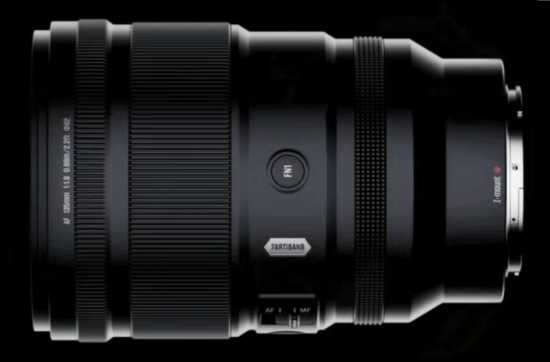
Here are some sample photos taken with the 135mm lens:
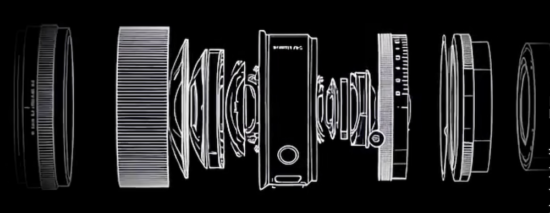
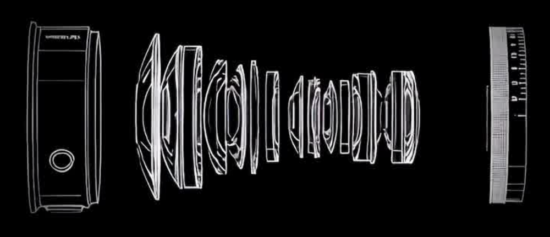
“The 7Artisans 135mm F1.8 AF is a large-aperture prime lens compatible with full-frame sensors. Planned mounts include Sony E, Nikon Z, and L, making it compatible with mirrorless cameras of all these systems. The combination of a 135mm focal length and an F1.8 aperture maximizes the subject’s focus with a shallow depth of field and a compression effect that accentuates the subject. It’s ideal for portraits and other scenes where you want to highlight the subject. The minimum focusing distance of 0.68m, relatively short for a 135mm lens, allows for close-up shots. The aperture ring allows for intuitive aperture control. The AF/MF switch allows for smooth focus control depending on the shooting situation. Furthermore, the camera’s function button can be assigned to various functions, allowing for customization to suit your shooting style. This lens combines the expressive power of a large-aperture prime lens with a practical operation system.”
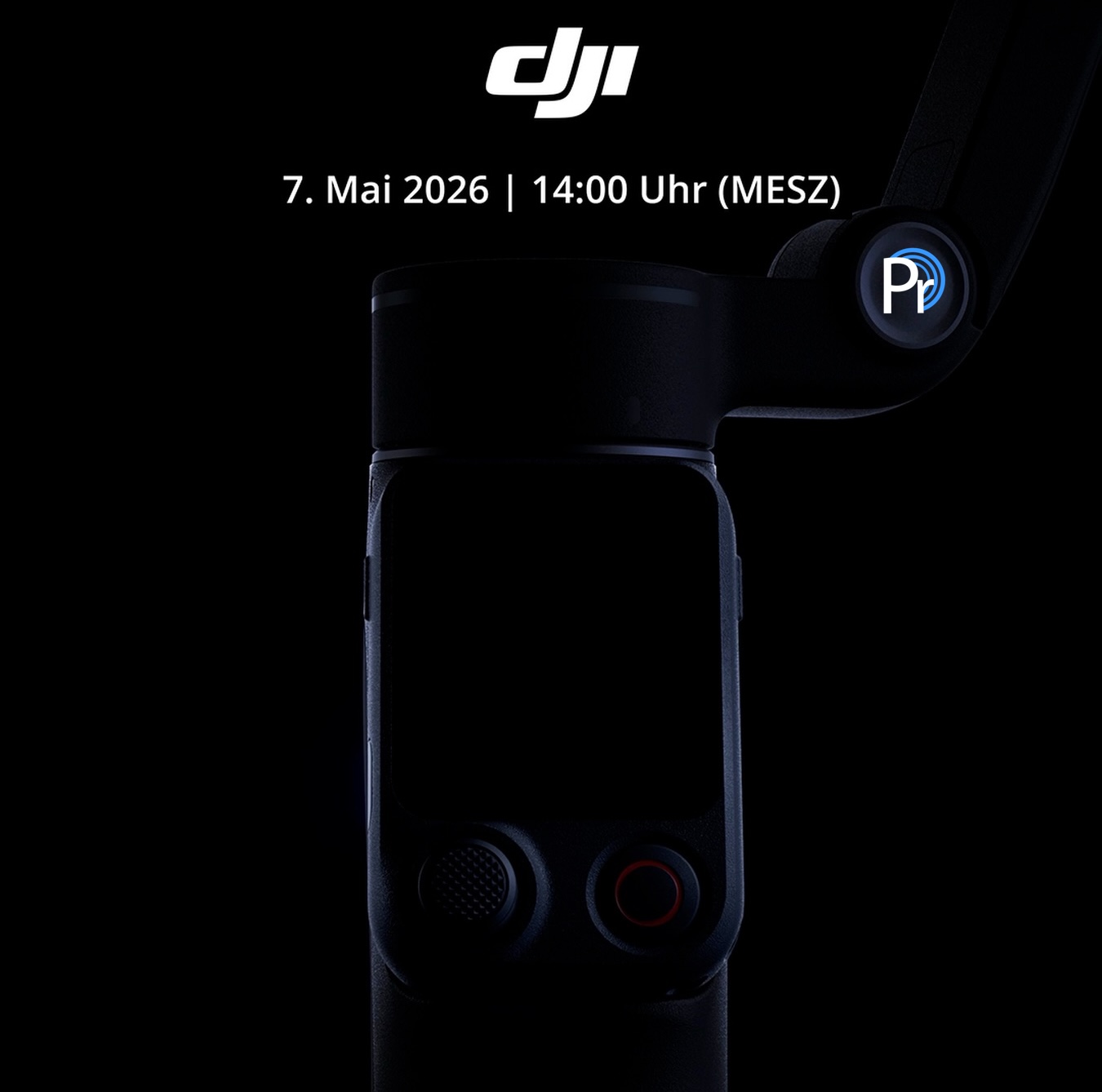
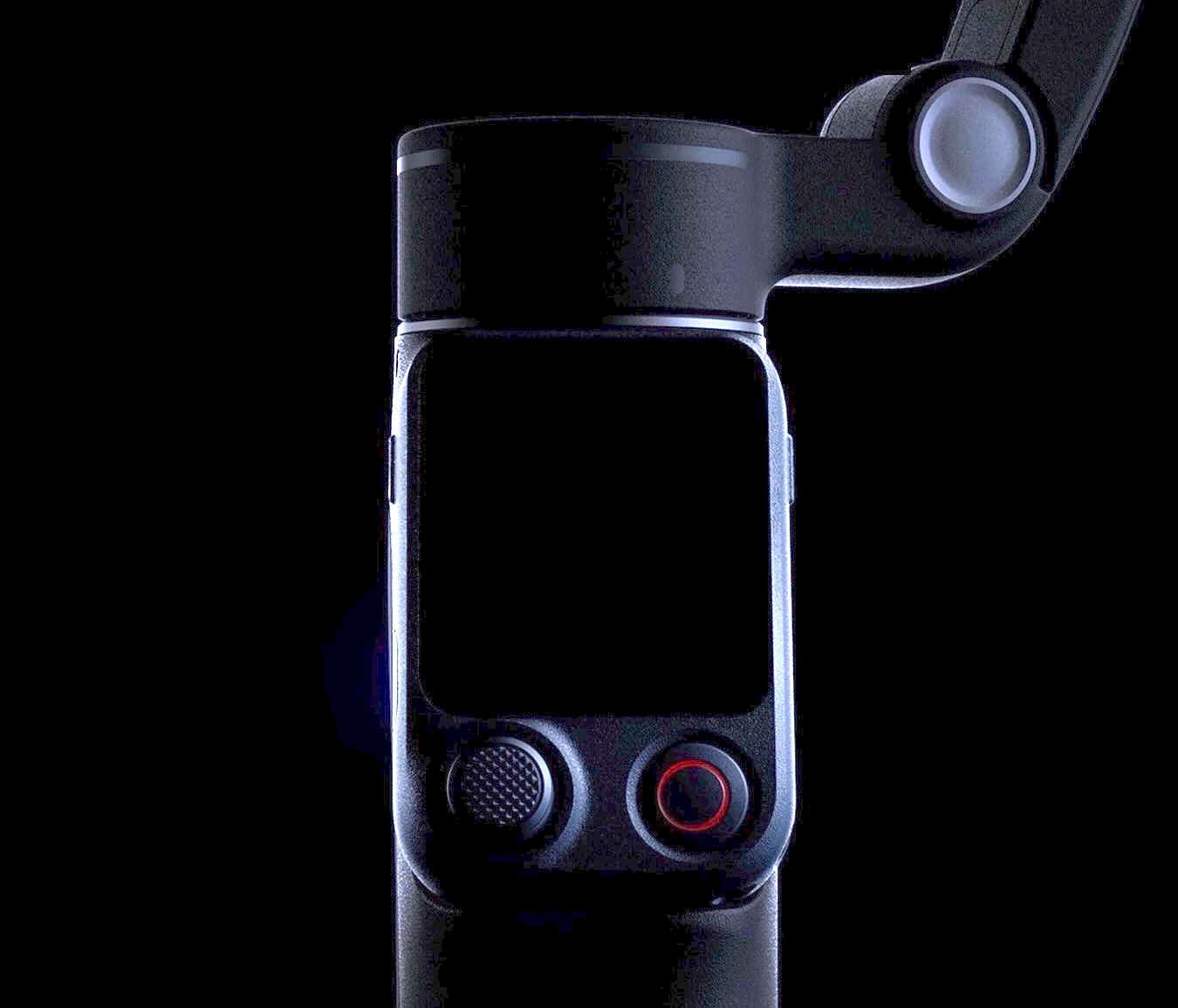
Here is what we know so far about the upcoming DJI Osmo Pocket 4P:
Dual-lens system: 1-inch primary wide-angle sensor + dedicated 3× optical telephoto lens (a major upgrade over the standard Pocket 4’s single lens and 2× lossless zoom). This enables better portrait work, zoom detail, and native vertical video modes.
Video: 4K at up to 240fps slow-motion (matching or building on the Pocket 4), with enhanced stabilization and creator-focused features.
Storage & extras: Rumored 128GB built-in storage (higher than the standard model’s 107GB), flexible/tiltable screen, and strong low-light/portrait performance.
Form factor: Very similar to the Pocket 4 but with a vertically stacked dual-camera module on the gimbal head.
Rumored pricing: Base model expected to start around $700 (premium positioning over the standard ~$499 Pocket 4).
Shared core features with standard model (with Pro enhancements): Likely retains the 1-inch CMOS sensor, 3-axis gimbal stabilization, rotatable touchscreen, ActiveTrack 7.0, 10-bit D-Log, and high dynamic range, but with superior zoom and possibly 6K/ higher-end video options in some speculative reports.
The Kodak DCS was launched 35 years ago this month, in May 1991, but its roots go back a little further.
Photo: Marc Aubry
Despite Eastman Kodak making tentative steps back into the consumer photo film market, and its name still being applied to the front of countless licensees' compact cameras, there's still a widely-held sense of 'What if?' surrounding the Kodak name.
Not only did the company dominate the film industry, it also did more than its share of founding photography's digital age.
It was a Kodak engineer, Steve Sasson, who in 1975 produced the world's first digital camera as we recognize them today: a self-contained, comparatively hand-holdable device that captured images with a CCD sensor. Though, perhaps thankfully, the Compact Cassette tape it used didn't last long as a storage medium.
Likewise it was a Kodak engineer, Bryce Bayer, who invented his eponymous, and now near ubiquitous color filter pattern, patented the same year.
So perhaps it's not a surprise that it was Kodak that, 35 years ago this month, launched the first commercial digital SLR.
The Kodak DCS (Digital Camera System) built on both these existing inventions, combining a 1.3MP CCD sensor with a Bayer color filter array. It was designed as a digital back that could be mounted onto an unmodified Nikon F3 film camera body, with the add-on unit including a motor drive to cock the camera's shutter between shots.
Where it all started (for camera buyers)
Photo: Marc Aubry
The sensor was an in-house Kodak chip, the KAF1300, a 21 x 16.6mm sensor, roughly comparable in size to the 1.6x crop sensors in Canon's later APS-C digital camera. It delivered 1280 x 1024 px images, with both mono and color versions being offered.
A cable then connected the camera to a shoulder-slung 'Digital Storage Unit,' which contained a 20 megabyte hard drive, lead acid camcorder battery and the ability to add options such as a JPEG compression processing board. This allowed the camera to capture up to 156 uncompressed images or around 600 compressed photos.
If you're wondering why we're describing it as the first "commercial" DSLR, it's because the DCS was developed from a series of earlier, often government/military-funded digital camera projects. Kodak's earliest DSLRs were created by its Federal Systems Division (FSD), which developed a camera based on a Canon F-1 body and a 1MP CCD sensor, as early as 1988.
The company's Professional Photography Division developed a prototype somewhat closer to the DCS in 1990, based on a Nikon F3 body and that, intruigingly, led to FSD making the Hawkeye II, one version of which used a 5 megabyte memory card and lithium ion batteries, making it more directly comparable to a modern digital camera in many ways.
However, this more portable camera only had capacity for four full-res images, hence the decision to persevere with the external storage unit's development for the DCS.
Photo: Marc Aubry
Kodak continued to develop the camera, with the later DCS 200 (whose introduction prompted a journalist to coin the 'DCS 100' name, by which the original camera is now widely known), leading to a series of DCS cameras culminating in the Nikon and Sigma-bodied 14MP DCS Pro SLR models in 2004.
The DCS's lead engineer, Jim McGarvey, said the prominence of Nikon in the US photojournalism market led to the decision to built the original DCS around an F3, but both F-mount and EF-mount versions of later DCS models were produced, with varying levels of input and support from Nikon and Canon. It would be another eight years before Nikon introduced the first Japan-designed DSLR, the recognizably modern Nikon D1.
McGarvey's own website is host to a fascinating details and insights into the Kodak DCS and the cameras that came both before and after it.
With thanks to Marc Aubry for the photos from his camera collection. You can see more of his images on his Flickr page
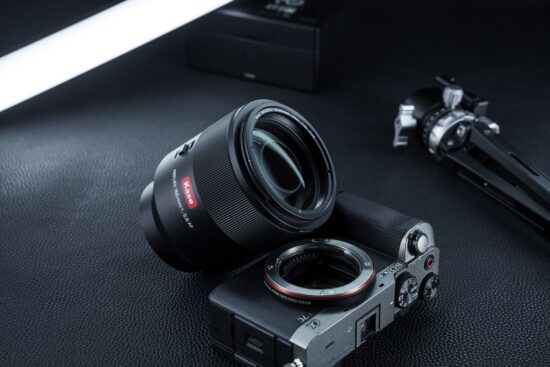
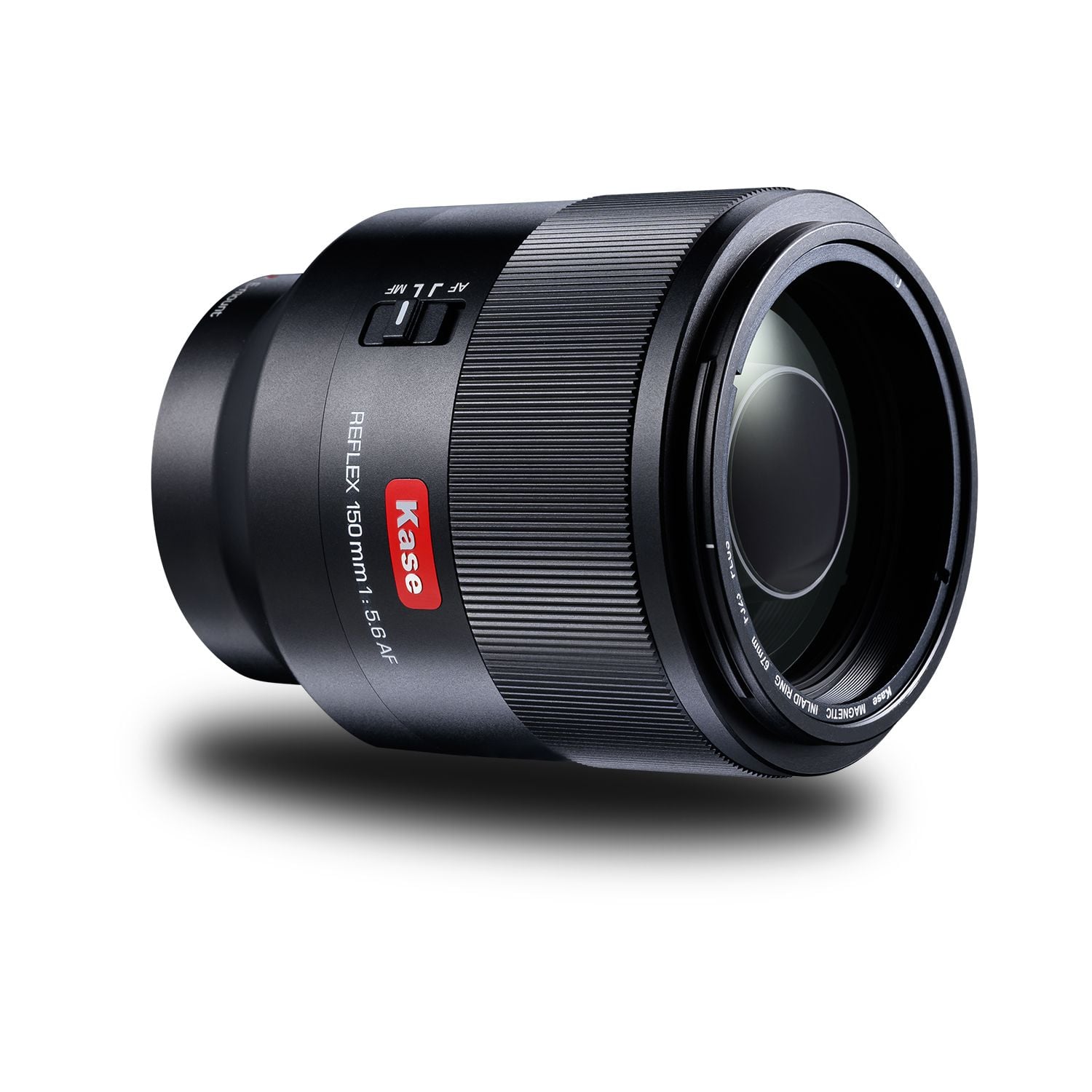
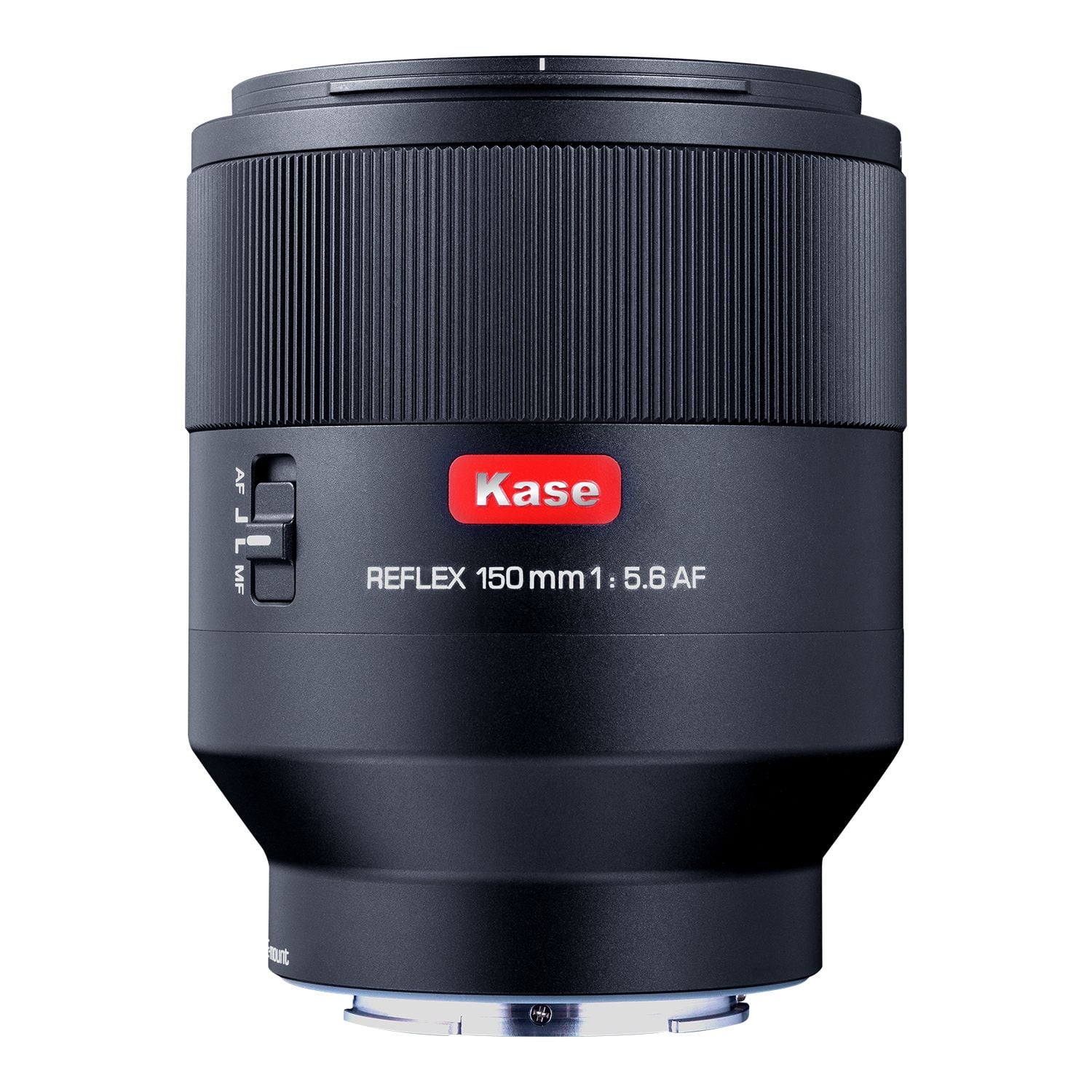
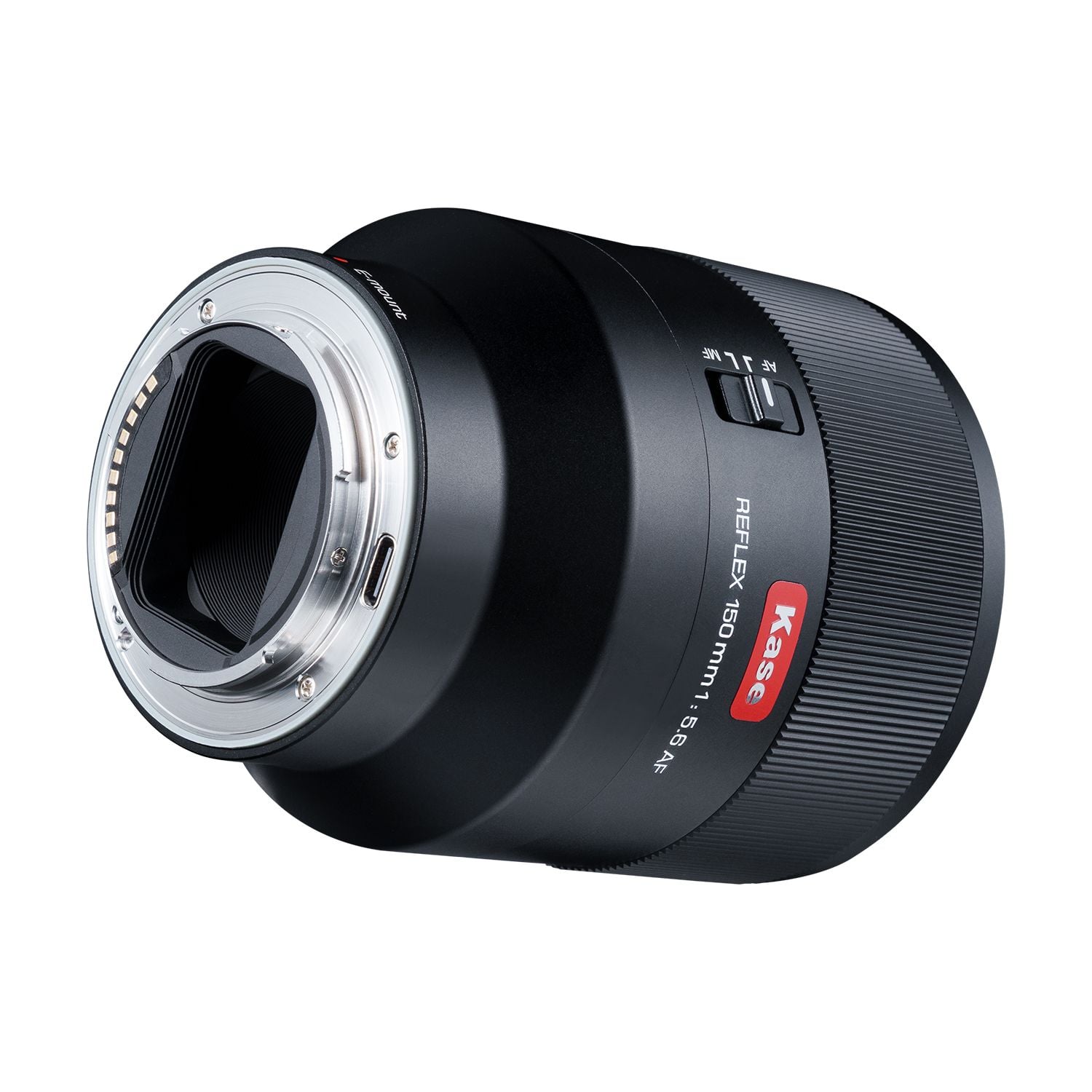
The new Kase 150mm f/5.6 AF reflex mirror lens for Z/G/E/EF mount is now available for pre-order. Here are the key specs & design:
The Kase 150mm f/5.6 AF Reflex (mirror/catadioptric) lens is a compact, full-frame medium-telephoto prime that Kase Optics (primarily known for filters) launched in March 2026. It’s generating buzz as the world’s first autofocus mirror lens at this focal length – most reflex designs are manual-focus only and much longer (300mm+).
Focal length & aperture: 150mm with a fixed f/5.6 aperture (no variable iris, typical for reflex lenses).
Optical design: 5 elements in 4 groups using mirrors + glass for a catadioptric layout. This keeps it much smaller and lighter than a conventional 150mm prime.
Minimum focus: 1.5 m.
Filters & accessories: 67mm screw-in thread, compatible with magnetic filter systems, and includes a magnetic pinch lens cap (works even with a hood attached).
Build: Aluminum alloy body with a grooved focus ring; compact and handheld-friendly.
Very compact size for a 150mm telephoto.
Signature “donut” bokeh – out-of-focus highlights render as bright rings with dark centers. This creates a dreamy, artistic, or vintage look.
Autofocus & Mounts: It offers full AF with AF/MF switch (plus manual override). Availability varies by mount due to camera maker restrictions.
Shanghai, China – Bund downtown river view. 70 image 360-degree panorama.
Sony a7R IV | 35mm GM | F1.4 | 1/125 sec | ISO 1600 Photo: Kevin Zhang
Kevin Zhang, known as fatplanediaries in the wider community, began photographing at a young age under his father's influence, a dedicated Leica street photographer. What started as a focus on street photography evolved over time, especially after a chance moment in Shanghai, when he experimented with panoramas using only a prime lens. Since then, his work has developed into a distinctive blend of candid street scenes and highly detailed panoramic images, each discipline informing the other.
"I was far from a prodigy; it took a million photos until I considered myself to be halfway decent. I still have a long way to go, always looking at my own photography as an ever-developing thing. The style changes all the time as I try to demolish what I did previously."
This story is part of our What's in your bag? community spotlight series. The series showcases the diverse gear and photography of our community, and shares their stories of how that gear helped them to capture the perfect shot.
Sony a7R IV | F1.4 | 1/200 sec | ISO 1600 Photo: Kevin Zhang
Meet Kevin Zhang (fatplanediaries)
Home base: New York, USA, but also Shanghai, China
Favorite camera and lens: Kevin’s go-to setup centers around the Sony a7R IV, a high-resolution full-frame camera known for its exceptional detail and well-suited to his panoramic work. He pairs it with Sony’s G Master lenses, particularly the 24–70mm f/2.8 GM II and 35mm f/1.4 GM, which provide the sharpness and consistency he prioritizes. This setup supports both his fast-paced street shooting and the precision required for high-resolution stitched panoramas.
Support gear: Kevin hates tripods and viewfinders, relying instead on a SmallRig cage for grip on his Sony a7R IV and custom lens-head holding techniques to shoot 20-frame panoramas in 10 seconds handheld – even against glass at observation decks or amid NYC street dance battles. He carries 4 Viltrox FZ100 USB-C batteries, dual Peak Design Captures (one for camera, one for E-mount lens kit), and a backpack-mounted DJI Osmo 360 with remote for video content.
Camera bags: Kevin uses the Peak Design Everyday Backpack V2, which has endured alongside his a7R IV through some rather tough conditions.
"I'm rather nostalgic for when Peak Design felt cutting-edge. The bag I have comes with side-access via two captures for a camera and an E-mount lens kit."
Kevin's camera bag
Photo: Kevin Zhang
Accessories can make or break a field trip. What does your bag have?
"DJI Osmo 360 with a jerry-rigged way of attaching it to my backpack as a 360 camera antenna (because my generation of people are encouraged to make video content about their photography to be successful), plus the remote for it."
"2 Peak design captures on my backpack, one for my camera and one for the Peak Design e-mount lens kit, so I can change lenses easily."
"I also carry a variety of tools, snacks, personal hygiene items, etc. This includes my trusty Macbook Pro with case on (often need to check my panos in the middle of a shoot). Some other miscellaneous supplies and trinkets of mine:
Shokz Openrun Pro 2 (great way of listening to maps, navigation directions, while still listening to the world, plus I always listen to music while shooting)
Apple Watch Ultra 2 (weather, humidity level, sunset time, compass, etc. Very essential to my use case)
Technics az100 (just a tws I like and keep with me when I want to shut out the world, plus it can connect to my MacBook and my two phones at the same time)
Sony a7R IV | 24-70mm GM | F2.8 | 1/200 sec | ISO 4000 Photo: Kevin Zhang
What got you started, and how long have you been a photographer?
"My dad became a Leica enthusiast shortly after I got into middle school, and it's been downhill from there, lol. He became a really good street photographer, so I followed in his footsteps and essentially focused on street photography for the next decade or so. I only stopped for a few years when I went to film school to focus on film."
"A few months after I graduated, I was stuck with a prime lens while at a very scenic landscape view in Shanghai, so I just winged it and gave panoramas a shot. Ever since then, my focus has been on panoramas and street photography. It's a truly odd combination, but I like to say they complement each other and, in a weird way, my film career. So I keep doing photography even if I don't get enough gigs in this field as I'd like."
"I've been doing photography since age 10, I think? The launch day Sony a7R IV I currently own has been with me for more than a quarter of my life, which feels crazy to say, as my memory of that camera launching is still very fresh."
The Jam Showcase Volume 9. Full audience 8-image panorama.
Sony a7R IV | 35mm GM | F1.4 | 1/250 sec | ISO 3200 Photo: Kevin Zhang
What's different about street scenes?
"I like to shoot candid street subjects, but I'm often pretty shy about approaching people to get the right shot. The best alternative is to get hired for events instead; everyone's vying to have you shoot them in those kinds of situations. I've had a lot of good practice at my friends' parties before getting to events as a photographer."
"On the panorama end, I like detail – lots and lots of detail. Ever since the Pureview 808 launched, my dream kind of photo has been the one where you can zoom in nearly infinitely and see a very complex world. That's been the ethos of my panoramas. They tickle that itch really well. I zoom into my own 750mp PTGui stitches all the time."
How has your photography evolved over the years?
"I've always loved reading Roger Cicala's articles, absorbing DXOMark data, and of course, content on DPReview. All the technical deep dives and teardowns that teach you technical stuff, YouTube will never teach you about. That's always helped me out a lot I think, just being nerdy about stuff, and having a good theoretical foundation so that you never need to second guess yourself when you're out and about shooting."
"I really miss Barney Britton from the 2009 era. His Chris Burkard a6000 video was what got me hooked into DPReview in the first place."
New York City skyline from Staten Island Ferry. 12-image panorama.
Sony a7R IV | Tamron 70-180mm G2 | F5.6 | 1/800 sec | ISO 160 Photo: Kevin Zhang
What unique street environments have you discovered?
"Probably the most unique environment I've shot at is the New York City street dance events. There's one called Battle 101, and at the end of the year, they host a massive battle with hundreds of spectators. In that sort of situation, the subjects you're shooting are also the background. If you shoot your handheld panos fast enough, you can also do them for people. Really. Not a lot of others have tried it but me."
What can the community take away from your experiences?
"Be humble and be open to drastically altering your approach. Be happy to teach other people and learn from others. Both G.A.S. and the Dunning-Kruger effect are way too commonplace in photography. And please don't be a snob."
Kevin really enjoyed writing the content for this spotlight article and would be grateful for you to join him in discussion in the forums. Thanks, Kevin, for being featured!
If you'd like to share your photography, tell us about your main camera, lens choices, key settings and strategies. Your photos and story could be featured in the next article!
Editor's note: This article continues a series, 'What's in your bag?', highlighting DPReview community members, their photography and the gear they depend on. Would you like to be featured in a future installment? Tell us a bit about yourself and your photography by filling out this form. If you're selected for a feature, we'll be in touch with next steps.
When you use DPReview links to buy products, the site may earn a commission.
Image: LK Samyang
LK Samyang's AF 14-24mm F2.8 is officially available for L-mount. The company previewed the lens at CP+ earlier this year, following the ultra-wide zoom's E-mount debut last year as LK Samyang's first co-branded lens with German optics specialist Schneider-Kreuznach.
The L-mount version of the AF 14-24mm keeps the same optical design and features of the E-mount model. It comprises 15 elements in 11 groups, with three aspherical lenses, five high-refractive elements, and three ED elements. It can focus as close as 0.18m, features a customizable control button and MF/AF switch, and promises fast and quiet autofocus driven by a linear stepping motor.
Like the E-mount version, it accepts front filters (77mm), making it the only L-mount 14-24mm F2.8 lens to do so. The Sigma and Leica equivalents use rear sheet filters due to the bulbous front elements. It's also noticeably more compact and lightweight than the other 14-24mm F2.8 lenses. It weighs just 441 g (15.5 oz) and is 87mm (3.4") long. For comparison, the Sigma take on the lens weighs 795 g (28 oz) and measures 131 mm (5.16") long.
We saw a preview of the lens at CP+ this year. It is quite compact compared to other lenses in its class.
Photo: Mitchell Clark
LK Samyang joined the L-Mount Alliance in 2023, but so far, its only L-mount release has been the AF 35-150mm F2-2.8. At CP+ this year, a representative told us that the company is looking to expand its mount offerings, though it isn't clear if that means more L-mount lenses specifically or additional mounts beyond that.
The company also teased an AF 60-180mm F2.8 FE at CP+, which will form a nice trio with its AF 24-60mm F2.8 and AF 14-24mm F2.8 offerings. Hopefully, both the standard zoom and the upcoming telephoto zoom lenses also make their way to L-mount sooner rather than later.
The LK Samyang 14-24mm F2.8 lens is available for purchase today. The company didn't provide pricing information, but the E-mount version costs $1200.
LK Samyang Expands Its Co-Developed Super-Wide Zoom AF 14-24mm F2.8 FE to L-Mount
Key Message
Co-developed ultra-wide zoom with Schneider-Kreuznach Combining German optical expertise with LK Samyang's advanced AF technology
A key lens in the expanding compact zoom lineup From 14-24mm to 24-60mm and the upcoming 60-180mm, completing a unified zoom system
Expanded to L-mount for broader user accessibility Delivering the same proven performance across more camera systems
April 30, 2026 - LK Samyang, a global optical solutions company, announces the expansion of its first compact zoom series product, co-developed with Schneider-Kreuznach, the AF 14-24mm F2.8 FE, now available in L-mount.
The AF 14-24mm F2.8 FE is a jointly developed product that combines Schneider-Kreuznach's renowned optical design expertise with LK Samyang's advanced manufacturing and autofocus technologies. Upon its release, the lens set a new benchmark in the ultra-wide zoom category, offering a compact and lightweight design along with a unique 77mm front filter capability.
Following its launch, the compact zoom series expanded with the introduction of the standard zoom AF 24-60mm F2.8 FE, delivering both portability and versatility. Furthermore, at CP+ this year, LK Samyang revealed its plan to complete the lineup with the upcoming telephoto zoom AF 60-180mm F2.8 FE.
Key Features
Co-developed optical design with Schneider-Kreuznach Combining German optical precision with LK Samyang's advanced AF technology
Ultra-wide 14-24mm zoom range Expansive field of view from 114.2º to 24mm for versatile shooting
Constant F2.8 aperture Reliable performance in low-light conditions with excellent depth control
Compact and lightweight design (441g) Exceptional portability compared to other ultra-wide zoom lenses
77mm front filter compatibility Rare feature in ultra-wide zoom lenses, enabling creative filter use
Minimum focusing distance of 0.18m Enables dynamic close-up shots with strong perspective
Fast and quiet autofocus performance Optimized for both stills and video with Linear STM
This new L-mount version of the AF 14-24mm F2.8 maintains the same optical performance and key specifications as the original FE mount version, while featuring a compact length of approximately 86.8mm, an ultra-lightweight design of just 441g, and a minimum focusing distance (MOD) of 0.18m. Through this expansion, LK Samyang aims to offer a broader range of options to global users across diverse camera systems.
This L-mount expansion goes beyond a simple mount addition. It represents a strategic move to make LK Samyang's optical technology accessible to a wider community of creators. LK Samyang will continue to develop and introduce products optimized for various systems and user environments, further strengthening its presence in the global market.
Availability
The LK SAMYANG AF 14-24mm F2.8 L lens will be available for purchase starting today, with sales gradually launching across global markets through LK SAMYANG's distribution network and authorized retailers. In addition, cashback promotions are set to launch in Japan and across Europe, with details varying by region. More information is available on the official website: https://www.lksamyang.com/ko/about/notice-list
Welcome back to our Question of the Week series! This reader-focused series aims to get our photographic community to share thoughts on all sorts of photography-related topics in our forums. We pose questions about gear, favorite camera stores, advice, problem-solving and more, and you share your thoughts and opinions.
This week, we’re leaning into the holiday spirit! The season of giving (and occasionally re-gifting) is upon us, and that means it’s time to unwrap some memories – both heartwarming and hilarious.
What are the best (and worst) photography-related gifts you've received?
What’s the best photography-related gift you’ve ever received? Maybe it was a dream lens that caused you to take on an adventure deep in the mountains, or a handmade camera strap that’s now an essential part of your kit. And what about the worst? Perhaps someone thought you needed yet another "World’s Best Photographer" mug, or that odd lens filter set that turned every photo a shade of green.
In this edition of our Question of the Week series, we want to hear your gift stories: the memorable, the useful and the truly baffling. Share your favorites (and flops) in the forum link below. Photos of the gifts (or what you created with them) are also more than welcome! We'll highlight some of your most entertaining and heartfelt responses in next week's roundup.
Between delivering commercial work for clients and feeding the ever-voracious YouTube algorithm, Joshua Martin spends more time than most with a camera in his hands. Until recently, that camera was his trusty Fujifilm X-H2S.
But after upgrading to the GFX system for his commercial work, Martin realized it was time to part ways with the X-H2S in favor of a more compact camera that could meet his needs for both still photography and video.
In the third episode of ISO: Upgrades on a Budget, our series produced in partnership with MPB, Martin sets out to find a new daily driver.
Image: DPReview
After diving into our camera comparison tool, Martin narrowed his search to three contenders:
Martin then rented all three cameras to stage a three-way test before purchasing it from MPB, the leading platform for buying, selling, and trading camera equipment.
No spoilers here, so you'll have to watch the video above to find out which camera he chose. And let us know in the comments: which camera would you have picked?
If you have gear collecting dust on a shelf or you're simply looking for something new-to-you, head over to MPB to upgrade your kit today.

 Connexion