Apple has acquired Patchflyer, the one-person company behind Color.io, a web-based color grading tool used by photographers and filmmakers, according to acquisition disclosures reported by MacRumors. Color.io creator Jonathan Ochmann has also joined Apple, though Apple hasn't announced what it plans to do with the technology.
Color.io was known for its film-inspired color tools, custom color models and an in-browser workflow. It appealed to creators looking for more advanced color grading without opening a full desktop editing suite. That service shut down on December 31, 2025.
In November 2025, Ochmann shared news of the closure on the Color.io site, as found via the Internet Archive. "Color.io isn't shutting down because it's struggling. But after 10+ years of running everything alone, I've reached a point where I need to grow in ways that aren't possible as a solo builder," he wrote. "I have an opportunity to work alongside a company whose products have shaped and inspired me, to work on creative tooling at a scale I could never reach on my own." It's now apparent that Apple was that company.
Color.io's browser-based interface helped make film-inspired grading tools accessible without a full desktop editing suite.
Image: Color.io
The acquisition is especially interesting given Apple's recent interest in creative software. Apple completed its acquisition of Pixelmator in February 2025. Then, at the beginning of this year, Apple announced Apple Creator Studio, a subscription bundle of several of Apple's creative apps, serving as an alternative to Adobe Creative Cloud. The tech giant also acquired MotionVFX, a maker of Final Cut Pro plug-ins and templates, in March.
There's no word yet on whether, or how, Color.io's tools will appear in Final Cut Pro, Pixelmator Pro, Photos or the iPhone Camera app. But for photographers and video creators, the deal suggests that Apple is continuing to build out its color, imaging and creator-tool expertise, potentially with an eye toward making more advanced grading tools easier to access across its software ecosystem.
Panasonic's new Lumix L10 is the company's latest pitch for the enthusiast compact we've been waiting for. It's a modern, fixed-lens camera aimed at photographers who want more direct control in a carry-everywhere camera.
The L10 combines a 26.5MP Micro Four Thirds sensor with a 24-75mm equivalent F1.7-2.8 lens and the same processor found in the S1RII. It also offers phase detection autofocus and the latest subject recognition features you'd expect from a modern camera. Plus, Panasonic added an OLED viewfinder and an articulated rear screen.
We have the camera in hand, and in our latest YouTube video, we unbox the L10 and the included accessories. We'll be sharing more details about the camera once we've had an opportunity to put it through its paces, so stay tuned for more. For now, you can read more about the latest compact in our full article about the announcement.
Panasonic is celebrating the 25th anniversary with the launch of a large sensor enthusiast zoom compact.
The L10 is essentially a fully modernized version of its LX100 camera, using the company's latest 26.5MP BSI CMOS Four Thirds sensor and the processor used in the S1RII. It features a version of the 24-75mm equivalent F1.7-2.8 lens from the LX100, updated in an unspecified way.
While the new model clearly shares much of the LX100 series' heritage, Panasonic says the L10 represents a new premium compact camera line.
The use of that sensor means it offers phase detection autofocus and the dynamic range boost function from the GH7 and G9II, along with all the company's latest subject recognition algorithms.
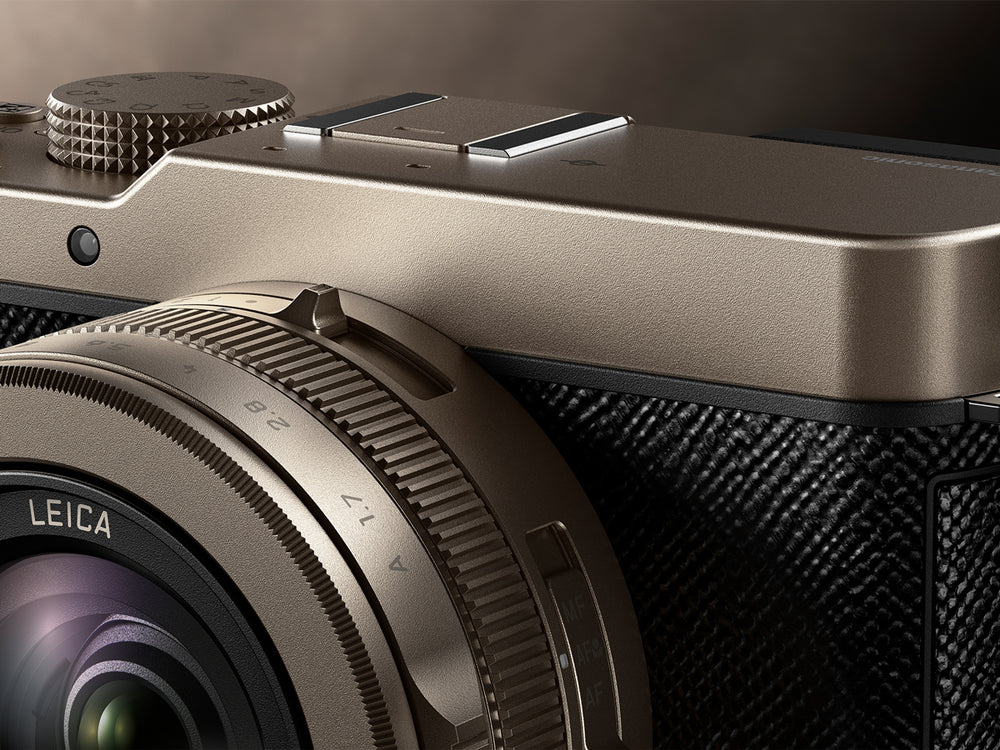
As with the other LX100 cameras, the lens doesn't cover the whole sensor, instead delivering up to 20MP images. It takes a multi-aspect approach, giving a consistent angle of view whether you shoot 4:3, 3:2 or 16:9 aspect ratios. A dedicated switch on the lens barrel lets you directly select these ratios or 1:1.
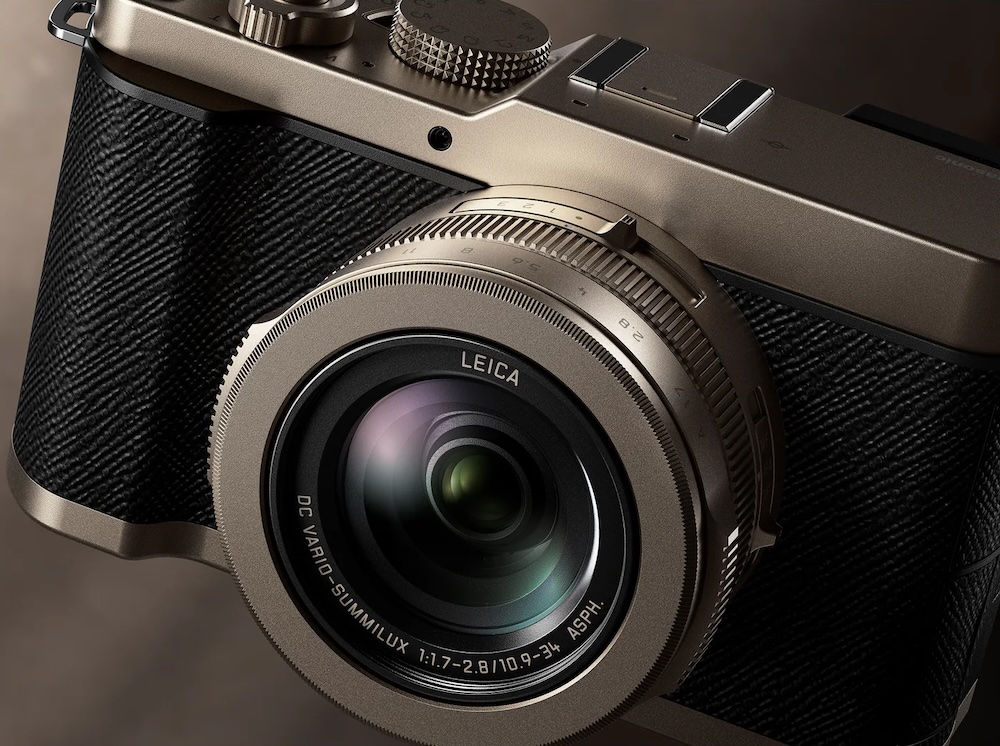
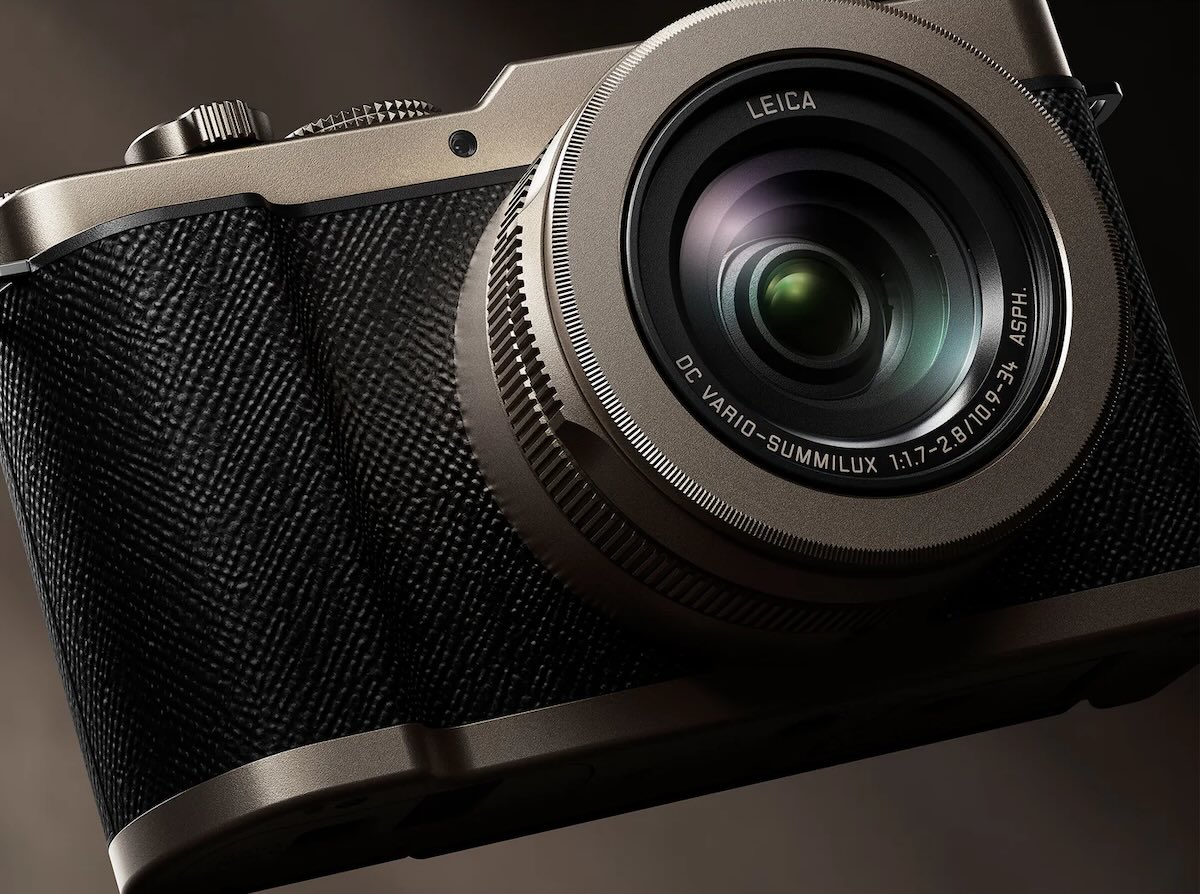
The camera has a full-metal body and a fully articulated 1.84M dot rear display. It also gains a more modern 2.36M dot OLED viewfinder, rather than the field-sequential display used by the LX100 models.
This makes it a significantly different camera than the LX100-related Leica D-Lux 8, which persisted with the sensor and processor from the LX100 II and kept the fixed rear screen design of the older models. The L10 also switches to using the much larger BLK-22 battery from the GH series, which should significantly improve performance.
The Lumix L10 Titanium Gold edition will be available directly from Panasonic in most markets.
Image: Panasonic
The move to a modern AF system, the addition of an articulated rear screen, the switch to an OLED viewfinder and the adoption of a larger battery appear to directly address our biggest concerns about the LX100 II, making the L10 highly sought-after within the DPReview team.
Color changes
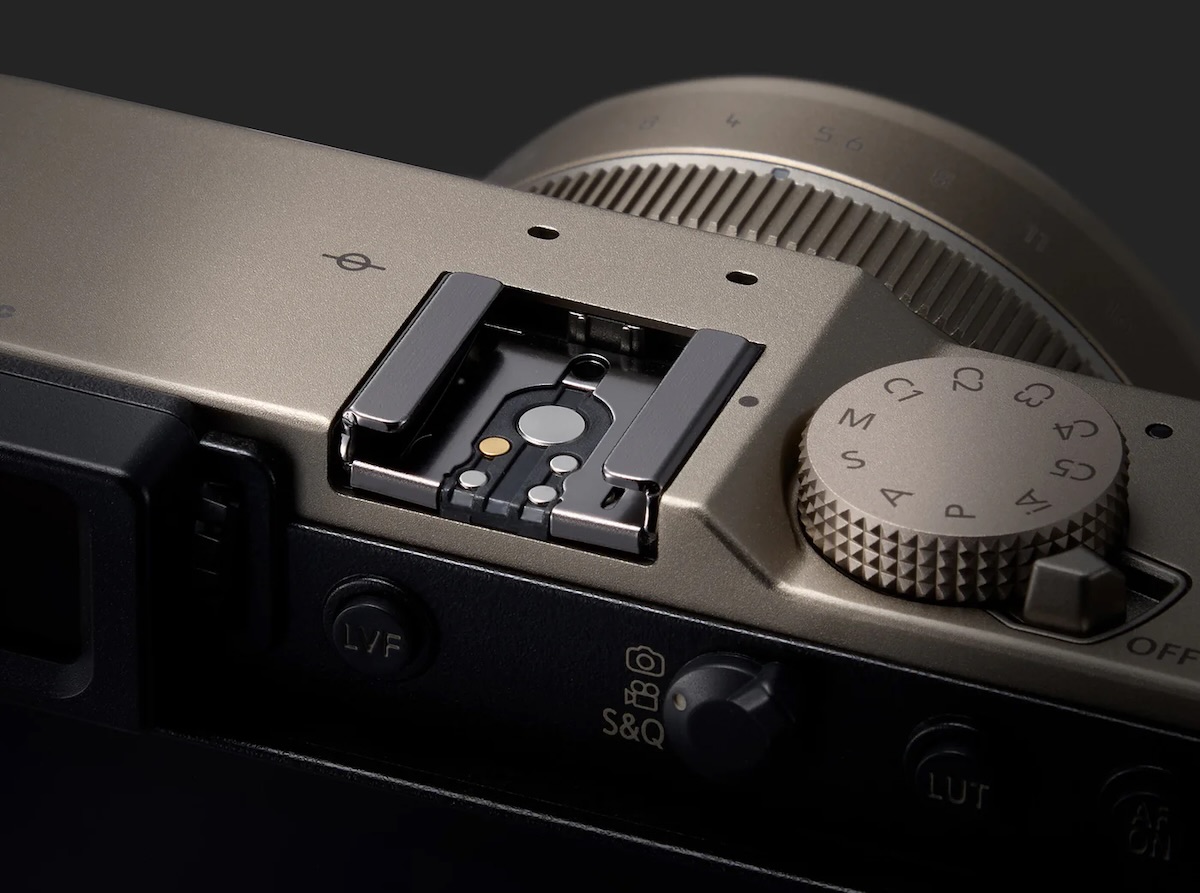
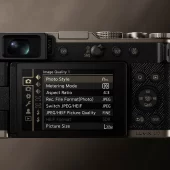
In addition to the major hardware changes, the camera gets several new image presets: L.Classic and L.Classic Gold, which give the look of historic film stocks. It also has the Leica Monochome look we've seen in recent Panasonics. On top of this, it has the LUT button on the back of the camera, first seen in the Lumix DC-S9. This accesses the camera's ability to upload, overlay and combine custom image styles using the movie industry standard Cube LUT format.
Custom look-up tables (LUTs) can be downloaded via the Lumix Lab app, which also lets you create your own custom LUTs or use the app's ability to generate 'Magic LUTs' that attempt to mimic the look of images you've uploaded to it. This system gives you a wide degree of control over your out-of-camera images. In addition, Lumix Lab will gain the ability to process Raw files both from the L10 and other recent Lumix cameras.
Panasonic says the L10 is primarily intended for stills, and it has neither a headphone nor HDMI socket. Despite this, it's capable of 10-bit log capture and 5.2K open-gate video recording, as well as 4K/120 capture.
The L10 will launch with a recommended price of $1499.99. The standard model will be available in black or black with silver-anodized aluminum top and baseplates.
There will also be a Titanium Gold special edition, with themed-color menus, a threaded shutter button, a leather strap and a matching auto lens cap. The Titanium Gold edition will retail for $1599.99 and will only be available via the Panasonic website and in limited numbers.
Press release:
Panasonic Announces New LUMIX L10 Fixed Lens Camera
Newark, N.J. (May 12, 2026) – Panasonic is proud to introduce the LUMIX L10 (DC-L10), a new fixed lens camera created for photographers who value intuitive control, refined design, and exceptional image quality. Developed in Osaka, Japan, the LUMIX L10 embodies Panasonic's belief that a camera should feel instinctive in the hand, allowing the user to focus entirely on the subject and bringing any creative vision to life.
Celebrating 25 Years of LUMIX
To mark the 25th anniversary of LUMIX, the LUMIX L10 will be available in three color variations: Black, Silver, and a commemorative Titanium Gold Special Edition. This milestone special edition celebrates LUMIX's heritage and design vision. Inspired by the LUMIX's philosophy of "Shaping Emotions"-無心 (Mushin), the LUMIX L10 brings together trusted craftsmanship, timeless aesthetics, and advanced imaging technology in a compact body. A signature saffiano leather-textured finish defines the camera's look, complemented by a high-quality metal exterior and magnesium alloy front case, offering a contemporary and enduring design.
The Titanium Gold Special Edition LUMIX L10 also comes with several exclusive features, including a refined menu interface adopting a Titanium Gold theme to create visual harmony with the exterior, subtly placed rear branding that remains visible only to its owner and support for commercially available screw- in shutter buttons for personal customization. A selection of dedicated accessories are also unique to the Titanium Gold kit, these are additional auto lens cap, shoulder strap, and lens cloth. The Titanium Gold Edition will be available through limited sales channels, primarily via the official Panasonic Store with availability varying by region.
Weighing approximately 508g / 1.12 lb (*1), the LUMIX L10 is built to carry all day, with an intuitive layout for one-handed operation. It's tactile controls and balanced design creates a seamless shooting experience, enabling photographers to capture moments freely, without distraction, particularly suited for street, travel and everyday photography.
Premium optics and Imaging Performance
The LUMIX L10 features a LEICA DC VARIO-SUMMILUX 24-75mm lens (*2) with an F1.7–2.8 aperture, combining expressive depth, beautiful bokeh, and versatile performance. A precision-machined metal barrel and manual aperture ring enhance tactile control, while AF macro shooting from as close as 3 cm at the wide end broadens creative possibilities. Whether capturing sweeping landscapes, intimate portraits, or documentary work, the lens delivers delicate gradations of light and shadow with better clarity.
With a 20.4MP (*3) resolution, it delivers rich texture, natural color, and refined tonal gradation. The 4/3 type back-illuminated (BSI) CMOS image sensor and latest image processing engine deliver higher image quality. Dynamic Range Boost further enhances tonal richness, delivering expanded shadow detail in still photography.
Another stand out feature is that the L10 also incorporates a multi-aspect shooting capability. By utilizing a sensor larger than the lens image circle, it maintains a consistent angle of view across 4:3, 3:2, and 16:9 (*4) aspect ratios, providing greater compositional flexibility without altering framing.
Creative Color and Workflow Integration
Guided by Panasonic's picture-making philosophy of "Capturing It All," LUMIX color science is designed to deliver realistic reproduction, creating images that feel natural, rich, and emotionally engaging. In addition to LUMIX's signature Photo Styles, the LUMIX L10 introduces new film-inspired looks, including L.Classic, with soft tones and muted colors for a gentle, delicate atmosphere, and L.ClassicGold, featuring warm amber highlights and nostalgic contrasts.
With REAL TIME LUT, users can load custom LUTs directly into the camera and preview the final look while shooting. Up to two LUTs can be layered for added creative flexibility. Using the LUMIX Lab app, users can further expand their options by generating LUTs from their favorite images with Magic LUT (*5), powered by AI-based color analysis
To support capturing those decisive moments, the LUMIX L10 features Phase Hybrid AF with 779 focus points, advanced AI-based eye, face, and subject recognition (including Urban Sports), high-speed continuous shooting at up to 30 fps with the electronic shutter, and reliable optical image stabilization for stable handheld capture.
A 2.36-million-dot OLED viewfinder and a 1.84-million-dot free-angle monitor, both supporting a vertically optimized UI, provide flexible framing for modern shooting styles. The LUMIX L10 supports both still and short-form video workflows, including MP4 (Lite) for quick social sharing, along with high-speed transfer and editing via the LUMIX Lab app.
Built for Everyday Creativity
The LUMIX L10 combines refined design with advanced imaging to support creativity confidently and beautifully, allowing photographers to focus on the moments and emotions before them. Panasonic will continue to empower creators and expand the possibilities of visual expression for further years ahead.
Main Features
1. Commemorative Titanium Gold Special Edition
In addition to the standard Black and Silver models, a commemorative Titanium Gold Special Edition has been introduced to mark the 25th anniversary of LUMIX.
Supports screw‑in shutter release buttons for customized touch and response.
Titanium Gold–themed menu interface for a consistent design experience
Available through limited sales channels, primarily the official Panasonic Store with availability varying by region.
2. Compact premium design with uncompromising image quality
Flat, compact body weighing approximately 508g / 1.12 lb (*1), designed for everyday use while maintaining professional handling.
High-quality metal exterior with magnesium alloy front case, paired with a saffiano leather-texture finish for a modern yet classic look.
LEICA DC VARIO-SUMMILUX 24–75mm (*2) F1.7–2.8 lens delivers rich depth, beautiful bokeh, and delicate gradation of light and shadow.
The camera is equipped with a 4/3-type back-illuminated (BSI) CMOS sensor and the latest- generation image processing engine. Its effective 20.4MP (*3) resolution delivers high resolution rich tonal expression, and natural texture reproduction.
A multi‑aspect sensor design enables shooting in 4:3, 3:2, or 16:9 (*4), while maintaining a consistent angle of view—supporting intentional composition across different formats.
Highly immersive shooting experience with a 2.36-million-dot OLED viewfinder and 1.84-million-dot free-angle rear monitor, supporting both horizontal and vertical compositions.
3. Advanced imaging performance that captures decisive moments
High-speed, high-precision Phase Hybrid AF with 779 focus points for reliable subject tracking.
Advanced AI-based real-time recognition AF, supporting eyes, faces, bodies, animals, vehicles, and dynamic scenes such as urban sports.
High-speed burst shooting up to 30 fps with electronic shutter and approx. 11 fps with mechanical shutter, ideal for fast-moving subjects.
Reliable image stabilization and POWER O.I.S. support stable shooting in low light, night scenes, and close-ups.
4. Creative color expression and seamless workflow
REAL TIME LUT allows creators to load and apply custom LUTs in-camera while shooting.
Dedicated LUT button provides instant access to color settings for intuitive creative control.
Two new film-inspired Photo Styles are added L.Classic and L.ClassicGold.
Smartphone integration via the LUMIX Lab app, enabling high-speed transfer, RAW editing, Magic LUT (LUT generating feature using AI) (*5), and easy social media sharing.
Versatile video formats include MP4 (Lite) for quick social sharing.
*1 The combined weight of the body, battery, SD memory card, and hot shoe cover. (excluding the body cap)
*2 35mm camera equivalent
*3 Total sensor pixel count is 26.5 megapixel.
*4 When the aspect ratio is set to 1:1, the left and right edges are cropped, resulting in a narrower angle of view.
*5 Please use images that do not violate their license terms, applicable laws and regulations, or legal rights such as copyright and portrait rights.
Panasonic Lumix DC-L10 specifications
Price
MSRP
$1499
Body type
Body type
Large sensor compact
Body material
Metal
Sensor
Max resolution
5408 x 3608
Image ratio w:h
1:1, 4:3, 3:2, 16:9
Effective pixels
20 megapixels
Sensor photo detectors
27 megapixels
Sensor type
CMOS
Color space
sRGB, AdobeRGB
Color filter array
Primary color filter
Image
ISO
Auto, 100-25600 (expands to 50-25600)
Boosted ISO (minimum)
50
Boosted ISO (maximum)
25600
White balance presets
10
Image stabilization
Optical
Uncompressed format
RAW
JPEG quality levels
Fine, standard
File format
JPEG (DCF/Exif v3.0)
Raw
HEIF
Optics & Focus
Focal length (equiv.)
24–75 mm
Optical zoom
3.1×
Maximum aperture
F1.7–2.8
Autofocus
Contrast Detect (sensor)
Phase Detect
Selective single-point
Tracking
Single
Continuous
Autofocus assist lamp
Yes
Manual focus
Yes
Normal focus range
50 cm (19.69″)
Macro focus range
3 cm (1.18″)
Number of focus points
779
Screen / viewfinder
Articulated LCD
Fully articulated
Screen size
3″
Screen dots
1,840,000
Touch screen
Yes
Screen type
TFT LCD
Live view
Yes
Viewfinder type
Electronic
Viewfinder coverage
100%
Viewfinder magnification
0.74×
Viewfinder resolution
2,360,000
Photography features
Minimum shutter speed
60 sec
Maximum shutter speed
1/2000 sec
Maximum shutter speed (electronic)
1/32000 sec
Exposure modes
Program
Aperture Priority
Shutter Priority
Manual
Custom
Intelligent Auto
Built-in flash
No
External flash
Yes
Flash modes
Auto, Auto/Red-eye Reduction, Forced On, Forced On/Red-eye Reduction, Slow Sync., Slow Sync./Red-eye Reduction, Forced Off
Continuous drive
11.0 fps
Self-timer
Yes (2 or 10 secs or custom time, 3 shots @ 10 sec)
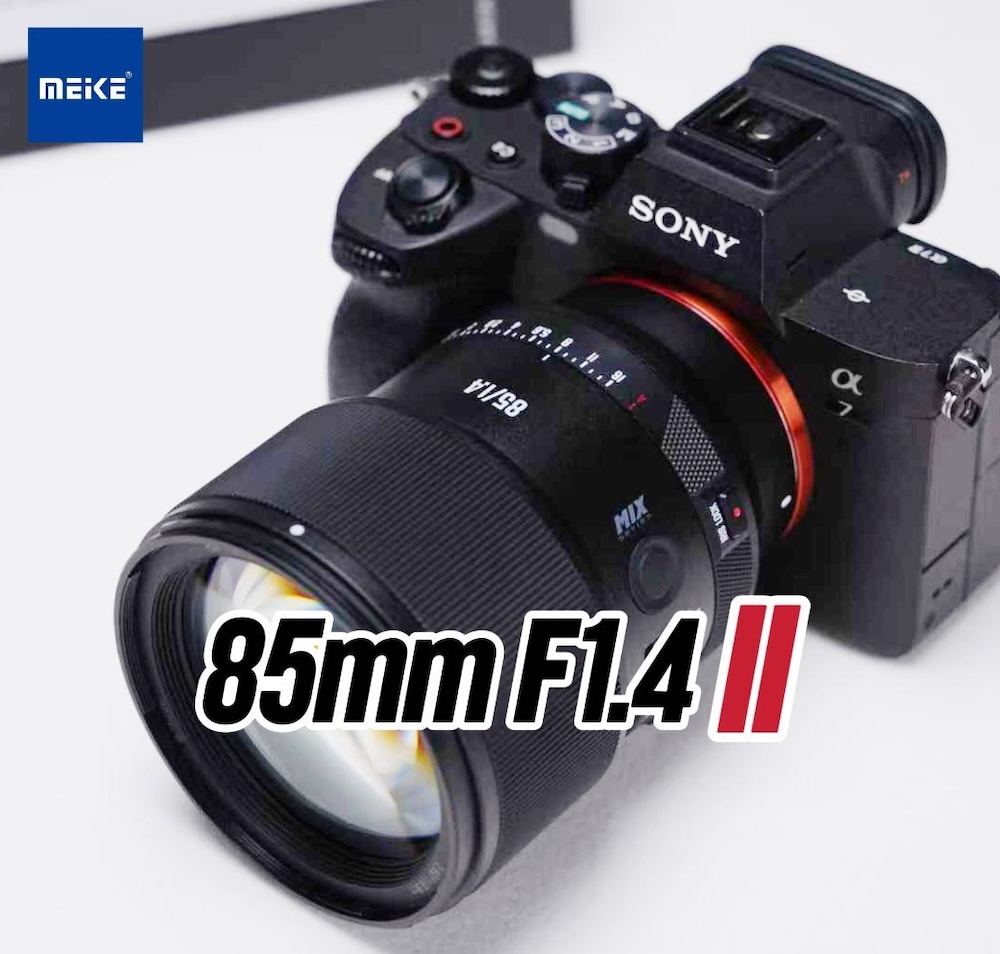
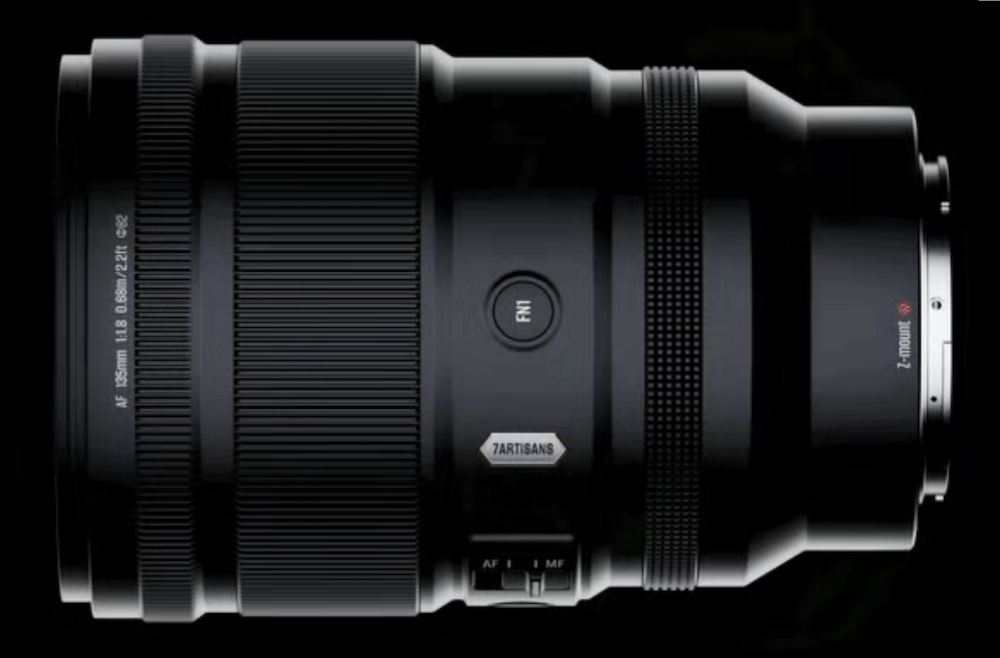
JC Optics will release a new 400mm f/8 full-frame telephoto manual focus lens with adjustable focus damping, featuring a 3-element, 2-group optical design and a minimum focusing distance of 100cm, and designed for E/Z/F/RF/EF/EF-M/X/MFT mounts (all-metal mount).
Memory card and storage prices (including SD/microSD, CFexpress, and SSDs) are rising sharply in 2026 primarily due to an AI-driven surge in NAND flash demand that has outstripped supply. Hyperscale data centers and AI infrastructure are consuming massive volumes of NAND for high-performance enterprise storage and related components. This has caused NAND wafer and contract prices to jump dramatically (e.g., 70-75% quarter-over-quarter in Q2 2026 projections, with some reports of 100%+ increases earlier in the year), pushing costs downstream to brands like Lexar, LaCie, OWC, and ProGrade:
A king surveys his snowy realm. The dark, monotonously colored forest background makes the colorful monkey stand out beautifully.
Canon EOS R5 II | Canon RF 24-105mm F4L IS USM | ISO 3200 | 1/1250 sec | F4 Photo: Erez Marom
In the first two articles in this series, I shared stories about photographing black and white snub-nosed monkeys in Yunnan province and mammal species in Tangjiahe Reserve and Wawu Mountain. In this third and final installment, I want to tell you about a very unexpected visit to shoot another species of snub-nosed monkey: the golden snub-nosed monkey.
The golden snub-nosed monkey is one of the most visually striking primates in the world, native to the high-altitude forests of central and southwestern China. It is instantly recognizable by its vivid golden-orange fur, pale blue face, and small upturned nose – an adaptation that may help reduce frostbite in cold mountain climates. These monkeys live in some of the harshest environments inhabited by non-human primates, enduring snowy winters at elevations of up to 3,000 meters, with thick fur and complex social behavior helping them survive.
I don't usually do many close portraits, as I feel anyone can do them, and I can't take a shot that shows both the animal and its surroundings in a compelling way. This was an exception, and the nice thing is that you can see the interesting details in the monkey's face, especially the nose. How cool is the pale blue skin?
Canon EOS R5 II | Canon RF 24-105mm F4L IS USM | ISO 1600 | 1/320 sec | F4 Photo: Erez Marom
Golden snub-nosed monkeys are highly social, forming large, multi-level groups that can include hundreds of individuals divided into smaller family units. They spend much of their time in trees, feeding on leaves, bark, fruits, and especially lichens during winter when other food is scarce. Despite their resilience, they are classified as endangered due to habitat loss and fragmentation, though conservation efforts in protected areas, particularly in regions like the Qinling Mountains, have helped stabilize some populations. Their survival is closely tied to the preservation of China’s temperate mountain forests, making them a flagship species for conservation in these ecosystems.
Golden snub-nosed monkeys eat tree bark to aid their digestion. A positive outcome of this is that the orange colors in the tree are fully exposed, which complements the golden monkey's fur. With the contrasting green leaves, I like the color palette in this image, as well as the interesting behavior and overall composition.
Canon EOS R5 II | Canon RF 100-500mm F4.5-7.1L IS USM | ISO 3200 | 1/200 sec | F6.3 Photo: Erez Marom
This shoot was highly unexpected because the area leading to the golden monkeys' habitat had been destroyed last year by a huge flood (the aftermath of which was clearly visible on the road there), and so we had absolutely no assurance we could get there or that the monkeys would be there. It was thus not at all in the plans to even attempt to photograph this species.
After massive floods, not much was left of a bridge that used to be part of the road leading to the valley where the golden snub-nosed monkeys are visible. We were only able to get there by driving on makeshift dirt roads.
Photo: Erez Marom
The monkeys are usually fed by rangers as part of their conservation program, and since the feeding stopped, the monkeys were not supposed to be reachable. But as we were photographing the Yunnan monkey, we got word that, due to snow on the mountains, the golden monkeys were coming down to the valley for the first time in weeks, which meant we might just be able to capture them. And capture them I did.
A wider shot of a golden snub-nosed monkey traversing the canopy. The warm-colored monkey against the forest's cooler green/blue hues in the background, along with the vastness of the mountainous forest, make this shot interesting and fun to look at.
Canon EOS R5 II | Canon RF 100-500mm F4.5-7.1L IS USM | ISO 6400 | 1/400 sec | F5.6
These young brothers were inseparable. The white fur color will gradually change to the golden-orange of the adults.
Canon EOS R5 II | Canon RF 24-105mm F4L IS USM | ISO 3200 | 1/6320 sec | F4
Photos: Erez Marom
The fact that the monkeys are habituated and used to being fed played to our advantage. I could go super close and shoot them with my 24-105mm and even my 10-20mm(!), which led to really unique perspectives and shots with a level of interest I didn't expect. It's quite different being inside the action and seeing these beautiful animals interact and go about their business without much regard for my presence.
The extreme proximity I was able to achieve to the monkeys resulted in extreme perspectives and really cool images. Getting up close and personal with these beautiful creatures was a very special treat, only possible because they are habituated to human presence. The backlight adds a lot to the image. Not only does it highlight the animals, but it also separates them from the background, creating compositional depth.
Canon EOS R5 II | Canon RF 24-105mm F4L IS USM | ISO 100 | 1/640 sec | F4
It doesn't get much cuter than this!
Canon EOS R5 II | Canon RF 10-20mm F4L IS STM | ISO 1600 | 1/200 sec | F5
The monkeys often quarrel, but those quarrels are short-lived.
Canon EOS R5 II | Canon RF 24-105mm F4L IS USM | ISO 400 | 1/1000 sec | F6.3
Photos: Erez Marom
The best golden monkey shoot was when we followed them to a slightly higher elevation, where snow was still on the ground, and the background was astounding. I even got a few jump shots when the monkeys were hopping between the snowy rocks.
The secret to shooting jump-shots such as this one is being able to expect the direction the monkey will jump. Then, all that is left is to frame the composition, spray and pray. After a few attempts, I successfully nailed the shot. The snow flying around really adds character and an Asian wintery feel.
Canon EOS R5 II | Canon RF 24-105mm F4L IS USM | ISO 3200 | 1/1000 sec | F4
Canon EOS R5 II | Canon RF 24-105mm F4L IS USM | ISO 3200 | 1/1000 sec | F4
Some more fighting, this time in the snow. This scene looked a bit like an 80s video game, for the Gen-Xers among you.
Canon EOS R5 II | Canon RF 24-105mm F4L IS USM | ISO 1600 | 1/800 sec | F4
Photos: Erez Marom
Imagine how grateful I was to go from expecting not to be able to even see this species to being able to shoot it at such close range, in the snow. Sometimes, the universe smiles upon you, and the rest is up to your shooting ability.
I highly recommend China as a destination for wildlife photography. My trip was nothing short of fantastic, and I plan to go back next year to lead a photography workshop and do some more shooting.
Erez Marom is a professional nature photographer, guide and traveller. You can follow Erez's work on Instagram and Facebook, and subscribe to his mailing list for updates.
If you'd like to experience and shoot some of the world's most fascinating landscapes and wildlife with Erez as your guide, take a look at his unique photography workshops in Zambia, China, Colombia, Vietnam, Madagascar and more.
Erez has recently published his first e-book, Solving the Puzzle, thoroughly explaining his views about composition in landscape photography and beyond.
The Topaz May update is now available with a new SDR-to-HDR video upscale model, expanded access to recently released models on both desktop (Gigapixel) and web (Topaz Image Web), and a new streamlined experience for using video enhancement models in Adobe Premiere. This is the first time the latest image models, like Wonder 3 and Denoise Max, are available in a web browser via an all-new web app. Topaz also started a new sale (details at the bottom of this post).
Recently released models, now available in Gigapixel.
Three of our newest and most popular models are now fully integrated into Topaz Gigapixel:
Wonder 2
Wonder 2 is our newest image enhancement model that denoises, sharpens, and upscales in a single step, with no sliders or tuning required. It is a giant, powerful model that now runs locally thanks to our proprietary NeuroStream technology, which dramatically reduces VRAM usage and allows powerful AI to run on standard creator hardware.
Wonder 3
Wonder 3 is a powerful, one-click sharpen, upscale, and denoise model. Unlike Wonder 2—which was built for ultra-low-resolution upscaling—Wonder 3 handles both high-quality inputs and heavily degraded images with consistent results.
High Fidelity 3
Built for technical precision. Optimized for clean, noise-free upscaling of high-fidelity images where accuracy matters most—especially for RAW files.
All your favorite Topaz image models, now in the browser.
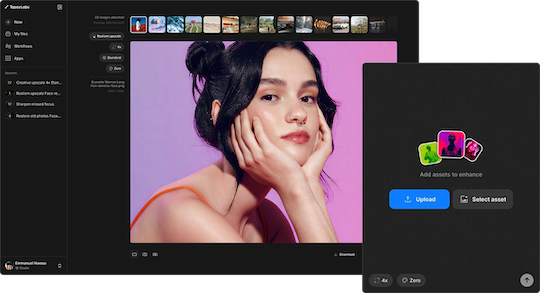
Bring the power of Topaz image enhancement directly to your browser—no download required. Upload your images, choose from workflows like Autopilot, Creative Upscale, Photo Restoration, Sharpen, and more, then process everything in just a few clicks. Batch processing and side-by-side comparison make it easy to review your results, and all of your favorite Topaz image models are available in one place for the same high-quality enhancements you know from our desktop apps.
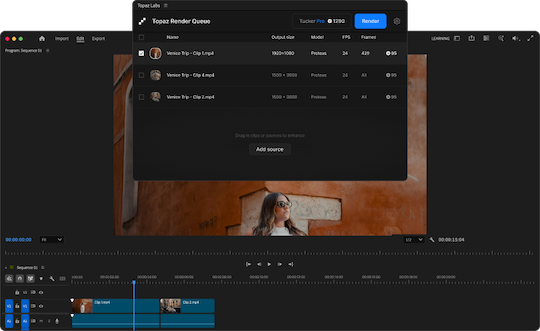
Topaz Labs for Premiere brings Topaz Video enhancement directly into your Premiere workflow. Process footage using cloud rendering without ever leaving your timeline—no export/import round trips needed.
Hyperion 2 – SDR to HDR Model
Unlock HDR depth from SDR footage.
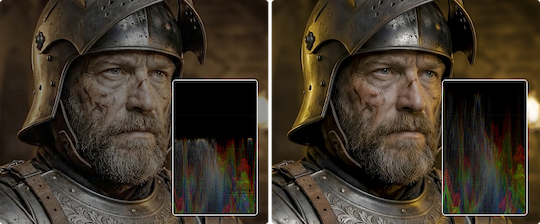
Hyperion 2 converts standard dynamic range video (SDR) to high dynamic range (HDR) by expanding luminance, bit depth, and contrast. It supports both PQ (cinematic/mastering) and HLG (broadcast) transfer functions, so it fits into a wide range of modern HDR pipelines. Hyperion 2 is now available in Topaz Video, and will be coming to Astra next week.
Nikon APS-C camera: most likely a new top-of-the-line/high-end DX model. The Z30 is already up for replacement – it was first announced in June 2022. There were some unconfirmed reports that this could be a mini-Nikon ZR model with some RED tech inside. The RED Komodo, for example, features a Super 35mm sensor, commonly regarded as an APS-C equivalent (it’s slightly larger than a typical APS-C sensor).
Lenses
New/cheaper 14-24mm, 14mm, or similar wide-angle lens as a companion to the new 24-105mm – to be paired with the Z5II (not a replacement for the Nikkor Z 14-24mm f/2.8 S lens).
New Nikon 16-35mm lens or a similar lens designed for vloggers.
If you've ever switched your camera from stills to video mode with Log enabled, you may have noticed that it seems you can no longer use the base ISO setting. But shooting video in Log doesn't arbitrarily force you to shoot at higher ISO, despite what the camera's settings might suggest.
In a two-part video explainer totaling less than two minutes, DPReview’s Richard Butler succinctly breaks down why ISO isn't quite what it seems in Log. In part one, which you can watch at the top of the article, Richard briefly walks through some of the very basics of ISO. Part two (the video below) gets into the details of why Log is different, and how that impacts ISO.
The videos do a great job of simplifying a complex topic, so be sure to give them both a watch. Should you want something more in-depth, you can read Richard's articles about what ISO is and what makes it so complex.
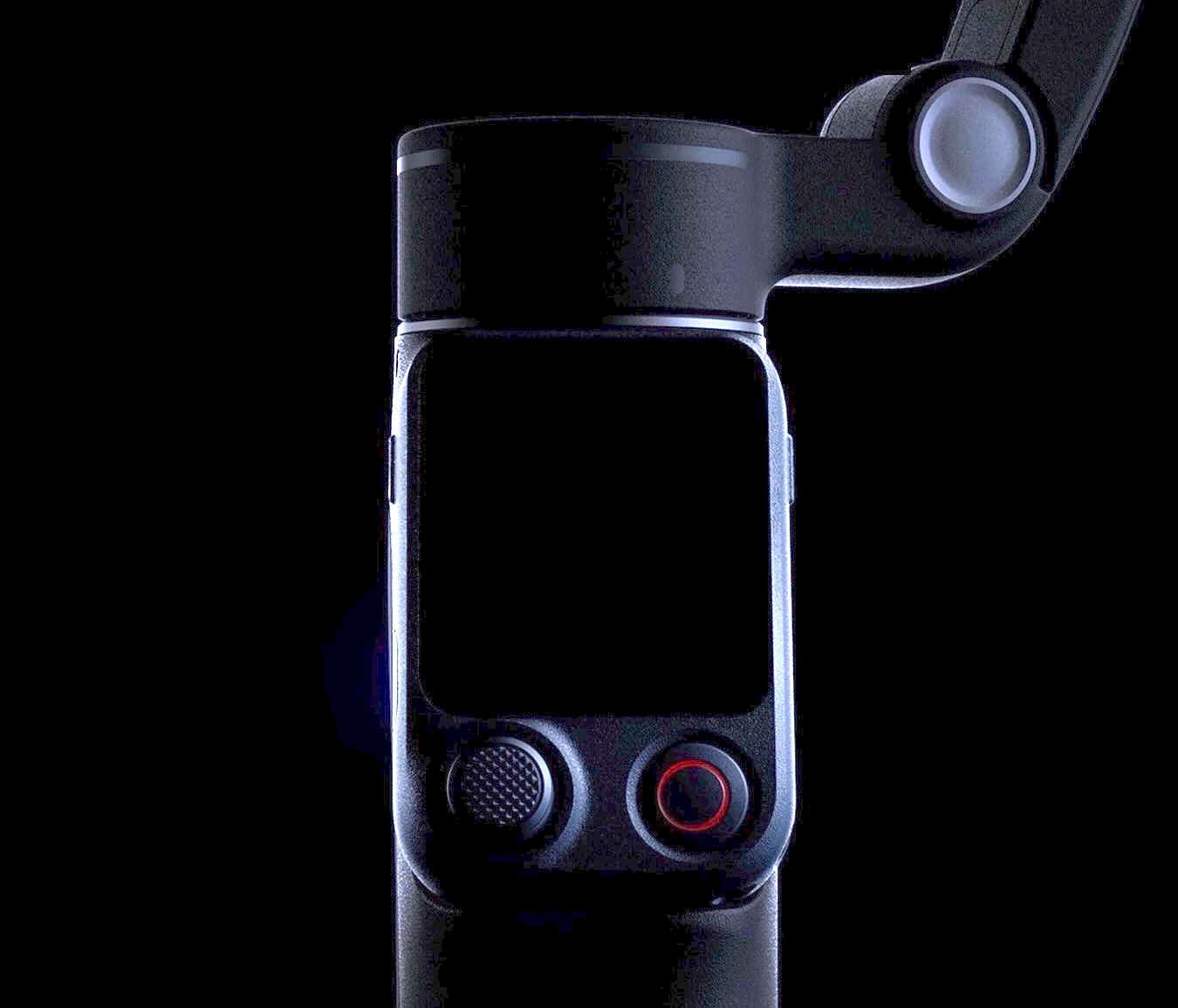
The faceplate on the DJI Osmo Pocket 4P can be removed, as on their drones.
Dual-lens design officially teased by DJI: The Pocket 4P features a vertically stacked dual-camera system (a first for the Pocket series) with a 1-inch main wide-angle sensor paired with a dedicated 3x optical telephoto lens (telephoto uses a ~1/1.5-inch CMOS sensor, roughly 60-70mm equivalent).
Zoom capabilities: 3x optical + 6x lossless (via in-sensor crop) + up to 12x digital zoom. Early review samples highlight natural face rendering and impressive background blur at telephoto settings.
Video specs: 4K/240fps slow-motion (matching or building on the standard Pocket 4), possible 6K support, 10-bit D-Log (or D-Log 2), HDR, and Hasselblad-style color tuning. Dynamic range is expected at ~14 stops on the main sensor.
Storage and build upgrades: 128GB built-in storage (vs. 107GB on the standard Pocket 4), more flexible/rotatable flip-out touchscreen, and enhanced ergonomics with a textured grip.
Stabilization and tracking: 3-axis mechanical gimbal + improved ActiveTrack 7.0 (works reliably at 3x/6x zoom). Some early hands-on notes mention slightly more micro-vibrations at telephoto and a top-heavy feel.
Other features: Better low-light performance, 4-channel audio hints in some leaks, and creator-focused tools. It’s positioned as a premium vlogging/pro option above the standard Pocket 4.
Trade-offs noted in leaks: Heavier and bulkier than the single-lens Pocket 4, potentially shorter battery life, and higher gimbal motor demands at zoom.
Pricing: Expected ~$699–$749
Many new preview videos were published on bilibili today

 Connexion






































































 Here’s the unboxing of the Osmo Pocket 4P


