Vue lecture

Hands on with the Panasonic L10: the most exciting camera of 2026 (so far)

When you use DPReview links to buy products, the site may earn a commission.

Introduction

panasonic l10 three quarter beauty shot

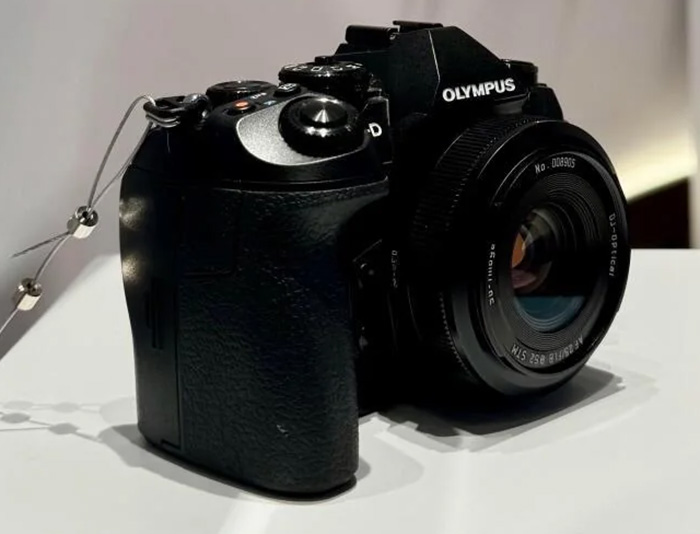
The L10 may have a new name, but conceptually it's a successor to the LX100 series that started in 2012.

It's built around a Four Thirds (225mm²) sensor, from which it uses up to a 182mm² region. This makes the sensor 50% larger than a Type 1 sensor and half the size of a standard APS-C chip.

It pairs this with a 24-75mm equiv. F1.7-2.8 lens. By always using a 1.1x crop of its total sensor area, it's able to maintain the same diagonal angle of view, whether you shoot 4:3, 3:2 or 16:9 aspect ratios. It also offers 1:1 capture, but this uses a crop of the 4:3 region, not a taller chunk of the sensor.

The camera comes in three colors: silver, black, and "Titanium Gold." The latter costs $100 more, and is only available from select stores, but also includes a threaded shutter button, leather strap and automatically-opening lens cap.

Updated Internals

Panasonic l10 rear panel

The L10 gains the BSI CMOS sensor with on-sensor phase detection from the GH7 and G9 II models, meaning it offers improved dynamic range, improved resolution and faster focus than previous LX100 models.

It also gets the latest processor from the Panasonic S1RII, meaning it has access to the latest subject recognition algorithms, which again should significantly increase the ease-of-use of the AF system*, as well as the performance boost coming from phase detection and the more powerful processor. With that said, you may still find yourself waiting on the lens occasionally; the camera takes a full two to three seconds from when you flip the power switch to when you get a preview.

Finally, the connectivity has been updated. The camera now offers 5Ghz Wi-Fi, as well as a 10Gbps USB-C port.

*Though it inherits that camera's quirk of not allowing generic autofocus tracking when you've selected a subject recognition mode.

Multi-aspect shooting

L10 sensor diagram with portrait

Like the LX100 cameras, and many of Panasonic's previous LX models, the L10 opts for a multi-aspect design: always using a slight (1.1x) crop of its Four Thirds sensor, which allows it to deliver a series of aspect ratios, each extending out to the image circle of the lens.

This means that, unlike most cameras, you don't get a narrower diagonal angle of view if you crop away from the native aspect ratio. Instead, the L10 gives a choice of 4:3, 3:2 or 16:9 capture, while maintaining the same diagonal angle of view. This means the lens remains a true 24-75mm equivalent, regardless of which format you choose to shoot in. It also means you get the maximum resolution for all of the modes. The only exception is the camera's 1:1 mode, which is simply a crop of the 4:3 region, rather than extending up to use the full height of the sensor.

Maximum resolutions:

  • 4:3 - 20.3MP
  • 3:2 - 19.2MP
  • 16:9 - 18.5MP
  • 1:1 - 15.2MP

The downside of this approach is that you never get to use the entire sensor, so pay a slight sensor size penalty, meaning you get slightly less resolution and slightly more noise, at the whole image level. But plenty of people, including many DPReview reviewers, over the years, have found that the increased creative flexibility makes this trade-off worthwhile.

Bigger is better?

Panasonic L10 vs D-lux-8
The L10 versus the D-Lux 8, essentially Leica's updated version of the LX100 II.

It's worth noting, though, that the L10 has a new name, rather than being a Mark upgrade of the LX100 series. And while the body looks very similar, it's a distinctly larger camera. It feels sturdier and more substantial, though not necessarily more premium; the buttons and dials feel decidedly less sturdy, and the "saffiano leather-textured finish" doesn't offer a ton of grip.

We previously said the LX100 looked a lot like a smaller X100 with a zoom lens, given the similarity of the control points and their layout. The L10 is no longer smaller, matching the larger sensor camera's dimensions almost to the millimeter. However, the controls have changed somewhat, which again justifies the change of name.

On the subject of names, there was previous a Lumix DMC-L10, which was a Four Thirds system DSLR. This new camera is technically called the Lumix DC-L10. This isn't the first time we've seen camera companies run out of names and have to re-use earlier ones. Canon has made two PowerShot S100 models, 11 years apart, whereas Panasonic's previous L10 came out nearly two decades ago.

A familiar lens

panasonic l10 front lens extended

The lens has an ambitious F1.7-2.8 aperture range, giving an equivalent aperture range of F3.8-6.2 in full-frame terms. The lens drops away from its maximum aperture relatively quickly, hitting F1.8 as soon as you start to zoom in, and F2.0 by 27mm equiv. F2.8 is reached at 52mm equiv. and maintained to the full extent of the zoom.

The camera has an in-lens, 'leaf' shutter that can operate at up to 1/2000 sec. This maximum speed is maintained even at the brightest apertures (some leaf shutters can only deliver their maximum shutter speeds at smaller apertures, where they have less distance to travel).

This means the camera can sync with flashes all the way up to 1/2000 sec. The camera's hot shoe gives you the option to use a small flash such as the Godox iT30Pro (the 'O' version is compatible with the Olympus TTL protocol used by Panasonic), or the Godox iT32 / X5 flash/remote trigger combination. However, unlike the LX100 II, it doesn't come with an external flash in the box.

For shutter speeds above 1/2000, the L10 can use electronic shutter, which extends up to 1/32,000 sec and reads out the 4:3 mode in a relatively quick 16.7ms. This can't be used with flash but should work pretty well when you want to use a wide aperture in bright conditions, and is fast enough to avoid rolling shutter distortion on most (though not all) subjects.

Controls

panasonic l10 top plate

The L10 has a mode dial on the top plate, rather than one dedicated to shutter speed. Likewise, the thumb wheel on the corner is no longer dedicated to exposure comp, and can be customized to change ISO, aspect ratio, autofocus mode, drive mode, or to control shutter speed / aperture (depending on exposure mode).

It gains a function button at its center, that, by default, controls your JPEG color mode (unless, of course, you want to switch to the "Real Time LUT" mode, for which you'll use a dedicated button on the back), but can be set to do essentially anything in the cameras' menus.

This camera feels like its control system has been borrowed from a camera with different dials

Like the S9, this camera feels like its control system has been awkwardly borrowed from a camera with a different dial setup (which is unfortunate, as the LX100s had a pretty coherent control system). As an example, the top plate dial controls aperture in both Aperture Priority and Manual modes by default, meaning that, unless your physical aperture ring is in A mode, it doesn't do anything in those modes. (In Shutter priority mode it, more sensibly, controls shutter speed). We found ourselves needing to customize the controls before they made much sense, and even then that required using the fiddly rear-plate dial more than we'd have liked.

Somewhat disappointingly, the aspect ratio slider on the lens has been replaced by a three-position switch, which has an additional position that hands control over to the camera. By default in controls aspect ratio, but can be re-purposed to control a few other parameters: switching between a set of autofocus subject recognition modes, zoom steps, or color modes. While some, especially those disinterested in changing aspect ratio, will appreciate the change, others – including members of DPReview's staff – are sad to see the despecialization of what was once a favourite control.

Other changes

panasonic l10 battery

The bigger body allows for the use of a much larger battery. Rather than the 7.4Wh battery used in the LX100s, the L10 gains the much larger, DMW-BLK22, which has a capacity of 15.8Wh. This powers it to an 420 shot per charge rating, measured by the CIPA standard test method, and over 1000 shots in power save mode. These are excellent figures for a relatively compact camera, and mean you're unlikely to have to worry about battery life when traveling with the camera.

Another feature adding to the camera'a size is the fully articulated rear screen. This is likely to divide audiences, as some photographers prefer a tilting screen, but we suspect most users will find it an upgrade compared with the fixed screen on the LX100 cameras. The L10's screen is a 1.84M dot panel, giving 960 x 640px resolution.

OLED viewfinder, rather than tearing-prone field-sequential finder. It's a 4:3 panel, rather than the wide 16:9 finder in the LX100 cameras, whose area was rarely used to the full. The new finder has an impressive 0.74x magnification (approaching the size of the finders in professional DSLRs), though with a relatively short 20mm eyepoint, which glasses wearers may find a little limiting.

Video specs

panasonic l10 video

Even though Panasonic talk about the L10 as being designed for photographers, its video specs are pretty impressive. Despite the microphone jack, there's no headphone socket for monitoring audio or an HDMI port, but the L10 is clearly a product of the company that brought us the GH series.

There's a Stills / Video / Slow & Quick switch on the back of the camera. It can shoot 4K video in either DCI or UHD aspect ratios at up to 120p, or 5.6K DCI-shaped video at up to 60p, or 4:3 'open gate' 5.2K footage at up to 60p.

The video modes make use of the same multi-aspect approach as stills modes do, so the 5.2K footage is taken from a much taller region of the sensor than the ∼17:9 5.6K video, making it tall enough to extract 2160 x 3840 (vertical 9:16 4K) crops, if you're using it to deliver both horizontal and vertical video from the same capture.

Price

panasonic l10 in hand front

The L10 costs $1500 at launch, which feels like a major step up from the $999 that the LX100 II cost, back in 2019. However, it's worth noting that inflation means you'd need $1320 in modern money to buy the equivalent of a 2019 $999 camera, and the L10 is a much more capable camera, with more substantial-feeling build than its forebears.

The original LX100 developed something of a reputation for sucking dust into its sensor, in part because pocket cameras tend to be carried and used in wide, varied and challenging conditions. Panasonic said they made efforts to reduce this risk with the Mark II, and we've heard fewer complaints from users of the newer model. No further claims were made about the L10, so it's likely to be worth remembering that it's not fully sealed (it has an extending zoom, after all), but shouldn't be as susceptible as the Mk 1 was.

Wrap-up

panasonic l10 lens switch

The L10 might not be as compact as the LX100s were, nor does it follow quite the same control layout, but it brings most of what we liked about those cameras and directly addresses just about all our concerns about them.

We're excited to see the launch of an enthusiast compact based on a modern sensor and a contemporary processor. We'll be using it extensively over the coming weeks to get a sense of what it does well and what it gets wrong.

We're hard at work on our initial review of the camera, and will be posting an initial batch of samples from it shortly, so stay tuned.

  •  

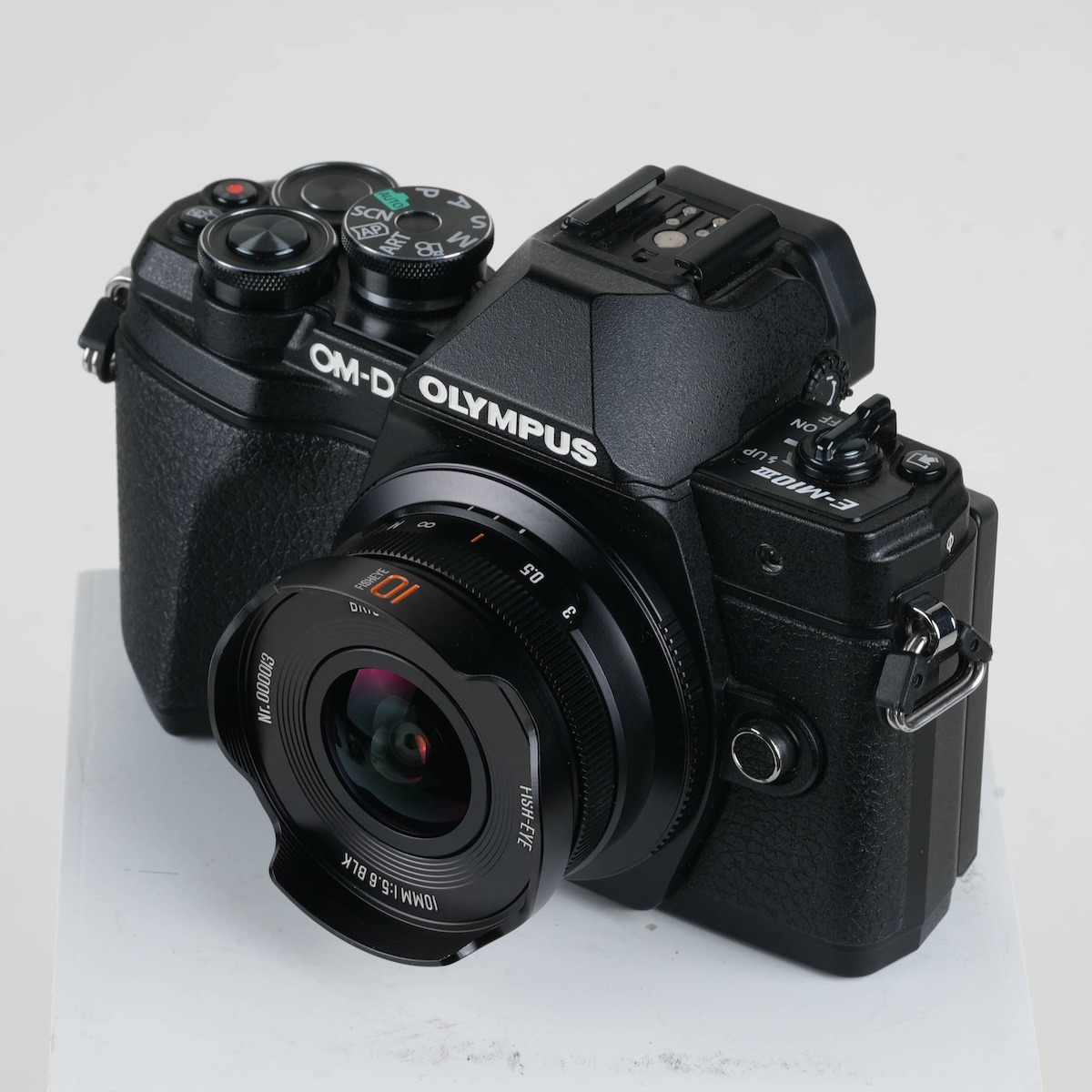
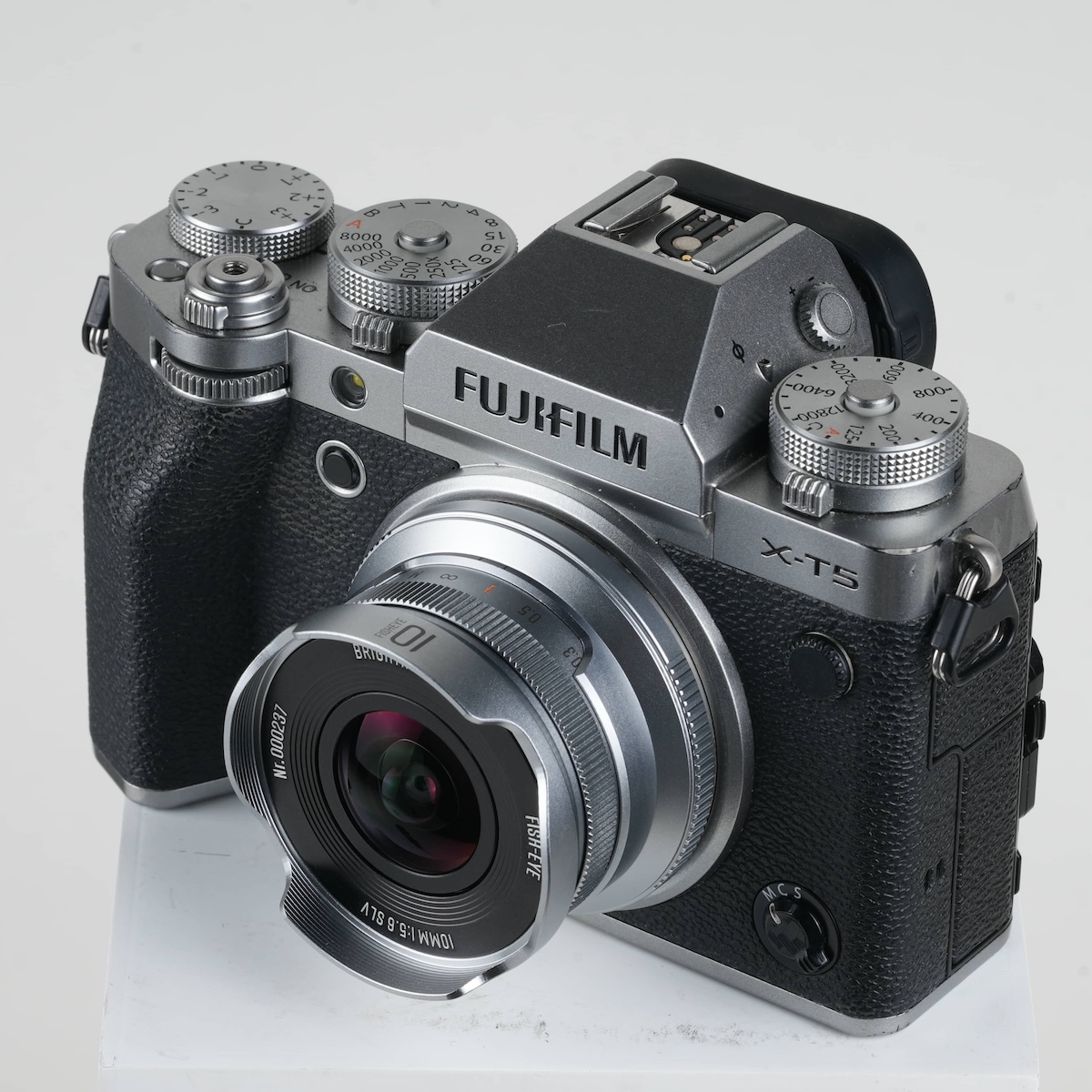
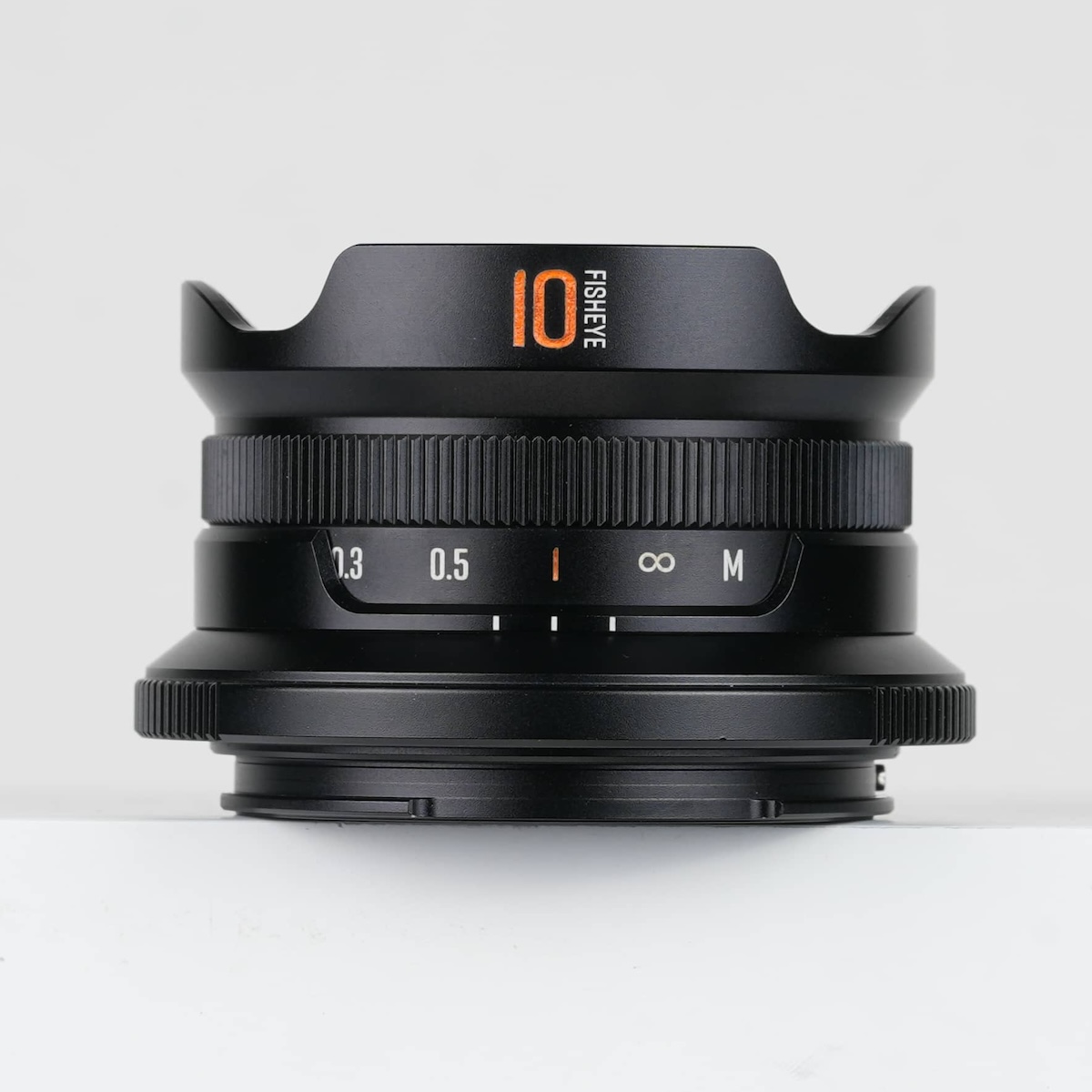
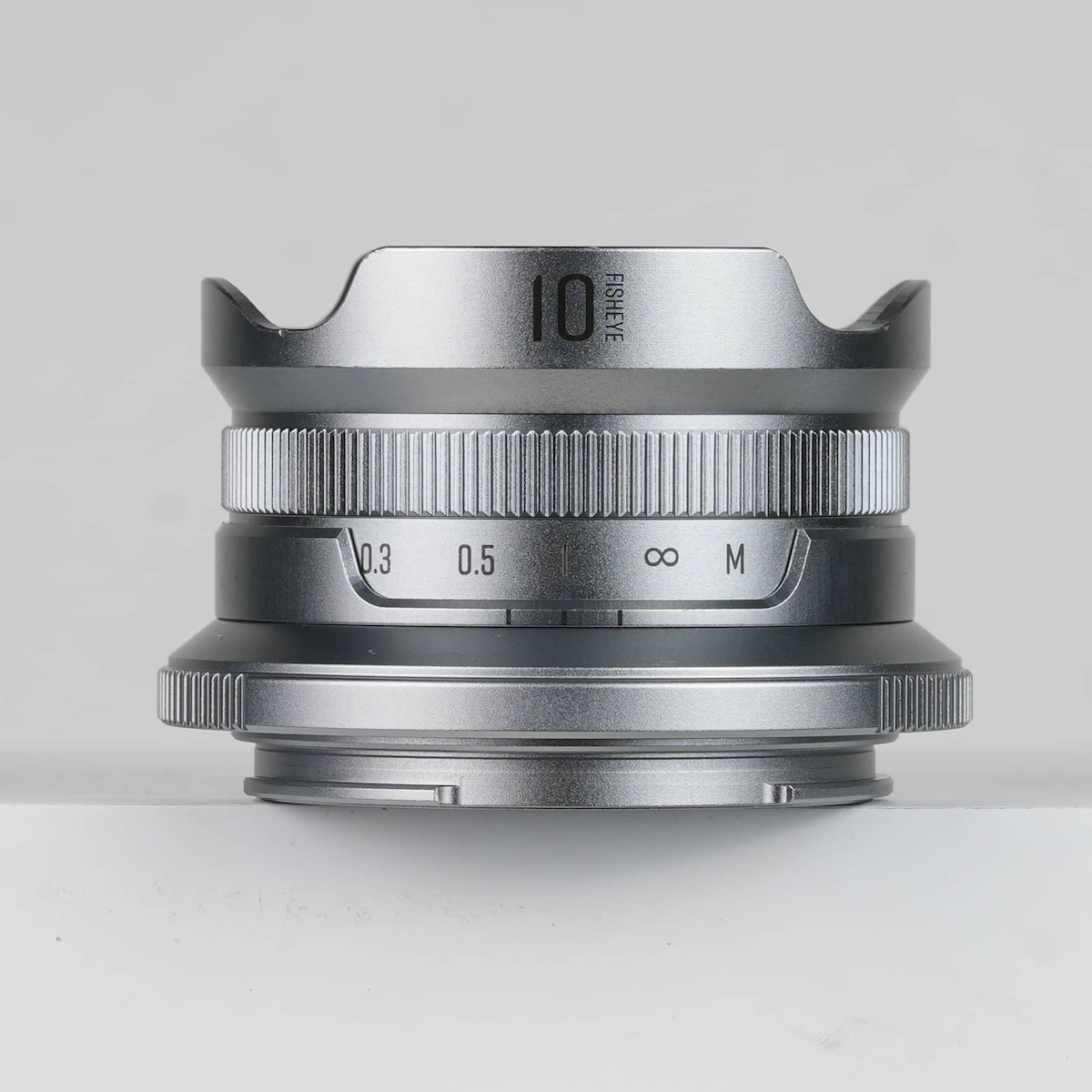
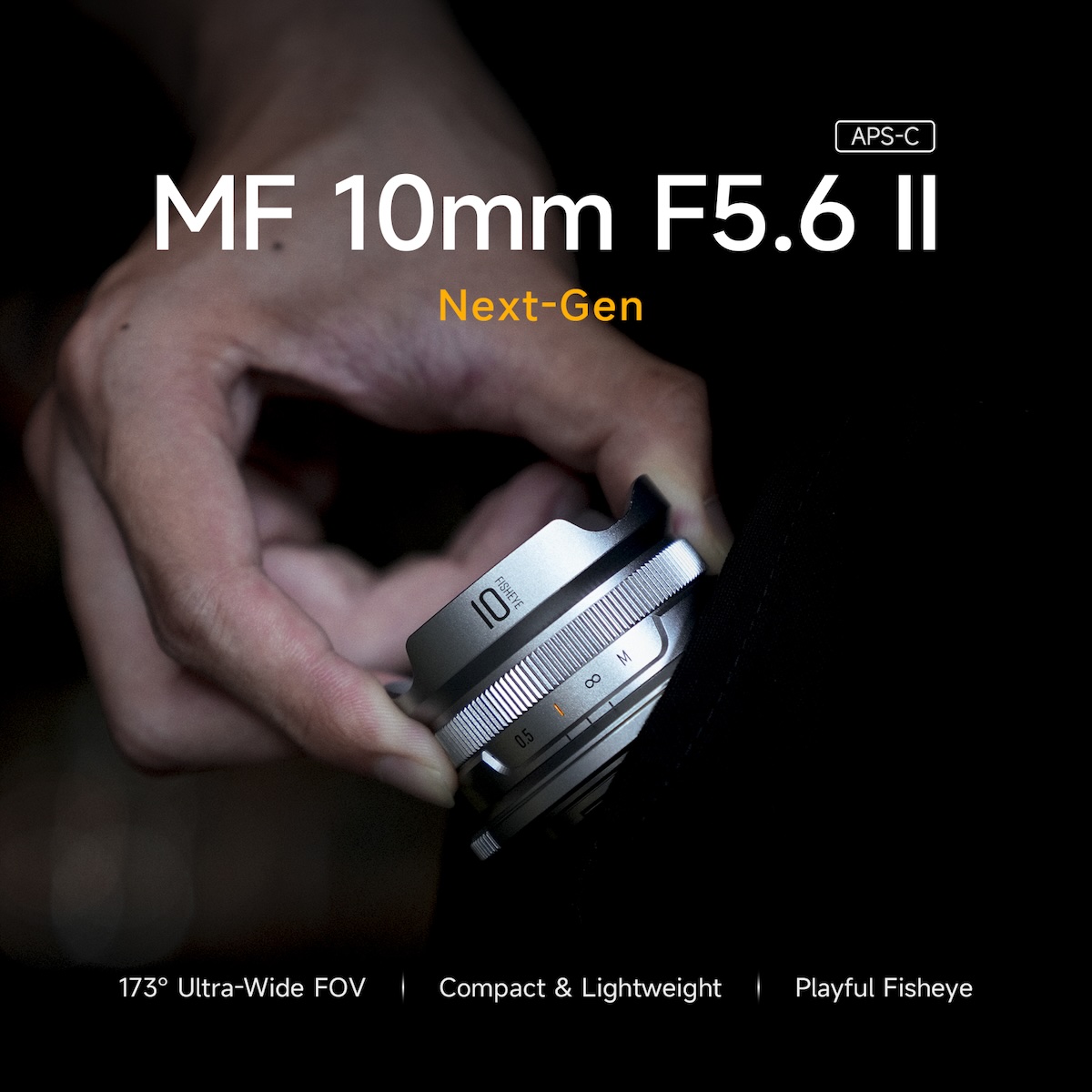
New Brightin Star 10mm f/5.6Ⅱ APS-C fisheye lens announced for $66 (E/Z/M+RF/X/MFT)


Brightin Star announced a new 10mm f/5.6Ⅱ APS-C fisheye lens for $66, available for Sony E, Nikon Z, Canon EOS M+RF, Fuji X, and MFT mounts. Pre-orders are now open at the official online store (coming soon to B&H Photo).

The key upgrades are:

  • Pre-orders are now open at the official online store (coming soon to B&H Photo)
  • Refined Exterior Design: Updated appearance with a uniquely designed aperture ring and added hyperfocal distance markings.
  • Upgraded Optical Design: Minimum focusing distance improved from 0.2m to 0.12m, and the field of view expanded from 172° to 173°.
  • Enhanced Coating Technology: IMC special coating effectively reduces flare and ghosting for clearer image quality.
  • Introductory price: $65.99, regular price: $74.99 (introductory period: May 15 – May 25)

Additional information is available here.

All new lenses from the 2026 China P&E Imaging Show (update #3)


The post New Brightin Star 10mm f/5.6Ⅱ APS-C fisheye lens announced for $66 (E/Z/M+RF/X/MFT) appeared first on Photo Rumors.

  •  

We put Thypoch's new autofocus zoom to the test

When you use DPReview links to buy products, the site may earn a commission.
yellow flower in grass in front of sunset
Sony a7R V | Thypoch 24-50mm F2.8 | 35mm | F4 | 1/40 sec | ISO 100
Photo: Mitchell Clark

After announcing last month that it had become the first Chinese lens manufacturer to create a full-frame autofocus zoom lens, this week Thypoch fully revealed its Voyager 24-50mm F2.8 lens for E-mount. The most eye-catching spec was probably its price: $649.

We were able to spend some time with the lens before it launched, shooting it in a variety of scenarios to see how it performs. You can check out our full coverage to read our impressions, but if you want to see for yourself, check out the gallery below.

Please do not reproduce any of these images on a website or any newsletter/magazine without prior permission (see our copyright page). We make the originals available for private users to download to their own machines for personal examination or printing; we do so in good faith, so please don't abuse it.

Sample gallery
This widget is not optimized for RSS feed readers. Click here to open it in a new browser window / tab.

Thank you to Sony for the loan of an a7R V to capture this gallery. All images were processed using our standard lens workflow in Capture One, with no vignetting correction applied.
  •  

All new lenses from the 2026 China P&E Imaging Show (update #3)


Here is another updated recap of all new lenses that were on display at the 2026 China P&E Imaging Show in Beijing:

Viltrox

Viltrox is teasing several new lenses:

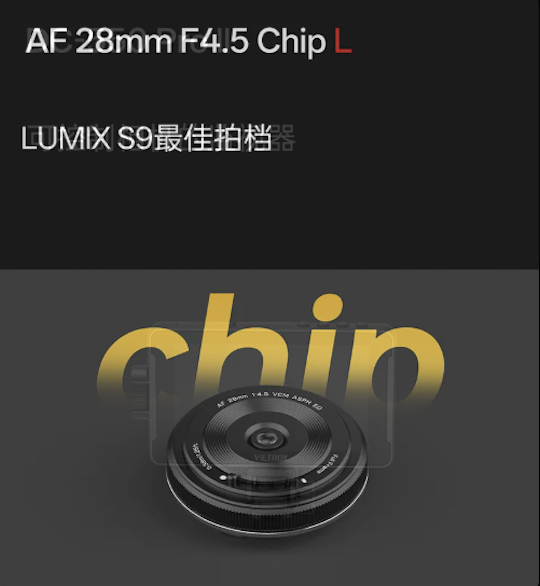
  • Viltrox 28mm f/4.5 Chip for L-mount
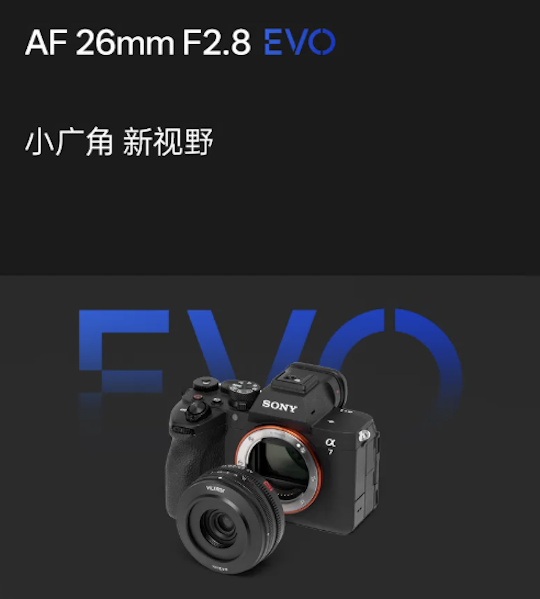
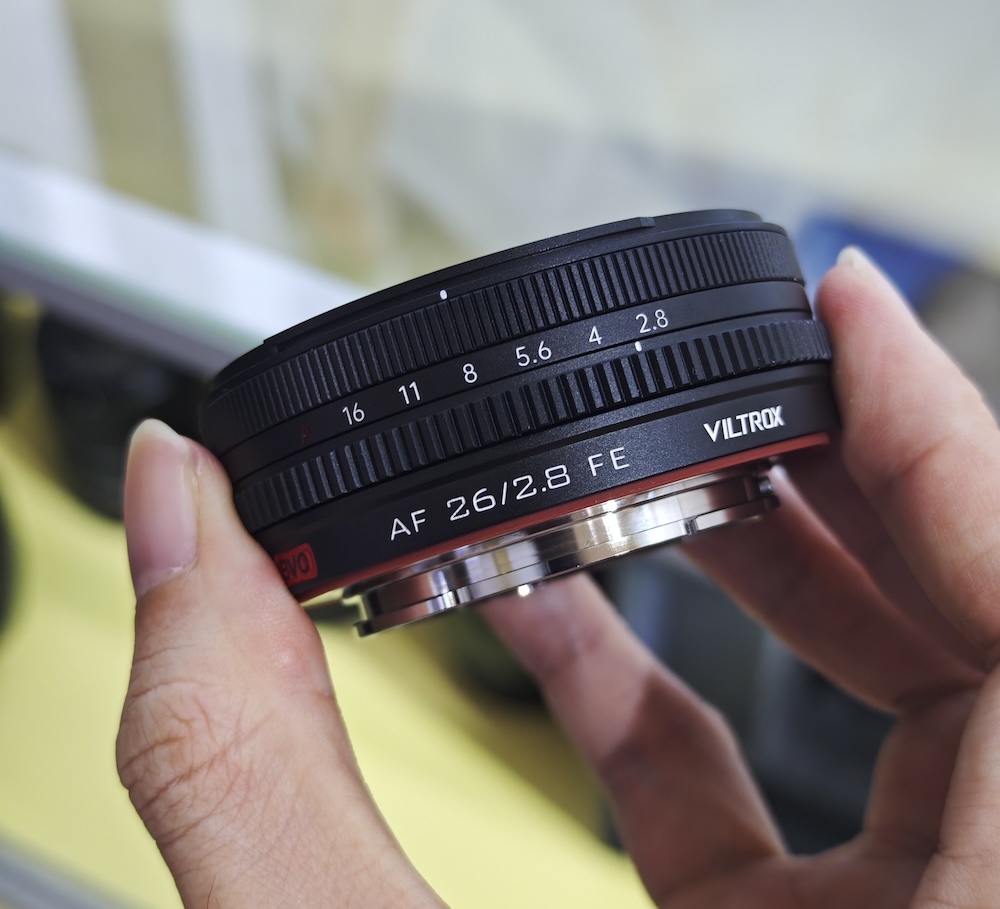
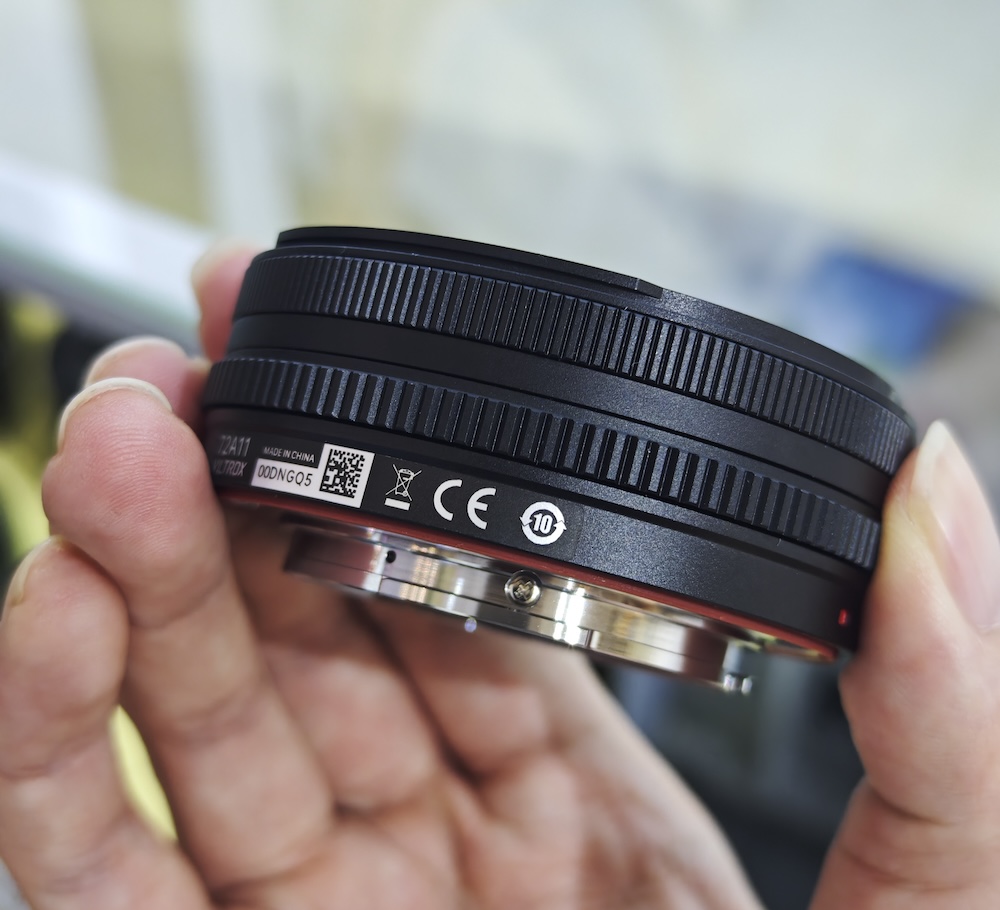
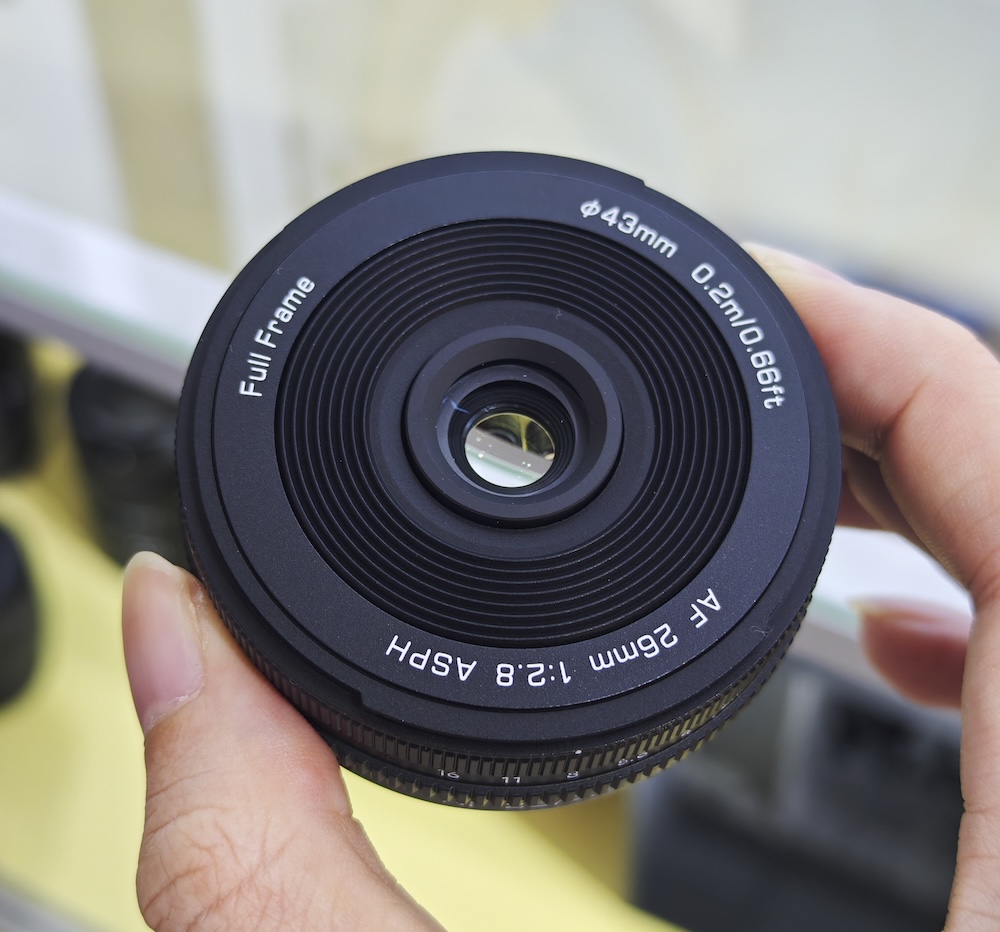
  • Viltrox 26mm f/2.8 EVO pancake
  • Viltrox 28mm f/2.8
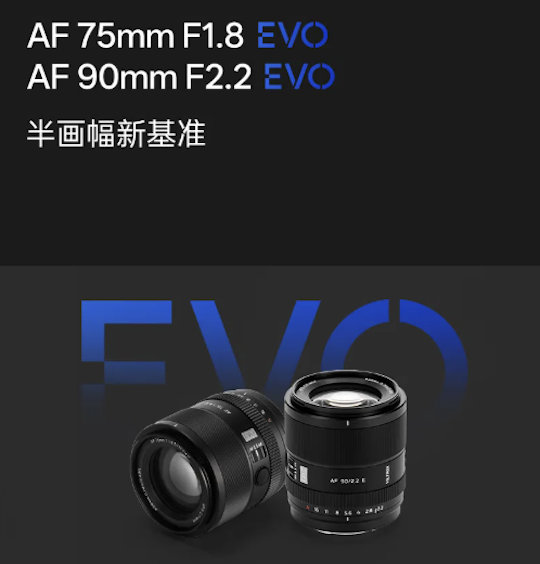
  • Viltrox 90mm f/2.2 EVO APS-C
  • Viltrox 75mm f/1.8 EVO APS-C
  • Viltrox AF 18mm f/1.2 Pro APS-C
  • Viltrox AF 35mm f/1.2 Pro APS-C
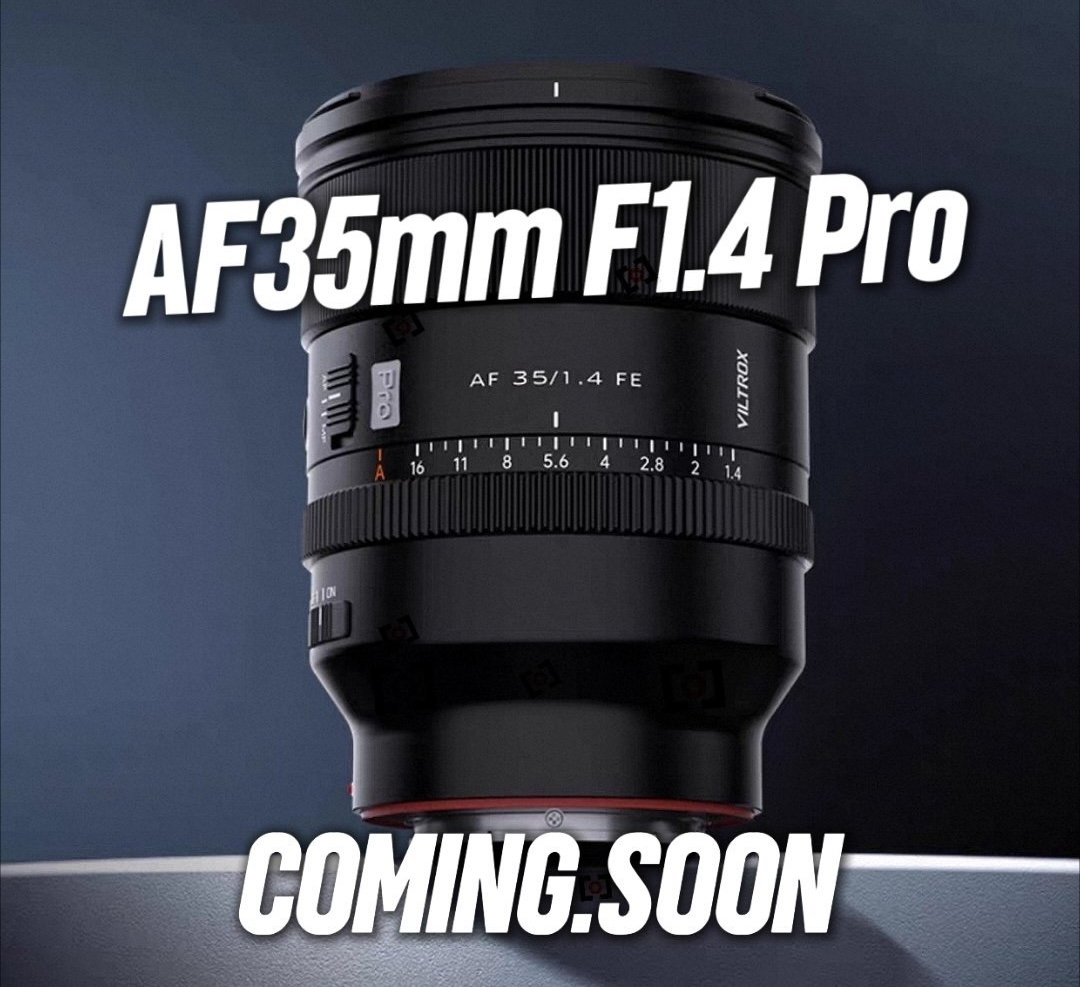
  • Viltrox AF 35mm f/1.4 Pro
  • Viltrox AF 25mm f/1.7 MFT
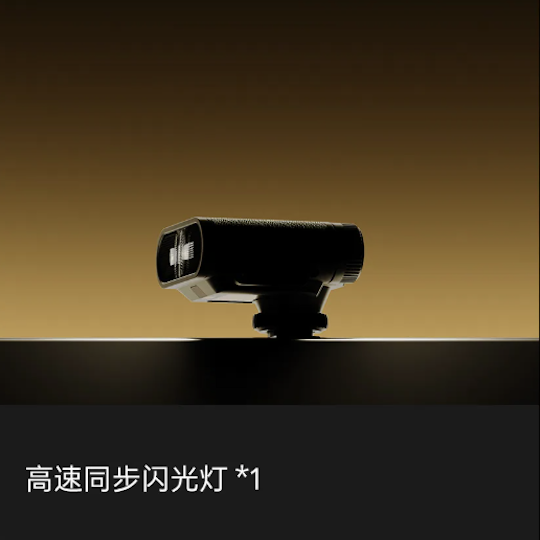
  • Viltrox HSS flash
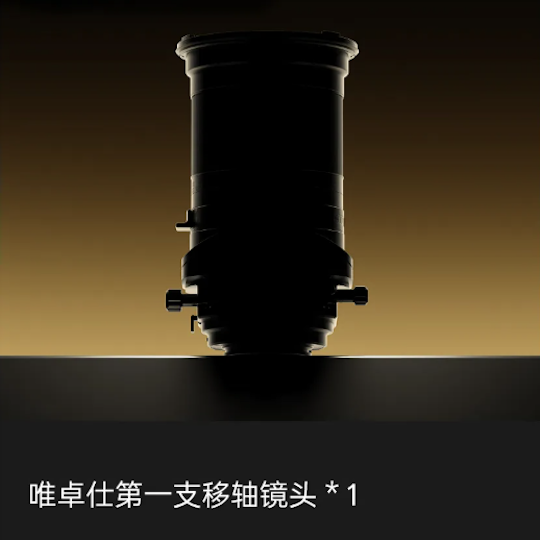
  • Viltrox tilt or shift or both lens

New Viltrox AF 35mm f/1.4 Pro lens (E/Z) coming next week

Viltrox to announce a new line of Micro Four Thirds lenses, the first model will be 25mm f/1.7

Additional pictures of the upcoming Viltrox AF 26mm f/2.8, 75mm f/1.8, and 90mm f/2.2 EVO lenses


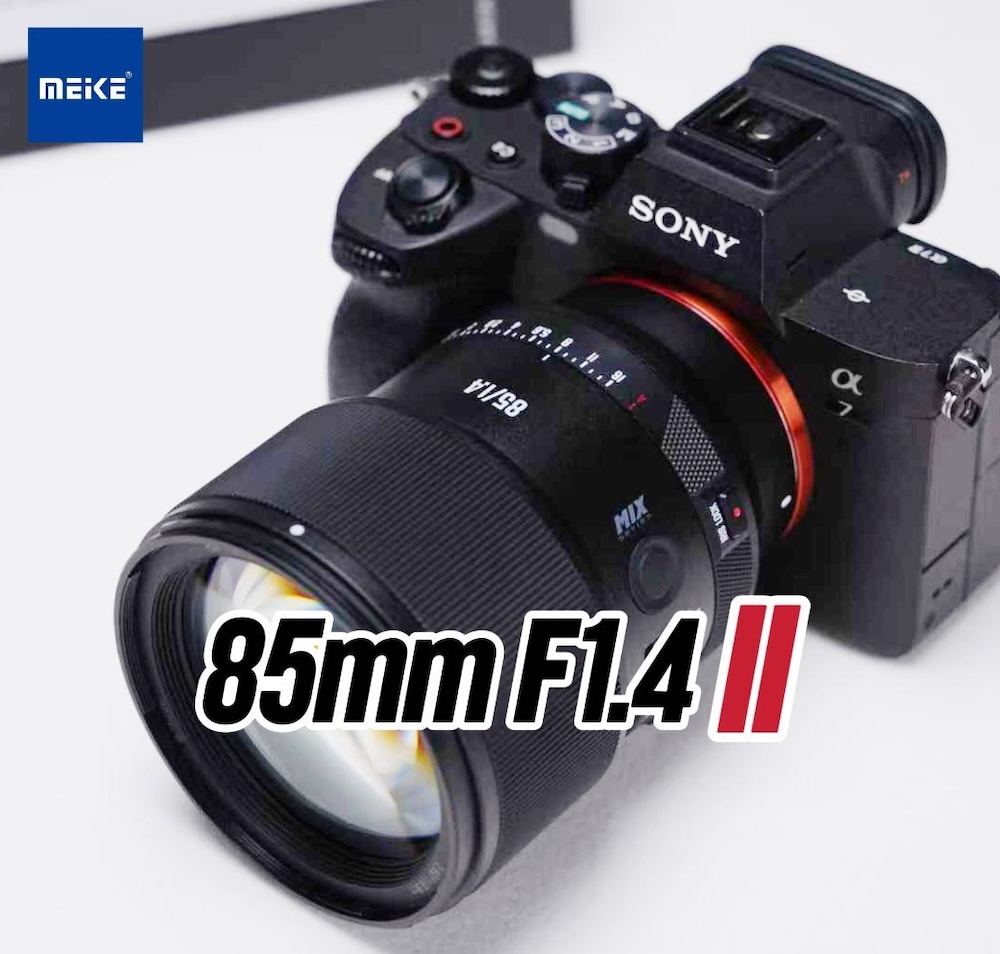
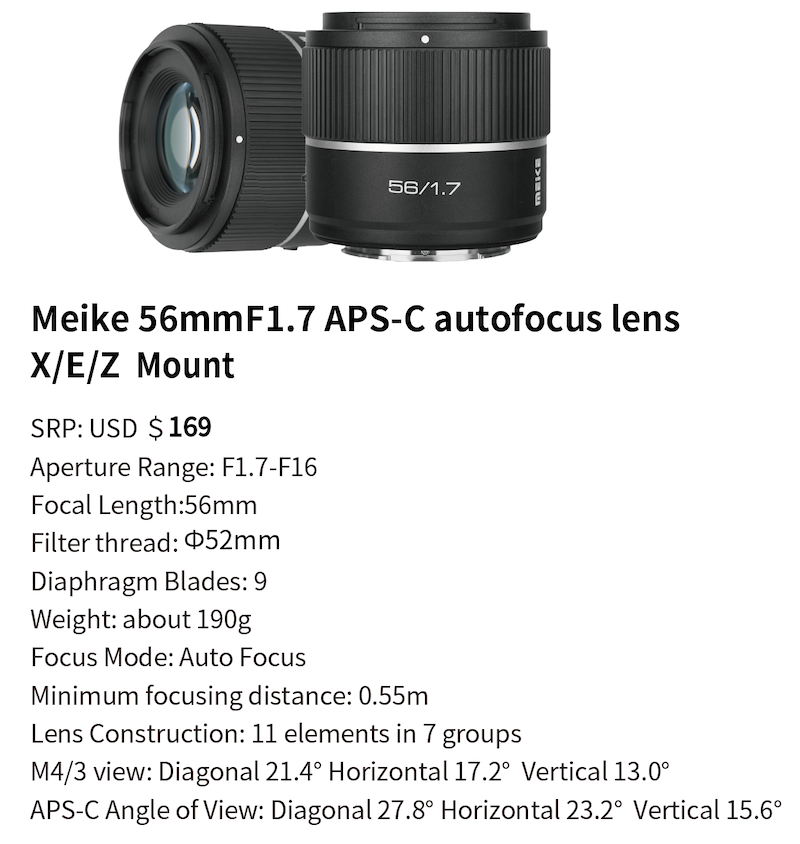
Meike

Here are the expected new Meike lenses:

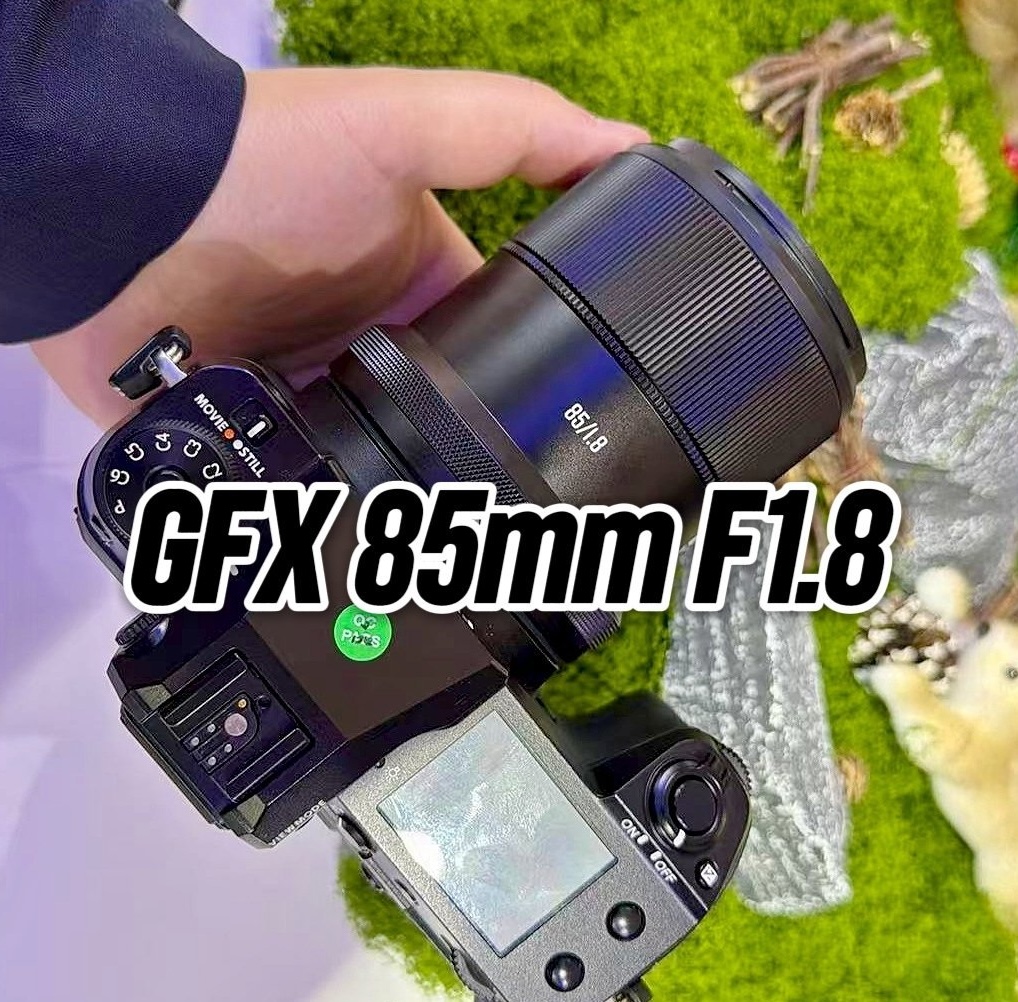
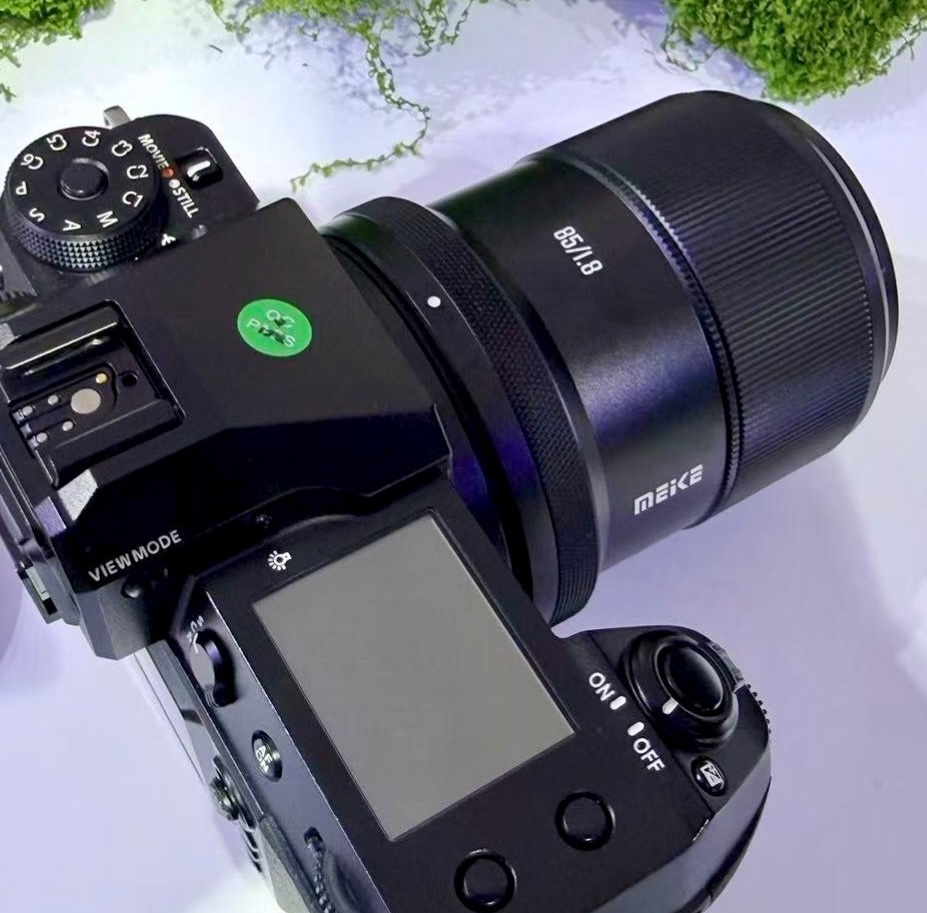
Meike is teasing a new lens for Fujifilm GFX medium format cameras


Venus Optics (Laowa)

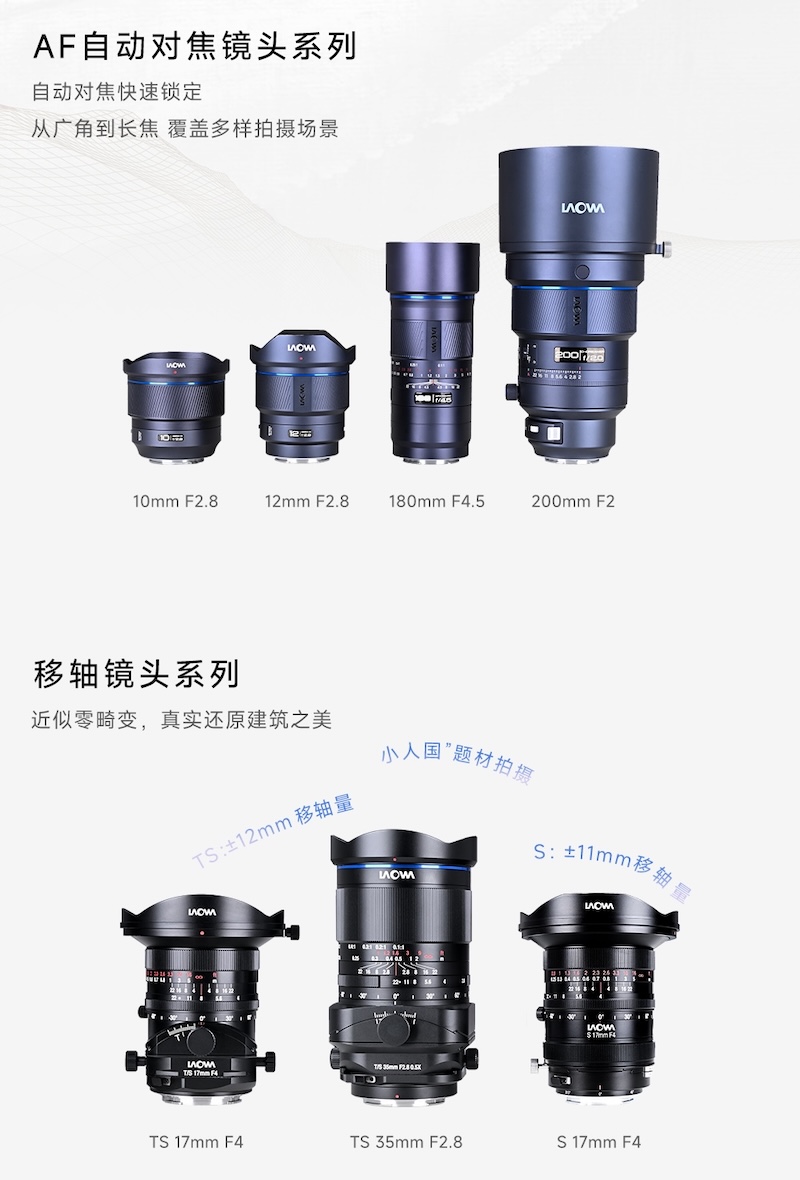
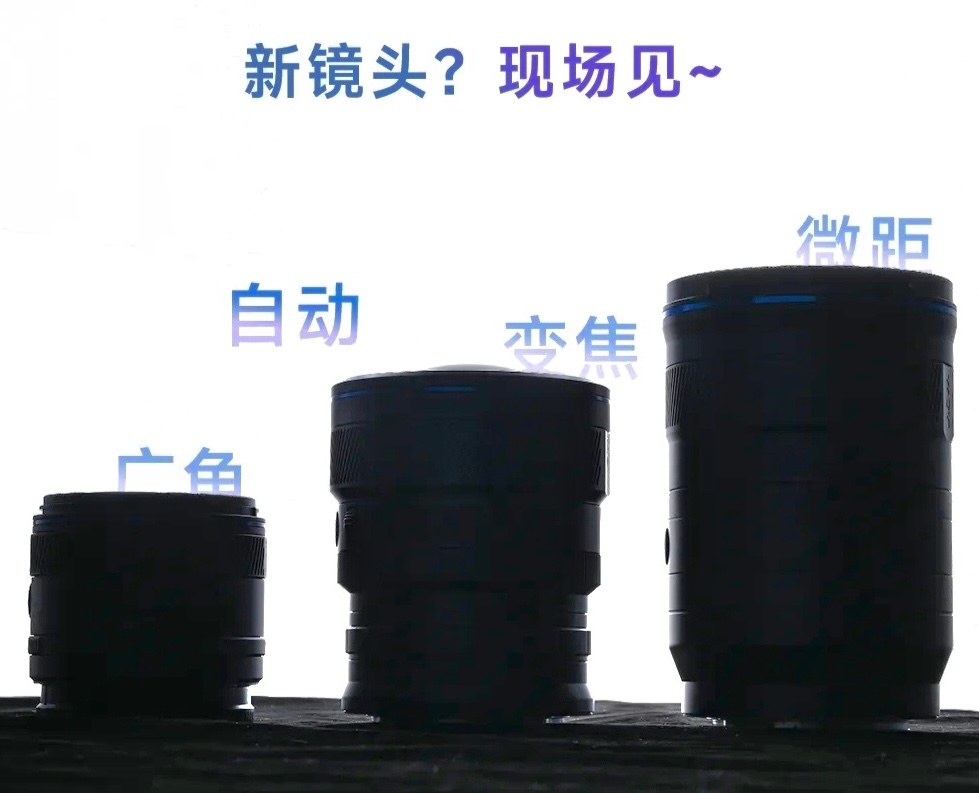
Laowa will announce several new lenses on May 13th:

  • Laowa 15-35mm
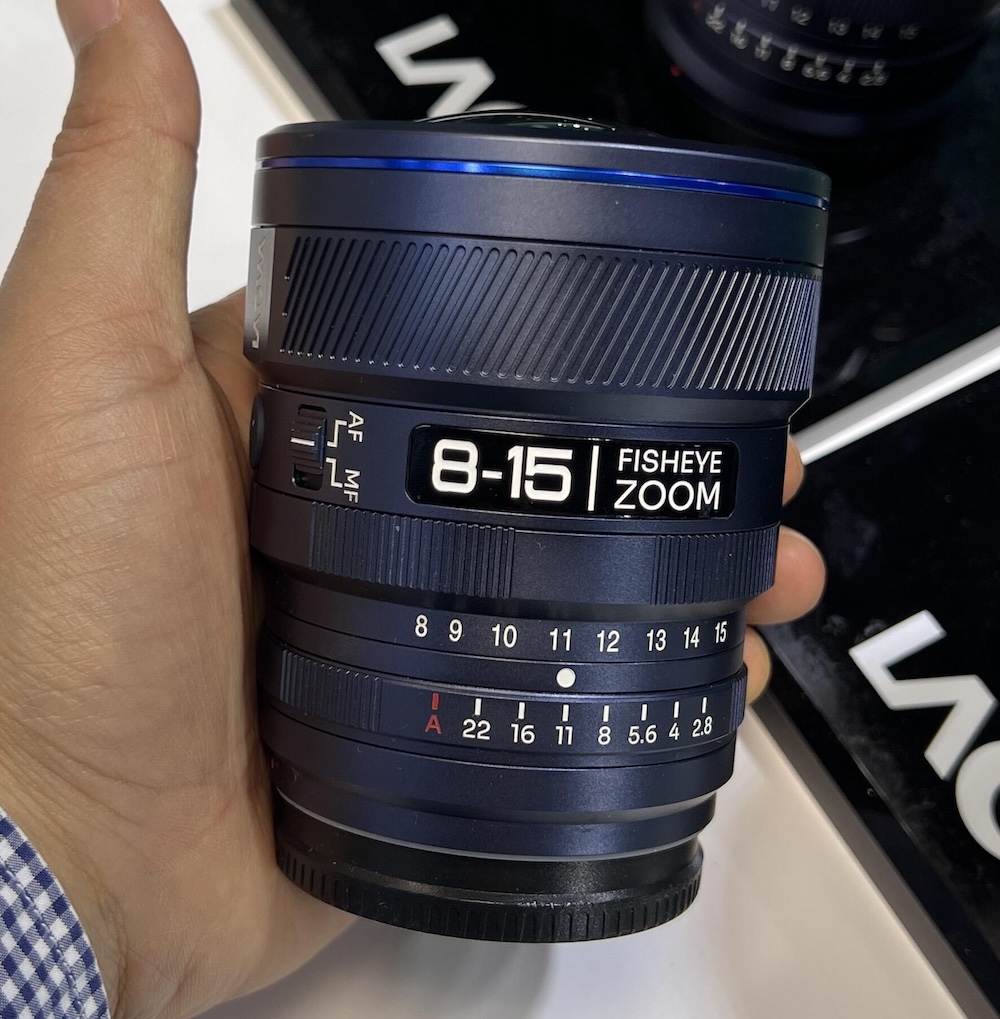
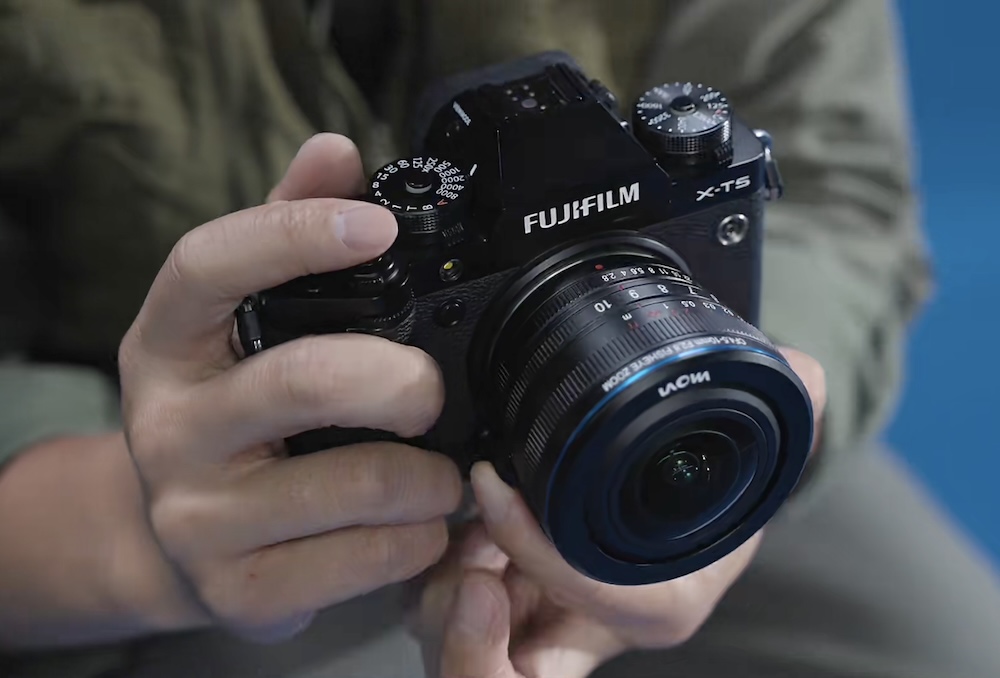
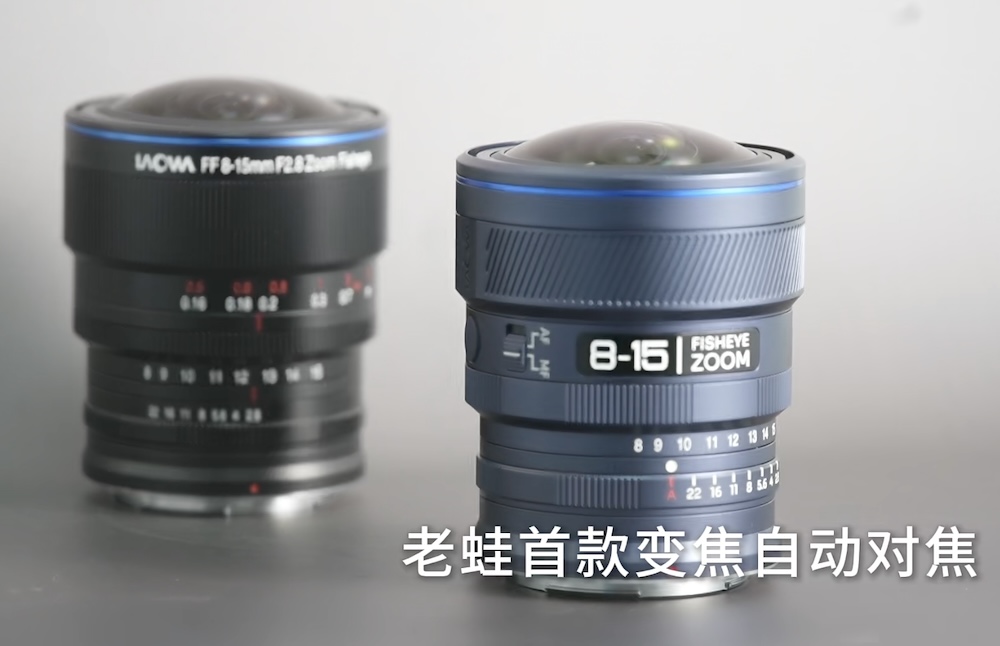
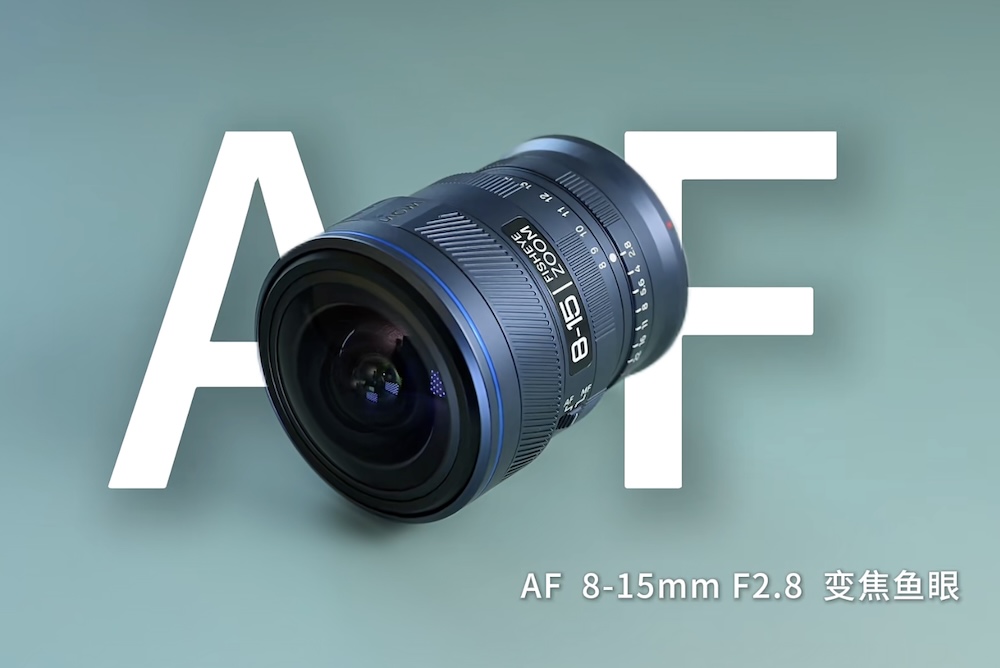
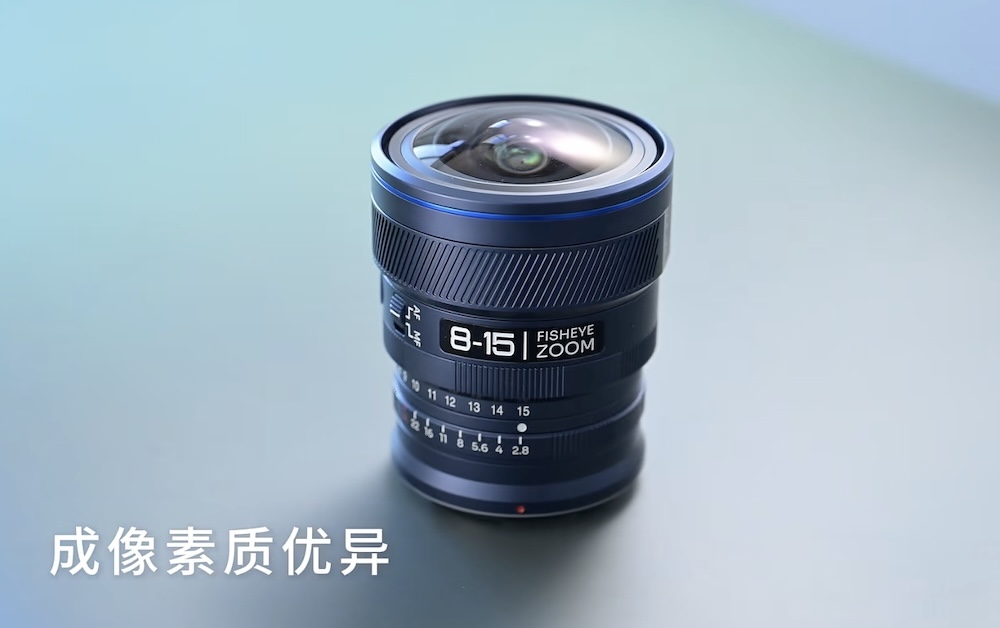
  • Laowa 8-15mm f/2.8 fisheye
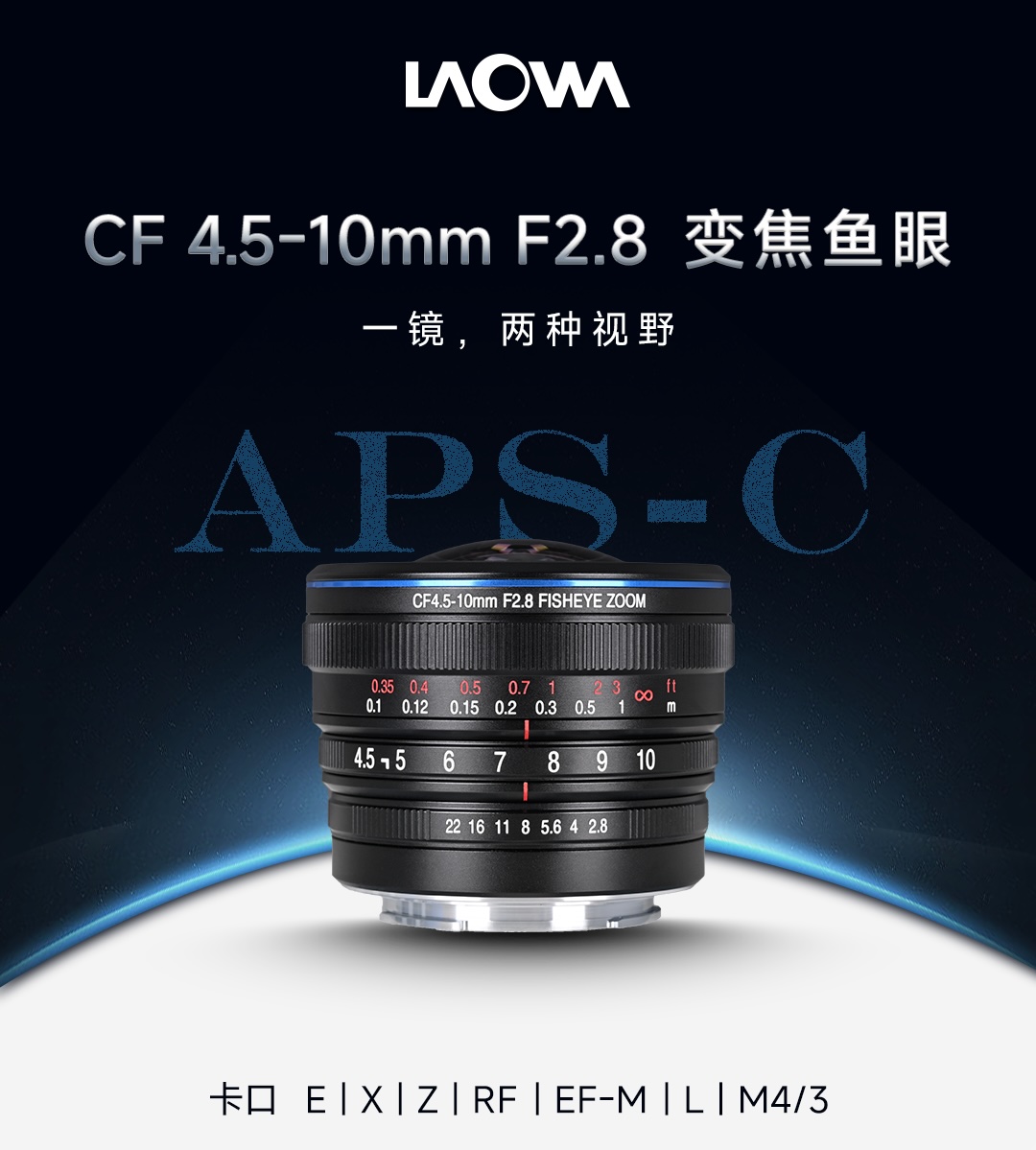
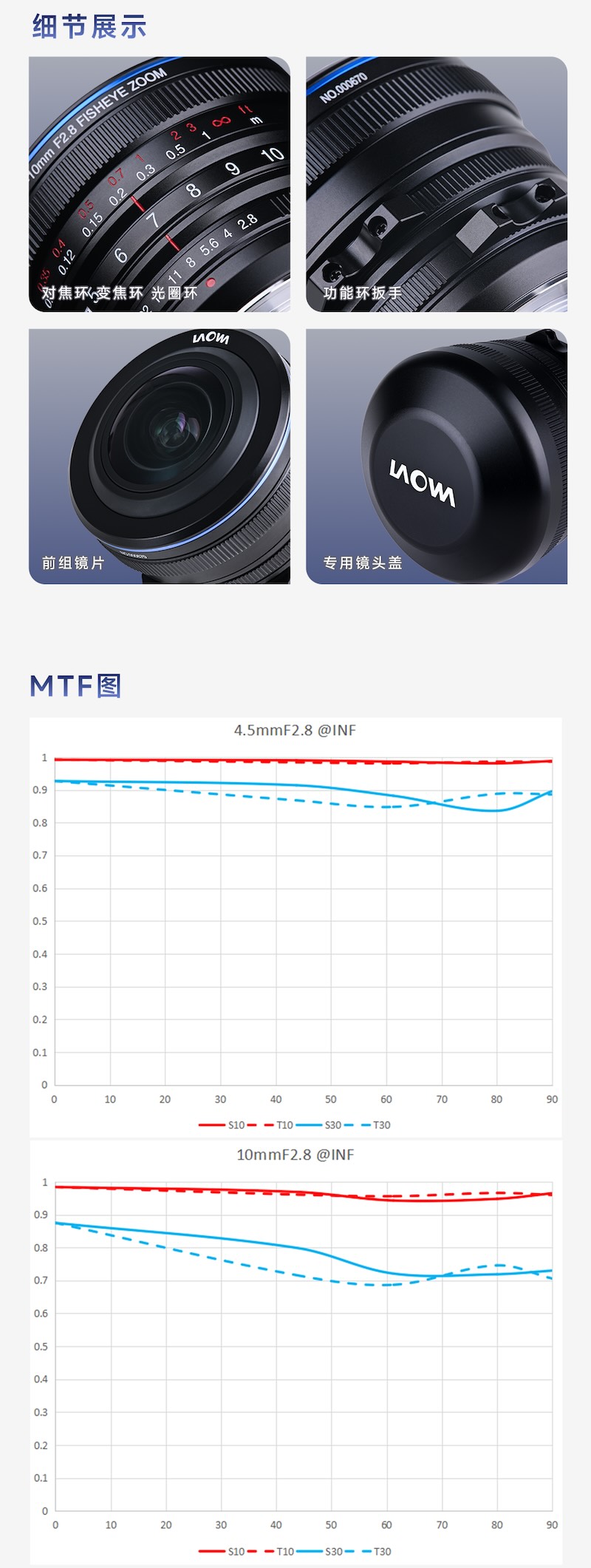
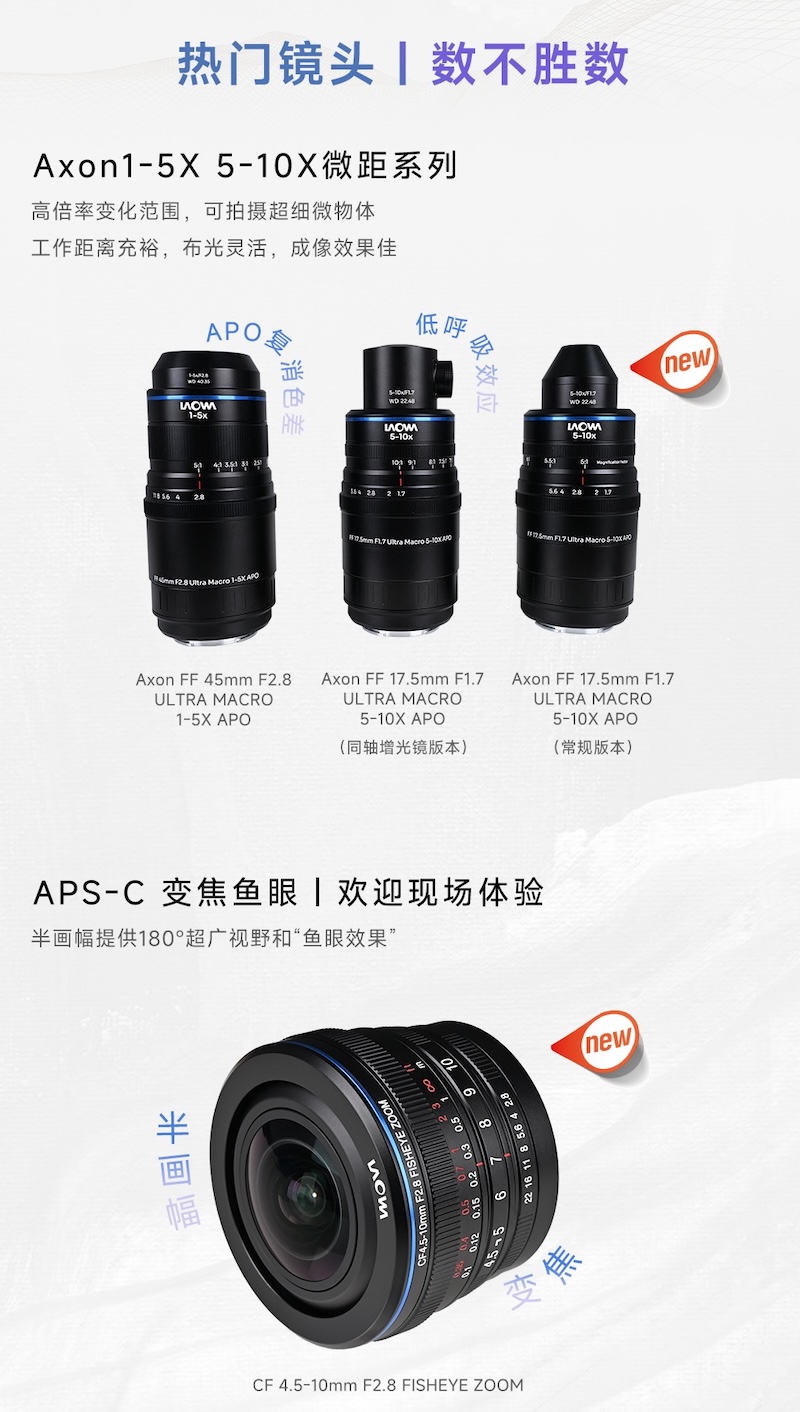
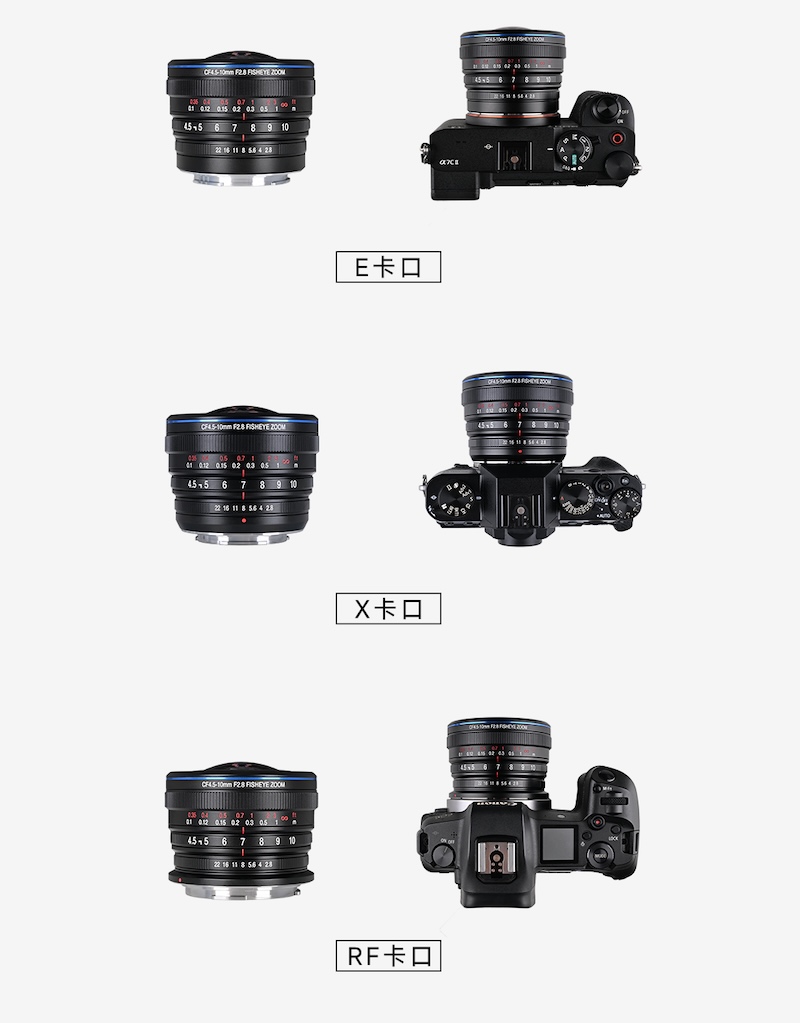
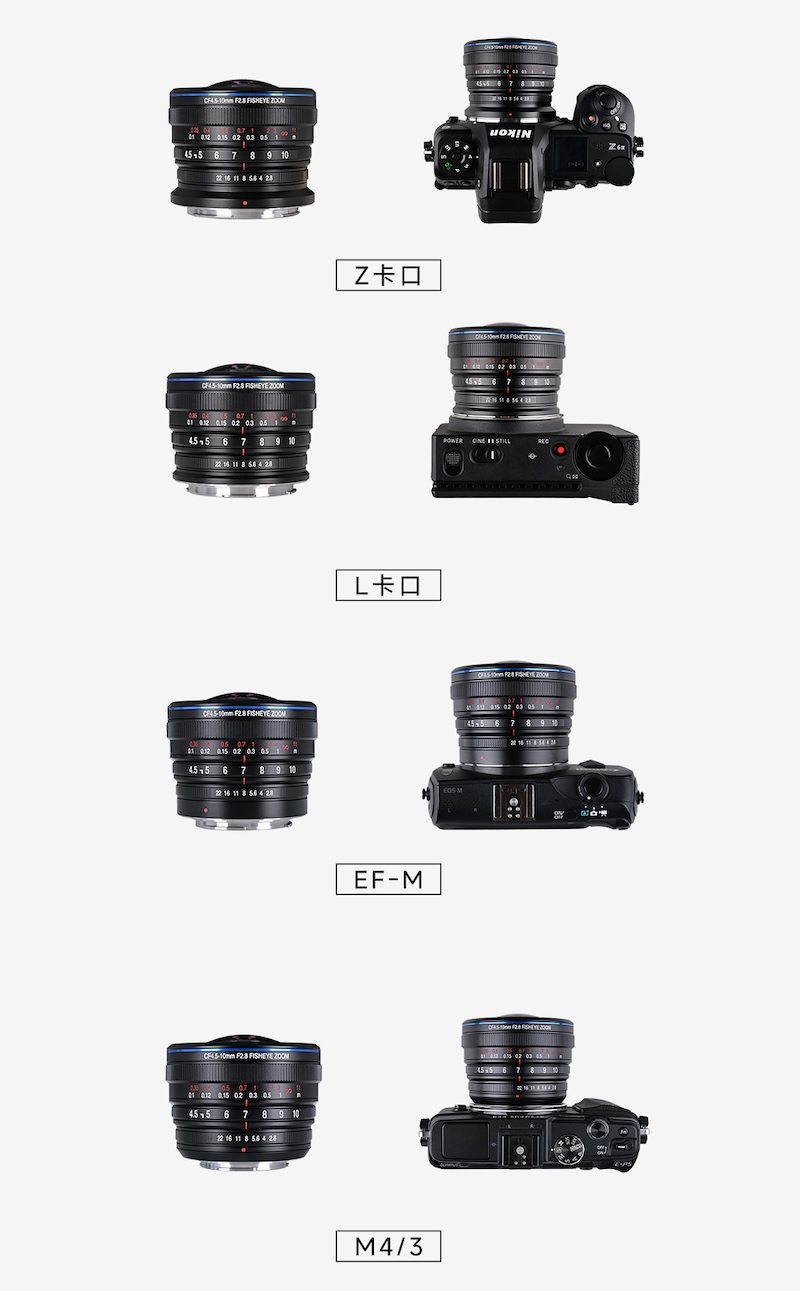
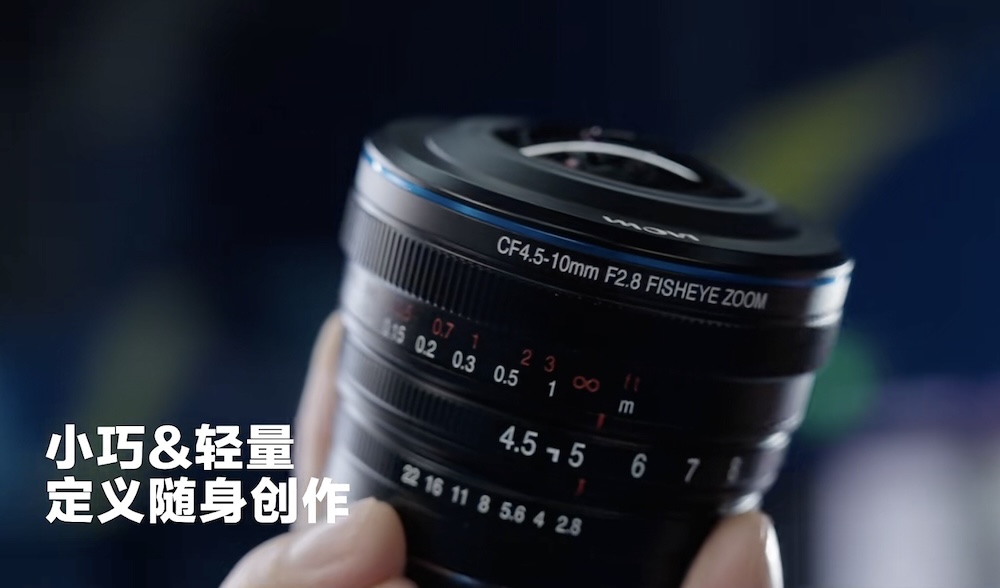
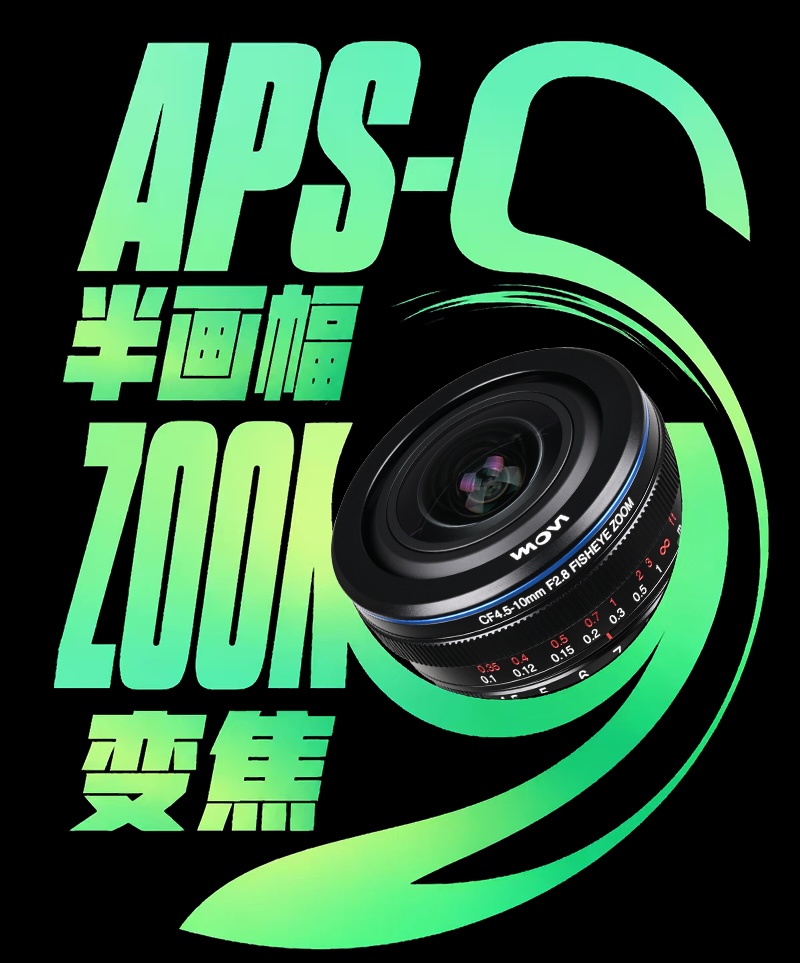
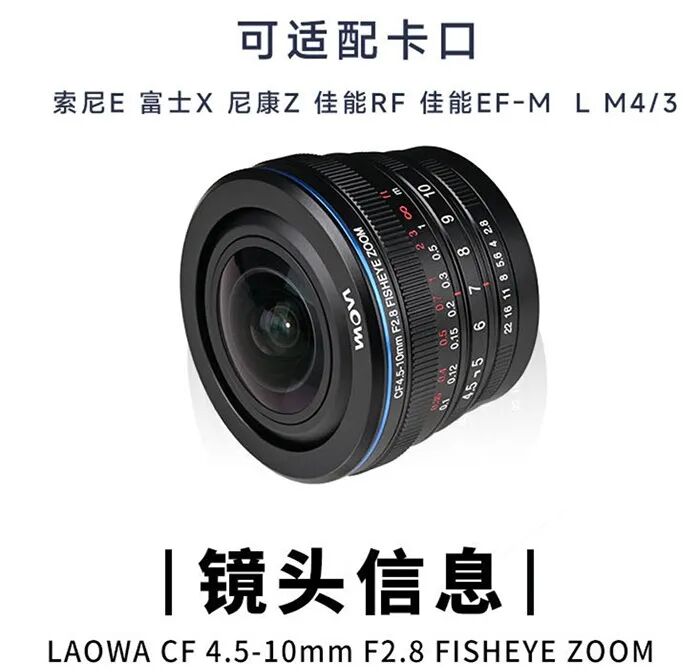
  • Laowa 4.5-10mm f/2.8 APS-C zoom fisheye
  • Laowa 15-24mm T8 / 15-35mm T12 probe zoom
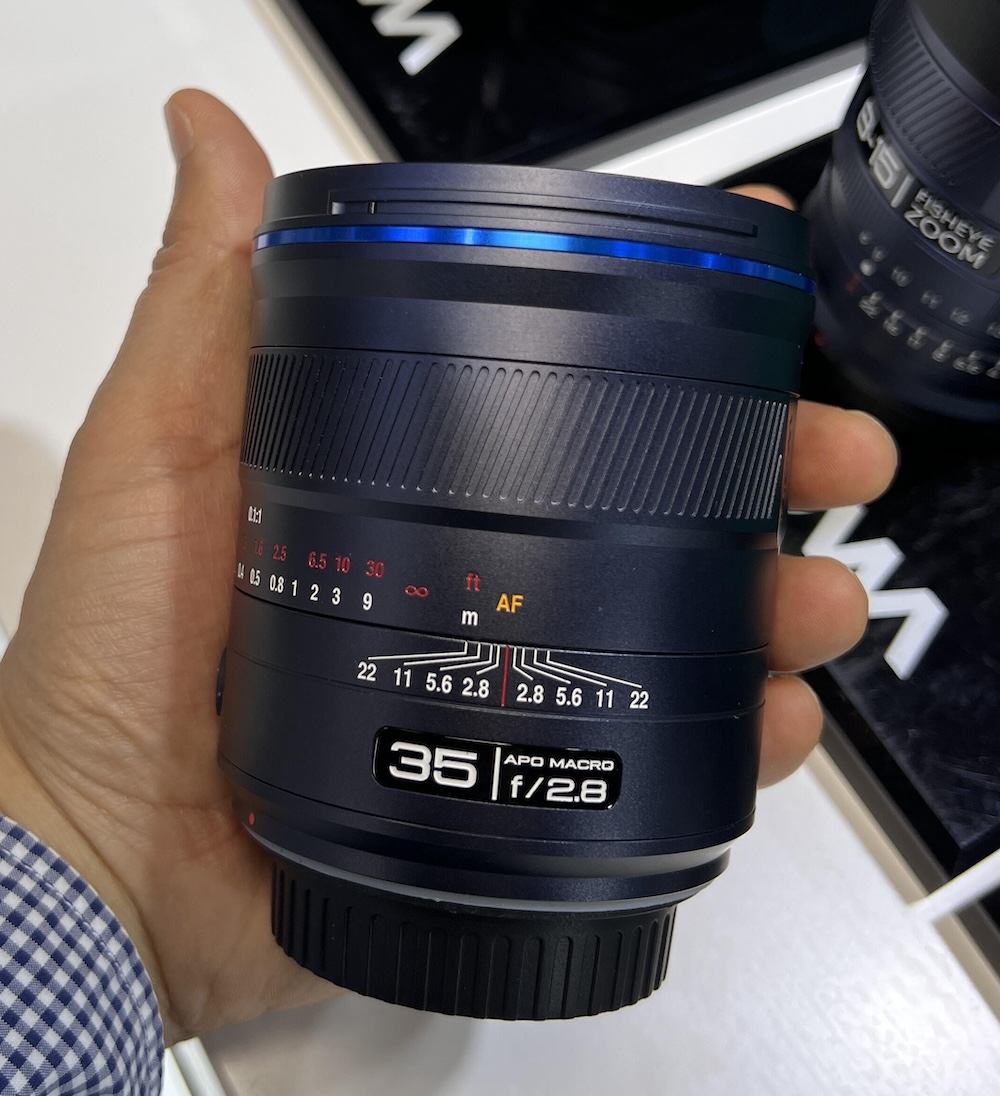
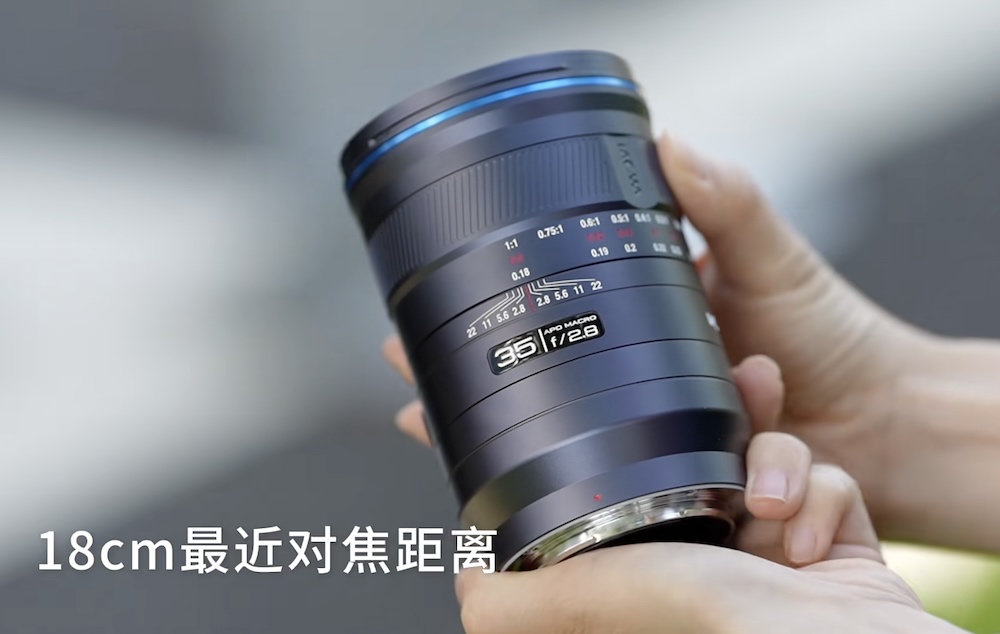
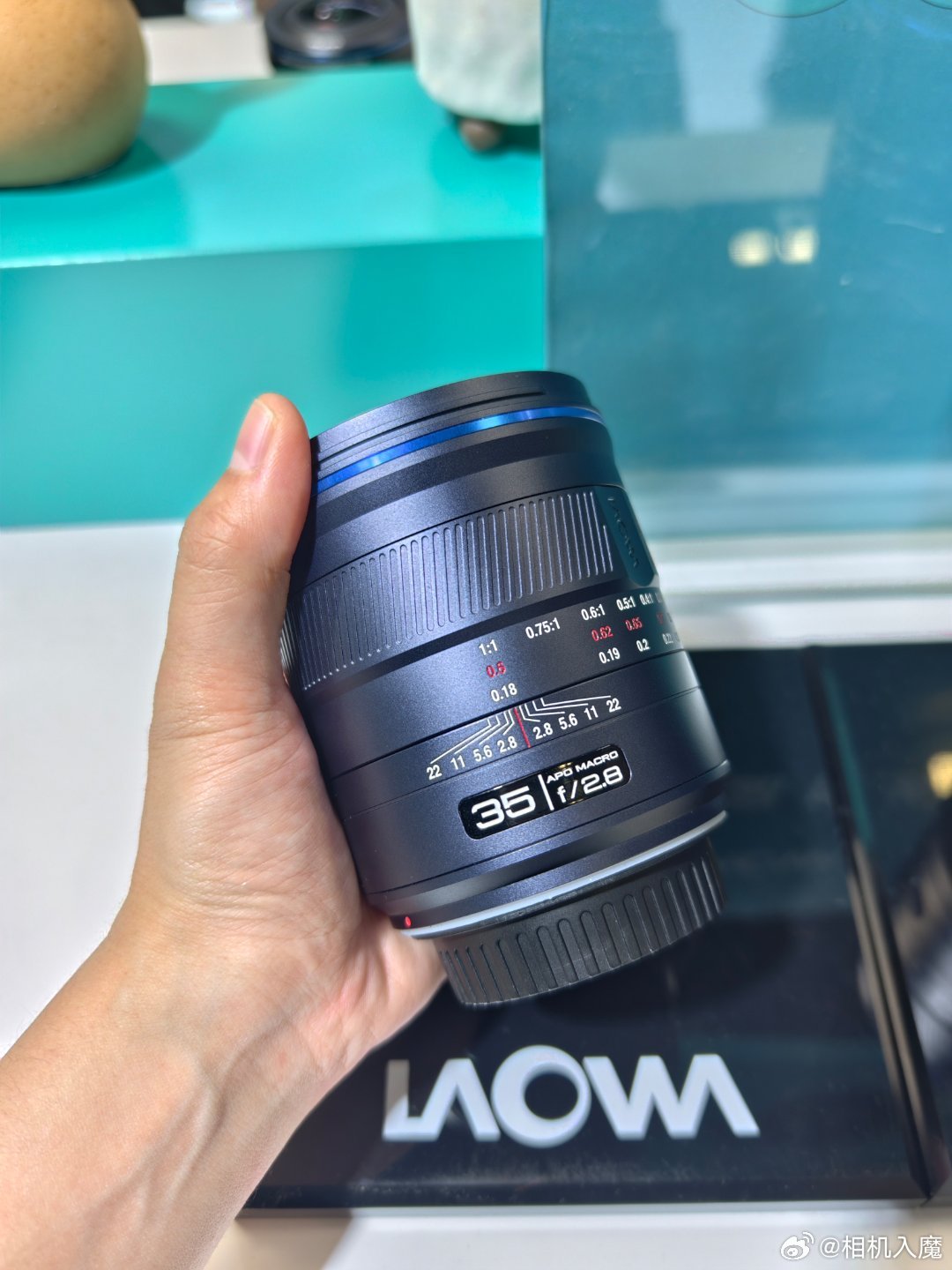
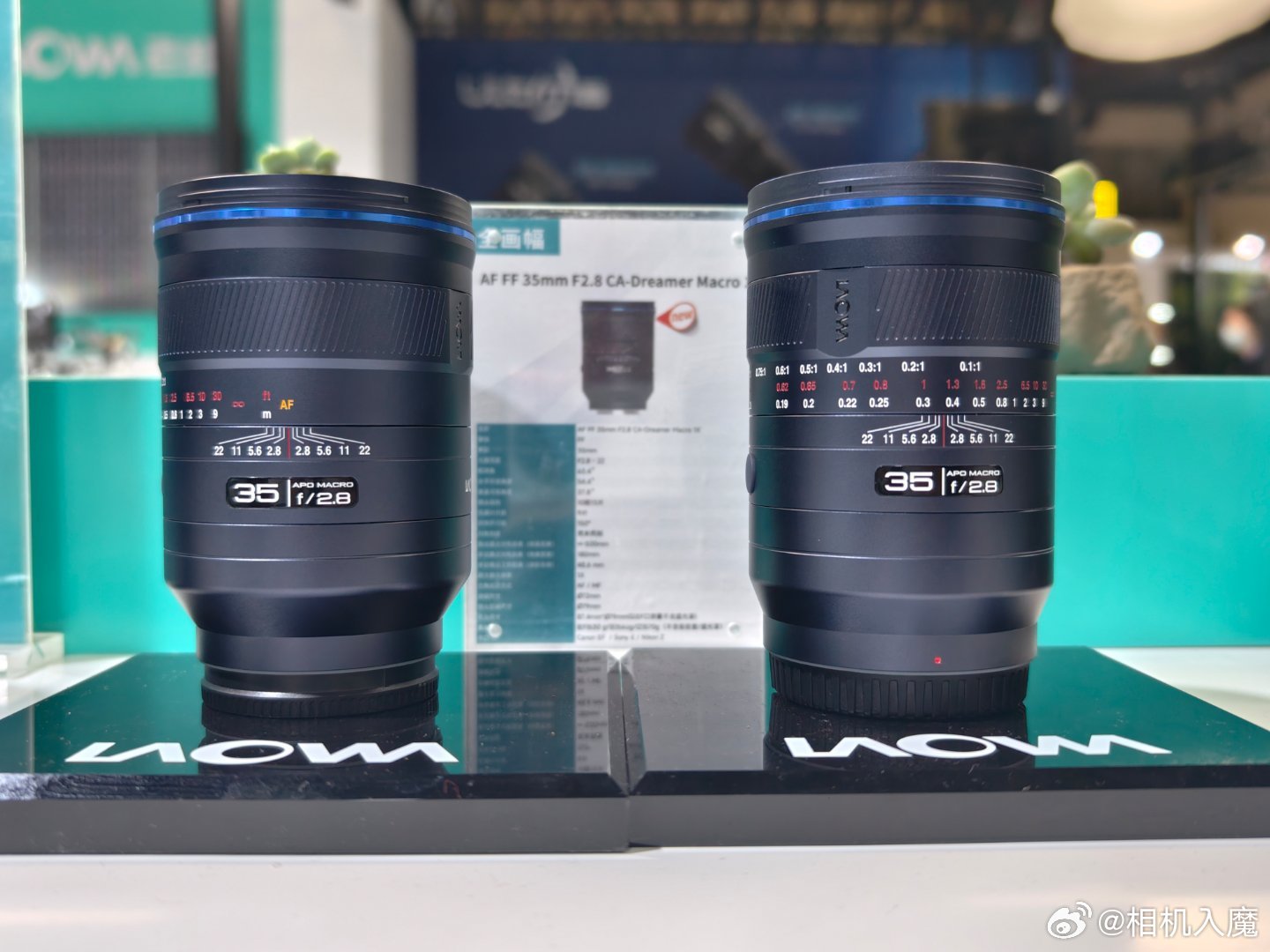
  • Laowa 35mm f/2.8 APO 1:1 macro
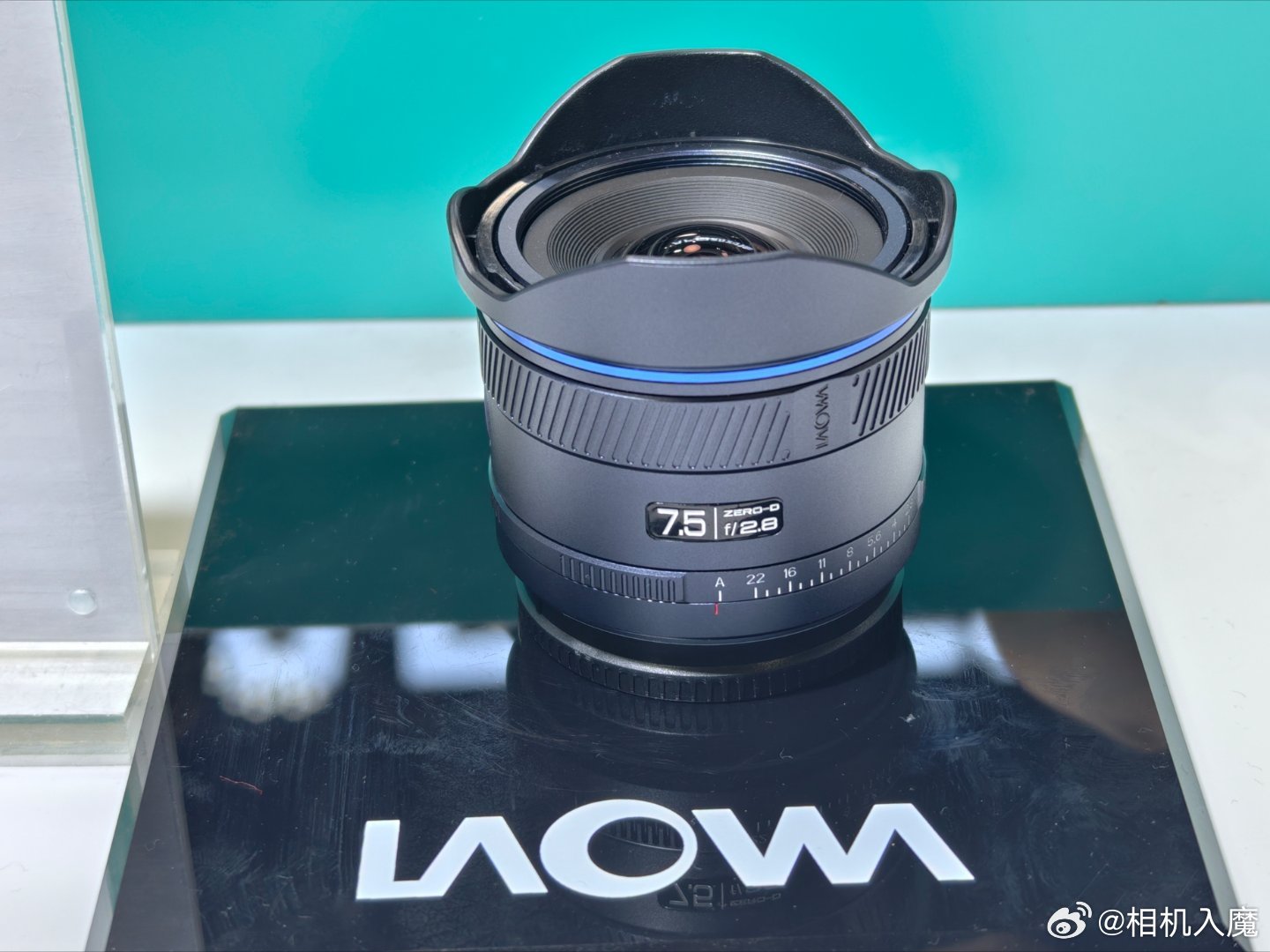
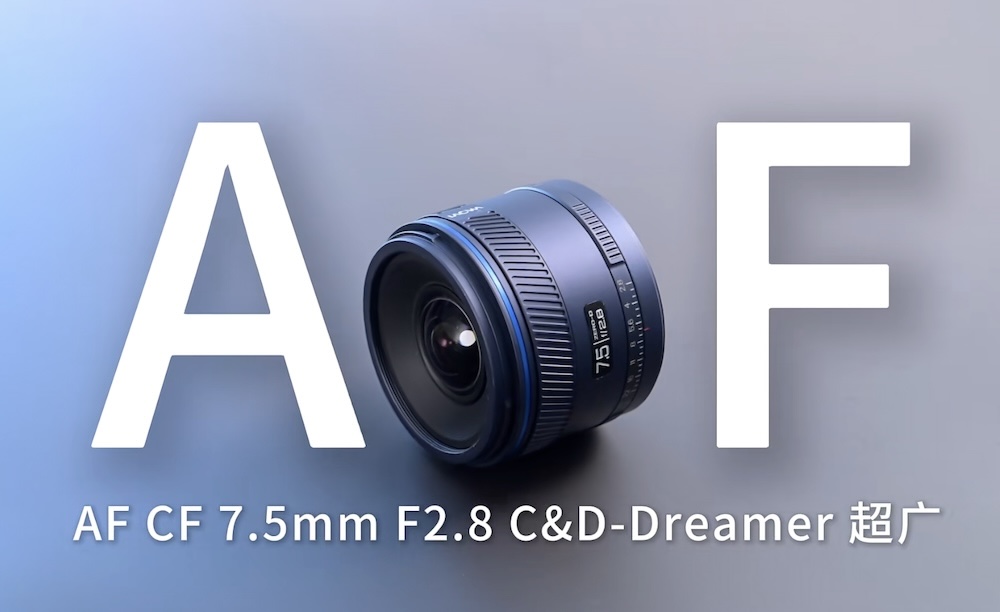
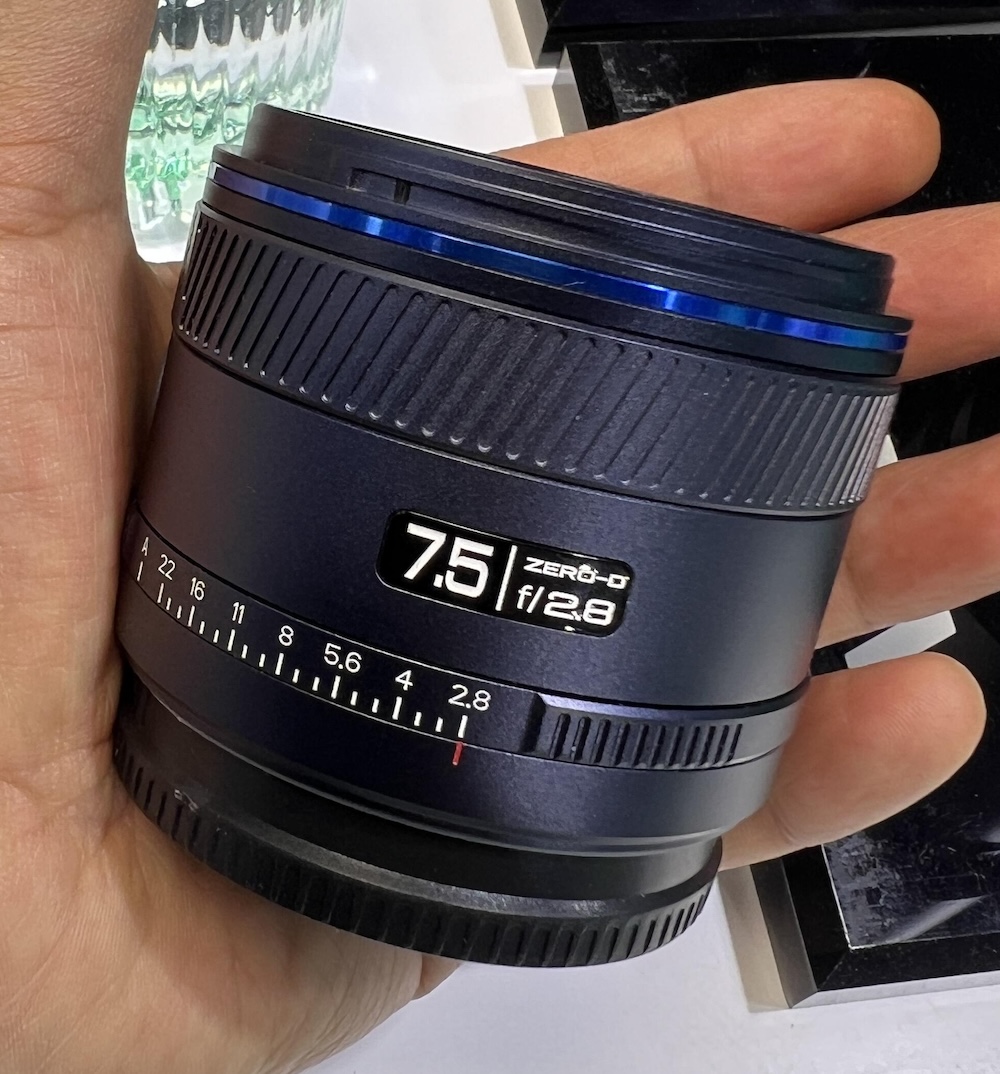
  • Laowa 7.5mm f/2.8 Zero-D (APS-C, MFT)
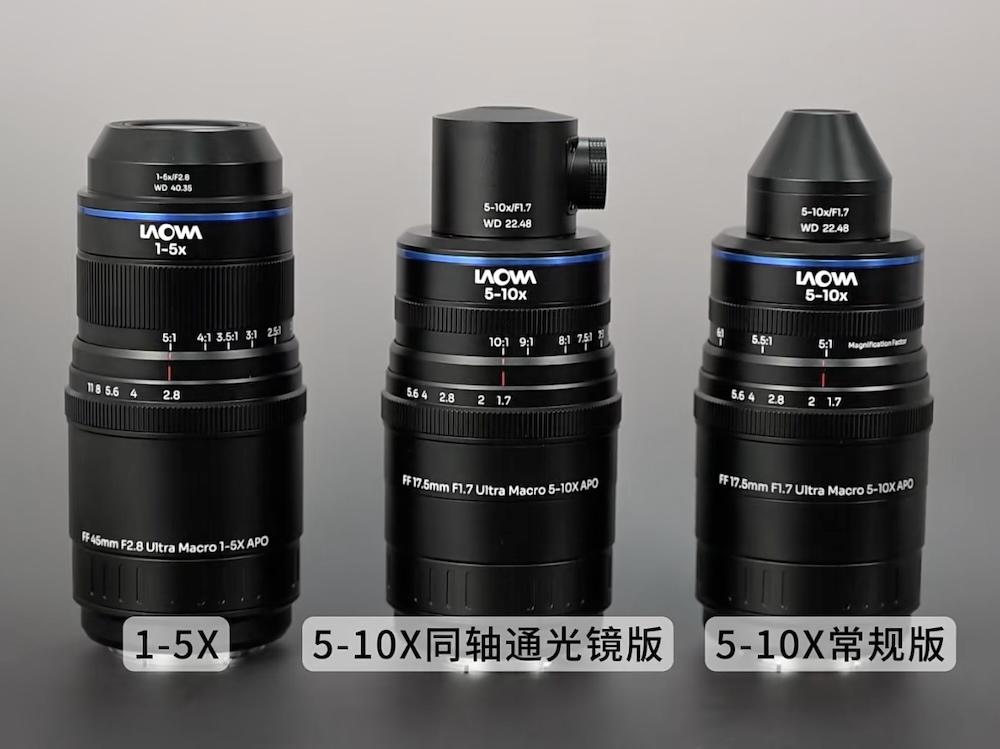
  • Laowa Axon AF 1-5x 5-10x macro

Is Venus Optics is working on a new Laowa wide-angle zoom autofocus mirrorless lens?

New LAOWA CF 7.5mm f/2.8 C&D-Dreamer AF Coming Soon

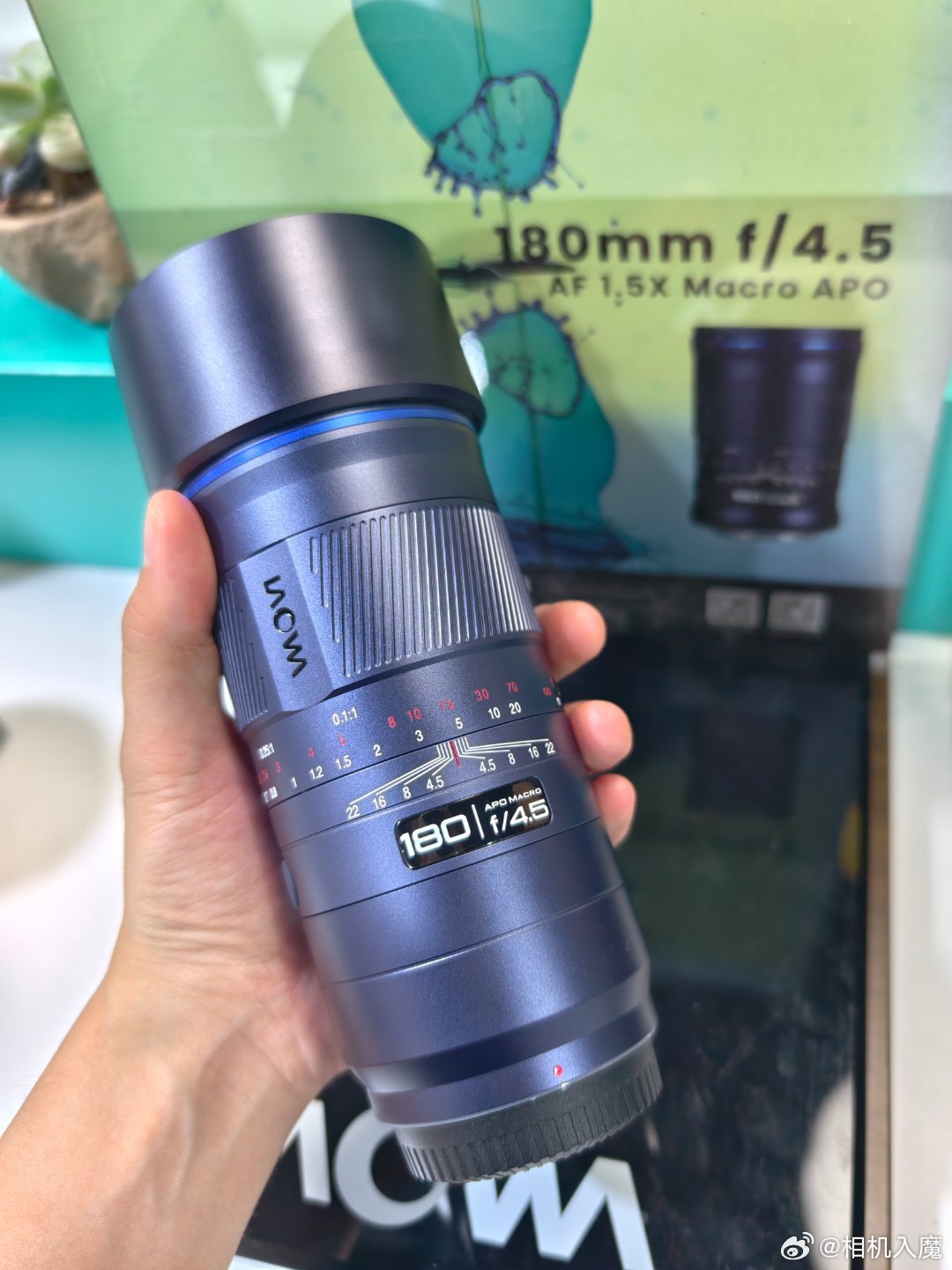
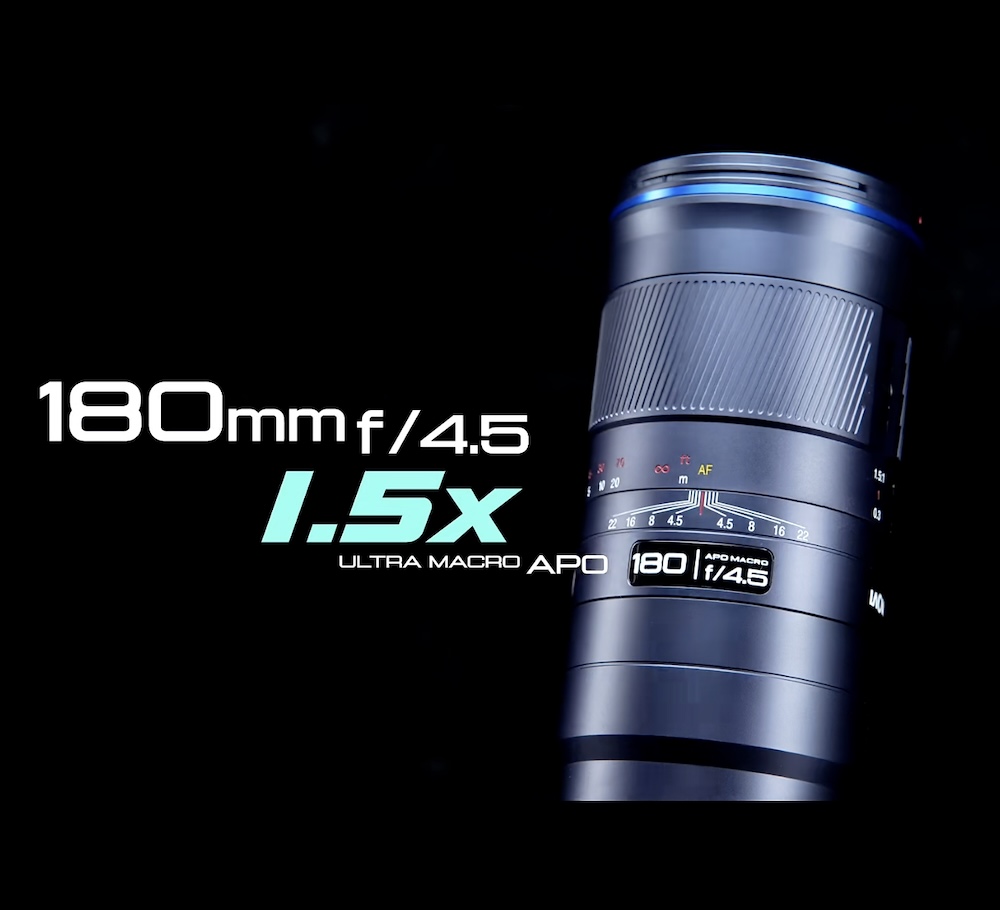
New LAOWA 180mm f/4.5 1.5X Ultra Macro APO AF Coming Soon


ZY Optics (Zhongyi)

ZY Optics (Zhongyi) will release new 30mm f/2.4 and 45mm f/1.4 lenses:

ZY Optics (Zhongyi) to release two new lenses: 30mm f/2.4 and 45mm f/1.4 at the Beijing P&E Imaging Show


Yongnuo

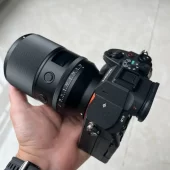
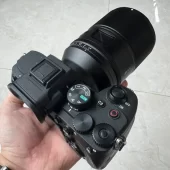
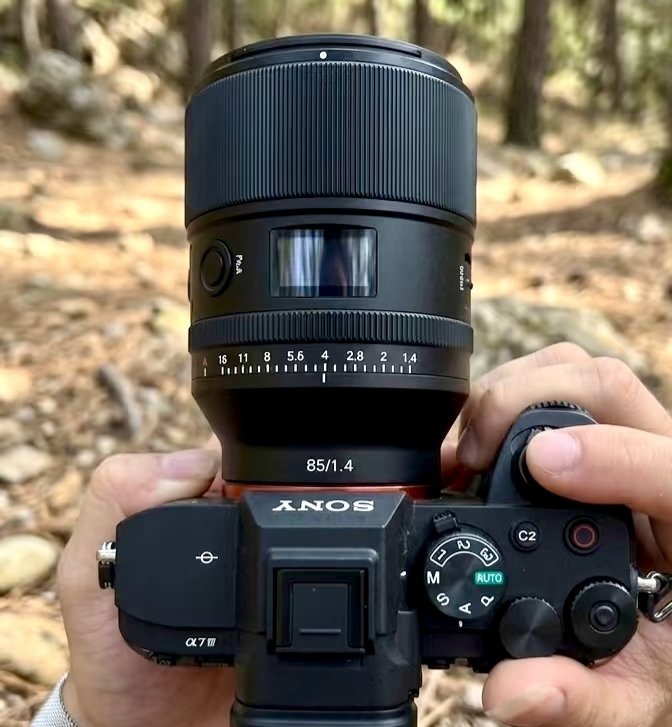
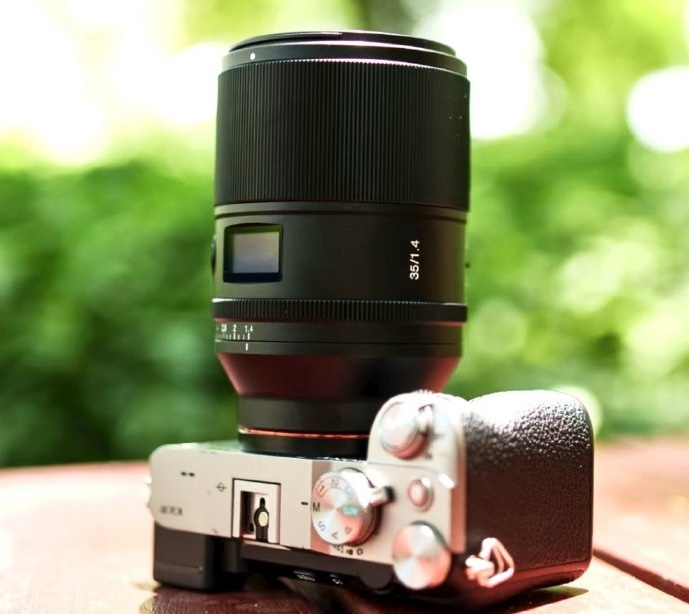
Yongnuo will have two new lenses – 35mm f/1.4 and 85mm f/1.4 with new VCM tech and an LCD screen on the lens:

Yongnuo is teasing a lens with a newly developed VCM motor


7Artisans

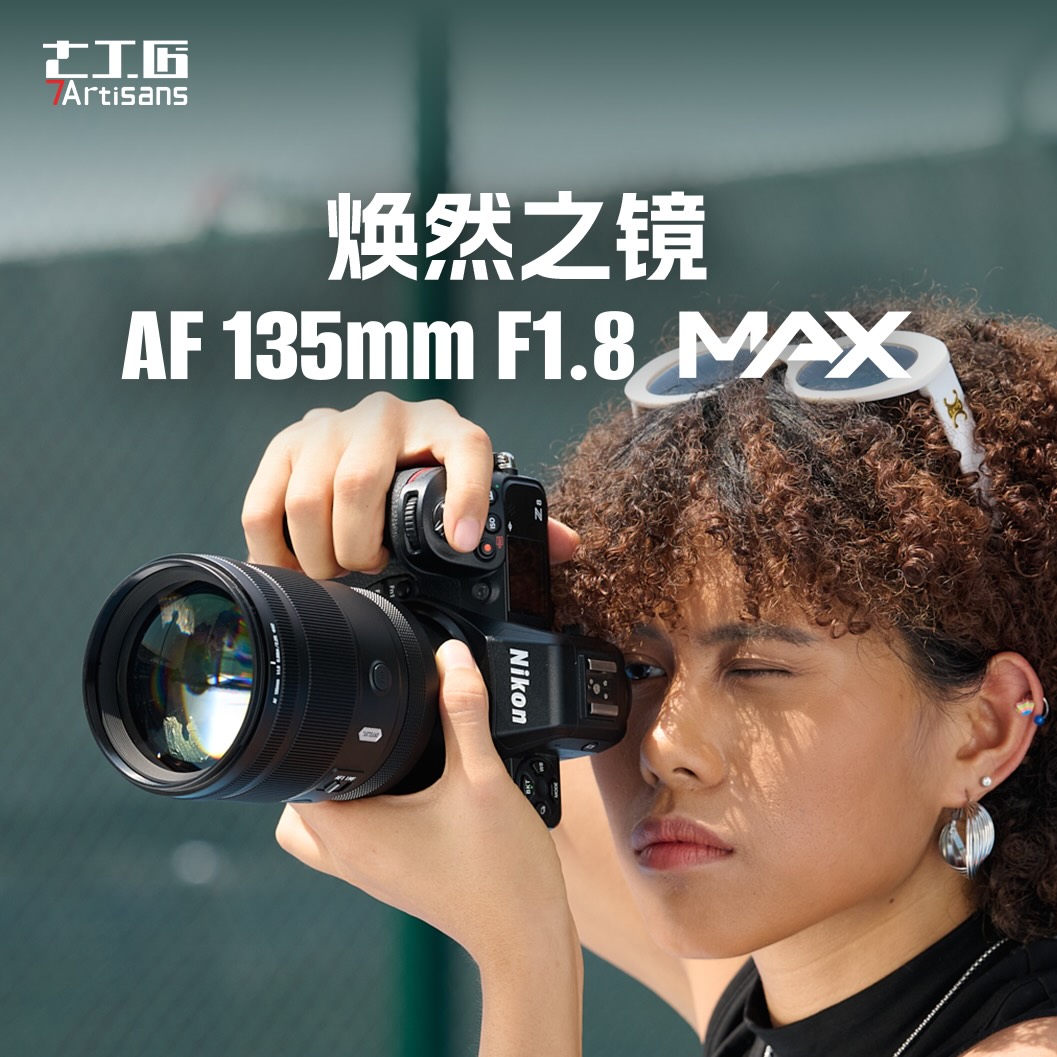
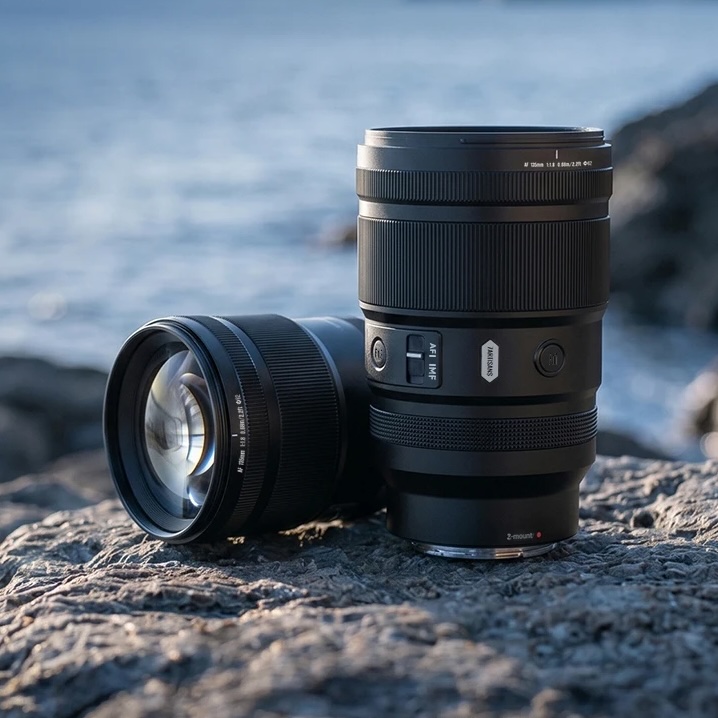
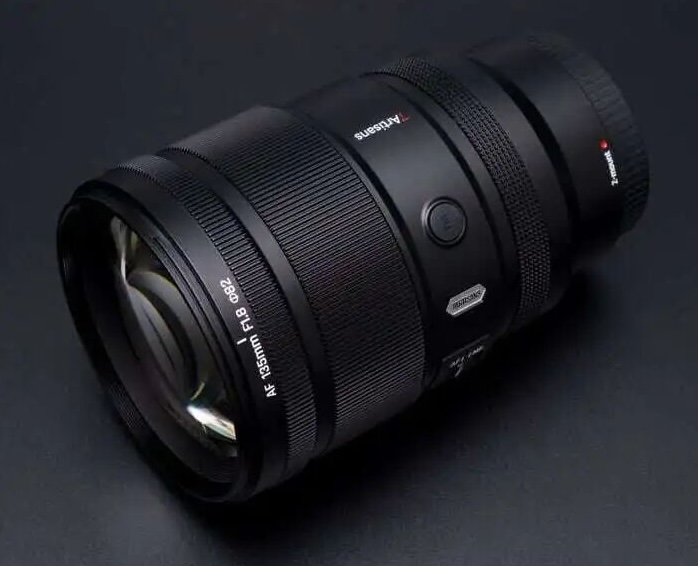
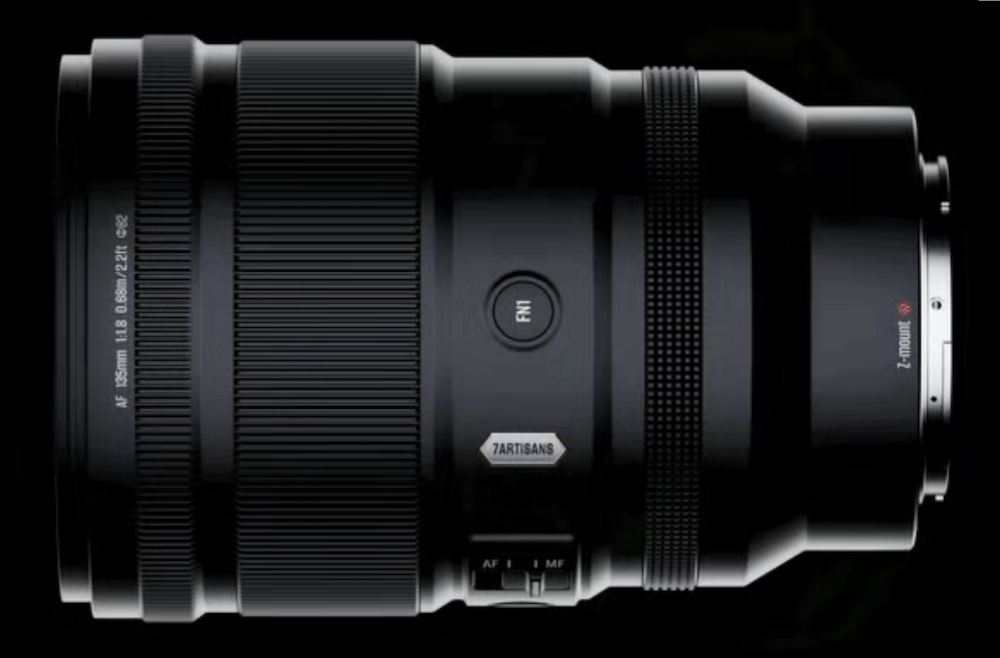
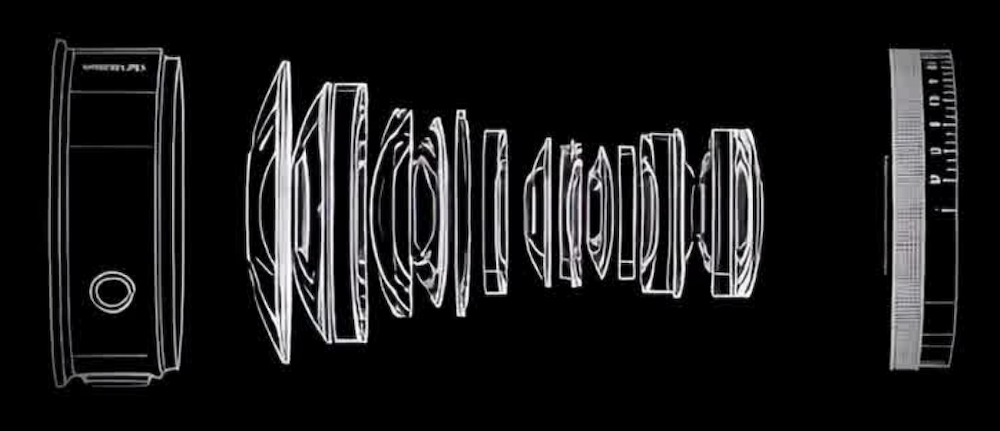
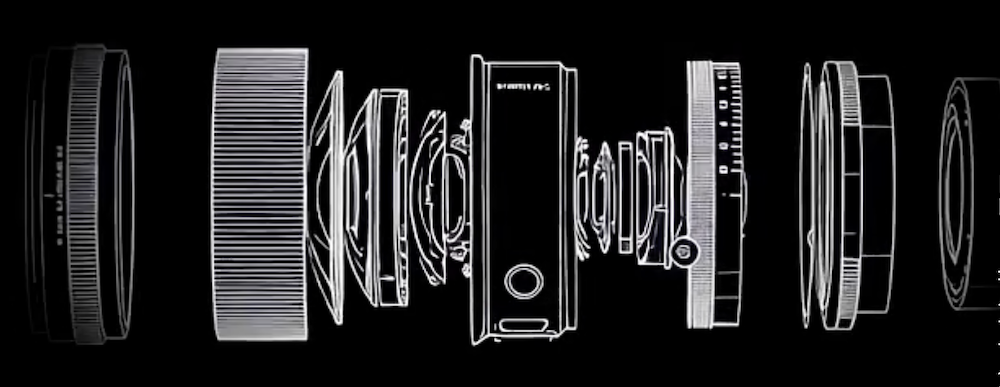
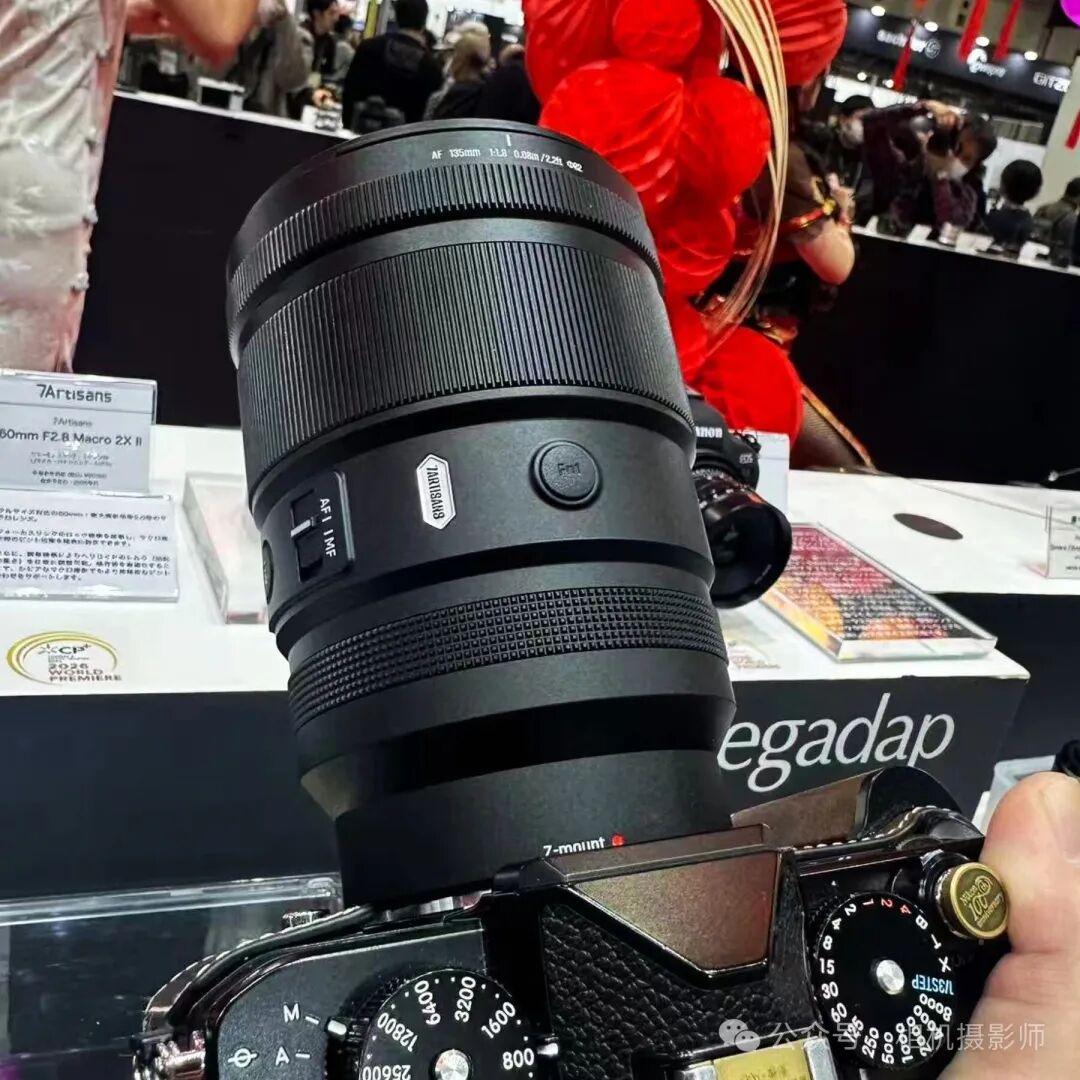
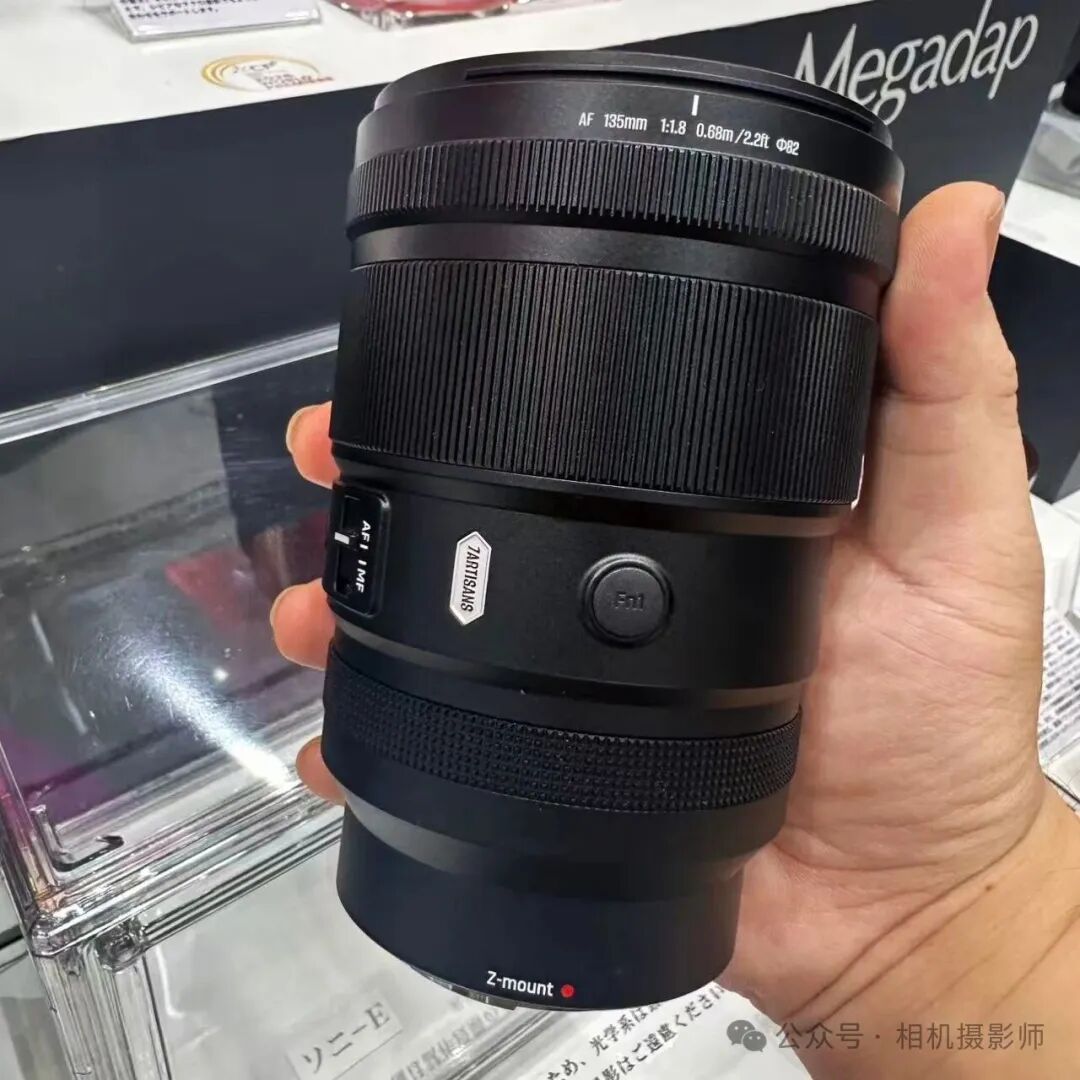
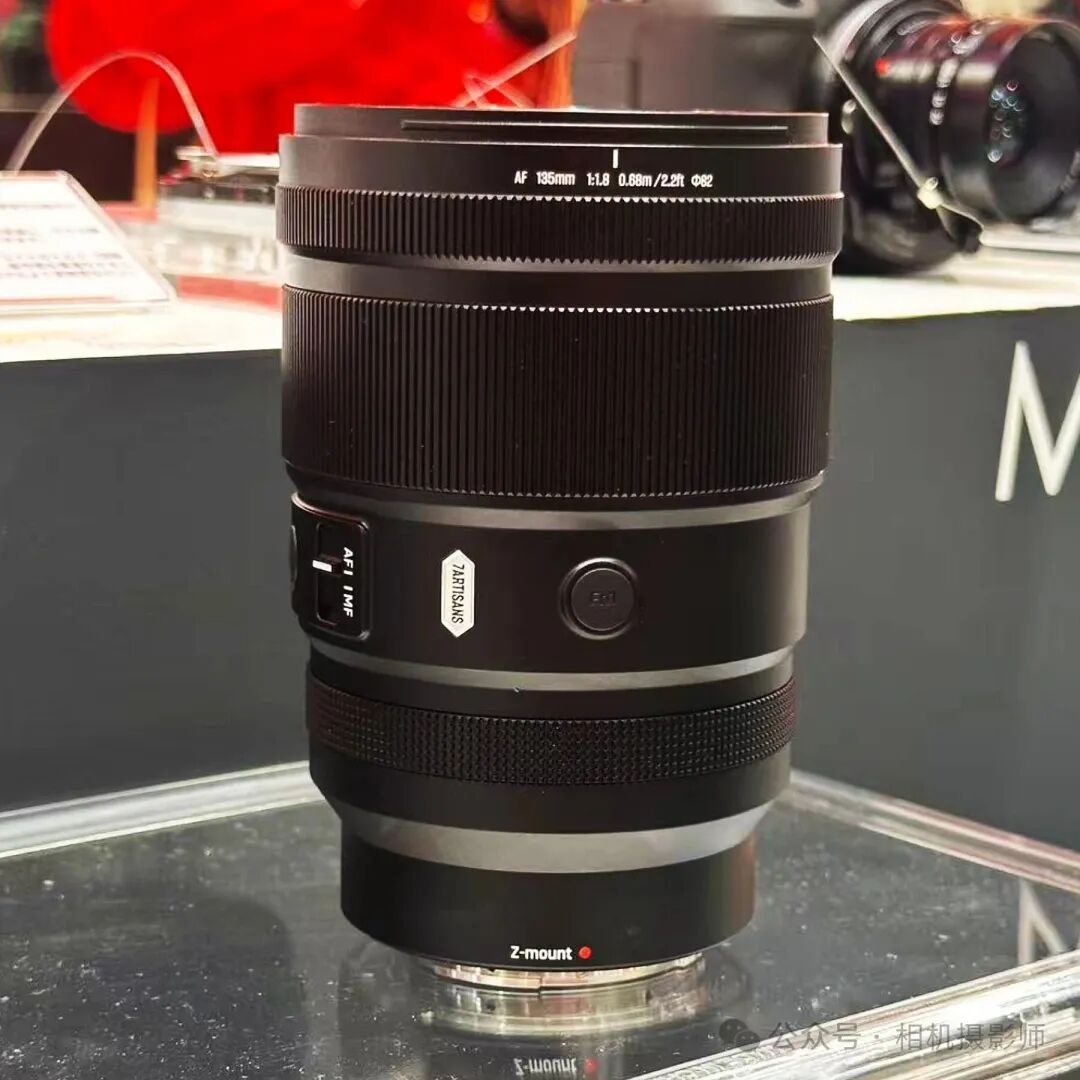
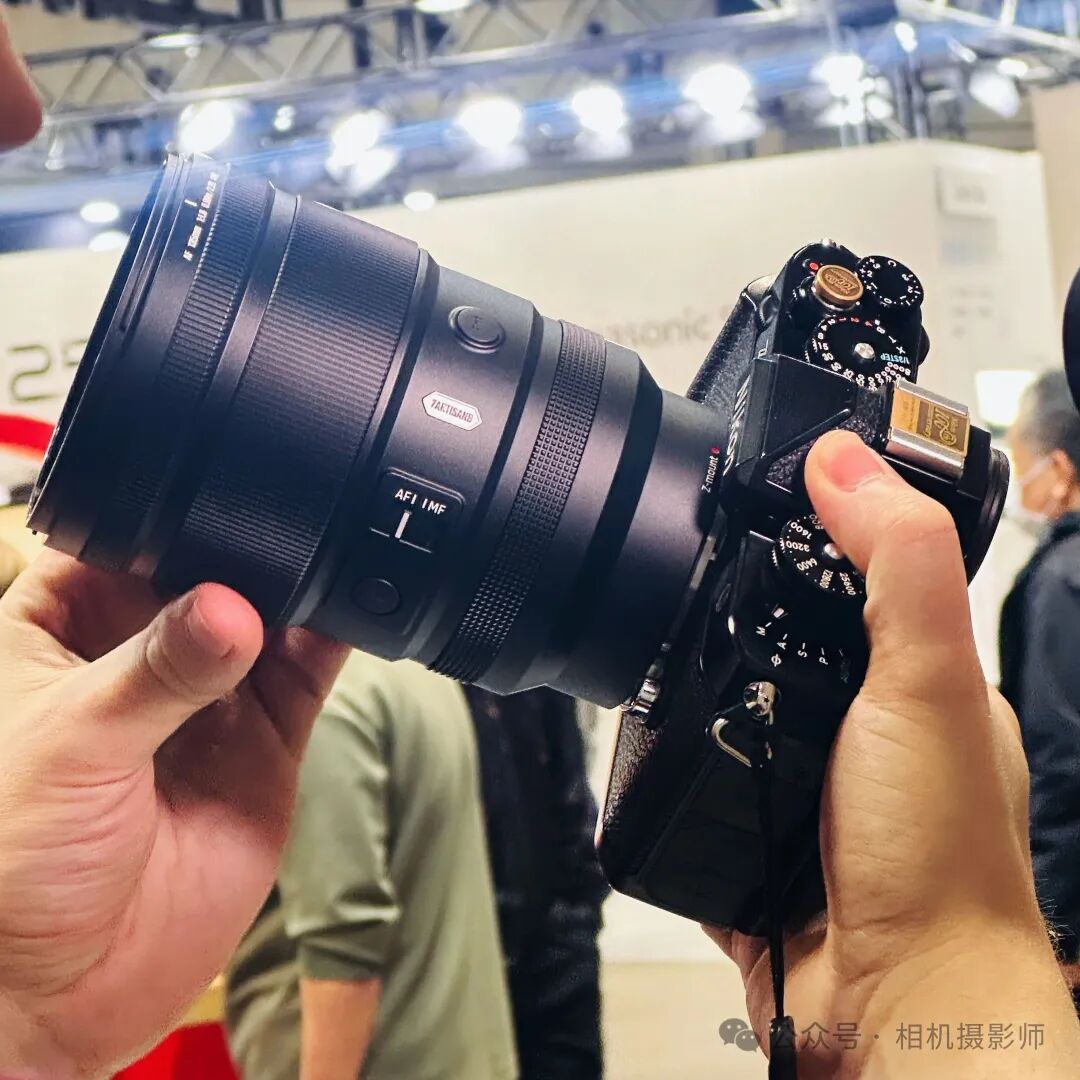
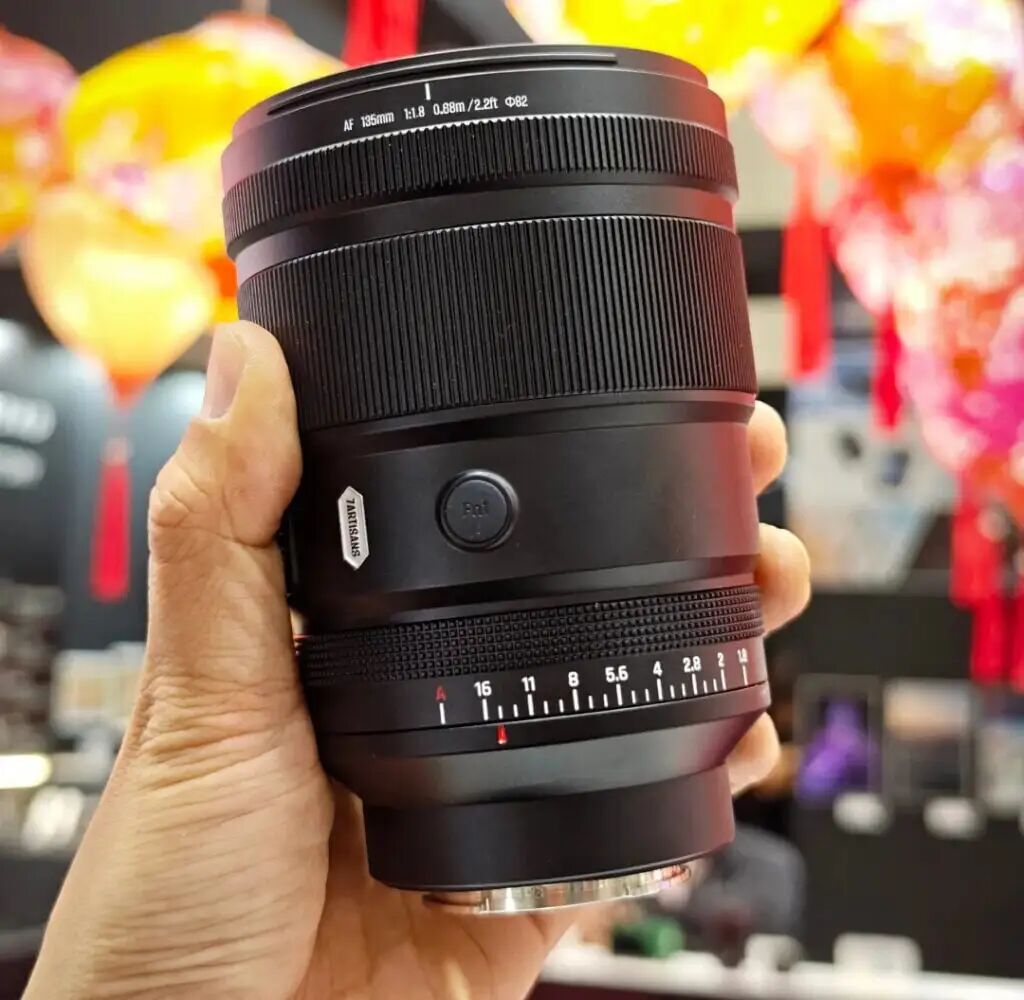
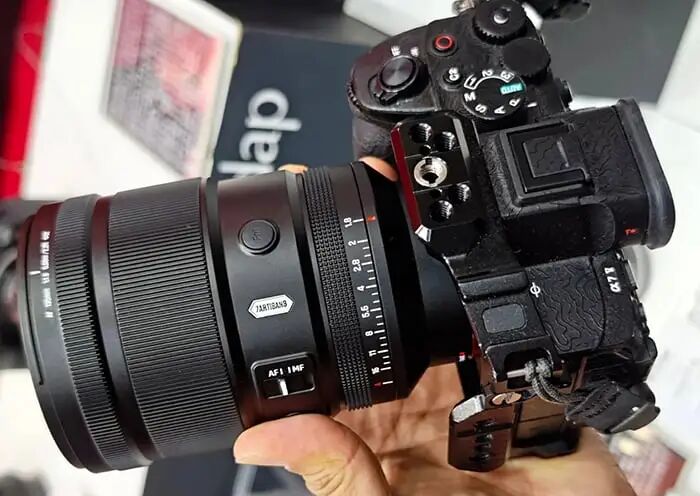
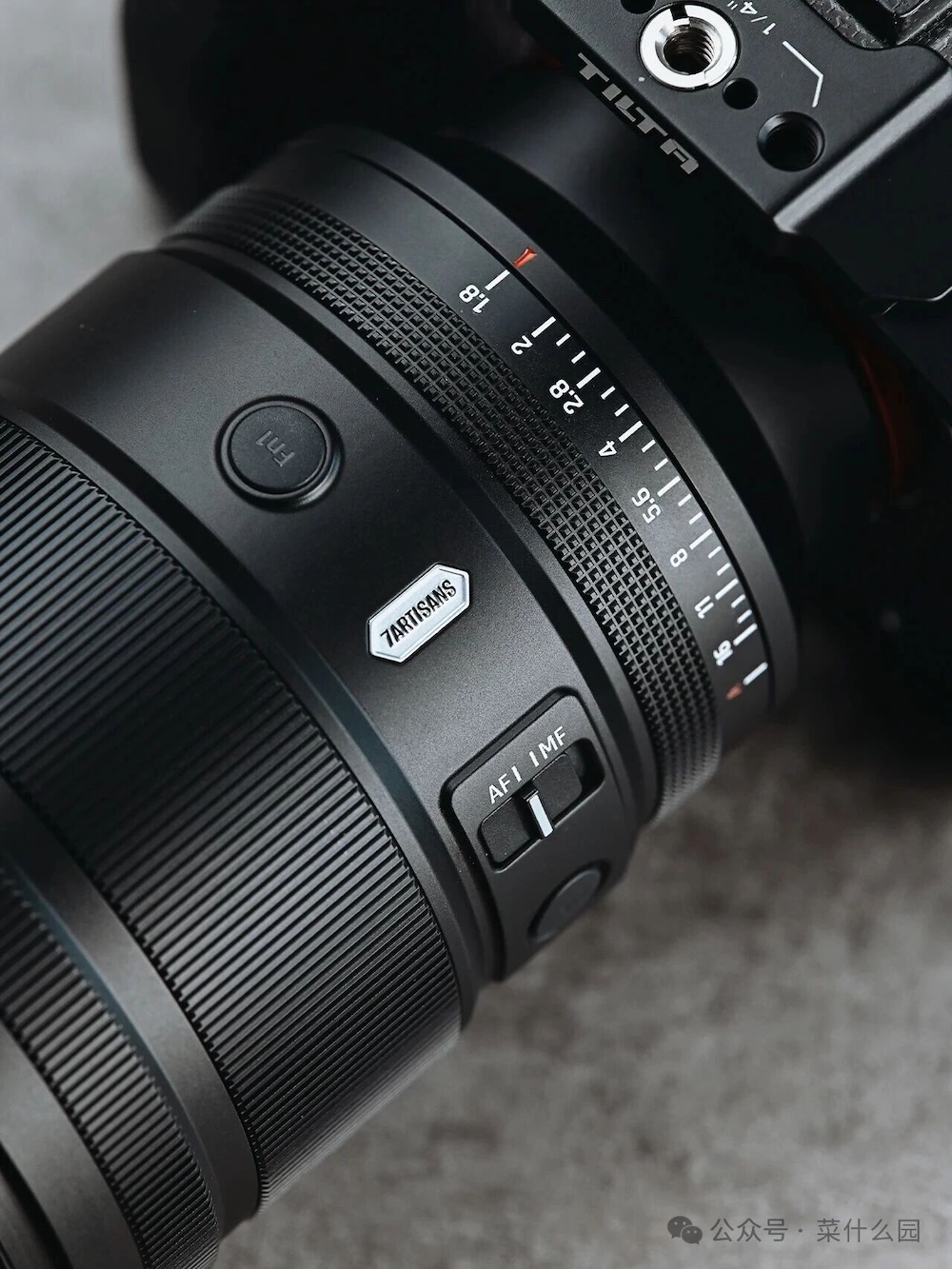
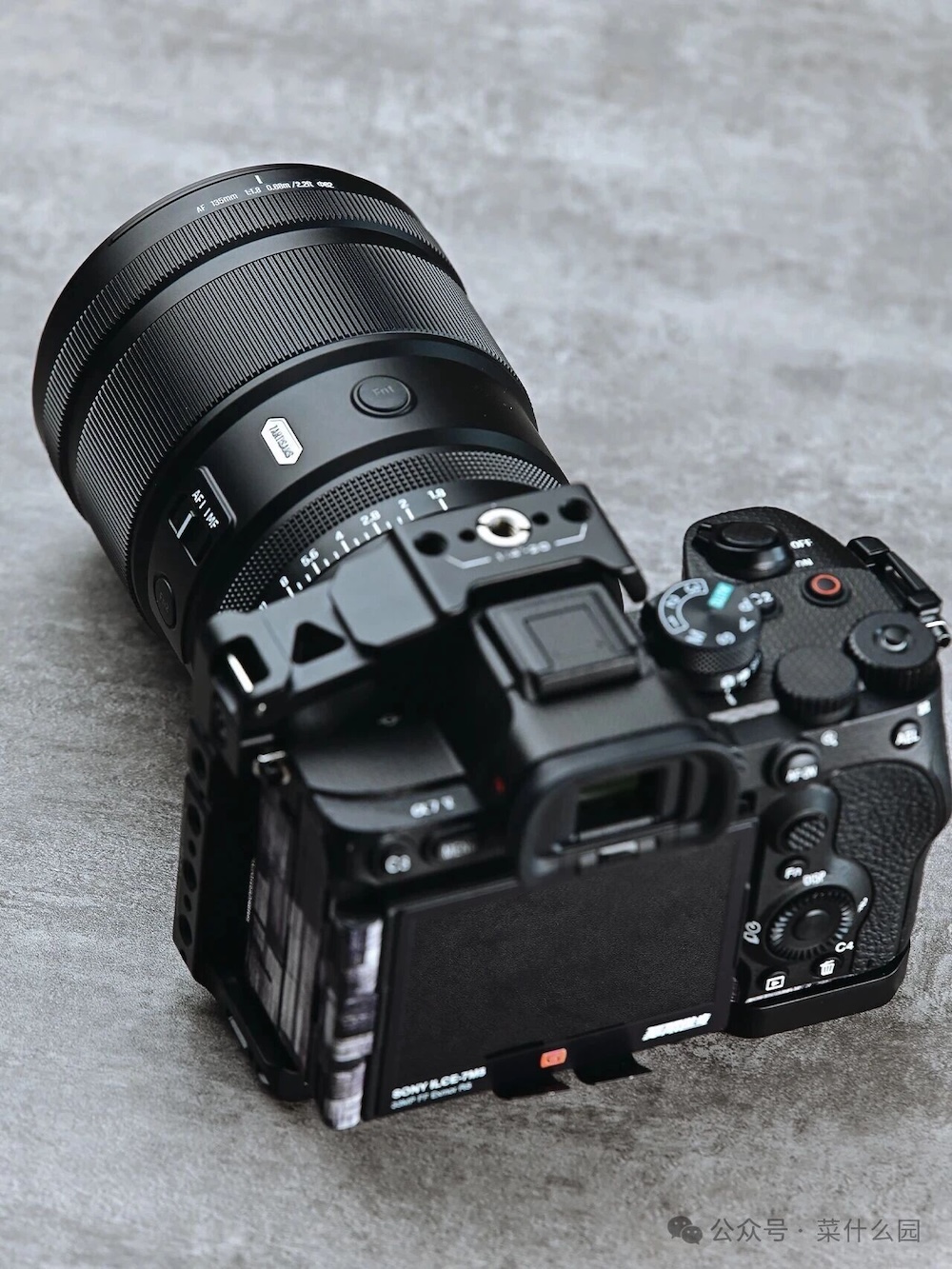
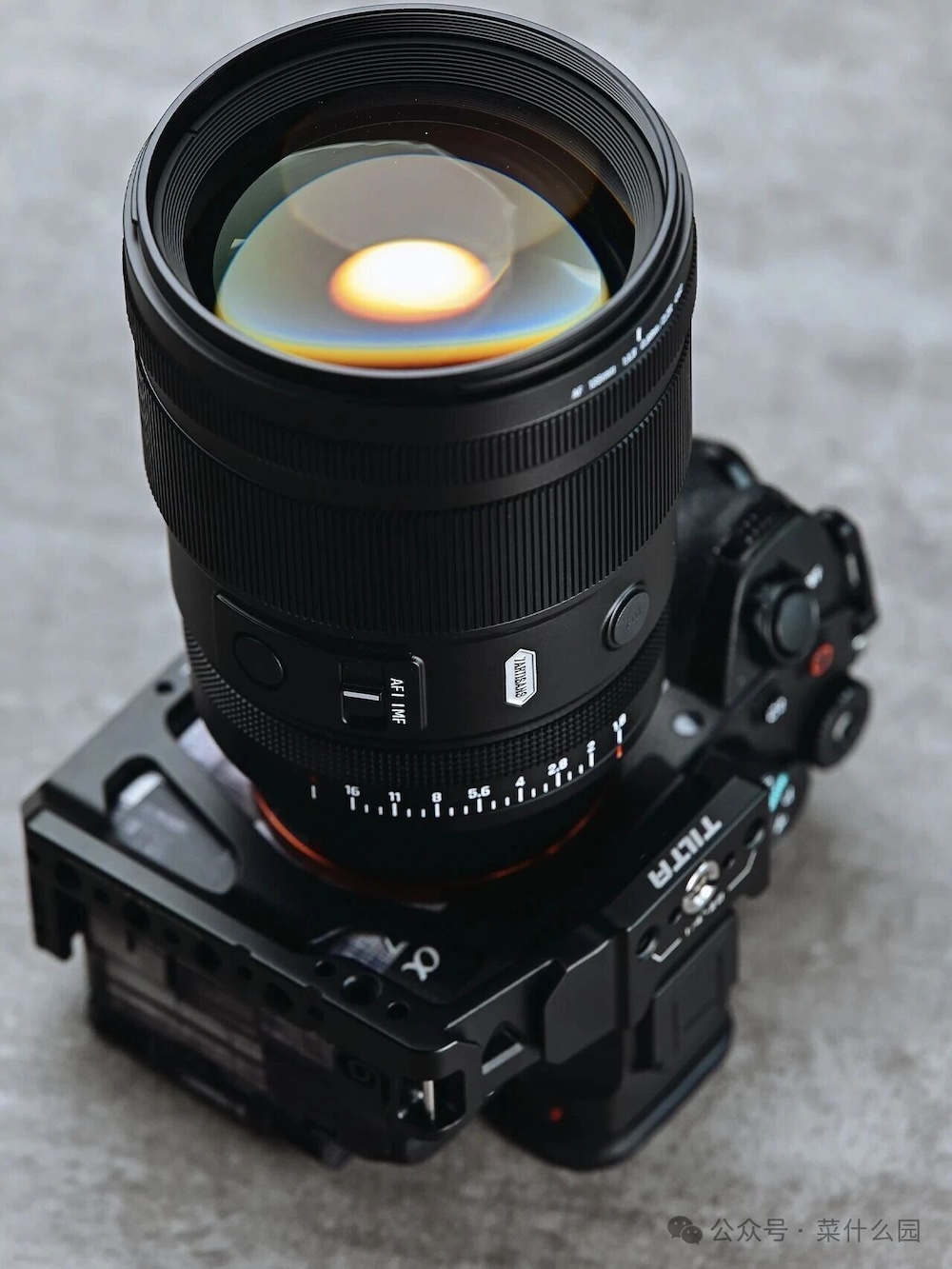
New 7Artisans 135mm f/1.8 MAX lens is coming on May 14th:

The new 7Artisans 135mm f/1.8 MAX lens (E/Z/L) will be released in May


TTartisan

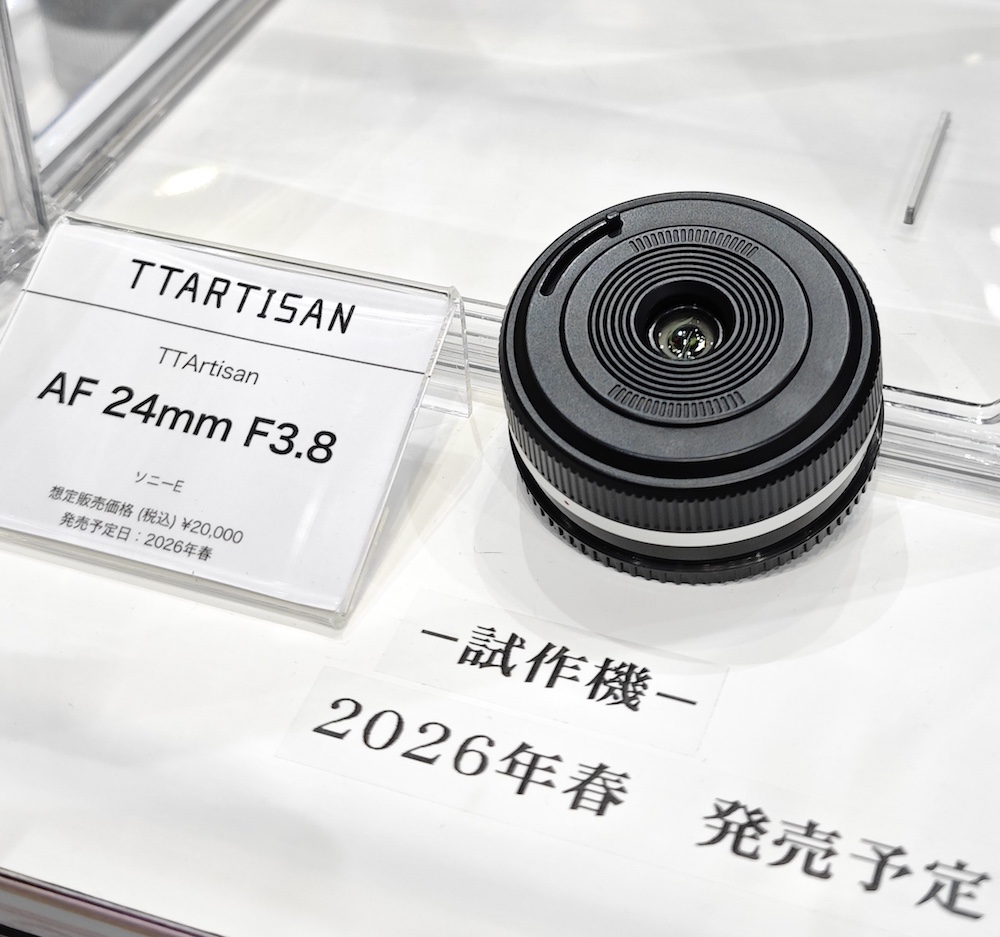
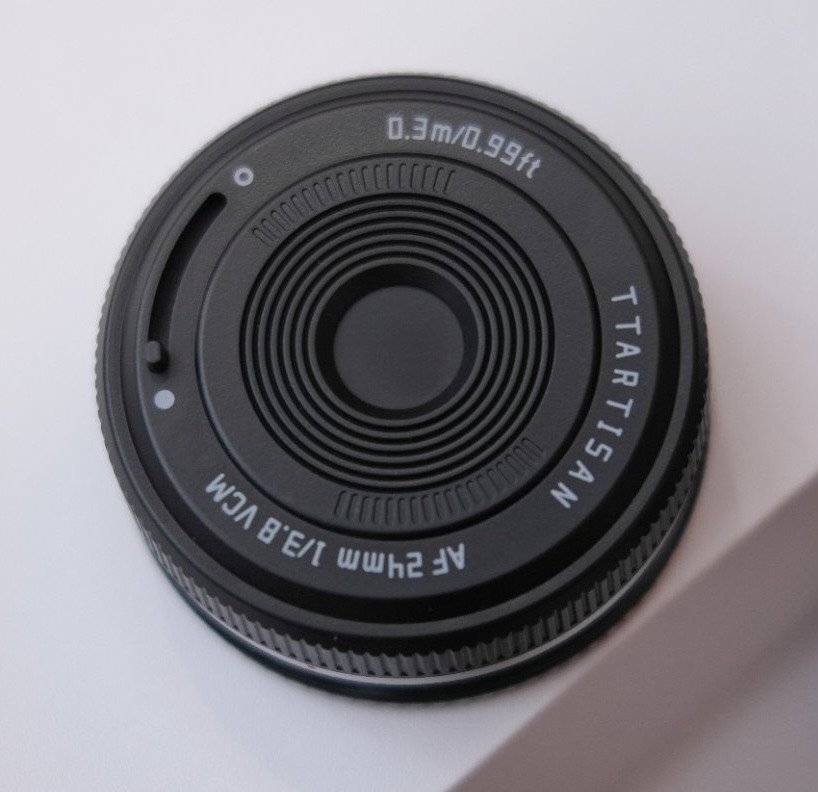
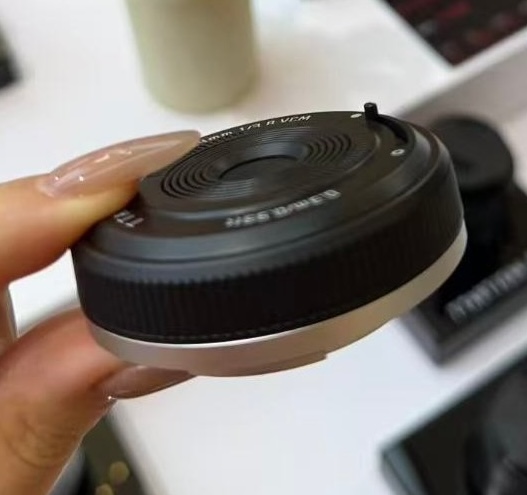
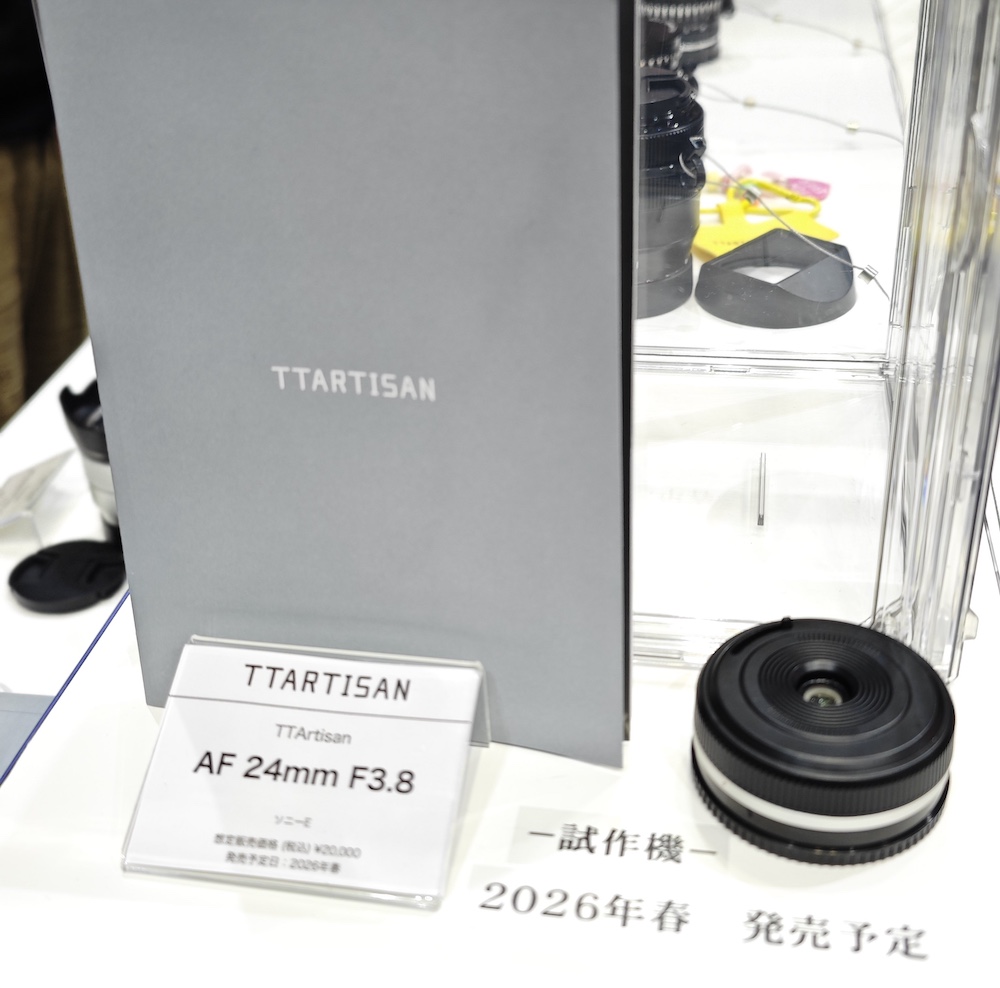
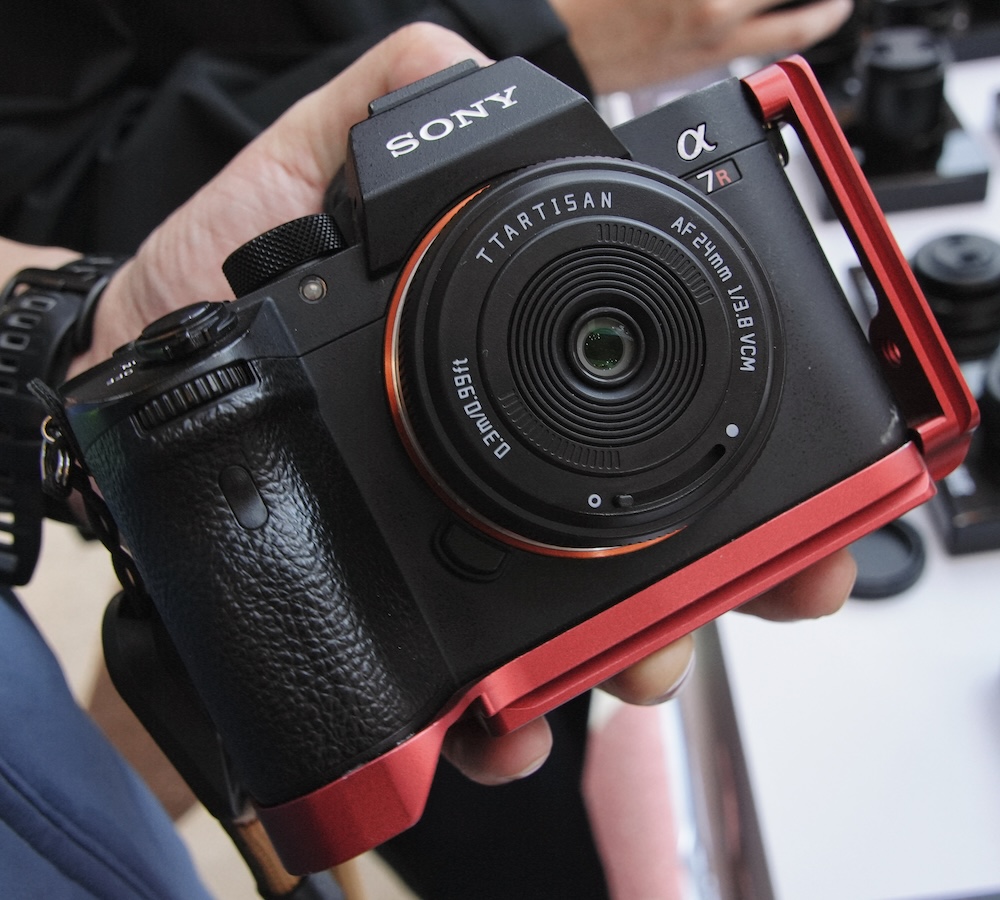
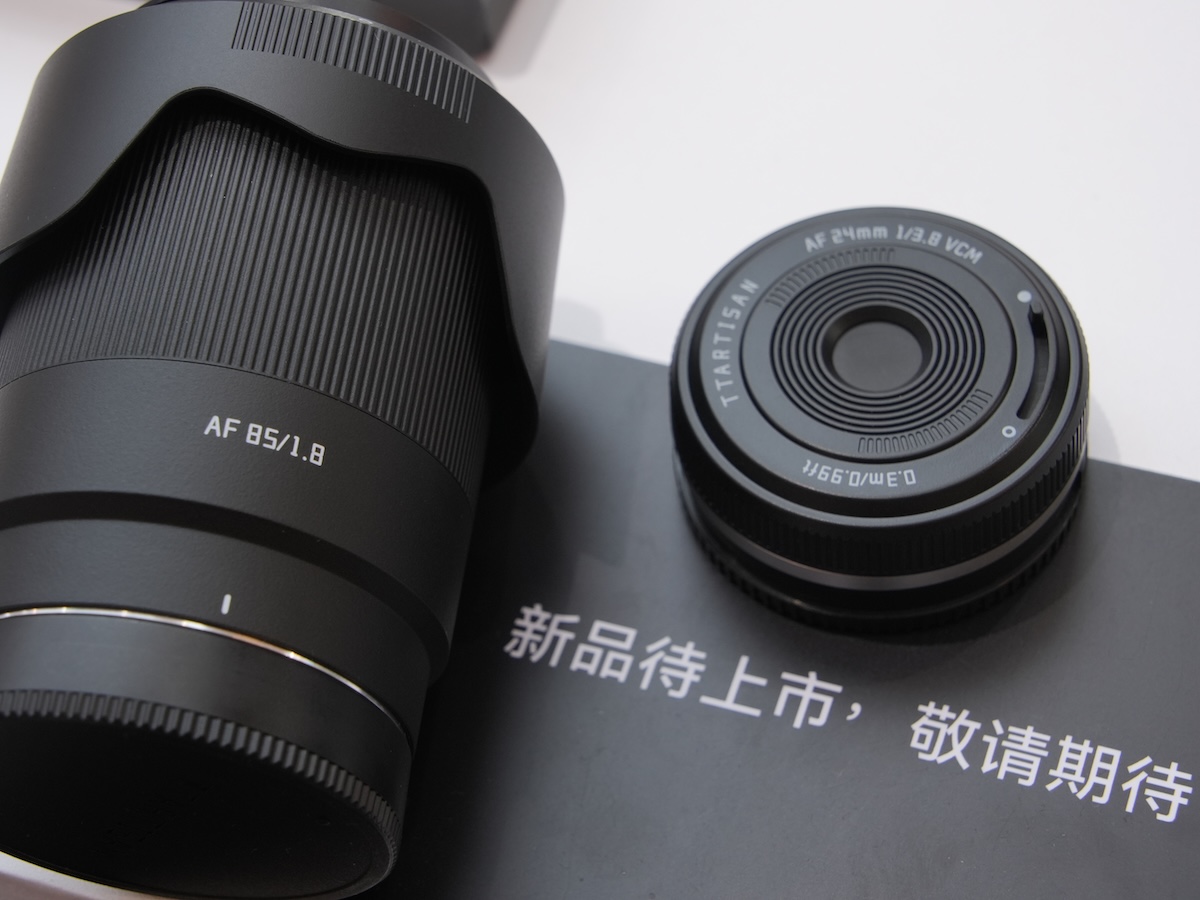
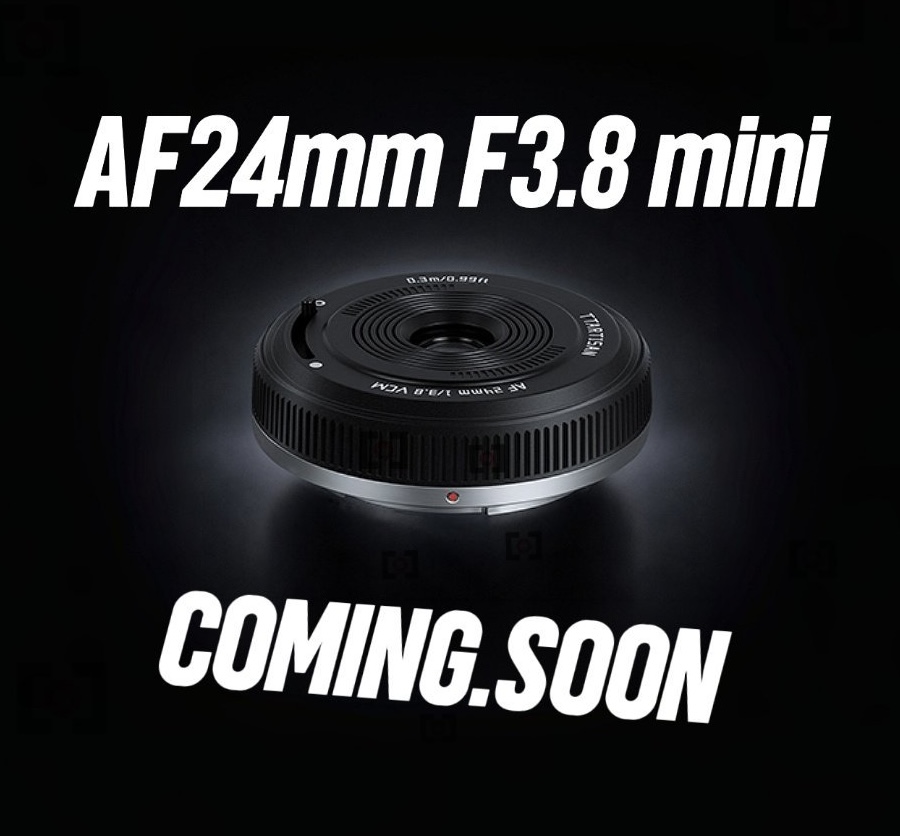
TTartisan will release a new AF 24mm f/3.8 lens with VCM focusing motor and a minimum focusing distance of 0.3 meters (for E/Z/L mounts).  This lens was already on display at the 2026 CP+ show:

2026 CP+ show recap

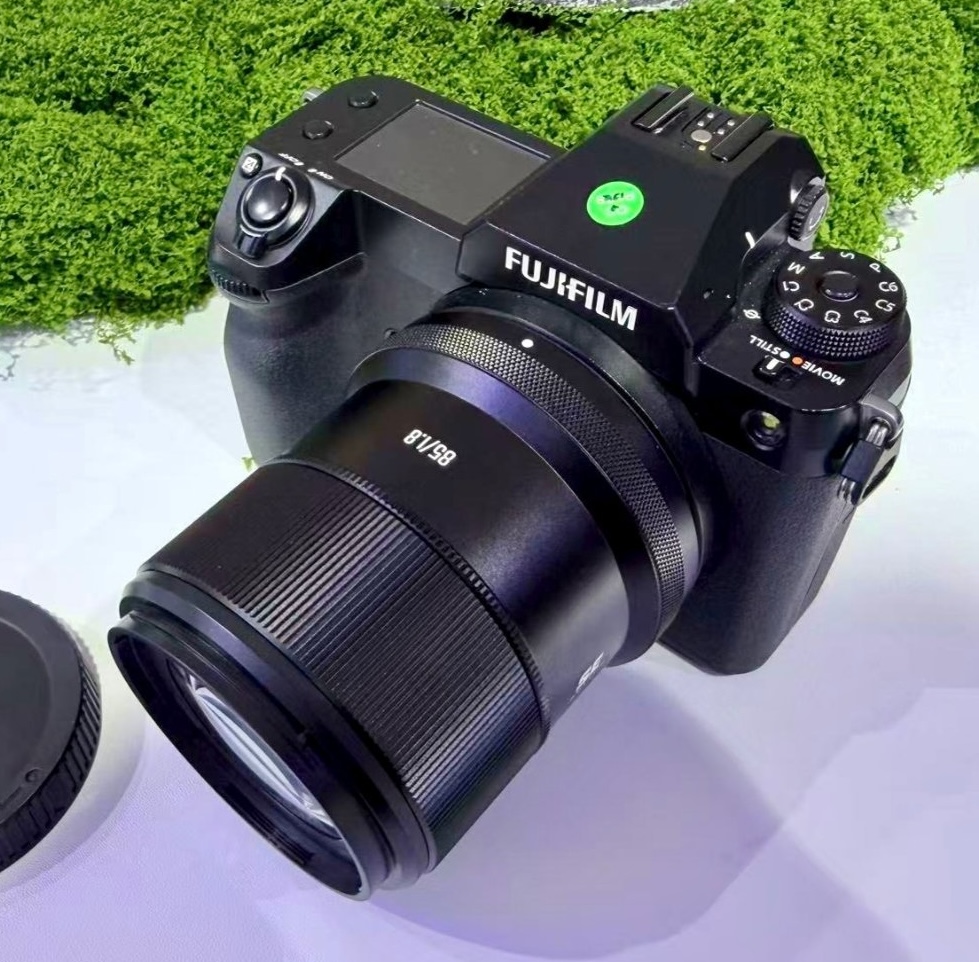
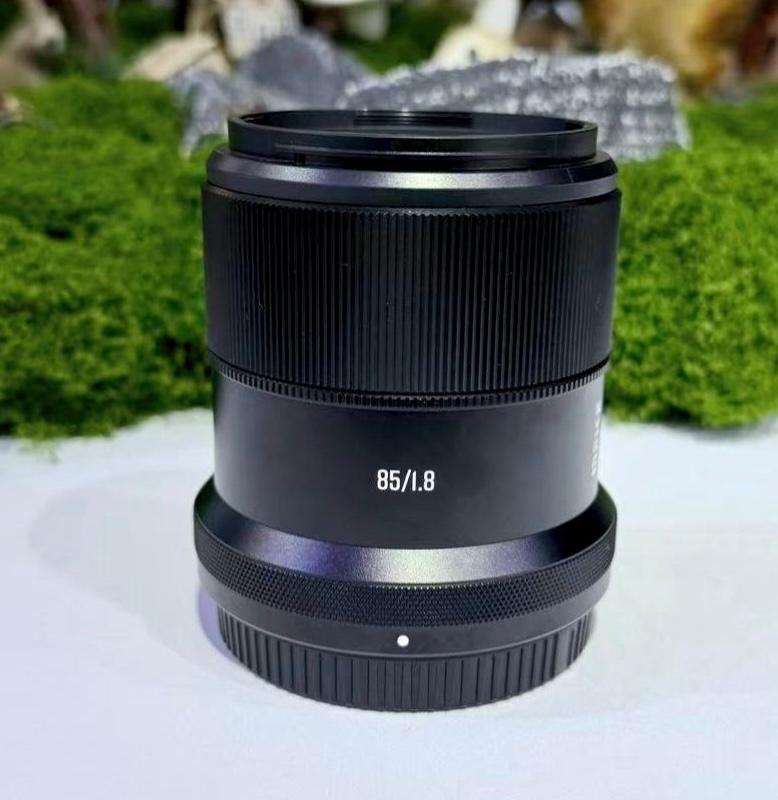
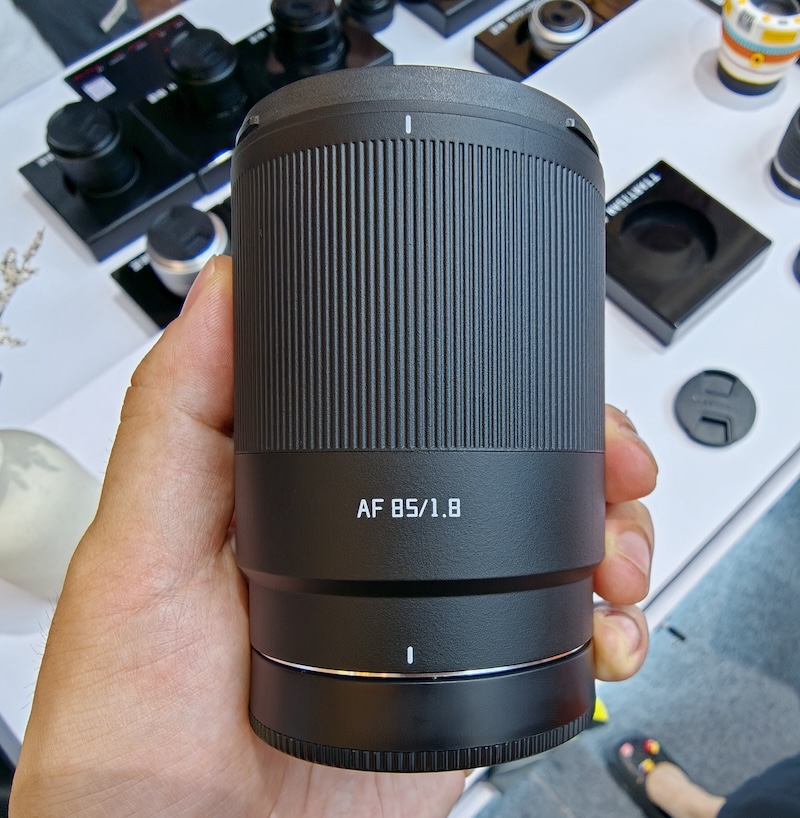
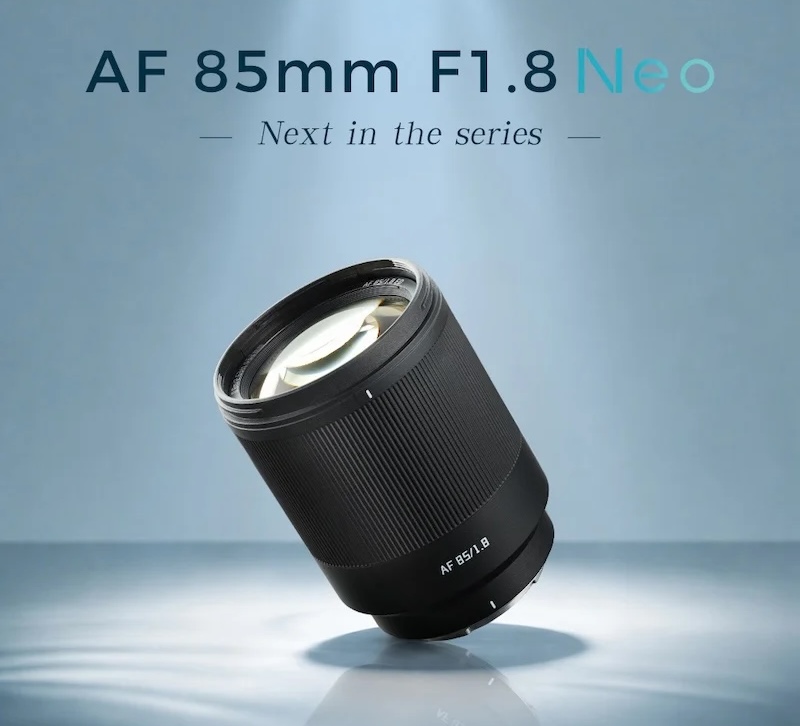
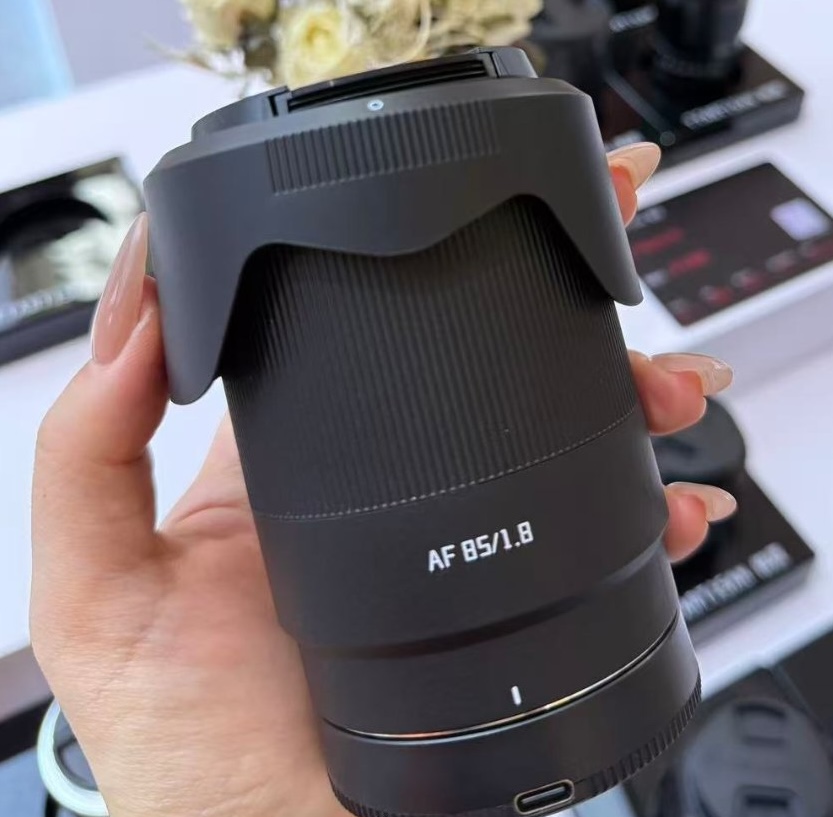
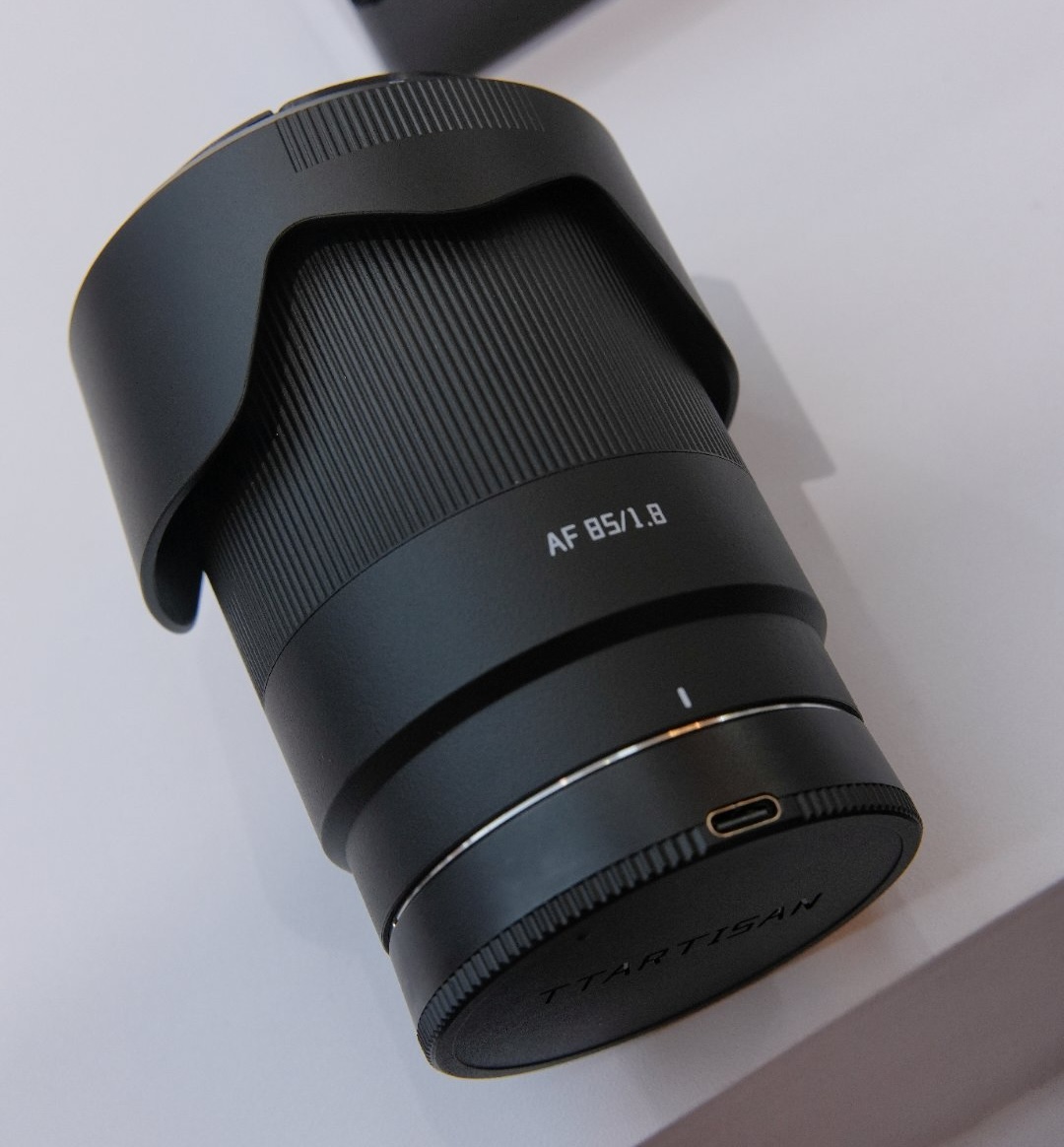
TTartisan also displayed a new 85mm f/1.8 NEO full-frame lens for E/Z/L mounts:


Brightin Star


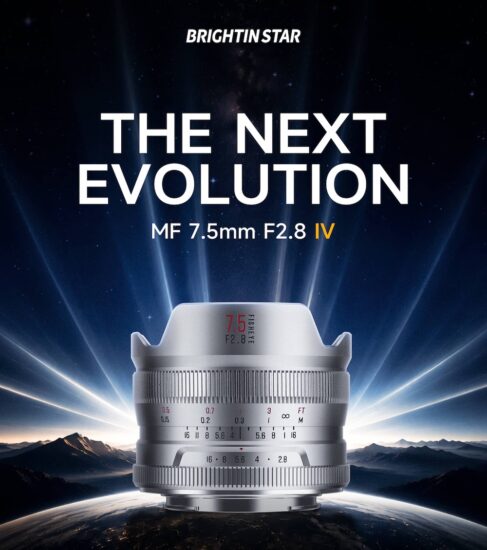
Brightin Star officially announced the previously reported 7.5mm f/2.8 IV APS-C ultra-wide fisheye lens for E/Z/RF-S/EF-M/X/MFT cameras:

New Brightin Star 7.5mm f/2.8 IV APS-C ultra-wide fisheye lens announced, intro price: $140

Brightin Star to announce four new lenses


Thypoch


The previously reported Thypoch Voyager 24-50mm f/2.8 lens is now officially announced and available for pre-order: B&H Photo | Thypoch store.


SG-Image

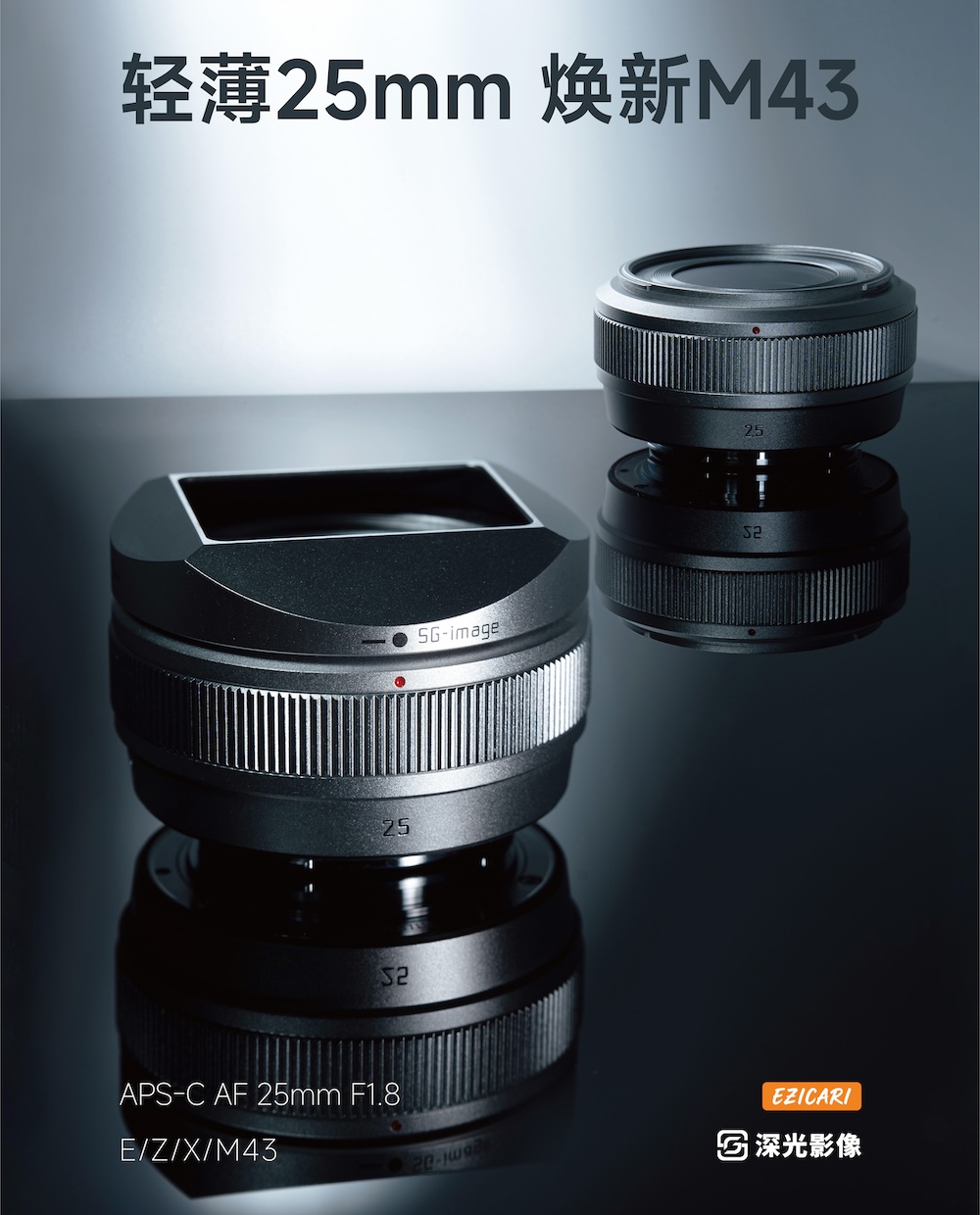
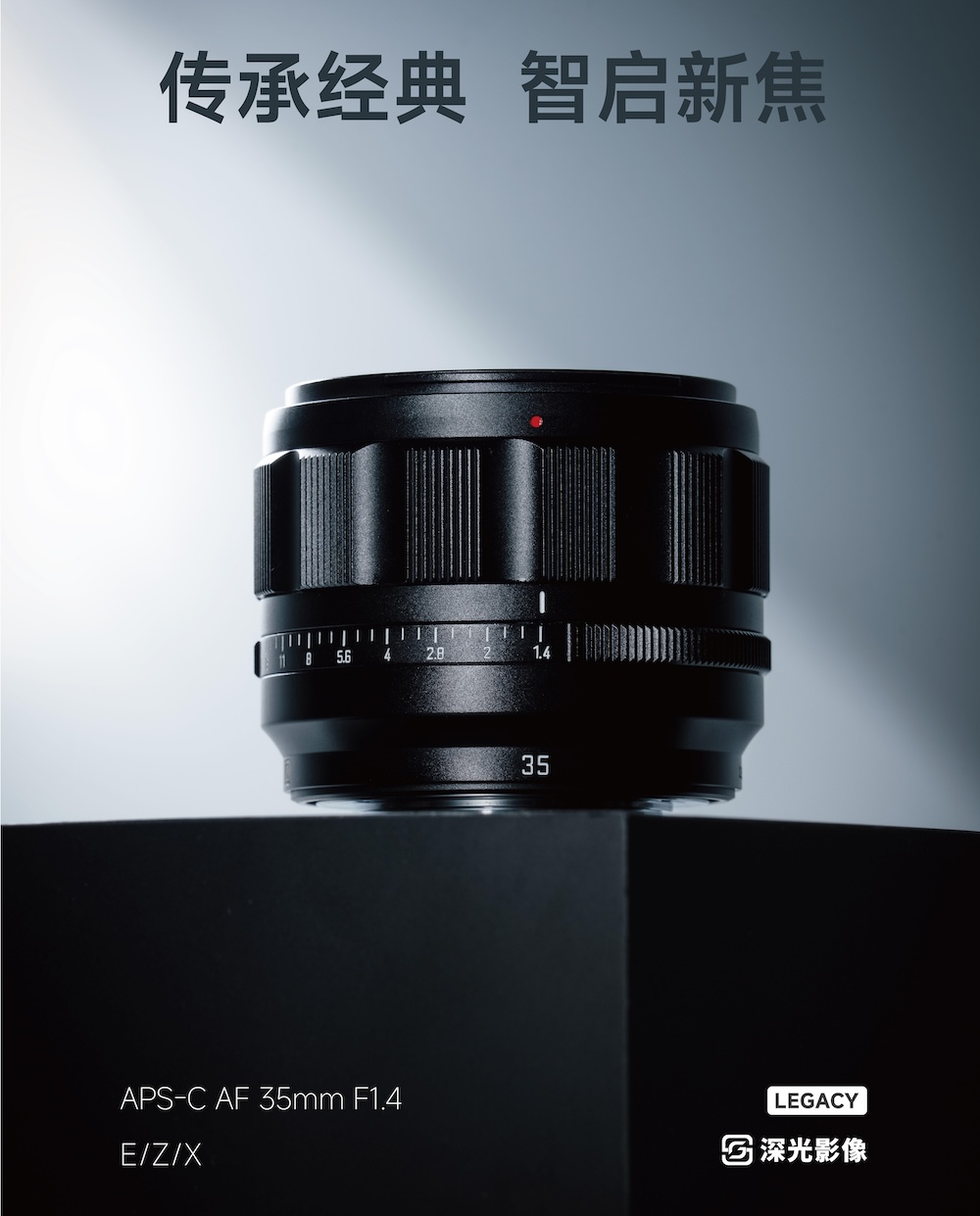
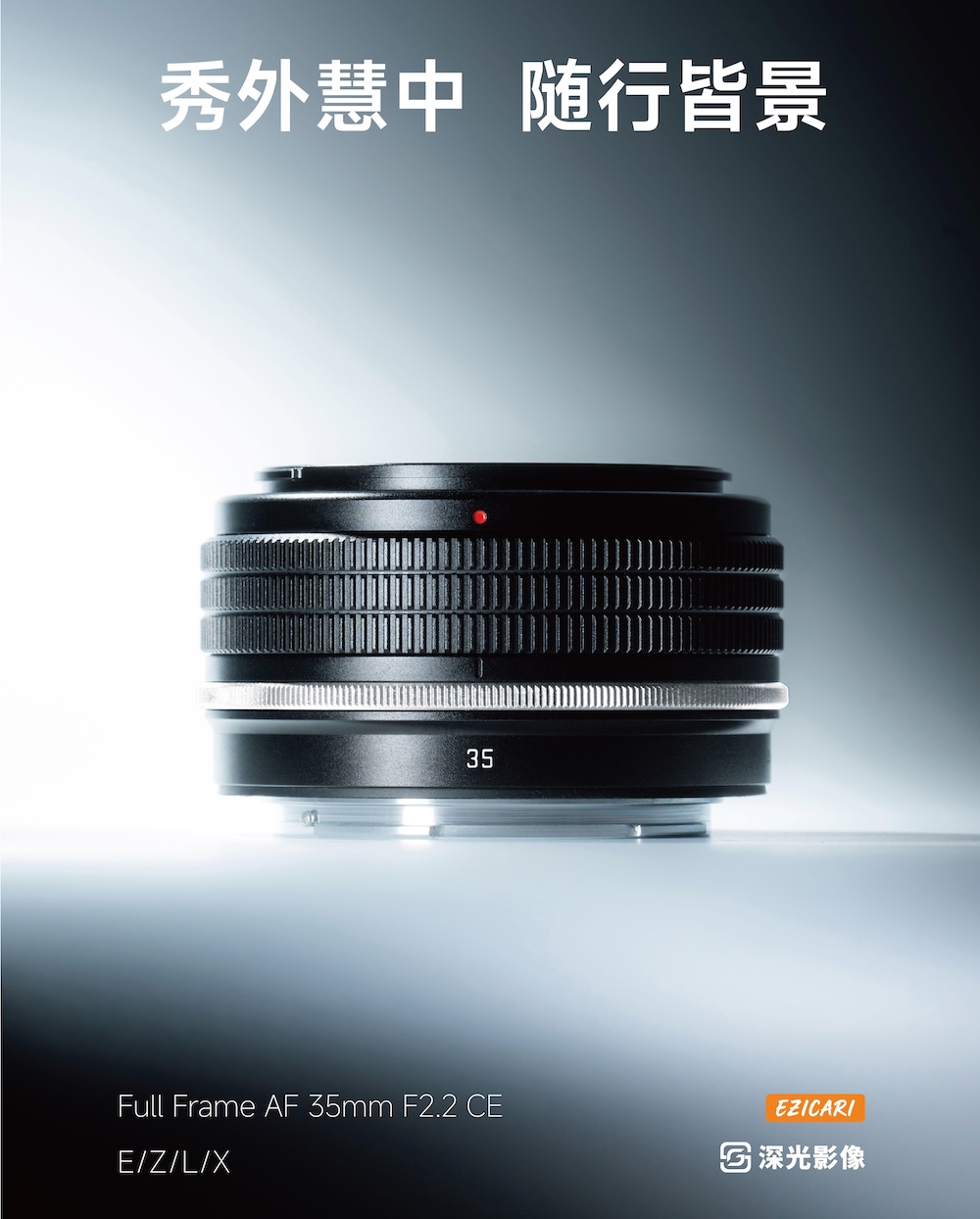
SG-Image displayed four new lenses (check website for updates):

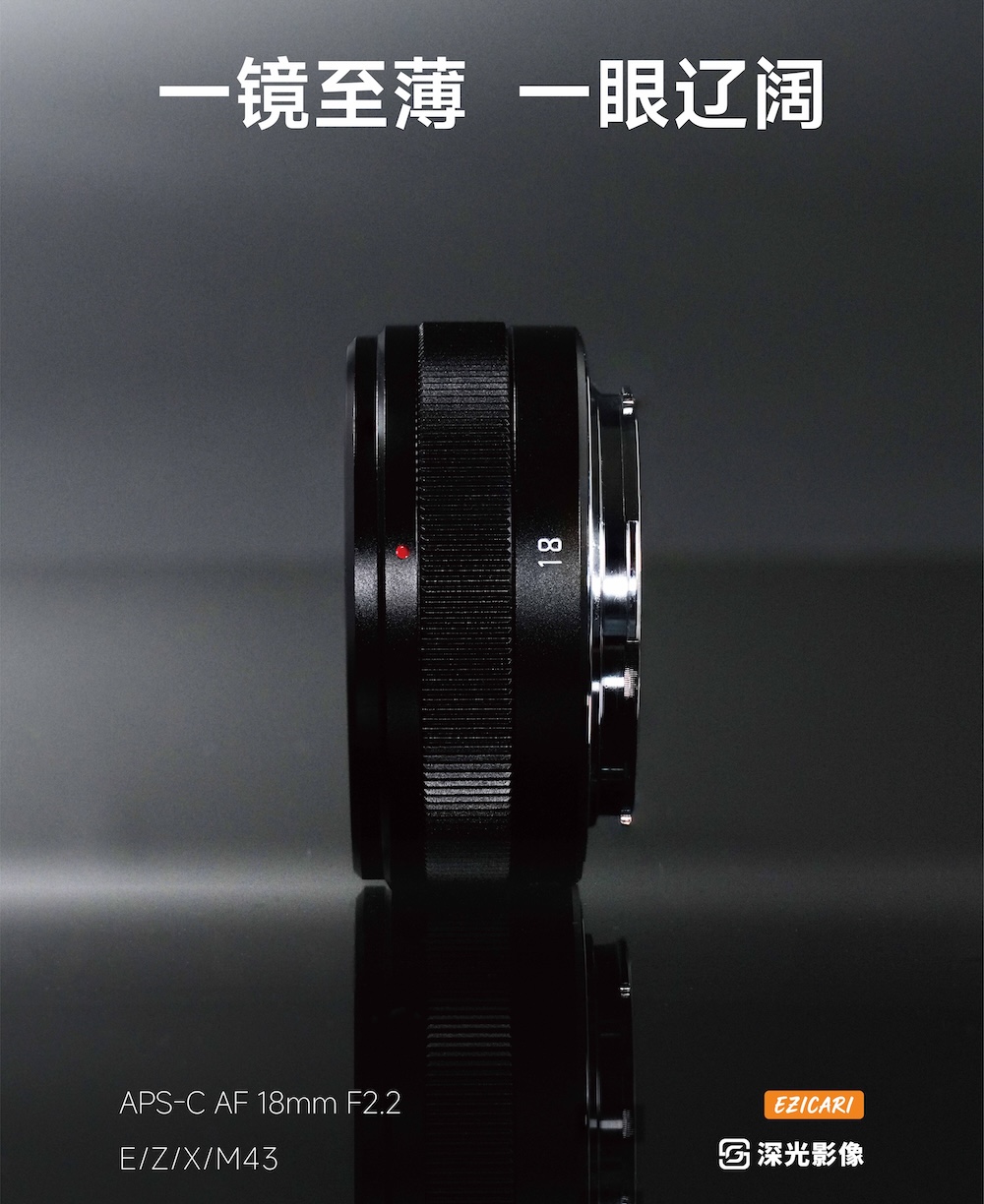
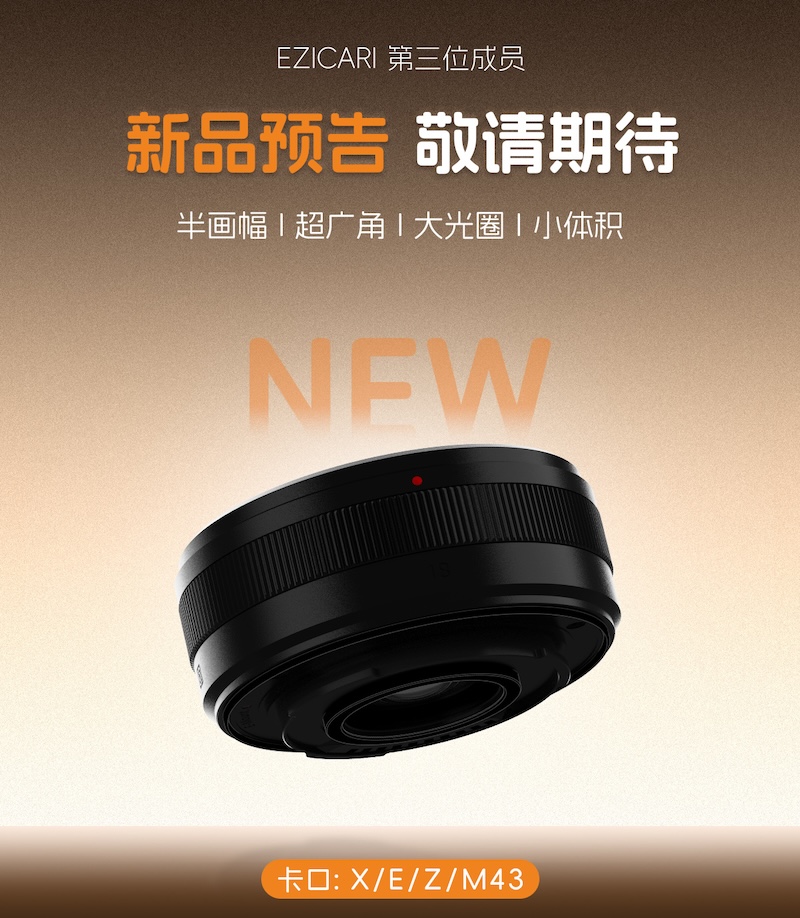
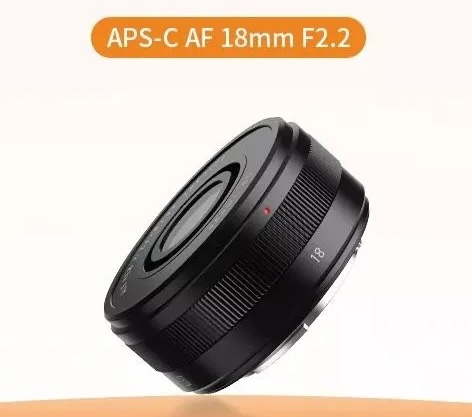
  • SG-Image AF EZICARI 18mm f/2.2 APS-C lens for X/E/Z/MFT
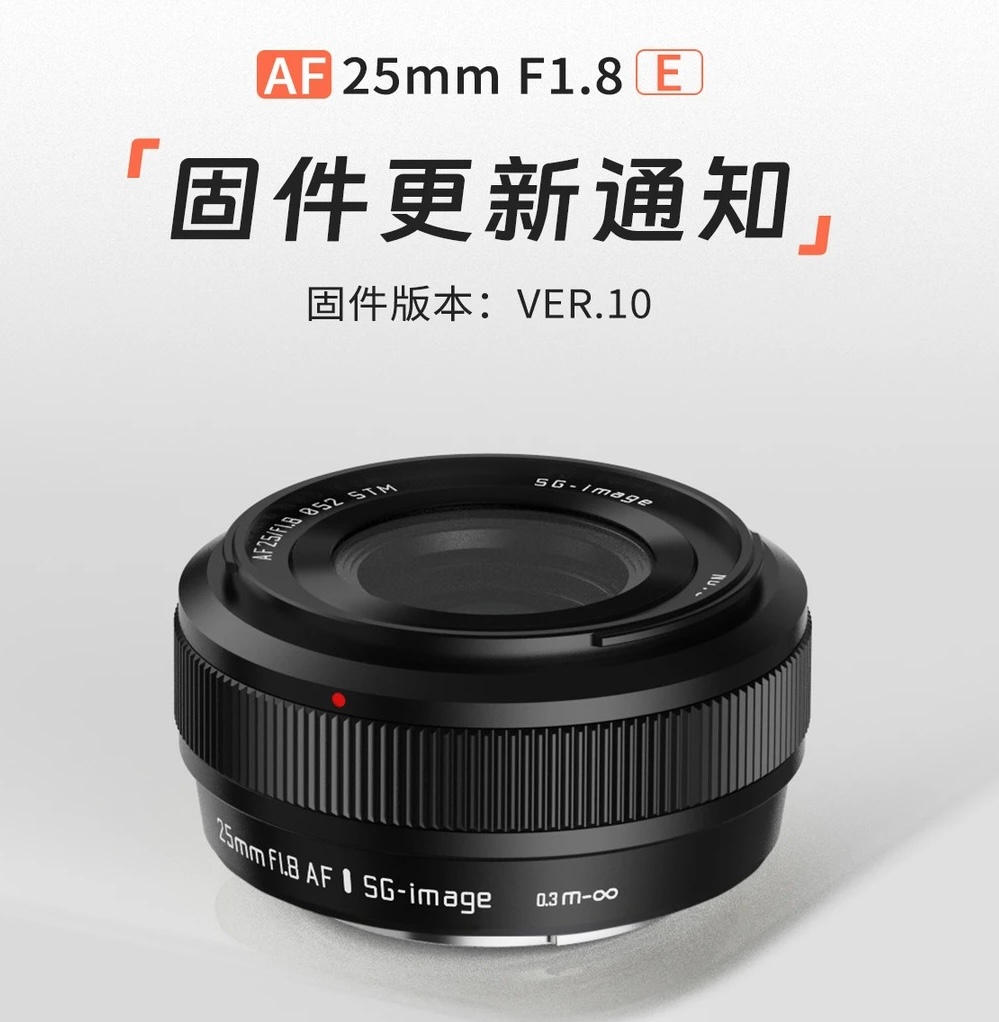
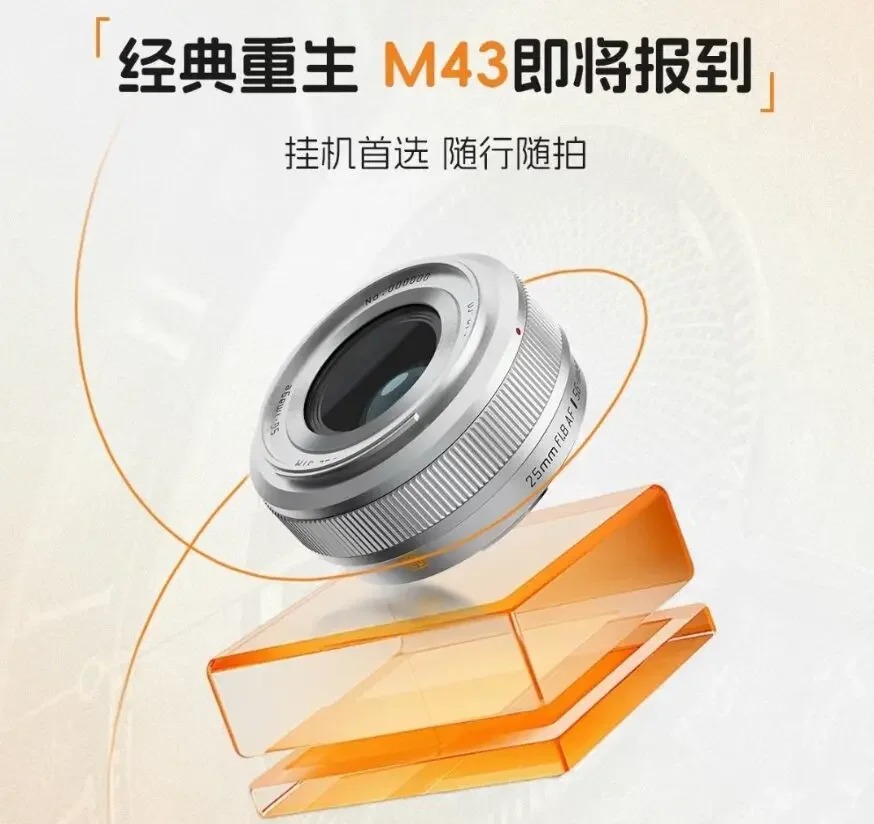
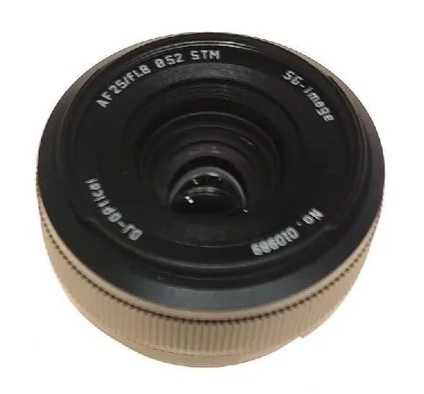
  • SG-Image AF 25mm f/1.8 lens for MFT
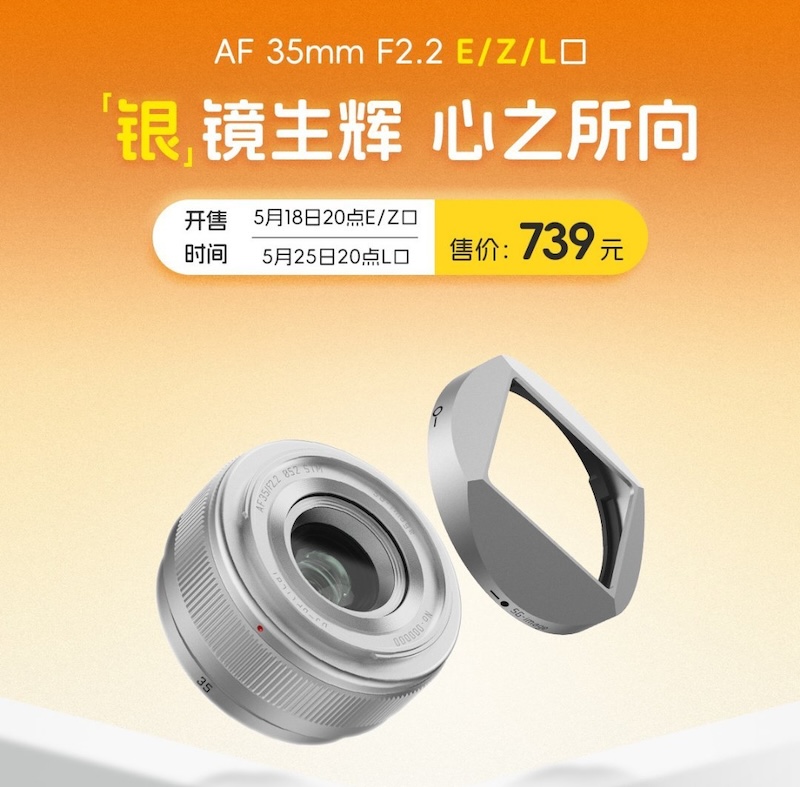
  • SG-Image AF 35mm f/2.2 CE full-frame lens for X/E/Z/L
  • SG-Image AF 35mm f/1.4 APS-C lens for X/E/Z

Songraw

Update on the new Songraw Moonlit 50mm and 85mm f/1.2 lenses:

Songraw to release new 50mm & 85mm f/1.2 full-frame autofocus lenses for Nikon Z and Sony E mount


Megadap

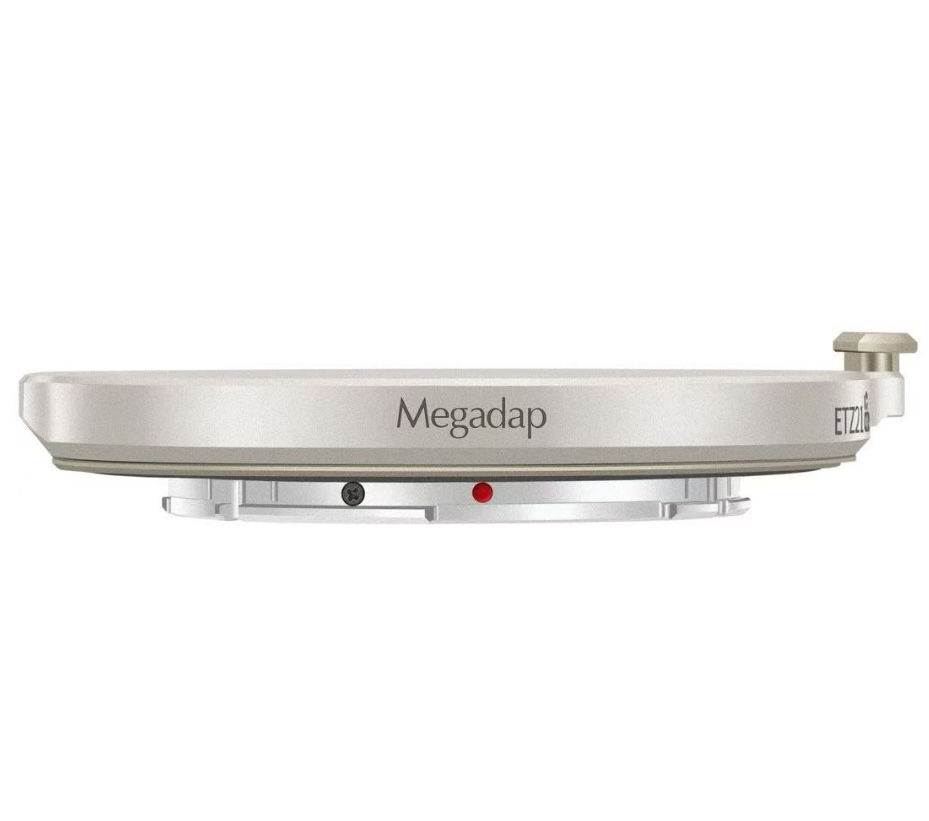
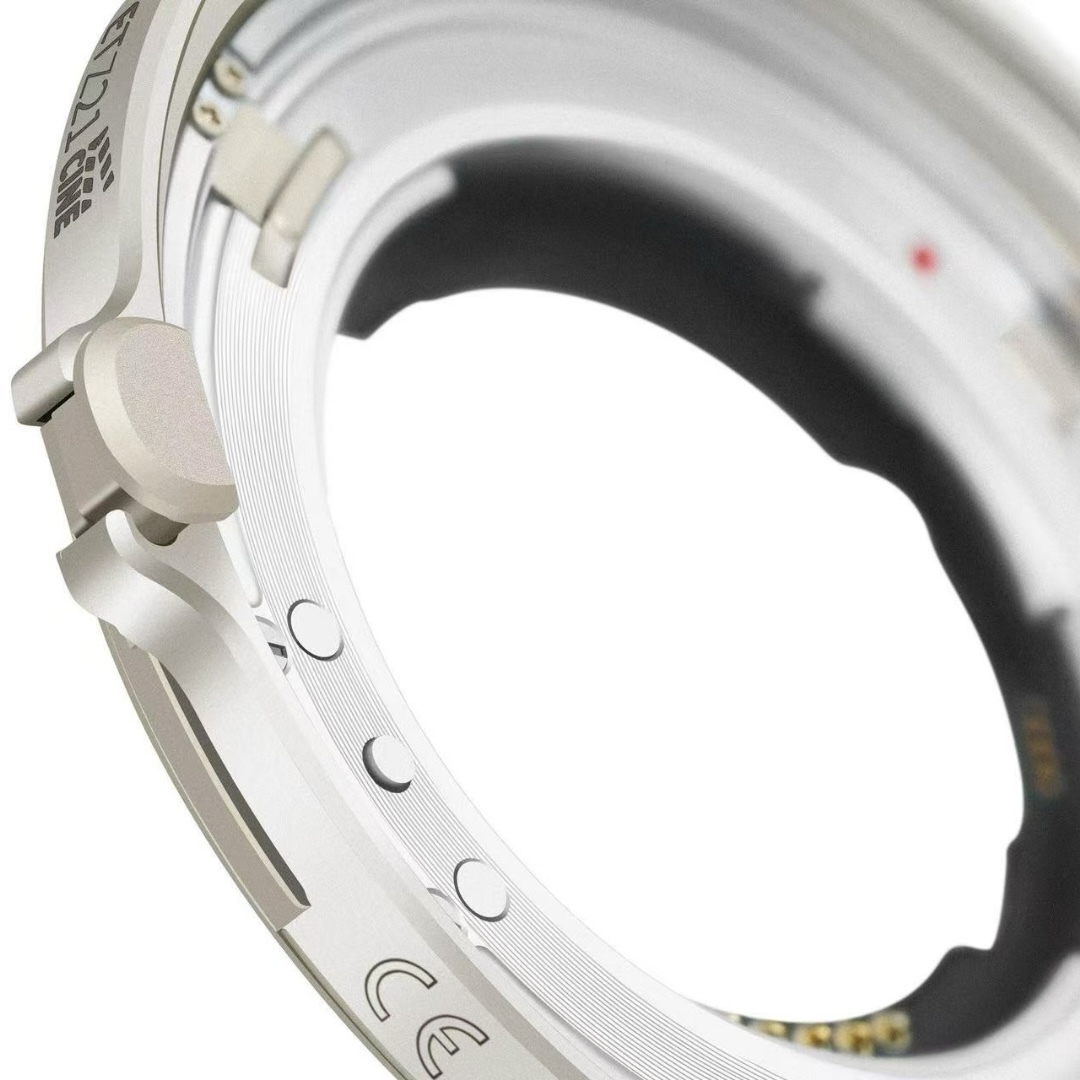
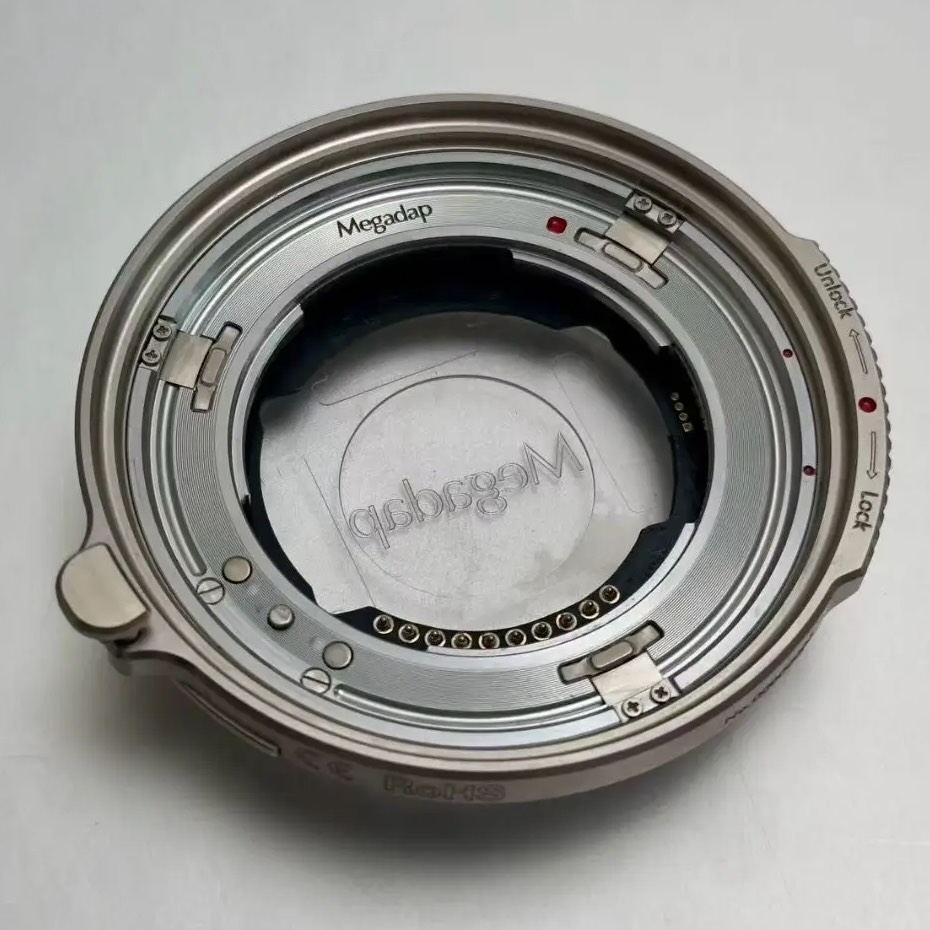
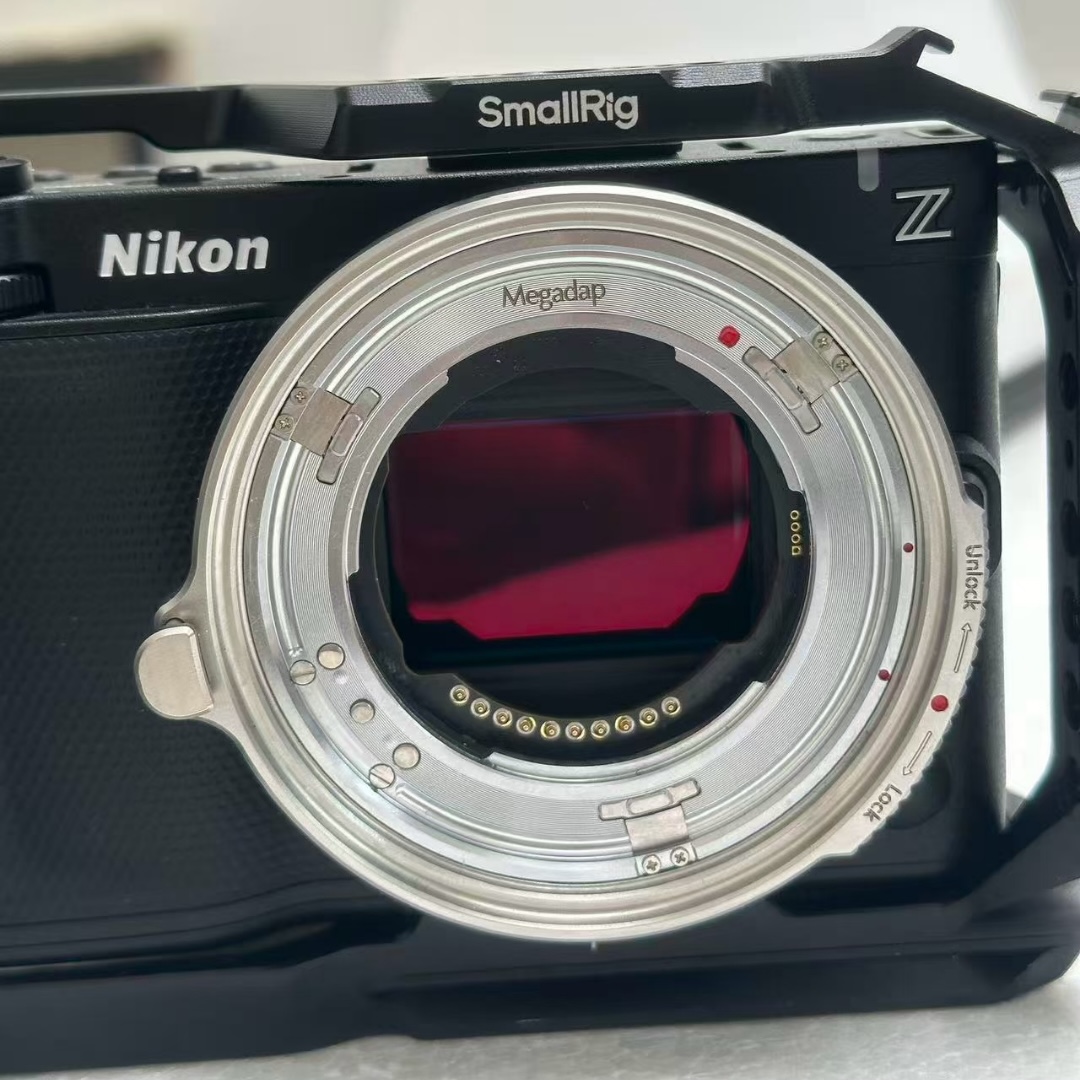
Megadap will release a cinema version of their ETZ21 lens adapter.


DJOptical

New DJOptical 35mm F3.5 lens for Leica M-mount.


JC Optics


JC Optics will release a new 400mm f/8 full-frame telephoto manual focus lens with adjustable focus damping, featuring a 3-element, 2-group optical design and a minimum focusing distance of 100cm, and designed for E/Z/F/RF/EF/EF-M/X/MFT mounts (all-metal mount).


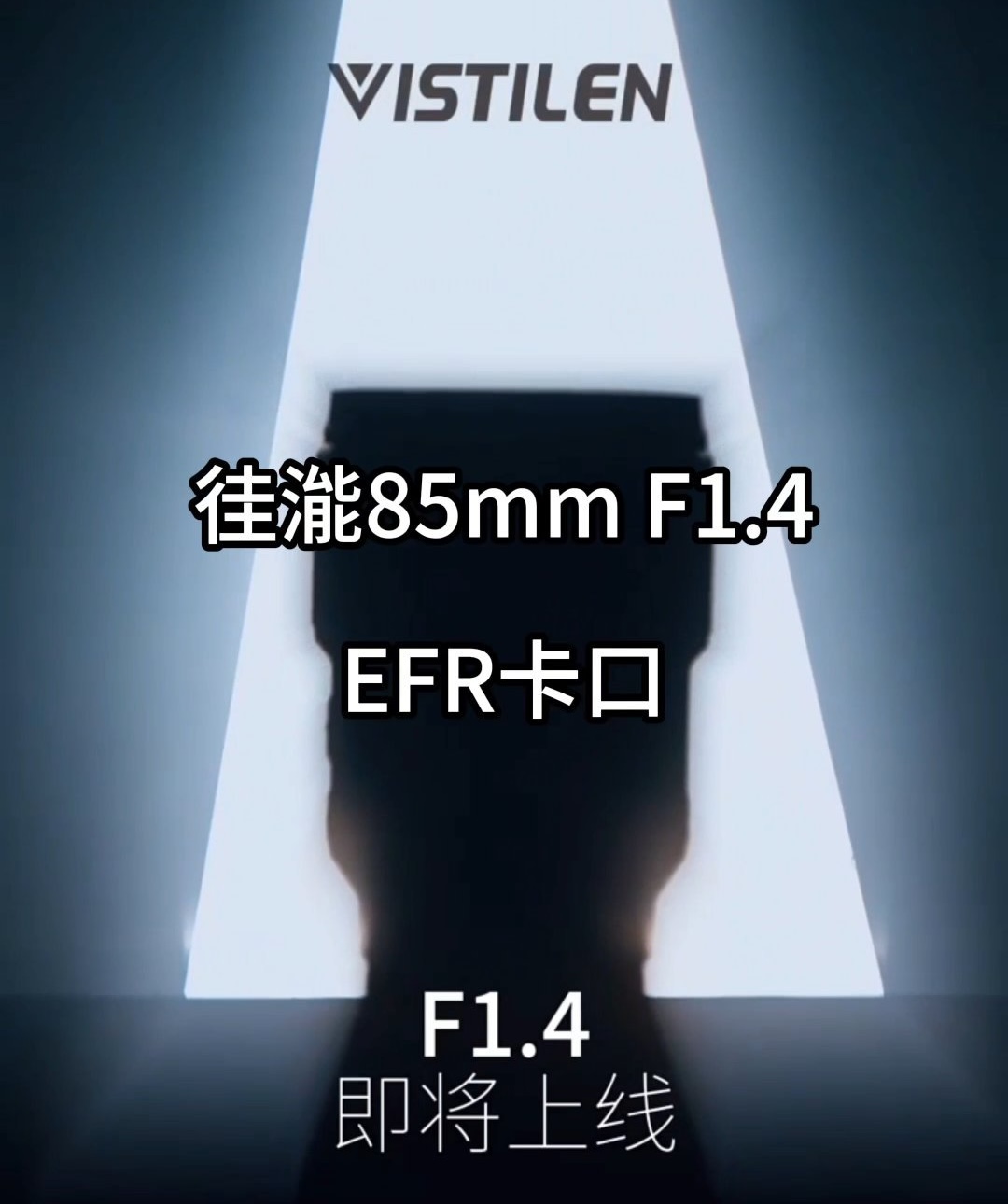
Vistlen


New Vistlen AF 85mm f/1.4 full-frame lens.

The post All new lenses from the 2026 China P&E Imaging Show (update #3) appeared first on Photo Rumors.

  •  

The 2026 Camera Grand Prix 2026 awards are out


Here is the list of the main 2026 Camera Grand Prix (Camera GP) awards, organized by Japan’s Camera Journal Press Club (CJPC) –  they include products released in the Japanese market from April 1, 2025, to March 31, 2026. A committee of 57 members (including media, experts, and TIPA representatives) selected the winners:

Grand Prix Awards

Readers’ Awards (voted by general users)


Editors’ Choice Awards (Journalists Club Award)


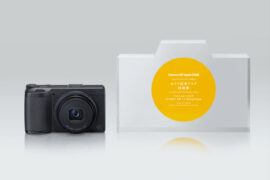
The Ricoh GR IV Monochrome camera won the 2026 Camera GP Editors’ Choice Technology Award

The post The 2026 Camera Grand Prix 2026 awards are out appeared first on Photo Rumors.

  •  

The latest financial reports from Nikon, Ricoh, Fujifilm, and Tamron


Here are the latest financial reports from Nikon, Ricoh, Fujifilm, and Tamron:

Nikon FY financial results:

  • Revenue: ¥290.00 billion (approx.$2 billion). Projection as of 2/8/26: ¥290.00.  -1.79% compared to fiscal ’25 actual.
  • Earnings:  ¥16.7 billion (approx. $115.17 million). Projection as of 2/8/26: ¥21.00 billion. -49.15% compared to fiscal ’25 actual.  -20.48% compared to 2/8/26 estimate.
  • Unit sales bodies: 910,000.    Projection as of 2/8/26: 900,000.   +5.88% compared to fiscal ’25 actual.    +1.11% compared to 2/8/26 estimate.
  • Unit sales lenses: 1.3 million.   Projection as of 2/8/26: 1.3 million.   -0.76% compared to fiscal ’25 actual.

Ricoh FY2025 financial results:

  • Cameras performed well and increased earnings, primarily driven by the Ricoh GR series.
  • The segment overall reduced its operating loss through cost controls and robust camera sales, despite upfront investments in new businesses and a goodwill impairment in the drug discovery support business.

Ricoh FY2025 financial results (for the year ending May 12, 2026)

Fujifilm FY2025 financial reports:

  • Revenue was JPY3,357.0 billion and increased 5.0% year-over-year.
  • Operating income was JPY350.2 billion and increased 6.1% year‑over‑year.
  • Net income attributable to FUJIFILM Holdings was JPY276.7 billion and increased 6.0% year‑over‑year.
  • The annual dividend for FY2025 is expected to be JPY70 per share, marking the 16th consecutive annual increase.

Fujifilm Announces Financial Results for the Fiscal Year Ended March 31, 2026

Tamron’s 1st Quarter FY2025 financial results (Photographic Products)

  • Before FY23: Approx. 5 new models per year
  • Initial Medium-Term Management Plan: Target of 6-7 launches per year
  • FY24: 7 launches achieved; FY25: 6 launches achieved
  • New Medium-Term Management Plan: Targeting 10+ new model launches per year by FY26
  • Net Sales: ¥11,305 million (-16.7% YoY): Significant decline driven primarily by weak OEM performance; other segments offset some impact at consolidated level.
  • Operating Income: ¥2,390 million (-37.2% YoY)
  • Operating Margin: 21.1% (-6.9 pts YoY): Profit hit by lower gross profit (sales decline + unfavorable product mix), plus higher material/utility costs, increased R&D, and personnel expenses.


The post The latest financial reports from Nikon, Ricoh, Fujifilm, and Tamron appeared first on Photo Rumors.

  •  

Canon is actively reviving and expanding its PowerShot compact camera lineup


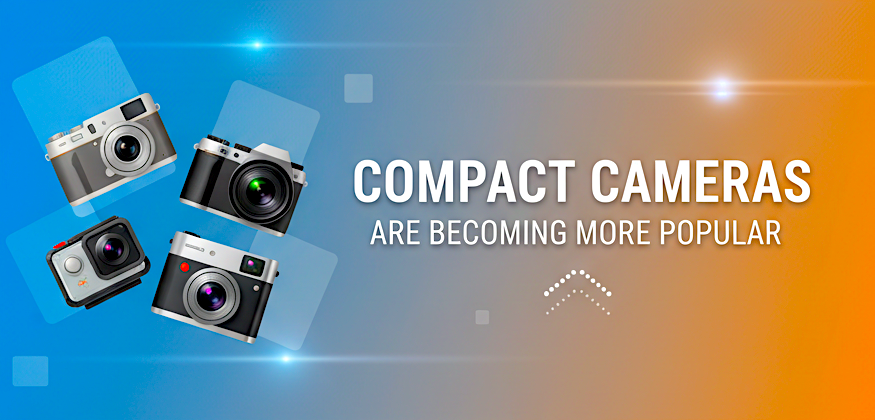
Canon is actively reviving and expanding its PowerShot compact camera lineup in response to renewed market demand, particularly from younger users and social media creators. This shift is driven by easing smartphone dominance, with compacts seen as creative tools and fashion statements rather than just point-and-shoots. Here is a recap from Canon’s report:


Key Insights from Canon’s 2026 Integrated Report

Canon’s official 2026 report (covering 2025 performance) highlights that the camera market contraction due to smartphones has eased. New user segments, especially young people focused on video and social media photography, are driving growth. Compact digital cameras are expanding again as tools that offer capabilities beyond smartphones, with ownership viewed as a cultural/fashion statement among younger generations.
  • The PowerShot V1 (a 2025 video-focused model) is highlighted as a key example of this direction, positioned alongside existing models like the PowerShot G7 X Mark III, SX740 HS, and IXY 650.
  • Canon increased compact camera production in 2025 and plans further expansion. The Imaging Group saw strong sales growth (up 12.5% to over 1 trillion yen), with compacts contributing alongside entry-level mirrorless cameras.
  • Broader strategy: Strengthen products across categories (including compacts) with a focus on video, while maintaining leadership in interchangeable-lens cameras.
  • This aligns with executives noting that current compact buyers are often new customers (not traditional Canon users), so future models will introduce “new technologies or use cases.”

Up to three new Canon PowerShot models are rumored for 2026, including two high-end models and one more mass-market option. These are expected to launch around Q3–Q4 (potentially tied to holiday shopping).

Canon compact camera rumors for 2026

Canon is reviving its compact camera line and has taken the #1 spot in Japan

The post Canon is actively reviving and expanding its PowerShot compact camera lineup appeared first on Photo Rumors.

  •  

The Sony a7R VI in action: wildlife, landscapes, portraits and more

When you use DPReview links to buy products, the site may earn a commission.
office-of-railway-safety-traincar
Sony a7R VI | Sigma 24-70mm F2.8 DG DN II | 70mm | F5.6 | 1/16 sec | ISO 100
Photo: Mitchell Clark

This week, Sony announced the a7R VI, the latest entry in its lineup of full-frame cameras focused on maximum resolution and image quality. We were able to spend some time shooting a variety of subjects with it: portraits, wildlife, landscapes (of course) and even some action to really test the speed and capability of its stacked sensor and AF algorithms.

So far, we've been quite impressed with the detail this camera captures, both in our samples and in our studio scene. But this sensor's resolution is only part of the story, as Sony also says it sets a benchmark for dynamic range performance in its lineup. However, we'll have to wait until we can edit its Raw files before we can test and illustrate that, so keep an eye out for some Adobe Camera Raw conversions in this gallery once support becomes available.

Sample gallery
This widget is not optimized for RSS feed readers. Click here to open it in a new browser window / tab.

  •  

The team discusses the wild week in camera releases

When you use DPReview links to buy products, the site may earn a commission.

We've reached the end of a week jam-packed with announcements from Canon, Sony, Panasonic and others. There's actually so much camera news that it'd be hard to cover it all in a single discussion, so in this video the DPReview crew is talking about the Sony a7R VI and FE 100-400mm F4.5 GM OSS, and the Canon EOS R6 V and its kit 20-50mm F4 L IS USM PZ lens.

For those who want to hear our thoughts on the Panasonic L10, stay tuned; we'll have an episode coming soon talking about our feelings on it, after we've had some time to form our impressions.

  •  

No, the Sony a7R VI isn't a cut-price a1 II

When you use DPReview links to buy products, the site may earn a commission.
Sony a7RVI 3qrt view
Photo: Mitchell Clark

With its use of the latest AF algorithms and its ability to shoot at 30 frames per second, the new Sony a7R VI looks a lot like a higher-resolution, more affordable rival to the company's own a1 II, pro sports model.

However, having dug a little deeper and taken it pitchside to shoot some sports, that's not the reality at all.

On paper, both the a1 II and the a7R VI are high-resolution cameras with Stacked CMOS sensors that shoot at up to 30 frames per second. But, even though the a7R VI has a pretty deep buffer and accepts the same memory cards as the a1 II, out in the real world, the difference is pronounced.
In the real world, the difference is pronounced

Much of the difference comes from the fact that Stacked CMOS sensors aren't all the same. Sony's a1 and a9 series cameras' sensors have DRAM built into the back of their sensors to buffer the large amount of data that's coming off their chips. Meanwhile, from what we've heard, Nikon's sensors have the circuitry for dual readout streams: one for high quality image data and the other to minimize viewfinder latency.

The a7R VI's sensor's second layer is described as 'processing circuitry,' which we suspect includes its ability to merge the data from the low and high gain modes of its pixels, underpinning its higher DR. So, while the a7R VI's readout is quick, especially when compared with its predecessor's, it's not as rapid as the Nikon Z8, Canon EOS R5 II or the Sony a1 II.

The view from the sidelines

In practice you encounter the speed difference in a number of areas. With pre-capture mode engaged, in an attempt to compensate for our non-pro reaction times, we noticed the a7R VI developed a distinct lag or choppyness to its viewfinder refresh that isn't present in the a1 II.

Autofocus

We also noticed that the autofocus performance didn't quite seem as immediate or dependable as when we took the a1 II to a rugby game, as part of our review testing. It's still very good, but good for a high res camera, rather than giving the 'I have no doubt this is the best they can deliver' confidence that using a top-end, sports-focused camera can give.

In our briefing with Sony, we were told the a7R VI is able to conduct autofocus and autoexposure calculations at "up to 60 times per second," whereas the a1 II can conduct twice as many. The 60 vs 120fps distinction might account for some of the autofocus differences we experienced when really pushing the camera, but the phrase "up to" seems pertinent, too. Given the a7R VI takes 1/50th of a second to read out each frame in e-shutter mode, we suspect it can't maintain 60fps updates to the AF system in pre-capture mode, because it's trying to capture full-res images at the same time.

Rolling shutter

DSC01598
The a7R VI's rolling shutter is around five times faster than its predecessor but still about 5 times slower than the a1 II. Panning to follow the action was enough to induce visible distortion.

Sony a7R VI | FE 100-400mm F4.5 GM | F4.5 | 1/800 sec | ISO3200
Photo: Richard Butler

In addition, the significantly slower rolling shutter of the a7R VI, compared with the a1 II starts to make itself apparent in some of the actions shots we took. For most work, a sub-20ms (1/50 sec) readout speed is quick enough not to be a problem, but photographing a sport that can feature plenty of fast lateral motion means that panning the camera to follow the action can result in some recognizably warped images.

The camera can go a little faster than this if you shoot JPEG only and/or lossy Compressed Raw, where the sensor readout appears to drop to a lower bit-depth mode and the shutter rate improves a little to 14ms (∼1/70 sec).

Hardware differences

Dig deeper into the a1 II's specs and you start to find other distinctions, such as the provision of an Ethernet port for rapid offload of images, which some pro sports applications require. Likewise the a7R VI lacks the a1 II's comfier grip and front-mounted custom button, which makes the Speed Boost function that both models share, much easier to use in conjunction with back-button focus.

a1 II C5 button

The a7R VI doesn't have a C5 button on its front plate, as the a1 II (pictured) does. This is well placed for activating the Speed Boost function, when you're already using your index finger on the shutter and thumb back-button focusing.

Photo: Mitchell Clark

Then there are the a1 II's locking drive/burst mode and AF mode dials, which the a7R VI lacks, relagating those settings to the menus. Little differences that add up if you only have a couple of seconds to adjust your camera's setup. And they're the differences that professionals have requested and that explain why Sony charges unapologetically pro prices for the a1 II.

Overall, these performance difference added up to make clear why Sony doesn't list sports as one of the intended uses of the a7R VI. Instead its newfound speed is designed to expand from its studio and landscape hinterland, reinforce its credentials for weddings and events, and lend itself to some wildlife work. But Sony isn't omitting sports from the list just to protect a1 II sales.

Then again, it's no criticism of what isn't supposed to be a sports photography model that it can't match up to Sony's $7000 pro sports camera.

  •  

How creating a challenge helped one creator find new inspiration

As the saying goes, money can't buy happiness. That logic tracks in photography, too: the latest gear does not make an excellent photographer. Or, in Alli Forsythe's case, it might not provide the creative drive to inspire work that truly excites you.

In our latest episode of ISO: Camera Upgrades on a Budget, produced in partnership with MPB, Forsythe decided that her kit, owing to her professional relationship with Nikon, was pretty much perfect. So rather than chasing the next upgrade in search of creative inspiration – a futile pursuit, she realized – she decided to inject a new challenge into her workflow instead.
Forsythe had always been captivated by the cinematic look anamorphic lenses create in videos, so she devised an experiment: what would it be like to shoot a series of still photos on anamorphic?

After poking around the DPReview archives, Forsythe identified a set of Sirui lenses before jumping to MPB to trade in some of her lesser-used glass and offset the cost of the anamorphics.
Check out the video above to see the results.

If you have gear collecting dust on a shelf or you're simply looking for something new-to-you, head over to MPB to upgrade your kit today.

Buy, Sell, or Trade with MPB

  •  

Updated list of new lenses from the 2026 China P&E Imaging Show in Beijing


Here is the list of new lenses that will debut at the 2026 China P&E Imaging Show, which just started in Beijing:

Viltrox

Viltrox is teasing several new lenses:

  • Viltrox 28mm f/4.5 Chip for L-mount
  • Viltrox 26mm f/2.8 EVO pancake
  • Viltrox 28mm f/2.8
  • Viltrox 90mm f/2.2 EVO APS-C
  • Viltrox 75mm f/1.8 EVO APS-C
  • Viltrox AF 18mm f/1.2 Pro APS-C
  • Viltrox AF 35mm f/1.2 Pro APS-C
  • Viltrox AF 35mm f/1.4 Pro
  • Viltrox AF 25mm f/1.7 MFT
  • Viltrox HSS flash
  • Viltrox tilt or shift or both lens

New Viltrox AF 35mm f/1.4 Pro lens (E/Z) coming next week

Viltrox to announce a new line of Micro Four Thirds lenses, the first model will be 25mm f/1.7

Additional pictures of the upcoming Viltrox AF 26mm f/2.8, 75mm f/1.8, and 90mm f/2.2 EVO lenses


Meike

Here are the expected new Meike lenses:

Meike is teasing a new lens for Fujifilm GFX medium format cameras


Venus Optics (Laowa)

Laowa will announce several new lenses on May 13th:

  • Laowa 15-35mm
  • Laowa 8-15mm f/2.8 fisheye
  • Laowa 4.5-10mm f/2.8 APS-C zoom fisheye
  • Laowa 15-24mm T8 / 15-35mm T12 probe zoom
  • Laowa 35mm f/2.8 APO 1:1 macro
  • Laowa 7.5mm f/2.8 Zero-D (APS-C, MFT)
  • Laowa Axon AF 1-5x 5-10x macro

Is Venus Optics is working on a new Laowa wide-angle zoom autofocus mirrorless lens?


ZY Optics (Zhongyi)

ZY Optics (Zhongyi) will release new 30mm f/2.4 and 45mm f/1.4 lenses:

ZY Optics (Zhongyi) to release two new lenses: 30mm f/2.4 and 45mm f/1.4 at the Beijing P&E Imaging Show


Yongnuo


Yongnuo will have two new lenses – 35mm f/1.4 and 85mm f/1.4 with new VCM tech and an LCD screen on the lens:

Yongnuo is teasing a lens with a newly developed VCM motor


7Artisans

New 7Artisans 135mm f/1.8 MAX lens is coming on May 14th:

The new 7Artisans 135mm f/1.8 MAX lens (E/Z/L) will be released in May


TTartisan

TTartisan will release a new AF 24mm f/3.8 lens with VCM focusing motor and a minimum focusing distance of 0.3 meters (for E/Z/L mounts).  This lens was already on display at the 2026 CP+ show:

2026 CP+ show recap


Brightin Star


Brightin Star officially announced the previously reported 7.5mm f/2.8 IV APS-C ultra-wide fisheye lens for E/Z/RF-S/EF-M/X/MFT cameras:

New Brightin Star 7.5mm f/2.8 IV APS-C ultra-wide fisheye lens announced, intro price: $140

Brightin Star to announce four new lenses


Thypoch


The previously reported Thypoch Voyager 24-50mm f/2.8 lens is now officially announced and available for pre-order: B&H Photo | Thypoch store.


SG-Image

SG-Image displayed four new lenses (check website for updates):

  • SG-Image AF EZICARI 18mm f/2.2 APS-C lens for X/E/Z/MFT
  • SG-Image AF 25mm f/1.8 lens for MFT
  • SG-Image AF 35mm f/2.2 CE full-frame lens for X/E/Z/L
  • SG-Image AF 35mm f/1.4 APS-C lens for X/E/Z

Songraw

Update on the new Songraw Moonlit 50mm and 85mm f/1.2 lenses:

Songraw to release new 50mm & 85mm f/1.2 full-frame autofocus lenses for Nikon Z and Sony E mount


Megadap


Megadap will release a cinema version of their ETZ21 lens adapter.


DJOptical

New DJOptical 35mm F3.5 lens for Leica M-mount.


JC Optics


JC Optics will release a new 400mm f/8 full-frame telephoto manual focus lens with adjustable focus damping, featuring a 3-element, 2-group optical design and a minimum focusing distance of 100cm, and designed for E/Z/F/RF/EF/EF-M/X/MFT mounts (all-metal mount).

The post Updated list of new lenses from the 2026 China P&E Imaging Show in Beijing appeared first on Photo Rumors.

  •  

The DJI Osmo Pocket 4P teaser hints at a multi-camera design

dji camera gimabl stands against a dark background with a spotlight
Image: DJI

Just a month after releasing the Osmo Pocket 4, DJI is teasing another version of its new compact gimbal camera. Details on the Osmo Pocket 4P are minimal, to say the least, but the company attended the Cannes Film Festival to unveil the new camera.

DJI says that showcasing the Osmo Pocket 4P at such a prestigious event for filmmaking "signals a bold evolution of the Pocket series from a creator tool into a cinematic imaging device capable of professional-grade storytelling." That implies there could be some notable upgrades, but DJI isn't revealing much at this point.

We do know that the Osmo Pocket 4P will offer 10-bit D-Log2, a new version of the company's Log curve. How it differs remains to be seen, but DJI says it will enable professional color grading. The new camera will also offer "improved zoom functionality," which is intriguing, since the Osmo Pocket 4 only offers digital zoom. The lone teaser image shows two cameras, perhaps suggesting a combination of digital zoom and a telephoto focal length.

DJI is also promising that the new version will offer more natural skin tones, "cinematic depth," and better low-light performance. That's all the company is revealing for now, though, and simply says that more details and pricing information will be available at a later date. We'll just have to wait and see what this new camera brings to the table, then.

Press release:

DJI Debuts Osmo Pocket 4P in Cannes, Ushering in a New Era of Handheld Cinematic Excellence

From industry pioneer to cinematic innovator, Osmo Pocket 4P defines where pocket cinema truly begins

May 14, 2026 – Cannes, France – DJI, the global leader in civilian drones and creative camera technology, today unveils the Osmo Pocket 4P at Cannes, marking a new milestone in DJI’s evolution of handheld cinematic imaging. Since pioneering the gimbal camera category in 2015 and introducing one of the world’s first pocket-sized gimbal cameras in 2018, DJI has continuously redefined how creators capture motion and tell stories. Today, with the Osmo Pocket 4P, DJI is spearheading a new era of cinematic excellence in handheld gimbal systems, where professional-grade filmmaking capabilities meet true pocket-sized portability.

By unveiling the Osmo Pocket 4P at one of the most prestigious stages in global filmmaking, DJI signals a bold evolution of the Pocket series from a creator tool into a cinematic imaging device capable of professional-grade storytelling.

Built upon DJI’s legacy in professional cinematography, including its industry-defining DJI Ronin and DJI Inspire platforms, the Osmo Pocket 4P represents the convergence of high-end film technology and extreme portability. Featuring a next-generation imaging system, the Osmo Pocket 4P delivers cinematic-level dynamic range for rich tonal depth alongside 10-bit D-Log2 color performance that enables professional color grading workflows. Combined with DJI’s advanced stabilization expertise, the device brings professional cinema capabilities into a truly pocket-sized form factor, empowering creators to capture stories with unprecedented flexibility.

In Cannes, the Osmo Pocket 4P is already being explored by filmmakers, documentary creators, and visual storytellers seeking agile, high-quality production tools. Its compact form, paired with cinematic imaging performance, positions it as a compelling companion for independent filmmakers and a powerful storytelling device for documentary work. The debut at Cannes reinforces the idea that cinematic storytelling is no longer confined to large-scale rigs, but can now exist in a device small enough to carry anywhere.

The Osmo Pocket 4P introduces significant advancements designed to address real-world creator needs. Its enhanced portrait capabilities deliver natural skin tones and cinematic depth, enabling more emotionally engaging storytelling across interviews, vlogs, and narrative content. Improved zoom functionality expands creative possibilities, allowing creators to capture distant subjects while maintaining image integrity. In low-light environments, advanced sensor technology and refined imaging algorithms ensure clear, detailed footage, making it possible to shoot confidently in challenging conditions from nighttime cityscapes to indoor scenes. These innovations position the Osmo Pocket 4P as a true consumer professional imaging device, bridging the gap between accessibility and cinematic quality.

Following the global success of its predecessor, the Osmo Pocket 4P builds on a growing movement in which compact cameras are reshaping how stories are created and shared. Its Cannes debut highlights its potential to influence the future of cinematic vlogging, inspire a new generation of mobile-first filmmakers, and lead global trends in portrait-driven visual storytelling. With seamless integration into DJI’s broader creative ecosystem, including audio and stabilization solutions, the Osmo Pocket 4P enables creators to build complete, professional workflows within an ultra-portable setup.

The Osmo Pocket 4P will be available through DJI’s official channels and authorized retail partners. Pricing and configurations will be announced at a later date.

DJI’s ecosystem now spans cinema cameras, cinema drones, professional stabilizers, gimbal cameras, and portable power solutions, reflecting the company’s commitment to delivering an integrated approach to modern film and content production. At the event, the DJI Power 1000 Mini, launched in April, and the DJI Power 2000 were also showcased as power solutions for the Osmo Pocket 4P, demonstrating how DJI’s broader product ecosystem can support creators with more flexible and reliable production workflows. Together, these solutions underscore DJI’s vision of building a complete and professional creative ecosystem for storytellers.

  •  

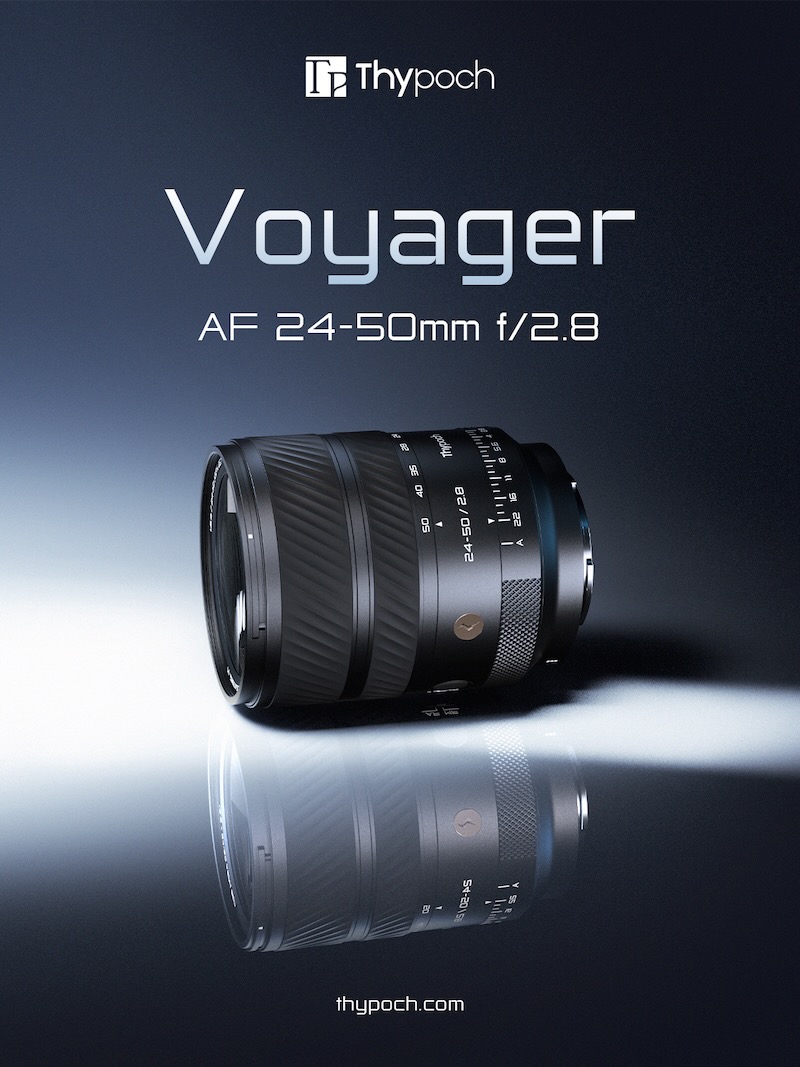
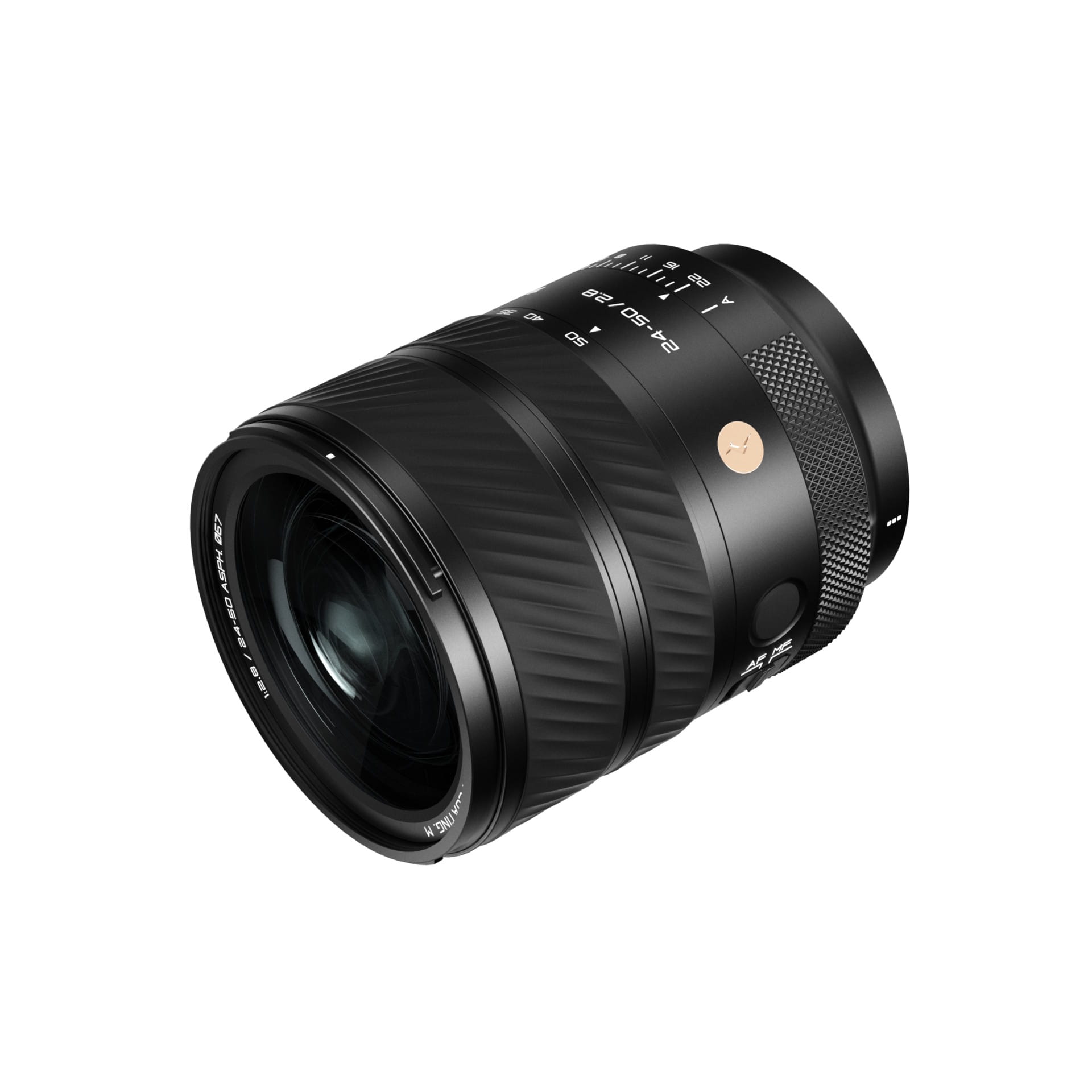
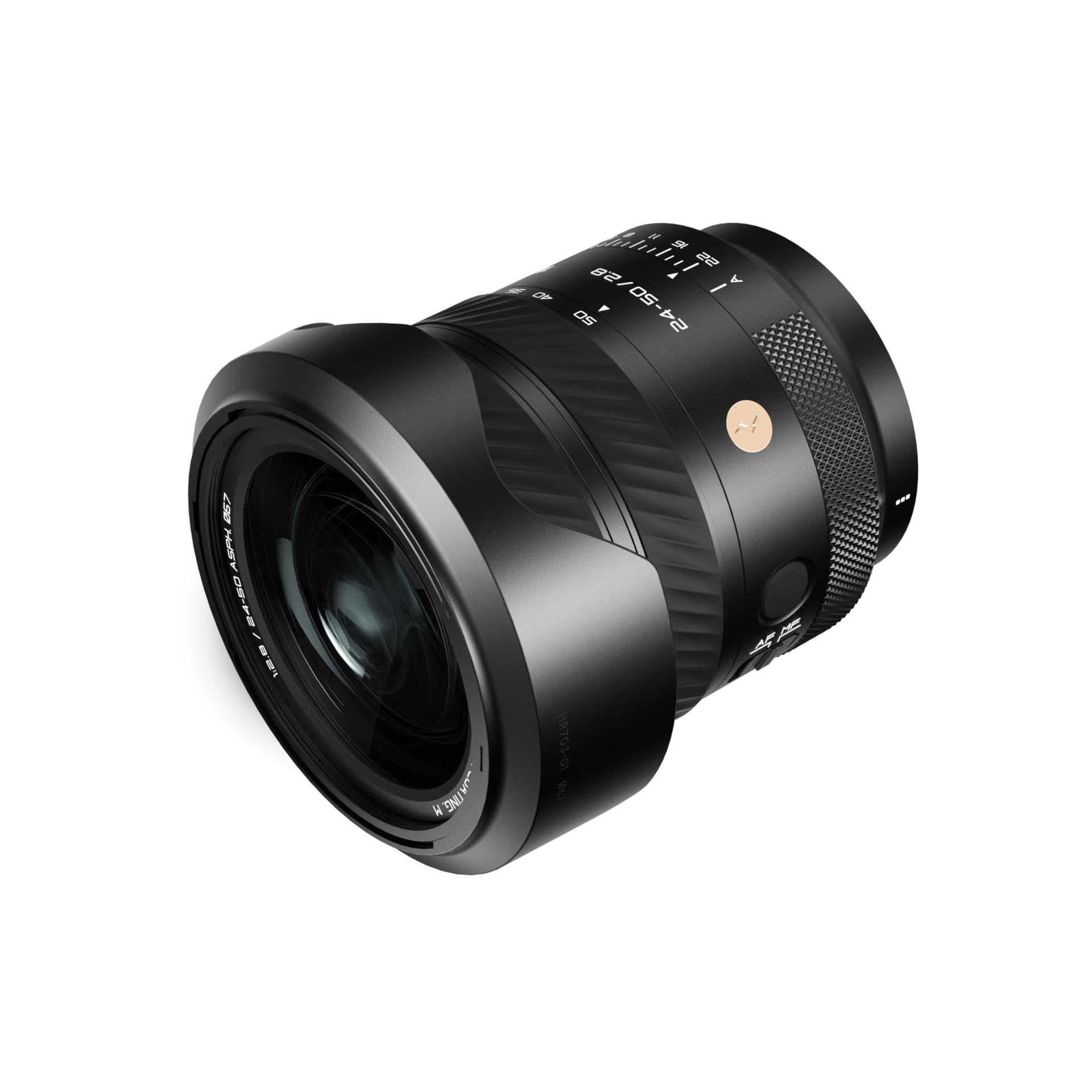
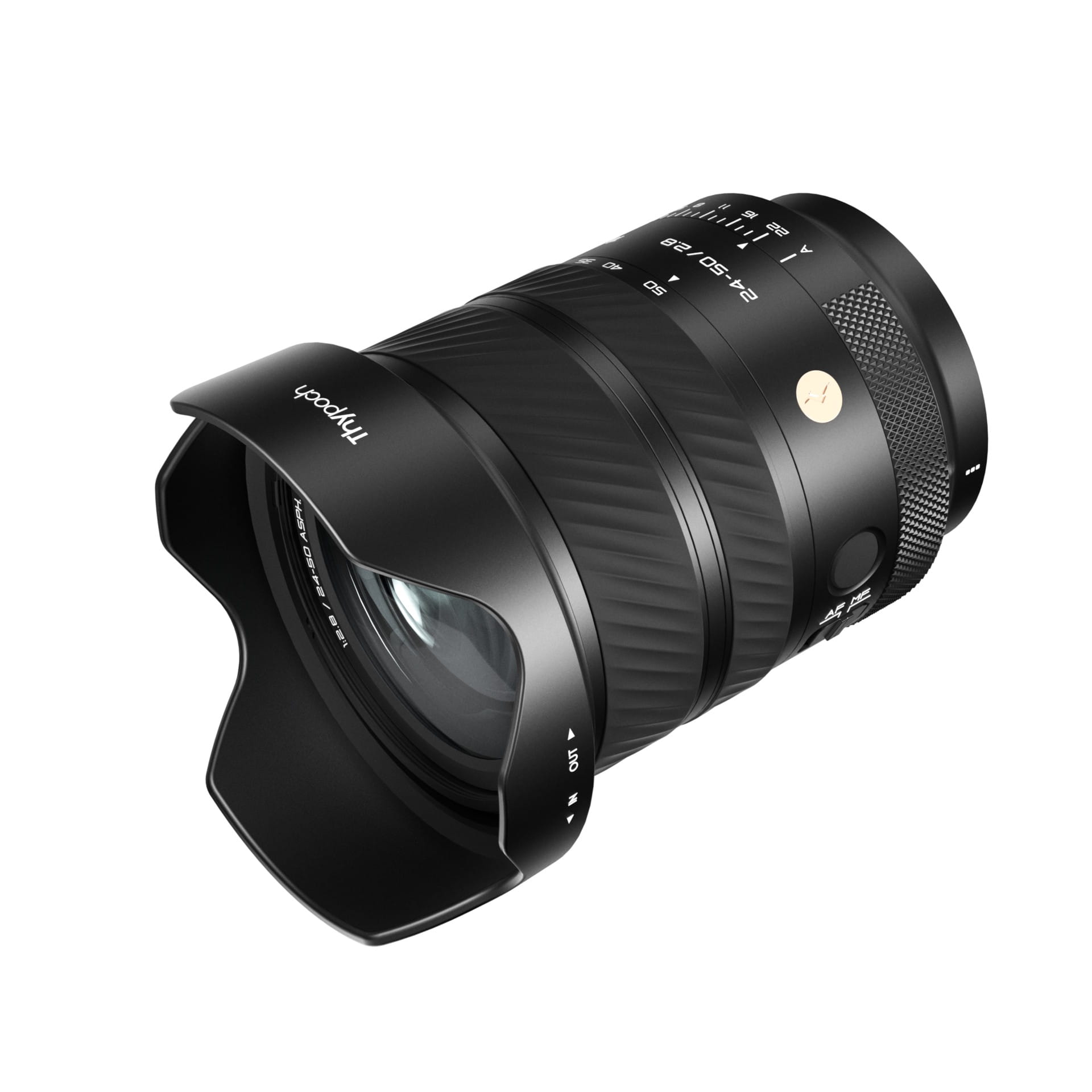
Thypoch Voyager 24-50mm f/2.8 lens announced, available for pre-order


The previously reported Thypoch Voyager 24-50mm f/2.8 lens is now officially announced and available for pre-order:

Pre-orders (intro price of $619, regular price: $649):

Key features:

  • The first full-frame autofocus zoom developed by a Chinese optical brand
  • Thypoch’s first autofocus lens
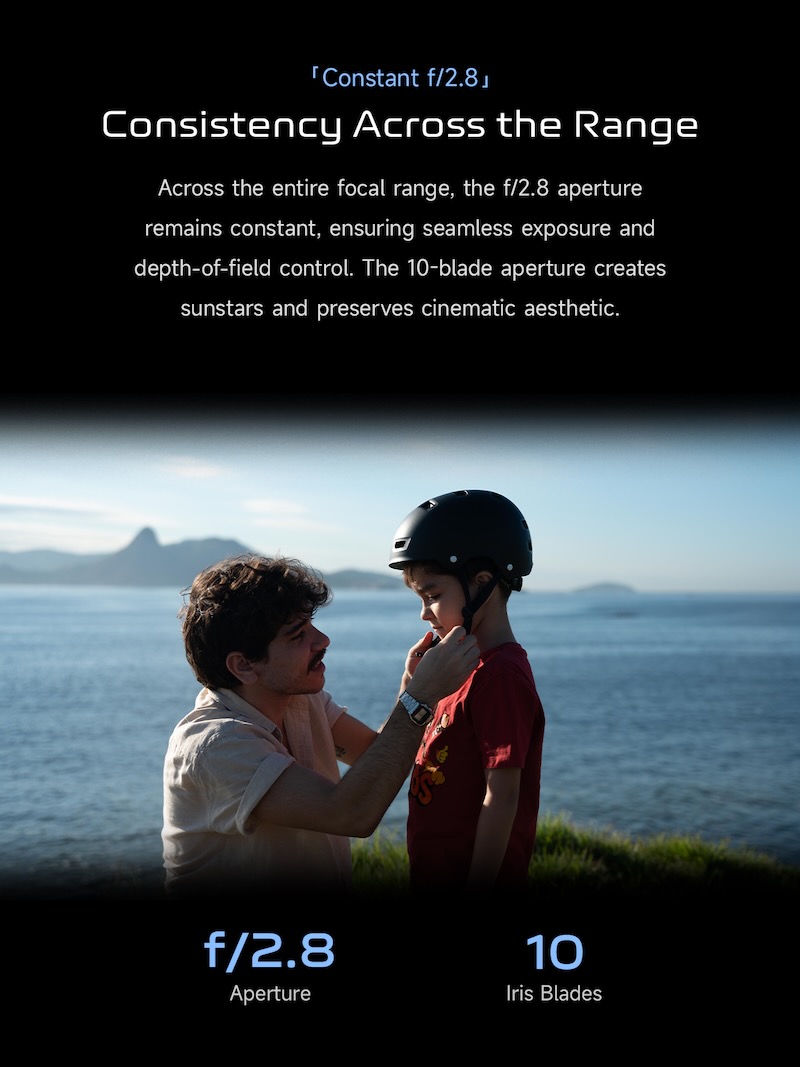
  • Constant f/2.8 maximum aperture across the full zoom range
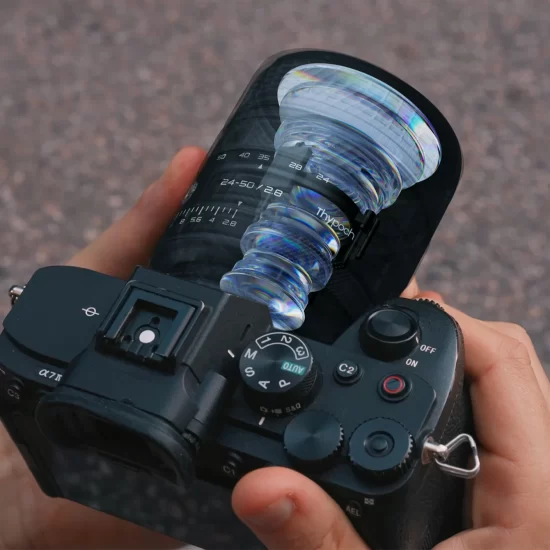
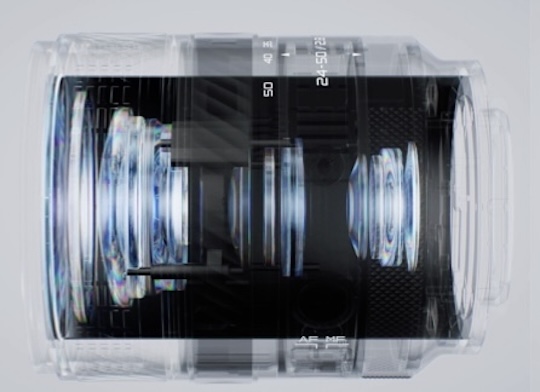
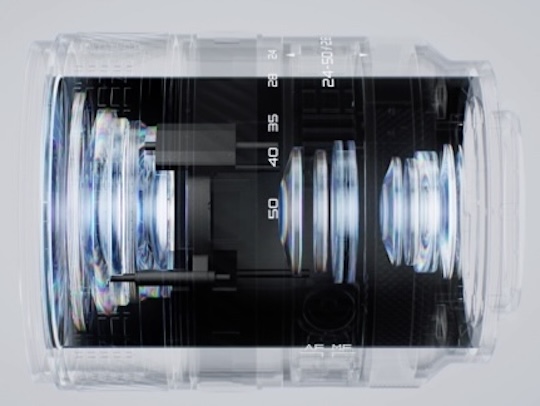
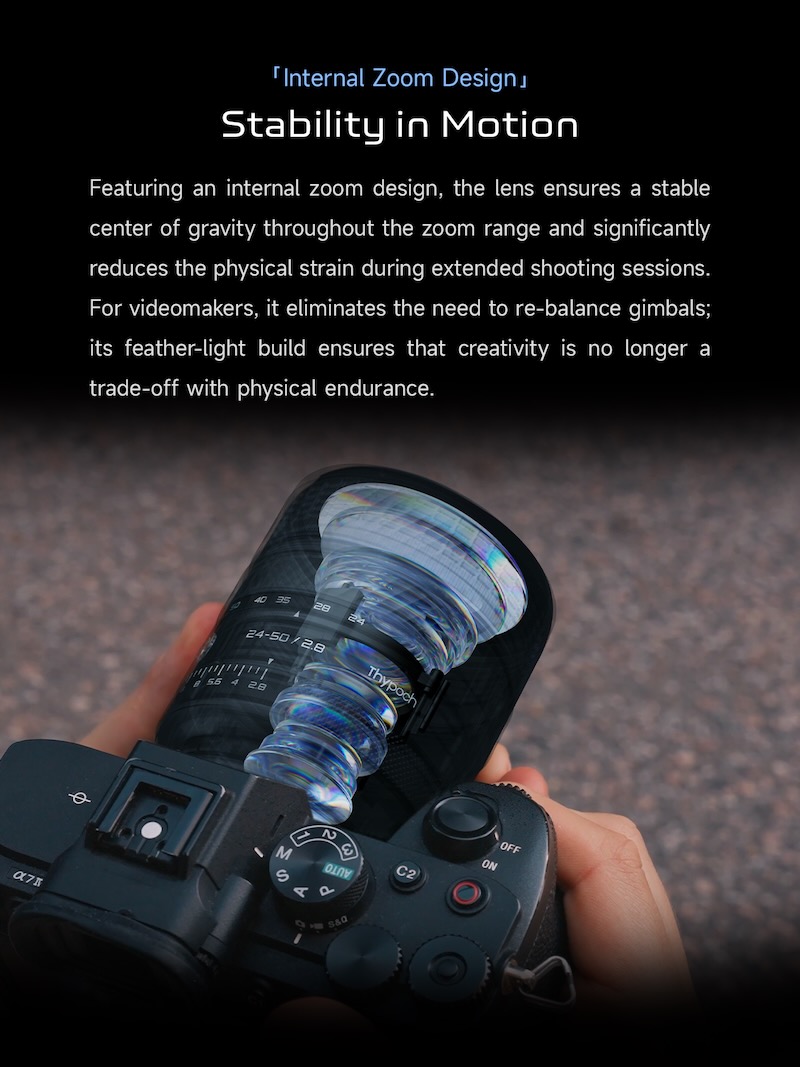
  • Internal zoom design with fixed physical length during zoom
  • 10-blade rounded aperture diaphragm
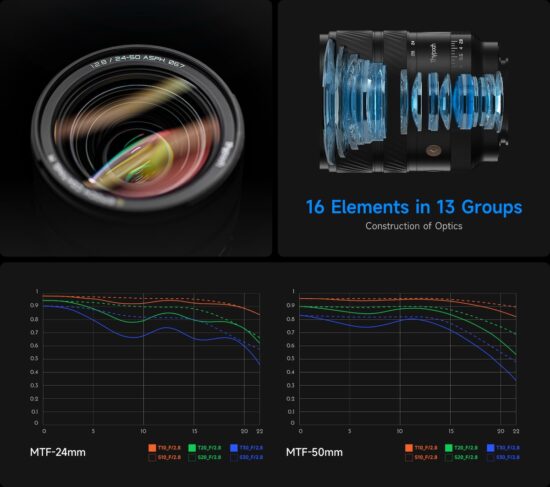
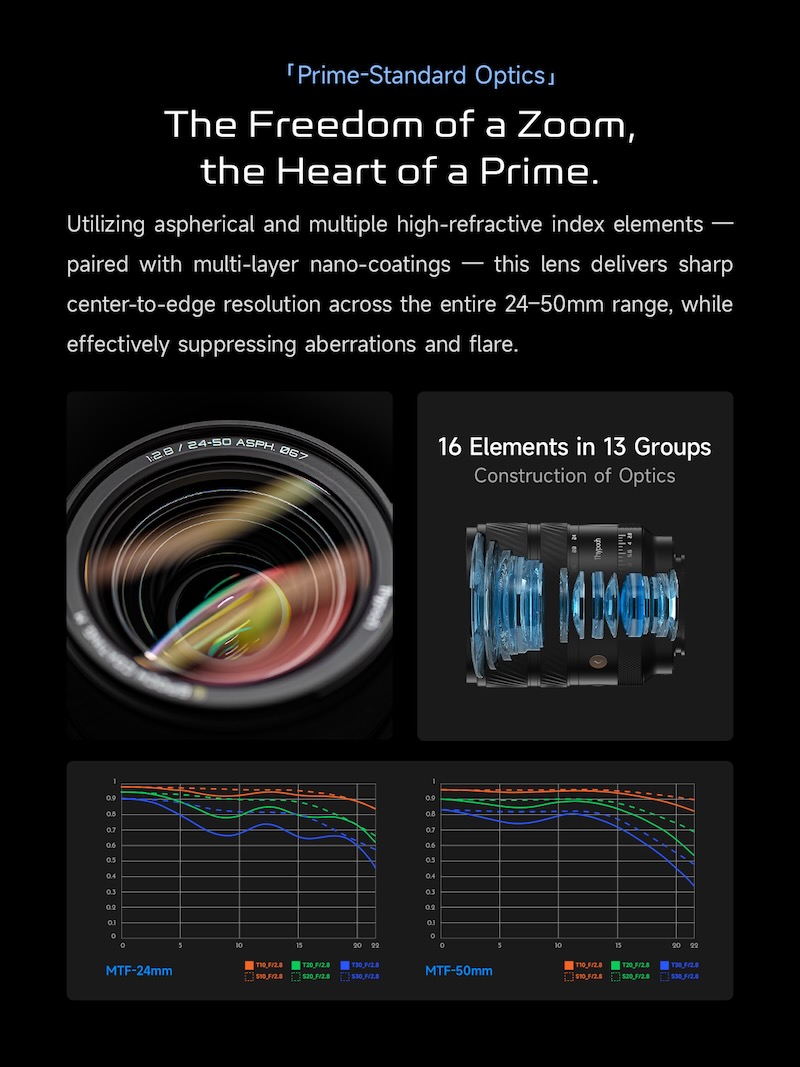
  • Optical formula: 16 elements in 13 groups, including 2 ASPH, 3 ED, and 3 HRI
  • Native Sony E-mount autofocus, with eye AF and AF-C tracking support
  • Weather-sealed construction


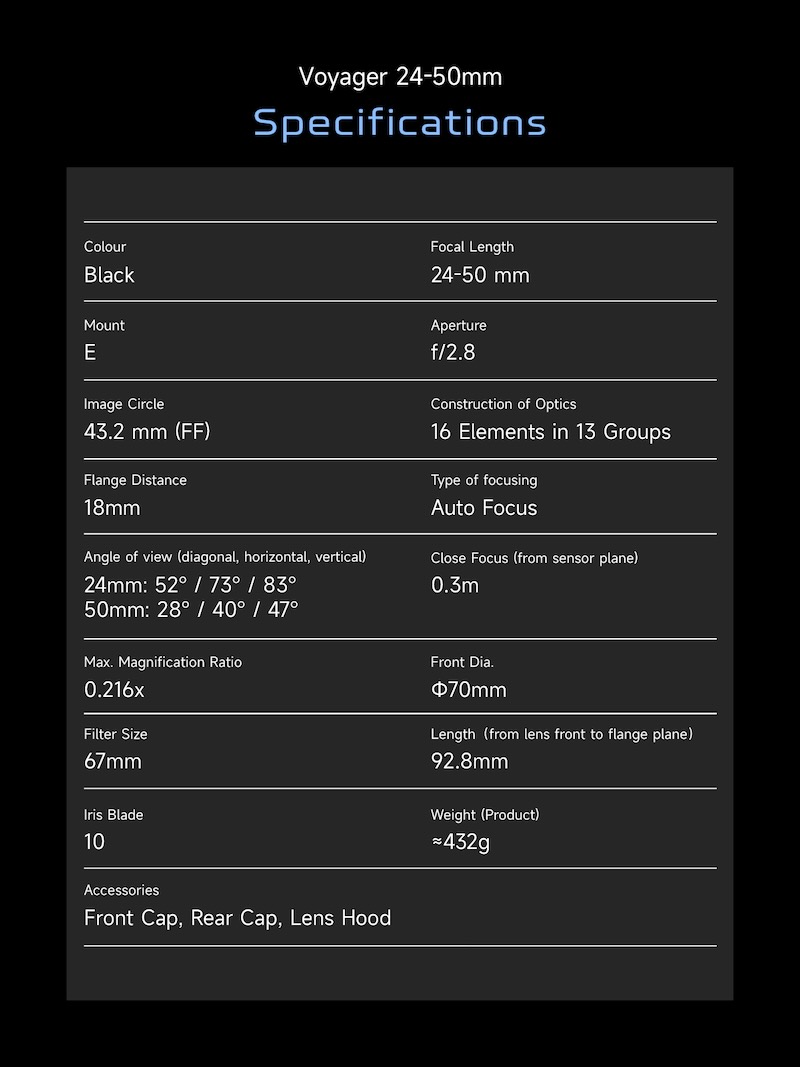
Lens specifications:

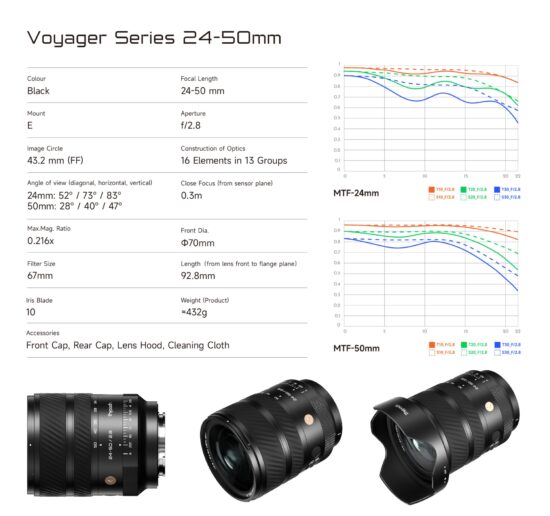
  • Focal length: 24-50mm
  • Maximum aperture: f/2.8 constant
  • Optical formula: 16 elements in 13 groups (2 ASPH, 3 ED, 3 HRI)
  • Aperture blades: 10 (rounded)
  • Minimum focus distance: 0.3m across the zoom range
  • Maximum magnification: 0.216x
  • Filter thread: φ67mm
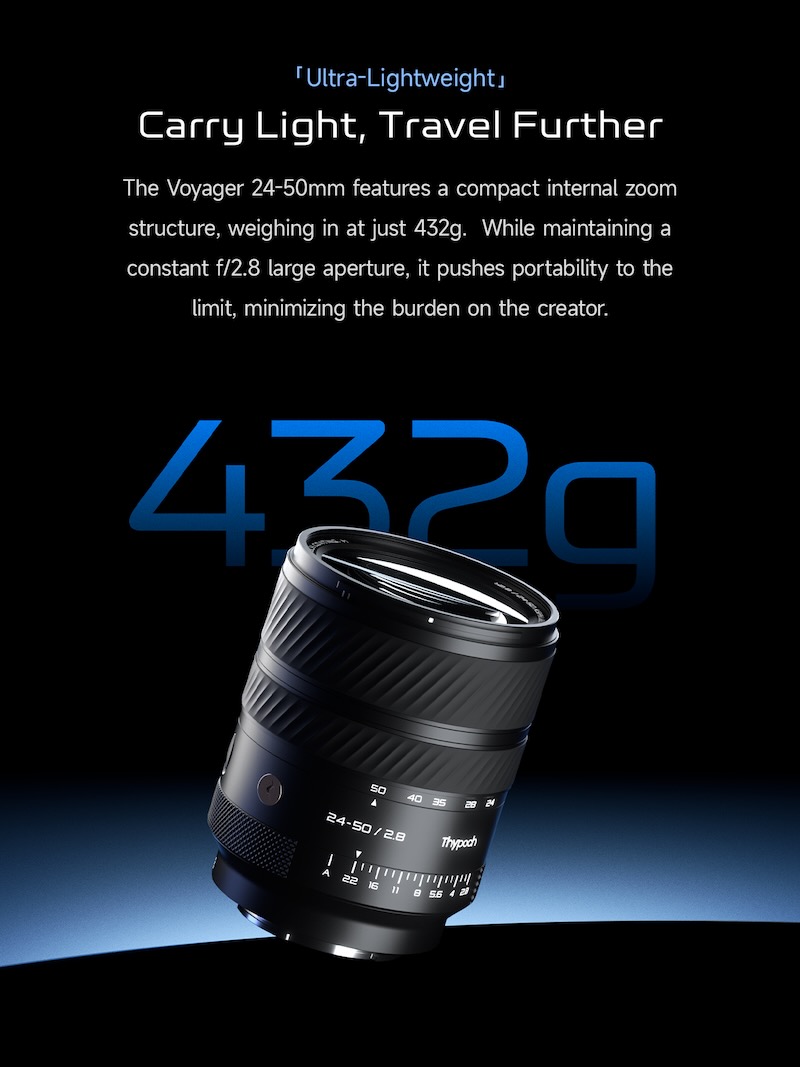
  • Weight: 432g
  • Length: 92.88mm
  • Maximum diameter: φ73.6mm
  • Mount: Sony E
  • Weather rating: Dust and moisture resistance

Additional information:


Thypoch Voyager 24-50mm f/2.8 lens internal zoom design:

Sample photos:

Thypoch enters the autofocus market with Voyager 24-50mm f/2.8 for Sony E-mount

The first full-frame autofocus zoom developed by a Chinese optical brand, in a constant f/2.8 internal-zoom design
Thypoch Logo

Shenzhen, China, May 14th, 2026 – Thypoch proudly announces the Thypoch today announced the Voyager 24-50mm f/2.8, the first full-frame autofocus zoom developed by a Chinese optical brand and Thypoch’s first AF lens. Built for Sony E-mount mirrorless cameras, the Voyager uses an internal zoom mechanism that holds physical length fixed across the focal range, with a constant f/2.8 aperture from 24mm through 50mm.
Thypoch Voyager 24-50mm f/2.8 for Sony E-mount

Three Primes in One Lens
A photographer working with primes typically carries 24mm, 35mm, and 50mm. Those three focal lengths cover the working distances that define documentary, reportage, environmental portrait, street, and event photography. The 24mm captures a full scene when there isn’t room to step back. The 35mm sees roughly the way the eye sees, which is why it remains the working perspective of reportage and documentary photography. The 50mm isolates a subject without flattening the space around it.

The 24-50mm range was chosen as a balance of size, design, and price point. It covers the focal lengths working photographers reach for daily. The Voyager fits an internal zoom mechanism, holds f/2.8 across the range, and stays compact enough to live on the camera all day.

The Voyager is designed to deliver image quality comparable to a dedicated prime across the zoom range, whether the working perspective is the breadth of 24mm, the reportage view of 35mm, or the subject isolation of 50mm. The result is one lens that does the work of three primes, in the size and weight of one.

Fixed Length, Constant Aperture
A fixed-length zoom that holds f/2.8 across the range removes two of the most common interruptions in fast-paced shooting: rebalancing a gimbal between focal lengths, and recalculating exposure as the aperture shifts.

The Voyager’s internal zoom mechanism keeps the barrel length constant from 24mm to 50mm. The center of gravity stays in place during a take. The fixed barrel is also more mechanically stable in the hand than an extending zoom, which translates to a steadier grip during handheld work.

The f/2.8 maximum aperture is held throughout the zoom range. From dim interiors and twilight streets to backlit portraits, f/2.8 delivers the brightness and subject separation that working photographers need when light is scarce. Exposure stays consistent across focal lengths. The lens stays out of the way of the shot.

The fixed barrel also eliminates lens creep when the camera is stowed, and removes the extending external moving parts that complicate weather sealing on conventional zooms.

A First for Chinese Optical Engineering
The Voyager is the first full-frame autofocus zoom developed by a Chinese optical brand. Combining autofocus, full-frame image coverage, and zoom architecture in a single lens requires coordinated development across optical design, mechanical engineering, AF systems, and electronics.

The Voyager’s autofocus system is designed for fast and quiet operation. Thypoch built the AF unit to stay out of the way of the shot, with response speed intended to keep pace with documentary, street, and event shooting, and quiet operation suited to video work and sound-sensitive environments. The lens features native Sony E-mount autofocus, with support for eye AF, AF-C tracking, and in-camera and lens-side AF/MF switching. The lens has been tested with current-generation Sony Alpha bodies including the ZV-E1, A7C2, A7CR, A7IV, A7V, A7RIV, A7RV, A7SIII, A9III, and FX3.

Built for Bokeh
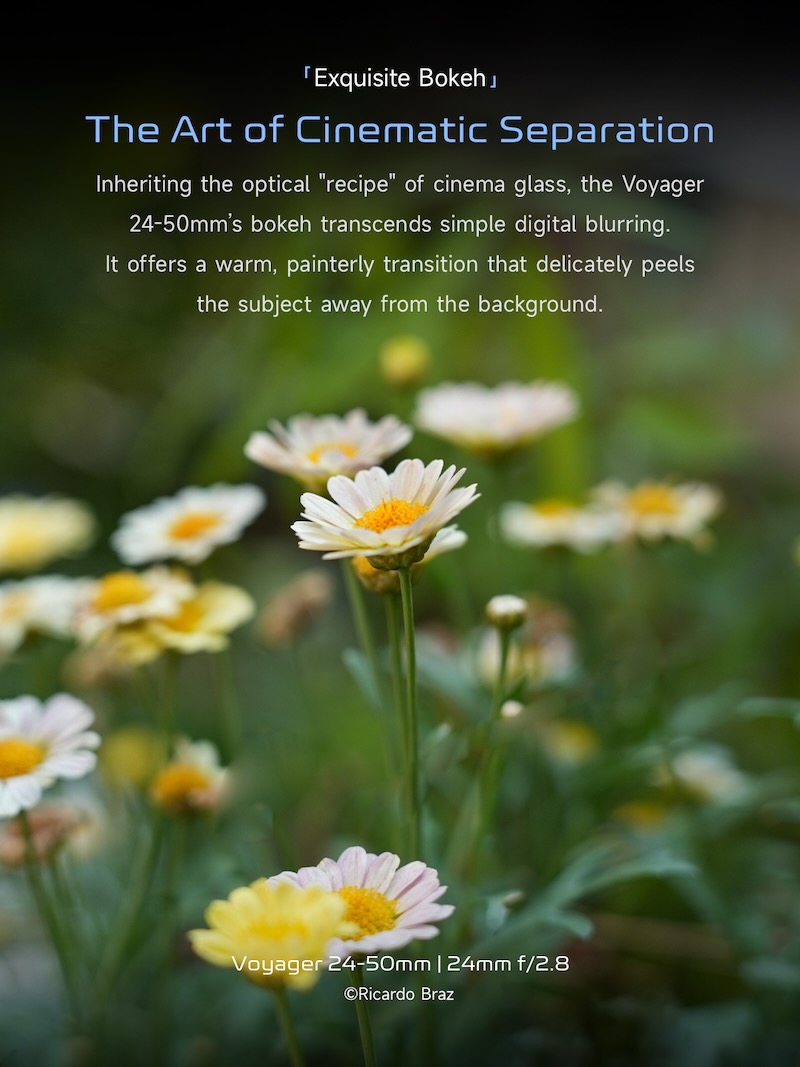
Rendering character is where Thypoch has built its reputation, and the Voyager carries that priority into autofocus. The optical design uses 16 elements in 13 groups, including 2 ASPH (aspherical) elements, 3 ED (extra-low dispersion) elements, and 3 HRI (high refractive index) elements. The formula is designed to control aberrations across the frame at all focal lengths.

The 10-blade rounded aperture holds its circular shape across most of the working aperture range, producing rounded out-of-focus highlights at mid apertures and sunstar rendering at smaller apertures.

Optical, Not Digital
The Voyager’s out-of-focus rendering is built into the glass, not added in software. Optical bokeh behaves naturally at the edges of the frame, around specular highlights, and in the transition zones that digital blur tends to flatten. The result is depth that holds up at full resolution and on close inspection.

The transition from sharp focus to background blur happens gradually, the way a lens with character renders rather than the way a lens that’s merely sharp does. Subjects sit forward in the frame with weight and presence, separated from the background without the harsh cutoff that flattens an image.

Sealed at Every Joint
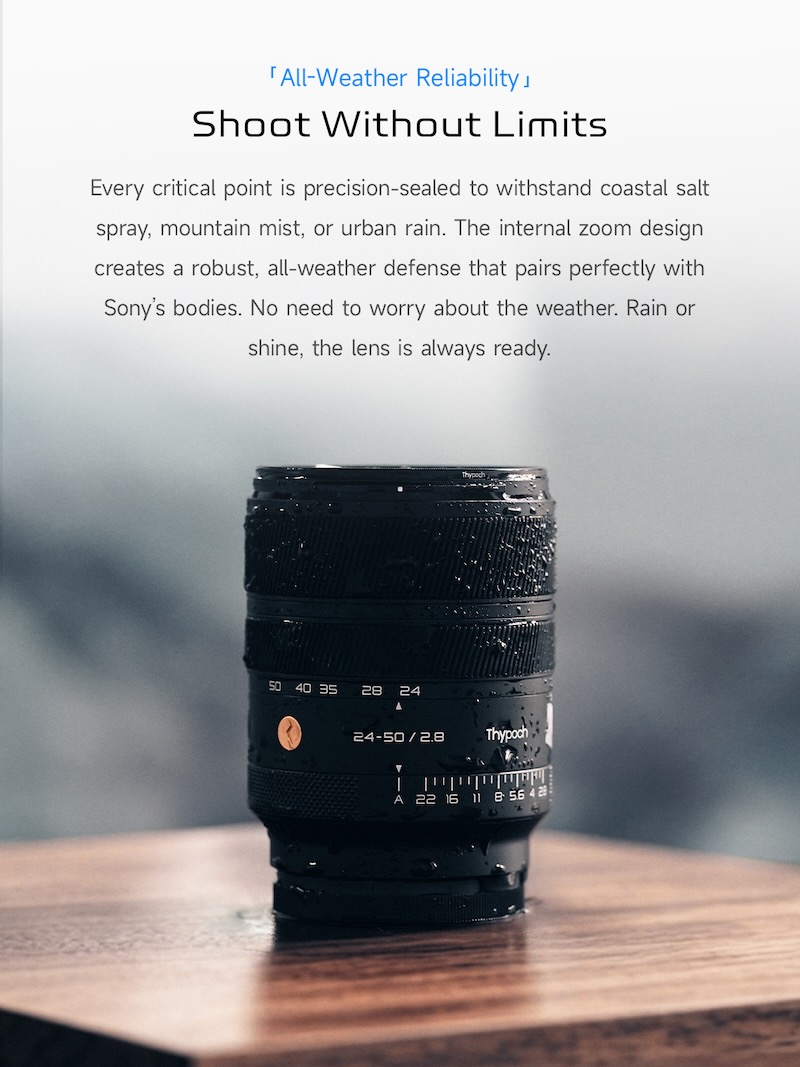
Weather sealing is the difference between a lens that works in the conditions a photographer actually shoots in and a lens that has to be protected from them. The Voyager is built with sealed construction at the lens mount, focus ring, zoom ring, and front element. The internal zoom design contributes to sealing integrity by removing the extending external barrel that creates the most common point of moisture ingress on conventional zooms.

The lens is developed for dust and moisture resistance. Whether the shooting environment is coastal mist or a sudden urban downpour, the Voyager is built to keep working. Paired with Sony’s own weather-sealed Alpha bodies, the lens completes a sealed shooting system rather than introducing a weak point in it.

Cinema Zoom Heritage
The Voyager is Thypoch’s first autofocus lens. Its zoom architecture draws on the parent group’s experience in cinema zoom lens engineering, which includes constant-aperture and internal-zoom designs across multiple cine lens families. Cinema zooms are the discipline in which constant aperture and fixed barrel length were first solved as engineering problems. The Voyager applies that discipline to a stills-format AF lens.

Price and Availability
Launch price: USD $619 / EUR €539 (May 14 to May 31, 2026)
MSRP: USD $649 / EUR €569
Standard package: lens body, front cap, rear cap, warranty card.

Additional pictures:

The post Thypoch Voyager 24-50mm f/2.8 lens announced, available for pre-order appeared first on Photo Rumors.

  •  

This photographer uses an 800mm to lock onto split-second moments

 AJR0654 - Cedric Randle
"Shot at the Huntington Beach surfing championships. I used an 800mm lens to get close to the action. Studying typical movements of the surfers helps with being ready to get the shot at the peak of the action."

Nikon Z9 | Nikkor Z 800mm f/6.3 VR S @ 800mm | F7.1 | 1/4000 sec | ISO 720
Photo: Alan Randle

Alan Randle, known as AJR Images in the forums, has been capturing striking images for decades, with a particular passion for fast-paced subjects. Originally from the UK and now based in Southern California, he has built a body of work that spans airshows, surfing, wildlife and more. Over the years, his photography has evolved from early film experiments to high-precision digital work with top-tier equipment, allowing him to get in close and capture subjects with remarkable clarity and detail.

If you are interested in air show photography, check out Alan's work below.

This story is part of our What's in your bag? community spotlight series. The series showcases the diverse gear and photography of our community, and shares their stories of how that gear helped them to capture the perfect shot.

Have your photography featured on the DPReview homepage! Find out how.

ND5 3770-Enhanced-NR - Cedric Randle
"A dramatic shot of a Red Bull display aircraft taking off at a steep angle. The smoke adds to the drama."

Nikon D5 | AF-S Nikkor 300mm f/2.8 @420mm (35mm equivalent) | F8 | 1/1600 sec | ISO 400
Photo: Alan Randle

Meet Alan Randle (AJR Images)

Home base: Southern California, USA

"I've been taking photographs since the early 1960's, but more seriously for the last 15 years. I moved to California from the UK in 2000, and am now lucky to have great subject matter and good light. I've been fortunate enough to acquire some of the best equipment and now like to get in close to my subjects with the use of long telephotos."

Favorite camera and lens: Alan primarily shoots with Nikon Z9 bodies. For airshows and wildlife, he relies on super-telephoto lenses like the 400 F2.8 TC, 600 F4 TC, and 800 f/6.3 to capture subjects up close with exceptional detail. For travel or more general photography, he uses a Z6III with a 24–120mm F4. Alan values this setup for its versatility and reliability, allowing him to adapt quickly to different environments.

I love the Nikon Z 400TC. A fabulous lens with the versatility of two focal lengths.

What's in Alan's bag

IMG 6185 - Cedric Randle
Alan's camera bag

Photo: Alan Randle

What cameras does a professional aerospace engineer use most?

"I was a professional aerospace engineer for nearly 50 years, so I keep up my interest by attending airshows around Southern California. I’ve been fortunate to acquire some of the best super telephoto lenses over the last few years and have practiced honing my panning skills to the point where I can capture sharp images of aircraft with good prop blur. I look back at some of my older images, and certainly modern equipment has made it easier to get great images."

Have you changed up your gear since you got started?

"Oh yes. I started out with a Praktica camera and then an Olympus OM2 system, but got serious when I bought a Nikon F4S in the 1980's. I then moved from F to D to Z systems. Since investing in Nikon Z9s and Z lenses, my output has improved to no end."

 AJR9300-Edit-Edit - Cedric Randle
"A nice, sharp close-up image of the Patriots display team with the smoke imparting a sense of action."

Nikon D4S | AF-S Nikkor 300mm f/2.8D IF-ED II @420mm (35mm equivalent) | F5.6 | 1/4000 sec | ISO 320
Photo: Alan Randle

Besides impressive aerospace photography, what else do you shoot?

"I also enjoy shooting zoo animals. I like to take portraits rather than the whole of the animal, again making good use of my telephoto lenses. Carrying big equipment around a zoo can be tiring. I’ve even been asked by staff if I want to check my 'luggage.'"

"Living close to the beach, I shoot championship surfing (people and dogs). You need to take care of your equipment in this environment of saltwater and sand. I’ve seen photographers so engrossed in the action that they miss a rogue wave that drowns their equipment. Electronics and salt water don’t mix!"

"In the past, I’ve shot motor sports, tennis, and cycling. Unfortunately, as sports become more commercialized, it’s getting harder and harder to get good images unless you are credentialed. Not only are you kept further away from the action, but there are often limits as to the equipment that can be taken into a venue."

 AJR7178-Enhanced-NR - Cedric Randle
"The Blue Angels show in near-perfect light, showing the aircraft at speed."

Nikon Z 9 | NIKKOR Z 400mm f/2.8 TC VR S @400mm (35mm equivalent) | F5.6 | 1/6400 sec | ISO 900
Photo: Alan Randle

When capturing that perfect shot, what techniques come to mind?

"I try to understand the type of subjects I'll be shooting, like typical aircraft maneuvers, animal behavior, the way that sports are played, and so I try to get 'ahead of the game.' Knowing how the subject will react at any moment keeps my fingers on the right controls. On that point, do learn how to use your equipment. Read the manuals and understand what all the controls do so that setting up becomes second nature."

Alan really enjoyed writing the content for this spotlight article and would be grateful for you to join him in discussion in the forums. Thanks, Alan, for being featured!

If you'd like to share your photography, tell us about your main camera, lens choices, key settings and strategies. Your photos and story could be featured in the next article!


Editor's note: This article continues a series, 'What's in your bag?', highlighting DPReview community members, their photography and the gear they depend on. Would you like to be featured in a future installment? Tell us a bit about yourself and your photography by filling out this form. If you're selected for a feature, we'll be in touch with next steps.

Submit your photos and story to be featured in 'What's in your bag?'

  •  

How one photographer uses an 800mm lens to freeze split-second action

 AJR0654 - Cedric Randle
"Shot at the Huntington Beach surfing championships. I used an 800mm lens to get close to the action. Studying typical movements of the surfers helps with being ready to get the shot at the peak of the action."

Nikon Z9 | Nikkor Z 800mm f/6.3 VR S @ 800mm | F7.1 | 1/4000 sec | ISO 720
Photo: Alan Randle

Alan Randle, known as AJR Images in the forums, has been capturing striking images for decades, with a particular passion for fast-paced subjects. Originally from the UK and now based in Southern California, he has built a body of work that spans airshows, surfing, wildlife and more. Over the years, his photography has evolved from early film experiments to high-precision digital work with top-tier equipment, allowing him to get in close and capture subjects with remarkable clarity and detail.

If you are interested in air show photography, check out Alan's work below.

This story is part of our What's in your bag? community spotlight series. The series showcases the diverse gear and photography of our community, and shares their stories of how that gear helped them to capture the perfect shot.

Have your photography featured on the DPReview homepage! Find out how.

ND5 3770-Enhanced-NR - Cedric Randle
"A dramatic shot of a Red Bull display aircraft taking off at a steep angle. The smoke adds to the drama."

Nikon D5 | AF-S Nikkor 300mm f/2.8 @420mm (35mm equivalent) | F8 | 1/1600 sec | ISO 400
Photo: Alan Randle

Meet Alan Randle (AJR Images)

Home base: Southern California, USA

"I've been taking photographs since the early 1960's, but more seriously for the last 15 years. I moved to California from the UK in 2000, and am now lucky to have great subject matter and good light. I've been fortunate enough to acquire some of the best equipment and now like to get in close to my subjects with the use of long telephotos."

Favorite camera and lens: Alan primarily shoots with Nikon Z9 bodies. For airshows and wildlife, he relies on super-telephoto lenses like the 400 F2.8 TC, 600 F4 TC, and 800 f/6.3 to capture subjects up close with exceptional detail. For travel or more general photography, he uses a Z6III with a 24–120mm F4. Alan values this setup for its versatility and reliability, allowing him to adapt quickly to different environments.

I love the Nikon Z 400TC. A fabulous lens with the versatility of two focal lengths.

What's in Alan's bag

IMG 6185 - Cedric Randle
Alan's camera bag

Photo: Alan Randle

What cameras does a professional aerospace engineer use most?

"I was a professional aerospace engineer for nearly 50 years, so I keep up my interest by attending airshows around Southern California. I’ve been fortunate to acquire some of the best super telephoto lenses over the last few years and have practiced honing my panning skills to the point where I can capture sharp images of aircraft with good prop blur. I look back at some of my older images, and certainly modern equipment has made it easier to get great images."

Have you changed up your gear since you got started?

"Oh yes. I started out with a Praktica camera and then an Olympus OM2 system, but got serious when I bought a Nikon F4S in the 1980's. I then moved from F to D to Z systems. Since investing in Nikon Z9s and Z lenses, my output has improved to no end."

 AJR9300-Edit-Edit - Cedric Randle
"A nice, sharp close-up image of the Patriots display team with the smoke imparting a sense of action."

Nikon D4S | AF-S Nikkor 300mm f/2.8D IF-ED II @420mm (35mm equivalent) | F5.6 | 1/4000 sec | ISO 320
Photo: Alan Randle

Besides impressive aerospace photography, what else do you shoot?

"I also enjoy shooting zoo animals. I like to take portraits rather than the whole of the animal, again making good use of my telephoto lenses. Carrying big equipment around a zoo can be tiring. I’ve even been asked by staff if I want to check my 'luggage.'"

"Living close to the beach, I shoot championship surfing (people and dogs). You need to take care of your equipment in this environment of saltwater and sand. I’ve seen photographers so engrossed in the action that they miss a rogue wave that drowns their equipment. Electronics and salt water don’t mix!"

"In the past, I’ve shot motor sports, tennis, and cycling. Unfortunately, as sports become more commercialized, it’s getting harder and harder to get good images unless you are credentialed. Not only are you kept further away from the action, but there are often limits as to the equipment that can be taken into a venue."

 AJR7178-Enhanced-NR - Cedric Randle
"The Blue Angels show in near-perfect light, showing the aircraft at speed."

Nikon Z 9 | NIKKOR Z 400mm f/2.8 TC VR S @400mm (35mm equivalent) | F5.6 | 1/6400 sec | ISO 900
Photo: Alan Randle

When capturing that perfect shot, what techniques come to mind?

"I try to understand the type of subjects I'll be shooting, like typical aircraft maneuvers, animal behavior, the way that sports are played, and so I try to get 'ahead of the game.' Knowing how the subject will react at any moment keeps my fingers on the right controls. On that point, do learn how to use your equipment. Read the manuals and understand what all the controls do so that setting up becomes second nature."

Alan really enjoyed writing the content for this spotlight article and would be grateful for you to join him in discussion in the forums. Thanks, Alan, for being featured!

If you'd like to share your photography, tell us about your main camera, lens choices, key settings and strategies. Your photos and story could be featured in the next article!


Editor's note: This article continues a series, 'What's in your bag?', highlighting DPReview community members, their photography and the gear they depend on. Would you like to be featured in a future installment? Tell us a bit about yourself and your photography by filling out this form. If you're selected for a feature, we'll be in touch with next steps.

Submit your photos and story to be featured in 'What's in your bag?'

  •  

Thypoch reveals the prime-like price of its autofocus zoom

When you use DPReview links to buy products, the site may earn a commission.
thypoch 24-50mm f2p8 in hand
Photos: Mitchell Clark

Last month, Thypoch announced that it was working on the Voyager 24-50mm F2.8 AF, the first full-frame autofocus zoom lens from a Chinese manufacturer. Now, the company has revealed the full details of it, including its price and full specifications.

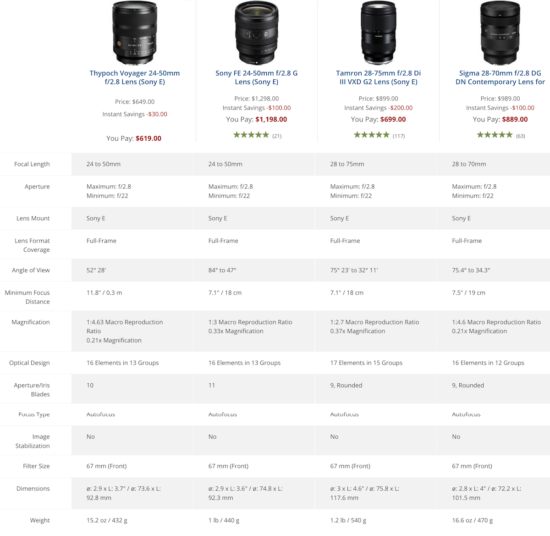
The former is perhaps one of the most exciting aspects of this lens. When we interviewed Thypoch's Go-to-Market manager for this lens, we were told the company was aiming to price it similarly to a prime. It turns out that meant $649, pretty much half of what Sony charges for its 24-50mm F2.8.

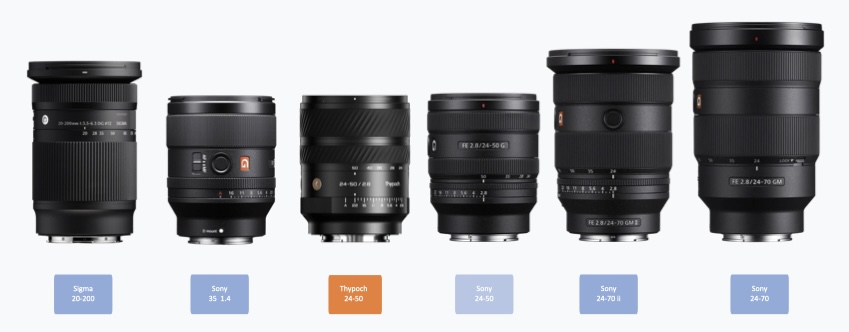
Despite being a very similar offering, the lens isn't a clone of Sony's. The most noticeable difference is that Thypoch's is an internal zoom design, while Sony's extends. And while both lenses have 16 elements in 13 groups, the formulas are different: the Voyager has two aspheric lenses, three ED lenses and three HR elements, while the Sony uses one aspheric and two EDs. According to our interview, the company hasn't used any software distortion correction in its design, so it has to do everything optically, a limitation Sony doesn't have.

typoch 24-50mm f2p8 on a7rv in hand c
For a full-frame F2.8 zoom, the Thypoch is quite light.

Another difference between the two lenses is minimum focusing distance. Both are 0.3m (11.8") at the long end, but at the wide end Sony's can get as close as 0.18m (7.1"), while Thypoch's is still at 0.3m

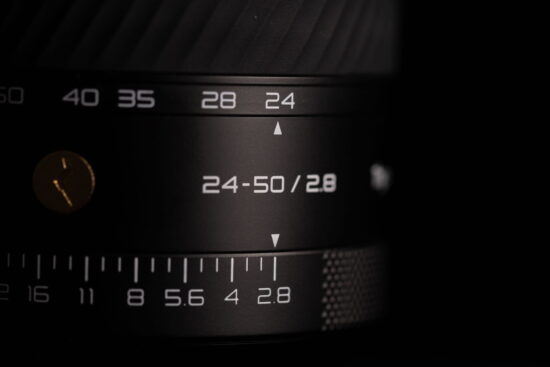
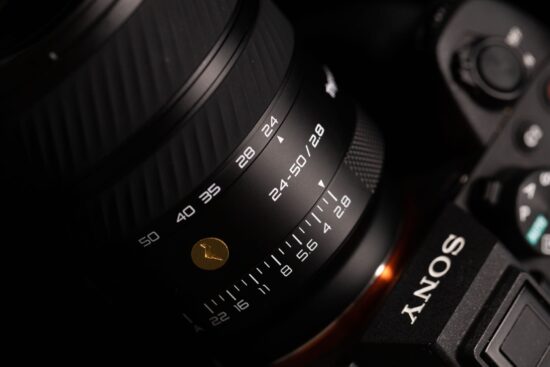
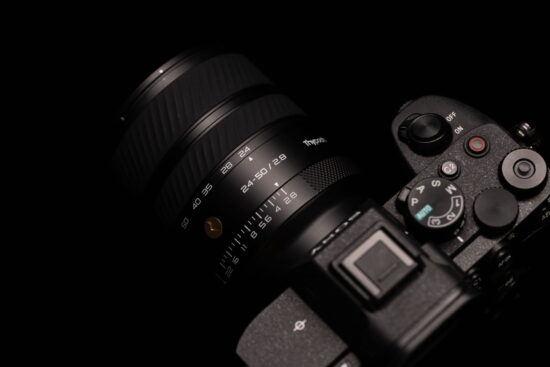
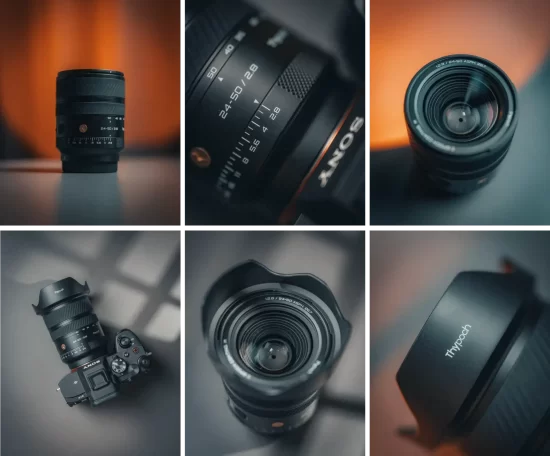
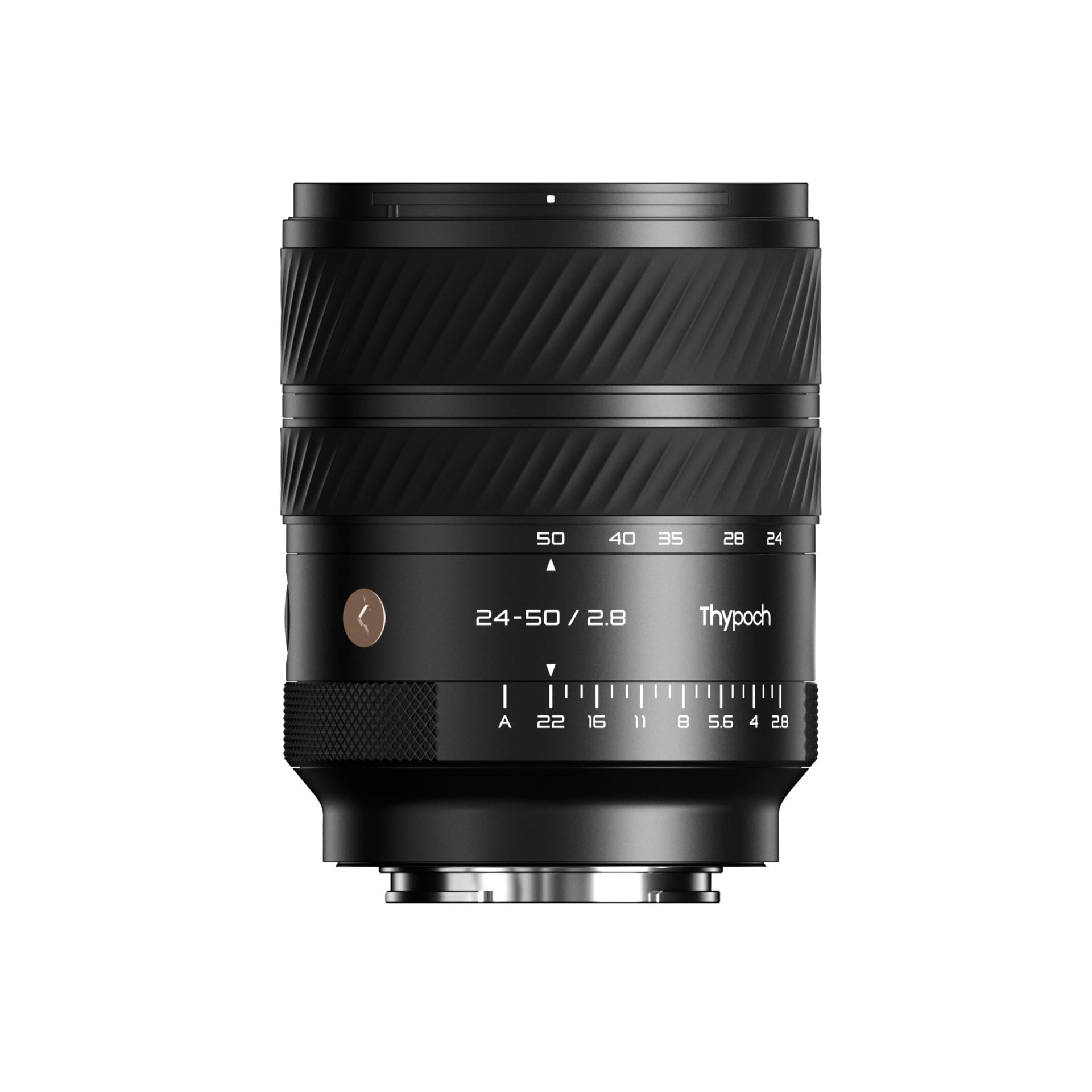
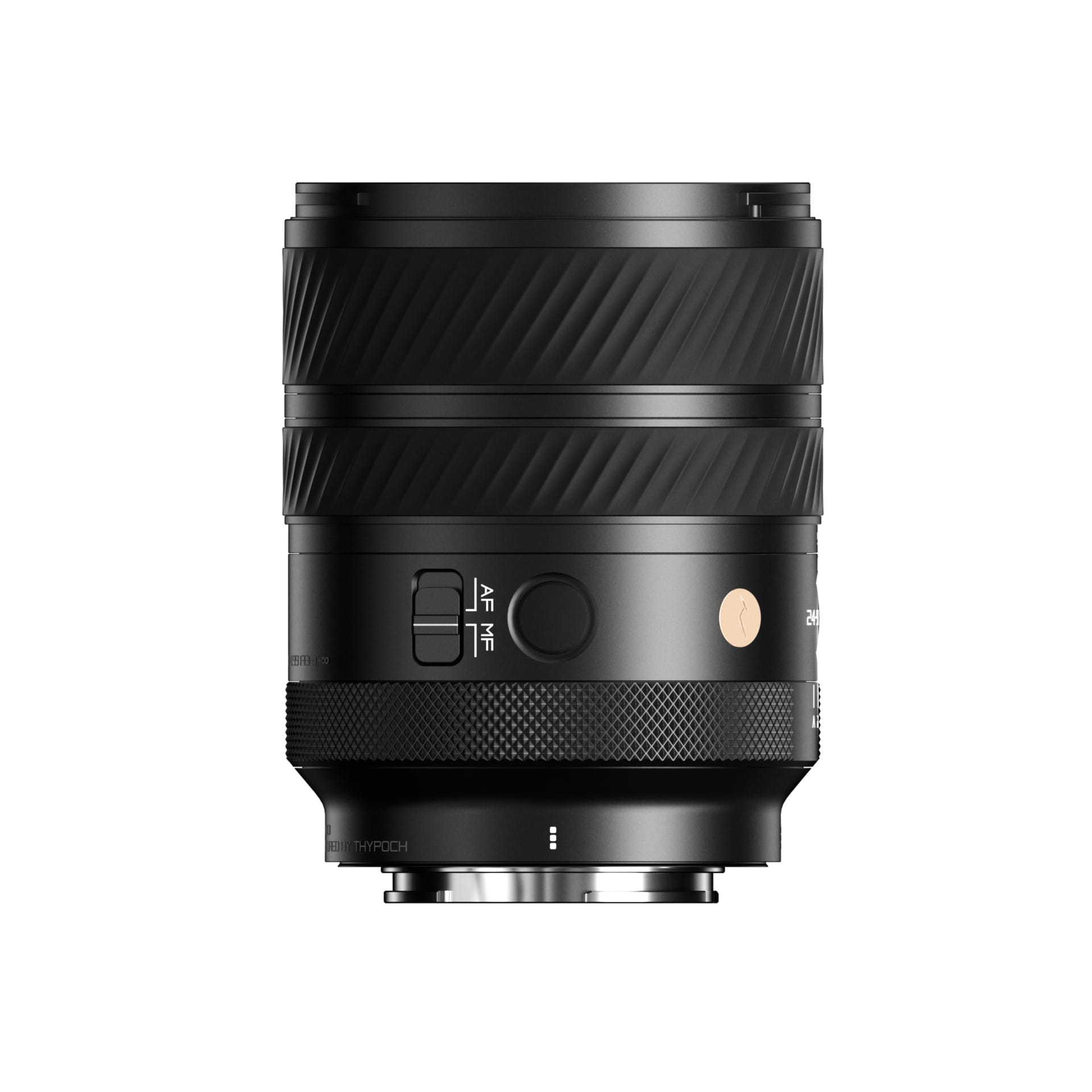
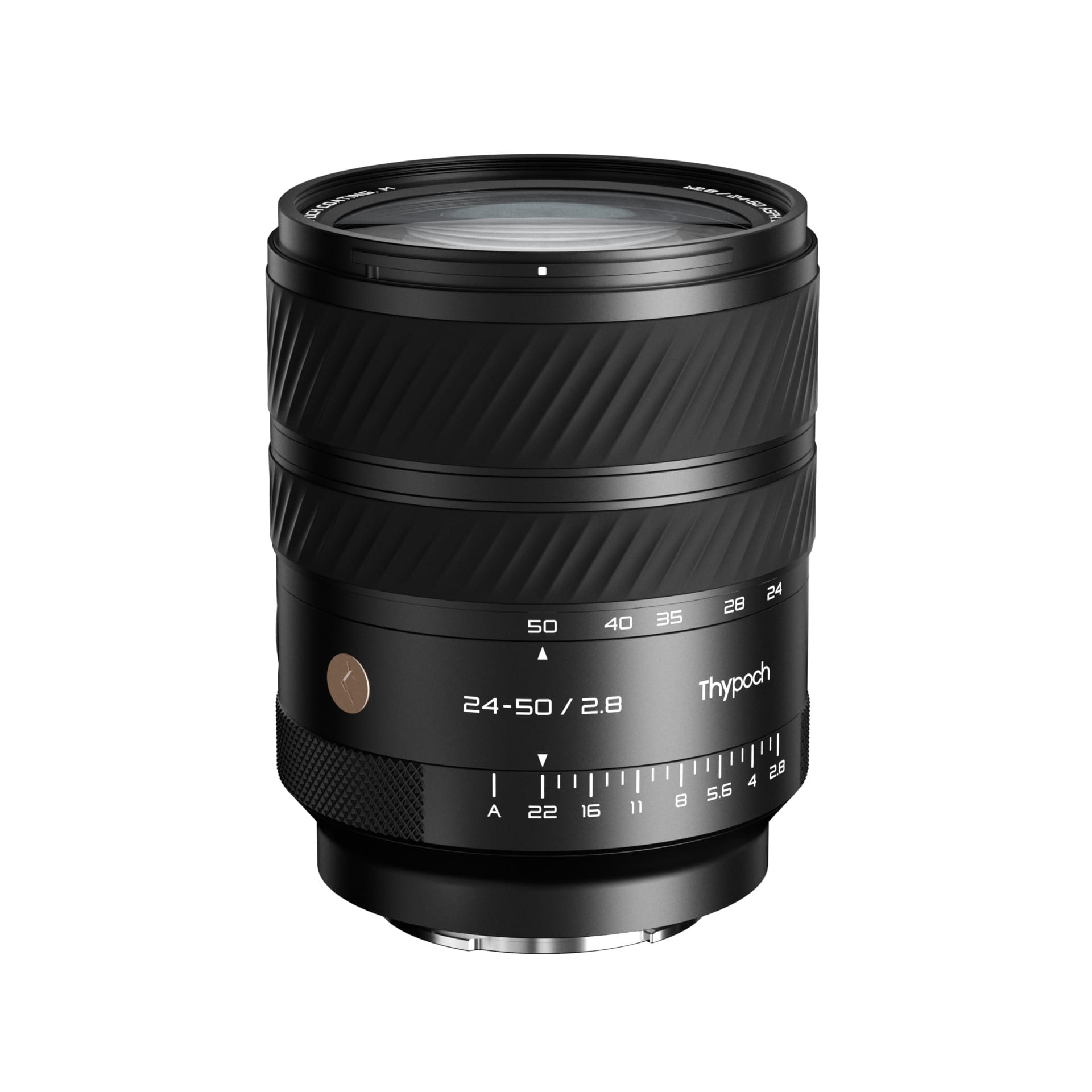
The Voyager 24-50mm F2.8 has a 10-bladed aperture, and a clicked ring to control it, complete with an "A" setting that lets you control it using a command dial on your camera instead. It also features a customizable function button, and an AF/MF switch.

At 450g (15.9oz) and 92mm (3.6") long, it's fairly compact for a full-frame lens, making it relatively easy to carry around. We appreciate that, as we've found this kind of lens to be great for travel, given its size and ability to get wide shots to capture everything in front of you, without giving up the ability to get in a little closer. Thypoch also claims that it's sealed for dust and moisture resistance.

Optically speaking, we found the lens to be relatively sharp. While there's some vignetting, it's not more than we'd expect from other budget lenses with a focus on being compact. Where it fell down a bit was in flare resistance; Thypoch says the lens has its "Epoch" coating, but there were times where we found that bright lighting outside the frame would result in a washed out image, even when we were shooting with the included lens hood.

DSC00002.acr

The flare from the window above the cat has substantially washed out this image.

Sony a7R V | Thypoch 24-50mm F2.8 | F2.8 | 1/50 | ISO 1000

Autofocus performance was mostly fine. We tested the lens with a Sony a7R V, and it was usually able to lock onto a subject and follow it, even if it was moving. Still, there were a few instances where it had to hunt in lighting conditions that we'd have expected an own-brand lens to handle without any issues. But given that this is the company's first autofocus lens, period, and that it doesn't have an official E-mount license, its performance was quite impressive.

While there's a lot to recommend the Thypoch 24-50mm F2.8 on its own, it’s also hard not to feel like this is the just start of something exciting. Obviously, third-party autofocus zoom lenses are nothing new; we’ve seen them from Sigma, Tamron, LK Samyang, and others. But it’s hard to ignore what happened with primes, where Chinese lens makers came in, started competing, leading to a flood of especially interesting, or affordable (or sometimes, both) lenses. That wave has also coincided with similarly exciting lens releases from the major manufacturers, too. If the same thing happens with zoom lenses, the next few years could be very interesting, and we may finally get some options that we haven’t had before.

The Thypoch Voyager 24-50mm F2.8 will available for Sony E-mount starting in June. The company says it's running a special launch promotion, selling the lens for $619.

Buy at Thypoch

For more impressions on this lens, you can watch our video on it below. You can also check out our sample gallery to see how it performs for yourself.


Sample Gallery

Please do not reproduce any of these images on a website or any newsletter/magazine without prior permission (see our copyright page). We make the originals available for private users to download to their own machines for personal examination or printing; we do so in good faith, so please don't abuse it.

Sample gallery
This widget is not optimized for RSS feed readers. Click here to open it in a new browser window / tab.

Thank you to Sony for the loan of an a7R V to capture this gallery. All images were processed using our standard lens workflow in Capture One, with no vignetting correction applied.


Press release:

Thypoch enters autofocus market with Voyager 24-50mm f/2.8 for Sony E-mount

The first full-frame autofocus zoom developed by a Chinese optical brand, in a constant f/2.8 internal-zoom design

Shenzhen, China, May 14, 2026. Thypoch today announced the Voyager 24-50mm f/2.8, the first full-frame autofocus zoom developed by a Chinese optical brand and Thypoch’s first AF lens. Built for Sony E-mount mirrorless cameras, the Voyager uses an internal zoom mechanism that holds physical length fixed across the focal range, with a constant f/2.8 aperture from 24mm through 50mm.

Three Primes in One Lens

A photographer working with primes typically carries 24mm, 35mm, and 50mm. Those three focal lengths cover the working distances that define documentary, reportage, environmental portrait, street, and event photography. The 24mm captures a full scene when there isn’t room to step back. The 35mm sees roughly the way the eye sees, which is why it remains the working perspective of reportage and documentary photography. The 50mm isolates a subject without flattening the space around it.

The 24-50mm range was chosen as a balance of size, design, and price point. It covers the focal lengths working photographers reach for daily. The Voyager fits an internal zoom mechanism, holds f/2.8 across the range, and stays compact enough to live on the camera all day.

The Voyager is designed to deliver image quality comparable to a dedicated prime across the zoom range, whether the working perspective is the breadth of 24mm, the reportage view of 35mm, or the subject isolation of 50mm. The result is one lens that does the work of three primes, in the size and weight of one.

Fixed Length, Constant Aperture

A fixed-length zoom that holds f/2.8 across the range removes two of the most common interruptions in fast-paced shooting: rebalancing a gimbal between focal lengths, and recalculating exposure as the aperture shifts.

The Voyager’s internal zoom mechanism keeps the barrel length constant from 24mm to 50mm. The center of gravity stays in place during a take. The fixed barrel is also more mechanically stable in the hand than an extending zoom, which translates to a steadier grip during handheld work.

The f/2.8 maximum aperture is held throughout the zoom range. From dim interiors and twilight streets to backlit portraits, f/2.8 delivers the brightness and subject separation that working photographers need when light is scarce. Exposure stays consistent across focal lengths. The lens stays out of the way of the shot.

The fixed barrel also eliminates lens creep when the camera is stowed, and removes the extending external moving parts that complicate weather sealing on conventional zooms.

A First for Chinese Optical Engineering

The Voyager is the first full-frame autofocus zoom developed by a Chinese optical brand. Combining autofocus, full-frame image coverage, and zoom architecture in a single lens requires coordinated development across optical design, mechanical engineering, AF systems, and electronics.

The Voyager’s autofocus system is designed for fast and quiet operation. Thypoch built the AF unit to stay out of the way of the shot, with response speed intended to keep pace with documentary, street, and event shooting, and quiet operation suited to video work and sound-sensitive environments. The lens features native Sony E-mount autofocus, with support for eye AF, AF-C tracking, and in-camera and lens-side AF/MF switching.

The lens has been tested with current-generation Sony Alpha bodies including the ZV-E1, A7C2, A7CR, A7IV, A7V, A7RIV, A7RV, A7SIII, A9III, and FX3.

Built for Bokeh

Rendering character is where Thypoch has built its reputation, and the Voyager carries that priority into autofocus. The optical design uses 16 elements in 13 groups, including 2 ASPH (aspherical) elements, 3 ED (extra-low dispersion) elements, and 3 HRI (high refractive index) elements. The formula is designed to control aberrations across the frame at all focal lengths.

The 10-blade rounded aperture holds its circular shape across most of the working aperture range, producing rounded out-of-focus highlights at mid apertures and sunstar rendering at smaller apertures.

Optical, Not Digital

The Voyager’s out-of-focus rendering is built into the glass, not added in software. Optical bokeh behaves naturally at the edges of the frame, around specular highlights, and in the transition zones that digital blur tends to flatten. The result is depth that holds up at full resolution and on close inspection.

The transition from sharp focus to background blur happens gradually, the way a lens with character renders rather than the way a lens that’s merely sharp does. Subjects sit forward in the frame with weight and presence, separated from the background without the harsh cutoff that flattens an image.

Sealed at Every Joint

Weather sealing is the difference between a lens that works in the conditions a photographer actually shoots in and a lens that has to be protected from them. The Voyager is built with sealed construction at the lens mount, focus ring, zoom ring, and front element. The internal zoom design contributes to sealing integrity by removing the extending external barrel that creates the most common point of moisture ingress on conventional zooms.

The lens is developed for dust and moisture resistance. Whether the shooting environment is coastal mist or a sudden urban downpour, the Voyager is built to keep working. Paired with Sony’s own weather-sealed Alpha bodies, the lens completes a sealed shooting system rather than introducing a weak point in it.

Cinema Zoom Heritage

The Voyager is Thypoch’s first autofocus lens. Its zoom architecture draws on the parent group’s experience in cinema zoom lens engineering, which includes constant-aperture and internal-zoom designs across multiple cine lens families. Cinema zooms are the discipline in which constant aperture and fixed barrel length were first solved as engineering problems. The Voyager applies that discipline to a stills-format AF lens.

Price and Availability

Launch price: USD $619 / EUR €539 (May 14 to May 31, 2026)

MSRP: USD $649 / EUR €569

The Thypoch Voyager 24-50mm f/2.8 is available in Sony E-mount.

Standard package: lens body, front cap, rear cap, warranty card.

Local availability from: early June 2026


Thypoch Voyager 24-50mm F2.8 specifications:

Principal specifications
Lens typeZoom lens
Max Format size35mm FF
Focal length24–50 mm
Image stabilizationNo
Lens mountSony E, Sony FE
Aperture
Maximum apertureF2.8
Minimum apertureF22
Aperture ringYes
Number of diaphragm blades10
Optics
Elements16
Groups13
Special elements / coatings2 Asph, 3 ED, 3 HR
Focus
Minimum focus0.30 m (11.81)
Maximum magnification0.22×
AutofocusYes
Motor typeStepper motor
Focus methodInternal
Distance scaleNo
DoF scaleNo
Physical
Weight432 g (0.95 lb)
Diameter70 mm (2.76)
Length93 mm (3.66)
ColourBlack
Zoom methodRotary (internal)
Power zoomNo
Zoom lockNo
Filter thread67 mm
Hood suppliedYes
Tripod collarNo

  •  
❌