Another clickbait story is circulating the Internet:
“Sony is working on a new display technology for its Alpha cameras after 2026/Q3”
“New rumor suggests upcoming Sony cameras could have noticeably better battery life”
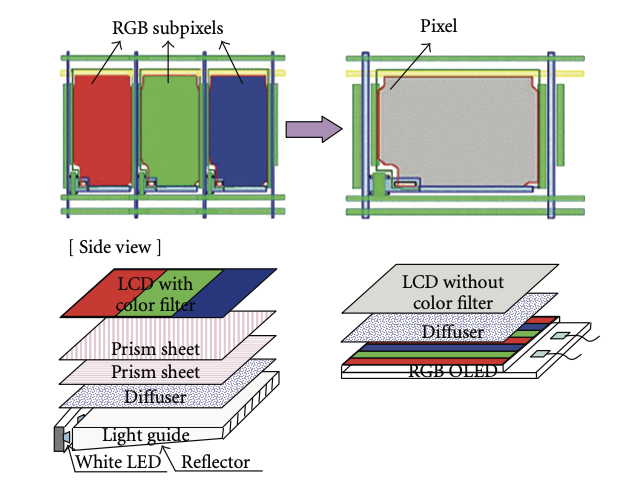
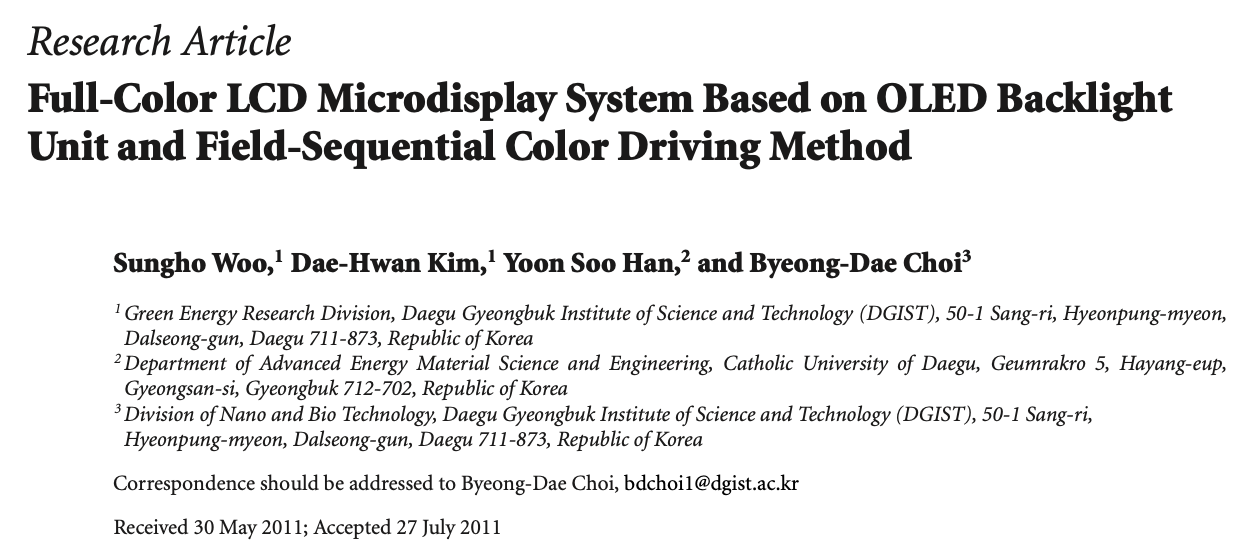
Editors are publishing made-up stories without even doing a simple Google search. The article in question is a 2011 research paper by Korean academics and has nothing to do with Sony or any upcoming Sony cameras. Here are the details:
The 2011 paper (“Full-Color LCD Microdisplay System Based on OLED Backlight Unit and Field-Sequential Color Driving Method”) was written by researchers from Daegu Gyeongbuk Institute of Science and Technology (DGIST) and Catholic University of Daegu in South Korea. It describes a prototype 0.7″ FSC (field-sequential color) LCD microdisplay using a custom 0.76″ patterned RGB OLED as the backlight unit (BLU), combined with a high-temperature polysilicon (HTPS) LCD panel supplied by ILJIN Display Co., Ltd. (a Korean company).
There is no mention of Sony anywhere in the paper (including the authors, acknowledgments, references, or experimental details). The work is independent academic/industrial research from Korean institutions focused on low-cost, high-efficiency microdisplays for potential use in viewfinders, projectors, HMDs, etc.
Sony does not appear to be implementing (or planning to implement) this specific technology. Sony’s actual microdisplay approach: Sony Semiconductor Solutions develops and uses direct-emissive OLED microdisplays (OLED-on-silicon/OLEDoS) for electronic viewfinders (EVFs) in its cameras. These are self-emissive panels with high resolution, contrast, and fast response – no separate backlight or color filters in the same way as the paper’s LCD + OLED BLU design. Sony has released multiple generations of these for Alpha cameras and AR/VR applications.
In short, the paper is unrelated to Sony, and while Sony is exploring FSC-based LCD improvements for efficiency in future cameras, there is no indication that it involves the specific OLED-backlit microdisplay approach described in the 2011 paper.
You can download the original PDF research paper from 2011 here.
DPReview's Community Manager, Mathew Anderson, shamelessly presenting an ice cream cone as if it were part of Ikea's product lineup. Ice cream cone courtesy of Ikea's cafeteria. A symbol of his light-hearted but still serious attitude toward community development.
Photo: Mathew Anderson
Greetings, DPReview community!
A lot happens across the community every month: lively discussions, feature articles spotlighting community members and their gear, photo events and more, and much of it naturally won't be seen by everyone. As DPReview's Community Manager, I want to change that as much as possible. In this "What you missed" roundup, I'll highlight some of the best community activity from the past month, including some of the things that didn't make it into articles.
Here's just a sampling of what happened in May.
What's in your bag? A community member spotlight
Every week, we spotlight a community member's unique photographs and gear in our 'What's in your bag?' series. The series tells the story of your trials and tribulations getting that perfect shot, and highlights their favorite camera gear and how they use it. You'll also get tips and tricks on capturing your own photography.
As with many of our other community initiatives, we often don't get a chance to cover every detail of a community member's story, so we're selecting an additional photo from each of the previous month's posts that you haven't seen yet. Check them out below.
Feeling artsy
Photo: Roberto De Micheli (roby17269)
Roberto De Micheli, who goes by the username roby17269 in the forums, switched from wildlife photography to focus on his passion for fashion. He also dabbles in travel and kids' photography (mainly family outings). Roberto submitted a wide range of photography on these subjects to us for this article, but we focused on the fashion segment as it's his most recent work.
"Fashion shoots happen in studios or on location. In my heart, though, I still remember my two safaris in Africa (Kenya and South Africa) most fondly, which can be a magical place. The safaris were during my wildlife 'phase'. I was absolutely floored by how rich, colorful and amazing nature was in those places."
The photographer who never stopped chasing the unique shot
Photo: Josh S. Rose
Josh S. Rose has been capturing visceral reactions since the 1970s, when he wandered around a racetrack park as a kid to explore the event. He found himself hanging out at the photo booth and loved to watch a team develop film after each race, calling up the winners to the announcer upstairs, then hearing the crowd wildly react. His career kept him intrigued by those early moments of capturing scenes on film.
"In the beginning, I tried to minimize mistakes. Because I shoot dance and movement a lot, this is exacting work, especially when you're inside – low light and fast movement is a nightmare for a camera. So, I kind of treated dance as one would sports, reaching first and foremost for clarity, focus and split-second timing. It isn't all that hard, honestly. It just takes a certain number of reps."
This photographer uses an 800mm lens to lock onto nature's special moments
Photo: Alan Randle (AJRimages)
Alan Randle, known as AJR Images in the forums, has been capturing striking images for decades, with a particular passion for fast-paced subjects. Originally from the UK and now based in Southern California, he has built a body of work that spans airshows, surfing, wildlife and more. Over the years, his photography has evolved from early film experiments to high-precision digital work with top-tier equipment, allowing him to get in close and capture subjects with remarkable clarity and detail.
"I've been taking photographs since the early 1960's, but more seriously for the last 15 years. I moved to California from the UK in 2000, and am now lucky to have great subject matter and good light. I've been fortunate enough to acquire some of the best equipment and now like to get in close to my subjects with the use of long telephotos."
"I also enjoy shooting zoo animals. I like to take portraits rather than the whole of the animal, making good use of my telephoto lenses. Carrying big equipment around a zoo can be tiring. I’ve been asked by docents if I want to check my ‘luggage’ to make life easier!"
How this photographer sets up to capture life at the speed of the streets
Photo: Kevin Zhang (fatplanediaries)
Kevin Zhang, known as fatplanediaries in the wider community, began photographing at a young age under his father's influence, a dedicated Leica street photographer. What started as a focus on street photography evolved over time, especially after a chance moment in Shanghai, when he experimented with panoramas using only a prime lens. Since then, his work has developed into a distinctive blend of candid street scenes and highly detailed panoramic images, each discipline informing the other.
"I like to shoot candid street subjects, but I'm often pretty shy about approaching people to get the right shot. The best alternative is to get hired for events instead; everyone's vying to have you shoot them in those kinds of situations. I've had a lot of good practice at my friends' parties before getting to events as a photographer."
This reader mastered a Nikon Z5 to capture diverse European architecture
Photo: Brian Ormerod (ikon44)
Brian Ormerod, who goes by the username ikon44, has a love of architecture of all types and periods across northern Europe. Over the decades, he has traveled extensively, meticulously planning trips to capture selected projects in Vienna, Barcelona, Prague, Paris, Istanbul and beyond. His work has evolved from casual holiday snapshots to carefully composed architectural studies at the School of Architecture in Nottingham, UK.
"I went with an architect friend to Barcelona, which I found to be an architectural wonderland. We photographed works by Antoni Gaudi, but by pre-planning we were also able to visit a number of other projects, including the IMO Eye Hospital by Josep Llinas, The University of Pompeu Fabra Library, which is a spectacular arcaded masonry structure, the Santa Caterina Market, a neo-classical building refurbished by Enrique Miralles and the Fira de Belacaire flea market with a spectacular, fragmented mirrored canopy."
Every other week, we ask the community a question about their photography, usually on a specific topic, with the results spotlighted on DPReview's front page and in the forums the following week. There are often many great photos submitted that we don't get a chance to spotlight them all in a single article.
Here is a newly revealed reader's photo from each of the previous two weeks' questions.
Featured quote: "Different accouterments. A chamois, a laptop, a notebook and a pen (sometimes two; private and business), tissues, paracetamol (just in case ;-)), and some small things I can't remember. A Wuchuan canvas messenger bag with a Billingham insert and lots of useful pockets. It serves me well, carrying a D850 with one prime (24, 35, 58 or 85, depending on mood and plan, if any)." - Michiel953
Featured quote: "The foundation came before I even owned a camera: Total Picture Control by Andreas Feininger. His main message is that the photographer transforms a moving, three-dimensional world of color into a frozen, 2D (and in the late 1950s) monochrome picture. To communicate what you saw, you need to translate the lost dimensions (depth, movement and color) into your photograph."- Klaus dk
Photo threads of the month: new types of challenges
"May we never forget."
Photo: BluesJake
Also every week, new photo thread discussions and mini-photo challenges pop up across the forums, generated by community members. Usually, these start as a discussion about a particular camera brand or type of photography. Our community has hundreds of topics to choose from, so there's no shortage of photography show-and-tell opportunities!
For the month of May, we wanted to highlight BluesJake's Post your Memorial Day photos thread, where community members have been contributing to pay their respects to veterans who lost their lives in conflicts and other events around the world.
Visit our Community photo threads index for all the latest opportunities to share an interesting photo from your collection. To contribute to most of these community initiatives, simply read the OP's (Original Poster) posting guidelines (if there are any) and then reply to the thread with your contribution.
On May 13, 2026, Sony announced the a7R VI full-frame mirrorless camera. The community was so excited about the news that they beat us to the punch and immediately started discussing the camera in the forums. Here is a peek at what they had to say:
PWPhotography: Nice! $4499, $500 'cheaper' than initially rumored, and it's slightly lighter than a7R V.
CanadianLongbowman: So the TL;DR is that it's a high-res version of the a7R V, in essence, with a similar readout speed and a few extra perks.
In response, PWPHotography said, "I hope so. However, the a7R V uses a partially stacked sensor, while the a7R VI uses a fully stacked sensor. Fully-stacked sensors, as in the A9 and A1 series, used to have a little DR penalty. Sony appears to have overcome this issue by combining the readouts of its low and high gain steps as in a7R V."
kbrkr: Sony announced the a7R VI today, and my mind automatically went to Nikon challenging it with a Z7 III. Some of the features of the Sony are quite impressive, such as 68MP, 30 fps Raw, pre-capture, and speed boost. I hate these leapfrog games, but I really wish Nikon had a high-megapixel camera to replace the Z7 II.
I'd like to consider writing an article like this one on a monthly basis. Future editions could include camera use and photo-taking tips and tricks, additional quotes from community members in various discussions and more. If you are interested in seeing community content presented this way, please let me know.
For even more content posted directly by our readers, join the discussion forums and share your camera gear and photography curiosities!
When trying to capture this scene, most phones would probably try to brighten the shadows. The Xiaomi 17T Pro, shooting in the Leica Authentic color mode, didn't.
Photo: Abby Ferguson
One of the big conversations around mobile photography relates to how images are processed, with many bemoaning the unnatural look that some phones produce by dramatically brightening shadows. Apparently, Leica isn't necessarily a huge fan of the look, either. According to Marius Eschweiler, Vice President of the company's mobile business unit, it had "a very tough conversation" with Xiaomi about how photos from its co-branded phones should look.
The comment was part of an interview at the launch event for Xiaomi's latest phones, the 17T and 17T Pro, which feature Leica's "Vibrant" and "Authentic" profiles. Eschweiler, responding to a question about what the company's goal was with the latter color mode, says it was meant to show the real colors and shadows of a scene.
Leica executives participated in a group interview with Xiaomi for the launch of the 17T.
Photo: Abby Ferguson
The last part was apparently what prompted the discussions with Xiaomi. "That was a very tough discussion we had with the Xiaomi engineering team at the very beginning, because coming from the smartphone world, colorful, shiny images were seen as a benchmark," he says. "Then we came into play and said, 'yeah, but if you see it from the serious photographer's point of view, it's okay that some shadows are maybe not perfectly lightened up to let you see every detail.'"
"That computational imaging was getting too much in the picture for our taste"
Pablo Acevedo Noda, Head of Development and Engineering for Leica's mobile division, adds: "Leica Authentic was made more for photographers coming from the photography world," explaining that phones need to do a lot of computational photography to make up for their smaller sensors and lenses. "That computational imaging was getting too much in the picture for our taste."
The solution, he says, was processing the images in a completely different way than the vibrant ones. "In the end, we had to do two different pipelines. The image signal processor (ISP) has two different processing pipelines. One is the authentic, one is the vibrant. They share some common blocks, but the base is different."
A photo taken in the Leica Vibrant mode on the Xiaomi 17T Pro.
Photo: Abby Ferguson
He also says Leica had a hand in tuning the imaging pipeline for the phone's Live Moment feature, which captures a video before and after the shutter is pressed. The feature existed on Xiaomi products before, but now it includes the Leica color profile throughout. According to Noda, the company helped improve the resolution and HDR processing for the feature, as well as the exposure and white balancing for human subjects.
Eschweiler says Leica wants to give photographers a choice: they can go with the Leica Authentic for a more traditional photographic look, or the Vibrant for a more saturated aesthetic that mobile photographers will be familiar with. "It's a different philosophy, and I believe it's good that customers have the choice."
He echoes this sentiment about users having options when discussing the role of AI in mobile photography, after Xiaomi and Google touted the 17T's ability to use generative AI to transform images taken with the phone into videos, or to reimagine them. "Whether you take a serious image or whether you would like to create something with generative AI, I think that's a different use case," he says.
"It's a different philosophy, and I believe it's good that customers have the choice"
"You likely won't see that on a Leica M, but I think on the 17T series it makes sense," he says. Noda also adds that part of the point of features like Content Credentials, which Leica attaches to photos taken with its cameras, is to make it obvious when someone has tampered with a photo, using generative AI tools or otherwise.
The answers offer a look at some of the considerations traditional camera companies face when deciding to co-brand a phone. There are some fundamental differences in how those devices will produce images compared to a traditional camera, as well as different expectations from consumers, but the Leica name and branding come with their own set of expectations. Of course, not everything will come down to decisions around processing and software, but we'll cover the choices around hardware in a separate article.
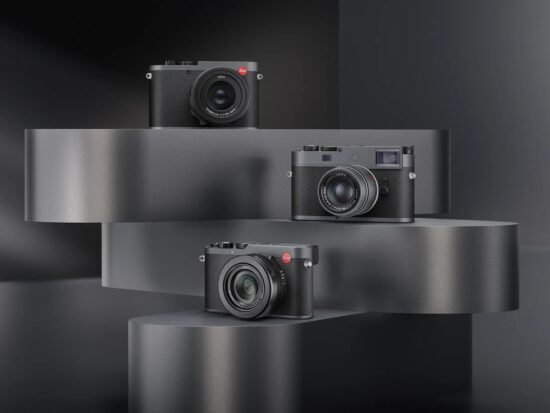
Leica has announced a new finish option available for the M11-P, Q3 and D-Lux 8: "Metal Gray." (Calling it a new color would be a touch generous; it's no Safari green or burgundy.) The company says the new paint was "specially developed at the Leica factory," and will be available as an option alongside the existing finishes for each of the products.
The Metal Gray M11-P will be the first camera available with the finish, but the changes aren't limited to just a coat of paint. Rather than the leatherette-style wrap, it has what Leica calls "diamond-patterned leather," which has a pattern similar to the one found on the Q3.
Image Comparison Slider
This widget is not optimized for RSS feed readers. Please open this article's permalink in a browser to view this content.
Given that it's an interchangeable lens camera, it makes sense that Leica is also launching a color-matched lens: the APO-Summicron-M 50 F2 ASPH. Like the silver version of that lens, its focal length and the feet distance markings will be red. It will also have a gray front lens cap.
Image: Leica
The Q3, meanwhile, basically looks like an inverted image of the original, which had a black body with a gray wrap. The Metal Gray version, meanwhile, has a gray body with a black wrap. The control dials and lens remain black, but the yellow accents on the lens are now a deep red, instead. The D-Lux 8's design is very similar to the Q3's: gray body, black grip and lens, though the company also says its function buttons will be gray as well.
Of course, Leica doesn't expect people to buy a gray camera and then use accessories that don't match. A gray battery will be available for the M11-P (since it has a plate that's visible from the bottom of the camera), and there are dark brown protective cases for the M11 and Q3, and a "cognac" one for the D-Lux 8. There will also be a variety of black and brown straps available.
The Metal Gray M11-P, and its corresponding lens and accessories, will be available starting today, while the Q3, D-Lux 8 and their accessories are coming on July 16th. In the US, the cameras cost the same as their black counterparts – silver typically comes with a bit of an up-charge – while the lens will cost $45 more than the black version. Given that both lenses are around $10,000, though, that only represents a 0.45% increase.
A modern metal gray paint finish is being added to the traditional black-and-silver Leica design palette
Teaneck, May 28th, 2026 – Leica cameras are renowned for their iconic design, which combines function and aesthetics in a clear, distinctive form. The classic camera colors of black and silver are a hallmark of a design that is consistently geared towards photographic practice. Leica Camera AG is now expanding this existing design language to include a new metallic gray tone. The elegant and exclusive appearance of Leica products is emphasized by this metal gray paint finish, which was specially developed at the Leica factory. The new metal gray paint finish will make its debut in the Leica M11-P, Leica Q3, and Leica D-Lux 8 cameras as well as the Leica APO-Summicron-M 50 f/2 ASPH. M-Lens. The company is also introducing a new range of elegant, functional accessories for these three camera lines.
Leica M11-P, Metal Gray Paint Finish
The Leica M11-P is the first M-Camera to introduce the new tone to the M-System. The subtle metal gray paint finish of the full-metal body, combined with the black control elements, emphasizes the camera’s deliberately understated style. Similarly, the characteristic diamond-patterned leather, which represents Leica’s DNA in terms of both aesthetics and feel, enhances the metallic gray camera’s modern look. Like all M-Cameras, this new color option for the full-frame camera is “Made in Germany” and precision-engineered in Wetzlar.
Optional new accessories are available to complement the metallic gray camera. These include a color-coordinated battery, protector, and carrying strap with a comfortable shoulder pad, crafted from a new dark-brown leather. There is also a multifunctional protector made of smooth black leather. The latter combines a protector with a handgrip to offer protection, an ergonomic grip, and functionality. The handgrip’s base plate is compatible with the ARCA-SWISS coupling system. This enables the handgrip to be quickly attached to tripods featuring this system without the need for additional tools.
Leica APO-Summicron-M 50 f/2 ASPH., Metal Gray Paint Finish
The high-performance Leica APO-Summicron-M 50 f/2 ASPH. lens is available in metallic gray to match the M11-P. The lens elements and front lens cap boast the new finish, while the engraving on the feet and f-stop scales stand out in red. Based on the respective standard models, the camera and lens form a unique combination with this new color option, where aesthetic design and optical excellence harmonize perfectly.
Leica Q3, Metal Gray Paint Finish
Starting July 16th, the Leica Q3 compact full-frame camera will also be available in the metallic gray color option, with black control elements providing subtle accents. The new Leica Q3 in metallic gray also differs from the standard black model in that the feet and f-stop scales on the lens feature red engraving. Based on the same technology as the Leica Q3, the metallic gray version also impresses with maximum image quality, minimal complexity, and seamless connectivity to enhance your creative day-to-day anytime, anywhere. The optional protector and carrying strap crafted from a new dark-brown leather provide an additional opportunity to express your personal style.
Leica D-Lux 8, Metal Gray Paint Finish
The D-Lux 8 in metallic gray will also be available starting July 16th. This brings the number of cameras bearing Leica’s newest design up to three. Both the camera body and the FN buttons are finished in metallic gray. All the other control elements and dials subtly stand out against the black background. With its fast DC Vario-Summilux 10.9–34 f/1.7–2.8 ASPH. zoom lens, this compact camera delivers astonishing image quality in a pocket-sized format. New optional accessories allow you to add a personal touch. To complement the existing black leather camera case, a cognac-colored version has been added to the range. The accessories for the compact D-Lux 8 are rounded off stylishly with a coordinated collection of carrying straps and a wrist strap in braided black leather.
Leica products in the new color option, as well as the new equipment, will be available worldwide from Leica Stores, the Leica Online Store, and authorized dealers.
Available from May 28th, 2026:
Leica M11-P, Metal Gray Paint Finish, retail price: $10,400.00
BP-SCL7 battery, Metal Gray Paint Finish, retail price: $200.00
Protector for M11 cameras, leather, dark brown, retail price: $340.00
Carrying strap with a shoulder pad for M- and Q-Cameras, leather, dark brown, retail price: $150.00
Multifunctional protector for M11 cameras, leather, black, retail price: $370.00
When you use DPReview links to buy products, the site may earn a commission.
"This may look like we were directly on the beach, but actually quite a distance away."
Phase One IQ180 | 50mm | F11 | 1/500 sec | ISO 35 Photo: Roberto De Micheli
Roberto De Micheli, who goes by the username roby17269 in the forums, switched from wildlife photography to more recently focusing on his passion for fashion. He also dabbles in travel and kids' photography (mainly family outings). Roberto submitted a wide range of photography on these subjects to us for this article, but we focused on the fashion segment as it's his most recent work.
This story is part of our What's in your bag? community spotlight series. The series showcases the diverse gear and photography of our community, and shares their stories of how that gear helped them to capture the perfect shot.
"I love the mood and color of this one, which was shot in the attic of an old building."
Canon EOS-1D X | Canon TS-E 24mm f/3.5L II | F3.5 | 1/50 sec | ISO 1600 Photo: Roberto De Micheli
Meet Roberto De Micheli (roby17269)
Home base: Jersey City, USA
Favorite camera and lens: Roberto’s current favorite setup is the Hasselblad X2D II 100C paired with the XCD 90mm f/2.5. For fashion work, he also regularly uses the XCD 35–100mm, appreciating the look and rendering that medium format delivers.
I am a sucker for big sensors, so currently the X2D II is my favorite tool. Plus, it is undoubtedly the most gourgeous camera on sale right now.
For travel, family and event photography, he relies on a Canon EOS R5, often paired with Canon’s RF 50mm f/1.2, RF 85mm f/1.2 and RF 100–500mm lenses. Roberto describes himself as “more of a tele guy than a wide guy”.
Support gear: Roberto’s fashion setup includes a heavy Manfrotto tripod with a geared head for catalog and studio work. For lighting, he uses Broncolor Siros L 800 strobes and a Profoto B1 500, paired with a variety of modifiers for both studio and location shoots. When traveling, he’ll often pack a drone, typically either a DJI Mavic 4 Pro or Mini 5 Pro, to complement his still photography.
Camera bags: Roberto currently uses an older backpack that has stayed with him through years of shoots and travel. While he appreciates beautifully designed, high-end gear, he values intentional shooting and adaptability far more than carrying excessive equipment.
"I am a sucker for big sensors, so currently the X2D II is my favorite tool. Plus, it is undoubtedly the most gorgeous camera on sale right now."
"A lot of work went into setting up the table and the style of all four models. Group shots are tricky to make all the models look good at the same time."
Photo: Roberto De Micheli
What types of scenes do you like to focus on (pun intended)?
"My father was a film photography hobbyist, but somehow his passion never rubbed off on me. With the advent of digital photography, something clicked in my engineer brain and I bought a Sony DSC-F717 around 2003. I started with opportunistic travel photography and the compliments I received went straight to my head. From there, things started snowballing onwards with more professional opportunities every year."
"Fashion shoots happen in studios or on location. In my heart, though, I still remember my two safaris in Africa (Kenya and South Africa) most fondly, which can be a magical place. The safaris were during my wildlife 'phase'. I was absolutely floored by how rich, colorful and amazing nature was in those places."
"Experimental"
Phase One IQ180 | 300mm | F9.5 | 1/350 sec | ISO 35 Photo: Roberto De Micheli
When capturing that perfect shot, what techniques come to mind?
"For fashion, I do not have a preferred recipe. The best 'technique' I know is to work with great talent and to create a good atmosphere on set. I will also be bold and try different angles, poses and light setups. For travel, I like taking panoramas with a long lens (RF 100-500). For kids, I like to 'disappear' and take photos while they play for the best expressions. For drones, practice those flying maneuvers!"
Should photographers spend what they can to get the best shot?
"I'd say two things: don't spend too much until you find your niche and decide to be serious about it, and learn to take control of your photography!"
Roberto really enjoyed writing the content for this spotlight article and would be grateful for you to join him in discussion in the forums. You can also visit his work at rdmfashionphoto.com. Thanks, Roberto, for being featured!
If you'd like to share your photography, tell us about your main camera, lens choices, key settings and strategies. Your photos and story could be featured in the next article!
Editor's note: This article continues a series, 'What's in your bag?', highlighting DPReview community members, their photography and the gear they depend on. Would you like to be featured in a future installment? Tell us a bit about yourself and your photography by filling out this form. If you're selected for a feature, we'll be in touch with next steps.
Xiaomi has announced the latest entries in its extensive phone lineup: The 17T and 17T Pro. The updates are overall fairly incremental over the 15T series of phones (Xiaomi skipped 16 in its lineup), but brings its 5x Leica co-branded telephoto camera to the base model for the first time.
The main change on the 17T in regard to cameras is the telephoto lens. The 15T featured a 46mm equivalent (2x) telephoto camera, which doesn't offer a true telephoto view. Now, like the Pro model of the T lineup, the base phone features a 5x, or 115mm equivalent lens. That comes with a bit of a tradeoff, though, as the aperture is now F3.0 compared to the F1.9 of the wider lens. Otherwise, the 17T keeps the same main and ultrawide cameras as the previous generation.
Xiaomi 17T
Xiaomi 17T Pro
Main camera
Sensor size
Type 1/1.55 (50mm²)
Type 1/1.31 (72mm²)
Resolution
50MP
50MP
Aperture
F1.7
F1.67
Equivalent focal length
23mm
23mm
Ultrawide camera
Resolution
12MP (15mm²)
12MP (15mm²)
Aperture
F2.2
F2.2
Equivalent focal length
15mm
15mm
Telephoto camera
Resolution
50MP (21mm²)
50MP (21mm²)
Aperture
F3.0
F3.0
Equivalent focal length
115mm
115mm
The 17T Pro has even more subtle changes to its camera system. Xiaomi upgraded the sensor in the main camera from its Light Fusion 900 to Light Fusion 950, though it isn't clear what the practical implications of that are. The aperture of the main camera has also been ever-so-slightly changed, moving from F1.62 on the 15T Pro to F1.67 on the new model. Otherwise, the telephoto and ultrawide cameras remain the same as the last generation.
Beyond camera hardware, Xiaomi has added what it's dubbed "Leica Live Moment" to both of the new T-series phones. While the previous generation supported live photos (which capture a short video clip around a still image), those did not have specific Leica color profiles associated with them. Now, users can select between the Leica Authentic and Leica Vibrant profiles even when Live Moment is turned on.
The 17T Pro gets a new chip, the MediaTek Dimensity 9500, which also features an updated image signal processor (ISP). The new chip and ISP promise to bring some processing and autofocus improvements to the table, in addition to providing general speed and efficiency gains. The 17T also gets a new chip, though it's more of a modest refresh. Xiaomi also updated the batteries on both phones, promising slightly longer battery life. The 17T still lacks wireless charging, though.
The Xiaomi 17T will be available in blue, purple and black at a starting price of €749, while the 17T Pro comes in purple, white, blue and black for a starting price of €899. These prices represent a move up-market for the T series, as the previous versions started at €649 and €799, respectively.
Xiaomi Unveils Xiaomi 17T Series, Bringing Dual Sizes, Telephoto Capabilities Across the Lineup, and Leica Live Moment
Vienna, AUSTRIA, May 28, 2026 – Xiaomi today unveiled the latest additions to its T Series smartphone lineup with the brand new Xiaomi 17T Series, including Xiaomi 17T and Xiaomi 17T Pro. Combining an advanced Leica 5x telephoto camera and eye-care display with an ultra-large capacity battery, Xiaomi 17T Series comes as an imaging flagship encased in a refined design. Introducing dual sizes to the T Series for the first time, this lineup is set to deliver an exceptional experience, crafted for modern users.
Transform moments into living stories with The Telephoto Master and Leica Live Moment
Combining Leica optics with Xiaomi's cutting-edge imaging technology, Xiaomi 17T Series features a triple camera system headlined by a 50MP main camera designed to capture crystal-clear images. Inside lies an ultra-large 1/1.31-inch sensor in Xiaomi 17T Pro and a 1/1.55-inch sensor in Xiaomi 17T. Both combine Leica UltraPure optical design with a 1G + 6P hybrid Leica Summilux lens structure, renowned for rendering fine detail with exceptional clarity. The large aperture across the series delivers superior dynamic range and beautifully rendered depth of field.
For the first time, Xiaomi 17T Series brings the Leica 5x telephoto camera to both models in the T series, redefining versatility across the lineup. It delivers 50MP images with OIS and exceptional range, from intricate details captured via 30cm macro photography to 10x optical-grade zoom and up to 120x AI Ultra Zoom. This enables seamless shooting from near to far, giving creators flexibility across focal lengths. Beyond photography, the telephoto system also enhances videography, particularly on Xiaomi 17T Pro, which introduces Xiaomi Series smartphones' first 4K 60fps cinematic recording, delivering natural background bokeh for a more immersive visual experience. Specialized modes such as Stage further improve performance in complex lighting conditions across both photo and video, helping ensure concerts, performances, and other scenes are captured with clarity.
Moving beyond traditional still photography, Xiaomi 17T Series introduces Leica Live Moment, capturing not only the decisive instant, but also the motion and emotion that lead up to it. Leica Live Moment preserves movements and fleeting expressions, adding greater depth and context to everyday scenes. Supported across all rear camera focal lengths, Leica Live Moment delivers dynamic imaging infused with
Leica's signature aesthetic, ensuring a consistent visual style across perspectives. The result is more expressive, nuanced storytelling beyond a single frame, capturing emotion and narrative in every shot.
Leica Live Portrait extends this capability into Portrait mode, adding a natural bokeh effect that enhances subject separation while retaining the fluidity of motion. Newly designed exclusive Leica watermarks are available for Leica Live Moment captures, and multiple moments can be combined into shareable collages for social platforms.
Live cinematography, exclusive to Xiaomi 17T Pro, brings further creative options with Ultra-HD Live Moment in 4K, as well as seamless zoom effects via Freestyle or Portrait Live cinematography.1
A flagship display experience balancing visual brilliance and intelligent eye care
Xiaomi 17T Series puts user needs at the forefront, integrating advanced eye-care technology into its displays to debut Xiaomi Vision Care.2 Guided by medical research with precise engineering, this display automatically adapts to ambient light conditions, and effectively manages blue light, flicker, and motion blur to ensure all- day comfort. Thanks to these innovations, Xiaomi 17T Series is the first to receive the TÜV Rheinland quadruple eye-care certification, and has earned Xiaomi's first TÜV Rheinland Intelligent Eye Care certification.
At the heart of this exceptional visual experience is a 1.5K AMOLED display with 3500-nit peak brightness that delivers clear image quality and high color accuracy even in bright outdoor sunlight. Xiaomi 17T Pro takes this a step further, enhancing ultra-low-light night-time viewing with hardware-level 1-nit minimum brightness.
Not only is viewing crystal-clear, but also buttery-smooth with a high refresh rate offered across the series, namely up to 144Hz on the Pro variant,3 and 120Hz on the base version. Surrounding the screen are ultra-slim bezels that create an immersive look, focusing attention on the display. Notably, Xiaomi 17T Pro achieves this with the innovative LIPO packaging solution, resulting in equally-sized 1.29mm bezels on all four sides.5 Xiaomi 17T, meanwhile, comes in a more compact form factor that features a streamlined and lightweight design, optimized for effortless one-handed use for users who value portability and convenience.
Accentuating this display are a series of finishes that blend timeless design with modern style through the latest technology and craftsmanship. Xiaomi 17T Pro is available in a sophisticated Deep Blue, an elegant Deep Violet, or a classic Black.4 Meanwhile, Xiaomi 17T is available in four expressive colors, including an iridescent Opal White, an ethereal Violet, a vibrant Blue, or a classic Black.4 A refined brushed finish extending around the sides lends a neat, modern look, while the smaller, lower camera module adds to the sleek silhouette. Micro-curved edges also result in an effortless in-hand feel.
Power and performance without compromise
Enabling these advanced camera and visual experiences on the Xiaomi 17T Series is the powerful underlying performance across the series. Both models introduce next-generation silicon-carbon battery technology, achieving higher energy density while maintaining long-term performance.
Xiaomi 17T Pro's 7000mAh battery4 is the largest on a Xiaomi Series smartphone in the international markets,7 with a 27% increase in capacity over the previous generation,5 delivering an average of 1.88 days of use for typical users and all-day power for even the heaviest users.8 Both 100W wired HyperCharge and 50W wireless HyperCharge are also supported for a quick recharge whenever needed.9 Meanwhile, despite coming in a more compact design, Xiaomi 17T is equipped with a 6500mAh battery6 with an 18% higher capacity than the previous generation.5 Paired with 67W HyperCharge,10 it keeps users powered throughout the day. Both Xiaomi 17T Pro and Xiaomi 17T are compatible with third-party chargers, thanks to 100W9 and 50W PPS support,10 respectively.
Maximizing battery efficiency are two highly optimized chipsets designed for sustained performance. Xiaomi 17T Pro is powered by the MediaTek Dimensity 9500, built on a 3nm process, while Xiaomi 17T features the MediaTek Dimensity 8500-Ultra on a 4nm architecture. Both deliver major upgrades in CPU, GPU, and AI performance, enabling smooth responsiveness across demanding multitasking and next-generation gaming. To maintain this peak output, the Xiaomi 3D IceLoop System provides advanced thermal management through efficient vapor–liquid separation. By rapidly channeling heat away from the core chipset, it enhances sustained stability and ensures the device remains comfortable to hold, even under heavy workloads.
Both Xiaomi 17T and Xiaomi 17T Pro deliver comprehensive upgrades across the board, including an enhanced camera system featuring the innovative Leica Live Moment and a highly versatile telephoto lens, along with increased battery capacity and more, elevating the Xiaomi T Series to an entirely new level.
Price and Availability11
Xiaomi 17T Pro will be available in three color options: Deep Blue, Deep Violet, and Black.4
Xiaomi 17T Pro comes in three storage variants12, starting from XXX.
Xiaomi 17T will be available in four color options: Violet, Opal White, Blue, and Black.4
Xiaomi 17T comes in two storage variants12, starting from XXX.
Moreover, users who purchase Xiaomi 17T Series in eligible markets will enjoy several benefits¹³ at no extra cost: a 3-month trial of Google AI Pro with higher access to Google AI and 5TB of cloud storage;14 a 3-month trial of YouTube Premium,15 with ad-free access and offline downloads across YouTube and YouTube Music; and a 4-month trial of Spotify Premium with ad-free listening,16 offline downloads, and enhanced audio quality.
Disclaimers
1 This feature will be available via OTA, starting from May 28, 2026.
2 This product is not a medical device. Its features are not intended for medical use and are not intended to predict, diagnose, prevent, or cure any disease.
3 The screen supports a maximum refresh rate of 144Hz. The screen refresh rate may be slightly different under different application interfaces and game image quality. Please refer to the actual experience.
4 Color availability may vary between markets.
5 Data tested by Xiaomi Internal Labs, actual results may vary.
6 Refers to the typical value of the smartphone's battery capacity.
7 As of up until May 2026.
8 Data is based on test results from Xiaomi Internal Labs, measured under a simulated, comprehensive battery life scenario reflecting heavy daily use (including typical smartphone activities such as home screen use, call, music playback, gaming, social media, email, maps, video streaming, camera, browser, standby, etc.) Actual results may vary due to differences in the testing environment, software version, network conditions, and individual usage patterns.
9 Please consult the local seller on the availability of power adapters in the box. Supports up to 100W charging with PPS-compatible adapters. Actual performance may vary. Wireless charger sold separately.
10 Please consult the local seller on the availability of power adapters in the box. Supports up to 50W charging with PPS-compatible adapters. Actual performance may vary.
11 Prices for different markets may vary due to VAT, taxes, and other factors.
12 Configurations available may differ between different regions. Available storage and RAM are less than the total memory due to storage of operating system and software pre-installed on the device.
13 Availability of these benefits is subject to applicable terms and user eligibility.
14 Gemini is a trademark of Google LLC. Terms apply. Offer ends June 12, 2027. Only available for ages 18+. Unless canceled earlier, Google One will charge a monthly fee after the trial ends (price varies by region). Cancel anytime. Return of purchased device may result in cancellation of subscription. Terms: https://one.google.com/offer/terms-and-conditions/xiaomi_3month_aip_trial
15 New users only (no prior trials of YouTube Premium, YouTube Music Premium, or YouTube Premium Lite). Redeem by Aug 31, 2026, 11:59 PM local time. Individual subscription will automatically renew after the trial period ends. Billed on a monthly recurring basis. Cancel anytime. Redeem in the YouTube app. Terms apply: https://www.mi.com/global/support/terms/youtube-premium-terms/
16 Offer is valid for new Spotify Premium users only. Offer applies to Spotify Premium Individual except for Indonesia, India, and the United Arab Emirates, wherein the offer applies to Spotify Premium Standard. Redeem by Sept 25, 2026, 11:59 PM local time. Free trial, then monthly fee applies unless canceled (price varies by region). T&Cs apply. Terms: https://www.mi.com/global/support/terms/spotify-premium-terms/
17 The device is certified to be water and dust resistant exclusively under specific laboratory conditions not corresponding to normal use conditions. The warranty does not cover liquid damage caused by conditions other than test conditions. Ingress protection might deteriorate due to wear and tear, physical damage and/or disassembly needed for repair. For more information, please refer to Xiaomi's official website.
18 The availability of Xiaomi Offline Communication may vary by country. Xiaomi Offline Communication requires a SIM card and a logged-in Xiaomi account to function. It supports voice calls within a limited range between two supported devices in open, unobstructed environments. Actual call quality may vary depending on environmental conditions. Please refer to your actual experience. This feature is not designed or intended for emergency or life-saving communications.
19 Availability of AI features may vary depending on version, apps, languages, and regions. Please check the official website for more information. An internet connection is also required. Please check responses for accuracy.
20 Google and Android are trademarks of Google LLC. Available on select devices and internet connection required. Works on compatible apps and surfaces. Results may vary depending on visual matches. Check responses.
21 Google and Gemini are trademarks of Google LLC. Check responses. Setup required. Compatibility varies. 18+.
22 Supports up to 22.5W wired reverse charging, compatible with devices verified through Xiaomi Internal Labs. Actual performance may vary depending on battery condition and other factors. Ensure your phone has sufficient charge and that the receiving device is compatible.
23 Wi-Fi 7/Wi-Fi 6E/Wi-Fi 6 capability may vary based on regional availability and network support. Wi-Fi connectivity (including Wi-Fi frequency bands, Wi-Fi standards and other features as ratified in IEEE Standard 802.1 specifications) may vary based on regional availability and local network support. The function may be added via OTA when and where applicable.
24 Dual SIM may vary based on region availability. Use of eSIM requires a wireless service plan. This service plan may be subject to certain restrictions of use on switching service providers and roaming (even after contract expiration). eSIM availability may vary depending on country/region and carrier. For more details, please contact your carrier.
25 Connectivity and network bands may vary based on region availability and local operator support.
Sample Gallery
Please do not reproduce any of these images on a website or any newsletter/magazine without prior permission (see our copyright page). We make the originals available for private users to download to their own machines for personal examination or printing; we do so in good faith, so please don't abuse it.
Sample gallery
This widget is not optimized for RSS feed readers. Click here to open it in a new browser window / tab.
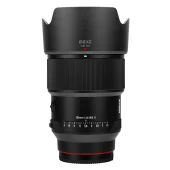
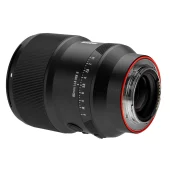
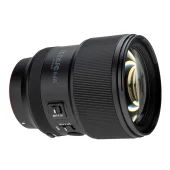
The AF 135mm F1.8 (7artisans occasionally adds "Max" to the end of the name, but not consistently) has 16 elements in 13 groups, with six extra-low dispersion lenses and five high refractive index elements. It has a 0.68m (2' 3") minimum focusing distance, and can achieve up to 0.25x magnification. Its aperture has 12 blades, which the company says will provide "naturally circular bokeh" and 12-point starbursts.
Autofocus duties are handled by a stepper motor, and the lens has a switch for going between manual and auto focus. It also has two function function buttons, though it's not entirely clear whether they can be programmed to do different things, or if it's the same function but easy to access whether you're shooting in portrait or landscape. It also has a customizable control ring.
Image: 7artisans
At 1014g (35.8oz), it's relatively hefty, though a touch lighter than Viltrox's AF 135mm F1.8 Lab. Part of that is likely down to its aluminum construction. It's 130mm (5.1") long, and accepts 82mm filters. The company says the mount has a gasket to keep out dust, and that the front element has a coating to repel fingerprints, moisture and oils.
At CP+, the company said the lens would also be coming to L and Sony E mount, and there are references to those versions in recent Instagram posts and product photos. However, at time of writing those don't appear to be available for sale yet. Those versions will have a dedicated aperture ring, rather than the Z mount version's customizable control ring.
The Z mount version of the lens is available now for $690. That's quite an aggressive price point, as Samyang's 135mm F1.8 retails for around $800, with the Viltrox option selling for $100 more.
Lux Camera, the company behind the Halide camera app for iPhones, has announced Halide Mark III, the third generation of the popular app. The new version includes several upgrades and new features, including one that caught us by surprise: the ability to process Raw files from several popular camera brands.
Photo looks
According to CEO Ben Sandofsky, the company put significant effort into developing the app's photo processing capabilities. As part of that effort, it teamed up with a Hollywood colorist to build a custom photo processing pipeline designed around the specific dynamic range and color gamut of the iPhone camera. The result is a new set of Halide Looks.
Halide Mark III ships with five: Valencia, which features saturated colors and heavier contrast, designed for landscapes and cityscapes; Rembrandt, a portrait look with extra mid-tone contrast that "emphasizes bone structure and lighting," along with uniform skin tones; Nova, a colorful look with strong contrast and "smooth, peachy highlights," also intended for landscapes and cityscapes; Zephyr, a more neutral look designed to mimic the subtle contrast of film with the character of a traditional print; and Chroma Noir, a black-and-white look with medium contrast.
Sample gallery
This widget is not optimized for RSS feed readers. Click here to open it in a new browser window / tab.
Photos captured with Halide Mark III's new photo looks. Photos: Lux Camera
The new looks join Halide's existing Process Zero, which bypasses the computational processing typically applied to smartphone photos, resulting in a grittier, more retro photo look.
Camera design
Sandofsky says the camera interface has been redesigned to keep the most important controls within thumb's reach. This includes a tile in the lower right corner representing your currently selected look – inspired by the windows on film cameras that allowed you to see what film was loaded in your camera.
Other new tools include aspect ratio options to match popular camera formats: 3:2, 1:1, and a 65:24 panoramic format, plus a dynamic aspect ratio for Instagram that adjusts depending on whether you're shooting landscape or portrait. New composition overlays add a uniform grid, the golden ratio and the rabatment of the rectangle to the existing rule-of-thirds grid.
Halide Mark III's new camera interface.
Image: Lux Camera
Additional controls are accessible via a three-dot "More" menu. In a nod to photographers more comfortable with the previous layout, there's an option to revert to the Halide Mark II interface.
The Photo Lab
The updated app also includes a new Photo Lab module for reprocessing Raw files. It's designed to let you quickly try different looks, adjust exposure, toggle HDR, and make other basic adjustments.
The new Photo Lab module is designed to quickly try out different looks
Image: Lux Camera
Photo Lab also supports Raw files from several camera brands. Sandofsky says that during development, the team felt Halide Mark III's output was beginning to rival their dedicated cameras, and wanted a way to bring that processing to files shot on those cameras.
The result: Halide Mark III can process Raw files from Canon, Sony, Nikon, Fujifilm, Leica, and Hasselblad. The company currently classifies this as a beta feature.
Pricing and availability
Halide Mark III is available on the iOS App Store as a one-time purchase for $60, or via a $20/year subscription. Users who purchased Halide Mark II will receive a free upgrade.
Welcome back to our Question of the Week series! This reader-focused series aims to get our photographic community to share thoughts on all sorts of photography-related topics in our forums. We pose questions about gear, favorite camera stores, advice, problem-solving and more, and you share your thoughts and opinions.
This week, we’re leaning into the holiday spirit! The season of giving (and occasionally re-gifting) is upon us, and that means it’s time to unwrap some memories – both heartwarming and hilarious.
What are the best (and worst) photography-related gifts you've received?
What’s the best photography-related gift you’ve ever received? Maybe it was a dream lens that caused you to take on an adventure deep in the mountains, or a handmade camera strap that’s now an essential part of your kit. And what about the worst? Perhaps someone thought you needed yet another "World’s Best Photographer" mug, or that odd lens filter set that turned every photo a shade of green.
In this edition of our Question of the Week series, we want to hear your gift stories: the memorable, the useful and the truly baffling. Share your favorites (and flops) in the forum link below. Photos of the gifts (or what you created with them) are also more than welcome! We'll highlight some of your most entertaining and heartfelt responses in next week's roundup.
When you use DPReview links to buy products, the site may earn a commission.
Sample gallery
This widget is not optimized for RSS feed readers. Please open this article's permalink in a browser to view this content.
Product Photos: Mitchell Clark
The Panasonic DC-L10 is an enthusiast compact with a Four Thirds sensor and an optically stabilized 24-75mm equiv. F1.7-2.8 lens with motorized zoom. Like the Panasonic's LX100 and Leica's D-Lux series of cameras, the camera doesn't use its entire sensor, instead letting you preserve the same diagonal angle of view from 4:3, 3:2 and 16:9 crops of it, which use up to 81% or around 183mm² of the sensor.
Key Specifications:
Up to 20.4MP images from a 26.5MP BSI CMOS Four Thirds sensor
10.9 - 34mm (24-75mm equiv.) F1.7-2.8 lens with OIS
2.36M dot OLED viewfinder
1.84M dot 3" fully articulating display
Phase detect autofocus with 6 subject recognition modes
Metal body
5.2K open-gate up to 30p
1x UHS-II SD card slot
The L10 will be available in June, with the black and silver versions costing $1499. There will also be a special edition "Titanium Gold" version for $100 more, which will be available from limited outlets and include a threaded shutter button, leather strap and a color-matched automatically-opening lens cap (the latter accessory will be available to buy separately for the standard editions in silver and black).
The LX100 II (left) is a fair bit smaller than the L10 (right).
Panasonic is pitching the L10 as the start of a new line of compacts, rather than a direct successor to the LX100 II from 2018, but the cameras' shared DNA and place in the market make it worth seeing what else the removal of an X and a zero has changed. The biggest difference is, of course, the design, which will be covered in the body and handling section.
Updated sensor
The L10 uses the same 26.5MP Four Thirds (225mm²) sensor that's found in the GH7 and G9 II. This results in images that have better dynamic range and are slightly higher resolution than you could get out of the LX100 II: up to 20.4MP in its 4:3 mode, rather than 17MP.
The L10 continues Panasonic's tradition of cropping in on its sensor to produce a multi-aspect ratio shooting experience, where the different crop modes it offers generally have the same diagonal angle of view.
Graphic: Richard Butler
The bigger improvement, though, is the addition of phase detect autofocus. The L10 has essentially the same autofocus we've seen in all of Panasonic's most recent cameras, with algorithms for recognizing six kinds of subjects (humans, animals, cars, motorcycles/bikes, trains and planes), as well as part priority (e.g., focusing on a rider's helmet, or the cockpit of a plane) derived from machine learning.
New processor
Panasonic has used its latest processor in the L10, the same one found in recent models like the S1RII. The camera runs Panasonic's latest-generation of firmware, so it's compatible with the company's Lumix Lab app and has features like HLG HEIF output, Live View Composite (a multi-exposure mode that shows you the image as it builds up, and lets you stop it when you choose), in-camera processing of focus stacking bursts and the Real-Time LUT system, which lets you bake custom-designed color profiles into your JPEGs and videos.
A cornucopia of colors
While the Real-Time LUT system (for which there's a dedicated button on the rear plate) lets you use custom color modes for your JPEGs, the camera includes a few new built-in color modes too, which Panasonic says are "film‑inspired." These are "L.Classic," which the company says is low-saturation and highlights greens, and "L.ClassicGold," which gives your photos a very warm, amber look.
Standard Color Profile
L.Classic Neo
L.Classic
L.Classic Gold
The decision to include these new modes was apparently based on the popularity of the L.ClassicNeo profile that it's included in its cameras for years. For video shooters (or photographers looking for a video-like look), the camera also includes a suite of "Cinelike" modes designed to give you a pleasingly flat look that, unlike the also-included V-Log, can be used for output, but which also offer some editing flexibility in post.
How it compares
One of the most exciting things about the L10 is that it's a new enthusiast compact camera aimed at photographers, which is something we haven't seen in quite a while. Companies like Canon and Sony still sell the latest entries in the G7X and RX100 lines, but both cameras were introduced in 2019, around 7 years ago.
While it can be tempting to compare the L10 to cameras with fixed prime lenses like the Ricoh GR4 and Fujifilm X100VI, the use of a zoom lens means that it's targeting a different kind of photographer. Likewise, vlogging compacts like Canon's PowerShot V1 and Sony's ZV-1 II are much more focused on pleasing videographers than photographers.
By virtue of being the newest camera on this list by at least seven years, the L10 has the benefit of many modern features we've come to expect: subject recognition for more than just faces, fast wi-fi transfers to a modern app, pre-burst capture, full-width video even at ambitious resolutions and frame rates and more. And while Panasonic typically hasn't matched the autofocus performance of Sony and Canon's latest systems, the systems used by the compacts discussed here are noticeably less advanced.
Body and Handling
The L10 isn't a tiny camera by any means; it's noticeably larger and heavier than its Type-1 competitors, and even the LX100 II, though it's essentially the same size as Fujifilm's ever-popular X100-series. It feels solid, with ample grip and some breathing room for its controls. While the top plate controls aren't the most premium feeling – they're similar to the S9's – they're well-placed for one-handed use.
Controls and customization
The L10 has a wide variety of customizable dials, buttons and switches along almost every surface. While this affords a lot of flexibility to customize the camera how you want – you can easily set it up in a way that lets you largely avoid the main menus while shooting – some of the defaults aren't the most sensible in our view.
As an example, when you're in aperture priority or manual mode, the top plate command dial is set to control aperture... which it won't do unless the dedicated aperture ring is in the 'A' setting. If it's not, turning the wheel does nothing, wasting the camera's single top plate dial. In our view, it'd have made more sense to control exposure compensation by default, at least in aperture priority mode.
Most of what were dedicated controls on the LX100 cameras have become customizable. What was previously a shutter speed dial is now a mode dial, and what was once a marked exposure compensation dial is now a customizable dial with a button in the middle.
Speaking of aperture, though, we appreciate that the ring is clicked, and that it handles the variable aperture in a sensible manner. For example, if you have it set to F1.7, but have the lens at 75mm equiv., it'll set the aperture to F2.8. The aperture setting will stay the same as you rotate it, until you hit F2.8, at which point it'll begin to change.
Behind the aperture ring is a customizable control ring. By default, it's set to control the power zoom (another redundancy; the toggle rocker around the shutter button does that, too), but you can have it control things like exposure compensation, ISO, white balance, AF mode and more.
Switching between the 'A' setting on the lens and the aperture range takes a bit of force – it'd be difficult to accidentally knock it out of your preferred position. Conversely, we found the focus mode switch to be a bit too easy to knock into macro mode.
Finally, there's the four-way switch on the top barrel of the lens. By default, it controls your aspect ratio, and you can customize what the 1, 2 and 3 positions do; the first position hands off control to the body. If you prefer, you can remap the control to do something else, like switching between three color modes, focal lengths or subject recognition settings.
You can also set any of the physical zoom controls to work linearly, smoothly zooming in through the lens' entire range, or to jump between common preset focal lengths (24, 28, 35, 50, 70 and 75mm equiv.). You can also have the camera remember what focal length it was at when you turned it off, and return to it when you start it up again.
EVF and display
The OLED panel in the L10's view finder is bright and high-resolution for a compact. While its eye point is only 20mm, we found it was relatively easy to see, even when wearing glasses. Thankfully, the color tearing of the field sequential displays that Panasonic used in the LX100 series is no longer an issue.
The rear monitor is fully-articulating, offering nearly unlimited flexibility in what angle you shoot from, though not the quickest deployment if you're just trying to shoot from above or below. Panasonic has created a vertical version of its on-screen UI, so if you're shooting in portrait, the details on the screen will be much easier to read, as they'll be in the correct orientation.
Ports
You can have audio input, but you can't monitor due to the lack of a headphone jack.
The L10 doesn't have an immense amount of input and output options. There's a USB-C port for charging and data transfer, which it can do at 10Gbps, and a 3.5mm microphone jack. The camera also has a fully functional hotshoe, which can be used to connect to a flash, digital microphones, and even Panasonic's XLR2 accessory that lets you record four-channel and 32-bit float audio, all but eliminating the risk of clipping.
Battery
The SD card slot gets its own dedicated door, rather than having to share one with the battery.
The L10 uses the same 16Wh BLK22 battery found in many of Panasonic's full-frame mirrorless cameras, providing a CIPA-rated 410 shots per charge when using the EVF, and 420 shots when using the display. It's not unusual to get double those ratings in real-world use, so many users may be able to get through even relatively heavy weekends of shooting without having to recharge.
Autofocus
The L10's autofocus can recognize several types of subjects, not just humans.
The L10 has several modes for selecting your autofocus point: the fine-grained pinpoint, a resizable single area, area-plus, a customizable zone, horizontal/vertical zone, full area, and tracking.
It doesn't have an autofocus joystick, so selecting your AF point will require using the touchscreen, or setting up the four-way controller to move it around. You can also set the screen or a portion of it to act as a touchpad to move it when your eye is up to the viewfinder.
Besides pinpoint, all of those modes can be combined with subject detection, which can be set to recognize several different types of subjects. If there are multiple recognized subjects, the camera draws a box around each of them, highlighting which one is selected, and allowing you to switch to another one. In general, it does a good job of respecting your chosen AF point; it won't jump to a recognized subject unless it's quite close to your selected area, letting you leave it on most of the time.
The L10's tracking mode won't fall back to generic tracking if it doesn't recognize a subject
The one exception is if you're a fan of the track to recompose method. Like the S1II-series, the L10's tracking mode won't fall back to generic tracking if it doesn't recognize a subject. The AF point will stay in the same place in the frame, instead of trying to stick to whatever you placed it over. This means you'll have to constantly engage and disengage subject recognition mode depending on what you're shooting, which you can do with a custom button or using the lens's four-way switch.
Video
The L10 has a lot of video capabilities, but cuts down on at least some complexity due to its lack of advanced codecs like ProRes and ProRes Raw (which would likely be too much for an SD card to handle).
While the company mainly pitches it as a stills camera, the L10's use of the GH7's sensor means it has an extremely robust set of video features. In its H.265 mode, it can capture 5.2K 4:3 open gate at up to 30p, and full-width 4K at up to 120p. As we'd expect, there are a lot of other options too; 60 in total, with All-I recording modes, 17:9 aspect ratios and >4K options.
It also incorporates Panasonic's MP4 (Lite), which is designed to produce files that are good enough quality for social media, but that are relatively small and therefore easy to transfer and upload. That codec supports 4:3 open gate at around 4K at 30p, which gives you the flexibility to take both horizontal and vertical crops for different platforms, as well as output-ready UHD 4K and FullHD, but, strangely, only in 60 and 120p.
The L10 mostly continues the tradition of offering every video assist feature
The L10 mostly continues Panasonic's tradition of including every video feature under the sun*. It has Log and HLG recording modes, and view assist tools for them, waveform exposure monitoring, multiple customizable frame guides, the Focus Transition tool that lets you do automated, repeatable focus pulls and more. All of its autofocus subject recognition modes are available in video, even when shooting at high frame rates, and you have a lot of control over which settings are or are not shared between your stills and video modes.
This means that it can be used as both a simple point-and-shoot video option for photographers who occasionally want to just capture something in motion without thinking too hard about it, and as a tool for someone serious about getting good video (though its form-factor comes with plenty of inherent limitations, despite its 43mm thread technically allowing you to attach an ND filter).
* There are a few omissions: unlike other Panasonic cameras, it doesn't offer a false color overlay for judging exposure, nor is there the option to use shutter angle instead of shutter speed.
Initial Impressions
By Mitchell Clark
Since the L10 launched, I've read hundreds of comments about it, a large portion of which focused on what the writers wished it was instead; a Micro Four Thirds interchangeable lens camera, a prime-lens compact, a smaller, more direct successor to the LX100 II, a full-frame follow-up to the S9, the list goes on. And while I understand why people want the cameras of their imaginations, we should set our dreams aside and focus on what it actually is: an enthusiast compact with modern tech.
At a high level, there are a few reasons to get a compact camera: you might want something that's flexible, but still provides an engaging experience without being a burden to carry around. Or you want a step up from your phone to something that's still relatively easy to use, but that has better zoom and subject separation.
I suspect the L10 produces better photos than my iPhone 15 Pro. I know it's more fun to use.
To me, the L10 checks those boxes handily. Having the latest autofocus with several subject recognition types makes it easier to use for beginners, and features like pre-capture and capable video expand the envelope of what an experienced photographer can easily do with it. It lets you easily get the look you want in camera with LUTs and aspect ratios, then offload them to your phone, but doesn't preclude editing in post. And its EVF and copious control points provide an engaging shooting experience, though you might have to spend some time in the customization menus to get a setup you find truly satisfying to use.
While none of this is revolutionary for cameras in general, it's not something you get with many of the other compacts on the market, with the closest competitors to the L10 dating back to 2019 (read: before ubiquitous 5Ghz Wi-Fi and fast USB C).
There are still frustrations with it. While the camera's UI is snappy and responsive, the lens, which is an older design, can be ponderous. It takes around two seconds to extend when booting the camera up (and to retract when shutting it down), and another few beats to make its way through its zoom range. And while I've found the tracking AF performance to be decent so far, there have already been times where it fell down, making me wish I had a direct control for my focusing point. It also doesn't feel quite as premium as the marketing and price tag lead me to expect.
I remain enthusiastic about this compact.
Figuring out how those affect the shooting experience, and if there are any other hidden gotchas, will require a bit more time with it. But at the moment, my dreams of what this camera could be haven't been shattered by actually using it.
Sample Gallery
Please do not reproduce any of these images on a website or any newsletter/magazine without prior permission (see our copyright page). We make the originals available for private users to download to their own machines for personal examination or printing (in conjunction with this review); we do so in good faith, so please don't abuse it.
Sample gallery
This widget is not optimized for RSS feed readers. Click here to open it in a new browser window / tab.
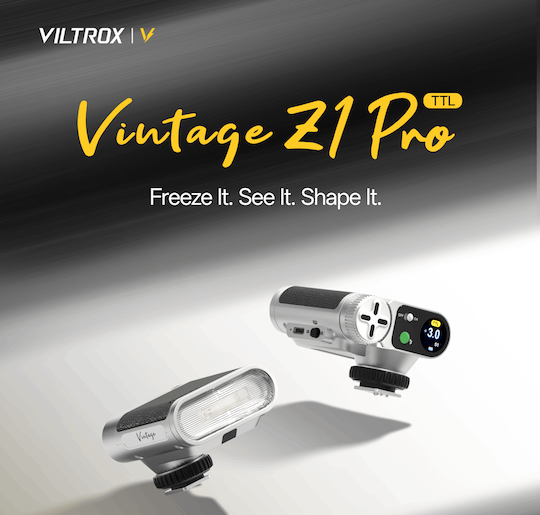
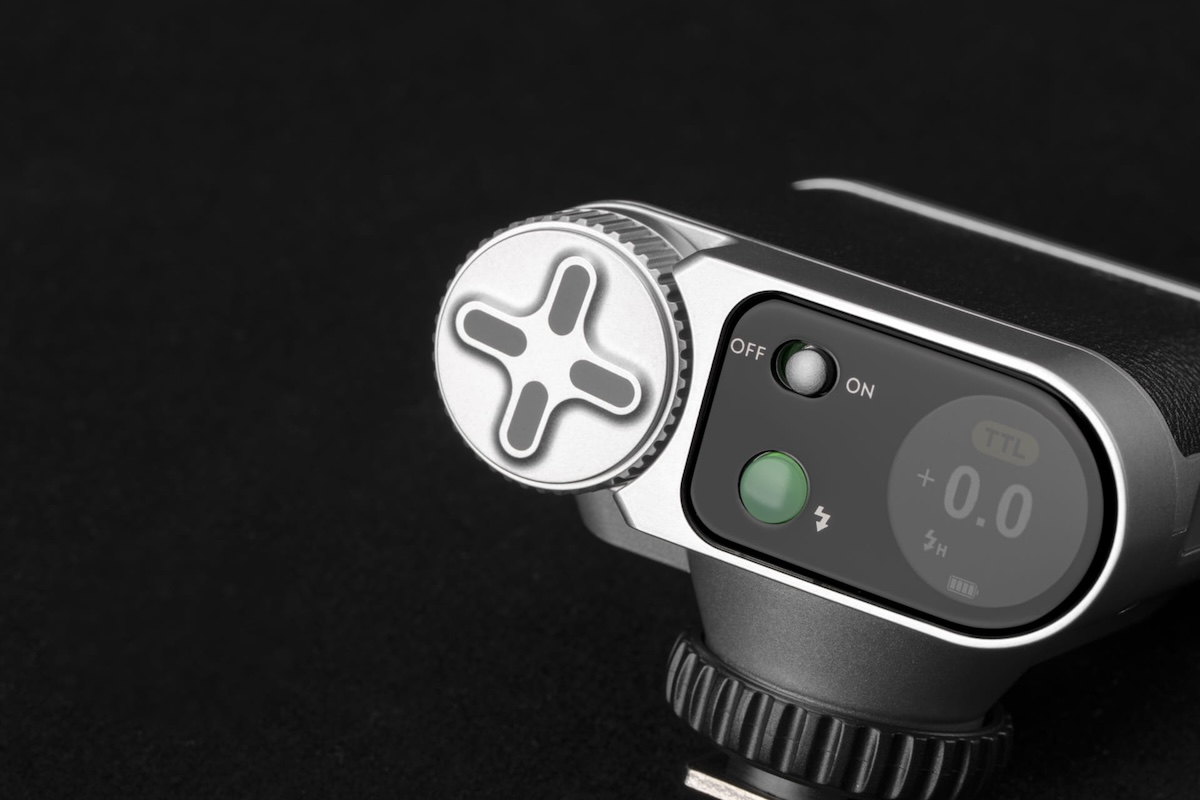
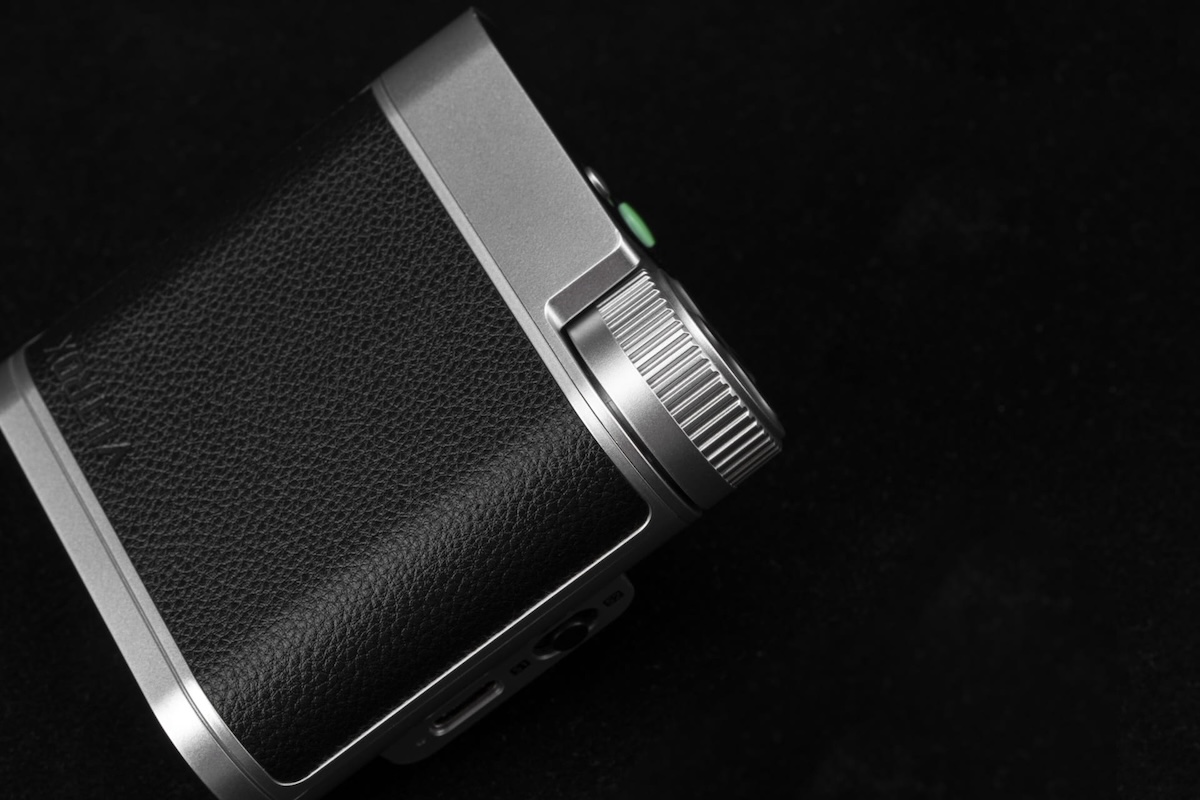
Up to 1/8000s High-Speed Sync for Greater Shooting Flexibility.
TTL & Manual Flash Modes for Versatile Creative Control.
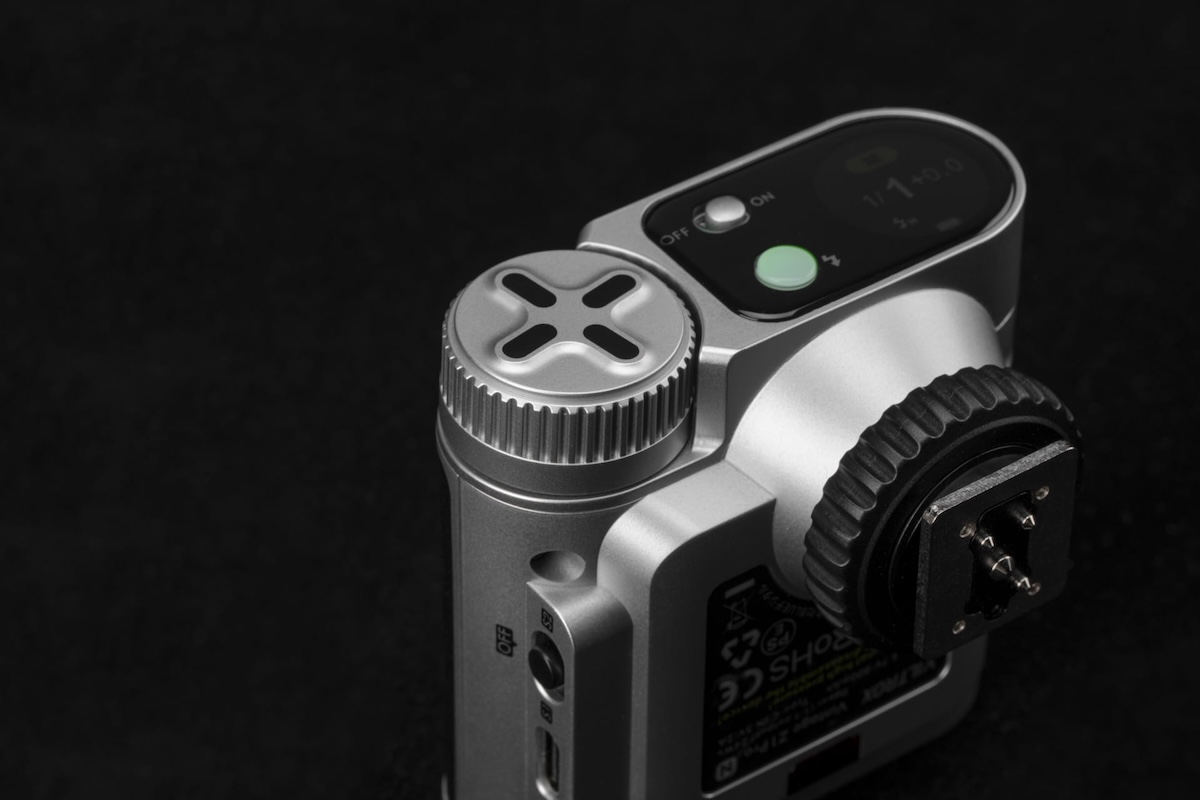
Retro-Inspired Design with Timeless Mechanical Styling.
Touchscreen Interface with Dial Control for Intuitive Operation.
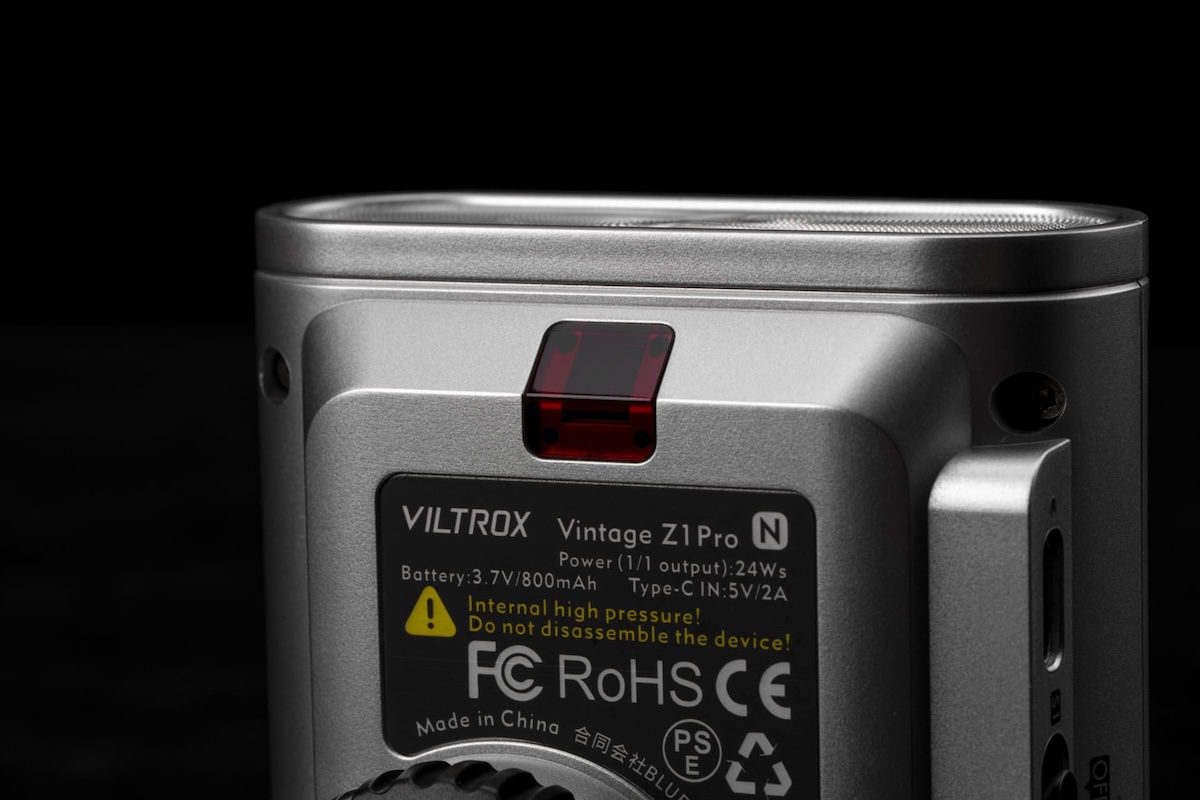
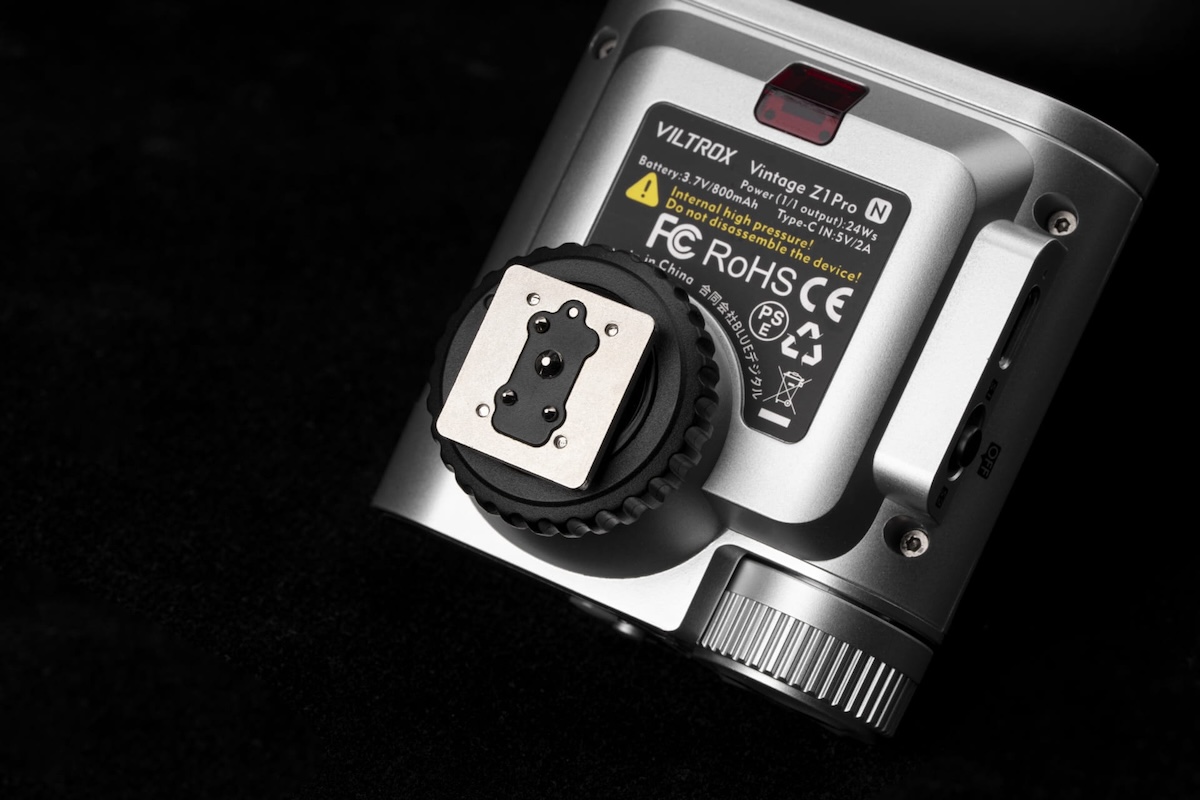
24Ws Flash Power with Fast 1s Recycle Time.
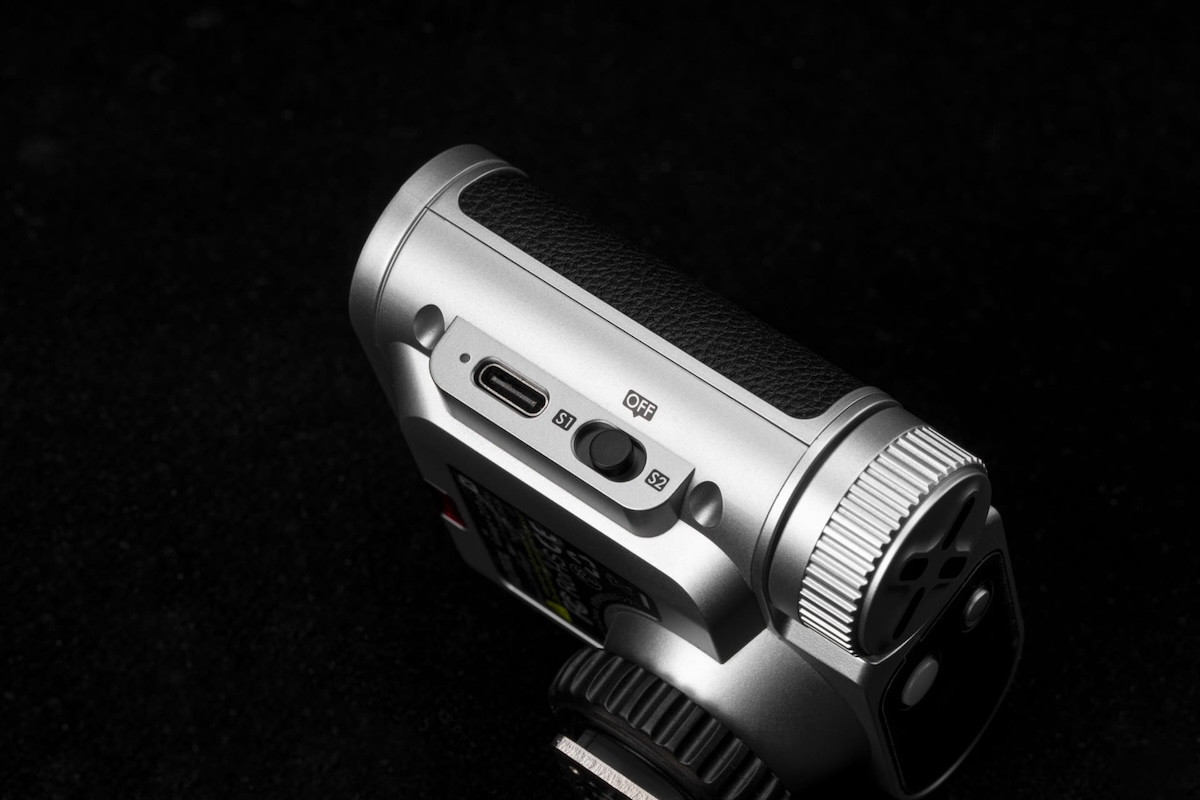
S1/S2 Optical Trigger Modes for Multi-Flash Setups.
Multi-System Hot Shoe Compatibility for Broad Camera Support.
Up to 350 Full-Power Flashes for Extended Shooting Sessions.
TTL Automatic Flash Metering and New High-Speed Sync
The Vintage Z1 Pro is the first in the series to include High-Speed Sync (HSS) functionality up to 1/8000s, enabling photographers to shoot in bright daylight with wider apertures and capture fast-moving subjects in natural ambient conditions.
TTL flash metering automatically adjusts flash output based on ambient lighting conditions. The Vintage Z1 Pro supports two optical trigger modes: S1 mode, which triggers simultaneously when another flash burst is detected, and S2 mode, which ignores TTL pre-flashes and triggers on the primary flash burst, enabling flexible multi-light arrangements and off-camera flash setups.
Intuitive Circular Color Touchscreen
The Vintage Z1 Pro features a newly integrated circular color touchscreen UI designed to simplify workflows. The display provides clear access to flash output levels, shooting modes, battery status, and sync settings, while touch-based controls enable faster and more intuitive adjustments compared to traditional button-operated interfaces.
High-Speed, High-Performance Flash
The Vintage Z1 Pro delivers 24Ws flash output with a 1-second recycle time. The high-capacity battery supports up to 350 full-power flashes per charge, helping creators maintain a smooth shooting rhythm. Integrated USB-C charging allows the flash to fit conveniently into modern loadouts, with a full recharge taking just 70 minutes.
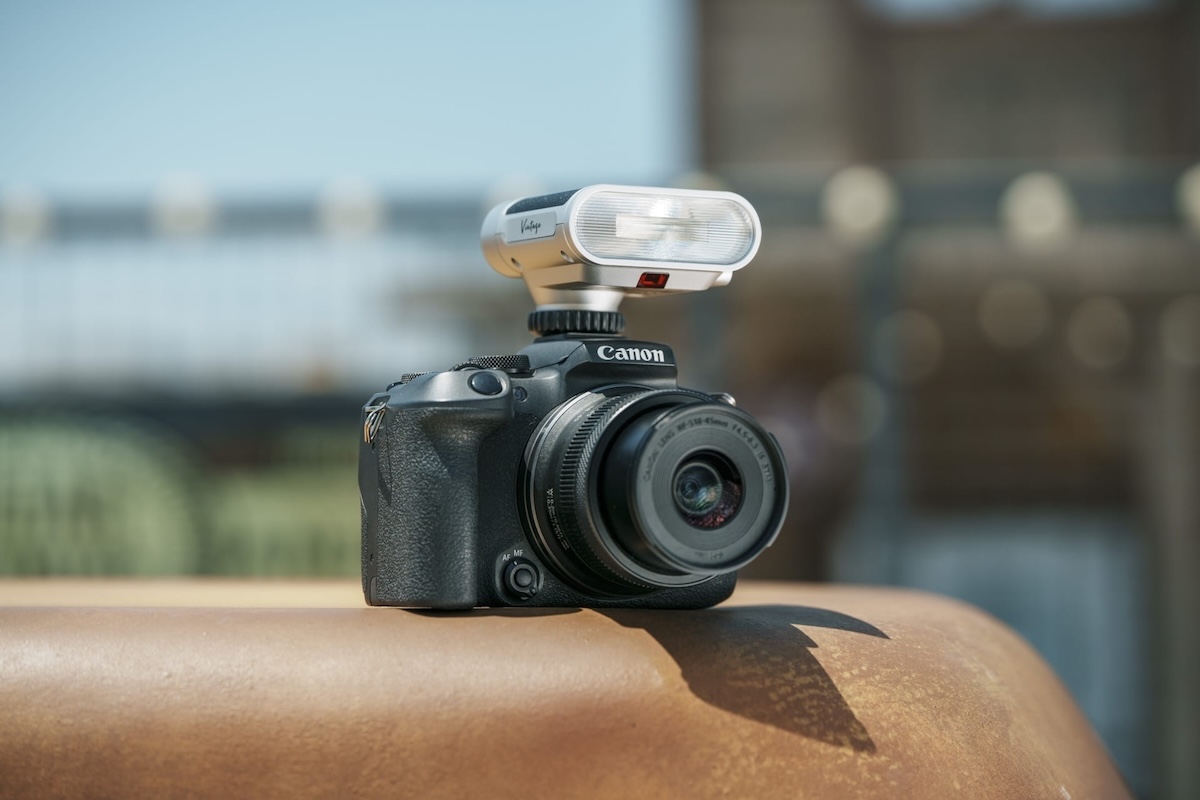
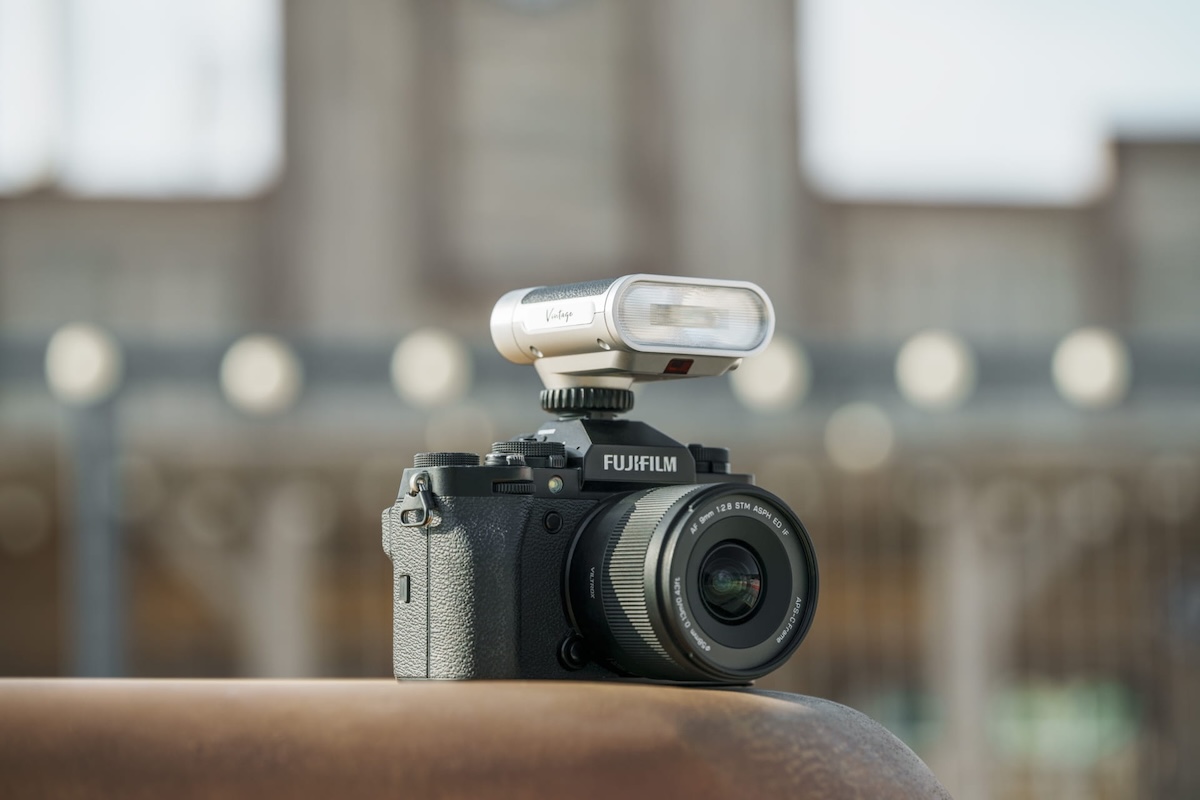
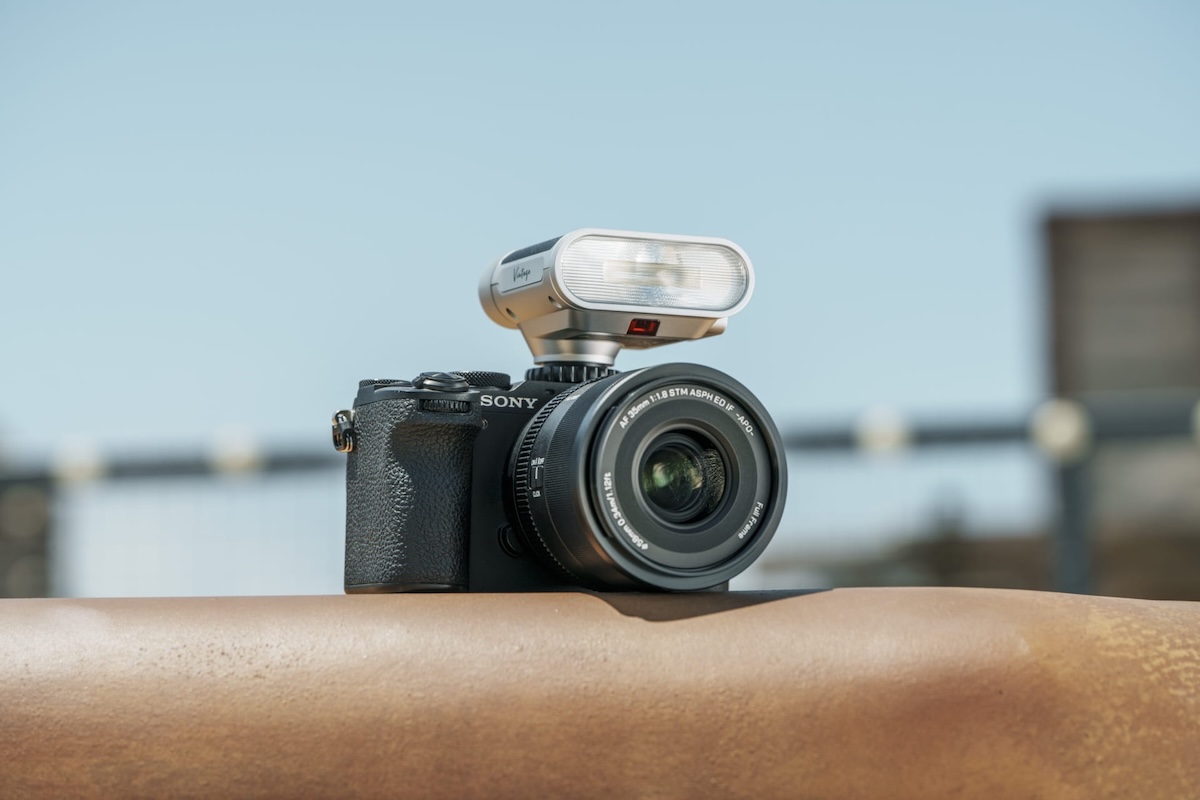
Broad Camera Compatibility
The Vintage Z1 Pro supports Sony, Nikon, Canon, and Fujifilm camera systems (hot shoe versions) across a wide range of mainstream cameras.
The Diversity of Style in Viltrox’s Flash Series
With the launch of the Vintage Z1 Pro, Viltrox continues to expand its flash lineup, offering creators a broader range of lighting solutions across different shooting styles, creative preferences, and performance needs.
For Canon RF, Fuji X, Nikon Z, Sony E, and MFT mounts
Price: $190
Additional information:
The Twist 28 draws on 19th-century Petzval optical design, which produces a sharp center of focus with a swirling blur effect in the outer portions of the frame. At 28mm, this optical characteristic applies across a wider field of view than prior Twist lenses, which photographers have used to create layered, motion-influenced images in tighter focal lengths.
Panasonic Japan issued a notice that the new Lumix L10 camera “received significantly more pre-orders than anticipated” and customers who pre-order in the future may experience delays in delivery after the release date of June 18th (pre-orders: B&H Photo | WEX Photo | Foto Erhardt):
Notice Regarding Delivery of Digital Camera DC-L10
Thank you for your continued patronage of Panasonic products.
Regarding the LUMIX “DC-L10” digital camera, scheduled for release on June 18th, we have received significantly more pre-orders than anticipated. Therefore, some customers who have already pre-ordered may not receive their product on the release date. Furthermore, customers who pre-order in the future may experience delays in delivery after the release date.
We sincerely apologize for the considerable inconvenience caused to our customers who are eagerly awaiting the product, as well as to all those involved.
We will do our utmost to meet customer expectations and deliver the product as quickly as possible, and we appreciate your understanding.

 Connexion