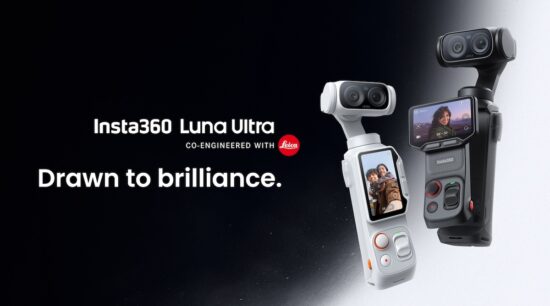
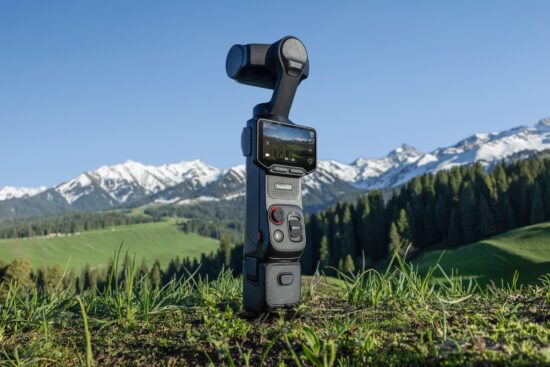
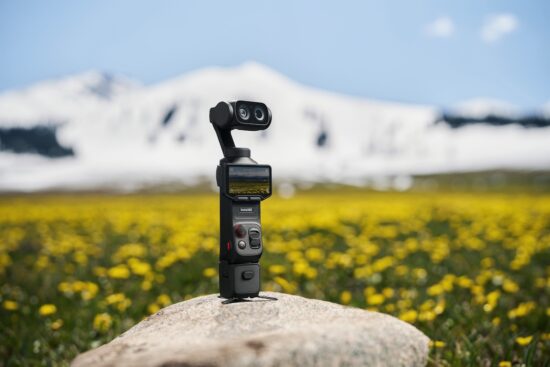
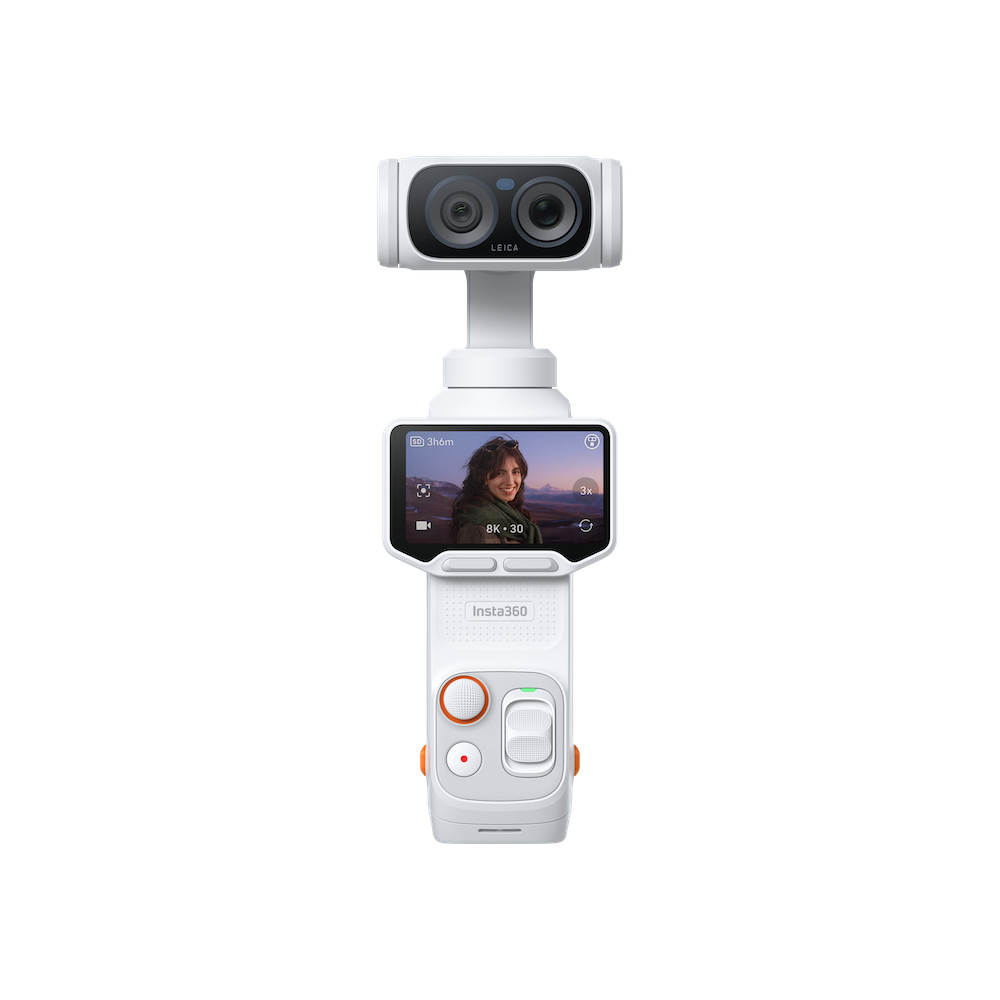
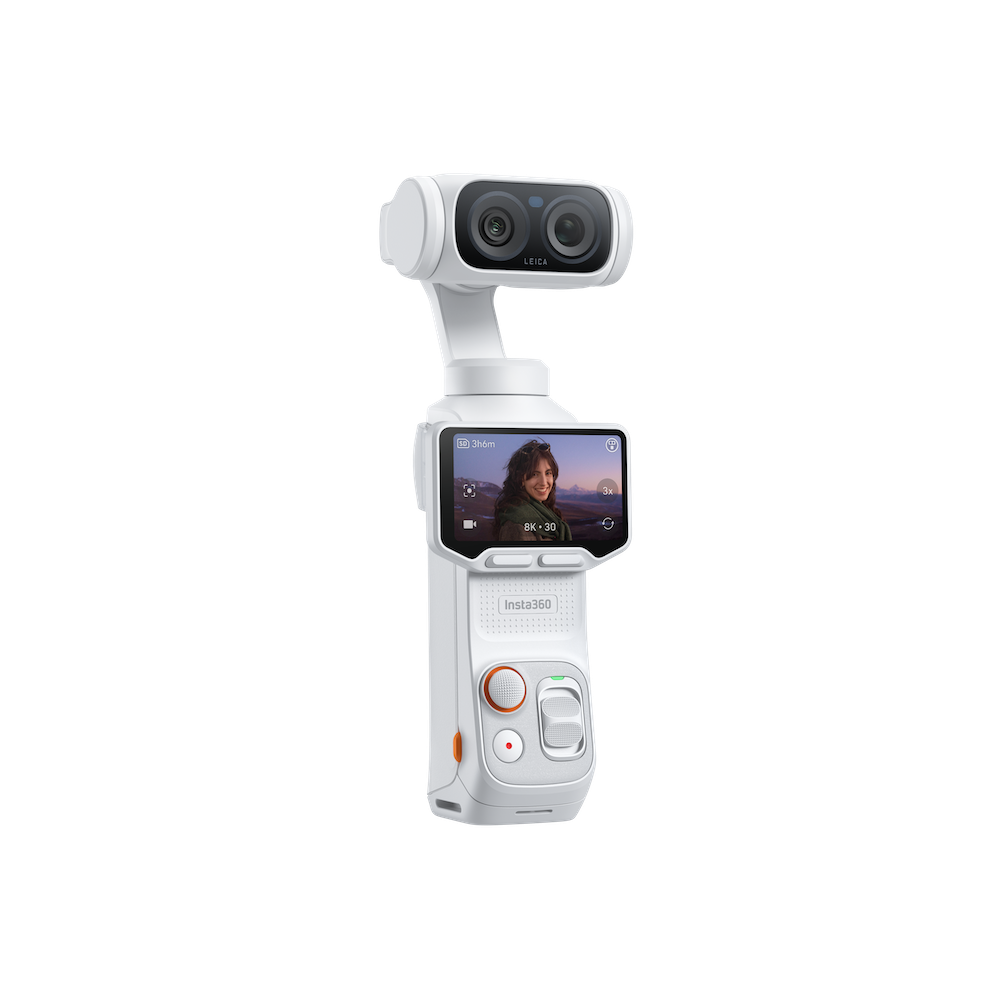
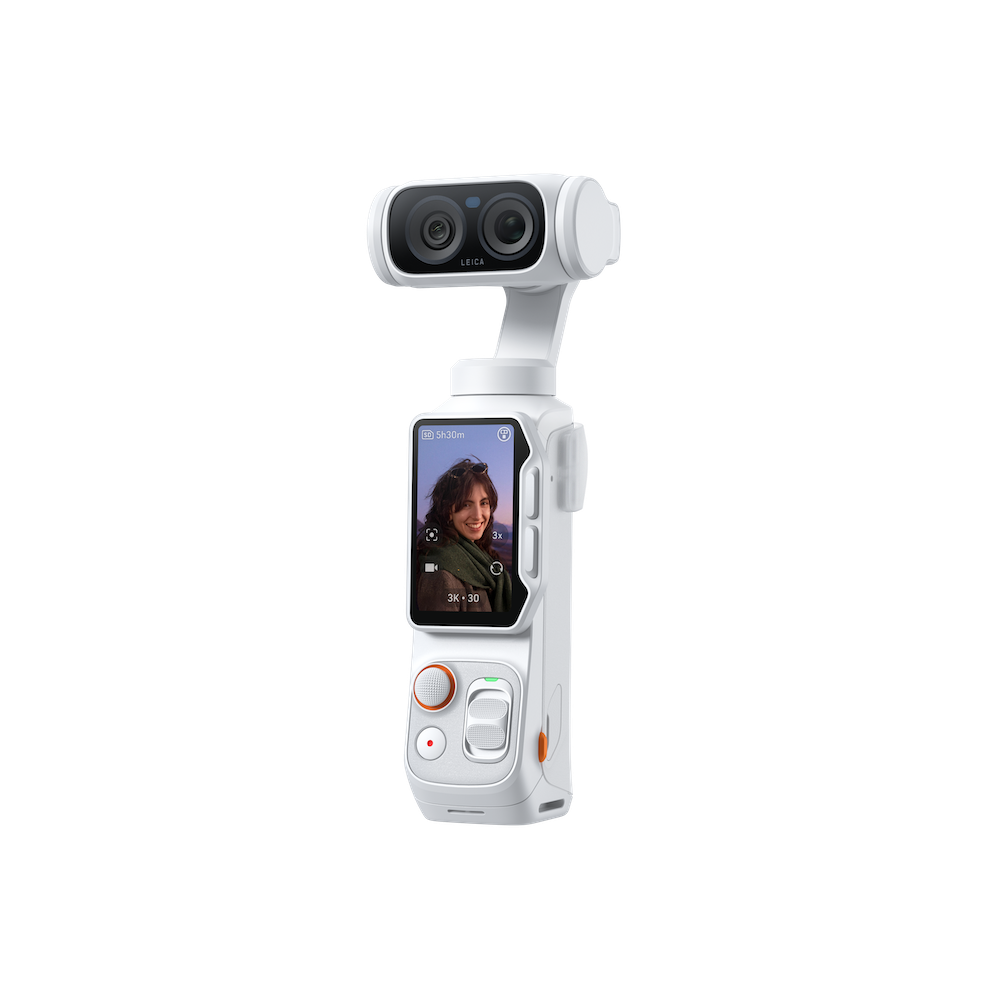
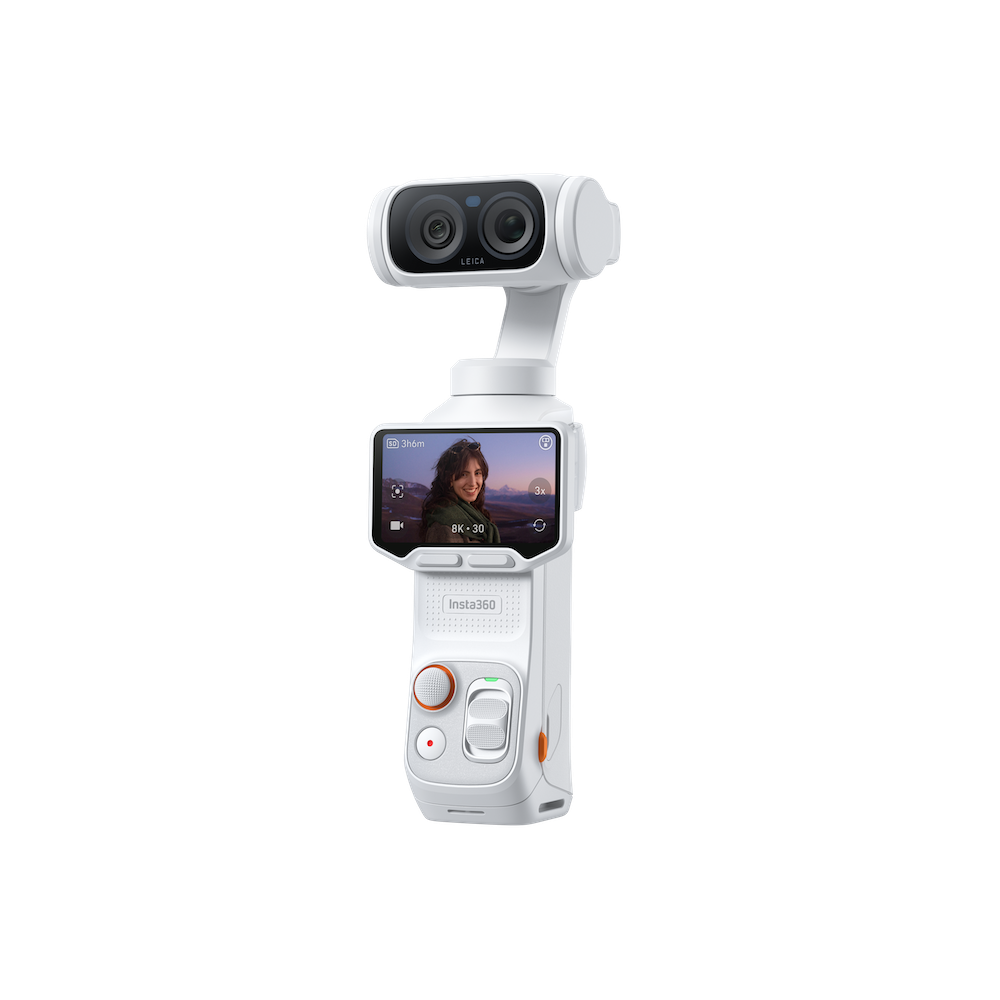
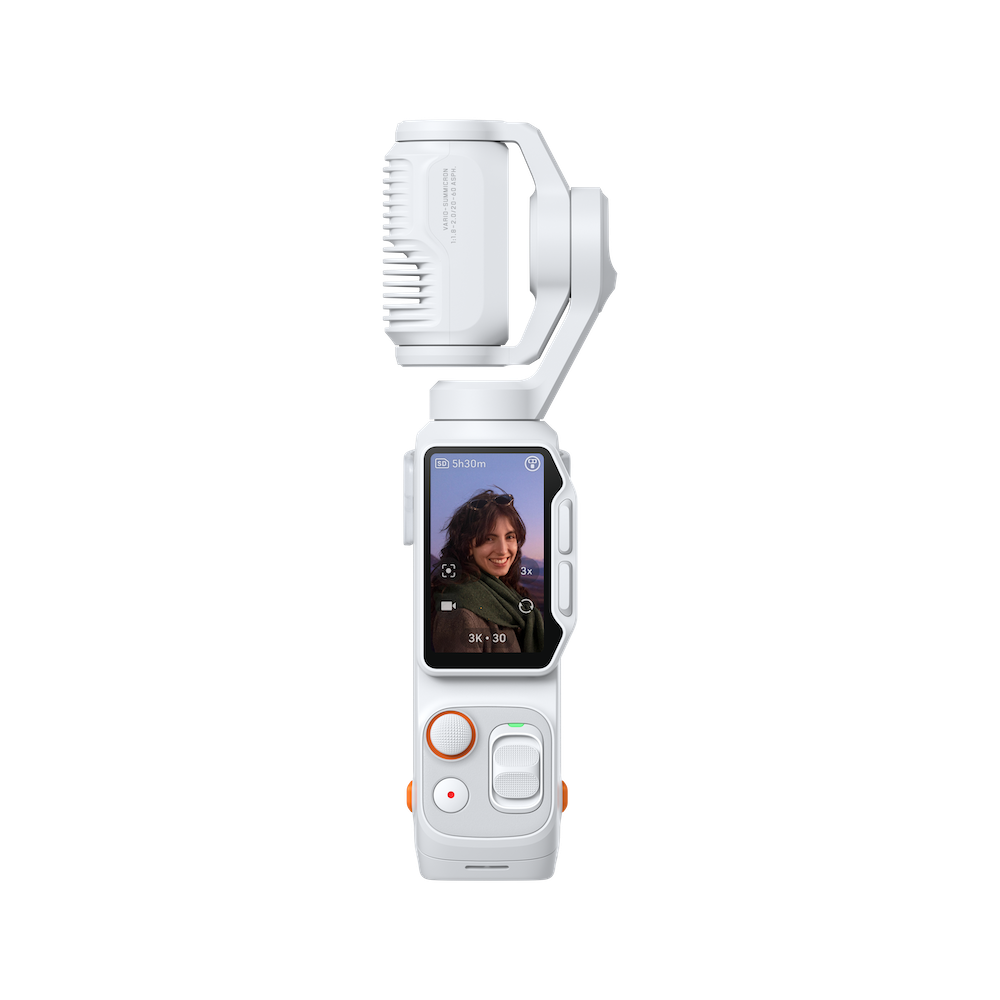
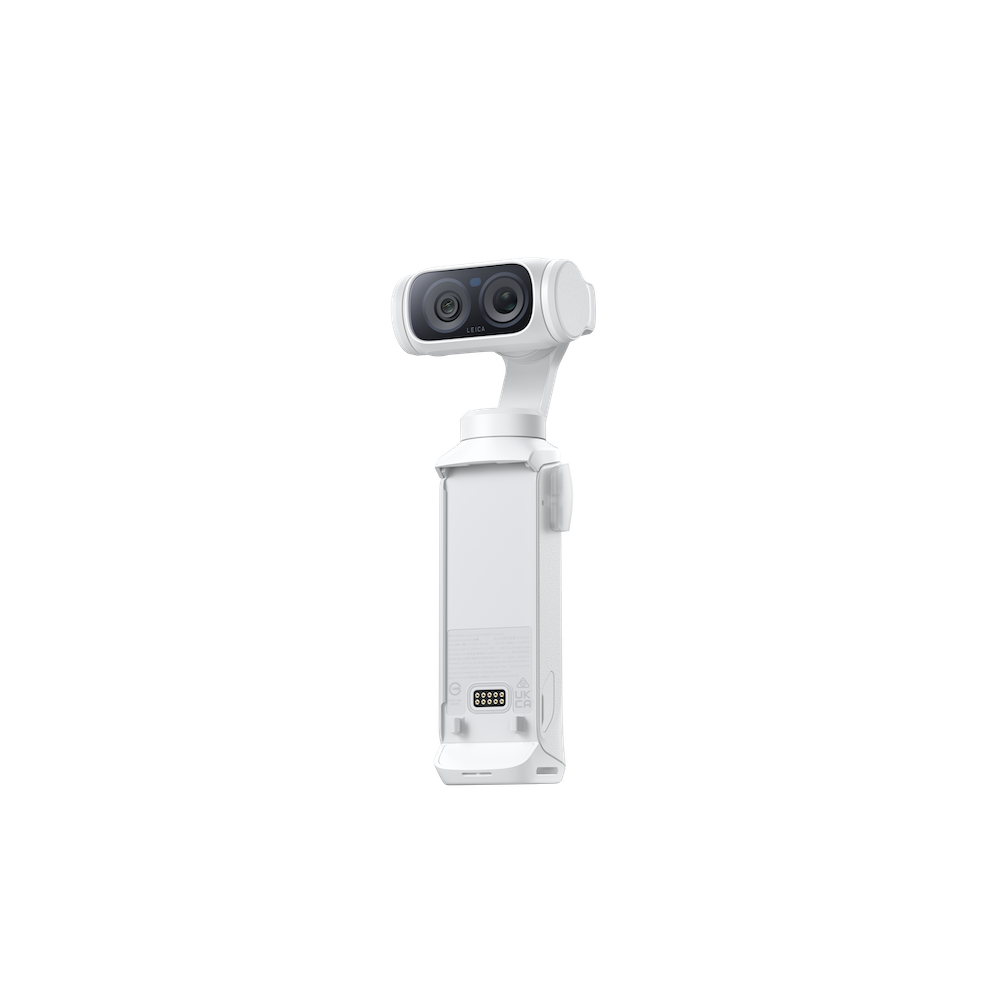
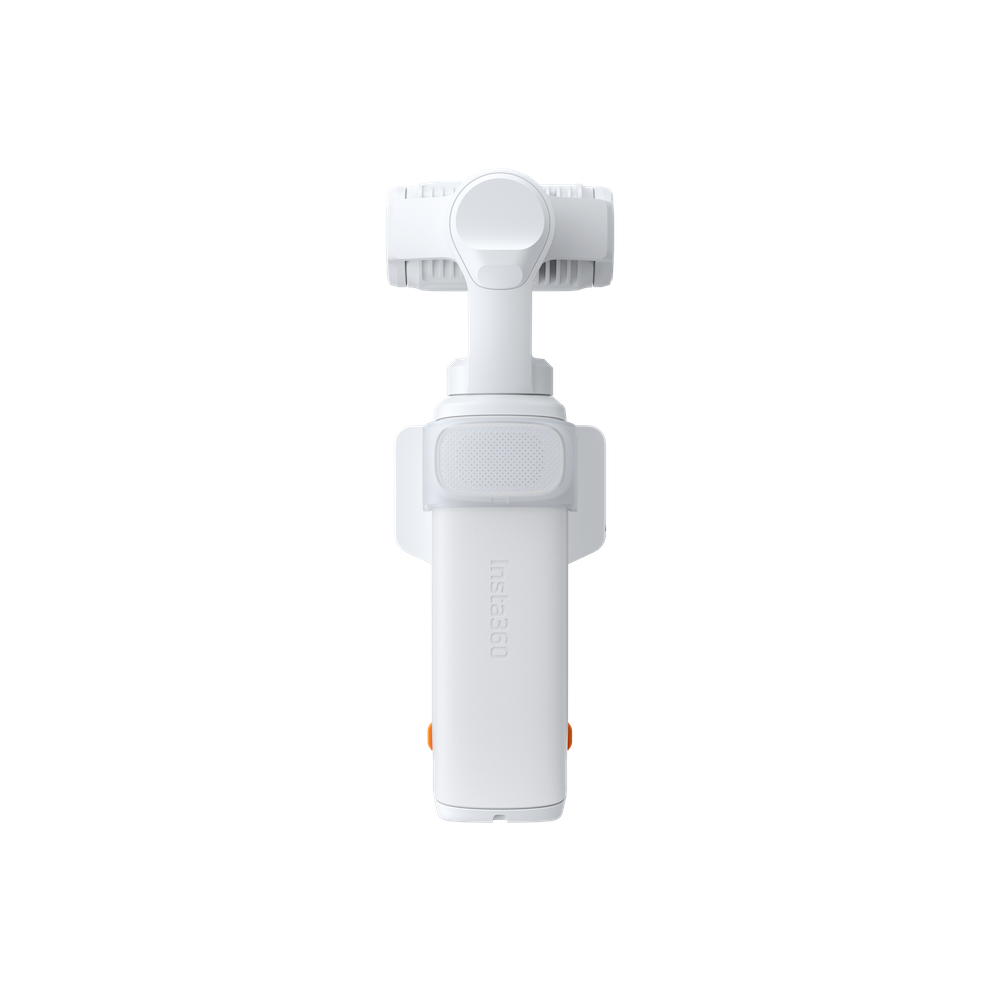
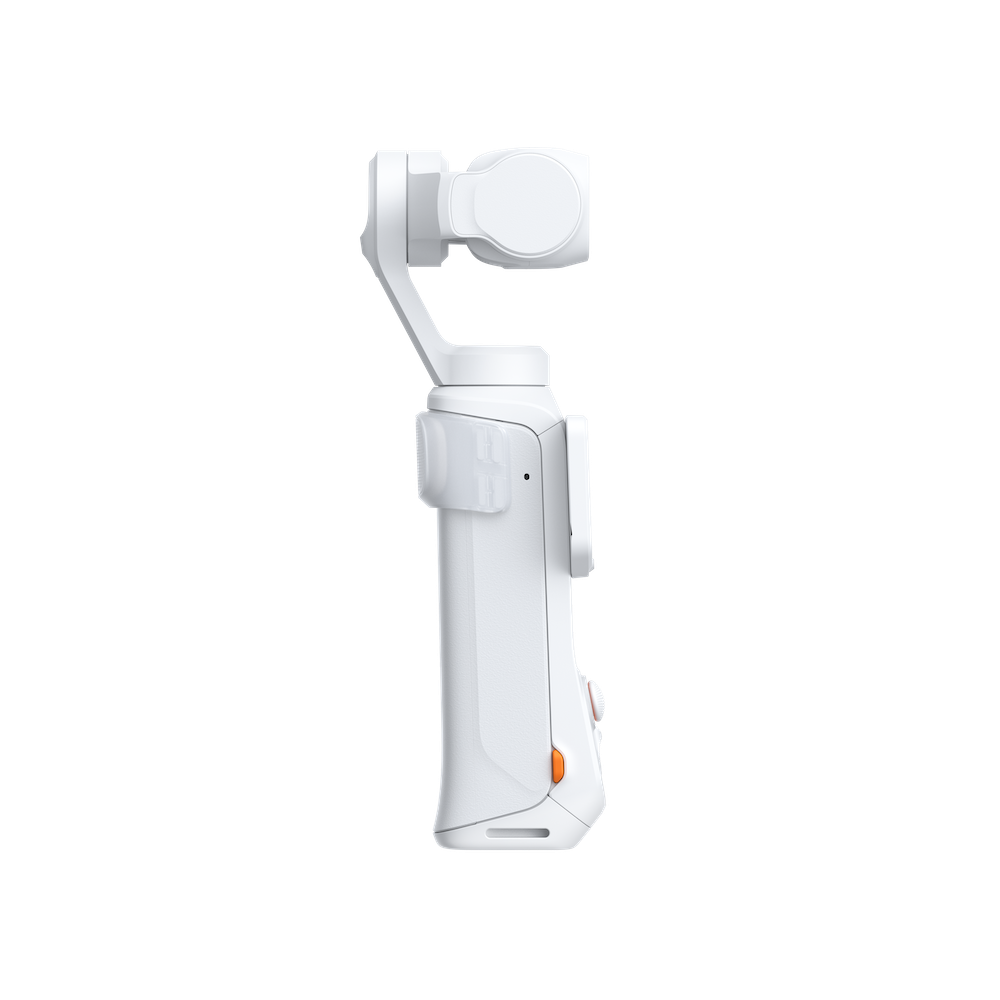
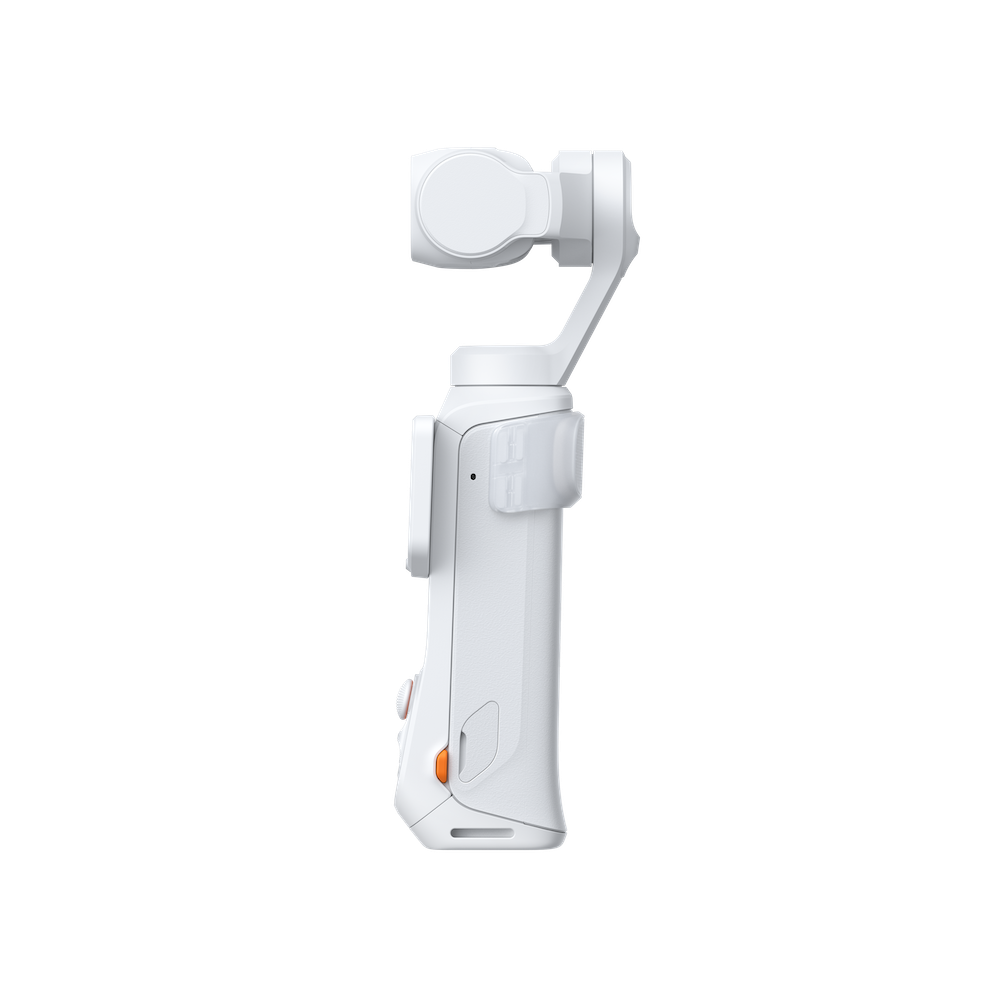
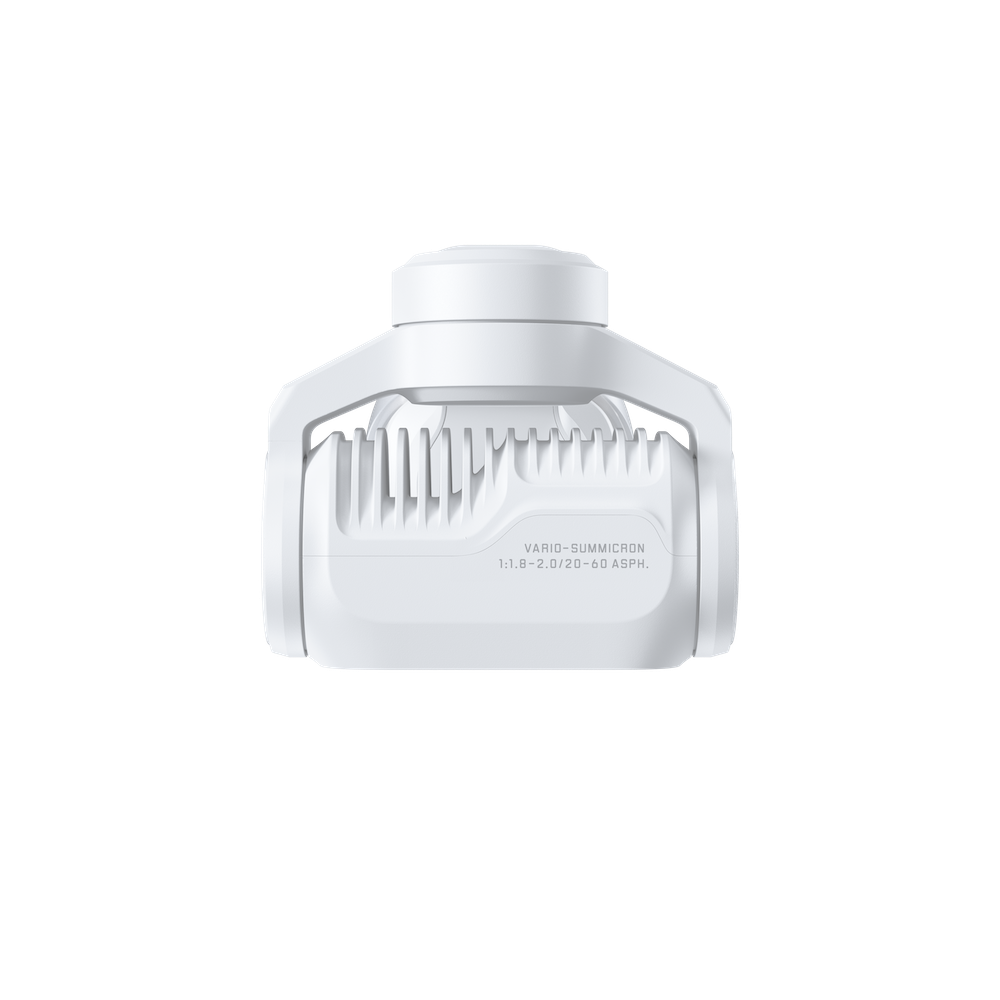
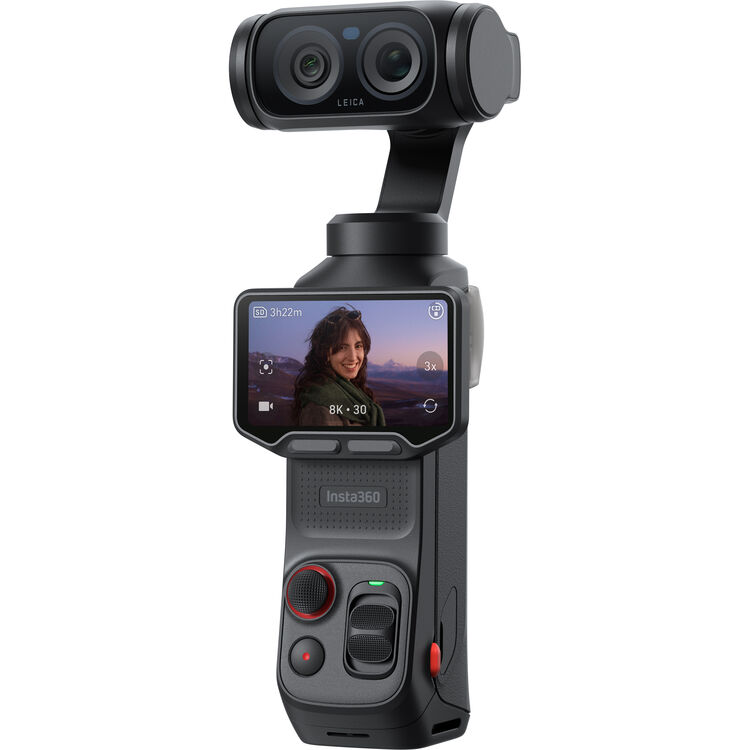
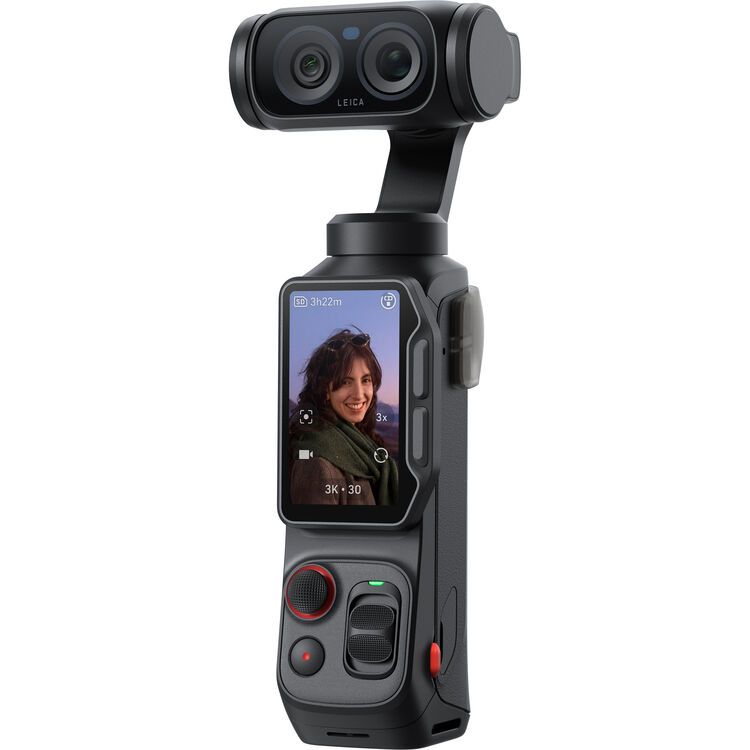
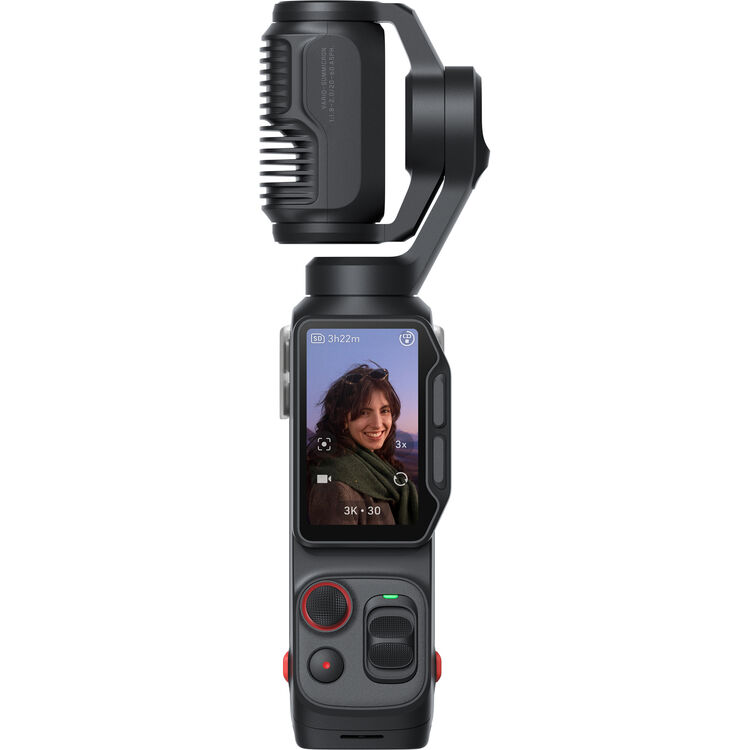
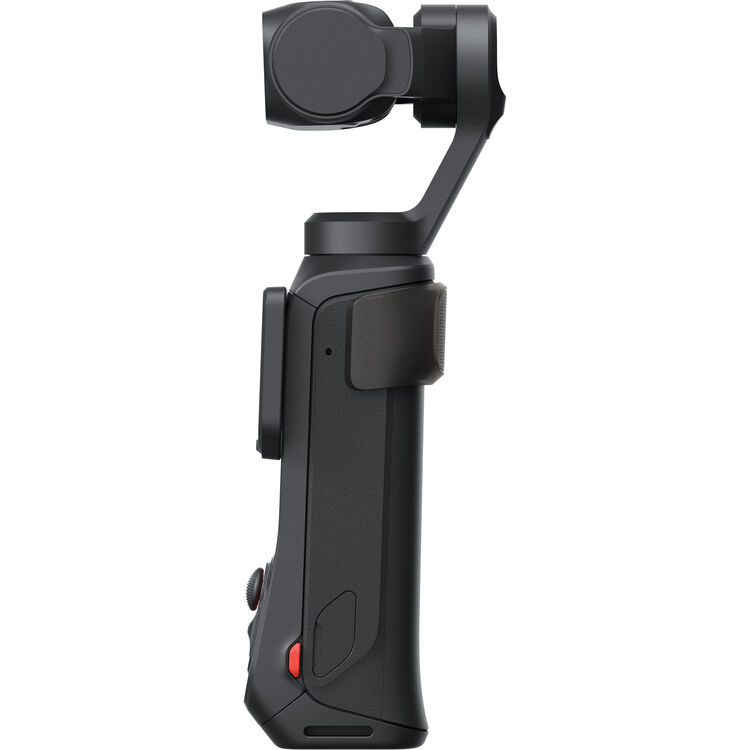
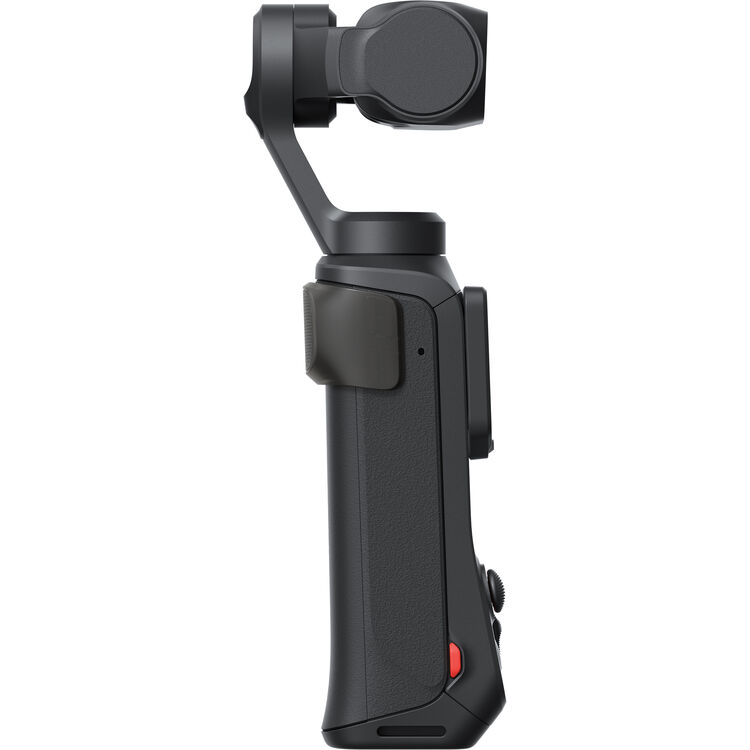
DJI and Insta360 have filed patent infringement suits against each other in the U.S., just days after Insta360 launched its new Luna gimbal camera line and amid the buildup for the Osmo Pocket 4P. Indeed, the two devices are remarkably similar: they are both handheld vlogging cameras with two lenses and integrated gimbals, and a similar form-factor.
DJI fired first, filing two lawsuits on June 10, the same day the Luna Ultra went on sale, in the Eastern District of Texas. The complaints allege that the Luna Ultra, its accessories, and app "blatantly copy DJI's patented inventions," including its subject-tracking system, follow/lock gimbal modes, and overall physical design. DJI is seeking a permanent injunction that would ban the accused products from the U.S. market, along with damages.
Insta360 isn't backing down, though. It pushed back today with two countersuits of its own, asserting five patents against DJI. The company claims DJI's products, including the Osmo Pocket, Ronin/RS, Osmo Mobile and Osmo 360, infringe its patents covering gimbal stabilization and directional control, among other technologies.
The suits from both companies are ongoing
Insta360 CEO JK Liu rejected DJI's infringement claims, saying Luna Ultra development began in 2020 and is the result of "years of independent R&D, not a response to any competitor's product." He characterized DJI's decision to file on launch day as "exposing their fear of competition from a highly competitive product."
According to the complaints, DJI sent Insta360 a letter on May 26 putting the company on notice about the patents two weeks before the Luna Ultra launched. That suggests the lawsuits were not filed without warning. The suits from both companies are ongoing, and it remains to be seen how the courts will rule on the competing claims.
This book has been one of my prized possessions since I bought it nearly two decades ago. Photo: Abby Ferguson
Sitting on my bookshelf immediately behind my desk is a copy of Duane Michals' The House I Once Called Home, inscribed to me by the artist himself. I've had it for nearly two decades, and I still pick it up from time to time because it has had such a significant influence on me as an artist and photographer. And so, it was with deep sadness that I learned Michals passed away on June 9.
The DC Moore Gallery, which represented Michals, confirmed his death at the hospital following a short illness. He was 94.
For anyone who has spent serious time studying the art of photography, Michals is one of those artists who fundamentally changes how you think about what the medium can do. His influences were more literary and surrealist than photographic, including William Blake, René Magritte, Lewis Carroll and Joseph Cornell. He published more than forty books over his career and continued exhibiting well into his 90s.
He came to prominence in the early 1960s, when photography was largely defined by documentation and reportage, but he wanted no part of that. Instead, he built sequences of staged black-and-white images that played out like short films, frequently using multiple exposures. These were often accompanied by handwritten text that told you, as he put it, "what you can't see."
"You are either defined by the medium, or you're redefining the medium."
Michals was self-taught, never belonged to a movement, and didn't seem particularly interested in fitting in anywhere. As he once said, "You are either defined by the medium, or you're redefining the medium," and he truly lived that throughout his career.
I had the chance to see Michals lecture when I was in undergrad, and I distinctly remember his wit. It was there that he signed one of my favorite photography books. He was one of my very first photographic influences, inspiring me to explore concepts of memory more deeply and leading me to start employing multiple exposures in my work. In fact, those multiple exposures were part of what led to my acceptance into graduate school and became the basis for my graduate thesis work.
Photography lost one of its true originals this week. But his books, and the boundary-pushing ideas within them, aren't going anywhere.
Camera companion apps can unlock useful features such as remote camera control, wireless image transfers, GPS data and more, but that's only if they work well. Nikon's primary app, SnapBridge, has been around for roughly a decade, but that doesn't necessarily mean all the kinks are worked out.
It currently supports all Nikon Z-series cameras, though support for older DSLR and compact models is more limited. I've spent some time with the app to see how it performs and what features it offers. All of my testing was done on the Google Pixel 10a and iPhone 15 Pro with the Nikon Zf. Your specific smartphone and camera may change your experience and the features available.
Bluetooth connection is just as simple as pairing other standard Bluetooth devices.
When initially setting up SnapBridge, you can choose to connect via Wi-Fi and Bluetooth or Wi-Fi only. Bluetooth establishes a constant connection between the camera and smart device, enabling automatic downloads of small files, along with remote control and location data. Wi-Fi is required for larger image transfers and remote live view functionality. I opted for that combination for my testing.
The initial Bluetooth connection is very straightforward and quick. The process requires a few steps on both the camera and app, but instructions are clear, and it paired quickly. Once connected, the Bluetooth connection was stable and reliable. I even have two phones paired, and while I had to manually select the phone I wanted at times, I had no issues with Bluetooth connecting quickly and staying connected.
Wi-Fi connectivity
To get my Wi-Fi connection to work, I needed to turn off encryption by navigating the following path: 'Network Menu' > 'Connect to smart device' > 'Wi-Fi connection'> 'Wi-Fi connection settings' > 'Authentication/encryption' > 'Open'
Wi-Fi pairing was a far different story. A colleague and I had the same difficulties connecting across multiple cameras using multiple phones. Unfortunately, these problems couldn't be easily solved through troubleshooting. A Nikon representative suggested changing from the default WPA2/WPA3 Wi-Fi encryption to open authentication. This solved the issue on the Zf that I was testing with, but it does mean that the connection is less secure.
STA mode changes what tools you have available in SnapBridge.
It's also worth noting that some Nikon cameras offer two Wi-Fi options: AP mode and STA mode*. AP mode is a direct Wi-Fi connection using the temporary network process as outlined above, while STA mode uses an existing network, such as your home Wi-Fi. STA mode is fast and easy to set up, with far fewer initial issues than AP mode during my testing.
While STA mode is quick to establish, reliable, and means your smart device remains connected to Wi-Fi, there are limits to what you can do in SnapBridge with it. You can't download firmware or use Bluetooth remote control, and automatic photo downloads are limited to 2MP, instead of the 8MP available in AP mode (though only some cameras support 8MP).
* STA mode is available on newer Z-series bodies, but it isn't available on all Nikon cameras at the time of writing. You can see what SnapBridge features are compatible with your camera on the support website.
If you switch between connection types or connected devices, you'll need to access the camera menu quite frequently.
Frustratingly, there's a fair amount of manual selection required when switching between connection options. For example, connecting to Wi-Fi via STA mode automatically turns Bluetooth off on the camera. If you want to go back to Bluetooth, you'll need to navigate to the Network Menu on the camera, turn Bluetooth back on and also select 'Exit Wi-Fi STA mode' in SnapBridge.
Transfer, editing and sharing tools
Auto link uses Bluetooth connectivity to automatically transfer photos to your phone.
SnapBridge lets you wirelessly transfer images and videos from your camera to a smart device in two ways. One is 'Auto link,' which automatically downloads new photos to your connected phone or tablet. SnapBridge offers two Auto link options: in the background (transfers occur even when your phone is in sleep mode) or in the foreground (transfers only occur when you are in the app).
There are some pretty significant limitations to Auto link, though. First, it isn't available when the camera and phone are connected via Wi-Fi AP mode, so you'll have to use Bluetooth or STA mode. It also doesn't support Raw, TIFF or video files, and limits photos to 8MP on most newer Z-series cameras and 2MP on all others. Newer Z-series cameras support automatic transfer of HEIF images alongside JPEGs.
The auto-downloading of photos via Bluetooth is reliable, though with a caveat: you have to keep your phone and camera relatively close together. If I walked to another room in my house with my phone, the syncing would stop. My house isn't all that large, and the range would have been close enough for a speaker or headphones to keep working, but not so for syncing photos to SnapBridge.
The STA Wi-Fi mode also offers an auto download function, though only at 2MP. However, despite having this turned on, I was never able to get the app to sync new photos when connected via STA mode on both the iPhone and Pixel.
Downloading images manually allows you to sync Raw files.
If you want larger files, you'll need to transfer manually, which requires one of the two Wi-Fi connections. Manual transfers in SnapBridge support Raw files from all Z-series bodies, but not DSLRs or older compacts. That said, by default, the view for transferring images is filtered to JPEG only. If you shoot Raw or HEIF, it will appear as though you don't have any images to choose from until you change the display options via the top menu.
Manually saving files to my phone was also easy. Tapping on an individual image from the grid opens it larger with a 'Download' button at the bottom. You can then choose which size and file format you want to download. Raw files naturally take more time, but even when downloading a handful at once, it wasn't unreasonably slow. I never tried to download more than 10 at a time, but for that volume, it's a reasonably fast process.
You can share photos to various apps and sync images to Nikno's Image Space, that's the extent of the options in SnapBridge.
The SnapBridge app is quite limited in terms of what you can do with your photos beyond syncing them to your phone. You can share files to various apps such as Instagram, Facebook, email and more, but that's all.
There are no editing tools, so you'll need a different app if you want to edit on your phone. There's also no way to transfer Look Up Tables (LUTs) or color profiles from your phone to the camera via SnapBridge.
If you're looking for a more robust image transfer, Nikon's direct camera-to-cloud service, Imaging Cloud, is the better option. It offers automatic full resolution uploads to third-party services like Lightroom, Google Photos, Dropbox and OneDrive. Imaging Cloud also supports user-created image presets, which you can't access in SnapBridge.
Remote control and live view
The Bluetooth remote is as simple as it gets.
The SnapBridge app offers two remote options: one with live view and one without. Bluetooth connectivity is used for the remote trigger option, which lacks live view or any access to settings. It does support interval timer shooting, time-lapse video recording, and focus shift shooting, though. It also features a "Press halfway" button to focus, though you can't change your focus point, so you'll have to set that on the camera.
Oddly, the Bluetooth remote also lets you pull up the playback menu on the camera from afar, with the ability to zoom in and out, scroll forward and back, and show or hide information.
All of the features in the Bluetooth remote option work seamlessly. The autofocus is responsive when I tap to half-press, the shutter triggers right when I tap the button, and the small selection of additional modes also works well.
The Wi-Fi-based remote gives you more control over settings, but doesn't have some of the features found in the Bluetooth remote.
The other option, which is labeled 'Remote photography' in the app, adds much more control from your smart device. It requires a Wi-Fi connection, but once connected, you'll have access to live view and the ability to change the shutter speed, aperture, exposure compensation, ISO and white balance. You can also change between manual, shutter priority, aperture priority and program (there is no option for auto).
The Wi-Fi version of the remote also lets you choose if you want to automatically download the photos, and if you want those to be 2MP, 8MP or the original format. However, those files will be JPEGs or HEIFs, as Raw files are not supported here. This remote option also gives you the ability to use a self-timer, and you can change the focus point by tapping anywhere on your phone screen.
I found the 'Remote photography' feature to be highly responsive. The live view instantly adjusts to any reframing or exposure changes, and the autofocus is also very snappy. Having the instant image download option turned on slows down the process of taking photos a bit, since it loads for a split second after I tap the shutter, but that's the only slowdown when using the remote with live view.
It was also very stable, staying connected for long periods with no issues. Plus, as long as I didn't end the Wi-Fi connection, I could leave the remote to use other parts of the app and instantly jump right back into remote shooting.
GPS sharing
SnapBridge supports location data, meaning you can sync your phone's GPS data to the camera so that your images have a location tied to them. When using Bluetooth connectivity, the app lets you choose if you want high, medium or low accuracy. High accuracy will use more battery in both the camera and smart device, though with more precise location data, while low will use less battery with less precise data.
There's also a battery saving mode, which pauses the location data link to save battery if the camera isn't used after a period of inactivity (Nikon doesn't specify the time limit). Using the camera will automatically reconnect the feature.
I have the location data set to medium, and it is still incredibly precise. It did drain my phone's battery faster than usual, but I still wouldn't have any reservations about setting it to that unless I knew I wouldn't have access to power for a while.
Firmware updates
Firmware updates are simple through the SnapBridge app.
SnapBridge supports firmware updates, so you don't have to fuss with downloading firmware to your computer and transferring it to the camera. However, it's important to note that you must use the AP mode, not the STA or Bluetooth connections. I only had one firmware update to install, but the process was straightforward and quick, with the new version ready to use in a few minutes.
While firmware updates through SnapBridge are easy, they aren't automatic. If you want your firmware to stay updated without any input from you, Imaging Cloud is what you'll want to use.
When you use DPReview links to buy products, the site may earn a commission.
Photo: Dale Baskin
Recently, Panasonic released firmware V2 for the Panasonic S9, which lets you use the camera with the latest version of the Lumix Lab app. That makes it a pretty exciting update, as Lumix Lab V3 adds a ton of new features, like the ability to edit Raws, download images via a wired connection, edit your custom color modes with the app and more. However, if you're trying to update your camera, you'll want to do so using a computer, rather than the app.
Panasonic posted a notice to its site saying it's "identified an issue with the DC-S9 version 2.0 firmware update released on June 9, 2026," specifically when updating via Lumix Lab. According to the warning, the ability to update using the app should be turned off, but if for some reason it still lets you do it, you should probably cancel the operation.
While there are several people who say they successfully updated their camera with Lumix Lab, there are also a few reports on social media from people experiencing major issues after doing so, with their cameras rendered essentially unusable.
Panasonic says you can still update the camera's firmware by using a computer to download the file, then copying it onto a memory card. It also says it's working to fix the issue so people will be able to update their camera's firmware with Lumix Lab in the future.
DJI has been teasing a new version of its gimbal vlogging camera, the Osmo Pocket 4P, with two cameras for a while now, and we've finally been able to go hands-on with one. DJI invited our Director of Video and Social, Mykim Dang, to an event in Toronto where she was able to use it and take some photos of it.
While DJI has said that members of the press are allowed to share images of the camera, the actual technical details about its sensors, lenses, and operation are embargoed for a later date. Stay tuned, as we'll be going in-depth on the additional 3x camera and how the package as a whole competes with a modern high-end smartphone as soon as we're able. For now, enjoy some product shots, then check out our coverage of the original Osmo Pocket 4.
Sample gallery
This widget is not optimized for RSS feed readers. Click here to open it in a new browser window / tab.
When you use DPReview links to buy products, the site may earn a commission.
Magliano, Tuscany, Italy
"Same night as the church star trail, before leaving, I tried this photo, and then at home I discovered the amazing details of the external Milky Way visible in the roof hole, sometimes you get nice photos when you least expect them!"
Sony a7R IV | Viltrox 16mm F1.8 FE | F1.8 | 13 sec | ISO 6400 Photo: Giacomo Farabegoli
Combining a love of hiking with a passion for photography, community member Giacomo Farabegoli ventures into the outdoors to capture landscapes at all times of day. His photos reflect a real passion for landscape and astrophotography, a perfect fit for our Nature Photography Day Question of the week, which we just published.
"I got started by finding my mom's old Nikon F601 in a cabinet at home. After a couple of film rolls, used to figure out various combinations of aperture and shutter speed, I decided to go full analog by buying an Olympus OM-1 (the '70s version, not the digital). After some years, I finally went digital with a Nikon D5000. At first, I was all for street photography since I was living in Milan. Then, in 2021, I moved to Trentino-Alto Adige, surrounded by mountains, and there I fell in love with Nature photography. I found the need to change systems and bought a used Sony a7R IV."
This story is part of our What's in your bag? community spotlight series. The series showcases the diverse gear and photography of our community, and shares their stories of how that gear helped them to capture the perfect shot.
"It was in November, and I spent several hours hiking to this spot. I pitched the tent and waited. I've done the Milky Way shot with the tent blending three exposures (foreground, tent and sky), and two different sessions for the star trails (one with the tent and one only mountains). I stayed up till 3 am and didn't sleep because of the freezing night at 2600 meters!"
Sony a7R IV | Viltrox 16mm F1.8 FE | F1.8 | 6 sec | ISO 3200 Photo: Giacomo Farabegoli
Meet Giacomo Farabegoli
Home base: Val di Fiemme, Trentino-Alto Adige, Italy
Favorite gear: "I think the Osprey Camera Chest Rig is my favorite item since it's really comfortable during long hikes, and I can have my camera ready quite fast, but at the same time well protected. The rig conveniently connects directly to just about any backpack's shoulder straps."
"While I was living in the city, I tended to focus more on portraits and street photography, but since I moved closer to nature, I started to do landscape photography. This resulted in a change of gear as well. I didn't need any more flashes or fast 85mm lenses, so I shifted more to wide-angle fast primes and lightweight zooms for day hikes. An expensive shift, but completely worth it."
Support gear: "My new kit is built around landscape and astrophotography, with the need for it to be portable for hiking. I have a Heipi 3-in-1 carbon tripod that provides a sturdy support system for long treks. An intervalometer (auto-shutter trigger) is always packed for star trail photography, along with spare batteries for extended nights in the field. For more detailed deep-sky work, a star tracker is included (usually). A particularly useful addition is a tent string tensioner, which can be used to secure and stabilize the tripod against rocks during windy conditions. I'm not going to lose my equipment to a cliff face fall..."
Camera bags: "I use different packs depending on the length and purpose of the trip. A Manfrotto Pro Light Backloader is reserved for paid shoots and travel, thanks to its gear capacity and airline-friendly dimensions. For hiking, I tend to an Osprey Talon 26L for day trips, a Millet Ubic 35L for overnight photography outings, and an Osprey Atmos AG 50L for multi-day adventures."
"I should note that camera gear is protected inside these packs using a Lowepro GearUp Box or, when minimizing weight is a priority, a Spinn Design Wrapper. For quick access on the trail, take a Peak Design Capture Clip or an Osprey Camera Chest Rig, as these keep the camera readily available."
Corno Nero, Oclini, Alto Adige, Italy
"I was trying to shoot a comet that night and while I was waiting I got this beautiful sunset with the low moon (it was a Supermoon the day after), I went back hiking during the night in the snow because I didn't want to pitch the tent in the cold."
Sony a7R IV | Sony FE 70-200mm F2.8 GM II | F2.8 | 1/320 sec | ISO 320 Photo: Giacomo Farabegoli
How has your photography changed since you started?
"While I was living in the city, I focused more on portraits and street photography, but since I moved near nature, I have only been doing landscapes or nature-focused photography. This resulted in a change of gear as well. I didn't need any more flashes or fast 85mm lenses, so I shifted more to wide-angle fast primes and lightweight zooms for day hikes."
"I shoot usually in mountain scapes, away from people and urban areas. I often find myself surrounded by snow during winter shootings, freezing in the cold, but with a lot of clear skies to keep my attention on while I also try to keep warm."
How do you adapt your setup to different situations?
"In 2025, I went for a long hike in the Dolomites near where I live. I've done some pretty extreme climbs of 85 kilometers with 6000 meters of elevation gain in 5 days with a 20kg backpack full of camping and photography gear."
"Depending on what type of hike I'm doing, for a day hike I bring only my camera with the 24-105mm and a spare battery. On multi-day hikes, I bring more batteries and a couple of lenses (usually 24-105mm and 14mm). If it is a night shooting for star trails and Milky Way, I go with two camera bodies and even three lenses, depending on the subject (like the 70-200mm if I want to do moon or deep sky), an intervalometer and a star tracker."
Magliano, Tuscany, Italy
"An abandoned church in Tuscany, saw the spot from the road and went the same night to try this photo, I was lucky to get a perfect, clear sky."
Sony a7R IVA | Viltrox 16mm F1.8 FE | F8 | 61 sec | ISO 2000 Photo: Giacomo Farabegoli
When capturing that perfect shot, what techniques come to mind?
"I like to go explore before actually going shooting, if possible. I don't bring the camera; I just go there and start exploring the surrounding area to find the perfect spot for the tripod and the tent. If I can't explore beforehand, like on a vacation trip, I use different apps, Photopills and ThePhotographerEphemeris, to virtually explore the area and find potential spots before I arrive. Once I have the spot in mind, it's then all in the hands of Mother Nature to give me the ideal conditions to shoot a perfect photo."
How can print photographers learn from digital photographers?
"As I'm organizing workshops, I often see that a lot of people starting digital photography lack those little details that I learned when I was shooting analog. Using the camera in Manual mode to achieve the desired exposure, rather than relying entirely on Auto mode. A good exercise is to turn off the camera's image preview and check what you have done when you go back home."
"A good exercise is to turn off the camera's image preview and check what you have done when you go back home."
"Another piece of advice is that every setup depends on what you want to shoot. I do landscapes and prints, so I need high image quality and a lot of megapixels. A street photographer, though, needs to focus more on portability, as a sports photographer does on a faster camera."
"And last but not least, you don't need to spend thousands of dollars to start. My first camera was 120€ with two lenses (unheard of these days, I know), start low and then improve your gear only when you've improved your technique!"
Karersee, Alto Adige, Italy
"Sunset over Karersee Lake, waited 3 hours for the perfect light."
Nikon D800E | Sigma 20mm F1.4 DG HSM Art | F13 | 1/15 sec | ISO 100 Photo: Giacomo Farabegoli
Giacomo really enjoyed writing the content for this spotlight article and would be grateful for you to join him in discussion in the forums. Thanks, Giacomo, for being featured!
If you'd like to share your photography, tell us about your main camera, lens choices, key settings and strategies. Your photos and story could be featured in the next article!
Editor's note: This article continues a series, 'What's in your bag?', highlighting DPReview community members, their photography and the gear they depend on. Would you like to be featured in a future installment? Tell us a bit about yourself and your photography by filling out this form. If you're selected for a feature, we'll be in touch with next steps.
Apple says its new Raw processor offers much better denoising, even when dealing with images from cameras that have "non-traditional sensor patterns." Image: Apple
Apple had some splashy announcements at its Worldwide Developer Conference keynotes regarding AI and the future of its software, but, as is often the case, some of the most interesting developments were saved for later in the week, in the developer sessions. Case in point: Apple has apparently reworked the pipeline for processing Raw images that powers not just its own apps like Photos and Pixelmator Pro, but also third-party ones that choose to integrate Apple's tech.
In a video titled "WWDC26: Enhance RAW image processing with Core Image," the company not only walks through the changes it's making, but also provides a pretty good summary of how Raw data gets turned into a visible image through demosaicing, denoising, applying white balance and other adjustments, and more. But the meat of the video is the discussion around the 9th iteration of its Raw processor, which it characteristically calls its "biggest update yet."
The company says it's building machine-learning powered denoising straight into the demosaicing step, leading to sharper images in most situations, and dramatic improvements to rendering very noisy photos. That'll be especially important when, say, trying to process photos shot with the relatively small sensors found in the latest iPhones, though Raw 9 supports more than just Apple's cameras. The company says it can deal with Raw files from "hundreds" of cameras from "all major professional camera vendors," and promises that more will be added as time goes on.
AI-powered denoising has become a major part of photo editing these days. Major photo editing software like Photoshop and DxO are gaining built-in support for it, and even standalone denoising apps like Topaz Labs are getting some buzz. It's no surprise that Apple is building the tech into its own Raw processor, though it's interesting that it essentially seems to be baking it in, without offering a ton of control over how it's applied (though apps will still be able to offer sliders for luma noise reduction).
Raw 9 will be included on new operating systems like iOS, iPadOS and macOS 27
As for where Raw 9 will show up, you'll likely start seeing output from it in Apple's apps first, once its new operating systems like iOS 27 and macOS 27 "Golden Gate" are released this fall. It's used not only in editing apps like Photos, but to allow you to view Raw images in the file browser, and in Preview.
Third-party developers will also be able to use it in their apps when dealing with Raw files, though it apparently won't be the default, potentially thanks to the increased processing requirements versus Raw 8. And while we wouldn't expect companies like Adobe to ditch their custom-made Raw convertors for it anytime soon, many indie photo editing apps on Apple's platforms will likely use it, gaining better Raw output without requiring much extra work on the developers' part.
As a heavy user of Apple Photos – I have over 20,000 Raw images stored in it going back to 2012 – I'm excited for this change. As Apple points out, part of the beauty of shooting Raw is that you can breathe new life into old photos by reprocessing them, and I'll be very interested to see if I notice the difference in my strolls down memory lane.
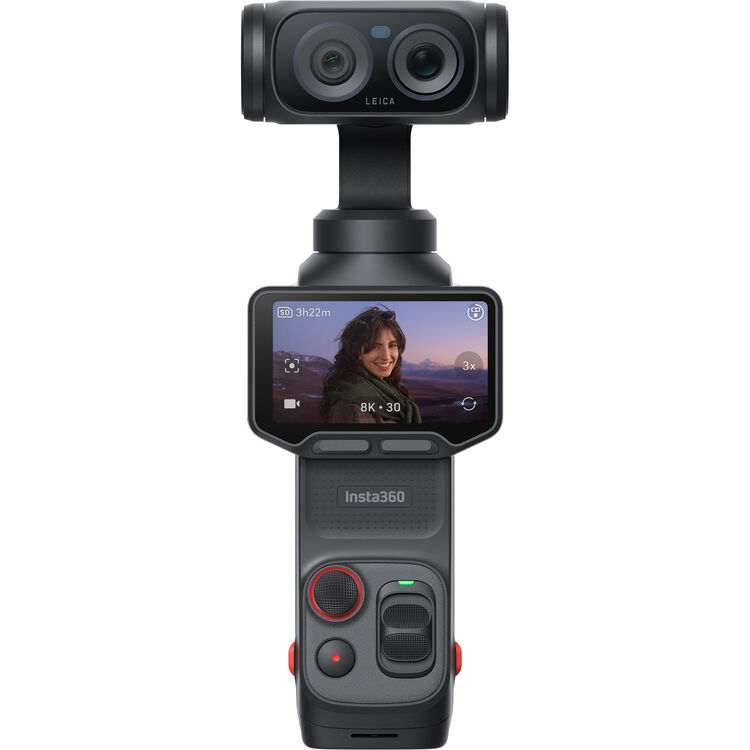
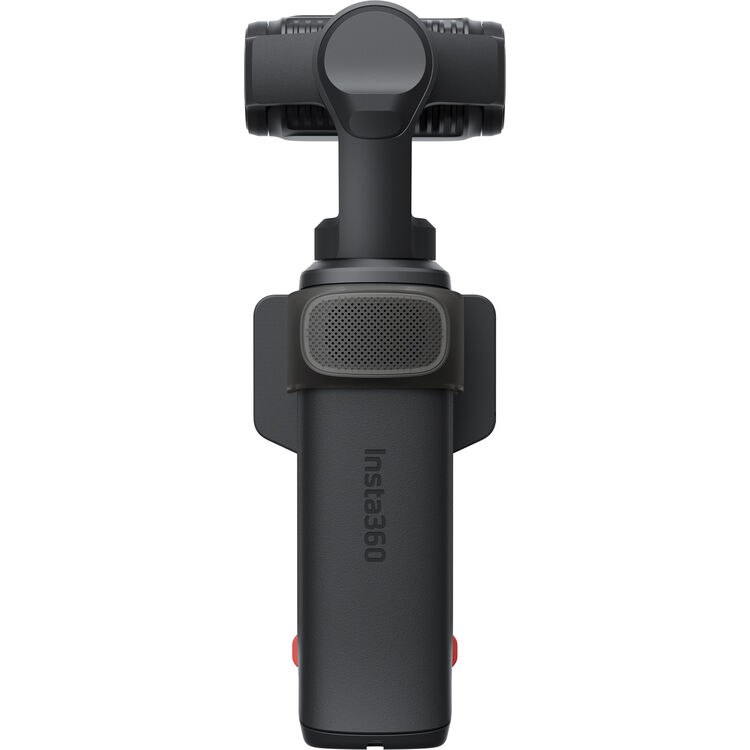
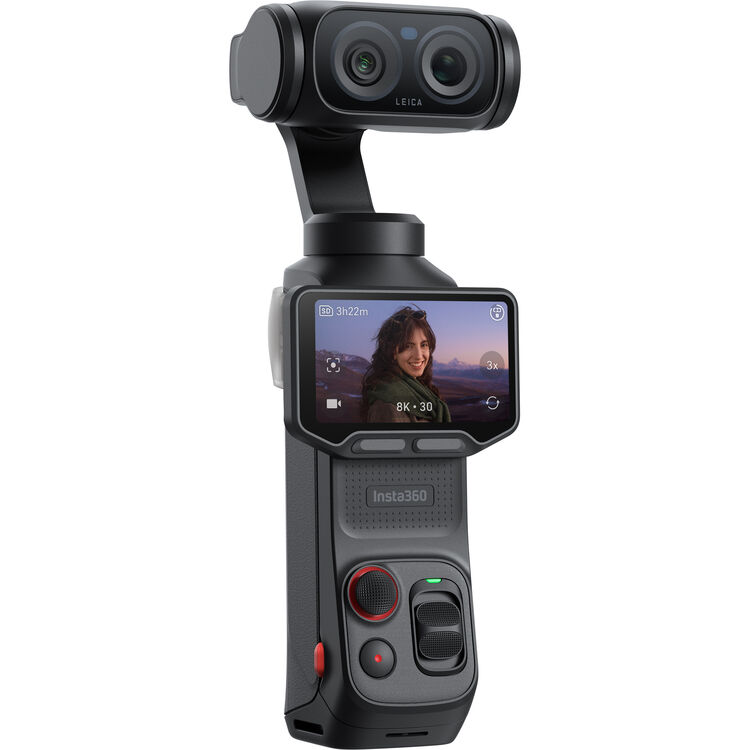
The DJI Osmo Pocket has been the default choice for gimbal camera shooters for years, but Insta360 is now making a direct play for that market. The Luna Ultra is the company's first gimbal camera, and it features Leica branding, 8K video and a dedicated telephoto lens.
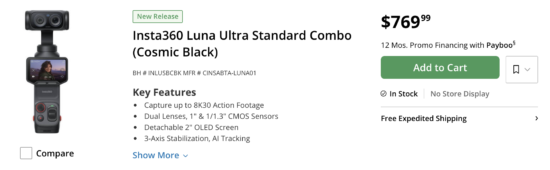
The launch appears to have been pulled forward after a creator purchased the camera from B&H before its official release date – while it was still under embargo – after retailer listings went live ahead of schedule.
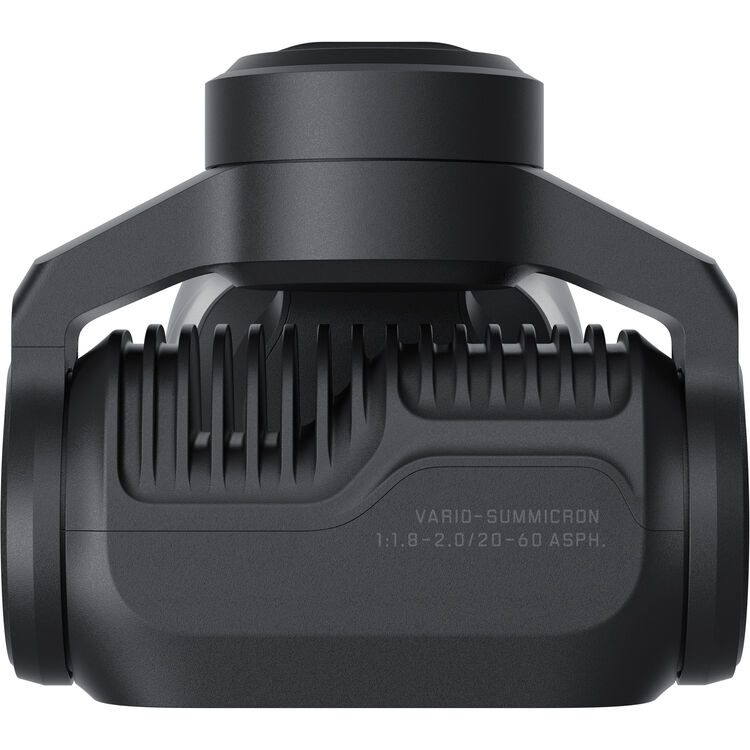
The Luna Ultra features a dual-camera system, competing against the Osmo Pocket 4's single camera. That said, DJI is gearing up to launch its own version with two cameras, so this won't be an edge for long. The main camera uses a Type 1 (128 mm²) CMOS sensor with a 20mm equivalent focal length and F1.8 aperture. The dedicated telephoto camera provides a 60mm equivalent focal length and uses a smaller, Type 1/1.3 (69 mm²) sensor and F2.0 aperture. Beyond those two focal lengths, Insta360 says it offers 6x lossless and 12x hybrid zoom.
Insta360 sells various accessories for the Luna Ultra. Image: Insta360
The camera records 8K/30p videos with Dolby Vision and 10-bit I-Log for greater flexibility while editing. The 8K resolution could appeal to those after extra quality, as the Osmo Pocket 4 tops out at 4K, albeit at 240 fps. The Luna Ultra also offers a 'PureVideo Mode,' which Insta360 says reduces noise and improves brightness for low light shooting up to 4K/60p.
On the stills side, the camera can capture up to 37MP, though that's in Insta360's "UltraPhoto" mode. Insta360 doesn't specify what this mode is, but we suspect it's a computational multi-frame capture mode. Standard photos max out at 9MP. It also offers 200MP panoramic shots.
Stabilization comes from a 3-axis gimbal combined with electronic image stabilization, promising smooth footage even while moving. It also uses Insta360's Deep Track 5.0 for subject tracking, which includes various specific tracking features, such as modes for groups, zooming, auto framing and more.
The touchscreen is detachable and able to function as a remote for the camera gimbal. Image: Insta360
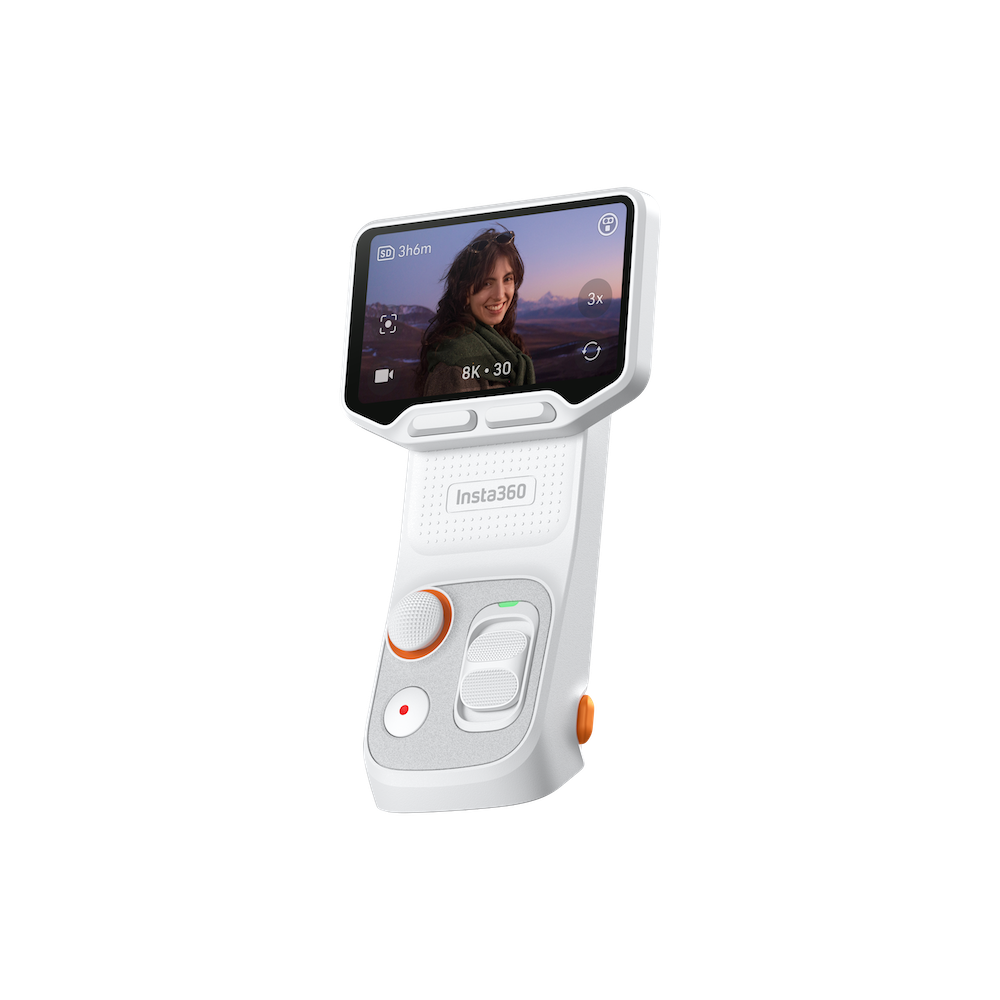
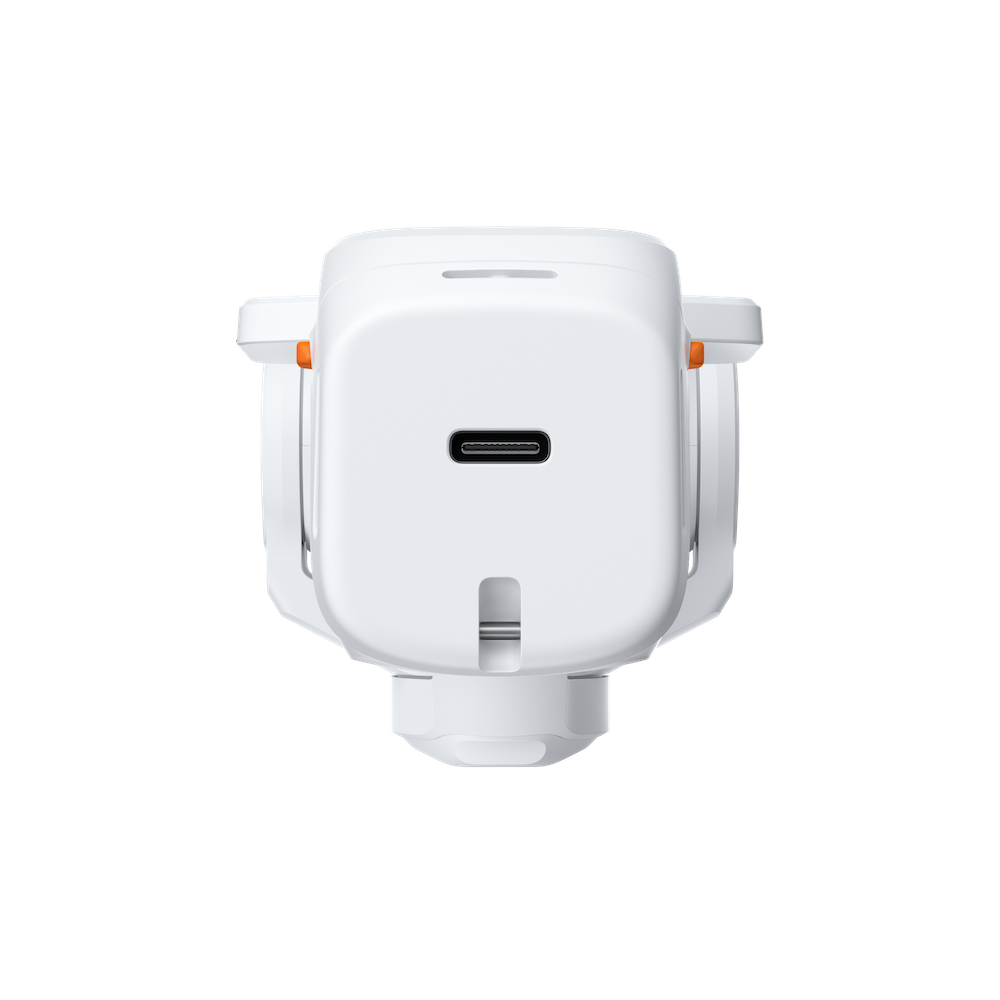
The Luna Ultra features a detachable 2-inch OLED touchscreen, which Insta360 says is an industry first. The touchscreen can then function as a remote that works up to 20m (65') away. It certainly adds some convenience for solo creators. The company also offers a separate POV Head Tracker that can automatically move the camera based on your head movements.
Insta360 says the camera gimbal is co-engineered with Leica, and it features Leica-branded Summicron lenses. It also brings Leica's color profiles to the tiny camera gimbal, including Leica Natural, Leica Vivid and Leica Chrome. The company says that it's compatible with professional color workflows, including ACES (Academy Color Encoding System). It also features built-in time code for syncing multiple devices and a QR code system for sharing color settings between devices.
Image: Insta360
The camera includes 47GB of internal storage and is compatible with microSD cards up to 1TB. Insta360 promises four hours of battery life.
Beyond some camera benefits over the Osmo Pocket 4, the Luna Ultra has one other key lead over DJI's camera gimbal in the US market: it's available. New DJI products have not been officially available in the US since the FCC blocked the company from receiving equipment authorization in December 2025.
The Luna Ultra starts at $770 and comes in white or black. For comparison, the Osmo Pocket 4 launched at £445 (roughly $596) in the UK, though DJI has not set a US price. A close competitor, the dual-lens Pocket 4 Pro, is also expected, and although we don't know the official price yet, Chinese retail listings suggest it will sit in a similar range to the Luna Ultra.
Insta360 Launches Luna Ultra: Leica Co-Engineered Gimbal Camera Built for Next-Generation Mobile Filmmaking
Insta360 today announced Luna Ultra, its flagship gimbal camera co-engineered with Leica, built to combine professional imaging, 3-axis stabilization, and flexible creative tools in one portable device.
Featuring a dual-lens design with a pro-grade telephoto lens, it's built for everyday creators and mobile filmmakers.
With 1" 8K imaging, Leica Summicron lenses, a detachable OLED touchscreen, and advanced AI-powered tracking, Luna Ultra brings Insta360's imaging expertise into a new category for creators who want smooth, high-quality video and photos wherever they go.
Luna Ultra will be available starting June 10 via the Insta360 Store, Amazon, Best Buy, and select retailers worldwide, with availability in some markets to follow at a later date. Pricing for the U.S. market starts at US$769.99.
Advanced Imaging and Optics
Luna Ultra features a Leica Summicron lens paired with a 1" 8K sensor for high-resolution video and photo capture, and a secondary telephoto lens system with a 1/1.3" sensor and F2.0 aperture, enabling natural bokeh across five focal lengths, with up to 12× zoom, including 6× lossless zoom.
"Luna Ultra marks Insta360's arrival in the gimbal camera space, backed by the full strength of our imaging expertise. We believe this category is ready for a new standard, defined by smarter technology, stronger performance, and a more intuitive user experience. Luna reflects our vision for the future of gimbal imaging, built to help people capture what matters with greater ease, confidence, and authenticity." — Max Richter, VP of Marketing and Co-Founder of Insta360.
Video capabilities include 8K30fps recording with Dolby Vision and support for 10-bit I-Log capture for greater color information and flexibility in post-production. With up to 14 stops of dynamic range, the system preserves rich detail in both highlights and shadows. For photography, Luna Ultra supports 37MP UltraPhotos and 200MP Scenic Panorama photos.
Low-light performance is enhanced by PureVideo Mode, which reduces noise and improves brightness and detail up to 4K60fps. Luna Ultra also features a Triple AI Chip to support advanced image processing and overall performance.
Design and Stabilization
Luna Ultra features a compact, lightweight design at just over 200g, making it as easy to carry as a modern smartphone.
An industry-first detachable 2" OLED touchscreen enables remote monitoring and control with HD transmission up to 20 meters, for more flexible shooting angles and solo capture.
It also features a 1550mAh battery for up to four hours of use, with fast charging to 80% in approximately 23 minutes. Built-in storage provides 47GB of usable space, with support for up to 1TB via microSD.
A 3-axis stabilization system, combined with electronic image stabilization, ensures smooth footage during movement. Deep Track 5.0 enables precise subject tracking, with features including Auto Tracking, Active Zoom Tracking, Group Tracking, and Smart Framing to help keep subjects in frame and in focus.
Creative Tools and Professional Workflow
Luna Ultra incorporates Leica color profiles, including Leica Natural, Leica Vivid, and Leica Chrome, alongside a range of cinematic filters for flexible in-camera looks. It also supports professional color workflows, including ACES (Academy Color Encoding System).
Built-in timecode enables multi-camera synchronization and supports editing in software such as Final Cut Pro and Adobe Premiere Pro. Additional tools include QR Color Share for sharing color settings between devices and AI-assisted editing within the Insta360 app, which identifies key moments and generates ready-to-share edits.
For audio, Luna Ultra features a built-in wind guard for clearer outdoor recording, along with direct compatibility with Insta360 Mic systems for single or dual-transmitter setups.
A dedicated accessory lineup further expands creative options, including a POV Head Tracker for hands-free capture, Black Mist filters for cinematic diffusion, a Wide-Angle Lens that expands the field of view to 108°, and ND Filters for exposure control and motion blur.
A Six-Year Partnership in Imaging Innovation
Insta360's partnership with Leica spans six years and five co-developed products, combining Leica's optical heritage and iconic color science with Insta360's Emmy Award-winning imaging technology. With Luna Ultra, the two companies bring that collaboration into a new category, pairing professional optics with compact, AI-powered gimbal camera design.
Luna Ultra was unveiled at Leica's Headquarters in Wetzlar, underscoring the close partnership behind Insta360's first Leica co-engineered gimbal camera.
"This launch represents more than a new product announcement. It reflects the shared vision and long-term collaboration between Insta360 and Leica, combining optical heritage with a new generation of intelligent imaging technology." — Marius Eschweiler, VP of Business Unit Mobile at Leica Camera AG.
Availability & Pricing
Luna Ultra will be available starting June 10 via the Insta360 Store, Amazon, Best Buy, and select retailers worldwide, with availability in some markets to follow at a later date. - Luna Ultra – US$ 769.99
It will be available in Cosmic Black and Stellar White.
Insta360 Launches Luna Ultra: Leica Co-Engineered Gimbal Camera Built for Next-Generation Mobile Filmmaking
Insta360 today announced Luna Ultra, its flagship gimbal camera co-engineered with Leica, built to combine professional imaging, 3-axis stabilization, and flexible creative tools in one portable device.
Featuring a dual-lens design with a pro-grade telephoto lens, it’s built for everyday creators and mobile filmmakers. With 1″ 8K imaging, Leica Summicron lenses, a detachable OLED touchscreen, and advanced AI-powered tracking, Luna Ultra brings Insta360’s imaging expertise into a new category for creators who want smooth, high-quality video and photos wherever they go.
Advanced Imaging and Optics
Luna Ultra features a Leica Summicron lens paired with a 1″ 8K sensor for high-resolution video and photo capture, and a secondary telephoto lens system with a 1/1.3″ sensor and F2.0 aperture, enabling natural bokeh across five focal lengths, with up to 12× zoom, including 6× lossless zoom.
“Luna Ultra marks Insta360’s arrival in the gimbal camera space, backed by the full strength of our imaging expertise. We believe this category is ready for a new standard, defined by smarter technology, stronger performance, and a more intuitive user experience. Luna reflects our vision for the future of gimbal imaging, built to help people capture what matters with greater ease, confidence, and authenticity.” — Max Richter, VP of Marketing and Co-Founder of Insta360.
Video capabilities include 8K30fps recording with Dolby Vision and support for 10-bit I-Log capture for greater color information and flexibility in post-production. With up to 14 stops of dynamic range, the system preserves rich detail in both highlights and shadows. For photography, Luna Ultra supports 37MP UltraPhotos and 200MP Scenic Panorama photos.
Low-light performance is enhanced by PureVideo Mode, which reduces noise and improves brightness and detail up to 4K60fps. Luna Ultra also features a Triple AI Chip to support advanced image processing and overall performance.
Design and Stabilization
Luna Ultra features a compact, lightweight design at just over 200g, making it as easy to carry as a modern smartphone.
An industry-first detachable 2″ OLED touchscreen enables remote monitoring and control with HD transmission up to 20 meters, for more flexible shooting angles and solo capture.
It also features a 1550mAh battery for up to four hours of use, with fast charging to 80% in approximately 23 minutes. Built-in storage provides 47GB of usable space, with support for up to 1TB via microSD.
A 3-axis stabilization system, combined with electronic image stabilization, ensures smooth footage during movement. Deep Track 5.0 enables precise subject tracking, with features including Auto Tracking, Active Zoom Tracking, Group Tracking, and Smart Framing to help keep subjects in frame and in focus.
Creative Tools and Professional Workflow
Luna Ultra incorporates Leica color profiles, including Leica Natural, Leica Vivid, and Leica Chrome, alongside a range of cinematic filters for flexible in-camera looks. It also supports professional color workflows, including ACES (Academy Color Encoding System).
Built-in timecode enables multi-camera synchronization and supports editing in software such as Final Cut Pro and Adobe Premiere Pro. Additional tools include QR Color Share for sharing color settings between devices and AI-assisted editing within the Insta360 app, which identifies key moments and generates ready-to-share edits.
For audio, Luna Ultra features a built-in wind guard for clearer outdoor recording, along with direct compatibility with Insta360 Mic systems for single or dual-transmitter setups.
A dedicated accessory lineup further expands creative options, including a POV Head Tracker for hands-free capture, Black Mist filters for cinematic diffusion, a Wide-Angle Lens that expands the field of view to 108°, and ND Filters for exposure control and motion blur.
A Six-Year Partnership in Imaging Innovation
Insta360’s partnership with Leica spans six years and five co-developed products, combining Leica’s optical heritage and iconic color science with Insta360’s Emmy Award-winning imaging technology. With Luna Ultra, the two companies bring that collaboration into a new category, pairing professional optics with compact, AI-powered gimbal camera design.
Luna Ultra was unveiled at Leica’s Headquarters in Wetzlar, underscoring the close partnership behind Insta360’s first Leica co-engineered gimbal camera.
“This launch represents more than a new product announcement. It reflects the shared vision and long-term collaboration between Insta360 and Leica, combining optical heritage with a new generation of intelligent imaging technology.” — Marius Eschweiler, VP of Business Unit Mobile at Leica Camera AG.
Availability & Pricing
Luna Ultra will be available starting June 10 via the Insta360 Store, Amazon, Best Buy, and select retailers worldwide, with availability in some markets to follow at a later date.
Luna Ultra – US$ 769.99
It will be available in Cosmic Black and Stellar White.
Insta360 Luna Ultra
Gimbal
Controllable Range
Pan: -57° to 235°
Tilt: -57° to 120°
Roll: -50° to 50°
Mechanical Range
Pan: -63° to 240°
Tilt: -98° to 180°
Roll: -63° to 220°
Max. Control Speed
210.0°/s
Angular Vibration Range
±0.005°
Main Lens
Sensor Size
1″
Aperture
F1.8
35mm Equivalent Focal Length
20mm
Minimum Focus Distance
9cm
Telephoto Lens
Sensor Size
1/1.3″
Aperture
F2.0
35mm Equivalent Focal Length
60mm
Minimum Focus Distance
15cm
Focal length
Focal length
Photo: 1–12×
Video: 1–12×
360 Panorama: 1× only
200MP Scenic Panorama: 3× only
Video, PureVideo, Slow Motion, Timelapse, TimeShift, Barrel Roll
Photo Modes
Photo (Standard/UltraPhoto), Live Frame, Panorama
Color Profiles
Standard, Dolby Vision, 10-bit I-Log
I-Log
✓
Color Depth
Photo: 8-bit
Video: 10-bit
Color Gamut
Photo/Live Frame: Rec. 601
Video (Standard): Rec. 709
Video (Dolby Vision): Rec. 2020
Video Coding
H.265
Max. Video Bitrate
120Mbps
Exposure Value
±4EV
ISO Range
100–6400
Shutter Speed
Photo: 1/8000 – 30s
Video: 1/8000 – 1/24s
White Balance
2000–10000K
Audio
Audio Modes
Wind Reduction, Voice Enhancement, Original Audio
Audio Format
48kHz, 32-bit, AAC
Hardware
Weight
Cosmic Black: 233g (8.2 oz), Stellar White: 235g (8.3 oz)
*Due to differences in manufacturing processes, there is a reasonable weight deviation in product weight.
Dimensions
52.4×169.9×38.5mm
Storage Methods
Internal storage + support for microSD cards up to 1TB
Internal Storage Capacity
47GB
Mics
4 (3 mics on main gimbal, 1 mic on the detachable touchscreen)
Battery Capacity
Main gimbal: 1550mAh
Detachable touchscreen: 210mAh
Charging Time
80% in 23 mins (15V 3A)
*Tested in 77°F (25°C) lab environment, camera powered off with a PD3.0 PPS certified 45W USB-C charger. Charging time may vary under different conditions.
Run Time
240 mins
*Tested in a 77°F (25°C) lab environment, 1080p24fps video with the screen & WiFi turned off.
iOS Devices:
Compatible with iOS devices with A14 chips or above and iOS 15.0 or later, including: iPhone 17 Pro Max, iPhone 17 Pro, iPhone 17, iPhone 17 Plus, iPhone 16 Pro Max, iPhone 16 Pro, iPhone 16, iPhone 16 Plus, iPhone 15 Pro Max, iPhone 15 Pro, iPhone 15, iPhone 15 Plus, iPhone 14 Pro Max, iPhone 14 Pro, iPhone 14, iPhone 14 Plus, iPhone 13 Pro Max, iPhone 13 Pro, iPhone 13, iPhone 13 mini, iPhone 12 Pro Max, iPhone 12 Pro, iPhone 12, iPhone 12 mini, iPhone SE (3rd generation, 2022), iPad Pro (M4/M3/M2/M1, 2021–2024), iPad Air (M2/M1, 2022–2024), iPad mini (A17 Pro/A15, 2021–2024), iPad (2022), and newer models.
Android Devices:
Compatible with Android devices with Snapdragon 855, Exynos 2200, Dimensity 9000, Google Tensor G1 and newer chips.
(Requires Android 10.0 or above.)
Note:
Devices that do not meet the above requirements may still be able to use the app to control the camera. However, the performance of some processor-intensive and AI-powered features may be sub-optimal.
Bluetooth Devices
Wireless Microphones:
Insta360 Mic Air
Insta360 Mic Pro
Bluetooth Remote:
Insta360 POV Head Tracker
The DJI Osmo Pocket has been the default choice for gimbal camera shooters for years, but Insta360 is now making a direct play for that market. The Luna Ultra is the company's first gimbal camera, and it features Leica branding, 8K video and a dedicated telephoto lens.
The launch appears to have been pulled forward after a creator purchased the camera from B&H before its official release date – while it was still under embargo – after retailer listings went live ahead of schedule.
The Luna Ultra features a dual-lens system, competing against the Osmo Pocket's single lens. That said, DJI is gearing up to launch its own two-lens camera gimbal, so this won't be an edge for long. The main camera uses a Type 1 CMOS sensor with a 20mm equivalent focal length and F1.8 aperture. The dedicated telephoto camera provides a 60mm equivalent focal length and uses a smaller, Type 1/1.3 sensor and F2.0 aperture. Beyond those two focal lengths, Insta360 says it offers 6x lossless and 12x hybrid zoom.
Insta360 sells various accessories for the Luna Ultra. Image: Insta360
The camera records 8K/30p videos with Dolby Vision and 10-bit I-Log for greater flexibility while editing. The 8K resolution could appeal to those after extra quality, as the Osmo Pocket 4 tops out at 4K, albeit at 240 fps. The Luna Ultra also offers a 'PureVideo Mode,' which Insta360 says reduces noise and improves brightness for low light shooting up to 4K/60p.
On the stills side, the camera can capture up to 37MP, though that's in Insta360's "UltraPhoto" mode. Insta360 doesn't specify what this mode is, but we suspect it's a computational multi-frame capture mode. Standard photos max out at 9MP. It also offers 200MP panoramic shots.
Stabilization comes from a 3-axis gimbal combined with electronic image stabilization, promising smooth footage even while moving. It also uses Insta360's Deep Track 5.0 for subject tracking, which includes various specific tracking features, such as modes for groups, zooming, auto framing and more.
The touchscreen is detachable and able to function as a remote for the camera gimbal. Image: Insta360
The Luna Ultra features a detachable 2-inch OLED touchscreen, which Insta360 says is an industry first. The touchscreen can then function as a remote that works up to 20m (65') away. It certainly adds some convenience for solo creators. The company also offers a separate POV Head Tracker that can automatically move the camera based on your head movements.
Insta360 says the camera gimbal is co-engineered with Leica, and it features Leica-branded Summicron lenses. It also brings Leica's color profiles to the tiny camera gimbal, including Leica Natural, Leica Vivid and Leica Chrome. The company says that it's compatible with professional color workflows, including ACES (Academy Color Encoding System). It also features built-in time code for syncing multiple devices and a QR code system for sharing color settings between devices.
Image: Insta360
The camera includes 47GB of internal storage and is compatible with microSD cards up to 1TB. Insta360 promises four hours of battery life.
Beyond some camera benefits over the Osmo Pocket 4, the Luna Ultra has one other key lead over DJI's camera gimbal in the US market: it's available. New DJI products have not been officially available in the US since the FCC blocked the company from receiving equipment authorization in December 2025.
The Luna Ultra starts at $770 and comes in white or black. For comparison, the Osmo Pocket 4 launched at £445 (roughly $596) in the UK, though DJI has not set a US price. A close competitor, the dual-lens Pocket 4 Pro, is also expected, and although we don't know the official price yet, Chinese retail listings suggest it will sit in a similar range to the Luna Ultra.
Insta360 Launches Luna Ultra: Leica Co-Engineered Gimbal Camera Built for Next-Generation Mobile Filmmaking
Insta360 today announced Luna Ultra, its flagship gimbal camera co-engineered with Leica, built to combine professional imaging, 3-axis stabilization, and flexible creative tools in one portable device.
Featuring a dual-lens design with a pro-grade telephoto lens, it's built for everyday creators and mobile filmmakers.
With 1" 8K imaging, Leica Summicron lenses, a detachable OLED touchscreen, and advanced AI-powered tracking, Luna Ultra brings Insta360's imaging expertise into a new category for creators who want smooth, high-quality video and photos wherever they go.
Luna Ultra will be available starting June 10 via the Insta360 Store, Amazon, Best Buy, and select retailers worldwide, with availability in some markets to follow at a later date. Pricing for the U.S. market starts at US$769.99.
Advanced Imaging and Optics
Luna Ultra features a Leica Summicron lens paired with a 1" 8K sensor for high-resolution video and photo capture, and a secondary telephoto lens system with a 1/1.3" sensor and F2.0 aperture, enabling natural bokeh across five focal lengths, with up to 12× zoom, including 6× lossless zoom.
"Luna Ultra marks Insta360's arrival in the gimbal camera space, backed by the full strength of our imaging expertise. We believe this category is ready for a new standard, defined by smarter technology, stronger performance, and a more intuitive user experience. Luna reflects our vision for the future of gimbal imaging, built to help people capture what matters with greater ease, confidence, and authenticity." — Max Richter, VP of Marketing and Co-Founder of Insta360.
Video capabilities include 8K30fps recording with Dolby Vision and support for 10-bit I-Log capture for greater color information and flexibility in post-production. With up to 14 stops of dynamic range, the system preserves rich detail in both highlights and shadows. For photography, Luna Ultra supports 37MP UltraPhotos and 200MP Scenic Panorama photos.
Low-light performance is enhanced by PureVideo Mode, which reduces noise and improves brightness and detail up to 4K60fps. Luna Ultra also features a Triple AI Chip to support advanced image processing and overall performance.
Design and Stabilization
Luna Ultra features a compact, lightweight design at just over 200g, making it as easy to carry as a modern smartphone.
An industry-first detachable 2" OLED touchscreen enables remote monitoring and control with HD transmission up to 20 meters, for more flexible shooting angles and solo capture.
It also features a 1550mAh battery for up to four hours of use, with fast charging to 80% in approximately 23 minutes. Built-in storage provides 47GB of usable space, with support for up to 1TB via microSD.
A 3-axis stabilization system, combined with electronic image stabilization, ensures smooth footage during movement. Deep Track 5.0 enables precise subject tracking, with features including Auto Tracking, Active Zoom Tracking, Group Tracking, and Smart Framing to help keep subjects in frame and in focus.
Creative Tools and Professional Workflow
Luna Ultra incorporates Leica color profiles, including Leica Natural, Leica Vivid, and Leica Chrome, alongside a range of cinematic filters for flexible in-camera looks. It also supports professional color workflows, including ACES (Academy Color Encoding System).
Built-in timecode enables multi-camera synchronization and supports editing in software such as Final Cut Pro and Adobe Premiere Pro. Additional tools include QR Color Share for sharing color settings between devices and AI-assisted editing within the Insta360 app, which identifies key moments and generates ready-to-share edits.
For audio, Luna Ultra features a built-in wind guard for clearer outdoor recording, along with direct compatibility with Insta360 Mic systems for single or dual-transmitter setups.
A dedicated accessory lineup further expands creative options, including a POV Head Tracker for hands-free capture, Black Mist filters for cinematic diffusion, a Wide-Angle Lens that expands the field of view to 108°, and ND Filters for exposure control and motion blur.
A Six-Year Partnership in Imaging Innovation
Insta360's partnership with Leica spans six years and five co-developed products, combining Leica's optical heritage and iconic color science with Insta360's Emmy Award-winning imaging technology. With Luna Ultra, the two companies bring that collaboration into a new category, pairing professional optics with compact, AI-powered gimbal camera design.
Luna Ultra was unveiled at Leica's Headquarters in Wetzlar, underscoring the close partnership behind Insta360's first Leica co-engineered gimbal camera.
"This launch represents more than a new product announcement. It reflects the shared vision and long-term collaboration between Insta360 and Leica, combining optical heritage with a new generation of intelligent imaging technology." — Marius Eschweiler, VP of Business Unit Mobile at Leica Camera AG.
Availability & Pricing
Luna Ultra will be available starting June 10 via the Insta360 Store, Amazon, Best Buy, and select retailers worldwide, with availability in some markets to follow at a later date. - Luna Ultra – US$ 769.99
It will be available in Cosmic Black and Stellar White.
Welcome back to our Question of the Week series! This reader-focused series aims to get our photographic community to share thoughts on all sorts of photography-related topics in our forums. We pose questions about gear, favorite camera stores, advice, problem-solving and more, and you share your thoughts and opinions.
This week, we’re leaning into the holiday spirit! The season of giving (and occasionally re-gifting) is upon us, and that means it’s time to unwrap some memories – both heartwarming and hilarious.
What are the best (and worst) photography-related gifts you've received?
What’s the best photography-related gift you’ve ever received? Maybe it was a dream lens that caused you to take on an adventure deep in the mountains, or a handmade camera strap that’s now an essential part of your kit. And what about the worst? Perhaps someone thought you needed yet another "World’s Best Photographer" mug, or that odd lens filter set that turned every photo a shade of green.
In this edition of our Question of the Week series, we want to hear your gift stories: the memorable, the useful and the truly baffling. Share your favorites (and flops) in the forum link below. Photos of the gifts (or what you created with them) are also more than welcome! We'll highlight some of your most entertaining and heartfelt responses in next week's roundup.
TheLuna Ultra from Insta360 is an AI-powered gimbal camera capable of capturing up to 8K30 video thanks to its Leica-engineered optics. The Luna Ultra features two lenses, one with a 1″ CMOS image sensor and one with a 1/1.3″ CMOS sensor. A triple AI chip ensures efficient low-light performance. The 2″ OLED touchscreen on the camera can actually detach to function as a wireless remote for control over distance. AI-powered tracking and rapid focus protocols keep your subjects in focus even during fast-action sports.
High-Quality Imagery
Dual Leica-engineered lenses with professional imaging chips support up to 8K30 Dolby Vision video, 4K120 slow motion, and 4K60 PureVideo. The pro-grade telephoto lens can facilitate up to 12x zoom and 6x lossless zoom for crisp close-ups.
Realistic Portrait Capture
Film 4K60 portrait videos and 4K Live Frame photos all from a single device. Beauty Mode refines skin texture and brightens complexions.
Detachable 2″ OLED Touchscreen
The Luna Ultra’s detachable 2″ OLED touchscreen supports HD video signal transmission up to 65’for remote viewing and control. A built-in wireless microphone in the component records clear dialogue even at a distance.
Smart Shooting
The Luna Ultra features a 3-axis stabilized gimbal, AI tracking, and direct support for the Mic Pro transmitter. Record for long periods of time with the 4-hour battery life.
Built-In Professional Color
Built-in Leica color profiles and cinematic filters create baked-in professional looks for your footage. The Luna Ultra also features 10-bit I-Log and up to 14 stops of dynamic range for rich highlights, shadows, and color detail.
When you use DPReview links to buy products, the site may earn a commission.
Image: Laowa
When Laowa released its 180mm F4.5 1.5X Ultra Macro APO lens last year, it offered autofocus, but not at macro distances. For those extra close subjects, manual focus was required. Now, Laowa is fixing that limitation with a firmware update.
Laowa's 180mm macro lens supports a minimum focusing distance of 0.3m (11.8"), but its autofocus only engaged from 1.5m (4' 11") and beyond. That's a pretty good gap between how close you can focus and how close autofocus works. Because of that, subjects at macro distance would require manual focus, which may not be ideal for some photographers and situations.
A small note on Laowa's product page says that new firmware is available, "enabling autofocus for macro photography," so that limitation is now gone, potentially making it easier for photographers to get in focus images. The firmware update also unlocks macro focus bracketing, which is a useful tool for macro photographers. Interestingly, the page still warns that "auto-focus is only available for subjects from 1.5m to infinity," though we suspect this applies only to the old firmware version.
The firmware update is now available for download for Canon EF-, Nikon Z-, and Sony E-mount versions of the lens. The RF and L-mount versions of the lens are manual focus only, so this update does not affect them.
Thanks to DPReview reader Stig Nygaard for the tip.
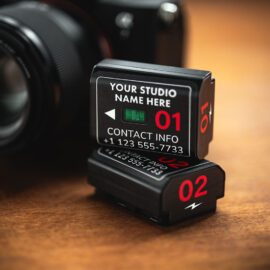
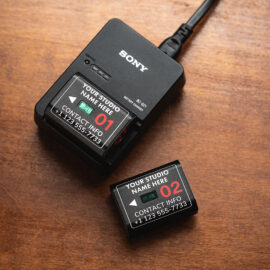
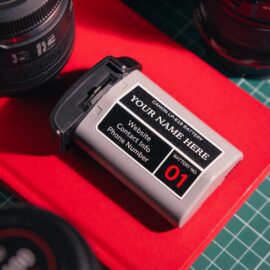
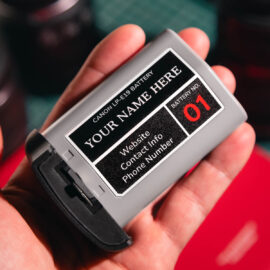
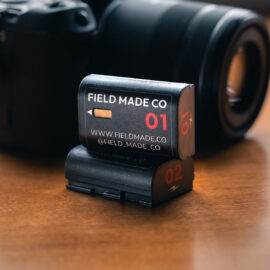
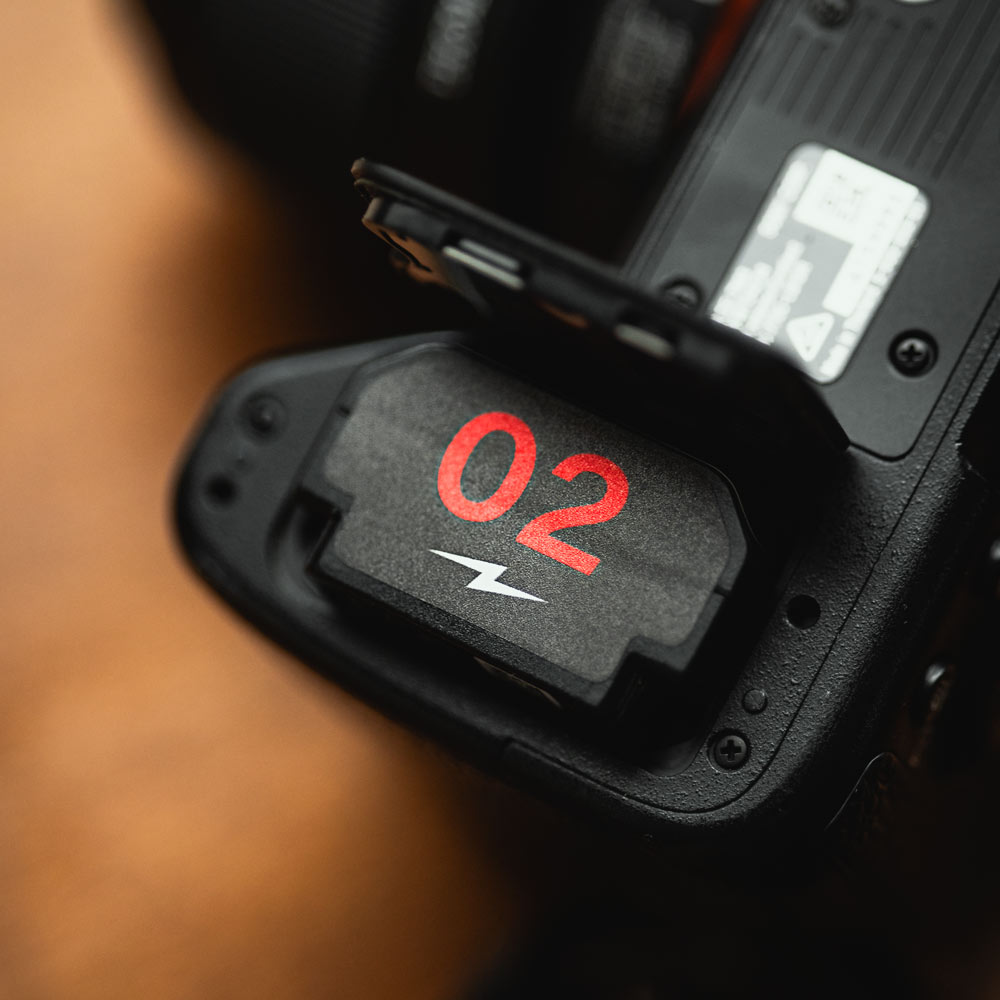
Modern camera setups—such as the Canon EOS R1, R3, and R5 Mark II, Nikon Z8/Z9, and Sony Alpha series—require meticulous power management. During fast-paced events or intense field assignments, tracking battery health and rotation is critical. Traditionally, photographers and filmmakers have relied on messy gaffer tape or marker lines to distinguish fresh packs from depleted ones—a makeshift solution that degrades under heavy use. The Field Made Battery Indicator Collection replaces this friction with an elegant, highly functional workflow.
Key Product Specifications & Design Details
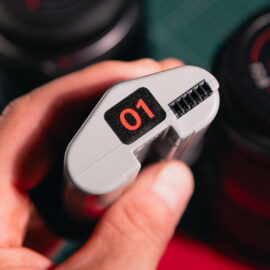
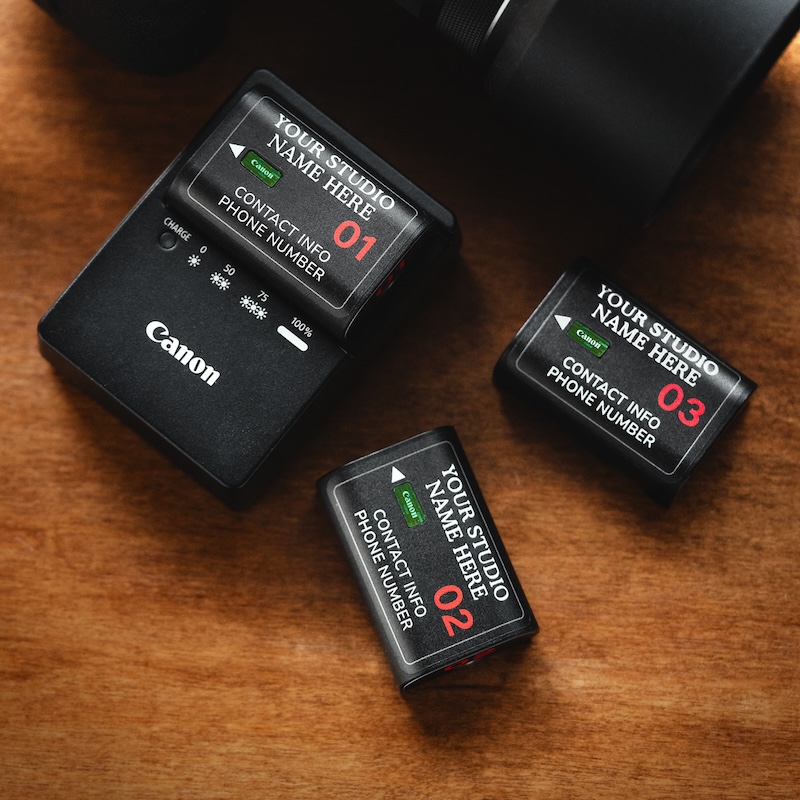
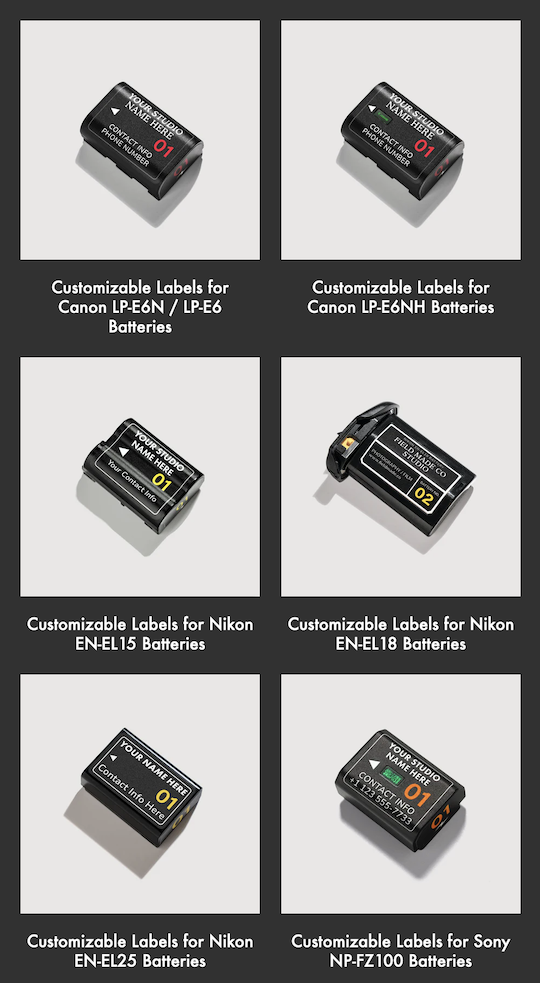
Tailored Dimensions: Each set is precision-cut to match the exact physical footprint of specific battery models without obstructing contacts or battery doors.
Premium Materials: Built from high-durability, scuff-resistant, outdoor-rated matte vinyl designed to withstand weather and friction in the field.
Zero Residue: Applies securely but can be removed cleanly without leaving adhesive residue on high-value gear.
Airtight Workflow Numbering: Features bold, high-contrast sequential numbering (01, 02, 03, etc.) to allow creators to maintain a strict “First In, First Out” rotation.
Asset Protection: Fully customizable text fields allow users to print their Name, Website, and Phone Number directly onto the label, ensuring misplaced gear finds its way home.
Supported Ecosystems & Availability
The collection covers a vast professional footprint, ensuring visual continuity across mixed-brand gear fleets:
Apple Photos is getting two new AI-powered features, along with updates to the existing "Clean Up" tool. Image: Apple
Apple has announced iOS 27, the latest version of its mobile operating system, which focuses more on stability and refinement rather than loading up with new features. However, it shared a few additions, including one that raised a few eyebrows at DPReview: generative AI-powered photo editing.
The first change is an update to the "Clean Up" tool, which lets you remove unwanted elements in your image. Apple says the new version will provide "better quality and more realistic infill," even in complex scenes. The company is also adding an "Extend" tool, letting you effectively do a negative crop and use AI to add a simulacrum of what was outside the frame of your original image. Apple pitches it as a way to give your subject a bit more space, or to level an image without changing the composition.
When using Spatial Reframing, the blurry areas indicate where the photos app will have to use generative Extend.
While both features likely sound familiar to anyone who's spent any time in modern Photoshop, the company's last feature, "Spatial Reframing" is a bit more advanced. It uses AI to essentially change perspective, letting you virtually move the camera around to reframe a subject, and having AI fill in the background needed to sell the effect.
While the "Spatial" branding makes it seem like it uses the depth data that powers other features like virtual bokeh, that doesn't seem to be the case. Apple says you'll even be able to reframe older images, and ones taken using other cameras.
Apple says any images made using these features will include "a hidden SynthID watermark" to mark them as having been edited with AI. The company also says that some AI features, like image generation, will have "daily usage limits" because they rely on server-side processing. It's currently unclear what those limits are, exactly which features they'll apply to, or how much they'll be extended if you pay for the company's iCloud+ plans.
In many ways, this is Apple playing catch-up with other phone makers, as companies like Google and Samsung have introduced slews of AI-powered features*, like the ability to add the photographer into a group photo, combine several photos into a single image where everyone is smiling and looking at the camera, and resize/move elements of an image and clean up the background. But it's also interesting that there's one line Apple isn't crossing in the Photos app: giving you a tool to add generated imagery into your pictures, something both Google and Samsung let you do.
When it was introducing the features, Apple said it had a "deep respect for the craft of photography," and that it wanted to give photographers AI tools that "enhance their images in ways that respect the original moment."
This isn't a new take from Apple – in 2024, it said photos should be things that "really, actually happened" – but it's also not a hardline one. It's hard to ignore that, literally less than two minutes earlier in the presentation, there was a demo of using Apple's Image Playground app to add an AI-generated cake into someone's hands to create a birthday party invite. So while that functionality may not exist in the Photos app, it's clear Apple isn't taking a fundamental stance against using generative AI to completely alter an image and the context around it.
If there has to be a dedicated Siri mode in the camera app, surely it shouldn't come before actual photographic options like portrait and panorama mode. Image: Apple
Aside from the editing tools, it doesn't seem like Apple's making too many changes to the photography experience, which isn't necessarily a surprise given it completely redesigned the camera app last year. It's adding a new Siri mode to the camera, which may be annoying for those who already find the interface cluttered, though we'll have to wait for the beta versions to be released to know for sure whether it can be removed as an option.
It's also possible we haven't seen everything new with iOS 27 yet. Apple will occasionally hold back announcing new features tied to hardware, so it's possible that there'll be further changes if, say, the company announces a new form-factor phone later this year (whatever that may be).
* Arguably, one of Google's most useful AI features is a virtual "Coach" that suggests how to improve your image as you're taking it; who needs Spatial Reframing when your phone was smart enough to tell you how to frame it in the first place?
Sony registered a new digital camera with the Indonesian certification body POSTEL, but the entry was later removed. The new WW308784 will be made in China (not Thailand), and DCLife speculates it could be a new RX or APS-C model becuase it was registered as “Digital Camera” rather than “Interchangeable Lens Digital Camera.”
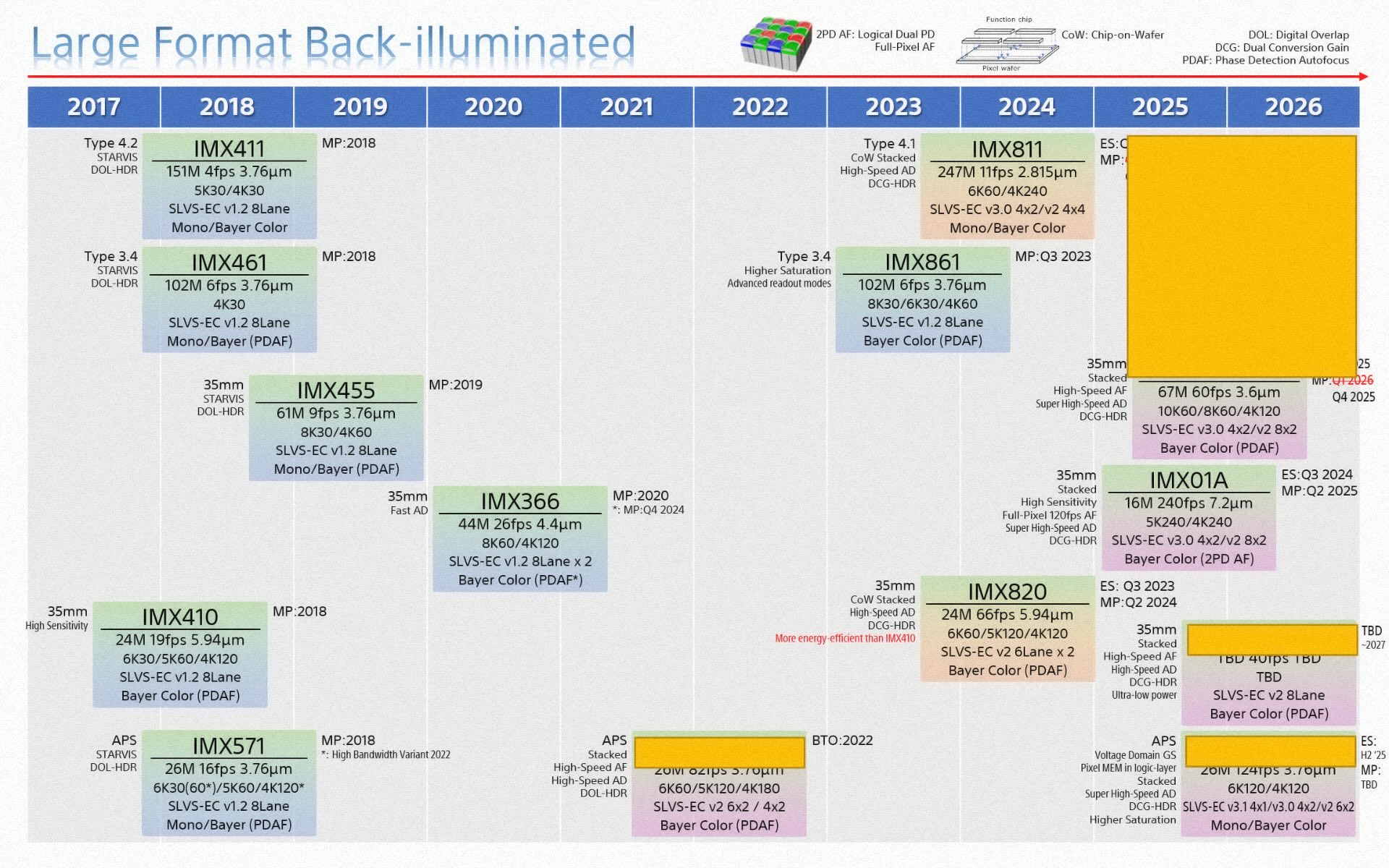
Here is a leaked Sony sensor roadmap from a few months ago – you can see what is expected in 2026 and 2027 :
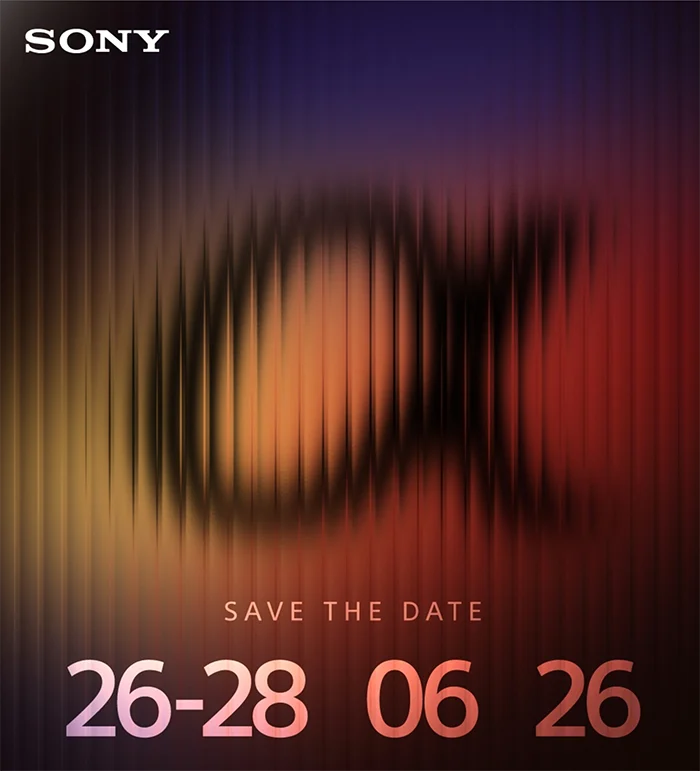
Somy Indonesia will hold an Alpha event on June 26-28, which is a weekend, so I doubt they will announce a new product:
The “Sony Alpha Event” scheduled for June 26–28 is the Alpha Festival 2026 hosted by Sony Indonesia, taking place at the Sports Hall in Agora Mall, Central Jakarta. It is a multi-day regional community and product showcase rather than a global broadcast.

 Connexion