When you use DPReview links to buy products, the site may earn a commission.
Image: Panasonic
When I reviewed the Panasonic S1II, one of my biggest complaints about it was the price. It's a very capable camera, but it was also competing against other very capable cameras that were several hundred dollars cheaper, and which didn't ask you to give up much in return.
Now, though, things have changed a bit. Instead of selling for $3200 in the US, it's currently listed as $2900, an approximately 9% reduction. That makes it the same price as the Sony a7 V, and only $100 more than the Canon EOS R6 III. While Panasonic's website lists this as a sale, there's no clear indication of an end date. B&H's website, meanwhile, implies that this is just the new price, and, indeed, price tracking site CamelCamelCamel reports that it's been selling at this price for about a month.
The same has happened to the S1II's higher-resolution sibling, the S1RII. When that camera launched in February 2025, a few months before the S1II, it was listed at $3300. It's now an even $3000, putting more distance between it and cameras like the Nikon Z8 and Canon EOS R5 II (though those cameras' benefits over the S1RII are more obvious than with the S1II's competitors).
Cameras frequently get cheaper as they age
In some ways, this isn't unusual. The S1II and S1RII are over a year old now, and cameras frequently get cheaper as they age. The Nikon Z6 III is a perfect example; it launched at $2500, and is currently available for just under $2000 (which, despite its few minor flaws, is a screaming deal). This will happen to the EOS R6 III and a7 V, too, and at that time the S1II may go back to seeming like not as great a value, unless you specifically need the relatively niche features it offers that the others don't.
This is why we typically base our pricing analysis around MSRPs; it's not because the street price of the camera won't change over its life, but that they typically tend to change by around the same amount, relative to the camera's launch price and age. Still, it means that if you need to buy a camera right this moment and aren't currently wedded to a system, the S1II makes a lot more sense than it did before. And if this truly is a change to its MSRP, and it'll at some point go on sale even further, that could make it a very interesting option indeed.
Godox released its digital camera, the C100, with a transparent viewfinder. The C100 is a plastic frame that helps the photographer gauge the approximate shooting area. Godox describes the device as a metering aid for film photography.
Weight: Reported as ~65 g in Chinese sources (one retailer lists 655 g — almost certainly a typo/copy-paste error)
Storage: TF/microSD card support up to 128 GB (card not included)
Battery: Built-in rechargeable battery; claims >1.5 hours of continuous video recording
Charging/Data: USB-C (5V ⎓ 1A) for charging and OTG direct transfer to phones or computers
Exposure Controls: Center-weighted metering with linked aperture/shutter adjustment (semi-auto style — adjust one and the camera handles the other). Adjustable ISO.
Other: Portable for travel/street/lifestyle shooting; minimalist design.
Happy World Camera Day! In honor of the day, we are sharing your responses to last week's Question of the week. We asked you which camera was (or is) your most memorable, and to share a photo of the camera and an interesting story about it. This is a spin-off of another question asked a couple of months ago about which camera brand was your favorite, but this time, it may not have been your favorite camera brand that took the spotlight.
Several of you, as expected, mentioned more prominent brands like Canon, Nikon and Sony, but others made unique selections dating back to brands that no longer exist. While the technology of those cameras is now dated, dusty and rusty, the photographs and the memories they conjure up are forever, as they say. With our community over 25 years old and its members' collective experience spanning well beyond that, there were plenty of memories shared.
Keep reading to see which cameras our readers chose as their most memorable.
Your most memorable camera
Leonp: "In the late 1970s, my nephew bought a Pentax camera. My father was jealous, so he bought one for himself, too. My father wasn’t really into high-tech stuff and never made it through the manual, so I must have sneaked into his bedroom to take the above photo in the mirror using a diving lamp as a light source, which, if you look closely, is also a selfie of me. It took years for it to become my camera, and it changed the way I looked at the world forever."
Daithi: "The Nikon D850. It was a troubling time for the birth of mirrorless cameras. They were all basically the ugly litter of the well-established DSLR world. For me, this camera kept on truckin' for many years. The D850 had peerless resolution/image quality, and still does to a large degree."
GruberSrb: "Minolta Dynax 9xi (with booster). It was hated in photography circles, but its tech and fabulous design remind me of a ballerina in 'Swan Lake'. It still works flawlessly with a carbon shutter 1/12000sec like new, despite very heavy usage over the last 30 years in some of the worst conditions on Earth, from Patagonia to Kamchatka."
Thorstenwulff: "My first love was the F3. In the summer of 1987 she went to New York with me, and a box of T-Max 400. Paired with the 24/2,8 it was my perfect combo for street photography, even if you had to get a bit closer. The other Lens was the 105/2,5."
Photo: lonewolf1983
lonewolf1983: "I present you the Sony A850. I had been shooting with the Sony APS-C SLT cameras (A57/A77/A77ii) and picked up the A850 to complement them and check out what the full-frame thing was all about. I took it soon after on a trip to New Zealand, and captured some amazing images with its 24mp sensor, rock solid build quality, amazing OVF and IBIS, clicking that shutter and hearing the mirror/shutter was just glorious."
LJ - Eljot: "Canon G3: My first digital camera. Introduced in 2003, a 4MP digital compact. This one was aimed at enthusiasts and featured RAW images. Unusual at that time. Base ISO is 50, and it is basically unusable at the max ISO of 400. It takes about a full second to take a picture after pressing the shutter button. A terrible camera, but I learned to love the tilt-screen. And at ISO 50, the images look quite good, actually. Good macro capability as well. And a hot shoe with full flash compatibility."
fatplanediaries: "The Sony a6300. It overheated like crazy and had rolling shutter only comparable to the most wobbly of jelly, but it was the camera where I honed my photography and learned videography. I shot my film school application film with it on a homemade gimbal."
GeoffRG: "The Olympus OM1: I bought it in 1979, and it traveled with me to Seattle, Tanzania, Trinidad, and Australia. I sold it in 1990, along with my OM2n, a pair of OM4s, and a pile of lenses and accessories. I still don't understand why Olympus discontinued the motor drive system."
wood_gnome: "The Certo SL 110, because it was my very first camera. I bought it secretly and conspiratorially from pocket money when I was 9 (!) in March 1980."
Photo: Gato Amarillo
Gato Amarillo: "Always my favorite, my Deardorff. The above is a 5x7 model, but I used it with a 4x5 back. The lens is a Schneider Symmar 180mm, a longish normal for 4x5. Contrary to what most might expect, I used it mostly as a portrait camera. The camera was a basket case when I got it. My partner said it looked like something that had fallen off a truck on the freeway. You may notice a couple of odd knobs - I was never able to get together a full matching set."
Don Sata: "I loved my X-Pro1 to the point that I sold a Sony full frame prize camera from the Sony World Photography awards to get this gem with three primes (18, 27 and 60 mm). In this picture, the camera is posing with a set of Zeiss lenses lent to me for a month. I shot the camera, banged it on rocks, got it splashed, scratched and dented until the shutter died."
Otto Union: "Without a doubt, my long-gone Leitz Minolta CL with 40/2 Rokkor and 90/4 Elmar lenses. I bought these with tax refund money in April 1978. It was my first real camera and a real gem. It was extremely pocketable and accompanied me to many concerts in the late 70s / early 80s. It was stolen from my residence in 1983, and I'm still gutted about it."
cbf_si: "I was introduced to photography at 17 during the era of the first AF film cameras in the second half of the 1980s. My classmates were enthusiastic about cameras like the Canon EOS 650 and the Minolta Dynax 7000, but the Minolta X-700 caught my eye. I only got a used one when I got a job in 1998. Like many others, I initially equipped myself with the classic three focal lengths, 28 mm, 50 mm, and 135 mm. Today, I have lenses with focal lengths from 7.5 mm to 250 mm."
Photo: RLHN
RLHN: My most memorable (and first serious) film camera was the Petri 7S, a rangefinder film camera with a selenium cell meter that required no batteries and used "match needle" metering, which made it trivial to tweak exposure. I bought it "used" at a local camera store with my high school graduation gift funds, after someone traded it in because it was "too complicated". It was barely used, if at all. I took many great photos with it for years, until the photo cell sadly died.
BobKo: I've had many cameras, but the camera I remember most fondly is a Panasonic Lumix GH5. I primarily shoot video, and the GH5 was just a video beast. It made shooting really high-quality video a pleasure, and it really upped the quality of my YouTube uploads. Suddenly, my videos looked as good as the big boys. I got my GH5 in 2018, and it still works fine today -- I use it for a back-up camera and to shoot time lapses. What a great camera!
Gramar: The one stand out camera from the many I've owned over the past 50 + years has to be the original Sony RX100. I bought mine new in 2016 four years after they were launched. I found it ticked every box and was always my go to camera until I sold it in 2024 for almost what I paid for it new. It went everywhere with me despite owning a number of other camera during those times.
So many other stories we couldn't fit in this article are shared in the forums. Thanks to everyone who took the time to explain what your most memorable cameras are and why.
Keep watch for the next Question of the week every other Wednesday to participate in this series. New questions are posted here on the homepage and in the forums. We can't wait to read and share your stories!
After teasing the Osmo Pocket 4P at the Cannes Film Festival in May and giving media and influencers hands-on time with the device at the beginning of June, DJI has finally fully unveiled its higher-end camera gimbal via its Chinese and Southeast Asia platforms.
DJI has yet to give Western media a clear timeline when full details can be published; we were told we could only post hands-on photos of the device, without any information about it. This is particularly unusual, since outlets in China have already been allowed to post their reviews, and it's available for purchase in China and Southeast Asia, making much of the information we're not allowed to share – specs, pricing information, test footage, etc. – public.
Like the Osmo Pocket 4, the 4P features a camera with a 20mm equiv. lens with F2.0 aperture. However, DJI opted for a new Type 1 (116mm²) sensor featuring LOFIC technology, rather than the conventional CMOS sensor used in the base model. In addition to that is a dedicated 60mm equiv. telephoto camera, allowing for greater flexibility than a single camera (contentiously, it's not the only gimbal camera to offer this). The telephoto camera uses a Type 1/1.28 (75mm²) sensor (only 35% smaller than the main sensor) and a slightly faster F1.8 aperture.
Photo: Mykim Dang
The camera supports up to 12x digital zoom for video and 9x for stills. The company's subject tracking (ActiveTrack 8.0) is compatible with the 12x zoom range as well, helping to keep subjects centered in the frame even when fully zoomed in.
As usual with DR claims, we'd take that figure with a massive grain of salt.
DJI claims the 4P's main camera provides 17 stops of dynamic range, which is 3 stops more than the Osmo Pocket 4. As usual with DR claims, we'd take that figure with a massive grain of salt; 17 stops would be exceptional even for a much larger sensor. The company has developed a new, flatter Log curve, D-Log2, which can encode a wider dynamic range, explaining the increased claim, compared to the Osmo Pocket 4, despite its use of the same camera. It's important to note that D-Log2 is only available with the main camera.
The camera can shoot at up to 4K 240p, enabling dramatic slow motion footage. It also offers a "Pro" mode that gives users control of the shutter speed from 1/16,000 sec to 1/4 sec, allowing for more creative control. As a gimbal camera, it benefits from three-axis mechanical stabilization for smooth footage even when you're moving. It also supports gesture control to start tracking and recording, and the ability to rotate the touchscreen to power the camera on and start recording.
Photo: Mykim Dang
While primarily meant for video use, the Osmo Pocket 4P does provide some photo features, too. It is capable of 37MP photos and can take images in 1:1 or 16:9. It also features a Live Photo mode, recording 1.5-second clips for every photo.
The Osmo Pocket 4P offers 103GB of integrated storage and supports microSD cards up to 1TB. It promises 210 minutes of runtime on a charge and is compatible with the existing Osmo lineup of accessories. It will be available in white and black
Unfortunately, there's still confusion about the timing of the full release of the DJI Osmo Pocket 4P. It is available in China as of today for ¥3799 (roughly $559), but full global availability – and whether it will come to the US – is still unclear.
DxO started a new summer sale where you can get 20% off any DxO software with the discount code SummerRumors2026 (valid for new customers only). This offer is valid until July 10th, 2026. See the latest DxO releases here. DxO recently introduced 965 new modules – see this page for details.
You can use the exclusive Luminar coupon code RUMORS20NEO for an additional 20% off on top of the ongoing Summer sale. The code is valid until June 30. Additional information on the Skylum Luminar Neo Summer Sale can be found here
When you use DPReview links to buy products, the site may earn a commission.
The Tamron 17-70mm F2.8 Di III-A VC RXD is a versatile, fast lens that's great for activities like family vacations.
Canon EOS R7 | Tamron 17-70mm F2.8 Di III-A VC RXD | F2.8 | 1/2000 sec | ISO 160 Photo: Dale Baskin
Last week, Tamron announced new versions of its 17-70mm F2.8 Di III-A VC RXD zoom for Canon RF and Nikon Z mount APS-C cameras. While the lens has been around for several years in E-mount and X-mount versions, this news brings an exciting new zoom option to Canon and Nikon shooters.
The 17-70mm F2.8 delivers a 26-105mm equiv. range on Nikon APS-C cameras, and 28-112mm equiv. range on Canon's APS-C bodies. Most other F2.8 zooms for APS-C cameras in this range top out around 50-55mm, making the Tamron a distinctive option for those who want extra zoom reach with a constant F2.8 aperture.
That range makes it a great walk-around or travel lens, but the extra reach to 105mm equiv. also makes it well-suited to events, portraits, and street photography in ways the shorter 50-55mm competitors aren't.
Canon EOS R7 | Tamron 17-70mm F2.8 Di III-A VC RXD | F2.8 | 1/100 sec | ISO 320 Photo: Dale Baskin
We had a chance to borrow the RF-mount version of the lens, which we shot on a Canon EOS R7. Build quality and handling are pretty typical of Tamron's product line; the lens is relatively light for its size, and the zoom ring is well-balanced and easy to turn. There's no zoom lock, but I experienced virtually no lens creep during my use.
Notably, the RF-mount version of the lens gains two hardware controls not found on the other versions: manual switches to turn autofocus and optical image stabilization on or off – a nice touch, in our opinion.
Optically, the Tamron 17-70mm F2.8 delivers solid performance throughout its range. While it doesn't deliver the same level of sharpness as the most premium zooms on the market, it doesn't command a premium price, either, making it accessible to a lot of people.
To learn more about this lens, see our detailed launch coverage. In addition to the gallery below,you can also check out our earlier sample gallery, captured when the lens was launched for E-mount.
Please do not reproduce any of these images on a website or any newsletter/magazine without prior permission (see our copyright page). We make the originals available for private users to download to their own machines for personal examination or printing; we do so in good faith, so please don't abuse it.
Sample gallery
This widget is not optimized for RSS feed readers. Click here to open it in a new browser window / tab.
You can use the exclusive Luminar coupon code RUMORS20NEO for an additional 20% off on top of the ongoing Summer sale. The code is valid until June 30. Additional information on the Skylum Luminar Neo Summer Sale can be found here:
Evoto AI is a powerful, AI-driven photo editing platform built specifically for professional photographers who want to dramatically speed up their post-production workflow without sacrificing natural-looking results. It combines advanced per-face retouching, intelligent batch processing, color grading tools, and creative features like the AI Lab into one seamless system that supports the entire process – from tethered shooting and culling to final delivery. Available on desktop, mobile, iPad, and in the browser, Evoto helps photographers handle high-volume work efficiently while maintaining creative control.
Professional photography has always been a race against time – especially after the shutter clicks. Between culling thousands of frames, meticulous skin retouching, stray hair removal, color consistency, and client delivery, post-production can eat up days that could otherwise be spent shooting or with clients.
Evoto AI (evoto.ai) positions itself as the solution: a specialized, AI-first photo editing and retouching platform built specifically for working photographers who need speed, consistency, and natural-looking results without sacrificing control.
Product Information & Key Features
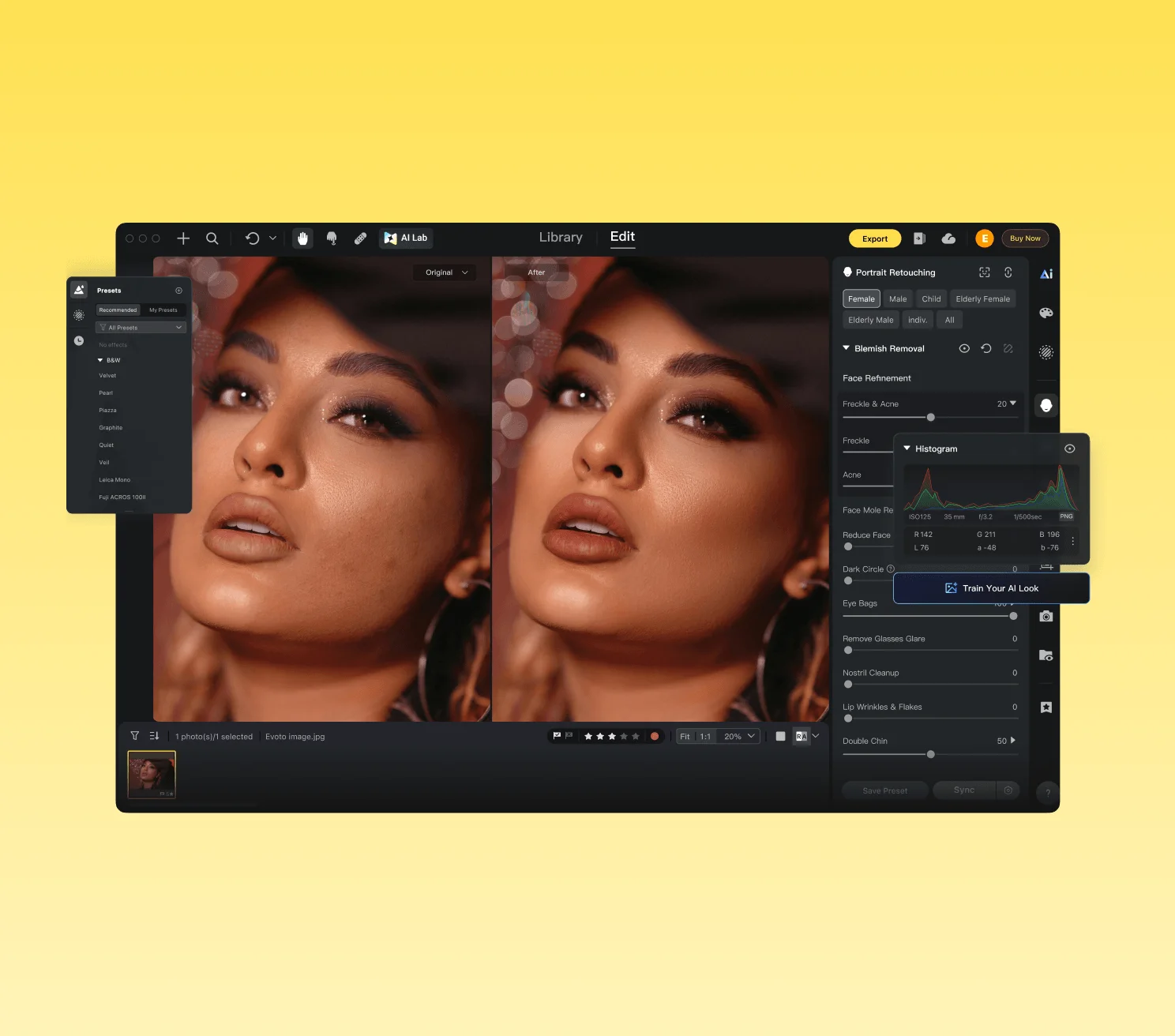
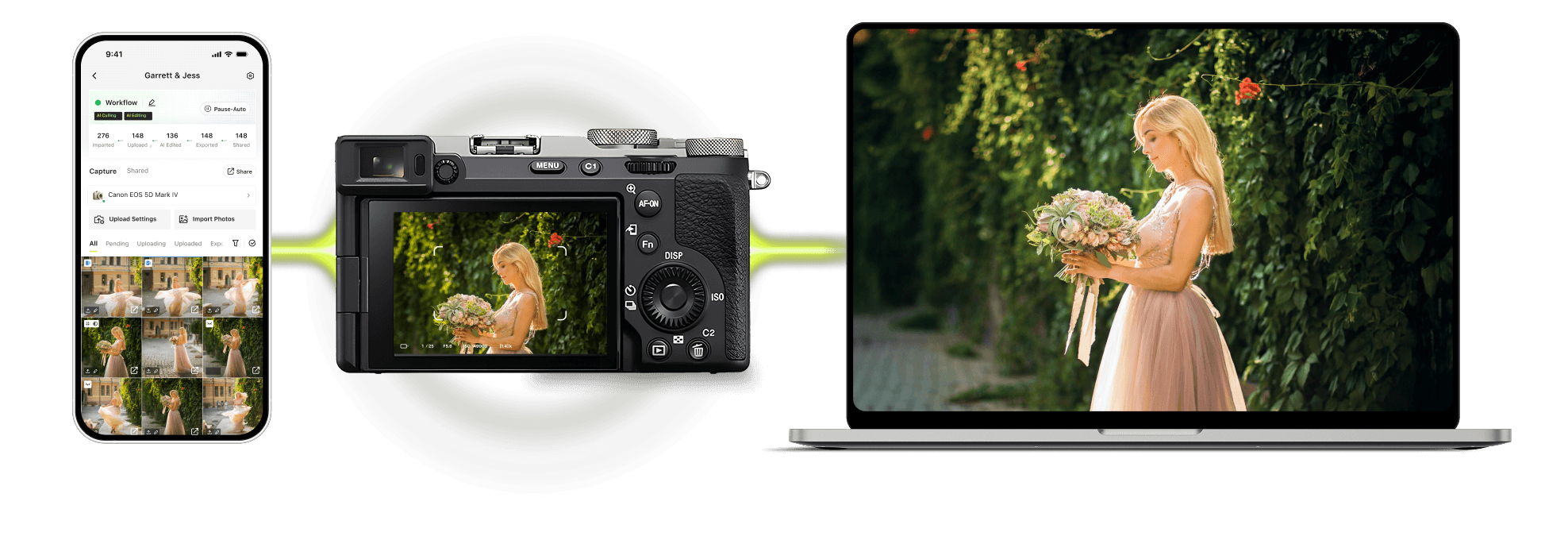
Evoto is an all-in-one AI photo editing suite that covers the full workflow from tethered capture through culling, retouching, color work, and delivery. It runs as a native desktop app (macOS & Windows), with companion iPad/mobile apps and a browser-based version for lighter or on-the-go use. There’s also Evoto Video for portrait retouching and color correction on moving footage, plus an Instant Photo Gallery tool for client proofing and delivery. The software handles both RAW and JPEG files and is fast – users and benchmarks routinely report processing hundreds of images in minutes once presets are dialed in.
Standout AI capabilities include:
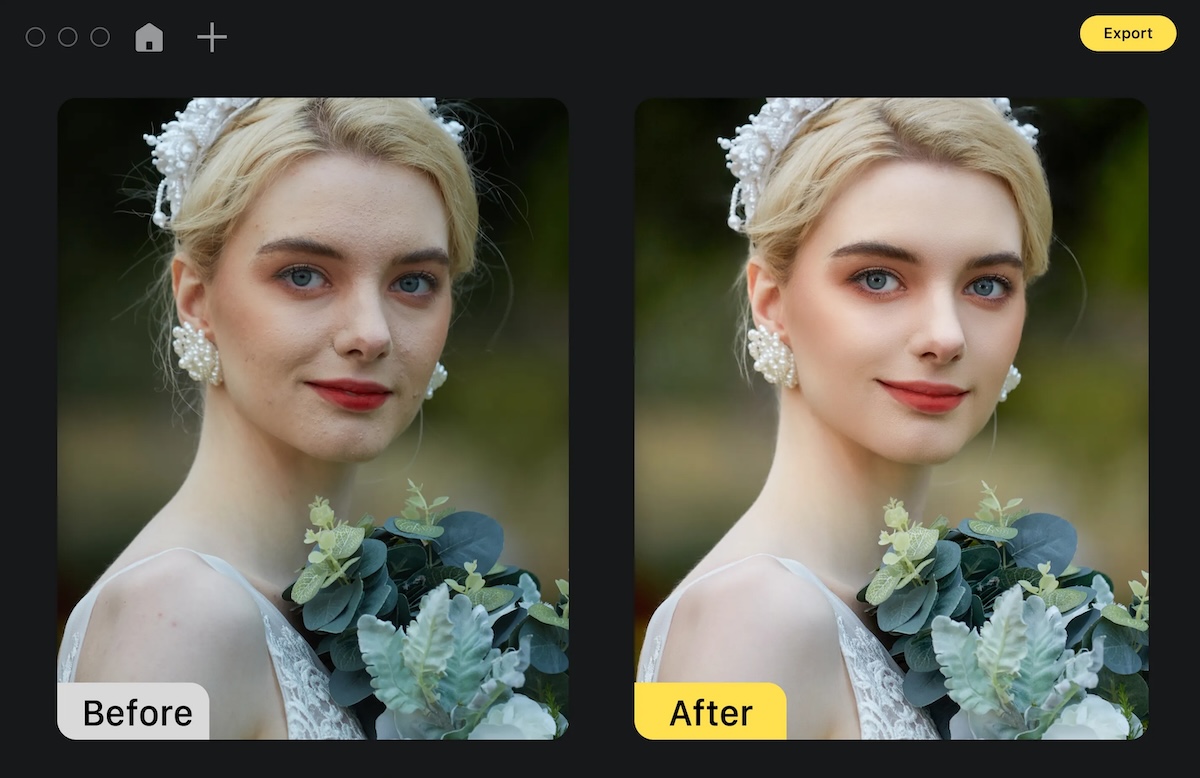
Per-face / subject-aware retouching: Skin smoothing that preserves natural texture (freckles, pores), blemish/acne/wrinkle reduction, skin tone balancing, glasses glare removal, stray hair cleanup (inside and outside the frame), red-eye fix, teeth whitening/straightening, and even “open eyes” fixes.
Body & clothing tools: Subtle slimming, wrinkle/de-blemish removal on clothes, and color-changing options.
Background & environment tools: One-click or masked background removal/clean-up, distraction removal, sky replacement, and backdrop enhancement.
Smart culling: AI quickly flags and removes closed eyes, blurry shots, and duplicates.
Batch intelligence: Apply edits or presets across a set; the AI adapts per image rather than applying blunt global filters.
Additional tools: AI-based old-photo restoration, color matching/grading, tethered shooting support, and a preset system with sync across devices.
AI Color Adjustments
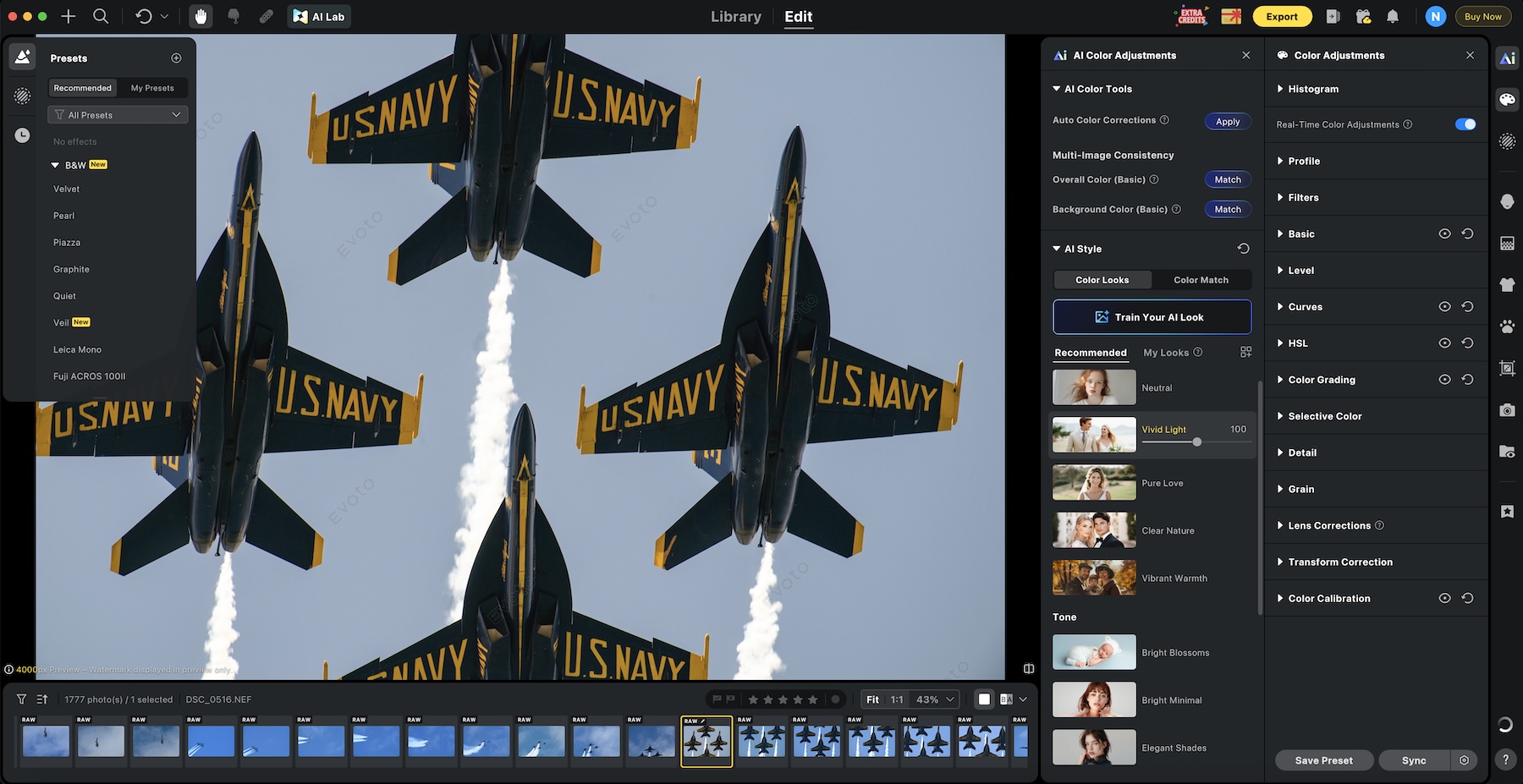
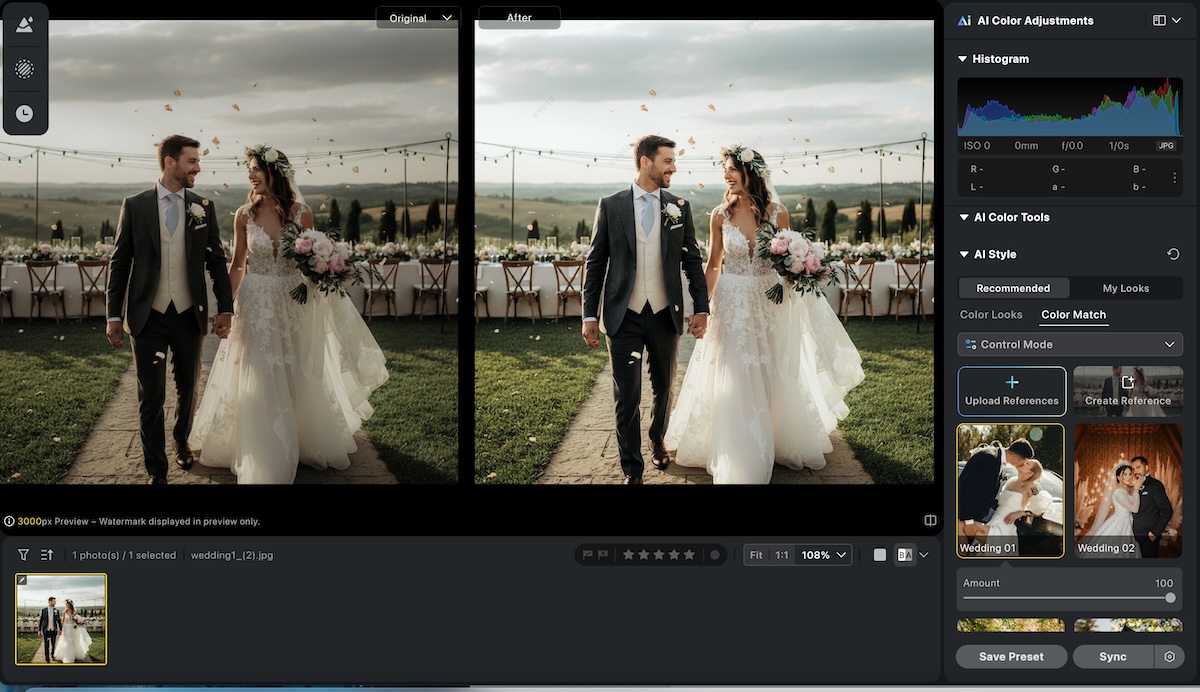
AI Color Adjustments in Evoto AI combine intuitive manual controls with intelligent AI assistance to deliver fast, consistent, and professional color grading across single images or large batches. Photographers can fine-tune exposure, white balance, brightness, tone balance, HSL, curves, and color masking in a Lightroom-style interface, while AI-powered tools like AI Color Match intelligently transfer the tone, mood, and color profile from a reference image to an entire set – ensuring unified results even when lighting varies across a wedding, event, or portrait session. This hybrid approach allows for both precise creative control and automated corrections that adapt naturally to skin tones, backgrounds, and subject matter, dramatically reducing the time spent chasing color consistency while preserving a realistic, non-plastic look that clients expect from professional work.
AI Color Adjustments
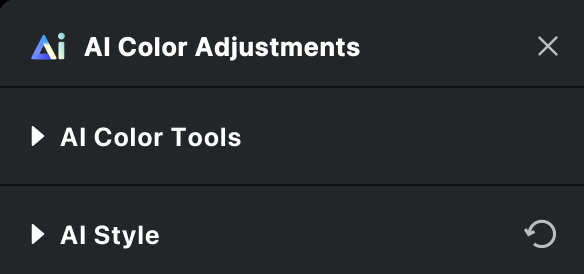
AI Color Adjustments in Evoto AI is a comprehensive, intelligent color grading system that blends precise manual controls with powerful AI-driven tools to deliver fast, consistent, and natural-looking results for individual images or large batches.
The AI Color Tools provide an intuitive Lightroom-style panel for fine-tuning exposure, white balance, brightness, tone balance, HSL, curves, color masking, and filters, while AI-powered features like AI Color Match allow photographers to instantly transfer the tone, mood, and color profile from a reference image to an entire set -ensuring unified results even when lighting conditions vary across a wedding, event, or portrait session. Complementing these are the
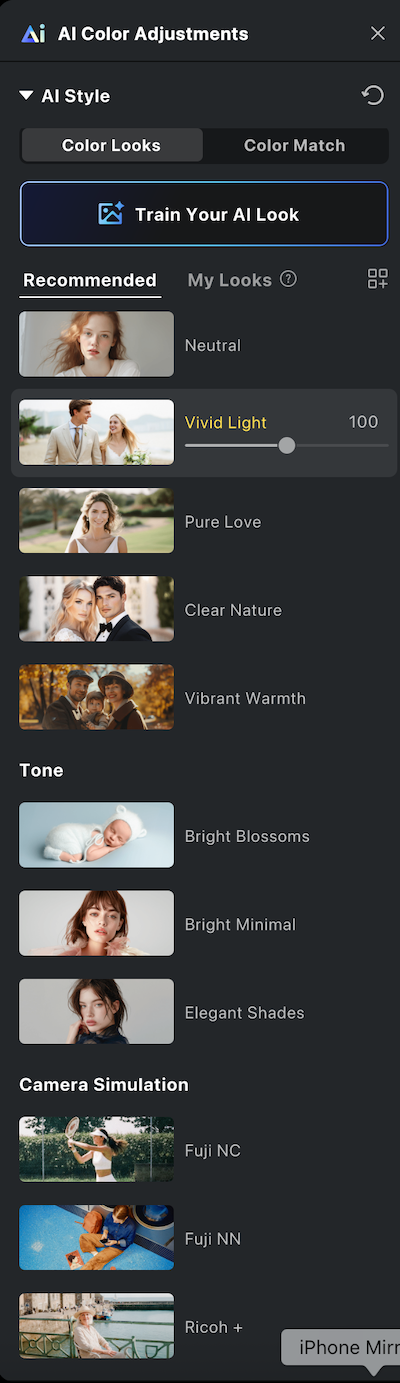
AI Style (also referred to as AI Color Looks) provides one-click, AI-driven stylistic transformations that intelligently analyze each photo and apply a predetermined aesthetic or “vibe” with natural, adaptive results. With over 20 pro-grade options ranging from warm and cinematic to vintage film, bright modern, or clean natural looks, the algorithms automatically correct color, contrast, and tone to match the chosen style while respecting the original image’s lighting and subject characteristics. This makes it exceptionally powerful for high-volume workflows – such as applying a cohesive “film-inspired” or “high-end portrait” look across an entire wedding gallery in seconds – while still allowing photographers to tweak intensity or combine multiple styles for a custom signature aesthetic that elevates their brand without hours of manual grading.
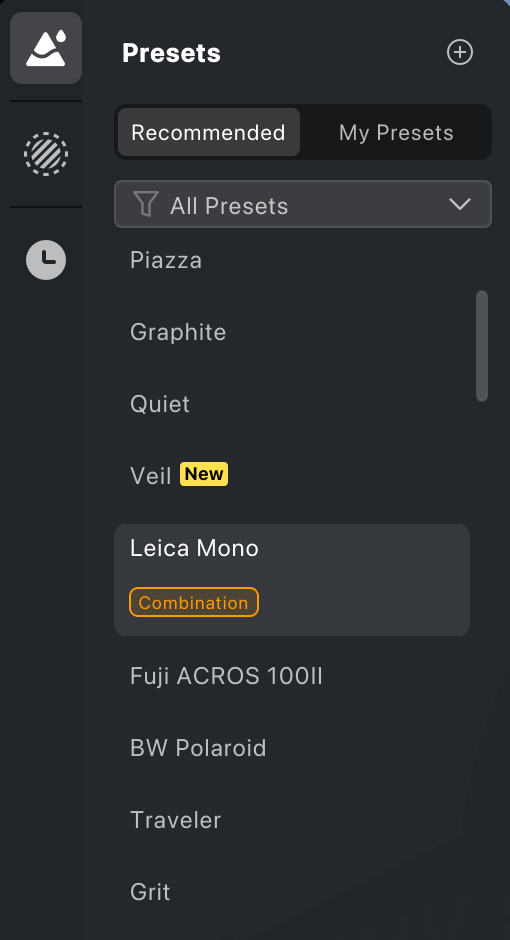
Presets
Presets functionality in Evoto AI is a cornerstone of efficient, repeatable workflows, letting photographers save any combination of retouching settings, AI Color Adjustments, AI Styles, and manual tweaks as reusable, one-click presets that can be applied to individual images or synced intelligently across entire batches. Official recommended presets (Natural, High-End Portrait, Event, Cinematic, Family, etc.) provide excellent starting points, while users can easily create and organize their own custom presets, capturing a specific color grade plus skin and hair retouching, for example, and apply them consistently across future shoots or different devices via cloud sync. This system not only slashes editing time on high-volume jobs but also helps maintain a recognizable, professional style that strengthens a photographer’s brand identity and enables faster client deliveries.
AI Lab
AI Lab in Evoto AI is a dedicated creative hub (accessed via an icon in the top-left of the Edit interface) that houses advanced, high-resolution AI tools designed for complex editing tasks beyond standard retouching. It specializes in intelligent removal and compositing features, such as People Removal (with auto-detection and passerby selection to cleanly eliminate unwanted individuals from backgrounds), Smart Removal / AI Object Remover for distractions, and AI Background Fusion, which enables sophisticated cutouts and scene compositing, perfect for placing subjects into new environments like school gymnasiums, stages, or custom backdrops. These generative tools deliver professional-grade, full-resolution results while preserving natural lighting and edges, making them invaluable for wedding, event, school, and portrait photographers who frequently need to clean up busy scenes or create polished composites without hours of manual masking in Photoshop. By consolidating these powerful capabilities into one streamlined workspace with its own credit model for generative actions, AI Lab significantly expands Evoto’s utility from fast retouching into true creative production, helping photographers deliver cleaner, more polished final images efficiently.
Evoto Mobile and Evoto Online
Evoto Mobile and Evoto Online extend the power of Evoto AI beyond the desktop, giving photographers true flexibility across devices and locations.
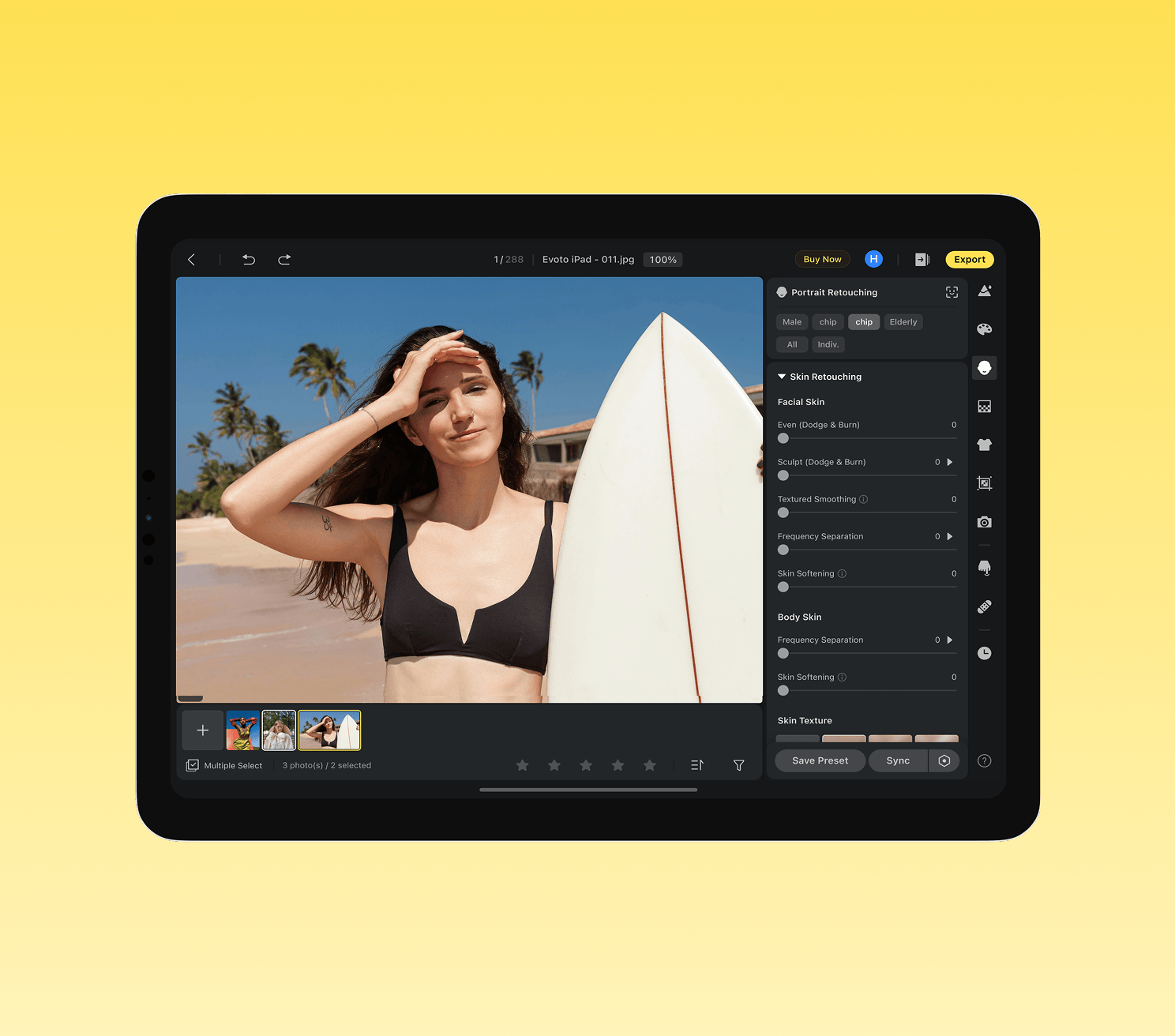
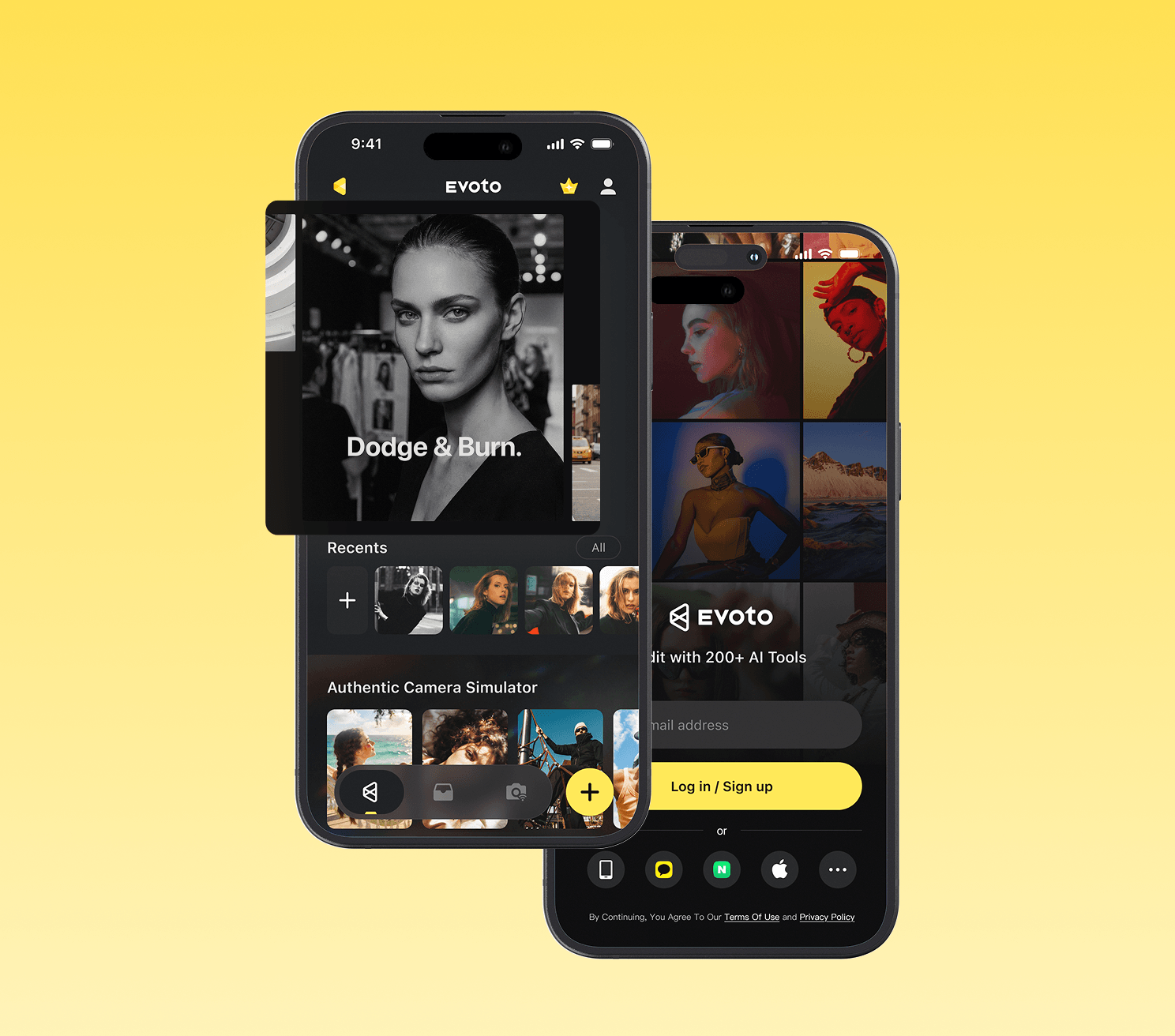
The Mobile version (available on iPad and smartphones) delivers a full-featured AI editing experience optimized for on-the-go use, supporting portrait retouching, color correction, batch processing, preset application, and even tethered shooting directly from compatible cameras. This makes it ideal for location photographers who want to cull, retouch, and show clients polished previews in real time, often closing sales on-site before leaving the session.
Evoto Online is a browser-based editor that provides instant access to core AI tools without installing software, making it especially useful for quick edits, e-commerce product work, background removal, and color adjustments on any computer. Both versions sync seamlessly with the desktop app via the cloud, allowing photographers to start a project on their main workstation, continue refining on an iPad while traveling or at a client meeting, and even perform light edits or client proofing in a browser when needed. Together, they transform Evoto from a powerful studio tool into a complete, location-independent workflow solution that keeps high-quality AI retouching and color work accessible wherever the photographer works.
Evoto Beta and Stable Versions
When downloading Evoto AI, users can choose between the Beta and Stable versions, giving photographers flexibility depending on their priorities.
The Stable version is the recommended choice for most professional users, as it offers a thoroughly tested and reliable experience with fewer bugs, making it ideal for high-volume workflows where consistent performance is critical.
In contrast, the Beta version provides early access to the newest features, AI tools, and improvements – often updated weekly, allowing photographers to test cutting-edge capabilities before they reach the stable release. While the Beta channel is excellent for those who enjoy experimenting with the latest innovations and don’t mind occasional glitches, most working photographers opt for the Stable version to maintain smooth, uninterrupted editing sessions. Evoto makes it easy to switch between the two on their download page, so users can start with Stable for reliability and move to Beta when they want to explore upcoming tools.
Brand Description
Streamlining the workflow for professional photographers worldwide, powered by AI.
Evoto was founded with a clear mission: let AI handle the repetitive “pixel work” so photographers can focus on creativity, storytelling, and client relationships. The company (led by founder/CEO Mitta) has grown rapidly by targeting high-volume professionals – wedding, portrait, newborn, event, school, and commercial shooters, as well as studios that need consistent results at scale.
It claims a large global user base (1M+ photographers across 200+ countries/regions and tens of thousands of collaborating studios). The brand emphasizes ethical AI practices: images are not used to train models without consent, and the platform is GDPR/CCPA compliant with secure cloud options for collaboration and cross-device sync.
Recent expansions (desktop 6.x updates, mobile/Instant apps, and video tools) show Evoto evolving from a specialized retoucher into a broader workflow platform that competes with traditional tools while carving out its AI-retouching niche.
Workflow Examples & Real-World Use Cases
Typical high-volume wedding or event workflow:
Shoot tethered (wired or wireless) directly into Evoto for instant previews and early polishing.
Run AI Smart Culling to quickly eliminate blinks, blur, and duplicates.
Apply or create a portrait preset (skin, hair, glare, teeth) and sync across the gallery, the AI handles per-face variations intelligently.
Quick global or selective color grading.
Export and deliver same-day or push to the Instant Photo Gallery for client viewing/proofing.
Many users report turning what used to be multi-day editing marathons into same-day or next-day deliveries, which improves cash flow and client satisfaction.
Portrait/headshot/fashion studio use case: Photographers often export selects from Capture One or Lightroom into Evoto for targeted cleanup (skin, stray hairs, clothes, background), then do final polish back in their main editor if needed. The per-face controls and masking tools make it excellent for preserving natural skin texture while quickly removing distractions.
On-location/mobile use case: With the iPad or mobile apps, photographers can retouch on-site, show clients polished previews in real time, and even close sales before leaving the location, a game-changer for tourist, event, or mini-session shooters.
Hybrid workflow tip (from working photographers): Do primary color correction in your usual raw processor, export selects to Evoto for AI retouching and cleanup, then finish any ultra-fine texture work in Photoshop only where necessary. This minimizes credit usage while maximizing speed.
Other niches: Newborn and maternity photographers appreciate the gentle, texture-preserving skin tools. E-commerce and content creators use the browser version for quick background removal and product cleanup. Video users are exploring newer video retouching tools to achieve consistent skin and color across talking-head or event footage.
Pricing & Value Proposition
Evoto uses a credit-based model that’s different from traditional subscriptions:
Editing, previewing, and most tools are free.
Exporting an image typically costs 1 credit per photo (some advanced generative features may cost more – you’ll see the exact cost before exporting).
Credits are purchased via annual subscription plans (best value, with rollover and cheaper add-on packs) or pay-as-you-go (more expensive per credit, 2-year expiration).
Approximate annual subscription tiers (as of mid-2026; check site for current):
Starter: ~800 credits (~$89/yr)
Basic: ~1,600 credits (~$149/yr)
Higher tiers scale up to 24,000 credits with better per-credit pricing and add-on discounts.
Pay-as-you-go options start around 200 credits for ~$49. New users usually get starter credits (often 15+), and referrals can add bonus credits.
Value verdict: For high-volume pros who deliver hundreds or thousands of images per month, the time savings (often cited as 5+ hours/day or cutting multi-day jobs to an hour) can easily justify the cost and even increase profitability by enabling faster turnarounds or bringing retouching in-house. Hobbyists or very low-volume shooters may find the credit model less attractive. Some users have noted past price adjustments, so it’s worth modeling your typical monthly exports before committing.
Pros & Cons
Pros:
Exceptionally fast and natural-looking portrait and subject retouching.
Intelligent batch/sync tools that adapt per image.
Strong tethered + culling + retouch + delivery workflow in one app.
Cross-platform sync (desktop iPad mobile).
Ethical/privacy stance and regular feature updates.
Free to experiment until you export.
Cons:
The credit system requires planning (especially for very high volumes or if you re-export after external edits).
Not a full layer-based compositor like Photoshop – best used for targeted cleanup rather than heavy compositing.
AI tools (especially culling or complex backgrounds) sometimes need manual refinement.
Extreme close-ups or ultra-high-end skin texture work may still benefit from finishing in Photoshop.
Overall verdict:Evoto AI is one of the strongest specialized AI retouching tools available to professional photographers in 2026, particularly for portrait, wedding, and event work, as well as any high-volume work where speed and consistency matter. It won’t completely replace a skilled retoucher or your full creative suite for every job, but it dramatically accelerates the most time-consuming parts of the job while delivering results that clients and photographers describe as natural rather than “AI-plastic.”
Conclusion
Evoto AI stands out as one of the most capable and photographer-focused AI editing platforms available in 2026, combining powerful per-face retouching, intelligent batch processing, advanced color tools (including AI Color Match and AI Style), creative features like the AI Lab for object removal and background fusion, and seamless cross-platform support across desktop, mobile/iPad, and browser versions. By automating the most time-consuming aspects of post-production while still giving photographers precise control and natural-looking results, it enables faster turnarounds, consistent quality across high-volume shoots, and even on-site client presentations that can directly boost sales. While its credit-based pricing model requires some planning, especially for high-volume users, the significant time savings and workflow efficiency often make it a worthwhile investment for professional wedding, portrait, event, and studio photographers. For anyone looking to reduce editing burnout, bring more work in-house, or simply deliver polished galleries faster without sacrificing quality, Evoto AI is well worth testing. Photographers can download the desktop app or try the mobile and online versions for free to experience how it fits into their own workflow.
When you use DPReview links to buy products, the site may earn a commission.
Looking for an original take in a scene set up by Pat Domingo, I asked the model if she could get into the driving seat of the car on the set. I wanted to see how much of the huge strobe outside would make it through the narrow windscreen. I asked her to look forward, as if driving, then turn to her right, as if something had caught her attention. This is the moment she did.
Leica SL3-P | Summilux-SL 50mm F1.4 | F5.6 | 1/200 sec | ISO 64 Photo: Richard Butler
The launch event for the Leica SL3-P included not only the chance to get trackside at the famous Nürburgring motor racing circuit and a studio setup by fashion photographer Pat Domingo but also the presence of famed photographer Steve McCurry.
This meant I found myself in the frankly ridiculous position of asking to shoot a portrait of one of the world's most famous portrait photographers, as well as the more familiar challenge of trying to find a unique shot in a pre-staged studio scenario.
Included in the gallery are a handful of shots taken with the new 50mm F1.4 and 100mm F2.8 Macro lenses.
Here's Leica SL3-P (and I) got on:
Leica SL3-P sample gallery
Please do not reproduce any of these images on a website or any newsletter/magazine without prior permission (see our copyright page). We make the originals available for private users to download to their own machines for personal examination or printing (in conjunction with this review); we do so in good faith, so please don't abuse it.
Sample gallery
This widget is not optimized for RSS feed readers. Click here to open it in a new browser window / tab.
Since it was released two months ago, Olivia Rodrigo's music video for the song "drop dead" has already garnered 42 million views. There are probably a lot of reasons it's been so popular: it's the lead single for a very popular artist's new album, was shot on location in Versailles and clips from it have been popular on social media sites like Instagram. But the aesthetic of the video probably helps too; it has a dreamy, old-school look to it that taps directly into 90s VHS nostalgia.
While that's well-trodden ground for modern music videos, the effect is very convincing... because it's real. A recent video from the YouTube channel Frame Set goes deep on how the video, directed by Petra Collins, was shot, in a wide-ranging interview with its cinematographer, Todd Banhazl.
The interview also covers how the team captured the dreamy, undercranked effect used in the striking opening scene.
The video obviously covers the mix of cameras used, going into why the crew chose to use BetaCam, VHS and MiniDV, and the different situations where they needed to go with one over the other. There are plenty of interesting details in it for camera nerds, but it also doesn't slack on discussing craft; a lot of the video is focused on the interesting lighting setups needed to film in a historic building with limited control while using cameras with very low sensitivity.
It also touches on other technical aspects, like the difficulties of editing interlaced footage that will eventually be shown using a platform designed for progressive video, and deeper topics like the rise of the lo-fi aesthetic in the age of AI-generated imagery. Even if you're not into music videos or Olivia Rodrigo's brand of pop-rock singer-songwriting, the interview is well worth a watch just to see a clearly talented creative talk about their process.
When you use DPReview links to buy products, the site may earn a commission.
Photos: Mitchell Clark
Earlier this year, Nikon introduced a new version of one of its professional full-frame workhorse lenses: the Nikkor Z 70-200 F2.8 VR S II. We've now had the chance to spend some time with it, shooting portraits, firefighting aircraft and more. You can jump straight to the gallery to see the results for yourself, or read on to see what we thought about how it feels to use and the images it produces.
In Use
Three of the Z 70-200mm F2.8 VR S II's states. Left: its smallest and lightest configuration (998g / 35oz). Middle: the lens with the cosmetic bayonet cover (1028g / 36.3oz). Right: the lens with its foot and hood (1248g / 44oz).
The big (or rather, not so big) selling point of this lens is its size and weight. Without the tripod foot and cosmetic sleeve installed, it's only 998g (35.2oz); the lightest full-frame 70-200mm F2.8 for a mirrorless system. With that said, I typically preferred to use it with the tripod foot; it's Arca-Swiss compatible, making it very easy to mount to a tripod, and the lens isn't quite light enough that I feel terribly comfortable toting it around without a solid handle to remind me that I'm carrying a camera attached to a lens, not the other way around.
Even with the foot, the lens’s weight is competitive with that of its lightest competitors, and is a substantial improvement over the original. The lens's center of gravity is also remarkably consistent as you move through its zoom range, so you don't have to shift your grip as you change focal lengths.
The tripod foot and decorative bayonet collar are toollessly removable using a button and a bit of a tug.
In terms of features and controls, this lens has most everything you could want, with the exception of the top-display from the previous generation that some – though not I – may miss. And as someone who has long disliked clickless control rings, it's good to see Nikon providing the option to click or declick the one on this lens, even if I’d still personally prefer a dedicated aperture ring.
I also appreciate the ample number of function buttons, which are available no matter what orientation you're holding the lens in. The manual focus and zoom rings are also satisfying to turn, and the latter is a relatively short throw, letting you move through the range quickly if need be. While the pattern on them provides plenty of grip, I do wish they were just a bit softer, but not enough that I'd be willing to accept any trade-off in durability.
The tripod collar can be freely rotated, making it easy to switch from portrait to landscape, even when mounted on a tripod. I do wish it had detents or clicks at 90° intervals, though, as those make it easier to tell when you're perfectly aligned.
Nikon says the lens has an upgraded autofocus system, and I found it always kept up with the camera, snapping into focus very quickly. It never felt like the lens’s autofocusing motors were bottlenecking the body, or like I would have gotten a shot if only it had moved a bit faster.
When working in concert with a stabilized sensor, this lens's optical stabilization is among the most impressive that I've used in a full-frame zoom. It's so effective, in fact, that it can occasionally be a bit difficult to precisely recompose your image with it on, though I only really noticed that in a few situations.
Optics
With the lens wide open at F2.8, there's noticeable vignetting at the corners throughout its focal range (though it's most noticeable at the long end). It mostly clears up by F4, though you'll see further improvements going to F5.6. While this can easily be corrected using the lens's profile, this will come at the cost of having fractionally more noise visible in the corners of the image.
You can gain a small sharpness advantage in the corners by stopping down, too, but in our experience, this lens is very sharp corner-to-corner no matter what focal length or aperture you're shooting at.
70mm
F2.8
F4
F5.6
F8.0
200mm
F2.8
F4
F5.6
F8.0
I find the lens's bokeh to be very pleasing, rendering even busy backgrounds relatively smoothly. The specular highlights are also quite clean, without distracting aberrations, which is exactly what we'd want to see in a professional lens destined to shoot a lot of weddings with trendy lighting.
Nikon's latest coatings are also quite impressive. There was one time when I was shooting pretty much directly into the afternoon sun, which produced a somewhat washed-out image, but things improved as soon as I was shooting even a little off-axis.
1
2
3
Even with the sun directly outside of, or even in the frame, the lens was able to hold onto a fair amount of color and contrast.
Nikon Z8 | Nikon Z 70-200mm F2.8 VR S II | 200mm | F8 | ISO 64 | Processed in Capture One
The lens makes use of minor software corrections for geometric distortion – there's a very mild amount of pincushion distortion at the long end and barrel distortion on the short end – but we wouldn't consider using them mandatory. And, indeed, neither does Nikon; with the 70-200mm F2.8 VR S II attached, the camera allows you to turn off Auto Distortion Control, which isn't the case with every Z mount lens, such as the Nikon 24-120 F4 S.
Sample Gallery
Please do not reproduce any of these images on a website or any newsletter/magazine without prior permission (see our copyright page). We make the originals available for private users to download to their own machines for personal examination or printing (in conjunction with this review); we do so in good faith, so please don't abuse it.
Sample gallery
This widget is not optimized for RSS feed readers. Click here to open it in a new browser window / tab.
Thank you to Nikon for the loan of a Nikon Z8 to capture this gallery. All images were processed using our standard lens workflow in Capture One, with the manufacturer's distortion correction applied but no correction of vignetting.
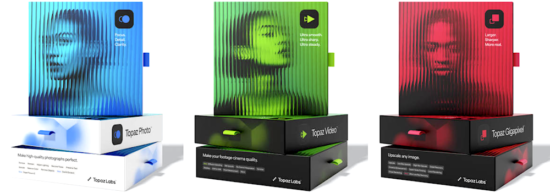
Adobe is acquiring Topaz Labs, the company behind widely used image and video enhancement tools, including Topaz Photo, Topaz Video and Topaz Gigapixel.
The announcement follows a previous partnership between the two companies, unveiled at Adobe Max in October 2025. At the time, Adobe integrated some of Topaz's popular upscale, denoise and sharpen models directly into Photoshop, providing access to the tools using Adobe's AI credits rather than a separate paid subscription for each app. Topaz Gigapixel was also added to the cloud-based version of Lightroom in February 2026.
With the acquisition, Adobe says it plans to expand Topaz's AI enhancement models – which include upscaling, noise removal, sharpening, stabilization, frame interpolation and footage restoration – across its Firefly AI generation software, Firefly Services, and Creative Cloud products. Adobe also highlighted the integration of Topaz's proprietary Neurostream technology, which enables large AI models to run locally on consumer hardware rather than requiring cloud processing.
What this means for existing Topaz customers isn't totally clear. Adobe says Topaz products will continue to be available as standalone offerings through Topaz's own website after the deal closes, and that Topaz Labs CEO Eric Yang will remain with the company. It adds that customers "can expect continued support and investment in future innovation." However, the announcement makes no mention of pricing, subscription structure or how Topaz's tools will be positioned relative to Creative Cloud subscriptions going forward.
The transaction is expected to close in the second half of 2026, pending regulatory approval (which isn't always a given).
Adobe to Acquire Topaz Labs
Adobe has seen strong demand for its AI products for creatives, including Adobe Firefly, the all-in-one creative AI studio, and Firefly Services, a collection of creative and generative APIs and services for enterprises
The combination of Topaz Labs, which specializes in developing industry-leading video and image enhancement models, with Adobe's leading creative products will provide creators, designers, video professionals, photographers and enterprises the tools to achieve exceptional quality across every format and workflow
Topaz Labs brings deep expertise in optimizing large, complex AI models to run directly on device, a capability that will allow Adobe to deliver faster, more responsive creative experiences for customers and make advanced AI more accessible and cost effective for creatives
SAN JOSE, Calif. —June 25, 2026 — Adobe (Nasdaq:ADBE) — the global technology leader that unleashes creativity, productivity and customer experiences through innovative tools and platforms — today announced that it has entered into a definitive agreement to acquire Topaz Labs, an AI company specializing in industry-leading video and image enhancement models.
Adobe empowers everyone from first-time creators to creative professionals and enterprises with groundbreaking AI tools and technology across every stage of the creative process. Adobe's creative AI portfolio brings together industry-leading AI models in Adobe Firefly the all-in-one creative AI studio, and Adobe Creative Cloud applications including Photoshop, Lightroom, Premiere and more, delivering creative professionals pixel-level control and precision tooling.
As AI rapidly reshapes video and image creation, creatives are increasingly working across hybrid workflows that combine traditionally captured footage with AI-generated content, and they are expected to deliver high-quality results across a growing range of formats, devices and production methods. Topaz Labs provides a broad array of advanced AI models for video and image enhancement that analyze and improve existing visual content by sharpening detail, removing noise, restoring footage and increasing resolution, making them essential for any workflow that combines real-world capture with AI-generated imagery.
Topaz Labs develops professional quality AI video and image enhancement models and tools that are trusted by creative professionals such as Asteria Film Co, award-winning filmmaker Robert Stone and enterprises to deliver exceptional fidelity and high-quality results across professional filmmaking, documentary restoration, social content creation, photography and archival workflows. The company has developed proprietary AI models to support professional video use cases such as upscaling, sharpening, stabilization, frame interpolation, noise removal, footage restoration and more.
"Adobe Firefly, Firefly Services and Creative Cloud offer the industry's best creative tooling and top AI models for creators and brands, and we're excited to build on the strong demand for these products with Topaz Labs," said David Wadhwani, President, Creativity & Productivity Business, Adobe. "Creators are creating more content by mixing captured and generated images and video, and with Topaz Labs we will give every creator the quality and control to easily produce that content at higher quality and resolution."
"Building technology to make images and videos look their absolute best has been our life's work for more than twenty years," said Eric Yang, CEO of Topaz Labs. "We've always believed that technology should serve human creativity rather than replace it — and so has Adobe. Together, we believe we can dramatically expand what's possible for filmmakers and creators everywhere."
With Topaz Labs, Adobe will expand its video and image model offerings with state-of-the-art AI enhancement models in Adobe Firefly, Firefly Services and Creative Cloud apps, giving creators, designers, video professionals, photographers and enterprises the tools to achieve exceptional quality across every format and workflow. With millions of customers, Topaz Labs and its Emmy Award-winning AI technology will be integrated across Adobe's creative AI portfolio, giving creatives the ability to enhance footage, restore and remaster archival content, and blend AI-generated and traditionally captured content into seamless final productions. Topaz Labs will also bring its proprietary Neurostream technology that enables large, complex AI models to run locally on consumer devices, democratizing advanced image and video models previously limited to high-end systems or cloud-only usage and positioning Adobe to tap into the growing opportunity for efficient, on-device AI video.
After the transaction closes, Topaz Labs customers of all sizes can expect continued support and investment in future innovation and Topaz Labs products will remain available as standalone offerings through the company's website. Upon close, Topaz Labs CEO Eric Yang will continue to lead the Topaz Labs team.
Transaction Details
The transaction is expected to close in the second half of 2026, subject to the receipt of required regulatory approvals and the satisfaction of other customary closing conditions.

 Connexion


































 iPad
iPad