When you use DPReview links to buy products, the site may earn a commission.
The much larger battery in the L10 takes up almost 1/3rd of the body's volume, so it's no surprise that the camera is larger than the LX100 models.
Photo: Mitchell Clark
The Panasonic L10 is appreciably larger than the LX100 models that came before it. This has caused some people to dismiss it as no longer making sense, once it's comparable to the size of the smallest ILCs and their retractable lenses.
It's also brought into question our use of the term "compact camera" which we've historically used for cameras with built-in lenses, but that's an issue for another day.
Handling the L10, it quickly becomes apparent why it's so much larger, with the new, much larger battery taking up approximately 1/3rd of the body space. This is because the L10 uses a battery with over twice the capacity of the one used in the LX100s: 15.8Wh, rather than 7.4.
The camera has also become a little deeper, because the screen is now articulated, rather than fixed (something we found frustrating on cameras with such a wide-angle lens). The L10 also has a separate door for its SD card, rather than it slotting in behind the battery, though sadly the door is so close to the tripod socket that this separation doesn't bring any particular benefit.
Having traveled with the camera for a while, I found myself appreciating those two changes more than I was put off by the loss of pocketability. With a wrist-strap, it's small enough to comfortably carry all day, but now with the battery life to sustain it over prolonged periods, and the ability to turn the rear screen in for protection, when stuffing it into a camera bag or carry-on luggage.
Does it have as much flexibility as an ILC? No, but its lens is brighter (in both absolute and equivalent terms) than ILC + kit lens pairings that come close to its size. And, like the Fujifilm X100 cameras, that are the same height and width as the L10, there's a certain appeal to a self-contained device that does one particular thing, rather than a camera that could, theoretically, do anything. If you don't see that appeal, then it's not the L10, or its size, you dislike, it's compact/fixed-lens cameras.
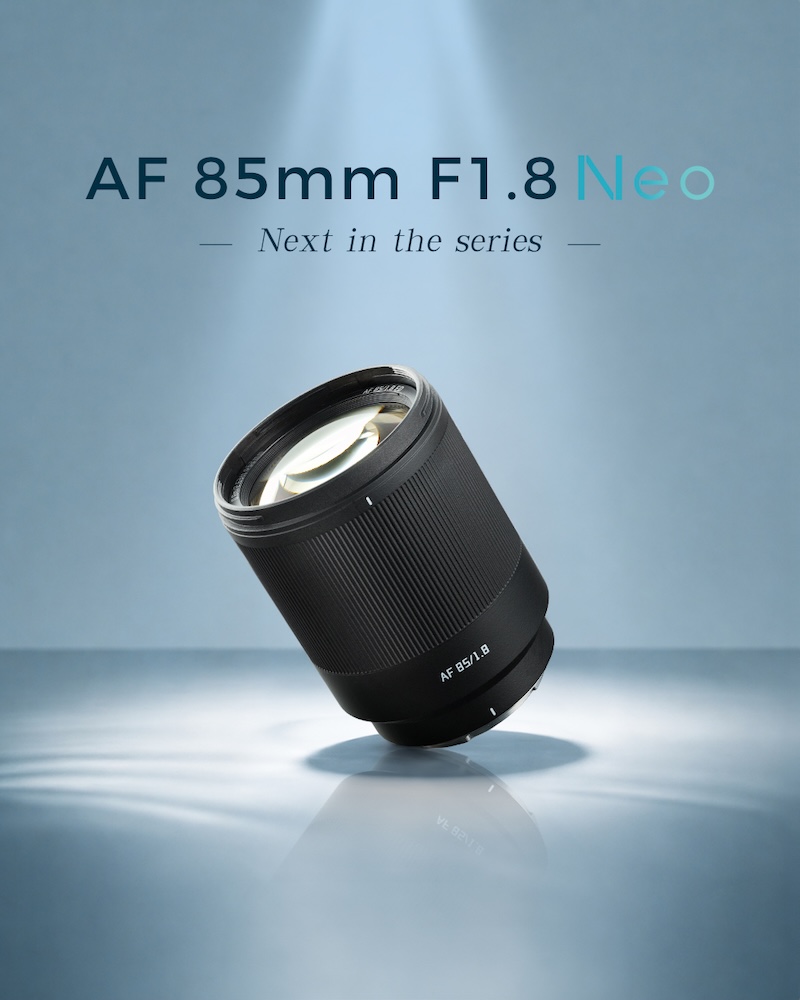
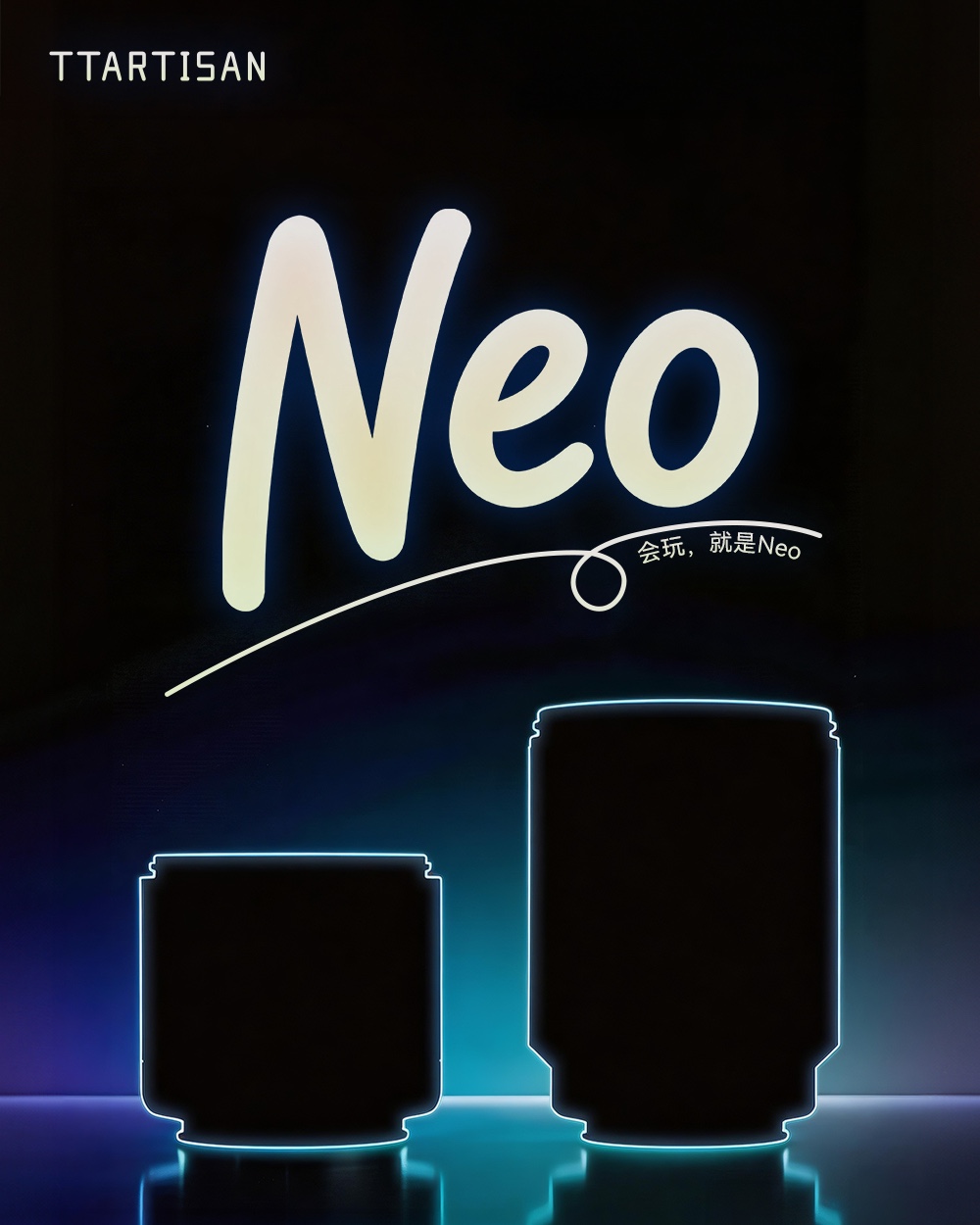
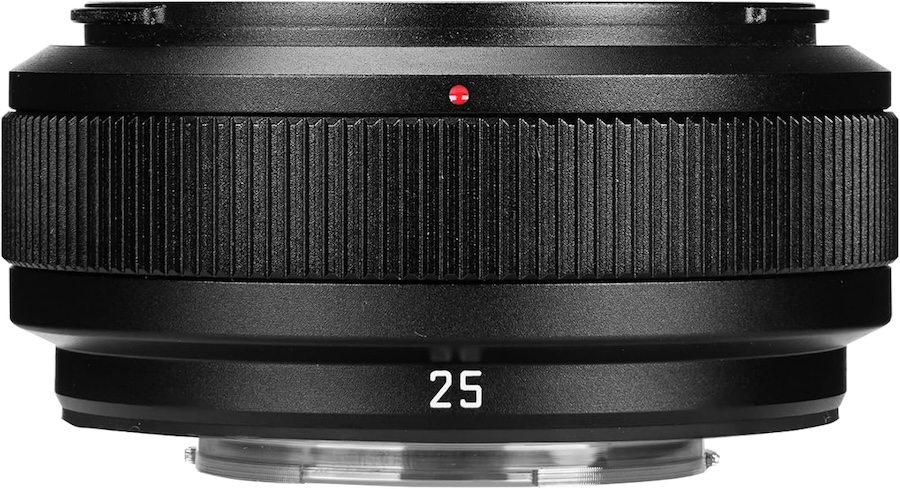
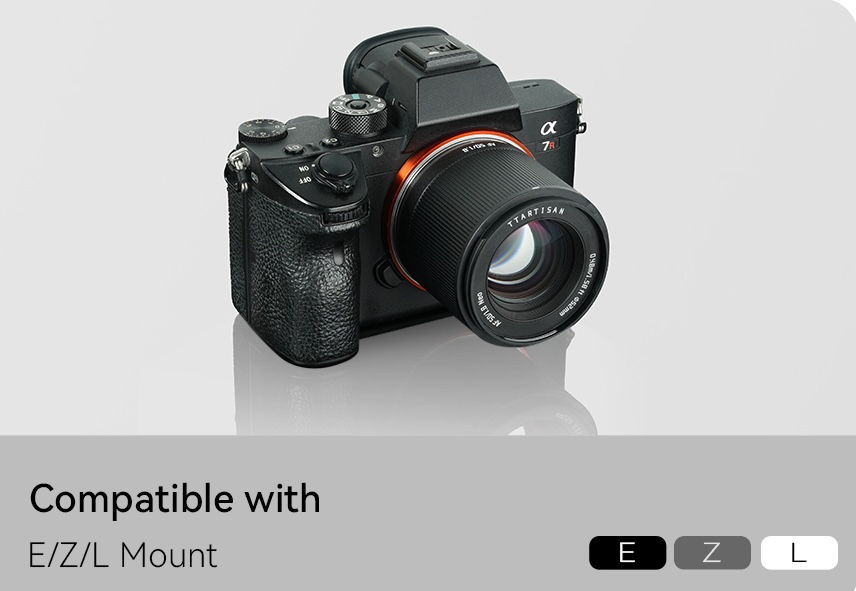
The TTArtisan Neo line is a new series of ultra-affordable, minimalist full-frame autofocus prime lenses that prioritize extreme simplicity, compact size, and low cost over traditional manual controls. The line features a clean, no-frills design with no aperture ring or focus ring.
Information on the TTartisan AF 50mm f/1.8 NEO lens (E/Z/L) is available here:
When you use DPReview links to buy products, the site may earn a commission.
The key to the Canon RF 20-50mm F4 L IS USM PZ for photographers is the switch to go between power and manual zoom mode.
Alongside the EOS R6 V, Canon introduced the 20-50mm F4 L IS USM PZ. Like most power-zoom lenses, it's clearly mainly focused at video users who have access to a zoom toggle at their fingertips. But Canon made the unusual decision to take a hybrid approach; with the flick of a switch, you can control the zoom in the traditional manner by rotating a ring on the lens barrel between two fixed points.
We're in the process of testing the EOS R6 V, but thought it'd be worth taking the lens out to shoot a few photos, too, to see if it also makes a decent photo lens on a camera without that zoom lever.
To answer the most obvious question first: no, the manual zoom mode isn't mechanical. The lens's focal length is still controlled by the power zoom motors, and there is an ever-so-slight delay between you turning the ring and the lens arriving at its destination. The lens is pretty quick, so it's not too noticeable if you're just zooming in slightly, but you can definitely see (and maybe hear) it if you're going from 20mm to 50mm.
This somewhat breaks the illusion of direct control that the manual zoom portion of the lens is designed to add. It also doesn't help that the ring is just a bit too easy to turn. That both makes it easy to accidentally change your zoom level when you didn't mean to, and acts as another signal to your brain that you're actually remote-controlling something, rather than physically moving parts of the lens yourself.
The good news is that, unless you bump the zoom ring, the lens will retain its focal length setting when you turn the camera body off; unlike with a compact camera, you don't have to wait for it to move back through its range to 50mm when you turn your camera back on. However, if you move the zoom ring while the camera's off (accidentally or otherwise), you'll have to wait an extra moment or two for the lens's motors to change its focal length when you turn the camera back on, during which time you won't have any live view preview.
I also found the 20-50mm focal length to be quite enjoyable to shoot. I'm a fan of 50mm, so I don't mind it ending there if it means a smaller lens, and being able to go that bit wider came in handy quite often.
Canon EOS R5 II | Canon RF 20-50mm F4 L IS USM PZ @ 21mm | F8 | 1/250 sec | ISO 100 | Processed with Capture One
While I imagine some photographers may be disappointed reading the above, I'll also say this: after about an hour or two of shooting with the lens, I mostly stopped noticing the quirks. That's not something I can say about any of the other power zooms I've shot photos with, which were always that bit more annoying to use. Sure, the experience of using the 20-50mm isn't the same as using a mechanically zooming lens. But it's also much nicer for photography than a traditional power zoom that can only be controlled with a rocker or finicky on-lens control.
The W - T control on the lens isn't just a toggle. If you only push it a bit towards either end, it'll move through the range slowly. Push if further, and the zoom will happen faster.
For those who care about video, the story is more straightforward: this lens is really nice to use, especially if the camera it's on has a zoom toggle. Even if it doesn't, the power zoom control on the lens works well. With a bit of finesse, you can use it for slow, purposeful pushes or pulls, or for crash zooms, depending on how far you push it to the W or T side.
There are also times when it's nice to use it in the manual zoom mode, where how easy the ring is to turn becomes a feature, rather than a bug. I've always found it quite difficult to get smooth zoom pushes or pulls using a lens's traditional mechanical zoom ring, but with this lens, it's a breeze, while still offering a bit finer-grained control than the traditional power zoom control.
From the Airport Fire in the Santa Ana Mountains in Southern California in September, 2024.
Fujifilm GFX100 II | GF 20-35mm F4 R WR | 25mm equiv. | F5/0 | 1/20 sec | ISO 800 Photo: Stuart Palley
When Stuart Palley began photographing California wildfires in 2013, the data already pointed toward more serious wildfire problems ahead. Over the next 13 years and nearly 200 fires, he watched that prediction come true. Fire seasons grew longer, fires burned faster and more aggressively, and January 2025 brought an inferno to the hills of Los Angeles at a time of year that usually felt like a safe time.
Through all of it, Palley has been there with a camera, building a visual record of the American West's fire crisis. I had the opportunity to chat with him about his journey capturing wildfires, the toll it takes and Terra Flamma, his current ongoing series dedicated to a fresh perspective.
Fire as light
From the Dragon Bravo Fire on the North Rim of the Grand Canyon in July 2025.
Nikon Z8 | Nikkor Z 70-200mm F2.8 VR S | 70mm | F2.8 | 30 sec | ISO 6400 Photo: Stuart Palley
While Palley is still very focused on the journalistic side of his photography, his Terra Flamma series blends the boundaries between documentary and fine art. The project involves using long exposures to photograph fires at night, and Palley was drawn to making these images in part because of the colors they allow.
Palley explained that he frequently thinks about a quote from Vincent van Gogh, who said, "I often think that the night is more alive and more richly colored than the day." Van Gogh's paintings, like "The Starry Night," were direct inspiration for Palley's fire-lit nightscapes. "That use of color and night scenes just always stuck with me from growing up, and I just loved access to the color palette that wasn't otherwise available," he said.
Fujifilm GFX100 II | GF 500mm F5.6 R LM OIS WR | F5.6 | 60 sec | ISCO 1600 Photo: Stuart Palley
The images grasp onto that idea, showcasing landscapes in a manner we don't often see. "Fire is its own light source, and it bathes everything in this warm light," Palley explained. "When you add in smoke and other geographic features, it can either be an enormous warm softbox, or it can paint everything in orange and red, and then contrast it against a more blue or purple night sky. So it creates this incredible color palette that is only available when the fires are happening."
Terra Flamma isn't just about color, though. The long exposures give you a different look at the fire's behavior, too. "You see what it's doing, you see where the smoke's going, and it sort of illuminates the scene," said Palley. The long exposures also showcase the landscape, providing a bigger view of the situation. "Ultimately, the goal of Terra Flamma is to take these landscape photos of fire and put them in the context of where they are," he said. "Is this happening in the mountains in the middle of nowhere? Is it happening near downtown LA?"
Palley doesn't only photograph wildfires. This was taken at the Lineage Logistics warehouse fire in Los Angeles, California, at the end of June 2026. He's also starting to capture drone footage (video and photo), which you can see on his YouTube channel. Photo: Stuart Palley
Palley has also expanded the series to include stories beyond the fire itself, including firefighters, crews, communities, air quality, forestry management and more. "The fire has become part of a broader ecosystem when it comes to storytelling about climate and natural disasters here in the American West," he told me.
While Terra Flamma occupies the fine art end of his work, it represents only part of what Palley does at a fire. During the day, he's working as a photojournalist documenting firefighters, crews and affected communities with the same immediacy as any news photographer. The long-exposure landscapes come when the sun dips down.
Putting gear in the line of fire
Palley's longer exposures are typically shot from a safe distance from the fires, but sometimes, he's right in the mix. This image was handheld, so he could move more freely.
This image is from the Eaton fire in Altadena, California, in January 2025. You can see a video of the scene here.
Fujifilm GFX100 II | GF 55mm F1.7 R WR | F1.7 | 1/35 sec | ISO 3200 Photo: Stuart Palley
Of course, long exposures create logistical challenges that daytime images don't. Fires are dynamic and can change rapidly, and setting up for a long exposure requires time. Thankfully, most of his long exposures give him the benefit of distance as a safety buffer. "A lot of times when I'm doing these longer landscape exposures, it's from further back, looking at the fire in context across a canyon or down a hill," he said. "So, I typically have some space built in that gives me both geographic safety and the time to make these images."
That's not always the case, though. Palley remembered one image in particular where he was much closer to the fire, with a 30-second exposure capturing embers swirling around him. "I had to stand there holding my camera in the wind, getting pelted by embers," Palley said. "I've got like a hood, a helmet, goggles and all this stuff. So, I was fine. But I decided at that point that it was worth making that picture because it showed the ember cast in such a wild way that it was worth sitting there for the 30-second exposure."
From the Eaton fire in Altadena, California, in January 2025.
Fujifilm GFX100 II | GF 80mm F1.7 R WR | F7.1 | 1/160 sec | ISO 800 Photo: Stuart Palley
Thankfully, fires haven't been the direct cause of damage to Palley's gear. "I've certainly damaged and destroyed multiple cameras at these fires, but it's not necessarily from negligence," he said. He recalled one time in 2015 when he dropped his camera after getting attacked by a displaced beehive because they were attracted to his yellow Nomex suit. Another time, he melted a lens hood because it fell into burning grass.
The most common issue, he says, is smoke. "The cameras smell like ashtrays," he said. "You get smoke and ashes on it, but you get alcohol wipes, and you wipe the cameras down every day to reduce smoke exposure and things like that." He also sends them off yearly for a cleaning to maintain his gear. "But ultimately, it's a tool and tools used in challenging conditions just often need more maintenance," he explained.
Training is key
A Cal Fire Boeing 747 air tanker drops flame retardant to slow the El Dorado fire in California in 2020. Photo: Stuart Palley
While Palley, of course, wants to create incredible photographs, he draws a clear line. "The key thing here is no photo is worth me getting hurt or getting in the way of firefighters," he said. He's always putting his safety and the job of firefighters first.
That focus on safety has only increased over the years, too, as fires have become more intense. "I've always been safety oriented, but I'm very, very conservative now on how I approach these fires because the fire behavior is so extreme," he said. "From having been at almost 200 wildfires at this point, the fire behavior continues to surprise me with how aggressive and rapid it is."
A Cal Fire engine crew member sprays hotspots at the Tenaja Fire in Murrieta, California, in 2019. Photo: Stuart Palley
Palley's safety record is no accident. Since early on in his career, he has devoted a lot of time to making sure he is well-trained, knowledgeable about fires and has the right gear. "When I first started photographing fires, I had basic Nomex PPE, but the boots didn't quite fit right. I didn't have the right fire shelter," he told me. "So within the first year, I went to a private wildland fire school for a week to get my general wildland firefighter training."
"When I'm at fires, I want to be there to tell the story, not become part of it"
He's also careful to continually update his gear so that it meets current standards. For example, he recently purchased a $3000 radio because many agencies have updated their radios, and he needs an easy way to listen to what's going on to stay safe and out of firefighters' way. "When I'm at fires, I want to be there to tell the story, not become part of it," he said.
A home covered in fire retardant after an aircraft drop was a few hundred feet off at the Tenaja Fire in Riverside County, CA, in 2019. Photo: Stuart Palley
Palley has also started sharing his knowledge with others. He recently led a two-day wildfire media safety course for 20 Reuters staffers and freelancers. "It's a blend of some very general wildland fire behavior and training that's standardized for firefighters, but it's sort of customized in a curriculum I just developed to teach journalists," he explained. That information can then help other journalists stay safe, while producing informative coverage of these events.
That directness extends to how he talks about irresponsible coverage more broadly. Palley is a genuine believer in the democratization of media and is all for more people covering these events. But he has little patience for journalists or creators who treat dangerous situations carelessly. "When I've seen so many extreme fires, fatality fires, homes burn down, I don't have time to sugarcoat these explanations," he said. "Sometimes you have to just be direct and tell people to get their shit together. This is serious stuff happening. It needs to be taken seriously."
Building trust and the ethics of wildfire photojournalism
From the Woolsey Fire in Los Angeles and Ventura Counties in California, in November 2018. Photo: Stuart Palley
Trust is also a factor when photographing these fires. Palley is often working in the vicinity of firefighters, and they need to know that he's not a liability and that they can trust him to be responsible and safe. "If you're a journalist there, to a wildland firefighter, you're the X-factor," he said. "Trust is one of the biggest things, and that's the reason why I'm big on having the right gear and the training and knowing how to use it."
Trust extends beyond wildland firefighters and safety crews, too. Palley often photographs communities when people return to their homes after fires, a traumatic and emotional experience. "When you're photographing people on the worst day of their lives or the most stressful day of their lives, sometimes they don't want that to be photographed," he described.
"I want to respect the dignity that people deserve in these situations."
"I want to respect the dignity that people deserve in these situations and build that trust," Palley said. Because of that, he gives people space when requested, moving on to other areas and photographs. "To me, that's more important than making that picture," he told me.
The cost of the work
Smoke from the Dixie Fire in August 2024 fills the sky over the drought-impacted Lake Oroville in northern California. Photo: Stuart Palley
Palley considered conflict photography early in his career before deciding against it, in part because of the mental health toll he knew it could take. The irony is that wildfire photography has its own cost.
"Journalists deal with vicarious trauma, and if it's not treated, it essentially develops into PTSD," he said. He's clear about what the work actually demands. "When these fires happen, you're working 16, 18-hour days on assignment. It's just very intense," he said. "The human body and mind are not designed for that level of stimulation for that amount of time."
There's been a growing movement in both journalism and the firefighting world to acknowledge this, and Palley learned it firsthand. In 2023, he was feeling the burnout and stepped back from photographing fires for about a year.
Palley documenting the Palisades fire in Los Angeles County, California, in January 2025. Photo: Chiara Dollak
Recovery, for him, has meant therapy, stepping away from social media during intense fire periods and making space to decompress. "When it's been a really intense fire reporting period, just kind of be present, literally touch grass, rest, get away from the digital screen," he said.
The cost of this work is real, but so is Palley's commitment to it. He returned to the fire line when the LA fires broke out in January 2025 and hasn't stepped back since. For those looking to stay informed, he recommends Watch Duty, a free nonprofit app he volunteers for that sends real-time alerts about fires and evacuations across the United States.
His parting advice, after 13 years and nearly 200 fires, is straightforward: "If you're worried about a fire and you haven't gotten an evacuation order, you don't have to wait for an evacuation order to leave. You can always leave."
Mirrorless cameras have largely taken over from DSLRs. That transition has lead to a different kind of engineering taking the lead role.
Photo: DPReview
I have an admission: there's just something I don't love about shooting with the Nikon Z8. Pressing the shutter and hearing the speaker go "click" just isn't the same experience as hearing and, more importantly, feeling, a mechanical shutter fly open and slam closed at 1/200th of a second.
There are absolutely benefits to this approach: the e-shutter won't wear out, no matter how many times it's used, you don't have to worry about shutter shock* and the sensor never being blocked means the EVF has a constant feed of what's happening in front of the lens. Were the Z8 the only camera I shot with, I'm certain I'd grow used to it and, in time, probably come to love the experience of an e-shutter-only life.
I think, though, that this mild dissatisfaction has less to do with the Z8 specifically, and a... let's not call it an issue, but perhaps a quirk of mirrorless cameras in general and how they interact with my specific experience. They are, unquestionably, technological marvels, better in almost every way than what came before. But they aren't mechanical wonders.
None of this is meant to pick on the Z8 specifically, I've just been shooting with it a lot. While most other mirrorless cameras still have a mechanical shutter, their most ambitious modes don't use it, and they're still mechanically much more simple than even basic DSLRs.
Photo: Richard Butler
I'm approaching 30 years old, which means my entire life has taken place after the digital revolution, both in cameras and the world at large. There is no Before Computers for me; some of my earliest memories are messing around with the settings of the family desktop when I was four.
As I grew older, I turned that interest into a job, building and fixing computers and, eventually, programming them and writing about technology. As a result, I understand how they work at a pretty fundamental level. While I might describe a mirrorless camera's autofocusing and subject recognition capabilities as "magical," I know they're not. I'm familiar with how machine learning works, and could explain it in excruciating detail. I can recognize great software engineering, but I'm not astounded by it.
This isn't the case for DSLRs. While I have a decent understanding of how they do what they do, I still find it incredible that it's all possible at all. What do you mean you can use a system of mirrors, optical splitters and custom-made line sensors to let you look through the lens and autofocus at the same time? And the mirror and shutter coordinate to flip up and fire at precisely the right time to expose the sensor? 10 times a second? And they figured this out in the 90s?
A diagram of the autofocus sensor assembly for the Canon EOS 5D II. If you want to get an idea of how mechanically complex that camera is, go check out all the technical diagrams in our review. Image: Canon
It's even truer for film, where you have a similar level of SLR complexity, but the computer part – the stuff I understand – is replaced by a strip of chemicals that physically change when exposed to light. Again, I have some knowledge of what's actually going on. I've done the reading. But every time I pull developed film out of the tank and look at the negative, it just feels like witchcraft. How could pressing a button on a mirrorless camera and kicking off the take picture function in its computer ever compare?
Until you look at the pictures and realize that the Z8 can track a subject from the very edge of the frame, and have it in focus the entire time. And that it can capture it at 20fps, with no viewfinder blackout. And sync with flash at 1/250 of a second, without a mechanical shutter. It's old news today, but versus any (D)SLR, it's revolutionary.
SLRs and their digital counterparts are like mechanical watches, full of complex moving parts. Mirrorless cameras are like a smartwatch; still a feat of engineering, but of a completely different kind.
Photo: Richard Butler
This effect extends beyond cameras, too, in our increasingly computerized world. I've pretty much exclusively worn digital watches of some form, but my coworker Richard says the obvious point of comparison is intricately made and fully mechanical watches versus computer-powered smartwatches. The silicon models are simpler, easier to understand, and more accurate than a mechanical model could ever be. But where's the soul?
For me, the more obvious point of comparison is one more familiar to me (but no less clichéd): internal combustion engine vehicles versus electric ones.** Like with mirrorless systems, I understand at a fundamental level how EVs work. And no matter how many truly excellent explainers I watch, and even how often I work on my own cars, I still can't really wrap my mind around how a combustion engine does what it does. (You expect me to believe all these precise operations can be synchronized by a belt or a chain?) But like with cameras, that complexity, beautiful as it is, comes with a cost: I know some prefer the traditional experience, but driving an EV, it's hard not to see it as the future.
I still can't really wrap my mind around how a combustion engine does what it does
With all this said, there are still mechanical wonders around; both the kinds you'd expect, and ones that are a bit easier to overlook. As an example of the former, take Leica's M-series cameras; the rangefinder mechanisms are intricate and precise, the kind of thing an unskilled technician could take apart, but not put back together. And while the company was, at one point, only producing a few hundred of its film rangefinders a year, they've seen a surge in popularity again, indicating a demand for that mechanical, analog experience.
There's plenty of complex physical engineering to be found in the mirrorless world, too. Stabilization systems, both in-camera and in-lens, are an impressive dance between gyroscopic sensors, software and actuation mechanisms, and become even more so when coordinating together. And gimbals take this to an even higher level; seeing one in action can be so mesmerizing that you'd be forgiven for forgetting that the device that you're watching corrects for the movement it's detecting in real-time and moving a who-knows-how-heavy camera setup to match only costs $300.
I also fully realize that there will be those for whom the wonder is flipped; a mechanical engineer might be more awestruck by complex algorithms than mechanical linkages, no matter how delicate or ingenious. And some folks may be completely flummoxed by cameras new and old, alike. But whichever makes most sense with your brain, it's worth stopping to remember that cameras aren't just technology. They are, of course, impressive pieces of tech. But they're also doing something special, whether we understand how it's happening or not.
* - Which becomes an increasing concern as sensor resolution increases; there's a reason the Sony a7R series use electronic front curtain, which avoids shutter shock, by default.
** - Apologies for choosing three particularly contentious examples.
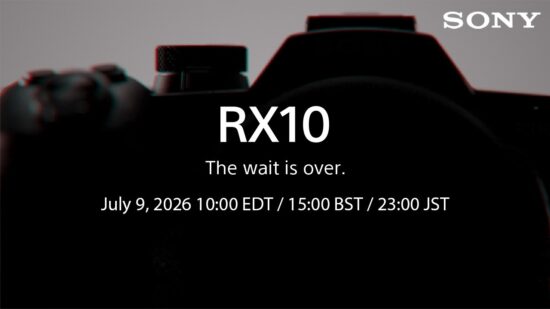
Sony is set to announce a new model of its RX10 enthusiast long zoom compact next week, according to a teaser video. Captioned "The wait is over. A new RX10 is coming 7/9/2026," it shows off a silhouette of what appears to be the camera's lens and body.
The reference to a wait is apt. The RX10 IV, which featured a 20MP Type 1 sensor (116mm²) and a 24–600mm equiv. lens, was released in late 2017, and hasn't been available to buy new for a while now. That absence has been felt even stronger because of the lack of other cameras in this class. Panasonic's FZ1000 II was one of its closest competitors, but is also now unavailable.
Other bridge cameras, like the Nikon P1100 or Panasonic ZS300, fill similar roles of offering a ton of zoom range, but with different sets of trade-offs. The P1100 offers a massive 24–3000 mm zoom range, but uses a Type 1/2.3 (28mm²) sensor that makes even the RX10 IV's look massive by comparison. And while the ZS300 also uses a Type 1 sensor, its 24–360mm is decidedly less ambitious with an aperture range of F3.3–6.4, compared to the RX10 IV's F2.4-4 (equivalent to F9-17.4 and F6.5-10.9, respectively).
Sony's teaser has essentially no other information on what upgrades it has made to the RX10 IV's formula in the near decade since it launched, but we don't have long before we find out. According to the video, the announcement will be at 07:00 Pacific / 15:00 BST on July 9th.
Canon EOS 5D | F8 | 3 sec | ISO 250 Photo: Rishi Sanyal
This weekend, people and cities across the US will be celebrating the Fourth of July with the traditional large firework displays. If you're trying to capture those, there are a few things you'll want to keep in mind if you want to get pictures that truly sparkle.
We've outlined the most important ones in a video, which you can watch below:
If you're looking for a more in-depth look at how to shoot fireworks, including tips from someone who's done it professionally, we have a few articles you can dive into, too. Stay safe, have fun, and get some great shots!
PS: not American? These tips will work just as well on November 5th, December 31st or any other day with big fireworks displays. It's never too early to start planning!
Fujifilm is celebrating the 40th birthday of the QuickSnap series of single-use 35mm film cameras. To mark the occasion, the company has announced two new additions: the QuickSnap Black and White and Active.
The QuickSnap Black and White is Fujifilm's first one-time-use camera that uses monochrome film. That perhaps isn't too surprising; while Fujifilm has produced black and white film under its Neopan brand since 1952, the line has been whittled down over the years to just a single stock, Neopan 100 Acros II.
The simply named QuickSnap Black and White is the company's first monochrome single-use film camera in the lineup. Image: Fujifilm
The new disposable camera uses 400 speed film, but Fujifilm hasn't specified an emulsion. Given that Fujifilm's only black and white film in production right now is 100 speed, it isn't that. But it isn't clear if this is a proprietary emulsion made for the camera, or if it's sourced from a third party like Ilford. Either way, Fujifilm says the film stock is "designed to capture rich contrasts, tones and textured grains."
The black and white camera uses a 1/140 sec shutter speed and a plastic, 32mm lens with fixed focus and F10 aperture, as is typical on single-use film cameras. It features a built-in flash with a range of roughly 3 meters (10'), and a switch to turn the flash on and off. It offers 27 exposures and can be developed with C-41 chemistry.
The QuickSnap Active replaces the QuickSnap Waterproof, though it is functionally the exact same. Image: Fujifilm
The QuickSnap Active replaces the previous waterproof QuickSnap. It's designed to withstand rain and underwater adventures up to 10 meters (33'), thanks to an integrated waterproof housing. It also uses a 32mm plastic lens with F10 aperture and fixed focus, though a slightly slower 1/125 sec shutter speed.
The Active uses an 800 speed color negative film. The previous waterproof camera likely used Superia X-TRA 800, but it isn't clear yet if that continues in the new Active. Unlike the black and white offering, the Active does not feature a flash. It is capable of 27 exposures and can be developed with C-41 chemistry.
The Fujifilm QuickSnap Active and Black and White will be available for purchase in early September for $25 and $23, respectively.
Press release:
FUJIFILM QuickSnap™ One-Time Use Cameras Celebrate 40 years with New Product Announcements
New Black and White Variety and an Updated Waterproof Camera Introduced
VALHALLA, N.Y., June 30, 2026 — FUJIFILM North America Corporation, Imaging Division, is celebrating the 40th anniversary of the introduction of its QuickSnap™ one-time use camera line with the introduction of two new varieties of its popular portable camera lineup – QuickSnap Black and White™, and QuickSnap Active™, which replaces the current waterproof QuickSnap™ camera.
"For 40 years, FUJIFILM QuickSnap™ cameras have been trusted companions for people making images on the go," said Bing Liem, division president, Imaging Division, FUJIFILM North America Corporation. "In the age of endless smartphone imagery, one-time use cameras have always offered something unique – intentionality. A dedicated device in your hand solely used for image-making – a departure from the constant beeping, buzzing, or alerts from our electronic devices. QuickSnap™ reminds us to take a breath, be authentic, and capture a raw moment, filter-free. These latest new varieties take that intentionality a step further, bringing users the artistic flair of black and white photography, or the go-anywhere capability of a durable all weather camera."
Key features of QuickSnap Black and White™:
Designed to capture rich contrasts, tones, and textured grains with its integrated ISO 400 135 Black and White negative film
Built-in flash with a range of approximately 10 feet
Switch for flash
27 exposures
35mm film (film processing not included)
Developed with C-41 chemistry for easy developing
Key features of QuickSnap Active™:
Designed for unpredictable, all-weather, all-terrain adventures with a protective housing and wrist strap
ISO 800 135 Color negative film
No flash
27 exposures
35mm film (film processing not included)
Developed with C-41 chemistry for easy developing
Waterproof up to 35 feet
Pricing and Availability
FUJIFILM QuickSnap Black and White™ is expected to be available early September 2026 at a Manufacturer’s Suggested Retail Price of $22.90 USD and $34.99 CAD. FUJIFILM QuickSnap Active™ is expected to be available early September 2026 at a Manufacturer’s Suggested Retail Price of $24.75 USD and $36.99 CAD.
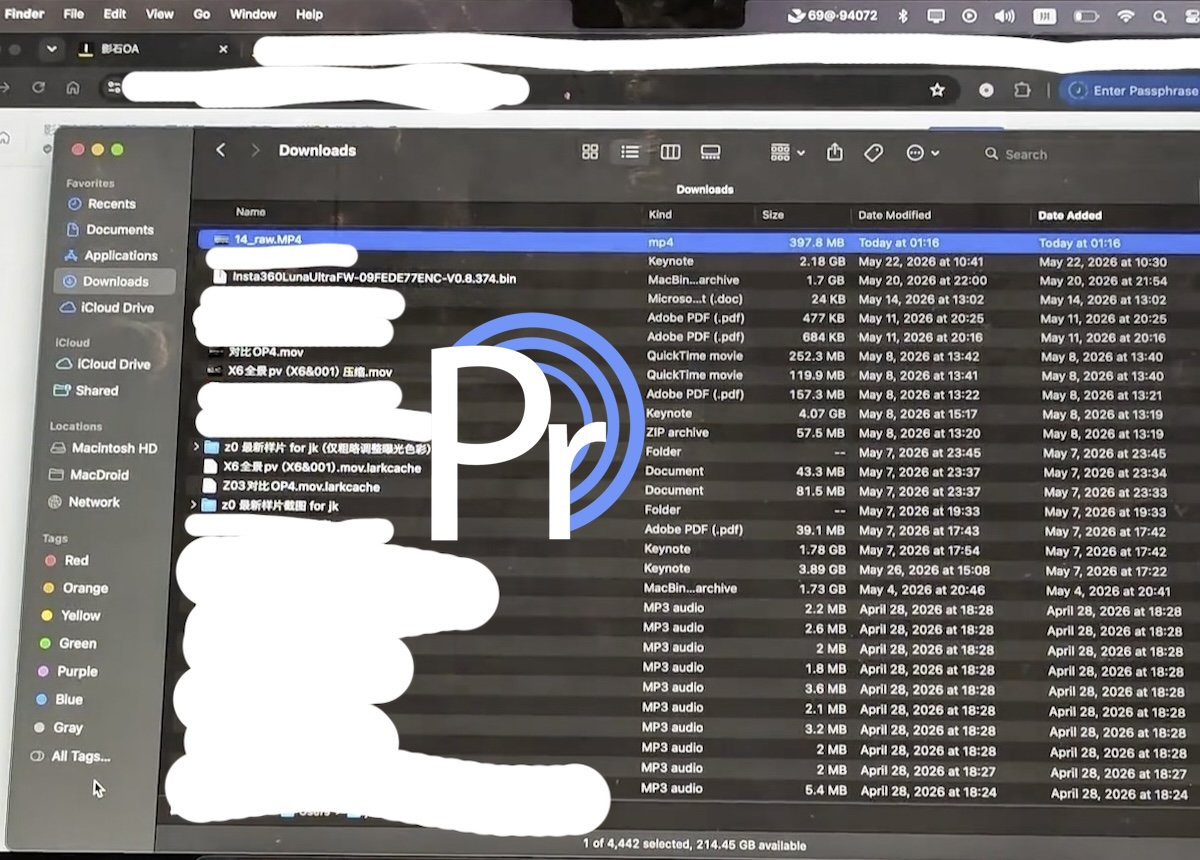
The above screenshot of the Insta360 CEO’s computer was taken from a publicly available video post on Chinese social media and contains some hints on upcoming Insta360 products (check also the ongoing Insta360 sale):
From the top, the first item is a Luna Ultra firmware
Next is “compared OP4.mov”: OP4 here is most likely a comparison with the OSMO Pocket 4
Next is “X6 360 pv (X6&001) compressed.mov”: clearly referring to a new X6 product (the next 360 camera model?)
Next is a folder named “z0 latest sample for jk (only roughly adjusted exposure and color)”: the rumored mirrorless camera from Insta360 is called Z0 (this is probably a code name, not a final product name)
Next is “X6 360 pv (X6&001) .mov.larkcache”, again the X6 (the next 360 camera model)
“z03 compared OP4.mov.larkcache”: this seems to be a new product labeled as Z03
Back in April, we shared some big news: for the first time since DPReview went live in 1998, we've been rebuilding the entire site from the ground up. This isn't just a cosmetic update or a new coat of paint, but a rebuilding of the entire codebase and migration to a modern web platform we can support for years to come.
After months of work, we're ready to make the switch. This has been a massive undertaking. Beyond building everything that's new, we've had to migrate more than 25 years of content, product databases, widgets, and more to an entirely new system.
It took a little longer to wrap up than we expected, and that was deliberate: we wanted certain things working properly out of the gate rather than rushed. A good example is our Image Comparison Tool, the widget that lets you compare studio scene images between cameras. We haven't just rewritten it for the new site; we've redesigned it to work well on phones and tablets, too.
Here's what to expect over the next few days, and how the change might affect your use of the site.
What to expect
The migration begins tomorrow, Friday, July 3. You can keep using the site as usual during this period, with a couple of limitations:
Comments on articles will be frozen so we can migrate them to the new system.
Creation of new DPReview accounts (including forum accounts) will be temporarily unavailable.
On Wednesday, July 8, we plan to flip the switch and turn on the new site. From that point, you'll see the new DPReview website in place of the current one.
The forums will not be directly impacted by the migration. If you're already a registered forum user, you can carry on as normal.
Once the new site goes live
Launch day is the start, not the finish line. As with any project of this scale, some things will take some additional time to wrap up. We'll make sure to share a list of work still in progress, along with FAQs covering the new site and how to get support.
We will also set up a dedicated forum thread to log known issues and provide a place to report bugs and ask questions. Some bugs will inevitably slip through, and we appreciate your patience as we track them down and fix them.
In the meantime, we're re-sharing the FAQ we published a few weeks ago, in case anything comes up before launch. Once the new site is live, we'll add more FAQs to cover additional questions we know you'll have.
None of this would have been possible without you. Your feedback over the years – including all comments, direct messages, emails, and the occasional rant – helped shape the new site. We're looking forward to sharing the results and building the next phase of DPReview alongside you.
FAQs
Is the current site broken? If not, why change?
Not broken, but overdue. The site has been running on the same aging codebase for over 25 years, and maintaining it has become increasingly costly and limiting. Moving DPReview onto a modern shared platform with our sister site Gear Patrol means we can invest in new features and improvements far more efficiently than we could on legacy infrastructure while keeping DPReview's editorial identity fully intact. The old system was a ceiling. This removes it.
Will this affect DPReview's editorial content?
Our editorial mandate isn't changing. We'll continue to bring you the same authoritative, unbiased coverage of cameras and photography you've come to depend on, written by the same people.
When can I see what the new site looks like?
We hope to share some sneak peeks in the weeks leading up to launch. You'll be able to see the full site on launch day.
Will the new site be faster?
Yes, the new site will be faster and more reliable for most things. That said, some functions are limited by factors outside our control. Downloading a large sample image, for example, still depends on your connection speed. We can make the site faster, but we can't speed up the entire internet :)
Will the review archive and the camera and lens databases be available at launch?
Yes. We are migrating all our existing content, including articles, reviews and the camera and lens databases.
Will the site still be optimized for desktop users with large monitors?
Absolutely. While mobile is an important part of the new design, we have no intention of short-changing desktop users. We love big, beautiful photos, and if you're on a large monitor, we want you to get the full benefit of that experience.
Will my saved bookmarks still work?
Yes, existing bookmarks will continue to work.
Why do you need to freeze the Challenges system?
The current Challenges system will not be carried over to the new site – we're building a new one that will launch after the site goes live. To avoid any challenges starting under the old system that can't be completed during the transition, we're freezing new challenge creation on April 25th. Any challenges already underway will complete normally before the switchover.
Will this affect the forums?
The new website will not change how our forums work. There may be minor cosmetic updates to align with the new site design, but the forum experience will remain fundamentally the same.
Will the new site have ads?
Yes. Advertising is one of the ways we fund DPReview's operations, and that won't change with the new site.
Will my account and post history be preserved?
Yes. Your account, comments, forum posts, and history will all carry over to the new site.
Will there be further updates after launch?
This is the beginning, not the end. We'll continue to make improvements after launch, and the new codebase will make it significantly easier to introduce new tools and features going forward.
How can I provide feedback?
You can leave a comment below or reach us at community@dpreview.com. Once the new site is live, we'll have a dedicated area of our forums where you can ask questions, discuss the changes, and share feedback.
When you use DPReview links to buy products, the site may earn a commission.
Rainbow Lorikeet eating a fig
Nikon Coolpix P950 | 714mm (2000mm equiv.) | F6.5 | 1/400 sec | ISO 450 Photo: Kathie Thomas
Community member, Kathie Thomas, loves birds. She greatly enjoys getting that shot that shows off a bird's unique color palette and physique, and fortunately lives in an area with hundreds of beautiful bird species.
"Birds are my #1 genre – I just love them. I'm always trying to get that better shot, and when I get a really good one, it's not long before I'm trying to do even better. I am blessed to live in a region with many bird species year-round. Some live here, some are seasonal and some are just passing through. I keep a daily eBird record of the birds I've seen and heard, and of course, a photo with it."
This story is part of our What's in your bag? community spotlight series. The series showcases the diverse gear and photography of our community, and shares their stories of how that gear helped them to capture the perfect shot.
Nikon D7100 | AF-S Nikkor 200-500mm F5.6E ED VR @ 500mm | F5.6 | 1/1250 sec | ISO 320 Photo: Kathie Thomas
Meet Kathie Thomas
Home base: Dandenong Ranges, Victoria, Australia
"My uncle was a wedding and portrait photographer and often shared with me what he'd been doing when I was in my early teens. My parents bought me my first camera for my 14th birthday. It's been a journey ever since! My uncle is long gone now, but my aunt tells me that he always wanted to do the type of photography I do, which is nature photography – he never got around to it, sadly."
What's in Kathie's bag
Kathie's camera bag
Photo: Kathie Thomas
Favorite camera: "Nikon is the brand I've been using for over 20 years now. In fact, my husband gave me my first digital camera in the early 2000s, a Nikon, of course. I later upgraded to a D90, which I wore out after about 6 years, having taken almost 100,000 images with it. I've been a Nikon girl a long time now! I currently have a Nikon D7000, D7100, Coolpix P950 and a variety of lenses. The P950 is my favorite – it's lightweight, and I get excellent bird shots with it."
Support gear: Kathie typically carries spare batteries for her P950, as its battery life can be limited during long birding sessions, along with a water bottle and a few snacks for time spent out in the bush or along the coast.
Camera bags: "I use a simple, colorful backpack with a zippered compartment against my back, so no one can open it while I'm wearing it. It's big enough to carry my camera, although that's usually hanging at my hip on a shoulder strap."
Barking Owl in flight
Nikon D7100 | AF-S DX Nikkor 18-300mm F3.5-6.3G ED VR @ 300mm | F8 | 1/2000 sec | ISO 800 Photo: Kathie Thomas
How has your photography changed since you started?
"It's improved heaps – I understand so much more about it now. I chose to do a Diploma of Photography Course back in 2014, just for the sake of doing it, so I could learn more. But it's the regular usage and learning from other photographers that have really helped me improve. I also belong to a local photography club."
"I learned from a professional nature photographer some years ago, that when tracking a bird, don't look it in the eye, look around elsewhere, move slowly towards it, take a shot now and then, and keep moving slowly without eye contact. It often has helped to get the shots I've wanted – especially before I got my P950."
What trip memories come to mind where you discovered a new bird?
"Many! Before we retired, we used to take overseas trips by plane and by cruise ship, visiting many places. But since retiring, my husband and I have invested in a campervan (motorhome) and have begun traveling around our own country, Australia, and exploring a bit more consistently. My goal is to record as many different species of birds as I can."
Australasian Darter
Nikon D7100 | AF-S DX Nikkor 18-300mm F3.5-6.3G ED VR @ 268mm | F6.3 | 1/1600 sec | ISO 500 Photo: Kathie Thomas
"Don't underestimate your abilities and work at surprising yourself. Move out of your comfort zone and try different things. A friend thought she wasn't very good, but she recently got a Highly Commended in our photography club exhibition. I could tell she was really choked up about it and thrilled. I told her I always thought she did well."
Kathie really enjoyed participating in this spotlight article and would be grateful if you could join her in the forums.
Kathie's work
You can check out her other work on Instagram. Thanks, Kathie, for being featured!
If you'd like to share your photography, tell us about your main camera, lens choices, key settings and strategies. Your photos and story could be featured in the next article!
Editor's note: This article continues a series, 'What's in your bag?', highlighting DPReview community members, their photography and the gear they depend on. Would you like to be featured in a future installment? Tell us a bit about yourself and your photography by filling out this form. If you're selected for a feature, we'll be in touch with next steps.

 Connexion