Vue lecture

Samsung’s new foldable gets an “Ultra” makeover

The company has upgraded its existing folding phones, and added a new model in-between them.

The rear camera bump on a Samsung Galaxy Z Fold 8 Ultra, showing its three cameras.Samsung

Samsung has announced three new folding phones, updating its existing models and adding a new one to its lineup, complete with a new form factor.

The flagship model is getting a rebrand. Formerly known as the Galaxy Z Fold series, this year’s entry is called the Galaxy Z Fold 8 Ultra. Like its predecessor, it has a 6.5″ display on the outside, and an 8″ one on the inside. As you’d expect from an “Ultra” phone, it has a triple-camera setup. The main “wide” and telephoto cameras are unchanged from the ones found on the Galaxy Z Fold 7, but the ultrawide has been upgraded from a 12MP Type 1/2.5 (25mm²) sensor with an F2.2 lens, to a 50MP one with an F1.9 lens, which Samsung says will let in 33% more light.

Diagram showing the different cameras for the Samsung Galaxy Z Fold 8 Ultra.
The camera hardware on the Galaxy Z Fold 8 Ultra is largely the same as that of the Galaxy Z Fold 7, but the ultra wide camera has been upgraded with a higher-resolution sensor and faster lens.
Samsung

The company says it has enhanced its HDR mode for the main camera, as well as its low-light “Nightography” mode. The phone’s 8K video also now records in the APV codec, which Samsung says “gives users greater flexibility and quality for editing and production workflows.”

Aside from the upgraded ultrawide camera, Samsung has included the new Snapdragon 8 Elite Gen 5 processor with 12 or 16GB of memory (dependent on what storage size you get), along with a higher-capacity 5000 mAh battery, up 600 mAh from the one in the Z Fold 7. The company has also re-engineered the phone’s internal screen to make the crease less visible, while making it brighter and nicer-feeling to open. And despite all this, it weighs the same 215g (7.6oz) as its predecessor, and each half is a hair thinner at 4.1mm.

None of these improvements come cheap, though. Last year’s Z Fold 7 was $100 more than its predecessor, and Samsung has bumped the price again, with the Z Fold 8 Ultra starting at $2100 for the 256GB model.

Two hands holding two folding phones. On the left is a tall, thin one, and on the right is a wider, shorter one.
The Galaxy Z Fold 8 Ultra (left) retains more or less the same form factor that the series has always had. The new Galaxy Z Fold 8, meanwhile, adopts the “passport” size and shape that’s been popularized by other phone makers like Oppo and Google (and which Apple is rumored to adopt with its folding phone).
Samsung

There is, however, now a new option below it: the Z Fold 8, which takes on a slightly different form factor. While the Ultra has a relatively tall and narrow 3:7 outer screen and a nearly-square 1.11:1 inner screen, the new model’s cover is a wider, shorter 10:16, and the inner display is 4:3. The Z Fold 8’s outer display has a 5.5″ diagonal, while the inner one is 7.6″.

While the Z Fold 7 (which was, remember, moreso the predecessor to the phone now called “Ultra”) marked a turning point as a folding phone that didn’t come with big compromises to its camera system compared to its candybar counterpart, that trend hasn’t continued with the Z Fold 8. It drops the telephone camera entirely, and its main 23mm equiv. camera is smaller, slower and lower resolution than the one on the Ultra. The ultrawide, however, is the same 50MP model.

Galaxy Z Fold 8 UltraGalaxy Z Fold 8Galaxy Z Fold 7
Main camera200MP
Type 1/1.3 (72mm²)
24mm equiv.
F1.7 (F6 equiv.)
50MP, 23mm
Type 1/1.57 (50mm²)
23mm equiv.
F1.8 (F7.6 equiv.)
200MP
Type 1/1.3 (72mm²)
24mm equiv.
F1.7 (F6 equiv.)
Ultrawide camera50MP
Type 1/2.5 (25mm²)
F1.9 (11.5 equiv.)
50MP
Type 1/2.5 (25mm²)
F1.9 (11.5 equiv.)
12MP
Type 1/2.5 (25mm²)
F2.2 (F13.3 equiv.)
Telephoto camera10MP
Type 1/3.94 (10mm²)
67mm equiv.
F2.4 (F22.7 equiv.)
10MP
Type 1/3.94 (10mm²)
67mm equiv.
F2.4 (F22.7 equiv.)
Size (Folded)158 x 73 x 8.9mm124 x 82 x 9.7mm158 x 73 x 8.9mm
Weight215g201g215g
Battery5000mAh4800mAh4400mAh
Price$2100$1900$2000

Not everything is a downgrade compared to the Ultra, though. The displays may be a different size, but are still just as bright, and the Z Fold 8 has the same processor and storage options. And while it’s thicker both folded and unfolded, it’s also a touch lighter. Even if you don’t prefer the more passport-style form factor, though, the price may be slightly more attractive than the Ultra’s, as the phone starts at “just” $1900.

Two pink Samsung Galaxy Z Flip 8 folding phones on a table, displaying some of the different camera modes.
The Z Flip 8’s camera hardware is largely unchanged; most of its improvements come from software.
Samsung

Finally, Samsung has also updated its Z Flip 8, the smaller model that unfolds to be a similar size to a more traditional smartphone. The company doesn’t seem to have made any changes to its cameras – it still has a wide 50MP Type 1/1.57 (50mm²) and ultra-wide 12MP Type 1/3.2 (15mm²) – but it’s lighter and thinner than its predecessor. The company has also updated the processor to that same Snapdragon model (though there’s no option for one with 16GB of RAM like with the larger models), and has made improvements to the front screen’s interface, making it easier to use if you want to avoid opening your phone and potentially getting sucked in by feeds and apps.

The Z Flip 8 retains its position as Samsung’s least expensive foldable, but its $1200 price tag represents a $100 increase over its predecessor’s.

The Z Fold 8 Ultra, Z Fold 8, and Z Flip 8 are all available to pre-order today, and are set to become available on August 7th.

About the Author: Mitchell started taking pictures at 10 and hasn’t stopped since. It’s been a wide-ranging adventure, spanning a wide variety of genres and locales, and occasionally dipping into fascinations with video and filmmaking. They honed their technical knowledge doing documentation, programing and QA, writing for The Verge, and just generally messing around on the computer to see what breaks.

Want to stay up to date on the latest product news and releases? Add DPReview as a preferred source to ensure our independent journalism makes it to the top of your Google search results.

add as a preferred source on google

  •  

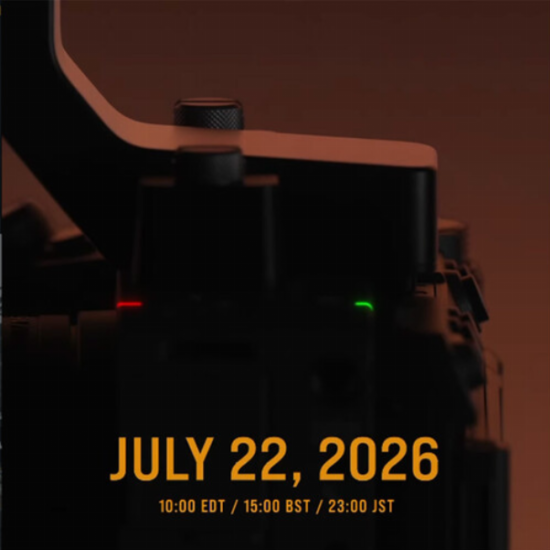
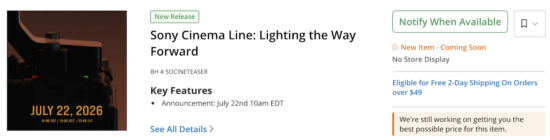
Sony FX5 cinema camera announced


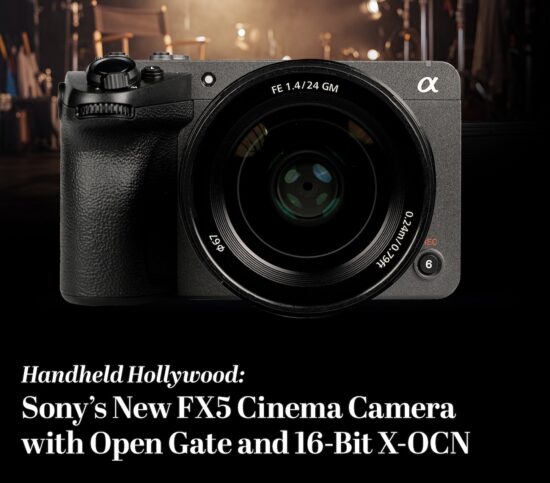
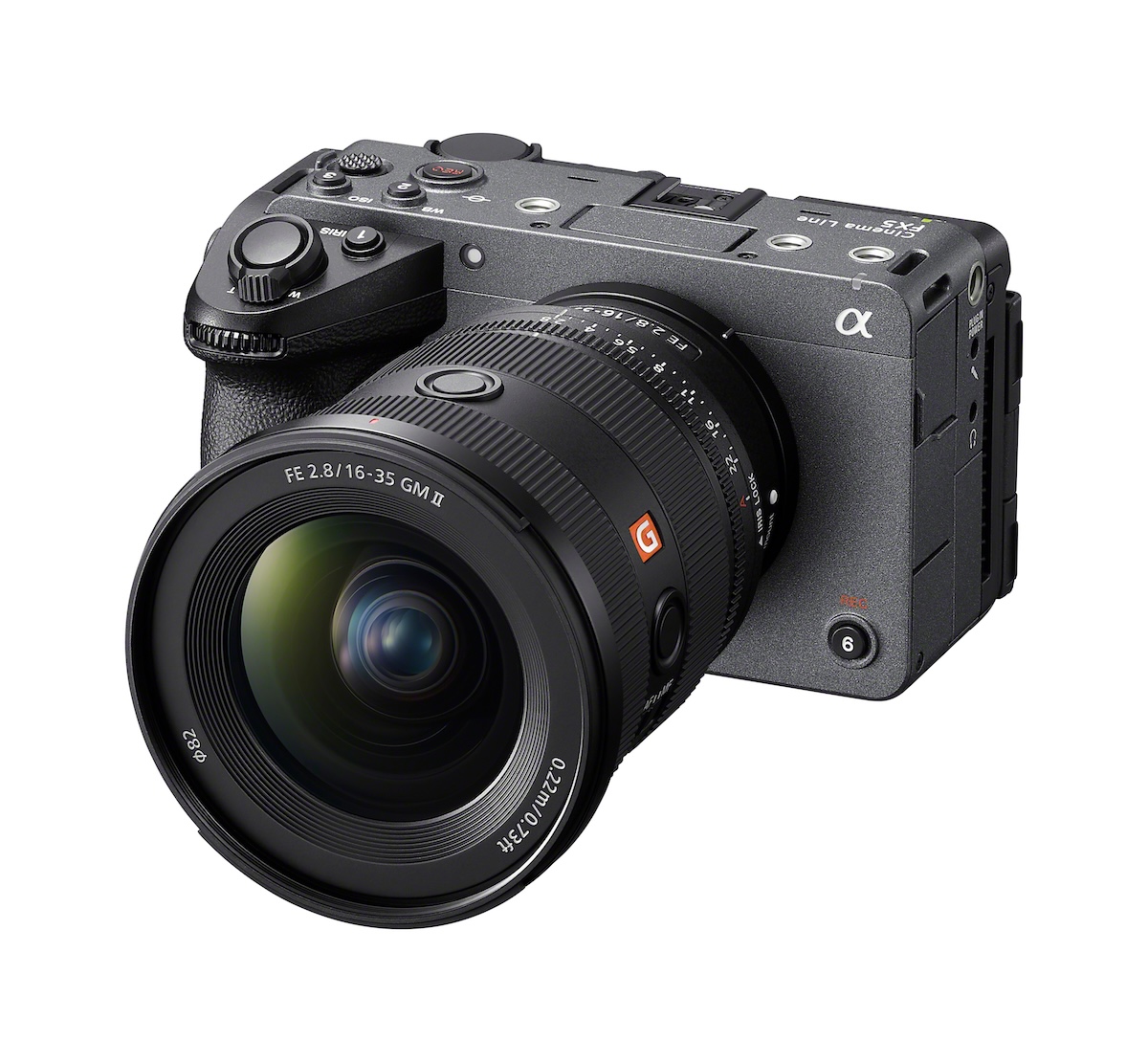
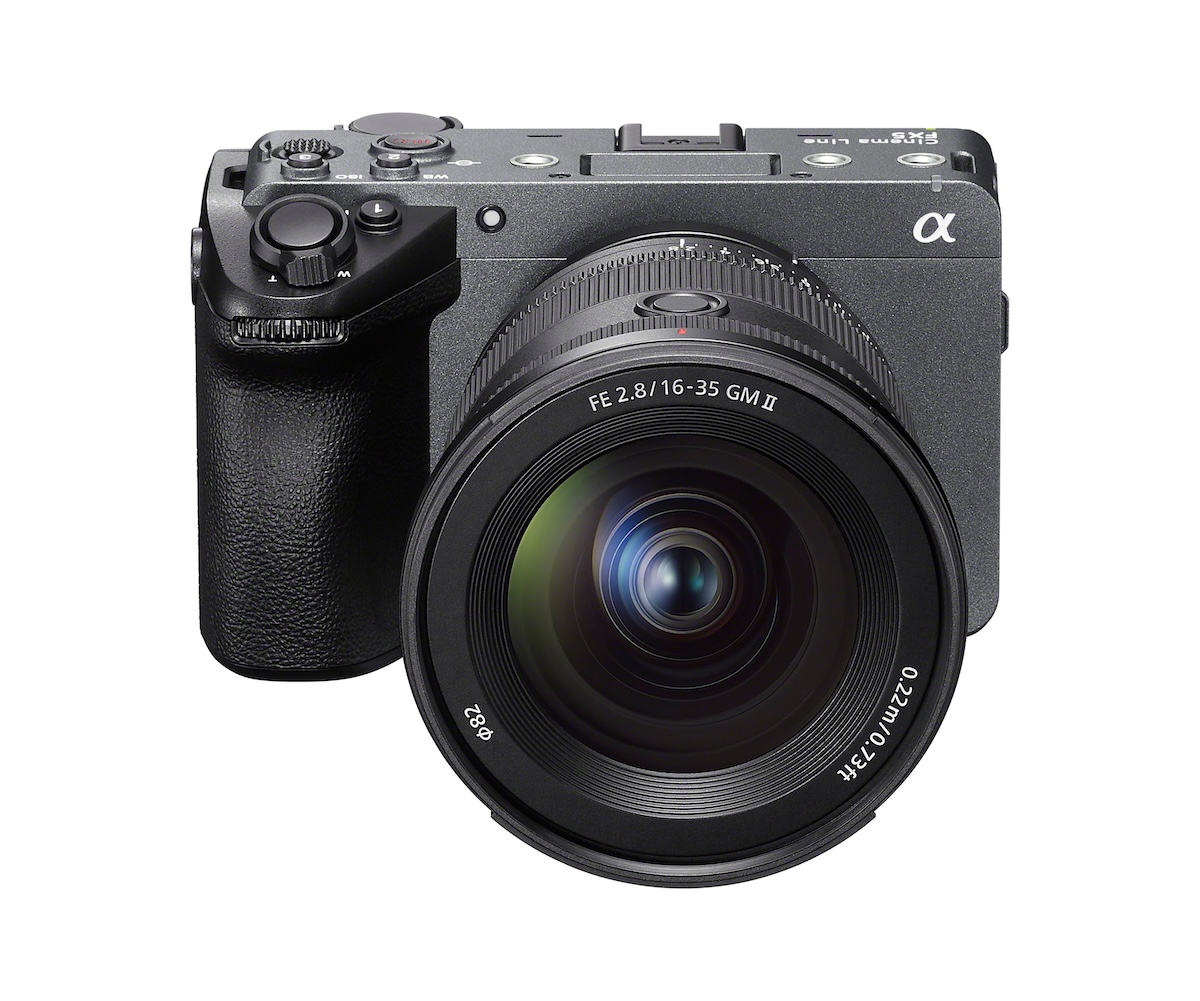
Sony introduces the previously rumored FX5, the newest addition to the Cinema Line family. Designed to bridge the gap between the FX3 and FX6, the FX5 combines the portability of a compact body with advanced imaging technologies inspired by Sony’s flagship cinema cameras. Additional information on the FX5 is available here and here.

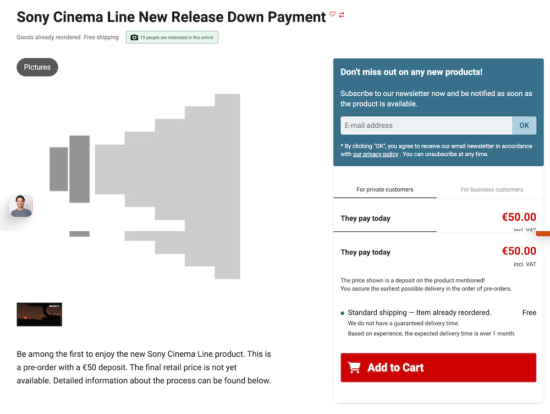
Pre-orders are now open at B&H Photo, WEX Photo, and Foto Erhardt.


The Sony FX5 features a newly developed full-frame stacked Exmor RS CMOS sensor and Sony’s latest BIONZ XR2 image processor, delivering more than 15 stops of dynamic range, three Base ISO settings, and introducing Open Gate recording and internal X-OCN RAW recording to the FX series for the very first time. The video recording options are up to 5K 60p, 4K 120p, and Full HD 240p,

​Additional features include AI-powered Real-time Recognition Autofocus, enhanced in-body image stabilization, a larger multi-angle LCD with the CineAlta-inspired BIG6 interface, expanded professional connectivity, and new optional OLED viewfinder and XLR handle accessories with 32-bit float audio recording.

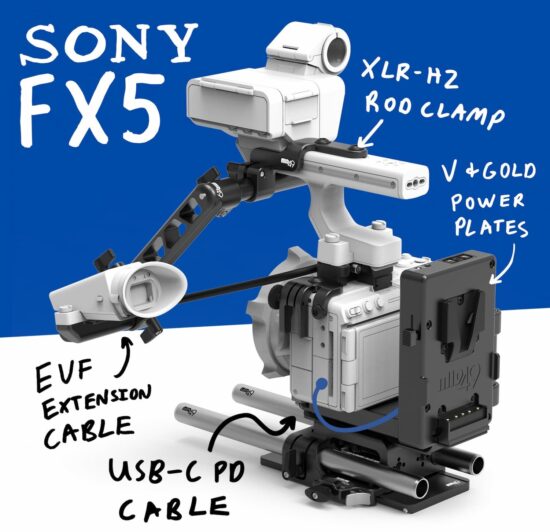
Check out the new FX5 accessories from Kondor Blue, Bright Tangerine, and Mid49:


Additional information:

A newly developed image sensor and the latest high-speed image processing engine

  • Uses a full-frame, fully-stacked Exmor RS™ CMOS image sensor and the latest BIONZ XR2™ high-speed image processing engine with a dedicated AI processing unit.
  • In S-Log3, captures 15+ stops of dynamic range.
  • Three base ISOs of ISO 800, ISO 4000, and ISO 12800[2] keep noise low across a wide range of conditions. The Dual Gain Shooting function,[3] a first for the FX series, draws more from the sensor for smoother gradation and wider latitude while reducing noise and preserving shadow detail.
  • Also a first for the FX series, the camera supports 3:2 full-pixel readout across the entire sensor, or Open Gate shooting[5], plus 17:9, 16:9, and Super 35mm scan modes. In-camera recording in X-OCN, Sony’s proprietary 16-bit scene-linear RAW format, captures high quality without an external recorder. Alongside X-OCN LT, the new X-OCN C1 and X-OCN C2 codecs cut data size to speed transfer and streamline post-production.

High-precision AF powered by AI and detailed settings that support intentional shooting

  • AI-based human pose estimation recognizes a subject’s eyes, head, and body, holding strong AF performance even in dark scenes. Real-time Tracking follows subjects automatically.
  • Auto Tracing White Balance (ATW) combines visible-light and IR (infrared) sensor data with deep-learning light-source estimation to read scenes accurately, giving more stable[5] and natural white balance in shade, indoors, and other conditions.
  • Noise suppression settings (on/off) give flexibility to match shooting intent and post-production workflows.
  • A de-squeeze function supports anamorphic lenses at 1.3x, 1.5x, 1.6x, 1.8x, and 2.0x.

Excellent operability and high mobility in a compact, lightweight body

  • 5-axis optical in-body image stabilization anchors the image, and the latest stabilization unit roughly doubles the roll correction range of the previous system[6] to suppress rotational blur. Active Mode and the new Dynamic Active Mode[7] keep handheld footage steady.
  • A 3.5-type, approximately 2.76-million-dot 16:9 touch-panel LCD monitor, larger than the FX3’s, mounts on a 4-axis multi-angle arm. It tilts ~98 degrees up, 40 degrees down, and opens ~180 degrees to the side, with a high-brightness adjustable panel. Shooting information sits around the edges of the screen so it never overlaps the image. The “BIG6” home screen, carried over from CineAlta cameras, gathers key settings such as frame rate, exposure, and LUTs so creators can focus on the shot.
  • A new menu system gives operability consistent with CineAlta cameras and the FX6 on a shared production.

High reliability and expandability to support professional production environments

  • A high-efficiency cooling fan and optimized heat dissipation keep the camera stable through long recording sessions.
  • The lightweight, rigid body carries screw holes in multiple locations to attach accessories directly, so you can build rigs without a cage.
  • Integration with the Monitor & Control application brings video monitoring and remote operation to smartphones, tablets, and Mac.
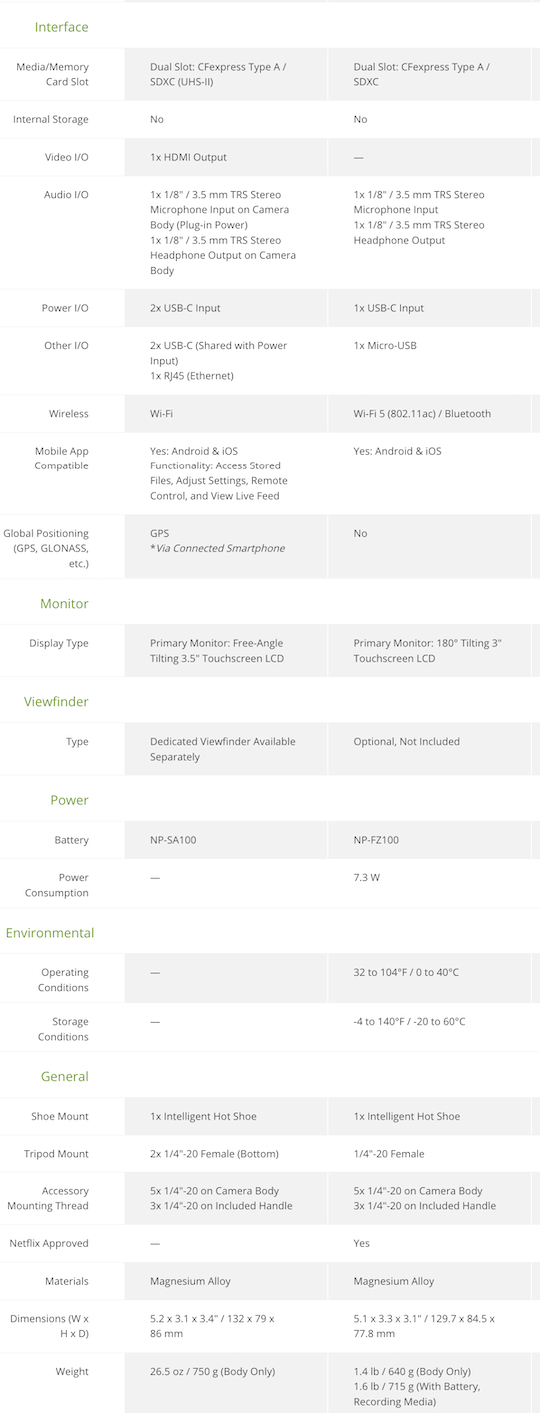
  • Uses the recently released high-capacity NP-SA100 battery (2670 mAh), which holds approximately 1.3 times the capacity of the Z-series NP-FZ100 for longer shooting.
  • Two USB Type-C™ ports accept timecode input through an optional timecode adapter cable and external power through USB Power Delivery (PD),[9] for stable long-duration shooting.
  • A wired LAN terminal enables remote operation and a stable network connection, with the expandability professional production networks require.


Planned Firmware Update ver. 2.0 (coming 2027)

A planned update will add higher resolution high frame rate shooting up to 240 fps in X-OCN, XAVC S-I recording in 3:2 (Open Gate shooting), an optimized interface for vertical shooting, and a frame grab function.

Accessibility and environmental considerations

  • Accessibility features support visual recognition and operation, including a screen reader[11] that reads menus aloud and an enlarged menu display.
  • Recycled plastic accounts for approximately 30% or more of the camera’s parts.[12] The Thailand and China sites that build the camera run on 100% renewable energy.[13] Product bags use plant-derived nonwoven fabric,[14]cutting packaging plastic and lowering environmental impact.

Optional Accessories

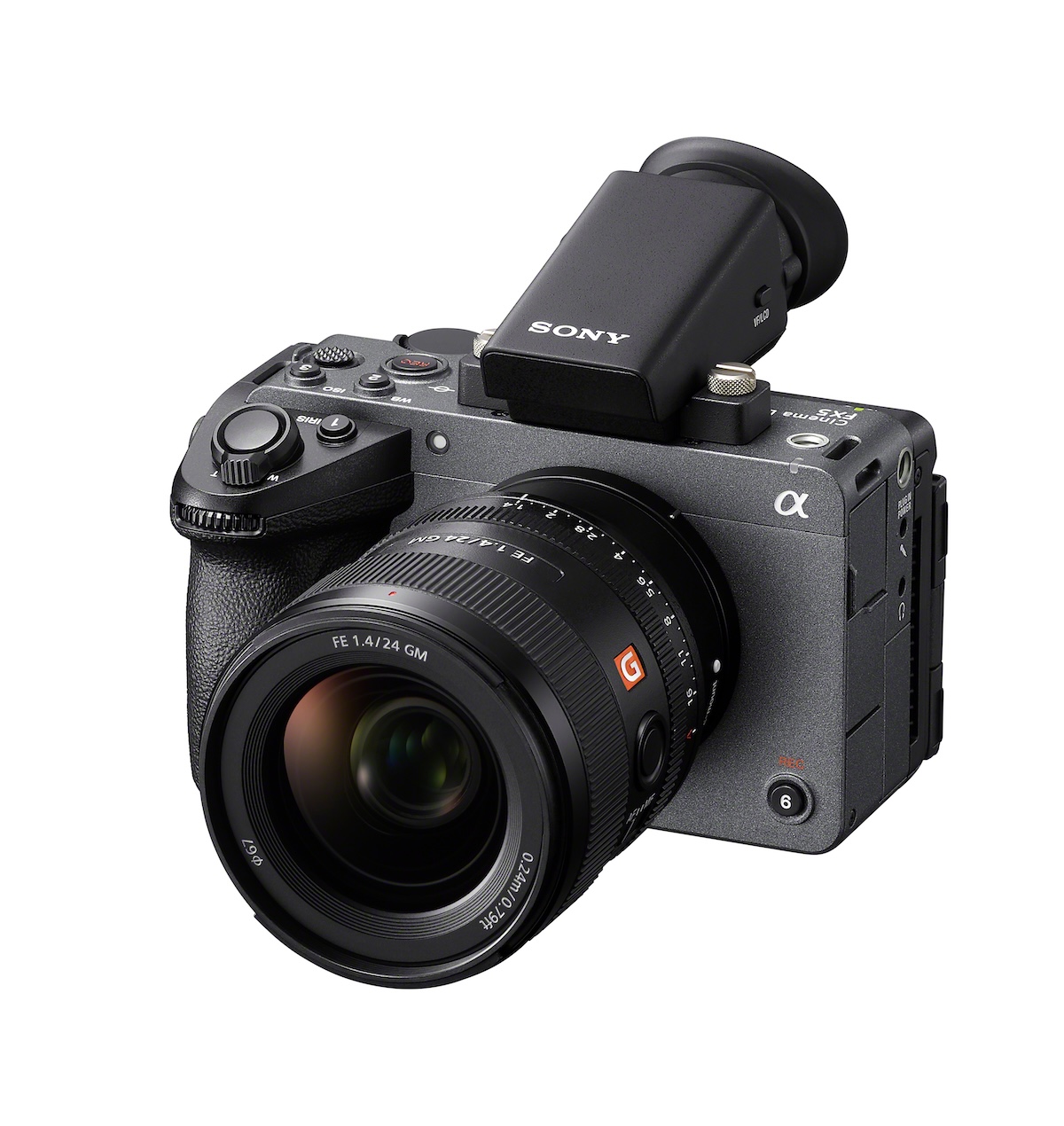
0.58-type OLED Viewfinder “DVF-EL1”

  • This detachable viewfinder carries a 0.58-type, approximately 7.07-million-dot OLED panel.[8] It supports HDR display with a DCI-P3-equivalent color gamut and 10-bit gradation. The wide gamut confirms subject colors accurately, and HDR reveals fine detail when shooting and playing back high-contrast scenes.
  • Approximately 0.9x magnification[15] and you can switch between display modes that prioritize resolution or eye point.
  • A tilt mechanism moves from 0 to approximately 90 degrees upward for comfortable monitoring at low, high, and handheld angles.

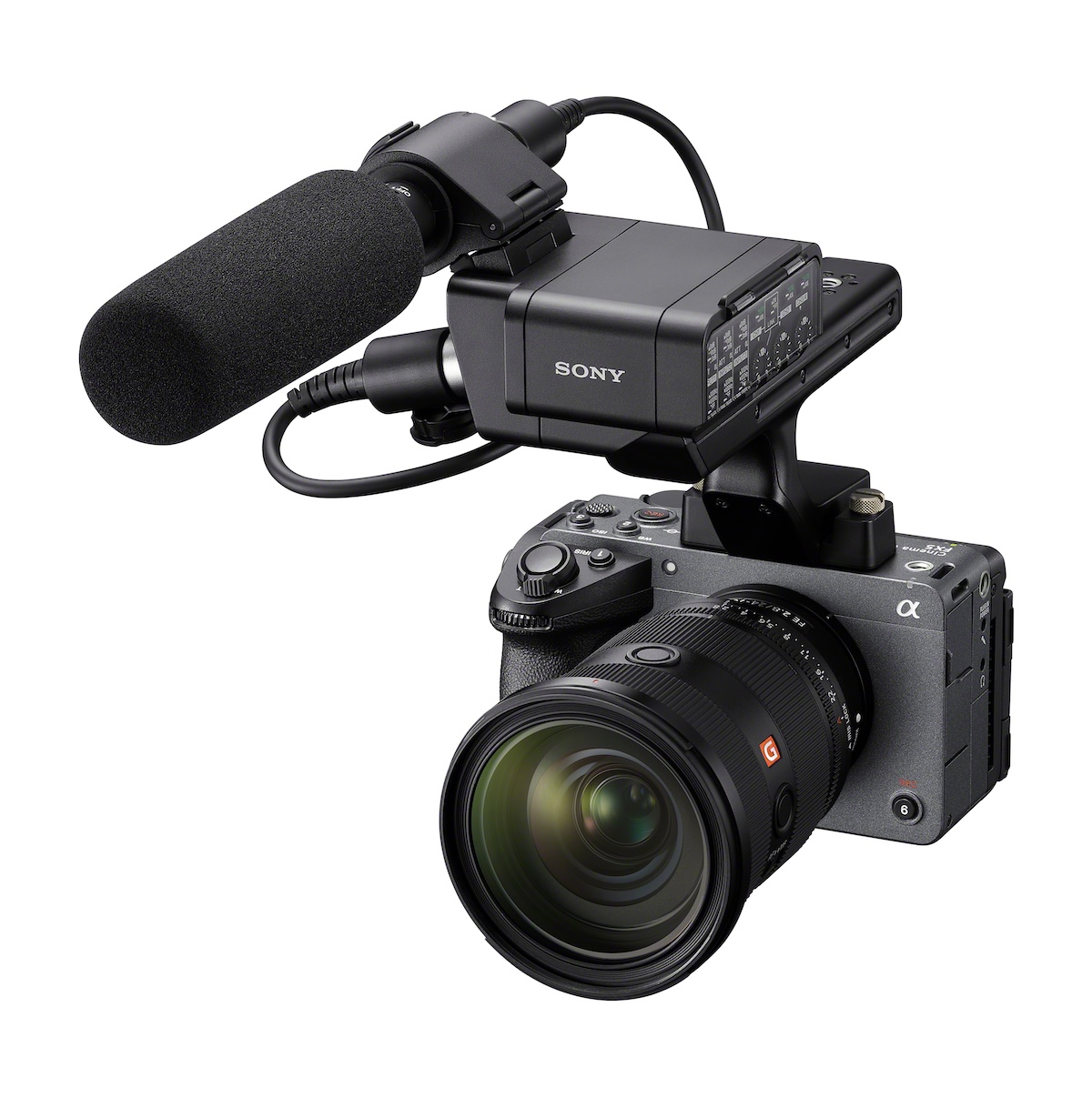
XLR Handle Unit “XLR-H2”

The XLR-H2 carries two XLR/TRS combo terminals and supports up to 4-channel audio input. Dual AD converters digitize microphone signals with high precision across a wide dynamic range and record in-camera at up to 96 kHz, 32-bit float. It connects directly to the body through the Multi Interface (MI) Shoe for stable digital transmission.

Timecode Adapter Cable “VMC-BNCU1”

The optional USB-C to BNC timecode adapter cable feeds timecode from external devices into the camera. It synchronizes multiple cameras and external audio devices for timecode-based workflows across multicamera shooting, broadcasting, and filmmaking.

Applications Supporting Production with the FX5

  • Monitor & Control ver. 3.0
    Scheduled for July 2026 or later, enables wired and wireless video monitoring and camera control
  • Catalyst Prepare ver. 3.0
    Scheduled for August 2026 or later. Catalyst Prepare and Catalyst Browse, which provide high-precision video stabilization and color editing, merge into Catalyst Prepare ver. 3.0.

Sony FX5 videos:

The post Sony FX5 cinema camera announced appeared first on Photo Rumors.

  •  

Which forum sections are your favorite to visit?

For this week’s question, we wanted to dive into the forums and ask our readers which sections they like to visit most often.

DPReview forum index viewDPReview

The DPReview forums have nearly 100 customized sections to discuss all your gear and photography interests. From reading official DPReview news to talking about camera brands and Nature and Wildlife Photography, there’s a space for everyone’s curiosity.

For visitors who are interested in buying or selling their gear, we also have the For Sale and Wanted forum section. And if you are a mobile phone camera user and love to share your on-the-go photos, not to worry, we have Mobile Photography Talk forum as well.

So, with that said…

Which forum sections are your favorite to visit for both camera brands and digital photography, and why?

I would also like to take this opportunity to ask you which forum sections you would like added that we don’t currently have?

Drop a reply in the comments section below, and if you’ve got a photo to include from your mentioned forum sections, it may be selected for next week’s showcase article on this topic!

About the Author: Mathew Anderson is a proud Community Manager for the technology industry and a past visitor to DPReview.com for all his camera needs. He is currently the lead of DPReview’s community and primary communication link between the community and DPReview’s team.

Want to stay up to date on the latest product news and releases? Add DPReview as a preferred source to ensure our independent journalism makes it to the top of your Google search results.

add as a preferred source on google

  •  

Sony FX5: much more than an FX3 with Raw

Sony supersedes the FX3 with something much closer to its pro cinema cameras

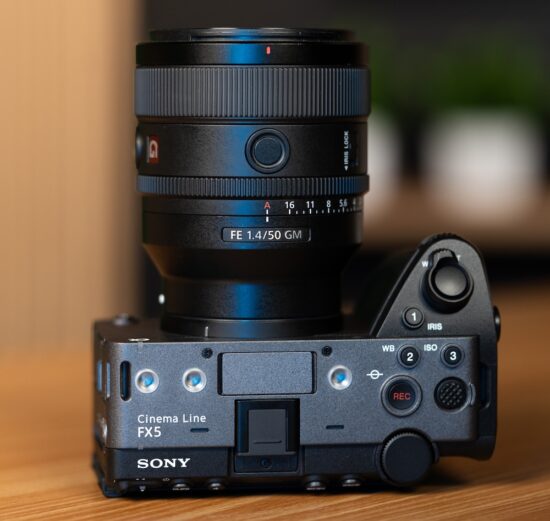
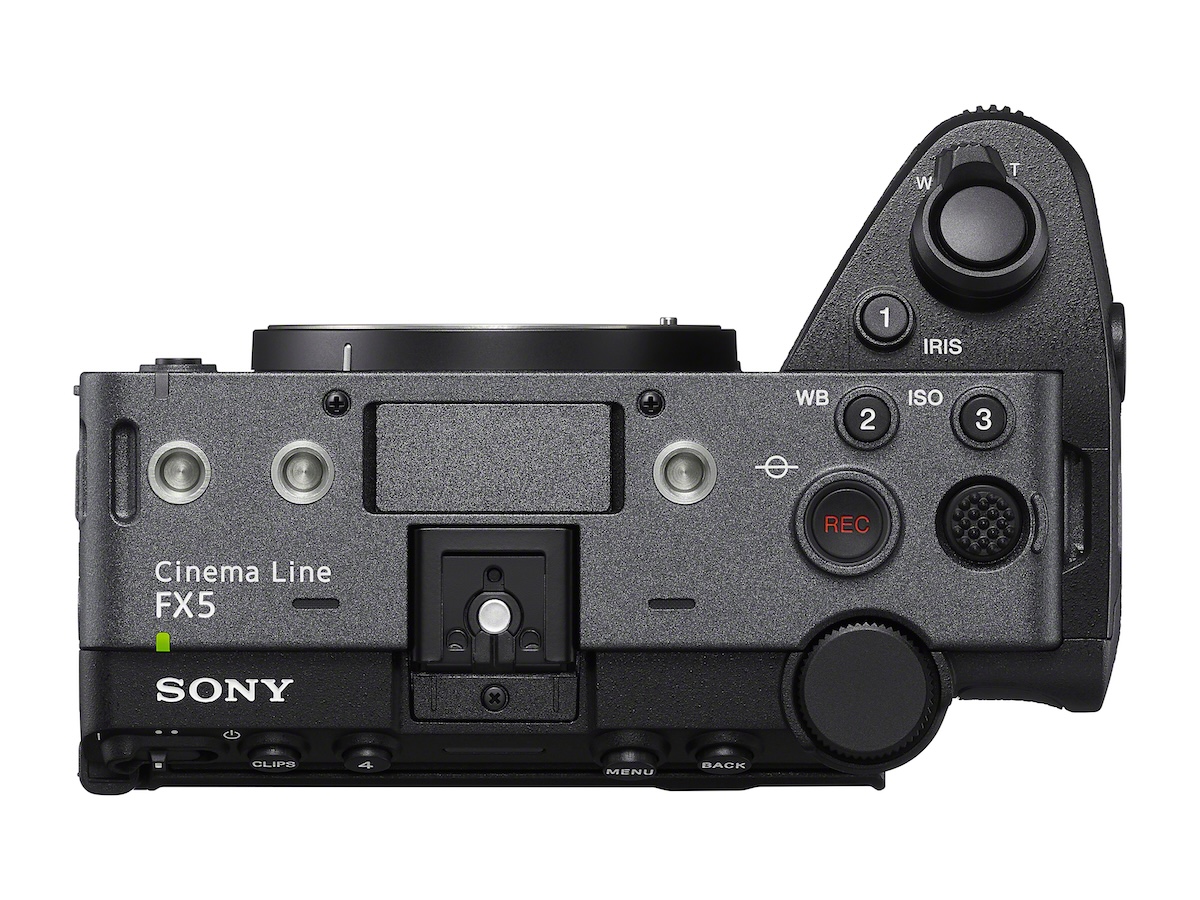
Top view of a Sony FX5 with a lens attachedJames Tirado

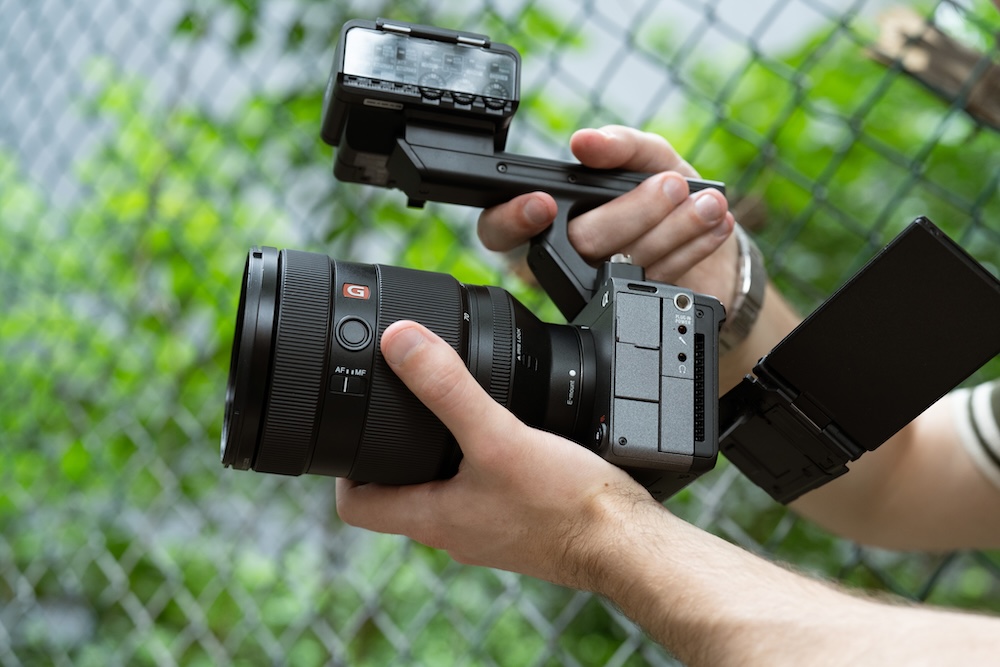
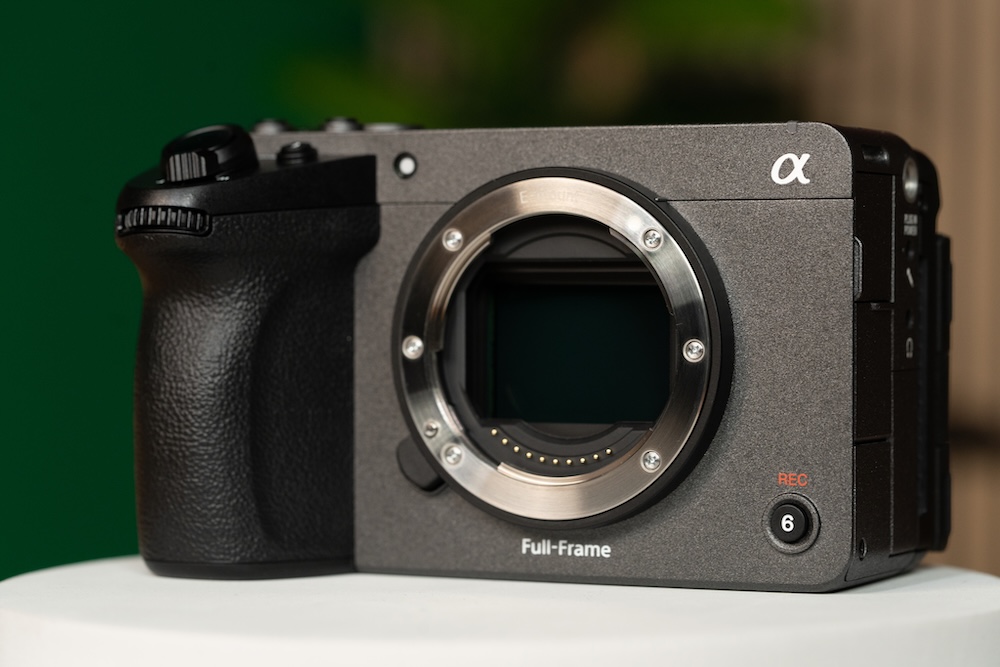
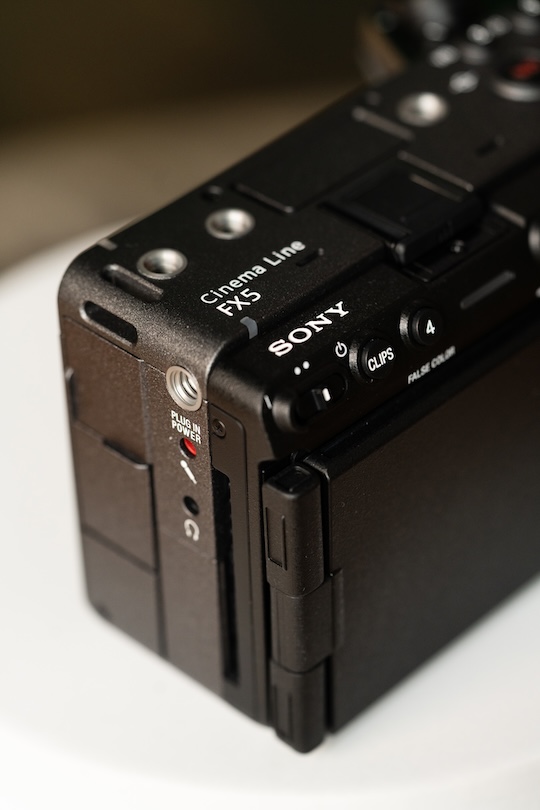
The Sony FX5 is a compact cinema camera capable of up to 4.5K120 and Raw video capture, aimed at independent videographers and small productions. It builds on the legacy of the FX3, adding a host of features we’ve not previously seen from Sony.

Key features

  • 16.6MP Full-Frame stacked CMOS sensor
  • 4K/60 from 5K capture
  • 4K/120 from 4.5K crop
  • 4K/240 capability via firmware due in late 2027
  • Open gate shooting
  • Combined dual gain mode for increased DR
  • Three “base” ISO steps
  • Internal Raw capture
  • Subject recognition autofocuse
  • 32-bit float audio compatibility
  • Large 16:9 rear LCD
  • Waveform display
  • Optional EVF

The FX5 will be available, body-only, for $4899, or $5499 with the XLR top-handle, which allows 32-bit float audio capture. Other optional accessories include a removable, tiltable viewfinder and a USB-C-to-BNC timecode cable. It will be available from August.

What’s new

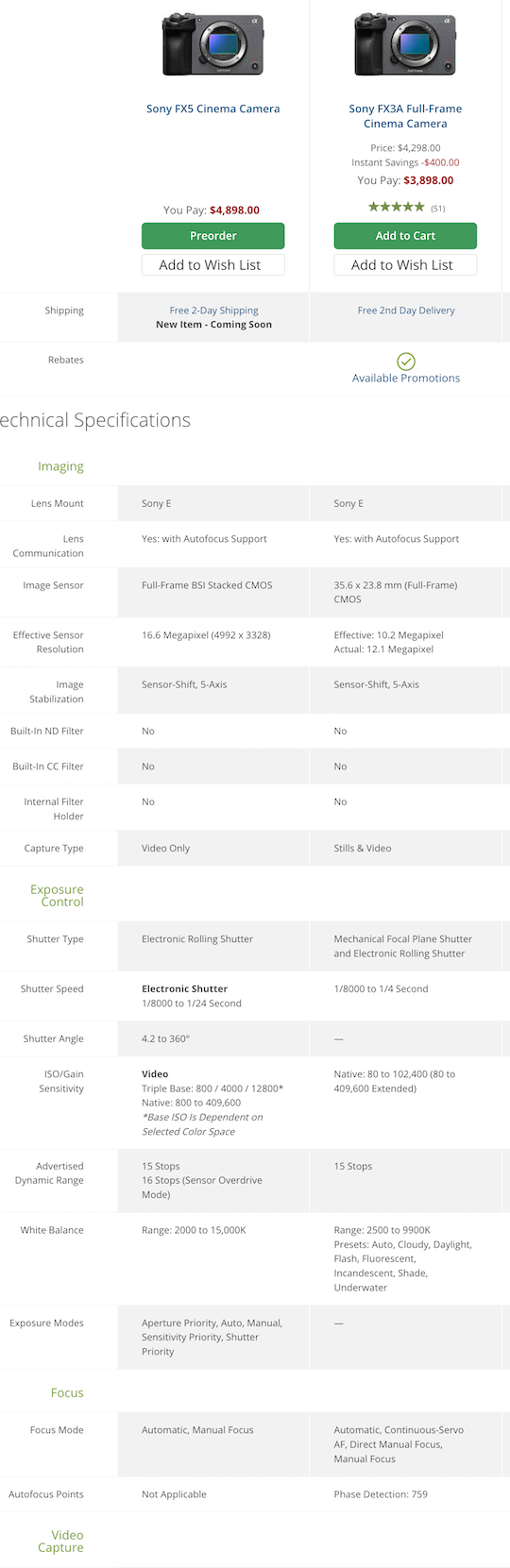
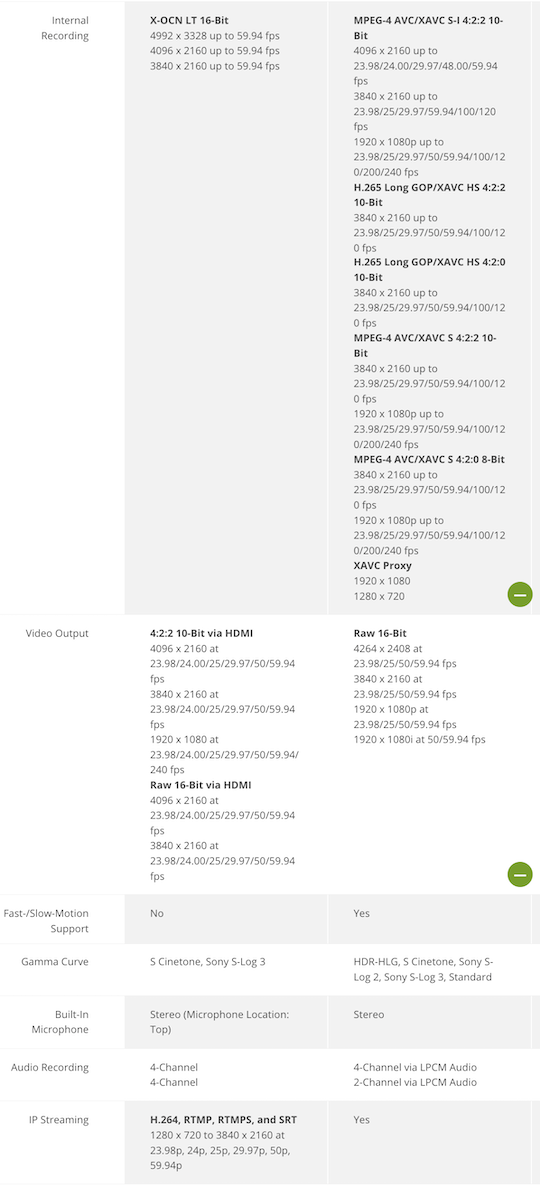
The FX5 is a surprisingly significant upgrade compared to the FX3, suggesting Sony is still working out what this type of camera needs to offer, and iterating. It nominally sits above the FX3 but looks like it’s trying to do what the FX3 did, plus a lot more, making it most directly comparable to the likes of Canon’s C50 cinema camera.

The most visible addition is its ability to capture Raw footage, but that’s just the most dramatic departure from the existing camera. There are also a host of features and UI changes that have come down directly from the company’s pro cinema products, to the degree that it represents not just a major upgrade but will also present an appreciable learning curve for existing FX3 users.

Don’t call it Raw

Interestingly, Sony doesn’t refer to the camera’s Raw mode in those terms, instead settling on the snappy X-OCN, which I’m sure we can agree is clearer. They tell us it’s a 16-bit linear Raw format, which is a lot more detail than we’re typically given about the other Raw video codecs. Linear encoding is a rather inefficient way of doing things but, in theory at least, gives the maximum flexibility in terms of highlight editing and reconstruction.

This “EXtended tonal range Orginal Camera Negative” gives you more flexibility in terms of correcting white balance, applying noise reduction, highlight and tonal adjustment and color grading. It’s a version of the format already used by the Burano and Venice cameras, so should be compatible with DaVinci Resolve, Adobe Premiere Pro, Avid Media Composer and Baselight software.

The FX5 uses the X-OCN LT (Light) version of the codec, used on the Burano cinema camera (and that’s even an option on the company’s flagship Venice 2 model).

New sensor

A photo of the Sony FX5 with its sensor exposedJames Tirado

The FX5 is based around a new stacked CMOS sensor. Sony quotes the pixel count as 16.6MP which, given the FX3 turned out to have a 48MP behind a 12MP color filter array, should make us wonder how similar it is to the 66.8MP sensor in the recent a7R VI.

Sony wouldn’t be specific about any differences, but the significantly higher output speeds make us assume that there’s DRAM or more complex readout circuitry built into the back of the sensor. We know that the a7R VI’s 4K video comes from combining quartets of pixels, so placing that same pixel architecture behind oversized color filters that extend across sets of four pixels would make a lot of sense. Even if you’re not that interested in video, this ability to produce variations of a sensor with different capabilities might still offer an interesting insight into the products we’ll see in the coming years.

In practice, the FX5 is faster at reading out a comparable region of its sensor (around 5.5ms in full-width, 16:9 5K modes, around 24% quicker than the 7.2ms that the a7R VI takes in its ‘5K sampled’ 16:9 modes). Open gate mode read out the full height of the sensor in 8.3ms (1/120 sec).

The FX5 has a “Dual Gain” mode, not to be confused with its three designated “base ISO” settings

Sony says the camera has a “Dual Gain” mode that boosts dynamic range by combining the low gain and high-gain signals being read off the sensor. It is available in the camera’s lowest native gain mode (ISO 800) and the modes derived from it (ie up to EI 3200). It can be used at up to 60p in most resolutions or up to 30p in open gate mode.

We’re told it may operate differently from the combined dual gain mode the a7R IV offers in video, though. We were briefed that the image is analysed and the high gain (low noise) data is only utilized in the shadow regions of the image, making the process faster than combining both gain settings for all pixels. Engaging the Dual Gain mode (via the ISO menu) increases the readout time by a factor of 2.1x, which is very similar to the proportion of increase we measured on the a7R VI.

Three “base” ISO settings

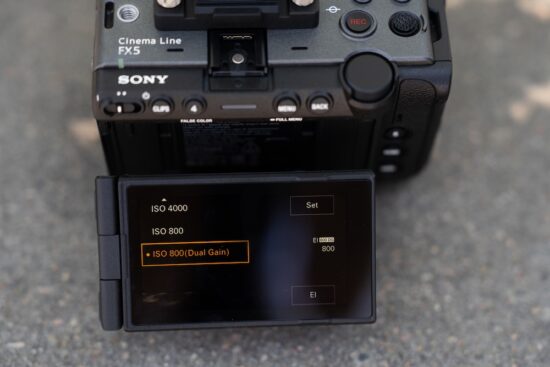
Interestingly, Sony also says the FX5 has three “base ISO” settings: 800, 4000, 12,800. To make sense of this, it’s worth noting that there isn’t a fixed or universally shared definition of what ‘base ISO’ means. What it doesn’t directly refer to is conversion gain steps at the sensor level. So, for instance, the FX3 and a7S III had dual conversion gain sensors, but Sony says it does not consider them to be cameras with dual base ISO.*

The ISO/Gain section of the Sony FX5's shooting menu
Sony considers ISOs 800, 4000 and 12800 to be the “base” ISOs when using the S-Log3 curve. This is not to be confused with the Dual Gain mode, selected in the ISO menu.
James Tirado

Instead, Sony tells us its definition of base ISO relates to modes that offer the same dynamic range distribution between highlights and shadows, and have a near-identical noise floor, allowing footage to be intercut between the modes. This makes most sense when working in the camera’s Cinema EI mode, where the camera is locked to one of these “base” states and then delivers ISO settings up to two stops higher or lower by essentially under- or over-exposing the ‘base’ state, then including a metadata tag saying how light or dark the footage is meant to be rendered. This really comes into its own in a Raw workflow, as this is how it’s possible to adjust the “ISO” of footage, after the fact.

The decision of Sony to offer three “base ISO” states shouldn’t lead you to conclude that there are three distinct gain steps at the hardware level, nor should it be confused with the camera’s optional “Dual Gain” mode that combines the output of different hardware states.

*Just to make clear how slippery the concept is, the FX3’s firmware V2 added Cinema EI, including a setting called Base ISO, which has two settings. We are told the higher of these is officially considered a High Sensitivity mode, not a second base ISO.

New UI, wider range of features

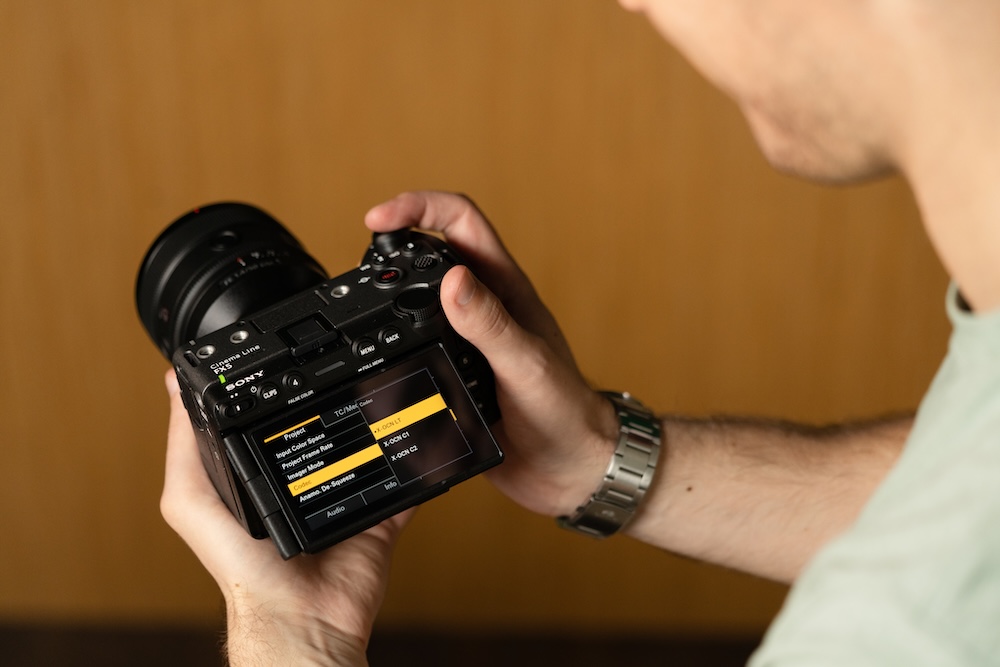
Beyond these, the most radical change is to the user interface, with the FX5 gaining an all-in-one settings display borrowed almost directly from the Burano (and closely mimicking the displays that Panasonic borrowed from Arri, etc, etc). Its menus have also been re-worked to make them look more like Sony’s pro cinema models, which will add a bit of a learning curve for existing FX users but brings it closer into line with other production cameras.

The company says it will be adding a vertical version of the UI in firmware 2.0.

The settings display of the Sony FX5
The main status panel is borrowed from Sony’s higher-end video cameras.
James Tirado

Also added are a host of tools that other brands have started offering but that have been absent from previous Sonys at this point in the market. So, in addition to options like the focus map, that highlights blocks of the image that are in and out of focus, the FX5 offers a false color display and waveforms for helping to judge exposure, and a vectorscope display for assessing color distribution. These come on top of tools such as zebras, focus peaking and a histogram, that were already available.

The audio display of the Sony FX5's interface
The interface is surrounded by tabs: Project, Monitoring, Audio, etc. Pressing one brings up the key settings in that regard and pressing the lower right of the screen takes you to the appropriate part of the menu.
James Tirado

The camera is based around Sony’s latest Bionz XR2 processor, so gains all the subject recognition AF modes that we’ve become used to on the stills side of things, boosting autofocus dependability for run-and-gun shooting.

Body and handling

A view of the back of the Sony FX5 shown from a raised angleJames Tirado

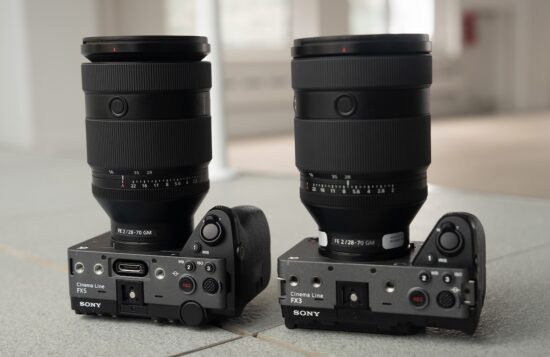
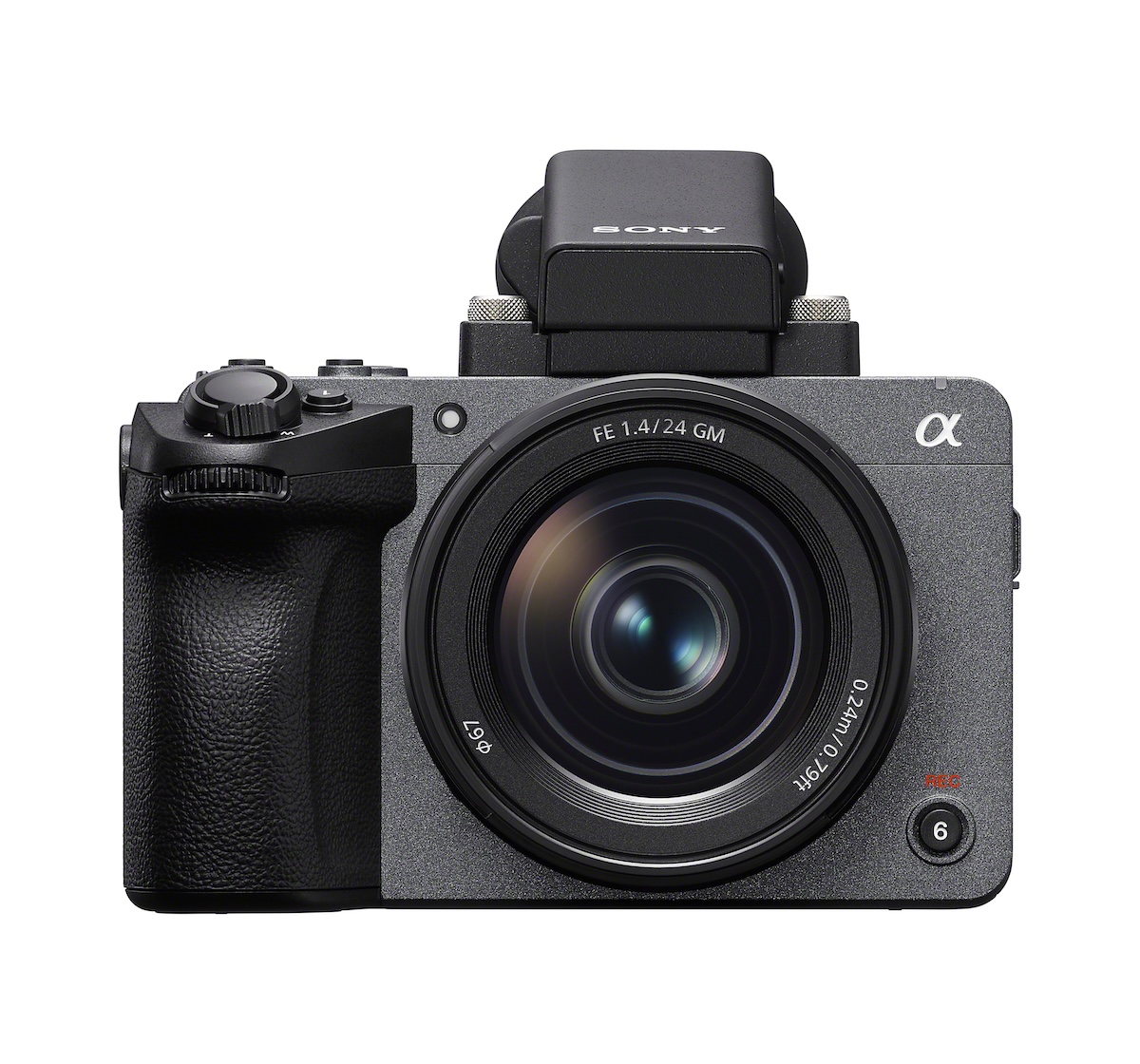
At first glance, the FX5 looks a lot like the FX3, but the changes reveal themselves, the closer you look. It’s a fraction larger, for a start, having grown a couple of mm in each direction but significantly the body of the camera itself is deeper, within those boundaries, so it feels bulkier. It’s also a fraction heavier, though Sony says it’s a less than 5% increase.

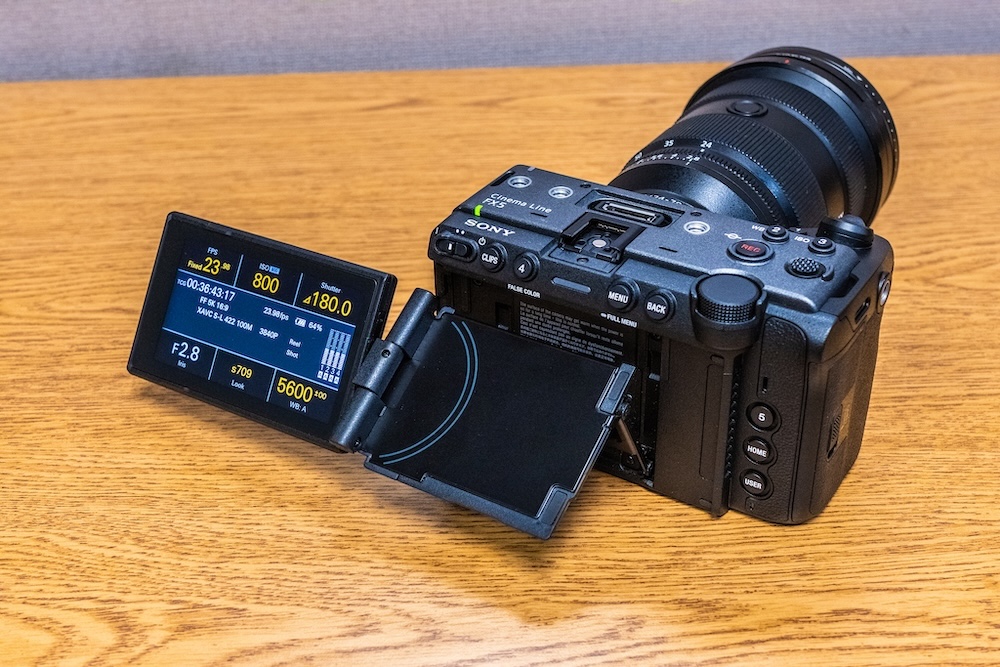
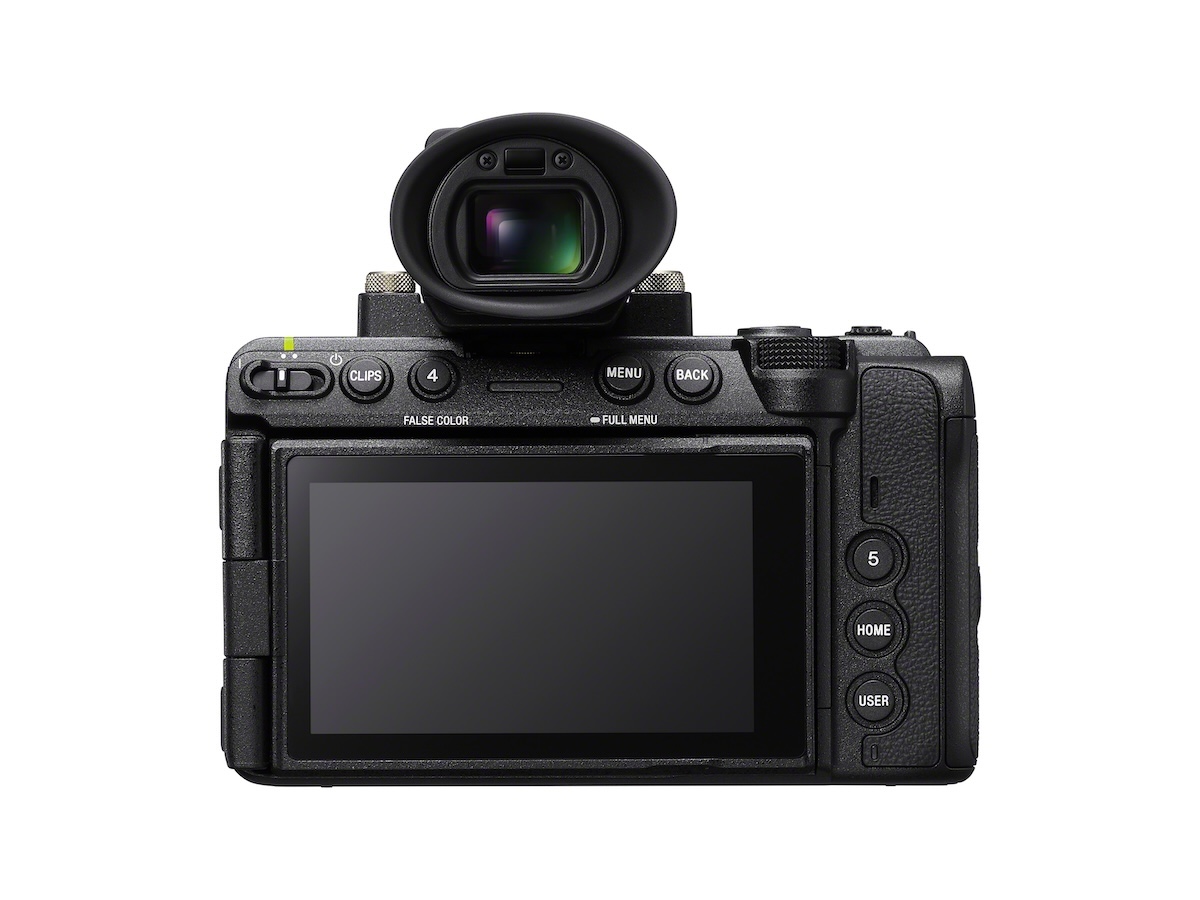
The layout of the camera’s six programmable buttons has been reworked and relabeled to better match what you’d find on the company’s higher-end cinema cameras. It also gains the multi-function dial from the Sony Burano, which can be used to navigate through menus, and make quick changes from the live view screen.

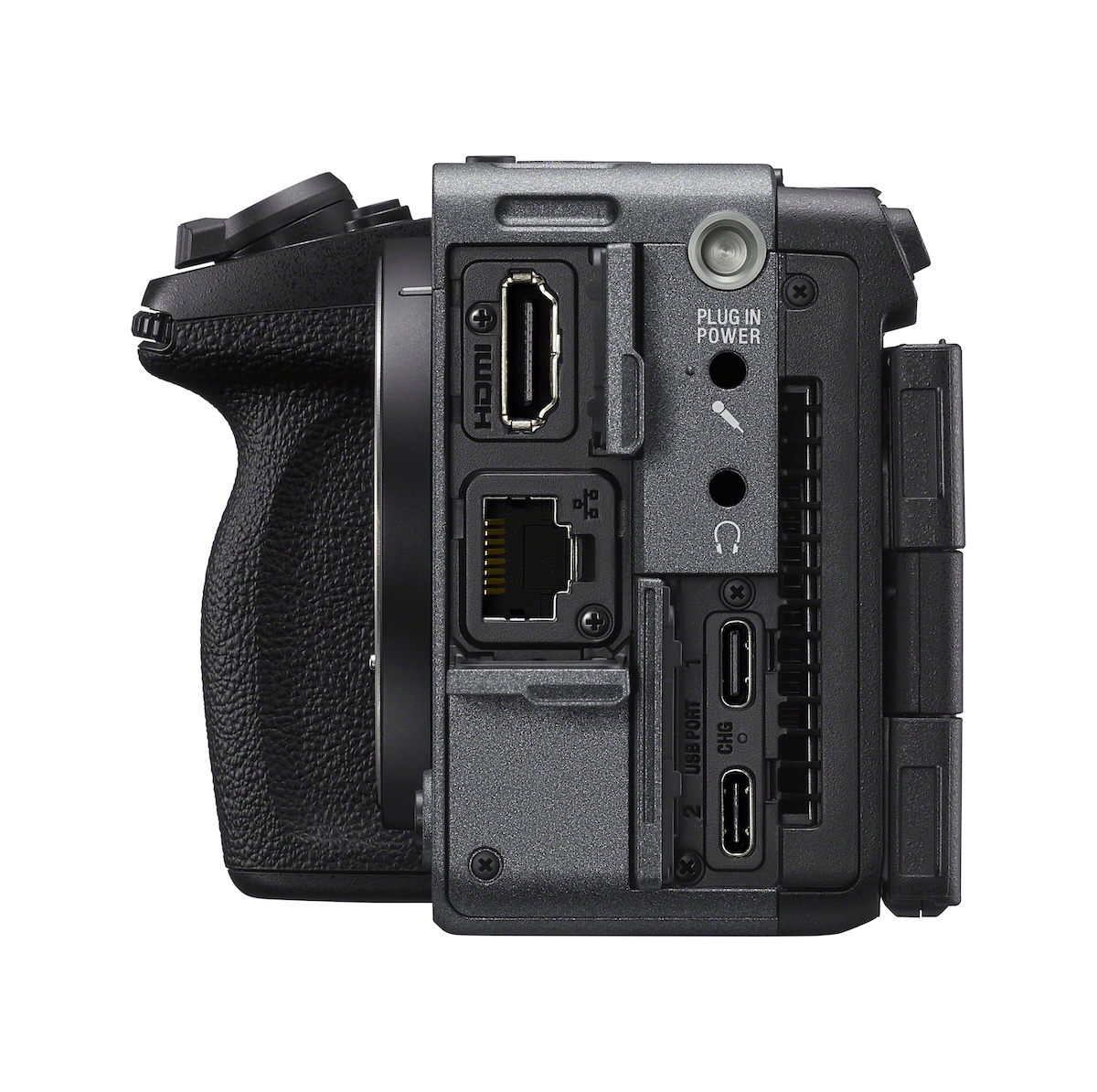
A photo of the Sony FX5 with its ports exposed
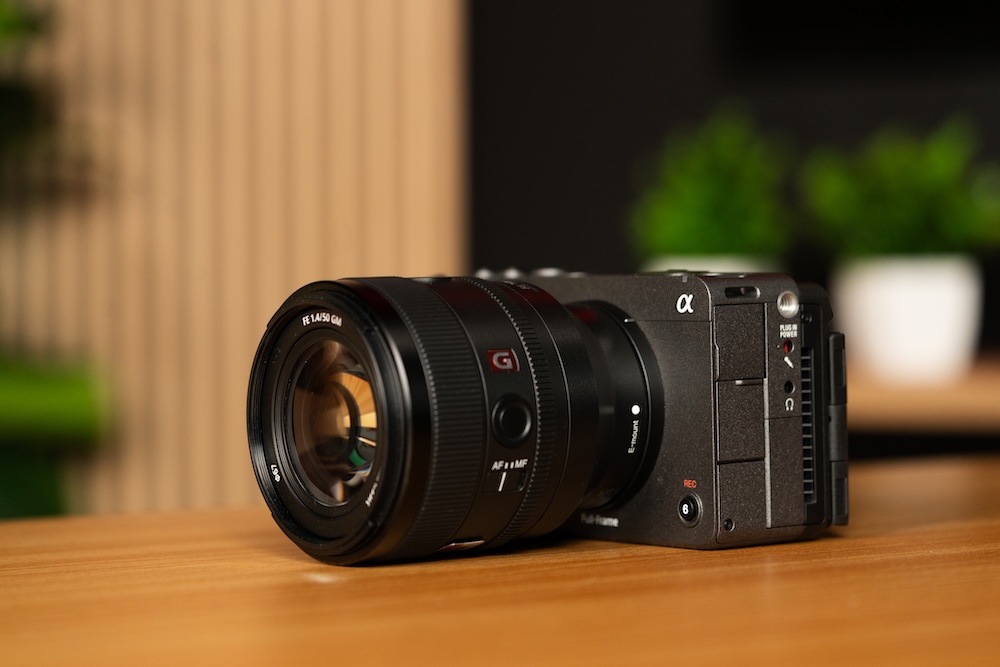
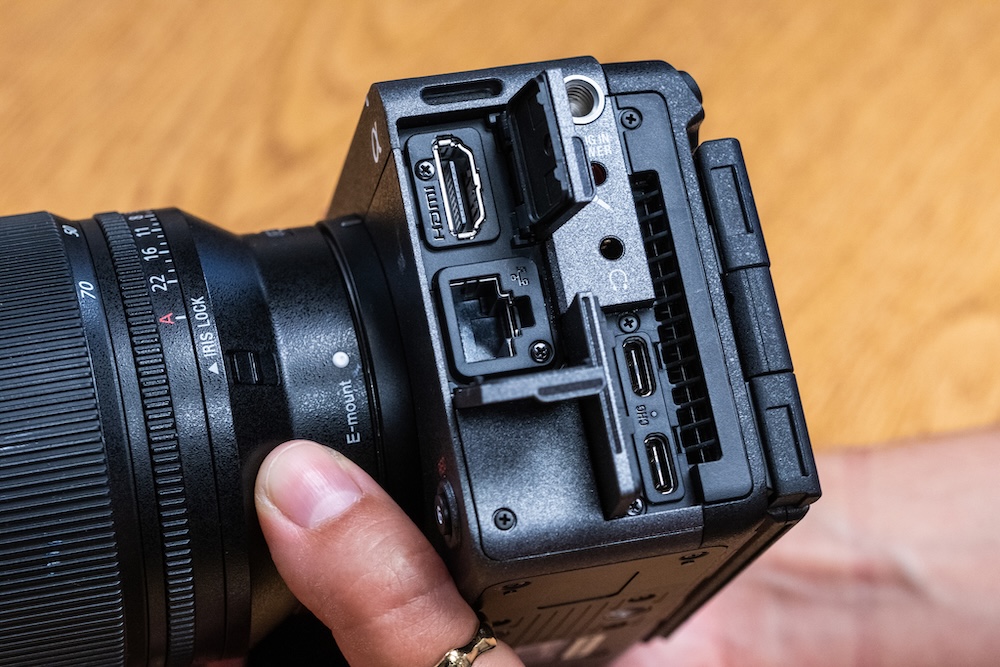
The FX5 gains a second USB socket, primarily for powering the camera. Also, perhaps unexpectedly, it gains an Ethernet port.
James Tirado

The FX5, like the recent Alpha cameras, gains a second USB-C socket. This can be used for a range of things, from tethering, powering the camera, data transfer or for accepting a timecode signal. As with other recent Sony cameras, the second USB-C socket is actually a USB 2.0 (480Mbps) socket, so can only be used for power and less data-intensive tasks.

The camera’s connectivity is further updated with an upgrade to Wi-Fi 6E, and the addition of an Ethernet port, which will likely find use in many houses of worship.

Display

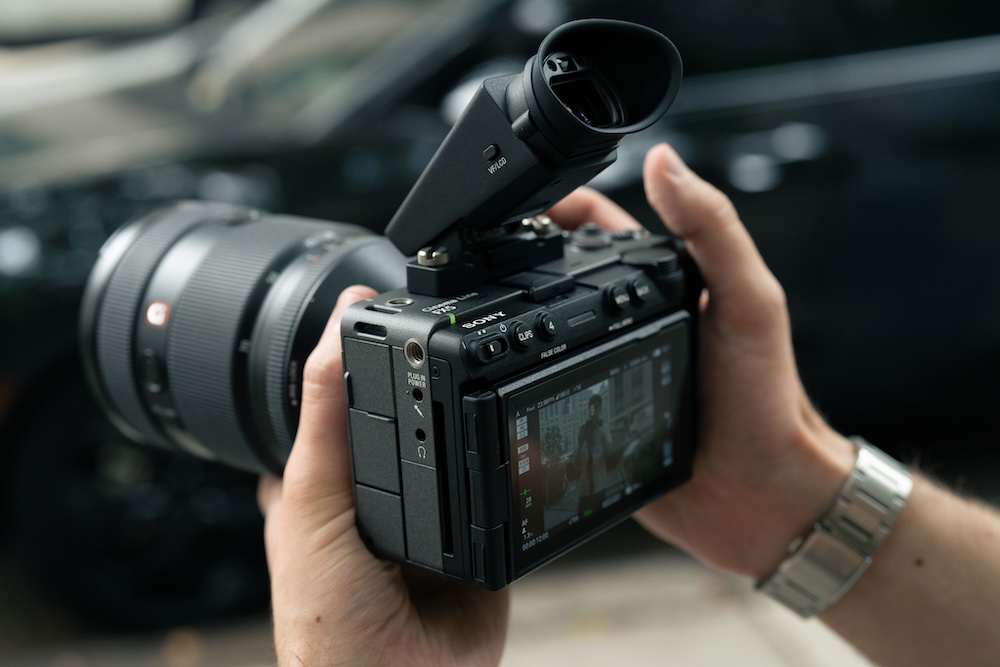
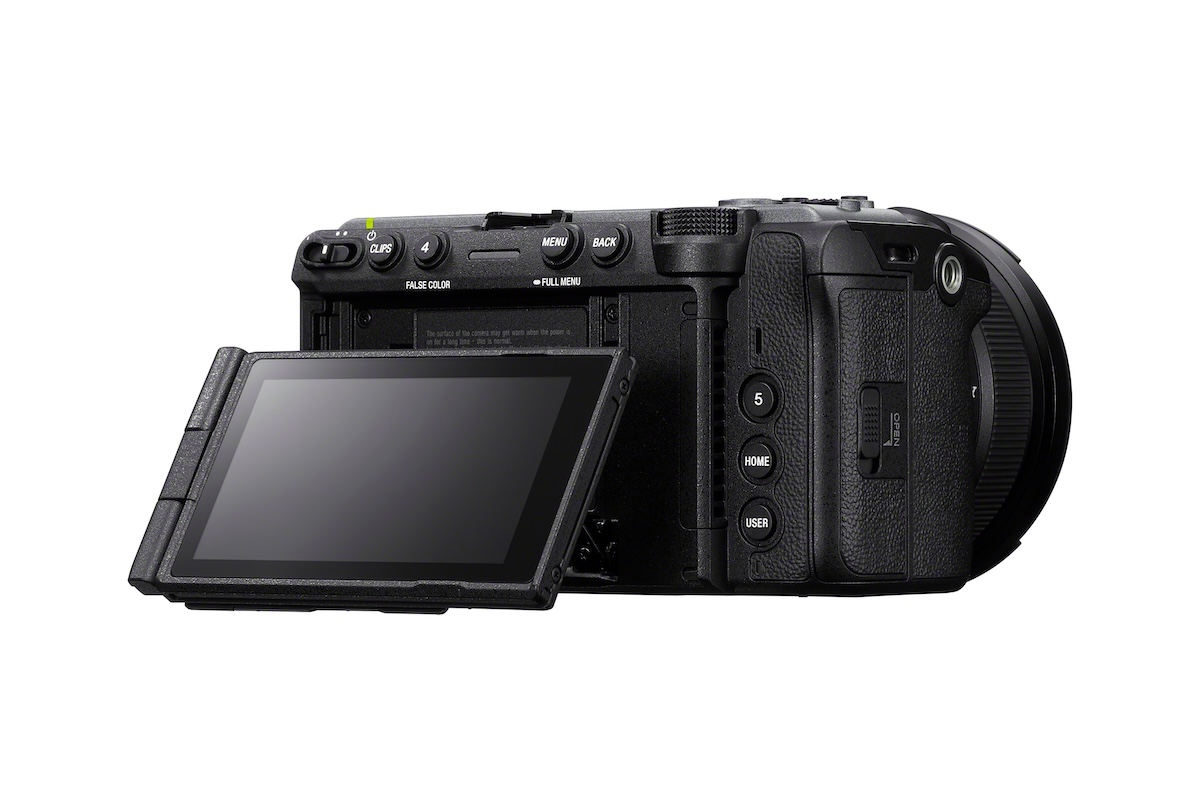
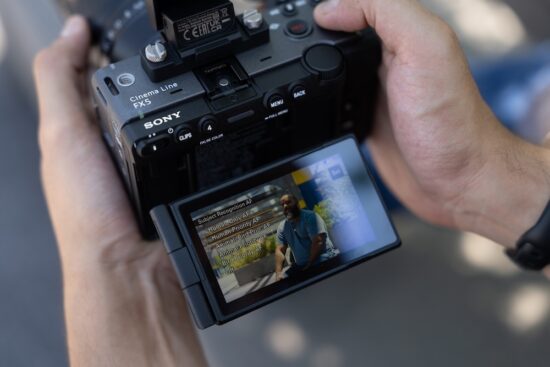
Sony has upgraded the rear tilting/articulating display to a 3.5″ model with a video-friendly 16:9 aspect ratio. Sony says the latter change makes it a much bigger upgrade to the 3″ display on the FX3 than it appears at first glance, as that screen’s 4:3 aspect ratio meant you were looking at a video that was really only 2.5″. Now, it can fill the entire screen, provided you’re not using an open gate or DCI (“17:9”) recording mode.

Photo of Sony FX5 showing the card slotsJames Tirado

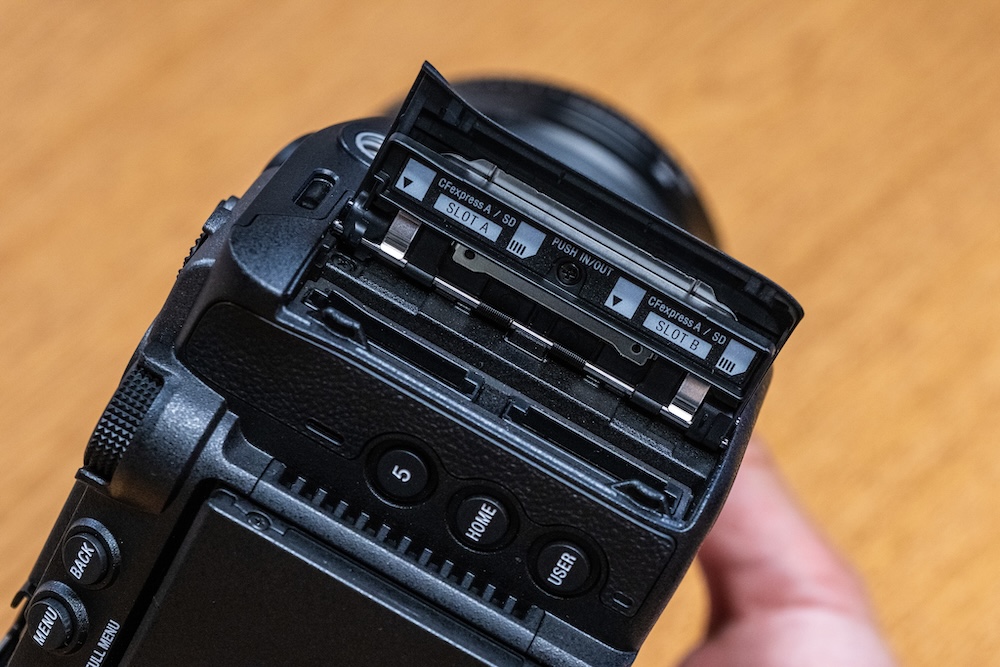
The FX5 has two slots, each of which take either CFexpress Type A cards or the slower UHS-II SD cards. The two card types don’t connect to the same connectors: one socket it essentially sited within the other.

Battery
Photo of the Sony FX5's batteryJames Tirado

The FX5 becomes the second camera to adopt Sony’s new 20.9 Wh NP-SA100 battery, following the a7R VI. This not only provides higher voltage and capacity than the NP-FZ100 batteries the FX3 used, but should allow for slightly longer record times. Sony says it can shoot for 130 minutes at 4K/60, while the FX3 caped out at 113. Of course, this change means that those with a large collection of batteries will need to spend quite a bit to rebuild it (provided they were running off an internal unit, rather than powering their cameras via an external V or Gold mount battery).

Despite the increased battery capacity, and smaller tweaks to the body like the addition of a second 1/4-20″ socket on the bottom plate to reduce the risk of rotating, Sony says the new camera is close to the FX3’s weight, coming in at 734g (25.9oz), versus 715g (25.2oz)

Accessories

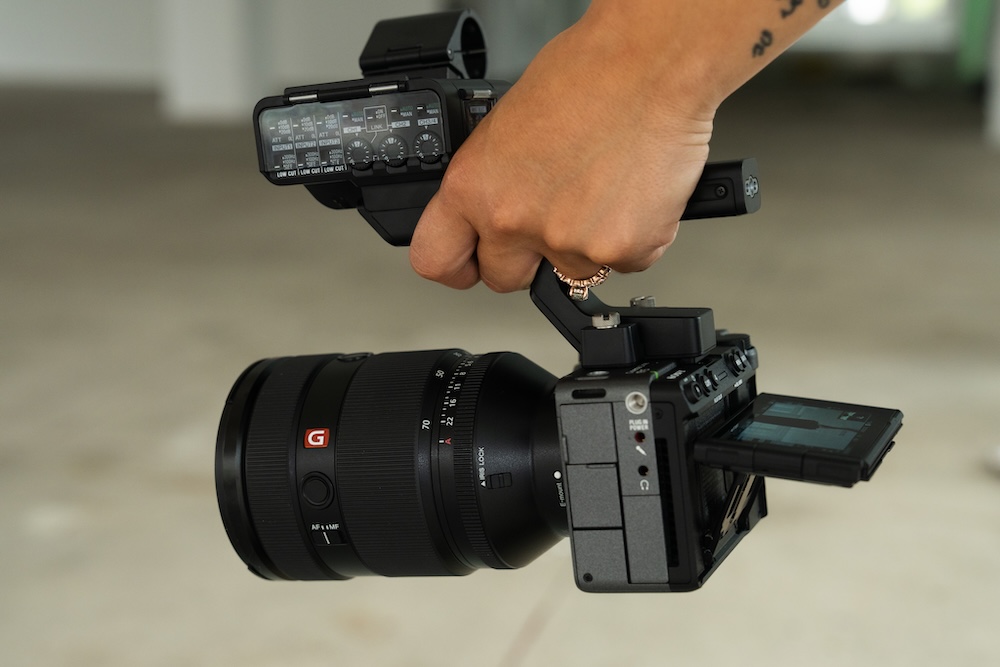
While the camera doesn’t have an integrated EVF – likely a concession to keeping its body as protrusion-free, and therefore gimbal-friendly as possible – Sony is making a removable one as an optional accessory. It features a 3.68M-dot panel that can reach up to 2500 nits peak brightness, and supports a wide color gamut to provide a more accurate preview. It’ll plug into a new port right above the multi-interface shoe, meaning you can’t have it attached if you’re also using the shoe. However, Sony says it’s working with a third-party to create an extension cable for it that will let you place it in more ergonomic position. The EVF, named the DVF-EL1, costs $698.

Another accessory is the XLR handle which, like the ones released for Sony Alpha-series cameras, will enable both the use of professional microphones as well as 32-bit float audio recording. The latter feature will an exciting addition for documentary and event shooters, as its different method for storing data essentially eliminates the risk of clipping, no matter what your gain levels are set to (though your microphone can still be overwhelmed). The handle can be purchased in a bundle with the FX5, or separately for $798

Video modes

Like most of Sony’s previous cameras, the FX5 delivers all its compressed footage in output-ready 4K resolutions: with in the 16:9 UHD or ~17:9 DCI formats. However, in a detail borrowed from cameras like the Venice and Burano they are named in terms of the pixel region used to capture them. So, although the camera has “Imager Mode” options called 5K 16:9, the output is still the standard 3840 x 2160 UHD footage.

The project settings tab of the Sony FX5's interface
Changing the frame rate or codec can prompt the camera to reboot, if you try to move to / from Raw or across from 24p to PAL or NTSC framerates.
James Tirado

The Raw footage, by contrast, arrives in your editor in the resolution in which it was captured. So 5K means 5K.

One of these Raw modes is a 3:2 open gate mode, capturing the full area of the sensor to make it easier to output both landscape and vertical cuts from the same clip (if you can find a composition that’s sensible for both, that is). The camera can also apply a real-time desqueeze correction for anyone using anamorphic lenses, with 1.3x, 1.5x, 1.6x, 1.8x and 2.0x squeeze factors being supported.

Raw recording

When recording to its internal Raw X-OCN codec, the FX5 can shoot at roughly 5K in 3:2, ∼17:9 and 16:9, at up to 60p. There are three levels of compression for the codec, with the standard being “LT,” and C1 and C2 recording at increasingly lower bitrates to reduce file sizes. Sony says C1 will be around 25% smaller than LT.

The company says it plans to release a firmware update sometime in 2027 that will allow for recording 4K/240 footage in Raw, though it hasn’t provided any details on whether the mode will have a crop.

FF 5K 3:2
(4992 x 3328)
FF 5K 17:9
(4992 x 2632)
FF 5K 16:9
(4992 x 2808)
FFc 3.8K 16:9
(3840 x 2160)
X-OCN (LT, C1, C2)23.98, 25, 29.97, 50, 59.9423.98, 25, 29.97, 50, 59.9423.98, 25, 29.97, 50, 59.9423.98, 25, 29.97, 50, 59.94
Dual Gain available:Up to 29.97Up to 59.94Up to 59.94

The camera needs to reboot in order to switch into or out of Raw mode. As we’ve seen on other cameras, it also needs to reboot to switch between 24p, PAL and NTSC modes, as the system clock needs to reset to work in multiples of 24, 25 and 29.97 frames per second. Because there’s no separation of Raw/Compressed or 24p/PAL/NTSC, it’s very easy to accidentally prompt the camera to reboot if you select the wrong shooting mode.

Likewise, the camera will only playback footage if it’s in the right system clock mode, and will only show you the Raw clips if you’re in Raw mode and only your compressed clips when in compressed mode.

Compressed footage modes

The FX5 names its video modes by the areas that are sampled, rather than their output resolution. The camera’s “17:9” modes (5K and 4.5K) are output as DCI 4K (4096 x 2160), while the 16:9 modes (5K, 4.5K and 3.2K) are output as 3840 x 2160 UHD.

The DCI modes can only be shot in XAVC S-I (All-I H.264), whereas moving to 16:9 adds the option to shoot XAVC H (H.265) or XAVC S (H.264) with a choice of 4:2:2 or 4:2:0 chroma sub-sampling.

Sony says the FX5 will gain support for shooting 3:2 open gate in XAVC S-I will come as part of firmware 2.0, due in around October 2027.

Outputs as DCI 4K (4096 x 2160)Outputs as UHD 4K (3840 x 2160)
FF 5K 17:9
(4992 x 2632)
FFc 4.5K 17:9FF 5K 16:9
(4992 x 2808)
FFc 4.5K 16:9
S35 3.2K 16:9
(3264 x 1836)
XAVC S-I (All-I H.264)
4:2:2
23.98, 24, 25, 29.97, 50, 59.9423.98, 24, 25, 29.97, 50, 59.9423.98, 24, 25, 29.97, 50, 59.9423.98, 24, 25, 29.97, 50, 59.9423.98, 24, 25, 29.97, 50, 59.94
XAVC HS-L (H.265) 4:2:2 or 4:2:023.98, 24, 50, 59.94, 100, 119.8823.98, 24, 50, 59.94, 100, 119.88
XAVC S-L (H.264)
4:2:2 or 4:2:0
23.98, 24, 25, 29.97, 50, 59.94, 100, 119.8823.98, 24, 25, 29.97, 50, 59.94, 100, 119.8823.98, 24, 25, 29.97, 50, 59.94, 100, 119.88
Dual Gain available:Up to 59.94Up to 59.94
Super35

The FX5 also provides an option of cropping in to an APS-C-sized region of the sensor, providing compatibility with lenses designed for Super35 cameras. While the FX3’s APS-C mode was sampled from an 1080p region of the sensor, the FX5’s higher-resolution sensor means it can capture a 3.2K (3264 x 1836) region in 16:9. However, this is still output as 1080p when shooting in compressed modes.

Support tools

The FX5 gains a whole host of video-specific tools meant to make it easier to get proper exposure and focus. It has a waveform monitor for clearer and more accurate exposure monitoring, a false color overlay that makes it easy to see at a glance whether your subject is properly exposed and whether any of your highlights and shadows are clipping, a vector scope for more information about your colors and a focus map overlay to assist with focus.

The company has also added more options for desqueezing the preview when shooting with anamorphic lenses, providing several options between a 1.3 and 2.0x ratio.

Initial impressions

A 3-quarter view of the Sony FX5 with a lens in the backgroundJames Tirado

The FX5 is an evolution of the FX3 concept that tries to accommodate a wider range of users, and we doubt any one user will want or need the full range of its capabilities. Where the FX3 was essentially an a7S III in a more video-friendly format (or, perhaps, the camera the a7S III should have been, in the first place), the FX5 is a much more capable machine that tries to address multiple different workflows.

Small scale cinematographers can adopt its Raw workflow, while others might choose to shoot open gate and some users will output H.265 UHD files in S-Cinetone. Some people will build it into a rig, others will mount it on a gimble, while others will leave it on ‘sticks.’ The fact that the XLR handle and EVF module are optional suggests that these are option that some people will find essential while others would resent the bulk and cost of something they don’t want. Then there’s the Ethernet port, which allows the camera to be mounted and operated remotely, for applications such as churches, we’re told.

The interface and operational logic is likely to be something of a shock to anyone primarily familiar with the FX3

In doing so, though, Sony has made the camera a fraction larger, but probably not to the point that it would alienate many of the run-and-gun shooters who came to love the FX3.

However, the major changes to the user interface, including its frequent decision to reboot, if you accidentally select the wrong frame rate, while changing settings, are likely to make the camera seem surprisingly daunting to existing FX3 users.

The ISO/Gain section of the Sony FX5's shooting menu
The camera’s main menus look entirely unlike those in Sony’s Alpha cameras. Or the FX3, for that matter.
James Tirado

Sony talked about adding features and capabilities that have been requested by users, but it also feels like the FX5 is much more a product of the cinema department, like the FX6, rather than having evolved from an Alpha model, as the FX3 appeared to. A lot of the features (not least Raw) might have trickled down from the Burano, but an awful lot of the interface and operational logic has done, too, which is likely to be something of a shock to anyone primarily familiar with the FX3 or 2.

Photo of Sony FX5 from above
The FX5 is a little larger in every dimension than the FX3 but despite this, is a pretty similar weight.
James Tirado

It its favor, it’s stayed in the relatively compact body that has made the FX3 a success, but this means there isn’t room for the variable ND filter system that slides in filters from below the sensor on the bigger camera, that a lot of users were hoping for. Additional options like a USB timecode sync cable aren’t necessarily going to excite a lot of independent FX3 users, but they broaden the camera’s appeal.

It’ll be interesting to see whether Sony decides that the FX5 (or, rather, the existence of both the FX5 and FX2) means that it doesn’t need to create a direct replacement for the FX3.


Press release:

Sony Electronics Launches the FX5, a Cinema Line Camera with a Newly Developed Image Sensor, Open Gate Recording, Internal RAW Recording, and Enhanced Operability

New Dedicated Viewfinder and Separate XLR Handle Unit Also Available

San Diego, July 22, 2026 – Sony Electronics introduces the FX5, a new full-frame camera in its Cinema Line series. A newly developed fully stacked CMOS image sensor raises sensitivity performance[1] with 15+ stops of dynamic range, three base ISO settings[2], and a Dual Gain shooting[3] mode. For the first time in the Cinema Line FX series, the FX5 supports Open Gate shooting and in-camera recording in X-OCN, Sony’s proprietary RAW format. It shoots 5K at up to 60 fps, 4K at up to 120 fps, and FHD at up to 240 fps. The result pairs the Cinema Line look[4] with production-ready operability in a compact, portable body. Also released are two optional accessories: a detachable OLED viewfinder and an XLR handle unit that records in-camera at up to 96 kHz, 32-bit float.

“The FX5 builds on Sony’s Cinema Line expertise, praised by cinematographers and video creators worldwide,” said Yang Cheng, Vice President of Imaging Solutions, Sony Electronics Inc. “We wanted to build on the FX3, taking it one step further with the inclusion of some VENICE 2 features, like internal RAW recording and Open Gate. Features like these have been highly requested and will allow creators more creative freedom with an easier workflow.”

Availability and Price

  • ILME-FX5 with XLR Handle Unit will be available mid-August for a suggested retail price of $5,499.99 USD / $6,999.99 CAD.
  • ILME-FX5B body will be available mid-August for a suggested retail price of $4,899.99 USD / $6,299.99 CAD.

Claudio Miranda, ASC, cinematographer of films including “Top Gun: Maverick” and “F1® The Movie,” conducted a test shoot with the FX5:

“I felt that FX5 is a camera that combines high quality image expression and mobility in a compact body, enabling people to use it across a wide range of shooting environments.”

Gareth Edwards, director of “The Creator,” “Rogue One: A Star Wars Story,” and “Jurassic World: Rebirth,” shot with the FX5 on a project spanning Cambodia, Thailand, and Nepal.

“Guerrilla filmmaking just went to the next level as the FX5 is the run-and-gun cinema camera to beat.”

The project is available on YouTube: https://www.youtube.com/watch?v=gVFG7m_seUg

FX5 Key Features

A newly developed image sensor and the latest high-speed image processing engine

  • Uses a full-frame, fully-stacked Exmor RS™ CMOS image sensor and the latest BIONZ XR2™ high-speed image processing engine with a dedicated AI processing unit.
  • In S-Log3, captures 15+ stops of dynamic range.
  • Three base ISOs of ISO 800, ISO 4000, and ISO 12800[2] keep noise low across a wide range of conditions. The Dual Gain Shooting function,[3] a first for the FX series, draws more from the sensor for smoother gradation and wider latitude while reducing noise and preserving shadow detail.
  • Also a first for the FX series, the camera supports 3:2 full-pixel readout across the entire sensor, or Open Gate shooting[5], plus 17:9, 16:9, and Super 35mm scan modes. In-camera recording in X-OCN, Sony’s proprietary 16-bit scene-linear RAW format, captures high quality without an external recorder. Alongside X-OCN LT, the new X-OCN C1 and X-OCN C2 codecs cut data size to speed transfer and streamline post-production.

High-precision AF powered by AI and detailed settings that support intentional shooting

  • AI-based human pose estimation recognizes a subject’s eyes, head, and body, holding strong AF performance even in dark scenes. Real-time Tracking follows subjects automatically.
  • Auto Tracing White Balance (ATW) combines visible-light and IR (infrared) sensor data with deep-learning light-source estimation to read scenes accurately, giving more stable[5] and natural white balance in shade, indoors, and other conditions.
  • Noise suppression settings (on/off) give flexibility to match shooting intent and post-production workflows.
  • A de-squeeze function supports anamorphic lenses at 1.3x, 1.5x, 1.6x, 1.8x, and 2.0x.

Excellent operability and high mobility in a compact, lightweight body

  • 5-axis optical in-body image stabilization anchors the image, and the latest stabilization unit roughly doubles the roll correction range of the previous system[6] to suppress rotational blur. Active Mode and the new Dynamic Active Mode[7] keep handheld footage steady.
  • A 3.5-type, approximately 2.76-million-dot 16:9 touch-panel LCD monitor, larger than the FX3’s, mounts on a 4-axis multi-angle arm. It tilts ~98 degrees up, 40 degrees down, and opens ~180 degrees to the side, with a high-brightness adjustable panel. Shooting information sits around the edges of the screen so it never overlaps the image. The “BIG6” home screen, carried over from CineAlta cameras, gathers key settings such as frame rate, exposure, and LUTs so creators can focus on the shot.
  • A new menu system gives operability consistent with CineAlta cameras and the FX6 on a shared production.

High reliability and expandability to support professional production environments

  • A high-efficiency cooling fan and optimized heat dissipation keep the camera stable through long recording sessions
  • The lightweight, rigid body carries screw holes in multiple locations to attach accessories directly, so you can build rigs without a cage.
  • Integration with the Monitor & Control application brings video monitoring and remote operation to smartphones, tablets, and Mac.
  • Uses the recently released high-capacity NP-SA100 battery (2670 mAh), which holds approximately 1.3 times the capacity of the Z-series NP-FZ100 for longer shooting.
  • Two USB Type-C™ ports accept timecode input through an optional timecode adapter cable and external power through USB Power Delivery (PD),[9] for stable long-duration shooting.
  • A wired LAN terminal enables remote operation and a stable network connection, with the expandability professional production networks require.

Planned Firmware Update ver. 2.0 (coming 2027)[10]

A planned update will add higher resolution high frame rate shooting up to 240 fps in X-OCN, XAVC S-I recording in 3:2 (Open Gate shooting), an optimized interface for vertical shooting, and a frame grab function.

Accessibility and environmental considerations

  • Accessibility features support visual recognition and operation, including a screen reader[11] that reads menus aloud and an enlarged menu display.
  • Recycled plastic accounts for approximately 30% or more of the camera’s parts.[12] The Thailand and China sites that build the camera run on 100% renewable energy.[13] Product bags use plant-derived nonwoven fabric,[14] cutting packaging plastic and lowering environmental impact.

Optional Accessories

0.58-type OLED Viewfinder “DVF-EL1”

  • This detachable viewfinder carries a 0.58-type, approximately 7.07-million-dot OLED panel.[8] It supports HDR display with a DCI-P3-equivalent color gamut and 10-bit gradation. The wide gamut confirms subject colors accurately, and HDR reveals fine detail when shooting and playing back high-contrast scenes.
  • Approximately 0.9x magnification[15] and you can switch between display modes that prioritize resolution or eye point.
  • A tilt mechanism moves from 0 to approximately 90 degrees upward for comfortable monitoring at low, high, and handheld angles.

XLR Handle Unit “XLR-H2”

The XLR-H2 carries two XLR/TRS combo terminals and supports up to 4-channel audio input. Dual AD converters digitize microphone signals with high precision across a wide dynamic range and record in-camera at up to 96 kHz, 32-bit float. It connects directly to the body through the Multi Interface (MI) Shoe for stable digital transmission.

Timecode Adapter Cable “VMC-BNCU1”

The optional USB-C to BNC timecode adapter cable feeds timecode from external devices into the camera. It synchronizes multiple cameras and external audio devices for timecode-based workflows across multicamera shooting, broadcasting, and filmmaking.

Applications Supporting Production with the FX5

  • Monitor & Control ver. 3.0
    Scheduled for July 2026 or later, enables wired and wireless video monitoring and camera control.[16] For details, please visit: (link)
  • Catalyst Prepare ver. 3.0
    Scheduled for August 2026 or later. Catalyst Prepare and Catalyst Browse, which provide high-precision video stabilization and color editing, merge into Catalyst Prepare ver. 3.0. For details, please visit: (link)

For main specifications and details, please visit the product website.

https://electronics.sony.com/imaging/interchangeable-lens-cameras/all-interchangeable-lens-cameras/p/ilmefx5

https://electronics.sony.com/imaging/interchangeable-lens-cameras/all-interchangeable-lens-cameras/p/ilmefx5b

[1] Compared to “FX3”.

[2] Manual Base ISO selection is supported only in Cine EI and Flexible ISO modes. In Cine EI Quick mode, the optimal Base ISO is selected automatically according to the Exposure Index setting.

[3] Gain is limited to the equivalent of 18 dB. This function may not be available depending on shooting settings.

[4] Refers to visual expression, including the color and tone of images.

[5] Available only when recording in X-OCN.

[6] Compared to “FX3”. Based on Sony internal measurements.

[7] In Dynamic active Mode, angle of view is reduced more than in Active Mode, and Clear Image Zoom is not available. Dynamic active Mode is available up to 60 fps, and Active Mode is available up to 120 fps. The maximum gain in Dynamic active Mode is 26 dB. Depending on the codec and frame-rate settings, Dynamic active Mode may not be available.

[8] Cannot be used together with accessories attached via the Multi Interface (MI) Shoe, such as the handle unit.

[9] USB Power Delivery (PD) compatible external power supply and USB cable are not included.

[10] Features and specifications are subject to change without prior notice.

[11] Supported languages vary by sales region/country. Some menu items are not supported by the screen reader function.

[12] Based on Sony research. Applies to recycled plastic used in the product body.

[13] Production sites may change depending on the production period.

[14] Plant-derived nonwoven fabric may not be available depending on the production period.

[15] With a 50 mm lens at infinity, -1 m⁻¹.

[16] For further details and to download Monitor & Control, see: https://www.sony.net/ccmc/?cid=son-mandc—20260722. Download app at Google Play and the App Store. Network services, content, and operating system and software subject to terms and conditions and may be changed, interrupted or discontinued at any time and may require fees, registration and credit card information.

About the Author: Richard graduated as a scientist but had a lot more fun writing and shooting for his university magazine. A number of years spent variously as a reporter, writer and editor on science and engineering titles combined his knowledge of science with his interest in images and words. But it was spotting the connections between emission spectra, white balance and all the nonsense he’d taught himself playing around in Photoshop that helped kindle an interest in digital photography. Searching for a camera led to him discovering DPReview and Richard was recruited by Phil Askey in 2007. He’s been combining his love of photography, communication and attention to detail (pedantry?) ever since. He has unusually strong opinions about lenses for the APS-C format.
Want to stay up to date on the latest product news and releases? Add DPReview as a preferred source to ensure our independent journalism makes it to the top of your Google search results.

add as a preferred source on google

  •  

Micro Four Thirds may be getting a new champion

Viltrox seems set to start selling lenses for the mount.

The word "Viltrox" written in white italics on a black backgroundViltrox

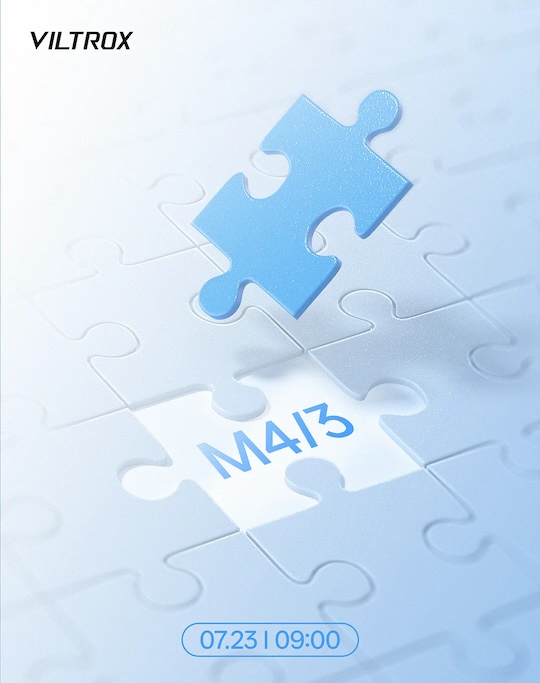
Viltrox seems poised to start selling lenses for Micro Four Thirds, according to a post on social media platform Xiaohongshu. It shows a puzzle piece about to be slotted into a hole labeled “M4/3,” and teases an announcement coming on July 23rd. While the company hasn’t posted about it on its Instagram pages, the Viltrox US account did comment on a Reddit post about the teaser, saying “Something new coming soon.”

The teaser doesn’t say what to expect, beyond having hashtags that translate to “lens.” But the idea of getting a Micro Four Thirds lens from Viltrox is exciting on its own; the company has become a major player in the world of third-party lenses, and it’s an interesting sign that it’s looking to throw at least some of its weight behind the mount, as we haven’t seen many others do so for a while.

Viltrox

There are a wide variety of companies, well known and not, making manual focus lenses for the system, and a few that continue to sell a handful of autofocus options, too. But beyond Panasonic and OM System, who also make cameras using the mount, there haven’t been any new Micro Four Thirds lenses from a major player in quite some time. Sigma used to have some options for the system, which you can still buy, but they haven’t been updated like we’ve seen with the company’s APS-C and full-frame offerings.

Of course, there are many ways to release a lens for a system. While Viltrox could come out with a lens custom-designed for Micro Four Thirds, with a sensible focal length and a small, compact size. It could also, however, just be swapping out the mount on one of its existing APS-C or, worse, full-frame designs (not that such a move would be unheard of). Even if it is a lens with a larger-than-neccesary image circle, though, it’s still a start. If whatever Viltrox releases ends up being successful, it could lead to the brand giving Micro Four Thirds more attention.

Or it could wind up being something completely unexpected, like a camera that uses the mount. It’s hard to put anything past companies at this point. Whatever it is, we won’t have to wait too long to find out.

About the Author: Mitchell started taking pictures at 10 and hasn’t stopped since. It’s been a wide-ranging adventure, spanning a wide variety of genres and locales, and occasionally dipping into fascinations with video and filmmaking. They honed their technical knowledge doing documentation, programing and QA, writing for The Verge, and just generally messing around on the computer to see what breaks.

Want to stay up to date on the latest product news and releases? Add DPReview as a preferred source to ensure our independent journalism makes it to the top of your Google search results.

add as a preferred source on google

  •  

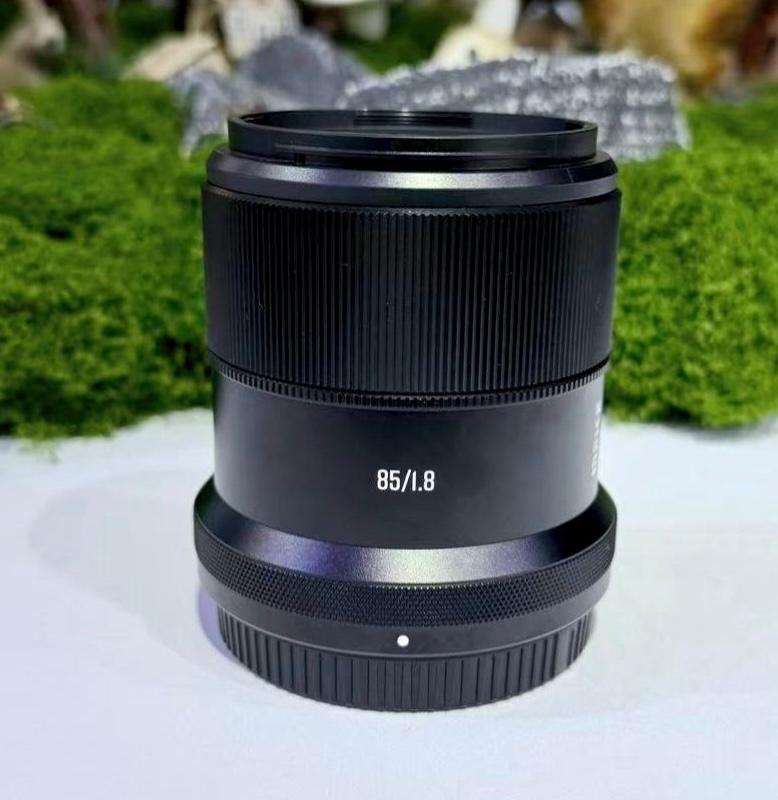
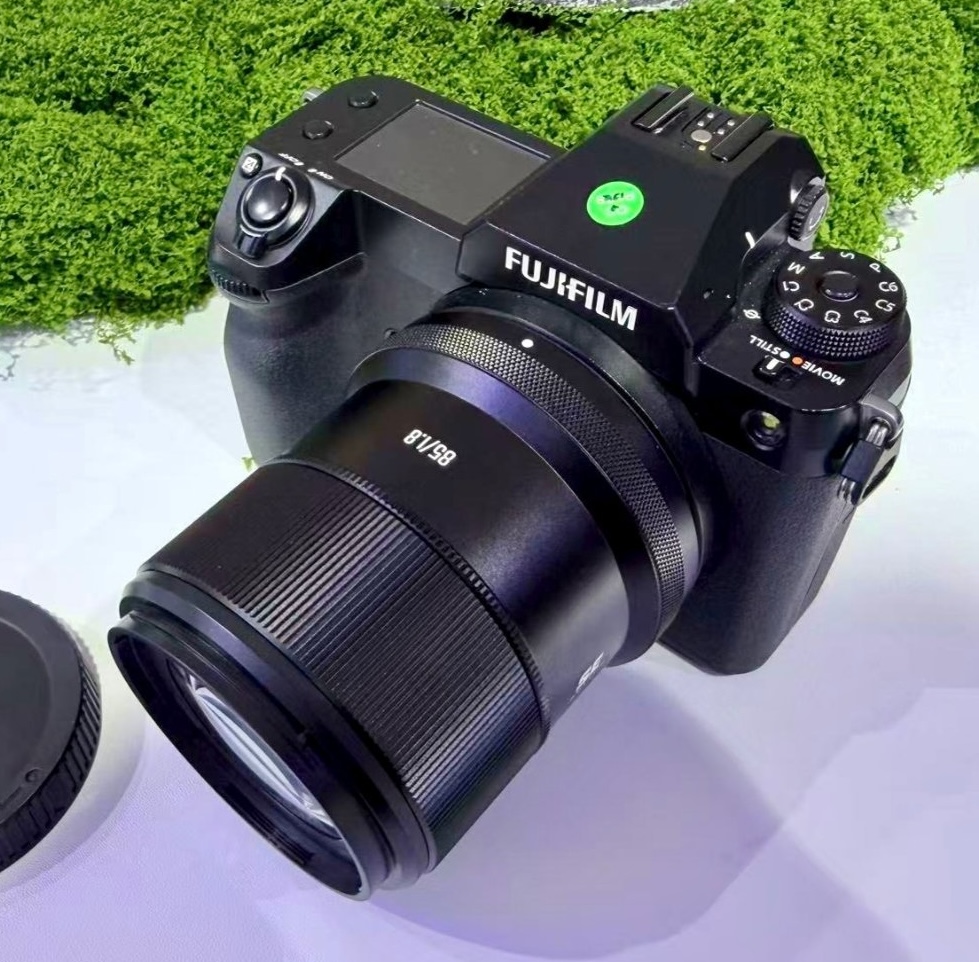
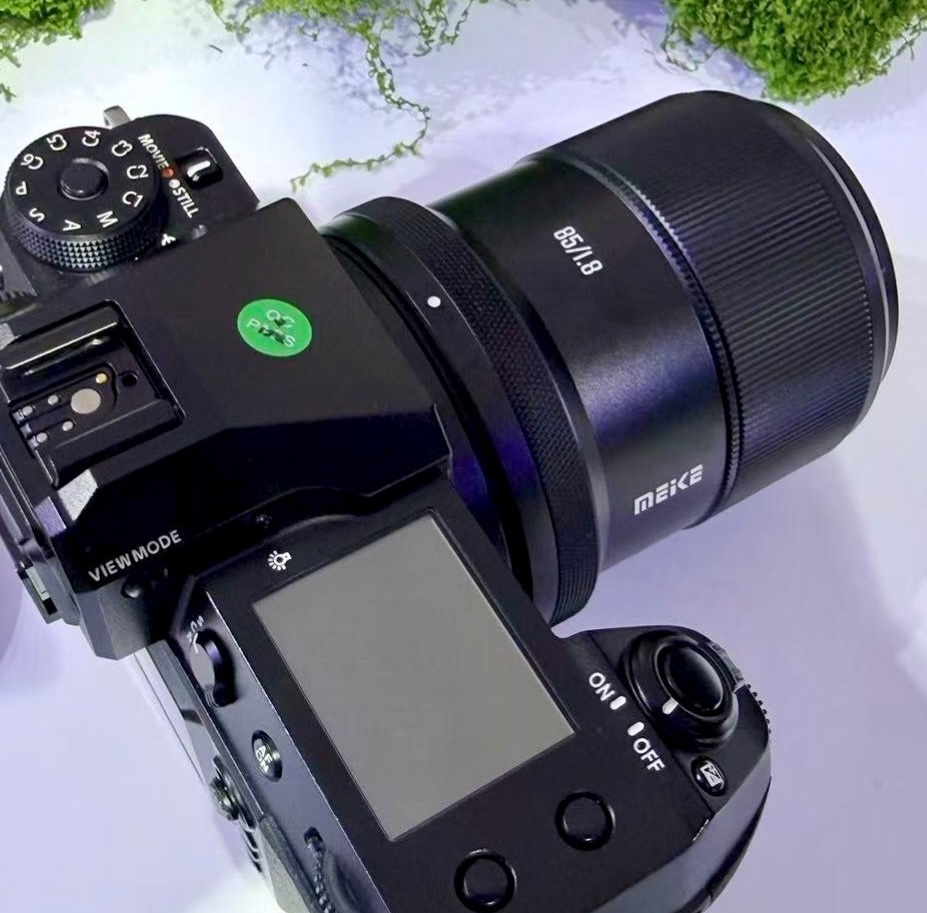
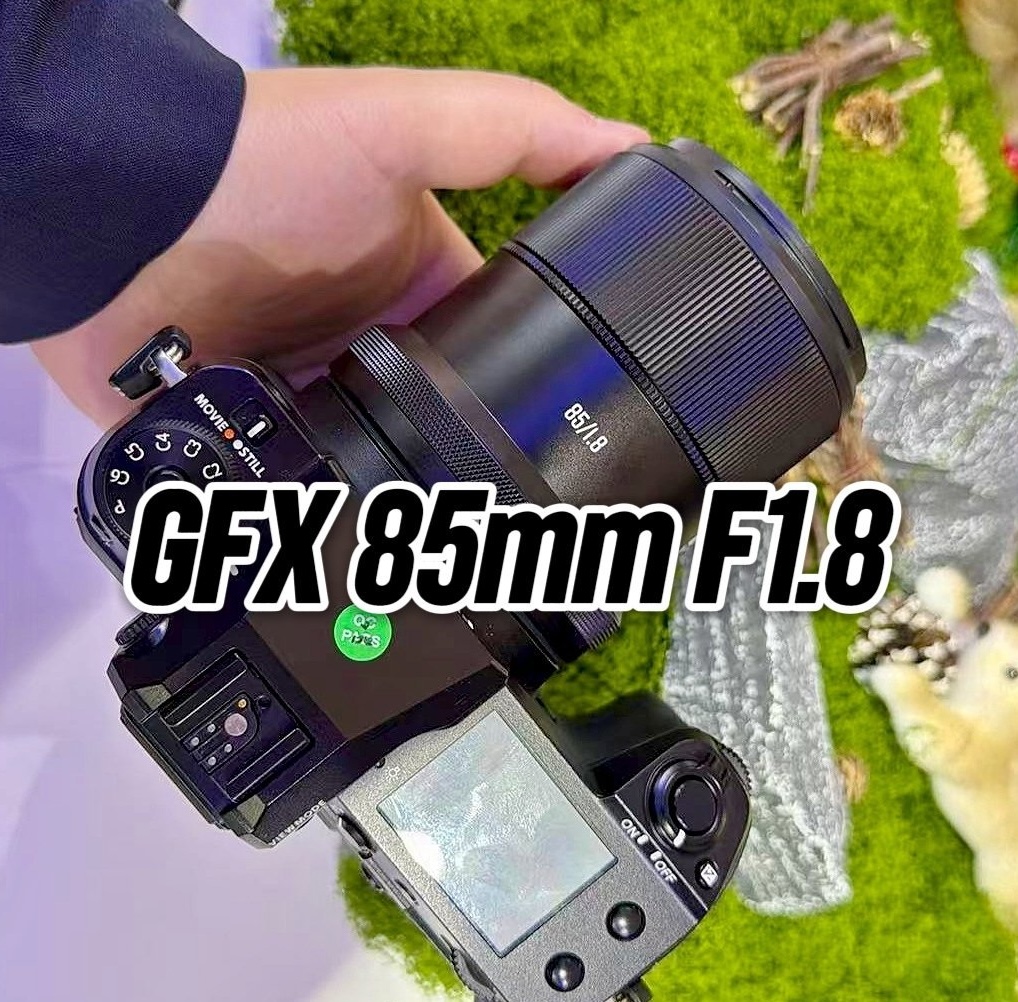
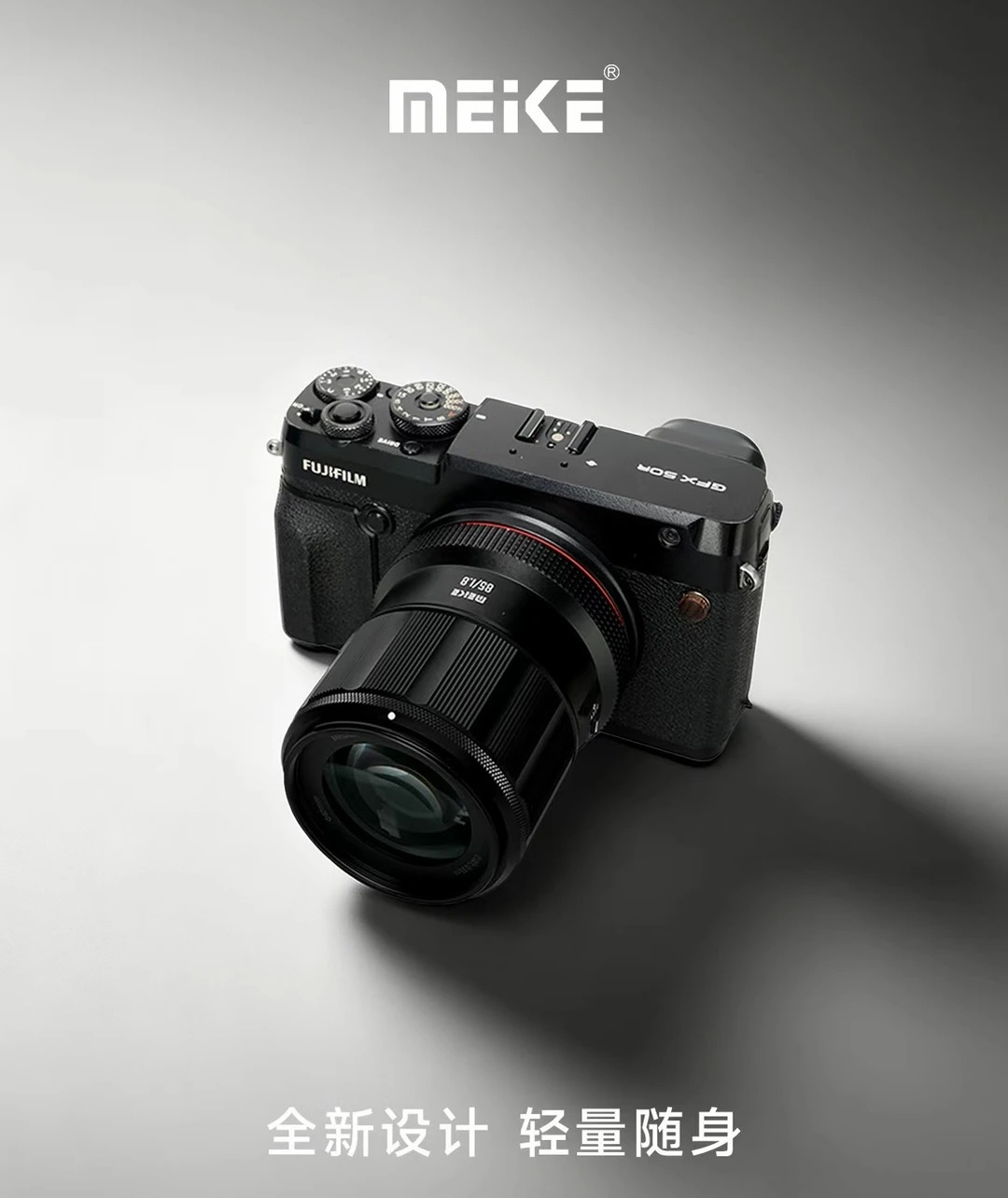
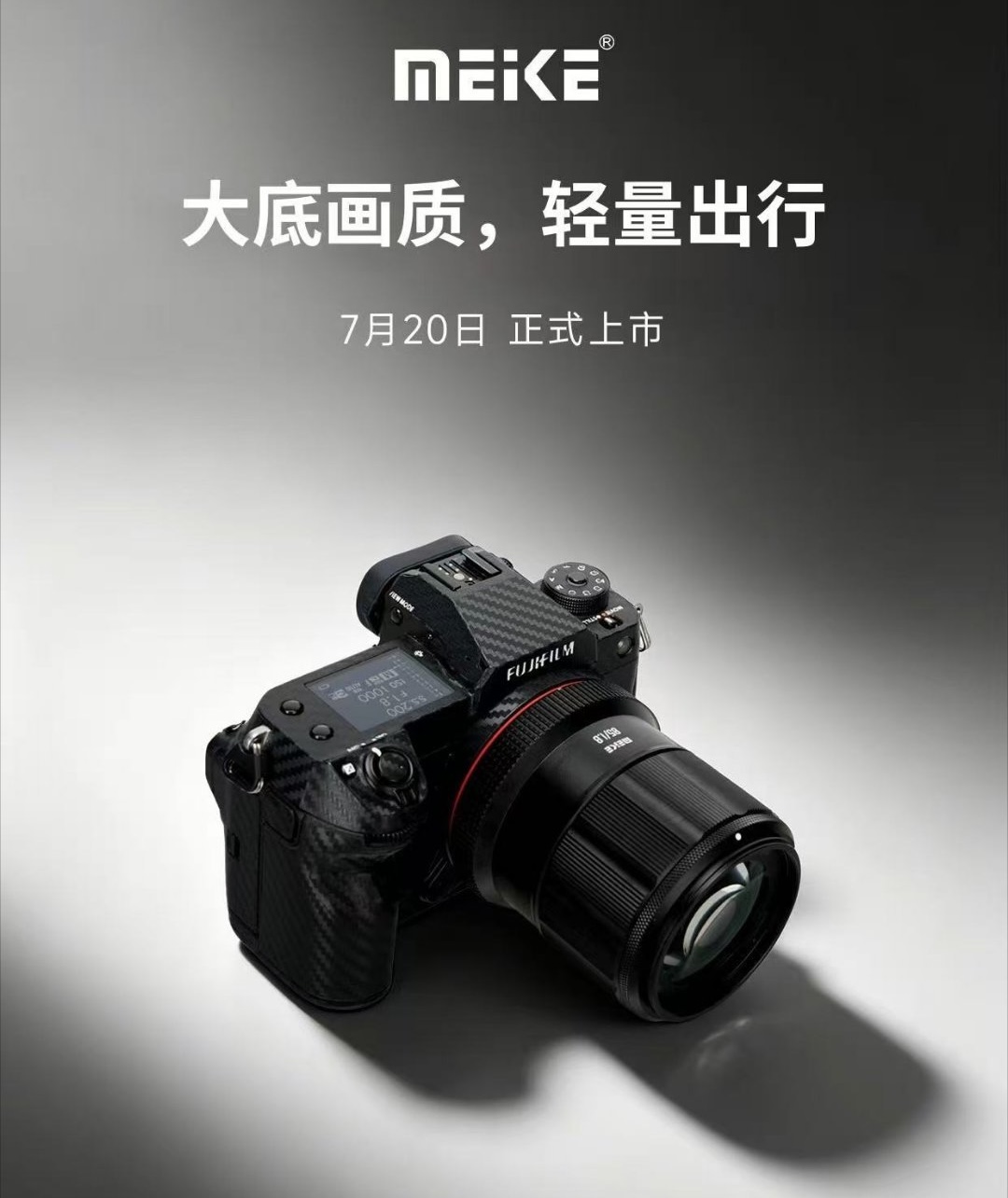
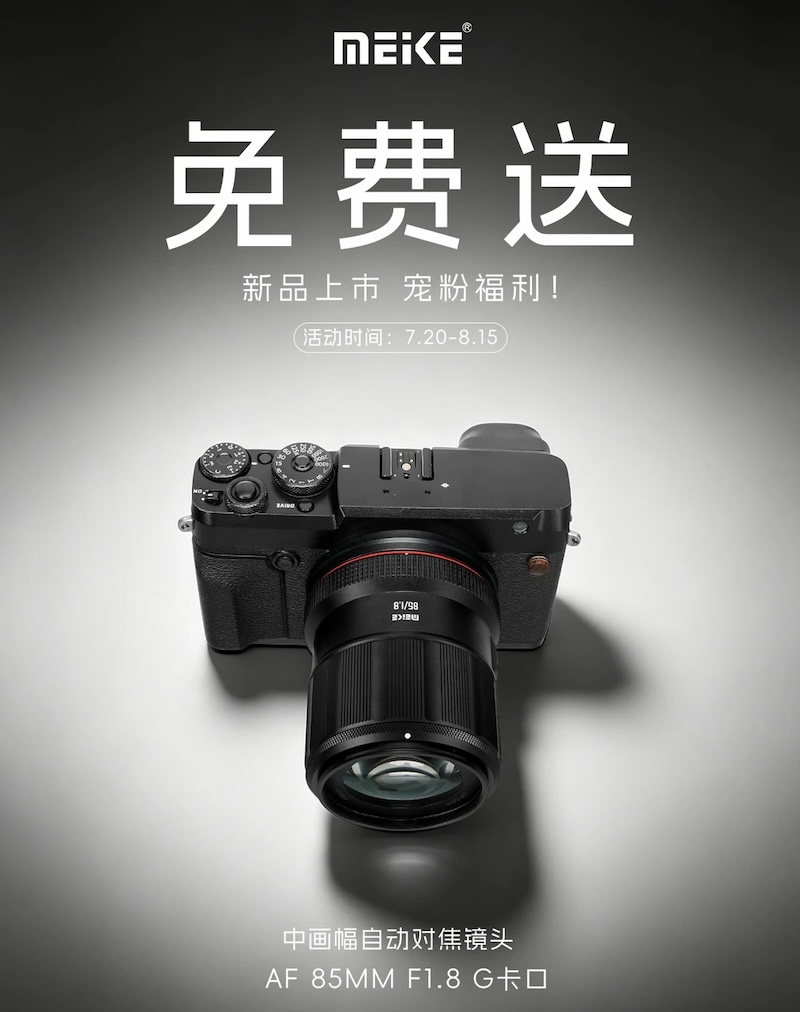
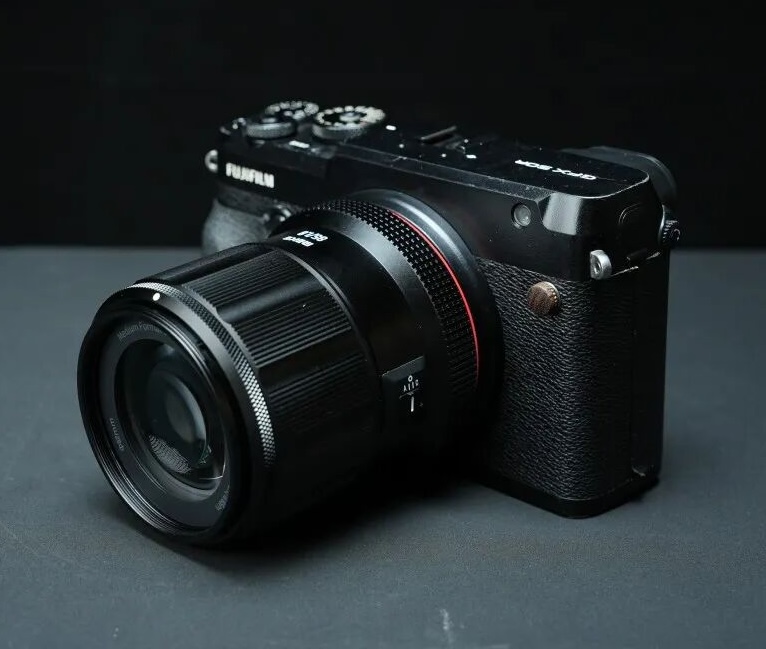
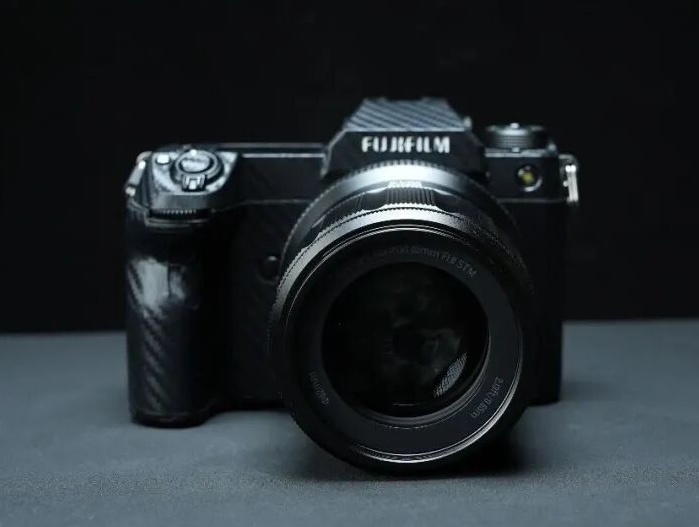
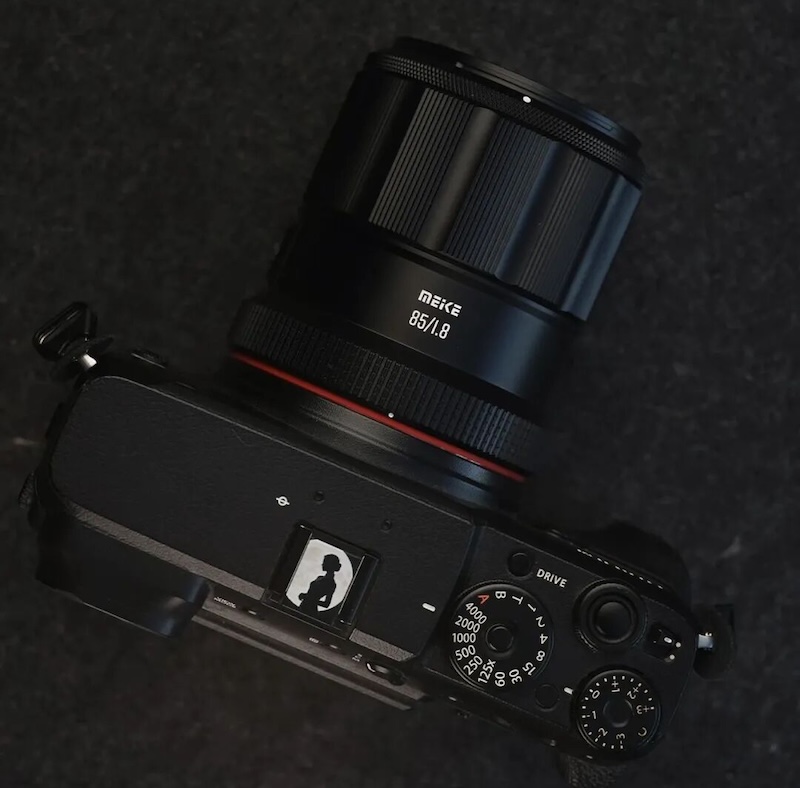
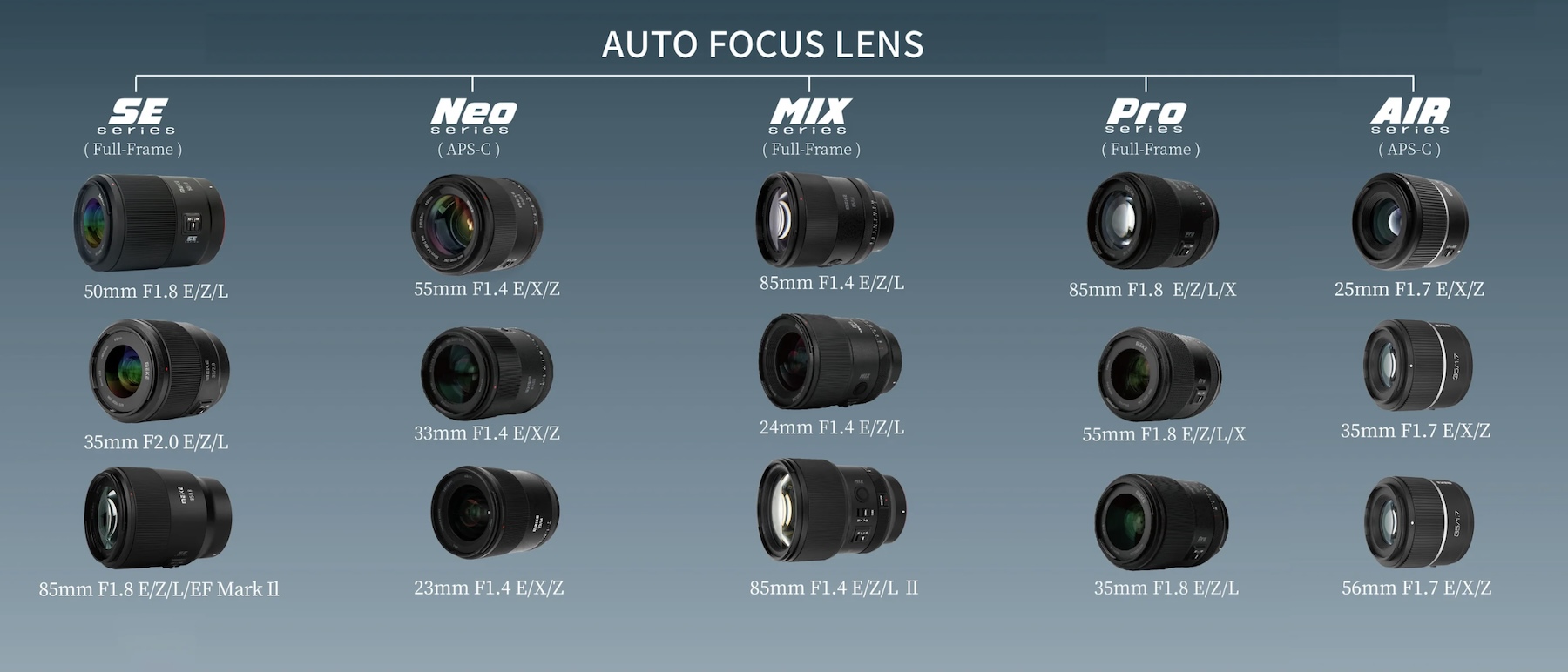
Meike AF 85mm f/1.8 lens for Fujifilm GFX-mount officially announced in China


Meike officially announced the previously reported AF 85mm f/1.8 lens for Fujifilm GFX mount in Asia. Here are the details:

  • Orders should open soon at: Meike StoreB&H PhotoAmazon
  • Format: Medium format
  • Focal length: 85mm
  • Lens construction: 11 elements in 7 groups |
  • Aperture blades: 11
  • Magnification: 0.17x
  • Minimum focusing distance: 0.65m
  • Autofocus motor: STM stepping motor (in-house developed)
  • Filter size: 62mm
  • Net weight: Approx. 406g (excluding lens cap)
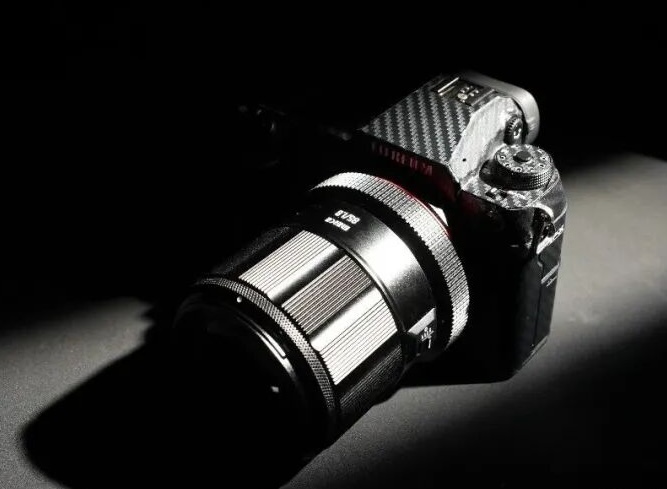
  • Additional pictures:

This is the latest Meike lens lineup:

Meike is teasing a new lens for Fujifilm GFX medium format cameras

The post Meike AF 85mm f/1.8 lens for Fujifilm GFX-mount officially announced in China appeared first on Photo Rumors.

  •  

Sony’s new cinema camera is coming tomorrow

“Lighting the way forward”

The silhouette of a camera with a lens and top handle.Sony

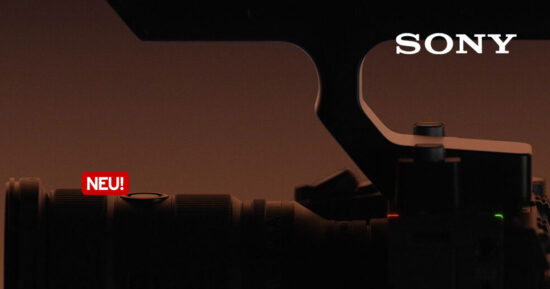
Sony has released a teaser for a new product announcement in its cinema line. As always, the video is very short on details, showing just the silhouette of a camera, tally lights blazing and a top handle attached, and the tagline “lighting the way forward.”

The company is no stranger to posting teaser videos, but, unlike with the one for what turned out to be the RX10 V, it isn’t giving a lot of time for hype to build. The video says the announcement is coming on July 22nd at 7 AM PT (15:00 BST), which is just around 24 hours after the video was published. Whatever the camera is, it seems we won’t have to wait long to get more details.

About the Author: Mitchell started taking pictures at 10 and hasn’t stopped since. It’s been a wide-ranging adventure, spanning a wide variety of genres and locales, and occasionally dipping into fascinations with video and filmmaking. They honed their technical knowledge doing documentation, programing and QA, writing for The Verge, and just generally messing around on the computer to see what breaks.

Want to stay up to date on the latest product news and releases? Add DPReview as a preferred source to ensure our independent journalism makes it to the top of your Google search results.

add as a preferred source on google

  •  

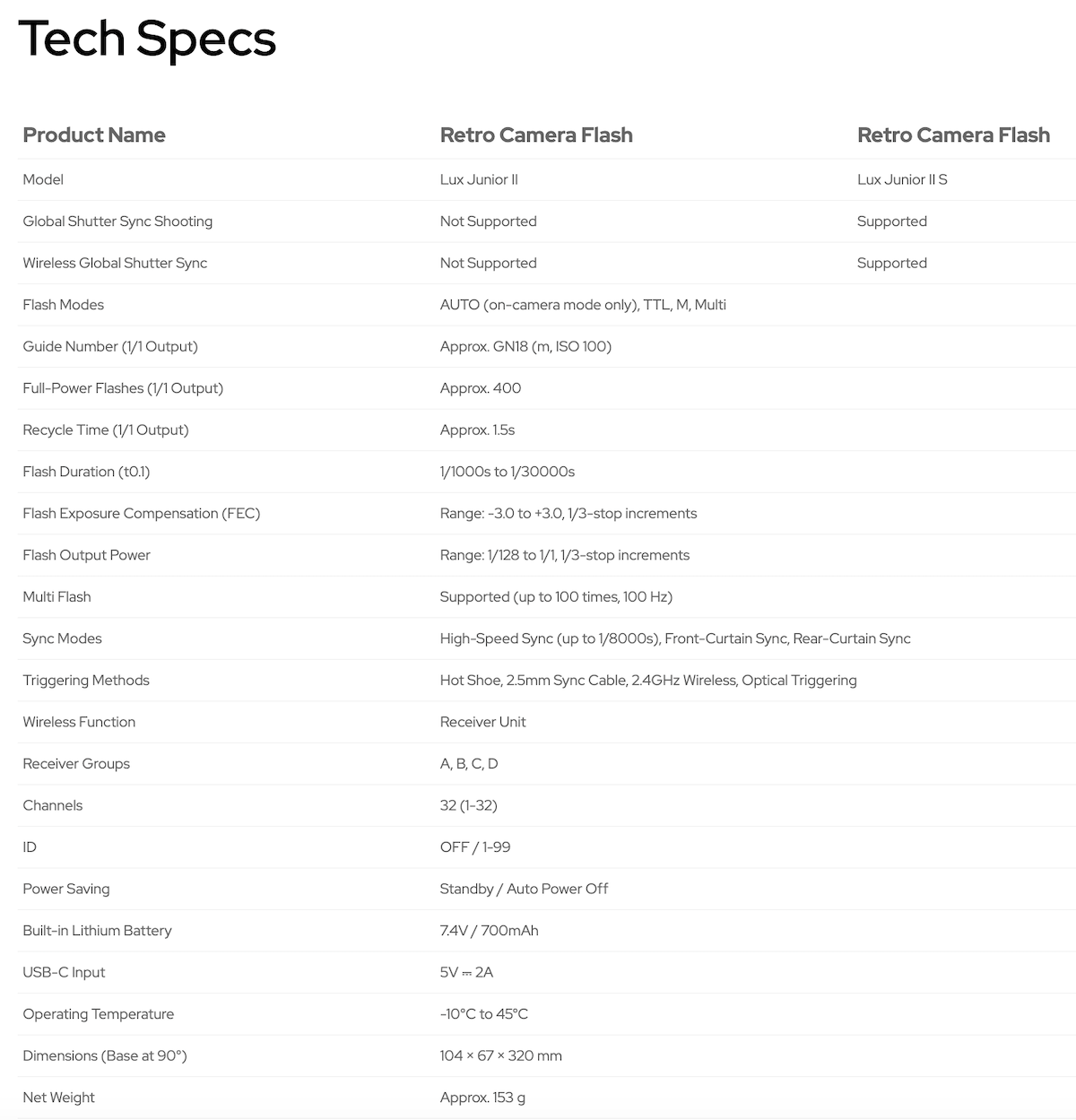
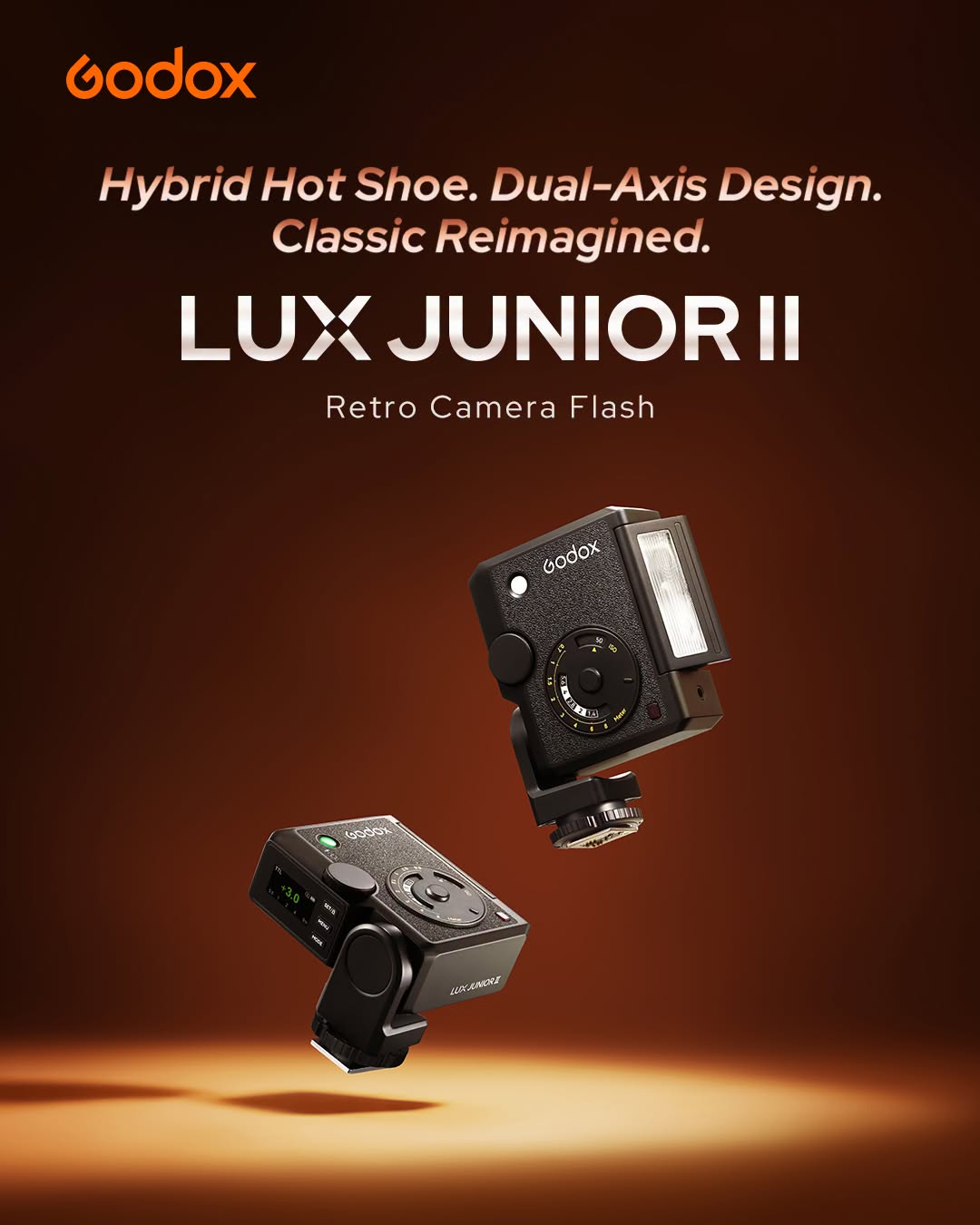
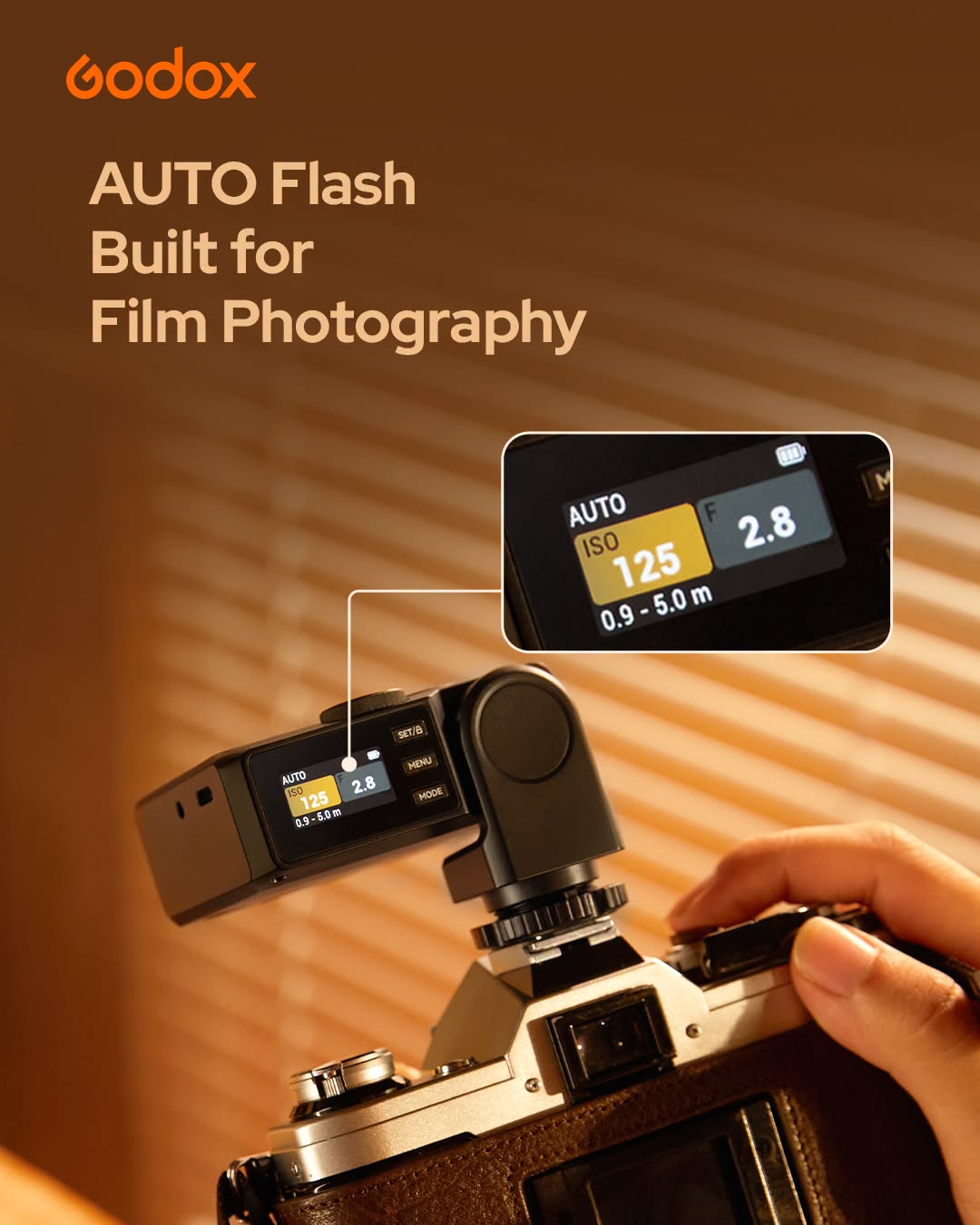
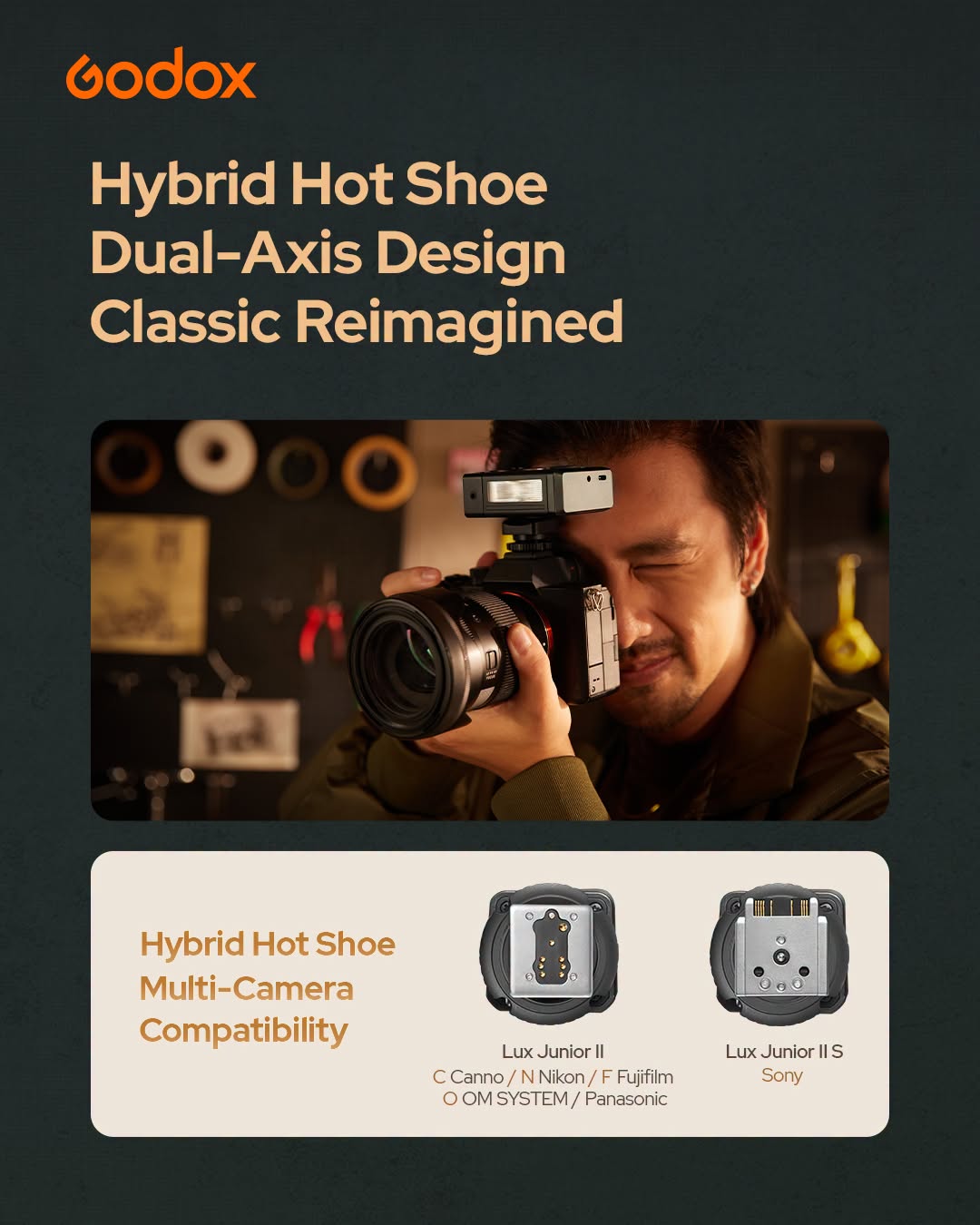
New Godox Lux Junior II retro camera flash launched for Sony, Canon, Nikon, Fujifilm, OM System, and Panasonic cameras


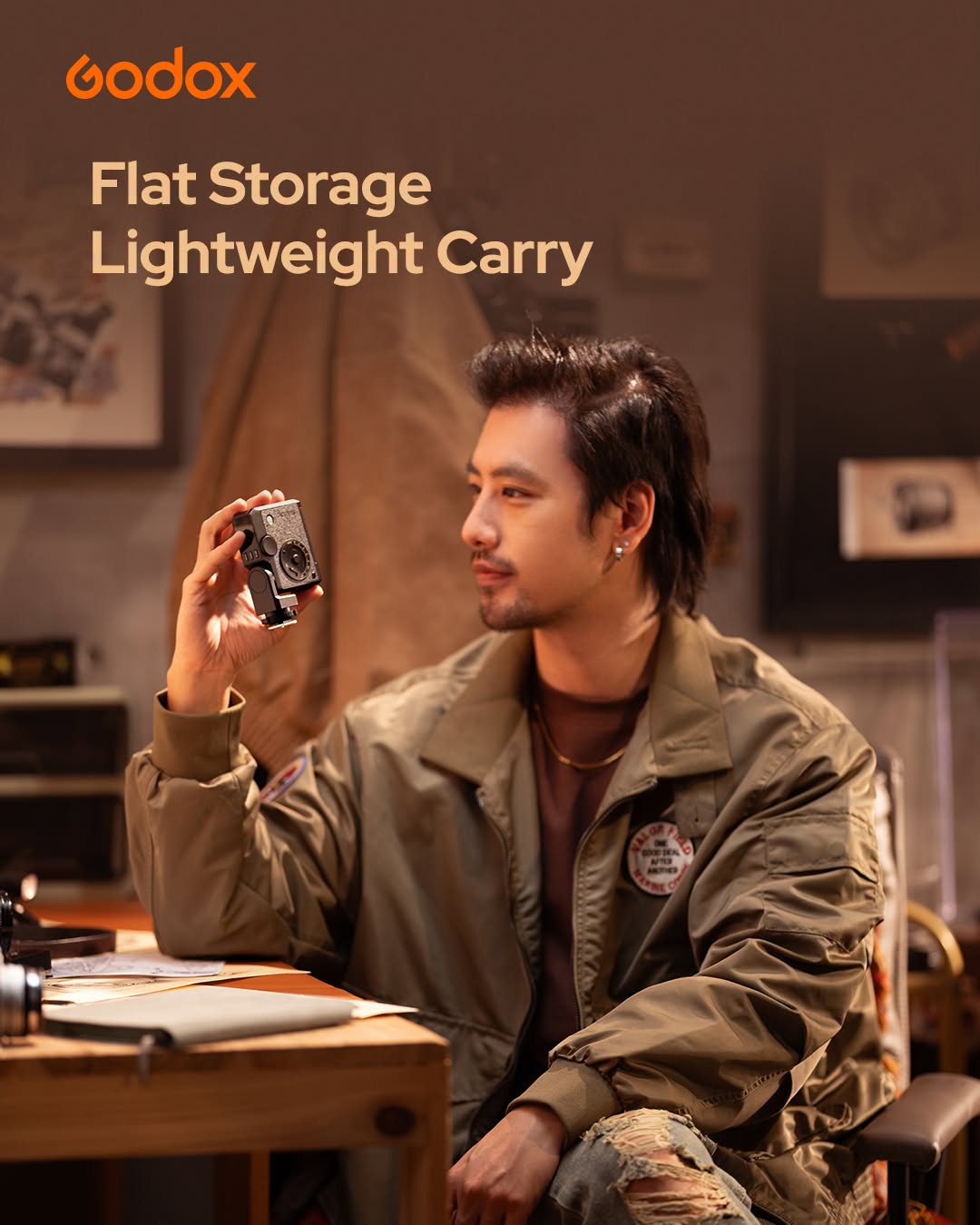
Godox launched a new Lux Junior II retro camera flash for Sony, Canon, Nikon, Fujifilm, OM System, and Panasonic cameras. Pre-orders are now open at B&H Photo. Additional information is available here:

  • TTL, Manual, Multi & Auto Modes
  • Compatible with Nikon i-TTL
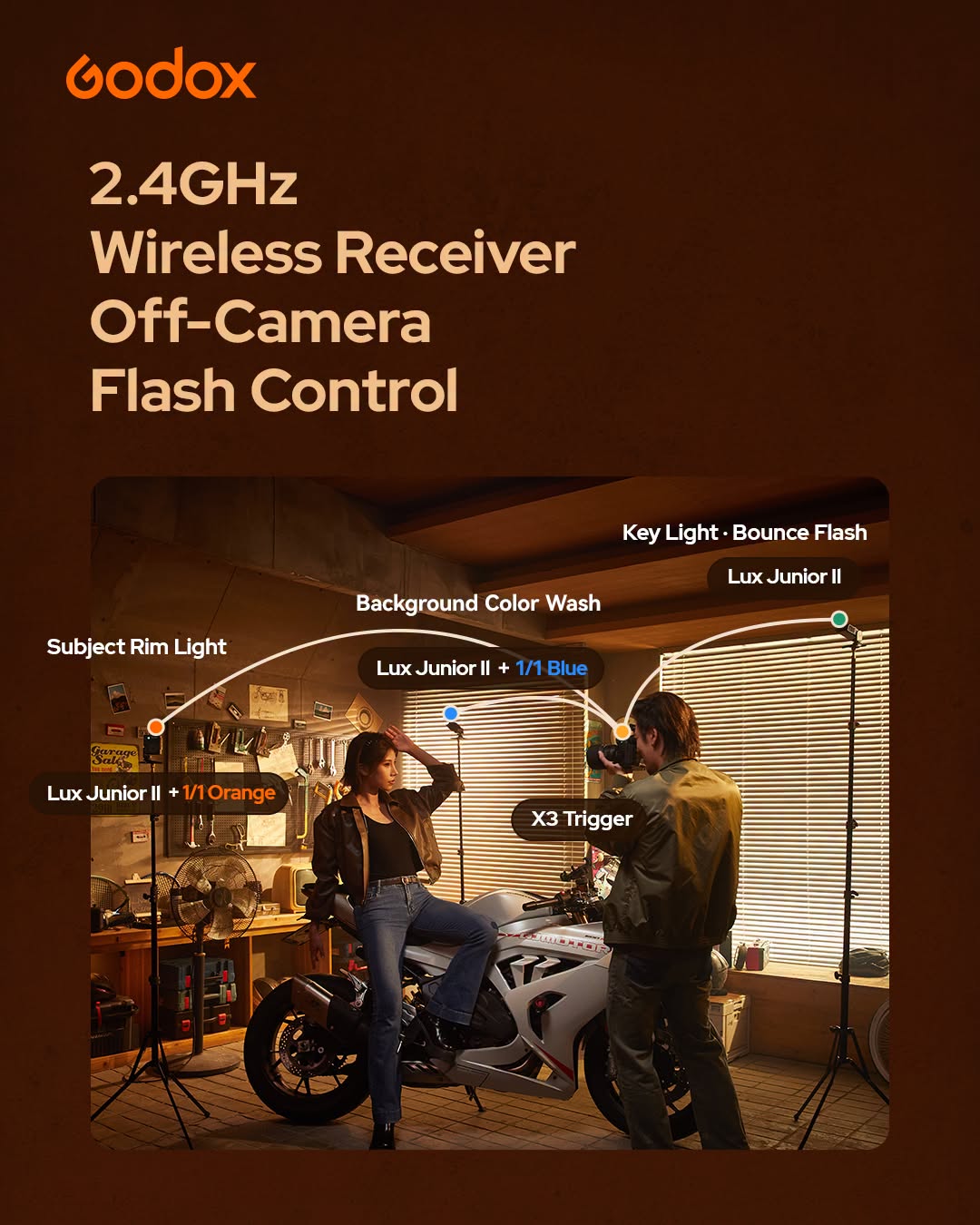
  • 2.4 GHz Wireless Receiver
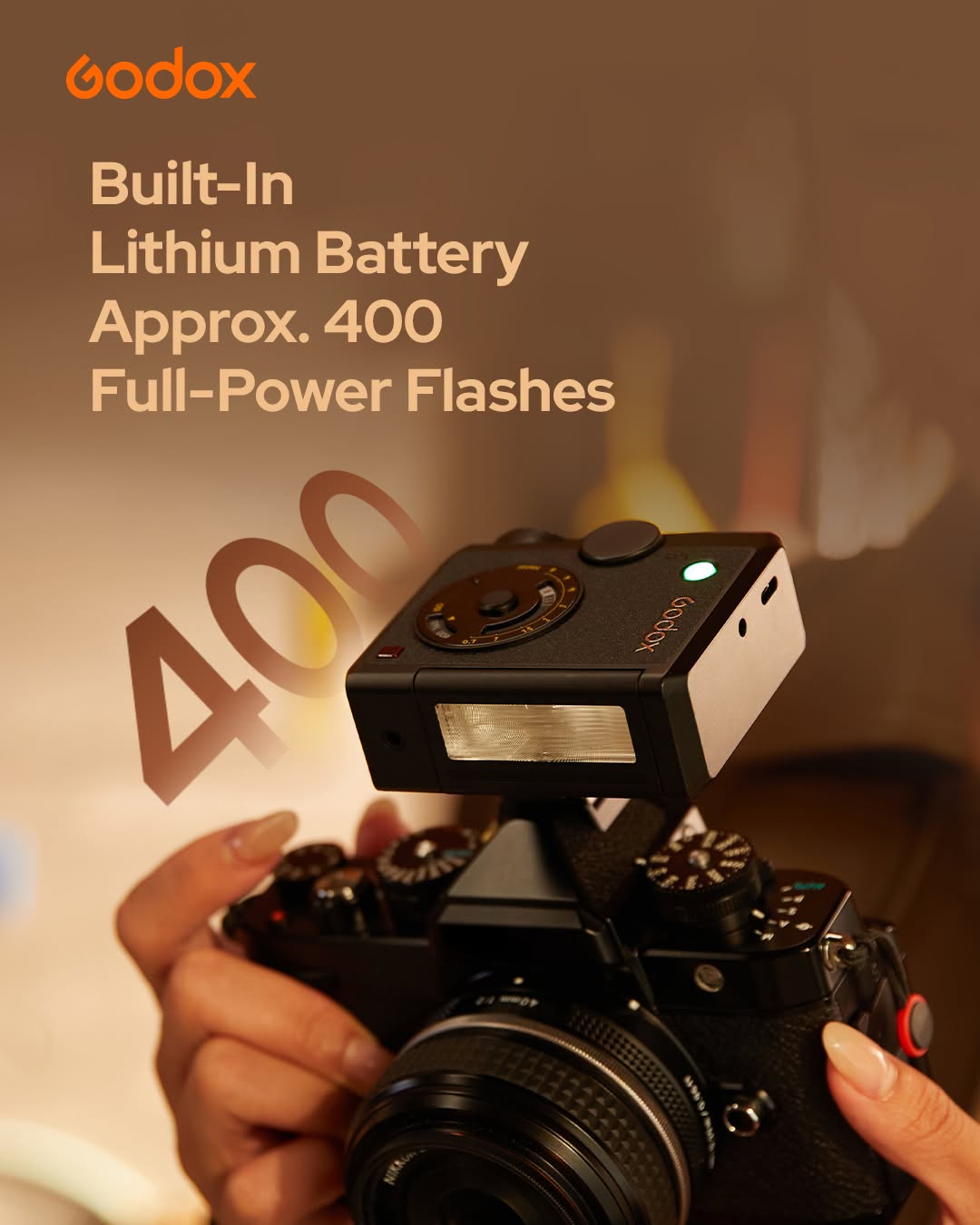
  • Built-In Rechargeable USB-C Battery
  • 1.5 sec Recycle Time
  • Up to 400 Full-Power Flashes
  • High-Speed, Front & Rear Curtain Sync
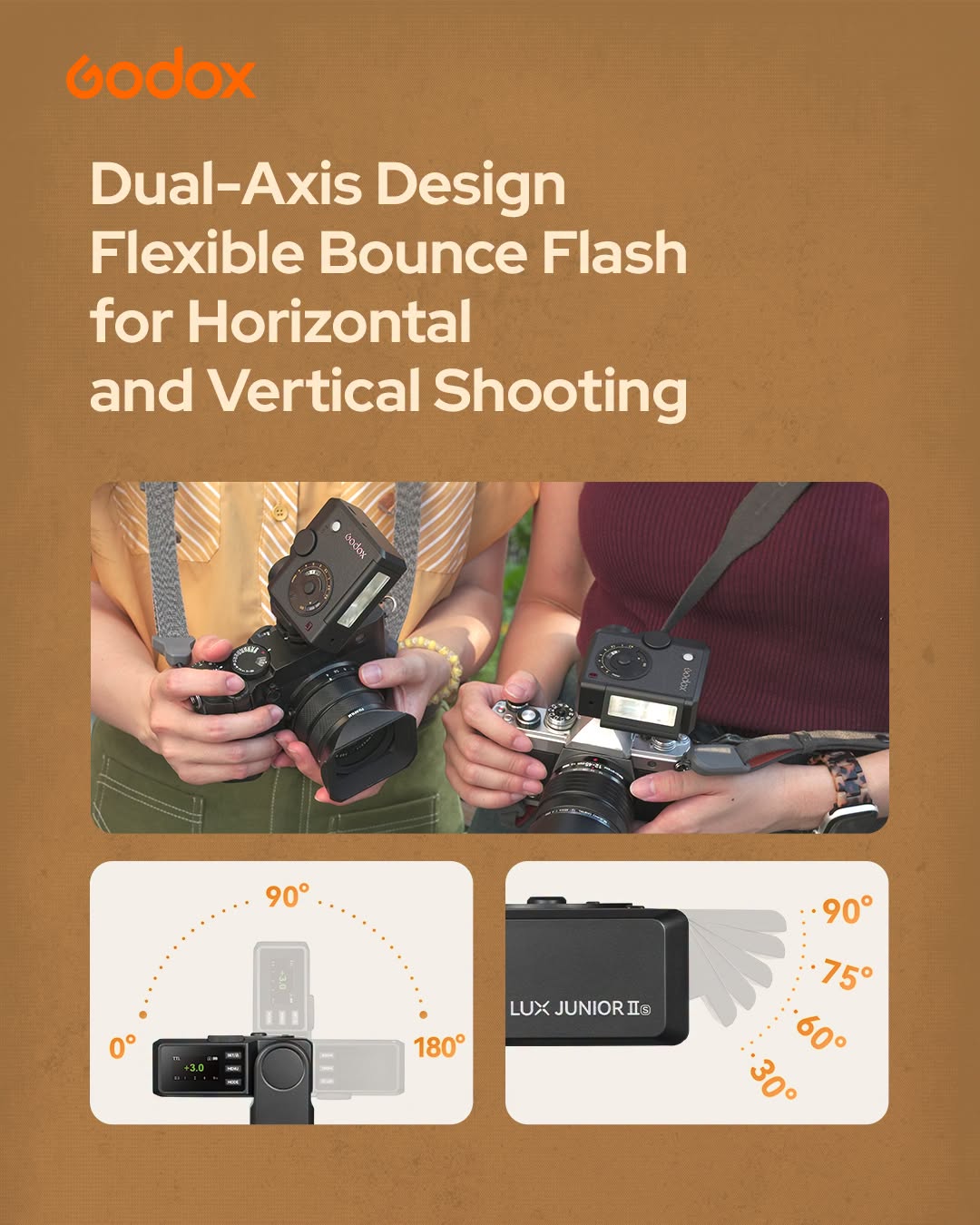
  • Dual-Axis Rotation Design
  • Horizontal & Vertical Orientations
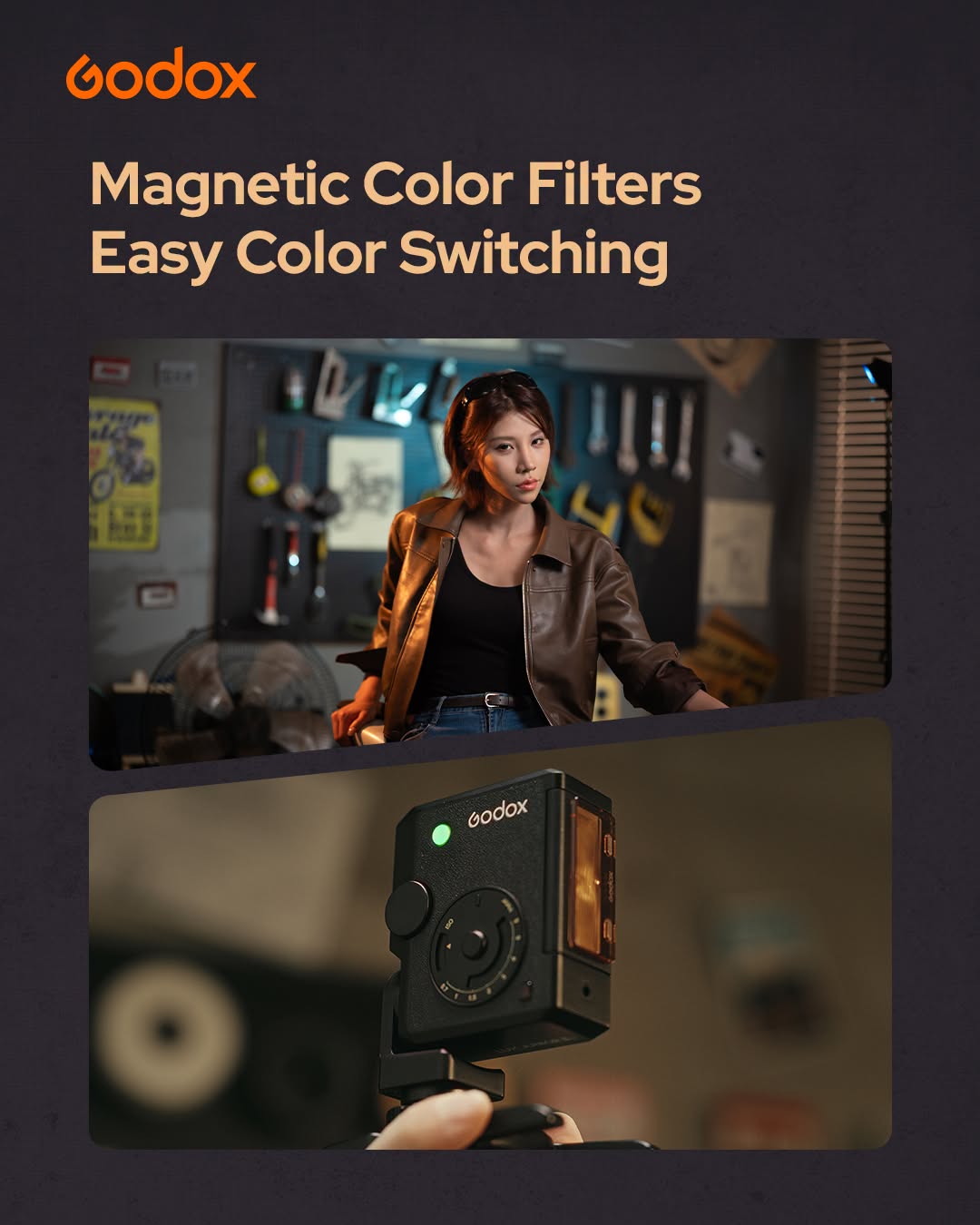
  • Includes USB-C Cable & Magnetic Filters

Via FujiAddict

The post New Godox Lux Junior II retro camera flash launched for Sony, Canon, Nikon, Fujifilm, OM System, and Panasonic cameras appeared first on Photo Rumors.

  •  

Adobe will tell you if an out of focus picture is your fault (for some cameras)

ACR has a new feature that lets you see where your camera’s focus point was set to

adobe photoshop wordmarkAdobe

The latest version of Adobe Camera Raw, 18.4.1, started rolling out a few weeks ago, but it quietly introduces a feature that I’ve personally wanted for years: the ability to see where your camera’s focus point was set to. This makes it much easier to tell whether it was your camera’s autofocus system that messed up, or if you simply put the focus point in the incorrect place (which is especially important when, say, you review cameras for a living).

The way it works is relatively simple (if a bit of a finger workout): you open up a Raw in ACR, and press Ctrl + Alt + Shift + O on Windows, or Command + Option + Shift + O on Mac. You can also right click on the image and select the “Show Autofocus Points” option. After you do, ACR will draw a red box around the camera’s selected focus point or area.

Screenshot of Adobe Camera Raw. It's displaying a photo of a dog, which has a red box drawn over its eye to show the selected autofocus mode.Screenshot: Mitchell Clark

While the feature isn’t a fool-proof way of assigning blame for an out-of-focus image – if the box is in the wrong place, it could either mean that you put it there in error, or that your camera’s tracking failed – it’s still very nice to have access to this information without having to view it on your camera’s screen, or in camera makers’ own software. Sometimes it’s just nice to be able to check where you were trying to focus, or, to pick a random example, to see where the photographers from your favorite camera review site were focusing in the images they uploaded to their sample galleries.

Screenshot of Adobe Camera Raw. It's displaying a photo of a dam, which is overlaid with a grid of boxes, some of which are highlighted in red to display the selected autofocus points

Currently, the feature is available for Raw files from Canon, Sony and Nikon cameras. We confirmed that we weren’t able to see autofocus points from the most recent cameras from any other manufacturer, so hopefully Adobe will expand the models it’s available to in the future. We’d also hope that this feature, which is currently only available in Photoshop’s ACR module, makes its way to Lightroom and Lightroom Classic, too.

ACR 18.4.1 also adds a “presentation” mode that shows the photo you’re editing full-screen with a customizable matte around it, and which lets you use the arrow keys to move through the photos you currently have open within the tool. It also lets you use the company’s AI-powered “Generative Expand” feature to fill transparent edges, and improves bidirectional gradient masks, adding support for feathering and giving you more precise control over them. You can download the update through the Creative Cloud app, or via the standalone installer.

About the Author: Mitchell started taking pictures at 10 and hasn’t stopped since. It’s been a wide-ranging adventure, spanning a wide variety of genres and locales, and occasionally dipping into fascinations with video and filmmaking. They honed their technical knowledge doing documentation, programing and QA, writing for The Verge, and just generally messing around on the computer to see what breaks.

Want to stay up to date on the latest product news and releases? Add DPReview as a preferred source to ensure our independent journalism makes it to the top of your Google search results.

add as a preferred source on google

  •  

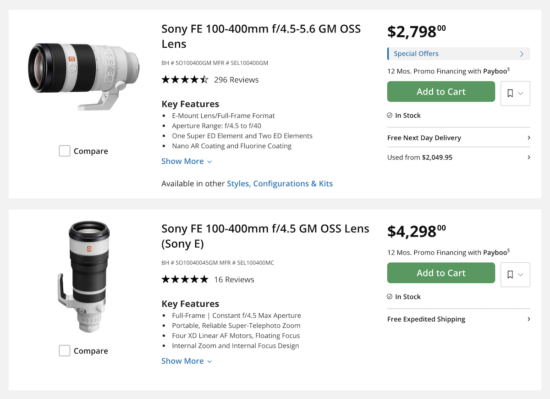
Sony to announce a new FE 100-400mm f/5.6-8 OSS lens with integrated focus limiter/AF/MF switch


In addition to the new FX camera, Sony will also announce a new FE 100-400mm f/5.6-8 OSS lens that will have an integrated focus limiter switch (∞-3m) into the lens’s AF/MF switch (according to camerainsider).

Sony already has two 100-400mm lens models with different aperture ranges:

The post Sony to announce a new FE 100-400mm f/5.6-8 OSS lens with integrated focus limiter/AF/MF switch appeared first on Photo Rumors.

  •  

US retroactive ban could wipe Xtra and other suspected DJI clones from shelves

A new enforcement push goes after suspected DJI clones and leans on the FCC’s recently expanded power to shut off previously‑approved gear.

Compact handheld gimbal camera labeled “XTRA,” floating against a soft yellow background, with its rear screen showing a person in an orange jacket raising an arm toward snow‑covered mountains.Xtra

The U.S. Federal Communications Commission (FCC) is proposing a retroactive ban on suspected DJI‑linked drones and cameras, affecting products sold under brands like Xtra and Skyrover. The move escalates last week’s announcement of proposed $25,000 fines against eight companies that allegedly ignored FCC inquiries about DJI‑related gear marketed in the U.S., penalties that were technically for non‑response rather than the hardware itself.

In the past, the FCC’s decisions generally couldn’t touch products that were already approved, but a recent rule adjustment changed that. As The Verge reported, in late 2025, the Commission amended its equipment‑authorization rules so it can now restrict the import and sale of previously approved devices from companies on its national‑security “Covered List,” without formally revoking those original approvals or disabling gear that’s already in users’ hands.

DJI itself was added to the Covered List in late 2025 after a national‑security review under the Secure and Trusted Communications Networks Act, a designation that already blocks new DJI radio‑equipped products from receiving FCC approval in the U.S.

A yellow drone and its accessories are on a white background.
Skyrover’s X1 drone has drawn scrutiny for its close resemblance to DJI’s Mini‑series designs and its ties to SZ Knowact, a manufacturer named in the FCC’s DJI‑linked enforcement action.
Skyrover

This could be the first time the FCC uses its new power, with potential bans on products from Cogito, Fikaxo, Lyno Dynamics, Skyhigh Tech, Spatial Hover, SZ Knowact, WaveGo, Xtra and XAG. The Commission says those products “pose an unacceptable risk” to U.S. national security because they are suspected of containing DJI‑designed radio components under different brand names.

Those who already own products from the at-risk companies won’t be impacted by the FCC’s decision and can continue using them. However, affected drones and cameras are expected to disappear from major online retailers and from the brands’ own sites if the order is finalized, and unsold inventory in the U.S. could need to be written off.

The FCC is accepting public comments for 30 days, so the ban won’t take effect immediately. The Commission says it will consider “specific evidence” that might show the products are compliant, though, as The Verge points out, the organization doesn’t have a great track record of listening to public sentiment. If you would still like to voice your opinion, you can do so via the FCC’s Electronic Comment Filing System on the FCC website.

Want to stay up to date on the latest product news and releases? Add DPReview as a preferred source to ensure our independent journalism makes it to the top of your Google search results.

add as a preferred source on google

  •  

You can now see fewer ads on DPReview. Here’s how

It only takes one step, but there’s more you should know

A hazy blue graphic with the words "Fewer Ads" in large bold lettersGear Patrol

It’s been about two weeks since we launched the new DPReview website, and our team is still hard at work. Along with fixing some critical behind-the-scenes bugs, we’ve been collecting your feedback and have already made some fixes where we could act quickly, with much more to come.

In the whirlwind since launch, however, there’s one new feature we haven’t talked about much: it’s now possible to see fewer ads on DPReview.

Ads were a source of frustration on the legacy site, and the new site gives you an easy way to cut down on them.

How to see fewer ads

It’s simple: use DPReview while logged in. That’s it. Logged-in readers see fewer ads, particularly the most disruptive kinds, like motion-heavy and video ads.

To be clear, this isn’t an ad-free experience; you’ll still see ads, just fewer of them. Consider it our way of thanking logged-in readers for your support as we continue to improve the ad experience for everyone.

Don’t have a DPReview account? Now’s a great time to create one. Just click the Register link to get started.

Website interface displaying camera news articles with accompanying images and brief descriptions on the left, and a navigation menu on the right listing sections such as News, Reviews, Forums and Sign In.
The Sign In link appears in the upper-right corner of the website (L) or in the mobile menu (R). You can also register to create a new account.

We know nobody loves ads. Believe me, we don’t either, but they’re a necessity to keep the site running. It costs real money to operate DPReview, and advertising is an important part of how we cover those costs. It’s not our only source of revenue, but it’s one of the things that lets us offer all of our content for free, whether you visit every day or once in a blue moon.

We also get why people use ad blockers. The reasons aren’t lost on us. We just ask you to keep one thing in mind: when you block ads, you’re not only preventing us from earning revenue, you’re actively costing us money. A photography-rich site uses a lot of bandwidth, and that’s a big part of our expenses. Every time you load our content without ads, we lose money, which makes it harder to do things like pay our writers and maintain our servers.

So if you’ve been browsing with an ad blocker, we ask that you try the new site without it (while logged in). We think you’ll find the ads less intrusive than they were on the legacy site, and you’ll be helping us stay on the internet.

In case you missed it

If you haven’t seen our earlier coverage about the new website, a few links are worth your time:

Gear Patrol founder and CEO Eric Yang – a DPReview user for over two decades – wrote about why we needed to rebuild the site from the ground up, including some helpful historical perspective.

If you want to track improvements as we make them, report a bug or usability issue, or just discuss the new site in our forums, we’ve published a guide on how to do that.

Finally, thank you for bearing with us as we improve the site. We know some things aren’t working as expected and that there’s plenty left to fix and improve. We appreciate your patience while our team works overtime to address those issues so we can remove the beta logo from the site.

About the Author: Dale Baskin is a professional photographer, writer, and filmmaker based in the Pacific Northwest. He is the Managing Editor of DPReview.com.

Want to stay up to date on the latest product news and releases? Add DPReview as a preferred source to ensure our independent journalism makes it to the top of your Google search results.

add as a preferred source on google

  •  

Peak Design’s latest product is the start of a new ecosystem

The Peak Design Field Bracket is designed as a modular system with optional accessories for greater versatility.

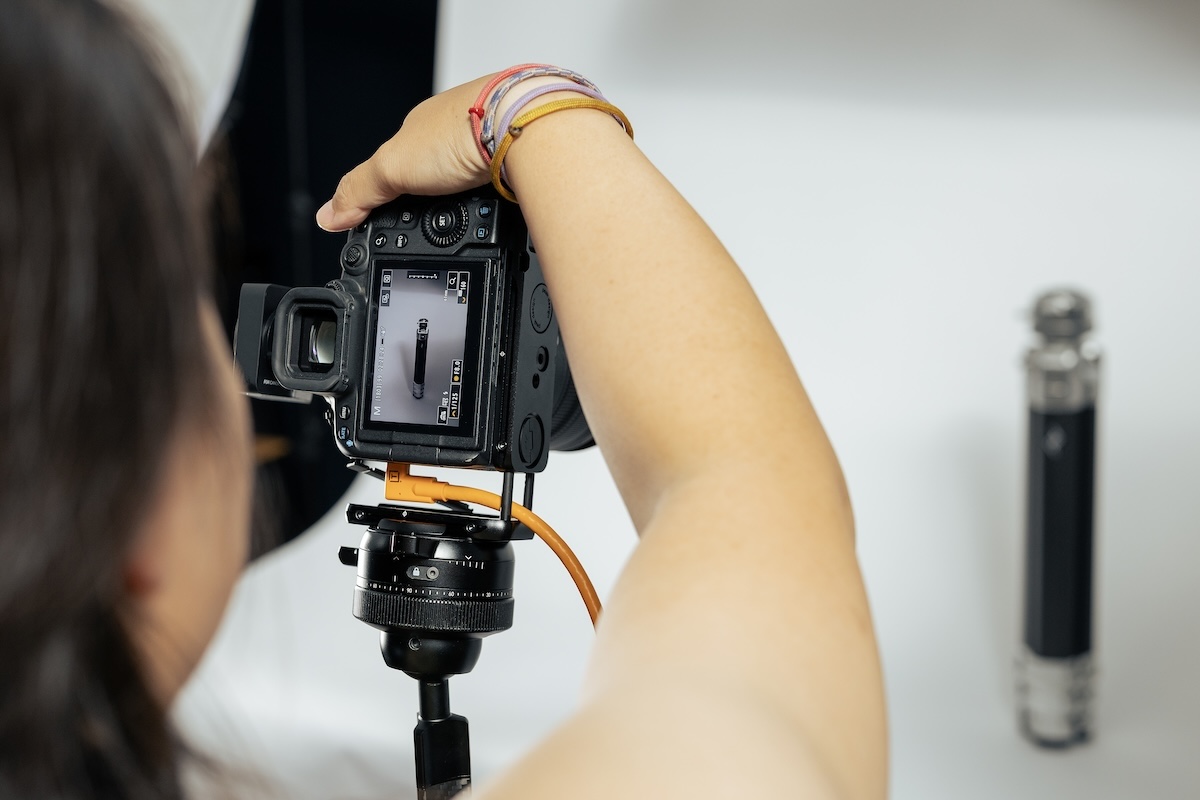
An over-the-shoulder view of a photographer adjusting a tripod-mounted camera to photograph a vertical product against a white backdrop.Peak Design

Peak Design’s latest product is much more than just a standard L-bracket.

After becoming a go-to brand for tripods and various ways to carry your camera around, Peak Design is tackling the next piece of the puzzle: the L-bracket. As is its usual style, the company isn’t content with simply making a piece of hardware that makes it easy to switch between portrait and landscape shooting. Instead, it has built the Field Bracket as a modular system, launching it alongside additional accessories that aim to solve multiple issues.

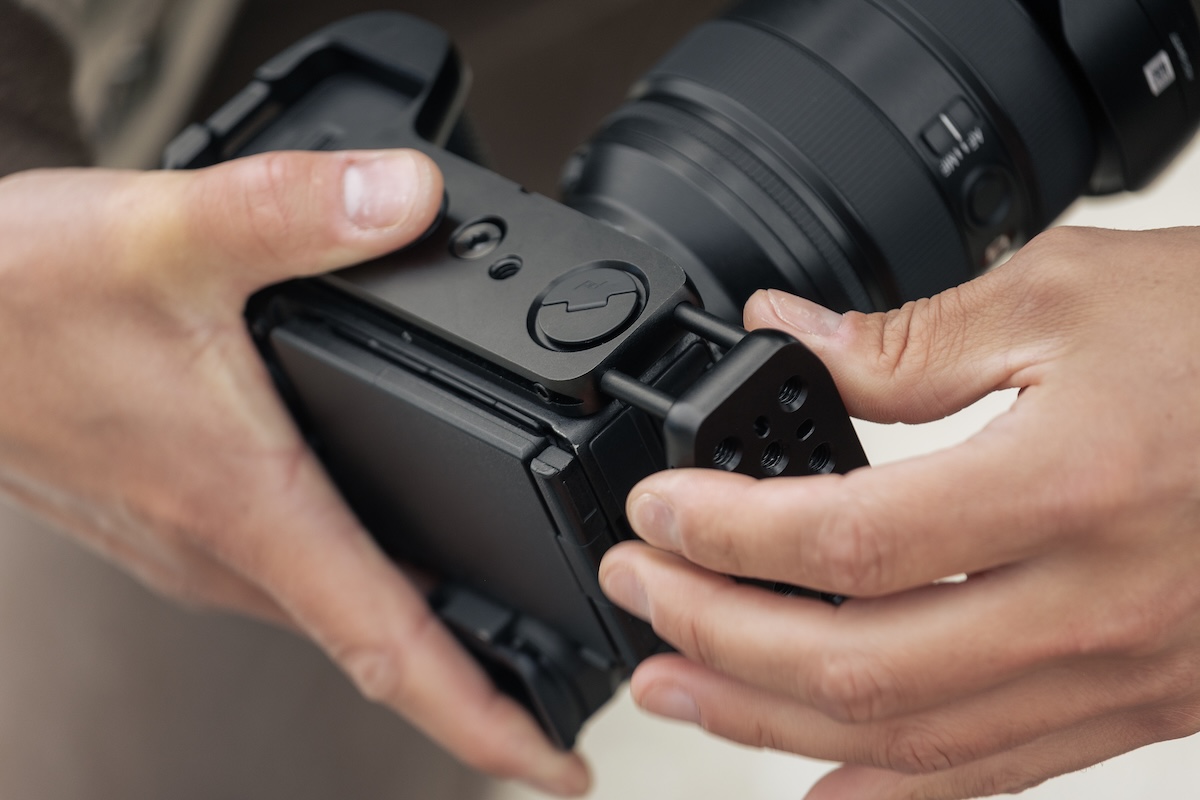
The Field Bracket takes design cues from the “Field” tripod plate the company released last year. Like the Field Plate, the L-bracket doesn’t require a tool for installation. Instead, it uses the company’s “Field Latch” mechanism, which features a tab that pops up with the press of a button, turning into a thumb-drive handle. That means no more relying on having a hex tool on hand at all times.

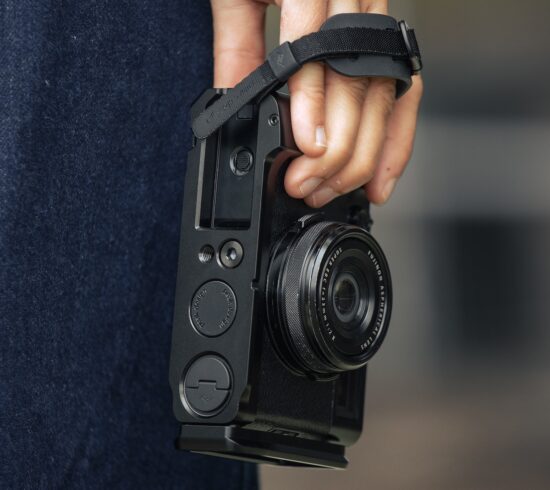
Close-up of hands adjusting an extendable L-bracket or cage attached to a mirrorless camera with a large lens.
The bracket is modular, so it can be used as a low-profile base plate as well. It’s designed to fit into Arca-style tripod heads without a separate plate.
Peak Design

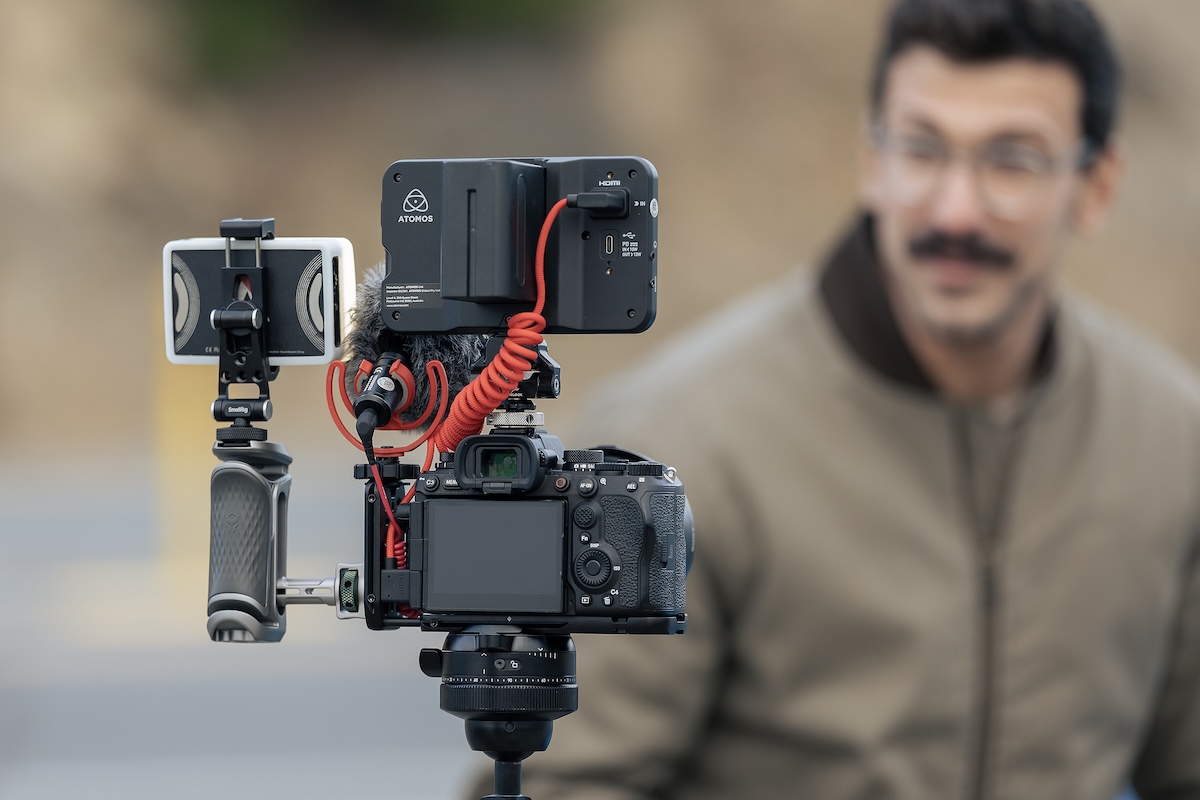
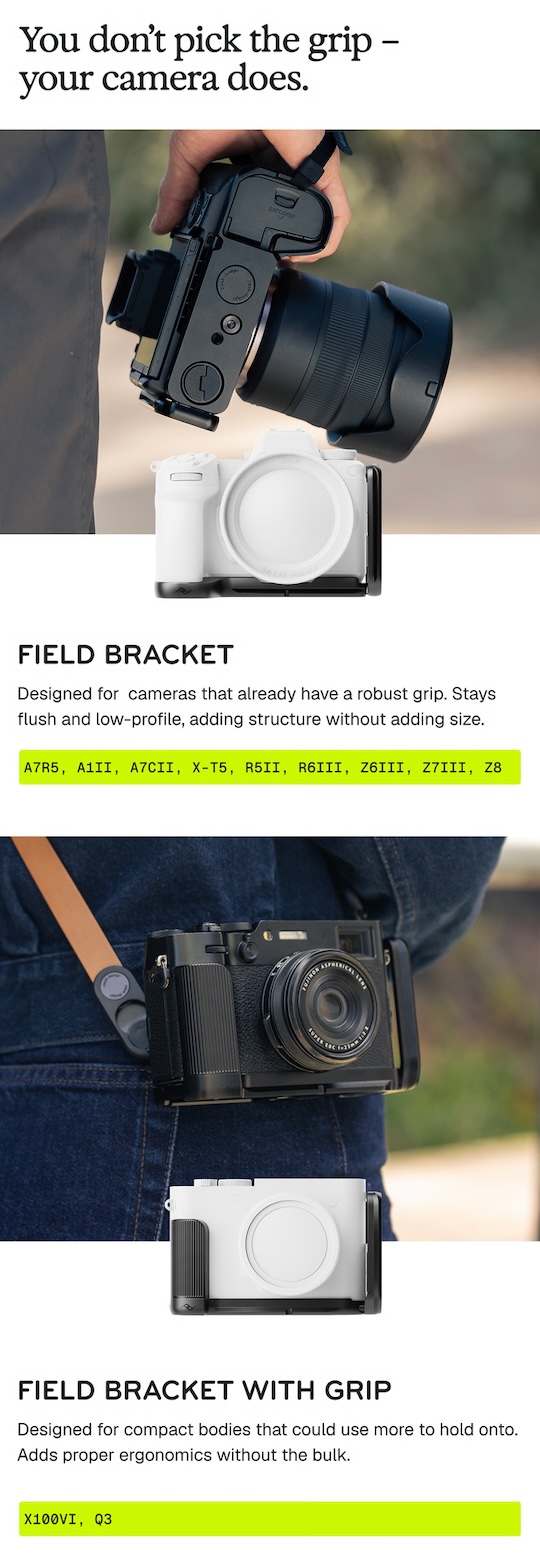
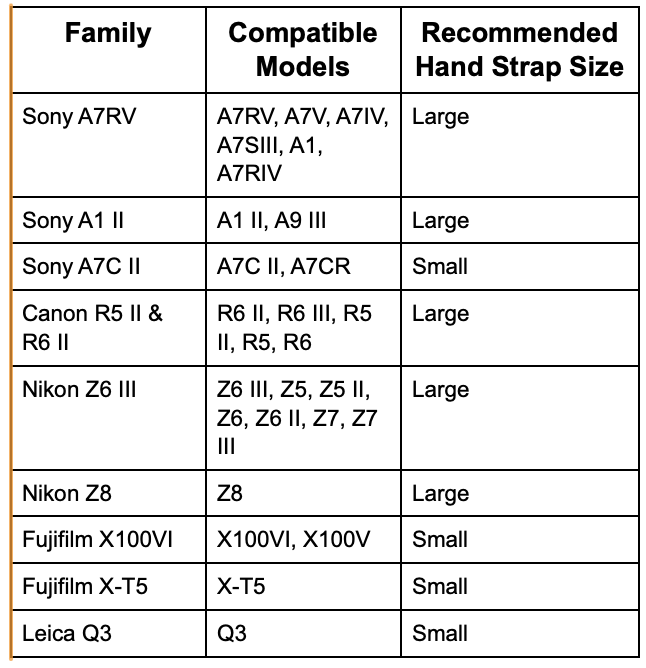
The tool‑free design makes it quick and easy to attach the part of the bracket that goes up the side of the camera, transforming from a simple base plate into a full L‑bracket for shooting in portrait orientation on a tripod. Users can also adjust the upright position to provide room for tethering cables, making it easier to use in a studio setup. The Field Bracket is camera-specific, with versions for select Sony, Canon, Nikon, Fujifilm and Leica camera systems.

Peak Design says that the Field Bracket is the base of a modular system of accessories. In that spirit, it’s also launching the Beacon Finder Tag, a smaller version of its card-sized tracker that it released with its wallet system and which ties in with Apple’s Find My ecosystem. Peak Design says the tag is the first tracker specifically designed to fit in Arca-compatible camera plates, offering a discreet way to keep track of camera gear.

An exploded-view product rendering shows a white mirrorless camera with various black accessories.
The Cheese Plate, Hand Strap and Beacon Finder Tag are all optional accessories sold separately.
Peak Design

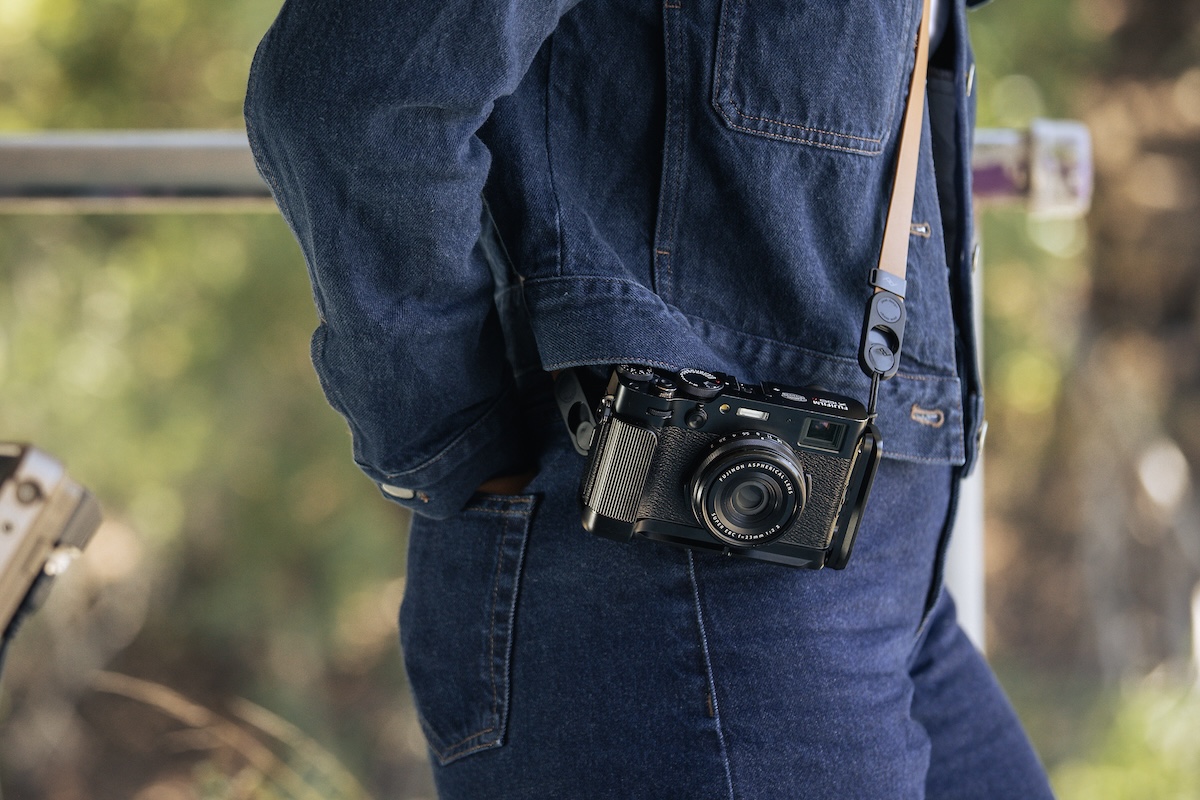
The company has also created a few additional new accessories for the Field Bracket. Its Cheese Plate adds 1/4″-20, 3/8″-16 and cold shoe mounting points for adding accessories like lights, mics, monitors and more. There’s also a hand strap, making it easier to work handheld with it attached to your camera. No matter which accessories are attached, Peak Design says all your camera’s ports and controls will remain easily accessible. It also allows full integration with existing Peak Design accessories, such as its camera straps and Capture Clip.

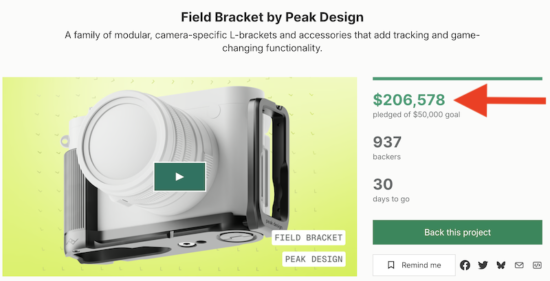
As is typical for Peak Design product launches, the new gear will first be available via Kickstarter (its 17th such launch). The Kickstarter campaign will allow users to purchase the system at a discount before the retail release. The camera-specific Field Brackets have an MSRP of $150, while the Cheese Plate, Hand Strap and Beacon Finder tag will be sold separately, starting at $40.

Press release:

Peak Design Rethinks the Traditional L-Bracket with New Field Bracket System

A tool-free, modular L-bracket system that gives photographers flexibility on and off their tripod

San Francisco, CA (July 21st, 2026)Peak Design, Peak Design, a global leader in camera accessories and everyday carry solutions, is proud to announce Field Bracket™, a modular L-bracket system that eliminates many of the compromises of traditional L-brackets. While L-brackets have become indispensable for quickly switching between portrait and landscape tripod shooting, they’ve remained largely unchanged, fixed in form, and often at odds with the rest of a photographer’s kit. Peak Design’s Field Bracket rethinks this accessory category with a modular design that adapts as photographers’ needs change.

At the heart of Field Bracket is a camera-specific baseplate precision-machined from recycled aluminum to hug the contours of each supported camera body. Using Peak Design’s custom Field Latch™ mechanism, photographers can attach or remove Field Bracket’s upright in seconds without tools, transforming the system from a low-profile baseplate into a full L-bracket for portrait tripod shooting. The upright can also be repositioned to provide clearance for tethering and other connected cables, allowing photographers to keep their camera mounted on a tripod without disrupting their workflow.

Field Bracket serves as the foundation for an expandable system. The optional Beacon Finder Tag is the first tracker specifically designed to fit inside an Arca-compatible camera plate, offering a discreet way to help locate and secure camera gear without the bulk of conventional tracking solutions. For added versatility, photographers can replace Field Bracket’s upright with the optional Cheese Plate, creating a lightweight rig with 1/4″-20, 3/8″-16, and cold shoe mounting points for lights, microphones, monitors, and other accessories. For handheld shooting, users can also add the optional Hand Strap, which integrates directly with Field Bracket to provide greater comfort and security. Across the system, Field Bracket preserves access to camera ports and controls while cleanly integrating with Peak Design Capture, Peak Design camera straps, and a wide range of third-party accessories.

“The best camera accessories disappear into your workflow until you need them. That idea shaped every decision we made with Field Bracket,” commented Peak Design Founder and CEO, Peter Dering. “Instead of asking photographers to permanently attach functionality they only use some of the time, we built a system that can transform in seconds while remaining just as rigid and dependable as a traditional L-bracket.”

Field Bracket will launch on Kickstarter as part of Peak Design’s 17th crowdfunding campaign beginning July 21. Customers will have an opportunity to pre-order the system at a limited-time discount before its retail release. Camera-specific Field Brackets will be available for select Sony, Canon, Nikon, Fujifilm, and Leica camera systems. The optional Cheese Plate, Hand Strap, and Beacon Finder Tag will be sold separately, allowing photographers to configure the system around their individual needs. Field Bracket carries an MSRP of $149.95, with optional accessories beginning at $39.95.

About the Author: Abby Ferguson holds an MFA in photography and blends a fine-art background with extensive editorial and commercial experience. She built and led an in-house imaging program for a large vacation rental company and has served as an associate editor at Popular Photography. She also teaches at a local community college and serves on its Photographic Technology Program Advisory Board, sharing her knowledge and enthusiasm for the medium.

Want to stay up to date on the latest product news and releases? Add DPReview as a preferred source to ensure our independent journalism makes it to the top of your Google search results.

add as a preferred source on google

  •  

Here are the top 10 best-selling compact digital cameras for the first half of 2026 in Japan


Here are the top 10 best-selling compact digital cameras of the first half of 2026 in Japan:

  1. Kodak Pixpro C1
  2. Kodak Pixpro FZ55
  3. Fujifilm Instax mini Evo
  4. Canon PowerShot SX740 HS
  5. Canon IXY 650
  6. OM System Tough TG-7
  7. Panasonic Lumix TZ99
  8. Kenko KC-AF11
  9. Kodak Pixpro FZ45
  10. Kodak Pixpro WPZ2
You can clearly see how the big Japanese brands are behind on the trend – Kodak has four cheap mediocre cameras in the top 10 list.

The BCN Ranking is a POS database that collects and aggregates daily sales data of digital cameras from major consumer electronics retailers and online shops covering approximately 40% of the Japanese retail market.

Used compact camera prices quadruple in Japan as CCD models make a comeback

Compact fixed-lens cameras are becoming more popular, while interchangeable-lens cameras are starting to lose their popularity

Source: BCNR

The post Here are the top 10 best-selling compact digital cameras for the first half of 2026 in Japan appeared first on Photo Rumors.

  •  
❌