Vue lecture

Panasonic did what Apple, Sony and Nikon couldn’t: overturn a Red Raw video patent

Japan’s patent court just invalidated one of the patents that stood in the way of Raw video’s adoption

An array of Red Cinema Camera products with the V-Raptor XL 8K at the frontRed

The Japanese Patent Office has declared one of Red’s key Raw video patents as invalid, following a challenge by Panasonic.

The court determined that many of the claims made in the patent, first filed in the US in 2008, would have been obvious to someone skilled in the subject area and familiar with existing developments.

The news, first reported by Thom Hogan, put Nikon’s video subsidiary in the position of trying to defend a patent that Nikon had previously argued was invalid.

The patent itself describes a high-resolution video camera that compresses its Raw data, and appears to correspond to the patent at the center of historic claims against Sony and Apple and the almost inevitable counter-suits from those companies. We reported on many of these challenges, as well as Nikon’s, over the years. 

Nikon famously resolved the dispute by buying the company. Some of Red’s cinema camera and Raw knowledge has subsequently been applied to recent Nikon models.

It’s difficult to know what the impact the rejection of this patent will be, given Canon, Panasonic, Sony and Blackmagic Design all now produce cameras with internal Raw video capture. One possibility the abolition of the license fees reportedly due to Red from users of Apple’s ProRes RAW codec. But given Red went from being privately held to being absorbed into Nikon, it’s difficult to get a sense for how significant these might be. And, of course, we shouldn’t assume even a minor cost reduction would necessarily get passed on to consumers.

About the Author: Richard graduated as a scientist but had a lot more fun writing and shooting for his university magazine. A number of years spent variously as a reporter, writer and editor on science and engineering titles combined his knowledge of science with his interest in images and words. But it was spotting the connections between emission spectra, white balance and all the nonsense he’d taught himself playing around in Photoshop that helped kindle an interest in digital photography. Searching for a camera led to him discovering DPReview and Richard was recruited by Phil Askey in 2007. He’s been combining his love of photography, communication and attention to detail (pedantry?) ever since. He has unusually strong opinions about lenses for the APS-C format.

Want to stay up to date on the latest product news and releases? Add DPReview as a preferred source to ensure our independent journalism makes it to the top of your Google search results.

add as a preferred source on google

  •  

Flashback’s “dream job” pays you to live and shoot in Hong Kong for up to 6 months

The film-inspired digicam maker is asking for a one-minute video, some samples of your work and a link to your portfolio – if you have one.

Black vintage-style camera with an orange stripe and "Flashback" label, featuring lens, flash, viewfinder, and slider; set against a light blue background.Flashback

Flashback, the company behind a digital camera built to replicate the disposable film camera experience, is advertising a “dream job” for a lucky content creator or photographer. The winner will spend up to six months in Hong Kong, fully paid, shooting content for the brand.

Flashback makes the One35 V2, a 13MP digital camera engineered to feel like a single-use film camera: it’s screenless, with a mechanical winding dial to advance frames, an optical viewfinder and a Xenon flash. Shots are capped at a 27-frame ‘roll’, after which images transfer to a companion app for ‘developing’ (with an optional 24-hour wait, a nod to dropping film at the lab).

Text graphic displays the words: "Flashback. DREAM JOB. What if you could spend the next three to six months living in Hong Kong, travelling and getting paid to create content with the Flashback team?"
Flashback is offering one lucky photographer or content creator up to six months in Hong Kong, all expenses covered.
Flashback

The company relocated its operations to Hong Kong to stay close to its Shenzhen production facility, so the city isn’t just a backdrop here; it’s central to the brand right now. The winner will be expected to produce photo and video content featuring the city.

Unlike most jobs, there’s no lengthy application process. The company simply asks for a one-minute video introducing yourself and explaining why you want the job, examples of content you’ve created and a link to your portfolio if you have one. Flashback hasn’t disclosed the compensation beyond describing the role as fully paid.

If that pitch sounds familiar, it should. Icelandair ran a similar campaign earlier this year, also built around a 60-second audition video, except it was hunting for the world’s worst photographer, on the theory that Iceland is beautiful enough to survive anyone’s bad photography skills. That one drew 127,642 entries from 178 countries, and the winner, Blanche Mortemard, walked away with a 10-day trip and $50,000.

If you shoot with any retro-inspired compact – Flashback’s or otherwise – love travel and want to get paid to document a city for six months, this could be your chance.

How to apply

Applications can be submitted through Flashback’s online form. The company hasn’t announced a deadline, so it’s probably better to apply sooner rather than later.

About the Author: Dale Baskin is a professional photographer, writer, and filmmaker based in the Pacific Northwest. He is the Managing Editor of DPReview.com.

Want to stay up to date on the latest product news and releases? Add DPReview as a preferred source to ensure our independent journalism makes it to the top of your Google search results.

add as a preferred source on google

  •  

Nikon is updating the D6 and D780’s firmware, six years after launch

They’re just minor bug fixes, but the releases are part of the story about Nikon’s commitment to software improvements

The Nikon D780 on an orange and yellow background.Dan Bracaglia

Nikon has released firmware updates for two of its six-year-old DSLRs: the D6 and the D780, as discovered by Nikon Rumors. While the fixes included in them are relatively minor, it’s impressive to see last-generation models getting some love, and it speaks to how Nikon has become an exemplar of improving its cameras through software.

According to the release notes, firmware version 1.71 for the D6 fixes an issue where photos taken with older D-type lenses would “sometimes be underexposed,” as well as one where using the recall shooting feature to quickly change settings could limit your shutter speed if you were also using Auto FP High-Speed Sync. Firmware version 1.21 for the D780, meanwhile, solves an issue where the camera could underexpose images if you were zooming in while shooting a high-speed continuous burst. Both firmware updates are available to download via the company’s website.

These are minor updates, but they’re illustrative of Nikon’s commitment to software updates

Nikon also released a firmware update for a much newer camera, the Z50II, though its changelog makes the updates to the D6 and D780 look like complete overhauls in comparison; it basically just changes the names of some menu items in Chinese.

While all of these are minor updates, they’re illustrative of Nikon’s commitment to software updates. Ask a camera enthusiast about post-release software support, and you’ll probably hear about Fujifilm and Kaizen, but it’s worth realizing that other companies like Nikon and Panasonic have caught on. In recent years, the company has released software updates that substantially improve the capabilities of its cameras be that the addition of bird detection mode to the Z6III, a new film grain mode and support for its Imaging Cloud service to the Zf or the ability to use shutter angle in video on the Z8.

This isn’t to say that Nikon has done things perfectly. It’s easy to find complaints about how some features take longer to come to some cameras than others, when it seems like the models should be on par with each other. And  the company has, on occasion, broken things with its updates. (Its still-unfixed Content Credentials implementation for the Z6III and issues with updating cameras with third-party lenses – even licensed ones – attached come to mind.) And while these issues may stem from the practical realities of software engineering and how many resources Nikon can put into it, that doesn’t change the fact that those issues don’t make for a great user experience.

Still, it’s commendable that Nikon is continuing to support older cameras and improve its existing models. I’m sure most Nikon users would rather it continue along that path with the occasional misstep, rather than it not bother with updates at all. Now we just need that update it promised for the ZR.

About the Author: Mitchell started taking pictures at 10 and hasn’t stopped since. It’s been a wide-ranging adventure, spanning a wide variety of genres and locales, and occasionally dipping into fascinations with video and filmmaking. They honed their technical knowledge doing documentation, programing and QA, writing for The Verge, and just generally messing around on the computer to see what breaks.

Want to stay up to date on the latest product news and releases? Add DPReview as a preferred source to ensure our independent journalism makes it to the top of your Google search results.

add as a preferred source on google

  •  

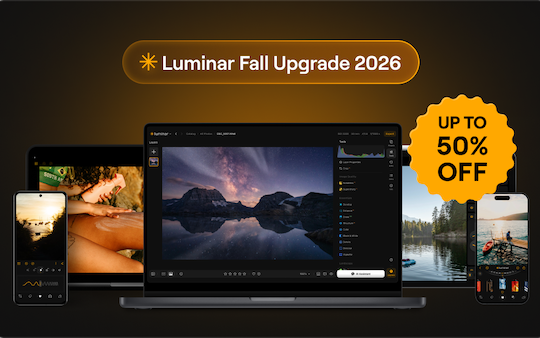
The major new Luminar Prime Fall Upgrade 2026 is now available for pre-order with a 50% off early-bird price


The major new Luminar Prime Fall Upgrade 2026 is now available for pre-order with a 50% off early-bird price. Here’s what’s new:

  • A redesigned experience — Cleaner navigation and a smoother editing workflow. Catalog and Edit are now unified into a single workspace with a redesigned right sidebar, so Presets, Tools, Edits, Info, and Extra tools (including generative AI) are always one click away. No more switching between modes.
  • More realistic Generative AI — Natural textures, believable light, and seamless results. GenErase, GenSwap, and GenExpand now produce more convincing fills, object replacements, and extensions that blend convincingly into the original photo.
  • Up to 25% faster exports — Deliver your finished photos even sooner (some reports note up to ~27% faster on both Windows and macOS).
  • Preset previews up to 4× faster — Discover your perfect look in seconds thanks to significantly quicker preset rendering.
  • Improved performance — Masking now uses up to 33% less RAM for faster, smoother editing, with more efficient resource use during batch work and complex selections.
  • 365 days of Luminar Prime at the best launch price — One year of full access to the new subscription model that replaces the old seasonal Upgrade Passes.
  • Luminar Web: Edit from any browser, wherever inspiration strikes. Yours forever — Browser-based editing (coming Fall 2026) so you can continue work on any computer without installing the app. Included with All Platforms / Max licenses.
  • Fall Upgrade 2026 — Including:
    • Crop 2.0 — AI analyzes the image and suggests multiple finished compositions based on the main subject, balance, leading lines, and visual weight (with helpful overlays such as golden ratio / golden spiral).
    • Atmosphere 2.0 — Much more realistic fog and atmospheric effects that intelligently blend into the scene, responding to light, color, and depth of field for natural spatial integration instead of flat overlays.
    • Enhance 2.0 — A smarter model that reads the photo more precisely, protects highlights better, respects existing colors, and avoids over-processing for more natural results.
    • AI Assistant 2.0 — Describe what you want in everyday language; the assistant recommends the right tools and can apply adjustments for you.
    • Plus other refinements (improved printing options, export with watermarks/frames, etc.).
  • Every new feature: Get every update released during your subscription — yours to keep forever — Features unlocked while your Luminar Prime period is active remain permanently available even if you later cancel.
  • Unlimited AI editing — Restoration, GenErase, GenSwap, GenExpand, and AI Assistant without credits or usage limits for the full 365 days (subject to fair-use policy).
  • Creative Library of Assets — Unlimited access to an ever-growing collection of 2,150+ presets, 500+ LUTs, 400+ overlays, 550+ skies, and 50+ photography courses.


The post The major new Luminar Prime Fall Upgrade 2026 is now available for pre-order with a 50% off early-bird price appeared first on Photo Rumors.

  •  

The photographer who swapped bulky camera bags for a grocery bag

With only a single camera and a simple 25-cent produce bag to carry it in case of rainstorms, community member Gordon Pritchard manages to capture some amazing shots.

Deadpool Portrait - Gordon PritchardGordon Pritchard

Meet Gordon Pritchard

Home base: Victoria, British Columbia, Canada

Community member Gordon Pritchard preaches simplisticity quite like no one else we’ve spotlighted before. With only a single camera and a simple bag to carry it in case of rain, and by using a digital darkroom, he’s managed to capture some amazing shots of alien-looking landscapes and beautiful wildlife around the world, while developing a career as a commercial graphic artist.

“I’ve been involved in the arts for as long as I can remember, but my love of photography started in my mid-teens when, as a summer job, I did photo retouching at a commercial printshop. Sixty-two years later, I’m still at it.”

Our ‘What’s in your bag?’ community spotlight series features readers sharing their favorite gear and photography, including from past DPReview collaborators. See below for what Andrew has to share.

How did you get started as a photographer and commercial artist?

View into a tulip
View into a tulip

Nikon COOLPIX P950 | Built-in lens @ 50mm (35mm equiv.) | F3.5 | 1/250 sec | ISO 100
Gordon Pritchard

“When I worked as a commercial artist, I designed the ads and related materials that launched the IKEA brand in North America and did advertising for Peterbilt trucks and Bushnell optics. I also taught design, illustration and photography at the Montreal Museum of Fine Arts school of art and design.”

Based on Gordon’s commercial artist work and related to the lead image in this article, Gordon has spent decades crafting his art, which sometimes merges his photography with other images. Many of the images he’s created are a combination of original photography, a mix of careful composites and various other techniques that give you a unique look that fits his vision for the mood of the scene.

“Starting in 1996, I was the quality in print manager at Creo, the largest graphic arts software and hardware manufacturer at that time. During that time, I was also involved in developing FM screening technology that enables magazines to reproduce images with photographic detail fidelity. The company was then acquired and is now operated by Kodak.”

What’s in Gordon’s bag

Gordon Pritchard's camera bag
Gordon Pritchard’s camera bag.
Gordon Pritchard

My favorite cameras(s): Nikon P950 and Sony SLT-A77 II

“Gear-wise, I like to keep things simple, so I use the all-in-one approach. My Nikon P950 with its built-in 24-2000mm equiv. range or my Sony SLT-A77 II with a Tamron 16-300mm zoom. It has become my favorite all-in-one. It has expanded my range of photo opportunities as well as my post-processing skills.”

My camera “bag”: “My camera bag is a light film grocery bag – the kind used for vegetables – just in case it rains. It’s very lightweight and fits in my pocket. Simplistic, but it works.”

My favorite accessories: “I always have a clear lens filter mounted to protect the front element – never had an image quality issue as a result. In my kit, I also have a +2 close-up lens (to allow for close-ups at distance), a polarizer filter (to deal with reflections or act as a mild ND filter), and a Neutral Density 8 (for blurring motion).”

“I might have a pocket multi-tool and lens wipe cloth with me. I keep a tripod in my car – just in case. Again, I try to keep things as simple as possible so as not to interfere with my photo taking.”

What do you like to shoot?

Portrait of an old friend
Portrait of an old friend.

Sony a77 II | Tamron 16-300mm F3.5-6.3 Di II PZD Macro @ 80mm | F9.5 | 1/250 sec | ISO 400
Gordon Pritchard

“I’m a retired commercial artist, so I’m drawn to any subject that appeals from an artistic or technical point of view, from micro to macro subjects. Currently, I’m focusing on the birds I see during my daily morning neighborhood walks. In the past, I did editorial photography for magazines, advertising, and personal pleasure. I’ve also taught photography part-time at the college level.”

“Because I can fine-tune the light, I use my bathroom as a studio for tabletop subjects like my toy and macro photography. Mostly, though, I photograph outdoors.”

Is photography art?

A dog's collar lights the action
A dog’s collar lights the action.

Sony SLT-A57 | Sony DT 18-250mm F3.5-6.3 @ 22mm | F5.6 | 11 sec | ISO 800
Gordon Pritchard

“I approach photography from an artist’s point of view – so I’m most interested in how light plays with the subject, tonal contrast, composition, and color rather than the subject itself. I played with those elements back in the old analog darkroom days, but the digital darkroom has totally expanded my ability to render images to interpret the subject rather than record it.”

“I was fortunate in that my work has taken me across North America, Europe and Southeast Asia. From a landscape photography point of view, I particularly love the alien-looking rock formations of the U.S. southwest as found in places like Valley of Fire, Nevada.”

Take a moment to visualize the scene

Song Sparrow
Song Sparrow

Nikon COOLPIX P950 | Built-in lens @ 196mm | F5.6 | 1/400 sec | ISO 400
Gordon Pritchard

“I always try to visualize the final image before I take the shot. That might result in returning to a scene at a different time of day or even year. Have an idea in mind as to why you are taking the photo – what made you decide to aim the camera and take a shot? Are you interpreting the scene or recording it?”

Gordon really enjoyed participating in this spotlight article and would love to hear what you think of his photography and to answer any of your questions in the comments below.

You can check out Gordon’s other work on flickr.com.


Editor’s note: This article continues a series, ‘What’s in your bag?’, highlighting DPReview community members, their photography and the gear they depend on. Would you like your photography to be featured in a future installment? Tell us a bit about yourself by filling out this form.

About the Author: Mathew Anderson is a proud Community Manager for the technology industry and a past visitor to DPReview.com for all his camera needs. He is currently the lead of DPReview’s community and primary communication link between the community and DPReview’s team.

Want to stay up to date on the latest product news and releases? Add DPReview as a preferred source to ensure our independent journalism makes it to the top of your Google search results.

add as a preferred source on google

  •  

Lightroom’s latest update brings Generative Expand to Mobile and Desktop

Adobe has unveiled Lightroom Classic 15.5, Lightroom Desktop 9.5 and Lightroom Mobile 11.5, bringing long‑requested tools like Generative Expand and improved masking controls to the Lightroom ecosystem.

Blue “Lr” letters in a modern, clean font centered on a dark blue background.Adobe

Adobe has rolled out updates across Lightroom Classic (15.5), Lightroom Desktop (9.5) and Lightroom Mobile (11.5), bringing long‑requested tools like Generative Expand and improved masking controls. The August releases aim to let photographers do more without leaving the Lightroom ecosystem.

Generative Expand and Render to DNG

On Lightroom Desktop and Mobile, the headline feature is Generative Expand, which Adobe first rolled out in Photoshop in mid-2023. The tool uses generative AI to extend a photo beyond its original borders, filling transparent areas created by perspective adjustments or making room for new aspect ratios without leaving blank edges. Generative Expand is still not available in Lightroom Classic, however.

Lightroom Classic 15.5 and Desktop 9.5 also introduce a Render to DNG command in the right‑click menu, which creates a new DNG file with your current edits baked in. It’s important to note that under the hood, it’s closer to a compressed TIFF, so you lose the ability to pull extra highlight or shadow detail from the original sensor data. The feature is mainly aimed at generative workflows and for flattening complex edit stacks. For example, you can refine a crop, render that version to DNG, then use Generative Expand to grow the frame around your new composition, all without sending the image out to Photoshop.

Smarter masking and catalog resilience

Both Lightroom Classic and Desktop also gain long-requested Feather and Edge sliders for AI masks. These sliders give photographers finer control over transition softness and edge precision when using Subject, Background or Object masks. Classic also adds in‑app lrcat‑data repair, allowing the software to detect and fix corruption in the catalog’s AI data store on startup. It’s an unglamorous but important safeguard when catalogs live on synced drives or tethered workflows run hard day after day.

Mobile gets serious AI and video tools

As mentioned, Lightroom Mobile’s August release brings Generative Expand to phones and tablets, but that’s not the only update. It also adds AI Denoise to iOS devices for cleaner high‑ISO files on Apple mobile devices. Plus, Adobe’s Animate feature, which turns a photo into a short video clip, now runs on Google’s Veo 3.1 Lite model, promising faster, more efficient photo‑to‑video clips.

On both iOS and Android devices, Adobe improved handling of masks with edge refinement created on the Desktop, so edits travel more reliably between devices. Mobile also gains natural‑language search, promising to make searching for images faster. On Android devices, justified grid and collapsible segments come to Gallery view, and both platforms pick up additional camera and lens profiles. Overall, these changes nudge the phone and tablet apps closer to full Lightroom clients rather than simple companions.

Quality‑of‑life upgrades for Classic

For Classic users, the August update also allows you to adjust the photo opacity when viewing cropped-out areas, for more precise cropping. Plus, Adobe has expanded GoPro, Laowa and Sigma lens support, improved Canon tether reliability via updated PTP support and added numerous other UI and performance fixes across both Classic and Desktop. Most of these are incremental changes, but the kind that can add up when you’re culling thousands of files or relying on Lightroom as the backbone of a studio catalog.

About the Author: Abby Ferguson holds an MFA in photography and blends a fine-art background with extensive editorial and commercial experience. She built and led an in-house imaging program for a large vacation rental company and has served as an associate editor at Popular Photography. She also teaches at a local community college and serves on its Photographic Technology Program Advisory Board, sharing her knowledge and enthusiasm for the medium.

Want to stay up to date on the latest product news and releases? Add DPReview as a preferred source to ensure our independent journalism makes it to the top of your Google search results.

add as a preferred source on google

  •  

Viltrox’s ‘silver trio’ gives Fujifilm shooters lenses that actually match their cameras

Viltrox is making it easier to get lenses that match your camera’s aesthetic.

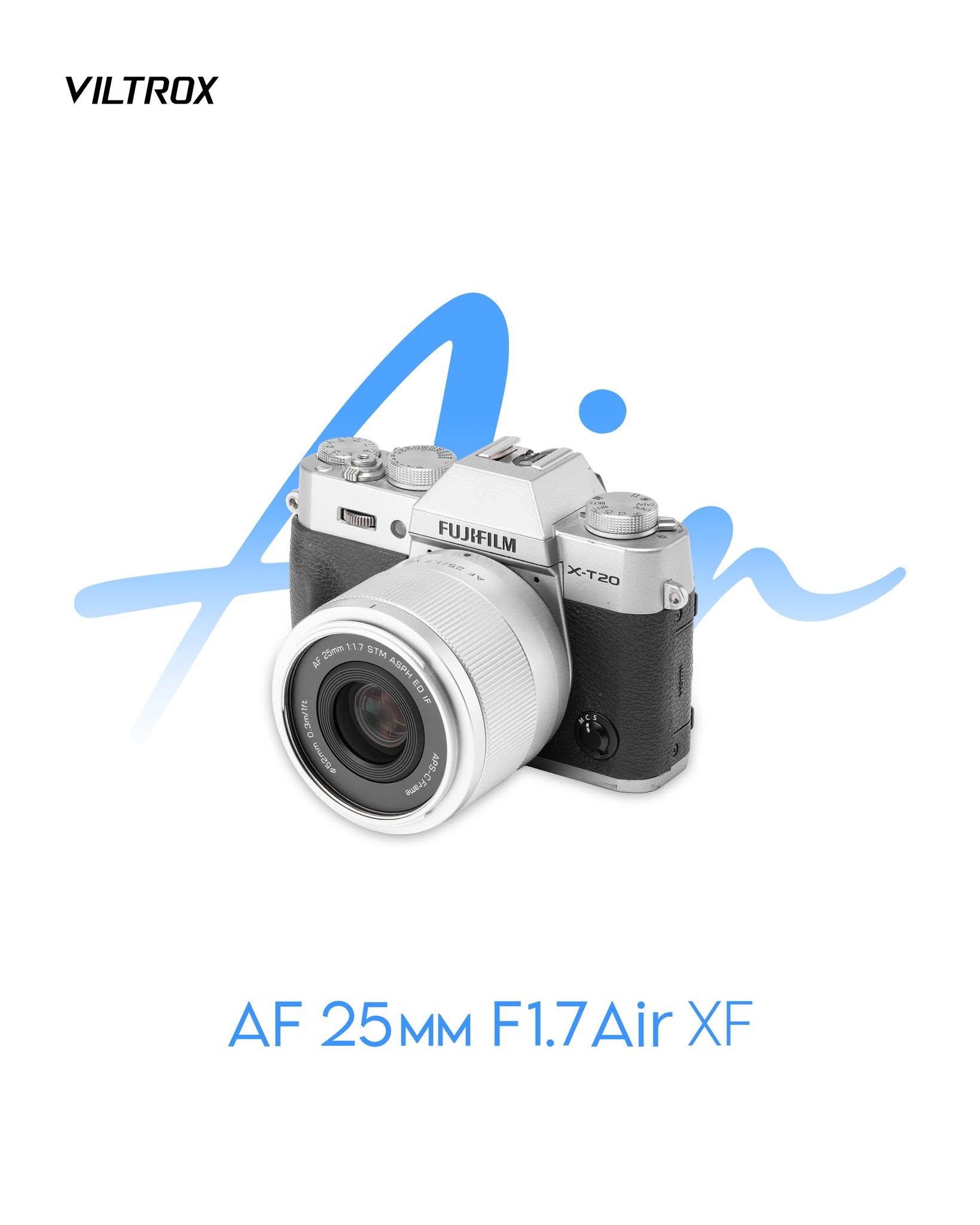
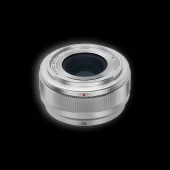
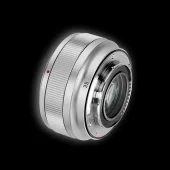
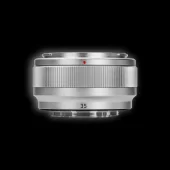
Image of the Viltrox AF 25mm F1.7 Air in silver on a silver Fujifilm X-T100.Viltrox

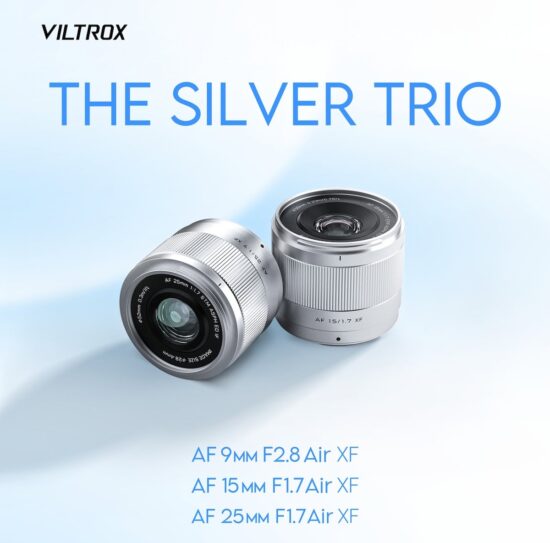
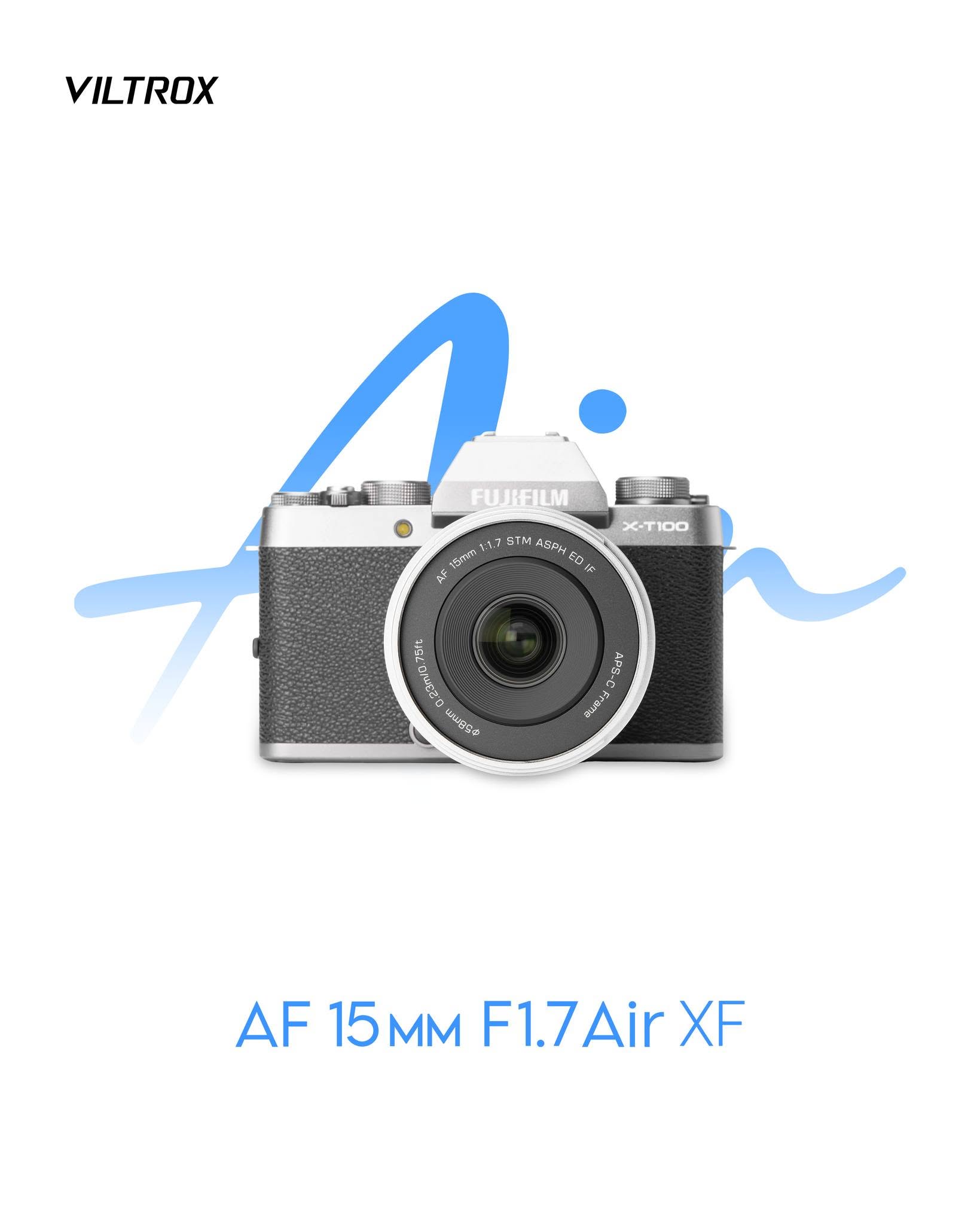
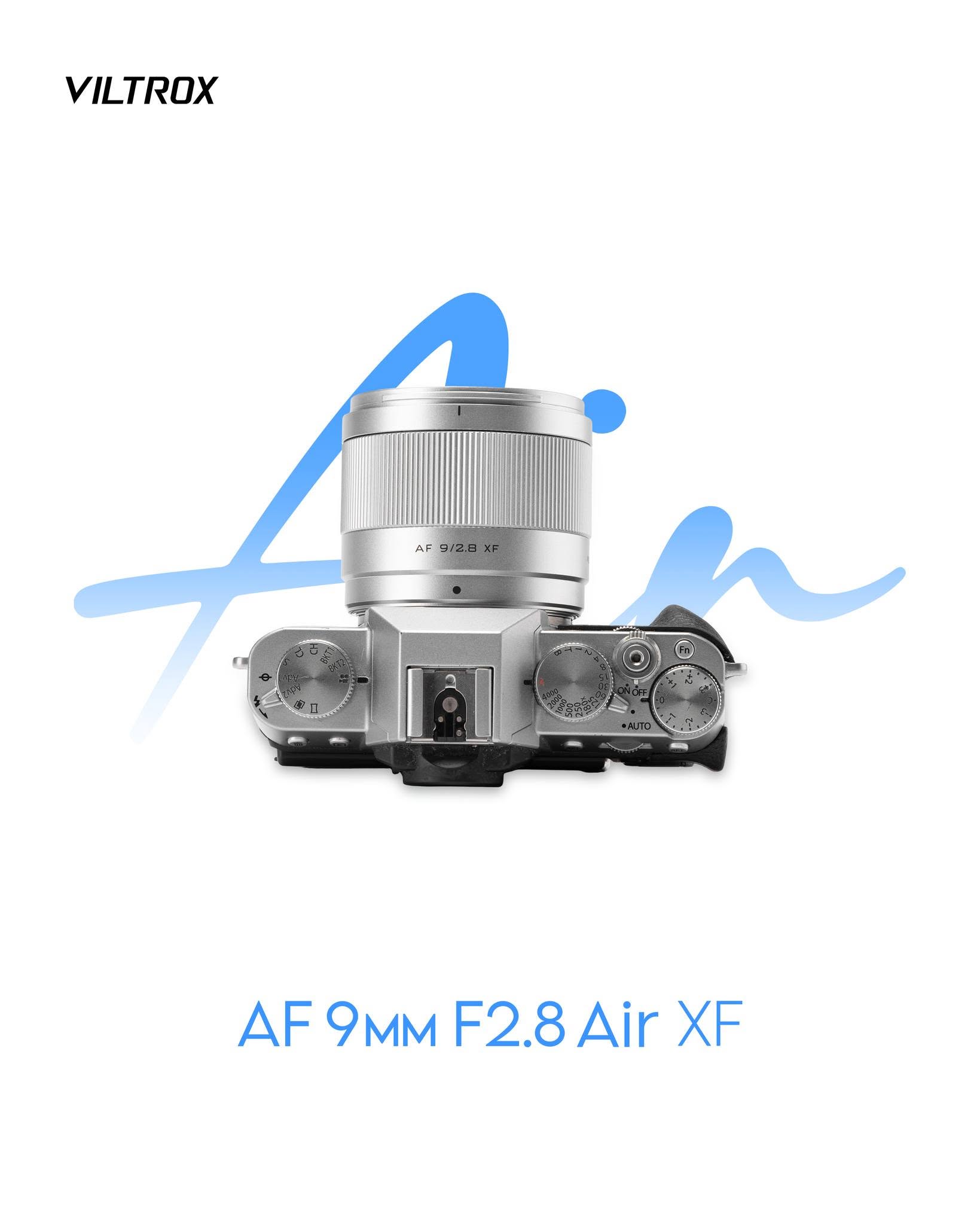
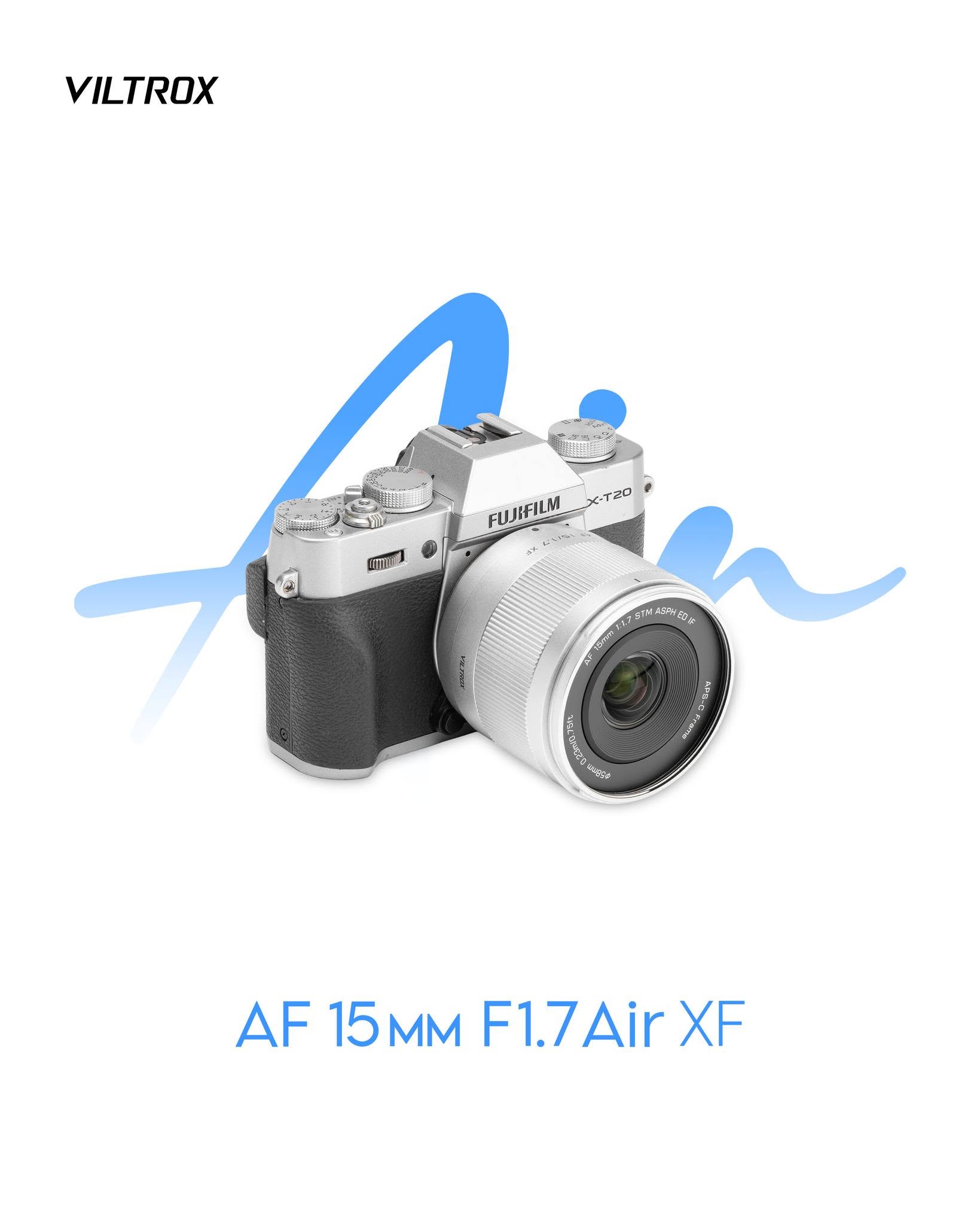
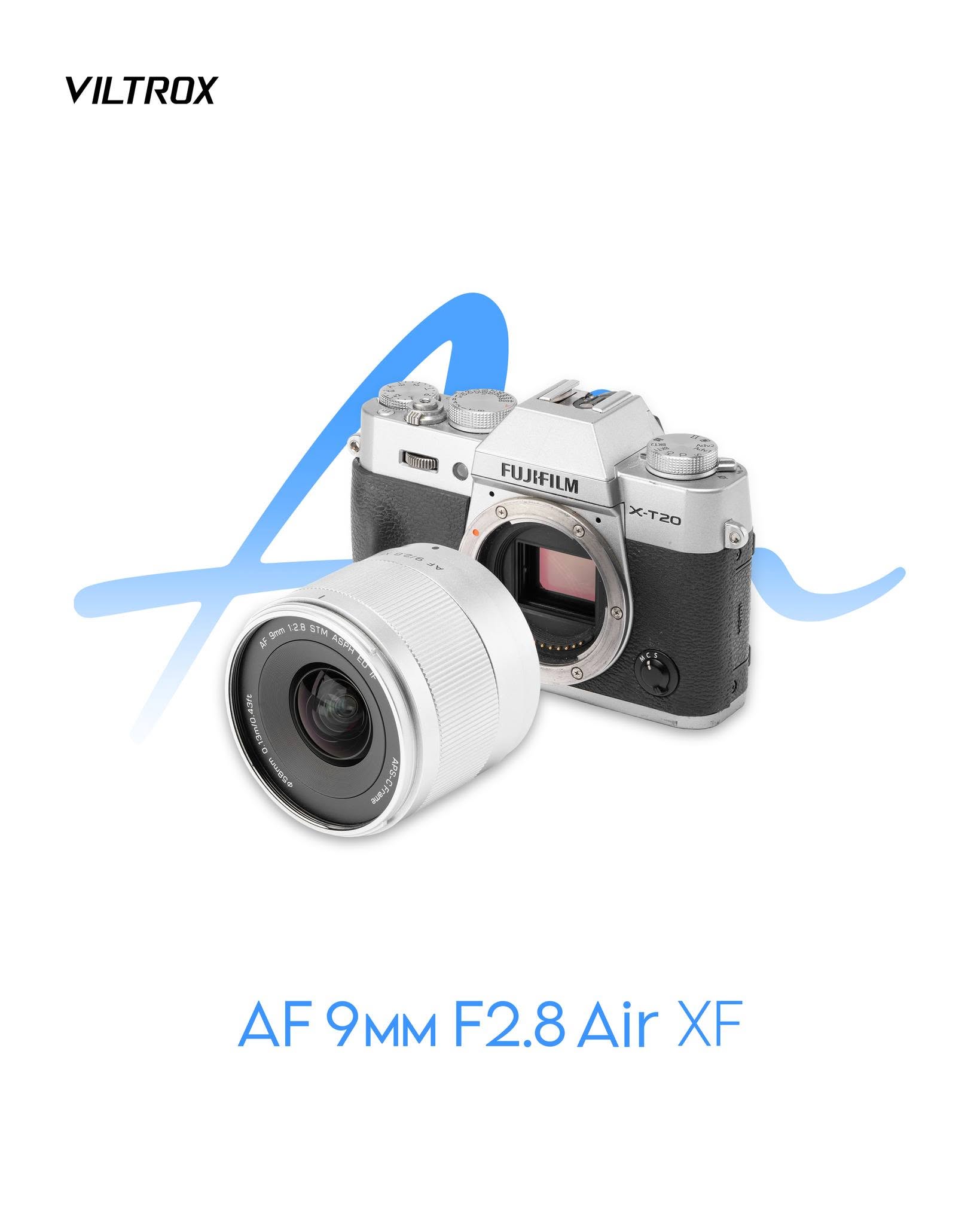
Viltrox is making it easier for owners of Fujifilm cameras with silver bodies to accessories. The company has announced “the silver trio” of lenses: the AF 9mm F2.8 Air, AF 15mm F1.7 Air and AF 25mm F1.7 Air for X mount, which you can now get with a coat of silver, rather than black, paint.

Apart from the different coloring, the lenses are the same as the black versions that the company released throughout last year. However, those undeniably looked like many other Viltrox lenses, which themselves have similar styling to the lenses released by other third-party manufacturers. The silver versions might stand out just that bit more, and should better match the myriad cameras that Fujifilm makes in a similar finish. It’s easy to imagine these being mounted to an X-M5, or an X-T30 III.

Despite the “silver trio” name, these lenses join another two X-mount lenses that Viltrox was also producing in silver: the AF 35mm F1.7 Air and the AF 56mm F1.7 Air. 

Of course, there will be those who prefer the black versions, and some people will scoff at the idea that anyone cares about what color their lens or camera body is, and whether those things match. There will also be those that wish the emulation of Fujifilm’s style wasn’t just skin deep, and that the lenses would include things like aperture rings, which both drastically change the aesthetic, as well as the experience of using them.

But whether it makes sense to the function over form crowd, many photographers clearly care about the color and decoration of their gear, as evidenced by the fact that Fujifilm itself sometimes sees fit to create silver versions of its lenses to sit alongside the black ones, and the frequency with which companies like Leica produce equipment in new colors. It’s nice to see a company providing these options on some of its budget-oriented gear as well; the prices vary depending on which lens you’re looking at, but they all come in under the $250 mark.

The silver versions of the lenses are available now from Viltrox’s website, at the same prices of their black counterparts. Humorously, the versions of the lenses for Sony E and Nikon Z mount are still only available in black for the time being (though neither company is as prolific as Fujifilm when it comes to releasing silver cameras).

About the Author: Mitchell started taking pictures at 10 and hasn’t stopped since. It’s been a wide-ranging adventure, spanning a wide variety of genres and locales, and occasionally dipping into fascinations with video and filmmaking. They honed their technical knowledge doing documentation, programing and QA, writing for The Verge, and just generally messing around on the computer to see what breaks.

Want to stay up to date on the latest product news and releases? Add DPReview as a preferred source to ensure our independent journalism makes it to the top of your Google search results.

add as a preferred source on google

  •  
  •  

L-mount and Nikon Z shooters are getting a tiny, feature-packed 40mm lens from 7Artisans

The comapny is bringing its autofocusing, ultra-light lens to new mounts.

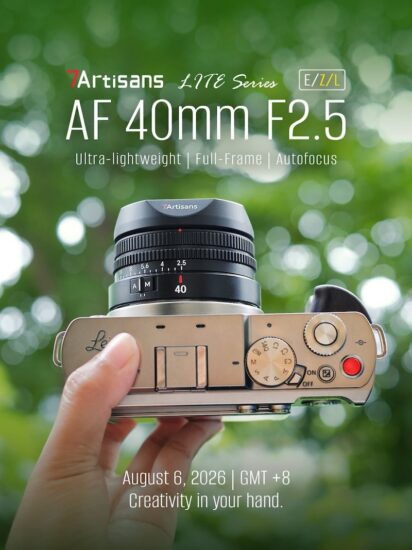
A 7artisans 40mm lens mounted to a Panasonic Lumix camera.7artisans

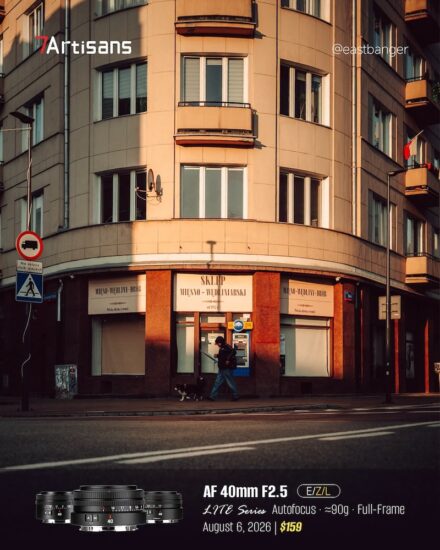
7Artisans is making its tiny, lightweight 40mm F2.5 lens available to more shooters. The $159 full-frame option launched for Sony E-mount earlier this year after its announcement at CP+, but is now available Nikon Z mount and L mount.

The lens is the same one we saw at the trade show in February. It has a clicking aperture ring, tiny function button, 46mm filter ring and a manual focus ring, as well as a switch to go between manual and auto focus modes. The latter is provided by a stepper motor, and the lens can focus as close as 0.4m (15.7″). Despite this list of features, which is about as complete as you could hope for a compact prime lens, it only comes in at around 90g (3.2oz).

Optically, the lens consists of 7 elements in 6 groups, with one aspheric lens and three high refractive index elements. It has a 9-bladed aperture. 

A field of pink flowers; several are disappearing into blurs in the foreground and background.Zorta / 7artisans

When the lens was announced in February, options for small, lightweight lenses were relatively thin on the ground for Z and L mount users. However, there have since been a few new options released: Panasonic announced its compact 40mm F2, and Viltrox has come out with a tiny 26mm F2.8 pancake for E and Z. Both fit into the same role as a small, walkabout lens (though obviously the 26mm offers a very different focal length), though they are also a fair bit more expensive.

The Z and L mount versions of the 40mm F2.5 are now available through 7artisans’ website, though they haven’t made it to online retailers like Amazon or B&H at the time of writing.

About the Author: Mitchell started taking pictures at 10 and hasn’t stopped since. It’s been a wide-ranging adventure, spanning a wide variety of genres and locales, and occasionally dipping into fascinations with video and filmmaking. They honed their technical knowledge doing documentation, programing and QA, writing for The Verge, and just generally messing around on the computer to see what breaks.

Want to stay up to date on the latest product news and releases? Add DPReview as a preferred source to ensure our independent journalism makes it to the top of your Google search results.
add as a preferred source on google
  •  

Leica explains the SL3-P and how it sets itself apart from the market

We spoke with SL-series product manager Gerrit Gissel about where the SL3-P fits into the lineup and what they mean for the company

Portrait of Leica Product Manager for the SL Series, Gerrit Gissel

Leica’s product manager for the SL series cameras, Gerrit Gissel describes them as the company’s “technology lighthouse:” the thing that acts as a guide for all the company’s other efforts.

We spoke to Gissel about the SL3-P, who it’s for, how it fits into the lineup, and the challenges of creating a product with more direct rivals than most of the company’s other offerings.

“We see there’s a big potential out there of photographers who just want to have the best technology available, and for us the SL system is the answer to that demand,” he says: “But there are more layers to that.” 

“There’s also an internal perspective where we use the SL system to develop new technologies to see how far we can push certain things, that we then later benefit from in other product lines. Especially in the Q series we see many similarities, but then also in other compact cameras. So the SL is the camera where we develop that, where we invest a lot in, then we can benefit from later on.”

The user interface is an example, he says: “I think we have a quite recent example for that with the SL3 generation. We have for the first time implemented our new user interface that now, last December, was also integrated into Q-Series because we got the feedback from our customers and we carefully listened to them that they liked it a lot. They think it’s very well thought through and also cameras like the Q series could benefit from that.”

Setting the SL3 series apart

We asked whether the company has to approach the SL series differently, given it has more direct competition than the Q or M cameras.

“Well of course we do lots of benchmarking. We know, especially in reviews etc, that we are compared with each other so, whether we want that or not, we will be compared.” says Gissel: “So that’s why we focus on finding our own our own position in that competition out there. We find our our own language, that I think we found quite well with the SL system: being user intuitive, user friendly, not overloaded with features, and just allowing the photographer or videographer to focus on his or her work. This is a bit like the credo that we are following. And of course every decision; feature versus added complexity, is discussed having this in mind.”

Not overloaded with features… just allowing the photographer or videographer to focus on his or her work

This focus on operability, as well as build quality, emerge as two of the things that can set the SL apart, beyond hardware specifications: 

“So the obvious thing is the operation. You will see that immediately once you’re touching the SL, and I think that makes your job so hard because you have to write about it, you can show some pictures, but to really understand that you have to have to touch the camera and feel it.”

But there’s another critical factor, he says:  “of course what is probably the thing we invest the most in is defining and refining our image quality. So if you see the results at the end, then you can understand what the Leica SL system is, compared to the other ones out there. So the way you create and the result in the end, neither thing is particularly visible when looking at a technical data sheet.”

Leica SL3-P, three-quarter view with no lens mounted.
The SL3-P is the third camera in the third generation of SL cameras, and the most all-round capable so far.

Gissel’s comfort with the SL3-P not necessarily having every possible feature that its hardware would allow, seems in part to come from the confidence that Leica understands its customers well. “It always depends on whom you are designing for. When you try to please everyone, of course you have the tendency to bring all the features in there. I think we have a bit of a clearer mind to our customers. We know our customers maybe a bit better than others and that’s why we can design our solutions a bit more specific maybe and probably it’s easier for us to sometimes say ‘we don’t need that’ because we know that the majority of our customers would be more confused by that than it would be actually helpful.”

We know our customers maybe a bit better than others and that’s why we can design our solutions a bit more specific

This understanding comes from two sources, he says. “one is the, let’s say, the old fashioned, but still very important, way: we just travel around, we visit our stores. I mean we have the big advantage that we have our own store network with people that are in daily interactions with our customers and our salespeople there, and sometimes also when we meet customers there they give us very valuable one-to-one feedback. So we try to do this as much as possible and this always brings value.”

“And then we have a more systematic approach. We have a database, we have a strong customer care department, and capture every feedback and feature request. Also some complaints. They are all tracked in that system, they are tagged to which system they apply so that we really systematically sometimes can say ‘okay this and this feature was asked for by so many people’ so we prioritised this over another one.”

Looking beyond existing customers

But what about the people who aren’t current customers, we asked. “We have one mechanism I didn’t already mention: we do customer research where we not only ask our own customers about their current thoughts and their future wishes but also try to get in touch with people who have cameras from other manufacturers,” he says: “but also even people who are not into photography yet or who are smartphone users that just have a certain tendency. We try to get in touch with these people too we then have professional support to do these surveys, and this is part of our of our work too.”

The importance of this comes through as we discuss our experiences of learning how the camera works: “I think getting this right is important” he says: “I think this camera is very attractive for people who haven’t considered a Leica to switch to us.”

Technology and tradition

The SL3-P came about as much through technology making it possible, as through customer feedback, he suggests. “The bigger portion [of SL buyers] is always the non-S, high resolution variant, so the SL2 and later the SL3. And we just saw that we could, compared to these two cameras, massively improve the autofocus capability. The SL3-P is a bit of a specialty in that customers didn’t know that we were thinking about bringing a third variant in one generation. So this is kind of a of a novelty, right? And that’s why here the decision also came from we saw what will be possible technology wise and we added that to the customer feedback.”

That possibility comes primarily from the fast, high-resolution sensor becoming available, he says. “It’s always the combination [of sensor and processor], so neither of both parts is powerful alone. But if we compare the main difference between SL-3, SL3-S, SL3-P, it is this time the sensor because they all share the same processor platform.”

Leica product manager Gerrit Gissel
Leica’s Gerrit Gissel, photographed with his own product

Leica SL3-P | Leica Vario Elmarit-SL 24-90mm F2.8-4.0 @ 76mm | F4.0 | 1/500 sec | ISO 100

But creating a new model entails a lot more than just simply changing which sensor sits in the camera, he says: “both in the hardware and software, many things have to be rethought.” 

“You think you would only swap the sensor, but in fact you have to re-think every component of the camera once again. ‘Does that still match?’ ‘Does that still make sense?’ And ‘is this, for the use case we intend this camera for, still the right fit?’

“I have a good example for that for the SL3-P in in a software solution that we came up during a running project.” he says: “So we knew if we integrate this sensor, we knew that we will get a more complex and powerful video setting possibilities. And we ended up with one hundred and fifty seven video options. We then decided we need a more intuitive, dynamic way to select these video settings because otherwise our consumers could be overloaded. And that’s why we came up with the new video setting selector, which was very well received by everyone who’s was testing it. But that was a result out of the decision to go for that new sensor.”

With all this in mind, we circled back to one of our original questions: what does Leica do to ensure the SL offers something distinctive in a crowded, competitive market?

“It consists of, I would, say two elements that if you hear them, at first not are really logic with each other,” says Gissel: “The first is keeping the the heritage of both Leica and what we have achieved with the SL system over the past ten years. So excellent haptics, superior image quality, of course, things like our very strong viewfinder, IP54 rating, so everything the system was known for.” he says: “And then on the other hand, innovation. I’ve learned from my colleagues who have been here much longer than me that innovating and reinventing is also part of the Leica DNA, so that’s why it’s maybe not a contradiciton to combine these two things with each other.”

For example: “the improvements we’ve made with the autofocus in the in the past years, they are just like a reinvention,” he says: “it’s such a big improvement we considered whether it should sit apart from the existing SL3 models.”

About the Author: Richard graduated as a scientist but had a lot more fun writing and shooting for his university magazine. A number of years spent variously as a reporter, writer and editor on science and engineering titles combined his knowledge of science with his interest in images and words. But it was spotting the connections between emission spectra, white balance and all the nonsense he’d taught himself playing around in Photoshop that helped kindle an interest in digital photography. Searching for a camera led to him discovering DPReview and Richard was recruited by Phil Askey in 2007. He’s been combining his love of photography, communication and attention to detail (pedantry?) ever since. He has unusually strong opinions about lenses for the APS-C format.

Want to stay up to date on the latest product news and releases? Add DPReview as a preferred source to ensure our independent journalism makes it to the top of your Google search results.

add as a preferred source on google

  •  

List of upcoming/rumored Sony lenses


Here are some of the upcoming/rumored Sony lenses that are currently being tested:

  • 8-15mm Fisheye Zoom
  • 600mm f/6.3
  • 400mm f/4.5
  • 28mm G
  • 40mm G

These are all engineering prototypes. Specifications or naming conventions may be adjusted upon official release. The specific release dates are currently unknown.

Sony launches FE 100-400mm f/5.6-8 OSS super-telephoto zoom lens


Via camerainsider

The post List of upcoming/rumored Sony lenses appeared first on Photo Rumors.

  •  

Who’s your biggest photography inspiration?

We all have a hero or someone we look up to for various things. For this week’s community question, who inspires your photography?

Sunrise on hillsideAbby Ferguson

Many folks will surely think of their parents, a friend or perhaps a colleague when they think of someone who has inspired them. It’s that special person who has changed the course of your life in some dramatic way.

A key inspiration for me came from a bit further down the family tree. When I was in my single-digit years, just about our entire family would gather at my grandmother’s house for Christmas. It was my favorite time of the year (partly, of course, because of the presents, but my grandmother’s cheesecake was to die for).

My aunt always brought this huge Betamovie camcorder to film everything from the late afternoon dinner to the last present being opened by my grandmother (she always had the last one as a tribute to her being the anchor of the family). While the Betamovie was a camcorder, not a camera, it sparked my initial interest in photographing (and filming when necessary) my life. That very same aunt later would buy me my first camera – a Polaroid Sun 600 LMS.

Ever since then, I’ve looked up to my aunt as the one who helped me remember my life through photography, which I would otherwise have long forgotten much of.

So, with that said…

Who inspires your photography more than anyone else?

Drop a reply in the comments section below, and if you’ve got a photo to include from your mentioned forum sections, it may be selected for next week’s showcase article on this topic!

About the Author: Mathew Anderson is a proud Community Manager for the technology industry and a past visitor to DPReview.com for all his camera needs. He is currently the lead of DPReview’s community and primary communication link between the community and DPReview’s team.

Want to stay up to date on the latest product news and releases? Add DPReview as a preferred source to ensure our independent journalism makes it to the top of your Google search results.

add as a preferred source on google

  •  

DJI’s Mini mics get a big upgrade with 32-bit float internal recording

The new Mic Mini 2S brings 32‑bit internal recording and built‑in storage to DJI’s tiny wireless mics, making them far more forgiving for creators.

DJI wireless earbuds, one blue and one purple, positioned beside their open black charging case on a light-colored surface with a blurred background.DJI

DJI has announced another offering in its Mic Mini lineup, the Mic Mini 2S. The new addition is a notable upgrade over the Mini Mini 2, bridging the gap to the higher-end Mic 3 with 32-bit internal recording, onboard storage and compatibility with four transmitter microphones.

For many, the standout upgrade in the Mic Mini 2S is its internal recording capabilities. The Mic Mini lineup has thus far lacked any onboard storage, meaning you don’t have a backup if something goes wrong with the device they’re broadcasting to. The Mic Mini 2S, though, offers 14.5GB of built‑in storage per transmitter, which DJI says will provide up to 28 hours of audio.

While internal recording is one safety net, the Mic Mini 2S also offers improved audio flexibility. Instead of being limited to the 48 kHz, 24‑bit wireless feed of the Mic Mini 2, the 2S can capture up to 32‑bit float, the same as the more expensive Mic 3. That mode, which uses a different way of storing audio data, makes it far easier to rescue quiet speech or avoid clipping with sudden loud noises. It also offers DJI’s two-level AI-based noise cancellation to filter out ambient noise.

The Mic Mini 2S can work with up to four transmitters per receiver with output to four independent audio channels, double what the Mic Mini 2 could manage. DJI says it also supports cross-generation compatibility, so users can pair with the Mic Mini and Mini 2 transmitters, or with the Mic Series Mobile Receiver. It’s also compatible with a range of DJI products without the need for an external receiver, including the Osmo Pocket 4, Osmo Pocket 4P, Osmo Action 6 and Osmo 360.

DJI promises up to 11 hours per charge on the transmitters, and up to 40 hours of battery life with the included charging case, 8 hours less than the total runtime of the Mic Mini 2. It keeps the typical tiny design of the Mic Mini lineup, with each transmitter weighing roughly 12 g (0.4 oz). As with other recent DJI mics, it doesn’t work as a wired lavaliere. However, it does accept the colorful magnetic front covers DJI released with the Mic Mini 2 (though those are a separate purchase).

The Mic Mini 2S is available today in most regions for £169/€189 as a bundle with two transmitters, a receiver and charging case. Unsurprisingly, it is not available in the US.

About the Author: Abby Ferguson holds an MFA in photography and blends a fine-art background with extensive editorial and commercial experience. She built and led an in-house imaging program for a large vacation rental company and has served as an associate editor at Popular Photography. She also teaches at a local community college and serves on its Photographic Technology Program Advisory Board, sharing her knowledge and enthusiasm for the medium.

Want to stay up to date on the latest product news and releases? Add DPReview as a preferred source to ensure our independent journalism makes it to the top of your Google search results.

add as a preferred source on google

  •  

This camera battery doubles as a secret tracker (if you have an iPhone)

Falcam’s TagBatt has Apple’s Find My tech built in, letting you track and locate your gear.

A Falcam TagBatt in the grip of a Sony cameraFalcam

We’ve seen a recent trend of camera accessory companies building in clever hiding spaces for Apple AirTags into their products. Whether it’s a camera cage with a hole for one cut out, or a bag with a tiny pocket for them, there are more and more options for making sure you can find your expensive gear if it gets misplaced or stolen.

Falcam is taking the concept even further, building support for Apple’s Find My network into batteries for Canon and Sony cameras. For those unfamiliar, the trick of Apple’s Find My is that it uses many of the company’s products – including the iPhone – to anonymously track the location of devices on the network. This solves the issue of previous Bluetooth trackers by making it so you’re no longer relying on a relatively small group of people who use the same tracker as you and are running the app to be around the thing you’re trying to find.* The tech is what powers Apple’s ever-popular AirTags.

Graphic advertizing the tracking capabilities of the Falcam TagBattFalcam

Of course, the main purpose of Falcam’s TagBatts isn’t to find a misplaced camera; it’s to power the device you have in your hand. The company is making two versions: one that’s compatible with cameras that use Sony’s NP-FZ1000 series batteries (which is to say, most of the company’s modern cameras, as well as a host of other devices), and one that mimics Canon’s LP-E6 (again, supported by a wide range of the company’s DSLRs and mirrorless cameras). Falcam’s site also indicates that versions for Nikon and Fujifilm cameras are coming soon.

Both versions of the battery have a 17.4Wh capacity, which is slightly higher than the own-brand models they’re meant to replace. In an FAQ on its website, Falcam says the tracking feature uses a very small amount of power that “does not meaningfully reduce normal camera runtime,” though notes that it won’t work if the battery is completely drained. The battery also has a built-in USB-C port, letting you charge it directly outside the camera if you want, though it’s still compatible with traditional cameras and can also be charged inside the camera.

They’ll be useful for seeing where your camera is on a map, but won’t help you figure out which bag you left your spare batteries in

There are a few caveats to note. The first is that camera manufacturers don’t typically guarantee support for every camera feature when you’re using a third-party battery, and Falcam is new to making batteries, so it might be worth waiting for a few reviews to make sure everything works as expected. The second relates to Find My; many people will be familiar with the AirTag feature that lets you search around for your device, using your phone to point the way. This feature, however, isn’t inherent to Find My devices, and Falcam’s website makes no mention of the ultra-wideband tech that enables it on its product page for the batteries. That means they’ll be useful for seeing where your camera is on a map, but won’t help you figure out which bag you left your spare batteries in.

The Falcam TagBatt costs $70 for the Sony version and $65 for the Canon one, and they are available from the company’s website. That’s definitely pricier than competing third-party models from companies like SmallRig and Wasabi Power, but those don’t include Find My functionality. Neither do the own-brand models, which cost more.

* Though it introduces a new problem in that it’s not particularly cross-platform compatible. Android phones won’t report a Find My device’s location, and the Find My service won’t be particularly useful to you if you don’t have an Apple device. Google has its own version of the system, but the two are broadly incompatible.

About the Author: Mitchell started taking pictures at 10 and hasn’t stopped since. It’s been a wide-ranging adventure, spanning a wide variety of genres and locales, and occasionally dipping into fascinations with video and filmmaking. They honed their technical knowledge doing documentation, programing and QA, writing for The Verge, and just generally messing around on the computer to see what breaks.

Want to stay up to date on the latest product news and releases? Add DPReview as a preferred source to ensure our independent journalism makes it to the top of your Google search results.

add as a preferred source on google

  •  

A photographer built this bamboo forest from plastic drinking straws

Every landscape in Benedek Lampert’s new series is built from the materials destroying it. Fishing nets become oceans, plastic bags become Arctic ice.

Toy panda positioned among tall, green artificial plants with the text "The Habitat We Staged" visible; scene resembles a real habitat but is clearly staged with synthetic materials.Benedek Lampert

Hungarian photographer Benedek Lampert is famous for creating realistic-looking photos made of Lego bricks, challenging viewers to tell whether they’re looking at a real place or a carefully constructed scene. His Lego Eiffel Tower could have been part of the Paris skyline, and his models of Sir Ernest Shackleton’s ship Endurance and a meticulously detailed Formula 1 racetrack followed suit.

The photos in Lampert’s newest project, ‘The Nature We Replaced,’ don’t use Lego bricks at all. And they’re not meant to look real. In fact, they’re meant to look exactly like what they are: garbage.

Two polar bear figures on plastic iceberg shapes, surrounded by sculpted plastic waves; text reads "The Arctic We Created," emphasizing environmental impact and plastic pollution.
The Arctic We Created. (Polar Bear)

The Arctic is warming nearly four times faster than the global average. As sea ice disappears, polar bears lose the frozen platforms they depend on for hunting seals, traveling and raising their cubs. Scientists project continued declines in polar bear populations if greenhouse gas emissions remain high. The Arctic in this image is built entirely from plastic bags – a symbol of a world gradually replacing nature with waste.
Benedek Lampert

“Nature, wildlife and environmental storytelling have always been close to me, and I couldn’t think of a more universal issue than the future of the planet we all share,” he says.

The project consists of eight conceptual miniature photographs, each exploring the relationship between humans and the natural world. Instead of simply documenting environmental problems, Lampert set out to visualize the tension between wildlife and the world humans have built around it.

Small and large elephant figurines placed among bullet casings with the text "The Giants We Silenced" in the foreground.
The Giants We Silenced. (African Elephant)

Illegal wildlife trafficking continues to threaten elephants and rhinoceroses across Africa. Thousands have been killed for ivory and horn, driven by international demand and organized poaching networks. The landscape is built from spent bullet casings, reducing an entire ecosystem to the evidence left behind after a hunt.
Benedek Lampert

“Instead of recreating nature, I rebuilt each habitat entirely from the materials that threaten it. Plastic bags become Arctic ice. Fishing nets become oceans. Wood products become forest. Plastic straws become bamboo. Every landscape is constructed from everyday human waste or objects associated with the destruction of that ecosystem,” he explains.

Go behind the scenes to see how Benedek Lampert created the scenes for his ‘The Nature We Replaced’ photo project.

Lampert tells DPReview that the whole idea started with a penguin.

“I recreated a viral penguin story using a miniature figure… and that project made me realize I wanted to do something bigger with wildlife photography. But the more I thought about it, the more I wanted the series to be about something beyond the visuals. That’s when the idea of building each habitat from the very materials that threaten it was born.”

Two toy tigers walk through a charred forest made of blackened sticks and ashes, with smoke drifting in the background. Large burnt utensils stand upright like trees. Text reads, The Forest We Burned.
The Forest We Burned. (Tiger)

Wildfires, deforestation and habitat fragmentation continue to reduce the forests that many tiger populations depend on. While some fires occur naturally, many are directly linked to human land clearing and agricultural expansion. Burnt charcoal and used matches replace the forest floor, illustrating an ecosystem consumed by fire.
Benedek Lampert

He isn’t chasing real-world accuracy. “It’s not meant to show reality exactly as it is,” he tells us, “but to exaggerate it just enough to make people stop and think about what’s happening to these habitats and species.”

Lampert partnered with German company Schleich to provide the animal figurines. “I chose Schleich because of the exceptional quality and realism of their figures. That level of detail was essential – using less realistic models would have taken away from the emotional impact and credibility of the photographs.”

Lampert’s attention to detail extends all the way to the image titles. Each ends with a period: a marker, he says, for the irreversible damage already done. He’s careful to add that hope is not lost, noting that conservation efforts have succeeded. “The period marks what cannot be undone, but not what can still be saved.”

More photos from this series

Sea turtle swimming underwater among large blue fishing nets, with sunlight filtering from above and text reading "The Ocean We Captured."
The Ocean We Captured. (Sea Turtles)

Hundreds of thousands of sea turtles are accidentally caught in fishing gear every year. Abandoned “ghost nets” continue trapping marine animals for decades, even after being lost or discarded. In this image, the ocean itself is made from fishing net, turning the turtles’ natural habitat into an inescapable trap.
Benedek Lampert
A chimpanzee sits surrounded by metal machinery and saw blades in a jungle with a green tint. The phrase "The Jungle We Traded" appears as text. Industrial equipment is integrated into the natural setting, replacing typical jungle elements.
The Jungle We Traded. (Orangutan)

Over the past decades, vast areas of Southeast Asian rainforest have been cleared for timber, palm oil plantations and agriculture. Habitat loss remains the greatest threat to wild orangutans. The jungle is reconstructed from industrial machine parts, reflecting how ancient forests are increasingly exchanged for economic profit.
Benedek Lampert
Penguins on artificial ice blocks surrounded by blue plastic, with one penguin diving off a ledge. Text displays: The Ice We Left Behind. The Nature We Replaced. Series by Benedek Lampert.
The Ice We Left Behind. (Penguins)

Antarctica is changing rapidly. Rising temperatures, shrinking sea ice and increasing human influence threaten one of Earth’s last great wildernesses. Sea ice is essential for many penguin species, supporting feeding, breeding and the marine food web. The frozen landscape is constructed from Styrofoam, plastic packaging and discarded plastic bags, suggesting a future where even the most remote wilderness is remembered only through the waste we leave behind.
Benedek Lampert
Two buffaloes on sand next to a fence and water, with the words "The Path We Closed" above them. The scene looks artificial and staged.
The Path We Closed. (African Buffalo)

Across Africa, roads, fences, agriculture and expanding human settlements increasingly block ancient wildlife migration routes. Buffalo, elephants, zebras, wildebeest and many other species depend on seasonal movement between feeding grounds and water sources. The interrupted path represents landscapes that no longer allow wildlife to move freely.
Benedek Lampert
About the Author: Dale Baskin is a professional photographer, writer, and filmmaker based in the Pacific Northwest. He is the Managing Editor of DPReview.com.

Want to stay up to date on the latest product news and releases? Add DPReview as a preferred source to ensure our independent journalism makes it to the top of your Google search results.

add as a preferred source on google

  •  
❌