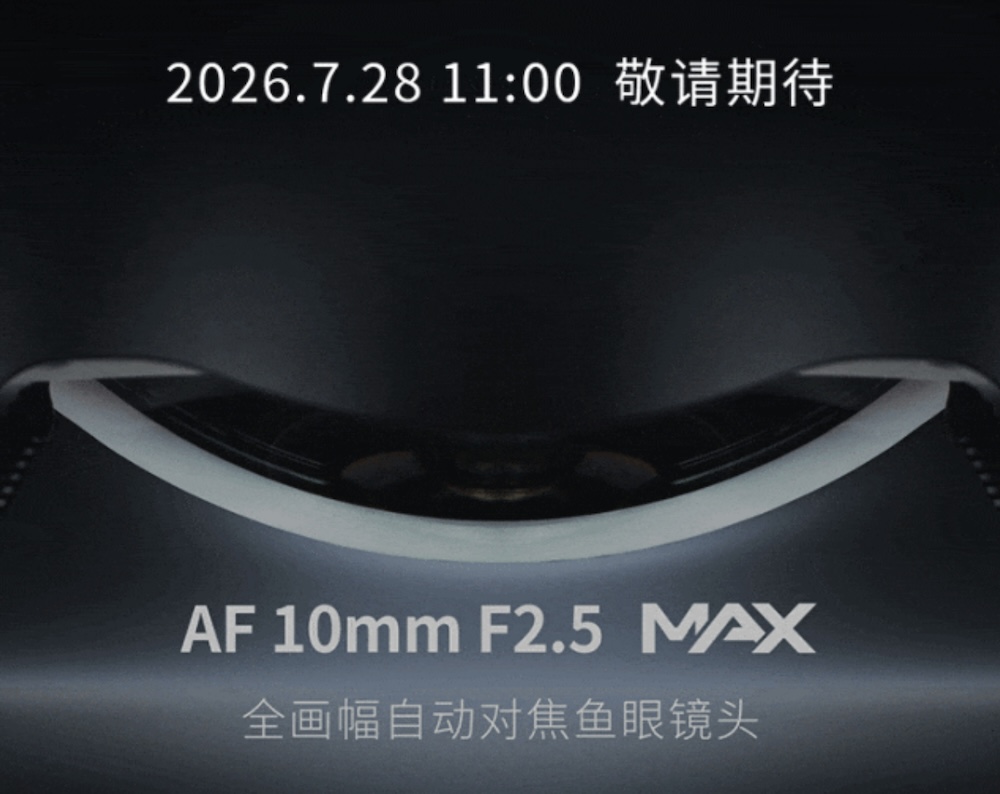
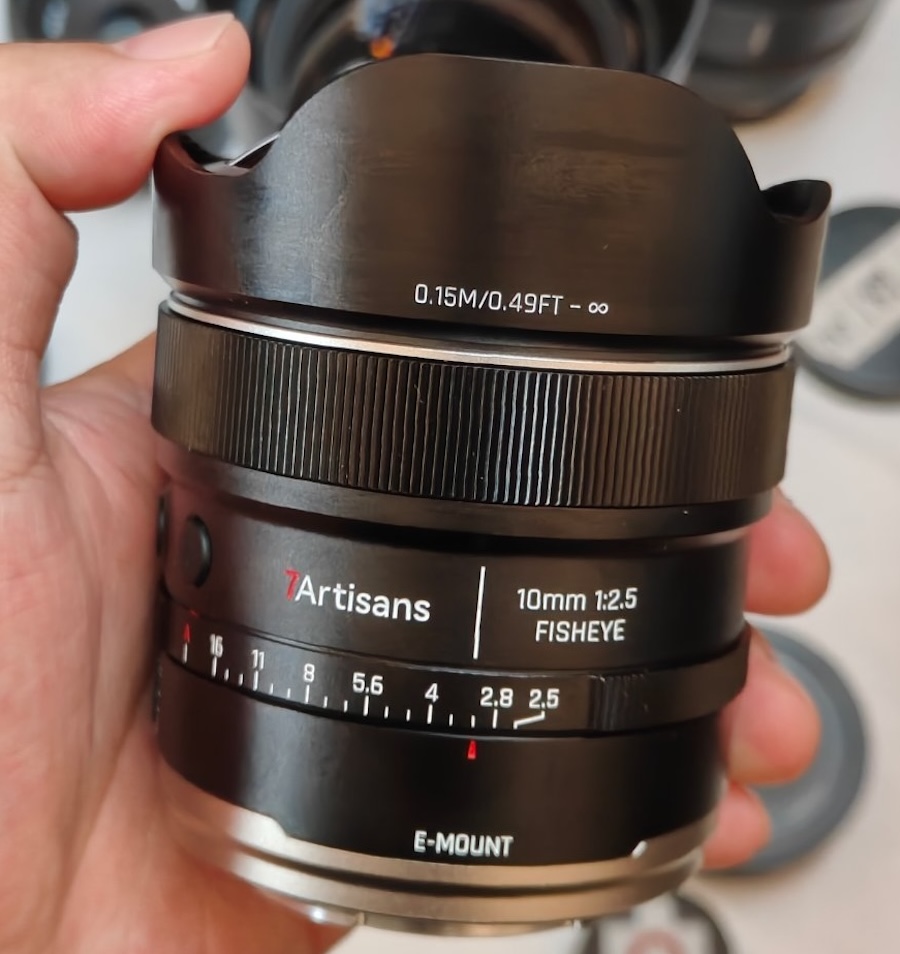
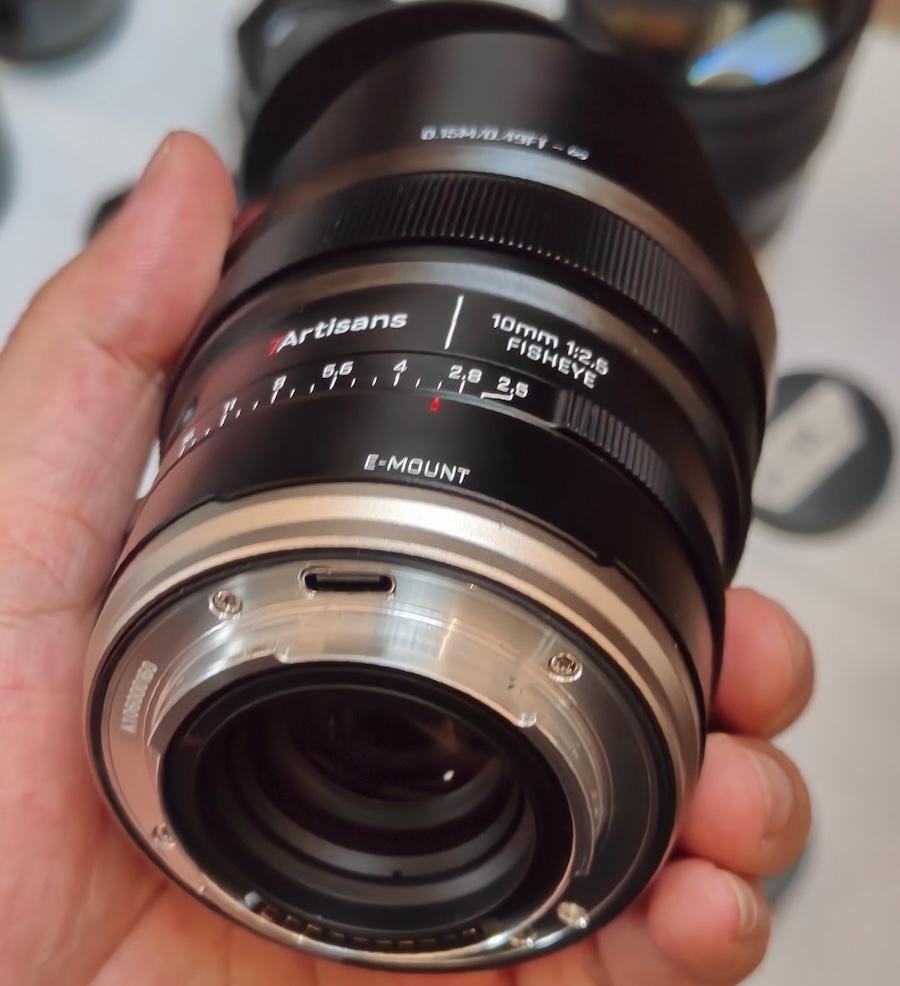
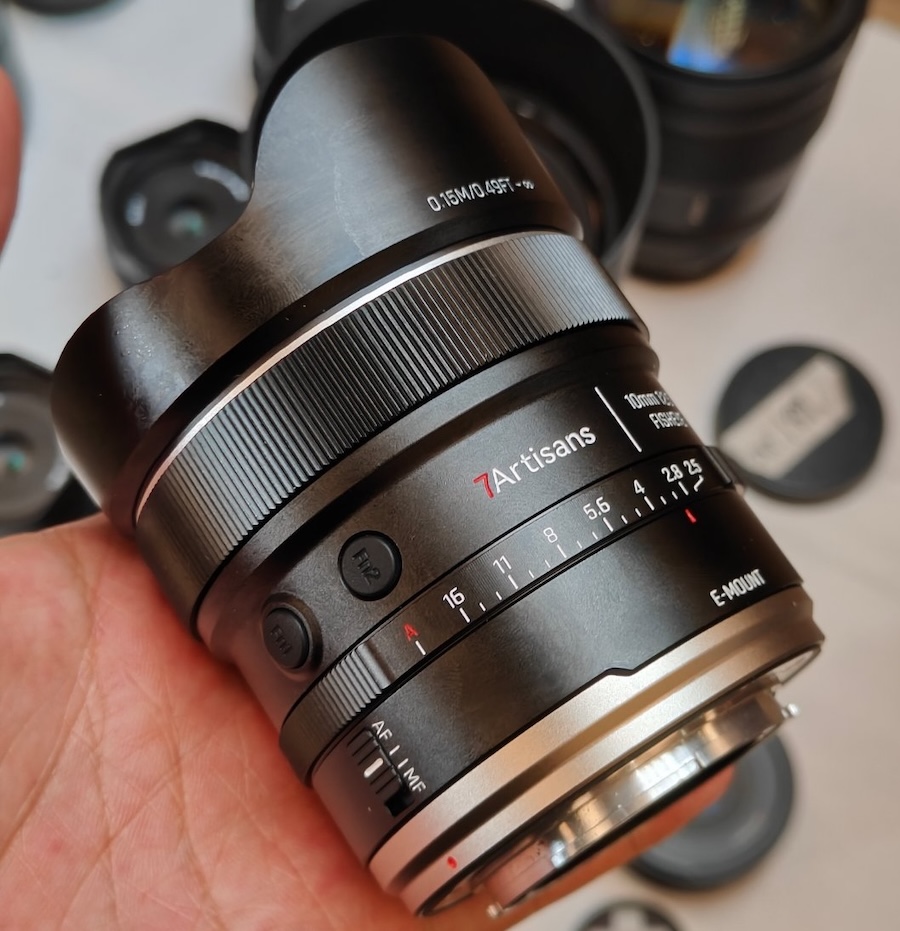
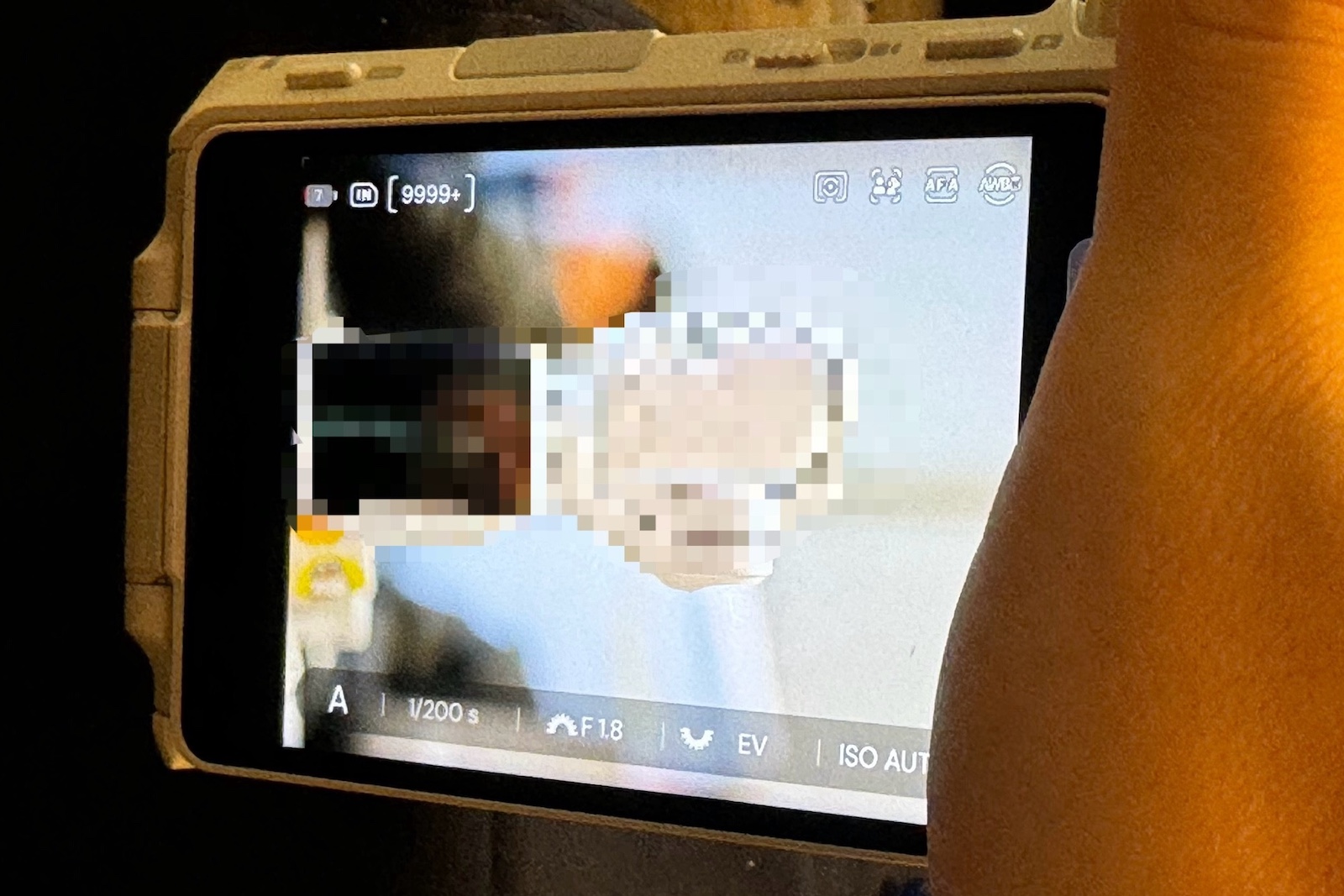
New US tariffs on imported drones will take effect on September 3rd. President Trump signed a Section 232 proclamation imposing new tariffs on imported unmanned aircraft systems and components, citing national security and over-reliance on foreign supply chains. These new tariffs stack on top of existing duties and restrictions in place since late December 2025. Here are the details:
25% ad valorem on drones with a maximum takeoff weight of 25 kg (≈55 lb) or less – this covers the majority of consumer and prosumer drones (DJI Mini, Air, Mavic, Avata series, etc).
100% on drones over 25 kg, any drones that integrate thermal imagers, and docking stations.
A further 25% on additional components takes effect later (around February 2027) to allow supply-chain adjustment.
Lower rates for qualifying products from certain allies (15% for EU, Japan, South Korea, Taiwan, Switzerland, Liechtenstein, 10% for the UK)
Additional drone bans
The FCC has a live proposal (Public Notice DA 26-758) that would prohibit further importation and marketing of certain previously authorized foreign-made drones that fall into “military-grade” capability categories. One of those categories covers drones with integrated LiDAR sensing. Multiple reports explicitly name the Mini 5 Pro (along with the Air 3S, Avata 360, and Neo 2) because it uses a short-range forward-facing LiDAR for obstacle avoidance. If the FCC adopts the proposal, the sales/import restriction would typically take effect after a transition period (often around 180 days). Existing Mini 5 Pro units that owners already have remain fully legal to fly. The rules do not brick or ground drones already in private hands.
Tower Optical’s coin-operated binocular viewers have stood at American overlooks since the 1930s, built by a company almost nobody can name. For the first time, it’s selling some of them off.
Tower Optical
If you’ve ever stood on an observation platform at Niagara Falls, at the edge of the Grand Canyon, or overlooking the Golden Gate Bridge, chances are pretty good you’ve seen a Tower Optical binocular viewer, and maybe even dropped a quarter into one, even if you’ve never heard of the company that made it.
These heavy, chrome-plated viewers are bolted to observation decks and overlooks across the US and Canada. But somewhere along the way, the viewers themselves became icons. And, for the first time in its history, the company is selling a small number of them to private buyers.
Tower Optical began in a Norwalk, Connecticut, machine shop in 1933, and remained in the same family until 2025. Between the 1930s and 1980s, it manufactured roughly 2,000 of the machines, with every component hand-assembled in the company’s factory in Norwalk, where the original machinery from the 1930s and 40s still stands. Today, the company has about 1,800 machines spread across roughly 400 locations in North America.
Tower Optics binocular viewfinders have been deployed to all corners of North America, in all types of environments.Tower Optical
In many places, these viewers have become part of the landscape as much as a means of viewing it. As someone with an interest in optics, what’s always fascinated me are the conditions these devices endure: freezing winters, blistering summers, rain, snow, ice, sand and every other environmental hazard you can throw at them. Yet the 10×42 binoculars inside keep delivering a sharp image, decade after decade.
Adam Rice, one of the company’s current owners, says the location and history of every viewer has been meticulously tracked by hand, decade after decade, as they moved around the continent.
For decades, Tower Optical used a pair of push-pin maps at its headquarters — color-coded by site — to monitor where each viewer was deployed.Tower Optical / Adam Rice
“There are two push-pin maps at headquarters that are pretty outdated now, but they were used to track all the different sites, color-coded by location. Beyond that, we have a physical card for every single machine detailing its maintenance and whereabouts. I scanned thousands of these cards with a high-speed scanner to digitize the company’s historical records.”
Looking at one of these cards can be like a walk through history, Rice tells us. “If someone’s interested in the history of a machine, we’ll look at the maintenance cards… For example, machine #507 was manufactured in the 1950s. Our records show it went to the Staten Island Ferry in 1961, Battery Park in New York City in the ’80s, the North Carolina Zoo in the ’90s, and, most recently, Coit Tower in San Francisco.”
The company maintained physical index cards for every machine, detailing its maintenance history and locations over the decades. This viewer appears to have spent a portion of the ’90s at the Empire State Building in New York.Tower Optical
One thing the company isn’t doing today is building new units, and the original manufacturing process may be lost to time.
“I’ve tried to understand the original manufacturing process, but no one is really left who knows how they were originally made. In our warehouse, there’s about 5,000 square feet of space filled with lathes and grinders from the ’30s and ’40s with overhead shafts to operate the pulleys. Our machinist estimated that if you had to make one of these domestically today, it would probably cost $15,000 to $20,000. The viewer heads are cast bronze and chrome-plated, and the rest of the components are iron.”
The glass inside has a pedigree of its own. “Interestingly, the metal plates on the viewers used to say ‘Bausch & Lomb Optical Viewer,'” he continues, “because the internal binoculars were manufactured by Bausch & Lomb. Many units still have the original Bausch & Lomb optics inside. At one point, they had a partnership where if binoculars needed to be serviced or replaced, we would send them directly to Bausch & Lomb, and they would fix them.”
Not much has changed over the years. The price crept up from a nickel, and the coin mechanisms were revised and hardened against people who tried sawing or drilling their way to the quarters inside.
Tower Optical assembled every machine by hand at its Norwalk factory, which still houses the original manufacturing equipment from the 1930s and ’40s.Tower Optical
The biggest challenge the company faces today is one the founders probably never saw coming: “No one carries quarters anymore, but people still love using these machines, so our goal from day one was to retrofit them with tap-to-pay,” says Rice.
“Another challenge was that every machine was built by hand, so the dimensions aren’t exact CAD measurements. The engineering firm we worked with did an outstanding job engineering retrofit brackets that fit regardless of slight variations in screw hole placement between a machine built in the ’30s versus one built in the ’50s.”
What the company was unwilling to change was the viewers’ nostalgic appearance.
“Our mandate to the engineering firm from day one was that we did not want the look of the machines to change beyond the payment terminal itself. The terminal is very minimal, just a small black box, and we’re even considering putting a chrome foil on it to blend in further. The only other physical modification was drilling a small hole in the top shell for a cellular antenna,” Rice explains.
While many have encountered Tower viewers in their travels, it’s never been possible to own one. Tower Optical’s viewers are placed through revenue-share arrangements with host venues, but for the first time, the company has decided to sell a small number of the historic units.
Tower Optical currently has about 1,800 machines operating across roughly 400 locations in North America.Tower Optical
“It allows us to finance the engineering work and expand our network, since retrofitting and deploying machines isn’t cheap. We receive a ton of inbound interest from people who want to own one. It makes sense to pull the lever on sales for units we can’t retrofit,” says Rice.
“In an ideal world, we probably don’t want to sell more than 50 to 100 of them.”
Owning a piece of history won’t be cheap. According to the company’s website, they start at around $9500. “That includes full refurbishment, the original historical maintenance card, and a new pair of optics,” Rice tells us. “We work with OM Digital to supply those binoculars. Prices may carry a premium for units originating from iconic locations like the Empire State Building, Rockefeller Center, or the Statue of Liberty.”
So next time you’re at a scenic overlook in the US or Canada, look out for a Tower viewer. Rice envisions a future in which they might even get more upgrades than its founders could have imagined.
“Moving forward, we’re exploring ways to layer in digital experiences, like augmented reality at high-traffic sites like Rockefeller Center, while keeping the core viewing experience intact.”
About the Author: Dale Baskin is a professional photographer, writer, and filmmaker based in the Pacific Northwest. He is the Managing Editor of DPReview.com.
Want to stay up to date on the latest product news and releases? Add DPReview as a preferred source to ensure our independent journalism makes it to the top of your Google search results.
“Regarding the professional camcorder FX5, which was announced as having a release date of August 21, 2026, in the press release on July 22, 2026, Wednesday, we regret to inform you that the release will be postponed due to production issues. In addition, the release of related accessories DVF-EL1, XLR-H2, and VMC-BNCU1 will also be postponed. We will inform you of the new release dates as soon as they are confirmed. We sincerely apologize for any inconvenience caused by this last-minute announcement.” (source)
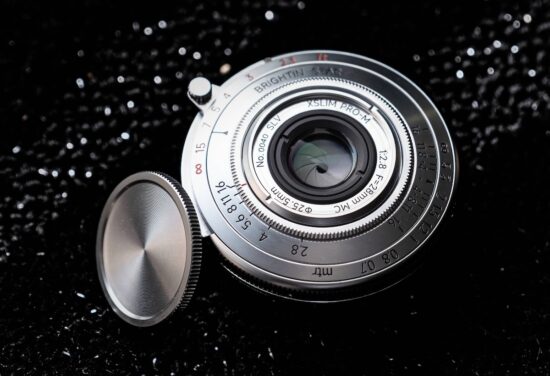
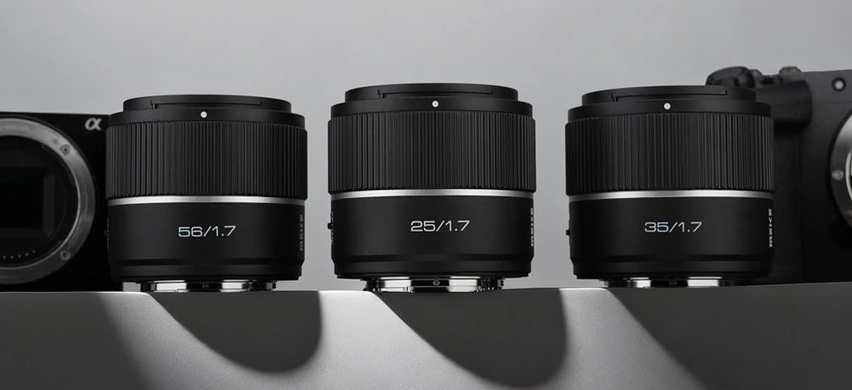
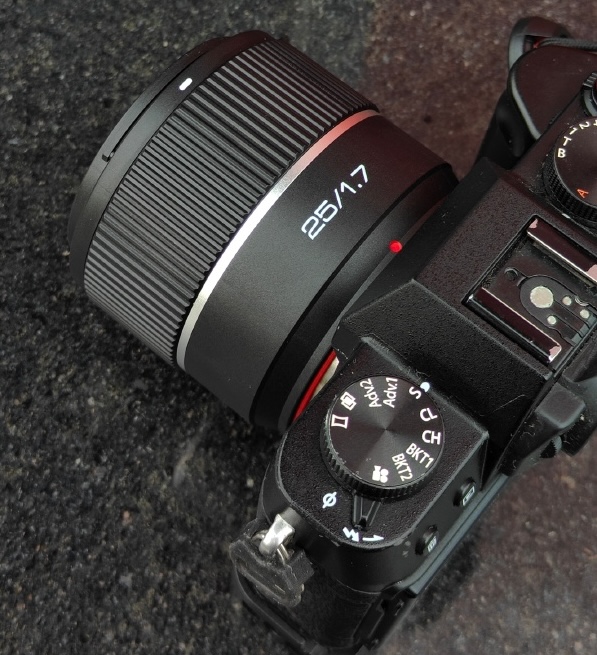
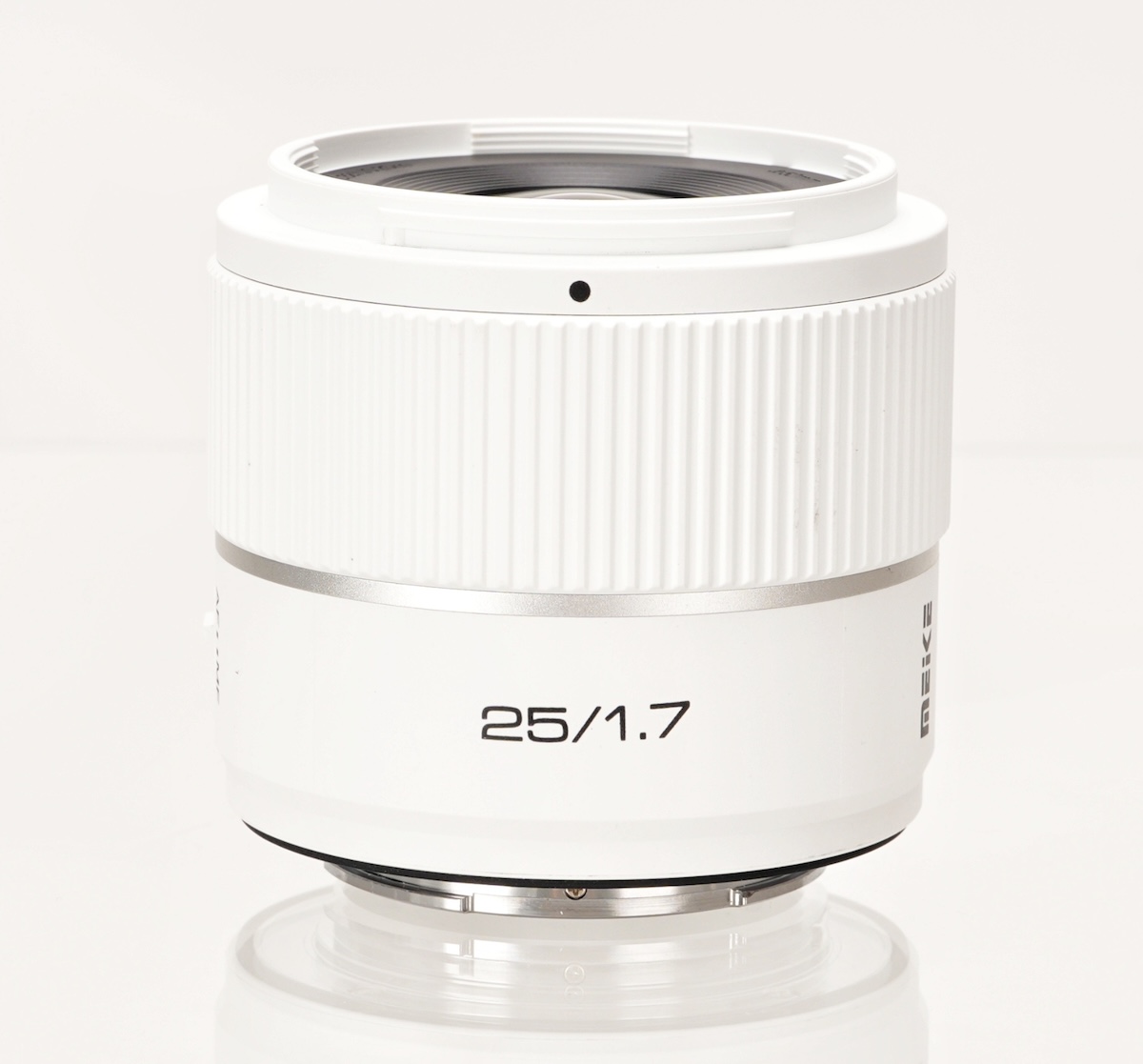
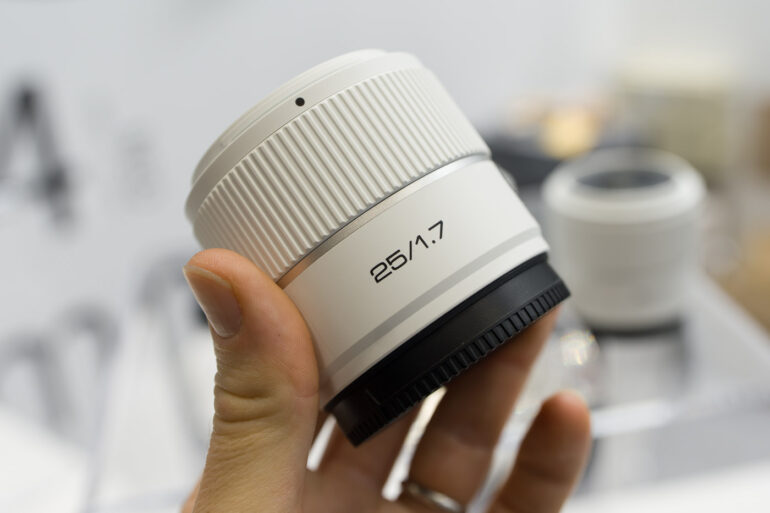
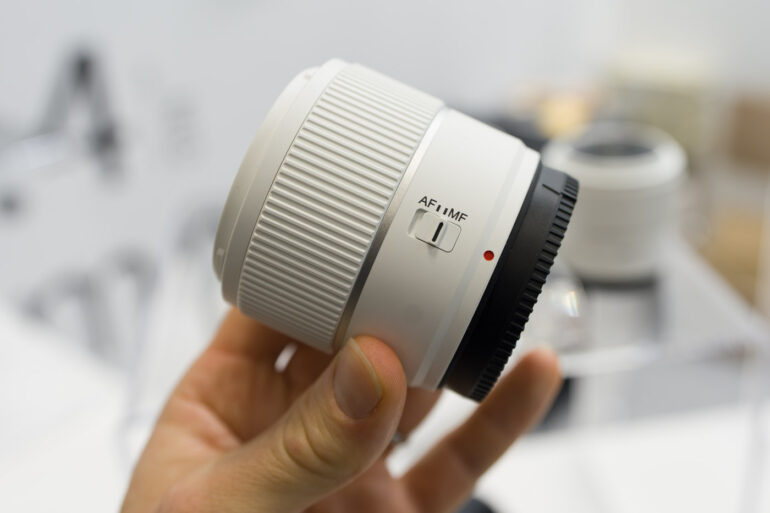
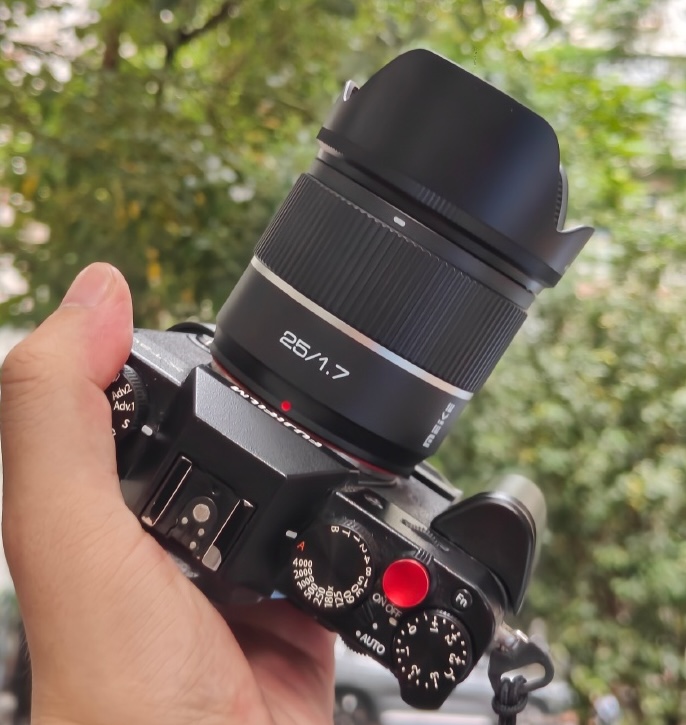
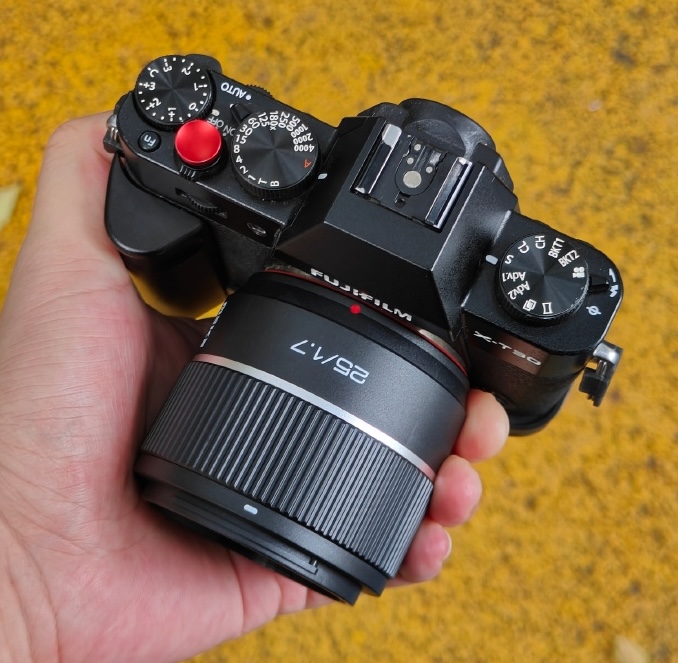
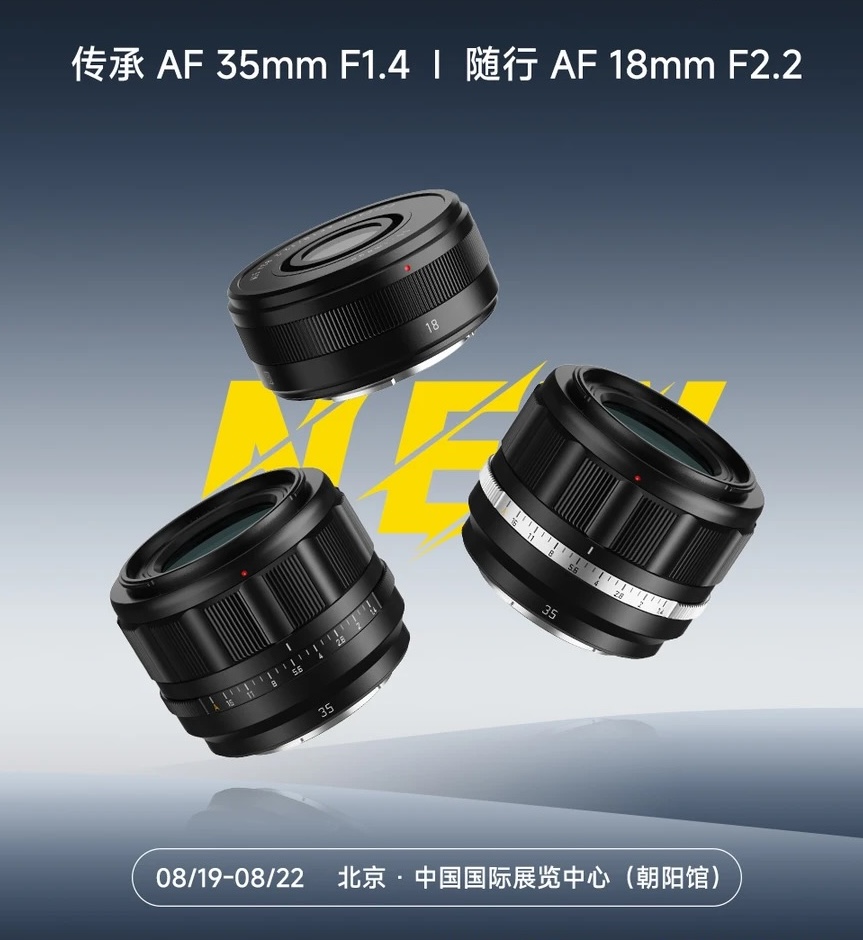
In addition to the new 85mm f/1.8 lens (order here), Meike is also rumored to announce new AF 65mm f/1.8 (or f/1.7) and AF 110mm f/2 lenses for Fujifilm GFX mount.
User-requested features being developed, now this fundamental detail is fixed
Richard Butler
It’s been over a month since we launched the new DPReview.com website, and we wanted to give you an update.
We realize that a lot of the work we’ve been doing hasn’t been especially public-facing, so it hasn’t necessarily been obvious that this really is a Beta: we are listening to feedback and we are continuing to improve the site.
As well as fixing some glitches around user logins, we’ve been doing a lot of work to ensure that the site always delivers completely untouched, out-of-camera JPEGs, when you click through or download an image. This isn’t a requirement that the CMS software we’re using is usually expected to maintain, with the consistency that we need. So it’s meant a lot of work behind the scenes to ensure that we can live up to the high standards that we demand and that you can expect.
OOC images and HDR support
As a result of this work, we can now be confident that “Ultra HDR JPEG” files: JPEGs with HDR gain maps embedded, can be viewed correctly when you click through, but also when they appear within articles, if you have a compatible screen and browser.
HDR imagery is only likely to become more accessible and more prevalent in the coming years, so being able to correctly represent these files was important to us: both so that we can show the progress as it’s made and because it ensures we’re delivering all images exactly as they came out of the camera.
This may seem esoteric but it’s fundamental to the way our reviews are conducted: we provide unedited files precisely so you can draw your own conclusions, rather than just take our words for it.
Light mode and improved camera comparisons
With this done, we’re continuing to work on projects that you’ve been requesting and things that will be more obviously visible to readers of the site and members of the community. These include a “light” version of the site for editorial content, for those people who don’t like the site’s original white-on-black appearance. We’re also working on a more advanced camera comparison tool that makes more extensive use of our camera specs database.
Neither is ready yet, but they’re just two of the more obvious features that we’ve heard the demand for, and are planning to deliver. In the meantime, please bear with us and keep letting us know how we can make the site even better.
About the Author: Richard graduated as a scientist but had a lot more fun writing and shooting for his university magazine. A number of years spent variously as a reporter, writer and editor on science and engineering titles combined his knowledge of science with his interest in images and words. But it was spotting the connections between emission spectra, white balance and all the nonsense he’d taught himself playing around in Photoshop that helped kindle an interest in digital photography. Searching for a camera led to him discovering DPReview and Richard was recruited by Phil Askey in 2007. He’s been combining his love of photography, communication and attention to detail (pedantry?) ever since.
He has unusually strong opinions about lenses for the APS-C format.
Want to stay up to date on the latest product news and releases? Add DPReview as a preferred source to ensure our independent journalism makes it to the top of your Google search results.
Camera Intelligence has a lot of good ideas and tech, but it doesn’t quite all add up to a camera that’s enjoyable to use.
Mitchell Clark
The Camera Intelligence Caira is something between a dedicated camera and a phone accessory. It has its own Micro Four Thirds mount, an 11.4MP sensor and a Snapdragon processor to handle computational tasks like multi-exposure image stacking, and autofocus and white balance calculations. However, it only has a single control – a shutter button – and no display. To actually use it, you need an iPhone (specifically, as it won’t work with an Android phone), which physically connects to the back of the Caira using MagSafe and digitally connects to it via Wi-Fi for liveview and control.
It’s also a camera that’s all-in on AI for both shooting and editing. It uses the tech to control autofocus, white balance and exposure while you’re taking a picture, and, after you’ve captured the scene, you can change it using an editor powered by Google’s “Nano Banana” generative AI model. The app gives you preset changes, like removing clutter from a scene, changing eye-lines and applying a VHS-style filter, as well as a chatbot to make more arbitrary changes, or to get feedback on the image you’ve taken. However, that bits that deal with generative AI are optional (and, indeed, require a monthly subscription), so we’ll mainly be focusing on how the Caira behaves as a camera.
The Caira is available for pre-order for $1000, though there’s more to the availability story.
Note: this review was written after using the camera with several beta firmware versions provided by Camera Intelligence, and extensive use with the latest version.
Body, handling and controls
There’s something striking about the Caira’s design. Pretty much any time I’ve used it in front of other people (including non-photographers), I’ve gotten comments on or questions about it.Mitchell Clark
The Caira’s body is made out of aluminum, and it’s a nice-feeling physical object. There are only a few features on it: a (disappointingly vague) shutter button, the lens mount, a power button, a USB C port for charging and 3.5mm microphone jack. It also has a cold shoe for mounting accessories.
While I found it relatively comfortable to hold in one hand, using my thumb to control it and index finger to press the shutter, I couldn’t help but worry about the connection between the camera body and my phone. Apple’s MagSafe is relatively robust, but it still just relies on magnets, which are only strong in certain directions. When I’m using the Caira, it’s hard not to imagine bumping my phone wrong and sending it crashing to the ground.
To switch between auto and manual control, you can start dragging the slider, or tap on the icon for the parameter. Tapping on the focus icon (the one at the top) lets you switch between manual, single, and continuous focus modes.Mitchell Clark
Speaking of my phone, most of the camera’s interface is actually in its companion app. It connects to the camera via Wi-Fi, and provides controls for various parameters: aperture, shutter speed, ISO, exposure compensation and focus. You can also set the controls to “Advanced” to change lens distortion correction and white balance temperature / tint.
By default, the controls are collapsed, and the camera handles exposure and white balance automatically. If you tap a button to gain access to the controls, though, you can then tap the icon for each parameter to turn it into manual mode, and control it using a slider. I’ve found this to be okay for controlling focus – the camera has some decent assist tools – but not so great for exposure; the sliders make it easy to make big adjustments, but fine-grained ones like picking F4 instead of F3.5 or 4.5 require a fair amount of concentration. This is a camera best used in auto mode, with manual intervention only when necessary.
The Caira does a genuinely great job at communicating at what its different settings do, with each having a detailed explanation. Though they can get slightly annoying if you’re changing something for the dozenth time.Mitchell Clark
I found that the Caira works best with smaller, lighter lenses (the kind that are thankfully abundant in the Micro Four Thirds ecosystem). I used it a bit with the OM System 12-40mm F2.8 II Pro, and found it a difficult to keep steady with how front-heavy it was; it’s difficult to compose when the preview is jittery and bouncy. It was still workable, but I don’t think I’d want to shoot with anything much bigger, and preferred using small primes.
Image Quality
Before we dive into image quality, a note on the sensor. Very much like the Panasonic’s GH5S, the Caira uses a slightly oversized Four Thirds sensor, that allows you to use different region of the sensor to produce different aspect ratios. But while the Panasonic went up to 10.2MP in its 4:3 mode, the Caira allows you to go up to 11.4MP in its 3:2 mode. This essentially uses the standard Micro Four Thirds sensor height but extends around 10% further than usual, horizontally.
This is because, rather than limiting itself to using the sensor area covered by the Micro Four Thirds imaging circle, it instead uses that extended region, warning you that your lenses may or may not be able to project light onto the whole thing. So far, all the lenses I’ve tested with it have performed well, with no notable vignetting in the corners, but it’s worth keeping in mind that there’s a potential trade-off between maximum compatibility and resolution.
And you may want to think twice before giving up any resolution, as the Caira captures less detail than most other cameras you can buy today. That’s not to say that it’s insufficient – the photos it takes will look great on social media and most computer monitors and small prints – but you don’t have to zoom or crop in far before things start to look a little soft. It also has a base ISO of 400, so the cleanest images you can get out of it will still be 1EV noisier than most other Four Thirds sensor cameras, at least in its single-shot mode. However, there’s a good reason why.
One of the Caira’s tricks is that, as we’ve seen with the Sigma BF and Hasselblad X2D II, its JPEGs contain embedded gain maps to produce an HDR effect. When shooting a high-contrast scene, the camera is reducing exposure to retain as much highlight information as possible (a task it didn’t always do successfully; I have a lot of pictures with clipped highlights). Then, it’s raising the shadows in the JPEG to produce an image that looks correct, but that includes dazzling highlights.
This is actually a method of shooting we often advocate for, given the strong dynamic range performance of modern sensors, so it’s interesting to see a camera that actually does it with relative success, even if it doesn’t seem like this sensor is the absolute best fit for that style of shooting. It would also explain why the camera’s base ISO is 400, as it’s trying to capture one additional stop of highlights, compared with the ISO 200 modes on most Micro Four Thirds cameras designed to shoot in SDR.
While the camera’s low-light mode can stack up to 16 images together, the results are usually still relatively noisy, without a ton of detail. The process also won’t work with a moving subject. Still, in some circumstances it can result in decent images, but it’s definitely worth taking the name of the feature seriously: it’s a low light mode, not a no-light mode. It also reduces the amount of manual control you have, understandably locking shutter speed and ISO into auto, as those parameters start to mean less as you stack exposures.
Both cameras were set to auto and told to set focus and aperture on the same flower. Note that the iPhone is set to shoot using its 24MP mode.
It’s hard to directly compare a more traditional camera with a phone, as the latter is always doing a lot of heavy lifting with computation, where the Caira currently only uses a single exposure outside of its low-light mode. However, I found that my iPhone 15 Pro was typically better at focus and making the lightness and white balance more true-to-life. What the Caira could do that it can’t, though, is use Micro Four Thirds lenses that provide more flexibility in focal lengths and deliver pleasing bokeh that comes from optics, rather than computation. Even when I didn’t prefer how the Caira interpreted the scene (or was annoyed that it missed focus), the photos had an undeniable look to them that phones still can’t replicate.
Autofocus and performance
The Caira has a simple tap-to-focus interface with a single point.Mitchell Clark
The Caira has three autofocus modes: single, continuous and manual. It has a single size autofocus point, and you tap on the screen to choose its location. It can recognize faces, which it can use to track a person as they move through the frame, though you can also tell it to focus on a non-human subject even when there’s a face in the frame. Outside of tracking faces, though, the autofocus point doesn’t attempt to stick to the object you put it over if it or the camera moves; it stays in the same position in the frame.
I’d be tempted to complain about the lack of generic subject tracking, but I won’t. The camera seemingly used to have it prior to the continuous autofocus update (that, or it was just extremely overeager when it came to identifying things as faces), and it was incredibly frustrating, wandering off the subject and resetting to its original point just before I was going to take a picture, with no way to turn it off. It’s a pity to not have it as a function, but better to have a system that predictably works for the things you ask it to do than one that gives you false hope.
Camera Intelligence gives you several options for how you want the focus to behave when you half-press the shutter, as well as manual focusing assistance tools, like a tiny, low-contrast “rangefinder” patch that you can line up with your subject to ensure focus, and a much more reasonably-sized magnified window that appears when you half-press the shutter in manual focus mode (though it’s rendered in black-and-white, rather than color).
Autofocus performance
Camera Intelligence Caira | OM System 12-40mm F2.8 Pro II | 40mm | F2.8 | 1/161 sec | ISO 400
The Caira doesn’t use a traditional contrast-based or phase-detection system for AF. Instead, it uses “custom-trained neural networks running on the camera to estimate from the preview feed exactly how far and in which direction to move the lens to bring the image into focus,” according to Liam Donovan, the company’s CTO. The camera also uses different algorithms for single-shot and continuous AF.
I found the single-shot mode to be, broadly, quite frustrating. It’s sometimes capable of nailing focus, but never feels confident. I have sequences of images where it would get the first exposure sharp, then drift out of focus in subsequent shots, and it typically ends up hunting quite a lot.
This behavior will still happen occasionally in the continuous mode, but it’s overall less indecisive and my hit rate with it was much higher. That’s not to say that its autofocus is as good as most of the other cameras I test – there were plenty of relatively easy situations where it still completely missed focus – but it was at least usable, which isn’t how I’d describe the single-shot algorithm.
The live view preview is compressed to the point where it’s difficult to tell if the image is soft because of focus
There’s another issue with the focus though, which makes it even harder to trust. The live view preview, transmitted over Wi-Fi, is compressed to the point where it’s very difficult to tell if the image is soft because it’s completely out of focus, or if it’s just the low-quality video stream. This would be one thing if I could trust the AF system to get it right all or most of the time, but since I can’t, it makes getting sharp images out of the camera that much more difficult.
Speed
The Caira app is responsive on my iPhone 15 Pro, though that isn’t surprising given it’s a relatively modern flagship phone. What isn’t as snappy is the camera’s readout speed. The camera doesn’t have a mechanical shutter, so you’re stuck using the E-shutter, which takes 50.7ms to read out in stills mode. This means that any fast-moving subjects will have substantial rolling shutter distortion, and there’s a risk of banding when shooting under artificial lighting.
Using Wi-Fi, the pictures can also take a beat to transfer from the camera to the phone, and the app can occasionally get confused during this process if you try to review a photo too early, showing you your previous photo rather than the low-res preview of the incoming one.
A camera tied to a phone
As you can see, it’s hard to get the phone aligned perfectly straight with the camera, as that’s not one of MagSafe’s strengths. That, combined with the lack of a level display in the app, have made it extraordinarily difficult for me to get straight horizons in the pictures I’ve taken with the Caira.Mitchell Clark
That aforementioned blocky, soft autofocus preview is just one symptom of the Caira’s total reliance on the iPhone it’s attached to. Shooting with it made me realize that I take the integration of a traditional camera for granted. If I see a shot I want to take, I can pull the camera out and, typically with a flick of my finger, turn it on and take the picture.
This was not the case with the Caira. Even in the best-case scenario, capturing a moment with it requires unlocking my phone (a process that, occasionally, means putting in a passcode), and waiting a beat for the Caira app to get back up to speed.
But just as often, it meant doing that, then having to switch back to the app from whatever I had previously been doing on my phone – looking at a map, texting my wife, sharing photos, or whatever else I needed my phone for – and having to reconnect to the Caira’s Wi-Fi, since it only stays connected to your phone for a (thankfully customizable) set period of time. And that’s assuming I even had my phone attached to it, which I wouldn’t always, since having a camera and lens stuck on the back makes it hard to use as, you know, a phone.
I saw this error a lot. Not because the Caira’s Wi-Fi was flakey – I only had genuine problems a few times throughout my testing – but because I’d try to connect my phone to it just a second or two before it was ready, kicking of several seconds of waiting before I could try again.
As a reviewer, I typically try to set aside my personal preferences when evaluating a product. Even if I, say, prefer 35mm to 28mm, I won’t hold the choice of the latter against a compact camera. However, the multi-step process required to take a picture with this camera was genuinely a massive barrier to me wanting to use it. I frequently saw something that I wanted to take a photo of, but ended up not bothering because of the hassle of having to wait for the camera to turn on (which takes around 15 seconds), then wait for my phone to connect to its Wi-Fi; a process that I mustn’t start even a second before the camera is ready, otherwise I’ll have to wait for the phone to fail to connect before telling it to retry.
It’s also worth saying explicitly: the only reason I’m even able to have these complaints is because I’m an iPhone user. If I had an Android phone, I couldn’t use the camera at all. It’s completely unusable without its iOS-only app.
It’s completely unusable without its app
This approach isn’t without its benefits, though. The wireless connection between camera and phone means you have near-unlimited flexibility when it comes to how you frame your shots, since you can pull your phone off the body while maintaining the preview, as long as you don’t stray too far away from the Caira. You can also remotely adjust its settings and trigger the shutter.
Despite how good many camera apps have become, the Caira is by far the easiest camera to share photos from, as they’re downloaded as soon as I take them. While some camera apps have a similar function, it requires manually starting the app and connecting it to the camera; of course, the Caira requires this too, but you’ll never forget to do it, as it’s a prerequisite for even being able to use the camera.
It has its own storage, but the photos – Raws and JPEGs – are also dumped straight into my Apple Photos library, where they’ll automatically sync with all my devices via iCloud. It’s really nice coming back from a shoot, opening my laptop, and immediately having access to all the pictures I just took.
It’s also rare that I’ve used a dedicated camera with a screen as good as my iPhone 15 Pro’s. Not only is it larger and higher-resolution than the typical camera screen and bright enough to be visible in most conditions, it can also easily display the HDR images the Caira takes in their full glory.
The future of cameras?
An example of the brightness-mapped JPEGs that the Caira uses to produce HDR images. Camera Intelligence Caira | Olympus 8-25mm F4 | 11mm | F4.1 | 1/790 sec | ISO 400 | Firmware v1.5.6 Beta | GPS data removed with ExiftoolMitchell Clark
Unsurprisingly, given the Caira’s ties to phone photography, it joins the relatively small ranks of cameras that shoot for HDR output by default. We’ve seen some other camera manufacturers start to adopt similar techniques, especially now that it’s possible to create backwards-compatible files that will display as standard JPEGs if your hardware or software doesn’t understand or can’t display the gain map. However, it goes further than any other camera I’ve tested, though, providing several “levels” of HDR effect, ranging from “Subtle” to “Extreme.”
When enabling the latter, the app even warns you that images taken with the setting will be displayed using your screen’s full capabilities, and that it could even compromise quality on older devices. Despite this, and somewhat ironically given the name, I found the differences in the images taken at the various settings to be quite subtle, and the camera doesn’t appear to adjust its metering (and hence highlight capture) based on how much HDR effect you’re asking it to apply. The differences are small enough to make me wonder if the feature is even working as intended, as is the fact that setting HDR to “Disabled” still results in images with an embedded brightness map that light up my MacBook and iPhone’s screen.
Whichever setting it’s at, the Caira’s HDR implementation has become appreciably more subtle and pleasing after a few software updates. Donovan says the company redid it to make sure it got things right, and represented colors accurately.
A shot taken using an early version of the Caira’s firmware. Camera Intelligence Caira | OM System 20mm F1.4 | F4 | 1/1231 sec | ISO 400Mitchell Clark
Because so much about the Caira is defined by software, it’s comparatively easy for the Camera Intelligence team to update it, often in substantial and fundamental ways. During my time testing the camera, the company has improved the image processing in a way that genuinely leads to much nicer-looking pictures, and has added features I consider to be vital, like an exposure compensation control.
There are still improvements to be found – I found the camera still occasionally gets white balance and colors quite wrong, and some of my night mode shots ended up with corrupted rows of pixels – but, unlike other camera companies, I strongly suspect Camera Intelligence will keep working on it.
I wouldn’t mind seeing other manufacturers focus more on addressing user feedback and making improvements after a camera’s release
While the Caira was arguably released in a much less finished state than most cameras, with its barely-working AF and lack of critical features, I wouldn’t mind seeing other manufacturers focus more on addressing user feedback and making improvements after a camera’s release. While there are some that do – Panasonic and Nikon deserve a shout out for their most recent models – it’s rarely with the same speed as Camera Intelligence (which, in fairness, only has to support a single model).
Camera Intelligence Caira | Olympus 8-25mm F4 Pro | 11mm | F4 | 1/24 sec | ISO 8588 | Low Light mode, 16 stacked frames
I also appreciate the phone-like use of stacking to improve image quality in low-light, with no requirement to assemble the image in post, as we’ve seen with other cameras. While there are definitely benefits to the single-shot exposures, having the option to do multi-shot stacking would be a nice addition to smaller-sensor cameras (and, indeed, is a welcome inclusion on cameras from companies like OM System and Panasonic). Camera Intelligence also says that it’s working on a multi-shot high-resolution mode which, again, I would expect to be very easy to use, not requiring a desktop app to put it all together.
Finally, there’s the camera’s voice control mode, which theoretically lets you issue commands to your phone to control the camera in everyday language. I say theoretically because half the time it either missed what I said, or just decided to ignore it. When it worked, though, I could see the bones of a useful feature. I could do basic commands like “take a picture” or “shoot in black and white,” but I could also ask it to do things like “make the background less blurry,” and watch it adjust the aperture.
I asked the camera to set the aperture to F5.6. It understood the words… and then set it to F4.Mitchell Clark
That could be really powerful for people who don’t know photography terms, but was unfortunately a very mixed bag. Basic asks like “make this picture brighter” yielded no results, and requests that it did understand were sometimes clunky. If the aperture was in auto mode, asking it to change anything about it would only switch the aperture setting to manual. It didn’t fully implement my request until I repeated it, making it a two-step process. And sometimes when I asked it to make my background less blurry, it’d pick something sensible, like F7.1. Other times, it’d stop the lens all the way down to F22. It did this in the same shooting conditions, so it’s not the result of it being clever about how much light was in the scene.
Oh, and if I did try to do things manually and tell it to “set my aperture to F4” or F8, it consistently set it to something other than what I asked. It would show on the screen that it heard me say F4, then I’d watch as the aperture slider moved to… F5. F8 was F7.1, and a request for F16 got me F14.
Beyond a reliance on an external device, there are other aspects of the Caira that I wouldn’t like to see carried over to traditional cameras. While the company says it’s added additional guardrails to the Google Nano Banana generative AI editing, beyond what the model itself enforces, I’m still not a fan of changing the reality of what was captured. I believe the imperfections in images, and the challenge of working around less-than-ideal shooting conditions, are vital parts of the craft. I don’t like the idea of a future where photographers get used to just fixing it in post the way filmmakers creating a fictional narrative do, or where its the norm to assume that every photo you see has been altered with AI (though it may be too late for the latter).
The Kickstarter of it all
I suspect most people won’t come away from this review planning on buying the Caira, but if you have, a word of caution. Before working on the Caira, the same team made a similar product called the Alice camera, which was initially sold via crowdfunding site IndieGoGo. Despite the camera being available in retail stores, there are backers who have complained as recently as March of this year that they haven’t received the cameras they paid for in 2021. When we asked the team about the unfulfilled orders late last year, they said clearing their backlog was their “highest priority,” and detailed the logistical and legal hurdles that had led to the shipments being delayed.
While the Caira’s Kickstarter is far less overdue, its comments section is still full of people asking where their camera is, and bemoaning the lack of communication from the company. Camera Intelligence is still putting out updates to backers, but they’re not terribly frequent. It’s also selling preorders on the dedicated Caira website, which a bit of an uncomfortable look when the team is still working on fulfilling its Kickstarter backlog for two separate projects.
Conclusion
Reviewing a camera like the Caira is hard, because it’s such a moving target. If I had written this a few months ago when I first received the camera, it would’ve been a very different conversation. It’s been impressive seeing the camera go from something that, frankly, barely worked, to something that’s genuinely okay to use.
However, over that time I’ve also discovered firsthand why previous attempts at this kind of camera/phone accessory hybrid from companies like Sony and DxO haven’t really taken off, despite being released in an era where smartphone’s cameras were far less capable on their own. The vast collection of AI features and tech built into the Caira hasn’t fixed the inherent clunkiness to the experience of an app-reliant camera. True, it improves on the smartphone by giving you access to a larger sensor and interchangeable lens mount, but so would buying a traditional ILC, which will give you a far more enjoyable shooting experience.
Camera Intelligence Caira | OM System 8-25mm F4 Pro | 25mm | F4.1 | Low Light mode, 16 stacked framesMitchell Clark
And that’s a shame, since there are some really good ideas in the Caira, even if many of them are still at the “has promise” stage of implementation. And the team behind it clearly has talent; the fact that they built a working AI-powered autofocus and exposure system and multishot-stacking algorithm from the ground up is impressive, despite still feeling like they need a lot of work.
Camera Intelligence bills the Caira as a camera for creators, for those who want good photos and video without having to understand how to make those. Unfortunately, it’s not there yet. Even as an experienced photographer, I often struggled to get it to do what I wanted, largely thanks to the autofocus system and controls. The results it produced weren’t enough of a step up from my (much easier to use) phone to justify the extra bulk of carrying it around, and the multi-step process to take a picture. Plus, the lack of stabilization combined with its somewhat awkward ergonomics can make previewing your image a bit of a pain unless you have rock-steady hands.
Still, my time with the camera was enough to make me hope that Camera Intelligence is able to stick around to keep working on the Caira so it can reach its full potential, and to continue talks with other camera makers who may be interested in using their technology. However, it’s hard to avoid the feeling that the former may be more of a proof of concept or beta test for the latter, rather than an actual consumer product, despite the creator-focused marketing. Even if those talks go nowhere, though, I’d still like to see the company stick around, at the very least so everyone who ordered one gets it.
Sample Gallery
Please do not reproduce any of these images on a website or any newsletter/magazine without prior permission (see our copyright page). We make the originals available for private users to download to their own machines for personal examination or printing (in conjunction with this review); we do so in good faith, so please don’t abuse it.
A note on captions: I’ve shot with three major firmware versions while testing this camera, all of which have come with relatively fundamental changes to the image processing and/or shooting experience. Images taken with the original firmware have it noted in the caption, while images marked “Shot with Continuous Autofocus Update” were taken using the latest firmware available at time of writing, and include the updates to the image pipeline that came with the second version of firmware.
Loading gallery…
About the Author: Mitchell started taking pictures at 10 and hasn’t stopped since. It’s been a wide-ranging adventure, spanning a wide variety of genres and locales, and occasionally dipping into fascinations with video and filmmaking. They honed their technical knowledge doing documentation, programing and QA, writing for The Verge, and just generally messing around on the computer to see what breaks.
Want to stay up to date on the latest product news and releases? Add DPReview as a preferred source to ensure our independent journalism makes it to the top of your Google search results.
Polaroid has released a nine-piece collection in collaboration with Pokémon, encompassing cameras, film and accessories.
Polaroid
Our guess yesterday about what Polaroid was gearing up to release was correct, but we didn’t expect just how big this launch would be. As we surmised, Polaroid has released a Pokémon-themed Go Gen 3 camera, but the launch also includes two additional cameras, three special packs of film and three accessories. Polaroid calls it its biggest collaboration yet, timed to coincide with the 30th anniversary of Pokémon, the hugely popular franchise that spans video games, anime and trading cards.
The Polaroid Now Gen 3 Pokémon edition takes its styling from a Poké Ball, with bold red, white and black colors.Polaroid
The core of the launch is three limited-edition cameras, which cover both the full-size Polaroid Now Gen 3 and the tiny Go Gen 3, which was released earlier this summer. The Now Gen 3 version, which takes full-size i-Type film, takes the styling of a Poké Ball, with bold red, white and black colors.
The Go Gen 3 editions are more character-focused, with one version for Pikachu and the other for Sylveon.Polaroid
For those who want something a bit more character-focused, the Go Gen 3 is available in a Pikachu-styled version with a bold yellow body and a hand strap shaped like Pikachu’s lightning-bolt tail. Or you can go for the Sylveon Edition, which features that Pokémon’s soft pink, blue and white colors. All three cameras also feature Poké Ball-shaped shutter buttons for an added thematic touch.
Polaroid also released a limited-edition i-Type pack of film and two themed Go sets, all of which also feature custom dark slides. Polaroid
The cameras aren’t all, either. If you already own a Polaroid camera, you don’t have to miss out on the fun, as the company also released three limited-edition packs of film, one full-sized i-Type and two packs of the smaller Go film. The i-Type film, like the camera, is more broadly Pokémon themed, with frames that feature iconic characters like Charmander, Clefairy and Squirtle. The Go film matches the theme of each of the Go cameras, with one pack focused on Sylveon and the other for Pikachu. Each pack comes with custom dark slides designed around the collaboration as well.
The limited-edition release also includes a Polaroid Go Poké Ball camera case and photo album, along with a strap that works with both cameras. Polaroid
Finally, Polaroid also has three accessories for Pokémon fans. There’s a Polaroid Go Poké Ball camera case and Poké Ball photo album for photos from the Go, along with a Pokémon edition camera strap, which is compatible with both the Now Gen 3 and Go Gen 3.
Polaroid
The Polaroid Now Gen 3 Pokémon costs $140, while the Go Gen 3 Pikachu and Sylveon editions are $100, all of which represent a $10 premium over the standard versions. Likewise, the limited-edition film is slightly more expensive, with the i-Type coming in at $23 and the Go film at $25 for a double pack.
The Polaroid x Pokémon collection is only available in limited quantities, though Polaroid didn’t provide any specifics about how many are available. Pre-orders open August 25, with a full release on October 5.
About the Author: Abby Ferguson holds an MFA in photography and blends a fine-art background with extensive editorial and commercial experience. She built and led an in-house imaging program for a large vacation rental company and has served as an associate editor at Popular Photography. She also teaches at a local community college and serves on its Photographic Technology Program Advisory Board, sharing her knowledge and enthusiasm for the medium.
Want to stay up to date on the latest product news and releases? Add DPReview as a preferred source to ensure our independent journalism makes it to the top of your Google search results.
The NEEWER CM26 MAX provides creators with a portable, affordable solution for capturing better voice audio with less setup and more control.
NEEWER
For filmmakers and content creators, a lavalier microphone is one of the simplest ways to improve production quality: it keeps dialogue close, clear and consistent while allowing subjects to move naturally on camera. The NEEWER CM26 MAX is an affordable, compact USB-C wireless lavalier microphone kit designed for mobile, desktop, indoor and outdoor recording setups. Its advanced features include AI noise reduction, a high sampling rate and low latency, plus a built-in color display, convenient app control, generous range and long battery life.
Studio-quality audio on location and on set
NEEWER
The CM26 MAX’s built-in AI chip and noise-reduction algorithm separate speech from background sound using two selectable modes: A1 for indoor spaces, which reduces noise by up to -15dB, and A2 for outdoor environments such as traffic, wind and street noise, which reduces noise by up to -40dB. This makes the kit practical for recording dialogue in rooms, on sidewalks, at events or while moving between locations. For outdoor use, the included windshield helps reduce wind noise, while one-tap mute helps protect privacy during breaks.
Advanced features and hassle-free monitoring
NEEWER
With a 48kHz/24-bit sampling rate, a 20Hz-20kHz frequency response and a high 88dB signal-to-noise ratio, the CM26 MAX captures natural, detailed audio for everything from talking-head videos to sit-down interviews, livestreams and podcasts. Flexible low-cut modes at 75Hz, 150Hz or “off” help reduce rumble, while adaptive gain control and limiter support manage sudden level changes and clipping. The output volume is adjustable from -6dB to +6dB, with the option for mono, stereo or safety track recording. Conveniently, sound can be monitored in real time through the 3.5mm TRS output, so any audio issues can be caught before a take is lost.
Pro-grade connectivity and easy app control
NEEWER
The NEEWER CM26 MAX supports fast setup across mobile and desktop workflows. Its USB-C receiver connects directly to iPhone models with a USB-C port and Android phones, as well as tablets, PCs, computers and laptops, giving creators a stable plug-and-play connection for recording, livestreaming, video calls and content creation. (For iPhone 14 and earlier models, full compatibility requires an MFi-certified Lightning to USB-C OTG audio cable, purchased separately.)
The free NEEWER MIC App for iOS and Android unlocks even more options. In Control Mode, users can adjust transmitter and receiver settings, enable AI noise cancellation and choose from three vocal enhancement levels for clearer, more balanced sound. In Recorder Mode, the app works as a standalone voice recorder with AI noise processing available even when the microphone is not connected.
Performance that goes the distance
NEEWER
The CM26 MAX kit offers up to 50 hours of total runtime, with a charging case that provides about 1–1.2 full recharges for the transmitters and receiver. That makes it practical for travel, events, interviews and full shooting days. The 2.4GHz system reaches up to 394 ft (120 m) line of sight in open areas, or up to 98 ft (30 m) when obstacles are present. Each transmitter weighs just 0.8 oz (24 g), while the receiver weighs 0.7oz (20 g), keeping the system light enough for clothing or camera rigs
Whether recording interviews, tutorials, vlogs, livestreams or location footage, a compact wireless lavalier system helps reduce reliance on built-in microphones and makes clean voice capture easier in real-world environments. The NEEWER CM26 MAX provides creators with a portable, affordable solution for capturing better voice audio with less setup and more control. Its advanced noise reduction, monitoring and connectivity options provide confidence in the studio and the field, while its generous long battery life and extended range make it a strong option for everyday content creation and longer shooting days.
We’re testing the new Pixel 11 Pro XL. Watch the unboxing, then tell us what questions you have.
DPReview Staff
We recently got our hands on the new Google Pixel 11 Pro XL smartphone, and it’s time to do some testing.
In addition to shooting a sample gallery to test the new cameras, we’re also planning to test two new features Google rolled out alongside the Pixel 11 series: Camera Looks, which let you customize how your photos look at the moment of capture, including presets Google claims will look “less processed,” and Magic Capture, a mode that captures photo and video simultaneously and uses AI to automatically select the best shots and a highlight clip once you’re done.
But before we dive in too far, we wanted to know what questions you have about Google’s newest Pixel Pro smartphones. Let us know in the comments, and if there’s something you’d like to see us test, let us know that too.
About the Author: Dale Baskin is a professional photographer, writer, and filmmaker based in the Pacific Northwest. He is the Managing Editor of DPReview.com.
Want to stay up to date on the latest product news and releases? Add DPReview as a preferred source to ensure our independent journalism makes it to the top of your Google search results.
The company has been hard at work on advertising its products to people nostalgic for offline summers (and perhaps ones spent playing Pokémon).
Polaroid
Polaroid is teasing something new coming tomorrow, posting a graphic on its social media page inspired by the hugely successful video game franchise Pokémon, implying that it could be some sort of collaboration. The post’s caption says “Something’s almost ready to show itself… revealed on August 18th.”
It’s always possible the company is riffing on a meme format to tease a completely new product, but if we had to guess, it seems more likely that it’ll be an existing product with a Pokémon theme. The silhouette in the image looks a lot like the existing Polaroid Go with a Pikachu tail, and we’ve seen instant cameras made to reference the franchise’s most recognizable character before. It’s also not out of the question that the announcement is about a co-branded film, rather than a camera; the company has done both, releasing cameras with Thrasher and MoMA liveries, and films with Pantone-colored frames.
Whatever it is, it’s more than likely it’ll be something camera-related. There was a time when the Polaroid name and logo appeared on a wide array of products that had very little to do with taking photos, from TVs to AA batteries, thanks to other companies licensing the brand. While this practice is still alive and well in the industry, it seems to be less common with Polaroid after it was purchased by the same person who owned the Impossible Project, leading to film and cameras once again being sold under the company’s name.
Recently, the company has been going after an audience tired of screens and phones, with its “the best summer is analog” campaign. The target audience clearly skews younger, the kind of people who would’ve grown up playing Pokémon games on their Nintendo DS or smartphone. So a collaboration between the two makes sense, tugging at people’s nostalgia for a time when the devices in their pocket were for having fun, rather than doomscrolling. Whatever it is, we won’t have to wait very long to see it fully unveiled.
About the Author: Mitchell started taking pictures at 10 and hasn’t stopped since. It’s been a wide-ranging adventure, spanning a wide variety of genres and locales, and occasionally dipping into fascinations with video and filmmaking. They honed their technical knowledge doing documentation, programing and QA, writing for The Verge, and just generally messing around on the computer to see what breaks.
Want to stay up to date on the latest product news and releases? Add DPReview as a preferred source to ensure our independent journalism makes it to the top of your Google search results.
ON1 says its 2027 release rebuilds the AI from the ground up, adding subject-aware model selection and deblurring, and keeps the one-time purchase model that separates it from subscription-based rivals.
ON1
Photo editing software company ON1 has announced a new version of its standalone, AI-powered noise reduction software, NoNoise AI 2027. The company also says it’s updated the TackSharp AI deblurring models in NoNoise AI for sharper images with less noise.
One of the standout features of ON1 NoNoise AI 2027 is the addition of a model selector that matches a particular AI model to the subject of the photographs. ON1 says that it built the models for the situations when photographers are most frequently dealing with noise. That includes astrophotography, portraits and wildlife, though there’s also a general model and one made for ISOs greater than 128,000. Additionally, it offers a film scan-specific model, which presumably will maintain some natural film grain.
NoNoise AI 2027 adds a model selector that matches a specific AI model to the subject, including astrophotography, portraits, wildlife, film, especially high ISOs and a general option.ON1
ON1 says that the models will remove noise while retaining texture and details such as feathers, fur and starlight, resulting in a cleaner, more natural image that doesn’t look smoothed over. While you can select the model manually, it will also automatically match the right option to your subject.
The 2027 release also brings an updated TackSharp AI, its deblurring engine that promises to make images that were slightly soft look in focus without adding noise or artifacts. As with the noise reduction, TackSharp AI provides access to the model selector. It also provides access to automatic subject and background masking to sharpen or reduce noise in specific areas, and native support for Windows PCs that use Arm-based processors. ON1 has also added expanded Raw file support for more than 30 camera models, though it didn’t specify which ones.
TackSharp AI, ON1’s deblurring tool, is updated in the 2027 release to make slightly soft images look in focus while avoiding noise or artifacts.ON1
ON1 NoNoise AI 2027 is available for pre-order today for $70 ($50 for ON1 owners) and will be available in late September 2026. As with previous versions, it is available for Mac and Windows and can be used as a standalone app or as a plugin for Lightroom Classic, Photoshop, Capture One and more. The 2027 version is also included in the ON1 Photo Studio Subscription.
About the Author: Abby Ferguson holds an MFA in photography and blends a fine-art background with extensive editorial and commercial experience. She built and led an in-house imaging program for a large vacation rental company and has served as an associate editor at Popular Photography. She also teaches at a local community college and serves on its Photographic Technology Program Advisory Board, sharing her knowledge and enthusiasm for the medium.
Want to stay up to date on the latest product news and releases? Add DPReview as a preferred source to ensure our independent journalism makes it to the top of your Google search results.
A recent podcast interview covers street photographer Richard Bram’s background, his philosophy on chance and intention and the specific moment he believes transforms a captured scene into something that resonates.
Eyeshot
American street photographer Richard Bram has spent more than four decades finding small gestures and stories in public spaces. In a recent episode of the Eyeshot 50mm podcast, Bram reflects on his self-taught route into photography and his creative philosophy, resulting in a wide-ranging conversation that offers interesting insights and practical advice for anyone trying to improve their photography, particularly on the street.
One of the things that stood out to me most was Bram’s view on what takes an image from reality to fiction and how important context is. “I think when you click a shutter, it goes from reality to fiction just automatically,” he says. “Reality is four dimensions because there’s time. A rectangle is three dimensions, so it’s frozen, it’s pulled out, it’s completely out of context.”
I also found it interesting that he points photographers toward painting as a resource for understanding light. Studying how painters from different eras constructed light and shadow, he suggests, can sharpen your ability to read and use available light on the street in ways that photography tutorials rarely cover.
The conversation is aimed at street photographers, but the ideas apply to anyone interested in photography, no matter what the genre. Whether you shoot portraits, landscapes or anything in between, Bram’s perspectives are useful challenges if you’re looking to improve your photography. There are many more fascinating thoughts throughout the conversation that I didn’t cover here, making it well worth listening to.
About the Author: Abby Ferguson holds an MFA in photography and blends a fine-art background with extensive editorial and commercial experience. She built and led an in-house imaging program for a large vacation rental company and has served as an associate editor at Popular Photography. She also teaches at a local community college and serves on its Photographic Technology Program Advisory Board, sharing her knowledge and enthusiasm for the medium.
Want to stay up to date on the latest product news and releases? Add DPReview as a preferred source to ensure our independent journalism makes it to the top of your Google search results.
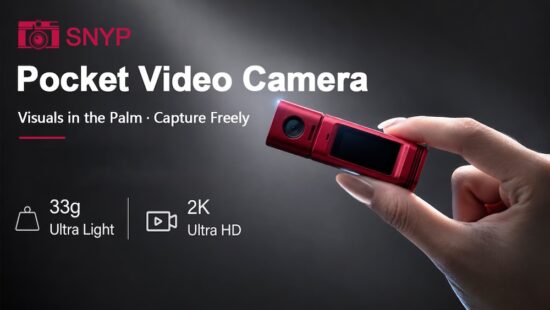
New on Kickstarter: SNYP pocket camera with 2K video & retro film filters (33g Ultra-Light Design|2K Video|16MP Photos|360° Rotating Lens|CCD Filters|Instant Preview|Photo, Video & Audio Recording).
The Pixel 11 Pro Fold has better cameras than its predecessor, but its system isn’t even on par with a phone that’s $1000 cheaper
Google
Earlier this week, Google announced the Pixel 11 Pro Fold, the latest entry in its lineup of folding phones. While it includes some meaningful improvements over its predecessor, Google is still asking people to pay $1900 for a phone that makes a lot of compromises, at a time when its competitors have offerings that don’t ask you to give up much.
The issue is most evident when it comes to cameras. Despite its “Pro” branding, the Pixel 11 Pro Fold’s camera setup is more similar to that of the standard Pixel 11 – a phone that costs $1000 less – than the Pixel 11 Pro. It has the same Type 1/1.56 (48mm²) main sensor and the same Type 1/3.2 (15.5mm²) telephoto camera as the Pixel 11, and its ultrawide camera is actually fractionally smaller. So yes, even compared to the Pixel 11, the Fold’s cameras are technically worse, while the Pro’s array beats it in every way.
Compare this with Samsung’s latest Galaxy Z Fold 8 Ultra. Sure, it costs $200 more than Google’s foldable (though at these prices, that only amounts to an 11% premium), and its three cameras are the same as you’d find on the top-of-the-line Galaxy S26 Ultra. Now, the Z Fold 8 Ultra lacks the periscope camera you’d get on the candybar ultra, but for most shooting situations, its cameras are comparable to those on standard flagships like the iPhone 17 Pro or Google Pixel 11 Pro.
Google Pixel 11 Pro Fold
Pixel 11 Pro XL
Samsung Galaxy Z Fold 8 Ultra
Samsung Galaxy Z Fold 8
Main camera
24mm equiv. F1.7 Type 1/1.56 (48mm²) 48MP
24mm equiv. F1.68 Type 1/1.3 (72mm²) 50MP
24mm equiv. F1.7 Type 1/1.3 (72mm²) 200MP
23mm equiv. F1.8 Type 1/1.57 (50mm²) 50MP
Ultrawide camera
9mm equiv. F2.2 Type 1/3.4 (13mm²) 10.5 MP
13mm equiv. F1.7 Type 1/2.51 (23.5mm²) 48MP
10mm equiv. F1.9 Type 1/2.5 (25mm²) 50MP
10mm equiv. F1.9 Type 1/2.5 (25mm²) 50MP
Telephoto camera
110mm equiv. F3.1 Type 1/3.2 (15.5mm²) 10.8MP
106mm equiv. F2.8 Type 1/1.95 (32mm²) 48MP
67mm equiv. F2.4 Type 1/3.94 (10mm²) 10MP
N/A
Inner / Outer screen size
6.5″ / 8″
– / 6.8″
6.5″ / 8″
5.5″ / 7.6″
Peak screen brightness
3600 nit inner/outer
3600 nit
3000 nit inner/outer
3000 nit inner/outer
Battery size
4806mAh
5115mAh
5000mAh
4800mAh
Thickness (folded / unfolded)
10.1mm / 5mm
8.4mm
8.9mm / 4.1mm
9.7mm / 4.5mm
Weight
239g (8.4oz)
226g (8oz)
215g (7.6oz)
201g (7.1oz)
Price
$1900
$1299
$2100
$1900
In fairness to Google, if you’re just comparing the cameras, the Pixel 11 Pro Fold comes out a bit ahead of Samsung’s price-competitive Galaxy Z Fold 8. That phone has a better ultrawide, but omits a telephoto option completely. However, it’s also a passport-style phone, adopting a form-factor that looks like it may be the future of foldables, if early reviews are any indication. When Samsung compromises on the cameras, you get something in return.
Still, you could potentially argue that Google is competing with Samsung on the camera front, as long as you ignore that the latter offers another model if you don’t prefer to compromise. But while cameras are obviously our primary concern here at DPReview, we recognize that most people’s phone purchasing decisions won’t hinge on the minutiae of sensor sizes (though if you’re spending almost $2000 on a phone, odds are you’re an enthusiast who wants the best whether you’ll use it to its fullest or not). Unfortunately for Google, the 11 Pro Fold is falling behind in other ways, too.
This year, Samsung innovated on what form factors it offered for foldables, while Google continued with its single offering.Samsung
The Pixel 11 Pro Fold has a few physical changes that are genuine improvements. It has slimmer bezels, is a touch thinner and lighter and is more durable. But when you open up that interior screen, you’ll still be greeted with a noticeable crease down the middle, something Samsung has all but eliminated in its latest foldables thanks to some clever engineering. The Korean giant is also starting to adopt silicon-carbon battery tech, letting it pack more energy density into the same space. I suspect these two factors will be big points in Samsung’s favor to the typical foldable buyer – the big screen you’re paying so dearly for will be nicer to look at and your phone will likely last longer on a charge – even if they don’t care about cameras.
There’s even more competition on the horizon
As if Samsung’s foldables weren’t enough of a threat to Google’s foldable ambitions, there’s even more competition on the horizon. Apple is expected to release its first foray into the form factor soon, likely with a passport-style phone. While I’d bet that its cameras won’t be anything special (if the iPhone Air is anything to go by), Apple undoubtedly has a way of exciting consumers about technologies that its competitors have long since adopted*. Google has brought a mild refresh with compromised cameras to a hype cycle fight.
What’s more, it’s really only Americans who will be choosing between the Pixel, Galaxy and iPhone. Outside of the US, there are even more options from companies like Oppo or Huawei, and while neither company has made one that uses the massive image sensors found in their main phones, that feels more like a matter of when, not if.
None of this is to say that I think the Pixel 11 Pro Fold will be bad. This is Google’s fourth folding phone, and it’s pretty good at making them by now. I’m sure the pictures it takes will be fine for most people, and that it’ll be good enough that the Google faithful will be happy to have it as an option. But with prices for foldables being higher than ever, and such fierce competition that promises to only get more intense in the coming months, I just don’t buy that good enough is good enough.
* – I’ll own up to the fact that this works on me, too. In 2024, I wrote an opinion piece about the Pixel 9 Pro Fold entitled “I don’t want to pay $1799 for worse photos.” And yet, hypocrite that I am, there’s a very high chance that I’ll buy the foldable iPhone, which may very well have worse cameras than my current iPhone 15 Pro. At the very least, it’ll almost certainly have fewer of them. The only thing saving me from being a complete liar is the fact that there’s no way Apple will charge $1800 for its foldable. I’ll consider myself lucky if it’s under $2000.
About the Author: Mitchell started taking pictures at 10 and hasn’t stopped since. It’s been a wide-ranging adventure, spanning a wide variety of genres and locales, and occasionally dipping into fascinations with video and filmmaking. They honed their technical knowledge doing documentation, programing and QA, writing for The Verge, and just generally messing around on the computer to see what breaks.
Want to stay up to date on the latest product news and releases? Add DPReview as a preferred source to ensure our independent journalism makes it to the top of your Google search results.
The Hidden Worlds category makes its debut this year, spotlighting the ocean’s smallest inhabitants.
Andrea Michelutti
The finalists for Ocean Photographer of the Year 2026 have been announced, featuring images that highlight the complexity and diversity of the world’s oceans. Presented by Oceanographic and Blancpain, the contest is now in its seventh year and showcases work across seven categories.
What sets this year’s iteration apart is a new category: Ocean Unseen: Hidden Worlds, which is dedicated to the ocean’s smallest inhabitants. Other categories include Adventure, Wildlife, Fine Art, Conservation Impact, Conservation Hope and Human Connection. The 2026 shortlist is among the most geographically and thematically varied the competition has fielded.
As the pressures on our ocean grow, so does the importance of the artists who bear witness to them.
Will Harrison, Ocean Photographer of the Year founder and director
Will Harrison, the competition’s founder and director, said: “These photographs don’t just capture what’s beneath the surface; they surface the stories our planet most needs us to hear. As the pressures on our ocean grow, so does the importance of the artists who bear witness to them. This year’s finalists have produced work of extraordinary depth and courage, and we’re proud that Ocean Photographer of the Year continues to be the platform where those stories reach the world.”
Below is a small selection of the finalists. The full set of finalists across all seven categories is available on the Ocean Photographer of the Year winners gallery. Category winners and the overall Ocean Photographer of the Year 2026 will be announced in September 2026.
Ocean Unseen: Hidden Worlds
Mitsuna Kawai
Photographer: Mitsuna Kawai
Caption: A ribbonfish rises vertically through the dark waters of Osezaki, Japan. Its long, silver body and delicate fins are adapted for life in the open ocean. This image was captured during a winter blackwater dive. Around the ribbonfish, a swarm of salps – small, jelly-like animals that feed on tiny particles in the ocean – creates a glimpse of life moving through the deep sea.
Technical details: Canon EOS R10 | Canon RF-S 18-150mm F3.5-6.3 IS STM @ 18mm | F9 | 1/160 sec | ISO 200
Ocean Unseen: Hidden Worlds
Steven Lopez
Photographer: Steven Lopez
Caption: A close view of a giant black sea bass reveals tiny parasitic copepods clustered around its eye in a Catalina Island kelp forest. Once misidentified on other hosts, these copepods are now known to have a specific relationship with this threatened fish. In the late 1970s and early 1980s, the giant black sea bass was nearly extinct in Southern California but is now recovering through protection efforts. This image highlights how even a giant predator can support a hidden community of much smaller organisms
Technical details: Not available
Wildlife
Rafael Fernandez Caballero
Photographer: Matty Smith
Caption: In the Pacific waters of Mexico, this photograph captures the aftermath of a successful orca hunt. Nearly an hour after a pod separated a humpback whale calf from its mother, the orcas resurfaced carrying their prey between them. The event reveals the cooperative hunting strategies of orcas, where multiple individuals work together to isolate and subdue large prey. What the image doesn’t show is that after the kill, other scavengers, including silky sharks, were drawn to the remains, showing how one event can influence an entire marine food web.
Technical details: Nikon Z9 | Nikon AF-S Fisheye 8-15mm F3.5-4.5E ED @ 14mm | F9 |1/320 | ISO 800
Wildlife
Yuta Shigeno
Photographer: Yuta Shigeno
Caption: This photograph captures a male cardinalfish releasing the larvae he has been brooding inside his mouth. Although this species is common in Japanese waters, the image reveals a rarely noticed stage of its life cycle. The male carries and protects the developing eggs for around a week, eating little or nothing during this period. The larvae are released over several events, with the first release containing the largest number.
Technical details: Nikon Z8 | Nikon Nikkor Z MC 105mm F2.8 VR S | F18 | 1/200 sec | ISO 500
Conservation Impact
Celia Kujala
Photographer: Celia Kujala
Caption: A California sea lion has plastic netting tightly wrapped around her neck. This is a stark reminder of the lasting impacts of marine plastic pollution. The wound had already cut deep into her skin, yet rescuing her was impossible because of her location within a crowded colony. Images like this reveal the hidden cost of discarded waste and give a face to an often-unseen crisis. The catchlight in her eye creates an intimate connection that is difficult to ignore.
Caption: A silky shark circles helplessly after taking bait from an illegal longline, its fate sealed by a steel hook and heavy line designed to prevent escape. Photographed less than 48 hours after Baja California’s seasonal shark fishing ban ended, the image reveals a hidden reality unfolding far from shore. A small group of pilot fish remains beside the shark, highlighting how the loss of one animal can ripple through an entire ecosystem.
Technical details: Not available
Conservation Hope
Francesca Page
Photographer: Francesca Page
Caption: Thousands of juvenile European lobsters are raised at the National Lobster Hatchery in Padstow, Cornwall, UK, before being released into the wild. By protecting the young lobsters during their most vulnerable stage, the Hatchery greatly improves their chances of survival. Here, these baby lobsters are being transferred into the space-efficient AquaHive system, an innovative hatchery design where each unit holds around 4,000 juveniles, safely separated across individual trays to prevent cannibalism.
Technical details: Sony a7 IV | Sony E 70-180mm F2.8 @ 111mm | F13 | 1/250 sec | ISO 400
Conservation Hope
Daniel Edmond Sullivan Jr.
Photographer: Daniel Edmond Sullivan Jr.
Caption: Thirty days after the 2023 Lahaina wildfire claimed 102 lives, thousands gathered off West Maui for a traditional Hawaiian paddle-out ceremony. Surfers and families formed a circle on the ocean, linking hands and releasing leis in memory of those lost. Photographed from above, the image captures a community transforming grief into a shared expression of love, remembrance and connection to the sea.
Caption: Volunteers, surfers, lifeguards and conservation groups work together to refloat stranded short-finned pilot whales. While many animals initially returned to the sea, the pod stranded again further along the coast, highlighting the complexity of mass strandings. The image captures compassion in action, but it also reflects how wildlife rescue continues to evolve. In the months that followed, international experts trained the local community in safer, science-based stranding response techniques, strengthening future rescue efforts.
Technical details: Canon EOS 5D IV | Canon EF 16-35mm F2.8L III USM @ 26mm | F6.3 | 1/640 sec | ISO 400
Human Connection Award: People and Planet Ocean
Qingsheng Sun
Photographer: Qingsheng Sun
Caption: Thousands of fish-farming cages stretch across the sea, connected by floating walkways and small wooden huts to form a vast floating community. Extending for kilometers, this carefully organized aquaculture network supports local livelihoods while transforming the coastal landscape.
Technical details: Not available
Adventure
Ben Thouard
Photographer: Ben Thouard
Caption: A surfer races through the barrel of Teahupoʻo, French Polynesia, photographed from beneath the wave using a slow shutter speed. Rather than freezing the action, the technique blurs the rushing water while keeping the surfer as the focal point, conveying the incredible speed inside the wave. Teahupoʻo is a busy surf spot, yet the photographer has managed to capture an isolated surfer at this iconic location.
Technical details: Canon EOS R5 | Canon EF 85mm F1.4L IS USM | F12 | 1/10 sec | ISO 50
Adventure
Daan Verhoeven
Photographer: Daan Verhoeven
Caption: Freediver Arnaud Jerald descends into Dean’s Blue Hole in the Bahamas during a successful world record attempt at the Vertical Blue competition. Photographed from more than 30 meters below, the image captures the scale of one of the world’s deepest marine sinkholes. Crystal-clear water, sunlight and drifting sand combined to create a rare view of this remarkable moment.
Technical details: Canon EOS R5 | Canon EF 11-24mm F4L USM @ 11mm | F5/6 1/250 sec | ISO 100
Fine Art
Chelsea Mayer
Photographer: Chelsea Mayer
Caption: A pod of short-beaked common dolphins swims beneath the bow of a ship off the coast of southern California. Dolphins are known to ride the pressure wave created by moving vessels, using it to travel with little effort in a behavior known as bow riding. Calm seas and exceptional water clarity reveal the dolphins’ markings, while the reflection of the white, yellow and blue paint from the National Geographic Venture creates a psychedelic, abstract image.
Technical details: Not available
Fine Art
John Kowitz
Photographer: John Kowitz
Caption: Five-spotted eagle rays glide above the sandy seabed, their dark bodies and white markings contrasting against the pale background. These rays often travel together while searching for prey, using electroreceptors to detect hidden mollusks and crustaceans beneath the sand. Photographed during a dive in search of manta rays, this formation appeared during the journey back to shore.
Technical details: Sony a1 | Sony FE 16-35mm F2.8 GM @ 16mm | F5.6 | 1/160 sec | ISO 125
About the Author: Abby Ferguson holds an MFA in photography and blends a fine-art background with extensive editorial and commercial experience. She built and led an in-house imaging program for a large vacation rental company and has served as an associate editor at Popular Photography. She also teaches at a local community college and serves on its Photographic Technology Program Advisory Board, sharing her knowledge and enthusiasm for the medium.
Want to stay up to date on the latest product news and releases? Add DPReview as a preferred source to ensure our independent journalism makes it to the top of your Google search results.
In a recent interview, Insta360 founder and CEO JK Liu confirmed that they are developing two new camera models with completely different characteristics, and one of them will have a shape that “you have never thought of before”:
For the mirrorless camera that has been rumored to be on the market on social media , they explicitly stated that “development is currently underway.” Moreover, they are developing two models with completely different characteristics. One of them will have a shape that “you have never thought of before,” and it may be a camera that will change the way people take pictures with cameras, which has traditionally involved “framing, focusing, and pressing the shutter button.” They said that “we may be able to show a prototype at CP+ in 2027 ,” suggesting that the camera industry will be much more interesting next year. (via mynavi.jp)

 Connexion