Vue lecture

The 26MP Sony APS-C stacked sensor is nothing new


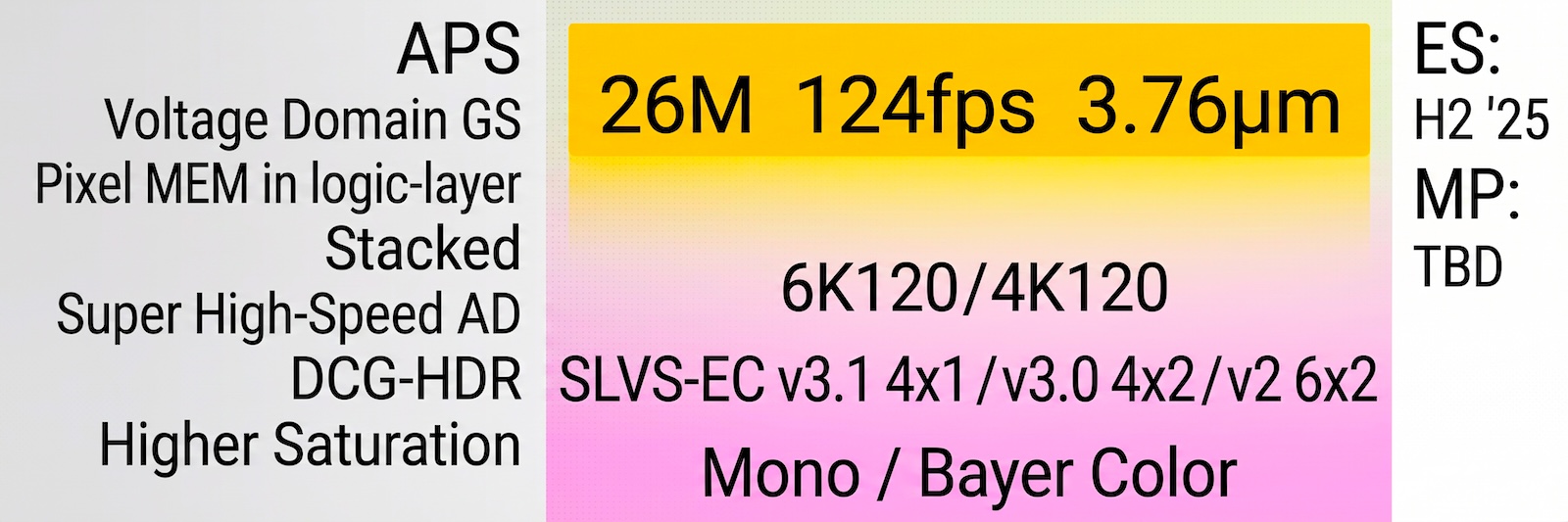
The Sony IMX820 APS-C stacked sensor is nothing new – it was leaked last year in this Sony Semiconductor Solutions roadmap:

Sony registered a new camera WW308784: could be a new RX or APS-C model

Here are the specs:

  • 26M 124fps 3.76um
  • 6K120/4K120
  • SLVS-EC v3.1 4×1/v3.0 4×2/v2 6×2
  • APS-C
  • Voltage Domain GS
  • Pixel MEM in logic-layer
  • Stacked
  • Super High-Speed AD
  • DCG-HDR
  • Higher Saturation
  • Mono / Bayer Color

The post The 26MP Sony APS-C stacked sensor is nothing new appeared first on Photo Rumors.

  •  

GoPro says its future is “defense, government, robotics and aerospace” after $285 million merger

It still promises to “fully support its existing consumer products and its subscription and cloud platform.”

The GoPro logo on a dark blue backgroundGoPro

GoPro has announced that it’s entered into a “definitive merger agreement” with Starman Optical, a little-known entity described in the press release as a “privately held optical-photonics company.” According to current GoPro CEO Nick Woodman, the company hopes the move will help it “grow across consumer, commercial and defense markets,” and address “important areas of national security related to cameras, optics and AI infrastructure.”

This is, to put it mildly, a bit of a pivot from its current role as an action camera company. A few hints suggest that the action camera business may not be going away, though. For one, GoPro promises it will “continue to fully support its existing consumer products and its subscription and cloud platform.” While that’s good news for anyone who just bought the Mission 1 Pro ILS, released just a week before this news broke, the word “existing” casts a bit of doubt on whether we’ll see new consumer cameras from the company in the future. 

The company will focus on “important areas of national security related to cameras, optics and AI infrastructure.”

There are a few references to the company’s “growth potential” in consumer markets, but there’s much heavier emphasis on US national security and manufacturing. GoPro founder and CEO Nick Woodman says the company plans to address “important areas of national security related to cameras, optics and AI infrastructure.” And Charles Tebele, CEO of Starman Holding, says “The combination of GoPro’s world-class optical expertise and intellectual property with Starman’s advanced transceiver capabilities and U.S. manufacturing platform creates a unique opportunity. Together, we intend to bring production of these critical components back to the United States.”

In the US, national security has long been big business, with lucrative military contracts sustaining many companies, even ones better known for their consumer products. But it’s become an increasingly hot-button topic in recent years, with the US government promising billions to companies making semiconductors within its borders, and placing import restrictions on companies like DJI based on perceived threats to national security. The company also promises to expand into the hot and controversial “AI Data Center” space, though to me that reads more as it filling out its bingo card of phrases you’re required to use in a press release in 2026.

As a camera company, GoPro has some share in the military industrial complex – when we interviewed NASA astronaut and US Air Force Col. Terry Virts in 2019, he said Russia beat the US to the punch by flying GoPros into space (though NASA has since included the cameras on multiple flights, including its recent Artemis II mission) – but it’s not exactly a major player. It’s clear its leadership sees the merger as an opportunity to change that, with intents to “leverage its IP, optics and imaging capabilities across defense, government, robotics and aerospace markets, building on demand for U.S.-made solutions.” Woodman reiterates that point, saying: “We’re excited to combine with the Starman team to capitalize on this opportunity and play an important role in America’s future.”

The GoPro Mission 1 Pro ILS with its lens mount and sensor facing the camera. Beside it is a small Laowa cinema lens.
The brand-new GoPro Mission 1 ILS shakes up GoPro’s formula with an interchangable lens mount and features aimed more towards cinematographers than action camera users.
Mitchell Clark

GoPro has been in dire financial straits for a while, following years of Chinese competitors like DJI and Insta360 introducing action cameras that tempted would-be buyers away with innovative features, new form factors and larger sensors, while the Hero line largely stagnated. This year, the company announced the Mission 1 series that largely caught back up with, and in some respects surpassed, those competitors, but it may have been too late. Earlier this summer, it warned investors that there was “substantial doubt” about its ability to continue in business. At the time, it said it was investigating “opportunities within the defense and aerospace sector.” Those investigations were apparently fruitful.

According to the press release, the merger – which will see $285 million paid to GoPro shareholders – will see the company’s $92 million in debt paid off, “resulting in a clean, substantially debt-free balance sheet.” The company will remain publicly listed, though its unclear whether that listing will be for GoPro alone or the newly combined entity; GoPro’s press release promises “additional information regarding the transaction upon closing.”

Finally, there’s the question of who Starman Optical is, and how it has the money to buy GoPro. As best I can tell, it’s a subsidiary of Starman Holding, a company that owns several sub-brands, including popular phone case and accessory companies like Incase and Incipio. While Starman Holding’s website doesn’t list Starman Optical as one of its companies, it does list Starman New Photonics, and its About Us page names Charlie Tebele as its CEO. The websites for both Starman Holding and Starman New Photonics don’t have a ton of information on them, though that’s not that odd for this kind of company.

GoPro expects the deal to close by the end of the year, assuming it’s approved by regulators and GoPro shareholders. 

About the Author: Mitchell started taking pictures at 10 and hasn’t stopped since. It’s been a wide-ranging adventure, spanning a wide variety of genres and locales, and occasionally dipping into fascinations with video and filmmaking. They honed their technical knowledge doing documentation, programing and QA, writing for The Verge, and just generally messing around on the computer to see what breaks.

Want to stay up to date on the latest product news and releases? Add DPReview as a preferred source to ensure our independent journalism makes it to the top of your Google search results.

add as a preferred source on google

  •  

The Caira AI camera is getting a new trick: generative video editing

Camera Intelligence says this makes it the first mirrorless camera to include the feature.

A man holds a Camera Intelligence Caira attached to an iPhone.Camera Intelligence

Camera Intelligence, the company behind the Caira camera that attaches to the back of your iPhone, is adding even more AI features to the device. The app that powers the camera is getting the ability to edit videos shot on it using generative AI, building on a feature that allowed you to make similar adjustments to your photos.

The company says the feature will support a few types of edits: “relighting” footage (making a video shot at noon look like it was taken at golden hour, for instance), reframing it, emulating a camera motion like a tilt or pan and “set extension,” which the company says lets you “extend the world by 10 seconds beyond what was filmed on location.” The options are presented as templates that you can pick from, though there is a chatbot that you can use to give additional input; for example, you can use it to tell the AI that the “orbit” camera move should be centered around a specific person in the shot.

A screenshot showing the Caira's AI video editing UI.Camera Intelligence

The Caira shoots at up to 4K, though the clips produced by the generative AI are limited to 720 or 1080. The tool can use Google’s Gemini Omni 1.1 Flash model, or Runway’s Aleph 2.0, and gives you the option to select which one you’d like before setting it to work. The company says it takes one to three minutes to produce a finished video.

Camera Intelligence stresses that the tool can only be used to edit existing footage that you took with the camera, not create something entirely new. It’ll keep your original footage, and the generated file will have a Google SynthID watermark. The company says it started work on the feature after surveying 111 Kickstarter backers* and hearing from 77% of them that they’d like the feature. 

In a press release, it says the feature is designed for “solo creators and marketers who may not have the budget to commission this work and who are often overwhelmed by pro editing tools – but who are excited by these technologies and what they make possible.”

Generating video, like generating images, isn’t particularly cheap. The company says the feature will be available “alongside Generative Image Editing and a yet-to-be-announced feature” as part of Caira Studio, which is launching later this year. Pricing hasn’t been announced yet, but the company has made it clear from the start that generative editing features would require a subscription. The Kickstarter page promised that the “Caira Pro” plan would be $7 a month, but that only included stills editing.

Camera Intelligence says the generative video editing feature will only be available in the US and UK.

I understand why the company is pitching this as a prototyping tool

Watching the samples that Camera Intelligence included in its announcement video, I understand why the company is pitching this as a prototyping tool – something you can use to see if a shot will work before actually trying to capture it – rather than something you’d use to produce final footage. While the company says the Omni model is “physics-aware and remembers the scene across an entire clip,” if you look close you can definitely still see some AI artifacting. 

Even if the model produced perfect footage, this still isn’t the kind of tool I’d like to use. But it doesn’t surprise me that the people who initially backed the camera based on the pitch of its AI capabilities are interested in it, and it seems like a natural extension of the work Camera Intelligence was already doing. I’m just not sure this feature will entice anyone else to buy the Caira if they weren’t already sold, or demand that the traditional camera makers start building something similar. 

* Speaking of those backers, the company says it’s “delivered the majority of Kickstarter units” of the Caira and is delivering the outstanding ones on a monthly basis.

About the Author: Mitchell started taking pictures at 10 and hasn’t stopped since. It’s been a wide-ranging adventure, spanning a wide variety of genres and locales, and occasionally dipping into fascinations with video and filmmaking. They honed their technical knowledge doing documentation, programing and QA, writing for The Verge, and just generally messing around on the computer to see what breaks.

Want to stay up to date on the latest product news and releases? Add DPReview as a preferred source to ensure our independent journalism makes it to the top of your Google search results.

add as a preferred source on google

  •  

Ice, wings, and a winning shot: Inside the 2026 Audubon Photography Awards

Jacqueline Burke’s Roseate Spoonbill won the Grand Prize in this year’s Audubon Photography Awards, part of a full slate of category winners from across the Americas.

Common merganser with a reddish-brown crest flying low over blue water, wings spread wide, with an icy background.Gail Bisson

The National Audubon Society has announced the winners of the 2026 Audubon Photography Awards, with Jacqueline Burke of the US winning the US and Canada Grand Prize for a photo of a Roseate Spoonbill and Francisco Castro Escobar of Chile winning the Chile and Colombia Grand Prize for a photo of a Lesser Horned Owl.

The specific geographic designations reflect the Audubon Society’s hemispheric conservation model. Birds aren’t bound by international borders, and hundreds of species migrate thousands of kilometers each year along flyways that stretch between North, Central and South America. Colombia hosts nearly 20 percent of the world’s avian species, and Chile’s 6,435km (3,999mi) of coastline and wetlands are vital stopovers and wintering grounds for many shorebirds coming from as far away as the Arctic.

The National Audubon Society, founded in 1905, sponsors the contest each year to celebrate bird and bird habitat photography and to further its conservation mission. This is the second year the competition has included prizes to Chile and Colombia residents. Winners and honorable mentions will be published online in Audubon magazine, and winners will be featured in the Fall 2026 print issue. The top 100 photos will be announced on September 23. If you’re interested in entering next year’s competition, which opens for entries on January 13, 2027, you can find the full contest rules and category details on the Audubon website.

If you really enjoy bird photography, you can also check out our coverage of Audubon’s previous award winners from 2025, 2023 and 2022.

U.S. and Canada winners

Roseate spoonbill with fluffed pink feathers splashing in dark water, water droplets suspended around the bird against a black background.Jacqueline Burke

Photographer: Jacqueline Burke (USA)
Award: Grand Prize
Species: Roseate Spoonbill
Photo location: St. Augustine Alligator Farm Zoological Park, St. Augustine, Florida, USA

A volcano erupts in steam and lava as a very small bird flies through the center between them.Liron Gertsman

Photographer: Liron Gertsman (Canada)
Award: Birds in Landscapes – Winner
Species: White-tailed Tropicbird
Photo location: Hawai’i Volcanoes National Park, Volcano, Hawai’i, USA

Small yellow-green bird perched on a tree branch, partially concealed by leaves, with a soft green and yellow blurred background.Nick Parayko

Photographer: Nick Parayko (Canada)
Award: Birds Without Borders – Winner
Species: Tennessee Warbler
Photo location: St. Albert, Alberta, Canada (in his backyard)

Seabirds on a rocky cliff ledge surrounded by fishing nets; one bird hangs below, tangled in blue netting.Josh Galicki

Photographer: Josh Galicki (USA)
Award: Conservation – winner
Species: Northern Gannets
Photo location: Isle of Noss, Shetland Islands, United Kingdom

Woodpecker feeding at a white cactus flower among green cactus buds and stems, with a smaller bird perched nearby.Mike Henry

Photographer: Mike Henry (USA)
Award: Plants for Birds – winner
Species: Gila Woodpecker and saguaro cactus
Photo location: Tucson, Arizona, USA

Bird with wings spread flying over a dark, textured wood background.Ian Shultz

Photographer: Ian Shultz (USA)
Award: Youth – Winner
Species: Rock Pigeon
Photo location: Golden Gardens Park, Seattle, Washington, USA

Common merganser with a reddish-brown crest flying low over blue water, wings spread wide, with an icy background.Gail Bisson

Photographer: Gail Bisson (Canada)
Award: Female Bird – Winner
Species: Common Merganser
Photo location: East Bay Sandbar, Nova Scotia, Canada

Photographer: Piper VanOrd (USA)
Award: Video – Winner
Species: Great Blue Heron
Photo location: Allegheny Islands Wilderness, National Wild & Scenic Allegheny River, Warren, Pennsylvania

Chile and Colombia winners

Great horned owl with bright yellow eyes perched on a cactus branch, mottled brown and gray feathers blending into the dimly lit, moody setting.Francisco Castro Escobar

Photographer: Francisco Castro Escobar (Chile)
Award: Grand
Species: Lesser Horned Owl
Photo location: Antofagasta, Chile

Close-up of a white bird with smooth feathers, a pale orange beak, and a dark eye against a blue background.Rodrigo González Pairoa

Photographer: Rodrigo González Pairoa (Chile)
Award: Birds Without Borders – Winner
Species: Black-browed Albatross
Photo location: Almirantazgo Fjord, Chile

Photographer: Nicolás Muñoz García (Chile)
Award: Video – Winner
Species: Black-browed Albatross
Photo location: Isla Chañaral Marine Reserve, Huasco Province, Chile. The nearest town is Caleta Chañaral de Aceituno

Two green parrots with yellow markings at the entrance of a moss-covered tree hole, one perched outside and one inside; background is blurred green foliage.Santiago Giraldo

Photographer: Santiago Giraldo (Colombia)
Award: Plants for Birds Colombia – Winner
Species: Yellow-eared Parrot and Quindio wax palm
Photo location: Anaime, Cajamarca, Tolima

Small bird with yellow and gray feathers perched on a branch, looking down at a spider web; green blurred background.Juan David Camacho Márquez

Photographer: Juan David Camacho Márquez (Colombia)
Award: Youth – Winner
Species: Canada Warbler
Photo location: Doña Dora Birding, El Queremal, Valle del Cauca, Colombia

Green parrot perched on a tall, slender tree trunk with misty, terraced hills and winding dirt paths in the background.Santiago Pérez Rincón

Photographer: Santiago Pérez Rincón (Colombia)
Award: Conservation – Winner
Species: Yellow-eared Parrot
Photo location: Anaime River Canyon, Rural District of the Municipality of Cajamarca, Department of Tolima, Colombia.

Brown bird with outstretched wings flies against a dark rocky background, highlighted by a beam of light.Faber Mosquera Alvarez

Photographer: Faber Mosquera Alvarez (Colombia)
Award: Birds in Landscapes, Colombia – Winner
Species: Oilbird
Photo location: Pijao, Quindío, Colombia. In the Cañón de los Guácharos

Penguin swimming just below the water’s surface with outstretched wings and trailing ripples, set against a deep blue background.Gonzalo Bertolotto Quintana

Photographer: Gonzalo Bertolotto Quintana (Chile)
Award: Coastal Birds of Chile – Winner
Species: Gentoo Penguin
Photo location: Fildes Bay, Antarctica, in the vicinity of the Chilean bases

Two birds standing by a reflective lake, bordered by green vegetation, with snow-capped mountains and dramatic peaks in the distance beneath a cloudy sky.Timothy Dhalleine

Photographer: Timothy Dhalleine (Chile)
Award: Birds in Landscapes, Chile – Winner
Species: Crested Caracara
Photo location: Torres del Paine National Park, Magallanes and Chilean Antarctic region, Chile

About the Author: Dale Baskin is a professional photographer, writer, and filmmaker based in the Pacific Northwest. He is the Managing Editor of DPReview.com.

Want to stay up to date on the latest product news and releases? Add DPReview as a preferred source to ensure our independent journalism makes it to the top of your Google search results.

add as a preferred source on google

  •  

From foxes to grizzlies: Our community’s unforgettable wildlife encounters

Nature is incredible. Check out these wildlife encounters from the DPReview community that bring you up close to nature’s raw beauty.

Grand Teton black bearFuhTeng

Close-up wildlife encounters are one of those things you tend not to forget, especially if you’re a photographer and always have your camera at the ready. From massive bison to tiny birds, our community certainly impressed us this week with the encounters they shared for our Question of the Week series.

See below for some of those photos and stories. Even our own team got in on the fun! Click a member’s photo to see more.

Vladimir Nogin

Fox encounterDavid Lal

“I live in a rural English village which is in a national park. We get a lot of animal visitors to the garden. I care for them: feeding in the winter or offering water in our current drought. One winter morning, I was putting out the rubbish bin for collection. On turning round to walk back up the drive to the house, I noticed a young vixen on the drive staring at me. She was cold and wet – and hungry. I spoke gently to her and told her to follow me to the kitchen door. Blimey me, she did!

I keep a camera always ready. I threw her some dog biscuits, then offered her one with my left hand while my right held a Nikon D300 with an 18-35mm lens.”

Krusty79

Golden EagleKrusty79

“My friend and I were driving around some hills on the rural roads around Hollister, CA. We had spotted a golden eagle and had photographed it from a distance. Another golden eagle started following the first one. It must not have noticed us, because it came over a small hill right towards us! It got so close that my camera couldn’t focus on it. If I didn’t have my camera, I might have been close enough to touch a wingtip.”

dgbinpc

Wolf pack in snow.dgbinpc

“My first trip to Yellowstone National Park in winter was amazing. Snow everywhere. Bison covered in snow. Pillows of white piled along the rivers. It was a trip that exceeded all my expectations. We were told we might see wolves, and we did – miles away, through a spotting scope. It was exciting, but hardly intimate.

A few years later, I returned to Yellowstone in winter. As our snowcoach took us into the park from West Yellowstone, our driver pointed out wolf tracks that left the roadway and climbed the hillside beside us. He suggested we drive a little farther down the road. Maybe, if we were lucky, we would see them.

And see them we did. The wolves emerged from the trees several hundred yards behind us and dropped onto the groomed road. Apparently, the road was a pretty good travel route for them, too.”

RichDitch

Eared Trogon in tree.RichDitch

“I had been in Arizona a bit over one year when there was a surprising report of an Eared Trogon seen about 2 hours north of Phoenix along Christopher Creek. Elegant Trogons are sparse nesters in southern AZ; Eared Trogons are very rare vagrants near the border with Mexico.

I had to go to Christopher Creek, hoping to see the reported bird. I waited around with a few other birders for over an hour after they had given up when I heard an unfamiliar call. I looked up in the tree I was standing under, and there it was! This is my best shot of the bird, on Fuji slide film with an N90 (probably) and my manual focus Nikkor 400 F5.6.

The species is now known as the Eared Quetzal. This shot was used as the Cover of the Western Birds Journal.”

CaseyD

Bobcat.FujiRon

“When my girlfriend and I moved from a small town in California to an even smaller town in rural Oregon, we were amazed by the amount of wildlife that came out of the forest and wetlands behind our home. We’ve had Black Bear, Bobcat, Black-tailed Deer, Coyote, Raccoons, too many species of birds to account for, frogs, snakes, newts, and who knows what else goes through at night.

As a cat owner, I particularly enjoyed my backyard encounter with a young Bobcat that stopped to pose for pictures, eventually got bored, and walked back into the forest.”

elliottnewcomb

Group of cicadas.elliottnewcomb

“I stepped out of my front door, exactly when the cicadas came out of the ground, emerged from their shells, and were drying their wings, so I could get within inches of them. I used a Sony Cyber-shot DSC-RX100 M1 – close focus and no macro setting or macro lens.”

fuji_phile_e

Eurasian Wren.fuji_phile_e

“Being an inner-city dweller, we don’t see much other than gulls, sparrows, blackbirds and jackdaws on a regular basis, though I sometimes see various tits, occasional dunnock and robins, and once a dinky Eurasian wren.

I’m sharing some juvenile jackdaw images here. It was waiting for its mam, by the looks of it. I kept out of sight to avoid stressing it, using a window angled obliquely to obscure me, my XF100-400mm on my X-T3 poking under the window.

This first pic is what I call the Marilyn Monroe shot.”

Nigelpitt13

Young cheetah.Nigelpitt13

“While on an early morning walking safari in Southern Africa, I came across four young cheetahs in my path approximately thirty yards from me. I was standing in long grass because there had been heavy rain the previous week. I stopped, raised my camera lens and focused on the Cheetah closest to me. The Cheetah stopped in the open and stood and looked straight at me while I took a few shots. I then focused on the others as they made their way down to the open riverbed and crossed into Botswana.

A beautiful moment in close contact. Luckily, there were no lions, leopards, or hyenas nearby (The cheetah would’ve known). In a matter of minutes, all four cheetahs had moved off. Two things one never does when encountering wild animals: never show fear (they can sense it); two, never ever run (they’ll see you as prey).”

FuhTeng

Grand Teton black bearFuhTeng

“My family and I (wife and two pre-teen boys) had a wonderful road trip to Grand Teton National Park (and then Yellowstone and then Badlands) this summer. We kept hearing from everyone about how they’d seen bears, but we hadn’t seen one yet. We were in the Colter Bay visitor center area and went for a hike, knowing there was a grizzly who’d been around the area. We hoped to see him from a nice, safe distance.

I was grumpy from not seeing a bear, and tired and warm from the hike, so I just wanted to get back to the car. At that moment, I came to a land bridge between the near-island we’d hiked around and the mainland. It’s only a few yards wide, maybe 8 or 9, when THIS appears. I didn’t believe it at first. I remember pausing and going, “That’s not real.” Then instincts took over, and I dropped to my knee and got my long lens up for a couple of shots.

Then I realized – THERE’S NO WHERE TO GO. He’s coming right at us…”

BenGauthier

Sea lions swimming.
Sony Cyber-shot DSC-RX100 | Built-in lens @ 28mm (35mm equiv.) | F2.5 | 1/250 sec | ISO 125
BenGauthier

“I spent the summer in a coastal small town of Britanny, Trébeurden. I like to fish nearly every day. For a couple of years, I have been admiring seals that live on rocks around the location, 1 mile from the coast. It seems that they became used to my small boat. On the first encounter, they were difficult to see from less than 150 feet away. This year, they stay on their rocks even though I can see them from 50 feet away.

Here is a picture taken with a 100 mm equivalent (Sony RX100). One of the seals came close to the boat. These animals are beautiful and sometimes noisy, and their song sounds like a wolf’s.”


There are many other photos that we unfortunately couldn’t fit into this article. They all deserve praise and to be seen, so be sure to visit the forum discussion. Thanks to everyone who took the time to step outside and capture the unique wildlife encounters of your region.

About the Author: Mathew Anderson is a proud Community Manager for the technology industry and a past visitor to DPReview.com for all his camera needs. He is currently the lead of DPReview’s community and primary communication link between the community and DPReview’s team.

Want to stay up to date on the latest product news and releases? Add DPReview as a preferred source to ensure our independent journalism makes it to the top of your Google search results.

add as a preferred source on google

  •  

KEH Camera is now Zeiss’s official US and Canada repair partner – even for decades-old lenses

Every Zeiss photography lens, from current Batis and Otus ML glass to decades-old vintage optics, now has a single factory-authorized repair address, effective September 1.

Three camera lenses of different sizes and a camera body positioned on a white surface, with a black KEH Camera carrying case featuring the brand’s logo and a red KEH cleaning cloth in the background.Zeiss / KEH

Zeiss has named KEH Camera its exclusive authorized repair and service center for photography lenses and equipment in the US and Canada, the two companies announced today. The Atlanta-based used-gear specialist will handle work on everything from postwar Zeiss Jena glass to current Otus ML optics.

KEH will handle both in-warranty and out-of-warranty work for those in the US and Canada. The KEH technicians are trained directly by Zeiss and will use genuine manufacturer parts along with Zeiss-approved calibration tools and procedures, according to the announcement. The companies specify that all repairs will meet Zeiss engineering standards. 

Carl Zeiss Jena Flektogon 4/20 camera lens with visible glass elements and engraved front ring text, positioned on a white background.
US and Canadian customers now have an official service and repair options for Zeiss Jena lenses.
KEH

The most important detail of the announcement is the scope. Coverage extends to “decades-old legacy lenses,” with the companies specifically citing postwar Zeiss Jena optics, the 1960s Contarex system and large-format Zeiss lenses built for Linhof and Graflex, alongside current Batis and Otus ML lines. “Be they new or legacy ZEISS cameras and lenses, we are confident that KEH Camera has the skills necessary to provide value to our loyal optics owners,” said Tony Wisniewski, senior manager for Zeiss Photography Americas.

The coverage of older lenses represents a reversal of Zeiss’s long-stated position: its photography service pages state that legacy Hasselblad, Contax/Yashica, Rollei, Carl Zeiss Jena and Zeiss Ikon gear “can unfortunately no longer be repaired by Zeiss,” directing owners to independent workshops. Now, though, the companies have confirmed that even Yashica and Rollei optics can be serviced by KEH.

For gear that previously fell under Zeiss’s service policy, the new partnership replaces a rather roundabout arrangement. Until now, Zeiss instructed US photo lens owners needing warranty service to contact their dealer or the distributor in the country of purchase, rather than sending equipment to a dedicated Zeiss service center. Under the new agreement, users can initiate repairs through Zeiss’s online service portal, with KEH coordinating shipment. Customers can also drop off equipment at KEH’s retail location in Atlanta. 

KEH already serves as an authorized repair partner for Sony and Sigma, and says it is the only reseller in the camera industry with manufacturer-approved repair facilities. Its track record shows that repair is central to its business. KEH chairman and CEO Glenn Kaufman connected the Zeiss agreement to that mission, explaining that it’s “a natural extension of what KEH has always stood for: keeping great gear in circulation and out of landfills.”

Two black camera lenses with lens hoods, set side by side at an angle on a white background, featuring blue and yellow markings on the barrels.
Zeiss released two prime lenses last year: the Otus ML 50mm F1.4 and Otus ML 85mm F1.4. However, while they feature Zeiss branding, the lenses are manufactured by Cosina in Japan.
Zeiss

Zeiss “decided to kind of hit pause on photo, to wait and see what happens” during the pandemic, Wisniewski told us last year, while continuing to sell the lenses it already made. That pause ran nearly six years, ending with two Otus ML lenses in 2025. This partnership to expand repair options for customers in North America suggests the company’s renewed investment extends past new products.

Disclosure: MPB, a competitor to KEH in the used-gear market, is a DPReview sponsor. This article was produced independently.

About the Author: Abby Ferguson holds an MFA in photography and blends a fine-art background with extensive editorial and commercial experience. She built and led an in-house imaging program for a large vacation rental company and has served as an associate editor at Popular Photography. She also teaches at a local community college and serves on its Photographic Technology Program Advisory Board, sharing her knowledge and enthusiasm for the medium.

Want to stay up to date on the latest product news and releases? Add DPReview as a preferred source to ensure our independent journalism makes it to the top of your Google search results.

add as a preferred source on google

  •  

Adobe Camera Raw 18.6 adds a Glow tool with diffusion, bloom and halation – applied to Raw images

Diffusion, bloom and halation arrive in the Effects panel, applied globally or through masks – but not in Lightroom.

Traditional Chinese pavilion with curved roof by a river at dusk, surrounded by illuminated modern skyscrapers; digital settings panel overlay visible in the foreground.Adobe

Adobe recently released the newest version of its Raw processing software, Adobe Camera Raw 18.6. Its headline feature is a native Glow effect tool that gives users three analog-inspired looks – diffusion, bloom and halation – directly within ACR. Other features include a new Metadata Info Panel that shows image data directly in the editing workspace, and photographers and designers who work with composites gain a new Trim tool that makes everything outside a crop transparent, rather than leaving it as hidden pixels. The update also adds support for additional camera and lens profiles.

What Glow does

The new Glow tool lives in Camera Raw’s Effects panel alongside the existing Vignette and Grain sliders. Adobe’s documentation describes three selectable styles. Diffusion applies a hazy, film-like softening effect that spreads across the frame, similar to what a Black Mist or Pro Mist filter attached to your lens would achieve. Bloom produces a softer, more even glow confined to the highlights, which could be useful for misty scenes and waterfalls. Halation adds a colored halo effect around bright edges and light sources, similar to the warm, or red-orange fringing that appears on film when light reflects off the film base back through the emulsion.

Glow works inside Camera Raw’s masking system, so the effect can be dialed up or down on a subject, a luminance range or a selected area, though the Style, Range, Spread and Warmth sub-settings are shared globally – masks control how much something glows, not the kind of glow.

Greg Benz, a digital photo educator (and a member of the DPReview community), posted a helpful video on his YouTube channel illustrating the capabilities of ACR’s new Glow tool, including examples of using masks to achieve localized results. If you’re interested in learning more about it, we highly recommend giving it a watch.

One thing worth calling out: Glow is currently an ACR-only feature and isn’t available in Lightroom. Though given the close relationship between the two applications, we wouldn’t be surprised to see it show up in Lightroom at some point.

Other new features

ACR’s new Metadata Info Panel provides an easy way to see read-only metadata for any photo you’re viewing in Camera Raw. Clicking the small “i” on the right-hand pane of ACR will display the camera model, lens, image dimensions, file size, capture date, copyright information, file name and caption (if present). It will also display any content credentials information embedded in the photo.

A screenshot of Adobe Camera Raw 18.6 showing the new Metadata Info Panel on the right. The photo in the viewer is a modern office building with dark glass windows and geometric reflections, featuring the signs "ROCK POINTE III" and "601 WASHINGTON" on its facade against a blue sky.
The new Metadata Info Panel displays the camera model, lens, image dimensions, file size, capture date, copyright information, file name and caption.
Mitchell Clark

The new Trim tool is located in the Crop & Expand panel. It can be used to trim an image to the exact area you’ve selected, making everything outside the crop transparent rather than retaining it as hidden pixels. This is different than a normal crop in ACR, which is non-destructive, keeping the pixels outside the cropped area but not displaying them. This removes a step for photographers or designers creating composites or those who need transparent backgrounds. 

Trim can also be used in conjunction with Generative Expand: trim to the area you want, then expand the canvas using generative content from Adobe Firefly.

According to Adobe, ACR 18.6 also supports additional cameras and lenses, including the Tamron 12-20mm F2.8 and Reeflex anamorphic and fisheye lenses for iPhone. As of this writing, Adobe hasn’t updated its list of supported camera models since earlier in August; you can check the company’s camera support page for the latest information.

ACR 18.6 is available now through the Creative Cloud desktop app. You can find the full release notes on Adobe’s website with additional details in a post to the Adobe Community site.

About the Author: Dale Baskin is a professional photographer, writer, and filmmaker based in the Pacific Northwest. He is the Managing Editor of DPReview.com.

Want to stay up to date on the latest product news and releases? Add DPReview as a preferred source to ensure our independent journalism makes it to the top of your Google search results.

add as a preferred source on google

  •  

Fujifilm users can now send film simulations to their camera from their iPhone

Two apps make it easier to manage individual recipes, or even sets of them, from your phone

A Fujifilm X-H2 with a phone leaning against it, running the Fuji X Weekly app.Mitchell Clark

Experimenting with “recipes” that build on Fujifilm’s “Film Simulations” to change the look of your JPEGs – subtly or not so much – has long been a tradition among a certain set of the company’s users. However, actually getting the recipes to your camera has historically been a bit of a pain, requiring you to manually adjust several parameters and save them to a custom profile that you can later recall. Recent cameras from Fujifilm have somewhat improved the experience with a dedicated recipe system, but it’s still a lot of manual data entry.

This month, though, two apps have promised to solve that problem. One from a major player in the Fujifilm recipes field, the other from a scrappy upstart. For both, recipe syncing is only available for iOS devices (there currently isn’t even an Android version of the latter), but are signs of exciting things to come.

Fuji X Weekly

Series of screenshots showing the flow of transferring a recipe to a camera using the Fuji X Weekly app.Mitchell Clark

The first is the Fuji X Weekly app, which is an extension of the popular website that hosts many community created recipes. The app has been around for a while, letting you browse and save recipes that you’d then have to manually enter in on your camera. Now, though, it’s able to download recipes, and then sync them to your camera via a standard called Picture Transfer Protocol. You can do this using the hundreds of recipes in the site’s repository, or with custom ones you’ve entered yourself. 

The process is relatively simple, as it is for the rest of the apps we’ll cover today. You put your camera in USB Raw Conv. / Backup Restore mode, then connect it to your phone with a USB cable. From there, the app should be able to send your selected recipe to whichever custom slot you choose, though the first time you go through this process, you may need to give the app system-level permission to talk to an attached camera. Then, you can select the custom setting mode from your camera (which, in my testing, helpfully already had the name of the recipe in the name field) and start shooting.

Screen grab showing several Custom Settings slots on a Fujifilm camera filled with Film Simulations.
Recipes synced from the app are saved as custom settings, letting you easily switch between them.
Mitchell Clark

While the app is free to use, there is a $20/year subscription that unlocks a few extra features. That list now includes the ability to sync sets of recipes to your camera, rather than having to do them one at a time. Say, for example, you have five recipes you use around town every day, and six that you like to have access to while traveling. Paid members could switch between the two with a press of a button.

FujiShare

Two screenshots showing the FujiShare interface.Mitchell Clark

A newcomer to the scene is an app called FujiShare, which Reddit user Rude_Shoulder_2895 posted about on the FujifilmX subreddit. They said they built the app to make it easier to load sets of recipes to their X100V. It also aims to give you more information about the example photos used for a recipe, to make it easier to distinguish how much of the aesthetic is down to the camera settings, the recipe and the scene. The app also has tools built in to let you load a JPEG from a Fujifilm camera and save the recipe that was used to make it, and to apply frame effects to your photo, making it look like it’s matted or on a film reel.

FujiShare is a sleek app with a modern UI, and it’s undeniably nice to scroll through the recipes on offer, though there seem to be far fewer than on Fuji X Weekly. Otherwise, the actual process of syncing your recipes is much the same as it is using the other app, though users can post packs of recipes as well, letting you just save an entire set of recipes at once, before sending it off to your camera. On that note, FujiShare’s ability to send over multiple recipes at once currently isn’t pay-gated.

Screenshots of the FujiShare app, showing the process of transferring a pack of recipes to the camera.
You can use FujiShare to create “packs” of recipes (or find existing ones in the feed), and transfer them to your camera in a single step.
Mitchell

The FujiShare app is currently in public beta, and being distributed through Apple’s TestFlight system, which will take a bit of setup if you haven’t used it before. The beta is free, but it’s unclear what, if any, monetization scheme the app will use when it launches.

Is this new?

Screenshots of the FujiStyle app running on Android, with the option of sending a recipe to the camera.Mitchell Clark

One thing worth noting about these apps is that they don’t appear to be the first to come up with the idea. About a year ago, the team behind the FujiStyle app announced a very similar feature, letting you sync recipes to your camera’s custom settings slots via USB. It works very similarly to the other apps and, perhaps most excitingly, I’ve confirmed it works with Android. (I did, however, have to dive into the phone’s developer settings to get it working; your mileage will vary depending on what version of the OS you have.) Unlike the other apps, it doesn’t appear to support syncing sets of recipes at a time, but I bet I could sync seven recipes using the app faster than I could input one on the camera manually.

The caveats

Since these apps all seem to use a similar system to sync recipes, they share a lot of the same warnings and asterisks. The biggest one is made explicit by Fuji X Weekly. In the blog post announcing the feature, Ritchie Roesch says: “While there’s not a lot that can go wrong with PTP, there is a minor chance of adverse affects, especially if not handled carefully by the developers.” While Roesch says they tested many ways that things could go wrong, and built several safeguards into the app, there is still a risk. 

“Very importantly, connecting your camera to any unofficial, unlicensed, unsupported program may void your camera’s manufacturer warranty,” Roesch says. “Fujifilm confirmed this with me. I tried very hard to obtain a license from Fujifilm so that it wouldn’t risk voiding your warranty, but ultimately that didn’t work out.”

These apps aren’t universally compatible

The app also makes this clear when you first go to use the feature, making it clear that you’re doing so at your own risk. While the other apps don’t make the warning as explicit, they come with similar warnings, so it’s probably a good idea to approach all of them with a sense of caution.

It’s also worth noting that these apps aren’t universally compatible. They should work with cameras newer than the X-T3 and X-T30, but those cameras and anything older don’t support the system that these apps use to transfer recipes. Likewise, if you have an older iPhone with a Lightning port, it may not be as simple as using a Lightning-to-USB-C cable; Fuji X Weekly reports those won’t work, but that adapters may. 

Finally, there’s the fact that the recipe-transfer feature is only available on iOS for Fuji X Weekly, and the FujiShare app currently only exists for iOS. Both developers have said they’re working on version for Android, but the timetables are to be determined. That’s unfortunate for Android users in the short term, as it means they have fewer options. Hopefully that situation will improve soon, but in the meantime, the FujiStyle app is there to serve Android users in the meantime.

Summary

Among the DPReview staff, there were two reactions to the news of these apps. The first was “this is great, why hasn’t Fujifilm built this into its own app yet?” The second was “Please don’t ask them to complicate things, I just want the app to transfer pictures reliably, nothing more.” While that reaction is understandable, I also suspect there’s been some pressure on Fujifilm to integrate this kind of feature into XApp. Recipes are a relatively well-known part of its brand identity, and other companies, like Panasonic and Nikon, have beaten it to the punch, building systems that allow users to download community-created color profiles to their cameras using an app (and Ricoh has made mention of doing something similar, too). 

Perhaps the existence of these third party options could take some of that pressure off, letting Fujifilm focus on reliability and compatibility. Or perhaps it’ll build it into XApp at some point in the future and, to borrow a phrase from the Apple developer community, Sherlock these apps. Either way, at the moment Fujifilm users have options they didn’t before.

About the Author: Mitchell started taking pictures at 10 and hasn’t stopped since. It’s been a wide-ranging adventure, spanning a wide variety of genres and locales, and occasionally dipping into fascinations with video and filmmaking. They honed their technical knowledge doing documentation, programing and QA, writing for The Verge, and just generally messing around on the computer to see what breaks.

Want to stay up to date on the latest product news and releases? Add DPReview as a preferred source to ensure our independent journalism makes it to the top of your Google search results.

add as a preferred source on google

  •  

The ColorChecker, photography’s most important 24 squares, turns 50

Calibrite is marking the anniversary with a virtual museum of the chart’s five decades.

Color calibration chart with 24 colored squares set against a blue background, with gold confetti and ribbons at the top.Calibrite

If you’ve ever held a small card of 24 colored squares up to your subject, you’ve used a piece of imaging history that just hit a milestone birthday. The ColorChecker (also called the Macbeth chart if you’ve been around a while) is turning 50, and Calibrite has marked the occasion with a virtual museum for the little chart that helps photographers keep colors accurate. 

The anniversary hub for the occasion includes a timeline from the founding of the Macbeth Artificial Daylight Company to today, along with fun facts about the card and some of its famous uses. It also breaks down the purpose behind each of the 24 patches and features a quiz to test your knowledge of each color. 

The small chart debuted in a 1976 paper, “A Color-Rendition Chart,” by C.S. McCamy, H. Marcus and J.G. Davidson, written while Macbeth was a division of Kollmorgen. The idea was simple but clever: each patch was locked to a spectral reflectance value instead of a printed ink mix, so the card could be measured, reproduced and trusted across different materials and lighting conditions. 

M-GN-colorchecker_digital_sg
For more demanding work, the Digital SG version offers 140 color squares — including the original 24, a 17-step grayscale ramp and 14 skin-tone targets.
Calibrite

When photography went digital, the ColorChecker came along for the ride. Shoot a Raw file with one in the frame, then feed it into Adobe Lightroom or DxO PhotoLab, and you get a custom camera profile that pulls your colors closer to how the scene actually looked. The ColorChecker Digital SG, though, saw an expansion of color, jumping to 140 squares that include the original 24 colors, a 17-step grayscale for fine tonal control, and 14 dedicated skin-tone patches.

The card has changed hands a few times: Gretag, GretagMacbeth and X-Rite all owned it before Calibrite took over. It’s also changed in size. The original measured roughly 13 by 9 inches, with proportions that closely match a 35mm film frame, and it now comes in a range of sizes, including one barely bigger than a postage stamp for macro subjects. But the patch layout and spectral targets have stayed consistent enough that profiles built around the standard remain interchangeable. Fifty years on, and photographers still reach for this tool for the same reason they always did.

About the Author: Abby Ferguson holds an MFA in photography and blends a fine-art background with extensive editorial and commercial experience. She built and led an in-house imaging program for a large vacation rental company and has served as an associate editor at Popular Photography. She also teaches at a local community college and serves on its Photographic Technology Program Advisory Board, sharing her knowledge and enthusiasm for the medium.

Want to stay up to date on the latest product news and releases? Add DPReview as a preferred source to ensure our independent journalism makes it to the top of your Google search results.

add as a preferred source on google

  •  

DxO released PhotoLab 10 (coupon code included)


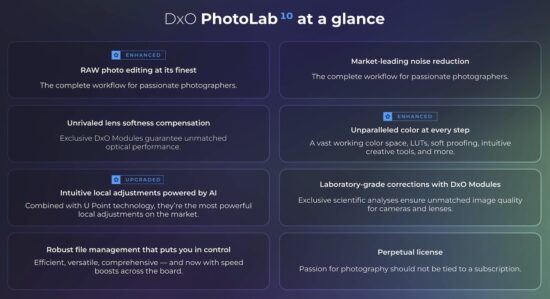
DxO released PhotoLab 10. The new version adds Depth Masks that use AI-generated depth maps to target foreground, midground, or background without embedded depth data; a new color-grading wheel for independent (or linked) shadows, midtones, highlights, and overall balance; expanded AI masks that can isolate every person or individual features such as eyes, hair, lips, eyebrows, iris, sclera, teeth, and facial hair, plus U Point refinement of those masks; RAW-level automatic sensor-dust removal; a Control Brush and elliptical Control Points; one-click send to Affinity for pixel work; and smaller workflow extras including as-shot crop ratios, in-library histogram edits, better database backup, and easier folder relocation.

You can get a DxO discount with promo code RUMORS (new customers only).

Additional information:

DxO PhotoLab 10 delivers a new era of RAW photo editing with depth masks, advanced color grading, and expanded AI-powered tools

New AI editing tools, enhanced U Point™ technology, and one-click pixel editing in Affinity raise the bar for what a RAW workflow can be.

Paris, France: DxO, a pioneering force in photo editing software for more than two decades, has long helped photographers achieve the highest image quality through breakthrough RAW processing, advanced denoising technologies, and market-leading optical corrections. Today, the company announces the launch of DxO PhotoLab 10, the world’s most advanced end-to-end RAW photo editing software. While DxO has traditionally focused on extracting every ounce of quality from a RAW file, Version 10 expands that vision with a new generation of masking tools, powerful color grading capabilities, smarter AI-assisted workflows, and a seamless connection to Affinity for pixel-level editing — giving photographers greater creative control than ever before.

“DxO PhotoLab 10 is about helping photographers work faster, more precisely, and more creatively,” explains Jean-Marc Alexia, VP of Product Strategy. “By combining depth-aware masking, advanced color grading, and smarter AI-assisted tools, we’re removing technical barriers while giving photographers even greater control over their images. For us, AI should help photographers realize their vision, not replace it.”

Depth Masks: a new dimension of selective editing

DxO PhotoLab 10 introduces Depth Masks, a powerful new way to create local adjustments based on distance from the camera rather than shape or color. Using AI to analyze the image and generate a detailed depth map, Depth Masks allow photographers to precisely target foreground, midground, or background elements without requiring embedded depth data.

After applying a filter or adjustment, photographers can use intuitive sliders and adjustable feathering handles to refine exactly where the effect appears within the scene. The result is smooth, natural transitions and highly precise selective edits that would otherwise require complex and time-consuming manual masking.

Advanced color grading for refined creative control

DxO PhotoLab 10 introduces a powerful new Color Grading tool designed to make advanced color work both intuitive and precise. A streamlined interface centered around a single color wheel allows photographers to independently adjust shadows, midtones, highlights, and overall color balance, making it easy to shape the mood and atmosphere of an image.

For even greater creative control, color adjustments can be linked across tonal ranges, preserving their relative relationship while exploring different looks. The result is a faster, more intuitive approach to color grading that offers both flexibility and consistency.

Expanded AI capabilities

DxO PhotoLab 10 expands its AI-powered editing tools to make complex edits faster and more efficient.

Individual people selection

AI Masks can now identify every person within a scene, allowing photographers to create a single mask for all people, combine selected people into one mask, or generate individual masks for as many people — or individual features of people such as eyes, hair, and lips — as needed. This makes group portraits and complex scenes faster and easier to refine.

Face segmentation

Face segmentation brings new precision to portrait editing, adding eyebrows, eyes, iris and pupil, sclera, teeth, facial hair, face skin, and lips to the list of selectable AI Mask categories. Alongside existing options such as sky, subject, background, people, animals, flowers, and vehicles, these new categories help photographers target detailed adjustments more efficiently.

U Point™ functionality in AI Masks

AI Masks can now be refined using DxO’s renowned U Point™ technology, which intelligently selects areas based on color and luminosity. After creating an AI-powered selection, photographers can use the familiar U Point eyedropper to expand or contract the selection, making it easy to fine-tune complex selections without resorting to manual painting.

Automatic sensor dust removal

DxO PhotoLab 10 also introduces AI-powered dust removal at the RAW level, automatically detecting and removing sensor dust and small imperfections before they interrupt the editing process.

Upgraded local adjustment tools

Long before AI-powered masking became commonplace, DxO’s renowned U Point technology gave photographers an intelligent way to create highly precise local adjustments.

DxO PhotoLab 10 expands these capabilities with a new Control Brush and the ability to switch Control Points from circular to elliptical, giving photographers greater flexibility when creating local adjustments. The Control Brush combines the familiarity of traditional brush painting with U Point’s intelligent color- and luminosity-based selection, while elliptical Control Points provide a more natural fit for many subjects.

Combined with AI Masks and the new Depth Masks, these tools allow photographers to choose the most effective selection method for every image, then refine masks using whichever technology best suits the task. Sophisticated local adjustments become faster, more intuitive, and more precise.

A direct path to pixel-level editing in Affinity

DxO PhotoLab 10 introduces a seamless connection to Affinity, the acclaimed professional image editing software. A new button, sitting alongside PhotoLab’s existing export options, sends a photograph directly into Affinity for pixel-level work: retouching, compositing, and fine detail manipulation.

The combination brings together the best of both worlds: DxO’s unrivaled RAW processing, denoising, and optical corrections as the foundation, and Affinity’s powerful pixel-editing toolset for everything beyond. This marks the first step in an evolving integration between the two applications, with further enhancements planned for future releases.

Further workflow improvements

DxO PhotoLab 10 introduces a range of workflow enhancements designed to streamline the editing experience.

New features include support for as-shot crop ratios, histogram adjustments directly within PhotoLibrary, improved database backup and restoration, and simplified folder relocation management, helping photographers work more efficiently when organizing and editing large image libraries.

Price and availability

DxO PhotoLab 10 is available today from the DxO website (shop.dxo.com) for macOS and Windows computers:

– New license $249.99 / 249,99 € / £229.99
– Upgrade from DxO PhotoLab 8 or 9 $129.99 / 129,99 € / £114.99

A 30-day free trial is available.

DxO released new modules for the latest releases from Canon, Sony, Sigma, Panasonic, and Smayang

The post DxO released PhotoLab 10 (coupon code included) appeared first on Photo Rumors.

  •  

The Google Photos print store just got a Fujifilm upgrade, with new options coming soon

Fujifilm is now running Google Photos’ US print service, expanding the ways you can see your photos in physical form.

Fujifilm and Google Photos logos on a light teal background, divided by a vertical line.Fujifilm / Google

Fujifilm is strengthening its ties with Google, taking a larger part in the company’s photo printing service. The company announced that it’s taking a “leading” role when it comes to operating and supporting the Google Photos Print Store in the US.

This takes the form of a co-branded store built directly into the Google Photos interface. Once you navigate to the Print Store and select a product to order, you’ll be prompted to connect your Google account to Fujifilm’s services*. From there, Fujifilm will take care of payment, printing, shipping and customer support. Fujifilm also says there are “plans to roll out new features, new products and a more robust user experience.” 

You’ve long been able to get printed products directly from the Google Photos app – I personally have a book I made with the service in 2017 – but the company says this expanded partnership will give users “more ways than ever before to print their memories, including an expanded range of print formats, frames, décor, and gift items, going well beyond the offerings of the previous platform.”

There’s a very good chance that, if you bought prints from Google Photos prior to this announcement, Fujifilm or its equipment were involved in some way. The company is a major player when it comes to photo printing for both consumers and industrial clients. Last year, the company identified “growth in the number of images taken and printing needs due to smartphone proliferation” as one of its key opportunities for mid-to-long-term growth.

We always appreciate people having better and easier access to printing their photos

While this announcement seems like it’s probably a bigger deal for Fujifilm and Google, rather than the people actually printing their photos, we always appreciate people having better and easier access to printing their photos. While it used to be a vital part of the process, it’s an easy one to forget nowadays, especially if you’re part of the younger generations who have grown up with purely digital photography. It’ll be exciting to see if this partnership makes printing smartphone photos that bit more attractive to the people who may use it to see their images rendered in ink on paper for the first time.

* While Fujifilm’s press release says the platform “began rolling out to Google Photos users in the U.S. at the end of August 2026,” it seems that’s still in progress. When I tried it on September 1st, I ended up in the old Google Photos payment flow. 

About the Author: Mitchell started taking pictures at 10 and hasn’t stopped since. It’s been a wide-ranging adventure, spanning a wide variety of genres and locales, and occasionally dipping into fascinations with video and filmmaking. They honed their technical knowledge doing documentation, programing and QA, writing for The Verge, and just generally messing around on the computer to see what breaks.

Want to stay up to date on the latest product news and releases? Add DPReview as a preferred source to ensure our independent journalism makes it to the top of your Google search results.

add as a preferred source on google

  •  

The latest version of DxO’s Adobe alternative brings AI depth masking – no subscription required

DxO is bringing its AI-powered Depth Masks to PhotoLab10, along with plenty of other masking updates, automatic sensor spot removal and a new color grading wheel.

Close-up of a woman with dark bangs and closed eyes against a pink background, her lips highlighted in bright green by a PhotoLab 10 AI mask overlay, with mask tool icons visible on the mouth.DxO

DxO has announced PhotoLab 10, the latest version of its subscription-free Raw editor. The new iteration of the app offers more advanced masking tools, a new color grading wheel, automatic sensor dust removal and direct connectivity to Affinity, all under the company’s perpetual license. 

Most of the updates revolve around masking changes. That includes the addition of Depth Masks, which it previously released as part of Nik Collection 9 earlier this year. DxO says the feature uses AI to build a detailed depth map from any Raw file, based on distance from the camera, even without embedded depth data. It allows photographers to independently target the foreground, midground or background for more precise editing. 

A group in the sea, with one person lifting another above the water; both are highlighted in green. An editing software mask creation window appears in the top right corner.
The updated AI Masks feature lets photographers mask all people at once, combine only chosen individuals or isolate each person separately.
DxO

DxO is also expanding some of PhotoLab’s existing AI-based masking tools. The company says that the AI Masks tool can now identify every person in a scene and allows photographers to create a single mask for all people, combine only selected people into one mask or create individual masks for every person. For even more control, the tool even allows photographers to select individual features of people, such as eyes, hair and lips. 

Users can now also select individual features such as eyebrows, eyes (as a whole or breaking out the iris, pupil and whites), teeth, facial hair, face skin and lips from the list of selectable AI Mask categories. It should offer even more fine-tuned control while retouching portraits. The masking updates also include an expanded U Point toolkit, DxO’s approach to creating local adjustments based on the color and luminosity of a sampled point. Users now have access to a brush-based Control Brush and elliptical Control Points alongside the existing circular ones. 

M-GN-Dxo_PhotoLab-10-EN-Color-Grading-01
DxO brought its color grading wheel from Nik Collection 9 into PhotoLab 10, offering tone-zone color control separate from the existing hue-based wheel.
DxO

PhotoLab 10 adds more than masking changes. DxO has brought over the color grading wheel introduced with Nik Collection 9, which puts shadows, midtones, highlights and global color on a single wheel. It’s tone-based grading, distinct from the hue-targeted color wheel that remains in the app. It also added an AI-powered sensor dust removal tool that automatically removes sensor spots on Raw files. Lastly, there is now a new export option for Affinity, Canva’s now-free professional image editing software, so photographers can send images directly to that platform for additional editing. 

PhotoLab 10 is available starting today for macOS and Windows. A new license costs $250, while upgrades from PhotoLab 8 or 9 are $130. A 30-day free trial is available on DxO’s site.

About the Author: Abby Ferguson holds an MFA in photography and blends a fine-art background with extensive editorial and commercial experience. She built and led an in-house imaging program for a large vacation rental company and has served as an associate editor at Popular Photography. She also teaches at a local community college and serves on its Photographic Technology Program Advisory Board, sharing her knowledge and enthusiasm for the medium.

Want to stay up to date on the latest product news and releases? Add DPReview as a preferred source to ensure our independent journalism makes it to the top of your Google search results.

add as a preferred source on google

  •  

Xiaomi’s Poco F9 Ultra has megapixels and a mega battery

It’s the first phone in the Poco line that lets you take 200MP images, in certain conditions.

The red Xiaomi Poco F9 Ultra on a color-matched background.Xiaomi

When you use DPReview links to buy products, the site may earn a commission.

Xiaomi has announced the Poco F9 Ultra and the F9 Pro, the latest entries in its series of phones that aim to undercut the pricing of traditional flagship models while offering similar specifications. This time around, the company has included a battery with a massive 8050mAh capacity on the Ultra, and a main camera that can shoot images at up to 200MP on both phones.

That main camera is one of three: the phones also include telephoto and ultrawide options. On the Ultra, the former features a “5x” 120mm equiv. F3 optically stabilized lens and a 50MP sensor. Its ultrawide is a slightly-narrower-than-typical 0.7x 17mm equiv. F2.4 lens, also with a 50MP sensor. Xiaomi doesn’t specify the sizes of these sensors, but they seem to be unchanged from the ones found in the Poco F8 Ultra, which used a Type 1/2.76 (20.4mm2) one for its telephoto and Type 1/2.88 (18.6mm2) for its ultrawide, according to GSMArena. The F9 Pro, meanwhile, has a 50MP 2.5x telephoto camera and an 8MP ultrawide option, again seemingly unchanged from its predecessor.

The camera bump of the Xiaomi Poco F9 UltraXiaomi

The main event, though, is the 200MP wide-angle camera shared by the two models. It has a 24mm equiv. F1.7 stabilized lens. By default, it bins all that resolution down to 12.5MP or 50MP, depending on a setting, but you can access its full resolution via a dedicated mode in the camera app. The pictures take a few seconds to process, and won’t have the HDR effect that you get from the phone’s normal modes, but can show much more detail when shot in ideal conditions; the camera reminds you that the mode works best when there’s plenty of light, for reasons that are obvious if you understand how quad bayer sensors work.

Again, Xiaomi hasn’t said what size sensor its main camera uses, beyond claiming that it uses “2μm 16-in-1 Super Pixels.” That figure shouldn’t be taken literally, though, because to fit 200MP worth of 2μm pixels, you’d need the area of a full frame sensor, which it certainly isn’t. It’s more likely that it’s describing the binned quad bayer pixels, which would put the sensor somewhere around a Type 1/1.56 (50mm2). That would also explain why the company hasn’t advertised the size, when it did for the Poco F8 Ultra, which used a larger Type 1/1.31 (72mm2) sensor for its main camera. We’ve reached out to Xiaomi to ask for specifics, and will update this story if we hear back.

Of course, with flagship cameras the sensor specs aren’t everything, as phones make heavy use of computational photography, stacking multiple frames together. You can see our sample gallery shot using the Poco F9 Ultra below.

Beyond the cameras, the Poco F9 phones have relatively high-end specs. The Ultra uses the Snapdragon 8 Elite Gen 5 chip, while the Pro uses the slightly cut-down “V” variant of that system on a chip. Both feature displays capable of going up to 185Hz, and producing 10,000 nits peak brightness, though the latter figure is only over a 1% region of the screen. More realistic is the 4500 nit peak brightness figure, attainable in a window covering 25% of the display. The Ultra’s display is 6.9″, while the Pro’s is 6.59″.

Both phones have relatively large batteries for their size, thanks to the company’s use of silicon-carbon battery chemistry. The Ultra is rated for 8050mAh, while the Pro is 6330mAh. Whichever one you go with, you can recharge it quickly with the correct equipment; they both have 100W wired and 50W wireless charging. What’s more, they can be used to charge other devices that don’t have the same stamina, with 27W of reverse wired charging and 22.5W of reverse wireless charging.

Finally, the phones feature “Sound by Bose” co-branding. On the Ultra, this means stereo speakers combined with a subwoofer that lives alongside the camera modules on the plateau (though the Pro misses out on that feature). Based on the few songs I listened to, it indeed produces pretty impressive bass for a phone. If you go above around 75% volume you’re liable to hear some peaking, but for personal listening that’ll be plenty loud. 

The F9 Ultra comes in “dark cherry” or black, while the Pro is available in black, white or “aurora green,” with the latter literally glowing in the dark after being exposed to light. The Ultra is available with 256GB of storage and 12GB of RAM for $799 / €1,099, or you can upgrade to 16GB of memory with 512GB  or 1TB of storage for $949 / €1199 and $1199 / €1399, respectively. The Pro, meanwhile, starts at €903 for a version of 12GB RAM and 256GB of storage. The launch is global, but, as is typical for Xiaomi phones, excludes the US.

Please do not reproduce any of these images on a website or any newsletter/magazine without prior permission (see our copyright page). We make the originals available for private users to download to their own machines for personal examination or printing; we do so in good faith, so please don’t abuse it. 

Loading gallery…

About the Author: Mitchell started taking pictures at 10 and hasn’t stopped since. It’s been a wide-ranging adventure, spanning a wide variety of genres and locales, and occasionally dipping into fascinations with video and filmmaking. They honed their technical knowledge doing documentation, programing and QA, writing for The Verge, and just generally messing around on the computer to see what breaks.

Want to stay up to date on the latest product news and releases? Add DPReview as a preferred source to ensure our independent journalism makes it to the top of your Google search results.

add as a preferred source on google

  •  

Sigma is filling out its series of high-end large format cinema lenses, going wider and longer

The company has three new entries in its Aizu Prime series.

A 21mm, 100mm and 125mm cinema lens on a gold background.Sigma

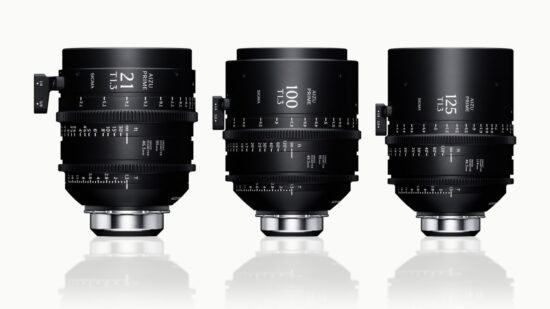
Sigma has announced three new entries to its “Aizu Prime” series of cinema lenses: a 21mm, 100mm and 125mm. Like the rest of the lenses in the series, they’re fast at T1.3, and designed for “large format” cameras, with a 46.3mm image circle that could cover the film in a VistaVision camera or the sensor of an Arri Alexa LF Open Gate. (In photography terms, they’re a touch larger than full frame, which has a 43.3mm diagonal.)

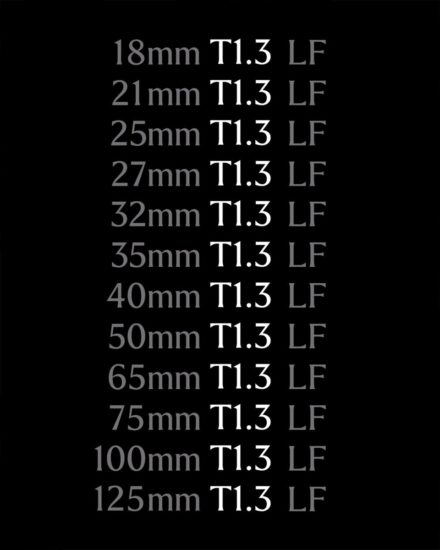
The new lenses take the matched series wider and longer than before. Last year, Sigma launched the Aizu Prime brand with eight lenses, ranging from 25mm to 75mm. It also promised that, eventually, there would be 12 lenses in the series. Today’s announcement brings the total up to 11, with only an 18mm option not yet released.

Several Sigma Aizu Prime lenses sitting on a light table.
The Aizu Prime lenses have all the features a cinematographer would expect: geared control rings with long throws, distance markings (which you can get in either feet or meters) and electronic communication for automatic distortion correction.
Sigma

Sigma says the lens’ optical formulas, like the rest of the Aizu Primes, are “developed exclusively for cinema applications,” with an eye towards being sharp, while still retaining character, and having minimal focus breathing and distortion. Sigma also designed them to match the other lenses in the series, sharing similar color, contrast and flare characteristics, sizes and weights (though the 100mm and 125mm are a touch heavier than the rest at 2.2Kg versus 1.6 or 1.7Kg). That’s an important consideration on a busy film set; you don’t want to have to rebalance your gimbal or reset your follow focus and iris control wheels each time you change a lens.

None of this comes cheap, though, as the three new lenses will cost $9799 each, which is a bit of a jump up from the $8300 the rest of the entries in the series cost. That may be a function of their slightly more exotic focal lengths. They’ll be available for PL or Sony E-mount starting in November.

About the Author: Mitchell started taking pictures at 10 and hasn’t stopped since. It’s been a wide-ranging adventure, spanning a wide variety of genres and locales, and occasionally dipping into fascinations with video and filmmaking. They honed their technical knowledge doing documentation, programing and QA, writing for The Verge, and just generally messing around on the computer to see what breaks.

Want to stay up to date on the latest product news and releases? Add DPReview as a preferred source to ensure our independent journalism makes it to the top of your Google search results.

add as a preferred source on google

  •  

Zach Snyder’s new movie is about drugs, violence and photography

It seems cameras will play a staring role in The Last Photograph.

A bedraggled man raises a camera with a flash mounted to his eye intently.Zack Snyder, via TIFF

Zack Snyder has directed movies about a lot of things: superheroes, space, ancient Greeks, owls, you name it. With his next film, it seems like we can add photography to that list.

According to the synopsis, the movie, called The Last Photograph, is about a former DEA agent teaming up with a “washed-up junkie war photographer” to try and find his niece and nephew after their parents were murdered. The trailer (and the title) imply that photography will play some role in the story. There are scenes showing a darkroom, photos being taken at a crime scene, a slow-motion shot of a camera exploding, and several moody frames of someone raising a rangefinder to their eye, presumably witnessing horrors off-screen.

Speaking of: we’ll put the trailer below, but heed the warning in the first few seconds. It’s graphic in pretty much every way it can be, including an exceptional amount of violence. Even if you’re fine with that, it’s probably not something to watch at work.

Of course, being a camera site, we were interested in what cameras the characters were using on-screen, especially since Zack Snyder is a known photography buff (he’s reportedly the cinematographer for the movie, too, as he was on 2021’s Army of the Dead, which he shot almost entirely at F0.95 using rehoused vintage optics*). From what we can tell, the photographer character uses Yashica rangefinder – probably an Electro 35CC from the early 70s, based on the markings – and what looks like a Leica M10 Monochrom, a camera Snyder is demonstrably familiar with.

The Yashica isn’t a stranger to the silver screen, either; Andrew Garfield used one in 2012’s The Amazing Spider-Man (back when Spider-Man movies featured the version of Peter Parker who works as a photographer). While the brand wasn’t really known as a go-to for photojournalists, it also wouldn’t be that surprising to hear of a war photographer using a film rangefinder with a fixed 35mm F1.8 lens.

We don’t see a ton of movies about photography, so it’s interesting to be getting a movie from a big-name director that seems to at least feature the art form as an important part of the story. The last film we got like that was Alex Garland’s Civil War, which focused mostly on the role of reporting and war photography (much to people’s surprise, given that it was released during a contentious US election and was set against the backdrop of a fictional second civil war in the country).

Screenshot-2026-08-31-at-09.59.20
What looks to me like a Leica M10 Monochrom (based on the lack of branding) and the Yashica Electro 35CC in a darkroom. Of course, you’d only need to develop film from the later, as the M10 is a digital camera.
Zack Snyder, via TIFF

According to The Hollywood Reporter, it may be a while before we get to see The Last Photograph. It’s set to premiere on September 13 at TIFF (the Toronto International Film Festival), but no one has bought distribution rights to it yet. The film is apparently a passion project for Snyder, who has been kicking the idea around since the mid-2000s. While it certainly seems like it’ll be an intense watch, I’m excited for whenever I do get to see it. In part because of the photography aspect, but also because the cinematography in it looks gorgeous, and it’s always interesting to see a Hollywood director take a big artistic swing.

* The effect is… strange. At times it works and provides a unique aesthetic, at others it borders on distracting. I actually didn’t know about the creative choice when I started watching the movie, but pretty early into it I turned to a friend and said something along the lines of “what is going on with this cinematography?”

About the Author: Mitchell started taking pictures at 10 and hasn’t stopped since. It’s been a wide-ranging adventure, spanning a wide variety of genres and locales, and occasionally dipping into fascinations with video and filmmaking. They honed their technical knowledge doing documentation, programing and QA, writing for The Verge, and just generally messing around on the computer to see what breaks.

Want to stay up to date on the latest product news and releases? Add DPReview as a preferred source to ensure our independent journalism makes it to the top of your Google search results.

add as a preferred source on google

  •  

Tilta will also increase prices on September 1st


In addition to Fujifilm, Tilta will also increase prices on September 1st (check their products at B&H Photo and the official website). Here are the details:

Product Old Price Adjusted Price
Tilta Boulder Camera Cart XL – Black $1,599 $1,699
Tilta Boulder Camera Cart – Gray $1,199 $1,399
Tilta Boulder Camera Cart Indie Kit – Gray $1,499 $1,699
Cable Management Storage Bin for Boulder Camera Cart – Black $19 $29
IGT Plate Expansion Module Kit for Boulder Camera Cart – Black $219 $249
Dual IGT Plate Kit for Boulder Camera Cart – Black $22 $29
IGT Outdoor Expansion Module for Boulder Camera Cart – Black $199 $229
Cable Hook for Boulder Camera Cart – Black $19 $25
Dual Accessory Mounting Bracket for Boulder Camera Cart – Black $45 $49
Sunshade for Boulder Camera Cart Extended Umbrella (2 Panel) – Black $49 $79
Motorized Control Kit for Boulder Camera Cart (US) – Black $699 $799
1/4”-20 Mounting Strap for Boulder Camera Cart – Yellow $5 $9
1/4”-20 Mounting Strap for Boulder Camera Cart – Purple $5 $9
1/4”-20 Mounting Strap for Boulder Camera Cart – Gray $5 $9
Compact Hook for Boulder Camera Cart – Black $5 $9
Desktop Mounting Adapter for Boulder Camera Cart Accessories (40mm) – Black $49 $69
Organizer Bin for Boulder Camera Cart – Black $39 $49
Metal Pegboard for Boulder Camera Cart – Black $49 $59
Monitor Mounting Kit for Boulder Camera Cart – Black $249 $299
Fluid Head and Steadicam Mounting Kit for Boulder Camera Cart – Black $185 $199
150mm Fluid Head Ball Mount Adapter Kit for Boulder Camera Cart – Black $109 $129
Monitor Mount for Boulder Camera Cart Mounting Bar – Black $129 $139
Monitor Mounting Bracket for Boulder Camera Cart – Black $199 $219
Expansion Mounting Bracket Kit for Boulder Camera Cart – Black $139 $149
Top Drawer with Lock for Boulder Camera Cart – Black $139 $159
150mm Fluid Head Ball Mount for Boulder Camera Cart – Black $59 $69
75/100mm Fluid Head Ball Mount for Boulder Camera Cart – Black $89 $99
Khronos Focus PD Handle for iPhone – Space Gray $99 $149
Khronos Focus PD Handle for iPhone – Titanium White $74 $149
Khronos Focus PD Handle for iPhone – Black $99 $149
Hydra Alien Mini Car Mounting System – Titanium Gray $119 $149
Hydra Alien Mini Electronic Suction Cup Kit – Titanium Gray $149 $189
Hydra Alien Mini Master Kit – Forest Green $199 $249
Hydra Alien Mini Master Kit – Desert Beige $199 $249
Hydra Alien Mini Biking Kit – Titanium Gray $139 $169
Hydra Alien Mini Handheld Kit – Titanium Gray $109 $139
Hydra Alien Mini Ultimate Kit – Forest Green $169 $209
Hydra Alien Mini Ultimate Kit – Desert Beige $169 $209
Nucleus Auto Focus Adapter Base Kit (E to PL) $299 $399
Nucleus Auto Focus Adapter Dual Nano II Motor Kit (E to PL) $499 $599

Current Pricing Ends August 31st

Thank you for your continued support and trust in Tilta gear. Due to sustained increases in raw material, production, and international logistics costs, we will be revising the pricing on select products starting September 1, 2026.

This update will primarily affect the Nucleus Auto Focus series, Boulder Cart, and Hydra Alien Mini lines.

To ensure a smooth transition for our community and partners, all existing and pending orders for the Nucleus Auto Focus placed prior to September 1 will be honored at their original rates. In addition, current pricing across all affected items will remain active through August 31, 2026.

The post Tilta will also increase prices on September 1st appeared first on Photo Rumors.

  •  
❌