❌

Vue lecture

Yashica’s digital Y16 is a perfect recreation of a camera you’ve never heard of

Inspired by the 1959 film model with the same name, the slim compact uses a xenon strobe and will be available in seven colors inspired by the original.

Three compact retro-style cameras in green, orange, and black held in hands, featuring a blurred background of a marina with boats and tall buildings under a clear blue sky.

There’s certainly been no shortage of compact, vintage-inspired digital cameras lately, and we may soon have yet another option courtesy of Yashica. The company recently announced the development of the Y16, a compact digital camera inspired by the 1959 film camera of the same name.

While full details haven’t been released, the camera will feature a 12MP sensor and be able to record photos and videos, as Digital Camera Watch reports. It will offer an optical viewfinder and a small display for reviewing images.

A small digital camera in a hand displays its screen with a selfie of two people, while a blurred airplane and runway appear in the background.Yashica

Unlike the LED lamps found on many novelty-style digital cameras, the Y16 uses a xenon flash tube, a true photographic strobe that produces a short, brighter burst of light, potentially giving it better low-light reach and more ability to freeze motion. The flash will offer three brightness levels.

The digital Y16 camera looks remarkably similar to the 1959 version, with its slim rectangular shape and large, knurled black control dial on top. Even the seven different color options of the upcoming Y16 look similar to the film version. The original was a 16mm film camera that used 10x14mm negatives and featured a fixed-focus Yashinon 25mm lens. There’s no word yet on what focal length the digital model will use.

Six small, colorful Yashica cameras—blue, pink, yellow, green, orange, and black—set on a white background above a bold black Yashica logo.
The digital Y16 will be available in 7 color options, echoing the variety offered by the original 1959 film camera.
Yashica

Of course, like other historic camera brand names in use today, the Yashica name on this camera is not entirely straightforward. Despite the familiar name, the Y16 does not represent a revival of the original Japanese Yashica camera maker. Kyocera, which acquired Yashica in the 1980s, ended production of Yashica- and Contax-branded cameras in the early 2000s.

The Yashica trademark was later acquired from Kyocera and is now operated through a Hong Kong-based brand and distribution structure, which markets a range of retro-inspired digital cameras and accessories under the name. The company has not disclosed who designed or manufactures the new Y16.

A small green and white vintage camera is held in a hand with pastel-colored nails, outdoors with grass in the background.
Unlike LED lamps on many novelty cameras, the Y16 uses a xenon flash tube for shorter, brighter bursts of light.
Yashica

The announcement follows two similar cameras in just the past few weeks. Fujifilm announced the Pal 2, a palm-sized rectangular camera, on September 15, followed by the Camp Snap 110D, a screen-free option inspired by 110 film cameras popular in the 1970s.

Pre-orders for the Yashica Y16 will reportedly begin in October, with orders scheduled to ship in November.

About the Author: Abby Ferguson holds an MFA in photography and blends a fine-art background with extensive editorial and commercial experience. She built and led an in-house imaging program for a large vacation rental company and has served as an associate editor at Popular Photography. She also teaches at a local community college and serves on its Photographic Technology Program Advisory Board, sharing her knowledge and enthusiasm for the medium.

Want to stay up to date on the latest product news and releases? Add DPReview as a preferred source to ensure our independent journalism makes it to the top of your Google search results.

  •  

Unboxing the DJI Osmo 360 II, and answering your questions

Let us know what you want to know about DJI’s latest 360 camera.

DJI action camera, small and black, held in a hand outdoors with blurred glass office buildings in the background.Mitchell Clark

Earlier this month, DJI announced the Osmo 360 II, a second-generation version of its camera designed to capture everything around it. This week, the company held an event to show it off, where we’ve been able to get hands-on access to it.

It’s a relatively minor upgrade from its predecessor, with one of the most major updates being its user-replaceable lenses for greatly improved repairability. It can capture 360 video at up to 8K/60, and features a pair of square Type 1/1.1 (92mm²) sensors that, when stitched together, add up to roughly the same area as a 4:3 Type-1 (128mm²) sensor. Of course, unless you’re mainly shooting for the few people who still watch immersive video in a headset, you won’t be using that whole area (or even the majority of it) in most of its modes.

You can check out our unboxing video of it below, but while we have it, we want to know: are there any questions you have about it and how it works? If so, leave them in the comments and we’ll try to answer them.

About the Author: Mitchell started taking pictures at 10 and hasn’t stopped since. It’s been a wide-ranging adventure, spanning a wide variety of genres and locales, and occasionally dipping into fascinations with video and filmmaking. They honed their technical knowledge doing documentation, programing and QA, writing for The Verge, and just generally messing around on the computer to see what breaks.

Want to stay up to date on the latest product news and releases? Add DPReview as a preferred source to ensure our independent journalism makes it to the top of your Google search results.

  •  

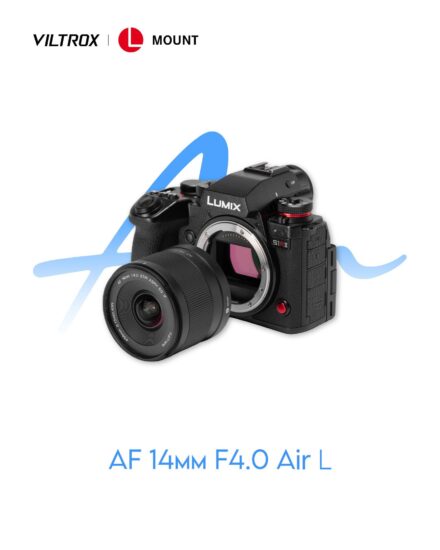
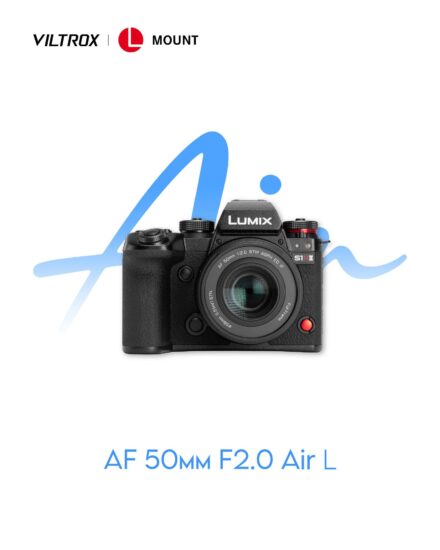
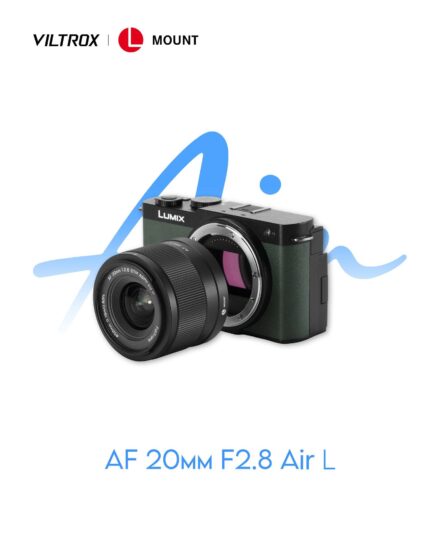
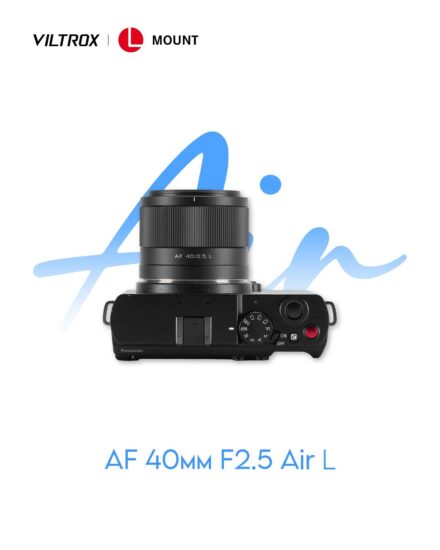
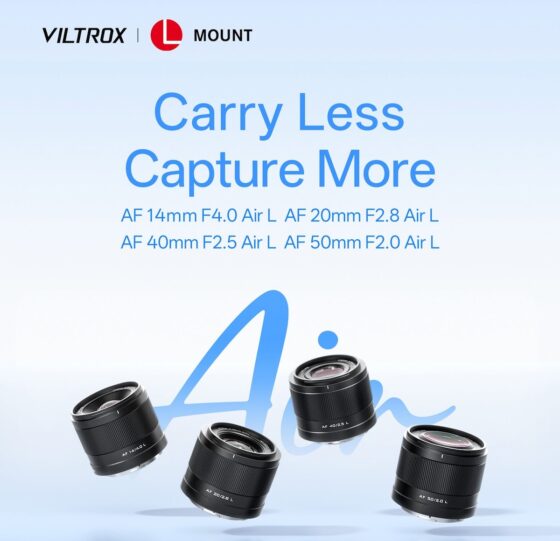
Viltrox announced four new AIR lenses for L-mount


The previously reported four new Viltrox AIR lenses for L-mount are now officially announced and available for order (Viltrox already had two L-mount lenses):

Pricing and availability:

  • Viltrox AF 14mm F4.0 Air L MSRP – $199 / €229 / £190
  • Viltrox AF 20mm F2.8 Air L MSRP – $168 / €189 / £165
  • Viltrox AF 40mm F2.5 Air L MSRP – $176 / €189 / £165
  • Viltrox AF 50mm F2.0 Air L MSRP – $199 / €229 / £190

Key features:

  • Four new compact prime lenses: 14mm F4.0, 20mm F2.8, 40mm F2.5, and 50mm F2.0
  • Ultra-lightweight, highly portable designs
  • 14-50mm provides a complete range of scene vs subject options
  • Excellent minimum focal distances and maximum magnification for their class
  • Sharp, clean images with minimal aberration
  • Native L-Mount support with in-camera correction

Additional information:

The AF 14mm F4.0 Air L: An Ultra-Wide Perspective in a Compact Design

At just 172 g, the AF 14mm F4.0 Air L combines an expansive 112.6° ultra-wide field of view with a compact, lightweight design. The wide perspective makes it easy to bring more of the environment into frame, while the 0.13 m minimum focusing distance and 0.23x maximum magnification provide added flexibility for closer creative perspectives.

Its 12-element, 9-group optical design, incorporating 4 ED, 2 HR, and 2 aspherical elements, is designed to deliver sharp, clean images, while also controlling chromatic aberration and other optical aberrations.

The AF 20mm F2.8 Air L: Wide, Versatile, and Easy to Carry

The AF 20mm F2.8 Air L offers a versatile wide-angle perspective in a compact form, providing a broader view while maintaining a natural sense of space. At 159 g, it is designed for creators who want the flexibility of a wide, portable lens while still drawing the frame to a subject.

With a 0.19 m minimum focusing distance and 0.17x maximum magnification, the lens still provides the capacity for closer compositions. Its optical design consists of 10 elements in 8 groups (2ED, 1HR, and 2 aspherical elements), which ensures sharp images across a wide range of shooting conditions.

The AF 40mm F2.5 Air L: A Natural Perspective for Everyday Creativity

The AF 40mm F2.5 Air L offers a balanced perspective that draws a natural subject focus while retaining a view of the surrounding environment. Weighing just 169 g, it provides a compact option for everyday photography, street shooting, travel, and visual storytelling.

Its 0.34 m minimum focusing distance and 0.14x maximum magnification add flexibility for closer subjects, while the 10 elements in 6 groups optical design (1ED, 3HR, and 1 aspherical element) supports clean, detailed image rendering.

The AF 50mm F2.0 Air L: A Lightweight Standard Prime for Everyday Creativity

Weighing just 205 g, the AF 50mm F2.0 Air L brings a classic perspective to the Air Series in a compact, lightweight form. Its F2.0 aperture offers greater flexibility for portraits, lifestyle photography, and everyday shooting, while providing additional versatility when working in lower-light conditions.

With a 0.51 m minimum focusing distance and 0.11x maximum magnification, the lens offers the capability for closer compositions. Its optical design consisting of 13 elements in 9 groups (3 ED, 4 HR, and 1 aspherical element) is designed to deliver sharp, clean images while controlling optical aberrations.

Viltrox roadmap: four new lenses for L-mount and more

Viltrox to announce four new L-mount lenses next week

Viltrox unveiled new lenses at IBC 2026

The latest new and upcoming lenses from Meike, Viltrox, 7Artisans, TTartisan, Laowa, Sirui, and SG-image

Via LeicaRumors

The post Viltrox announced four new AIR lenses for L-mount appeared first on Photo Rumors.

  •  

Vivo’s X500 Pro Max pairs a LOFIC main sensor with a 200MP telephoto

Vivo’s new flagship lineup includes the X500, X500 Pro and X500 Pro Max, with a shared photography focus.

Silver Vivo smartphone with a large circular camera module held in a hand, set against a starry night sky background.Vivo

Vivo has launched its X500 flagship series in China, comprising the X500, X500 Pro and X500 Pro Max. The range is built around Vivo’s camera and video ambitions, with Zeiss-branded triple-camera systems across all three models. The Pro and Pro Max receive the most advanced imaging hardware and video modes, while the standard X500 acts as the more affordable entry point to the series.

Cameras

Three Vivo smartphones in silver, gray, and gold are displayed side by side, each featuring a prominent rear camera module. One phone is fitted with a large detachable lens to emphasize its advanced camera capability.
Vivo’s new X500 series includes three tiers, with the standard X500 serving as the more affordable entry point.
Vivo

The X500 Pro and X500 Pro Max both feature 24mm equiv. main cameras built around the 50MP Type 1/1.28 (74.4mm²) Sony Lytia L910 sensor. That sensor uses LOFIC technology, promising greater dynamic range by capturing clean shadow detail while providing extra capacity to retain bright highlights. You can learn more about LOFIC technology in our explainer.

On the telephoto end, the X500 Pro uses a 64MP, 85mm equiv. telephoto camera. The Pro Max shares the same focal length (though not the same lens), but uses a 200MP Type 1/1.4 (62.7mm²) sensor behind a Zeiss-branded APO periscope lens.

Vivo X500Vivo X500 ProVivo X500 Pro Max
Main (wide)23mm equiv.
50MP
Type 1/1.28 (74.4mm2)
F1.68
Stabilized lens
24mm equiv.
50MP
Type 1/1.28 (74.4mm2)
F1.57
Stabilized lens
LOFIC sensor
24mm equiv.
50MP
Type 1/1.28 (74.4mm2)
F1.57
Stabilized lens
LOFIC sensor
Ultrawide15mm equiv.
50MP
Type 1/2.76 (20.5mm2)
F2.0
Autofocus
15mm equiv.
50MP
Type 1/2.75 (20.5mm2)
F2.0
Autofocus
15mm equiv.
50MP
Type 1/2.75 (20.5mm2)
F2.0
Autofocus
Telephoto72mm equiv.
64MP
Type 1/2 (31.4mm2)
F2.55
Stabilized lens
85mm equiv.
64MP
Type 1/2 (31.4mm2)
F2.52
Stabilized lens
85mm equiv.
200MP
Type 1/1.4 (62.7mm2)
F2.67
Stabilized lens
Highest video mode4K/120p slow motion
4K/120p 10-bit Log
4K/60p cinematic portrait
4K/240p slow motion
4K/120p AF tracking
4K/60p cinematic portrait
4K/240p slow motion
4K/120p AF tracking
4K/60p cinematic portrait

The three 50MP ultrawides appear similar on paper, but the X500 uses Samsung’s JN1 sensor, while the Pro and Pro Max use the newer Samsung JN5.

For its other two cameras, the X500 features a 50MP main camera that uses the same Sony Lytia LYT-828 sensor as in the X300 Pro. The 64MP telephoto camera offers slightly less reach, at 72mm equiv.

A white Vivo smartphone with a large circular rear camera module featuring multiple lenses is held in a hand against a starry night sky.
The X500 Pro and Pro Max both use the 50MP Sony Lytia L910 as their main camera sensor.
Vivo

The X500 Pro and X500 Pro Max are both compatible with Vivo’s optional Zeiss Telephoto Extender Gen 2 Ultra, which Vivo says provides a 400mm equiv. focal length.

Vivo’s largest video step also belongs to the Pro models. The X500 Pro and Pro Max can record 4K video at up to 240fps for slow motion and support 10-bit 4:2:2 Log capture and ACES color-management workflows. The X500 retains 4K/120p slow motion and 10-bit Log recording. All three phones include 4K/60p cinematic portrait video.

Displays and design

Vivo X500Vivo X500 ProVivo X500 Pro Max
Display size6.59″6.36″6.85″
Display resolution2750 x 1260 pixels2750 x 1260 pixels3168 x 1440 pixels
Dimensions157.0 x 74.5 x 8.2mm (6.2 x 2.9 x 0.3″)151.8 x 71.9 x 8.0mm (6.0 x 2.8 x 0.3″)163.3 x 76.8 x 8.0mm (6.4 x 3.0 x 0.3″)
Weight213g (7.5 oz)192g (6.8 oz)225g* (7.9 oz*)

*The black X500 Pro Max is 225g (7.9 oz); other finishes are 229g (8.1 oz).

The X500 Pro is the most compact option of the bunch, with the base model featuring a larger display and, as a result, slightly larger dimensions and weight. Unsurprisingly, the Pro Max is the largest and heaviest.

The Pro and Pro Max use 144Hz LTPO AMOLED displays with Dolby Vision and HDR10+ support. Vivo rates both at up to 4500 nits peak brightness. The X500 likewise has a 144Hz AMOLED display with 4000-nit peak brightness.

A white Vivo smartphone with a large camera lens is held in a hand, reflecting a grassy landscape and distant figure, set against rolling green hills.
The standard X500 serves as the more affordable entry point to the lineup, though it has a larger display than the X500 Pro.
Vivo

All three phones promise IP68 and IP69 ingress protection and run OriginOS 7, which is based on Android 17. All three support up to 90W wired and 40W wireless charging. The X500 Pro and Pro Max also support reverse wireless charging, while the X500 includes Bypass Charging 2.0.

The X500 Pro and X500 Pro Max are among the first phones to use MediaTek’s Dimensity 9600 Pro, the company’s new flagship smartphone system-on-chip and successor to the Dimensity 9500. The standard X500 uses the Dimensity 9600M instead.

Price and availability

Chinese pricing starts at CNY 5499 (∼$820) for the X500, CNY 6499 (∼$970) for the X500 Pro and CNY 6999 (∼$1045) for the X500 Pro Max. The X500 and X500 Pro Max are scheduled to go on sale in China on September 24, followed by the X500 Pro on September 29. Vivo has not announced U.S. availability, global pricing or a wider release schedule.

About the Author: Abby Ferguson holds an MFA in photography and blends a fine-art background with extensive editorial and commercial experience. She built and led an in-house imaging program for a large vacation rental company and has served as an associate editor at Popular Photography. She also teaches at a local community college and serves on its Photographic Technology Program Advisory Board, sharing her knowledge and enthusiasm for the medium.

Want to stay up to date on the latest product news and releases? Add DPReview as a preferred source to ensure our independent journalism makes it to the top of your Google search results.
  •  

Bird Photographer of the Year 2026 winners: the competition’s best shots, from a moonlit owl to a diving gannet

More than 24,000 images entered the world’s largest bird photography competition. Here are some of the standout winners.

Seabird, likely a gannet, diving underwater with sunlight filtering from above and a trail of bubbles in greenish water.Henley Spiers

Bird Photographer of the Year has announced the winners of the 2026 edition of the competition. This year drew more than 24,000 entries from around the world, with organizers describer it as the largest bird photography contest.

The contest features eight categories in the adult competition: Best Portrait, Birds in the Environment, Bird Behavior, Birds in Flight, Black and White, Urban Birds, Conservation (Single Image) and Creative Perspectives. Additionally, there was a Conservation Award, Portfolio Award and Video Award and three youth competition categories.

“In a world where AI-generated imagery is becoming increasingly common, this year’s winners are a powerful reminder of the value of authenticity,” says Will Nicholls, Director of Bird Photographer of the Year. “Every image in the competition represents a real moment in the wild, earned through patience, dedication and a genuine connection with nature. People will always value real stories told by real people, and this year’s extraordinary photographs celebrate the beauty, wonder and authenticity of our natural world.”

The competition awards a £3,000 grand prize, and all winning images will be featured in a hardback coffee-table book published by Graffeg. The competition also donated more than £5,000 to its partner charity, Birds on the Brink.

You can see a small collection of the winning images below, or head to the competition website to see the full 2026 winners gallery. The next competition cycle, BPOTY 12, is now open for entries at birdpoty.com.

Bird Photographer of the Year 2026

A streamlined gannet dives underwater with wings tucked close to its body; sunlight filters down from above, illuminating the scene.Henley Spiers

Photographer: Henley Spiers, United Kingdom
Award(s): Birds in the Environment — Gold Award; Overall Winner, Bird Photographer of the Year 2026

Image title: Sunball Rocket

Bird: Northern Gannet (Morus bassanus)

Image location: Shetland, Scotland, United Kingdom

Caption: A northern gannet seems to burst through the sun as it pierces down through the water. The handsome northern gannets lead a dualistic existence. In the nest, their newborn is carefully nurtured, and a couple’s bond is reinforced by pointing sharp beaks to the sky as they tenderly stroke their white necks together. In flight, hunting mode takes over, and piercing yellow eyes, fringed with blue circles, scour the sea for prey. Their long wingspan and streamlined bodies make flying look effortless, gliding along with just the occasional pulse of their wings. When fish are spotted, the gannets fly into the wind and stretch out their wings as brakes, precisely adjusting their position in relation to their quarry. Moments later, with wings tucked in tightly, the gannet shape-shifts into a pointed torpedo, diving into the water at speeds of up to 86 km/ph. Even Olympic divers will not exceed 60km/ph, and these seabirds are specially adapted for the impact: muscles along the neck lock their vertebrae into place and air sacs in the face and chest act as airbags. Even their nostrils are evolved for this aquatic existence, located internally to prevent water ingress during fishing dives.

Technical details: Nikon Z 8 | Nikon 8-15mm F3.5-4.5E @ 15mm | F11 | 1/200 sec | ISO 500

Young Bird Photographer of the Year 2026

Silhouette of an owl perched on a tree branch against a bright full moon in a dark night skyParham Pourahmad

Photographer: Parham Pourahmad, United States

Award(s): 15–17 Years — Gold Award; Young Bird Photographer of the Year 2026

Image title: Moonlit Night

Bird: Great Horned Owl (Bubo virginianus)

Image location: Los Gatos, California, United States

Caption: One bird I found a pair of Great Horned Owls nesting in a park next to my house. I headed out at dusk, hoping to capture a strong portrait of the owls. However, my aim shifted when I saw the full moon rising on the horizon. One of the owls flew down to a pine tree, and I quickly moved into position to frame it against the moon.

Technical details: Canon EOS Rebel T5i | Sigma 150-600mm F5-6.3 DG OS HSM Contemporary @ 275mm | F5.6 | 1/500 sec | ISO 6400

Video Award – Winner

Videographer: Liron Gertsman

Details: Bald Eagles are incredibly opportunistic predators and scavengers, gathering wherever there is an abundant food source. One such eagle feasting event involves hake, a fish in the cod family. Near Vancouver Island, Canada, hake are rapidly forced to the surface by naturally occurring tidal currents passing through narrow ocean channels. This sudden movement from the depths to the top of the water column causes their buoyancy-regulating swim bladder to overinflate, leaving the fish stuck at the surface where they are vulnerable to predators. Bald Eagles (and a multitude of other wildlife) gather by the hundreds to take advantage of the easy prey. As the tidal current picks up each day, more and more eagles gather, until the feeding frenzy begins. After photographing the annual event for several years, I dedicated some time to filming, and put together this short video to highlight this remarkable phenomenon.

Best Portrait — Gold Award

Greater sage-grouse facing forward with prominent white chest feathers and spiky tail feathers fanned out symmetrically, set against a dark background.Thomas DeLiberto

Photographer: Thomas Deliberto, United States

Award(s): Best Portrait — Gold Award

Image title: Radiant

Bird: Greater Sage-Grouse (Centrocercus urophasianus)

Image location: Utah, United States

Caption: A male greater sage-grouse during its courtship display. As the sun was rising over the shadowed sagebrush hill behind him, it illuminated the bird’s tail feathers such that they appeared to radiate light. I was fortunate to visit a sage-grouse lek, an area in which the birds congregate to mate. Arriving at the lek before sunrise, I crouched behind some rocks, facing east to get a backlit photo of a male. As the sun rose above the hill behind the lek, I was able to capture this male in full display. Greater Sage-Grouse are the largest native grouse in North America. As their name implies, these birds are intimately tied to the sagebrush ecosystems of the Intermountain West. Their populations in recent years have declined precipitously due to a loss of habitat.

Technical details: Nikon Z 9 | Nikon Z 400mm F2.8 TC VR S | F5.6 | 1/160 sec | ISO 64 | 1.4x teleconverter

Best Portrait — Silver Award

DNR-E-bird-poty-winners-SILVER-Best-Portrait-Sunset-Puffin-by-Volker-WidmannVolker Widmann

Photographer: Volker Widmann, Germany

Award(s): Best Portrait — Silver Award

Image title: Sunset Puffin

Bird: Atlantic Puffin (Fratercula arctica)

Image location: Skomer Island, United Kingdom

Caption: I spent several days on Skomer to photograph the Atlantic Puffins in the early morning and late evening, when the day tourists had left the island and you had the birds almost to yourself. This evening, I waited at the puffin colony until the sun went down and photographed this bird against the reflections in the ocean.

Technical details: Canon EOS R5 | Canon EF 500mm F4L IS II USM | F4 | 1/400 sec | ISO 100

Bird Behavior — Gold Award

Two tawny frogmouth birds with mottled grey feathers sit close together on a tree branch; one has its mouth open and head tilted, partially obscuring the second bird which faces forward.Donald Chin

Photographer: Donald Chin, Australia

Award(s): Bird Behavior — Gold Award

Image title: I’m Keeping Everyone Dry

Bird: Tawny Frogmouth (Podargus strigoides)

Image location: Perth, Australia

Caption: Rain threads through the forest. Camouflaged against bark and shadow, a fledgling tawny frogmouth stretches its wings in what looks like covering its other siblings from the water droplets. Stillness is its field, with patience its inheritance. In the hush between falling drops, resilience becomes a form of quiet strength. His big round eyes and open mouth make it a cute capture.

Technical details: Sony a9 III | Sony FE 600mm F4 GM OSS | F5.6 | 1/200 sec | ISO 4,000 | 1.4x teleconverter

Bird Behavior — Silver Award

DNR-E-bird-poty-winners-SILVER-Bird-Behaviour-Spread-Eagle-by-Mark-CarwardineMark Carwardine

Photographer: Mark Carwardine, United Kingdom

Award(s): Bird Behavior — Silver Award

Image title: Spread Eagle

Bird: Bald Eagle (Haliaeetus leucocephalus)

Image location: Great Bear Rainforest, Canada

Caption: The Great Bear Rainforest on the west coast of Canada, as its name suggests, is a wet place, and on this particular day, it had been raining nonstop. I was on a Zodiac slowly meandering along an inlet in the forest when I spotted this magnificent juvenile bald eagle with its wings spread open. This behaviour is usually associated with either cooling down or drying feathers, but it seemed an almost impossible task in such relentless rain. Still, the eagle held its posture with determination.

Technical details: Canon EOS R5 | Canon RF 100-300mm F2.8 L IS USM @ 280mm | F4 | 1/200 sec | ISO 800 | 1.4x teleconverter; 280mm

Birds in Flight — Gold Award

Short-eared owl with yellow eyes flying low over a grassy field, wings spread wide and patterned in brown and white, set against a blurred background.Ivan Sjögren

Photographer: Ivan Sjögren, Sweden

Award(s): Birds in Flight — Gold Award

Image title: Eye-to-Eye with a Short-Eared Owl

Bird: Short-Eared Owl (Asio flammeus)

Image location: British Columbia, Canada

Caption: A short-eared owl courses over the salt marshes of British Columbia’s Fraser River Delta. This was a magical evening, with five owls feeding around me as dusk fell. I witnessed both fights between owls and, later, displays in which they clapped their wings together. I took this photo by positioning myself strategically, hunkering down in the grass after anticipating the owls’ hunting routes. I was lucky that the owl turned its head to look at me as it passed silently by.

Technical details: Canon EOS R5 | Canon EF 500mm F4L IS II USM | F5.6 | 1/2500 sec | ISO 5000 | 1.4x teleconverter

Birds in Flight — Silver Award

Not an Escher / PatternsAlex Pansier

Photographer: Alex Pansier, Netherlands

Award(s): Birds in Flight — Silver Award

Image title: Patterns

Bird: Guillemot (Uria aalge)

Image location: Hornøya, Norway

Caption: Captured in March 2025 on Hornøya, this image reveals a mesmerizing swarm of guillemots in flight. What first appears as an Escher-like illusion is nature’s own design, organized chaos in motion. The sky becomes a canvas of repetition and rhythm, where the boundaries between order and disorder dissolve before your eyes.

Technical details: Sony a1 II | Sony FE 24-70mm F2.8 GM II @ 37mm | F5.6 | 1/1250 sec | ISO 3200

Birds in the Environment — Silver Award

Full moon shining above snowy mountain peaks, bird silhouette flying across the night sky.Åsmund Keilen

Photographer: Åsmund Keilen, Norway

Award(s): Birds in the Environment — Silver Award

Image title: Majesty

Bird: Golden Eagle (Aquila chrysaetos)

Image location: Urke, Ørsta, Norway

Caption: A majestic golden eagle drifts in dark silhouette across the face of the moon, its outstretched wings cutting a powerful shape through silver light. Below, winter-clad peaks rise in quiet stillness, their frozen ridges layered through in-camera multiple exposure to shape the visual expression I envisioned. The composition feels both graphic and atmospheric—a meeting of shadow and glow, strength and silence. Suspended against the luminous moon, the eagle becomes a timeless presence in the cold, breathless vastness of the alpine night.

Technical details: Canon EOS 5DS R | Canon EF 100-400mm F4.5-5.6L IS II USM @ 360mm | F5.6 | 1/8000 sec | ISO 400 | In-camera multiple exposure

Black and White — Gold Award

Lone ostrich standing on open ground under dramatic sunbeams breaking through dark clouds; black and white landscape.Rahul Sachdev

Photographer: Rahul Sachdev, India

Award(s): Black and White — Gold Award

Image title: An Ostrich Horizon

Bird: Ostrich (Struthio camelus)

Image location: Amboseli, Kenya

Caption: An ostrich makes its way towards the dry lake bed of Amboseli. In black and white, the stark landscape emphasizes the bird’s solitary journey across the dust and heat.

Technical details: Canon EOS R5 | Canon RF 100-500mm F4.5-7.1 IS USM @ 300mm | F11 | 1/800 sec | ISO 250

Black and White — Silver Award

Small bird perched on a tall, slender cattail with four similar cattails nearby, shown in high-contrast black and white against a plain white background.Raoul Slater

Photographer: Raoul Slater, Australia

Award(s): Black and White — Silver Award

Image title: Grass Tree

Bird: Little Wattlebird (Anthochaera chrysoptera)

Image location: Pomona, Queensland, Australia

Caption: At our neighbor’s gate is a grass tree, also known as a Xanthorrhoea. These slow-growing succulents are native to Australia, and there are 30 species. They produce spectacular flower spikes that drip with nectar, attracting birds like this little wattlebird, butterflies and native bees. I’ve photographed this tree for a decade, but with never more than two spikes. This year was a great one for rain, and the tree responded with 5 spikes. As I drove out our gate each morning, I passed an exact point where they lined up beautifully. The car, with a towel draped across the window, provided a perfect hide. What you can’t see just below the edge of the photo is the house of the next neighbor along. It took some explanation to convince him that I hadn’t set up covert surveillance on his front door.

Technical details: Canon EOS R5 | Sigma 150-600mm F5-6.3 DG OS HSM Contemporary @ 347mm | F14 | 1/1600 sec | ISO 1600

Creative Perspectives — Gold Award

A silhouetted bird is centered in front of a large, blurred golden-orange moon, set against a dark background with swirling bokeh light effects.Åsmund Keilen

Photographer: Åsmund Keilen, Norway

Award(s): Creative Perspectives — Gold Award

Image title: Sundance

Bird: Common Swift (Apus apus)

Image location: Oslo, Norway

Caption: On a blazing summer day, a common swift slices through the air, captured in an in-camera multiple exposure reflected in the glossy roof of our blue car. The sun burns at the center of the frame, radiating heat and brilliance, while drifting birch seeds scatter across the reflection like a fleeting flock echoing the swift’s movement. Sky, light, and motion blend into one shimmering composition, transforming an ordinary surface into a stage for midsummer energy—weightless, restless, and alive with warmth.

Technical details: Canon EOS 5DS R | Canon 100-400mm F4.5-5.6L IS II USM | Aperture not provided | 1/8000 sec | ISO 640 | In-camera multiple exposure

Creative Perspectives — Silver Award

Fish with bright eyes swims underwater, partially obscured by swirling, blurry currents and light for an abstract appearance.Henley Spiers

Photographer: Henley Spiers, United Kingdom

Award(s): Creative Perspectives — Silver Award

Image title: Turbulence

Bird: Northern Gannet (Morus bassanus)

Image location: Shetland, Scotland, United Kingdom

Caption: What if the most impressive animal you could encounter in British waters wasn’t a fish or a whale, but a bird? That was exactly how it felt to me in the frigid sea at Britain’s northernmost point. The dark water was repeatedly shattered by the dives of dozens of northern gannets, plunging after their prey. Visibility vanished as the birds hit the surface with astonishing precision, streaking underwater in cascades of bubbles. My heart pounded with adrenaline as I scanned the turbid water, until the gaze of a gannet met mine—its blue-yellow eyes unmistakable even through the haze. The aim was to convey the explosive movement of the hunt using a slow shutter and intentional camera movement. I understood the technical settings required, but the gannets’ speed and unpredictability made success elusive. After many failed frames, this image emerged as the one that best captured the energy and intensity of the moment.

Technical details: Nikon D850 | Nikon 28-70mm F3.5-4.5 @ 31mm | F22 | 1/8 sec | ISO 80 | Intentional camera movement

Urban Birds — Gold Award

Seagull standing on a ledge above a mural of a bird in a scarf and sneakers, painted on a weathered wall; the seagull’s wings are positioned to mirror the mural’s wings.Gianluca Damiani

Photographer: Gianluca Damiani, Italy

Award(s): Urban Birds — Gold Award

Image title: Alter Ego

Bird: Yellow-Legged Gull (Larus michahellis)

Image location: Rome, Italy

Caption: In Rome, tall buildings function for yellow-legged gulls much like coastal cliffs, offering nesting, roosts and perches to survive within the city. This individual was photographed on a rooftop where a small colony had settled. The dry pet food visible on the windowsill reflects a routine practice by local residents of feeding urban birds, especially since COVID-19. I did not place or add any food, but a small, removable sticker was temporarily applied to the wall as a neutral visual element, without altering resources or influencing the bird’s behavior. As a researcher studying urban birds for my PhD project, I observed and recorded this scene without interfering with the animals, and encouraged people to stop feeding birds without awareness. The image highlights the bold and assertive behavior that enables gulls to thrive in close proximity to people.

Technical details: Nikon Z 9 | Nikon VR 70-200mm F2.8G @ 112mm | F5 | 1/1250 sec | ISO 2200

Urban Birds — Silver Award

DNR-E-bird-poty-winners-SILVER-Urban-Birds-Deception-s-Hope-by-Romain-Barats-Romain Barats

Photographer: Romain Barats, France

Award(s): Urban Birds — Silver Award

Image title: Deception’s Hope

Bird: Gentoo Penguin (Pygoscelis papua)

Image location: Deception Island, Antarctica

Caption: This picture was taken on Deception Island, near the Antarctic Peninsula. Many disasters happen on Deception Island. Home of a fur seal trade leading to an almost extinction of seals, a whaling station, and then many volcanic eruptions leading to the destruction of scientific stations, this island looks like it is cursed. But since then, Nature has taken back its rights, like these gentoo penguins posing in front of a rusty whale blubber warehouse like guards. It gives a bit of Hope in Deception. I took the picture during a sailboat expedition to Antarctica.

Technical details: Canon EOS R5 Mark II | Canon RF 100-300mm F2.8 L IS USM @ 237mm | F14 | 1/200 sec | ISO 2000 | 1.4x teleconverter

Conservation (Single Image) — Gold Award

DNR-E-bird-poty-winners-GOLD-Conservation-Single-Image-Not-a-Good-Day-Fishing-by-Kent-StuartKent Stuart

Photographer: Kent Stuart, United States

Award(s): Conservation (Single Image) — Gold Award

Image title: Not a Good Day Fishing

Bird: Great Blue Heron (Ardea herodias)

Image location: Washington, Warren County, New Jersey, United States

Caption: This image was taken at a local pond that I frequent. It has limited access, so I hike in from a cornfield on the back side. I was wearing chest waders and worked my way out to a mud flat. I used a ground pod with a gimbal and had a camouflage net covering me. I was attempting to get shots of wood ducks, sandpipers and killdeer when this great blue heron (with a bobber and fishing line around his beak) flew in and landed right next to me. He was so close I could only get a head shot.

Technical details: Nikon Z 9 | Nikon Z 800mm F6.3 VR S | F6.3 | 1/800 sec | ISO 500

Conservation (Single Image) — Silver Award

Birds in the RedYann Bigant

Photographer: Yann Bigant, France

Award(s): Conservation (Single Image) — Silver Award

Image title: Birds in the Red

Bird: Egret and Bittern species

Image location: Phnom Penh, Cambodia

Caption: Yellow bitterns and other waterbirds for sale in downtown Phnom Penh, Cambodia. An investigation into bird hunting and trade, during which this photo was taken, found wild birds sold illegally throughout the country, including in several markets of the capital. This seller often has different species of birds—weavers, egrets, watercocks and even larger openbill storks—occasionally sold alongside snakes, bats and cats. Catching birds is common across Southeast Asia, especially in unprotected farmland. Up to 500 species have been found hunted in recent years in the region, endangering several rare species. Already known for its ‘empty forests’, bird conservationists now fear that the region will soon face ‘empty wetlands and farmlands’.

Technical details: Canon EOS 5D Mark IV | Canon EF 24mm F2.8 IS USM lens | F5.6 | 1/40 sec | ISO 800

12–14 Years — Gold Award

Bird with brown and white feathers leaping upward, wings spread, reaching toward a small flying insect above; background is blurred green and brown.Paula Czaeczine

Photographer: Paula Czaeczine, Germany

Award(s): 12–14 Years — Gold Award

Image title: Acrobat of the Skies

Bird: Red-Necked Phalarope (Phalaropus lobatus)

Image location: Rost, Lofoten, Norway

Caption: On a small island in Norway, I observed Red-Necked Phalaropes foraging for food. One bird was swimming on a pond, pecking insects from the surface. Suddenly, it raised its head, stretched upwards, spread its wings, and fluttered into the air. Luckily, I had selected a high frame rate and was able to capture this fascinating moment, as well as the small moth the bird had caught.

Technical details: Nikon Z 8 | Nikon Z 600mm F6.3 VR S lens | F6.3 | 1/2000 sec | ISO 1100

11 and Under — Gold Award

Cormorant head in close-up with yellow-orange skin near the beak, most of the body fading into a white background.Alberto Román Gómez

Photographer: Alberto Román Gómez, Spain

Award(s): 11 and Under — Gold Award

Image title: Emerald Eye

Bird: Great Cormorant (Phalacrocorax carbo)

Image location: London, United Kingdom

Caption: The Great Cormorants in the area where I live are elusive and do not easily allow themselves to be photographed. However, in London, they were far more trusting and allowed people to approach within a few metres. I was able to observe them calmly and see that they are beautiful black birds with a metallic sheen. What really caught my attention, though, were their emerald-green eyes, so I decided to take a close portrait of the bird’s head.

Technical details: OM System OM-1 | OM System 100-400mm F5-6.3 @ 321mm | F6.3 | 1/80 sec | ISO 2000

About the Author: Abby Ferguson holds an MFA in photography and blends a fine-art background with extensive editorial and commercial experience. She built and led an in-house imaging program for a large vacation rental company and has served as an associate editor at Popular Photography. She also teaches at a local community college and serves on its Photographic Technology Program Advisory Board, sharing her knowledge and enthusiasm for the medium.

Want to stay up to date on the latest product news and releases? Add DPReview as a preferred source to ensure our independent journalism makes it to the top of your Google search results.
  •  

The best used full-frame mirrorless cameras you can buy right now

Previous-generation bodies from Sony, Canon and Nikon have quietly fallen into the $600 – $1,400 range. Here’s how they stack up for photographers who want full-frame image quality without the new-camera price.

Nikon, Sony, Canon camera bodiesMPB

Three of the most capable full-frame mirrorless cameras ever made are now selling used for less than many new APS-C bodies. The Sony a7 III, Canon EOS R6 and Nikon Z6 II have each dropped into a used-market price range that puts full-frame image quality, in-body stabilization and mature lens ecosystems within reach of photographers who previously had to settle for a crop-sensor body. If you shoot stills seriously and have been waiting for a sensible entry point into full-frame mirrorless, that moment has arrived.

Why used full-frame makes sense right now

When Sony, Canon and Nikon each released successor bodies — the a7 IV, EOS R6 Mark II and Z6 III — used prices on the previous generation fell sharply. That generational turnover created a tier of cameras that carry full-frame sensors, weather sealing and professional-grade autofocus, but now compete on price with upper-tier APS-C cameras sold new. DPReview’s own reviews awarded each of these three bodies a Gold Award or better at launch, and the sensor performance, dynamic range and low-light capability documented in those reviews have not changed because a newer model exists. For budget-conscious photographers willing to buy used, the value equation has shifted decisively in their favor.

The picks

The cameras on this list share four qualities: image quality that DPR reviews confirmed outperforms most APS-C alternatives, a lens ecosystem deep enough to serve photographers for years, consistent availability at MPB, and feature sets that will not feel obsolete quickly. Bodies that are scarce in used channels, or that require expensive proprietary adapters to access a meaningful lens selection, were set aside.

The Sony a7 III remains the broadest recommendation. Its 24MP back-illuminated full-frame sensor, in-body image stabilization and 693-point phase-detection autofocus system — specs that DPReview called class-leading at the camera’s launch — still hold up against current APS-C competition. Sony’s E-mount is the most mature mirrorless ecosystem available, with native lenses from Sony and third-party options from Sigma, Tamron and others. Photographers who want the widest lens selection at every price point will find more choices here than on any other platform — making the a7 III the pick for shooters who value flexibility above all.

The Canon EOS R6 makes the strongest case for sports and wildlife shooters. Its 20MP full-frame sensor is paired with Canon’s Dual Pixel CMOS AF system, which the DPReview Canon EOS R6 review found to be among the most reliable subject-tracking systems tested at the time. The R6 also offers 12 fps mechanical and 20 fps electronic burst shooting. The RF lens ecosystem has grown quickly, and photographers already invested in EF glass will find the EF-EOS R adapter a reliable bridge to the new mount.

The Nikon Z6 II is the pick for photographers who value balanced stills-and-video capability and want access to Nikon’s Z-mount optics, which are widely praised for their optical quality. The Z6 II’s 24MP sensor, dual card slots and 4K video output made it one of the more versatile hybrid bodies in its class. The DPReview Nikon Z6 II review noted its improved buffer depth over the original Z6 and its reliable Eye-detect autofocus. Nikon’s FTZ adapter also allows the full Nikkor F-mount back-catalogue to be used without optical compromise, giving former Nikon DSLR owners an especially smooth transition.

What you give up vs. current-gen bodies

None of these cameras match their successors in every area. The a7 III’s autofocus, while capable, does not reach the subject-recognition sophistication of the a7 IV. The original EOS R6 lacks the 40 fps burst and improved stabilization of the Mark II. The Z6 II’s video feature set is more limited than the Z6 III’s. Where the trade-off is clearly worth accepting: if your shooting is primarily stills-focused, if you do not require the most aggressive burst rates, and if image quality rather than the latest processing features is your priority, the gap between these cameras and their successors is narrow in practice and wide in price. Where it matters more: working videographers and sports photographers who push frame rates and rely on the newest subject-recognition modes will feel the difference.

Availability and pricing on the used market

All three bodies are regularly listed in multiple condition grades on MPB, which grades cameras by cosmetic and functional condition and backs all purchases with a 6-month warranty. Buying from a structured used platform rather than a private seller reduces the risk of receiving a body with undisclosed wear or shutter count issues. Stock turns over frequently for all three models, making them practical targets rather than aspirational ones. Check listings regularly, since condition grades affect price meaningfully and a ‘Good’ grade body in full working order will cost less than an ‘Excellent’ example of the same camera.

For photographers ready to move from APS-C to full-frame, the Sony a7 III, Canon EOS R6 and Nikon Z6 II each represent a documented, tested path to a significant image-quality step up — at prices that, a few years ago, would have been unthinkable for cameras of this capability.

  •  

Adobe finally brings its Premiere editing software to Android, and it’s still free

A year after iPhone users got first access, the mobile editing app reaches its second major platform without a subscription gate or account wall in sight.

Person wearing jewelry posing, with Adobe Premiere logo and a smartphone displaying a video editing interface in the foreground.Adobe

Adobe Premiere mobile has arrived on Android, roughly a year after its debut on iPhone. Adobe says it brings the same pro-quality editing tools to Android users at no cost and with no login requirement.

Adobe Premiere Mobile for Android features

According to Adobe, the Android version of Premiere mobile supports frame-accurate editing on a multi-track timeline, letting users layer video, music, voiceovers, text and effects. It can handle editing and exporting up to 4K.

Collage with images of people, flowers, and an underwater scene, overlaid with text; Adobe and YouTube logos visible at the top.
Built-in YouTube Shorts templates and publishing means creators can edit and upload short-form content in one seamless workflow.
Adobe

For those who aren’t familiar with editing using the traditional timeline interface, the app also has a template system that you can drop clips into to produce a cut. Adobe calls it the “Mini Editor,” and it will automatically set clips to specific lengths based on the template, with those clips set to the beat of the music. It will also allow you to publish to YouTube Shorts right from the app. The feature should make it quick and easy to create YouTube-specific content, even if you don’t have extensive editing experience. You can also switch to the full editor from the Mini Editor if you want more control.

Adobe also touted the app’s audio tools. That includes the Enhance Audio feature, which promises to reduce background noise and improve recording clarity in one tap. The company says it will provide studio-quality audio even if you’re recording without a microphone.

Person wearing headphones and a pink bandana smiling at the camera. On screen, text displays “Adobe Premiere” and “Explore Mumbai With Me.” Enhance audio tool appears over a blurred, colorful background.
The Enhance Audio tool reduces background noise and improves recording clarity in a single tap.
Adobe

Firefly-powered generative AI tools, including Generative Fill, Image-to-Video and Generate Sound Effects, are also included. However, those generative AI tools require logging in to an Adobe account and purchasing Firefly generative credits if you don’t already have a Creative Cloud subscription that includes them.

Adobe says the app is purpose-built for Android, with an adaptive UI designed to support a range of devices, including foldables. The free app carries no upgrade prompts, no requirement to log in and no watermark on exported footage.

What’s still coming

Adobe says several features are on the roadmap for a future release, including Adobe Fonts support, enhanced captions, keyframes, cropping, beat detection and the ability to continue editing a project in Premiere on desktop.

Requirements and availability

Adobe Premiere mobile requires Android 13 or later and a minimum of 5GB of RAM. The app is available now in the Google Play Store and is free to download and use.

About the Author: Abby Ferguson holds an MFA in photography and blends a fine-art background with extensive editorial and commercial experience. She built and led an in-house imaging program for a large vacation rental company and has served as an associate editor at Popular Photography. She also teaches at a local community college and serves on its Photographic Technology Program Advisory Board, sharing her knowledge and enthusiasm for the medium.

Want to stay up to date on the latest product news and releases? Add DPReview as a preferred source to ensure our independent journalism makes it to the top of your Google search results.
  •  

Viltrox is bringing four of its sub-$200 Air series primes to L-mount

The selection of affordable compact autofocus primes for L-Mount has been rather thin. Viltrox is targeting that gap with four of its lightweight Air series lenses.

Black Lumix S5 II camera with visible branding mounted securely on a tripod, positioned outdoors against a clear blue sky.Viltrox

When you use DPReview links to buy products, the site may earn a commission.

Despite joining the L-mount Alliance just over a year ago, the brand’s releases for the system have been few and far between, leaving some to wonder if it was all that dedicated to it. Until now, it’s only released two of its autofocus lenses in L-mount, despite having launched several lenses in the past year for Z and E. Today, though, the company is greatly expanding its offerings, bringing four of its “Air” series of autofocus primes to L-mount.

The new L-mount options include Viltrox’s  14mm F4.0, 20mm F2.8, 40mm F2.5 and 50mm F2.0. As part of the Air lineup, all of the lenses are very compact and lightweight (as the name hints). The 50mm F2.0 is the heaviest of the bunch, weighing 205g (7.2 oz), while the 20mm F2.8 is the lightest at 159g (5.6 oz).

All four of the lenses are also light on controls. In fact, beyond a manual focus ring, there aren’t any to speak of. They are simplistic, focusing instead on lightweight design and budget-friendly price points. The lenses do offer autofocus, though, which is powered by a stepper motor in each, and they feature a USB-C port for firmware updates.

A gray-capped individual in a white shirt holds a camera up to take a photo outdoors near water, with a bridge and mountains visible in the background under a partly cloudy sky.Viltrox

The 14mm F4.0 lens offers a 112.6° field of view. The optical design comprises 12 elements in 9 groups with 4 ED, 2 HR and 2 aspherical elements. It can focus as close as 0.13m (5.1″) and offers a maximum magnification of 0.23x. The lens is compatible with 58mm filters.

The 20mm F2.8 can focus as close as 0.19m (7.5″) with a maximum magnification of 0.17x. Its optical design features 10 elements in 8 groups, with 2 ED, 1 HR and 2 aspherical elements. It accepts 52mm filters.

Black camera lens labeled AF 40/2.5 L standing upright on a white concrete surface, with a blurred blue background.Viltrox

The 40mm F2.5 offers a minimum focusing distance of 0.34m (13.4″) and a 0.14x magnification ratio. It has 10 elements in 6 groups with 1 ED, 3 HR and 1 aspherical element. The filter thread accepts 52mm filters.

Lastly, the 50mm F2.0 features 13 elements in 9 groups with 3 ED, 4 HR and 1 aspherical element. It has the largest minimum focusing distance, coming in at 0.51m (20.1″). The maximum magnification is 0.11x and it accepts 58mm filters.

The Viltrox AF 14mm F4.0, 20mm F2.8, 40mm F2.5 and 50mm F2.0 Air lenses are available for purchase now for $199, $168, $176 and $199, respectively.

About the Author: Abby Ferguson holds an MFA in photography and blends a fine-art background with extensive editorial and commercial experience. She built and led an in-house imaging program for a large vacation rental company and has served as an associate editor at Popular Photography. She also teaches at a local community college and serves on its Photographic Technology Program Advisory Board, sharing her knowledge and enthusiasm for the medium.

Want to stay up to date on the latest product news and releases? Add DPReview as a preferred source to ensure our independent journalism makes it to the top of your Google search results.
  •  

Panasonic Lumix S 20mm F2.5 sample gallery and hands-on: a compact ultrawide prime for L-mount

The lens is easy to carry around and produces solid images.

Close-up of a vintage turquoise Chevrolet with chrome trim, round headlights, and a classic emblem on the front grille; parked outdoors with blurred trees and buildings in the background.

When you use DPReview links to buy products, the site may earn a commission.

Last week, Panasonic announced the Lumix S 20mm F2.5, a small, full-frame prime for L-mount. We’ve had the chance to take it out for a few shoots to produce a sample gallery and to see how it performs in various conditions.

Hands-on impressions

The Panasonic S1RII with a Lumix 20mm F2.5 pancake/muffin lens attached to the front.Mitchell Clark

The Lumix S 20mm F2.5 feels relatively well-constructed, with pleasing tactile controls. Of course, its main focus is being compact and lightweight, a task which it gets full marks for. It only adds a bit of depth compared to my camera’s grip, and I found it very easy to slip into a bag to bring along for everyday outings.

Vingetting is well-controlled; there’s a bit at F2.5 through to F4, but it’s not enough to be distracting. It’s around what we’d expect given that this lens is focused on being small and lightweight, while not being super fast. I did, however, typically have to stop down a bit further to get super-sharp edges and corners, as they’re a bit soft below around F5.6.

To achieve this size, Panasonic – like essentially all other companies making lenses for modern mirrorless systems – has made use of software geometric correction. Without it, there’s substantial pincushion distortion, and, occasionally, darkness in the corners.

The lens is susceptible to some flare under very harsh conditions. On one of the afternoons I was shooting with it, I found a few of my photos had some large purple flares when I was shooting in the general direction of the afternoon sun. In the shots where I was deliberately trying to produce sunstars, I also got a lot of ghosting. This wasn’t too much of an issue in my testing, but if you frequently find yourself shooting in the brightest of light, you may want to consider picking up a lens hood, as it doesn’t come with one.

A bridge over a river in a city center with a noticeable purple streak down the side of the frame.
Note the flare on the right side of the image (not that its ruining a shot that would’ve otherwise been a masterpiece, but still).
Panasonic S1R II | Panasonic Lumix S 20mm F2.5 |
Mitchell Clark

The lens otherwise behaved quite well in the sun; in shots where it was fully within the frame, it did a very good job of retaining contrast.

Using the lens with the S1RII and original S1R, I never felt like its motors were the bottleneck for autofocus performance. It was very responsive, and could snap from its closest focusing distance – a respectable 0.18m (7.1″) – to objects far away very quickly. I’ve also tested a lot of pancake lenses with unit focus systems, and it was a nice change of pace to use one that focuses internally instead.

Overall, I felt this lens is a nice addition to Panasonic’s lineup, especially for ultrawide shooters. While there are a few technical drawbacks with a lens this small, I was overall quite pleased with the images I got out of it. If you’re the type of person who prefers this field of view for everyday shooting, or a videographer who wants to be able to film themselves, it’s an easy option to carry around, as long as you pair it with the right body.

Sample gallery

Please do not reproduce any of these images on a website or any newsletter/magazine without prior permission (see our copyright page). We make the originals available for private users to download to their own machines for personal examination or printing; we do so in good faith, so please don’t abuse it. 

Loading gallery…

Thanks to Panasonic for the loan of an S1RII to shoot this gallery. All images were processed using our standard lens workflow in Capture One, with the manufacturer’s distortion correction applied but no correction of vignetting. The profile corrects a large amount of barrel distortion, and we’d consider it an essential part of the lens’s optical design.

About the Author: Mitchell started taking pictures at 10 and hasn’t stopped since. It’s been a wide-ranging adventure, spanning a wide variety of genres and locales, and occasionally dipping into fascinations with video and filmmaking. They honed their technical knowledge doing documentation, programing and QA, writing for The Verge, and just generally messing around on the computer to see what breaks.

Want to stay up to date on the latest product news and releases? Add DPReview as a preferred source to ensure our independent journalism makes it to the top of your Google search results.
  •  

Offline for a few days


I will be traveling in the next 10 days and will have limited Internet connectivity. Blog posts on the latest news and rumors could be delayed or non-existent. Responding to emails will take a while. While I am offline, you can check the following Facebook groups for the latest photo gear news:

Nikon

Leica

Other

You can follow PhotoRumors on Facebook  | Twitter  | Instagram | Threads | YouTube.

Please make sure you use the correct/updated PhotoRumors RSS feed: https://photorumors.com/feed/.

You can subscribe to email notifications on FeedRabbit for free (you will need to enter the PhotoRumors RSS feed: https://photorumors.com/feed/).

And of course, thanks for being a reader!

The post Offline for a few days appeared first on Photo Rumors.

  •  

Clearing up confusion: electronic first curtain shutters are mechanical when it counts

There are downsides to Electronic First Curtain cameras, but you’ll only see them at the extremes

The EOS R8 II's grip and sensor.Mitchell Clark

The Canon EOS R8 II is the latest camera to keep size down by adopting an electronic first curtain shutter design. This isn’t the same thing as full electronic shutter and it has very few downsides, so here’s how it works and what those downsides are.

Perhaps an easier way to understand EFCS is to think of it as Mechanical Second Curtain Shutter. The exposure is started electronically but a normal mechanical shutter then comes down to end the exposure, meaning that, unlike full electronic shutter, you can end your exposure very quickly, rather than being limited by readout speed of your sensor.

This means EFCS doesn’t have the significant rolling shutter artifacts (banding under flickering light and distorted moving subjects) that all but the fastest sensors can exhibit. The fast end to the exposure also means it can usually sync with flashes up to the same speed as a fully mechanical focal plane shutter.

In fact, it can have a benefit over full mechanical shutters, in one regard: because there’s no physical shutter snapping open at the start of the exposure, it eliminates a key source of vibration that can cause shutter shock. Some cameras with full mechanical shutters switch across to their EFCS mode within certain shutter ranges for exactly this reason.

This is the reason we’ve seen an increasing number of cameras, particularly the ones where the manufacturer has focused on downsizing and on cost reduction. In most instances, EFCS lets you use a smaller, mechanically simpler mechanism, with very little disadvantage.

The downside

It’s not entirely without downsides, though. At very high shutter speeds, where the period during which the shutter is closing makes up a significant proportion of the exposure, you can experience bokeh truncation: part of the bokeh pattern getting chopped off.

Sony a7CII sensor
Sony’s a7C series cameras also omit a mechanical first curtain shutter, helping keep both the size and cost down, compared with the mainline a7 models.
DPReview

This happens because the physical shutter used to end the exposure sits some distance in front of the sensor, so light can creep around the edge of the shutter blades as it closes. But the electronic first curtain (progressively turning the rows of the sensor on to start the exposure) doesn’t have that gap, so the start of the exposure didn’t have that light bleeding around the edge of the ‘shutter,’ giving one side of the bokeh a hard cut-off. This results in out-of-focus regions that aren’t as blurred and may not have such attractive bokeh.

However, this only becomes visible at very high shutter speeds when using lenses with fast enough apertures to significantly blur the background.

The ‘hard-edged’ nature of the electronic initiation of the exposure also means that any banding effect (from the fast flicker of LED advertising displays or high-speed sync flash) can end up being better defined and more distracting than with a fully mechanical shutter, again because light creeping around the gap between physical shutter blades and the sensor surface can soften it somewhat.

For the vast majority of situations though, including flash sync, electronic first curtain (/mechanical second curtain) shutter, is every bit as good as full mechanical shutter.

About the Author: Richard graduated as a scientist but had a lot more fun writing and shooting for his university magazine. A number of years spent variously as a reporter, writer and editor on science and engineering titles combined his knowledge of science with his interest in images and words. But it was spotting the connections between emission spectra, white balance and all the nonsense he’d taught himself playing around in Photoshop that helped kindle an interest in digital photography. Searching for a camera led to him discovering DPReview and Richard was recruited by Phil Askey in 2007. He’s been combining his love of photography, communication and attention to detail (pedantry?) ever since. He has unusually strong opinions about lenses for the APS-C format.

Want to stay up to date on the latest product news and releases? Add DPReview as a preferred source to ensure our independent journalism makes it to the top of your Google search results.

  •  

Sony FE 400mm F4.5 GM sample gallery: animals from Oregon to Montana

From close-up zoo subjects to distant Montana wildlife, here’s how Sony’s lightweight 400mm F4.5 GM performs in the field.

Elephant’s head in close-up, with a single visible tusk and trunk extended to grasp leafy branches; background is blurred.Dale Baskin

When you use DPReview links to buy products, the site may earn a commission.

The Sony FE 400mm F4.5 GM OSS is a 994g (2.2 lb) super-telephoto prime aimed at wildlife and sports shooters who want a lens they can carry comfortably for hours. Sony says it’s the lightest lens of its kind, and at $2,700 it costs a fraction of the company’s FE 400mm F2.8 GM OSS, which is faster by about 1.3 stops, runs around $12,000 and weighs nearly 3kg (6.4 lbs).

Shooting experience

The 400mm F4.5 is nearly identical to its sibling, the FE 600mm F6.3 GM OSS, differing by just one gram and 21mm in length, so the shooting experience is effectively the same. Both balance well when used handheld, with the weight sitting close to the camera to reduce fatigue, and both offer full-time direct manual focus. Two XD linear motors drive the autofocus, which Sony says can keep up with 120 fps burst shooting on the a9 III.

For a more thorough description of how these lenses handle in the field, see my 600mm sample gallery article.

Sample gallery

Most of the images in this gallery were captured at the Oregon Zoo near Portland, Oregon, with a handful at Ninepipe National Wildlife Refuge and the CSKT Bison Range in Montana, the same locations featured in the 600mm gallery. The zoo subjects offered proximity and varied light conditions; the Montana locations challenged the lens in open terrain and at longer working distances.

Please do not reproduce any of these images on a website or any newsletter/magazine without prior permission (see our copyright page). We make the originals available for private users to download to their own machines for personal examination or printing; we do so in good faith, so please don’t abuse it. 

Loading gallery…

About the Author: Dale Baskin is a professional photographer, writer, and filmmaker based in the Pacific Northwest. He is the Managing Editor of DPReview.com.

Want to stay up to date on the latest product news and releases? Add DPReview as a preferred source to ensure our independent journalism makes it to the top of your Google search results.

  •  

Discussing the EOS R8 II’s new design, your reactions, and more

This week, DPReview’s editors go together to talk about Canon’s new camera and the just-released lenses from Sony and Panasonic

Canon EOS camera held in a hand with the lens facing forward, set against a plain dark background.Mitchell Clark

It’s been another big week for camera news, so the DPReview editors have once again gathered to discuss the latest releases from Canon, Sony and Panasonic. As usual, we’ve also worked to incorporate some of the comments from our forum users, commenters and others into the conversation, talking about some of the reactions we’ve seen.

If you prefer to read, no worries; we’ve covered all the products we discussed in-depth in articles, which are linked below. And, as always, you can often find us in the comments below, carrying on the discussion.

About the Author: Mitchell started taking pictures at 10 and hasn’t stopped since. It’s been a wide-ranging adventure, spanning a wide variety of genres and locales, and occasionally dipping into fascinations with video and filmmaking. They honed their technical knowledge doing documentation, programing and QA, writing for The Verge, and just generally messing around on the computer to see what breaks.

Want to stay up to date on the latest product news and releases? Add DPReview as a preferred source to ensure our independent journalism makes it to the top of your Google search results.

  •  

Steady progress: shooting with the Canon EOS R8 Mark II

We shot Canon’s latest low-cost full-frame body with everything from kit zooms to ‘L’ series lenses

A gravel bike with top-tube bag leans against a stout wooden post at a public rest area, taken with the Canon EOS R8 Mark IIMitchell Clark

The EOS R8 Mark II is a refreshed and up-specced entry-level full-frame mirrorless camera, adding in-body image stabilization and an AF joystick as part of a complete re-styling.

These changes and a 2026 price tag position it essentially head-to-head with Nikon’s Z5II, our current pick in this part of the market.

We’ve had a chance to shoot the EOS R8 II for an extended period and with an array of lenses, so we’ve used it for the everyday photo taking its designed for. We’ve also got some friends to stand around in a flowerbed, to make sure we got to see how it performed for portraits and people pictures.

Overall we found it to be a very likeable camera: relatively small, usefully light and with a pretty straightforward interface. It’s not overflowing with clever features, but it has a lot of what a lot of photographers might need at a price that’s a fair step below that of the more sophisticated EOS R6 III.

We go into more detail about what we liked and disliked in our review, but this gallery should give a sense for what the R8 II can do. All the shots are unprocessed, out-of-camera images, but all of them taken in the camera’s conventional Picture Style color modes because you can’t capture Raws if you switch across to the more effect-like Color filter modes.

As always, you can download the Raws or JPEGs to inspect or run through your preferred processing workflow, to see how they look.

Sample gallery

Please do not reproduce any of these images on a website or any newsletter/magazine without prior permission (see our copyright page ). We make the originals available for private users to download to their own machines for personal examination or printing (in conjunction with this review); we do so in good faith, so please don’t abuse it.

Loading gallery…

About the Author: Richard graduated as a scientist but had a lot more fun writing and shooting for his university magazine. A number of years spent variously as a reporter, writer and editor on science and engineering titles combined his knowledge of science with his interest in images and words. But it was spotting the connections between emission spectra, white balance and all the nonsense he’d taught himself playing around in Photoshop that helped kindle an interest in digital photography. Searching for a camera led to him discovering DPReview and Richard was recruited by Phil Askey in 2007. He’s been combining his love of photography, communication and attention to detail (pedantry?) ever since. He has unusually strong opinions about lenses for the APS-C format.

Want to stay up to date on the latest product news and releases? Add DPReview as a preferred source to ensure our independent journalism makes it to the top of your Google search results.

  •  

Brevite’s Kickstarter hoodie has a built-in mic pocket and microfiber storage for creators

The camera bag brand is moving into apparel with a crowdfunded line that aims to solve common creator frustrations.

Beige fabric being tied on a desk with a t-shirt, black cap, binder clips, stationery items, folded hoodie, thread spools, and fabric swatches arranged on a cutting mat atop a wooden surface.Brevitē

Brevitē, the company behind camera bags meant to blend in, recently launched a Kickstarter campaign for clothing designed for creators. The lineup, called Creator Apparel, includes a hoodie, T-shirt and hat, each designed around the needs of people who shoot and record on the go.

The main feature across the lineup is a dedicated place to put a small microphone so that it stays out of sight. On the T-shirt and hoodie, that takes the form of a hidden pocket inside the neckline, while the hat uses a magnetic mic mount built into the brim. It isn’t clear how the location of the mic on the hoodie and T-shirt will impact sound, as it will be fully encased in fabric in those pockets.

While companies like DJI and Insta360 have worked to make their wireless microphones blend in a bit more or look more aesthetically pleasing, not everyone will want an obvious mic in their shot. That’s especially true since mic packs almost universally have their brand name boldly emblazoned on them, and what creator wants to be giving out that kind of free promo? That said, all three items in the apparel line feature the Brevitē name, so you’ll be swapping one logo for another.

A hoodie in a solid color is shown from multiple angles, highlighting key features: extra neck padding, a concealed pocket for a microphone, a hidden pocket sized for a small camera, and an attached microfiber lens cloth that can be detached for cleaning camera lenses.Brevitē

Both the hoodie and T-shirt also include a snap that holds a removable microfiber cloth for cleaning lenses. The T-shirt stops there, but the hoodie adds padding around the neck for greater comfort when wearing a camera strap all day. It also has a zippered hidden stash pocket inside the main kangaroo pocket that’s large enough to fit something like the DJI Osmo Pocket.

The hat lacks the microfiber cloth but includes a concealed interior pocket designed for memory cards. It uses an adjustable snapback closure, eliminating the need to choose a specific size.

A black hat with a magnetic patch for attaching a microphone is held in a hand. The inside of the hat features a dedicated slot containing an SD card. Text on the image points out the hat’s magnetic brim and integrated SD card holder.Brevitē

The hoodie comes in six colors (black, cream, green, tan, pink and navy) while the T-shirt is available in black or white and the hat is offered only in black. Brevitē positions the three pieces as everyday apparel that can double as a functional kit for run-and-gun shooting.

It’s important to note that this is a crowdfunding campaign rather than a conventional retail launch. Backers pledge toward a reward, and the project will only be funded if it reaches its goal by October 14. As with any Kickstarter project, pledging does not guarantee delivery, and backers should weigh the usual risks associated with crowdfunding.

One bit of good news for anyone interested: Creator Apparel is not Brevitē’s first Kickstarter project. The company previously crowdfunded its original camera backpack and, more recently, the Jumper Max camera bag, which drew 293 backers and reached 355% of its funding goal, according to the new campaign page.

Pledges start at $35 for the hat, $42 for the T-shirt and $62 for the hoodie. Backers can also pledge for all three pieces for $139. All of those prices are only for the first 100 backers, though. Prices will go up 30% across the board by the end of the campaign. Brevitē says that production will be complete and units will begin shipping in October.

About the Author: Abby Ferguson holds an MFA in photography and blends a fine-art background with extensive editorial and commercial experience. She built and led an in-house imaging program for a large vacation rental company and has served as an associate editor at Popular Photography. She also teaches at a local community college and serves on its Photographic Technology Program Advisory Board, sharing her knowledge and enthusiasm for the medium.

Want to stay up to date on the latest product news and releases? Add DPReview as a preferred source to ensure our independent journalism makes it to the top of your Google search results.

  •  

You don’t have to be a paying member to get discounts from those brands


You don’t have to be a paying member of a website in order to get discounts from certain brands – here is an updated list of photo gear promo codes you can use. Most of the coupon codes require the purchase to be made from the provided links:

Lenses

Software

Accessories

Camera bags

Other

The post You don’t have to be a paying member to get discounts from those brands appeared first on Photo Rumors.

  •  

This 2.5-hour Leica restoration video is basically camera ASMR for film photographers

The footage follows every disassembly step, cleaning pass and reassembly sequence of a classic Leica body, in real time, with no flashy cuts, no commentary and no music.

Vintage film camera with a metallic and black body resting on a brown surface, accompanied by a leather case, several cylindrical film canisters, round lens cap, instruction booklet, and assorted small photographic accessories organized nearby.Leica

If you’re anything like me, sometimes you like to put on a calming video for casually watching in the background while you work on something. The video below from Leica is the perfect option for just that.

The video is 2.5 hours long, and it documents the full restoration of a 100-year-old Leica I from the Leitz family. The video description explains that the camera was dealing with porous shutter curtains, resulting in light leaks and compromised shutter operation.

It showcases every step of the process, from start to finish. What I like best is that there are no dramatic cuts and no flashy music. There’s not even any commentary. It’s just pure camera repair ASMR, making it perfect to keep on in the background. Of course, it’s also neat seeing all of the inner workings of such a camera and all of the tools required for such work.

About the Author: Abby Ferguson holds an MFA in photography and blends a fine-art background with extensive editorial and commercial experience. She built and led an in-house imaging program for a large vacation rental company and has served as an associate editor at Popular Photography. She also teaches at a local community college and serves on its Photographic Technology Program Advisory Board, sharing her knowledge and enthusiasm for the medium.

Want to stay up to date on the latest product news and releases? Add DPReview as a preferred source to ensure our independent journalism makes it to the top of your Google search results.

  •  

Godox C100 review: A novelty camera that works better as a light meter

The C100 will not be everyone’s cup of tea as an actual camera, but its light meter mode is actually useful.

A Godox device held in a hand with its screen showing camera settings and a focus frame, set against a blue sky with scattered clouds.Abby Ferguson

When you use DPReview links to buy products, the site may earn a commission.

I’m a big fan of cameras that are focused on fun, and I’m always interested when companies take a distinct approach to that idea. After all, there are countless highly capable cameras on the market today that are more serious, and you’re sure to find one that fits your needs, no matter what type of photography you enjoy. There are even options for small travel cameras after a bit of a lull in that segment.

What is the Godox C100

White Godox device with a screen held in a hand, set against a blue sky and tree background.
The photo and video modes let you switch between 16:9, 4:3, 3:2 and 1:1 aspect ratios and display framing guides on the transparent screen.
Abby Ferguson

When I saw that Godox had released the C100, its first camera, I was intrigued. The palm-sized camera uses a vastly different design from most. It features a transparent viewfinder (though calling it that is a bit generous) that doubles as a minimalist display. You can’t review your photos there, as it’s more like a heads-up display, but it shows which mode you have selected and frame lines. When in light meter mode, it displays ISO, aperture and shutter speed settings.

The white body is a slim rectangle with a central button to trigger the shutter or light meter, arrows to cycle through aspect ratio or exposure settings, and a side switch to select photo, video, light meter, or turn the camera off. It’s remarkably easy to operate from a settings standpoint, as there really aren’t any. It takes just a few seconds of pushing buttons to figure out how to use it.

Using the Godox C100

Black cat stretched out on a wooden floor, looking upward toward the camera.
I thought I had my cat more in the frame, but I significantly missed.
Abby Ferguson

While the buttons are easy to navigate, using the camera as, well, a camera, is not so pleasant. The large, transparent viewfinder is certainly novel and a playful idea. But using it as a viewfinder is far from ideal. For starters, judging what’s in the frame depends entirely on how close you hold the viewfinder to your face and at what angle. It isn’t a consistent or reliable way to compose images, though I did better than I thought when I actually reviewed them, aside from a few major misses.

The bigger issue I had was that my eyes struggled to decide what to focus on when using it. My eyes would jump back and forth between focusing on whatever was beyond the viewfinder and on the camera itself, which was rather headache-inducing for me. So you see: not so pleasant.

Of course, I’d be remiss if I didn’t touch on image quality. Godox hasn’t published any details about the camera in terms of sensor size, aperture, shutter speed, and so on, and none of those details are captured in metadata. So I can only comment on what I’m seeing in the roughly 2MP images.

Curving paved road in a tree-lined neighborhood at sunset, with sunlight streaming through branches and green foliage on both sides.
High contrast scenes are a challenge for this camera.
Abby Ferguson

It should come as no surprise that the image quality is what you’d expect from a toy camera. It admittedly isn’t as bad as I expected (I had very low expectations), and this isn’t a camera meant for pristine image quality anyway. But there are some notable issues.

The dynamic range is very small, and it tends to massively overexpose highlights in favor of exposing for the shadows. In fact, it’s so intense that my colleague Mitchell described it as a “highlight brick wall” as opposed to a highlight roll-off. The fixed focus also isn’t very close, so subjects need to be relatively far away to be sharp (or at least as sharp as this setup can produce).

Green tree branches extend toward a bright, partly cloudy sky; fluffy white clouds and patches of blue sky are visible in the background.
I was surprised the exposure on this one turned out alright.
Abby Ferguson

In bright light, it handles moving subjects reasonably well; my dog wasn’t just a blur, suggesting a reasonable shutter speed. Low-light images are, naturally, quite rough-looking, though that isn’t a surprise given how small the sensor likely is.

Overall, the camera produces images that very much fit into the low-fi aesthetic that seems to be popular right now. The experience of using it isn’t all that pleasant for me, but I could see that being less of an issue for others.

Light meter use

A black Sekonic light meter with buttons and a display and a white Godox device with a screen and single button, both resting on a white surface and casting faint shadows.Abby Ferguson

Given the image quality and framing annoyances, I think the Godox C100 actually makes the most sense as a light meter, since it offers a specific mode for that. As a film photographer, I can see the advantage there, as it is significantly smaller than my Sekonic light meter, meaning I can easily keep it in my pocket when I’m out shooting.

There are plenty of excellent smartphone light meter apps (even free ones), but that means I need to have my phone on hand. It also requires I unlock my phone every time I want to take a meter reading, and potentially navigate to the app if I’ve done something else in the meantime, which I’ve found a bit annoying when on a photo walk or something similar.

In my testing, I found the meter mode to be very accurate. I compared it to the measurements from various mirrorless cameras, and it was exactly the same every single time. I would feel confident using it for film.

White Godox electronic device with a screen and buttons, held in a hand outdoors against a blurred grassy background.
You can select two parameters to control, with the meter measuring for the third.
Abby Ferguson

It’s also nice because you can select which two parameters you want control of versus which the camera should give you a reading for. With what I photograph, I’m most often interested in adjusting my own aperture, and I have a set ISO since I’m shooting film. So I set my ISO and aperture, push the center button, and it gives me a reading for what my shutter speed should be.

The one small issue with light meter mode is the range of each setting. Aperture ranges from F1.0 to F64, and shutter speed from 1 sec to 1/8000 sec, which are both plenty broad (much more than any of my film cameras can use, in fact). ISO, however, only covers from 100-800.

Most of the film I shoot falls in that range, but there are popular film stocks well above 800, or below 100. I’m currently working on a roll of CineStill 800T that I’m shooting at 1600. So that narrow ISO range is potentially a bit limiting. But, for those who know how to calculate equivalent exposures, it could at least help dial in an appropriate setting.

Final thoughts

When looking at a camera like this, it’s important to keep in mind what it actually is and who it’s meant for. This is supposed to be a novel, fun camera, and in most ways it is. For those who aren’t precious about framing or image quality, I could see it being a fun toy to take out and about.

The visually challenging process of trying to actually use the viewfinder will keep me from using it as a camera. But, I think it will make a home next to my film cameras that don’t have built-in meters on photo walks, as it is easier to carry around than my dedicated light meter and more convenient than using a smartphone app.

About the Author: Abby Ferguson holds an MFA in photography and blends a fine-art background with extensive editorial and commercial experience. She built and led an in-house imaging program for a large vacation rental company and has served as an associate editor at Popular Photography. She also teaches at a local community college and serves on its Photographic Technology Program Advisory Board, sharing her knowledge and enthusiasm for the medium.

Want to stay up to date on the latest product news and releases? Add DPReview as a preferred source to ensure our independent journalism makes it to the top of your Google search results.

  •  

The rewind: all the cameras and lenses launched this week

It’s been another busy week in the photography world, so here’s your recap to make sure you didn’t miss anything.

A large camera lens with a white barrel and black accents, featuring a bold G logo on the side, held in a hand wearing a white shirt.Dale Baskin

When you use DPReview links to buy products, the site may earn a commission.

It seems like the camera industry wasn’t content with just one busy week. We’ve seen another rush of announcements in the past few days, and we wouldn’t blame you if you missed a few things among all the articles we’ve put out. So let’s recap everything that happened this week.

The Instax Pal gets an unexpected follow-up

Silver Instax camera held in a hand above a DJ mixer, with colorful lights and displays in the background.Fujifilm

The Instax Pal was always a bit of an odd duck: a gumdrop-shaped camera that only shot digital, despite bearing the name of Fujifilm’s instant film brand. This week, though, the company released a successor with a completely different design, recalling the tiny 110 film cameras of old. (Strangely, not the only one of its kind released this week: Camp Snap announced something similar.) Alongside it, Fujifilm launched an updated version of its Instax Link Wide printer.

The Canon EOS R8 II

The EOS R8 II in hand, seen from the front.Mitchell Clark

Canon has updated its entry-level full-frame camera, fixing two of our major complaints about the original in the process with the inclusion of IBIS and an autofocus joystick. While we still have our complaints – the tiny LP-E17 battery has been untouched, and the RF mount remains strictly under Canon’s control – we were left with a very positive first impression. Check out our full initial review for all the details.

Sony’s twin telephoto lenses that won’t break the bank (or your back)

Two large camera lenses labeled 400mm and 600mm, one stacked above the other in a hand, against a neutral background.Dale Baskin

The super telephoto game has never been cheap to get into and, make no mistake, it still isn’t. But Sony’s new 400mm F4.5 and 600mm F6.3 GM are steps towards making it a bit more accessible, coming in at $2700 and $3700, respectively (both just under $10,000 less than their faster counterparts). The lenses are shockingly similar, coming within a gram of each other, and their optical formulas have a lot of shared glass.

Panasonic’s full-frame 20mm F2.5 cupcake lens

The Panasonic S1RII with a Lumix 20mm F2.5 pancake/muffin lens attached to the front.Mitchell Clark

Not one to miss out on the action, Panasonic also announced a new lens: a 20mm F2.5 option for L-mount that’s not quite as small as a pancake lens, but is around the same size as the 40mm F2 option it released earlier this year. Panasonic once described this style of lens as a “muffin” (read: a baked good thicker than a pancake), but reader nologo suggested that calling it a cupcake would be a more fun descriptor (and, potentially, a less internationally confusing one), which I wholeheartedly agree with.

Keep an eye out for a sample gallery from this lens, coming soon.

Software news

Capture One, Adobe Photoshop Elements and Affinity Photo all received updates this week, with the former improving tethering and AI-assisted culling and the latter promising its biggest update for photography ever. Canon also launched a piece of software that lets you use pictures from some of its cameras to create 3D models of the real-life object you photographed.


Those were all the major launches this week, but I’ll leave you with a pro tip: if you want to make absolutely sure you won’t miss our best stories, and want to see exclusive content from us, be sure to subscribe to our Today in Photography newsletter.

About the Author: Mitchell started taking pictures at 10 and hasn’t stopped since. It’s been a wide-ranging adventure, spanning a wide variety of genres and locales, and occasionally dipping into fascinations with video and filmmaking. They honed their technical knowledge doing documentation, programing and QA, writing for The Verge, and just generally messing around on the computer to see what breaks.

Want to stay up to date on the latest product news and releases? Add DPReview as a preferred source to ensure our independent journalism makes it to the top of your Google search results.

  •  
❌