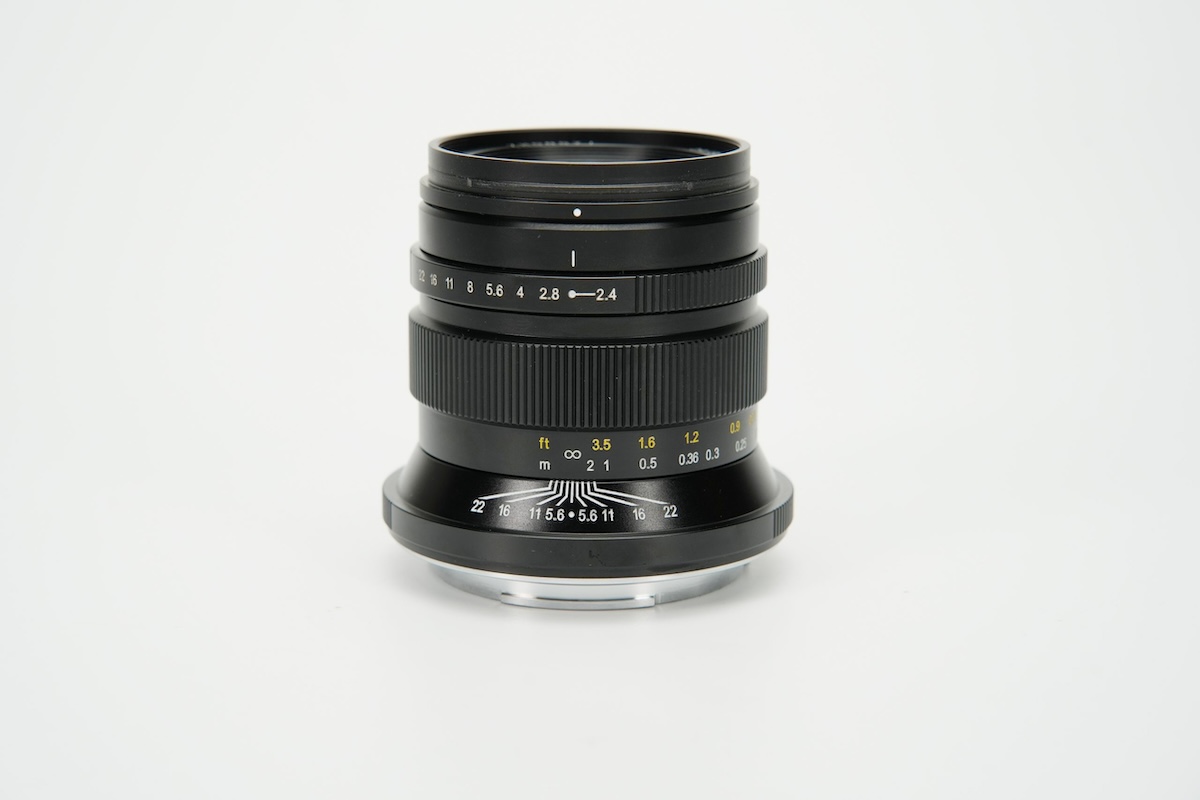
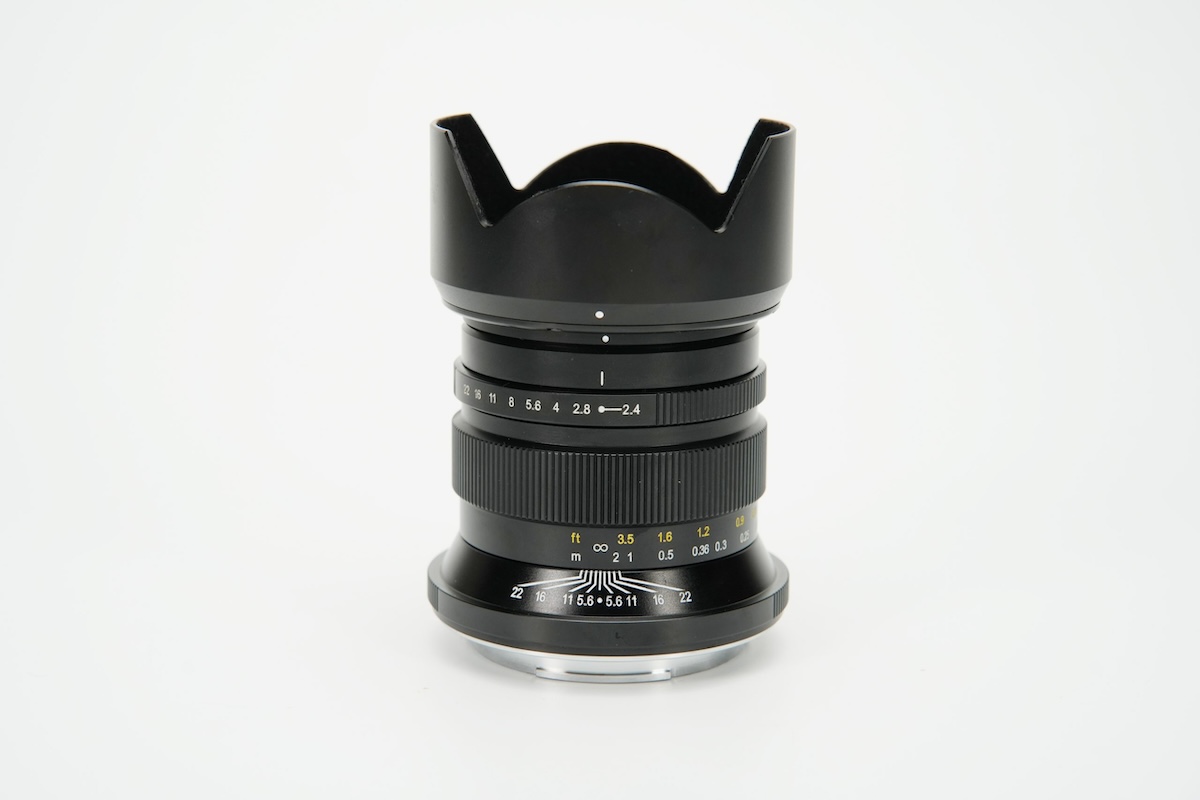
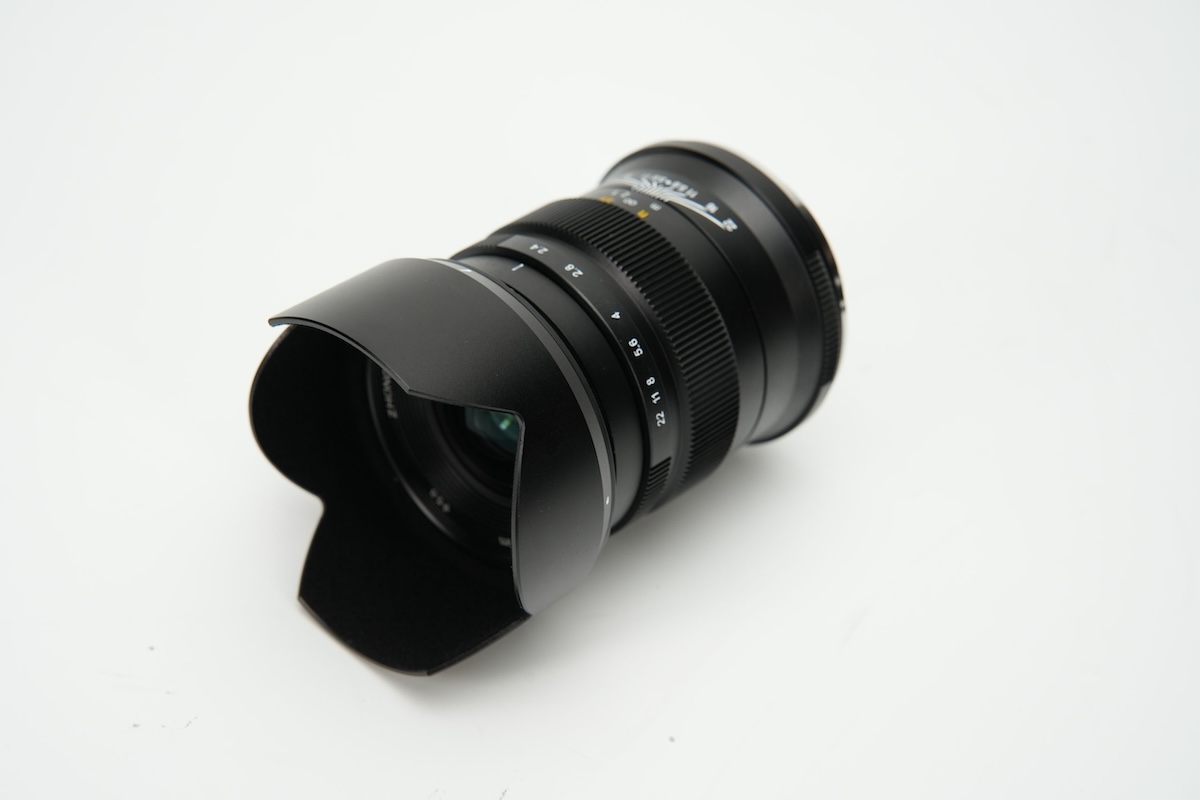
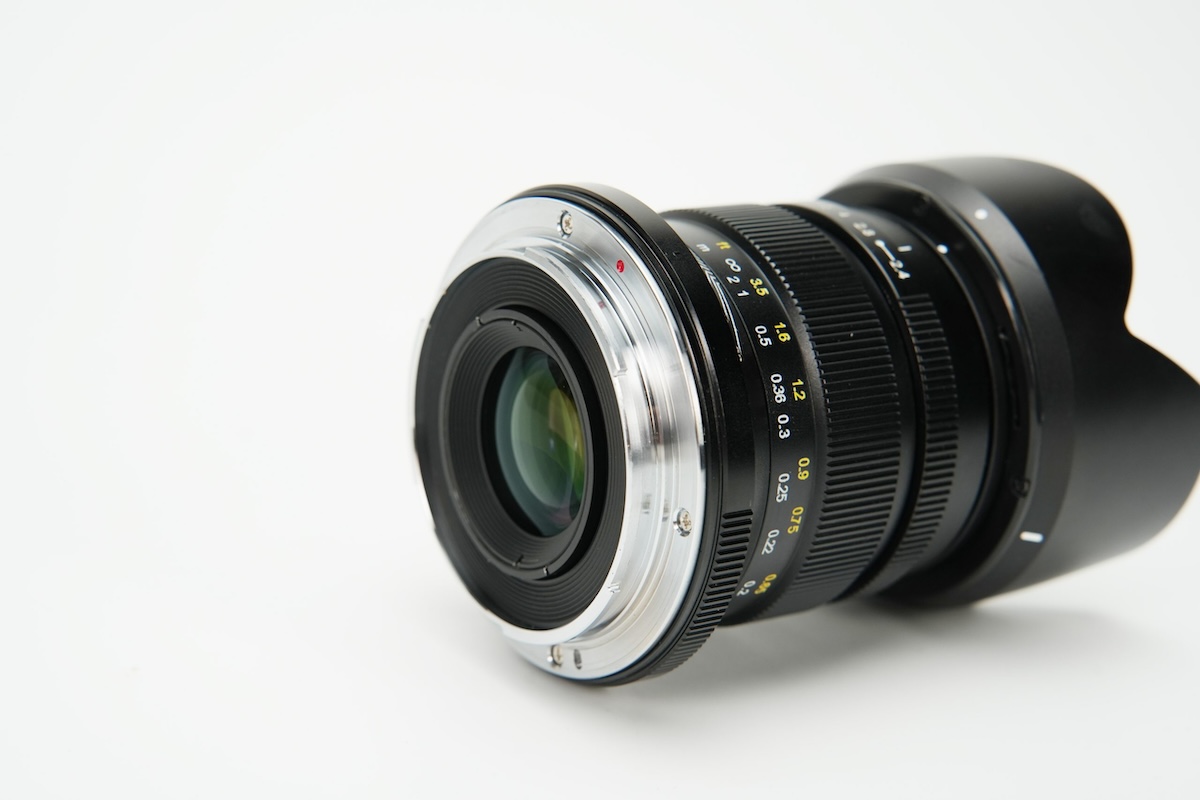
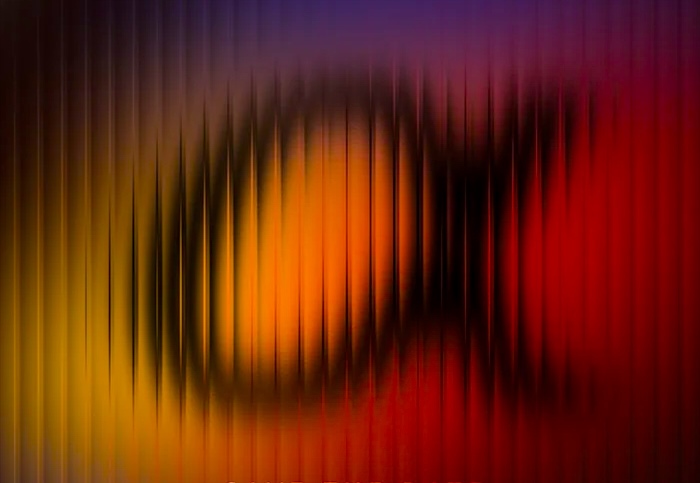
The manual-focus Joseph Petzval Métamorphose offers seven bokeh settings, moving from soap-bubble bokeh to a more dramatic, stretched look.
Lomography
When you use DPReview links to buy products, the site may earn a commission.
Lomography has announced the Joseph Petzval Métamorphose 35mm F1.8 Art lens, a full-frame manual-focus prime for Canon RF, Nikon Z and Sony E cameras. The lens lets photographers and cinematographers adjust the intensity of its swirling bokeh and embraces flaws that modern lens designs aim to avoid.
With the bokeh control set to 1, the lens produces rather traditional bokeh. Lomography
The Métamorphose 35mm F1.8 Art lens offers seven levels of bokeh, allowing photographers to customize the look of their images via a dial on the lens. Lomography says that with the effects turned down, the bokeh is similar to its previous Petzval Art lenses, with softer edges and soap-bubble bokeh.
With the bokeh level increased, Lomography says a much more dramatic change takes place. According to the company, the center stays sharp while the edges stretch and appear blurred. Lomography describes it as a “powerful hallucinatory effect around your subject.” It says the effect is best used to convey a disoriented state or when you want to create a sense of motion.
With the bokeh control turned up, the bokeh becomes stretched on the edges. Lomography
The effect becomes even more pronounced at the lens’s 0.35m (1.1′) close focusing distance, where swirling bokeh and outward-stretched edges surround a sharp center. In the company’s sample images, only the very center of the frame remains sharp in these cases.
In addition to changing the look of the bokeh via the seven adjustments, the lens supports drop-in rear aperture plates to change the bokeh’s shape. It comes with five plates: a star, a sun, an oval, a heart and a snowflake.
Lomography
Lomography designed the Métamorphose for both photo and video work. It offers a 180-degree focus throw, Mod 0.8 gearing for standard follow-focus systems and a de-clicked aperture ring for smooth exposure adjustments. Its bokeh control can be adjusted without shifting focus, allowing users to alter the image’s rendering during a take. A built-in 1/4-inch mounting point can support the lens directly on a compatible camera rig, while a 67mm front thread accepts filters. The optical design comprises six elements in five groups.
The Métamorphose joins Lomography’s Petzval Art range of manual-focus, full-frame mirrorless lenses. The line is named for Joseph Petzval, who designed an influential portrait lens in 1840 that became known for its fast aperture, sharp central rendering and softer edges caused by field curvature. Lomography introduced its first modern Petzval lens in 2013 and has since expanded the series with 27mm, 35mm, 55mm, 80.5mm and 135mm models.
Unlike those more direct Petzval-derived designs, Lomography says the Métamorphose also draws on an early Gaussian optical formula developed by Carl Friedrich Gauss in 1817.
The Joseph Petzval Métamorphose 35mm F1.8 Art lens is available for pre-order now for $649 and will ship beginning in December.
Lomography
Lomography Joseph Petzval Métamorphose 35mm F1.8 Art
About the Author: Abby Ferguson holds an MFA in photography and blends a fine-art background with extensive editorial and commercial experience. She built and led an in-house imaging program for a large vacation rental company and has served as an associate editor at Popular Photography. She also teaches at a local community college and serves on its Photographic Technology Program Advisory Board, sharing her knowledge and enthusiasm for the medium.
Want to stay up to date on the latest product news and releases? Add DPReview as a preferred source to ensure our independent journalism makes it to the top of your Google search results.
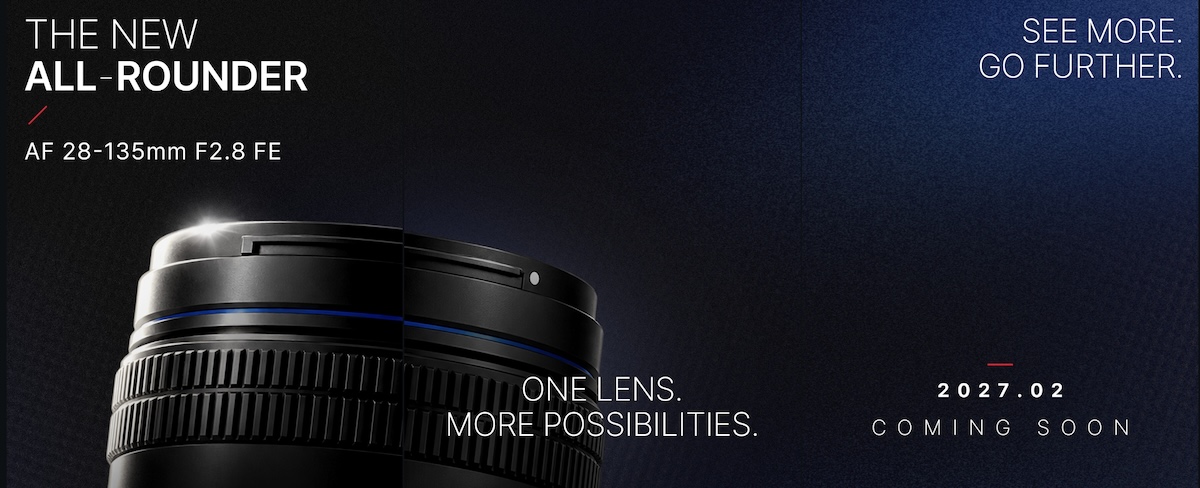
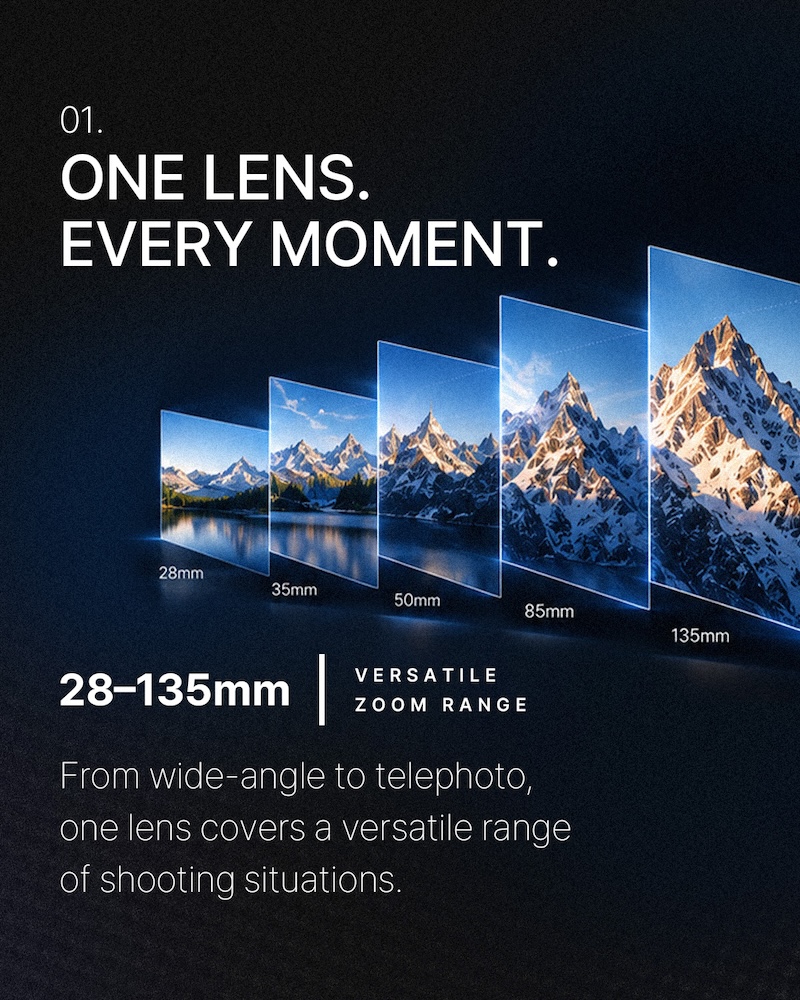
Korean lens maker says it has a 28-135mm F2.8 for Sony E-mount coming in February 2027
Samyang
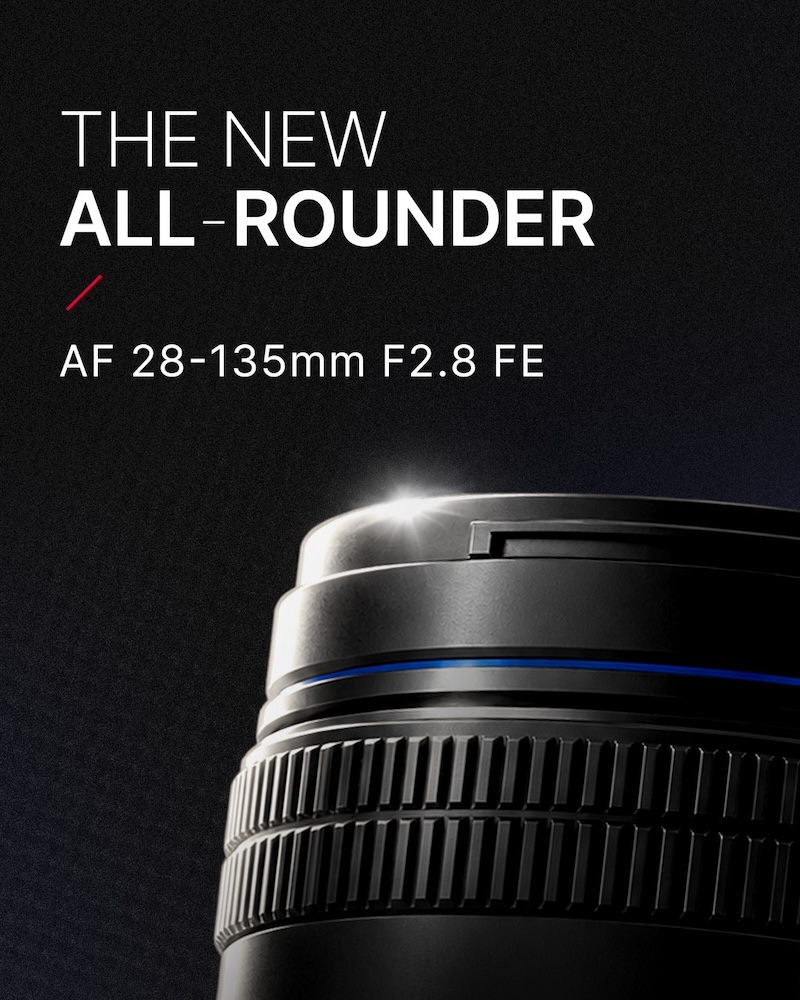
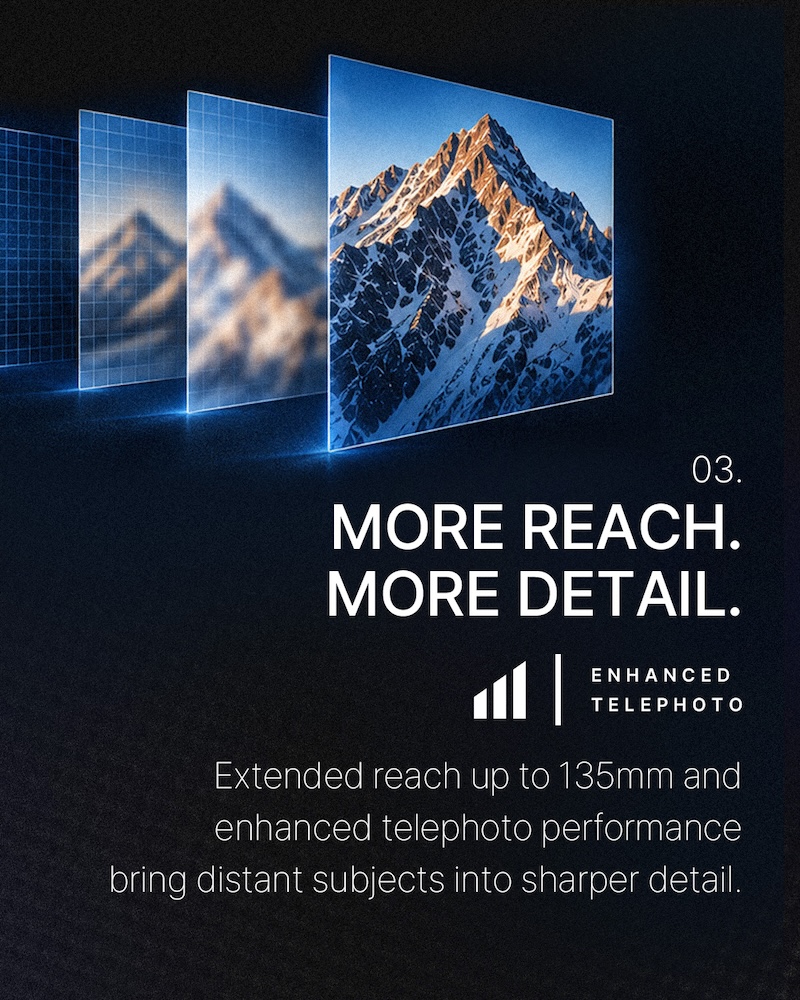
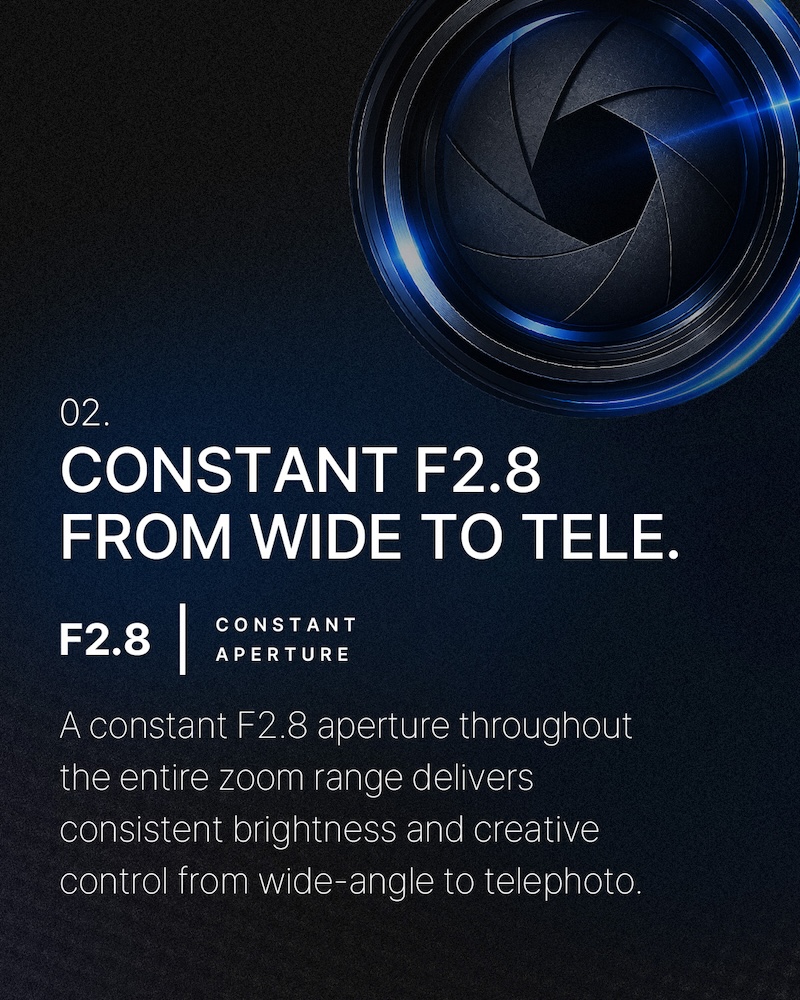
LK Samyang has started to tease the arrival of a 28-135mm F2.8 autofocus zoom for Sony E-mount, more than four months ahead of a February 2027 launch.
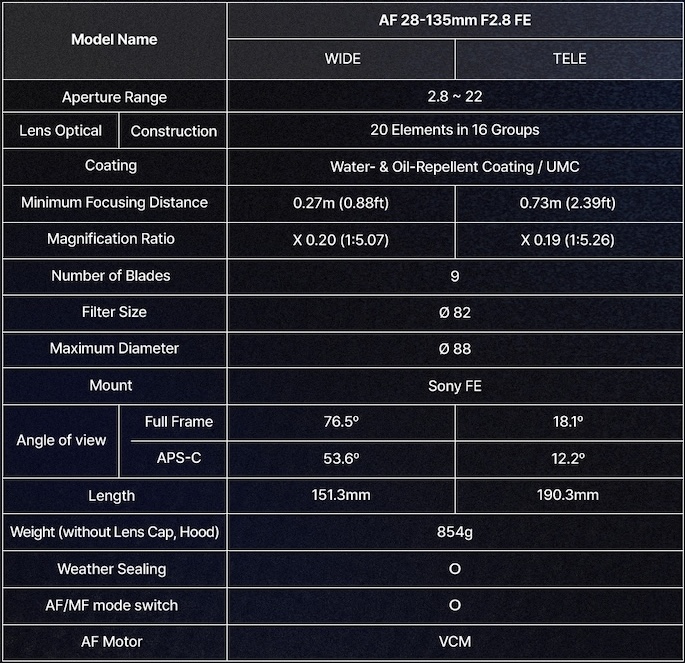
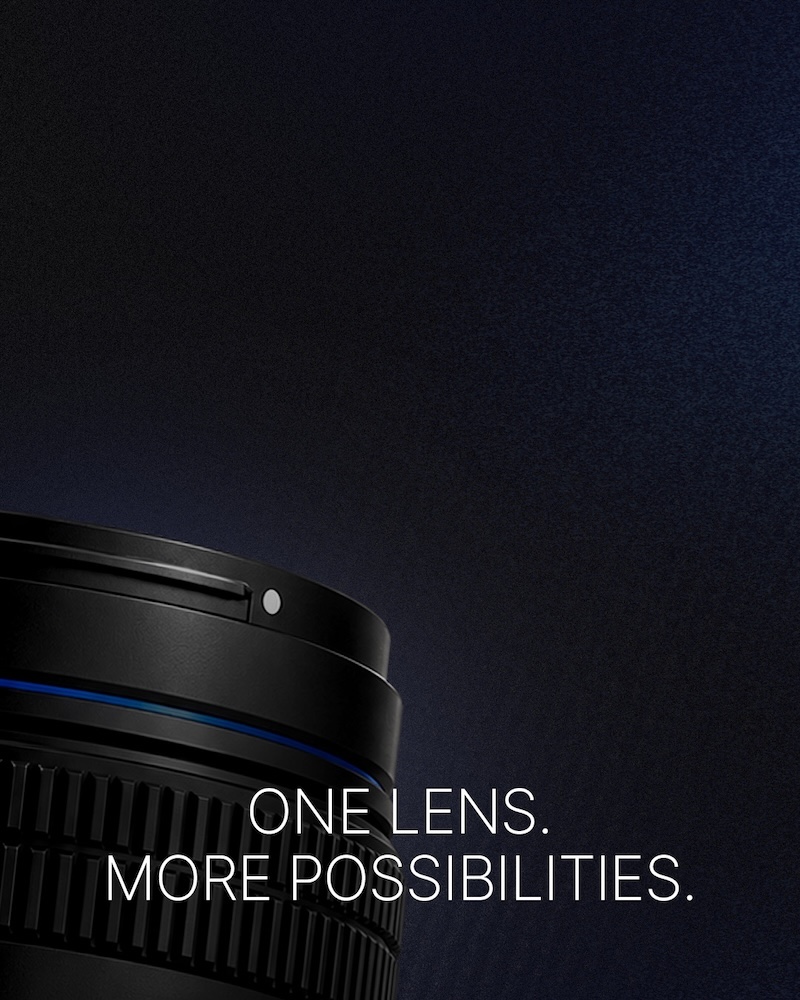
The company has only released close-up photos of the lens, so far, but has also published full specifications.
So we know it’ll be an extending zoom that expands from 151mm to 190mm long, as you zoom in (6.0-7.5″). We also know that it’ll weigh 854g (1.9lbs).
This makes it almost 30% longer than the Tamron 28-75mm F2.8 G2 and around 60% heavier, so you definitely pay a price for the additional flexibility the Samyang should offer. It’s around 27% longer and 50% heavier than Tamron’s 35-100mm F2.8, that doesn’t offer either the wide-angle or telephoto capabilities that this will.
It will also take an 82mm filter, rather than the 67mm filter used by the two Tamrons.
As with other recent LK Samyang lenses, its autofocus will be driven by a voice coil motor, which should be quiet and fast.
And, although no mention of them is made, the preview images show control ring grips that match the company’s lenses co-developed with Schneider-Kreuznach.
About the Author: Richard graduated as a scientist but had a lot more fun writing and shooting for his university magazine. A number of years spent variously as a reporter, writer and editor on science and engineering titles combined his knowledge of science with his interest in images and words. But it was spotting the connections between emission spectra, white balance and all the nonsense he’d taught himself playing around in Photoshop that helped kindle an interest in digital photography. Searching for a camera led to him discovering DPReview and Richard was recruited by Phil Askey in 2007. He’s been combining his love of photography, communication and attention to detail (pedantry?) ever since.
He has unusually strong opinions about lenses for the APS-C format.
Want to stay up to date on the latest product news and releases? Add DPReview as a preferred source to ensure our independent journalism makes it to the top of your Google search results.
GoPro officially joined the Micro Four Thirds system standard group after the release of the MISSION 1 PRO ILS action camera with a 50MP 1″ sensor:
GoPro Joins the Micro Four Thirds System Standard Group
GoPro’s First Interchangeable-Lens Cinema Camera, MISSION 1 PRO ILS, Features a Micro Four Thirds Mount
Tokyo, Japan – OM Digital Solutions Corporation and Panasonic Corporation jointly announced the Micro Four Thirds System standard in 2008 and have since been working to promote the standard.
We are pleased to announce that GoPro, Inc. (headquartered in San Mateo, California, USA; hereinafter “GoPro”) has declared its support for the Micro Four Thirds System standard with the launch of its first interchangeablelens camera on August 26th, 2026.
GoPro is expanding the ways people capture and share their experiences through immersive imagery with MISSION 1 PRO ILS, a compact cinema camera featuring a Micro Four Thirds mount.
MISSION 1 PRO ILS combines GoPro’s compact and rugged design with the flexibility to select different lenses for different shooting needs. GoPro’s participation is expected to further expand the use of the Micro Four Thirds System in amateur filmmaking, professional video production, and at the highest levels of cinema. The participation of a diverse range of companies in this open standard will continue to expand the product lineup and create new possibilities for visual expression and image capture.
As the company that initiated the Four Thirds System and Micro Four Thirds System standards, OM Digital Solutions will continue to work with supporting companies to promote the expansion of products compliant with these standards and contribute to the advancement of digital imaging systems that meet the diverse needs of customers.
Cameras and lenses can seem more expensive than ever, but a lot of that is out of the manufacturers’ hands
Composite: Richard Butler
Camera prices, like most other prices, are going up. Part of this has been manufacturers focusing on high-end users, because they tend to buy the higher-margin products. But even attempts at making more accessible cameras can seem wildly expensive, compared to the prices we remember paying.
And that’s not a question of manufacturers being foolish or greedy. Whether we like it or not, we are living through a period of higher inflation than we’re used to.
This is the first of a two-part series looking at why the perspective on cameras’ prices in our reviews can seem out-of-step with other people’s initial reactions, on the day of launch.
Many of us lived through a more than twenty-year period of relatively low inflation. Prices of most things rose by around 2% per year, the cost of electronics fell, partly with the outsourcing of manufacture and through increased efficiencies and economies of scale. Wages typically kept pace with inflation, so things didn’t feel more expensive. Large sensor digital cameras got cheaper at first, then settled into a pattern of improving while maintaining their existing price.
The OM System PEN is less expensive than the PEN F was, a decade ago, in money terms (without taking inflation into account) as well as in ‘real’ terms (with inflation factored in), making it much easier to recognize that its been repositioned to a more affordable position in the market.Richard Butler
Sadly, that’s no longer the world we live in. It’s impossible to enumerate all the factors that got us to here without spiraling off into discussions of politics, but there have been a host of inflationary pressures over the past few years. Whether it’s supply-chain shocks, tariffs, wars putting pressure on oil and gas prices or out-of-control demand for processors and RAM, there’s more pushing prices up than encouraging them to drop.
Manufacturer’s materials and energy costs have gone up. Their component prices have become erratic. Their wages have gone up. Their logistics costs have increased. They cannot make cameras for the prices we used to pay. And, because of the way inflation works, the $1000 you had planned for your next purchase simply isn’t worth as much as that figure have been, five or six years ago.
I’m not trying to defend inflation, or suggesting you should (or even can) just decide it doesn’t matter.
I suspect it’s not just me who finds myself marveling at articles or footage from the 70’s showing a pint of beer priced in pennies or a gallon of ‘gas’ in cents. To a more modern ear, that just seems unimaginable, and it’s hard to see how we got from there to where we are. For most of my adult life, the changes have been incremental enough that I didn’t notice the jump. But thinking back to when I was at college, a pint in my favorite pub was £1.36. I visited the same pub this summer, and it was £5.30. Those little changes have ramped up into big ones in the past few years, and now the prices of my own yesteryears are beginning to seem impossibly distant.
The same thing is happening with cameras, and just about all manufactured products: the value of money is dropping faster than any reduction in the cost of electronics (and a lot of key components are being bought for AI, before it can get anywhere near consumer products). Also, there’s every chance that it’s been some time since you last bought a new camera, and that precisely remembered reference point is no longer realistic.
None of which is to say that we have to like it. I’m not trying to defend it, or suggesting you should (or even can) just decide it doesn’t matter. But getting frustrated about it or insisting that the latest camera should cost what your last one did, pre-pandemic, isn’t going to change things. None of us enjoys it, but pretending inflation doesn’t exist or that rising prices are down to manufacturer misjudgment or greed doesn’t get you anywhere useful.
About the Author: Richard graduated as a scientist but had a lot more fun writing and shooting for his university magazine. A number of years spent variously as a reporter, writer and editor on science and engineering titles combined his knowledge of science with his interest in images and words. But it was spotting the connections between emission spectra, white balance and all the nonsense he’d taught himself playing around in Photoshop that helped kindle an interest in digital photography. Searching for a camera led to him discovering DPReview and Richard was recruited by Phil Askey in 2007. He’s been combining his love of photography, communication and attention to detail (pedantry?) ever since.
He has unusually strong opinions about lenses for the APS-C format.
Want to stay up to date on the latest product news and releases? Add DPReview as a preferred source to ensure our independent journalism makes it to the top of your Google search results.
The full-frame lens for mirrorless systems provides up to 1x reproduction and has autofocus.
Laowa
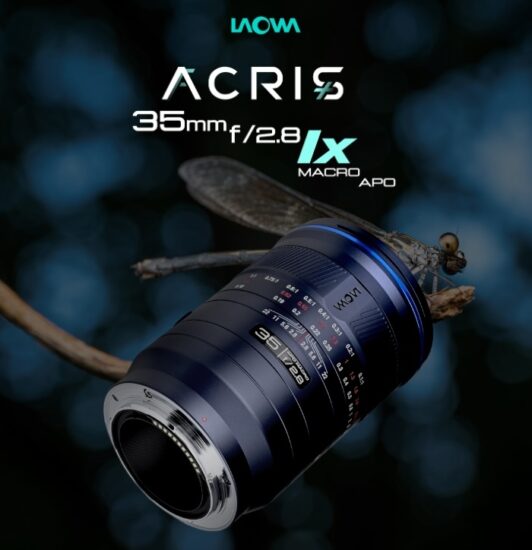
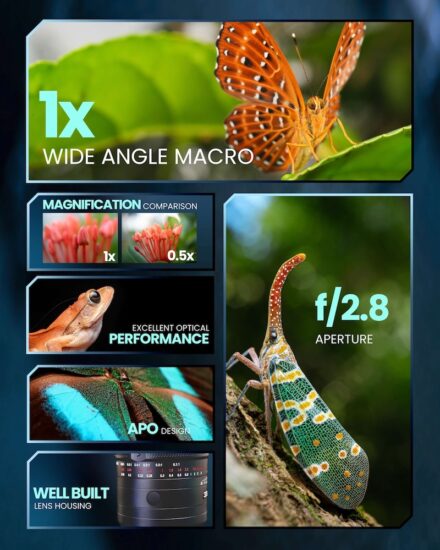
Laowa has announced the Acris 35mm F2.8 1X AF Macro APO, which it says is the “world’s first full-frame autofocus 35mm lens with 1:1 macro magnification.” It’s also only the fifth autofocus lens we’ve seen from the company, though some of the lens mounts it’s being released for will get a manual focus-only version.
Laowa says the autofocus versions of the lens will be available for Sony E, Nikon Z and Canon EF mounts. L mount and Canon’s mirrorless RF mount, meanwhile, will only be getting a manual focus version.
The lens is made up of 13 elements in 10 groups, and while Laowa doesn’t call out any special glass it’s using, the company says the apochromatic design means you’ll get “zero color fringing” due to chromatic aberration. In manual focus mode, it has a minimum focusing distance of 18cm (7.1″). This means the front of the lens has to be around 49mm (1.9″) away from your subject to achieve the 1:1 lifesize reproduction that gives the lens its name.
Manufacturer sample.Leslie Jie / Laowa
Like with Laowa’s 180mm F4.5 macro lens, the autofocus capabilities are quite limited in macro mode. From the minimum focusing distance to 0.5m (19.7″), you have to manually acquire focus, but the lens can make precise adjustments for focus stacking purposes. If the subject you’re shooting is more than 0.5m away, though, Laowa says it’ll work like any other AF lens, providing “fast, responsive, and accurate subject acquisition.”
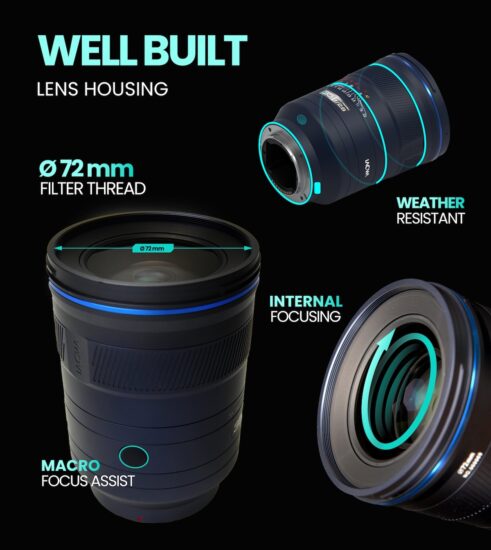
Of course, this is assuming you have the version of the lens that comes with autofocus, rather than being manual focus only. Beyond the lack of motors, there are two interesting differences between the two lenses: the AF version has 9 aperture blades and is threaded for 72mm filters, while the manual focus version has 13 and uses 67mm filters. Both, however, zoom internally.
Laowa
The dimensions of the lens will vary substantially based on which mount you get it in; for instance, the Sony E-mount version is 114mm (4.5″) long, while the EF version is 87mm (3.4″) long. The lens’s weights are much closer, though, with the E-mount one coming in at 560g (19.8oz) and the EF at 530g (18.7oz). Laowa says the lens is sealed against dust and moisture.
In terms of features, the lens is relatively spartan. It has a USB-C port for firmware updates, and a function button that Laowa says “allows seamless switching between modes.”
The Acris 35mm F2.8 1X AF Macro APO will be available starting today and will cost $449 in the US, though regional pricing may vary.
Laowa Acris 35mm F2.8 1X AF Macro APO specifications
Quick Specs
Lens Type
Prime lens
Zoom range
N/A
Fisheye
N/A
Perspective control
N/A
Macro
Yes
Max format size
35mm FF
Minimum Focal length (W)
35 mm
Maximum Focal length (T)
35 mm
Max aperture (W)
F2.8
Max aperture (T)
F2.8
Min aperture (W)
22
Min aperture (T)
F22
Aperture ring
No
No. of diaphragm blades
9
Aperture actuation
Electronic
About the Author: Mitchell started taking pictures at 10 and hasn’t stopped since. It’s been a wide-ranging adventure, spanning a wide variety of genres and locales, and occasionally dipping into fascinations with video and filmmaking. They honed their technical knowledge doing documentation, programing and QA, writing for The Verge, and just generally messing around on the computer to see what breaks.
Want to stay up to date on the latest product news and releases? Add DPReview as a preferred source to ensure our independent journalism makes it to the top of your Google search results.
From a bakery-run detour to a wedding album that fell flat, the DPReview community shares the moments that got them hooked. What was yours?
Olimba
Every photographer has a first moment when they realize their time behind the camera is something they truly care about. For some, the spark comes from a chance encounter with a unique camera in a shop window or from the skills of a beloved relative who’s also into photography. For others, it stems from a childhood TV hero, or perhaps an interest to document family life.
Last week, we asked our community what set their photography journey in motion, and the replies were as varied as the photographers themselves. Read on to see what sparked the DPReview community into photo-taking action.
lumigraphics: I was in the Navy when Queen Elizabeth made an official state visit to my ship (USS Ranger in San Diego, 1983). I only had a little 110 camera and wanted better results, so I bought a Canon AE-1 Program from the ship’s store, and the rest is history. 43 years later, I’m a working pro. Might be the only person around who is a photographer because of the Queen.
Dimpsey: Early morning trips to buy bread rolls for breakfast. The bakery often wasn’t open, but the chemists across the road had cameras in their window. One was all shiny silver knobs and a gleaming top plate. It was utterly irresistible, and I wanted it. That was over 60 years ago, and I’m still taking the camera(s) out today!
Lineup of community member SGA’s old Kodak cameras.SGA
SGA: As a kid, I wanted to be Jimmy Olsen, Cub Reporter. I loved watching him on the original Superman TV show, running around Metropolis with his old folding camera. But all my parents got me was a Kodak Brownie, which used 127 film.
NorCalPhotonFoundry: My grandfather was a lifelong photography enthusiast, and when I was 6 or 7 years old, he gave me a cheap little plastic point-and-shoot camera for Christmas. For me, the “spark” was the magic of being able to capture, keep and share a moment or perspective; something which still brings me joy to this day. I still have and use my childhood QL17, and am grateful to my grandpa for giving me that first plastic point-and-shoot.
Alun Thomas: My interest was kindled by my cycle touring interest. I would go on forums to read others’ trip reports and wonder why my photos were so rubbish compared to theirs. So I bought a Sony A5100, then soon started buying different lenses. I eventually switched to full-frame, and now the hobby is more prominent for me than cycling.
GWKilgore: I grew up hunting. I was in my 30s when I went out to Oregon in 1975 to hunt mule deer. Right after sunrise, I bagged a nice buck. I was worn out and told my hunting companions this was too much work. I said that I would trade my rifle for a camera.
Community member Gato Amarillo as a child in 1952 at the Tri-State Fair in Amarillo.GatoAmarillo
Gato Amarillo: I think it might have started here (see photo above). That’s me in about 1952 with my father and sister at the Tri-State Fair in Amarillo. The photographer was from one of the local newspapers, and I still vaguely remember being fascinated by the big camera. It was another 20 years or so before I started serious photography myself, but I suspect that experience was the spark.
Edgar_in_Indy: When we started having kids in the early 2000’s, my wife and I would go to one of the franchised photography studios at the mall. It would kill us to see the screen fill up with dozens of great pictures of our child, but only be able to pick a handful due to the cost of each picture.
I ended up buying an early DSLR and a couple of old studio strobes and never had to visit those mall studios again. I’m not sure we actually saved any money in the long run, given my camera collection, but we have so many great family photos from over the years.
GeoInSD: When I was a child, my family used cheapie cameras, like Kodak Brownies and Instamatics. I remember seeing my granduncle having an SLR system that I thought was pretty cool. My interest in photography started when I took a photography class in high school. I was stunned by the vastly superior image quality of a 35mm SLR compared to Kodak Brownies and Instamatics.
I was not an early adopter of digital. I held off until shutter lag was comparable to film AND the DSLR body was under $1000 US. The Nikon D70 was the first DSLR that met those criteria in my book.
There are many other stories from our community. We would love for you to join in on the discussion!
About the Author: Mathew Anderson is a proud Community Manager for the technology industry and a past visitor to DPReview.com for all his camera needs. He is currently the lead of DPReview’s community and primary communication link between the community and DPReview’s team.
Want to stay up to date on the latest product news and releases? Add DPReview as a preferred source to ensure our independent journalism makes it to the top of your Google search results.
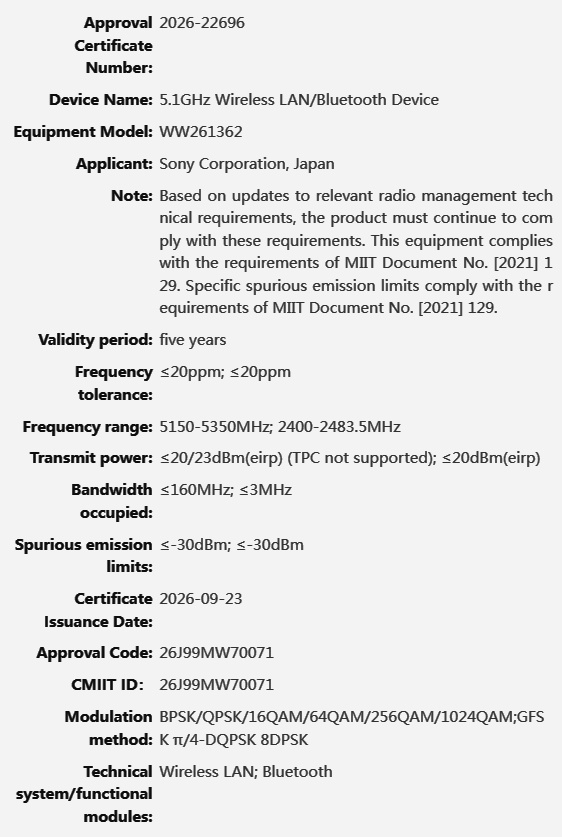
Sony registered a new WW261362 camera in China that could be the long rumored Sony a7S IV or another high-end model. The WW261362 supports WiFi 6 (dual-band wireless in China, tri-band wireless in some regions), which means at least a BIONZ XR2 or a newer processor:
A “Frame No. Full” warning was a reminder that camera file numbering can follow both a body and its memory cards across shoots.
Richard Butler
This wasn’t the camera I was using when the Frame No. Full warning popped up, but it did happen on a Fujifilm camera.
On a recent outing while testing Fujifilm’s new 400mm F4.5 lens on a loaner camera, I ran into something unexpected: 15 minutes into my hike, an error message appeared on the camera, and nothing happened when I pressed the shutter button.
The message on the screen read “Frame No. Full.” Admittedly, I was left scratching my head. I had formatted the card before I left and knew there was plenty of room on it. A quick Google search while I was in the woods informed me that the camera had reached the end of its file numbering system. The only fix that I could find while I was in the woods was to reset the camera’s file-number sequence with a formatted card, effectively ending my hike shortly after I started (I was there to take photos, after all).
Why file numbering can become a problem
Canon offers similar file numbering options to Fujifilm, allowing you to choose between continuous and reset modes. Mitchell Clark
While I experienced this issue on a Fujifilm camera, it isn’t something specific to Fujifilm. Digital cameras commonly assign images a three-digit folder or directory number and a four-digit file number. For most, those numbers top out at 999-9999, though the exact number of images per folder may differ depending on the particular model.
The exact label differs, but there is usually a continuous, series, or auto option that carries the sequence forward across cards, plus a reset-style option that starts over when a new card or folder is used. Continuous numbering helps reduce duplicate filenames, but it also means a borrowed, rental, used, shared or demo body can inherit a numbering history that began long before you received it. Canon, Nikon, Sony, OM System, Panasonic and Leica all document variations of that basic approach.
File numbers aren’t only dictated by the camera, either. Your card also influences which directory number or file number is used. Mitchell Clark
It’s also important to note that the file number does not represent a simple shutter count. It may look as though reaching 999-9999 would require nearly 9 million shutter actuations, but continuous-numbering systems can advance to the highest number already present on a card. Many camera manuals across brands say that in continuous mode, the camera will use the last file number recorded or the first available number, whichever is higher.
In other words, a high frame number may reflect a camera’s or memory card’s file-management history rather than a straightforward count of images taken. That is likely why the Fujifilm loaner reached its final available identifier, 999-9999. I had formatted my own card in-camera, but that did not reset the stored sequence because the body was set to Continuous. Fujifilm’s manuals say the shutter is disabled once that number is reached.
What to check before an important shoot
Fujifilm was simply the camera in my hands when I experienced the issue. Exact limits and reset behavior vary by brand and model, but every continuous numbering system has some ceiling. It is probably rare, but it could be a costly surprise in the middle of a wedding, event, wildlife outing, or other once-only shoot.
File-number history can follow both cameras and cards, so the risk is not limited to loaner gear. It can also affect photographers who rotate cards among multiple bodies, work on shared kits or pass cards between shooters. Before an important assignment, check the camera’s current folder/file number and its file-numbering setting. It may also be smart to reset the sequence with a safely backed-up card if it looks unusually high before heading out to an important shoot (and keep a backup card on hand, too).
About the Author: Abby Ferguson holds an MFA in photography and blends a fine-art background with extensive editorial and commercial experience. She built and led an in-house imaging program for a large vacation rental company and has served as an associate editor at Popular Photography. She also teaches at a local community college and serves on its Photographic Technology Program Advisory Board, sharing her knowledge and enthusiasm for the medium.
Want to stay up to date on the latest product news and releases? Add DPReview as a preferred source to ensure our independent journalism makes it to the top of your Google search results.
Studio images and Raw analysis back up the performance we saw when out shooting.
Richard Butler
With the release of Adobe Camera Raw 18.7, we now have Raw support for the OM System PEN, bringing us one step closer to being able to complete our review.
As you might expect, the PEN’s performance is a match for that of the OM-5 Mark II, with which it shares a sensor and processor. This may seem obvious but we have to check, to be certain that our assumptions about shared components are correct and that there are no unreported changes to the processing. It also ensures that you can select the OM System PEN in our test scene, if you want to make any comparisons in future.
Its 20MP sensor captures a good level of detail (our test scene gives a slight benefit to 4:3 aspect ratio cameras, reducing the already minor difference between the PEN and the 24MP of the Canon EOS R10). In terms of noise the PEN’s performance is a little behind the larger sensor of the Nikon Z50II, but it’s not significantly noisier than the Canon, whose 1.6x crop sensor seems to slightly underperform expectations.
The PEN’s performance is entirely in keeping with what we’d expect to see from a modern sensor, backing up the results we got when shooting its sample gallery. We’ve already seen that the JPEG engine can produce a range of attractive results and these confirm that the technical underpinnings are sound.
About the Author: Richard graduated as a scientist but had a lot more fun writing and shooting for his university magazine. A number of years spent variously as a reporter, writer and editor on science and engineering titles combined his knowledge of science with his interest in images and words. But it was spotting the connections between emission spectra, white balance and all the nonsense he’d taught himself playing around in Photoshop that helped kindle an interest in digital photography. Searching for a camera led to him discovering DPReview and Richard was recruited by Phil Askey in 2007. He’s been combining his love of photography, communication and attention to detail (pedantry?) ever since.
He has unusually strong opinions about lenses for the APS-C format.
Want to stay up to date on the latest product news and releases? Add DPReview as a preferred source to ensure our independent journalism makes it to the top of your Google search results.
7Artisans says the $169 pancake lens is the lightest autofocus F2 prime lens available for APS-C cameras.
When you use DPReview links to buy products, the site may earn a commission.
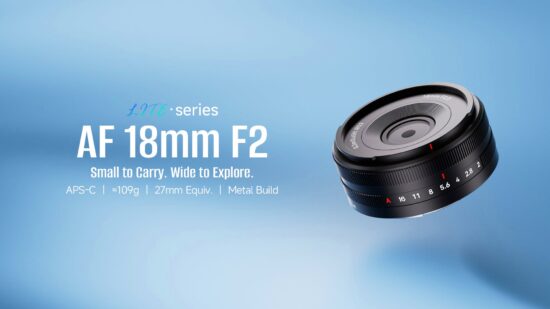
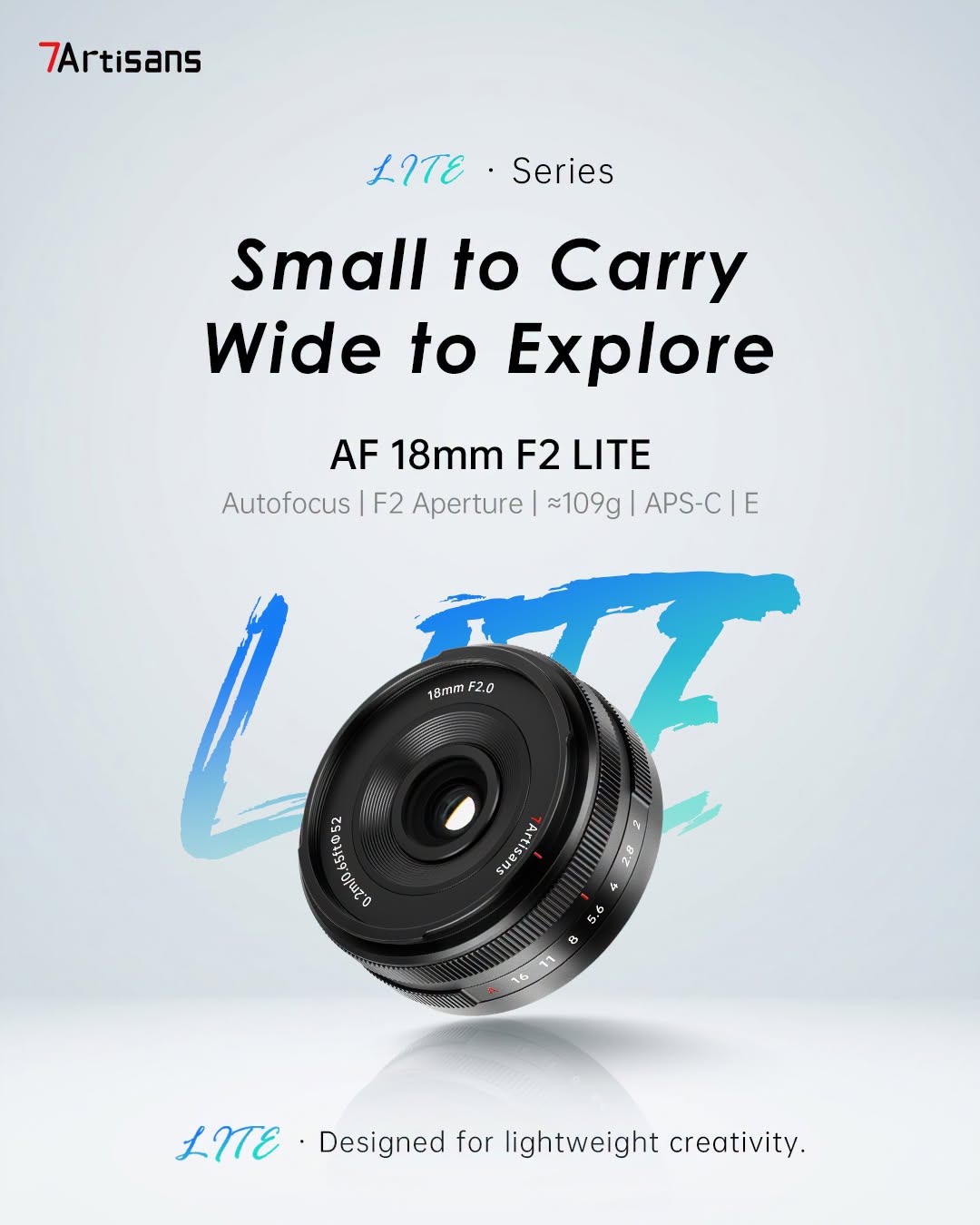
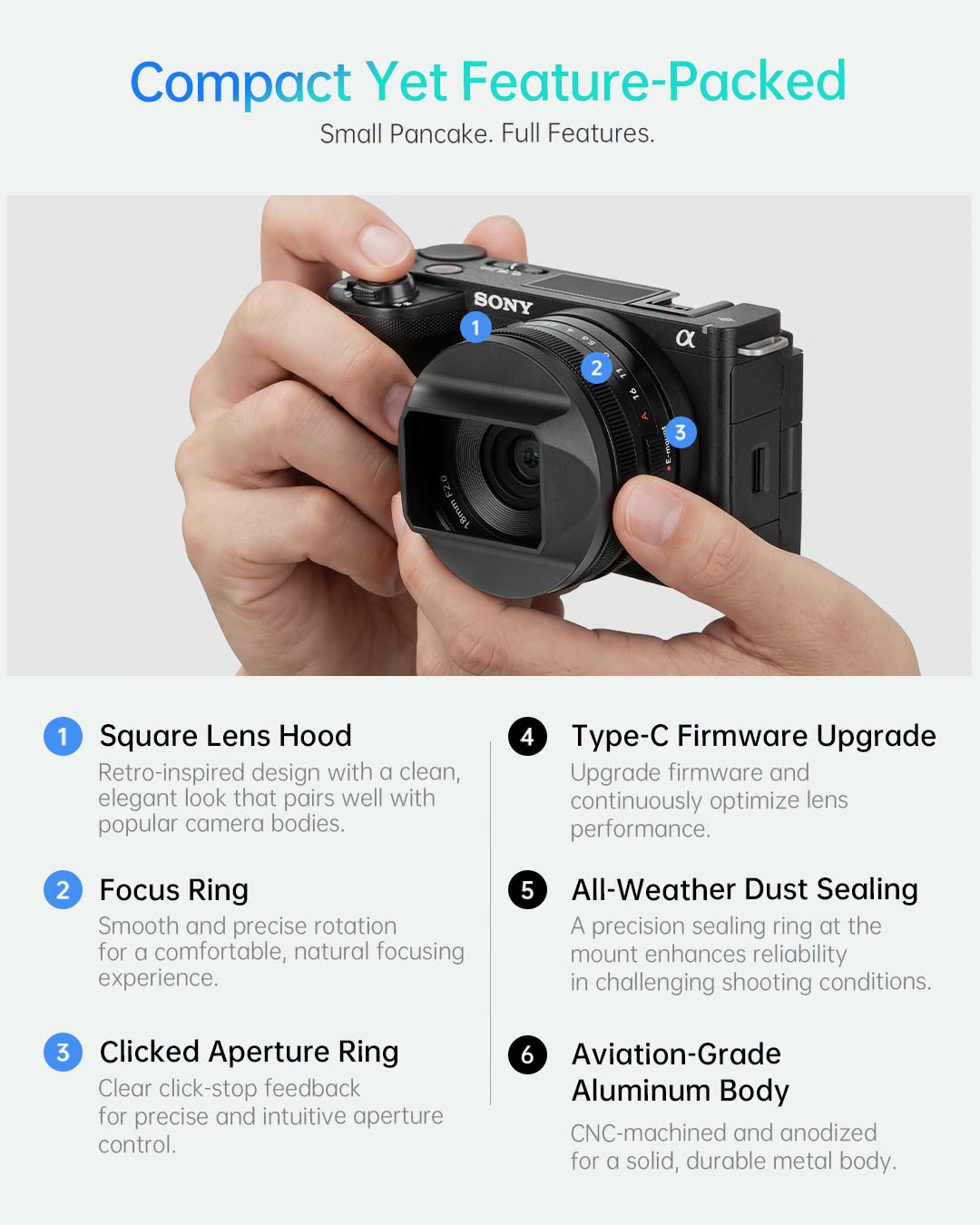
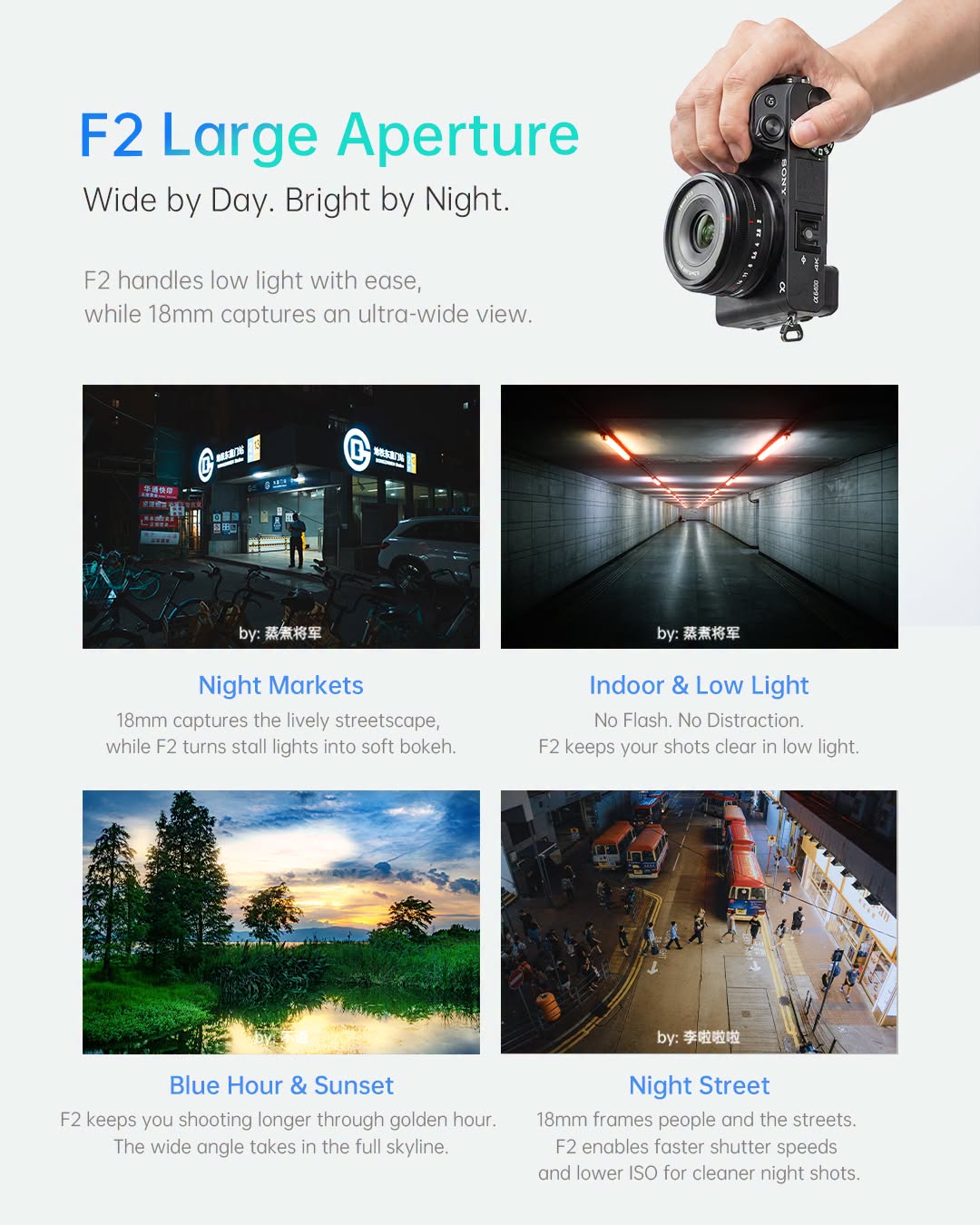
7Artisans has announced the AF 18mm F2.0 Lite lens. The new pancake lens for Sony E-mount APS-C cameras offers a wide field of view in a tiny package.
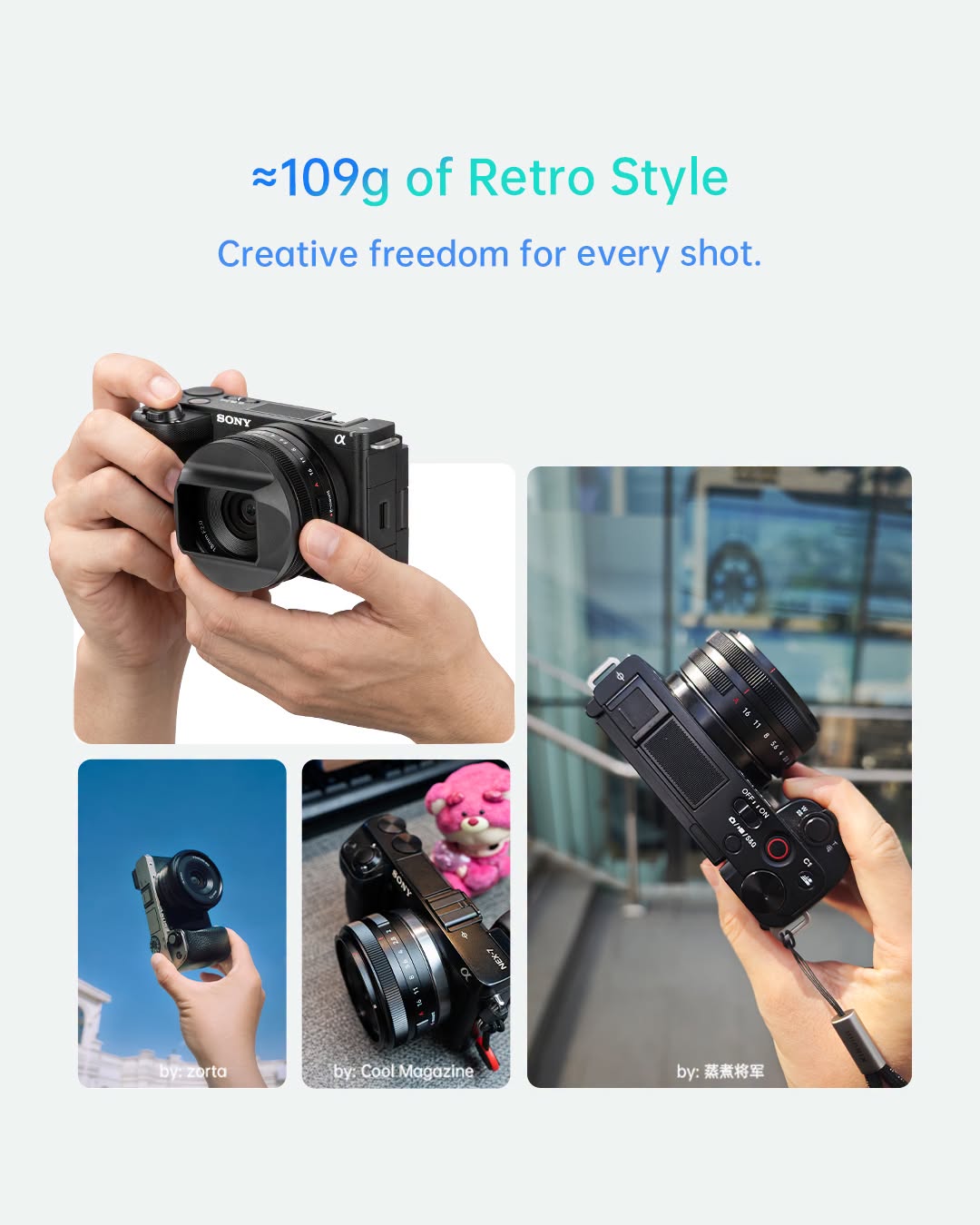
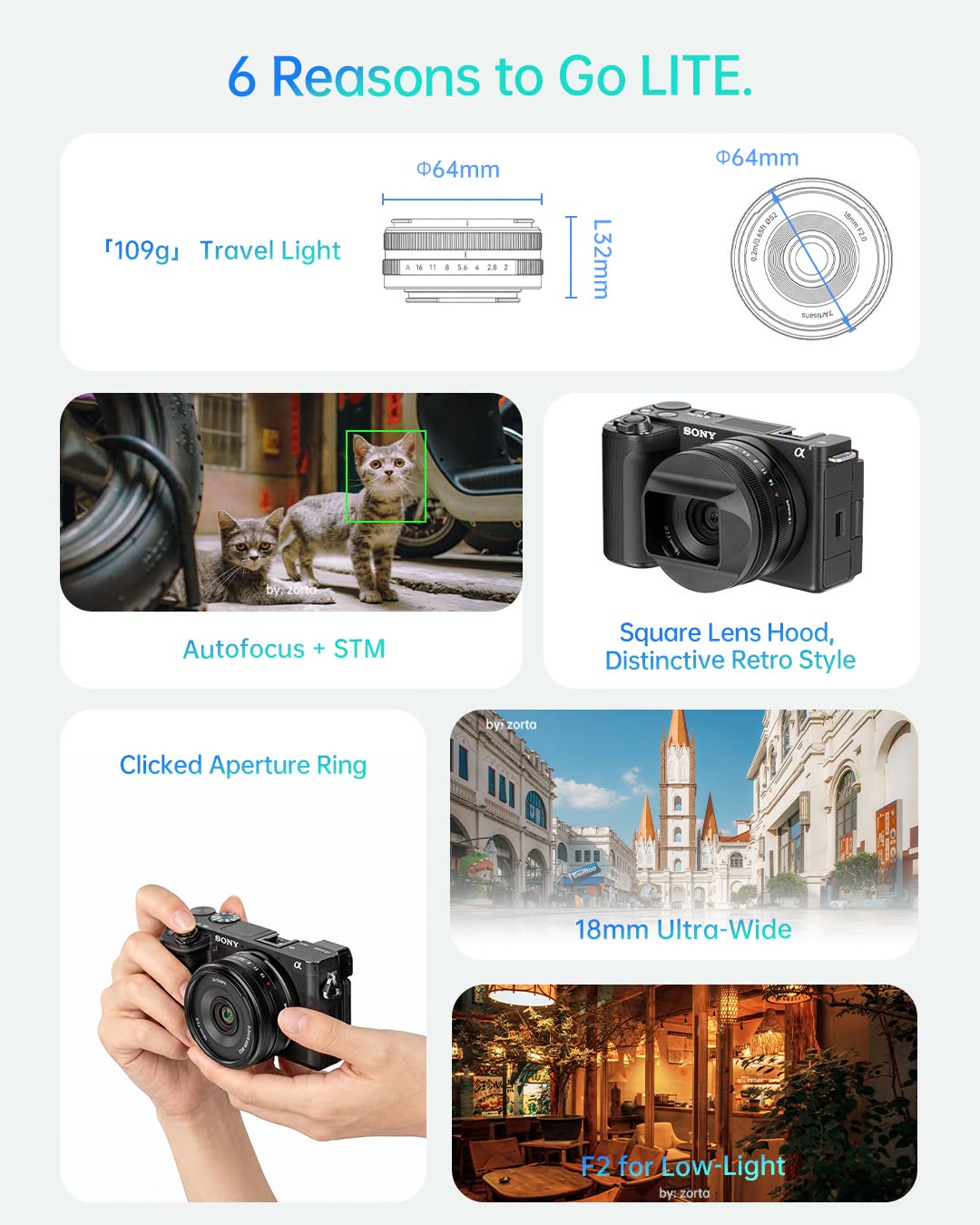
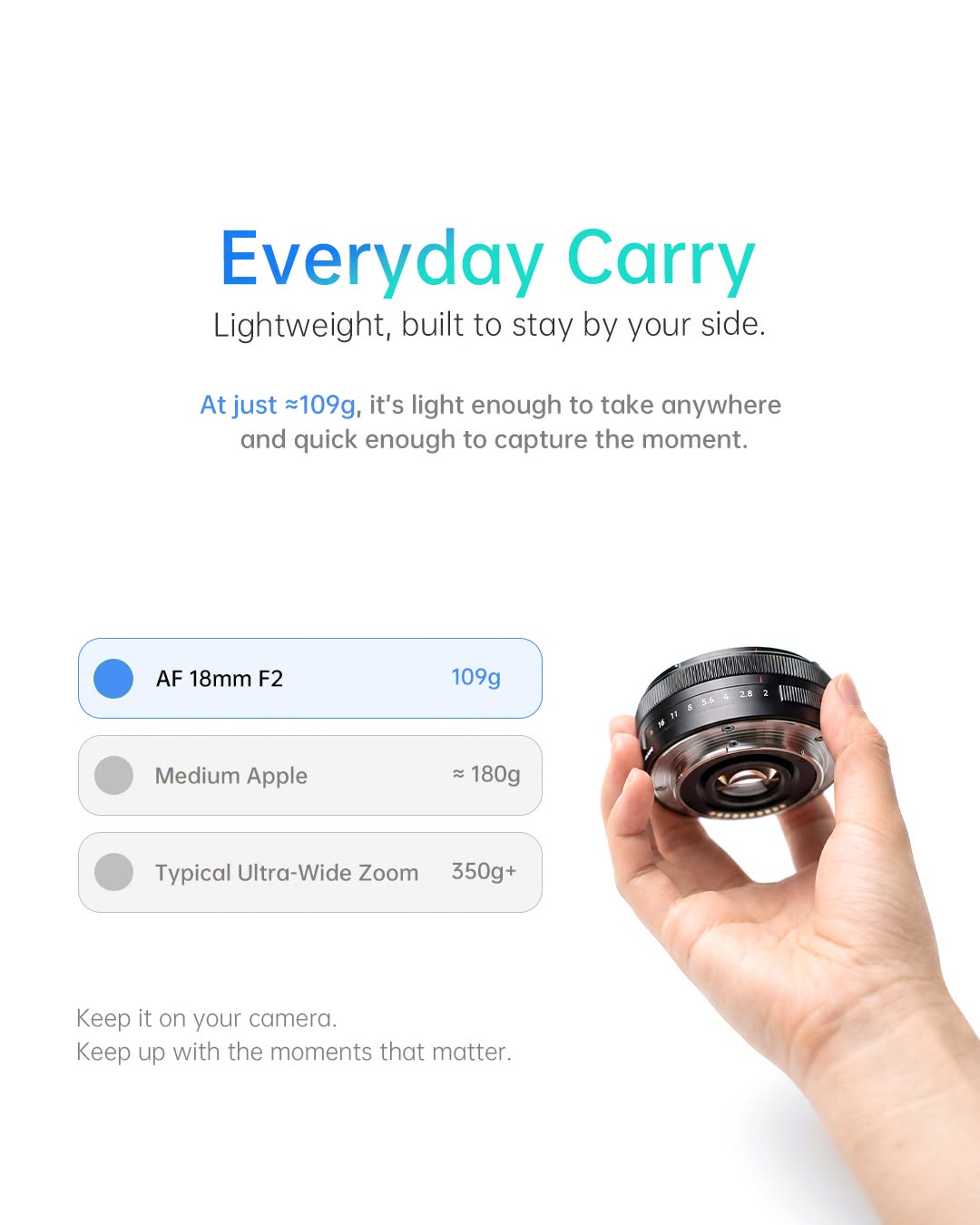
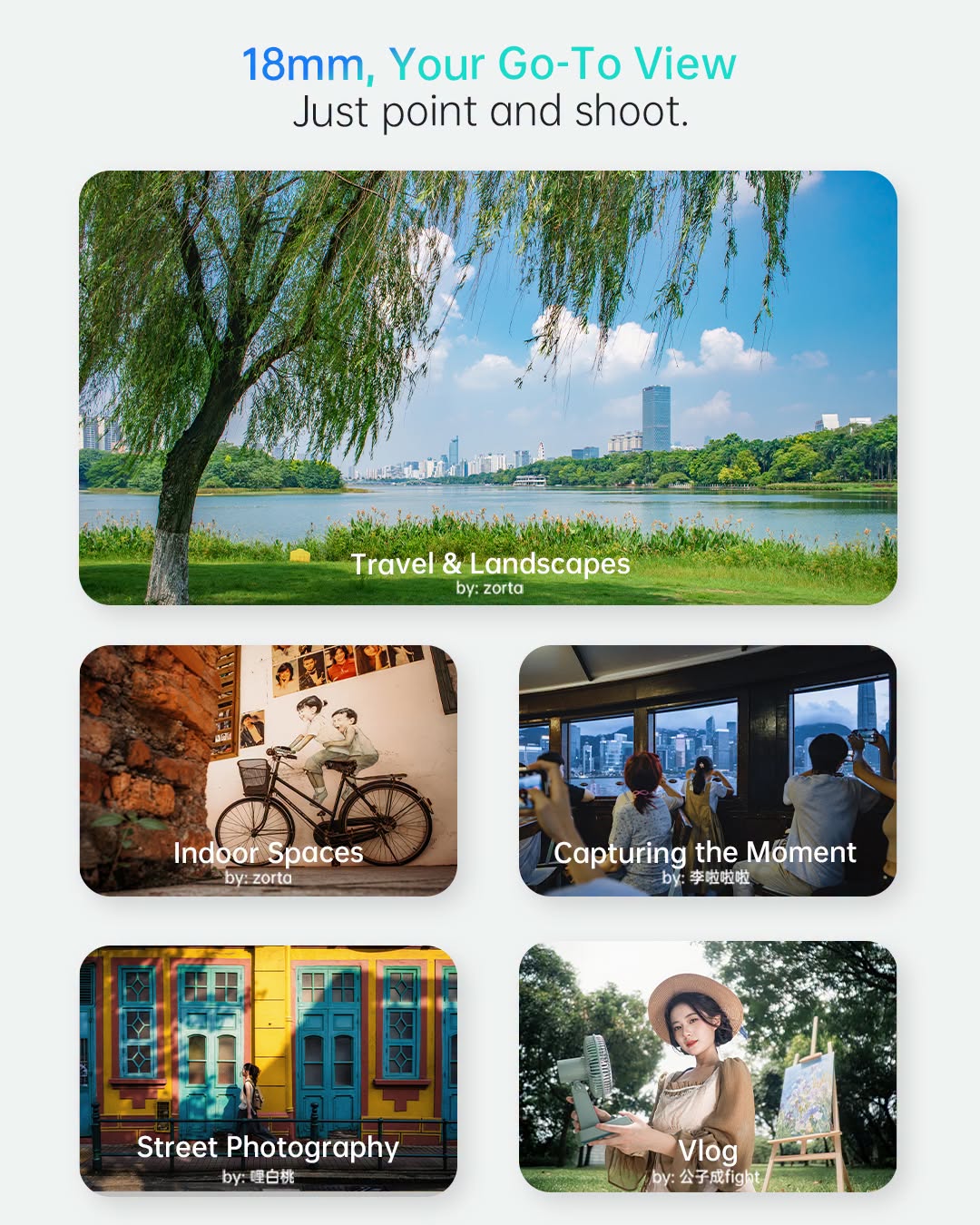
The AF 18mm F2.0 Lite provides a 27mm full-frame equivalent view on APS-C cameras, a focal length ideal for street and travel photography. 7Artisans says it is the lightest autofocus F2.0 prime lens for APS-C cameras, and it weighs just 109 g (3.8 oz). The lens measures just 32mm (1.3″) long, with a diameter of 64mm (2.5″).
Despite its compact size, the lens features a clicked aperture ring, providing on-lens aperture control. The lens also uses an all-metal build, which 7Artisans says is dust-sealed for added protection. It also has a USB-C port for firmware updates.
7Artisans
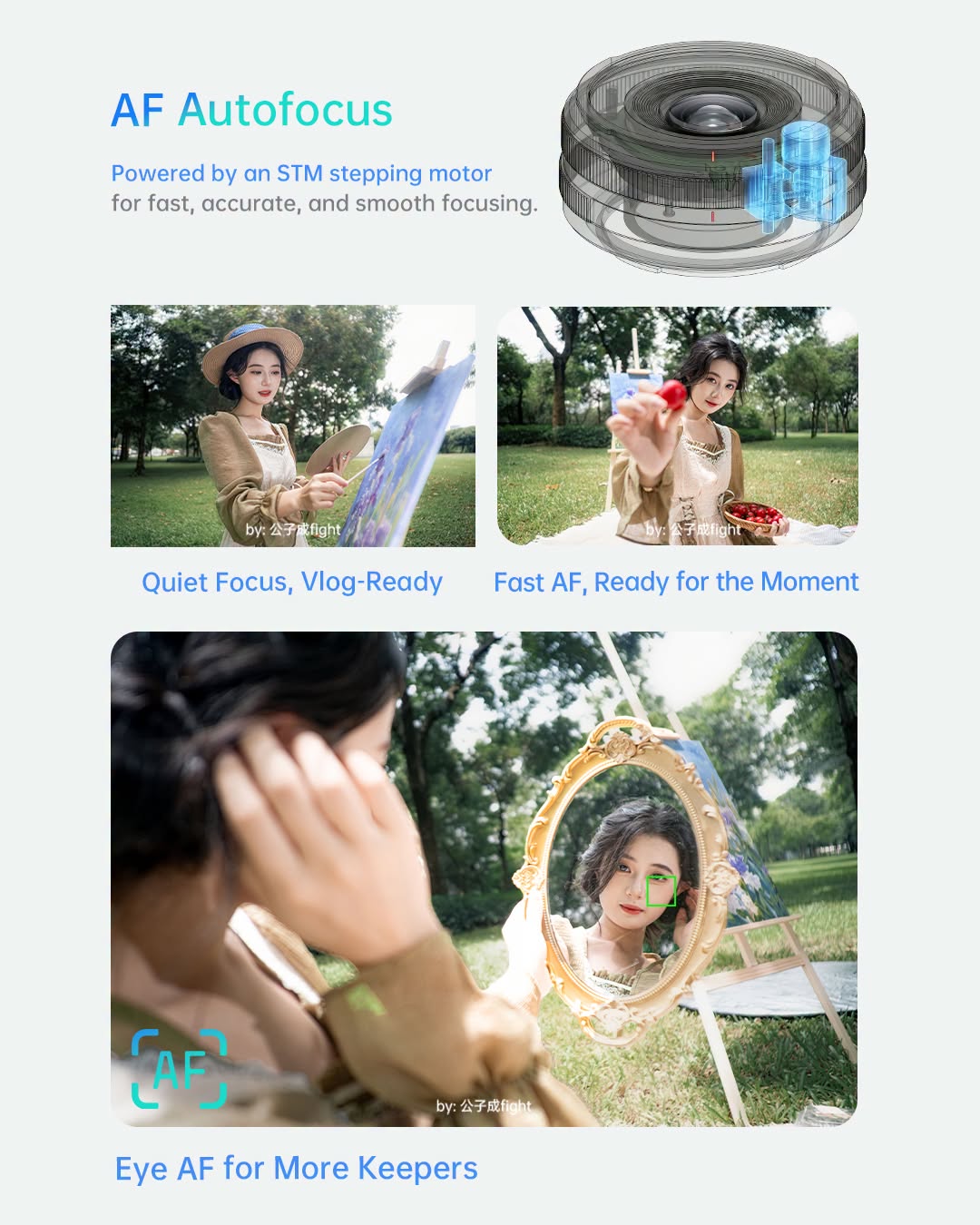
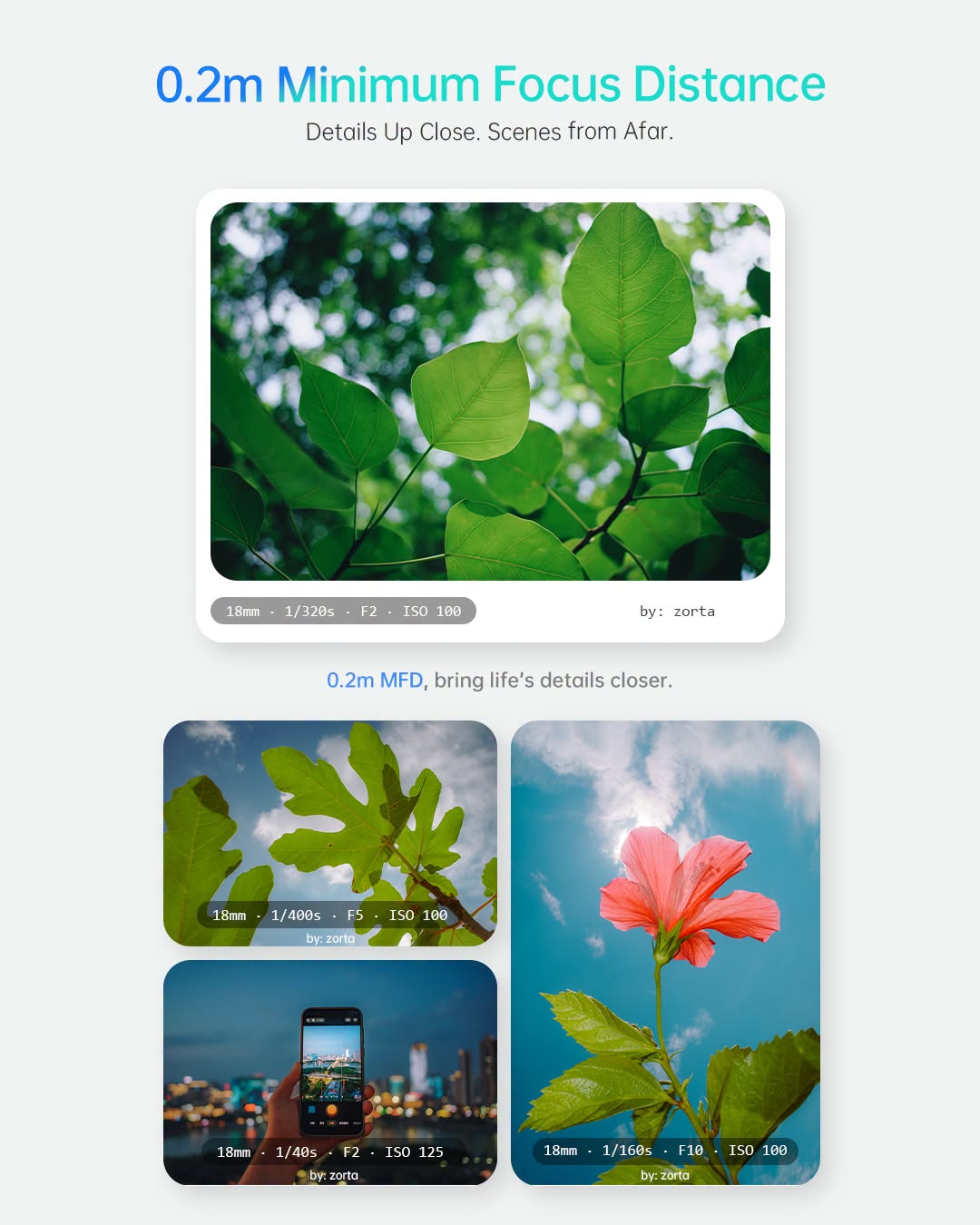
7Artisans says the lens’s stepping motor delivers fast, quiet autofocus suited to both photo and video. It can focus as close as 0.2m (7.9″). The lens features a fast F2.0 aperture and a nine-blade diaphragm.
The optical design comprises nine elements in seven groups, including one extra-low dispersion element and one high-refractive index lens. It’s compatible with 52mm filters.
About the Author: Abby Ferguson holds an MFA in photography and blends a fine-art background with extensive editorial and commercial experience. She built and led an in-house imaging program for a large vacation rental company and has served as an associate editor at Popular Photography. She also teaches at a local community college and serves on its Photographic Technology Program Advisory Board, sharing her knowledge and enthusiasm for the medium.
Want to stay up to date on the latest product news and releases? Add DPReview as a preferred source to ensure our independent journalism makes it to the top of your Google search results.
A new physical mode dial gives photographers four analog creative effects without requiring a phone or app.
When you use DPReview links to buy products, the site may earn a commission.
Polaroid has announced its latest take on instant photography with the Polaroid Mod. The camera offers four in-camera creative modes, with the company’s press release describing it as “designed for creative people who want to do more than point and shoot, without needing to be an expert behind the camera.”
The creative modes – Split Shot, Double Exposure, Motion Freeze and Light Painting – are the standout features of the Polaroid Mod. Double exposure and light painting were previously available through Polaroid’s app, but the Mod provides access directly from the camera’s mode dial, making them easier to use.
Split Shot uses an included half-lens cap accessory to combine two non-overlapping photos in a single frame.Polaroid
“With Mod, we wanted the creative experience to be built into the physical design of the camera,” says Stine Bauer Dahlberg, Chief Product Officer at Polaroid, in the press release. “We wanted the camera itself to encourage you to try something different every time you pick it up.”
Double Exposure allows users to expose the same frame twice, creating overlapping images. Split Shot also involves two photographs in one frame, but it requires an included accessory that blocks half the lens. It allows users to combine two photos without overlap, provided the half-lens cap is rotated appropriately.
Motion Freeze uses a longer exposure with a flash fired at the end (a rear-curtain sync technique) to combine motion blur with a sharp subject. Lastly, Light Painting is simply a long exposure to capture trails of light.
The mode dial also offers an auto mode for more straightforward instant images. Like Polaroid’s other cameras, the camera features a brightness dial to adjust exposure.
The Mod features a brightness dial for adjusting exposure.Polaroid
In terms of general camera specifics, the Mod shares a lot in common with the Polaroid Now+ Gen 2 camera. It uses a two-lens system with a 94.96mm (roughly 35mm equiv.) close-up lens and a 102.35mm (roughly 40mm) distance lens. The camera automatically switches between the two: the close-up lens focuses from 0.40m to 1.3m (1.3 to 4.3 feet), while the distance lens covers 1.0m to infinity (3.3 feet to infinity).
Polaroid lists six usable apertures ranging from F11 to F64 and a custom shutter driven by a precision step motor, though it has not published the shutter-speed range. It also has a built-in flash powered by a vacuum discharge tube strobe system.
Polaroid
The Mod is compatible with i-Type and 600 film. It uses a rechargeable lithium-ion battery with USB-C charging. The camera measures 161.7 x 110.2 x 98mm (6.37 x 4.34 x 3.86″) and weighs 520g (18.34 oz), making it slightly larger and heavier than the Now+ Gen 2.
The Polaroid Mod is available through the Polaroid website as of September 29 for $170. It will be available through other retailers in the US starting on October 6, with global availability early 2027.
About the Author: Abby Ferguson holds an MFA in photography and blends a fine-art background with extensive editorial and commercial experience. She built and led an in-house imaging program for a large vacation rental company and has served as an associate editor at Popular Photography. She also teaches at a local community college and serves on its Photographic Technology Program Advisory Board, sharing her knowledge and enthusiasm for the medium.
Want to stay up to date on the latest product news and releases? Add DPReview as a preferred source to ensure our independent journalism makes it to the top of your Google search results.
The update collapses three separate workflows into a single non-linear environment — a shift that’s about to change how busy photographers structure their post-production day.
Imagen
A wedding photographer coming off a busy season can have over 20,000 photos waiting to be worked through, and until now, no matter how far along a shoot was, everything ran through the same fixed order before anything could ship. Imagen’s Intelligent Studio removes that constraint, letting photographers work however the project calls for it, eliminating the round-trip to Lightroom that has defined AI-assisted workflows until now. The update rolls out inside the existing Imagen product in stages starting September 29, 2026. Here’s what to know about Imagen’s newest experience.
A full editor, built in
Imagen
The biggest day-to-day addition is a full manual editor, giving photographers the same depth of control they’d get from a dedicated editing program without ever leaving Imagen. It supports RAW and JPEG files and includes a comprehensive set of adjustment panels: Basic, Curves (freehand RGB and parametric), HSL across eight color ranges, Point color for up to eight colors per photo, Color grading, Detail (sharpening and noise reduction), Lens corrections, Geometry, Effects (vignette and film grain), and Calibration. It also includes masks and presets. Photographers who have relied on Lightroom solely because Imagen lacked a manual editing layer now have the option to stay inside a single application.
One workflow consideration worth noting: photos edited inside Imagen’s built-in editor are not synced back as Lightroom-compatible files. Imagen is clear that Intelligent Studio is not positioned as a Lightroom replacement, and photographers can continue using both tools in tandem.
The Assistant and what it does
Imagen
A plain-language Assistant lets photographers issue a single prompt to search, select, and adjust images at the same time. This is where Intelligent Studio changes the math on a photographer’s day: work that used to mean finding the right photos, selecting them, applying an edit, and checking the result, now happens with a single request. At launch, it covers five prompt categories: culling and selection, look and feel, conditional edits, workflow and studio and diagnostic tasks.
The intent is to compress what would otherwise be several discrete steps into one instruction. For example, rather than identifying and then editing images based on a specific set of criteria, you can prompt the Assistant to do things like “Denoise all images with ISO above 2000,” or “Apply Portra400 to outdoor photos, Fuji800 to indoor photos for groups with more than 10 people,” and it will process them automatically. The value here isn’t speed, it’s translation. A photographer already knows exactly which photos need what, the Assistant just lets them say it instead of clicking through it.
How pricing changes
Imagen
Intelligent Studio shifts Imagen to export-based pricing: photographers pay for images they export rather than at the moment an AI tool is applied. Two plans are available — Pay-As-You-Go, which carries a $7 monthly minimum plus usage-based charges, and Limitless, a flat monthly rate. The change makes the non-linear workflow practical in the first place: a photographer can cull and experiment with AI edits without accruing charges on images that never leave the application.
What’s on the roadmap
Imagen has a busy pipeline of improvements planned beyond the launch release, and sees this as a starting point rather than a finished product. The company is working toward AI that doesn’t just execute instructions but knows a photographer’s eye well enough to anticipate them, flagging what needs attention before being asked and applying an edit the way that specific photographer would want it.
Real-time AI profile application is a stated future goal, replacing the short processing time currently required when applying an additional AI profile mid-edit. A proprietary Editor model that learns directly from how a photographer works inside Intelligent Studio is also in development. AI filters such as key people detection and indoor/outdoor recognition are also coming, along with proactive insights and expanded AI filters.
The company says existing standards like Content Credentials aren’t good enough, so it made its own.
Apple
Alongside the addition of a variable aperture and manual controls, Apple introduced an interesting feature to the iPhone 18 Pro: it’s called Reference Image, and is designed to prove that a photo wasn’t altered at any point after the photons hit the sensor.
This system, which currently only works on the iPhone 18 Pro and Pro Max’s main camera, is a distinct mode in the camera app and is aimed primarily at journalists. It tries to overcome several technical hurdles to ensure that both the data as captured by the sensor and the processed result of that data, can be tied back to a specific device within a narrow period of time. In other words, it tries to authenticate both the Raw and the processing that turns it into a viewable image.
Reference mode isn’t enabled by default; you first have to set it up before it’s shown as an option in the camera app.Dale Baskin
Apple isn’t the first company to try to solve this problem. A coalition of companies, including Adobe and several major camera manufacturers, has thrown its weight behind Content Credentials, another system designed to be able to prove that an image is what it claims to be in the age of wholesale AI image generation and assisted editing.
While we’ve written extensively about Content Credentials, Apple has characteristically taken a completely new approach with its own system. So why has it invented its own tech, rather than using the existing standard that some of its competitors have adopted, and how does it work?
What problems is Apple trying to solve?
Apple says it designed the Reference Image system to meet three requirements:
The resulting image “must faithfully show what the sensor captured,” and you can verify both the Raw capture and the process that turned the raw data captured into a viewable photo
A false image created via tampering with the sensor, cryptographic software or phone’s OS will fail the verification process. If it’s later discovered that the system verified an image it shouldn’t have, the certificate marking it as authentic must be able to be revoked.
The images can’t reveal who took them, or whether the same device took any two images. Apple shouldn’t be able to tell what’s in the image when it’s signing it.
The company argues that existing systems like Content Credentials don’t meet these standards. Part of that is because they have different goals; one of the explicit appeals of Content Credentials is that it lets you bake image attribution into the file in a way that’s hard to remove. But Apple also argues that adding a credential after the image is created, as Content Credentials does, leaves space for bad actors to create false images and then sign them as authentic (something that one of our forum members was able to demonstrate with the implementation in the Nikon Z6III).
The system looks to be incredibly robust, which is unsurprising given the level of attacks Apple’s devices have to defend against. (It basically has to assume its systems will be tested by the full capabilities of a hostile government.) It’s built to protect against verifying images made by feeding fake data to the sensor itself through its electrical contacts or by removing it from the phone, and from quantum computers being used to break its encryption, something Apple says no other image provenance systems do. The company says this is to make sure the images are verifiable far into the future; traditional encryption algorithms can withstand most kind of attacks, but because quantum computers work fundamentally differently from the computers they were designed for, they can easily crack them.
What does taking a reference image look like?
The high-level overview is that the phone isn’t always taking Reference Images. You have to purposefully switch to taking them in the camera app, which will reboot the sensor into a special mode. So far, this is only available on the iPhone 18 Pro or Pro Max’s main camera – either in 1x or 2x mode, though not night mode since it appears to only use a single exposure – as it’s a hardware-based feature. Even then, it isn’t available in the EU or China (likely due to its reliance on Apple’s Private Cloud Compute service, which we’ll cover shortly).
Before you can see the Reference Image you have to “develop” it (shown on the left), a process that takes a few seconds and which involves sending the photo to Apple’s servers. After you’ve done so, you can see the image along with data that Apple verifies to be accurate.Dale Baskin
After you take a reference image, you then have to choose to “develop” it before you’re able to view or share it. You can share the developed HEIC file as a normal photo, viewable by anyone, or as a special reference image that, currently, can only be viewed using an Apple device running its latest software. The person receiving it will be able to see a version with any edits you’ve made, as well as what the camera originally captured, and the interface can even highlight the differences. It will also show verified metadata, such as when the photo was captured. This does, however, rely on them using Apple software on Apple hardware: otherwise, it’ll just render like a normal HEIC.
How does a Reference Image work?
Apple’s document on the technical details of the Reference Image system is, unsurprisingly, pretty complex, so I’ll try to explain it in a way that will make sense to most people.
The process for creating a reference image starts at the factory, when the phone’s sensor and security chip are tied together in a way that Apple can check later, to confirm that the two actually worked together to create and secure the data that it’s interpreting as a photo.
Selecting the ‘Reference’ mode in the iPhone’s camera app boots the sensor into a different mode.Dale Baskin
When you switch to the camera’s Reference Image mode, it reboots the sensor into a secure mode that basically ignores what the operating system is doing, except for receiving a “digest” that contains a securely computed timestamp range and some identifying information for the device and its security chip. The sensor then collects light and digitizes it into data (as cameras tend to do). It then cryptographically signs it before sending it off the chip. This basically means that the raw data the camera captured can’t be changed by the sensor firmware, phone’s processor, operating system or anything else. Otherwise, the signature created by the sensor won’t match the signature produced by the data, and the system could tell something was wrong. The secure metadata, including what time the photo was taken, is also included in that package, before it’s handed back to the OS for storage
This leaves you with what Apple calls a “secure digital negative,” stored as a DNG Raw file, which you can edit and share like normal if need be. However, to make it a Reference Image, you need to then be able to trust the process that turns that “negative” into a viewable file, as the raw data from the image sensor isn’t actually an image. Even when opening a Raw file on your computer, what you’re actually seeing is that data processed in several ways, like demosaicing to interpret color, lens corrections and the application of a tone curve. You are seeing your program’s interpretation of the Raw, not the data itself (which is why it may look different from program to program).
After you’ve taken the picture, you can choose to “develop” it
This is where the second part of the system comes in. After you’ve taken the picture, you can choose to “develop” it into a Reference Image (something that doesn’t happen automatically, and which requires an internet connection). When you do, that “digital negative” is sent to Apple’s Private Cloud Compute servers, which will then recompute the “digest” containing the timestamp and data from the phone and its security chip, ensure the certificate matches the raw data and that it was actually issued by the sensor. It checks a few other things too, making sure that the sensor and the security chip haven’t been altered since they left the factory.
Apple says it takes great pains to ensure that the timestamp attached to the image is accurate. Rather than using on the device’s clock, your phone routinely gets cryptographically-signed timestamps from Apple’s servers, which it uses to create a window of time that the image must’ve been taken in, based on the timestamp it received before it was taken, and the next one it received, after. (Apple says this happens on average every 15 minutes, though it’ll depend on network connectivity; it can also account for phones that are offline for long periods of time).
After the Private Cloud Compute service has checked over all the certificates, it creates what’s called a confidence score for the image, which decides how likely it is that it is a real photograph based on how well the data matches “physical characteristics expected of raw output from our sensors.” It then turns the Raw into a JPEG before “hashing” it, creating a signature that ensures that the rest of the development process won’t change it, and to identify any subsequent changes that occur after the image is returned to the user.
Apple keeps a running tally of the confidence scores attached to the images submitted by each sensor
The JPEG’s unique identifier, the hash for its Raw, the confidence score and the sensor’s ID, though not the JPEG itself, are sent to a separate service, which checks a few things. Most importantly, it makes sure the image wasn’t created by a sensor that’s been added to a revocation list for having uploaded fake or suspect data. Apple keeps a running tally of the confidence scores attached to the images submitted by each sensor; if that number gets low enough, indicating that something suspicious is happening with that device’s reference images, the Private Cloud Compute service will never sign pictures from it again.
If everything checks out, though, the service signs the JPEG with Apple’s signature, letting everyone know that it passes the company’s technical checks. Importantly, this replaces the photographer in the chain of trust: the company says the system intentionally doesn’t provide a way to identify who took a reference image, to the point where you can’t even use it to tell if two photos were taken by the same phone. It only tells you that Apple can attest to it being unaltered from the point of capture. The Private Cloud Compute server then sends the JPEG, packaged as a HEIC, back to the phone, and moves the “digital negative” to the trash, for deletion after 30 days (though you can tell it not to delete it within that timespan if you want).
Whenever you go to view that image on a supported device, using supported software, it’ll check to make sure it still has the signature, and that Apple’s system hasn’t retroactively revoked it. From there, you’re able to make edits to it, though the end user will be able to see the original, provided you share the Reference Image HEIC, rather than an exported JPEG.
In Apple we trust?
With the Reference Image system, Apple seems to have decided that the development part of the process has to be done on its servers, rather than on-device, to be secure.Apple
As with most security standards, whether or not you believe an Apple Reference Image is a source of truth*will require putting some amount of faith in the company. The company has a relatively solid track record when it comes to security and cryptography, so it’s not implausible that it could implement a system like this, and Apple says the Private Cloud Compute software that turns those into viewable photos is publicly auditable. Of course, if you’re not a security and cryptography expert, you will have to trust researchers to actually do that work and communicate that it is, in fact, safe.
To me, the real act of faith won’t be in deciding whether the pictures Apple certifies are genuine. It’s trusting the company to never revoke a certificate of a legitimately-captured image for any reason, something that it appears to have the power to do. I also have to assume the system will occasionally get it wrong, either signing an image that shouldn’t have been signed, or not signing one that should, and the test will be how Apple reacts in such situations. Or, indeed, whether it bothers to continue operating the service indefinitely, irrespective of profitability and take-up.
Notably, the Reference Image feature isn’t available in China. It’s also not immediately launching in the EU – Apple is currently in a spat with the bloc over how much privilege it gives its own services on iOS – but the company has at least promised that it’ll bring the feature to the EU at some point in the future.
The chicken and the apple
Most of us likely won’t need to capture images that have a provable chain of trust that links all the way back to the sensor using our phones. But even if you do, and you have the technology to do so, will that make people believe it?Mitchell Clark
I’d like to leave you with a few parting thoughts. While there is undoubtedly use for pictures that are in some ways verifiable – especially as journalistic institutions change, and as news is increasingly captured on phones, both by professionals and everyday people – it’s also worth considering how much that can actually move the needle.
We live in a relatively low-trust environment, where large groups of people can’t agree on even relatively basic facts. (Calling topics “debated” would be giving too much credit; debate implies people are willing to change their minds based on evidence presented.) While people not being able to trust images is certainly a problem, especially at scale, there are a lot of examples of hard evidence being ignored because it’s inconvenient.
This is, frankly, not really a problem that Apple can even solve, no matter what technical expertise it brings to bear. I also shudder to think of us handing over that responsibility to a private company, more than we already have. But I also think that it’ll be hard to get back to a place where images are trustworthy again, because it’s a chicken and egg problem: you can’t rely on things like Reference Image or Content Credentials as an indicator of whether an image is fake or not until most or all of the real images you see have them attached. Sure, they can “prove” an image is authentic, but with their limited market penetration, they’re currently not very useful in spotting fakes.
Even if you could flip a switch today and have every picture taken on an iPhone be easily verifiable on any platform where they’re displayed (something that’s currently absolutely not true of the much more widely-adopted Content Credentials), it would probably still require sweeping social changes for that to actually matter. Again, though, that’s not really within Apple’s control. But as things stand, there’s at least one more tool that journalists and citizens can use to try to prove that their images are authentic… assuming the viewing public trusts the system, and that those trying to verify the image own enough new Apple products to do so.
* As much as any photograph can be. Pictures can depict what happened in a moment, but you still have to trust that the photographer or person or organization sharing the image are being honest about the context surrounding it.
About the Author: Mitchell started taking pictures at 10 and hasn’t stopped since. It’s been a wide-ranging adventure, spanning a wide variety of genres and locales, and occasionally dipping into fascinations with video and filmmaking. They honed their technical knowledge doing documentation, programing and QA, writing for The Verge, and just generally messing around on the computer to see what breaks.
Want to stay up to date on the latest product news and releases? Add DPReview as a preferred source to ensure our independent journalism makes it to the top of your Google search results.
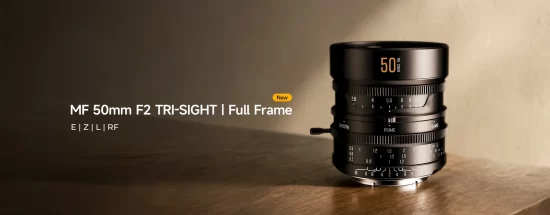
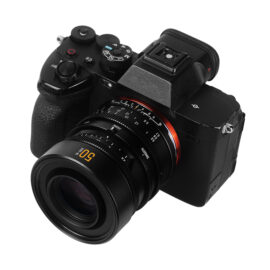
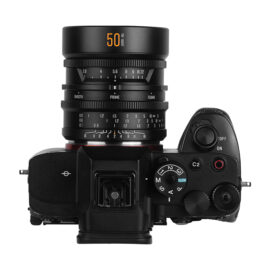
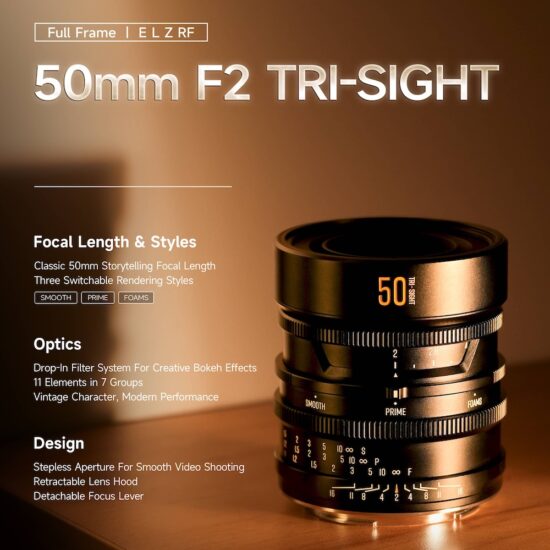
The previously reported Brightin Star 50mm f/2 TRI-SIGHT manual focus lens for E/RF/Z/L mount is now officially announced. The new full-frame 50mm lens has three unique focusing modes:
This summer, Viltrox released the AF 26mm F2.8 Evo, a pancake-style full-frame lens that aims to be an excellent everyday carry option. I’ve had the chance to spend some time shooting with it in a variety of conditions, and have a surprising number of thoughts on it given how relatively simple it seems.
Optics with character
Despite my concerns about focus, I ended up being pleasantly surprised by how sharp this lens is in the center given the size, weight and price. It won’t win any awards, and you’ll definitely want to stop down for best results (especially at the edges), but again, for what it is I was quite pleased with the results I got. Vignetting is also quite well-controlled, even at F2.8.
The lens shows some longitudinal chromatic aberration in relatively harsh lighting, but again, it’s a pretty decent performance for this category of lens. There’s what I’d call a low-to-medium amount of barrel distortion, too, which Viltrox corrects for with a software profile, but it’s not to the point where we’d say that the software profile is mandatory if you’d rather not, or can’t, use it.
Nikon Z8 | Viltrox AF 26mm F2.8 | F2.8 | 1/30 sec | ISO 64Mitchell Clark
I appreciated the 26mm F2.8’s close-focusing abilities – it’s nice to see that manufacturers are really paying attention to those these days – and I found its bokeh to be inoffensive. It’s not the cleanest ever, but I’m also not typically using a 26mm lens to get the blurriest backgrounds.
This is all relatively standard fare for a prime these days, so what makes me say it has a lot of character? It’s the flare, because wow is there ever a lot of it. If there’s a bright light source just outside of frame, expect the image to look fairly washed-out. The included lens hood (which reduces the lens’s size advantage, though, admittedly, not by much) helps a little, but the effect is still quite strong.
Wow. Nikon Z8 | Viltrox AF 26mm F2.8 Evo | F2.8 | 1/30 sec | ISO 640
Point light sources in the frame will also produce relatively large streaks of light, in a way that I haven’t seen in a lens for a while, outside of ones explicitly designed to produce that effect. I personally think it’s neat and don’t mind it on a lens that I’d mainly use for fun, but it and the flare are intense enough that I would absolutely think twice before trying to use this lens for a professional shoot, especially if it took place at night. Frankly, I’m a little confused why Viltrox used its “Evo” branding on this lens, as I typically associate it with an impressive level of image quality that this doesn’t quite deliver on.
The shooting experience
While our lens testing standards meant that I exclusively used this lens paired with a relatively hefty Nikon Z8, I still found myself being delighted with this lens’ small size. Paired with a smaller camera, like a Nikon Zf or Z5IIC or a Sony a7C-series, it would make for an impressively small full-frame kit.
Mitchell Clark
Despite its size, the lens has two rings: one for manual focus and a clicked one for aperture. I did, however, find the latter to be a bit touchy, and I ended up with a lot of shots at aperture settings that were 1/3EV off from what I was aiming for. Thankfully, it has an “A” position that hands over control to the camera, which I found useful for times when I was constantly putting it back in a bag.
If you’ve seen our unboxing video for this lens, you’ll know that I was extremely excited upon discovering that it has a magnetic lens cap, which is very easy to remove and, perhaps more importantly, to put back on. After a few months of use, my enthusiasm remains, and it’s something I’d like to see on more lenses. It’s not entirely perfect – I found it was a bit more eager to detach than a traditional pinch design when I was taking my camera out of a bag or putting it back in – but I found myself being much more willing to use it because of the lack of fiddliness in putting it on and taking it off.
The focusing experience with this lens wasn’t my favorite, even compared to other Viltrox lenses I’ve used for Z-mount. It has a unit focus that physically moves in and out as you go from close to infinity, and it’s not particularly quick. While I had a decent hit rate with it, it wasn’t particularly confidence-inspiring in the moment; even a slight move of the autofocus point often led to the lens dramatically changing focus, making the whole scene soft before slowly bringing it back into focus.
This experience isn’t uncommon among pancake lenses, but it’s worth keeping in mind, depending on what you wish to shoot with this lens.
The manual focus experience also isn’t lovely. Given its size, the ring is relatively easy to manipulate, but there was a touch of lag between when I turned it and when the focus actually changed, which led to me frequently overshooting my intended subject. There also isn’t much fine-grained control once you get near infinity, which changes happening in chunks, instead of smoothly.
Summary
I don’t want to come across as being too harsh on this lens. While its $299 price tag may be a bit more than the rock-bottom prices some buyers may be accustomed to from Viltrox, it still seems fair to me given what this lens offers, especially to fans of the 26mm focal length. Pancake lenses often come with sacrifices, and this one is no exception, but the Nikon and Sony lenses it’s competing with cost substantially more… though there are, perhaps, more reasons to choose the own-brand versions over the Viltrox than we’re used to seeing from the brand.
Please do not reproduce any of these images on a website or any newsletter/magazine without prior permission (see our copyright page). We make the originals available for private users to download to their own machines for personal examination or printing; we do so in good faith, so please don’t abuse it.
Loading gallery…
Thanks to Nikon for the loan of a Z8 to produce this sample gallery. All images were processed using our standard lens workflow in Capture One, with the manufacturer’s distortion correction applied but no correction of vignetting. The profile corrects a fair amount of barrel distortion, but we don’t consider it an essential part of the lens’s optical design.
About the Author: Mitchell started taking pictures at 10 and hasn’t stopped since. It’s been a wide-ranging adventure, spanning a wide variety of genres and locales, and occasionally dipping into fascinations with video and filmmaking. They honed their technical knowledge doing documentation, programing and QA, writing for The Verge, and just generally messing around on the computer to see what breaks.
Want to stay up to date on the latest product news and releases? Add DPReview as a preferred source to ensure our independent journalism makes it to the top of your Google search results.
Today in Photography goes beyond the headlines with original stories, insider updates and inspiration you won’t find on the site.
DPreview
A few months ago, we quietly launched Today in Photography, a new version of DPReview’s weekly email for anyone who wants to keep up with the photo world. It also marked a return to one of the site’s early ideas: our newsletter dates back to 1999, and past versions included more than just links to the latest stories.
Now, we’re excited to announce that we are expanding to twice a week, arriving in your inbox every Sunday and Wednesday, with original content you won’t find on the website.
Today in Photography includes far more than just a roundup of stories already on DPReview. It features a wide selection of newsletter-only material we’re creating specifically for subscribers: a personal note from the editor, behind-the-scenes looks at what our team is testing, inspiring photos and posts we spot on social media, standout images and quotes from the DPReview community, photography history and more.
You may also find quick newsletter-specific photo challenges, accessory reviews, reader polls, firmware and software update roundups, camera and imaging tech explainers, photography tips, upcoming photo opportunities, deals, quizzes, culture picks and occasional reader Q&As with the DPReview team. In other words, there’s a lot to check out in each edition of Today in Photography.
We still cover the latest articles and biggest industry news, but Today in Photography is a chance to step beyond the homepage, with interesting, useful and fun parts of photography that don’t always make it into a full article.
If that sounds like your kind of email, sign up for Today in Photography at the link below to keep up with what’s happening at DPReview and across the photography world, plus plenty you won’t find on the site. We’d love to have you join us.
About the Author: Abby Ferguson holds an MFA in photography and blends a fine-art background with extensive editorial and commercial experience. She built and led an in-house imaging program for a large vacation rental company and has served as an associate editor at Popular Photography. She also teaches at a local community college and serves on its Photographic Technology Program Advisory Board, sharing her knowledge and enthusiasm for the medium.
Want to stay up to date on the latest product news and releases? Add DPReview as a preferred source to ensure our independent journalism makes it to the top of your Google search results.

 Connexion