When you use DPReview links to buy products, the site may earn a commission.
We've reached the end of a week jam-packed with announcements from Canon, Sony, Panasonic and others. There's actually so much camera news that it'd be hard to cover it all in a single discussion, so in this video the DPReview crew is talking about the Sony a7R VI and FE 100-400mm F4.5 GM OSS, and the Canon EOS R6 V and its kit 20-50mm F4 L IS USM PZ lens.
For those who want to hear our thoughts on the Panasonic L10, stay tuned; we'll have an episode coming soon talking about our feelings on it, after we've had some time to form our impressions.
When you use DPReview links to buy products, the site may earn a commission.
Photo: Mitchell Clark
With its use of the latest AF algorithms and its ability to shoot at 30 frames per second, the new Sony a7R VI looks a lot like a higher-resolution, more affordable rival to the company's own a1 II, pro sports model.
However, having dug a little deeper and taken it pitchside to shoot some sports, that's not the reality at all.
On paper, both the a1 II and the a7R VI are high-resolution cameras with Stacked CMOS sensors that shoot at up to 30 frames per second. But, even though the a7R VI has a pretty deep buffer and accepts the same memory cards as the a1 II, out in the real world, the difference is pronounced.
In the real world, the difference is pronounced
Much of the difference comes from the fact that Stacked CMOS sensors aren't all the same. Sony's a1 and a9 series cameras' sensors have DRAM built into the back of their sensors to buffer the large amount of data that's coming off their chips. Meanwhile, from what we've heard, Nikon's sensors have the circuitry for dual readout streams: one for high quality image data and the other to minimize viewfinder latency.
The a7R VI's sensor's second layer is described as 'processing circuitry,' which we suspect includes its ability to merge the data from the low and high gain modes of its pixels, underpinning its higher DR. So, while the a7R VI's readout is quick, especially when compared with its predecessor's, it's not as rapid as the Nikon Z8, Canon EOS R5 II or the Sony a1 II.
The view from the sidelines
In practice you encounter the speed difference in a number of areas. With pre-capture mode engaged, in an attempt to compensate for our non-pro reaction times, we noticed the a7R VI developed a distinct lag or choppyness to its viewfinder refresh that isn't present in the a1 II.
Autofocus
We also noticed that the autofocus performance didn't quite seem as immediate or dependable as when we took the a1 II to a rugby game, as part of our review testing. It's still very good, but good for a high res camera, rather than giving the 'I have no doubt this is the best they can deliver' confidence that using a top-end, sports-focused camera can give.
In our briefing with Sony, we were told the a7R VI is able to conduct autofocus and autoexposure calculations at "up to 60 times per second," whereas the a1 II can conduct twice as many. The 60 vs 120fps distinction might account for some of the autofocus differences we experienced when really pushing the camera, but the phrase "up to" seems pertinent, too. Given the a7R VI takes 1/50th of a second to read out each frame in e-shutter mode, we suspect it can't maintain 60fps updates to the AF system in pre-capture mode, because it's trying to capture full-res images at the same time.
Rolling shutter
The a7R VI's rolling shutter is around five times faster than its predecessor but still about 5 times slower than the a1 II. Panning to follow the action was enough to induce visible distortion.
Sony a7R VI | FE 100-400mm F4.5 GM | F4.5 | 1/800 sec | ISO3200 Photo: Richard Butler
In addition, the significantly slower rolling shutter of the a7R VI, compared with the a1 II starts to make itself apparent in some of the actions shots we took. For most work, a sub-20ms (1/50 sec) readout speed is quick enough not to be a problem, but photographing a sport that can feature plenty of fast lateral motion means that panning the camera to follow the action can result in some recognizably warped images.
The camera can go a little faster than this if you shoot JPEG only and/or lossy Compressed Raw, where the sensor readout appears to drop to a lower bit-depth mode and the shutter rate improves a little to 14ms (∼1/70 sec).
Hardware differences
Dig deeper into the a1 II's specs and you start to find other distinctions, such as the provision of an Ethernet port for rapid offload of images, which some pro sports applications require. Likewise the a7R VI lacks the a1 II's comfier grip and front-mounted custom button, which makes the Speed Boost function that both models share, much easier to use in conjunction with back-button focus.
The a7R VI doesn't have a C5 button on its front plate, as the a1 II (pictured) does. This is well placed for activating the Speed Boost function, when you're already using your index finger on the shutter and thumb back-button focusing.
Photo: Mitchell Clark
Then there are the a1 II's locking drive/burst mode and AF mode dials, which the a7R VI lacks, relagating those settings to the menus. Little differences that add up if you only have a couple of seconds to adjust your camera's setup. And they're the differences that professionals have requested and that explain why Sony charges unapologetically pro prices for the a1 II.
Overall, these performance difference added up to make clear why Sony doesn't list sports as one of the intended uses of the a7R VI. Instead its newfound speed is designed to expand from its studio and landscape hinterland, reinforce its credentials for weddings and events, and lend itself to some wildlife work. But Sony isn't omitting sports from the list just to protect a1 II sales.
Then again, it's no criticism of what isn't supposed to be a sports photography model that it can't match up to Sony's $7000 pro sports camera.
As the saying goes, money can't buy happiness. That logic tracks in photography, too: the latest gear does not make an excellent photographer. Or, in Alli Forsythe's case, it might not provide the creative drive to inspire work that truly excites you.
In our latest episode of ISO: Camera Upgrades on a Budget, produced in partnership with MPB, Forsythe decided that her kit, owing to her professional relationship with Nikon, was pretty much perfect. So rather than chasing the next upgrade in search of creative inspiration – a futile pursuit, she realized – she decided to inject a new challenge into her workflow instead.
Forsythe had always been captivated by the cinematic look anamorphic lenses create in videos, so she devised an experiment: what would it be like to shoot a series of still photos on anamorphic?
After poking around the DPReview archives, Forsythe identified a set of Sirui lenses before jumping to MPB to trade in some of her lesser-used glass and offset the cost of the anamorphics.
Check out the video above to see the results.
If you have gear collecting dust on a shelf or you're simply looking for something new-to-you, head over to MPB to upgrade your kit today.
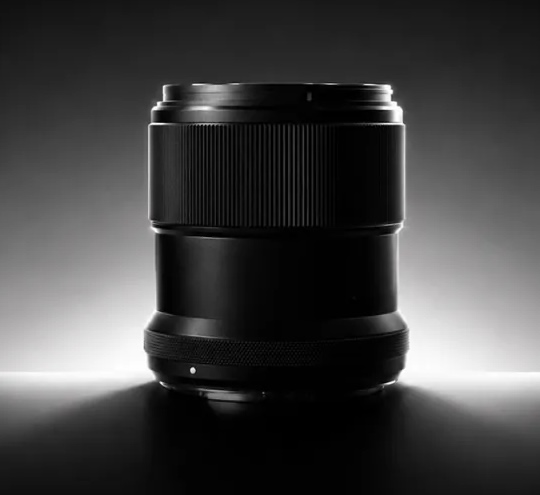
JC Optics will release a new 400mm f/8 full-frame telephoto manual focus lens with adjustable focus damping, featuring a 3-element, 2-group optical design and a minimum focusing distance of 100cm, and designed for E/Z/F/RF/EF/EF-M/X/MFT mounts (all-metal mount).

 Connexion