Vue lecture

Nikon lost the patent lawsuit against Viltrox in China


Nikon has lost the patent lawsuit against Viltrox in China. Nikon’s Chinese Z-mount patent (202010127062.4) was declared fully invalid by CNIPA (see previous coverage of the Nikon vs. Viltrox lawsuit). The full court ruling can be found here. The documents are in Chinese – here is the AI recap:

Case Overview

  • Patent in Question: Chinese Invention Patent No. 202010127062.4, titled “Accessory” (配件).
  • Patentee: Nikon Corporation (株式会社尼康).
  • Patent Type: This is a divisional application with a parent application (201811247662.3), both filed on October 25, 2018, with a priority date of October 26, 2017.
  • Invalidation Petitioner: Shenzhen Jueying Technology Co., Ltd. (深圳市爵影科技有限公司).
  • Outcome: The CNIPA declared the patent entirely invalid in its decision (Decision No. 661357) dated July 13, 2026.

Chronological Summary of Events

  1. Initial Challenge (December 2025): The petitioner filed a request for invalidation on December 16, 2025, arguing that claims 1-11 were unclear and not supported by the description (Article 26.4 of the Patent Law).
  2. Supplemental Arguments (December 2025 & January 2026): The petitioner supplemented their arguments, adding reasons related to lack of novelty and inventive step, lack of priority entitlement, and added subject matter. They submitted several pieces of prior art (US2016/0041453A1, CN103620496A, JP2000047308A) as evidence.
  3. Patentee’s Amendment (February 2026): Nikon modified the claims. They merged features from original dependent claims 4 and 7 into independent claims 1 and 2. The final claim set was reduced from 11 to 10 claims.
  4. Oral Hearing (May 15, 2026): An oral hearing was held. Key clarifications were made:
    • The petitioner withdrew their arguments regarding the right of priority.
    • The panel confirmed the amended claims (1-10) as the basis for the decision.
    • Both parties agreed on the authenticity of the prior art documents submitted.
  5. Final Decision (July 13, 2026): The panel issued its decision to declare the patent invalid based on a lack of inventive step (Article 22.3 of the Patent Law).

Key Arguments and Reasoning

The main independent claims (1 and 2) define a lens accessory with four protrusions (第1-第4配件侧突出部) that engage with corresponding protrusions on a camera body’s mount. Key features added by the amendment include:

  • Specifying that the length of the 2nd protrusion is shorter than the distance between the two closest protrusions on the camera body.
  • Specifying that the center angle of the 2nd protrusion is smaller than the center angles of the 1st, 3rd, and 4th protrusions.

The Petitioner’s Argument (Lack of Inventive Step)

The petitioner argued that the claims were obvious in light of the prior art. The primary evidence used was:

  • Evidence 2 (CN103620496A): A camera body, lens barrel, and interchangeable lens system.
    • The panel found this document disclosed nearly all features of the “accessory,” including the lens mount, terminal groups, a cylindrical portion, and multiple protrusions.
    • The key differences were that the patent used four protrusions in a specific arrangement, while Evidence 2’s main embodiment used three.

The Panel’s Decision & Reasoning

The panel ruled that the claimed invention was obvious for the following reasons:

  • Number of Protrusions: Although Evidence 2 shows 3 protrusions, its description explicitly states that the number of protrusions can be “any number” (including four), providing a direct motivation to increase them.
  • Arrangement: Evidence 1 (US2016/0041453A1) and Evidence 3 (JP2000047308A) disclose interchangeable lenses with four or more protrusions arranged around the mount, providing a clear technical teaching for the claimed layout.
  • Preventing Mis-Insertion: The panel reasoned that even in Evidence 2, the different sizes of the protrusions inherently prevent incorrect insertion, making the patent’s solution a conventional design choice.
  • “Second Center Angle” Feature: The panel found the relationship between the center angles of the protrusions to be a routine design choice (a “limited experiment”) for a person skilled in the art, and the resulting effects (shock resistance, load-bearing) were predictable.
  • Terminal Protection: The arrangement of the protrusions relative to the terminal group was also deemed a predictable and conventional design to prevent damage.

The panel concluded that the modifications from three to four protrusions and their specific angular relationships were “obvious” (显而易见) and did not involve an inventive step. Therefore, all 10 amended claims were invalidated.

Final Verdict

The CNIPA invalidated all claims of Nikon’s patent (202010127062.4). The decision states that Nikon can appeal to the Beijing Intellectual Property Court within three months.


Via NikonRumors

The post Nikon lost the patent lawsuit against Viltrox in China appeared first on Photo Rumors.

  •  

Tamron just made its 25-200mm focus closer – no new glass required

The 25-200mm F2.8-5.6 is now much more usable when shooting close-up.

A Sony camera wit the Tamron 25-200mm F2.8-5.6 attached.Tamron

Tamron has released a firmware update for its 25-200mm F2.8-5.6 Di III VXD G2 lens that actually makes a noticeable change to its performance. The company says that now, when you’re shooting at focal lengths between 25-70mm, the lens’ maximum magnification ratio is greatly improved, letting you get much closer to your subject.

When the lens launch, Tamron said it could achieve approximately half-macro, or 1:2, reproduction at its widest end. However, as lens reviewer Dustin Abbot points out, shooting so close at 25mm has practical challenges, and can make it very difficult to get a well-lit photo. By the time you were shooting at 50mm, where you had a more reasonable working distance, the maximum reproduction ratio dropped to 1:3.1, or around 0.32x magnification.

Two images of a row of colored pencils, arranged vertically. The bottom one is zoomed in substantially closer, only showing the tips of eight pencils, where the top one shows 15.
Top: the lens’ previous maximum reproduction ratio of 1:3.1 at 50mm. Bottom: the lens’ new max. reproduction ratio of 1:1.7 at 50mm.
Tamron

This is where the firmware update comes in. At 35-50mm, the lens can now manage a ratio of 1:1.7, or 0.58x, which is a substantial improvement. Tamron also says that it will achieve at least 1:2 reproduction throughout the 25-70mm range. For those that like to get close to their subject, this makes and already versatile lens a lot more flexible.

It’s rather unusual to see a lens firmware update that noticeably changes how you can use the lens. It’s not entirely unique – we’ve seen Laowa launch a macro lens that couldn’t autofocus in its macro range, only to enable that functionality later via software – but it still remains among the more interesting bits of lens firmware news. Tamron’s press release doesn’t include any technical details on how the company was able to achieve this, but we’ve reached out to see if it can share any. We’ll update this story if we hear back.

The V3 firmware is available to download for free via Tamron’s Lens Utility software.

Press release:

TAMRON Firmware Update Enhances Close-Focusing Performance of the 25-200mm F/2.8-5.6 Di III VXD G2 (Model A075)

July 29, 2026, Commack, NY – TAMRON announces a new firmware update for the 25-200mm F/2.8-5.6 Di III VXD G2 (Model A075) for Sony E-mount.

With this new firmware update, the maximum magnification ratio at focal lengths of 25-70mm is improved to “1:2 half-macro or greater.” This enables users to capture subjects larger than before, allowing for more impactful close-up photography.

Users can update to the latest firmware by visiting the TAMRON Lens Utility Download Page on TAMRON’s global website.

Product25-200mm F/2.8-5.6 Di III VXD G2 (Model A075)
MountSony E-mount
Latest VersionVer. 3
Release DateJuly 29, 2026
Update DescriptionMaximum magnification ratio at focal lengths of 25-70mm improved to 1:2 half-macro or greater.
*At 35-50mm, the lens achieves a maximum magnification ratio of 1:1.7, surpassing the half-macro performance.
How to UpdatePlease update the firmware via TAMRON Lens Utility at the TAMRON Lens Utility Download Page
Product Pagehttps://tamron-americas.com/product/25-200mm-f-2-8-5-6-di-iii-vxd-g2/
About the Author: Mitchell started taking pictures at 10 and hasn’t stopped since. It’s been a wide-ranging adventure, spanning a wide variety of genres and locales, and occasionally dipping into fascinations with video and filmmaking. They honed their technical knowledge doing documentation, programing and QA, writing for The Verge, and just generally messing around on the computer to see what breaks.

Want to stay up to date on the latest product news and releases? Add DPReview as a preferred source to ensure our independent journalism makes it to the top of your Google search results.

add as a preferred source on google

  •  

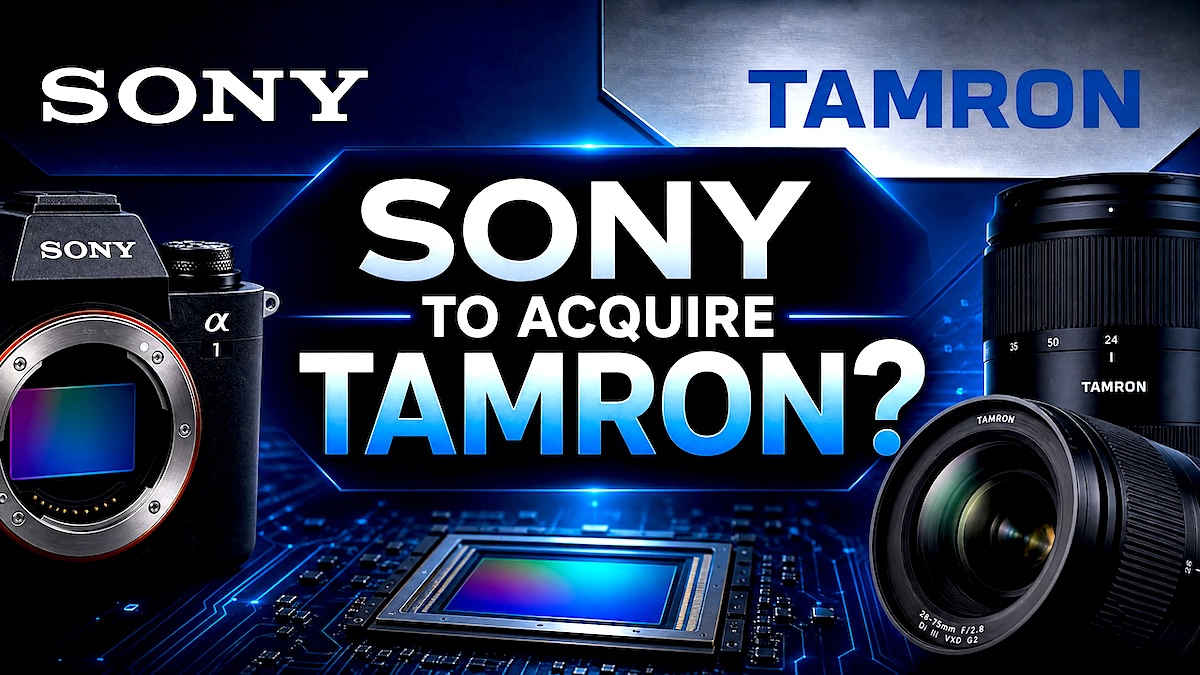
Sony to acquire Tamron?


Today, Diamond Online (ダイヤモンド・オンライン) published an investigative scoop stating that Sony Group has proposed acquiring Tamron, aiming to acquire all of Tamron’s shares. The deal size is projected at roughly 200 billion yen (約2,000億円). No official confirmation or denial has been issued by Sony or Tamron as of the latest available information. Diamond is a long-established, respected Japanese business magazine. The article is paywalled, but here is an AI-generated recap:

Update #1: there is also a similar report from Nikkei today.

Update #2 – Tamron confirms non-binding acquisition proposal from Sony.

  • Sony has been Tamron’s largest (or near-largest) traditional shareholder for years, holding around 15% in recent periods. This stake has long functioned as a stabilizing “white knight” relationship.
  • Activist fund Effissimo Capital Management aggressively increased its holding (reports put it at ~17.4% earlier in 2026), potentially overtaking Sony as the top shareholder. Japanese coverage frames this as a possible defensive catalyst for Sony to move for full control.
  • Tamron is already a critical partner for Sony (popular third-party lenses + historical OEM relationships). Full ownership would lock that in.
  • Tamron shares (7740.T) reacted immediately in after-hours PTS trading with a sharp jump (reports of double-digit percentage gains).

Japanese coverage highlights a shift in Sony’s electronics division:

  • After years of defensive restructuring (including the TV/BRAVIA separation), the division is now pursuing growth-oriented M&A.
  • Strategic goal of tighter vertical integration: Sony’s industry-leading image sensors + camera bodies + Tamron’s optical design and high-volume precision manufacturing know-how.
  • Protecting the E-mount ecosystem and Tamron partnership from activist pressure or any shift in Tamron’s multi-mount priorities.

The post Sony to acquire Tamron? appeared first on Photo Rumors.

  •  

The Sony RX10 V modernizes everything but its sensor performance. Does it matter?

How do you improve on a 20MP stacked Type 1 sensor?

Front-on view of the Sony RX10 VRichard Butler

It’s undeniable that, in terms of the tech and experience around its sensor, the Sony RX10 V is an excellent example of how far the camera industry has come in the last 10-ish years when compared to the Sony RX10 IV from 2017. But during that time, we’ve also seen a lot of discussion around how image quality has stagnated, and there’s no obvious difference between the V’s 20MP Type 1 (116mm2) stacked CMOS sensor and the IV’s.

There’s some truth to the idea that gains in image quality are coming slower these days, as much of the past decade’s progress has been more focused on performance in aspects like autofocus and readout speeds. That’s not to say there have been no advancements in image quality, but Sony hasn’t bragged about including them in the RX10 V. The only real way to find out, though, is to put it in front of our test scene.

Studio test scene

Our test scene is designed to simulate a variety of textures, colors, and detail types you’ll encounter in the real world. It also has two illumination modes, full even light and low directional light, to see the effect of different lighting conditions.

Unsurprisingly, the RX10 V performs very similarly to the RX10 IV when looking at its Raw images at base ISO, which is a good thing. It captures a good amount of detail, and at 88mm equiv., its lens actually holds up quite well compared to other cameras with Type 1 sensors and lenses with much less ambitious focal lengths. It also provides more detail with less noise than the Nikon P1000, which offers much more reach but uses a lower-res and much smaller 16MP 1/2.3″ (28mm2) sensor.

The RX10 V’s JPEGs are where the decade of progress becomes apparent. The colors are much more pleasing than those of the IV, with more natural skin tones, and the vibrancy of colors turned up where they were lacking, and turned down where they were overbearing. We also found this to be the case in the sample photos we shot with the V. Sony’s progress on this front has been slow and steady, but with so much time between the two models, it’s much more noticeable.

This class of cameras has never been the best pick for low light photography, the RX10 V’s Raws again look as we’d expect. Switch over to JPEG and it’s clear that Sony has upgraded the camera’s noise reduction to some extent, but in higher-contrast, more detailed areas, we’d be hard-pressed to tell its performance apart from its predecessor’s. However, it does outperform Panasonic’s similarly-specced (and now discontinued) FZ-1000 II from 2020 in this regard, and is significantly better at low light than the P1000.

Summary

The RX10 V doesn’t represent a massive shift in terms of image quality from its predecessor, nor, indeed, the RX10 III and RX10 II before it, which both used similarly-specced sensors. When those cameras were released, we called their image quality excellent*, and even these days it’s hard to argue that the pictures the RX10 V produces aren’t very good.

However, it’s hard to ignore that images from smartphones, armed with increasingly sophisticated computational photography tricks, have been getting better and better. Some models even include Type 1 sensors, too, edging in on even the highest-end enthusiast compacts, if only in terms of image quality and not shooting experience. Arguably, the RX10 V, with its massive focal range, is one of the compacts most insulated from this, as phones’ telephotos are often paired with much smaller sensors, and don’t offer anywhere near the level of reach. But it does raise questions about how the next versions of cameras like the RX100 will differentiate themselves.

Going back to the camera at hand, though, regardless of how much the RX10 V has or hasn’t improved when it comes to imaging, it’s still the best in its class… even if it is the only pupil remaining.

* – as long as you set aside their JPEG colors, which the RX10 V has thankfully greatly improved on.

About the Author: Mitchell started taking pictures at 10 and hasn’t stopped since. It’s been a wide-ranging adventure, spanning a wide variety of genres and locales, and occasionally dipping into fascinations with video and filmmaking. They honed their technical knowledge doing documentation, programing and QA, writing for The Verge, and just generally messing around on the computer to see what breaks.

Want to stay up to date on the latest product news and releases? Add DPReview as a preferred source to ensure our independent journalism makes it to the top of your Google search results.

add as a preferred source on google

  •  

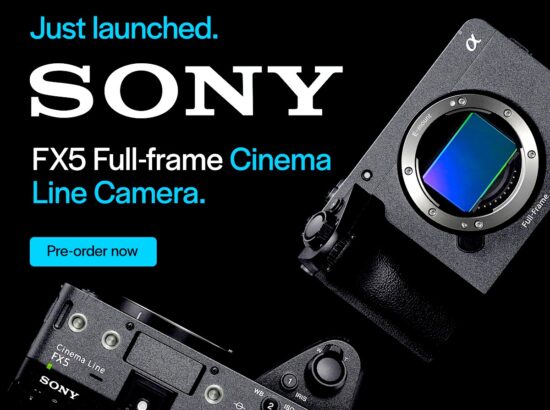
Of course Sony FX5 orders far exceed expectations


It did not take long for Sony Japan to issue an official notice about FX5 pre-orders far exceeding expectations (B&H PhotoWEX Photo | Foto Erhardt):

Announcement Regarding the Supply of the Professional Camcorder ‘FX5′

Thank you for your continued patronage of Sony products.

We began accepting orders for the professional camcorder “FX5” on Tuesday, July 28, 2026, and have received significantly more orders than we anticipated. As a result, there may be a delay in delivery.

We are currently working diligently to meet our customers’ requests as much as possible, so please bear with us for a little while longer.

Comparing the Sony FX5 and the FX3A

Sony FX5 cinema camera announced

FieldMade released custom indicator labels for OM System cameras and lenses and the new Sony FX5 camera

The post Of course Sony FX5 orders far exceed expectations appeared first on Photo Rumors.

  •  
❌