Vue lecture

DJI’s Mini mics get a big upgrade with 32-bit float internal recording

The new Mic Mini 2S brings 32‑bit internal recording and built‑in storage to DJI’s tiny wireless mics, making them far more forgiving for creators.

DJI wireless earbuds, one blue and one purple, positioned beside their open black charging case on a light-colored surface with a blurred background.DJI

DJI has announced another offering in its Mic Mini lineup, the Mic Mini 2S. The new addition is a notable upgrade over the Mini Mini 2, bridging the gap to the higher-end Mic 3 with 32-bit internal recording, onboard storage and compatibility with four transmitter microphones.

For many, the standout upgrade in the Mic Mini 2S is its internal recording capabilities. The Mic Mini lineup has thus far lacked any onboard storage, meaning you don’t have a backup if something goes wrong with the device they’re broadcasting to. The Mic Mini 2S, though, offers 14.5GB of built‑in storage per transmitter, which DJI says will provide up to 28 hours of audio.

While internal recording is one safety net, the Mic Mini 2S also offers improved audio flexibility. Instead of being limited to the 48 kHz, 24‑bit wireless feed of the Mic Mini 2, the 2S can capture up to 32‑bit float, the same as the more expensive Mic 3. That mode, which uses a different way of storing audio data, makes it far easier to rescue quiet speech or avoid clipping with sudden loud noises. It also offers DJI’s two-level AI-based noise cancellation to filter out ambient noise.

The Mic Mini 2S can work with up to four transmitters per receiver with output to four independent audio channels, double what the Mic Mini 2 could manage. DJI says it also supports cross-generation compatibility, so users can pair with the Mic Mini and Mini 2 transmitters, or with the Mic Series Mobile Receiver. It’s also compatible with a range of DJI products without the need for an external receiver, including the Osmo Pocket 4, Osmo Pocket 4P, Osmo Action 6 and Osmo 360.

DJI promises up to 11 hours per charge on the transmitters, and up to 40 hours of battery life with the included charging case, 8 hours less than the total runtime of the Mic Mini 2. It keeps the typical tiny design of the Mic Mini lineup, with each transmitter weighing roughly 12 g (0.4 oz). As with other recent DJI mics, it doesn’t work as a wired lavaliere. However, it does accept the colorful magnetic front covers DJI released with the Mic Mini 2 (though those are a separate purchase).

The Mic Mini 2S is available today in most regions for £169/€189 as a bundle with two transmitters, a receiver and charging case. Unsurprisingly, it is not available in the US.

About the Author: Abby Ferguson holds an MFA in photography and blends a fine-art background with extensive editorial and commercial experience. She built and led an in-house imaging program for a large vacation rental company and has served as an associate editor at Popular Photography. She also teaches at a local community college and serves on its Photographic Technology Program Advisory Board, sharing her knowledge and enthusiasm for the medium.

Want to stay up to date on the latest product news and releases? Add DPReview as a preferred source to ensure our independent journalism makes it to the top of your Google search results.

add as a preferred source on google

  •  

This camera battery doubles as a secret tracker (if you have an iPhone)

Falcam’s TagBatt has Apple’s Find My tech built in, letting you track and locate your gear.

A Falcam TagBatt in the grip of a Sony cameraFalcam

We’ve seen a recent trend of camera accessory companies building in clever hiding spaces for Apple AirTags into their products. Whether it’s a camera cage with a hole for one cut out, or a bag with a tiny pocket for them, there are more and more options for making sure you can find your expensive gear if it gets misplaced or stolen.

Falcam is taking the concept even further, building support for Apple’s Find My network into batteries for Canon and Sony cameras. For those unfamiliar, the trick of Apple’s Find My is that it uses many of the company’s products – including the iPhone – to anonymously track the location of devices on the network. This solves the issue of previous Bluetooth trackers by making it so you’re no longer relying on a relatively small group of people who use the same tracker as you and are running the app to be around the thing you’re trying to find.* The tech is what powers Apple’s ever-popular AirTags.

Graphic advertizing the tracking capabilities of the Falcam TagBattFalcam

Of course, the main purpose of Falcam’s TagBatts isn’t to find a misplaced camera; it’s to power the device you have in your hand. The company is making two versions: one that’s compatible with cameras that use Sony’s NP-FZ1000 series batteries (which is to say, most of the company’s modern cameras, as well as a host of other devices), and one that mimics Canon’s LP-E6 (again, supported by a wide range of the company’s DSLRs and mirrorless cameras). Falcam’s site also indicates that versions for Nikon and Fujifilm cameras are coming soon.

Both versions of the battery have a 17.4Wh capacity, which is slightly higher than the own-brand models they’re meant to replace. In an FAQ on its website, Falcam says the tracking feature uses a very small amount of power that “does not meaningfully reduce normal camera runtime,” though notes that it won’t work if the battery is completely drained. The battery also has a built-in USB-C port, letting you charge it directly outside the camera if you want, though it’s still compatible with traditional cameras and can also be charged inside the camera.

They’ll be useful for seeing where your camera is on a map, but won’t help you figure out which bag you left your spare batteries in

There are a few caveats to note. The first is that camera manufacturers don’t typically guarantee support for every camera feature when you’re using a third-party battery, and Falcam is new to making batteries, so it might be worth waiting for a few reviews to make sure everything works as expected. The second relates to Find My; many people will be familiar with the AirTag feature that lets you search around for your device, using your phone to point the way. This feature, however, isn’t inherent to Find My devices, and Falcam’s website makes no mention of the ultra-wideband tech that enables it on its product page for the batteries. That means they’ll be useful for seeing where your camera is on a map, but won’t help you figure out which bag you left your spare batteries in.

The Falcam TagBatt costs $70 for the Sony version and $65 for the Canon one, and they are available from the company’s website. That’s definitely pricier than competing third-party models from companies like SmallRig and Wasabi Power, but those don’t include Find My functionality. Neither do the own-brand models, which cost more.

* Though it introduces a new problem in that it’s not particularly cross-platform compatible. Android phones won’t report a Find My device’s location, and the Find My service won’t be particularly useful to you if you don’t have an Apple device. Google has its own version of the system, but the two are broadly incompatible.

About the Author: Mitchell started taking pictures at 10 and hasn’t stopped since. It’s been a wide-ranging adventure, spanning a wide variety of genres and locales, and occasionally dipping into fascinations with video and filmmaking. They honed their technical knowledge doing documentation, programing and QA, writing for The Verge, and just generally messing around on the computer to see what breaks.

Want to stay up to date on the latest product news and releases? Add DPReview as a preferred source to ensure our independent journalism makes it to the top of your Google search results.

add as a preferred source on google

  •  

A photographer built this bamboo forest from plastic drinking straws

Every landscape in Benedek Lampert’s new series is built from the materials destroying it. Fishing nets become oceans, plastic bags become Arctic ice.

Toy panda positioned among tall, green artificial plants with the text "The Habitat We Staged" visible; scene resembles a real habitat but is clearly staged with synthetic materials.Benedek Lampert

Hungarian photographer Benedek Lampert is famous for creating realistic-looking photos made of Lego bricks, challenging viewers to tell whether they’re looking at a real place or a carefully constructed scene. His Lego Eiffel Tower could have been part of the Paris skyline, and his models of Sir Ernest Shackleton’s ship Endurance and a meticulously detailed Formula 1 racetrack followed suit.

The photos in Lampert’s newest project, ‘The Nature We Replaced,’ don’t use Lego bricks at all. And they’re not meant to look real. In fact, they’re meant to look exactly like what they are: garbage.

Two polar bear figures on plastic iceberg shapes, surrounded by sculpted plastic waves; text reads "The Arctic We Created," emphasizing environmental impact and plastic pollution.
The Arctic We Created. (Polar Bear)

The Arctic is warming nearly four times faster than the global average. As sea ice disappears, polar bears lose the frozen platforms they depend on for hunting seals, traveling and raising their cubs. Scientists project continued declines in polar bear populations if greenhouse gas emissions remain high. The Arctic in this image is built entirely from plastic bags – a symbol of a world gradually replacing nature with waste.
Benedek Lampert

“Nature, wildlife and environmental storytelling have always been close to me, and I couldn’t think of a more universal issue than the future of the planet we all share,” he says.

The project consists of eight conceptual miniature photographs, each exploring the relationship between humans and the natural world. Instead of simply documenting environmental problems, Lampert set out to visualize the tension between wildlife and the world humans have built around it.

Small and large elephant figurines placed among bullet casings with the text "The Giants We Silenced" in the foreground.
The Giants We Silenced. (African Elephant)

Illegal wildlife trafficking continues to threaten elephants and rhinoceroses across Africa. Thousands have been killed for ivory and horn, driven by international demand and organized poaching networks. The landscape is built from spent bullet casings, reducing an entire ecosystem to the evidence left behind after a hunt.
Benedek Lampert

“Instead of recreating nature, I rebuilt each habitat entirely from the materials that threaten it. Plastic bags become Arctic ice. Fishing nets become oceans. Wood products become forest. Plastic straws become bamboo. Every landscape is constructed from everyday human waste or objects associated with the destruction of that ecosystem,” he explains.

Go behind the scenes to see how Benedek Lampert created the scenes for his ‘The Nature We Replaced’ photo project.

Lampert tells DPReview that the whole idea started with a penguin.

“I recreated a viral penguin story using a miniature figure… and that project made me realize I wanted to do something bigger with wildlife photography. But the more I thought about it, the more I wanted the series to be about something beyond the visuals. That’s when the idea of building each habitat from the very materials that threaten it was born.”

Two toy tigers walk through a charred forest made of blackened sticks and ashes, with smoke drifting in the background. Large burnt utensils stand upright like trees. Text reads, The Forest We Burned.
The Forest We Burned. (Tiger)

Wildfires, deforestation and habitat fragmentation continue to reduce the forests that many tiger populations depend on. While some fires occur naturally, many are directly linked to human land clearing and agricultural expansion. Burnt charcoal and used matches replace the forest floor, illustrating an ecosystem consumed by fire.
Benedek Lampert

He isn’t chasing real-world accuracy. “It’s not meant to show reality exactly as it is,” he tells us, “but to exaggerate it just enough to make people stop and think about what’s happening to these habitats and species.”

Lampert partnered with German company Schleich to provide the animal figurines. “I chose Schleich because of the exceptional quality and realism of their figures. That level of detail was essential – using less realistic models would have taken away from the emotional impact and credibility of the photographs.”

Lampert’s attention to detail extends all the way to the image titles. Each ends with a period: a marker, he says, for the irreversible damage already done. He’s careful to add that hope is not lost, noting that conservation efforts have succeeded. “The period marks what cannot be undone, but not what can still be saved.”

More photos from this series

Sea turtle swimming underwater among large blue fishing nets, with sunlight filtering from above and text reading "The Ocean We Captured."
The Ocean We Captured. (Sea Turtles)

Hundreds of thousands of sea turtles are accidentally caught in fishing gear every year. Abandoned “ghost nets” continue trapping marine animals for decades, even after being lost or discarded. In this image, the ocean itself is made from fishing net, turning the turtles’ natural habitat into an inescapable trap.
Benedek Lampert
A chimpanzee sits surrounded by metal machinery and saw blades in a jungle with a green tint. The phrase "The Jungle We Traded" appears as text. Industrial equipment is integrated into the natural setting, replacing typical jungle elements.
The Jungle We Traded. (Orangutan)

Over the past decades, vast areas of Southeast Asian rainforest have been cleared for timber, palm oil plantations and agriculture. Habitat loss remains the greatest threat to wild orangutans. The jungle is reconstructed from industrial machine parts, reflecting how ancient forests are increasingly exchanged for economic profit.
Benedek Lampert
Penguins on artificial ice blocks surrounded by blue plastic, with one penguin diving off a ledge. Text displays: The Ice We Left Behind. The Nature We Replaced. Series by Benedek Lampert.
The Ice We Left Behind. (Penguins)

Antarctica is changing rapidly. Rising temperatures, shrinking sea ice and increasing human influence threaten one of Earth’s last great wildernesses. Sea ice is essential for many penguin species, supporting feeding, breeding and the marine food web. The frozen landscape is constructed from Styrofoam, plastic packaging and discarded plastic bags, suggesting a future where even the most remote wilderness is remembered only through the waste we leave behind.
Benedek Lampert
Two buffaloes on sand next to a fence and water, with the words "The Path We Closed" above them. The scene looks artificial and staged.
The Path We Closed. (African Buffalo)

Across Africa, roads, fences, agriculture and expanding human settlements increasingly block ancient wildlife migration routes. Buffalo, elephants, zebras, wildebeest and many other species depend on seasonal movement between feeding grounds and water sources. The interrupted path represents landscapes that no longer allow wildlife to move freely.
Benedek Lampert
About the Author: Dale Baskin is a professional photographer, writer, and filmmaker based in the Pacific Northwest. He is the Managing Editor of DPReview.com.

Want to stay up to date on the latest product news and releases? Add DPReview as a preferred source to ensure our independent journalism makes it to the top of your Google search results.

add as a preferred source on google

  •  

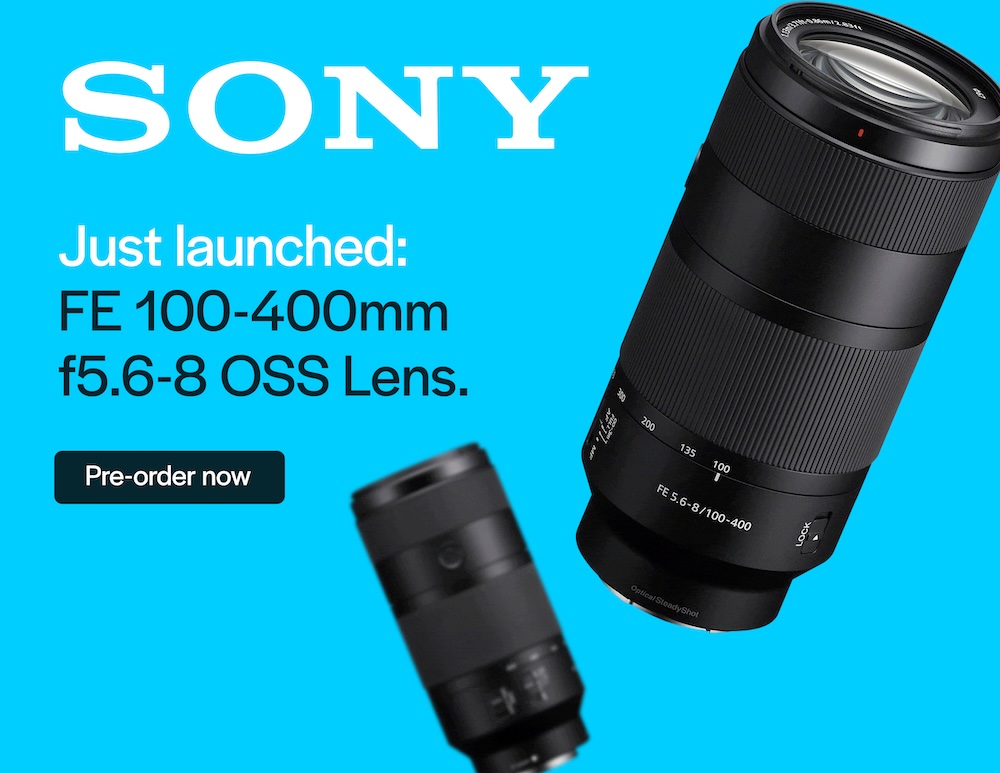
Sony launches FE 100-400mm f/5.6-8 OSS super-telephoto zoom lens


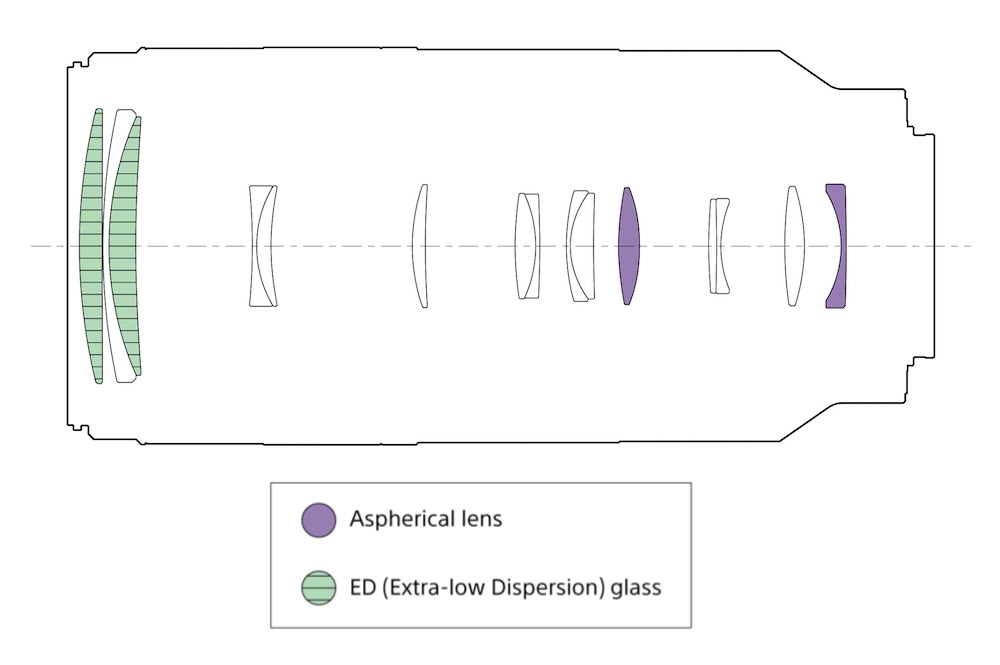
The previously rumored Sony FE 100-400mm f/5.6-8 OSS super-telephoto zoom lens is now officially announced. Notable features include a newly designed optical system with ED (extra-low dispersion) and aspherical elements for outstanding image quality throughout the zoom range, fast and precise linear motor autofocus, built-in Optical SteadyShot image stabilization, impressive close-focusing capabilities with up to 0.41x maximum magnification, and compatibility with Sony teleconverters for even greater reach.

  • Pre-orders: B&H Photo | Foto ErhardtWEX Photo
  • Key features:
    • Designed for wildlife, birds & travel photography
    • Dual linear motor autofocusing mechanism
    • Compact and lightweight at only 654g
    • Close focusing from 0.86 meters
    • Two ED and two aspherical elements
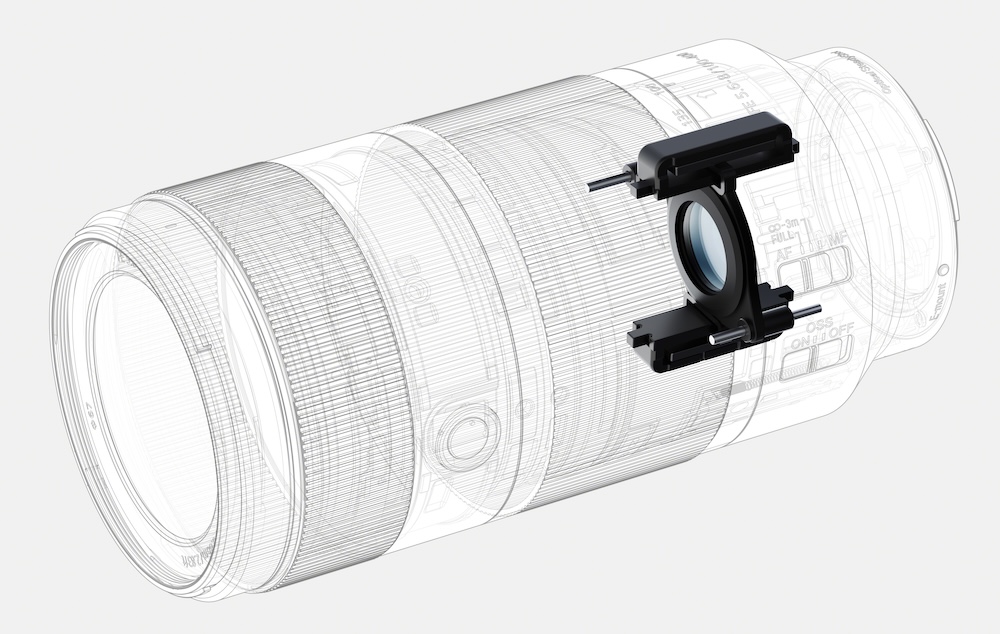
    • Optical SteadyShot reduces camera shake
  • Additional informtion:

Compact, Lightweight Design for Easy Handling, Even for First-Time Super-Telephoto Users

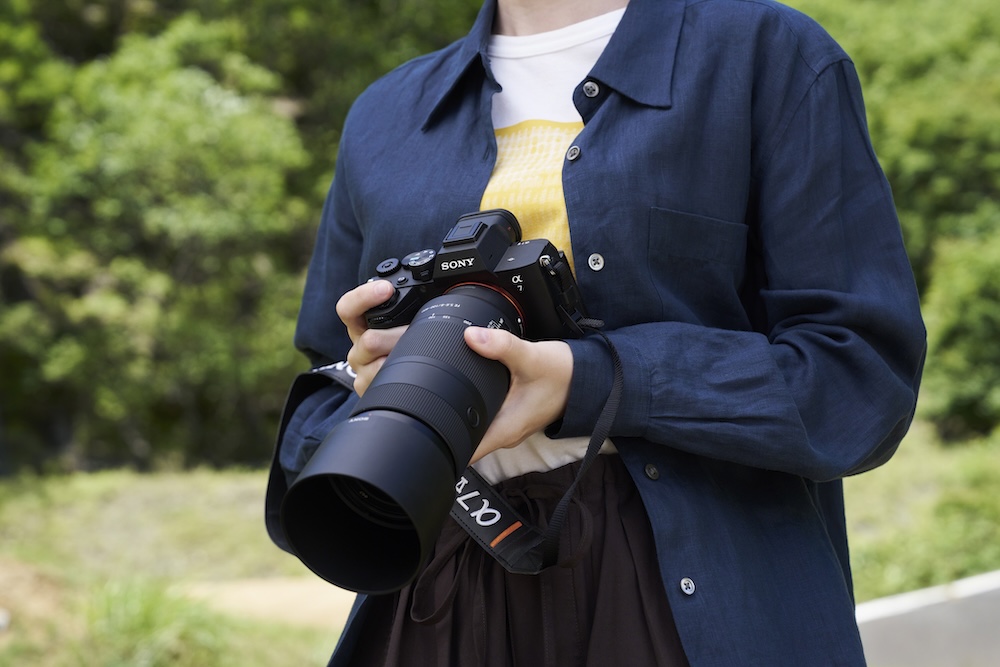
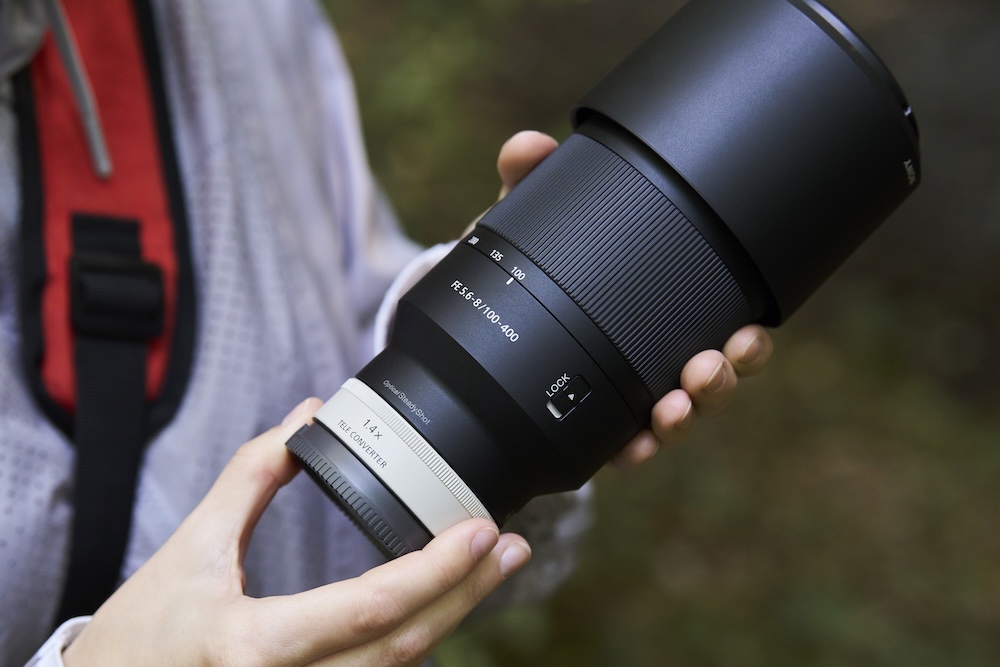
The lens delivers a 100-400mm super-telephoto zoom range in a compact, lightweight body weighing approximately 654g, making it easy to carry. That portability also eases handling during handheld shooting and speeds up framing. You can capture powerful images of subjects that are hard to approach, such as birds and sports scenes, and use the ‘compression effect’ (which makes the distance between nearby subjects and distant background elements appear shorter) for landscape work unique to super-telephoto lenses. With an optional SEL20TC teleconverter*[1], you can double your reach, up to 800mm, or up to 1,200mm in APS-C mode.

Sharp Detail Through the Entire Zoom Range Means You Can Capture the Details That Matter

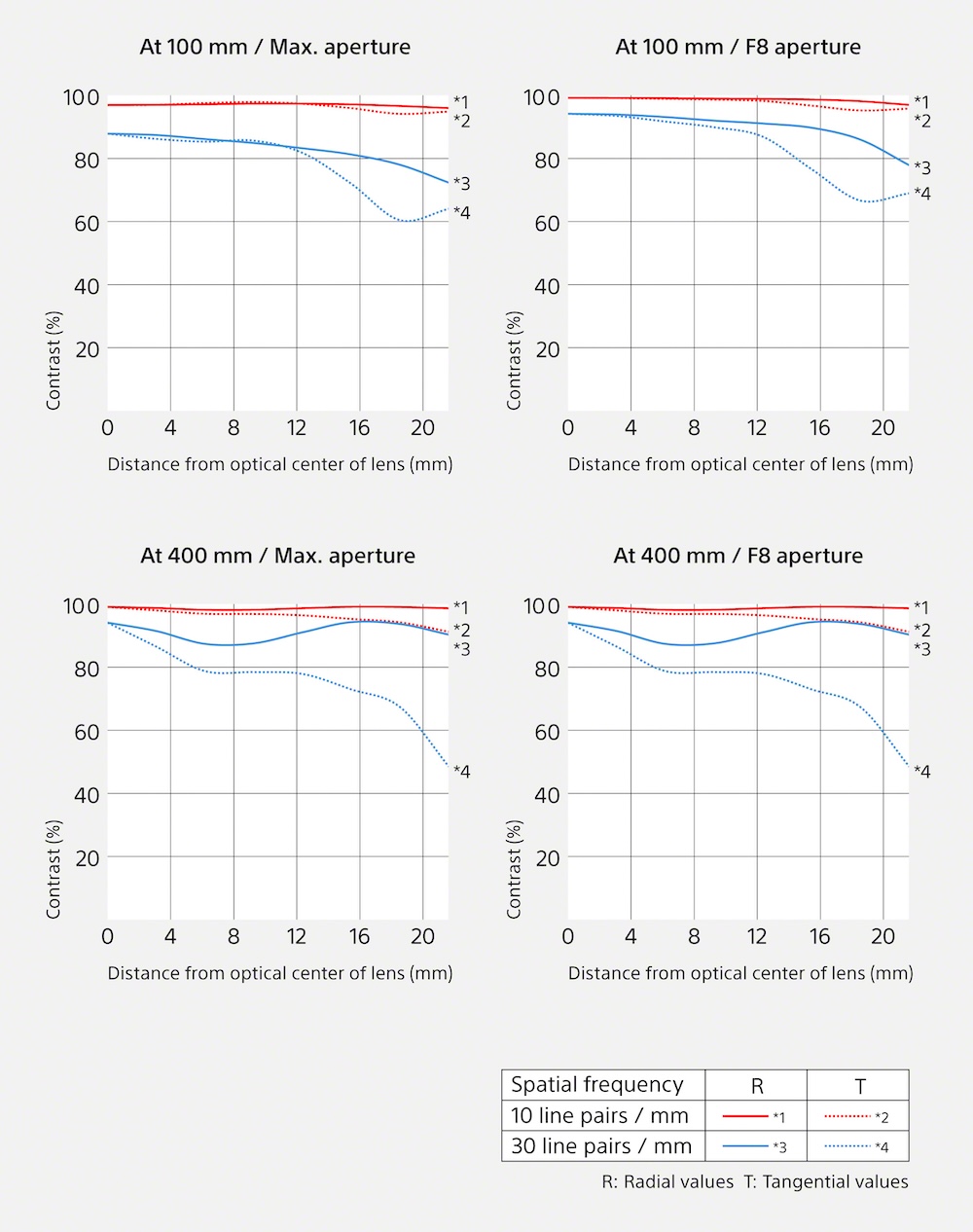
Excellent image quality holds whatever the shooting distance, thanks to an optical design with two ED glass elements and two aspherical elements that suppress color bleeding and distortion for clear rendering across the entire zoom range. The subject stands out against natural, soft bokeh, helped by a 9-blade circular aperture and optimization of spherical aberration. Its close-up performance is strong too: a minimum focusing distance of 0.86 m at the telephoto end and 1.13 m at the wide end, with a maximum magnification of 0.41x, lets you shoot flowers, insects, and other nearby subjects as easily as distant ones.

Fast, Precise AF and Built-In Optical Image Stabilization for Moving Subjects

The linear motor drive delivers fast, precise, and quiet AF (auto focus) to track moving subjects. The lens also supports high-speed continuous shooting with AF/AE (auto exposure) tracking at up to approximately 120 frames per second*[2] with the full-frame mirrorless α9 III camera. Built-in optical image stabilization suppresses camera shake during handheld shooting and keeps framing stable, even with distant subjects. The lens also works with the camera body’s Active Mode image stabilization and coordinated image stabilization control*[3], for high-quality stills and movies with reduced blur when shooting handheld. It also supports the camera body’s breathing compensation function*[4], which corrects changes in angle of view caused by shifts in focus position during movie recording.

Usability and Reliability Built for Outdoor Adventures with Dust and Moisture Resistance

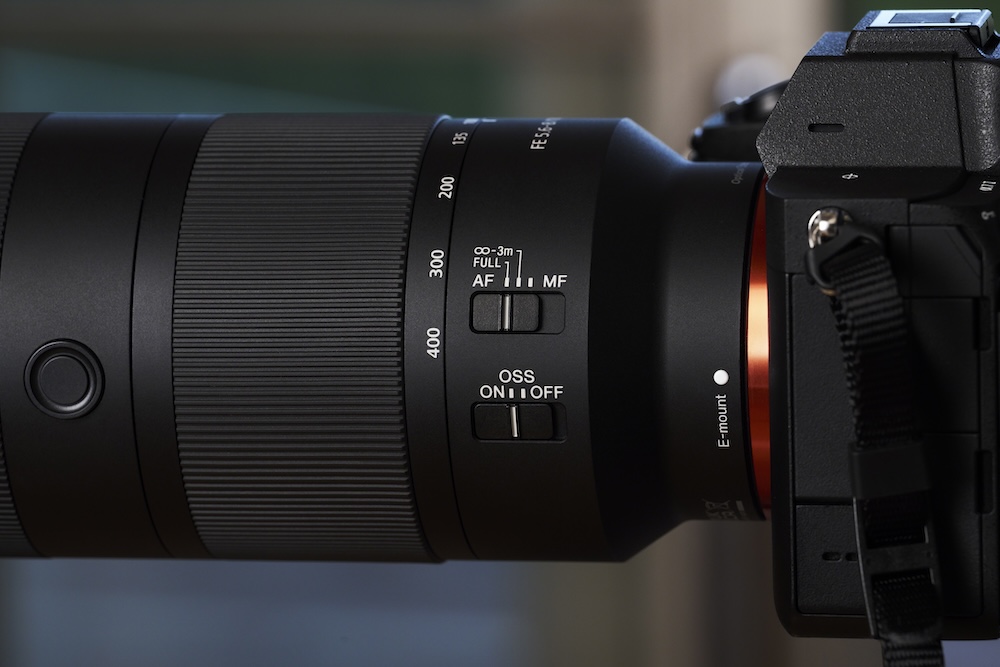
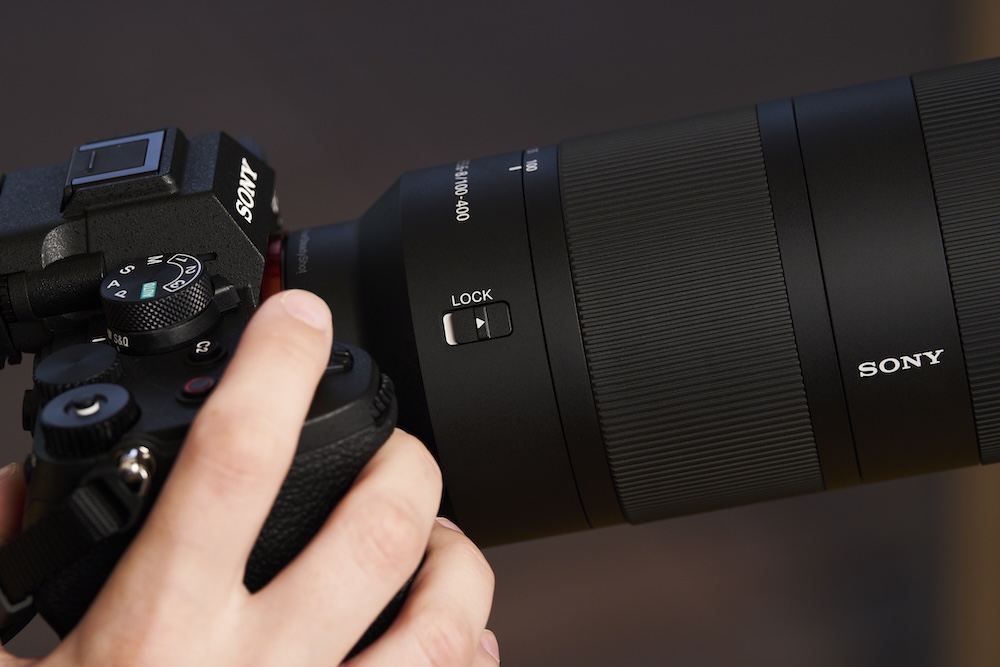
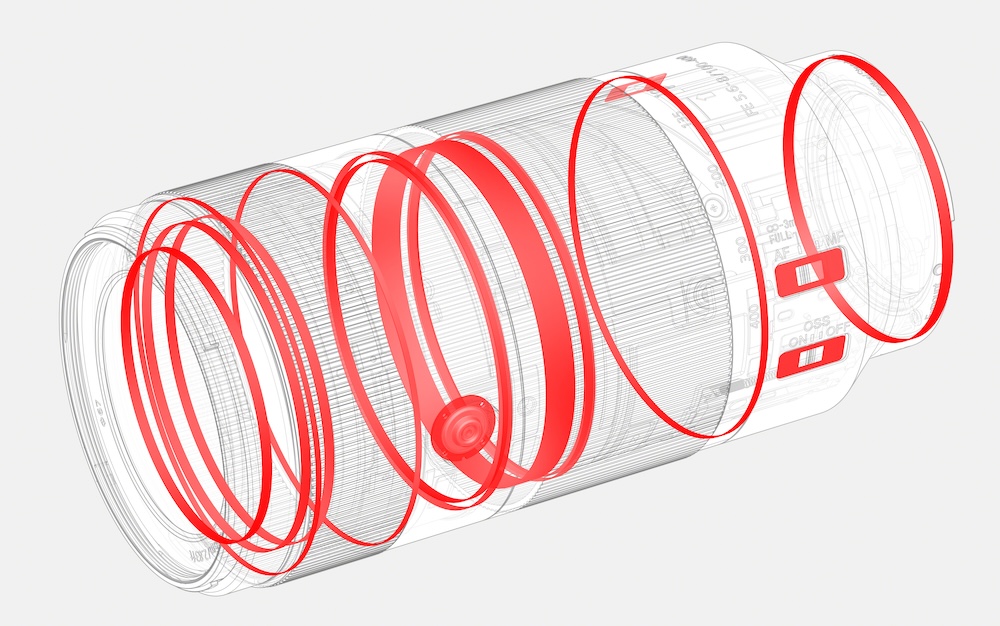
A customizable focus hold button, focus mode/range switching dial, and zoom lock switch give you quick operation across shooting scenes and comfortable ultra-telephoto handling. A dust and moisture resistant design*[5] helps you keep shooting with confidence when the weather changes unexpectedly. The supplied lens hood helps prevent flare and ghosting that can degrade image quality.

Sony to announce a new FE 100-400mm f/5.6-8 OSS lens with integrated focus limiter/AF/MF switch

The post Sony launches FE 100-400mm f/5.6-8 OSS super-telephoto zoom lens appeared first on Photo Rumors.

  •  

Sony’s FE 100-400mm F5.6-8.0 OSS is affordable but fairly slow

Sub-$1000, teleconverter-compatible long zoom provides gateway to sports and wildlife shooting (in good light)

Sony FE 100-400mm F5.6-8.0 OSS 3-quarter viewMitchell Clark

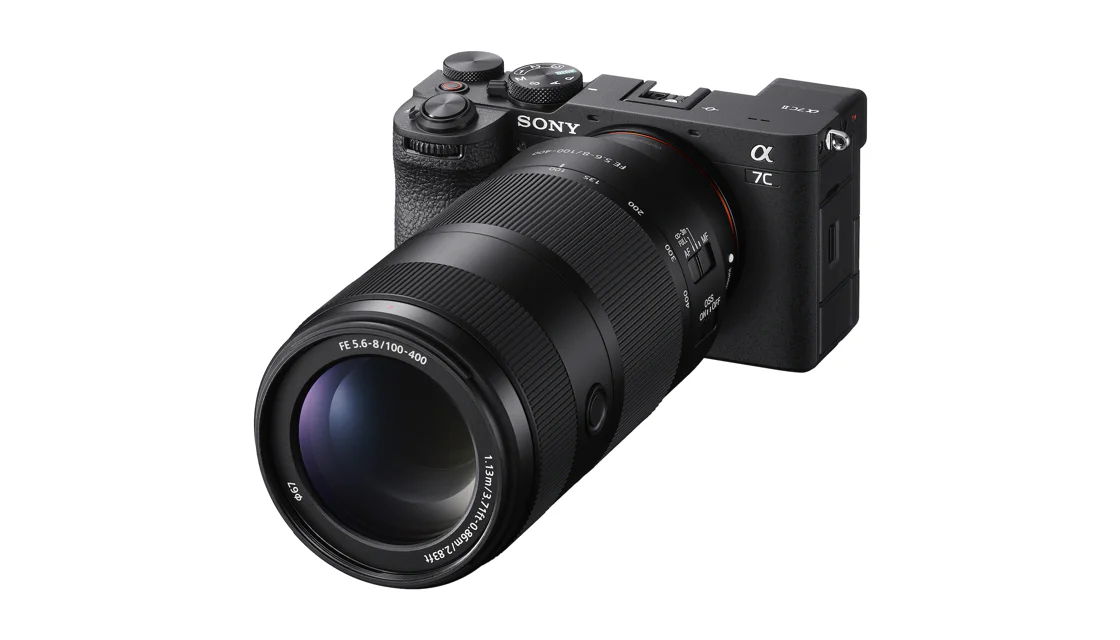
Sony has announced the FE 100-400mm F5.6-8.0 OSS, a comparatively small, comparatively affordable long tele for E-mount cameras.

Unlike its immediate peers or faster but heavier third-party rivals, the FE 100-400mm F5.6-8.0 is compatible with Sony’s teleconverters, meaning it can be converted into a 140-560mm F8.0-11 or a 200-800mm F11-16, if you need the extra reach and have sufficient light to play with.

Like Canon’s similarly-specced RF 100-400mm IS USM lens, it’s appreciably smaller and lighter than Tamron’s 50-400mm F4.5-6.3 or Sigma’s 100-400mm F5.0-6.3. At 645g (23.1oz) it’s around half the weight of either of those options, though also a fair bit slower, especially as you zoom.

The optical formula consists of fifteen elements arranged in ten groups. These include two extra-low dispersion (ED) elements and two aspheric elements. Focus is powered by a pair of linear motors (though not Sony’s smoother, more powerful ‘XD’ ones). The company says the lens is compatible with the 120fps shooting mode on its a9 III camera.

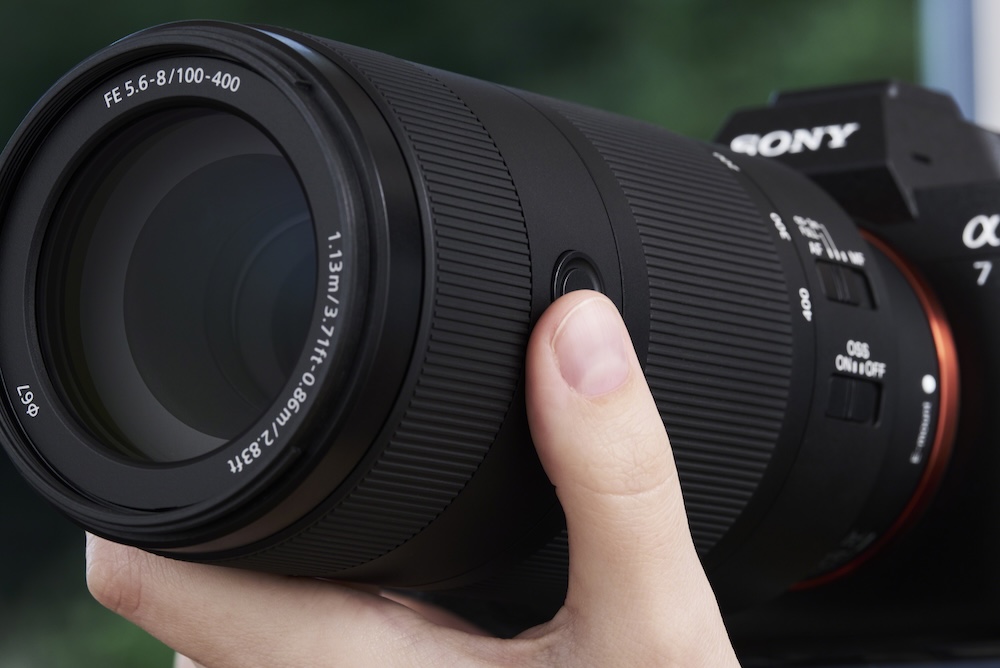
When retracted the lens is 165mm long and 78mm in diameter (6.5 x 3.1″). It accepts a relatively affordable 67mm diameter filter. It’s designed to be dust and moisture resistant and comes bundled with a lens hood.

Close-up of the barrel and zoom lock switch of Sony 100-400mm F5.6-8.0 OSS lensMitchell Clark

Although designed for full-frame cameras, it can also be used on APS-C models, giving a 150-600mm equivalent range, though its relatively slow aperture at the long end is likely to limit you to bright light working, even before you consider adding a teleconverter.

Sony tells us the FE 100-400mm F5.6-8.0 OSS is designed to offer a sub-$1000 entry point to its camera users who want to try their hands at wildlife photography or some sports shooting. Despite this entry-level position in the lineup, the lens has pair of focus hold buttons, positioned so they can be reached in portrait or landscape orientation. It also has a zoom lock switch and a focus limiter switch, that means the autofocus only focuses between 3m and infinity: preventing close-range hunting when you’re shooting distant subjects.

With the switch set to full range, the lens will focus down to 1.13m (3.7′) at the short end of its range and 0.86m (2.8′) at the long end. This gives a maximum magnification of 0.41x.

The lens will be available in September, with a recommended price of $850.

Sample gallery

Please do not reproduce any of these images on a website or any newsletter/magazine without prior permission (see our copyright page ). We make the originals available for private users to download to their own machines for personal examination or printing (in conjunction with this review); we do so in good faith, so please don’t abuse it.

Loading gallery…

Sony Electronics Launches SEL100400 – FE 100-400mm F5.6-8 OSS, The Perfect Hobbyist’s Super-Telephoto Zoom Lens 


Delivering Outstanding Mobility and Excellent Image Quality Across the Entire Zoom Range

San Diego, August 4, 2026 – Sony Electronics introduces SEL100400 – FE 100-400mm F5.6-8 OSS, a super-telephoto zoom lens for 35mm full-frame Alpha™ E-mount cameras. Despite its super-telephoto reach of up to 400mm, the lens stays compact and lightweight, weighing just 654g (approx.). Its latest optical design incorporates two ED (Extra-low Dispersion) glass elements and two aspherical elements, delivering excellent image quality and clear rendering across the entire zoom range no matter how far away the subject is. The lens also features fast, precise AF (autofocus) and built-in optical image stabilization to support handheld shooting, letting you quickly capture moving subjects such as birds, sports, trains, and aircraft.

“With the needs of a large set of hobbyist photographers in mind, from birders to parents, we used our expertise in professional lens technology to create a high-quality, affordable super-telephoto zoom lens that will go the distance,” said Yang Cheng, Vice President of Imaging Solutions, Sony Electronics.

Pricing and Availability:
The SEL100400 – FE 100-400MM F5.6-8 OSS will be available for a suggested retail price of $849.99 USD / $1,079.99 CAD from September 2026.

Key Features of SEL100400 – FE 100-400mm F5.6-8 OSS:

Compact, Lightweight Design for Easy Handling, Even for First-Time Super-Telephoto Users
The lens delivers a 100-400mm super-telephoto zoom range in a compact, lightweight body weighing approximately 654g, making it easy to carry. That portability also eases handling during handheld shooting and speeds up framing. You can capture powerful images of subjects that are hard to approach, such as birds and sports scenes, and use the ‘compression effect’ (which makes the distance between nearby subjects and distant background elements appear shorter) for landscape work unique to super-telephoto lenses. With an optional SEL20TC teleconverter*1, you can double your reach, up to 800mm, or up to 1,200mm in APS-C mode.

Sharp Detail Through the Entire Zoom Range Means You Can Capture the Details That Matter
Excellent image quality holds whatever the shooting distance, thanks to an optical design with two ED glass elements and two aspherical elements that suppress color bleeding and distortion for clear rendering across the entire zoom range. The subject stands out against natural, soft bokeh, helped by a 9-blade circular aperture and optimization of spherical aberration. Its close-up performance is strong too: a minimum focusing distance of 0.86 m at the telephoto end and 1.13 m at the wide end, with a maximum magnification of 0.41x, lets you shoot flowers, insects, and other nearby subjects as easily as distant ones.

Fast, Precise AF and Built-In Optical Image Stabilization for Moving Subjects
The linear motor drive delivers fast, precise, and quiet AF (auto focus) to track moving subjects. The lens also supports high-speed continuous shooting with AF/AE (auto exposure) tracking at up to approximately 120 frames per second*2 with the full-frame mirrorless α9 III camera.

Built-in optical image stabilization suppresses camera shake during handheld shooting and keeps framing stable, even with distant subjects. The lens also works with the camera body’s Active Mode image stabilization and coordinated image stabilization control3, for high-quality stills and movies with reduced blur when shooting handheld. It also supports the camera body’s breathing compensation function4, which corrects changes in angle of view caused by shifts in focus position during movie recording.

Usability and Reliability Built for Outdoor Adventures with Dust and Moisture Resistance
A customizable focus hold button, focus mode/range switching dial, and zoom lock switch give you quick operation across shooting scenes and comfortable ultra-telephoto handling. A dust and moisture resistant design*5 helps you keep shooting with confidence when the weather changes unexpectedly. The supplied lens hood helps prevent flare and ghosting that can degrade image quality.

The SEL100400 – FE 100-400MM F5.6-8 OSS product video can be viewed here: https://youtu.be/n0PeWyK0nV4

For more information, visit:
https://electronics.sony.com/imaging/lenses/all-e-mount/p/sel100400
https://www.sony.ca/en/electronics/camera-lenses/sel100400

Exclusive stories and exciting new content shot with the new SEL100400 – FE 100-400MM F5.6-8 OSS and Sony’s other imaging products can be found at www.alphauniverse.com, a site created to inform, educate, and inspire content creators. 

About the Author: Richard graduated as a scientist but had a lot more fun writing and shooting for his university magazine. A number of years spent variously as a reporter, writer and editor on science and engineering titles combined his knowledge of science with his interest in images and words. But it was spotting the connections between emission spectra, white balance and all the nonsense he’d taught himself playing around in Photoshop that helped kindle an interest in digital photography. Searching for a camera led to him discovering DPReview and Richard was recruited by Phil Askey in 2007. He’s been combining his love of photography, communication and attention to detail (pedantry?) ever since. He has unusually strong opinions about lenses for the APS-C format.

Want to stay up to date on the latest product news and releases? Add DPReview as a preferred source to ensure our independent journalism makes it to the top of your Google search results.

add as a preferred source on google

  •  

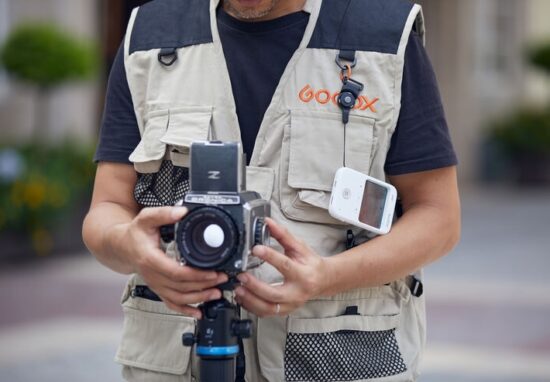
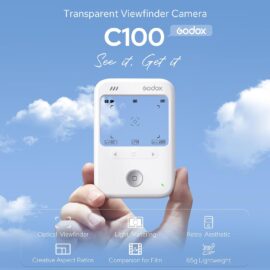
The Godox C100 transparent viewfinder camera is now available for $45


The Godox C100 transparent viewfinder camera is now available for order for $45 (previously reported here):

Additional information:

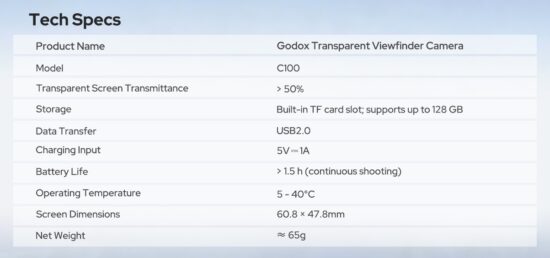
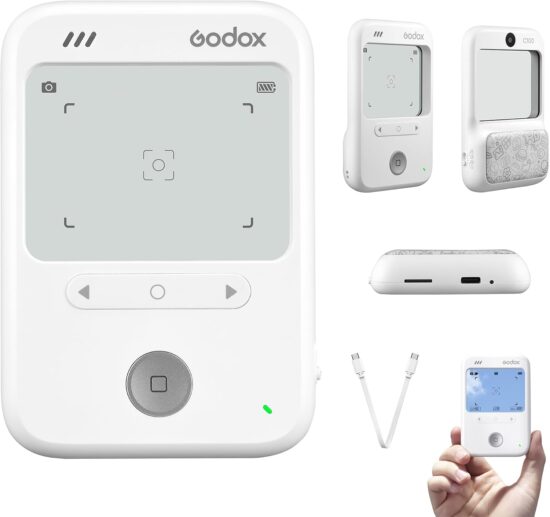
  • High-transparency intelligent display (screen size ≈ 60.8 × 47.8 mm) with >50% light transmittance.
  • Dimensions: ≈ 104 × 71.7 × 19.1 mm (slim, pocketable profile)
  • Storage: TF/microSD card support up to 128 GB (card not included)
  • Battery: Built-in rechargeable battery; claims >1.5 hours of continuous video recording
  • Charging/Data: USB-C (5V ⎓ 1A) for charging and OTG direct transfer to phones or computers
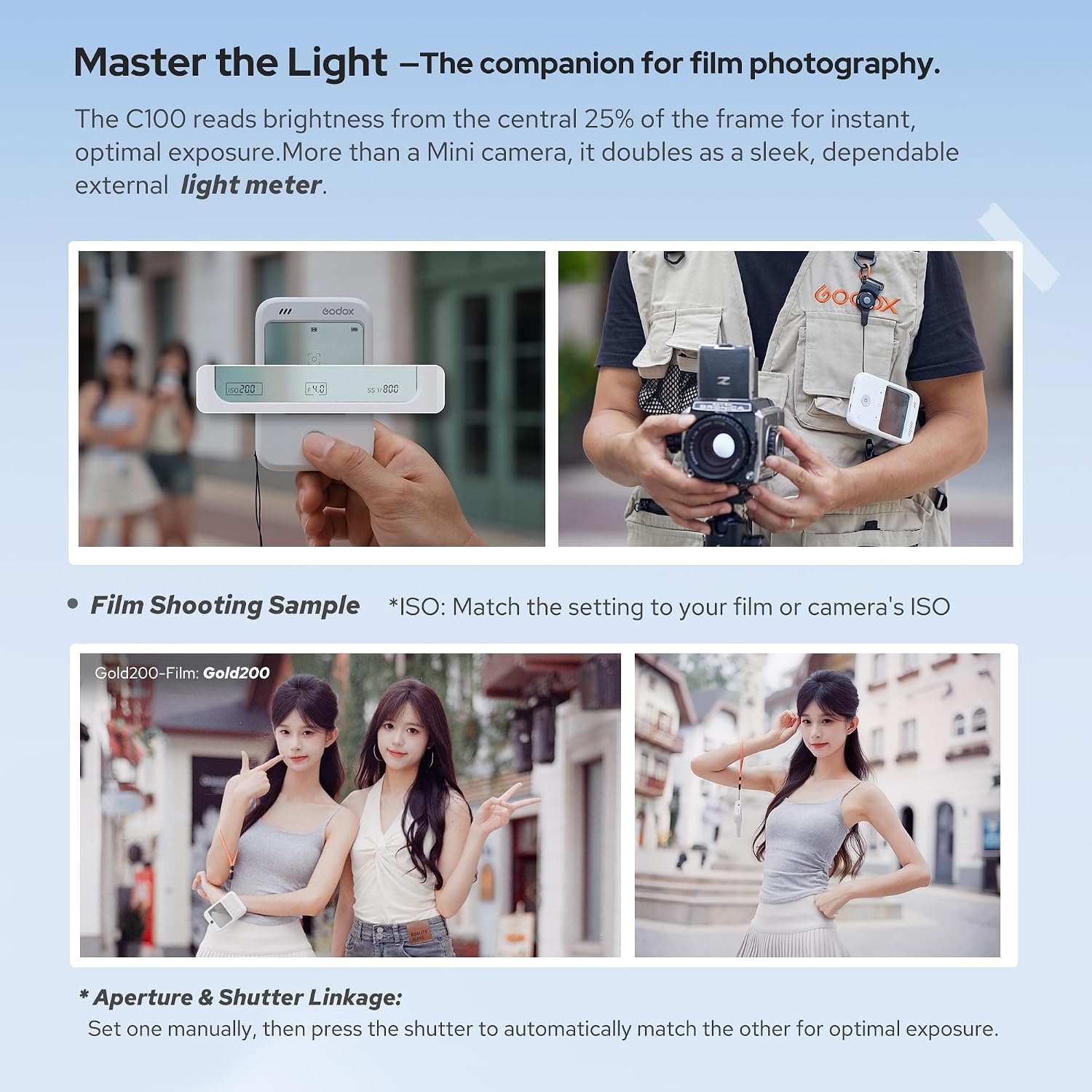
  • Exposure Controls: Center-weighted metering with linked aperture/shutter adjustment (semi-auto style — adjust one and the camera handles the other). Adjustable ISO.
  • Other: Portable for travel/street/lifestyle shooting; minimalist design.
  • Price: 199 RMB (roughly $28 USD).
  • Smart Light Metering – Provides real-time exposure information, making it easier to understand and work with light in different shooting situations.
  • Transparent Optical Viewfinder – Keeps you visually connected to your subject while encouraging a more natural and engaging shooting experience.
  • Seamless HUD Display – Displays shooting modes, framing guides, and exposure information in a clean, unobtrusive overlay.
  • Pure, Present Shooting – A distraction-free experience that encourages photographers to trust their instincts and stay focused on the moment.
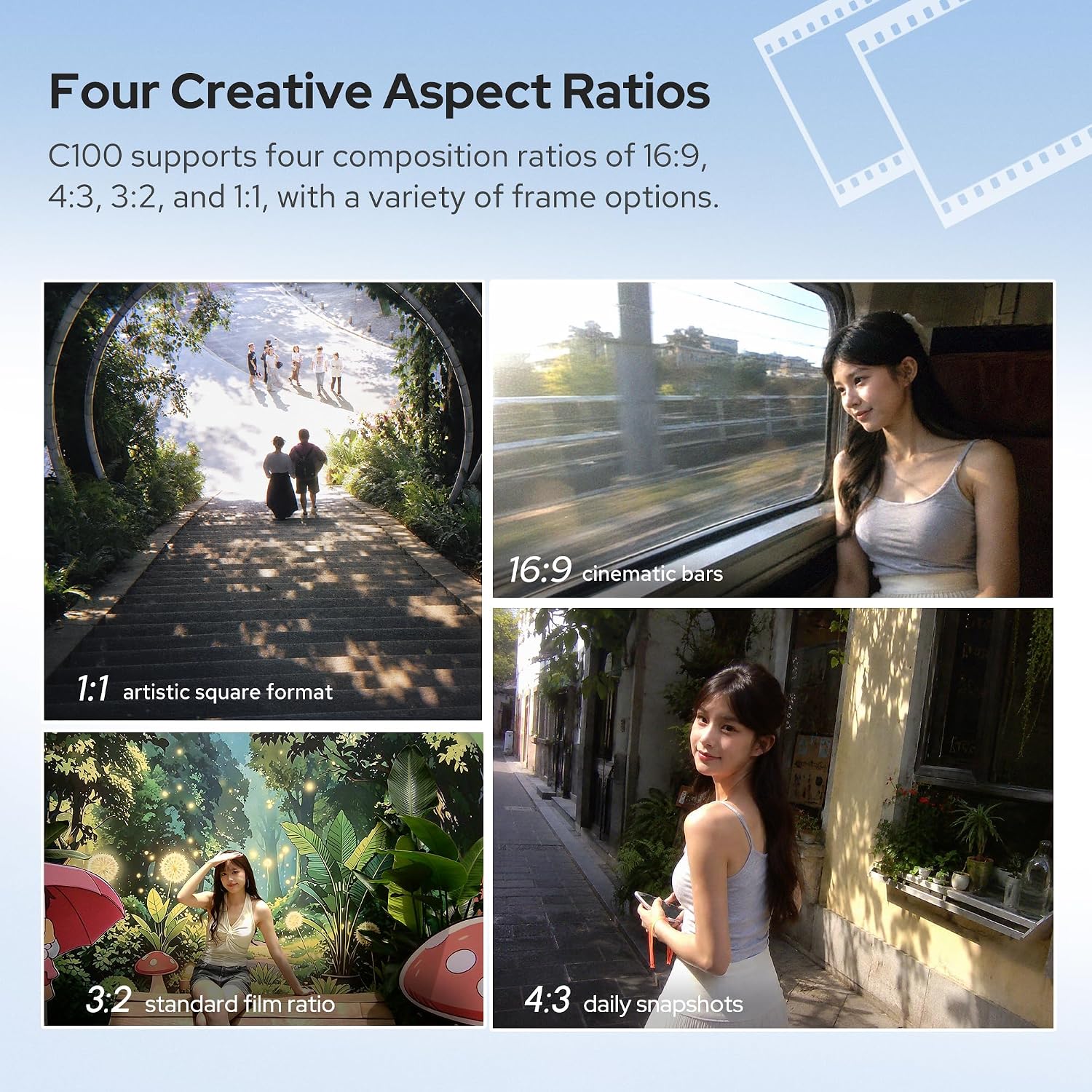
  • Four Creative Aspect Ratios – Switch easily between 16:9, 4:3, 3:2, and 1:1 to explore different visual styles.
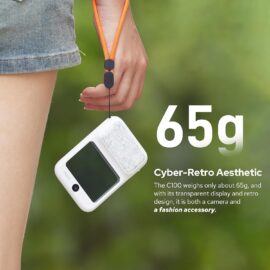
  • 65 g Pocket-Sized Design – Lightweight and easy to carry, making it a practical everyday companion wherever inspiration strikes.


Godox is launching its first camera with a transparent viewfinder: the C100

The post The Godox C100 transparent viewfinder camera is now available for $45 appeared first on Photo Rumors.

  •  
❌