Vue lecture

Samsung sucre les SSD SATA ? Vers un abandon du 2.5″

Cela fait un moment que les producteurs de SSD SATA 2.5″ réduisent la voilure. Il faut dire que depuis plus de trois ans l’énorme majorité des constructeurs de portables proposent uniquement des SSD au format M.2. Mis à part quelques rares exceptions, le format a largement été mis de côté par ce segment de l’industrie.

Même combat chez les fabricants de cartes mères qui proposent quasiment toutes des port M.2 par défaut. Les grandes marques de PC prêts à l’emploi ont également de plus en plus recours à ces SSD NVMe plus rapides et efficaces, un petit tour chez les géants du secteur donne un éclairage assez évident de la situation. Même sur les machines professionnelles les plus populaires du marché, le recours au NVMe est devenu quasi systématique. Si le format SATA3 est toujours présent, il sert surtout désormais à proposer la possibilité d’ajouter des disques mécaniques pour certains utilisateurs. Mais la très grande majorité des machines n’embarquent plus du tout de SSD SATA.

Les baies 2.5" pour SSD SATA ont quasiment disparu des MiniPC

Les baies 2.5″ pour SSD SATA ont quasiment disparu des MiniPC

Reste les machines plus anciennes ou celles qui veulent étendre leur stockage en n’ayant pas d’autre choix qu’une solution au format 2.5″. Cela représente un certain marché dont le volume décroit sans cesse depuis des années. Un marché surtout opéré par des pros pour des raisons de coût. Plus vraiment par choix.

Source HDin Research

Et cela se traduit en chiffres par une baisse mécanique du secteur depuis des années. Ce tableau indique que si les SSD SATA détenaient 70% du marché en 2017, ils n’ont plus que 15% de celui-ci en 2024. Ils sont même considérés comme un marché de niche lié à son avantage de coût. Bénéfice qui s’est largement estompé au fil du temps d’ailleurs. Avec l’arrivée des dernières générations de formats PCIe 4.0 et 5.0, les générations de SSD PCIe 3 ont vu leur prix baisser et se positionner face et parfois en dessous de celui des SSD SATA. 

Les SSD SATA ont déjà disparu

Face à ce recul dans un marché où Samsung n’est pas le plus important fabricant, on peut comprendre aisément la position de la marque. Samsung serait en train de largement baisser, voire de stopper totalement sa production de ces produits qui se vendent moins bien. Pour orienter ses lignes de production vers ce que les clients demandent, des SSD NVMe. On retrouve ici le B-A-BA du commerce en général : on produit ce que les gens veulent en majorité. Et surtout, on anticipe vers quoi le marché tend pour l’avenir. Avec la disparition plus ou moins complète des baies 2.5″ des portables, on sent bien que le moment n’est pas venu d’investir dans une nouvelle ligne de production à ce format. Tirer la sonnette d’alarme en annonçant que ce mouvement de Samsung va amplifier une crise des composants déjà là semble surtout vouloir jeter de l’huile sur le feu.

Des ports SATA sur une carte mère

Les constructeurs ont totalement anticipé ce mouvement puisque c’est tout simplement lui qui l’a initié. Dire l’inverse me parait grotesque. Je sais qu’il est vendeur de souffler sur les braises des crises pour faire du clic, mais il suffit de regarder autour de soi pour voir que le secteur du SSD SATA est en érosion constante depuis des années.

Ce portable Lenovo Ideapad Slim, qui date de 2023, est actuellement le modèle le moins cher de la marque sur Amazon. Même ce modèle ancien et très abordable est équipé d’un SSD M.2 2242. Les SSD SATA ont quasiment disparu de la production des principaux constructeurs mondiaux : Lenovo, HP, Dell, Apple et Asus. Il faut écumer des pages et des pages de références pour trouver la moindre offre commerciale pour les pros comme les particuliers avec ce type de stockage par défaut.

Sur les segments qui nous occupent le plus, les MiniPC, les portables et même les formats de PC utilisant des cartes mères Micro-ATX et Mini-ITX, les SSD SATA sont en nette voie de disparition. Les constructeurs préférant proposer deux ou trois emplacements M.2 plutôt qu’un seul associé à une baie 2.5″. Sur les portables, même de grande diagonale, c’est devenu évident. Quant aux cartes mères, les ports SATA ressemblent souvent plus à un reliquat du passé qu’à une option totalement exploitée.

Les SSD SATA sont donc en plein déclin, depuis longtemps. Et cela n’a rien à voir avec la crise des composants actuelle. Du reste, si Samsung recentre sa stratégie autour de nouvelles puces de stockage, c’est peut-être justement pour proposer des solutions en forte demande. Chercher à anticiper une hausse constante des commandes au lieu de continuer à produire des SSD SATA qui se vendent beaucoup moins. Si Samsung ne réagit pas assez tôt, on connait le scénario le plus probable. Une surproduction de SSD SATA qui va conduire à une baisse de leur tarif d’un côté. Une sous-production de SSD NVMe qui conduira à une augmentation des prix de l’autre.

Samsung sucre les SSD SATA ? Vers un abandon du 2.5″ © MiniMachines.net. 2025

  •  

Doom Studio id Software Forms 'Wall-To-Wall' Union

id Software employees voted to form a wall-to-wall union with the CWA, covering all roles at the Doom studio. "The vote wasn't unanimous, though a majority did vote in favor of the union," notes Engadget. From the report: The union will work in conjunction with the Communications Workers of America (CWA), which is the same organization involved with parent company ZeniMax's recent unionization efforts. Microsoft, who owns ZeniMax, has already recognized this new effort, according to a statement by the CWA. It agreed to a labor neutrality agreement with the CWA and ZeniMax workers last year, paving the way for this sort of thing. From the onset, this union will look to protect remote work for id Software employees. "Remote work isn't a perk. It's a necessity for our health, our families, and our access needs. RTO policies should not be handed down from executives with no consideration for accessibility or our well-being," said id Software Lead Services Programmer Chris Hays. He also said he looks forward to getting worker protections regarding the "responsible use of AI."

Read more of this story at Slashdot.

  •  

Cisco Stock Hits New All-Time High, 25 Years After the Dotcom Bubble Burst

Cisco's stock price touched $80.25 on Wednesday, finally eclipsing its dotcom-era peak of $80.06 set on March 27, 2000 -- when the networking giant briefly surpassed Microsoft to become the world's most valuable company. The journey back took 25 years, eight months and 13 days. The company's fundamentals improved dramatically over that period, of course. Revenues have nearly quintupled since 1999, profits have quadrupled, earnings per share have grown eightfold, and margins have remained healthy throughout. Investors who bought at the peak still lost money to inflation for a generation. Cisco's trajectory draws obvious comparisons to Nvidia, today's dominant "picks and shovels" supplier for the AI boom. Nvidia trades at a price-to-earnings ratio above 45 and an enterprise value-to-sales ratio near 24. At its 2000 peak, Cisco traded at a P/E above 200 and EV/sales of 31.

Read more of this story at Slashdot.

  •  

Qualcomm Acquires RISC-V Chip Designer Ventana Micro Systems

Qualcomm has acquired RISC-V startup Ventana to strengthen its CPU ambitions beyond mobile, "reinforcing its commitment and leadership in the development of the RISC-V standard and ecosystem," the company said in a press release. CRN Magazine reports: The San Diego-based company said Ventana's expertise in RISC-V, a free and open alternative to the Arm and x86 instruction set architectures, will enhance its CPU engineering capabilities and complement "existing efforts to develop custom Oryon CPU technology." Financial terms of the deal were not disclosed. Qualcomm, which has already been using RISC-V for some products outside the PC and server markets, said Ventana's contributions will boost its "technology leadership in the AI era across all businesses," indicating the broad impact expected by this acquisition. "We believe the RISC-V instruction set architecture has the potential to advance the frontier on CPU technology, enabling innovation across products," Durga Malladi, executive vice president and general manager of technology planning, edge solutions and data center for Qualcomm, said in a statement. "The acquisition of Ventana Micro Systems marks a pivotal step in our journey to deliver industry-leading RISC-V-based CPU technology across products." Further reading: Qualcomm Is Buying Arduino, Releases New Raspberry Pi-Esque Arduino Board

Read more of this story at Slashdot.

  •  

Wells Fargo CEO Says More Job Cuts Coming at the Bank as AI Prompts 'Efficiency'

Wells Fargo expects more job cuts and higher severance costs in this quarter that ends in three weeks, bank CEO and President Charlie Scharf said Tuesday at an investors conference in New York. He's also betting on AI to drive efficiency and, eventually, further workforce reduction.From a report: "As we've gone through the budgeting process, and even pre AI, we do expect to have less people as we go into next year," Scharf said at the Goldman Sachs Financial Services Conference in New York City. "We'll likely have more severance in the fourth quarter." The fourth quarter runs Oct. 1 through Dec. 31 for the San Francisco-basaed bank. Wells Fargo already has shrunk from 275,000 employees to about 210,000 since Scharf joined the bank in 2019 -- about a 24% decrease. Its largest employee base remains in Charlotte, with about 27,000 workers.

Read more of this story at Slashdot.

  •  

Same Product, Same Store, but on Instacart, Prices Might Differ

A study this week has found that shoppers using Instacart are often charged different prices for identical products at the same store at the same time, even when selecting in-store pickup rather than delivery. The Groundwork Collaborative, a progressive policy group, and Consumer Reports organized nearly 200 volunteers across four cities to simultaneously check prices on 20 grocery items. Price differences appeared on nearly three-quarters of the items tested. In one test, more than 40 participants selected the same Safeway in Washington, D.C. and the same brand of eggs. Prices ranged from $3.99 to $4.79 -- a 20% spread. At a Target in North Canton, Ohio, Skippy peanut butter was $2.99 for some shoppers and $3.59 for others. The full 20-item basket varied by about 7% within each store. An Instacart spokeswoman said retailers on its platform set their own prices and that some run short-term, randomized pricing tests. The company said tests were "never based on personal or behavioral characteristics." Instacart acquired Eversight, an AI-driven pricing optimization company, in 2022. A Target spokesman said the company is not affiliated with Instacart and bears no responsibility for prices on the platform. Safeway and parent company Albertson's declined to comment.

Read more of this story at Slashdot.

  •  

Nvidia Builds Location Verification Tech That Could Track Where Its AI Chips End Up

Nvidia has developed location verification technology that could determine which country its AI chips are operating in, Reuters reports, citing a source, a capability that may help address ongoing concerns about the smuggling of advanced semiconductors to restricted markets like China. The feature, which Nvidia has demonstrated privately in recent months but has not released, would be an optional software tool that customers install. It taps into the confidential computing capabilities of Nvidia's GPUs and uses the time delay in communicating with Nvidia-run servers to approximate a chip's location. The technology will first be available on Nvidia's newest Blackwell chips, though the company is examining options for its older Hopper and Ampere generations. U.S. lawmakers and the White House have pushed for location verification measures as the Department of Justice has brought criminal cases against smuggling rings allegedly attempting to move more than $160 million worth of Nvidia chips to China.

Read more of this story at Slashdot.

  •  

Argent : les 5 principes essentiels à inculquer à nos enfants (le plus tôt possible)

NOS CONSEILS - Comment leur apprendre, très jeunes, la valeur des choses ? Leur inculquer les bases de la gestion d’un budget ? Et les initier, adolescents, à l’autonomie financière ? Puisque l’école ne prend pas en charge l’éducation financière, c’est souvent aux parents que ce rôle complexe incombe...

© goodluz - stock.adobe.com

Dépenser, économiser, gérer un budget s’apprennent et ce, dès le plus jeune âge. 
  •  

The Inevitable Shape of Cheap Online Retail

Pinduoduo in China, Shopee in Southeast Asia, and Meesho in India operate in markets that could hardly be more different -- an upper-middle-income industrial state, a stitched-together archipelago of under-banked economies, and a country where three-quarters of retail is unorganized and e-commerce penetration sits at about 7% -- yet all three have landed on the same business model. These platforms run asset-light marketplaces specializing in cheap goods and slow delivery, monetizing through logistics mark-ups, advertising, and installment credit rather than retail margins. Temu and Shein are further variations now expanding in the U.S. and Europe. The economics are thin for all. Pinduoduo's EBITDA margins on GMV (gross merchandise value) sit in a 0-4% band; Meesho's group-wide EBITDA hovers around break-even. Neither charges commissions on most sales; both earn through logistics mark-ups and advertising. Sponsored listings account for 1-3% of GMV at Indian marketplaces and 4-5% at Alibaba and Pinduoduo. Credit is the more consequential side business. In India, cash on delivery functions as unofficial credit. Meesho CEO Vidit Aatrey said the customers prefer CoD for its "built-in delay," which effectively makes it "a five-day loan." Geography, income, and regulation were supposed to produce different answers. They produced one: a 3% endgame where e-commerce clips a few points of GMV and relies on attention and credit for profits.

Read more of this story at Slashdot.

  •  

How Pokemon Cards Became a Stock Market For Millennials

The Pokemon Trading Card Game has quietly transformed into something its creators never intended: a speculative asset class dominated by adults hunting for profit while children struggle to find a single pack on store shelves. The resale market has climbed so high that the latest set, Phantasmal Flames, had a rare Charizard illustration valued at more than $800 before anyone had even pulled one from a pack -- a pack that retails for about $5.3. Ben Thyer, owner of BathTCG in Bath, has watched his shop become a flashpoint. His staff have received threats from customers, and he's heard reports of attacks and robberies at other stores. He stopped selling whole boxes of booster packs and now limits individual pack purchases. On Amazon, customers can only enter raffles for the chance to buy cards at all.The Pokemon Company printed 10.2 billion cards in the year ending March 2025 and still cannot meet demand. The company shared a seven-month-old statement saying it is printing "at maximum capacity." Thyer sees signs of a correction -- prices on singles and sealed products are falling -- but expects renewed frenzy around Pokemon's 30th anniversary in early 2026.

Read more of this story at Slashdot.

  •  

India's Aviation Crisis Is All About Too Big to Tame

India's dominant airline IndiGo has cancelled roughly 3,000 flights since last week after new pilot fatigue regulations collided with technical issues and the seasonal schedule shift, stranding more than half a million passengers and forcing aviation authorities to reverse course on the safety rules they had just implemented. InterGlobe Aviation, IndiGo's parent company, told regulators that stricter requirements for night flying and weekly rest periods created an acute crew shortage. The Airline Pilots Association of India called the regulatory rollback a "dangerous precedent," noting that management had known about the requirements since early last year. IndiGo controls 65.6% of India's domestic aviation market as of October 2025 and briefly became the world's most valuable airline in April. The crisis arrives as India's second-largest carrier, Air India, remains under investigation following a June crash that killed 241 passengers and crew. Authorities have imposed temporary price caps to prevent gouging.

Read more of this story at Slashdot.

  •  

IBM To Buy Confluent For $11 Billion To Expand AI Services

IBM is buying Confluent for $11 billion in a major push to own real-time data streaming infrastructure essential for enterprise AI workloads. It marks Big Blue's biggest acquisition since Red Hat in 2019. Bloomberg reports: The AI boom has touched off billions of dollars in deals for businesses that build, train or leverage the technology, propelling the value of an entire ecosystem of data center developers, software makers, generative AI tool developers and data management firms. Mountain View, California-based Confluent sits in the data corner of that world, providing a platform for companies to gather -- or "stream" -- and analyze data in real time as opposed to shipping data in clunkier batches. Manufacturers such as Michelin, for example, have used Confluent's platform to optimize their inventories of raw and semi-finished materials live. Instacart adopted Confluent to develop real-time fraud detection systems and gain more visibility into the availability of products sold on its grocery delivery platform. Businesses are increasingly tapping AI systems that manage tasks like this in real-time and require live flows of data to do so. IBM, which pioneered mainframe computers, has been trying to reposition its business around AI over the past few years. Under Chief Executive Officer Arvind Krishna, it's been buying software companies and selling generative AI-related services to enterprise clients. Software now makes up almost half its total revenue and continues to grow at a steady rate.

Read more of this story at Slashdot.

  •  

How the Dollar-Store Industry Overcharges Cash-Strapped Customers While Promising Low Prices

Dollar General and Family Dollar stores have collectively failed more than 6,400 government price-accuracy inspections since January 2022, charging customers more at checkout than the prices displayed on shelves for everything from frozen pizzas to puppy food, according to an investigation by the Guardian. The review examined records from 45 states and more than 140 counties and cities. Dollar General stores failed over 4,300 inspections across 23 states, and Family Dollar failed more than 2,100 in 20 states. Error rates at the worst-performing locations reached staggering levels -- 76% at a Dollar General in Hamilton, Ohio and 68% at a Family Dollar in Bound Brook, New Jersey. A Family Dollar in Provo, Utah failed 28 consecutive inspections. Industry watchers, employees and lawsuits attribute the discrepancies to minimal staffing. Registers update automatically when prices change, but shelf labels require manual replacement, and workers often lack the time. State attorneys general have pursued settlements -- Arizona reached a $600,000 deal with Family Dollar in May, Colorado settled with Dollar General for $400,000 in October and Ohio secured $1 million from Dollar General after finding error rates as high as 88%. Both companies declined interview requests but said they remain committed to pricing accuracy.

Read more of this story at Slashdot.

  •  

The Accounting Uproar Over How Fast an AI Chip Depreciates

Tech giants including Meta, Alphabet, Microsoft and Amazon have all extended the estimated useful lives of their servers and AI equipment over the past five years, sparking a debate among investors about whether these accounting changes are artificially inflating profits. Meta this year increased its depreciation timeline for most servers and network assets to 5.5 years, up from four to five years previously and as little as three years in 2020. The company said the change reduced its depreciation expense by $2.3 billion for the first nine months of 2025. Alphabet and Microsoft now use six-year periods, up from three in 2020. Amazon extended to six years by 2024 but cut back to five years this year for some servers and networking equipment. Michael Burry, the investor portrayed in "The Big Short," called extending useful lives "one of the more common frauds of the modern era" in an article last month. Meta's total depreciation expense for the nine-month period was almost $13 billion against pretax profit exceeding $60 billion.

Read more of this story at Slashdot.

  •  

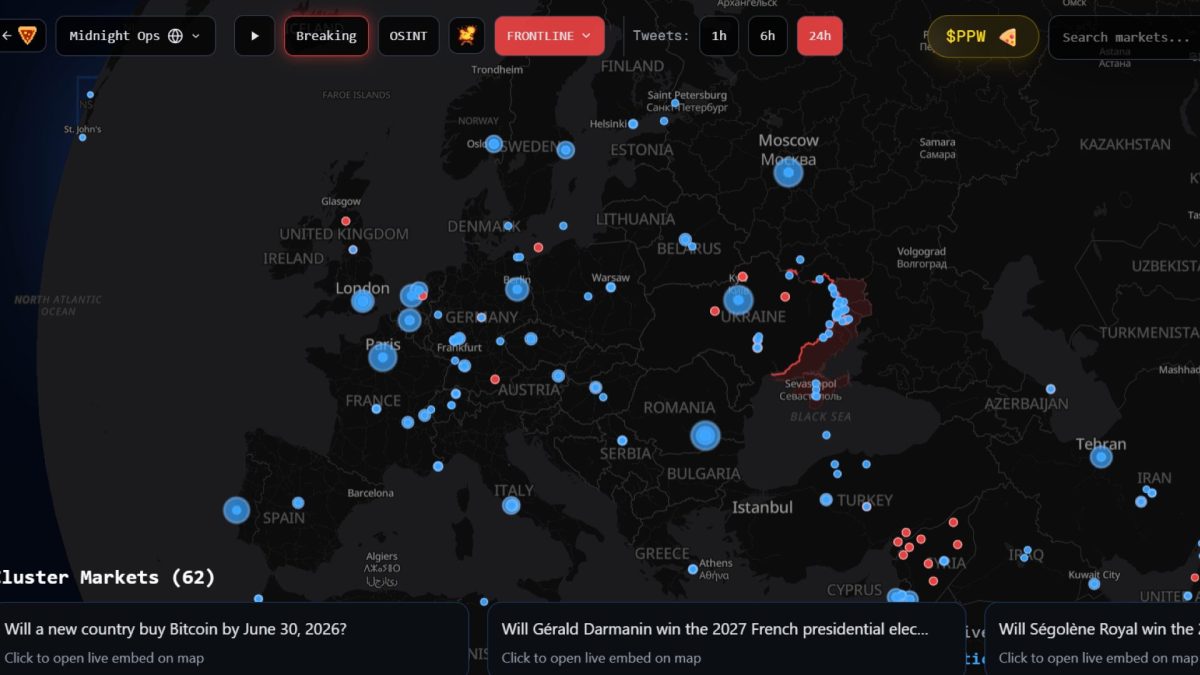
Ce « Google Maps des paris » cartographie Polymarket pour mieux marchandiser la géopolitique

En s’appuyant sur Polymarket, la plateforme Polyglobe propose une cartographie numérique des conflits pour suivre l’évolution des paris liés à l’actualité internationale. Alimenté par des données anonymes et une cryptomonnaie dédiée, le dispositif convertit la géopolitique en opportunité de marché.

  •  

Amazon Pitches AI Tools as Co-Workers While Axing Jobs

Amazon used its annual re:Invent cloud conference in Las Vegas to pitch a vision of the workplace where AI agents serve not as tools but as "co-workers" and "teammates," even as the company proceeds with eliminating roughly 14,000 corporate jobs in its second major workforce reduction in recent years. AWS CEO Matt Garman predicted on stage that autonomous "frontier agents" could represent 80 to 90% of enterprise AI value. Colleen Aubrey, senior vice president of applied AI solutions, described a future where companies manage "teams" of agents capable of working autonomously for hours or days while humans shift into supervisory roles. Amazon has already deployed agentic systems across tens of thousands of its own engineers to triage outages and propose fixes. The company calls these systems "teammates" rather than tools. CEO Andy Jassy has warned that AI would shrink Amazon's workforce, though a spokesperson attributed the current cuts to "reducing bureaucracy" and "removing layers" rather than AI deployment.

Read more of this story at Slashdot.

  •  

SpaceX se prépare à décoller vers Wall Street : la prochaine entreprise à mille milliards ?

spacex musk

SpaceX ne vise pas seulement Mars, mais aussi Wall Street. Le géant du vol spatial préparerait une entrée en bourse pour le second semestre 2026. Avec une valorisation potentielle de 800 milliards de dollars, le groupe américain pourrait devenir l'une des entreprises les plus puissantes de la planète.

  •  

800 milliards de dollars : avec SpaceX en bourse, Elon Musk s’apprête à créer un second titan financier

spacex musk

SpaceX ne vise pas seulement Mars, mais aussi Wall Street. Le géant du vol spatial préparerait une entrée en bourse pour le second semestre 2026. Avec une valorisation potentielle de 800 milliards de dollars, le groupe américain pourrait devenir l'une des entreprises les plus puissantes de la planète.

  •  

Netflix To Buy Warner Bros. In $72 Billion Cash, Stock Deal

Netflix is buying Warner Bros. Discovery in an $82.7 billion deal that gives it HBO, iconic franchises, and major studio infrastructure. "Warner Bros. shareholders will receive $27.75 a share in cash and stock in Netflix," notes Bloomberg. "The total equity value of the deal is $72 billion, while the enterprise value of the deal is about $82.7 billion." From the report: Prior to the closing of the sale, Warner Bros. will complete the planned spinoff of its networks division, which includes cable channels such as CNN, TBS and TNT. That transaction is now expected to be completed in the third quarter of 2026, Netflix said in a statement. With the purchase, Netflix becomes owner of the HBO network, along with its library of hit shows like The Sopranos and The White Lotus. Warner Bros. assets also include its sprawling studios in Burbank, California, along with a vast film and TV archive that includes Harry Potter and Friends. Netflix said it expects to maintain Warner Bros.' current operations and build on its strengths, including theatrical releases for films, a point that had been a cause of concern in Hollywood. Netflix said the deal will allow it to "significantly expand" US production capacity and invest in original content, which will create jobs and strengthen the entertainment industry. Still, the combination is also expected to create "at least $2 billion to $3 billion" in cost savings per year by the third year, according to the statement. U.S. Senator Mike Lee, a Republican from Utah who leads the Senate antitrust committee, said the acquisition "should send alarm to antitrust enforcers around the world." "Netflix built a great service, but increasing Netflix's dominance this way would mean the end of the Golden Age of streaming for content creators and consumers," Lee wrote in a post on X. U.S. Senator Elizabeth Warren called it an antitrust "nightmare" that would harm workers and consumers. "A Netflix-Warner Bros would create one massive media giant with control of close to half of the streaming market -- threatening to force Americans into higher subscription prices and fewer choices over what and how they watch, while putting American workers at risk," Warren said on Friday. "It would mean more price hikes, ads, & cookie cutter content, less creative control for artists, and lower pay for workers," she said in a post on X. "The media industry is already controlled by a few corporations with too much power to censor free speech. The gov't must step in."

Read more of this story at Slashdot.

  •