Sigma is “still working on the development of the sensor” [17:00].
Current status: The project is still in the “technology development” stage [17:11]. They have not yet started the design of the actual, final sensor [17:11].
Focus: The team is currently working on the “design of the pixel architecture” [17:20].
Delays: The project has been “a little bit delayed” [17:30] because as they test prototype wafers, they encounter “technical issues” [17:53].
Development team: The sensor development is now being handled primarily by the Sigma Japan engineering team [18:02].
Path forward: Mr. Yamaki mentions that the technical problems “have been narrowing down” [18:12]. Once the team is confident that the technology is ready, they will start the final sensor design and move toward production [18:23].
Long recap
Current Development Stage:
Sigma is still in the pixel architecture design phase and has not yet begun fabricating the full sensor prototype. This involves second-round test-wafer runs to evaluate small-scale prototypes with reduced pixel counts.
Yamaki emphasizes that Sigma has “never designed a sensor by ourselves before,” highlighting the in-house challenges since acquiring Foveon in 2008. Previous Foveon sensors were co-developed, but this full-frame version is a from-scratch effort.
Technical Innovations and Improvements:
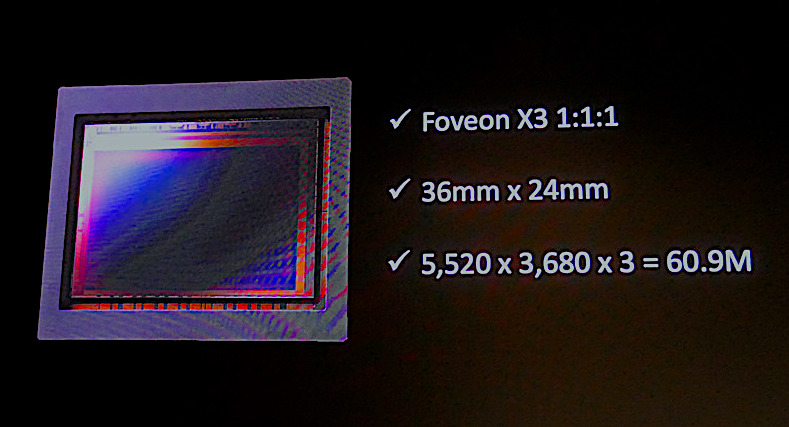
The new sensor aims for a full-frame (35mm) format with a stacked back-side illuminated (BSI) structure and on-chip phase-detect autofocus—features absent in older Foveon designs like the SD1 Merrill (2011) or Quattro series (2014-2016).
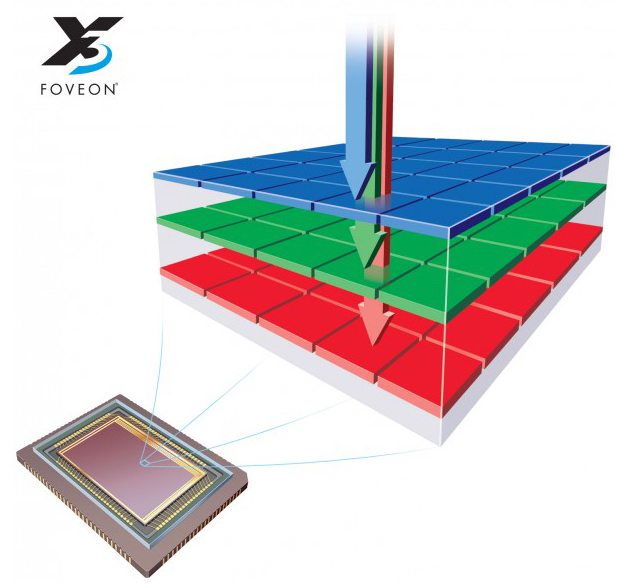
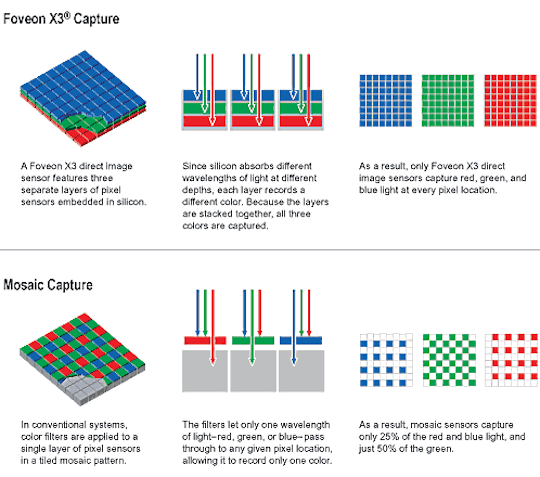
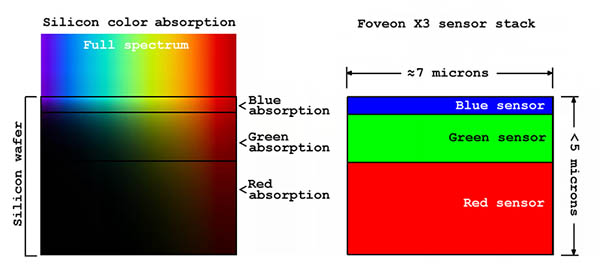
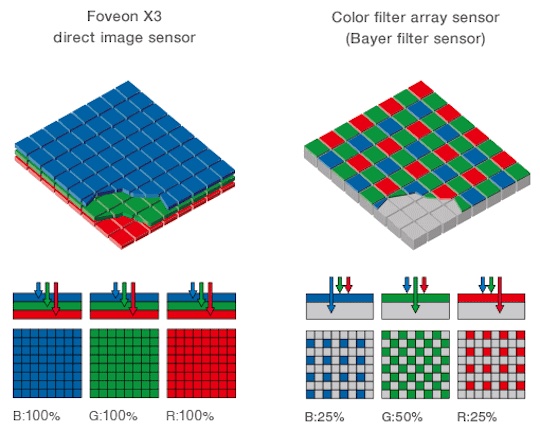
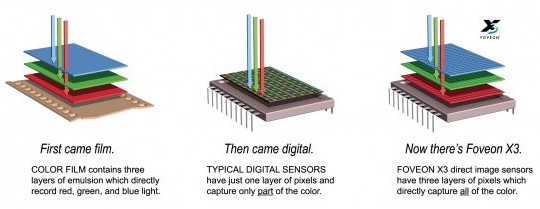
It retains the X3 1:1:1 layered architecture (equal pixel counts per RGB layer, unlike the 1:1:4 ratio in Quattro sensors), promising better dynamic range, color fidelity, and resolution (potentially 60MP effective).
Yamaki discusses crosstalk between RGB layers as a unique strength, enabling “distinct color gradation” that outperforms Bayer sensors in studio, landscape, and portrait work.
Challenges and Delays:
Development, first teased in 2018, has faced repeated setbacks, including ending a partnership with a sensor manufacturer, requiring a restart. As of October 2025, it’s “almost at the final stage of technology development” but not ready for mass production.
Key hurdles include power consumption, heat dissipation (due to three analog-to-digital converters), and achieving “perfect” pixel performance. Yamaki states they won’t proceed to production until issues are fully resolved: “The Foveon chip will appear when the pixel is perfect.”
No video capabilities are mentioned for the initial release, as early Foveon sensors struggled with even low-res video (e.g., 480p on DP series).
Future Outlook and Commitment:
Sigma remains dedicated, viewing Foveon as a “niche but valuable” technology for enthusiasts seeking ultimate image quality over high-volume sales. It could integrate into future Sigma fp mirrorless cameras (e.g., a “fp X3” variant).
Yamaki expresses optimism: “Technical problems have been narrowing down,” and once confident, they’ll move to full sensor design and production. However, no timeline is given—explicitly not in 2025, and possibly 2026 or later.
The video touches on broader philosophy: Sigma’s “beautiful foolishness” in pursuing innovative, non-mainstream tech like Foveon, despite market trends favoring Sony/ Canon sensors.

 Connexion