
Vue lecture

Microsoft 365 Endured 9+ Hours of Outages Thursday

Early Friday "there were nearly 113 incidents of people reporting issues with Microsoft 365 as of 1:05 a.m. ET," reports Reuters. But that's down "from over 15,890 reports at its peak a day earlier, according to Downdetector." Reuters points out the outage affected antivirus software Microsoft Defender and data governance software Microsoft Purview, while CRN notes it also impacted "a number of Microsoft 365 services" including Outlook and Exchange online: During the outage, Outlook users received a "451 4.3.2 temporary server issue" error message when attempting to send or receive email. Users did not have the ability to send and receive email through Exchange Online, including notification emails from Microsoft Viva Engage, according to the vendor. Other issues that cropped up include an inability to send and receive subscription email through [analytics platform] Microsoft Fabric, collect message traces, search within SharePoint online and Microsoft OneDrive and create chats, meetings, teams, channels or add members in Microsoft Teams... As with past cloud outages with other vendors, even after Microsoft fixed the issues, recovery efforts by its users to return to a normal state took additional time... Microsoft confirmed in a post on X [Thursday] at 4:14 p.m. ET that it "restored the affected infrastructure to a (healthy) state" but "further load balancing is required to mitigate impact...." The company reported "residual imbalances across the environment" at 7:02 p.m., "restored access to the affected services" and stable mail flow at 12:33 a.m. Jan. 23. At that time, Microsoft still saw a "small number of remaining affected services" without full service stability. The company declared impact from the event "resolved" at 1:29 p.m. Eastern. Microsoft sent out another X post at 8:20 a.m. asking users experiencing residual issues to try "clearing local DNS caches or temporarily lowering DNS TTL values may help ensure a quicker remediation...." Microsoft said in an admin center update that [Thursday's] outage was "caused by elevated service load resulting from reduced capacity during maintenance for a subset of North America hosted infrastructure." Furthermore, Microsoft noted that during "ongoing efforts to rebalance traffic" it introduced a "targeted load balancing configuration change intended to expedite the recovery process, which incidentally introduced additional traffic imbalances associated with persistent impact for a portion of the affected infrastructure." US itek's David Stinner said it appears that Microsoft did not have enough capacity on its backup system while doing maintenance on its main system. "It looks like the backup system was overloaded, and it brought the system down while they were still doing maintenance on the main system," he said. "That is why it took so many hours to get back up and running. If your primary system is down for maintenance and your backup system fails due to capacity issues, then it is going to take a while to get your primary system back up and running." "This was not Microsoft's first outage of 2026," the article notes, "with the vendor handling access issues with Teams, Outlook and other M365 services on Wednesday, a Copilot issue on Jan. 15 plus an Azure outage earlier in the month..."

Read more of this story at Slashdot.
  •  

The Microsoft-OpenAI Files

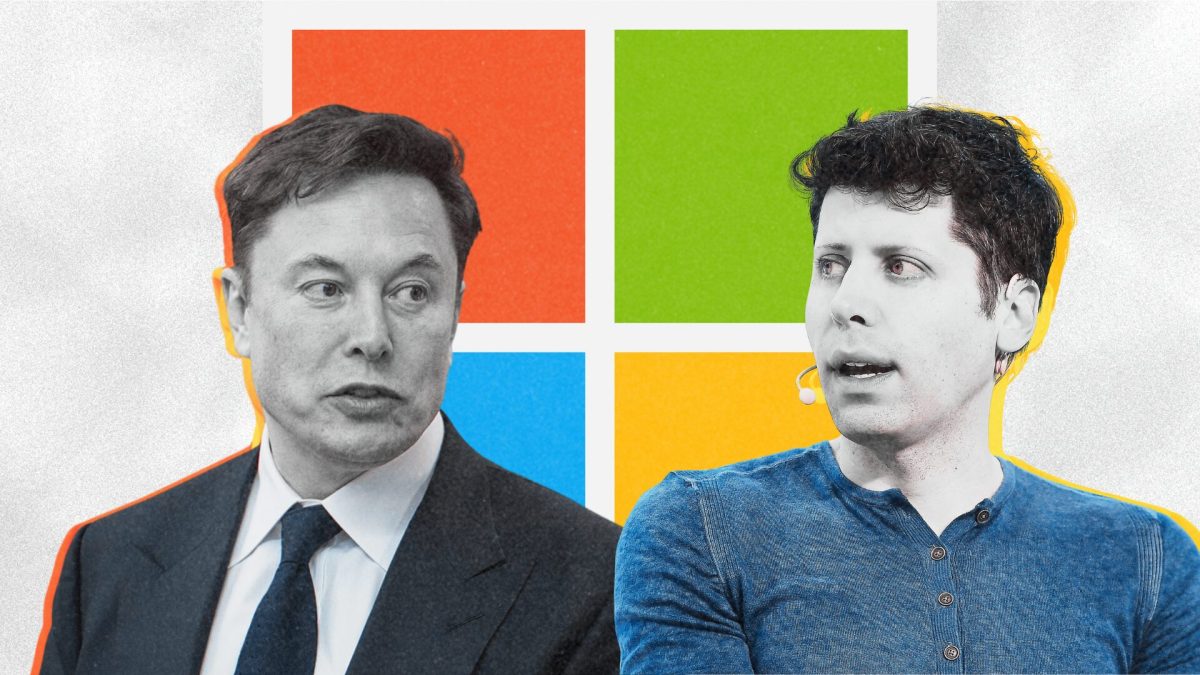
Longtime Slashdot reader theodp writes: GeekWire takes a look at AI's defining alliance in The Microsoft-OpenAI Files, an epic story drawn from 200+ documents, many made public Friday in Elon Musk's ongoing suit accusing OpenAI and its CEO Sam Altman of abandoning the nonprofit mission (Microsoft is also a defendant). Musk, who was an OpenAI co-founder, is seeking up to $134 billion in damages. "Previously undisclosed emails, messages, slide decks, reports, and deposition transcripts reveal how Microsoft pursued, rebuffed, and backed OpenAI at various moments over the past decade, ultimately shaping the course of the lab that launched the generative AI era," reports GeekWire. "The latest round of documents, filed as exhibits in Musk's lawsuit, [...] show how Nadella and Microsoft's senior leadership team rally in a crisis, maneuver against rivals such as Google and Amazon, and talk about deals in private." Even though Microsoft didn't have a seat on the OpenAI board, text messages between Microsoft CEO Satya Nadella and OpenAI CEO Sam Altman following Altman's firing as CEO in Nov. 2023 (news of which sent Microsoft's stock plummeting), revealed in the latest filings, show just how influential Microsoft was. A day after Altman's firing, Nadella sent Altman a detailed message from Brad Smith, Microsoft's president and top lawyer, explaining that Microsoft had created a new subsidiary called Microsoft RAI (Responsible Artificial Intelligence) Inc. from scratch -- legal work done, papers ready to file as soon as the WA Secretary of State opened Monday morning -- and was ready to capitalize and operationalize it to "support Sam in whatever way is needed," including absorbing the OpenAI team at a calculated cost of roughly $25 billion. (Altman's reply: "kk"). Just days later, as he planned his return as CEO to the now-reeling-from-Microsoft-punches nonprofit, Altman joined Microsoft's Nadella, Smith, and CTO Kevin Scott in a text messaging thread in which the four vetted prospective board members to replace those who had ousted Altman. Later that night, OpenAI announced Altman's return with the newly constituted board. If you like stories with happy Microsoft endings, as part of an agreement clearing the way for OpenAI to restructure as a for-profit business, Microsoft in October received a 27% ownership stake in OpenAI worth approximately $135 billion and retains access to the AI startup's technology until 2032, including models that achieve AGI.

Read more of this story at Slashdot.

  •  

Râlage du jour (oui, encore Microsoft)

JE.
VAIS.
DÉCAPITER.
LES.
DÉVELOPPEURS.
DE.
MICROSOFT.

Un collègue m'envoi un bout de code dans Teams (dans un bloc de code). J'utilise le bouton "copier" dans Teams, je colle dans dans un autre logiciel. Erreur de syntaxe.

Le message envoyé par le collègue, à l'écran, contient : '</U>','</span>'
Ce que j'obtiens dans le presse-papier : '</U>',''</span>

J'adore quand Microsoft *sabote* mon boulot. 😒
MÊME LE COPIER-COLLER, ILS NE SONT PLUS FOUTUS DE LE FAIRE CORRECTEMENT. 💩💩💩
Ça dépense des DIZAINES DE MILLIARDS de dollars dans l'IA, mais ça ne sait même plus faire ce qu'un Mac 128k de 1984 savait assurer sans faillir.
(Permalink)
  •  

Microsoft's Xbox Cloud Gaming May Soon Let You Stream Your Own Games for Free - If You Watch Ads

Microsoft appears to be preparing an ad-supported tier for Xbox Cloud Gaming that would let players stream games they've purchased digitally without needing a Game Pass subscription, according to a Windows Central report citing sources familiar with the plans. Users last week began noticing a new message pop up while launching cloud games that referenced "1 hour of ad supported play time per session," though no such tier currently exists. The ad-supported option, expected to launch sometime this year, would specifically target the hundreds of games available for digital purchase through Xbox Cloud Gaming -- titles that currently require at least one tier of Game Pass to stream despite being owned outright by the player.

Read more of this story at Slashdot.

  •  

Microsoft is Closing Its Employee Library and Cutting Back on Subscriptions

An anonymous reader shares a report: Microsoft's library of books is so heavy that it once caused a campus building to sink, according to an unproven legend among employees. Now those physical books, journals, and reports, and many of Microsoft's digital subscriptions to leading US newspapers, are disappearing in a shift described inside Microsoft as an "AI-powered learning experience." Microsoft started cutting back on its employee subscriptions to news and reports services in November, with some publishers receiving an automated email cancellation of a contract. [...] Strategic News Service (SNS), which has provided global reports to Microsoft's roughly 220,000 employees and executives for more than 20 years, is no longer part of Microsoft's subscription list.

Read more of this story at Slashdot.

  •  

UK Police Blame Microsoft Copilot for Intelligence Mistake

The chief constable of one of Britain's largest police forces has admitted that Microsoft's Copilot AI assistant made a mistake in a football (soccer) intelligence report. From a report: The report, which led to Israeli football fans being banned from a match last year, included a nonexistent match between West Ham and Maccabi Tel Aviv. Copilot hallucinated the game and West Midlands Police included the error in its intelligence report without fact checking it. "On Friday afternoon I became aware that the erroneous result concerning the West Ham v Maccabi Tel Aviv match arose as result of a use of Microsoft Co Pilot [sic]," says Craig Guildford, chief constable of West Midlands Police, in a letter to the Home Affairs Committee earlier this week. Guildford previously denied in December that the West Midlands Police had used AI to prepare the report, blaming "social media scraping" for the error.

Read more of this story at Slashdot.

  •  

Microsoft Pledges Full Power Costs, No Tax Breaks in Response To AI Data Center Backlash

Microsoft announced Tuesday what it calls a "community first" initiative for its AI data centers, pledging to pay full electricity costs and reject local property tax breaks following months of growing opposition from residents facing higher power bills. The announcement in Washington, D.C. marks a clear departure from past practices; Microsoft has previously accepted tax abatements for data centers in Ohio and Iowa. Brad Smith, Microsoft's president, said the company has been developing the initiative since September. Residential power prices in data center hubs like Virginia, Illinois, and Ohio jumped 12-16% over the past year, faster than the U.S. average. Three Democratic senators launched an investigation last month into whether tech giants are raising residential bills. Microsoft also pledged a 40% improvement in water efficiency by 2030 and committed to replenishing more water than it uses in each district where it operates.

Read more of this story at Slashdot.
  •  

Microsoft Pulls the Plug On Its Free, Two-Decade-Old Windows Deployment Toolkit

Microsoft has abruptly retired the Microsoft Deployment Toolkit, a free platform that IT administrators have relied on to deploy Windows operating systems and applications for more than two decades. The retirement, reports the Register, came with "immediate" notice, meaning no more fixes, support, security patches, or updates, and the download packages may be removed from official distribution channels.

Read more of this story at Slashdot.
  •  

Microsoft May Soon Allow IT Admins To Uninstall Copilot

Microsoft is testing a new Windows policy that lets IT administrators uninstall Microsoft Copilot from managed devices. The change rolls out via Windows Insider builds and works through standard management tools like Intune and SCCM. BleepingComputer reports: The new policy will apply to devices where the Microsoft 365 Copilot and Microsoft Copilot are both installed, the Microsoft Copilot app was not installed by the user, and the Microsoft Copilot app was not launched in the last 28 days. "Admins can now uninstall Microsoft Copilot for a user in a targeted way by enabling a new policy titled RemoveMicrosoftCopilotApp," the Windows Insider team said. "If this policy is enabled, the Microsoft Copilot app will be uninstalled, once. Users can still re-install if they choose to. This policy is available on Enterprise, Pro, and EDU SKUs. To enable this policy, open the Group policy editor and go to: User Configuration -> Administrative Templates -> Windows AI -> Remove Microsoft Copilot App."

Read more of this story at Slashdot.

  •  

Microsoft Cancels Plans To Rate Limit Exchange Online Bulk Emails

Microsoft has canceled plans to impose a daily limit of 2,000 external recipients on Exchange Online bulk email senders. From a report: The change was announced in April 2024, when Microsoft said that it would add new External Recipient Rate (ERR) limits starting January 2025 to fight spam, with plans to begin enforcing the limit on cloud-hosted mailboxes of existing tenants between July and December 2025. As explained last year, this new Mailbox External Recipient Rate Limit was designed to prevent Microsoft 365 customers from abusing Exchange Online resources and to restrict unfair usage. However, on Tuesday, Microsoft announced that the Exchange Online bulk emailing rate limit is being canceled indefinitely, following negative customer feedback.

Read more of this story at Slashdot.

  •  

'Everyone Hates OneDrive, Microsoft's Cloud App That Steals Then Deletes All Your Files'

Microsoft's OneDrive cloud storage service has drawn renewed criticism for a particularly frustrating behavior pattern that can leave users without access to their local files after the service automatically activates during Windows updates. Author Jason Pargin recently outlined the problem: Windows updates can enable OneDrive backup without any plain-language warning or opt-out option, and the service then quietly begins uploading the contents of a user's computer to Microsoft's servers. The trouble begins when users attempt to disable OneDrive Backup. According to Pargin, turning off the feature can result in local files being deleted, leaving behind only a desktop icon labeled "Where are my files?" Users can redownload their files from Microsoft's servers, but attempting to then delete Microsoft's copies triggers another deletion of the local files. The only workaround requires users to hunt down YouTube tutorials that walk through the steps, as the relevant options are buried in menus and none clearly describe their function in plain English. Pargin compared the experience to a ransomware attack.

Read more of this story at Slashdot.

  •  

Everyone hates OneDrive, Microsoft's cloud app that steals then deletes all your files - Boing Boing

Des nouvelles de cette saloperie de Windows 11 : Non seulement Microsoft utilise des dark patterns pour inciter les utilisateurs à autoriser Microsoft à récupérer vos fichiers privés, mais en prime si vous supprimez vos fichiers de OneDrive, cela les supprime localement.
C'est en gros le fonctionnement d'un ransomeware: Il utilise de l'ingénierie sociale pour récupérer vos fichiers, et vous les fait perdre si vous essayez de vous échapper du système.
Franchement, si vous le pouvez, virez Windows.
(Permalink)
  •  
❌