Vue lecture

Samsung's 2026 Gaming Monitors Promise 6K, 3D, and Up To 1,040Hz

An anonymous reader shares a report: Samsung is breaking new ground with its 2026 lineup of gaming monitors, with the Odyssey 3D G90XH becoming the first to feature a 6K display with "glasses-free 3D." The new monitor comes with a 32-inch IPS panel, offering real-time eye-tracking that "adjusts depth and perspective" based on your position, along with a speedy 165Hz refresh rate that you can boost to 330Hz with a Dual Mode feature that switches to 3K. [...] A 6K 3D display isn't the only notable upgrade coming to Samsung's lineup; the company is launching the Odyssey G6 G60H, which it says is the "world's first" 1,040Hz gaming monitor. The 27-inch monitor only supports this ultra-fast refresh rate in HD, while its native 1440p resolution still offers speeds up to a very fast 600Hz. It's also compatible with AMD FreeSync Premium and NVIDIA G-Sync.

Read more of this story at Slashdot.

  •  

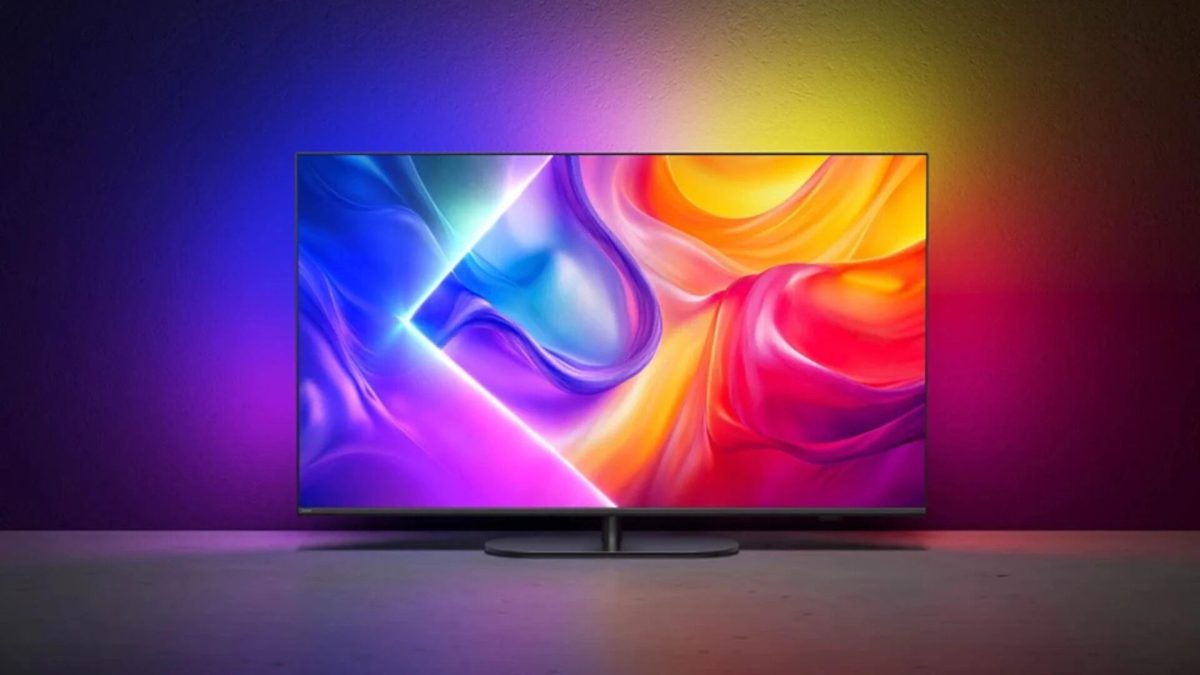
2025 Was the Beginning of the End of the TV Brightness War

The television industry's brightness war may have hit its inflection point in 2025, the year TCL and Hisense released the first consumer TVs capable of 5,000 nits under specific settings -- a figure that would have seemed absurd not long ago when manufacturers struggled to reach 2,000 nits. LG introduced Primary RGB Tandem OLED technology, moving from a three-stack panel design to a four-stack red-blue-green-blue configuration that the company claims can achieve 4,000 nits. The technology appears in the LG G5, Panasonic Z95B and Philips OLED950 and OLED910. RGB mini-LED also emerged as a new category. The technology uses individual small red, green and blue LED backlights instead of white or blue LEDs paired with quantum dots. Hisense demonstrated it at CES 2025, TCL announced its Q10M for China, and Samsung unveiled its own version called micro-RGB. These sets range from $12,000 to $30,000. Sony has confirmed it will debut RGB TV technology in spring 2026. HDR content is currently mastered at a maximum of 4,000 nits. The situation echoes the audio industry's loudness war, The Verge points out, which peaked with Metallica's heavily compressed Death Magnetic in 2008.

Read more of this story at Slashdot.

  •  

Texas Sues TV Makers For Taking Screenshots of What People Watch

mprindle writes: The Texas Attorney General sued five major television manufacturers, accusing them of illegally collecting their users' data by secretly recording what they watch using Automated Content Recognition (ACR) technology. The lawsuits target Sony, Samsung, LG, and China-based companies Hisense and TCL Technology Group Corporation. Attorney General Ken Paxton's office also highlighted "serious concerns" about the two Chinese companies being required to follow China's National Security Law, which could give the Chinese government access to U.S. consumers' data. According to complaints filed this Monday in Texas state courts, the TV makers can allegedly use ACR technology to capture screenshots of television displays every 500 milliseconds, monitor the users' viewing activity in real time, and send this information back to the companies' servers without the users' knowledge or consent.

Read more of this story at Slashdot.

  •  

LG's Software Update Forces Microsoft Copilot Onto Smart TVs

LG smart TV owners discovered over the weekend that a recent webOS software update had quietly installed Microsoft Copilot on their devices, and the app cannot be uninstalled. Affected users report the feature appears automatically after installing the latest webOS update on certain models, sitting alongside streaming apps like Netflix and YouTube. LG's support documentation confirms that certain preinstalled or system apps can only be hidden, not deleted. At CES 2025, LG announced plans to integrate Copilot into webOS as part of its "AI TV" strategy, describing it as an extension of its AI Search experience. The current implementation appears to function as a shortcut to a web-based Copilot interface rather than a native application. Samsung TVs include Google's Gemini in a similar fashion. Users wanting to avoid the feature entirely are left with one option: disconnecting their TV from the internet.

Read more of this story at Slashdot.

  •  

Arkansas Becoming 1st State To Sever Ties With PBS, Effective July 1

joshuark writes: Arkansas is becoming the first state to officially end its public television affiliation with PBS. The Arkansas Educational Television Commission, whose members are all appointed by the governor, voted to disaffiliate from PBS effective July 1, 2026, citing the $2.5 million annual membership dues as "not feasible." The decision was also driven by the loss of a similar amount in federal funding after the Corporation for Public Broadcasting (CPB) was defunded by Congress. PBS Arkansas is rebranding itself as Arkansas TV and will provide more local content, the agency's Executive Director and CEO Carlton Wing said in a statement. Wing, a former Republican state representative, took the helm of the agency in September. "Public television in Arkansas is not going away," Wing said. "In fact, we invite you to join our vision for an increased focus on local programming, continuing to safeguard Arkansans in times of emergency and supporting our K-12 educators and students." "The commission's decision to drop PBS membership is a blow to Arkansans who will lose free, over the air access to quality PBS programming they know and love," a PBS spokesperson wrote in an email to The Associated Press. The demise of the Corporation for Public Broadcasting, is a direct result of President Donald Trump's targeting of public media, which he has repeatedly said is spreading political and cultural views antithetical to those the United States should be espousing. Trump denied taking a big should on television viewers.

Read more of this story at Slashdot.

  •  

Cable Channel Subscribers Grew For the First Time In 8 Years Last Quarter

An anonymous reader quotes a report from Ars Technica: On Monday, research analyst MoffettNathanson released its "Cord-Cutting Monitor Q3 2025: Signs of Life?" report. It found that the pay TV operators, including cable companies, satellite companies, and virtual multichannel video programming distributors (vMVPDs) like YouTube TV and Fubo, added 303,000 net subscribers in Q3 2025. According to the report, "There are more linear video subscribers now than there were three months ago. That's the first time we've been able to say that since 2017." In Q3 2017, MoffettNathanson reported that pay TV gained 318,000 net new subscribers. But since then, the industry's subscriber count has been declining, with 1,045,000 customers in Q2 2025, as depicted in the graph [here]. The world's largest vMVPD by subscriber count, YouTube TV, claimed 8 million subscribers in February 2024; some analysts estimate that number is now at 9.4 million. In its report, MoffettNathanson estimated that YouTube TV added 750,000 subscribers in Q3 2025, compared to 1 million in Q3 2024. Traditional pay TV companies also contributed to the industry's unexpected growth by bundling its services with streaming subscriptions. Charter Communications offers bundles with nine streaming services, including Disney+, Hulu, and HBO Max. In Q3 2024, it saw net attrition of 294,000 customers, compared to about 70,000 in Q3 2025. Other cable companies have made similar moves. Comcast, for example, launched a streaming bundle with Netflix, Peacock, and Apple TV in May 2024. For Q3 2025, Comcast reported its best pay TV subscriber count in almost five years, which was a net loss of 257,000 customers. "Traditional pay TV -- i.e. cable and satellite -- still declined quarter over quarter in Q3, but again, by less," noted SteamTV Insider. "The [year-over-year] rate of attrition dropped from -12.4 percent to -10.2 percent over 12 months." MoffettNathanson added: "Yes, Q3 saw a positive net add number for [pay TV for] the first time in eight years, but that positive result came in the year's seasonally strongest quarter. We're not yet close to seeing the category actually grow again..."

Read more of this story at Slashdot.

  •  

Paramount Skydance Launches Hostile Bid For WBD After Netflix Wins Bidding War

Paramount Skydance is launching a hostile bid to buy Warner Bros. Discovery after it lost out to Netflix in a months-long bidding war for the legacy assets, the company said Monday. CNBC: Paramount will go straight to WBD shareholders with an all-cash, $30-per-share offer. That's the same bid WBD rejected last week, according to people familiar with the bid who asked not to be named because the details were private. The offer is backstopped with equity financing from the Ellison family and the private-equity firm RedBird Capital and $54 billion of debt commitments from Bank of America, Citi and Apollo Global Management. "We're really here to finish what we started," Ellison told CNBC's "Squawk on the Street" Monday. "We put the company in play." On Friday, Netflix announced a deal to acquire WBD's studio and streaming assets for $72 billion. David Ellison-run Paramount had been bidding for the entirety of Warner Bros. Discovery, including those assets and the company's TV networks like CNN and TNT Sports.

Read more of this story at Slashdot.

  •  

Could Netflix's Deal for Warner Bros. Fall Apart?

While Netflix hopes to buy Warner Bros. Discovery for $72 billion, CNBC reports a senior official in America's federal government said the administration was viewing the deal with "heavy skepticism. And that's not the only hurdle: On Thursday, The Wall Street Journal reported that Paramount, in a letter to lawyers for Warner Bros. Discovery [WBD], had warned that a sale to Netflix likely would "never close" because of regulatory challenges in the United States and overseas. "Acquiring Warner's streaming and studio assets 'will entrench and extend Netflix's global dominance in a matter not allowed by domestic or foreign competition laws,' Paramount's lawyers wrote," the Journal reported. Paramount "is now weighing its options about whether to go straight to shareholders with one more improved bid," CNBC reported Friday, "perhaps even higher than the $30-per-share, all-cash offer it submitted to Warner Bros. Discovery this week." And CNBC reported Friday that the review by America's Department of Justice "can take anywhere from months to more than a year." Netflix said Friday it expects the transaction to close in 12 to 18 months, after Warner Bros. Discovery spins out its portfolio of cable networks into Discovery Global... As part of the deal, Netflix has agreed to pay a $5.8 billion breakup fee to Warner Bros. Discovery if the deal were to get blocked by the government. Netflix's planned move is already drawing high-powered criticism, reports CNN: "The world's largest streaming company swallowing one of its biggest competitors is what antitrust laws were designed to prevent. The outcome would eliminate jobs, push down wages, worsen conditions for all entertainment workers, raise prices for consumers, and reduce the volume and diversity of content for all viewers...." the Writers Guild of America union representing Hollywood writers. "Producers are rightfully concerned... Our legacy studios are more than content libraries — within their vaults are the character and culture of our nation." — The Producers Guild of AmericaThe deal raises "many serious questions" about the entertainment industry's future, "especially the human creative talent whose livelihoods and careers depend on it." — SAG-AFTRA, Hollywood's biggest actors union "This is not a win for consumers. Netflix has already aggressively raised prices, increased ad load, and stopped people from sharing passwords. Absorbing a competitor with strong content will only lead to its service becoming more expensive and give consumers less choice." — Ross Benes, a senior analyst at eMarketer, told CNN. [Benes also thinks this could mean fewer companies spending heavily on movies and TV shows. "This contracts the industry."

Read more of this story at Slashdot.

  •  

HBO Max Botches Mad Men's 4K Debut After Streaming Wrong File Showing Visible Crewmembers

HBO Max's 4K debut of Mad Men was botched after Lionsgate reportedly supplied the wrong file, leading to visible crew members where someone is seen pumping a vomit hose. Ars Technica reports: Mad Men ran on the AMC channel for seven seasons from 2007 to 2015. The show had a vintage aesthetic, depicting the 1960s advertising industry in New York City. Last month, HBO Max announced it would modernize the show by debuting a 4K version. The show originally aired in SD and HD resolutions and had not been previously made available in 4K through other means, such as Blu-ray. However, viewers were quick to spot problems with HBO Max's 4K Mad Men stream, the most egregious being visible crew members in the background of a scene. The episode was "Red in the Face" (Season 1, Episode 7), which was reportedly mislabeled. In it, Roger Sterling (John Slattery) throws up oysters. In the 4K version that was streaming on HBO Max, viewers could see someone pumping a vomit hose to make the fake puke flow. The Hollywood Reporter, citing an anonymous source, said that the error happened because Mad Men production company Lionsgate gave HBO Max the wrong file. The publication reported that Lionsgate "was working on getting HBO Max the correct file(s)" and was readying to provide them at approximately 10 a.m. PT today. The blunder is likely to be fixed for all viewers soon. There were no problems with the HD versions of HBO Max's Mad Men stream.

Read more of this story at Slashdot.

  •  

Temps additionnel du Black Friday : les 50 meilleurs deals en ligne ce dimanche

Le vendredi reste la date officielle du Black Friday, mais l’événement ne s’arrête plus vraiment au jour J. Depuis quelques années, les enseignes prolongent les promotions tout le week-end -- et souvent jusqu’au Cyber Monday. Résultat : même après le vrai Black Friday, il reste encore de très bonnes affaires à saisir. Voici celles qui valent vraiment le détour aujourd’hui.

  •  
❌