Vue lecture

What Happened When Alaska's Court System Tried Answering Questions with an AI Chatbot?

An AI chatbot to answer probate questions from Alaska residents "was supposed to be a three-month project," said Aubrie Souza, a consultant with the National Center for State Courts told NBC News. "We are now at well over a year and three months, but that's all because of the due diligence that was required to get it right." "With a project like this, we need to be 100% accurate, and that's really difficult with this technology," said Stacey Marz, the administrative director of the Alaska Court System and one of the Alaska Virtual Assistant (AVA) project's leaders... While many local government agencies are experimenting with AI tools for use cases ranging from helping residents apply for a driver's license to speeding up municipal employees' ability to process housing benefits, a recent Deloitte report found that less than 6% of local government practitioners were prioritizing AI as a tool to deliver services. The AVA experience demonstrates the barriers government agencies face in attempting to leverage AI for increased efficiency or better service, including concerns about reliability and trustworthiness in high-stakes contexts, along with questions about the role of human oversight given fast-changing AI systems. These limitations clash with today's rampant AI hype and could help explain larger discrepancies between booming AI investment and limited AI adoption. The chatbot was developed with Tom Martin, a lawyer/law professor who designs legal AI tools, according to the article. But the project "had to contend with the serious issue of hallucinations, or instances in which AI systems confidently share false or exaggerated information." "We had trouble with hallucinations, regardless of the model, where the chatbot was not supposed to actually use anything outside of its knowledge base," Souza told NBC News. "For example, when we asked it, 'Where do I get legal help?' it would tell you, 'There's a law school in Alaska, and so look at the alumni network.' But there is no law school in Alaska." Martin has worked extensively to ensure the chatbot only references the relevant areas of the Alaska Court System's probate documents rather than conducting wider web searches. The article concludes that "what was meant to be a quick, AI-powered leap forward in increasing access to justice has spiraled into a protracted, yearlong journey plagued by false starts and false answers." But the chatbot is now finally scheduled to be launched in late January. "It was just so very labor-intensive to do this," Marz said, despite "all the buzz about generative AI, and everybody saying this is going to revolutionize self-help and democratize access to the courts. "It's quite a big challenge to actually pull that off."

Read more of this story at Slashdot.
  •  

NASA Will Soon Find Out If the Perseverance Rover Can Really Persevere On Mars

With NASA's Mars Sample Return mission delayed into the 2030s, engineers are certifying the Perseverance rover to keep operating for many more years while it continues collecting and safeguarding Martian rock samples. Ars Technica reports: The good news is that the robot, about the size of a small SUV, is in excellent health, according to Steve Lee, Perseverance's deputy project manager at NASA's Jet Propulsion Laboratory (JPL). "Perseverance is approaching five years of exploration on Mars," Lee said in a press briefing Wednesday at the American Geophysical Union's annual fall meeting. "Perseverance is really in excellent shape. All the systems onboard are operational and performing very, very well. All the redundant systems onboard are available still, and the rover is capable of supporting this mission for many, many years to come." The rover's operators at JPL are counting on sustaining Perseverance's good health. The rover's six wheels have carried it a distance of about 25 miles, or 40 kilometers, since landing inside the 28-mile-wide (45-kilometer) Jezero Crater in February 2021. That is double the original certification for the rover's mobility system and farther than any vehicle has traveled on the surface of another world. Now, engineers are asking Perseverance to perform well beyond expectations. An evaluation of the rover's health concluded it can operate until at least 2031. The rover uses a radioactive plutonium power source, so it's not in danger of running out of electricity or fuel any time soon. The Curiosity rover, which uses a similar design, has surpassed 13 years of operations on Mars. There are two systems that are most likely to limit the rover's useful lifetime. One is the robotic arm, which is necessary to collect samples, and the other is the rover's six wheels and the drive train that powers them. "To make sure we can continue operations and continue driving for a long, long way, up to 100 kilometers (62 miles), we are doing some additional testing," Lee said. "We've successfully completed a rotary actuator life test that has now certified the rotary system to 100 kilometers for driving, and we have similar testing going on for the brakes. That is going well, and we should finish those early part of next year."

Read more of this story at Slashdot.
  •  

Selon cette nouvelle étude, Mars accueillait autrefois des oasis

Une équipe de chercheurs américains a identifié sur Mars de la kaolinite, une argile qui, sur Terre, se forme dans des climats chauds et humides. Cette découverte, dévoilée dans un article paru début décembre 2025 dans une revue scientifique, apporte de nouveaux indices sur le passé potentiellement humide de la planète rouge.

  •  

NASA Loses Contact With MAVEN Mars Orbiter

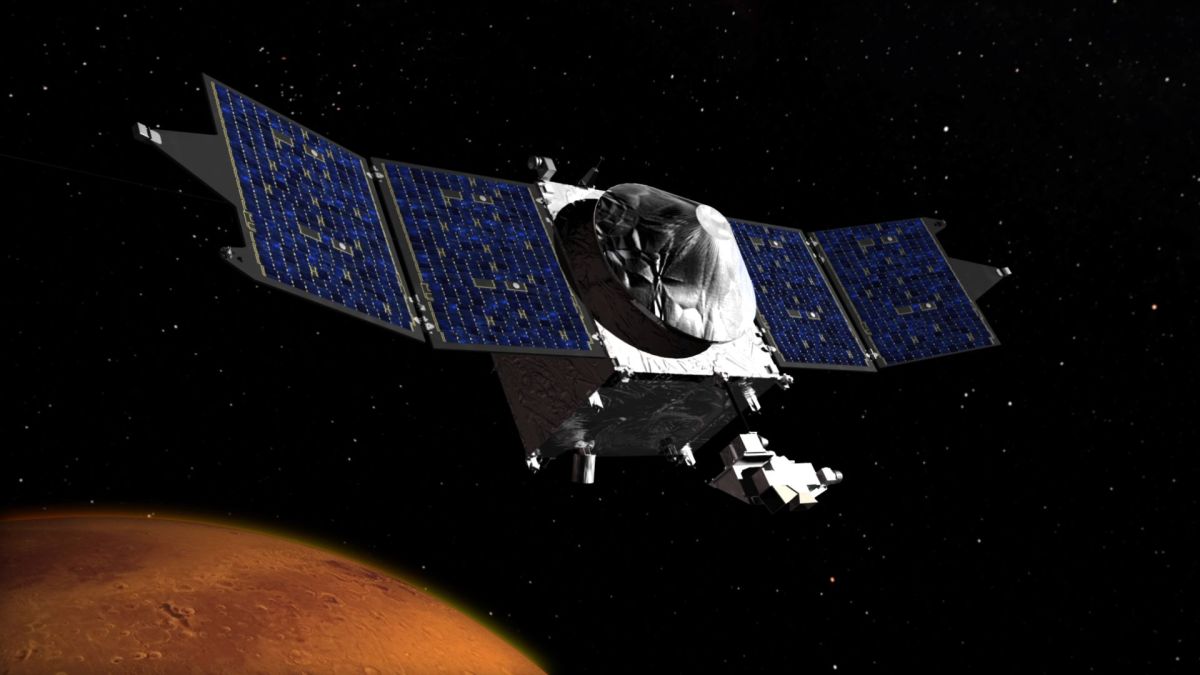
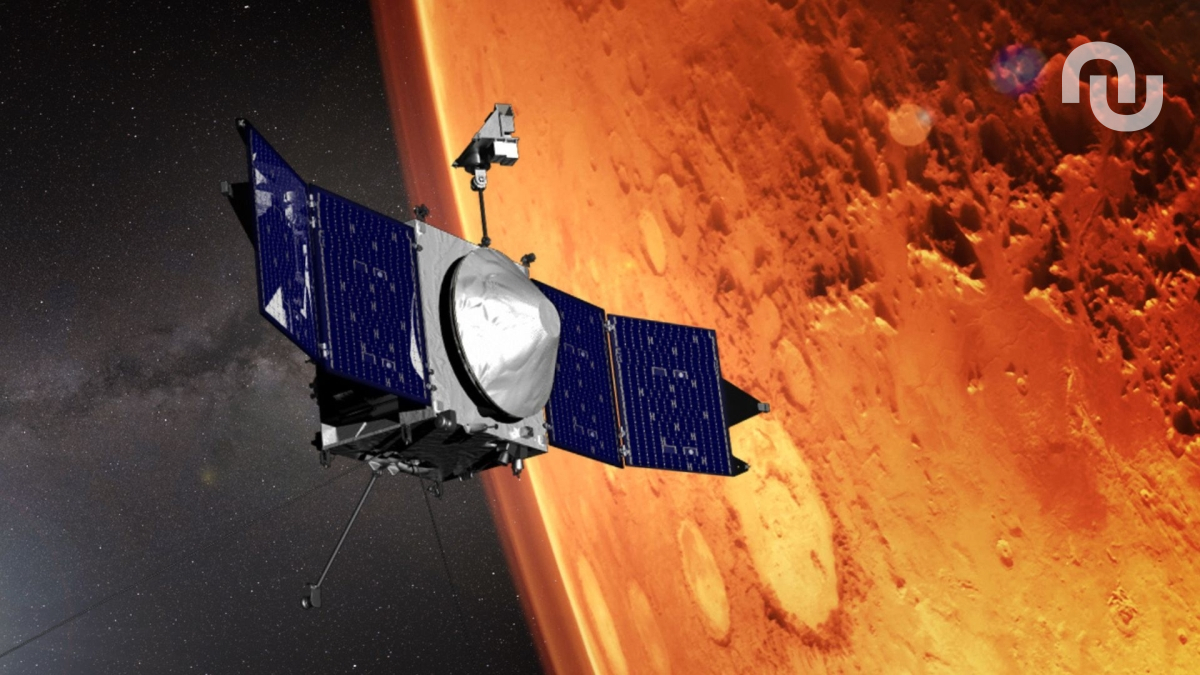
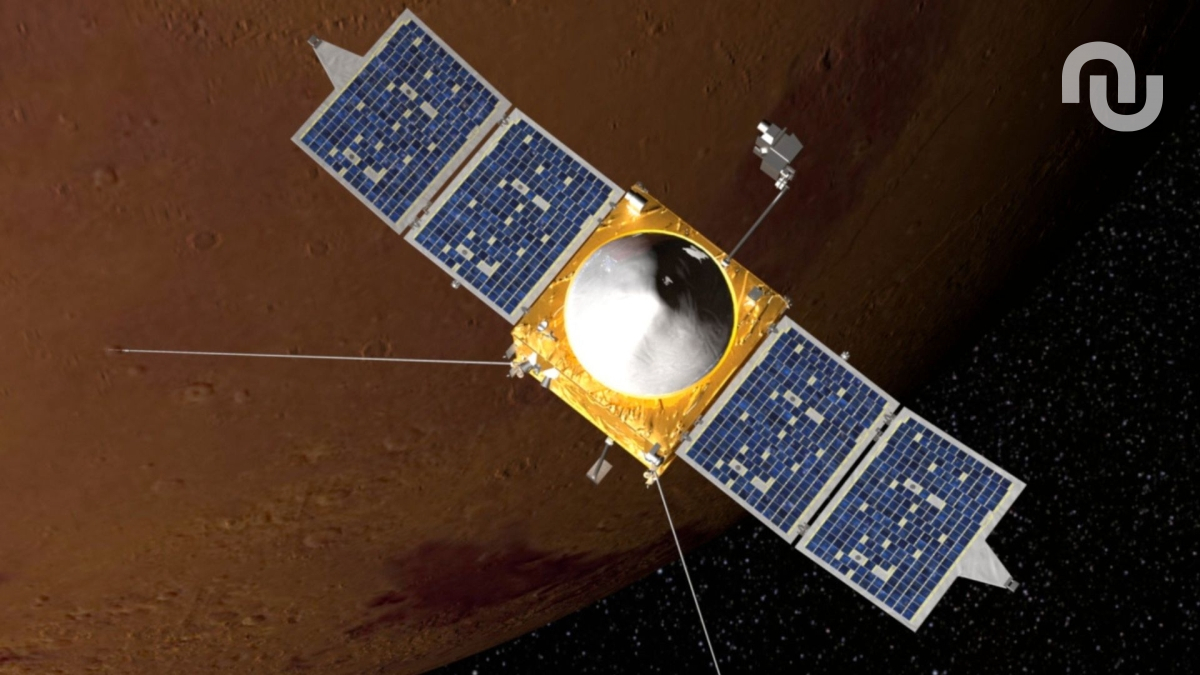
NASA has lost contact with its MAVEN Mars orbiter after it passed behind Mars. When it remerged from behind the planet, the spacecraft never resumed communications. SpaceNews reports: MAVEN launched in November 2013 and entered orbit around Mars in September 2014. The spacecraft's primary science mission is to study the planet's upper atmosphere and interactions with the solar wind, including how the atmosphere escapes into space. That is intended to help scientists understand how the planet changes from early in its history, when it had a much thicker atmosphere and was warm enough to support liquid water on its surface. MAVEN additionally serves as a communications relay, using a UHF antenna to link the Curiosity and Perseverance rovers on the Martian surface with the Deep Space Network. NASA's Mars Odyssey and Mars Reconnaissance Orbiter spacecraft also serve as communications relays for the rovers, but are both significantly older than MAVEN. The spacecraft has suffered some technical problems in the past, notably with its inertial measurement units (IMUs) used for navigation. In 2022, MAVEN switched to an "all-stellar" navigation system to minimize the use of the IMUs. MAVEN has enough propellant to maintain its orbit through at least the end of the decade. NASA's fiscal year 2026 budget proposal, though, zeroed out funding for MAVEN, which cost $22.6 million to operate in 2024. MAVEN was one of several missions "operating well past the end of prime mission" the proposal would terminate, despite MAVEN's role as a communications relay.

Read more of this story at Slashdot.
  •  

NASA Rover Makes a Shocking Discovery: Lightning on Mars

An anonymous reader shares a report: It is shocking but not surprising. Lightning crackles on Mars, scientists reported on Wednesday. What they observed, however, were not jagged, high-voltage bolts like those on Earth, arcing thousands of feet from cloud to ground. Rather, the phenomenon was more like the shock you feel when you scuff your feet on the carpet on a cold winter morning and then touch a metal doorknob. "This is like mini-lightning on Mars," Baptiste Chide, a scientist at the Research Institute in Astrophysics and Planetary Science in Toulouse, France, said of the centimeter-scale electrical discharges. Dr. Chide and his colleagues reported the findings in a paper published on Wednesday in the journal Nature. The electrical sparks, although not as dramatically violent as on Earth, could play an important role in chemical reactions in the Martian atmosphere.

Read more of this story at Slashdot.
  •  
❌