Vue lecture

NASA Craft To Face Heat-Shield Test on Its First Astronaut Flight Next Year

An anonymous reader shares a report: Getting to space is hard. In many ways, getting back is even harder. NASA soon aims to pull off the kind of re-entry it last conducted more than 50 years ago: safely returning astronauts to Earth after they fly to the moon and back. The mission is a big moment for NASA, which will put a crew on its Orion ship for the first time. The flight will test the spacecraft's heat shield, designed to protect the astronauts on board. Re-entries of vehicles from orbit remain one of the high-stakes parts of any human spaceflight, given the stress they put on spacecraft. In 2003, NASA's Columbia Space Shuttle broke apart as it came back from low-Earth orbit due to a breach on the vehicle that occurred during launch. All seven astronauts on board were killed. Orion will be coming back to Earth from much further away than low-Earth orbit, where all recent human spaceflights have been conducted. That means its velocity and the energy it needs to disperse will be greater, putting even more stress on the heat shield. During a test flight in 2022 that didn't include astronauts, Orion's heat shield didn't perform as expected. That sparked worries about crew safety on future missions, prompting NASA to investigate and address what happened. NASA will launch Orion with the astronauts on board as soon as February. [...] When the vehicle initially re-enters the Earth's atmosphere, it will be traveling around 25,000 miles an hour and face temperatures of 5,000 degrees as it slows down. The Orion craft, developed by Lockheed Martin for NASA, has a shield that is almost 17 feet in diameter. Installed on the vehicle's underside, the shield is covered in what is called an "ablative" material, which is designed to shift heat away from the craft during re-entry by burning off in a controlled manner.

Read more of this story at Slashdot.

  •  

La NASA est formelle : nous pouvons ravitailler nos satellites en orbite, mais personne ne veut vraiment le faire

Refaire le plein d'un satellite en orbite est un vieux projet porté par différentes agences spatiales, mais qui ne s'est jamais réellement concrétisé. Pourtant, malgré les difficultés techniques qu'il reste à dépasser, il se pourrait que cette capacité devienne un enjeu majeur, notamment pour les questions de défense.

  •  

In a Major New Report, Scientists Build Rationale For Sending Astronauts To Mars

A major scientific report published Tuesday argues that sending astronauts to Mars is justified by the quest to find life and conduct research that robots alone can't achieve. "We're searching for life on Mars," said Dava Newman, a professor in the Department of Aeronautics and Astronautics at Massachusetts Institute of Technology and co-chair of the committee that wrote the report. "The answer to the question 'are we alone' is always going to be 'maybe,' unless it becomes yes." Ars Technica reports: The report, two years in the making and encompassing more than 200 pages, was published by the National Academies of Sciences, Engineering, and Medicine. Essentially, the committee co-chaired by Newman and Linda T. Elkins-Tanton, director of the University of California, Berkeley Space Sciences Laboratory, was asked to identify the highest-priority science objectives for the first human missions to Mars. [...] "There's no turning back," Newman said. "Everyone is inspired by this because it's becoming real. We can get there. Decades ago, we didn't have the technologies. This would have been a study report." The goal of the report is to help build a case for meaningful science to be done on Mars alongside human exploration. The report outlines 11 top-priority science objectives. [...] The committee also looked at different types of campaigns to determine which would be most effective for completing the science objectives noted above. The campaign most likely to be successful, they found, was an initial human landing that lasts 30 days, followed by an uncrewed cargo delivery to facilitate a longer 300-day crewed mission on the surface of Mars. All of these missions would take place in a single exploration zone, about 100 km in diameter, that featured ancient lava flows and dust storms. Notably, the report also addresses the issue of planetary protection, a principle that aims to protect both celestial bodies (i.e., the surface of Mars) and visitors (i.e., astronauts) from biological contamination. [...] In recent years, NASA has been working with the International Committee on Space Research to design a plan in which human landings might occur in some areas of the planet, while other parts of Mars are left in "pristine" condition. The committee said this work should be prioritized to reach a resolution that will further the design of human missions to Mars. "NASA should continue to collaborate on the evolution of planetary protection guidelines, with the goal of enabling human explorers to perform research in regions that could possibly support, or even harbor, life," the report states.

Read more of this story at Slashdot.
  •  

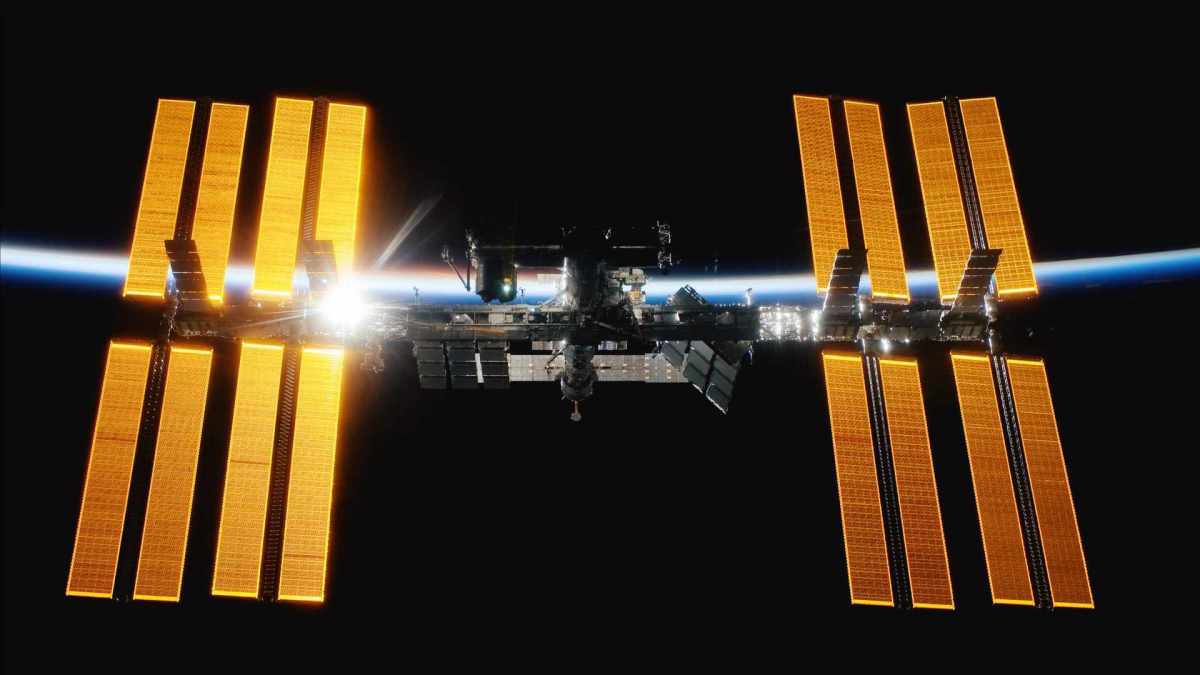
« Pour la toute première fois de l’histoire », l’ISS affiche complet : il n’y a plus de place pour un autre vaisseau spatial

C'est une image inédite à 400 km d'altitude : tous les ports de la Station spatiale internationale sont occupés. Avec l'arrivée récente de capsules SpaceX et russes, l'ISS sature sa capacité d'accueil pour la première fois avec huit véhicules amarrés en même temps.

  •  

Sugars, 'Gum,' Stardust Found In NASA's Asteroid Bennu Samples

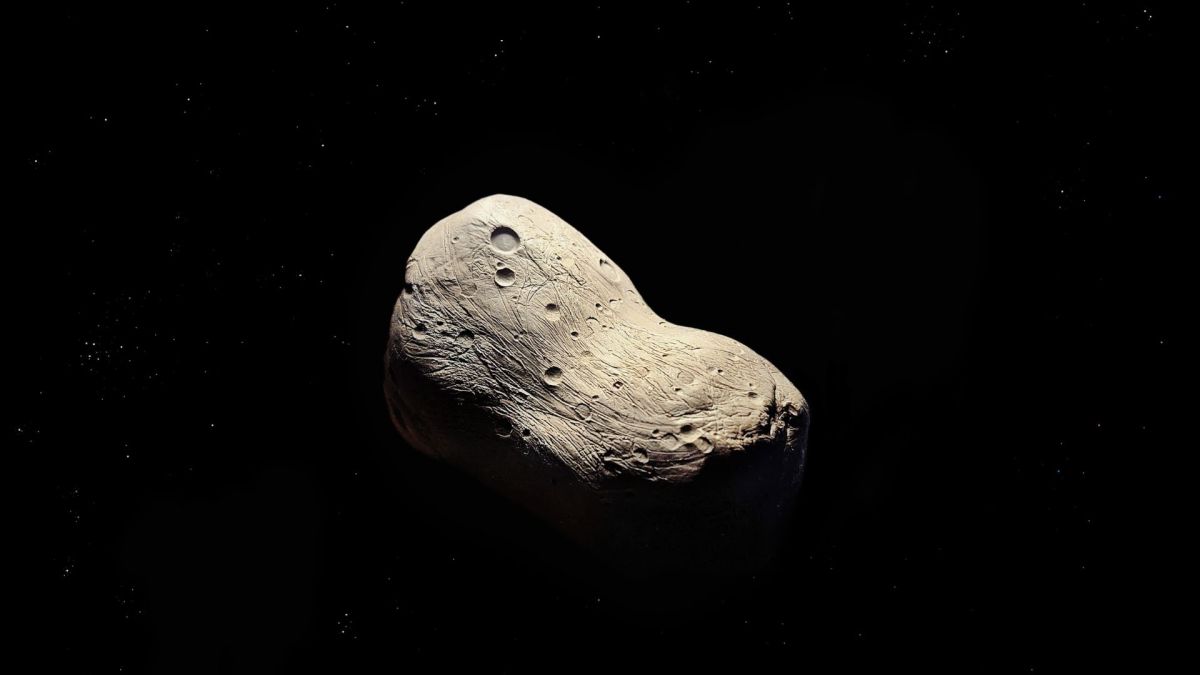
NASA's OSIRIS-REx samples from asteroid Bennu have revealed bio-essential sugars, a never-before-seen "space gum" polymer, and unusually high levels of supernova-origin dust. The findings bolster the RNA-world hypothesis, suggest complex organics formed early on Bennu's parent body, and show preserved presolar grains that escaped alteration for billions of years. "All five nucleobases used to construct both DNA and RNA, along with phosphates, have already been found in the Bennu samples brought to Earth by OSIRIS-REx," said lead scientist Yoshihiro Furukawa of Tohoku University. "The new discovery of ribose means that all of the components to form the molecule RNA are present in Bennu." The findings have been published in three new papers by the journals Nature Geosciences and Nature Astronomy. NASA also published a video on YouTube detailing the discovery.

Read more of this story at Slashdot.
  •  

Suspicion d’espionnage chez SpaceX : un cosmonaute russe se fait éjecter de la mission Crew-12

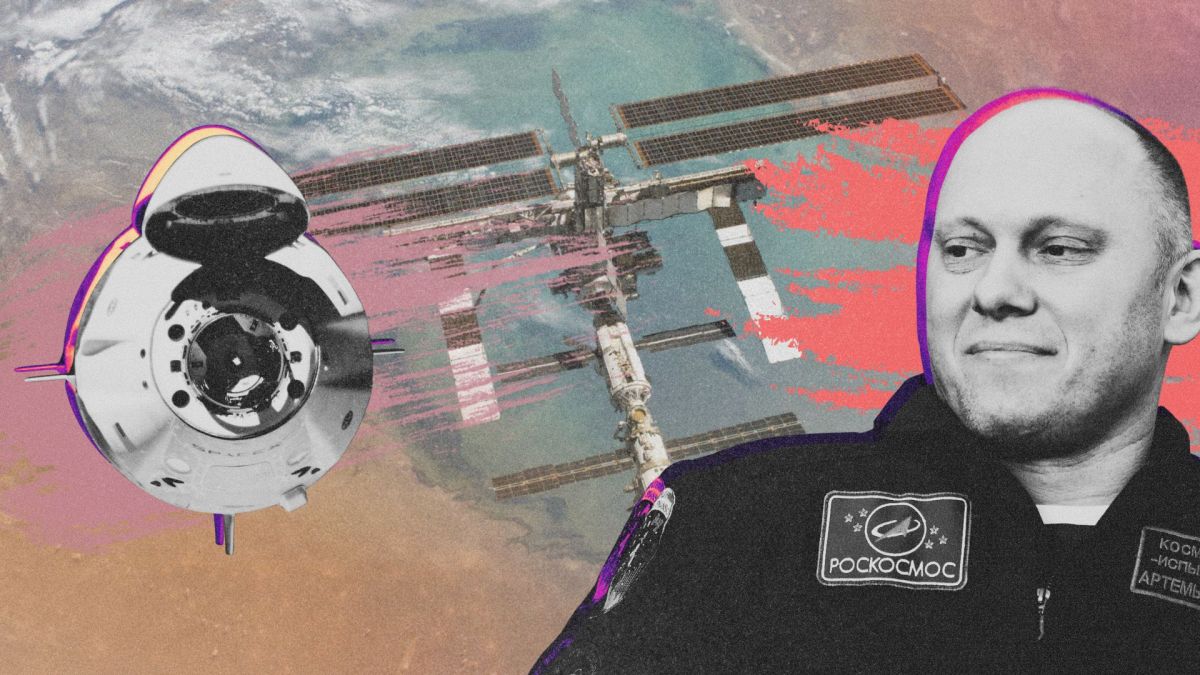
Oleg Artemiev iss spacex crew dragon

Coup de théâtre à quelques mois du départ de la mission Crew-12 vers l'ISS : le cosmonaute russe Oleg Artemiev a été retiré de l'équipage pour des raisons que Roscosmos qualifie de « changement de poste ». Cependant, des sources indépendantes suggèrent que l'affaire est beaucoup plus grave.

  •  

Un cosmonaute russe se fait éjecter de la mission SpaceX Crew-12 sur fond de suspicion d’espionnage

Oleg Artemiev iss spacex crew dragon

Coup de théâtre à quelques mois du départ de la mission Crew-12 vers l'ISS : le cosmonaute russe Oleg Artemiev a été retiré de l'équipage pour des raisons que Roscosmos qualifie de « changement de poste ». Cependant, des sources indépendantes suggèrent que l'affaire est beaucoup plus grave.

  •  

NASA Reduces Flights on Boeing's Starliner After Botched Astronaut Mission

An anonymous reader shares a report: NASA has slashed the number of astronaut missions on Boeing's Starliner contract and said the spacecraft's next mission to the International Space Station will fly without a crew, reducing the scope of a program hobbled by engineering woes and outpaced by SpaceX. The most recent mishap occurred during Starliner's first crewed test flight in 2024, carrying NASA astronauts Butch Wilmore and Suni Williams. Several thrusters on Starliner's propulsion system shut down during its approach to the ISS.

Read more of this story at Slashdot.
  •  
❌