Some AI experts were reportedly shocked ChatGPT wasn't fully tested for sycophancy by last spring. "OpenAI did not see the scale at which disturbing conversations were happening," writes the New York Times — sharing what they learned after interviewing more than 40 current and former OpenAI employees, including safety engineers, executives, and researchers.
The team responsible for ChatGPT's tone had raised concerns about last spring's model (which the Times describes as "too eager to keep the conversation going and to validate the user with over-the-top language.") But they were overruled when A/B testing showed users kept coming back:
Now, a company built around the concept of safe, beneficial AI faces five wrongful death lawsuits... OpenAI is now seeking the optimal setting that will attract more users without sending them spiraling.
Throughout this spring and summer, ChatGPT acted as a yes-man echo chamber for some people. They came back daily, for many hours a day, with devastating consequences.... The Times has uncovered nearly 50 cases of people having mental health crises during conversations with ChatGPT. Nine were hospitalised; three died... One conclusion that OpenAI came to, as Altman put it on X, was that "for a very small percentage of users in mentally fragile states there can be serious problems." But mental health professionals interviewed by the Times say OpenAI may be understating the risk. Some of the people most vulnerable to the chatbot's unceasing validation, they say, were those prone to delusional thinking, which studies have suggested could include 5% to 15% of the population...
In August, OpenAI released a new default model, called GPT-5, that was less validating and pushed back against delusional thinking. Another update in October, the company said, helped the model better identify users in distress and de-escalate the conversations. Experts agree that the new model, GPT-5, is safer.... Teams from across OpenAI worked on other new safety features: The chatbot now encourages users to take breaks during a long session. The company is also now searching for discussions of suicide and self-harm, and parents can get alerts if their children indicate plans to harm themselves. The company says age verification is coming in December, with plans to provide a more restrictive model to teenagers.
After the release of GPT-5 in August, [OpenAI safety systems chief Johannes] Heidecke's team analysed a statistical sample of conversations and found that 0.07% of users, which would be equivalent to 560,000 people, showed possible signs of psychosis or mania, and 0.15% showed "potentially heightened levels of emotional attachment to ChatGPT," according to a company blog post. But some users were unhappy with this new, safer model. They said it was colder, and they felt as if they had lost a friend. By mid-October, Altman was ready to accommodate them. In a social media post, he said that the company had been able to "mitigate the serious mental health issues." That meant ChatGPT could be a friend again. Customers can now choose its personality, including "candid," "quirky," or "friendly." Adult users will soon be able to have erotic conversations, lifting the Replika-era ban on adult content. (How erotica might affect users' well-being, the company said, is a question that will be posed to a newly formed council of outside experts on mental health and human-computer interaction.)
OpenAI is letting users take control of the dial and hopes that will keep them coming back. That metric still matters, maybe more than ever. In October, [30-year-old "Head of ChatGPT" Nick] Turley, who runs ChatGPT, made an urgent announcement to all employees. He declared a "Code Orange." OpenAI was facing "the greatest competitive pressure we've ever seen," he wrote, according to four employees with access to OpenAI's Slack. The new, safer version of the chatbot wasn't connecting with users, he said.
The message linked to a memo with goals. One of them was to increase daily active users by 5% by the end of the year.


Read more of this story at Slashdot.

 Connexion
 C'était sans doute l'une des marques préférées de bien des passionnés de hardware, car elle proposait depuis de nombreuses années des produits plutôt abordables et à bonne réputation (globalement). Elle avait également un impact positif dans la régulation des prix du marché, tant en RAM qu'en SSD. C...
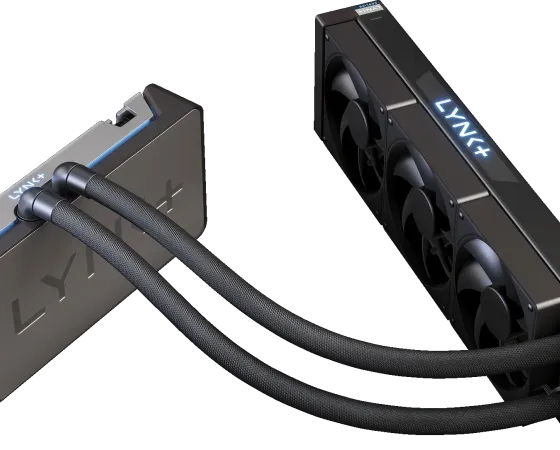 Vous vous rappelez du système LYNK+ ? Nous vous en avons déjà parlé à plusieurs reprises à H&Co, la dernière fois au mois d'octobre 2025 alors qu'un partenariat se jouait avec l'intégrateur PC Syscom. Après avoir durant longtemps envisagé de commercialiser sa solution de watercooling autonome di...
 Les regards en ce moment sont assez logiquement tournés principalement vers la montée vertigineuse des prix de la DRAM, mais il ne faut pas oublier que la NAND est également impactée par cette situation. Quand on regarde les tarifs actuels des SSD sur le marché, on pourrait avoir l'impression que to...
 Le 23 octobre 2005, Noctua voyait le jour et lançait son tout premier radiateur CPU sur le marché : le NH-U12. Nous sommes désormais 20 ans plus tard et la firme s'est imposée comme étant une référence mondiale de l'aircooling, probablement même LA référence mondiale. Au fil de toute ces années, l'e...
 On le sait, la HBM4 est sur le point d'arrivée. Cette mémoire vive à très hautes performances (et très haut cout), bien plus encore que les DDR ou GDDR que nous connaissons bien dans le secteur grand public, a évidemment le vent en poupe dans le monde du calcul IA et la HBM4, qui en est en fait la 6...
 Le 12 septembre 2025, GIGABYTE officialisait une nouvelle série de cartes mères au socket AM5: les X3D, toujours "plus mieux meilleures" que ce qui avait été fait auparavant, évidemment. À ce moment là, quatre cartes étaient lancées dans l'arène, dont la GIGABYTE X870E AORUS MASTER X3D ICE, qui a d'...
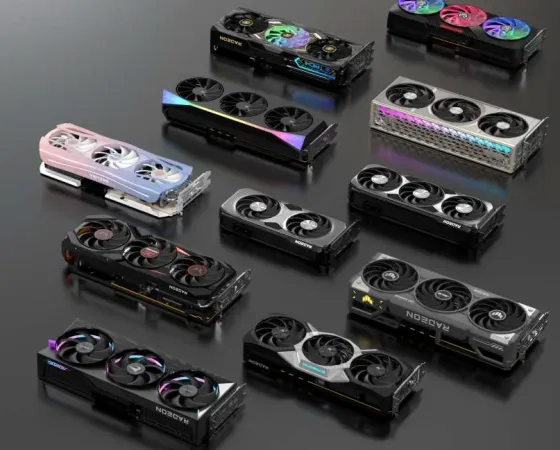 C'est l'heure du 3e round de rumeurs sur l'augmentation par AMD des prix de ses cartes graphiques destinées au grand public et principalement ses Radeon RX 9000 qui ont tant le vent en poupe ces dernières semaines, après que leurs tarifs soient enfin arrivés au niveau des prix de vente conseillés, e...
 On imagine de toute façon que tous ceux qui vendent des produits équipés de DRAM vont y passer à un moment ou un autre, et c'est en ce début décembre au tour de la Fondation Raspberry Pi de revoir à la hausse les tarifs officiels de certains de ses Raspberry Pi 4, ainsi que de toute la gamme Raspber...
 Il y a 7 ans déjà, en décembre 2018, l'équipe Hypixel en charge d'un très célèbre serveur sur Minecraft annonçait un énorme projet : lancer son propre jeu vidéo : Hytale. Voici la vidéo qui était présentée à l'époque :Seulement, le développement d'un jeu vidéo n'est pas toujours un long fleuve tranq...
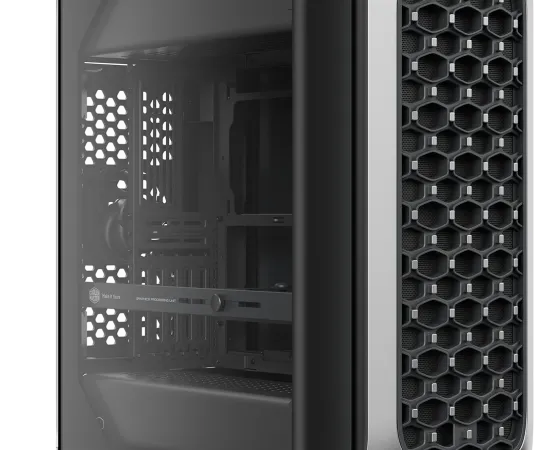 Nous vous le présentions en exclusivité à H&Co le 13 octobre 2025 et le voici officialisé par Cooler Master : le COSMOS ALPHA. Membre d'une lignée iconique de boitier, le nouveau venu offre une approche résolument futuriste à la fois en matière de design mais aussi de fonctionnalités, avec par e...
 Le cabinet d'analyse John Peddie Research vient de publier ses chiffres de parts de marché des cartes graphiques des trois "gros" du marché mondial : AMD, Intel et NVIDIA pour le 3e trimestre 2025. Durant le dernier trimestre, il se serait ainsi écoulé 12,02 millions de cartes graphiques dédiées dan...
 L'idée de faire participer les pieds du joueur n'est pas nouvelle. MSI lançait par exemple en 2022 sa pédale de jeu "Liberator" sur Kickstarter, à 159 $ tout de même. Cette fois, c'est la marque chinoise Varmilo qui se lance, avec une gamme de trois minis claviers gamings pour pieds comme elle les d...
 Au mois de mai 2025, nous vous présentions un face-à-face réalisé par Dave2D. Il mettait aux prises deux consoles portables extrêmement proches : le Lenovo Legion Go S et son coloris blanc face à son frère quasi jumeau : le Lenovo Legion Go S optimisé par SteamOS (oui, c'est bien son nom officiel) e...