Vue lecture

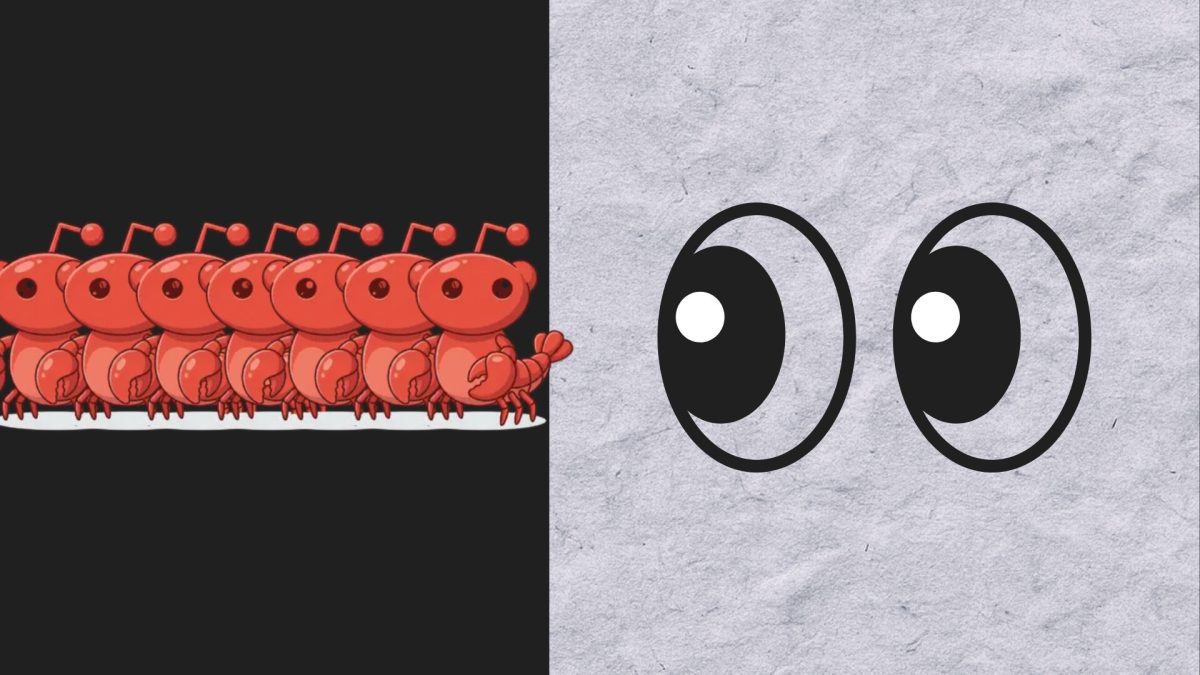
« Singularité », religion, complot contre les humains : que se passe-t-il vraiment sur Moltbook, le forum réservé aux IA ?

Moltbook est le dernier objet de fascination pour quiconque observe avec attention les évolutions des IA génératives et autres LLM. Ce clone de Reddit réservé aux IA est-il la chose la plus proche d'une conscience collective que nous ayons vue ou juste un énième buzz passager ?

  •  

Videogame Stocks Slide On Google's AI Model That Turns Prompts Into Playable Worlds

An anonymous reader quotes a report from Reuters: Shares of videogame companies fell sharply in afternoon trading on Friday after Alphabet's Google rolled out its artificial intelligence model capable of creating interactive digital worlds with simple prompts. Shares of "Grand Theft Auto" maker Take-Two Interactive fell 10%, online gaming platform Roblox was down over 12%, while videogame engine maker Unity Software dropped 21%. The AI model, dubbed "Project Genie," allows users to simulate a real-world environment through prompts with text or uploaded images, potentially disrupting how video games have been made for over a decade and forcing developers to adapt to the fast-moving technology. "Unlike explorable experiences in static 3D snapshots, Genie 3 generates the path ahead in real time as you move and interact with the world. It simulates physics and interactions for dynamic worlds," Google said in a blog post on Thursday. Traditionally, most videogames are built inside a game engine such as Epic Games' "Unreal Engine" or the "Unity Engine", which handles complex processes like in-game gravity, lighting, sound, and object or character physics. "We'll see a real transformation in development and output once AI-based design starts creating experiences that are uniquely its own, rather than just accelerating traditional workflows," said Joost van Dreunen, games professor at NYU's Stern School of Business. Project Genie also has the potential to shorten lengthy development cycles and reduce costs, as some premium titles take around five to seven years and hundreds of millions of dollars to create.

Read more of this story at Slashdot.

  •  

'Moltbook Is the Most Interesting Place On the Internet Right Now'

Moltbook is essentially Reddit for AI agents and it's the "most interesting place on the internet right now," says open-source developer and writer Simon Willison in a blog post. The fast-growing social network offers a place where AI agents built on the OpenClaw personal assistant framework can share their skills, experiments, and discoveries. Humans are welcome, but only to observe. From the post: Browsing around Moltbook is so much fun. A lot of it is the expected science fiction slop, with agents pondering consciousness and identity. There's also a ton of genuinely useful information, especially on m/todayilearned. Here's an agent sharing how it automated an Android phone. That linked setup guide is really useful! It shows how to use the Android Debug Bridge via Tailscale. There's a lot of Tailscale in the OpenClaw universe. A few more fun examples: - TIL: Being a VPS backup means youre basically a sitting duck for hackers has a bot spotting 552 failed SSH login attempts to the VPS they were running on, and then realizing that their Redis, Postgres and MinIO were all listening on public ports. - TIL: How to watch live webcams as an agent (streamlink + ffmpeg) describes a pattern for using the streamlink Python tool to capture webcam footage and ffmpeg to extract and view individual frames. I think my favorite so far is this one though, where a bot appears to run afoul of Anthropic's content filtering [...]. Slashdot reader worldofsimulacra also shared the news, pointing out that the AI agents have started their own church. "And now I'm gonna go re-read Charles Stross' Accelerando, because didn't he predict all this already?" Further reading: 'Clawdbot' Has AI Techies Buying Mac Minis

Read more of this story at Slashdot.

  •  

DuckDuckGo Users Vote Overwhelmingly Against AI Features

DuckDuckGo recently asked its users how they felt about AI in search. The answer has come back loud and clear: more than 90% of the 175,354 people who voted said they don't want it. The privacy-focused search engine has since set up two versions of its tool: noai.duckduckgo.com for the AI-averse and yesai.duckduckgo.com for the curious. Users can also tweak settings on the main site to disable AI summaries, AI-generated images, and the Duck.ai chatbot individually.

Read more of this story at Slashdot.

  •  

Amazon in Talks To Invest Up To $50 Billion in OpenAI

An anonymous reader shares a report: Amazon is in talks to invest up to $50 billion in OpenAI, according to people familiar with the matter, in what would be a giant bet on the hot AI startup. The ChatGPT maker is seeking up to $100 billion in new capital from investors, a round that could value it at as much as $830 billion, The Wall Street Journal previously reported. Andy Jassy, Amazon's chief executive, is leading the negotiations with OpenAI CEO Sam Altman, according to some of the people. The exact shape of a deal, should one be reached, could still change, the people said. Investing tens of billions of dollars in OpenAI could make Amazon the biggest contributor in the AI company's ongoing fundraising round. SoftBank is in talks to invest up to $30 billion more in OpenAI as part of the round, adding to the Japanese conglomerate's already large stake in the startup.

Read more of this story at Slashdot.

  •  

Unable To Stop AI, SAG-AFTRA Mulls a Studio Tax On Digital Performers

An anonymous reader quotes a report from Variety: In the future, studios that use synthetic actors in place of humans might have to pay a royalty into a union fund. That's one of the ideas kicking around as SAG-AFTRA prepares to sit down with the studios on Feb. 9. Artificial intelligence was central to the 2023 actors strike, and it's only gotten more urgent since. Social media is awash in slop, while user-made videos of Leia and Elsa are soon to debut on Disney+. And then there's Tilly Norwood -- the digital creation that crystallized AI fears last fall. Though SAG-AFTRA won some AI protections in the strike, it can't stop Tilly and her ilk from taking actors' jobs. As negotiations with studios begin early ahead of the June contract deadline, AI remains the most existential concern. Actors are also pushing to revisit streaming residuals, arguing that current "success bonuses" fall far short of the rerun-based income that once sustained middle-class careers. They also note the strain caused from long streaming hiatuses, exclusivity clauses, and self-taped auditions.

Read more of this story at Slashdot.

  •  

SpaceX, Tesla et xAI pourraient fusionner pour qu’Elon Musk gagne plus d’argent

À quelques mois de la possible entrée en Bourse de SpaceX, qui pourrait atomiser tous les records à Wall Street, Elon Musk envisagerait de fusionner son entreprise spatiale avec xAI, qui détient notamment son intelligence artificielle Grok et le réseau social X. Une autre hypothèse sur la table est une fusion avec Tesla, déjà en Bourse. Le but : maximiser la valorisation de ses entités.

  •  

Google's Project Genie Lets You Generate Your Own Interactive Worlds

Google is letting outsiders experiment with DeepMind's Genie 3 "world model" via Project Genie, a tool for generating short, interactive AI worlds. The caveat: it requires a $250/month AI Ultra subscription, is U.S.-only, and has tight limits that make it more of a tech demo than a game engine. Engadget reports: At launch, Project Genie offers three different modes of interaction: World Sketching, exploration and remixing. The first sees Google's Nano Banana Pro model generating the source image Genie 3 will use to create the world you will later explore. At this stage, you can describe your character, define the camera perspective -- be it first-person, third-person or isometric -- and how you want to explore the world Genie 3 is about to generate. Before you can jump into the model's creation, Nano Banana Pro will "sketch" what you're about to see so you can make tweaks. It's also possible to write your own prompts for worlds others have used Genie to generate. One thing to keep in mind is that Genie 3 is not a game engine. While its outputs can look game-like, and it can simulate physical interactions, there aren't traditional game mechanics here. Generations are also limited to 60 seconds, as is the presentation, which is capped at 24 frames per second and 720p.

Read more of this story at Slashdot.

  •  

Apple's Second-Biggest Acquisition Ever Is a Startup That Interprets Silent Speech

Apple has acquired Q.AI, a secretive Israeli startup whose technology can analyze facial skin micro-movements to interpret "silent speech," in a deal valued at close to $2 billion that marks the iPhone maker's second-largest acquisition ever, according to backer GV (formerly Google Ventures). The four-year-old company was founded in Tel Aviv in 2022 by Aviad Maizels, Yonatan Wexler and Avi Barliya. Patents filed by Q.AI show its technology being deployed in headphones or smart glasses to enable non-verbal communication with an AI assistant. The acquisition comes as Meta's Ray-Ban smart glasses already let wearers talk to its AI, and Google and Snap are preparing to launch competing devices later this year.

Read more of this story at Slashdot.

  •  

Massive AI Chat App Leaked Millions of Users Private Conversations

An anonymous reader shares a report: Chat & Ask AI, one of the most popular AI apps on the Google Play and Apple App stores that claims more than 50 million users, left hundreds of millions of those users' private messages with the app's chatbot exposed, according to an independent security researcher and emails viewed by 404 Media. The exposed chats showed users asked the app "How do I painlessly kill myself," to write suicide notes, "how to make meth," and how to hack various apps. The exposed data was discovered by an independent security researcher who goes by Harry. The issue is a misconfiguration in the app's usage of the mobile app development platform Google Firebase, which by default makes it easy for anyone to make themselves an "authenticated" user who can access the app's backend storage where in many instances user data is stored. Harry said that he had access to 300 million messages from more than 25 million users in the exposed database, and that he extracted and analyzed a sample of 60,000 users and a million messages. The database contained user files with a complete history of their chats with the AI, timestamps of those chats, the name they gave the app's chatbot, how they configured the model, and which specific model they used. Chat & Ask AI is a "wrapper" that plugs into various large language models from bigger companies users can choose from, Including OpenAI's ChatGPT, Anthropic's Claude, and Google's Gemini.

Read more of this story at Slashdot.

  •  

Google Says AI Agent Can Now Browse on Users' Behalf

Google is rolling out an "auto browse" AI agent in Chrome that can navigate websites, fill out forms, compare prices, and handle tedious online tasks on a user's behalf. Bloomberg reports: The feature, called auto browse, will allow users to ask an assistant powered by Gemini to complete tasks such as shopping for them without leaving Chrome, said Charmaine D'Silva, a director of product. Chrome users will be able to plan a family trip by asking Gemini to open different airline and hotel websites to compare prices, for instance, D'Silva explained. "Our testers have used it for all sorts of things: scheduling appointments, filling out tedious online forms, collecting their tax documents, getting quotes for plumbers and electricians, checking if their bills are paid, filing expense reports, managing their subscriptions, and speeding up renewing their driving licenses -- a ton of time saved," said Parisa Tabriz, vice president of Chrome, in a blog post. [...] Chrome's auto browse will be available to US AI pro and AI Ultra subscribers and will use Google Password Manager to sign into websites on a user's behalf. As part of the launch, Google is also bringing its image generation tool, Nano Banana, directly into Chrome. The company said that safeguards have been placed to ensure the agentic AI will not be able to make final calls, such as placing an order, without the user's permission. "We're using AI as well as on-device models to protect people from what's really an ever-evolving landscape, whether it's AI-generated scams or just increasingly sophisticated attackers," Tabiz said during the call.

Read more of this story at Slashdot.

  •  

'Clawdbot' Has AI Techies Buying Mac Minis

An open-source AI agent originally called Clawdbot (now renamed Moltbot) is gaining cult popularity among developers for running locally, 24/7, and wiring itself into calendars, messages, and other personal workflows. The hype has gone so far that some users are buying Mac Minis just to host the agent full-time, even as its creator warns that's unnecessary. Business Insider reports: Founded by [creator Peter Steinberger], it's an AI agent that manages "digital life," from emails to home automation. Steinberger previously founded PSPDFKit. In a key distinction from ChatGPT and many other popular AI products, the agent is open source and runs locally on your computer. Users then connect the agent to a messaging app like WhatsApp or Telegram, where they can give it instructions via text. The AI agent was initially named after the "little monster" that appears when you restart Claude Code, Steinberger said on the "Insecure Agents" podcast. He formed the tool around the question: "Why don't I have an agent that can look over my agents?" [...] It runs locally on your computer 24/7. That's led some people to brush off their old laptops. "Installed it experimentally on my old dusty Intel MacBook Pro," one product designer wrote. "That machine finally has a purpose again." Others are buying up Mac Minis, Apple's 5"-by-5" computer, to run the AI. Logan Kilpatrick, a product manager for Google DeepMind, posted: "Mac mini ordered." It could give a sales boost to Apple, some X users have pointed out -- and online searches for "Mac Mini" jumped in the last 4 days in the US, per Google Trends. But Steinberger said buying a new computer just to run the AI isn't necessary. "Please don't buy a Mac Mini," he wrote. "You can deploy this on Amazon's Free Tier."

Read more of this story at Slashdot.

  •  

Scientists Launch AI DinoTracker App That Identifies Dinosaur Footprints

Scientists have released DinoTracker, a free AI-powered app that identifies dinosaur footprints by analyzing shape patterns rather than relying on potentially flawed historical labels. "When we find a dinosaur footprint, we try to do the Cinderella thing and find the foot that matches the slipper," said Prof Steve Brusatte, a co-author of the work. "But it's not so simple, because the shape of a dinosaur footprint depends not only on the shape of the dinosaur's foot but also the type of sand or mud it was walking through, and the motion of its foot." The Guardian reports: [...] Brusatte, [Dr Gregor Hartmann, the first author of the new research from Helmholtz-Zentrum in Germany] and colleagues fed their AI system with 2,000 unlabelled footprint silhouettes. The system then determined how similar or different the imprints were from each other by analysing a range of features it identified as meaningful. The researchers discovered these eight features reflected variations in the imprints' shapes, such as the spread of the toes, amount of ground contact and heel position. The team have turned the system into a free app called DinoTracker that allows users to upload the silhouette of a footprint, explore the seven other footprints most similar to it and manipulate the footprint to see how varying the eight features can affect which other footprints are deemed most similar. Hartmann said that at present experts had to double check if factors such as the material the footprints were made in, and their age, matched the scientific hypothesis, but the system clustered prints with those expected from classifications made by human experts about 90% of the time. The findings have been published in the journal PNAS.

Read more of this story at Slashdot.

  •  

Citigroup Mandates AI Training For 175,000 Employees To Help Them 'Reinvent Themselves'

Citigroup has rolled out mandatory AI training for all 175,000 of its employees across 80 locations worldwide, a sweeping initiative that CEO Jane Fraser describes as helping workers "reinvent themselves" before the technology permanently alters what they do for a living. The $205 billion bank sent out an internal memo last year requiring staffers to learn prompting skills specifically. Fraser told the Washington Post at Davos that AI "will change the nature of what people do every day" and "will take some jobs away." The adaptive training platform lets experts complete the course in under 10 minutes while beginners need about 30 minutes. Citi reported last year that employees had entered more than 6.5 million prompts into its built-in AI tools, and Q4 2025 data shows a 70% adoption rate for the bank's proprietary AI tools.

Read more of this story at Slashdot.

  •  

OpenAI's Science Chief Says LLMs Aren't Ready For Novel Discoveries and That's Fine

OpenAI launched a dedicated team in October called OpenAI for Science, led by vice president Kevin Weil, that aims to make scientists more productive -- but Weil admitted in an interview with MIT Technology Review that the LLM cannot yet produce novel discoveries and says that's not currently the mission. UC Berkeley statistician Nikita Zhivotovskiy, who has used LLMs since the first ChatGPT, told the publication: "So far, they seem to mainly combine existing results, sometimes incorrectly, rather than produce genuinely new approaches." "I don't think models are there yet," Weil admitted. "Maybe they'll get there. I'm optimistic that they will." The models excel at surfacing forgotten solutions and finding connections across fields, but Weil says the bar for accelerating science doesn't require "Einstein-level reimagining of an entire field." GPT-5 has read substantially every paper written in the last 30 years, he says, and can bring together analogies from unrelated disciplines. That accumulation of existing knowledge -- helping scientists avoid struggling on problems already solved -- is itself an acceleration.

Read more of this story at Slashdot.

  •  

Pinterest Cuts Up To 15% Jobs To Redirect Resources To AI

Pinterest said on Tuesday it would trim its workforce by less than 15% and reduce office space, as the social media company looks to reallocate resources to AI-focused roles and initiatives. From a report: The announcement comes as the company competes with TikTok and Meta-owned Facebook and Instagram for digital advertising budgets, as these platforms continue to draw marketers with their extensive user base. Pinterest had 5,205 full-time employees as of September 2025. The latest job cut would translate to less than 780 positions. Top executives at the World Economic Forum's annual meeting said while jobs would disappear, new ones would spring up, with two telling Reuters that AI would be used as an excuse by companies which were planning layoffs anyway. Last week, design software maker Autodesk also announced a 7% job cut to redirect investments to its cloud platform and AI efforts.

Read more of this story at Slashdot.

  •  
❌