
Vue lecture

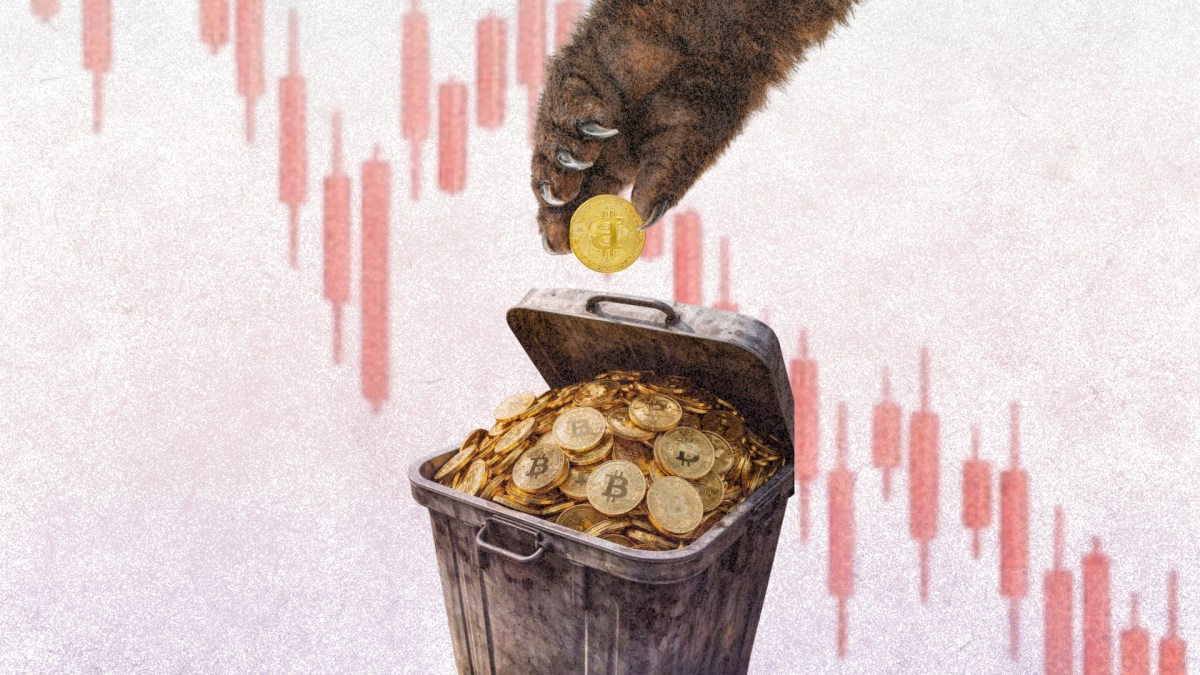
Bitcoin Dropped Nearly 30% This Week. But Why?

Last Sunday, Bitcoin had dropped 13% in three days, to $76,790. By Thursday it had dropped another 21%, to $60,062. This morning it's at $69,549 — up from Thursday, down from Sunday, but 44% lower than its all-time high in October of $123,742. In short, Bitcoin "is down almost 30% this week alone," reports CNBC: "This steady selling in our view signals that traditional investors are losing interest, and overall pessimism about crypto is growing," Deutsche Bank analyst Marion Laboure said Wednesday in a note to clients. Growing investor caution comes as many of the sensationalized claims about bitcoin have failed to materialize. The token has largely traded in the same direction as other risk-on assets, such as stocks... and its adoption as a form of payment for goods and services has been minimal... While many in the crypto market have previously credited large institutional investors with supporting the price of bitcoin, now it is those same participants who appear to be selling. "Institutional demand has reversed materially," CryptoQuant said in a report on Wednesday. But not everyone accepts that answer, the Wall Street Journal reported Saturday. "The worst part for some of crypto's permabulls is that they aren't sure what exactly caused the crash": The selloff left many of the market's luminaries — those so well-known that they go simply as "Pomp" and "Novo" and "Mooch" — searching for answers... Ether dropped 24% to $2,052, off 59% from its own high of last year. Both tokens staged furious rallies Friday, but the week remained a historically bad one for crypto. And few seem to know what went wrong. Market theories for the selloff ranged from investors' pivot toward the prediction markets and other risky bets, to widespread profit-taking after a blistering bull run. "There was no smoking gun," said Michael Novogratz, who runs Galaxy Digital, a crypto merchant-banking and trading firm... "If you ask five experts, you'll get five explanations," said Anthony Scaramucci, who served for 11 days as communications director during Trump's first term and is among the best-known crypto bulls at his firm, SkyBridge Capital. "No, but seriously: What's going on with bitcoin?" reads the headline at CNN, with a story that begins "Bitcoin is acting weird... " Crypto is notoriously volatile, and it's gone through numerous crashes that are bigger than this one. What's strange is this: Bitcoin's four-month slump has come at a time when, in theory, it had everything going for it. Economist Paul Krugman points out the price of Bitcoin is now lower than it was before America's 2024 election, when candidate Trump promised to make cryptocurrency "one of the greatest industries on earth." CNN seems to agree with CNBC that what's behind this new crypto winter is "Mostly doubts that bitcoin is 'digital gold,' after all..." Thanks to Slashdot reader fjo3 for sharing the news.

Read more of this story at Slashdot.

  •  

Why This Is the Worst Crypto Winter Ever

Bitcoin has fallen roughly 44% from its October peak, and while the drawdown isn't crypto's deepest ever on a percentage basis, Bloomberg's Odd Lots newsletter lays out a case that this is the industry's worst winter yet. The macro backdrop was supposed to favor Bitcoin: public confidence in the dollar is shaky, the Trump administration has been crypto-friendly, and fiat currencies are under perceived stress globally. Yet gold, not Bitcoin, has been the safe haven of choice. The "we're so early" narrative is dead -- crypto ETFs exist, barriers to entry are zero, and the online community that once rallied holders through downturns has largely hollowed out. Institutional adoption arrived but hasn't lifted existing tokens like ETH or SOL; Wall Street cares about stablecoins and tokenization, not the coins themselves. AI is pulling both talent and miners toward data centers. Quantum computing advances threaten Bitcoin's encryption. And MicroStrategy and other Bitcoin treasury companies, once steady buyers during the bull run, are now large holders who may eventually become forced sellers.

Read more of this story at Slashdot.
  •  

Bitcoin Drops 40% in Four Months. Bloomberg Blames Absence of Buyers and Belief

October saw Bitcoin reach $123,742. But less than four months later, "The world's largest cryptocurrency slipped below $76,000..." Bloomberg reports, "dropping about 40% from its 2025 peak..." "What began as a sharp crash in October has morphed into something more corrosive: a selloff shaped not by panic, but by absence of buyers, momentum and belief." Unlike the October drawdown, there's been no obvious spark, cascading liquidations or systemic shock — just fading demand, thinning liquidity, and a token that's untethered to broader markets. Bitcoin has failed to respond to geopolitical stress, dollar weakness, or risk rallies. Even during gold and silver's violent swings in recent weeks, crypto saw no rotation. Bitcoin fell nearly 11% in January, marking its fourth straight monthly decline — the longest losing streak since 2018, during the crash that followed the 2017 boom in initial coin offerings... Even more striking than the drop itself is the relative lack of optimism around it on social media. In a space known for relentless bravado and "number go up" memes, Bitcoin's slide has been met with little cheerleading or dip-buying fanfare... [Despite legislative wins and some institutional investments] Many investors say that optimism was front-run. Prices rallied early — and then stalled. Meanwhile, spot ETFs continue to bleed, a sign of weakening conviction among mainstream buyers — many of whom are now underwater after buying at higher prices. On Thursday, Bitcoin closed at 88,228. By Sunday it had plunged another 13%, to 76,790...

Read more of this story at Slashdot.

  •  

More US States are Putting Bitcoin on Public Balance Sheets

An anonymous reader shared this report from CNBC: Led by Texas and New Hampshire, U.S. states across the national map, both red and blue in political stripes, are developing bitcoin strategic reserves and bringing cryptocurrencies onto their books through additional state finance and budgeting measures. Texas recently became the first state to purchase bitcoin after a legislative effort that began in 2024, but numerous states have joined the "Reserve Race" to pass legislation that will allow them to ultimately buy cryptocurrencies. New Hampshire passed its crypto strategic reserve law last May, even before Texas, giving the state treasurer the authority to invest up to 5% of the state funds in crypto ETFs, though precious metals such as gold are also authorized for purchase. Arizona passed similar legislation, while Massachusetts, Ohio, and South Dakota have legislation at various stages of committee review... Similarities in the actions taken across states to date include include authorizing the state treasurer or other investment official to allow the investment of a limited amount of public funds in crypto and building out the governance structure needed to invest in crypto... [New Hampshire] became the first state to approve the issuance of a bitcoin-backed municipal bond last November, a $100 million issuance that would mark the first time cryptocurrency is used as collateral in the U.S. municipal bond market. The deal has not taken place yet, though plans are for the issuance to occur this year... "What's different here is it's bitcoin rather than taxpayer dollars as the collateral," [said University of Chicago public policy professor Justin Marlowe]. In numerous states, including, Colorada, Utah, and Louisiana,crypto is now accepted as payment for taxes and other state business... "For many in the state/local investing industry, crypto-backed assets are still far too speculative and volatile for public money," Marlowe said. "But others, and I think there's a sort of generational shift in the works, see it as a reasonable store of value that is actually stronger on many other public sector values like transparency and asset integrity," he added. Public policy professor Marlowe "sees the state-level trend as largely one of signaling at present," according to the article. (Marlowe says "If you're a governor and you want to broadcast that you are amenable to innovative business development in the digital economy, these are relatively low-cost, low-risk ways to send that signal.") But the bigger steps may reflect how crypto advocates have increasing political power in the states. The article notes that the cryptocurrency industry was the largest corporate donor in a U.S. election cycle in 2024, "with support given to candidates on both sides." "It is already amassing a war chest for the 2026 midterms."

Read more of this story at Slashdot.

  •  

Trust Wallet : on connaît les dessous du piratage sournois qui a ruiné 2 520 investisseurs en cryptos

Le soir de Noël, les utilisateurs du portefeuille de crypto-monnaies Trust Wallet ont connu un sérieux coup de chaud. Une mise à jour piégée de l’extension pour navigateur, publiée par des hackers, leur a permis de détourner les fonds de plusieurs portefeuilles. L’entreprise a depuis expliqué comment une telle compromission a pu se produire.

  •  
❌