
Vue lecture

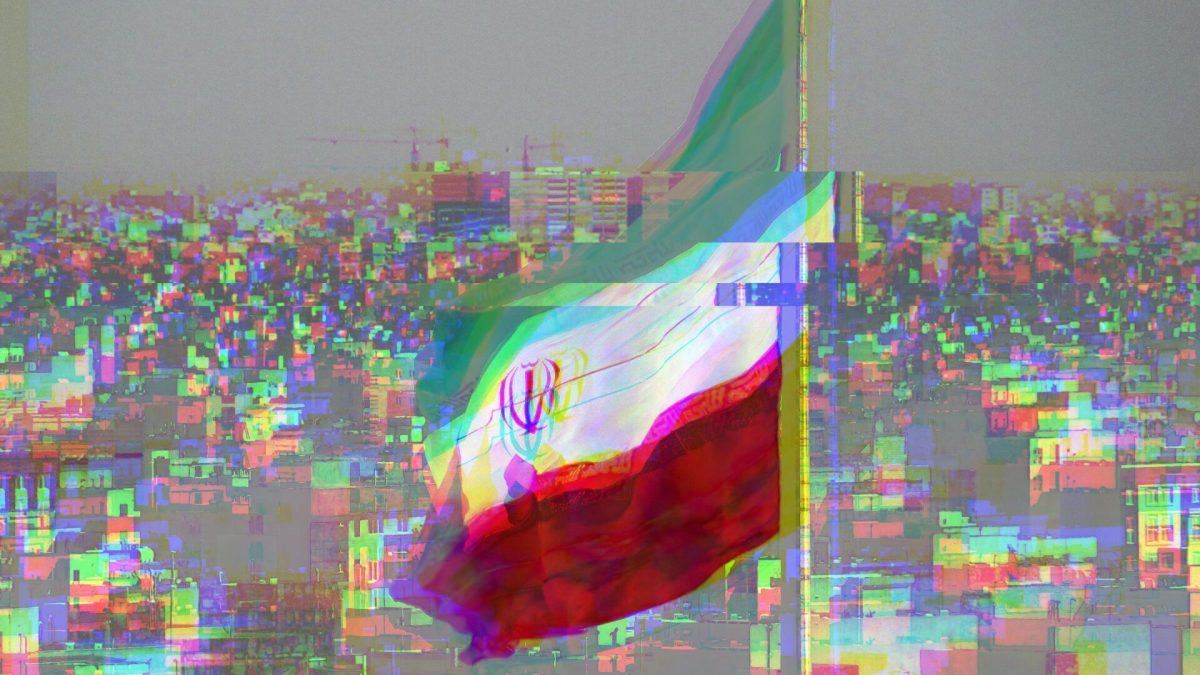
After US-Israel Attacks, 90 Million Iranians Lose Internet Connectivity

CNN reports that images from Iran's capital "have shown cars jammed along Tehran's street, with heavy traffic on major roads after today's wave of attacks by the US and Israel." And though Iran has a population of 93 million, the attacks suddenly plunged Iran into "a near-total internet blackout with national connectivity at 4% of ordinary levels," according to internet monitoring experts at NetBlocks. CNN reports: Since Iran's brutal crackdown earlier this year, the regime has made progress to allow only a subset of people with security clearance to access the international web, experts said. After previous internet shutdowns, some platforms never returned. The Iranian government blocked Instagram after the internet shutdown and protests in 2022, and the popular messaging app Telegram following protests in 2018. The International Atomic Energy Agency announced an hour ago that they're "closely monitoring developments" — keeping in contact with countries in the region and so far seeing "no evidence of any radiological impact." They're also urging "restraint to avoid any nuclear safety risks to people in the region." UPDATE (1 PM PST): Qatar, Bahrain and Kuwait "are shifting to remote learning starting Sunday until further notice following Iranâ(TM)s retaliatory strikes on Saturday," reports CNN.

Read more of this story at Slashdot.
  •  

Google Quantum-Proofs HTTPS

An anonymous reader quotes a report from Ars Technica: Google on Friday unveiled its plan for its Chrome browser to secure HTTPS certificates against quantum computer attacks without breaking the Internet. The objective is a tall order. The quantum-resistant cryptographic data needed to transparently publish TLS certificates is roughly 40 times bigger than the classical cryptographic material used today. Today's X.509 certificates are about 64 bytes in size, and comprise six elliptic curve signatures and two EC public keys. This material can be cracked through the quantum-enabled Shor's algorithm. Certificates containing the equivalent quantum-resistant cryptographic material are roughly 2.5 kilobytes. All this data must be transmitted when a browser connects to a site. To bypass the bottleneck, companies are turning to Merkle Trees, a data structure that uses cryptographic hashes and other math to verify the contents of large amounts of information using a small fraction of material used in more traditional verification processes in public key infrastructure. Merkle Tree Certificates, "replace the heavy, serialized chain of signatures found in traditional PKI with compact Merkle Tree proofs," members of Google's Chrome Secure Web and Networking Team wrote Friday. "In this model, a Certification Authority (CA) signs a single 'Tree Head' representing potentially millions of certificates, and the 'certificate' sent to the browser is merely a lightweight proof of inclusion in that tree." [...] Google is [also] adding cryptographic material from quantum-resistant algorithms such as ML-DSA (PDF). This addition would allow forgeries only if an attacker were to break both classical and post-quantum encryption. The new regime is part of what Google is calling the quantum-resistant root store, which will complement the Chrome Root Store the company formed in 2022. The [Merkle Tree Certificates] MTCs use Merkle Trees to provide quantum-resistant assurances that a certificate has been published without having to add most of the lengthy keys and hashes. Using other techniques to reduce the data sizes, the MTCs will be roughly the same 64-byte length they are now [...]. The new system has already been implemented in Chrome.

Read more of this story at Slashdot.

  •  
❌