Vue lecture

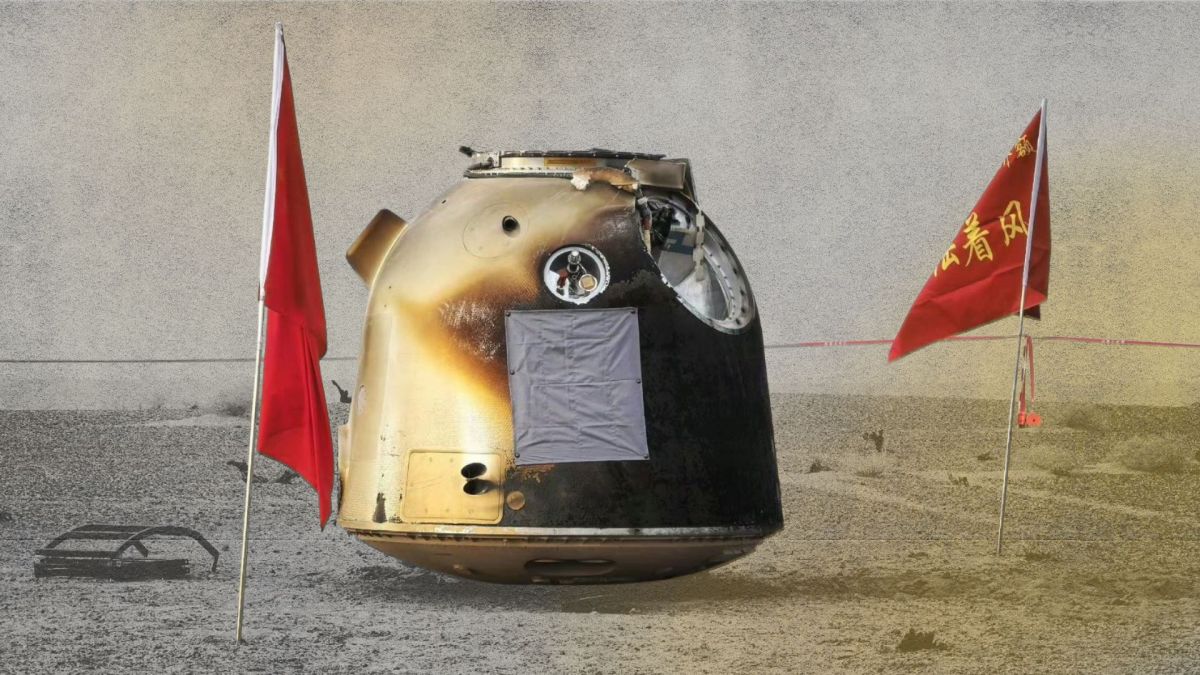
Endommagée, la capsule chinoise Shenzhou 20 a survécu à l’enfer du retour sur Terre

Une shenzhou 20 chine

Clap de fin pour la capsule fragilisée. Jugée inapte au vol habité après une collision avec un débris spatial, Shenzhou 20 a réussi son retour sur Terre à vide, ce lundi 19 janvier 2026. Une prouesse technique qui valide les réparations effectuées en orbite et referme trois mois de gestion de crise pour la Chine.

  •  

Frappée par un débris spatial, la capsule chinoise Shenzhou 20 a survécu à l’enfer de la rentrée atmosphérique

Une shenzhou 20 chine

Clap de fin pour la capsule fragilisée. Jugée inapte au vol habité après une collision avec un débris spatial, Shenzhou 20 a réussi son retour sur Terre à vide, ce lundi 19 janvier 2026. Une prouesse technique qui valide les réparations effectuées en orbite et referme trois mois de gestion de crise pour la Chine.

  •  

EHT Astronomers Will Film Swirling of a Supermassive Black Hole for the First Time

"Astronomers are preparing to capture a movie of a supermassive black hole in action for the first time," reports the Guardian: The Event Horizon Telescope (EHT) will track the colossal black hole at the heart of the Messier 87 galaxy throughout March and April with the aim of capturing footage of the swirling disc that traces out the edge of the event horizon, the point beyond which no light or matter can escape... The EHT is a global network of 12 radio telescopes spanning locations from Antarctica to Spain and Korea, which in 2019 unveiled the first image of a black hole's shadow. During March and April, as the Earth rotates, M87's central black hole will come into view for different telescopes, allowing a complete image to be captured every three days... Measuring the black hole's spin speed matters because this could help discriminate between competing theories of how these objects reached such epic proportions. If black holes grow mostly through accretion — steadily snowballing material that strays nearby — they would be expected to end up spinning at incredibly high speeds. By contrast, if black holes expand mostly through merging with other black holes, each merger could slow things down. The observations could also help explain how black hole jets are formed, which are among the largest, most powerful structures produced by galaxies. Jets channel vast columns of gas out of galaxies, slowing down the formation of new stars and limiting galaxy growth. In turn this can create dense pockets of material that trigger bursts of star formation beyond the host galaxy... While the movie campaign will take place in the spring, the sheer volume of data produced by the telescopes means the scientists will need to wait for Antarctic summer before the hard drives can be physically shipped to Germany and the US for processing. So it is likely to be a lengthy wait before the rest of the world gets a glimpse of the black hole in action. In a correction, the Guardian apologizes for originally including an AI-generated illustration of black hole with a caption suggesting it was a photo from telescopes. They've since swapped in an actual picture of the Messier 87 galaxy black hole.

Read more of this story at Slashdot.

  •  

SpaceX Launches New NASA Telescope to Help JWST Study Exoplanets

Last week a University of Arizona astronomy professor "watched anxiously...as an awe-inspiring SpaceX Falcon 9 rocket carried NASA's new exoplanet telescope, Pandora, into orbit." In 2018 NASA had approached Daniel Apai to help build the telescope, which he says will "shatter a barrier — to understand and remove a source of noise in the data — that limits our ability to study small exoplanets in detail and search for life on them." Astronomers have a trick to study exoplanet atmospheres. By observing the planets as they orbit in front of their host stars, we can study starlight that filters through their atmospheres... But, starting from 2007, astronomers noted that starspots — cooler, active regions on the stars — may disturb the transit measurements. In 2018 and 2019, then-Ph.D. student Benjamin V. Rackham, astrophysicist Mark Giampapa and I published a series of studies showing how darker starspots and brighter, magnetically active stellar regions can seriously mislead exoplanets measurements. We dubbed this problem "the transit light source effect...." In our papers — published three years before the 2021 launch of the James Webb Space Telescope - we predicted that the Webb cannot reach its full potential. We sounded the alarm bell... Pandora will do what Webb cannot: It will be able to patiently observe stars to understand how their complex atmospheres change. By staring at a star for 24 hours with visible and infrared cameras, it will measure subtle changes in the star's brightness and colors. When active regions in the star rotate in and out of view, and starspots form, evolve and dissipate, Pandora will record them. While Webb very rarely returns to the same planet in the same instrument configuration and almost never monitors their host stars, Pandora will revisit its target stars 10 times over a year, spending over 200 hours on each of them. It's the first space telescope "built specifically for detailed multi-color observations of starlight filtered through the atmospheres of exoplanets," reports the Arizona Daily Star, noting the University of Arizona will serve as mission control: [T]echnicians will operate Pandora in real time and monitor its telemetry and overall health under a contract with NASA... The spacecraft will undergo about a month of commissioning before beginning science operations, which are scheduled to last for a year... Pandora was selected as part of NASA's Astrophysics Pioneers program, which was created in 2020 to foster compelling, relatively low-cost science missions using smaller, cheaper hardware and flight platforms with a price cap of no more than $20 million. By comparison, the Webb telescope — the largest and most powerful astronomical observatory ever sent into space — carries a pricetag of about $10 billion. Pandora is a joint mission NASA and California's Lawrence Livermore National Laboratory.

Read more of this story at Slashdot.

  •  

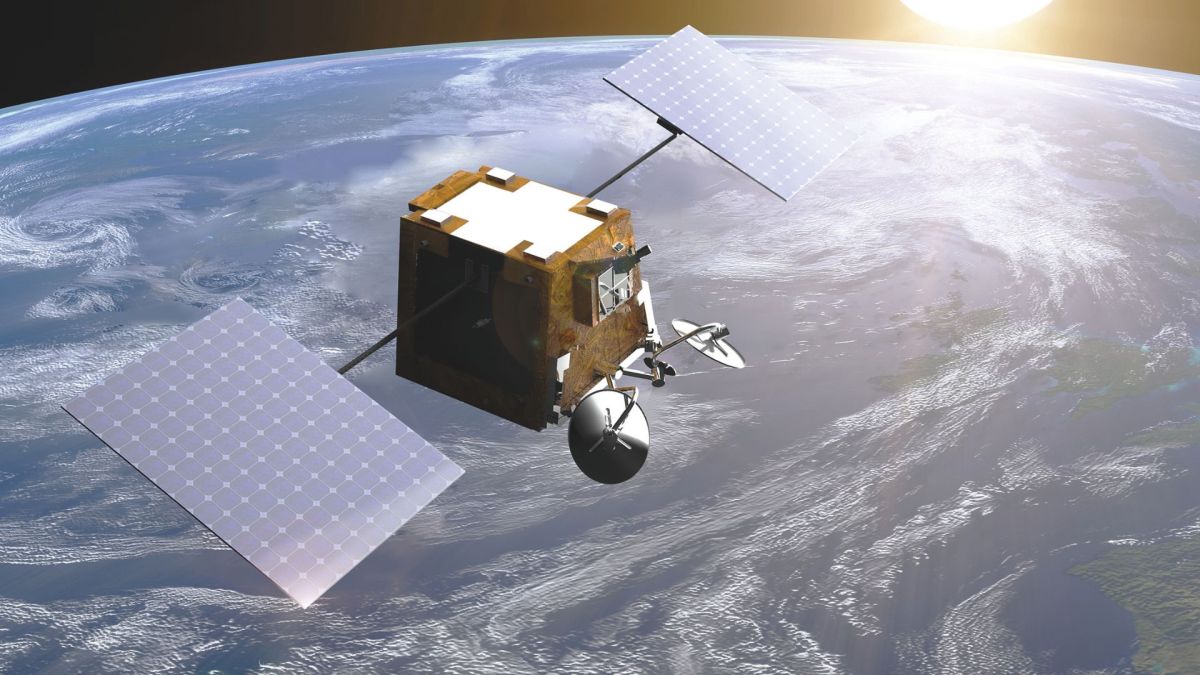
Could We Provide Better Cellphone Service With Fewer, Bigger Satellites?

European satellite operator Eutelsat "plans to launch 440 Airbus-built LEO satellites in the coming years to replenish and expand its constellation," Reuters reported Friday. And last week America's Federal Communications Commission approved SpaceX's request to deploy another 7,500 Starlink satellites, while Starlink "projects it will eventually have a constellation of 34,000 satellites," writes Fast Company, and Amazon's Project Leo "plans to launch more than 3,200 satellites." Meanwhile "Beijing and some Chinese companies are planning two separate mega-constellations, Guowang and G60 Starlink, totaling nearly 26,000 satellites," and this week the Chinese government "applied for launch permits for 200,000 satellites." But a small Texas-based company called AST SpaceMobile "believes it can provide better service with fewer than 100 gigantic satellites in space." AST SpaceMobile has developed a direct-to-cell technology that utilizes large satellites called BlueBirds. These machines use thousands of antennas to deliver broadband coverage directly to standard mobile phones, says the company's president, Scott Wisniewski. "This approach is remarkably efficient: We can achieve global coverage with approximately 90 satellites, not thousands or even tens of thousands required by other systems," Wisniewski writes in an email... The key is its satellites' size and sophistication. AST's first generation of commercial satellite, the BlueBird 1-5, unfolds into a massive 693-square-foot array in space. Today, the company has five operational BlueBird 1-5 satellites in orbit, but its ambitions are much bigger. On December 24, 2025, AST launched the first of its next-generation satellites from India — called Block 2 — and this one broke records. The BlueBird 6 has a surface of almost 2,400 square feet, making it the largest single satellite in low Earth orbit. The company plans to launch up to 60 more by the end of 2026. "This large surface area is essential for gathering faint signals from standard, unmodified mobile phones on the ground," Wisniewski explains. It is essentially a single, extremely powerful and sensitive cell tower in the sky, capable of serving a huge geographical area... To be clear, AST SpaceMobile's approach is not without its own controversies. The sheer size of the company's satellites makes them incredibly bright in the night sky, a significant source of frustration for ground-based astronomers. McDowell confirms that when it launched in 2022, AST's prototype satellite, BlueWalker 3, became "one of the top 10 brightest objects in the night sky for a while." "It's a serious issue, and we are working directly with the astronomy community to mitigate our impact," Wisniewski says. The company is exploring solutions like anti-reflective coatings and operational adjustments to minimize the time its satellites are at maximum brightness... AST SpaceMobile has already proven its technology works, the article points out, with six working satellites now transmitting at typical 5G speeds directly to regular phones.

Read more of this story at Slashdot.

  •  

2026's Breakthrough Technologies? MIT Technology Review Chooses Sodium-ion Batteries, Commercial Space Stations

As 2026 begins, MIT Technology Review publishes "educated guesses" on emerging technologies that will define the future, advances "we think will drive progress or incite the most change — for better or worse — in the years ahead." This year's list includes next-gen nuclear, gene-editing drugs (as well as the "resurrection" of ancient genes from extinct creatures), and three AI-related developments: AI companions, AI coding tools, and "mechanistic interpretability" for revealing LLM decision-making. But also on the list is sodium-ion batteries, "a cheaper, safer alternative to lithium." Backed by major players and public investment, they're poised to power grids and affordable EVs worldwide. [Chinese battery giant CATL claims to have already started manufacturing sodium-ion batteries at scale, and BYD also plans a massive production facility for sodium-ion batteries.] The most significant impact of sodium-Âion technology may be not on our roads but on our power grids. Storing clean energy generated by solar and wind has long been a challenge. Sodium-ion batteries, with their low cost, enhanced thermal stability, and long cycle life, are an attractive alternative. Peak Energy, a startup in the US, is already deploying grid-scale sodium-ion energy storage. Sodium-ion cells' energy density is still lower than that of high-end lithium-ion ones, but it continues to improve each year — and it's already sufficient for small passenger cars and logistics vehicles. And another "breakthrough technology" on their list is commercial space stations: Vast Space from California, plans to launch its Haven-1 space station in May 2026 on a SpaceX Falcon 9 rocket. If all goes to plan, it will initially support crews of four people staying aboard the bus-size habitat for 10 days. Paying customers will be able to experience life in microgravity and conduct research such as growing plants and testing drugs. On its heels will be Axiom Space's outpost, the Axiom Station, consisting of five modules (or rooms). It's designed to look like a boutique hotel and is expected to launch in 2028. Voyager Space aims to launch its version, called Starlab, the same year, and Blue Origin's Orbital Reef space station plans to follow in 2030. Thanks to long-time Slashdot reader sandbagger for sharing the article.

Read more of this story at Slashdot.

  •  

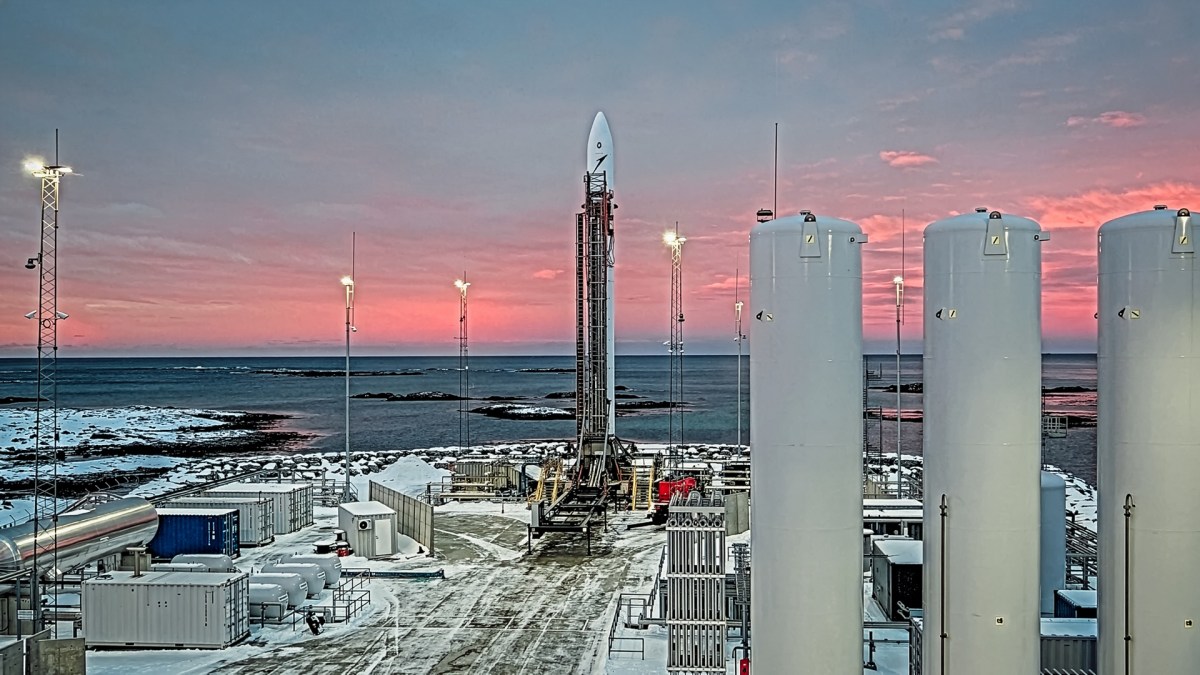
Un an après son crash, la fusée européenne Spectrum retente sa chance

Spectrum

Après l’échec spectaculaire de son vol inaugural en mars 2025, la société allemande Isar Aerospace s’apprête à retrouver son pas de tir norvégien. Baptisée Onward and Upward, cette deuxième mission prévue pour le 21 janvier 2026 ne sera plus un simple test à vide, mais un véritable vol de qualification opérationnelle.

  •  

Un an après son crash, la fusée européenne Spectrum retente sa chance

Spectrum

Après l’échec spectaculaire de son vol inaugural en mars 2025, la société allemande Isar Aerospace s’apprête à retrouver son pas de tir norvégien. Baptisée Onward and Upward, cette deuxième mission prévue pour le 21 janvier 2026 ne sera plus un simple test à vide, mais un véritable vol de qualification opérationnelle.

  •  

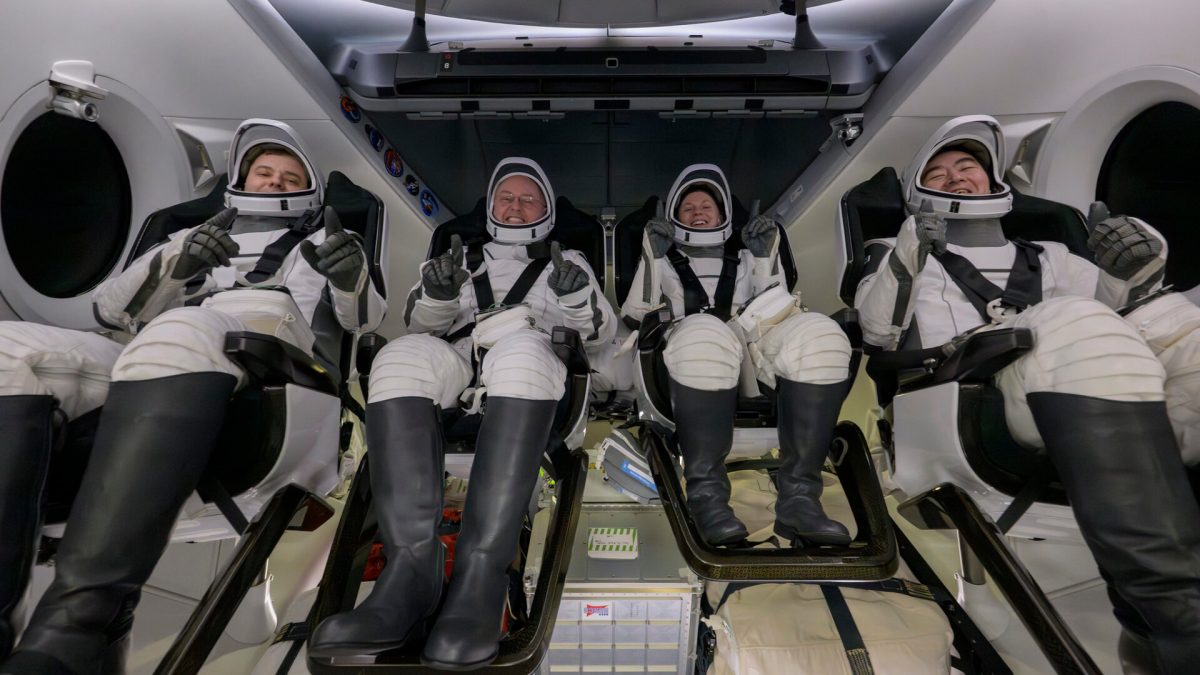
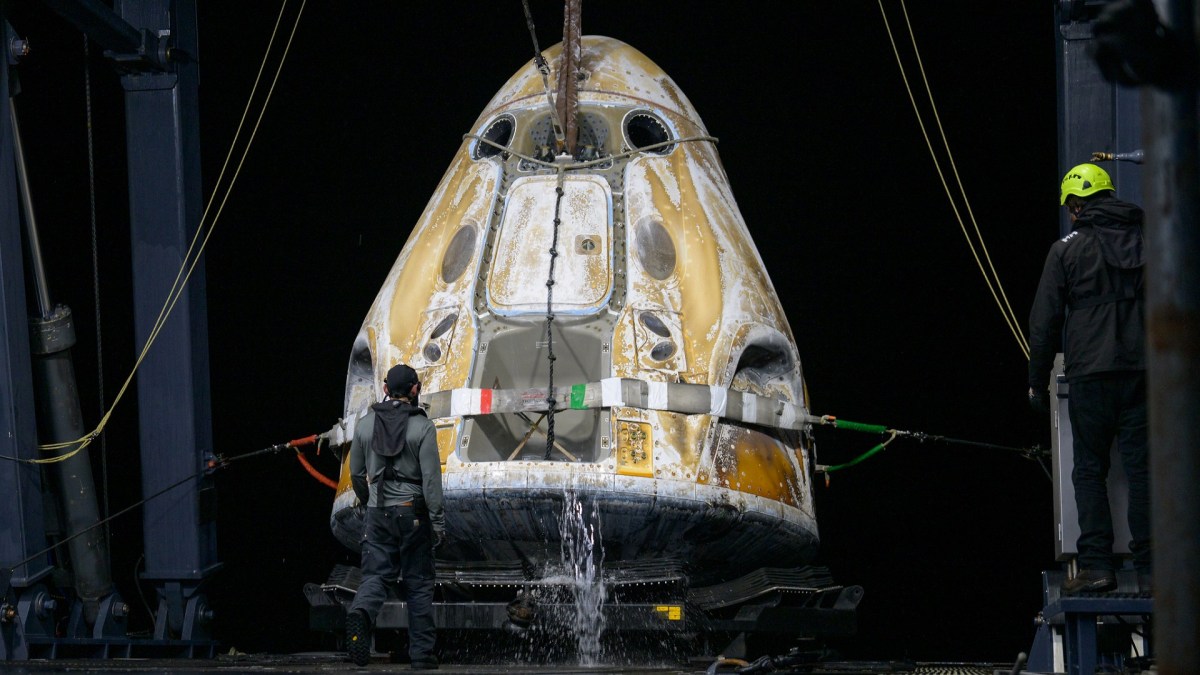
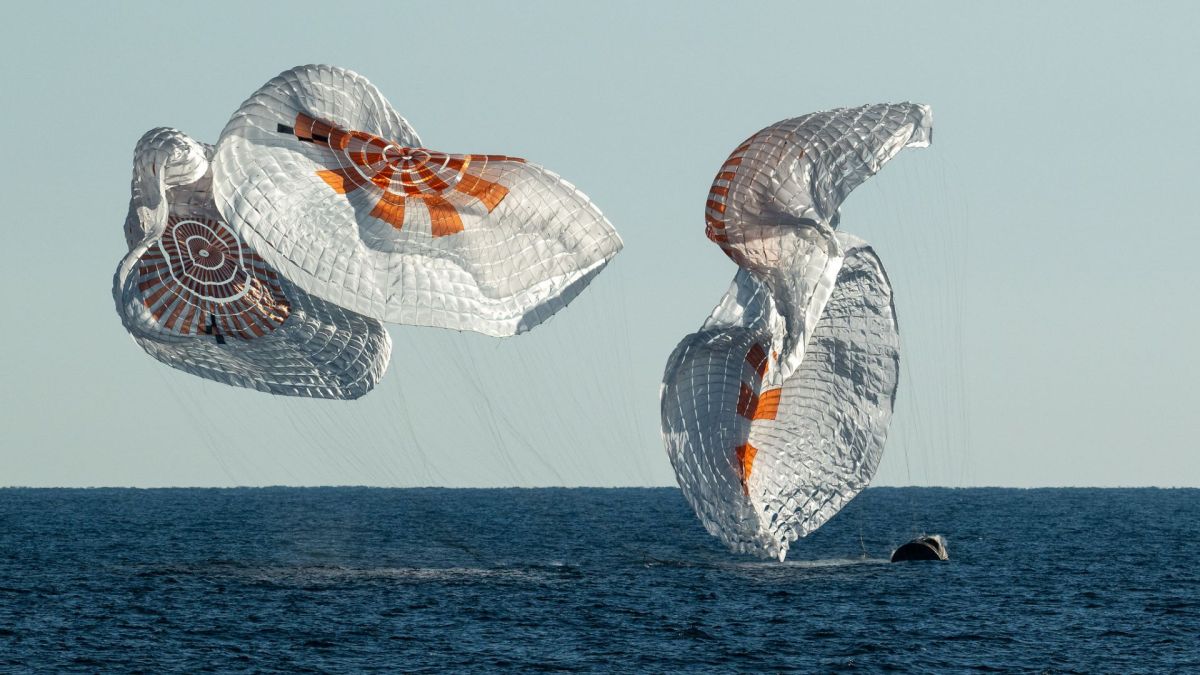
SpaceX Crew-11 : retour sur Terre réussi après une urgence médicale inédite dans l’ISS

spacex crew 11 retour

Fin de l’alerte pour la Station spatiale internationale. La capsule Dragon de SpaceX a amerri avec succès ce jeudi matin dans le Pacifique, ramenant sur Terre les quatre membres de la mission Crew-11. Ce retour anticipé, dicté par une urgence médicale inédite en 25 ans, s’est déroulé sans encombre. L’équipage est désormais pris en charge au sol.

  •  
❌