Vue lecture

How Many Years Left Until the Hubble Space Telescope Reenters Earth's Atmosphere?

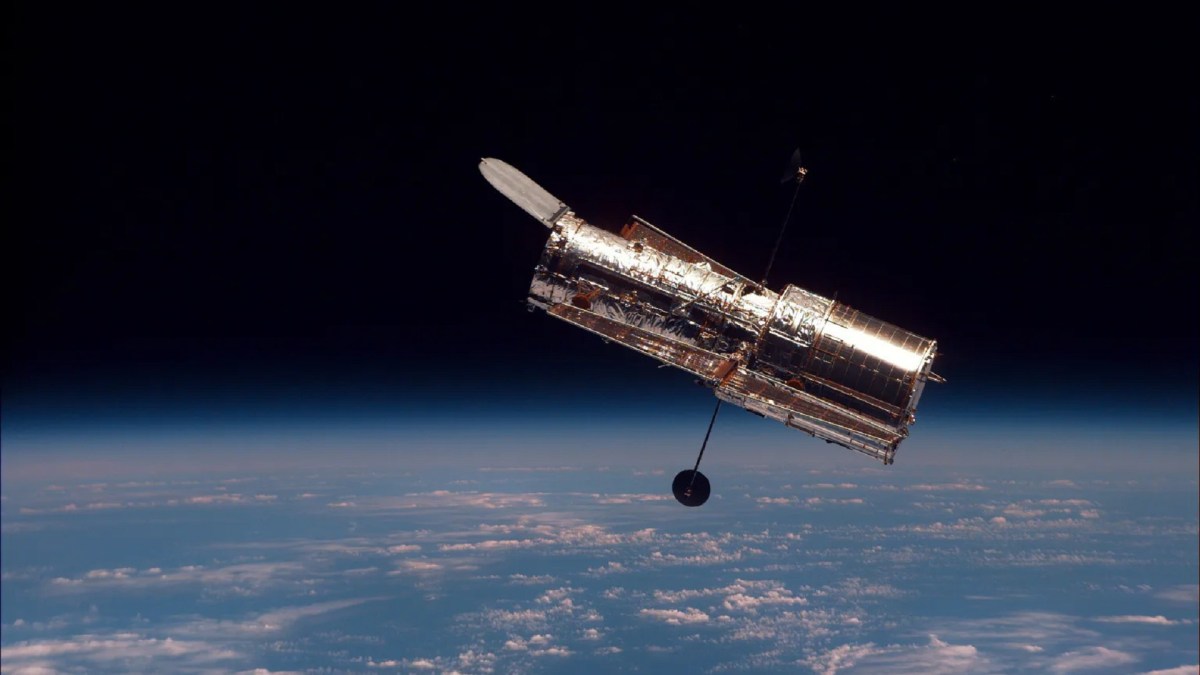
"The clock is ticking" on the Hubble Space Telescope, writes the space news site Daily Galaxy, citing estimates from the unofficial "Hubble Reentry Tracker" site (which uses orbital data from the site space-track.org, created by tech integrator SAIC): While Hubble was initially launched into low Earth orbit at an altitude of around 360 miles, it has since descended to approximately 326 miles, and it continues to fall... "The solar flux levels are currently longer in duration and more elevated than previously anticipated, resulting in an earlier reentry forecast for the Hubble Space Telescope if no reboost mission is conducted," Hubble Reentry Trackersays the Hubble Reentry Tracker... ["Hubble has been reboosted three times in its history," the site points out, "all by servicing missions using the Space Shuttle."] NASA partnered with SpaceX in 2022 to explore the feasibility of raising Hubble to its original altitude of 373 miles. Such an adjustment would have bought Hubble a few more years in orbit. However, the future of this plan remains uncertain, as NASA has not made any official announcements to move forward with it... Solar flux levels, which determine atmospheric drag, have increased in recent years, accelerating the telescope's decline. This change in solar behavior means that the possibility of Hubble reentering Earth's atmosphere in the next five to six years is quite high if no corrective action is taken. ["But it is difficult to estimate this value due to the variability of future solar flux," the site cautions. "In the best case, Hubble may not reenter for 15 more years, around 2040. In the worst case, it could reenter in 4 years..."] Once Hubble reaches an altitude of 248 miles, it is expected that it will have less than a year before reentry... While Hubble's end may be near, there is a promising new project on the horizon: Lazuli, a privately-funded space telescope funded by former Google CEO Eric Schmidt. Lazuli aims to become the first privately-funded space telescope, and it could be the successor Hubble enthusiasts have been hoping for. Schmidt Sciences, the organization behind the telescope, plans to launch Lazuli by 2028, providing a more modern alternative to Hubble with a larger mirror and enhanced capabilities. The telescope's proposed design includes a 94-inch-wide mirror, which is a significant upgrade from Hubble's 94.5-inch mirror, and will feature updated instruments to capture more detailed data than ever before.

Read more of this story at Slashdot.

  •  

Former Google CEO Plans To Singlehandedly Fund a Hubble Telescope Replacement

An anonymous reader shares a report: Prior to World War II the vast majority of telescopes built around the world were funded by wealthy people with an interest in the heavens above. However, after the war, two significant developments in the mid-20th century caused the burden of funding large astronomical instruments to largely shift to the government and academic institutions. First, as mirrors became larger and larger to see deeper into the universe, their costs grew exponentially. And then, with the advent of spaceflight, the expense of space-based telescopes expanded even further. But now the tide may be turning again. On Wednesday evening, former Google CEO Eric Schmidt and his wife, Wendy, announced a major investment in not just one telescope project, but four. Each of these new telescopes brings a novel capability online; however, the most intriguing new instrument is a space-based telescope named Lazuli. This spacecraft, if successfully launched and deployed, would offer astronomers a more capable and modern version of the Hubble Space Telescope, which is now three decades old. A billionaire with a keen interest in science and technology, Schmidt and his wife did not disclose the size of his investment in the four telescopes, which collectively will be known as the Schmidt Observatory System. However, it likely is worth half a billion dollars, at a minimum.

Read more of this story at Slashdot.

  •  

Mystère médical dans l’espace : la Nasa annule une sortie spatiale à cause d’un astronaute malade

iss astronaute

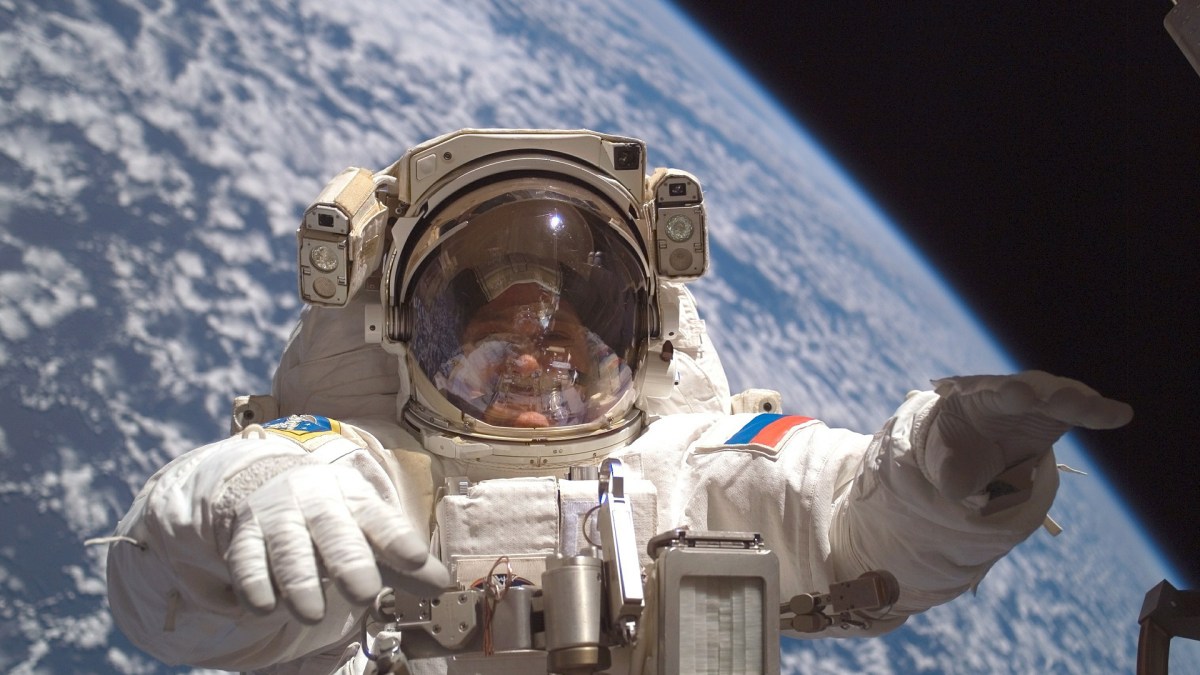
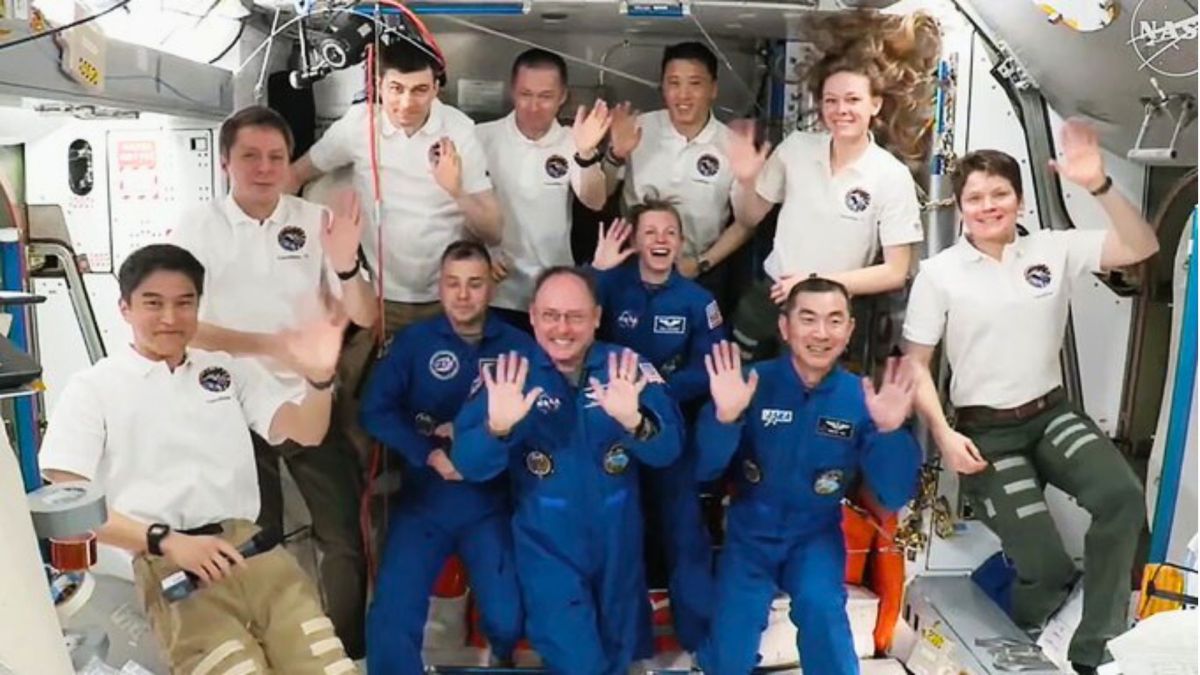
Une agitation rare se déroule dans la Station spatiale internationale. La Nasa a révélé qu'en raison de l'état de santé d'un des astronautes, la sortie extra-véhiculaire prévue aujourd'hui était reportée. L'agence se veut rassurante, et des procédures sont prévues pour faire face à ces situations.

  •  

Rubin Observatory Spots an Asteroid That Spins Fast Enough To Set a Record

Astronomers using the Vera C. Rubin Observatory have discovered a record-setting asteroid, known as 2025 MN45, nearly half a mile wide and spinning once every 1.88 minutes -- the fastest known rotation for an object of its size. "This is now the fastest-spinning asteroid that we know of, larger than 500 meters," said Sarah Greenstreet, University of Washington astronomer and lead author of the study. The findings have been published in the The Astrophysical Journal Letters. GeekWire reports: 2025 MN45 is one of more than 2,100 solar system objects that were detected during the observatory's commissioning phase. Over time, the LSST Camera tracked variations in the light reflected by those objects. Greenstreet and her colleagues analyzed those variations to determine the size, distance, composition and rate of rotation for 76 asteroids, all but one of which are in the main asteroid belt between the orbits of Mars and Jupiter. (The other asteroid is a near-Earth object.) The team found 16 "super-fast rotators" spinning at rates ranging between 13 minutes and 2.2 hours per revolution -- plus three "ultra-fast rotators," including 2025 MN45, that make a full revolution in less than five minutes. Greenstreet said 2025 MN45 appears to consist of solid rock, as opposed to the "rubble pile" material that most asteroids are thought to be made of. "We also believe that it's likely a collisionary fragment of a much larger parent body that, early in the solar system's history, was heated enough that the material internal to it melted and differentiated," Greenstreet said. She and her colleagues suggest that the primordial collision blasted 2025 MN45 from the dense core of the parent body and sent it whirling into space.

Read more of this story at Slashdot.

  •  

Study Casts Doubt on Potential For Life on Jupiter's Moon Europa

Jupiter's moon Europa is on the short list of places in our solar system seen as promising in the search for life beyond Earth, with a large subsurface ocean thought to be hidden under an outer shell of ice. But new research is raising questions about whether Europa in fact has what it takes for habitability. Reuters: The study assessed the potential on Europa's ocean bottom for tectonic and volcanic activity, which on Earth facilitate interactions between rock and seawater that generate essential nutrients and chemical energy for life. After modeling Europa's conditions, the researchers concluded that its rocky seafloor is likely mechanically too strong to allow such activity. The researchers considered factors including Europa's size, the makeup of its rocky core and the gravitational forces exerted by Jupiter, the solar system's largest planet. Their evaluation that there probably is little to no active faulting at Europa's seafloor suggests this moon is barren of life. "On Earth, tectonic activity such as fracturing and faulting exposes fresh rock to the environment where chemical reactions, principally involving water, generate chemicals such as methane that microbial life can use," said planetary scientist Paul Byrne of Washington University in St. Louis, lead author of the study published on Tuesday in the journal Nature Communications. "Without such activity, those reactions are harder to establish and sustain, making Europa's seafloor a challenging environment for life," Byrne added.

Read more of this story at Slashdot.

  •  

Capture de Maduro : SpaceX active Starlink d’urgence au Venezuela dans des circonstances floues

starlink maduro venezuela

L'opération militaire des États-Unis au Venezuela, qui a mené à la capture de Nicolás Maduro le 3 janvier 2026, a aussi perturbé les accès à Internet à Caracas. En réponse, SpaceX a annoncé l'activation de Starlink. Une manœuvre inédite, car le service n'a théoriquement aucune existence légale dans le pays.

  •  
❌