Vue lecture

Warner Bros Shareholders Approve Paramount's $81 Billion Takeover

Warner Bros. Discovery shareholders have approved Paramount Skydance's takeover bid, moving the massive Hollywood merger a step closer to completion. It's not a done deal quite yet, though, as it still faces regulatory scrutiny and fierce opposition from critics who warn it will further concentrate media power. The Associated Press reports: Per a preliminary vote count Thursday, Warner Bros. Discovery said the overwhelming majority of its stakeholders voted in support of selling the entire business to Skydance-owned Paramount for $31 a share. Including debt, the deal is valued at nearly $111 billion based on Warner's current outstanding shares. That means Warner-owned HBO Max, cult-favorite titles like "Harry Potter" and even CNN could soon find themselves under the same roof with Paramount's CBS, "Top Gun" and the Paramount+ streaming service. David Zaslav, CEO of Warner Bros. Discovery, said in a statement that stockholder approval marks "another key milestone toward completing this historic transaction." Paramount added that it looks forward to closing in the coming months, and "realizing the creation of a next-generation media and entertainment company." [...] Meanwhile, Warner shareholders rejected a separate measure Thursday outlining post-merger payments for company executives.

Read more of this story at Slashdot.

  •  

Meta Is Laying Off 10% of Its Workforce

Meta is reportedly cutting about 10% of its workforce, or roughly 8,000 jobs, while closing thousands of open roles it had intended to fill. "We're doing this as part of our continued effort to run the company more efficiently and to allow us to offset the other investments we're making," said Janelle Gale, Meta's chief people officer. The company had almost 79,000 employees at the start of the year. Quartz reports: Meta CEO Mark Zuckerberg has poured resources into building out AI capabilities, directing spending toward model development, chatbot products, and the engineering talent to support them. Meta set its 2026 capital expenditure guidance at $115 billion to $135 billion, almost double the $72 billion it spent in 2025. Employees have been encouraged to use AI agents internally for tasks such as writing code. The early disclosure, Gale explained, was prompted by the fact that information about the cuts had already made its way into press reports before the company was ready to announce. "I know this is unwelcome news and confirming this puts everyone in an uneasy state, but we feel this is the best path forward, given the circumstances," she wrote. According to the memo, severance for affected workers in the United States will cover 18 months of COBRA health insurance premiums, along with a base pay component of 16 weeks that increases by two weeks for each year of service. Departing employees will have access to job placement assistance and, where applicable, help navigating immigration status. Packages outside the U.S. will vary by country. Meta cut between 10% and 15% of its Reality Labs workforce in January, shut down several VR game studios, and shed about 700 positions across at least five divisions in March.

Read more of this story at Slashdot.

  •  

Microsoft Plans First-Ever Voluntary Employee Buyout

Microsoft plans to offer voluntary buyouts for the first time. According to CNBC, "about 7% of U.S. employees are eligible," with the program being "available to U.S. workers at the senior director level and below whose years of employment and age add up to 70 or higher." Further details will be provided on May 7. From the report: Last year Microsoft removed some costs through multiple rounds of layoffs. As of June 2025, the company had 228,000 employees. "Our hope is that this program gives those eligible the choice to take that next step on their own terms, with generous company support," Amy Coleman, Microsoft's executive vice president and chief people officer, wrote in a memo viewed by CNBC. Additionally, Microsoft is adjusting the way it doles out stock to employees for annual rewards. The company will no longer make managers tie stock directly to cash bonuses. This way, "managers have more flexibility to meaningfully recognize high performance," Coleman wrote. The company is also simplifying the review process for managers, so they can choose from five pay options for employees instead of nine.

Read more of this story at Slashdot.

  •  

Cet agent IA a ouvert sa propre boutique, mais a oublié un détail absurde le jour J

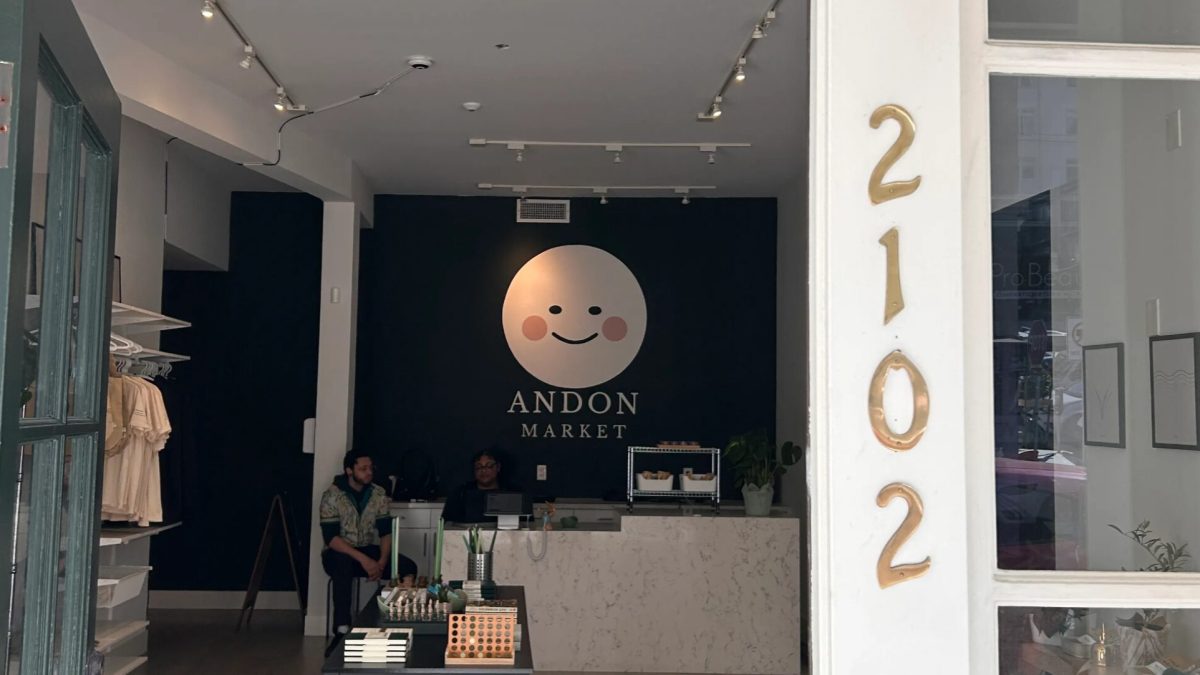
À San Francisco, aux États-Unis, Andon Market se présente comme le premier commerce de détail géré par une intelligence artificielle. Baptisée Luna, l’IA pilote les principales décisions du magasin, des commandes au recrutement, avec l’ambition d’ouvrir le débat sur la place de l’IA dans le travail.

  •  

Intel Lands Tesla As First Major Customer For 14A Chip Technology

An anonymous reader quotes a report from Reuters: Tesla CEO Elon Musk said on Wednesday the EV maker plans to use Intel's next-generation 14A manufacturing process to make chips at its Terafab project, an advanced AI chip complex Musk has envisioned in Austin. The contract would mark Intel's first major customer for the technology, a breakthrough for the chipmaker which has struggled to stand up its contract manufacturing business essential for taking on top rival TSMC. Intel CEO Lip Bu Tan has said that the company would exit the chip manufacturing business altogether if it failed to secure an external customer. Intel has previously said it was in discussions with large customers about 14A, but has not yet disclosed a major external customer. It declined to comment on Musk's remarks. [...] "Given that by the time Terafab scales up, 14A will be probably fairly mature or ready for prime time," Musk said. "14A seems like the right move, and we have a great relationship with Intel," he said. Ben Bajarin, head of technology consultancy Creative Strategies, said that Intel's 14A technology could "turn out to be a bigger deal for Intel than folks thought." "It's important to have multiple partners as early design partners to help clean the pipe and work through needed learnings at the leading edge. They will definitely have scale, so a great first non-Intel customer," Bajarin said. Seaport Research Partners analyst Jay Goldberg said Musk's vote of confidence in Intel's technology outweighed the unknowns about the Terafab project. "Having a customer is more important than the timing," he said. Goldberg said that Musk's lofty estimates of how many chips its robots could one day require may or may not materialize, but even making chips for Tesla's existing businesses would be a significant win for Intel. "It's not equivalent to Apple or Nvidia" in terms of chip volumes, Goldberg said. "But it's a real customer. It can be real volumes."

Read more of this story at Slashdot.

  •  

SpaceX Strikes Deal With Coding Startup Cursor For $60 Billion

An anonymous reader quotes a report from the New York Times: SpaceX, Elon Musk's rocket and satellite company, said on Tuesday that it had struck a deal with the artificial intelligence start-up Cursor that could result in its acquiring the young company for $60 billion. SpaceX is making the deal just as it prepares to go public in what is likely to be one of the largest initial public offerings ever. In a social media post, SpaceX said the combination with Cursor, which makes code-writing software, would "allow us to build the world's most useful" A.I. models. SpaceX added that the agreement gave it the option "to acquire Cursor later this year for $60 billion or pay $10 billion for our work together." It is unclear if the companies plan to consummate the deal before or after SpaceX's I.P.O., which could happen as early as June. [...] Cursor, which has raised more than $3 billion in funding, was founded in 2022 and made waves as a fast-growing A.I. start-up. It was under pressure in recent months after OpenAI and Anthropic announced competing code-writing products that were embraced by tech companies. Cursor had been in talks to raise funding in recent weeks.

Read more of this story at Slashdot.

  •  

Amazon To Invest Up To Another $25 Billion In Anthropic

Amazon is expanding its Anthropic partnership with a deal to invest up to another $25 billion, while Anthropic commits to spending more than $100 billion on AWS infrastructure over the next decade to power Claude. "Anthropic's commitment to run its large language models on AWS Trainium for the next decade reflects the progress we've made together on custom silicon, as we continue delivering the technology and infrastructure our customers need to build with generative AI," Amazon CEO Andy Jassy said in a statement. CNBC reports: Amazon's investment includes $5 billion into Anthropic now, with up to $20 billion in the future tied to "certain commercial milestones," according to a release. The initial investment is at Anthropic's latest valuation of $380 billion. Anthropic said in the release that it will bring nearly 1 gigawatt total of Trainium2 and Trainium3 capacity online by the end of the year. With all of the major hyperscalers competing to build out AI capacity as quickly as possible, Amazon said in February that it expects to shell out roughly $200 billion this year on capital expenditures, mostly on AI infrastructure.

Read more of this story at Slashdot.

  •  

Apple CEO Tim Cook Is Stepping Down

Apple announced that Tim Cook will step down as CEO in September after 15 years in the role, handing the job to hardware chief John Ternus. Longtime Slashdot reader sinij shares the news from MarketWatch: Cook leaves an impressive legacy after growing the company to a $4 trillion market capitalization from just $300 billion 15 years ago. Over Cook's 15-year tenure as CEO, Apple's stock has risen 1,932%, beating the S&P 500's 504% increase, according to Dow Jones Market Data. That places Apple's stock as the 38th best-performing member of the index over that period of time. Cook had big shoes to fill, replacing Apple's iconic founder, Steve Jobs, as CEO. Cook's successor, John Ternus, Apple's senior vice president of hardware engineering, will need to guide Apple's through uncharted waters as the company navigates its artificial-intelligence transition and supply-chain constraints. Cook will remain at Apple as executive chairman. "It has been the greatest privilege of my life to be the CEO of Apple and to have been trusted to lead such an extraordinary company. I love Apple with all of my being, and I am so grateful to have had the opportunity to work with a team of such ingenious, innovative, creative, and deeply caring people who have been unwavering in their dedication to enriching the lives of our customers and creating the best products and services in the world," said Cook. "John Ternus has the mind of an engineer, the soul of an innovator, and the heart to lead with integrity and with honor. He is a visionary whose contributions to Apple over 25 years are already too numerous to count, and he is without question the right person to lead Apple into the future. I could not be more confident in his abilities and his character, and I look forward to working closely with him on this transition and in my new role as executive chairman." As for Ternus' replacement, the role of Chief Hardware Officer will be awarded to Apple executive Johny Srouji. "Srouji, who most recently served as senior vice president of Hardware Technologies, will assume an expanded role leading Hardware Engineering, which John Ternus most recently oversaw, as well as the hardware technologies organization," said Apple in a press release.

Read more of this story at Slashdot.

  •  

Allbirds' Move To AI Has Echoes of the Dot-Com Frenzy

An anonymous reader quotes a report from Bloomberg, written by writer Austin Carr: Allbirds is pivoting to artificial intelligence. The San Francisco brand, whose wool running shoes were once the sneaker du jour among the tech crowd, announced last week that it was expanding into AI computing infrastructure. The bizarre strategic shift was immediately greeted with a surprising frenzy on Wall Street, where shares of Allbirds soared 582% last Wednesday before dropping the next day. [...] Of course, the absurdity of Allbirds' situation echoed familiar Silicon Valley tropes -- from the endless startup pivots of the 2010s to the more recent boom-and-bust cycles of arbitrarily valued crypto coins. But it immediately reminded me of the marketing ploys of the dot-com crash. After all, some of the more iconic fails ended up being retailers such as Pets.com, Webvan, etc., riding the web wave with little to show for it beyond terrible margins. One particular comparison from that period stands out as relevant to Allbirds: Zap.com. The holding company behind it, Zapata Corp., had a long and convoluted history, but was essentially selling fish-oil products by the time it decided to reinvent itself as an internet portal. It amassed a variety of web properties -- in media, e-commerce, gaming and so on -- and even once tried to acquire the search engine Excite. Spoiler alert: Zap flopped. Jen Heck, then a young employee at one of Zap's up-and-coming portfolio entities, remembers how quickly the hype of that web 1.0 turned to hell. As absurd as Zapata's pivot sounds today, it seemed feasible during the excitement of the internet revolution. "We went from like, 'Wow, this life thing is just so easy,' to it all ending so suddenly," Heck recalls. The ones who survived that tech bubble, she says, actually had differentiated products and the right creative thinkers building them -- and weren't just cynically jumping on the latest hot trend. "'Internet' was the magic word then, and 'AI' is the magic word now," Heck says.

Read more of this story at Slashdot.

  •  

Duolingo CEO Says They've Stopped Tracking Employees' AI Use for Performance Reviews

Last May Duolingo's stock peaked at $529.05. But while the learning app passed $1 billion in revenue in 2025 and 50 million daily active users, today its stock price has dropped more than 81%, to $100.51. And there's been other changes, reports Entrepreneur: In April 2025, Duolingo CEO Luis von Ahn made headlines after writing a memo calling the company "AI-first." In the memo, von Ahn announced that the language-learning platform would track employees' AI use in performance reviews. Now, a year later, von Ahn is backtracking and rethinking how he measures employee performance. He told the Silicon Valley Girl podcast earlier this month that Duolingo no longer considers AI use in performance reviews. The change arose after employees started to ask, "Do you just want us to use AI for AI's sake?" von Ahn explained. "We said no, look — the most important thing in your performance is that you are doing whatever your job is as well as possible. A lot of times, AI can help you with that, but if it can't, I'm not going to force you to do that," von Ahn said on the podcast. He felt as though the company was "trying to push something that in some cases did not fit" instead of "being held accountable for the actual outcome." The CEO is, however, still sticking to other "constructive constraints" he introduced in the April 2025 memo, including stopping contractor hiring in cases where AI can assume their workload... Von Ahn also mentioned that a few months ago, Duolingo had a day dedicated to vibe coding, or prompting AI to create an app without manually writing a single line of code. Every single person at the company, from engineers to human resources professionals, had to vibe code an app. Vibe coding has made an impact at the company. One of Duolingo's latest offerings, a course teaching users how to play chess, arose when two people vibe-coded the first prototype of it, the CEO said. Neither of them knew how to play chess or program, but they managed to use AI to create the whole chess curriculum and a prototype of the app in about six months last year. Now chess is Duolingo's fastest-growing course, according to von Ahn. "At this point, we have seven million daily active users that are learning chess," the CEO said on the podcast.

Read more of this story at Slashdot.

  •  

Reed Hastings Is Leaving Netflix After 29 Years

Reed Hastings is stepping down from Netflix's board in June, ending a 29-year run at the company he co-founded and helped transform from a DVD-by-mail business into a global streaming giant. Hastings said in a shareholder (PDF) letter that he's stepping down to focus on "his philanthropy and other pursuits." Engadget reports: Hastings has served as chairman of Netflix's board since 2023, a role he assumed after stepping down as co-CEO and promoting Greg Peters in his place. "Netflix changed my life in so many ways, and my all-time favorite memory was January 2016, when we enabled nearly the entire planet to enjoy our service," Hastings said in a statement. "My real contribution at Netflix wasn't a single decision; it was a focus on member joy, building a culture that others could inherit and improve, and building a company that could be both beloved by members and wildly successful for generations to come. A special thanks to Greg and Ted, whose commitment to Netflix's greatness is so strong that I can now focus on new things."

Read more of this story at Slashdot.

  •  

Snapchat Blames AI As It Cuts 1,000 Jobs

Snap is laying off about 1,000 employees, or 16% of its workforce, while closing 300 open roles as it tries to cut costs and push toward profitability with more AI-driven efficiency. "While these changes are necessary to realize Snap's long-term potential, we believe that rapid advancements in artificial intelligence enable our teams to reduce repetitive work, increase velocity, and better support our community, partners, and advertisers," CEO Evan Spiegel wrote in a memo, which was included in the company's 8-K filing (PDF). "We have already witnessed small squads leveraging AI tools to drive meaningful progress across several important initiatives." The Verge reports: The changes are expected to save Snap $500 million by the second half of 2026. Snap had about 5,261 full-time employees as of December 2025, and now joins the growing list of tech companies that have already announced significant layoffs this year, including Meta, Amazon, Oracle, GoPro, and Jack Dorsey's Block. "Last fall, I described Snap as facing a crucible moment, requiring a new way of working that is faster and more efficient, while pivoting towards profitable growth," Spiegel wrote. "Over the past several months, we have carefully reviewed the work required to best serve our community and partners, and made tough choices to prioritize the investments we believe are most likely to create long-term value."

Read more of this story at Slashdot.

  •  

Struggling Shoe Retailer Allbirds Pivots To AI, Stock Explodes More Than 700%

Allbirds made a surprise announcement this morning: it's pivoting from sustainable shoes to AI compute infrastructure, rebranding as NewBird AI after selling its brand assets and closing its U.S. full-price stores. The move sent shares soaring more than 700%. CNBC reports: The move boosted shares of the miniscule market cap company -- it was valued at about $21 million at Tuesday's close -- by more than 700%. The shares, which were under $3 a day ago, jumped to above $17. [...] The new company, which expects to be called NewBird AI, announced a deal to raise up to $50 million in funding, expected to close in the second quarter of 2026. Allbirds announced a deal with American Exchange Group to sell its intellectual property and other assets for $39 million last month. "The Company will initially seek to acquire high-performance, low-latency AI compute hardware and provide access under long-term lease arrangements, meeting customer demand that spot markets and hyperscalers are unable to reliably service," the company said in the announcement.

Read more of this story at Slashdot.

  •  

Amazon Buys Globalstar For $10.8 Billion, Moving To Expand Its Satellite Internet Service

Amazon is buying satellite communications company Globalstar for $10.8 billion to expand its Leo satellite-internet network and compete more directly with SpaceX's Starlink. The deal also includes a partnership with Apple to support satellite connectivity for iPhones and Apple Watches, with Amazon planning voice, data, and messaging services starting in 2028. The New York Times reports: Leo was Amazon's move to enter the market for beaming high-speed internet to the ground from orbit. That is an arena dominated by Elon Musk's SpaceX, which operates the Starlink satellite-internet service. Starlink, which has thousands of satellites in orbit, already serves several million customers around the world. This month, SpaceX filed to go public in what is shaping up to be one of the largest-ever initial public offerings. Mr. Musk has valued SpaceX -- which has landed contracts with federal agencies such as NASA and the Department of Defense -- at more than $1 trillion. Other companies are racing to catch up to what Mr. Musk has built for space. Globalstar, founded in 1991, is a Louisiana-based global telecommunications company. It operates networks of low-Earth orbiting satellites to provide internet connectivity to customers. Paul Jacobs, Globalstar's chief executive, said in a statement that together, the two companies "will advance innovations in digital connectivity."

Read more of this story at Slashdot.

  •  

Hollywood Stars Sign Open Letter Protesting Paramount-Warner Bros Merger

More than 1,000 Hollywood figures, including major actors, writers, and directors, signed an open letter opposing Paramount Skydance's proposed takeover of Warner Bros. Discovery, arguing it would hurt an industry "already under severe strain." The deal is still under regulatory scrutiny in both the U.S. and U.K., while Paramount says the merger would strengthen competition and expand opportunities for creators. NBC News reports: "This transaction would further consolidate an already concentrated media landscape, reducing competition at a moment when our industries -- and the audiences we serve -- can least afford it," the signatories wrote in the letter, published early Monday on a website called Block the Merger. "The result will be fewer opportunities for creators, fewer jobs across the production ecosystem, higher costs, and less choice for audiences in the United States and around the world. Alarmingly, this merger would reduce the number of major U.S. film studios to just four," the signatories added. [T]he open letter illustrates the deep resistance to the deal among many members of Hollywood's creative community. The list of signatories includes A-list stars (Glenn Close, Ben Stiller), celebrated filmmakers (Yorgos Lanthimos, Denis Villeneuve) and acclaimed writers ("The Sopranos" creator David Chase). "Media consolidation has accelerated the disappearance of the mid-budget film, the erosion of independent distribution, the collapse of the international sales market, the elimination of meaningful profit participation, and the weakening of screen credit integrity," the signatories wrote. "Together, these factors threaten the sustainability of the entire creative community," they added. [...] Monday's open letter was spearheaded by a group of advocacy organizations -- including the Committee for the First Amendment, a free speech group led by Fonda, who warned that the merger "would be one of the most destructive threats to free speech and creative expression in our history." In the letter, first reported by The New York Times, the signatories expressed support for California Attorney General Rob Bonta, who has said the merger is "not a done deal." "These two Hollywood titans have not cleared regulatory scrutiny -- the California Department of Justice has an open investigation, and we intend to be vigorous in our review," Bonta said in a Feb. 26 post on X. Paramount Skydance said that they "hear and understand the concerns" and are committed to "protecting and expanding creativity." The studio also reiterated its commitment to releasing a minimum of 30 "high-quality feature films annually with full theatrical releases" and "preserving iconic brands with independent creative leadership" to make sure "creators have more avenues for their work, not fewer."

Read more of this story at Slashdot.

  •  

Mémoire HBM3 : La demande multipliée par 600 en 2028 selon Michael Dell

S’il faut prendre les annonces du patron de Dell avec les pincettes de rigueur, il est directement concerné par l’évolution du marché, son annonce fait tout de même froid dans le dos. Selon lui, la demande de mémoire HBM3 va exploser.

Pour Michael Dell, la situation de la mémoire vive ne va pas s’améliorer à moyen terme mais, au contraire, largement empirer. Son analyse est simple, la demande actuelle en mémoire vive est liée à la gourmandise des centres de données d’IA. En 2022, chaque serveur DGX H100 de Nvidia employait 80 Go de mémoire HBM3 ultra-rapide. C’est la production de cette mémoire qui a détourné les trois principaux fabricants mondiaux du secteur de la DDR5 destinée aux ordinateurs classiques. 

mémoire HBM3

Une demande de mémoire HBM3 en très forte hausse

Or pour Michael Dell, le besoin en mémoire des futures solutions IA suivrait une augmentation régulière pour atteindre 2 To de mémoire HBM en 2028. Une augmentation tirée d’une extrapolation linéaire très « mathématique » donc. Basée sur le trait rectiligne d’une progression régulière. 2 To par serveur équivaudrait à une augmentation explosive des besoins de cette industrie. Cette augmentation liée à une évolution des centres de données actuels et à la création de nouveaux datacenters serait sans commune mesure avec les anticipations de production de mémoire estimée. Et cela malgré des investissements dans de nouvelles usines de production.

Si un tel scénario se réalisait, la demande de mémoire HBM3 ne baisserait pas à l’horizon 2028-2030 mais se positionnerait au contraire dans une énorme augmentation. Les besoins seraient d’ailleurs tellement énormes pour cette mémoire HBM qu’il est plus que probable que le marché de la DDR5 « classique » soit alors complètement abandonné par les fabricants. Assechant ainsi le marché des ordinateurs censés « consommer » les services d’IA en question.

La vision de Michael Dell est très technocentrée.

Ce scénario est évidemment catastrophique mais il n’est pas certain qu’il se réalise. D’abord parce que la multiplication mathématique des besoins futurs en suivant les chiffres du passé n’est pas une science fiable. Beaucoup considèrent que ces 2 To de mémoire HBM3 par serveur n’est pas du tout une anticipation réaliste. Mais surtout parce que cela semble tout simplement intenable. Si je ne suis pas spécialement optimiste pour le marché des composants, la vision du patron de Dell gomme pas mal de mouvements de fond notables qui ont lieu en ce moment. Un tassement des investissements dans l’IA. Des modèles qui commencent à montrer des signes de faiblesse. Une économie totalement incertaine et des contrats passés entre divers acteurs qui ne semblent pas se concrétiser. Si on ajoute à cela des prix qui enfleraient en conséquence avec une demande en constante augmentation des mémoires HBM3 et suivantes, le scénario semble finalement peu crédible.

Sur le terrain, on parle également de nombreuses problématiques d’implantation avec d’énormes « besoins » de datacenters mais de gros problèmes d’infrastructures, notamment en matière d’eau et d’énergie, pour les réaliser. Si on ajoute à cela un monde où, à peine construits et pas du tout rentabilisés, certains datacenters deviendraient immédiatement obsolètes. Nécessitant à nouveau des capitaux colossaux pour être mis à jour avec toujours plus de mémoire et de nouveaux processeurs, on n’est pas très loin d’une vision purement technique du futur. Une vision débarrassée de toute notion d’économie et de politique.

Il n’est pas certain que le marché réagisse aussi mathématiquement que l’imagine le patron de Dell. Certains investisseurs vont peut-être réfléchir à deux fois avant de réinjecter quelques dizaines de milliards supplémentaires dans des centres de données déficitaires. Il est également possible que la future crise du prix de l’énergie qui se prépare fasse changer d’optique de nombreux investissements. Si le prix de l’énergie continue à monter et à manquer, faire tourner un datacenter déjà non rentable deviendra un cauchemar financier assez proche de celui rencontré par les mineurs de crypto-monnaies il y a quelques années.

Si la demande de mémoire ne risque pas de baisser à moyen terme, l’avenir d’un monde informatique totalement dévolu à l’usage des IA n’est pas aussi évident. Le marché a besoin de smartphones et d’informatique généraliste. L’en priver serait une véritable catastrophe.

source : notebookcheck

Mémoire HBM3 : La demande multipliée par 600 en 2028 selon Michael Dell © MiniMachines.net. 2026

  •  

'Survivor' Style Corporate Retreat Descends Into Hellish Nightmare

A $500,000 "Survivor"-style corporate retreat for 120 Plex employees in Honduras "turned into a week-long disaster involving illness, wild animals, armed guards, and employees stranded on a remote island," reports the Daily Beast. The CEO was bedridden by E. coli, staff were collapsing in brutal heat during Navy SEAL-led drills, there were fire ant attacks, uncooked food, and failing utilities. At one point, a porcupine even crashed through the ceiling of a guest's room. Here's an excerpt from the report: Tech media company Plex flew its 120 employees to a Honduran resort in 2017 for what was billed as a Survivor-style getaway. They called it "Plexcon." The first harbinger of trouble was an email that arrived before the group departed, informing them that the hotel manager and chef had both quit within days of each other. Things went sharply downhill from there. CEO Keith Valory, 54, had flown out a day early, intending to channel his inner Jeff Probst and welcome his staff off the buses like a game show host. Instead, he spent the arrival morning flat on his back. "I got E. coli, which is maybe the worst thing you could get, possibly, ever," Valory told the Wall Street Journal this week. "Just as people were arriving on the buses, I was like, 'Uh oh.' I lost 8 or 10 pounds. They had a doctor come to me, which apparently is pretty standard. They nailed an IV bag to the bedpost." With the CEO incapacitated, chief product officer and co-founder Scott Olechowski, 52, stepped in to run proceedings -- beginning with a forced eating challenge in which one employee had to consume a dead tarantula. [...] Sean Hoff, 42, founder of Moniker Partners, the independent retreat agency that planned the trip, was running himself ragged attempting damage control -- the showers, water, and electricity kept cutting out. [...] Meanwhile, senior software engineer Rick Phillips, 53, was trying to sleep when he heard a crash in his room. He ignored it until morning. "I got up and went over to get in the shower, and there was a porcupine," he said. "It must have climbed a tree and fallen through the ceiling."

Read more of this story at Slashdot.

  •  

Anthropic Reveals $30 Billion Run Rate, Plans To Use 3.5GW of New Google AI Chips

Anthropic says its annualized revenue run rate has surpassed $30 billion and disclosed plans to secure roughly 3.5 gigawatts of next-generation Google TPU compute starting in 2027. Broadcom will supply the key chips and networking gear for the effort, the company announced. The Register reports: News of the two deals emerged today in a Broadcom regulatory filing that opens with two items of news. One is a "Long Term Agreement for Broadcom to develop and supply custom Tensor Processing Units ("TPUs") for Google's future generations of TPUs." Google and Broadcom have collaborated to produce custom TPUs. Broadcom CEO Hock Tan recently shared his opinion that hyperscalers don't have the skill to create custom accelerators and predicted Broadcom's chip business will therefore win over $100 billion of revenue from AI chips in 2027 alone. Working on next-gen TPUs for Google will presumably help to make that prediction a reality. So will the second part of Broadcom's announcement: a "Supply Assurance Agreement for Broadcom to supply networking and other components to be used in Google's next-generation AI racks through up to 2031." Broadcom's filing also revealed one user of Google's next-gen TPU will be Anthropic, which starting in 2027, "will access through Broadcom approximately 3.5 gigawatts as part of the multiple gigawatts of next generation TPU-based AI compute capacity committed by Anthropic."

Read more of this story at Slashdot.

  •  
❌