Vue lecture

Videos Catch Amazon Delivery Drones Dropping Packages From 10 Feet in the Air

There's been a few complaints about Amazon's drone delivery service. "The automated mailmen are dropping off packages from 10 feet in the air," reports the New York Post, "rendering the contents of each box susceptible to crashing and smashing." One example? Tamara Hancock filmed a drone delivering a bottle of Torani flavoring syrup to her home in Arizona (as a test of how Amazon handled fragile items). It was delivered it in a plastic bottle — not glass — but the massive drone drops the drone from so high that the impact cracked the bottle's cap. (In the video Hancock opens her delivery to find leaked flavoring syrup "everywhere.") The delivery was hard to film, Hancock says, because "If the drone sees me in the back yard, it will not drop, because it is worried about hurting humans or animals." The Post notes Amazon's "AI-charged fleet" of drones are "Outfitted with industry-leading 'sense and avoid' technology, the aerodynamic machines are equipped to drop off eligible items, weighing a maximum of five pounds, at designated areas in 60 minutes or less." The high-tech, however, apparently does not ensure gentle landings. Collisions, including a recent crash-and-burn into a Texas building, as well as several mid-flight malfunctions in rainy weather, have abounded since the drones' inaugural launch.... Tasha, a separate Amazon user, spotted the drone plunging a package near the paved driveway of a neighbor's yard. Unfortunately, its propellers caused other, previously delivered parcels to blow away, sending one into the street... In a statement to The Post, Amazon said it apologized for one of the "rare instances when products don't arrive as expected." Amazon's drone fleet has been running since late 2024, the Post adds, and are now offering "ultra-fast" shipping in U.S. states including Arizona, Florida, Michigan, Kansas and Texas. The machines do seem massive. I'm surprised neighbors aren't complaining about the noise...

Read more of this story at Slashdot.

  •  

On en sait plus sur les Intel Panther Lake spécialement prévus pour les consoles portables !

Nous en parlions déjà début janvier, alors que le CES 2026 battait son plein : Intel prépare une version optimisée pour les consoles portables de ses processeurs Panther Lake. À l'époque, il se disait que les deux processeurs prévus par le fabricant devraient porter les noms d'Intel Core G3 et Intel...

  •  

[Bon plan] Laptop gaming Lenovo avec RTX 5070 115 W, 32 Go DDR5 et 1 To SSD à 1299,99 €

Vous vous maudissez d'avoir trop attendu pour acheter votre laptop gaming, car vous le vouliez avec 32 Go de RAM et 1 To de SSD et vous voyez maintenant les prix augmenter fortement ? Voici peut-être l'offre que vous espériez encore voir apparaitre, car il devient effectivement très rare de croiser...

  •  

Grand Prix ACF AutoTech 2026 : quand les startups françaises montrent la voie sur les matériaux du futur

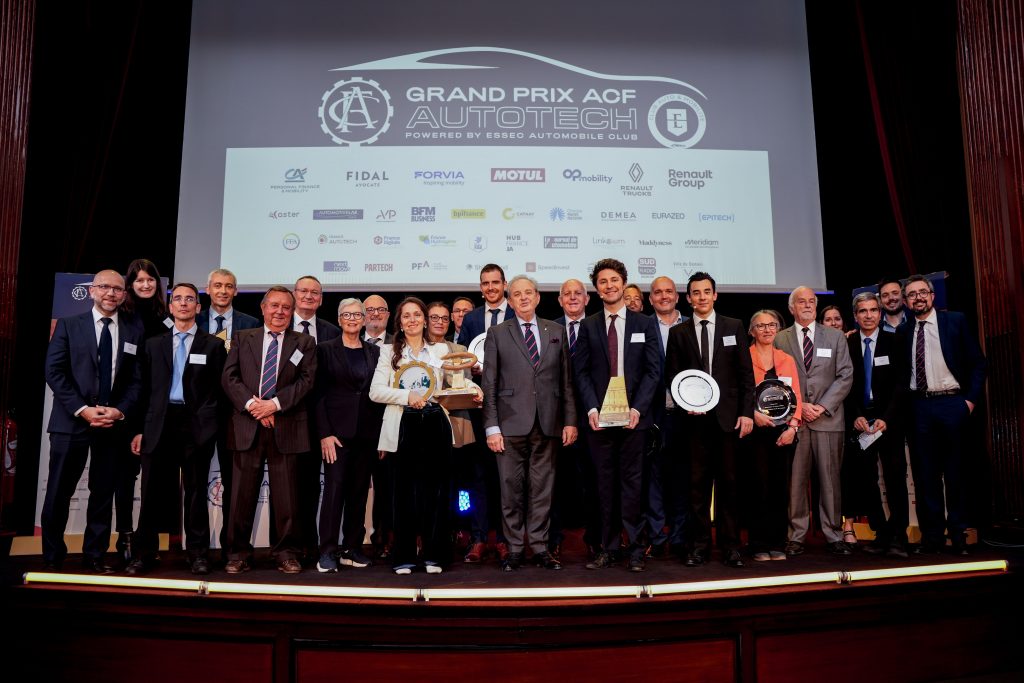
C’est dans le cadre majestueux de l’Automobile Club de France, place de la Concorde, que s’est jouée mercredi 15 avril la grande finale de la 9ème édition du Grand Prix ACF AutoTech. Devant plus de 250 professionnels venus des mondes de l’automobile, de la tech, de la finance et des médias, six startups se sont livré une bataille d’idées et de pitchs pour décrocher les trophées les plus convoités de l’innovation automobile française. Au terme d’une soirée animée par Richard de Cabrol, fondateur du concours, et Simon Degiovanni, le jury a rendu son verdict : les grandes gagnantes s’appellent Altrove, Bloomineral et IoT.Bzh.

Mais au-delà des noms des lauréats, c’est le message porté par cette édition qui frappe : en 2026, l’innovation automobile ne se joue plus seulement dans la performance électrique ou la connectivité — elle se joue dans la chimie des matériaux, la souveraineté industrielle et l’intelligence artificielle appliquée à la matière elle-même. Un signal fort, alors que la dépendance européenne aux terres rares chinoises n’a jamais été aussi préoccupante.

Le Grand Prix ACF : Altrove — Trouver les matériaux de demain grâce à l’IA

C’est Thibaud Martin, PDG et cofondateur de cette startup parisienne, qui monte le premier sur scène pour recevoir le Grand Prix ACF, récompense suprême de la catégorie des startups matures.

Le défi qu’Altrove s’est fixé est ambitieux : remplacer les matériaux inorganiques critiques utilisés dans l’industrie automobile, ceux dont la chaîne d’approvisionnement est fragile, coûteuse et géopolitiquement risquée. Pour y parvenir, l’entreprise a mis au point une plateforme d’intelligence artificielle propriétaire capable de prédire et concevoir des alternatives moléculaires en quelques mois seulement — là où les procédés classiques de laboratoire nécessitent des années d’essais. Un gain de temps considérable, avec à la clé une réduction des coûts de production et un renforcement de la souveraineté technologique européenne. altrove.ai

Le Prix Pionnier ACF + Mention Greentech : Bloomineral — Le minéral qui veut décarboner la voiture

Double récompense pour Caroline Thaler, PDG et fondatrice de Bloomineral, installée sur le plateau de Saclay. Sa startup repart à la fois avec le Prix Pionnier ACF — dédié aux jeunes pousses en phase amorçage — et la Mention Greentech, qui distingue la solution présentant le meilleur bénéfice environnemental.

L’innovation de Bloomineral repose sur la mise au point d’un matériau minéral dit « carbone-négatif » : concrètement, son processus de production absorbe plus de CO₂ qu’il n’en génère. Destiné à substituer des minéraux polluants dans de nombreux composants automobiles — aussi bien dans les plastiques que dans les batteries —, ce matériau répond simultanément à deux urgences industrielles : la réduction des émissions et la diminution de la dépendance aux ressources critiques importées. Une double casquette environnementale et stratégique qui a clairement séduit le jury. bloomineral.com

Le 1er Prix de l’Industrialisation : IoT.Bzh — Six ans après la victoire, la preuve par les faits

Nouveauté de cette 9ème édition : la création du Prix de l’Industrialisation, remis conjointement par Luc Châtel, Président de la PFA (Plateforme de la Filière Automobile), et François-Xavier de Thieulloy, Directeur du Pôle Expertise de Bpifrance. Ce trophée inédit récompense non pas une innovation émergente, mais une innovation qui a su, dans la durée, se transformer en véritable succès industriel et commercial.

Le choix s’est porté sur IoT.Bzh, société lorientaise spécialisée dans la cybersécurité des systèmes embarqués automobiles, et son directeur général Yann Bodere. L’entreprise n’est pas une inconnue dans les couloirs du Grand Prix ACF : elle y avait décroché le titre suprême en 2020. Six ans plus tard, la startup bretonne a tenu toutes ses promesses — portefeuille clients en constante expansion, déploiement industriel réussi, reconnaissance sectorielle établie. Une trajectoire exemplaire qui justifie pleinement cette récompense inédite. iot.bzh

Une édition au diapason de l’industrie

Ce qui ressort de cette soirée, c’est une convergence remarquable entre les préoccupations de l’industrie automobile mondiale et les solutions portées par les finalistes. Matériaux critiques, souveraineté des approvisionnements, cybersécurité des véhicules connectés : les startups récompensées en 2026 s’attaquent exactement aux angles morts que les grands constructeurs peinent à adresser seuls.

Plus de 100 dossiers représentant 28 pays avaient été soumis pour cette édition — un niveau de participation record qui confirme le rayonnement international du concours, créé en 2017 sous le patronage de l’Automobile Club de France et de l’ESSEC. La prochaine édition marquera les 10 ans du Grand Prix ACF AutoTech. Nul doute que Richard de Cabrol et son équipe feront de 2027 un millésime exceptionnel.

Notre Avis

À l’heure où l’industrie automobile européenne subit de plein fouet la pression de la concurrence asiatique, les suppressions de postes et les fermetures d’usines, le Grand Prix ACF AutoTech rappelle qu’il existe un tissu entrepreneurial innovant, ancré sur le territoire français, capable d’apporter des réponses concrètes et scalables aux défis de la filière. Altrove, Bloomineral et IoT.Bzh incarnent cette capacité d’invention. À suivre de très près.

Revivez toute la soirée de la finale en replay : Grand Prix ACF AutoTech 2026 — Replay complet sur YouTube

Plus d’informations sur le concours, les trophées, le jury et les partenaires : grandprixacfautotech.com

L’article Grand Prix ACF AutoTech 2026 : quand les startups françaises montrent la voie sur les matériaux du futur est apparu en premier sur Le Blog Auto.

  •  

Zoom Partners With Sam Altman's Iris-Scanning Company To Offer Callers Verifications of Humanness

Zoom "has partnered with World, Sam Altman's iris-scanning identity company (previously known as Worldcoin), " reports Digital Trends, "to add real-time human verification inside meetings." Zoom is now inviting organizations to join the beta version of the rollout, which Digital Trends says "lets hosts confirm that every face on the call belongs to a real person, not an AI-generated imposter. " For those wondering how World's Deep Face technology works, it includes a three-step process. It cross-references a signed image from a user's original Orb registration, a live face scan from the device, and the frame of the video that's visible to the other participants in the meeting. Only when the three samples match does a "Verified Human" badge appear next to the user's name... Hosts can also make Deep Face verification mandatory for joining meetings, preventing unverified participants from joining entirely. Mid-call, on-the-spot checks are also possible...

Read more of this story at Slashdot.

  •  

CPU Intel Nova Lake-S : au tour des quantités de Cache L3 et de bLLC de fuiter ?

Il y a tout juste une semaine, nous vous parlions d'une rumeur émanant de VideoCardz. Le site affirmait avoir mis la main sur un document interne à Intel présentant 13 références différentes de processeurs Nova Lake-S au socket LGA1954. Des déclinaisons cependant "préliminaires", laissant la porte o...

  •  

Brave Browser Introduces 'Origin', a Pay-Once 'Minimalist' Browser

The Brave browser "has introduced Brave Origin, a stripped-down version of its browser that removes built-in monetization features like Rewards and other extras tied to its business model," writes Slashdot reader BrianFagioli" The stripped-down browser is available either as a separate browser download or as an upgrade to the existing Brave install, unlocked through a one-time purchase that can be activated across multiple devices. The idea is simple on paper: pay once, and you get a cleaner, more minimal browsing experience without the add-ons that fund Brave's ecosystem. What makes the move unusual is the pricing model itself. While paying to support a browser is not controversial, charging users specifically to remove features raises questions about whether those additions are seen as value or clutter. The situation gets even stranger on Linux, where Brave Origin is reportedly available at no cost, creating an uneven experience across platforms and leaving some users wondering why they are being asked to pay for something others get for free.

Read more of this story at Slashdot.

  •  

Blue Origin Rocket Launches, Successfully Reuses Booster - But Loses Satellite

SpaceNews reports: Blue Origin's New Glenn suffered a malfunction of its second stage on the rocket's third flight April 19, stranding its payload in an unrecoverable "off-nominal" orbit and dealing the company a setback as it seeks to increase its flight rate... AST SpaceMobile had planned to launch 45 to 60 satellites this year for its D2D constellation, but BlueBird 7 is the first to launch since BlueBird 6 launched on an Indian LVM3 rocket in December. AST SpaceMobile still expects to have 45 satellites in orbit by the end of the year, the article notes. (In an earnings call in March, AST SpaceMobile's CEO had promised they'd soon start "stacking" satellites, "batched in groups of either three, four, six or eight in a single launch.") He'd added that "To support our launch cadence during 2026, we expect the New Glenn booster to be reused every 30 days or less..." There's some good news there, SpaceNews points out, since today saw the first successful reflight of a New Glenn first stage rocket: The booster, called "Never Tell Me The Odds" by Blue Origin, touched down on the company's landing platform, Jacklyn, in the Atlantic Ocean nearly nine and a half minutes after liftoff. The booster launched NASA's ESCAPADE Mars mission on the NG-2 flight in November. However, the booster reuse on NG-3 was only partial since the stage's biggest component, its BE-4 engines, was new. "With our first refurbished booster we elected to replace all seven engines and test out a few upgrades including a thermal protection system on one of the engine nozzles," Dave Limp, chief executive of Blue Origin, said in an April 13 social media post. "We plan to use the engines we flew for NG-2 on future flights." The satellite will now be "de-orbited", AST SpaceMobile said in a statement. (They added that "The cost of the satellite is expected to be recovered under the company's insurance policy.") Thanks to long-time Slashdot reader schwit1 for sharing the news.

Read more of this story at Slashdot.

  •  

Voyager 1 is Running Out of Power. NASA Just Switched Part of It Off

After 49 years of space travel, Voyager 1 "is running out of power," reports NPR: The spacecraft runs on a radioisotope thermoelectric generator — a device that converts heat from decaying plutonium into electricity. It carries no solar panels, no rechargeable batteries. Just the slow, steady release of nuclear warmth, which diminishes by about 4 watts each year. After nearly five decades, that decline has become critical. During a routine maneuver in late February, Voyager 1's power levels fell unexpectedly, bringing the probe dangerously close to triggering an automatic fault-protection shutdown — a self-preservation response that would have forced engineers into a lengthy and risky recovery process. The team needed to act first. On April 17, mission engineers sent a sequence of commands to deactivate the Low-energy Charged Particles experiment, known as the LECP, which is one of Voyager 1's remaining science instruments. The LECP has measured ions, electrons, and cosmic rays originating from both our solar system and the galaxy beyond it, helping scientists map the structure of interstellar space in a way no other instrument could... Voyager 1 now carries two operational science instruments: one that listens for plasma waves, and one that measures magnetic fields. Engineers believe the latest shutdown could buy the mission roughly another year of breathing room. The team is also developing a more sweeping power conservation plan they informally call "the Big Bang" — a coordinated swap of several powered components all at once, trading older systems for lower-power alternatives. If testing on Voyager 2, planned for May and June 2026, goes well, the same procedure will be attempted on Voyager 1 no sooner than July. If it works, there is even a slim chance the LECP could once more continue to work. The engineers say they hope to keep at least one instrument operating on each spacecraft into the 2030s. It would leave both still reporting from places no machine has ever gone before.111 Voyager 1 is now 15 billion miles from Earth, the article points out. (Radio signals take 23 hours to arrive...) Thanks to long-time Slashdot reader fahrbot-bot for sharing the article.

Read more of this story at Slashdot.

  •  
❌