Vue lecture

Oxygen Made From Moon Dust For First Time

"Breathable oxygen has been created from Moon dust," reports the Telegraph, "in a world first that paves the way for a lunar base." Jeff Bezos's Blue Origin ""announced this week that it had developed a reactor that could successfully release oxygen from lunar soil by using an electric current." Almost half of Moon dust — the thin layer of rock that blankets the lunar surface — is oxygen, but it is bound to metals such as iron and titanium... Previous work to isolate oxygen has been lab-based, and the unwieldy equipment needed has been too difficult to send to the Moon. In contrast, Blue Origin said its small-scale reactor, named Air Pioneer, could be made flight-ready to "provide the first breath of life for a sustainable Moon base"... As well as breathable air, Blue Origin said the reactor produces other critical elements for planetary infrastructure, such as iron, aluminium and silicon for construction and electronics, as well as glass for windows and solar panel covers. The company has previously said it wants to turn the Moon, and eventually Mars, into "self-sustaining worlds where robots and humans can go beyond visiting and truly explore, grow, live, and thrive".... Blue Origin said it would need to generate around one megawatt of power to drive the reactors — about the energy it would require to power around 400 to 1,000 homes simultaneously. It envisages that each lunar settlement would have an array of nearby solar panels, generating the power needed for one reactor. Besides breathable air for astronauts, the oxygen could also be used in propellant for refuelling landers and fuel cells, Blue Origin points out — and "produced right where they're needed, and at much lower cost than being brought from Earth." Thanks to Slashdot reader fjo3 for sharing the article.

Read more of this story at Slashdot.

  •  

Amazon Luna Ends Its Support for Purchased Games and Third-Party Subscriptions

Amazon's Luna cloud gaming service is making some changes, reports Engadget: It's no longer possible to buy Ubisoft+ and Jackbox Games subscriptions or standalone games through Luna. Amazon will automatically cancel any active subscriptions bought through Luna at the end of customers' next billing cycle. If you have a Ubisoft+ subscription that you bought directly from Ubisoft instead, you'll still be able to access games on that service through Luna until June 10. The Bring Your Own Library option — which allows users to play games they own on the likes of EA, GOG and Ubisoft on Luna — is going away too. You won't be able to access games from those storefronts via Amazon's streaming service after June 3. If you bought any games outright on Luna, you'll still be able to play them there until June 10. Unlike Google did when it shut down Stadia, Amazon isn't offering refunds for those purchases. However, you'll still have access to them through the respective third-party platform that's linked to your account, be it the EA App, GOG Galaxy or Ubisoft Connect. That doesn't exactly help folks who don't have powerful-enough systems to play more demanding games and were relying on Luna. For those users, Kotaku complains, "you'll essentially lose access to your purchased games in June unless you buy some hardware to play games like Star Wars Outlaws or set up a different streaming option..." They describe Luna as Amazon's "barely talked about, struggling game streaming service"... On April 10, Amazon announced that it is "always looking for ways to better serve our players" and that "feedback" has made it "clear" that gamers who use Luna want "easy access to great games." And because more of that content is now offered via Amazon Prime, the company has decided that the best way to "serve" you and other users is to rip out most of Luna's gaming options and remove access to paid games you bought in the past. Do you feel better served...? Launched in 2020, Amazon Luna has never been much of a big hit for the company, which has struggled to even figure out what to do with it. Initially, it was offered up as a Stadia competitor, providing access to big and small third-party games. This apparently didn't work out for Amazon. So in 2025, Amazon officially announced plans to pivot Luna to a service focused on Jackbox-like casual games. This latest shake-up for Luna further focuses the service on these kinds of games and will put everything available on the service behind different sub tiers, similar to Game Pass. Their conclusion? "This is all just a great reminder to never, ever, ever, ever buy a video game through a streaming service. At least you can download digital games offline and make backups for later."

Read more of this story at Slashdot.

  •  

Researchers Build a Talking Robot Guide Dog to Help Visually Impaired People Navigate

"Only about 2% of visually impaired people in the United States use guide dogs," notes StudyFinds.com, "partly because breeding and training takes years and fewer than half the dogs in training actually graduate." But someday there could be another option: What if you could ask your guide dog where the nearest water fountain is and hear it answer back, complete with directions and an estimated walk time? Researchers at the State University of New York at Binghamton have built a robotic guide dog that can do something close to that, holding simple back-and-forth conversations about navigation with its handler, describing the surrounding environment, and talking through route options as it leads the way... Their work, presented at the 40th Annual AAAI Conference on Artificial Intelligence, pairs a large language model, a system that understands and generates language, with a navigation planner. Together, the two let the robot understand open-ended requests, suggest destinations, and adjust plans on the fly. Thanks to Slashdot reader fjo3 for sharing the article.

Read more of this story at Slashdot.

  •  

Le service marketing d'Intel à nouveau touché par la grâce : voici le Core i7-13645HX

Mais que se passe-t-il au service marketing d'Intel ! Le brainstorming semble battre son plein et ils ont dû embaucher les meilleurs spécialistes mondiaux du marketing tant l'innovation et les idées exceptionnelles coulent à flot en ce moment ! En début de semaine, nous vous parlions du Core Ultra X...

  •  

Omissions, Deceptions, Lying. The New Yorker Asks: Can Sam Altman Be Trusted?

A 17,000-word expose in the New Yorker reveals "several executives connected to OpenAI have expressed ongoing reservations about Altman's leadership." Reporters Ronan Farrow and Andrew Marantz spoke to "a hundred people with firsthand knowledge of how Altman conducts business," including current and former OpenAI employees and board members. Among other revelations, internal messages from a few years ago show that OpenAI executives and board members "had come to believe that Altman's omissions and deceptions might have ramifications for the safety of OpenAI's products..." At the behest of his fellow board members, [OpenAI cofounder] Sutskever worked with like-minded colleagues to compile some seventy pages of Slack messages and H.R. documents, accompanied by explanatory text... The memos, which we reviewed, have not previously been disclosed in full. They allege that Altman misrepresented facts to executives and board members, and deceived them about internal safety protocols. One of the memos, about Altman, begins with a list headed "Sam exhibits a consistent pattern of . . ." The first item is "Lying".... In a tense call after Altman's firing, the board pressed him to acknowledge a pattern of deception. "This is just so fucked up," he said repeatedly, according to people on the call. "I can't change my personality." Altman says that he doesn't recall the exchange.... He attributed the criticism to a tendency, especially early in his career, "to be too much of a conflict avoider." But a board member offered a different interpretation of his statement: "What it meant was 'I have this trait where I lie to people, and I'm not going to stop.' " Were the colleagues who fired Altman motivated by alarmism and personal animus, or were they right that he couldn't be trusted? Friday Altman responded in part to the article. ("I am not proud of being conflict-averse, which has caused great pain for me and OpenAI," he wrote in a blog post. "I am not proud of handling myself badly in a conflict with our previous board that led to a huge mess for the company.") But the article also assembled similar stories from throughout Altman's career: - At Altman's earlier startup Loopt, "groups of senior employees, concerned with Altman's leadership and lack of transparency, asked Loopt's board on two occasions to fire him as C.E.O.," according to Keach Hagey, author of the Altman biography The Optimist. - During Altman's time as president of Y Combinator, "several Silicon Valley investors came to believe that his loyalties were divided. An investor told us that Altman was known to 'make personal investments, selectively, into the best companies, blocking outside investors.'" The article adds that in private, Y Combinator co-founder Paul Graham "has been unambiguous that Altman was removed because of Y.C. partners' mistrust... On one occasion, Graham told Y.C. colleagues that, prior to his removal, 'Sam had been lying to us all the time.'" - "In a meeting with U.S. intelligence officials in the summer of 2017, he claimed that China had launched an 'A.G.I. Manhattan Project,'" the article points out, "and that OpenAI needed billions of dollars of government funding to keep pace...." But one intelligence official "after looking into the China project, concluded that there was no evidence that it existed: 'It was just being used as a sales pitch.'" - As California lawmakers considered safety testing for AI model, one legislative aide complained of "increasingly cunning, deceptive behavior from OpenAI". OpenAI later subpoenaed some of the bill's top supporters (and OpenAI critics), in some cases asking for their private communications to investigate whether Elon Musk was funding them. [The article notes an ongoing animosity between Altman and Musk. "When Altman complained on X about a Tesla he'd ordered, Musk replied, 'You stole a non-profit.'"] And "Multiple prominent investors who have worked with Altman told us that he has a reputation for freezing out investors if they back OpenAI's competitors." [M]ost of the people we spoke to shared the judgment of Sutskever and Amodei: Altman has a relentless will to power that, even among industrialists who put their names on spaceships, sets him apart. "He's unconstrained by truth," the board member told us. "He has two traits that are almost never seen in the same person. The first is a strong desire to please people, to be liked in any given interaction. The second is almost a sociopathic lack of concern for the consequences that may come from deceiving someone." The board member was not the only person who, unprompted, used the word "sociopathic." One of Altman's batch mates in the first Y Combinator cohort was Aaron Swartz, a brilliant but troubled coder who died by suicide in 2013 and is now remembered in many tech circles as something of a sage. Not long before his death, Swartz expressed concerns about Altman to several friends. "You need to understand that Sam can never be trusted," he told one. "He is a sociopath. He would do anything." Multiple senior executives at Microsoft said that, despite [CEO Satya] Nadella's long-standing loyalty, the company's relationship with Altman has become fraught. "He has misrepresented, distorted, renegotiated, reneged on agreements," one said... The senior executive at Microsoft said, of Altman, "I think there's a small but real chance he's eventually remembered as a Bernie Madoff- or Sam Bankman-Fried-level scammer."

Read more of this story at Slashdot.

  •  

First US Newsroom Strike For AI Protections Staged by ProPublica's Journalists

It's the first time a major U.S. newsroom has gone on strike partly to demand protections from AI-related layoffs, according to a report from Nieman Lab. They noted that one of the picketer's signs read "Thoughts not bots," : On Wednesday, roughly 150 members of the Propublica Guild, one of the largest nonprofit newsroom unions in the country, went on a 24-hour strike. About two dozen Guild members picketed ProPublica's headquarters in New York City's Hudson Square neighborhood during working hours, as simultaneous picket lines formed in front of the publication's offices in Chicago and Washington D.C... The Guild has been negotiating its first collective bargaining agreement for two and a half years, and the one-day action was intended to put new pressure on ProPublica's management to agree to several contract proposals. The union is seeking "just cause" protections for terminations, wage increases to keep up with the rising cost of living, and contract language that would prohibit layoffs resulting from AI adoption... Beyond the strike, the ProPublica Guild has also taken its dispute over newsroom AI adoption to the National Labor Relations Board (NLRB). On Monday, the Guild filed an unfair-labor-practice charge, citing a "unilateral implementation of AI policy." The filing claims that ProPublica published AI editorial guidelines on its website last month, without first bargaining with union members over its tenets and language... A petition launched Wednesday calling for ProPublica to agree to the Guild's contract terms had received roughly 4,200 signatures by Thursday morning... Susan DeCarava, the president of The NewsGuild of New York, joined strikers in front of the ProPublica offices yesterday. During a spare moment on the picket line, she told me that while this strike may be setting precedent for her union, it likely won't be the last over AI adoption in newsrooms. "We're going to see more and more concentrated conflicts between media bosses and journalists and media workers over who has a say and how AI is used in their workplaces," she said. For one, The New York Times Guild is currently in contract negotiations after its last agreement expired in February. Already, AI language has taken center stage in the Guild's initial bargaining sessions, including over a proposal that would see Guild members receive a share of the revenue earned when their work is licensed for AI training. "Management has offered expanded severance for AI-related layoffs as a counter proposal..." according to the article.

Read more of this story at Slashdot.

  •  

Two-Week Social Media 'Detox' Erases a Decade of Age-Related Decline, Study Finds

Critics say social media is engineered to be as addictive as tobacco or gambling, writes the Washington Post — while adding that "the science has been moving in parallel with the court's recognition." A growing body of research links heavy social media use not only to declines in mental health but to measurable cognitive effects — on attention, memory and focus — that in some studies resemble accelerated aging. Science also suggests we have more control than we realize when it comes to reversing this damage, and the solution is surprisingly simple: Take a break... "Digital detoxes" can sound like a fad. But in one of the largest studies to date, published in PNAS Nexus and involving more than 467 participants with an average age of 32, even a short time away produced striking results — effectively erasing a decade of age-related cognitive decline. For 14 days, participants used a commercially available app, Freedom, to block internet access on their phones. They were still allowed calls and text messages, essentially turning a smartphone into a dumb phone. Their time online decreased from 314 minutes to 161 minutes, and by the end of the period the participants had improvements in sustained attention, mental health as well as self-reported well-being. The improvement in sustained attention was about the same magnitude as 10 years of age-related decline, the researchers noted, and the effect of the intervention on depression symptoms was larger than antidepressants and similar to that of cognitive behavioral therapy. But two things were even more mind-blowing... Even those people who cheated and broke the rules after a few days seemed to have positive effects from the break; and in follow-up reports after the two weeks, many people reported the positive effects lingered. "So you don't have to necessarily restrict yourself forever. Even taking a partial digital detox, even for a few days, seems to work," Kushlev said. The article also notes a November study at Harvard published in JAMA Network Open where nearly 400 people 'found that even a short break can make a measurable difference: After just one week of reduced smartphone use, participants reported drops in anxiety (16.1 percent), depression (24.8 percent) and insomnia (14.5 percent)..." "Other experiments point in the same direction — whether decreasing social media use by an hour a day for one week or stepping away from just Facebook and Instagram."

Read more of this story at Slashdot.

  •  

The AI RAM Shortage is Also Driving Up SSD Prices

In 2024 the Verge's consumer tech reporter paid $173 for a WD Black SN850X 2TB SSD. But "now that same SSD costs $649..." "Like with RAM, demand from the AI industry is swallowing up supply from a limited number of manufacturers, leading to a drastic reduction in the inventory that's available to consumers" — and skyrocketing prices: The price on my WD Black drive nearly quadrupled since November 2025, and consumer SSDs across the board are seeing similar increases, much like with RAM. The 4TB version of the popular Samsung 990 Pro SSD previously cost $320, but will now run you nearly $1,000. External SanDisk SSDs saw a 200 percent price hike at the Apple Store in March.... According to price trends from PC Part Picker, NVMe SSD prices began ticking upward in December 2025, with prices on 256GB to 4TB SSDs now double or triple what they were just a few months ago, and continuing to climb.

Read more of this story at Slashdot.

  •  

Two-Week Social Media 'Detox' Erases a Decade Age-Related Decline, Study Finds

Critics say social media is engineered to be as addictive as tobacco or gambling, writes the Washington Post — while adding that "the science has been moving in parallel with the court's recognition." A growing body of research links heavy social media use not only to declines in mental health but to measurable cognitive effects — on attention, memory and focus — that in some studies resemble accelerated aging. Science also suggests we have more control than we realize when it comes to reversing this damage, and the solution is surprisingly simple: Take a break... "Digital detoxes" can sound like a fad. But in one of the largest studies to date, published in PNAS Nexus and involving more than 467 participants with an average age of 32, even a short time away produced striking results — effectively erasing a decade of age-related cognitive decline. For 14 days, participants used a commercially available app, Freedom, to block internet access on their phones. They were still allowed calls and text messages, essentially turning a smartphone into a dumb phone. Their time online decreased from 314 minutes to 161 minutes, and by the end of the period the participants had improvements in sustained attention, mental health as well as self-reported well-being. The improvement in sustained attention was about the same magnitude as 10 years of age-related decline, the researchers noted, and the effect of the intervention on depression symptoms was larger than antidepressants and similar to that of cognitive behavioral therapy. But two things were even more mind-blowing... Even those people who cheated and broke the rules after a few days seemed to have positive effects from the break; and in follow-up reports after the two weeks, many people reported the positive effects lingered. "So you don't have to necessarily restrict yourself forever. Even taking a partial digital detox, even for a few days, seems to work," Kushlev said. The article also notes a November study at Harvard published in JAMA Network Open where nearly 400 people 'found that even a short break can make a measurable difference: After just one week of reduced smartphone use, participants reported drops in anxiety (16.1 percent), depression (24.8 percent) and insomnia (14.5 percent)..." "Other experiments point in the same direction — whether decreasing social media use by an hour a day for one week or stepping away from just Facebook and Instagram."

Read more of this story at Slashdot.

  •  

Le génie du jour débute dans la soudure avec une carte graphique à 5300 €

Le rapport à l'argent et à la valeur des matériels qui nous entourent diffère visiblement beaucoup d'une personne à une autre. Alex, un célèbre réparateur états-unien qui présente des vidéos sur sa chaine YouTube NorthbridgeFix est ainsi tombé des nues quand il a reçu en réparation une MSI GeForce R...

  •  

Firefox vs. Chrome: Which Performs Better on a Linux Laptop?

Phoronix staged "a showdown" between Firefox and Chrome, testing them both on an Intel Panther Lake laptop running Ubuntu 26.04. JetStream 3.0 was announced at the end of March as the latest major web browser benchmark. This updated version of JetStream is focused on intensive portions of modern JavaScript and WebAssembly web applications... Google Chrome 147 came in at 1.47x the performance of Mozilla Firefox 149. A very strong showing for Google's web browser and to not much surprise Google engineers have been heavily involved in JetStream 3 as part of its open governance model. Chrome debuts very well on JetStream 3 while it will be interesting to see what optimizations Mozilla engineers pursue in the months ahead... In the recent Speedometer 3.1 benchmark update that is focused on browser responsiveness, Chrome was at 1.24x the performance of Firefox... Firefox picked up wins in the MotionMark and StyleBench browser benchmarks. Google Chrome meanwhile continued to dominate in the JavaScript heavy benchmarks... In some of the WebAssembly benchmarks, there was at least some healthy competition between Firefox and Chrome on Linux. Across the web browser benchmarks, the Core Ultra X7 358H power consumption came in at 11.44 Watts on average for Chrome and 11.74 Watts for Firefox. Quite close. The slight CPU power difference may come down to the CPU usage with Chrome coming in slightly lower at 8.13% on average to 8.35% with Firefox. Chrome also came in at slightly lower memory consumption across all the benchmarks with total memory usage on average at 4.67GB to Firefox at 4.83GB.

Read more of this story at Slashdot.

  •  

The End of 'Star Trek'? Every Single Series Now Cancelled

"Every single Star Trek series has been canceled..." reports ScreenRant. "There is "no Star Trek in production or greenlit for the first time in nearly a decade." While there were five active Star Trek series just a few years ago, Star Trek: Strange New Worlds filmed its fifth and final season in the fall of 2025, and Star Trek: Starfleet Academy "wrapped filming its second and final season at the end of February." (Though ironically, both Star Trek series still have seasons yet to premiere, with two season of Strange New Worlds mean it may continue airing through 2027.) TrekCentral reports that the sets for Star Trek: Starfleet Academy are now being torn down... There will be a local online auction for parts of the set on Friday. Additionally, Star Trek: Strange New Worlds' sets are also being taken down... Star Trek: Starfleet Academy boasted the largest sets ever built for Star Trek. The demolition of Starfleet Academy's stunning sets includes the loss of the multi-level atrium, which had the Starfleet Wall of Heroes, the USS Athena's bridge, and the classrooms.

Read more of this story at Slashdot.

  •  

Fin de la polémique : Crimson Desert est compatible avec les GPU Intel Arc, et même le XeSS 3 !

La douche était vraiment froide au lancement de Crimson Desert pour les possesseurs de GPU Intel Arc, puisque le jeu refusait tout simplement de se lancer, en affichant un message d'erreur.La polémique évidemment ne tardait pas à apparaitre, car Pearl Abyss n'avait pas prévenu à l'avance de cette in...

  •  

Qu'a fait EK by LM TEK le 9 avril 2026 ? Eh bien il a augmenté ses prix !

La société EK by LM TEK, que nous avons connue durant plus de 20 ans sous le nom "EK Water Blocks" avant qu'elle ne soit reprise par LM TEK en mars 2025, a récemment annoncé une hausse de prix sur son compte Instagram officiel. Nous avons maintenu nos prix aussi longtemps que possible, mais nous de...

  •  

Modder ou juste réparer son clavier Keychron est maintenant plus facile que jamais, grâce aux plans gratuits !

En voilà une initiative qui fait plaisir. Hier, le fabricant de périphériques Keychron a mis en ligne sur GitHub de nombreux plans concernant ses claviers mécaniques. On y retrouve des plans des boitiers des claviers, également de leur plaque et même des keycaps. En faisant cela, la firme permet ain...

  •  

Attention, le site CPUID a été compromis durant plusieurs heures, diffusant des versions avec malware de CPU-Z et HWMonitor

Durant la nuit dernière, des commentaires ont commencé à se multiplier sur les réseaux sociaux concernant le site officiel de CPUID. Ils provenaient de personnes affirmant avoir une alerte de leur antivirus après avoir téléchargé sur le site l'un de deux logiciels phares de la société : CPU-Z ou HWM...

  •  

Ryzen AI Max+ 395 : le prix de la mini station de travail IA de CORSAIR s'envole

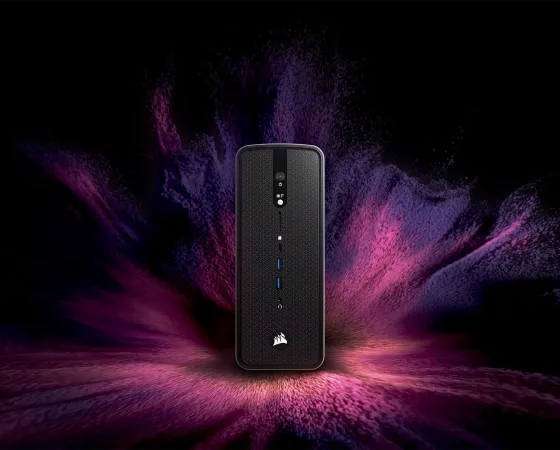
Fin juillet 2025, CORSAIR officialisait l'arrivée de sa mini station de travail dédiée à l'IA : le CORSAIR AI WORKSTATION 300. La firme annonçait alors trois versions différentes, avec les tarifs suivants :Prix officiels  CORSAIR US, à l'annonce fin juillet 2025Quand Thibaut publiait son actualité d...

  •  

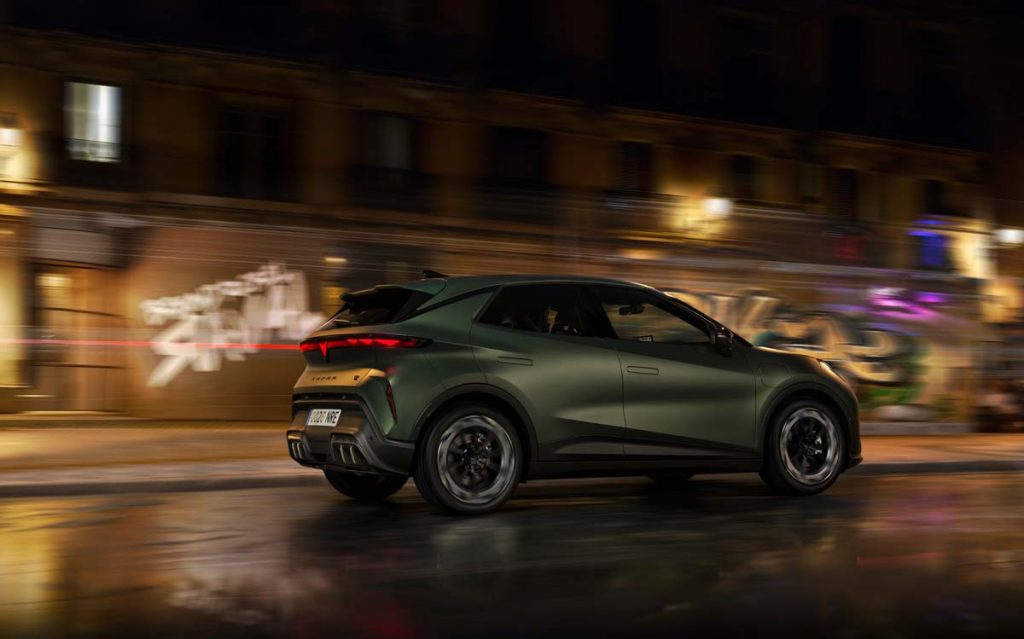
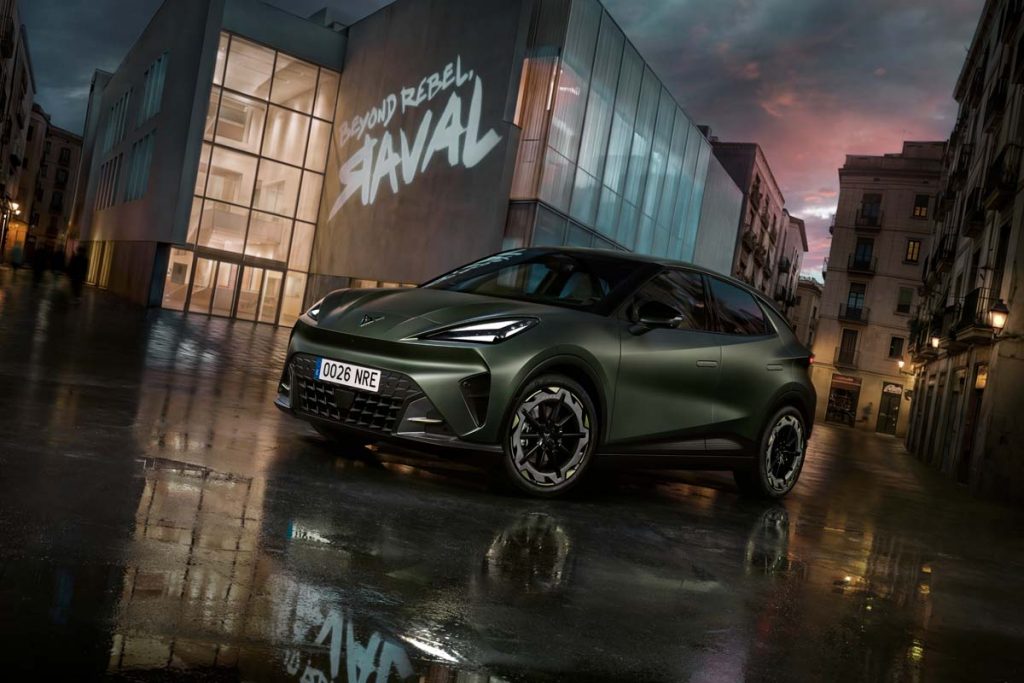
A la découverte de la Cupra RAVAL

Découvrez la CUPRA Raval, surprise dans un lieu tenu secret près de Barcelone lors d’une présentation en grandes pompes. Notre équipe a levé le voile sur cette citadine électrique en première mondiale.

Grosse ambition

La CUPRA Raval débarque sur le segment des citadines électriques compactes où la marque vise une clientèle jeune et active. Avec 4 046 mm de long, 1 784 mm de large, 1 518 mm de haut et un empattement de 2 600 mm, elle offre l’agilité d’une compacte sans sacrifier l’espace intérieur, coffre de 430 litres inclus.

Fabriquée à Martorell, près de Barcelone, elle repose sur la plateforme MEB du groupe Volkswagen, déjà éprouvée sur l’ID.3 et base de l’ID.Polo. Moteurs et batteries partagés, efficacité garantie dès la première sortie. L’enjeu pour Cupra est de démocratiser l’électrique performant à partir de 25 995 euros, avec des mensualités affichées sous les 250 euros.

Shark Nose

À l’avant, le Shark Nose aux lignes tendues sculpte une présence musculaire immédiate. Les projecteurs Matrix LED embarquent des cérémonies d’ouverture, et le logo Cupra s’illumine à l’avant comme à l’arrière pour une identité lisible à toute heure. Sur les flancs, les poignées affleurantes s’effacent pour servir l’aérodynamisme. 

À l’arrière, un diffuseur large, des effets lumineux 3D et un bandeau transversal affirment le caractère de la voiture, et les antibrouillards disparaissent au profit d’une signature lumineuse épurée. Le meilleur coefficient aérodynamique de chez Cupra résulte d’un travail d’ensemble grâce à des rideaux d’air avant, les jantes aéro, le spoiler et les volets pilotés. Rien n’est laissé au hasard pour réduire la traînée et maximiser l’efficience.

Personnalisation poussée

Huit designs de jantes alliage, de 17 à 19 pouces, permettent de trouver l’équilibre entre esthétique et confort de roulement. Le catalogue propose sept teintes, dont des mats exclusifs comme le Vert Manganèse ou le Century Bronze, et une Plasma irisée inédite chez Cupra qui joue du cyan au bleu indigo en passant par le rouge rosé selon la lumière. 

Un toit bicolore gris Manhattan ou noir Minuit complète les possibilités de personnalisation. Le nom s’impose de lui-même. El Raval, quartier de Barcelone à la fois audacieux et créatif, incarne parfaitement l’esprit d’une voiture qui refuse de rentrer dans le rang.

Matériaux recyclés à bord

À bord, tout est pensé pour celui qui tient le volant. La position de conduite est dynamique, les sièges sont des baquets signés Cupra, la console suspendue libère de l’espace de rangement et l’ergonomie se veut fluide pour une prise en main instinctive. 

Côté sellerie, le choix est large. Textile 100 % recyclé Immersive Dinamica (73 % microfibre) réglable électriquement, Feel vegan (36 % recyclé) avec les sièges AHEAD, ou CUP Bucket en maillage 3D 100 % recyclé avec inserts 3D sur la planche de bord. L’éclairage d’ambiance décline sept modes, animations et projections sur les portes. Le Smart Light Next Gen signale les angles morts ou l’e-Launch pour une interaction visuelle directe avec le conducteur.

Un infotainment à la hauteur

La Raval inaugure chez Cupra un écran 12,9 pouces sous Android OS affiché à 200 DPI, associé à un Digital Cockpit de 10,25 pouces. Le Group Store donne accès à Spotify et YouTube en stationnement, tandis que l’assistant vocal et le moteur de recherche intégré simplifient l’usage au quotidien. L’application My Cupra gère à distance la préclimatisation, le Refresh ou le Warm-up, ainsi que l’ambiance intérieure.

L’audio de série compte sept haut-parleurs. En option, Sennheiser signe une installation de 12 HP pour 475 W, accordée spécifiquement pour la Raval avec des sons inspirés de la Formule E, réactifs à la vitesse, au couple et à l’accélération selon les modes. La charge sans fil monte à 15 W, les USB-C avant et arrière à 90 W. Le Kessy, la Climatronic bi-zone, le rétroviseur électrochrome et le double fond de coffre complètent le tableau.

Plateforme connue aux réglages sportifs

La plateforme MEB reçoit ici un châssis abaissé de 15 mm, une voie élargie de 10 mm et une direction progressive. L’ESC Sport et le DCC adaptatif à 15 niveaux se durcit en mode Cupra pour réduire le roulis et assurer une agilité urbaine franche. Le freinage one box intègre servo et ESC dans un ensemble compact, avec une pédale nette et une récupération d’énergie efficace. 

Les disques avant et arrière, combinés au mode One Pedal, permettent de circuler en ville quasi sans toucher la pédale de frein. La version VZ pousse le curseur avec un DCC Sport à rigidité accrue de 5 %, l’ESC déconnectable, des jantes 19 pouces chaussées en 235 mm, un différentiel VAQ et des pivots sport pour une réactivité avant très directe.

De 116 à 226 ch

L’entrée de gamme développe 85 kW (116 ch) avec une batterie LFP de 37 kWh pour 300 km d’autonomie, rechargée de 10 à 80 % en 27 minutes sur une borne DC de 90 kW. La version V Plus monte à 99 kW (135 ch) avec la même batterie. Pour les grandes distances, l’Endurance affiche 155 kW (211 ch) et la VZ 166 kW (226 ch) pour 290 Nm, un 0 à 100 km/h en 7 secondes et une vitesse maximale de 175 km/h. 

La batterie NMC PowerCo de 52 kWh en technologie cell-to-pack gagne 10 % de densité énergétique pour 450 km sur l’Endurance et 400 km sur la VZ, rechargées à 130 kW DC en 23 minutes. L’e-Launch accompagne les départs avec lumières, sons et animations. Le V2L permet d’alimenter vélos électriques ou ordinateurs, et le Plug & Charge simplifie les arrêts sur autoroute.

Le plein d’équipements

Sept airbags, dont un central, protègent l’ensemble des occupants. La Raval embarque l’anti-collision latérale, le Travel Assist, l’Emergency Assist fonctionnel sans marquage au sol, le Park Assist automatique, le Top View, le Rear Traffic Alert et le Pre-Crash latéral avec remontée automatique des vitres et prétensionneurs. 

Les ceintures adaptatives, le Missed Pedal qui freine en cas d’erreur d’accélération et le Workshop Call automatique post-accident complètent un dispositif sécuritaire solide. La gestion des chocs à basse vitesse limite par ailleurs les dommages en milieu urbain.

Séries et éditions spéciales attendues

Les premières livraisons sont attendues fin 2026 avec deux Launch Editions. La Dynamic propose 155 kW, 450 km d’autonomie, les ADAS, les LED, les baquets et le système Sennheiser. La VZ Extreme mise sur les mats Manganèse et les jantes 19 pouces. Une série spéciale France sera présentée à Paris le 9 avril. Notre découverte en coulisses avec Cecilia Taieb confirme que la Raval sera bien là avant la fin de l’année en France. Citadine électrique équilibrée, elle tient sa promesse d’émotion sans renoncer au pratique.

Rendez-vous ce week end pour découvrir notre vidéo exclusive!

L’article A la découverte de la Cupra RAVAL est apparu en premier sur Le Blog Auto.

  •  

L'information est tombée : le Ryzen 9 9950X3D2 Dual Edition coute officiellement 899 $

L'estimation que nous avions faite suite aux données communiquées par le revendeur britannique OverclockersUK était donc juste : AMD a officialisé le prix du nouveau fleuron de sa gamme grand public AM5 : le Ryzen 9 9950X3D2 Dual Edition. Son tarif suggéré sera bien de 899 $ lorsqu'il sera disponibl...

  •  
❌