Vue lecture

Blue Origin Rocket Launches, Successfully Reuses Booster - But Loses Satellite

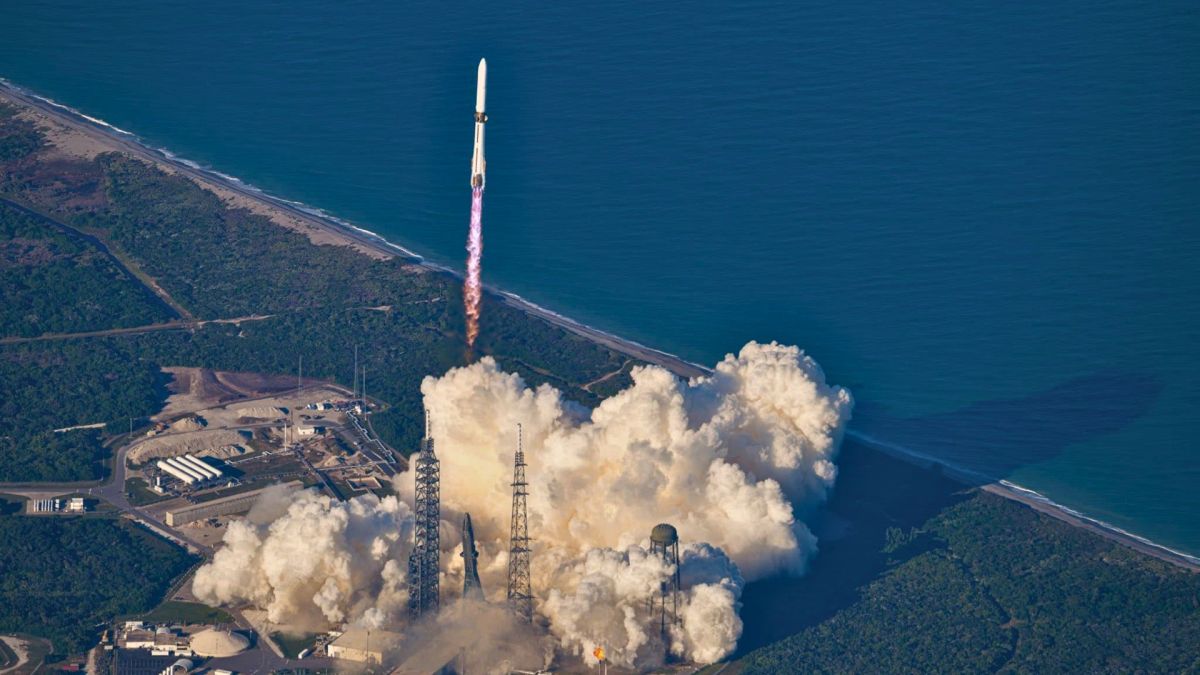
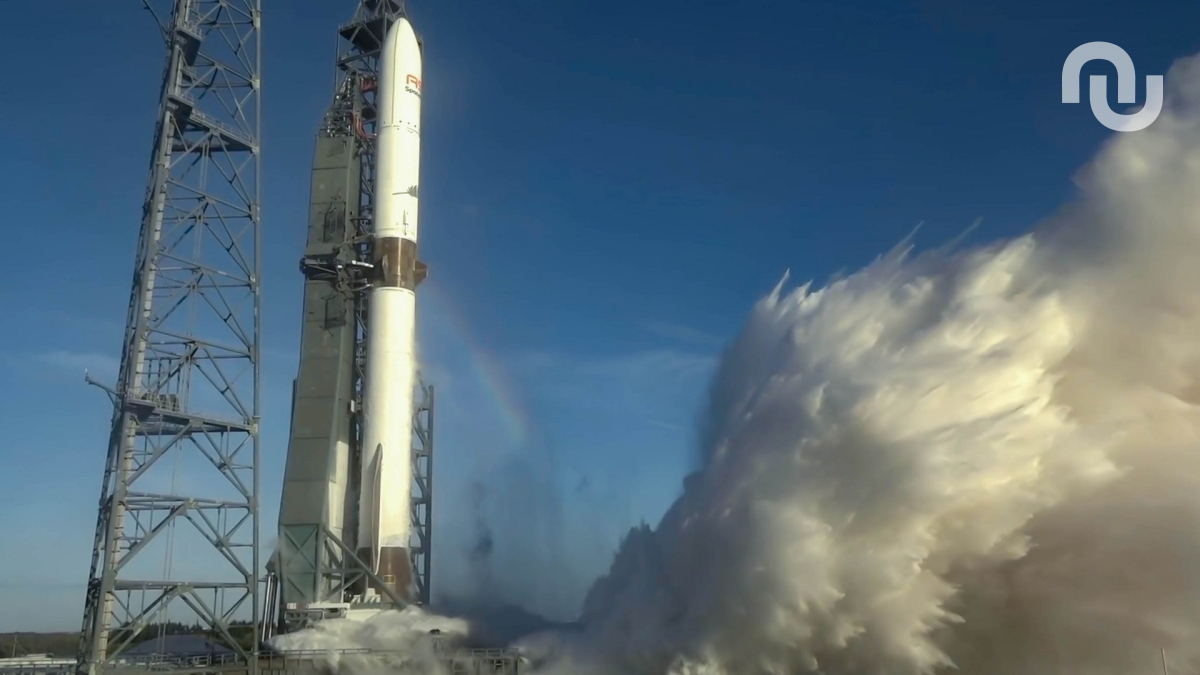
SpaceNews reports: Blue Origin's New Glenn suffered a malfunction of its second stage on the rocket's third flight April 19, stranding its payload in an unrecoverable "off-nominal" orbit and dealing the company a setback as it seeks to increase its flight rate... AST SpaceMobile had planned to launch 45 to 60 satellites this year for its D2D constellation, but BlueBird 7 is the first to launch since BlueBird 6 launched on an Indian LVM3 rocket in December. AST SpaceMobile still expects to have 45 satellites in orbit by the end of the year, the article notes. (In an earnings call in March, AST SpaceMobile's CEO had promised they'd soon start "stacking" satellites, "batched in groups of either three, four, six or eight in a single launch.") He'd added that "To support our launch cadence during 2026, we expect the New Glenn booster to be reused every 30 days or less..." There's some good news there, SpaceNews points out, since today saw the first successful reflight of a New Glenn first stage rocket: The booster, called "Never Tell Me The Odds" by Blue Origin, touched down on the company's landing platform, Jacklyn, in the Atlantic Ocean nearly nine and a half minutes after liftoff. The booster launched NASA's ESCAPADE Mars mission on the NG-2 flight in November. However, the booster reuse on NG-3 was only partial since the stage's biggest component, its BE-4 engines, was new. "With our first refurbished booster we elected to replace all seven engines and test out a few upgrades including a thermal protection system on one of the engine nozzles," Dave Limp, chief executive of Blue Origin, said in an April 13 social media post. "We plan to use the engines we flew for NG-2 on future flights." The satellite will now be "de-orbited", AST SpaceMobile said in a statement. (They added that "The cost of the satellite is expected to be recovered under the company's insurance policy.") Thanks to long-time Slashdot reader schwit1 for sharing the news.

Read more of this story at Slashdot.

  •  

ExoMars 2028 : sauvée de la malédiction, la mission européenne s’envolera vers Mars sur un Falcon Heavy

Falcon Heavy

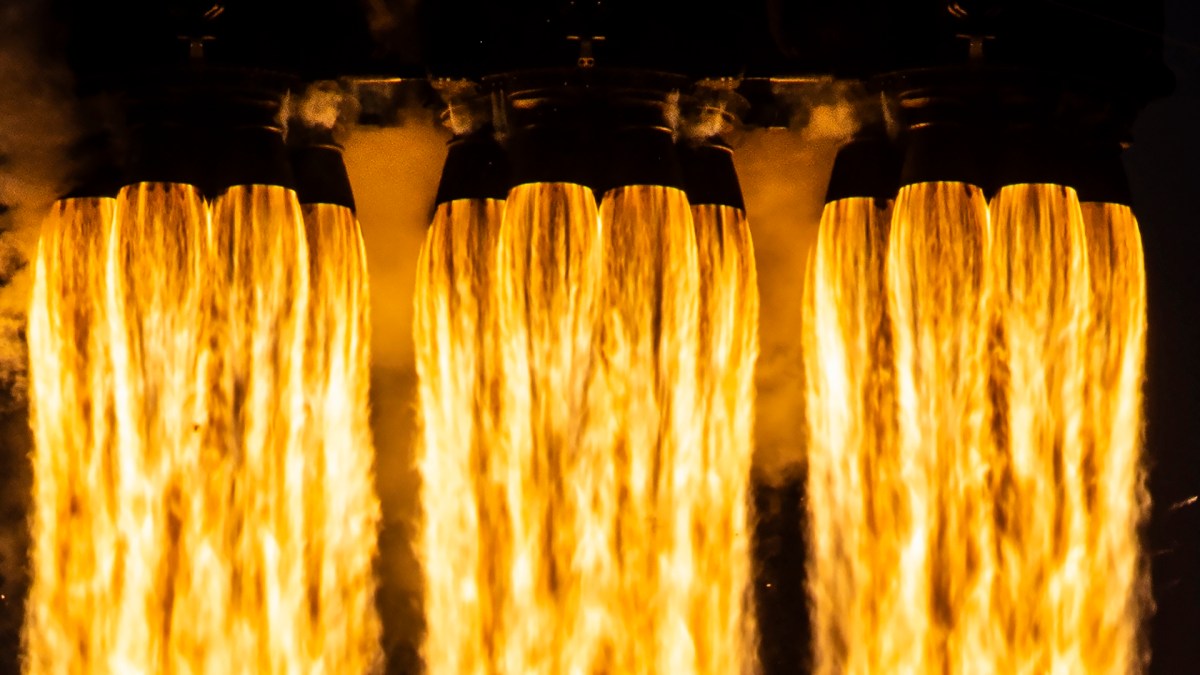
Longtemps considérée comme maudite, la mission européenne ExoMars voit enfin son horizon s’éclaircir. Épaulé par la NASA, le rover Rosalind Franklin s’envolera fin 2028 à bord du rare et surpuissant Falcon Heavy de SpaceX, prêt à traquer d'anciennes traces de vie sous le sol martien.

  •  

A New Computer Chip Could Finally Withstand The Hellscape of Venus

Researchers at the University of Southern California say they've developed a memristor memory device that continued operating at 700 degrees Celsius. "And crucially, 700 degrees was not the limit, it was simply as hot as their testing equipment could go," adds ScienceAlert. "The device showed no signs of failing." From the report: The device is called a memristor and it's a nanoscale component that can both store information and perform computing operations. Think of it as a tiny sandwich with two electrode layers on the outside and a thin ceramic filling in the middle. The team built theirs from tungsten, the metal with the highest melting point of any element, combined with a ceramic called hafnium oxide, and with a layer of graphene at the bottom. Each material can withstand enormous heat. Together, they turned out to be extraordinary. What makes graphene the key ingredient is the way it interacts with tungsten at the atomic level. In a conventional device, heat causes metal atoms to drift slowly through the ceramic layer until they bridge the two electrodes, short circuiting everything and leaving the device permanently broken. Graphene stops that process dead. Its surface chemistry with tungsten is ... almost like oil and water. Tungsten atoms that drift toward the graphene find they simply cannot take hold, no anchor, no short circuit, no failure. The team used advanced electron microscopy and quantum level computer simulations to understand exactly why, turning a single lucky result into a repeatable principle. The findings have been published in the journal Science.

Read more of this story at Slashdot.

  •  
❌