Vue lecture

Google Ends Its 30% App Store Fee, Welcomes Third-Party App Stores

Google is eliminating its traditional 30% Play Store fee and introducing lower commissions, while at the same time allowing alternative billing systems and making it easier for third-party app stores to operate on Android. The changes stem largely from Google's settlement with Epic Games. Engadget reports: The biggest change is to how Google will collect fees from developers publishing apps on Android. Rather than take its standard 30 percent cut of in-app purchases through the Play Store, Google is lowering its cut to 20 percent, and in some cases 15 percent for new installs of apps from developers participating in its new App Experience program or updated Google Play Games Level Up program. Those changes extend to subscriptions, too, where the company's cut is lowering to 10 percent. For Google's billing system, the company says developers in the UK, US, or European Economic Area (EEA) will now be charged a five percent fee and "a market-specific rate" in other regions. Of course, for anyone trying to avoid those fees, using alternatives to Google's billing system is getting easier. Google says that developers will be able to offer alternative billing systems alongside its own or "guide users outside of their app to their own websites for purchases." [...] Epic is ultimately interested in getting people to use the mobile version of its Epic Games Store, and Google's announcement also includes details on how third-party app stores can come to Android. Third-party app stores will be able to apply to the company's new "Registered App Stores" program to see if they meet "certain quality and safety benchmarks." If they do, they'll be able to take advantage of a streamlined installation interface in Android. Participating in the program is optional, and users will still be able to sideload alternative app stores that aren't part of the program, but Google clearly has a preference. [...] Google says that its updated fee structure will come to the EEA, the UK and the US by June 30, Australia by September 30, Korea and Japan by December 31 and the entire world by September 30, 2027. Meanwhile, the company's updated Google Play Games Level Up program and new App Experience program will launch in the EEA, the UK, the US and Australia on September 30, before hitting the remaining regions alongside the updated fee structure. For any developers interested in offering their own app store, Google says it'll launch its Registered App Stores program "with a version of a major Android release" before the end of the year. According to the company, the program will be available in other regions first before it comes to the US.

Read more of this story at Slashdot.
  •  

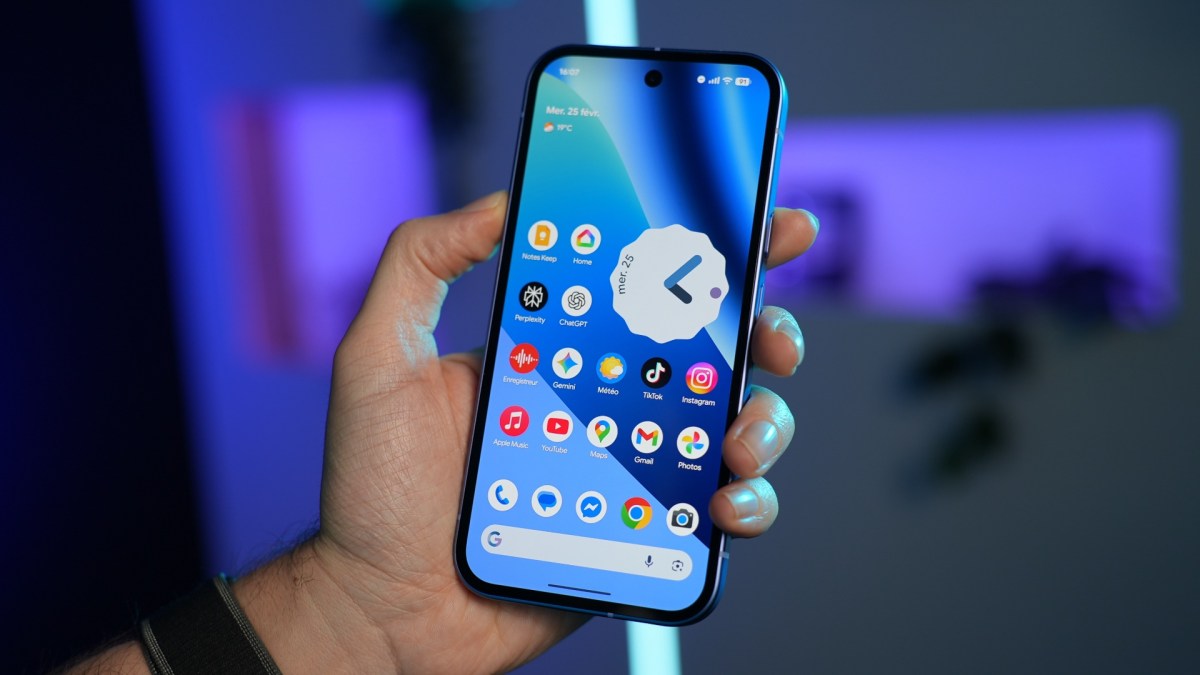
Test du Pixel 10a : le pire ennemi de Google s’appelle Google

Commercialisé au tarif compétitif de 549 euros, le Pixel 10a succède au Pixel 9a avec un nombre de nouveautés anormalement bas pour une nouvelle génération de smartphone. Si la qualité est une nouvelle fois au rendez-vous et que les acheteurs peuvent foncer sans hésitation, Il vaut mieux se tourner vers l'ancienne génération tant que les stocks sont disponibles.

  •  

South Korea Set To Get a Fully Functioning Google Maps

South Korea has reversed a two-decade policy and approved the export of high-precision map data, paving the way for a fully functional Google Maps in the country. Reuters reports: The approval was made "on the condition that strict security requirements are met," the Ministry of Land, Infrastructure and Transport said in a statement. Those conditions include blurring military and other sensitive security-related facilities, as well as restricting longitude and latitude coordinates for South Korean territory on products such as Google Maps and Google Earth, it said. The decision is expected to hurt Naver and Kakao -- local internet giants which currently dominate the country's market for digital map services. But it will appease Washington, which has urged Seoul to tackle what it says is discrimination against U.S. tech companies. South Korea, still technically at war with North Korea, had shot down Google's previous bids in 2007 and 2016 to be allowed to export the data, citing the risks that information about sensitive military and security facilities could be exposed. "Google can now come in, slash usage fees, and take the market," said Choi Jin-mu, a geography professor at Kyung Hee University. "If Naver and Kakao are weakened or pushed out and Google later raises prices, that becomes a monopoly. Then, even companies that rely on map services -- logistics firms, for example -- become dependent, and in the long run, even government GIS (geographic information) systems could end up dependent on Google or Apple. That's the biggest concern."

Read more of this story at Slashdot.
  •  

Google Launches Nano Banana 2 Model With Faster Image Generation

Google has launched Nano Banana 2 (Gemini 3.1 Flash Image), a faster, more realistic image generation model that becomes the default across Gemini, Search, Lens, and Flow. TechCrunch reports: The new Nano Banana 2 retains some of the high-fidelity characteristics of the Pro model but produces images faster. The company says you can create images with a resolution ranging from 512px to 4K, in different aspect ratios. Nano Banana 2 can maintain character consistency for up to five characters and fidelity of up to 14 objects in one workflow for better storytelling. Users can also issue complex requests with detailed nuances for image generation, Google says. In addition, users can create media with more vibrant lighting, richer textures, and sharper detail. [...] On Google's higher-end plans, Google AI Pro and Ultra, subscribers can continue to use Nano Banana Pro for specialized tasks by regenerating images via the three-dot menu. [...] The company said that all images created through the new model will have a SynthID watermark, which is Google's mark to denote AI-generated images. The images are also interoperable with C2PA Content Credentials, created by an industry body consisting of companies like Adobe, Microsoft, Google, OpenAI, and Meta. Google said that since launching the SynthID verification in the Gemini app in November, people have used it over 20 million times.

Read more of this story at Slashdot.
  •  

Google lance Nano Banana 2 : Gemini accentue son avance sur ChatGPT

Nano Banana 2 (Gemini 3.1 Flash Image) devient le nouveau modèle de génération d'images de Google par défaut dans le chatbot Gemini. S'il se positionne un cran en dessous de Nano Banana Pro (Gemini 3 Pro Image), qui reste disponible pour les abonnés payants, Nano Banana 2 a plusieurs avantages, comme la possibilité de générer des contenus plus rapidement et à un coût inférieur.

  •  
❌