Anthropic is expanding Claude's app integrations beyond work tools, adding personal-service connectors like Spotify, Uber, AllTrails, TripAdvisor, Instacart, and TurboTax. The Verge reports: Some of these apps, such as Spotify, already have similar connectors in OpenAI's ChatGPT. Once an app is connected, Claude will suggest relevant connected apps directly in your conversations, like using AllTrails for hike recommendations. Anthropic notes in its blog post announcing the new connectors that, "Your data from [connected apps] isn't used to train our models, and the app doesn't see your other conversations with Claude. You can also disconnect it at any time."
Additionally, Anthropic says "there are no paid placements or sponsored answers in conversations with Claude." When multiple apps seem relevant, Claude will show results from both "ranked by what's most useful." Claude will also ask users to verify before taking actions like making a purchase or reservation using a connected app.
Après avoir fait trembler la Silicon Valley en janvier 2025, le laboratoire chinois DeepSeek publie DeepSeek-V4-Preview, une famille de deux modèles open weight capables de rivaliser avec les meilleurs modèles propriétaires américains pour une fraction de leur coût. DeepSeek relance la guerre technologique entre les États-Unis et la Chine à un moment où la Maison-Blanche dénonce les pratiques des laboratoires chinois.
OpenAI released its new GPT-5.5 model today, which the company calls its "smartest and most intuitive to use model yet, and the next step toward a new way of getting work done on a computer." The Verge reports: OpenAI just released GPT-5.4 last month, but says that the new GPT-5.5 "excels" at tasks like writing and debugging code, doing research online, making spreadsheets and documents, and doing that work across different tools. "Instead of carefully managing every step, you can give GPT-5.5 a messy, multi-part task and trust it to plan, use tools, check its work, navigate through ambiguity, and keep going," according to OpenAI. The company also notes that GPT-5.5 will have its "strongest set of safeguards to date" and can use "significantly fewer" tokens to complete tasks in Codex. GPT-5.5 is rolling out on Thursday for Plus, Pro, Business, and Enterprise ChatGPT tiers and Codex, with GPT-5.5 Pro coming to Pro, Business, and Enterprise users.
Deux jours après le lancement réussi du nouveau générateur d'images ChatGPT Images 2.0, OpenAI dévoile GPT-5.5, autrefois connu sous le nom de code « Spud ». Un modèle pensé pour agir de manière autonome et qui a pour lourde tâche de reprendre la couronne à Anthropic… quitte à faire gonfler les prix.
Au lancement du premier ChatGPT Images, OpenAI avait connu un moment de gloire grâce à la génération de photos dans le style du studio Ghibli. Un an plus tard, avec ChatGPT Images 2.0, ce sont des photos dans le style des clubs de football que les internautes génèrent en masse. La capacité de ChatGPT à générer des montages compliqués impressionne.
A satirical but working tool called Malus uses AI to create "clean room" clones of open-source software, aiming to reproduce the same functionality while shedding attribution and copyleft obligations. "It works," Mike Nolan, one of the two people behind Malus, who researches the political economy of open source software and currently works for the United Nations, told 404 Media. "The Stripe charge will provide you the thing, and it was important for us to do that, because we felt that if it was just satire, it would end up like every other piece of research I've done on open source, which ends up being largely dismissed by open source tech workers who felt that they were too special and too unique and too intelligent to ever be the ones on the bad side of the layoffs or the economics of the situation." 404 Media reports: Malus's legal strategy for bypassing copyright is based on a historically pivotal moment for software and copyright law dating back to 1982. Back then, IBM dominated home computing, and competitors like Columbia Data Products wanted to sell products that were compatible with software that IBM customers were already using. Reverse engineering IBM's computer would have infringed on the company's copyright, so Columbia Data Products came up with what we now know as a "clean room" design.
It tasked one team with examining IBM's BIOS and creating specifications for what a clone of that system would require. A different "clean" team, one that was never exposed to IBM's code, then created BIOS that met those specifications from scratch. The result was a system that was compatible with IBM's ecosystem but didn't violate its copyright because it did not copy IBM's technical process and counted as original work.
This clean room method, which has been validated by case law and dramatized in the first season of Halt and Catch Fire, made computing more open and competitive than it would have been otherwise. But it has taken on new meaning in the age of generative AI. It is now easier than ever to ask AI tools to produce software that is identical in function to existing open source projects, and that, some would argue, are built from scratch and are therefore original work that can bypass existing copyright licenses. Others would say that software produced by large language models is inherently derivative, because like any LLM output, it is trained on the collective output of humans scraped from the internet, including specific open source projects.
Malus (pronounced malice), uses AI to do the same thing. "Finally, liberation from open source license obligations," Malus's site says. "Our proprietary AI robots independently recreate any open source project from scratch. The result? Legally distinct code with corporate-friendly licensing. No attribution. No copyleft. No problems." Copyleft is a type of copyright license that ensures reproductions or applications of the software keep it free to share and modify.
Après avoir réorganisé son propre empire technologique, Elon Musk passe à l’offensive. SpaceX vient d’annoncer un partenariat massif avec Cursor, assorti d’une option de rachat à 60 milliards de dollars, avec un objectif clair : s'imposer face à Anthropic et OpenAI sur le marché très convoité de la programmation assistée par IA.
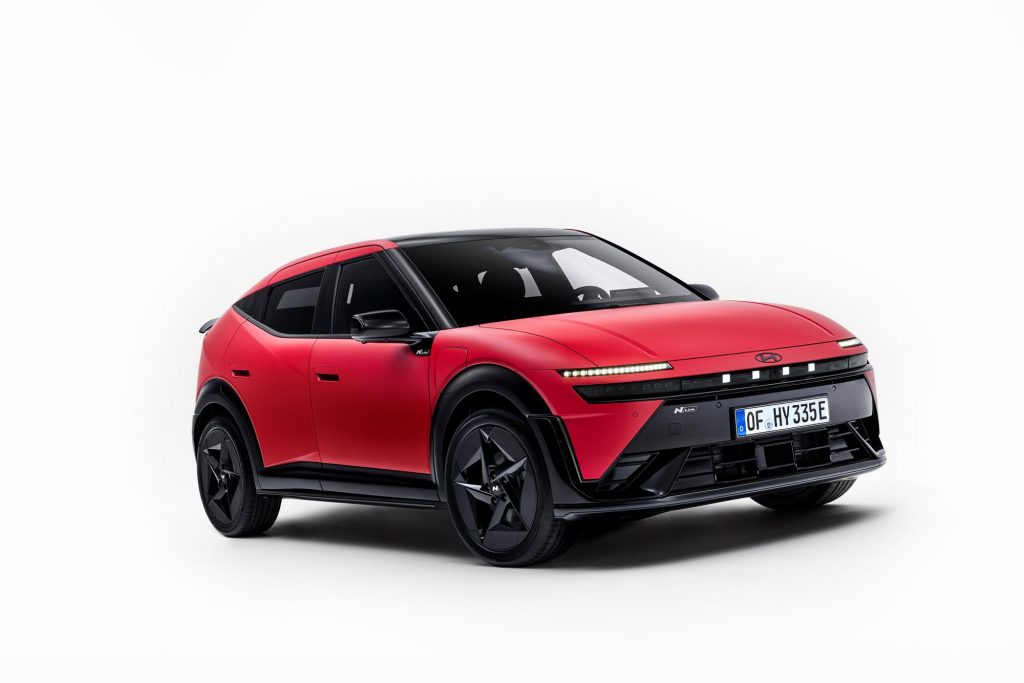
Hyundai dévoile l’IONIQ 3, une nouvelle compacte 100 % électrique pensée pour l’Europe. Le modèle mise sur une approche centrée sur l’usage quotidien, avec un accent sur l’habitabilité et la simplicité technologique. Si elle n’est pas un « game changer », voici ce qu’il faut retenir.
Une nouvelle silhouette pour concilier espace et aérodynamisme
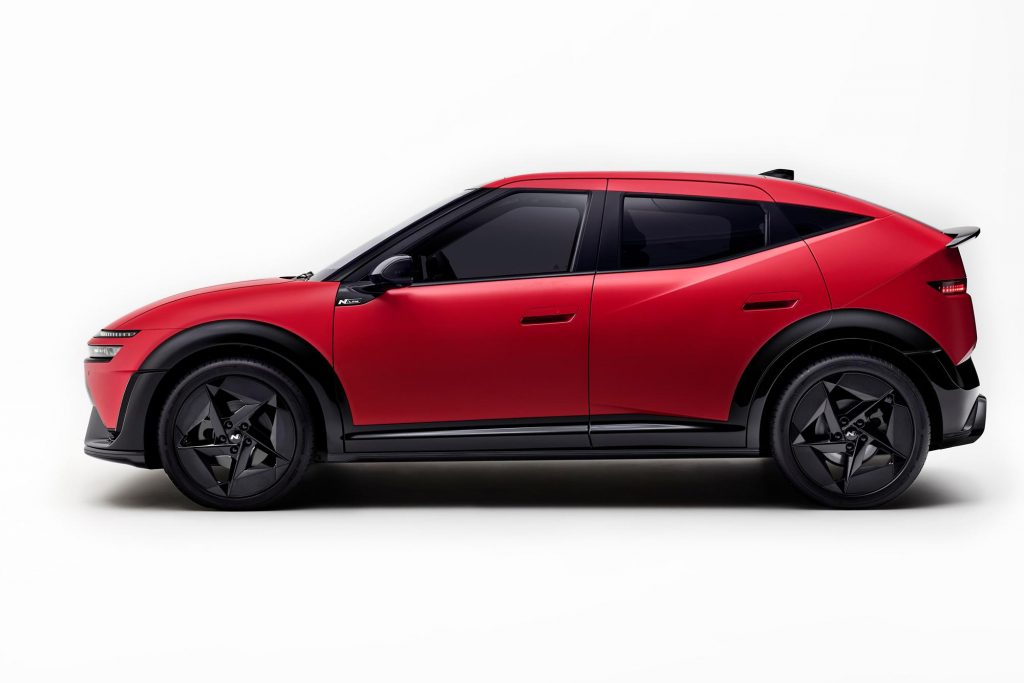
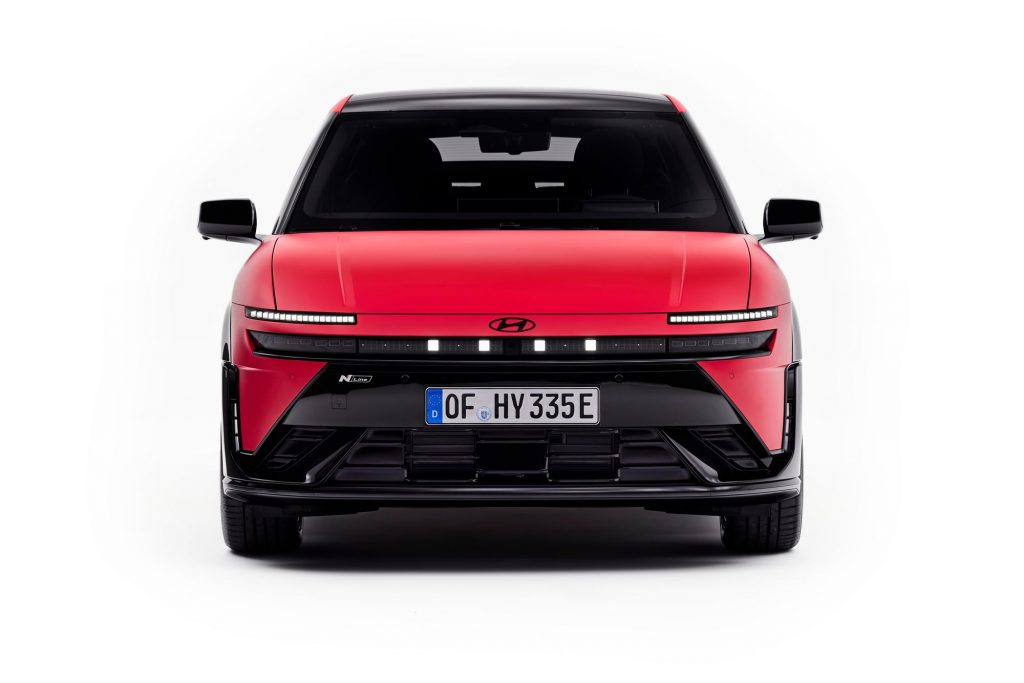
L’IONIQ 3 inaugure un profil baptisé « Aero Hatch ». Cette silhouette associe une ligne de toit étirée et un arrière incliné afin d’améliorer l’efficacité aérodynamique tout en préservant l’espace intérieur. Certains la compare au Veloster du même constructeur (ce dernier était un coach).
Le constructeur annonce un coefficient de traînée d’environ 0,263, parmi les plus bas du segment. Ce travail sur la carrosserie vise aussi à optimiser la garde au toit et le confort aux places arrière. On notera des astuces de design comme la couleur en biseau sur le haut des portières pour accentuer l’effet incliné.
Côté dimensions, le modèle reste compact avec une longueur d’environ 4,16 m, mais bénéficie d’un empattement de 2,68 m pour maximiser l’espace à bord. Pour comparer, la Mégane 3 (thermique) mesure 4,295 m de long, avec un empattement de 2,641 m. On devrait donc avoir plus de place intérieure pour moins de longueur.
Deux batteries et jusqu’à près de 500 km d’autonomie
Reposant sur la plateforme électrique E-GMP en architecture 400 volts, l’IONIQ 3 propose deux configurations :
Une batterie standard de 42,2 kWh avec plus de 335 km d’autonomie WLTP
Une batterie longue autonomie de 61 kWh visant plus de 490 km
La recharge rapide permet de passer de 10 à 80 % en environ 29 minutes en courant continu. En courant alternatif, le chargeur embarqué accepte jusqu’à 22 kW. C’est peut-être là que le bât blesse avec l’absence d’une batterie 800 volts qui permettrait une charge plus rapide.
Un habitacle spacieux malgré un format compact
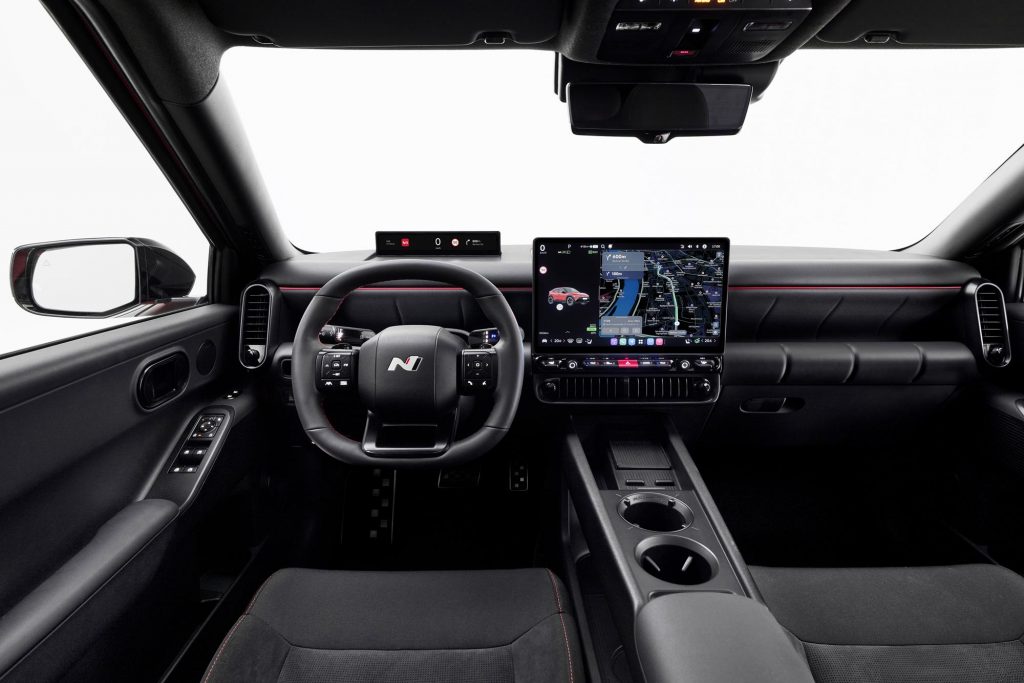
Hyundai met en avant un intérieur conçu comme un « espace aménagé », avec un plancher plat et une organisation pensée pour améliorer le confort. En revanche, on trouve cet intérieur « tristounet » avec du noir partout (à l’asiatique), et le sempiternel écran central qui mange tout le tableau de bord.
On notera les instruments affichés sur un petit écran placé loin et haut devant le conducteur. En théorie, on gagne un peu de temps pour accommoder la vision.
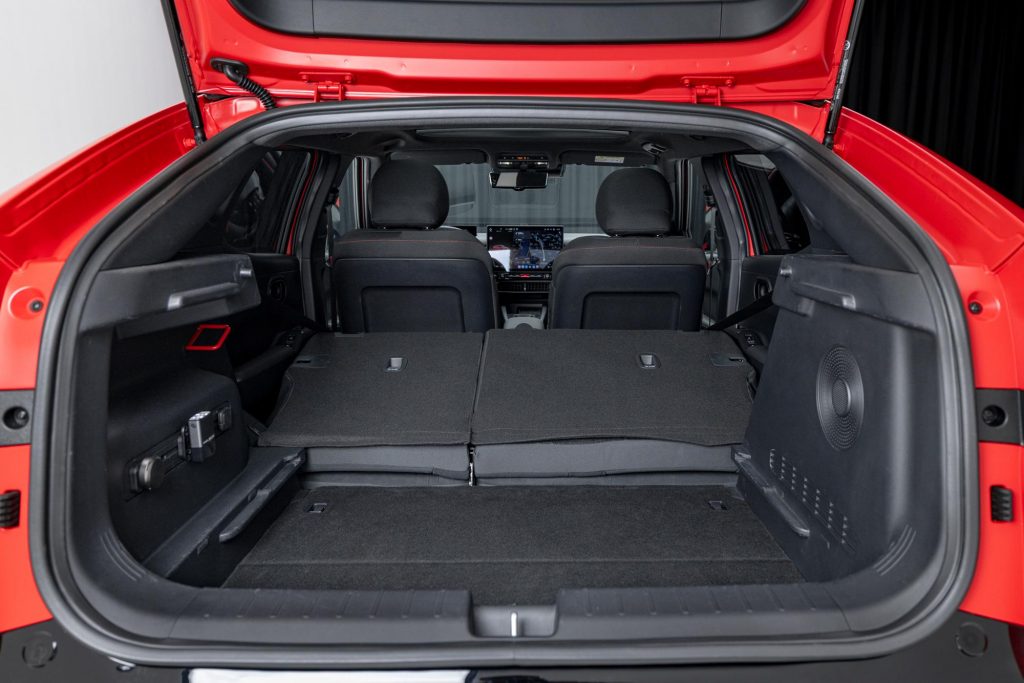
L’IONIQ 3 propose cinq places réelles, avec la possibilité d’accueillir trois adultes à l’arrière. Le passager du milieu sera, comme très souvent, sur une bosse pas forcément confortable.
Le coffre affiche un volume de 441 litres, complété par un espace de rangement supplémentaire sous le plancher.
Dimensions (mm)
Longueur
4,155 (Base)
4,170 (N Line)
Largeur
1,800
Hauteur
1,505
Empattement
2,680
Batterie haute tension
Capacité
42.2 kWh (batterie standard)
61 kWh (batterie longue autonomie)
Recharge
Recharge rapide CC : 10-80% en 29 min environ (batterie standard) / 30 min (batterie longue autonomie)
Chargeur embarqué CA pour fonction V2X de 11 kW (de série) ou 22 kW (en option)
9.0 s (batterie standard)
9.6 s (batterie longue autonomie)
Une interface basée sur Android Automotive
Le modèle introduit en Europe le système d’infodivertissement Pleos Connect, basé sur Android Automotive. Il est associé à un écran pouvant atteindre 14,6 pouces.
Parmi les fonctionnalités annoncées :
Accès sans clé via smartphone (Digital Key 2)
Planificateur d’itinéraires pour véhicules électriques
Fonction Plug & Charge
Recharge bidirectionnelle (V2L)
L’objectif affiché est de simplifier l’usage quotidien plutôt que d’ajouter de la complexité., Ca, c’est la promesse de tous les constructeurs. Mais ce que veulent les acheteurs, c’est de ne pas attendre à la station de charge, et là, cette Ioniq 3 ne semble pas faire de miracle.
Aides à la conduite et sécurité
L’IONIQ 3 embarque les systèmes d’aide à la conduite Hyundai SmartSense, incluant notamment :
Assistance à la conduite sur autoroute (niveau 2)
Stationnement à distance
Caméras panoramiques et angles morts
Sept airbags de série
Des phares LED intelligents complètent l’équipement.
Une production presque européenne
Le modèle est conçu pour le marché européen et sera produit en Turquie, dans l’usine d’İzmit. Il développe jusqu’à 147 ch, pour une vitesse maximale annoncée de 165 km/h.
Notre avis, par leblogauto.com
Vous l’aurez deviné en lisant cet article, on reste circonspect face à cette nouveauté. Ce n’est pas un « game changer » même si sur le papier elle semble dans la norme actuelle des VE compacts. Renault Megane E-Tech par exemple, qui commence à dater, annonce 60 kWh de batterie et 468 km WLTP pour un même gabarit.
Cette Ioniq 3 complète la gamme, et est typée européenne. Elle devrait trouver sa clientèle pour peu que les tarifs suivent.
Firms like Bank of America, Citi, Wells Fargo, and others are reporting strong profits while reducing head count and automating more work. "All of them credited A.I. to some degree ... in areas ranging from the so-called back office, where tens of thousands of employees fill out paperwork to comply with various laws and regulations, to the front office, where seven-figure salaried professionals put together complicated financial transactions for corporate clients," reports the New York Times. From the report: Less than four months ago, Bank of America's chief executive, Brian T. Moynihan, volunteered in a TV interview what he would say to his 210,000 employees about the chance of artificial intelligence replacing human work. "You don't have to worry," he said. "It's not a threat to their jobs." Last week, after Bank of America reported $8.6 billion in profit for the first quarter -- $1.6 billion more than the same period a year earlier -- Mr. Moynihan struck a different tone. The bank's bottom line, he said, was helped by shedding 1,000 jobs through attrition by "eliminating work and applying technology," which he repeatedly specified was artificial intelligence. He predicted more of that in the months and years to come. "A.I. gives us places to go we haven't gone," Mr. Moynihan said.
The veneer of Wall Street's longstanding assertion -- that A.I. will enhance human work, not replace it -- is rapidly peeling away, as evidenced by the current quarterly earnings season. JPMorgan Chase, Citi, Bank of America, Goldman Sachs, Morgan Stanley and Wells Fargo racked up $47 billion in collective profits, up 18 percent, while shedding 15,000 employees. All of them credited A.I. to some degree with helping cut jobs and automate work in areas ranging from the so-called back office, where tens of thousands of employees fill out paperwork to comply with various laws and regulations, to the front office, where seven-figure salaried professionals put together complicated financial transactions for corporate clients.
Unlike executives in Silicon Valley, few major financial figures are stating outright that A.I. is eliminating jobs. Citi, for example, has pledged to shrink its work force by 20,000 people through what one executive described to financial analysts last week as the company's "productivity and efficiency journey." The bank is paying for A.I. software from Anthropic, Google, Microsoft and OpenAI, to automatically read legal documents, approve account openings, send invoices for trades and organize sensitive customer data, among other tasks, according to public statements by bank executives and two people familiar with Citi's systems. Among the recent job cuts at Citi were scores of employees who were part of the bank's "A.I. Champions and Accelerators" program, according to the two people, who were not permitted by the bank to speak publicly. The program involves Citi employees who perform their day jobs while also working to persuade their colleagues to adopt A.I. technologies.
Après une période marquée par des turbulences internes et une concurrence de plus en plus féroce, OpenAI repart à l'offensive en avril 2026. En attendant le modèle GPT-5.5 dont le lancement semble imminent, l'entreprise dévoile ChatGPT Images 2.0, un nouveau modèle natif pour générer des images. Selon OpenAI, il s'agit « du meilleur modèle sur le marché ».
Hyundai complète sa gamme électrique par le bas avec une nouvelle voiture électrique : le Ioniq 3. Un crossover urbain revendiquant une autonomie de près de 500 km. Cependant, le reste de sa fiche technique déçoit.
Il fut un temps où pour interagir avec une intelligence artificielle, on ouvrait naturellement ChatGPT. Mais en 2026, le chatbot d'OpenAI n'est plus seul sur son trône, et ses concurrents ont définitivement cessé de faire de la figuration. Voici les meilleures alternatives à utiliser.
"A trailer has been released for the first film to star an authorised generative AI version of a major Hollywood actor," writes The Guardian:
Val Kilmer was cast in western As Deep As the Grave before his death in April 2025. Production delays meant he never shot any scenes, but the creative team worked with UK-based company Sonantic to create an AI speaking voice based on his old recordings. His estate and daughter Mercedes collaborated with the film-makers on the visual deepfake of the actor. Kilmer, who was diagnosed with throat cancer, was also assisted by technology for his cameo in 2022's Top Gun: Maverick...
Writer-director Coerte Voorhees confirmed that Kilmer is seen for around an hour of the film's running time... Voorhees has said that the production followed Sag-Aftra [union] guidelines, and that Kilmer's estate — which provided archival material for them to use — was compensated financially.
"Kilmer's likeness can be seen portraying Father Fintan, a Catholic priest and Native American spiritualist," adds The Hollywood Reporter. But the AV Club calls it "ghoulish puppet show time."
"Having your AI Val Kilmer puppet whisper 'Don't fear the dead, and don't fear me' in a movie trailer is a bold choice..."
He is accompanied (per Variety) by a whole host of disclaimers, caveats, and explanations offered by writer-director Coerte Voorhees and his associates: Kilmer deeply wanted to be in the movie, but was too sick to do so. His family endorses and supports his inclusion. He was a big fan of technology, including, presumably, its use in turning his own image into a digital avatar to then shove into movies...
The fact is, of course, that nobody would be paying a fraction of this attention to As Deep As The Grave — about early female archeologist Ann Axtell Morris — if it weren't now being used as the stage on which Voorhees was very publicly accepting the dare to go full-on ghoulish with AI tech.
"The filmmakers said they hoped they were showing Hollywood how to use the technology in a positive way..." notes Australia's ABC News. But their articles add that "Some have called the trailer 'terrifying' and 'disgusting' on social media."
Mashable writes:
"Very fitting that this trailer includes a scene where a corpse is unceremoniously yanked out of the ground," read one of the top comments on As Deep as the Grave's trailer at time of writing... [O]nline commenters have labelled it disgusting and disrespectful, not only for digitally reanimating Kilmer but also for the damaging precedent As Deep as the Grave's use of AI could set for the film industry as a whole.
Friday Anthropic's CEO met with top U.S. officials and "discussed opportunities for collaboration," according to a White House spokesperson itedd by Politico, "as well as shared approaches and protocols to address the challenges associated with scaling this technology."
CNN notes the meeting happens at the same time Anthropic "battles the Trump administration in court for blacklisting its Claude AI model..."
The meeting took place as the US government is trying to balance its hardline approach to Anthropic with the national security implications of turning its back on the company's breakthrough technology — including its Mythos tool that can identify cybersecurity threats but also present a roadmap for hackers to attack companies or the government... The Office of Management and Budget has already told agencies it is preparing to give them access to Mythos to prepare, Bloomberg reported. Axios reported the White House is also in discussion to gain access to Mythos.
The Trump administration "recognizes the power" of Mythos, reports Axios, "and its highly sophisticated — and potentially dangerous — ability to breach cybersecurity defenses."
"It would be grossly irresponsible for the U.S. government to deprive itself of the technological leaps that the new model presents," a source close to negotiations told us. "It would be a gift to China"... Some parts of the U.S. intelligence community, plus the Cybersecurity and Infrastructure Security Agency (CISA, part of Homeland Security), are testing Mythos. Treasury and others want it.
The White House added they plan to invite other AI companies for similar discussions, Politico reports. But Mythos "is also alarming regulators in Europe, who have told POLITICO they have not been able to gain access..."
U.S. government agency tech leaders sought access to the model after Anthropic earlier this year began testing the model and granted limited access to a select group of companies, including JPMorgan, Amazon and Apple... after finding it had hacking capabilities far outstripping those of previous AI models. This includes the ability to autonomously identify and exploit complex software vulnerabilities, such as so-called zero-day flaws, which even some of the sharpest human minds are unable to patch. The AI startup also wrote that the model could carry out end-to-end cyberattacks autonomously, including by navigating enterprise IT systems and chaining together exploits. It could also act as a force-multiplier for research needed to build chemical and biological weapons, and in certain instances, made efforts to cover its tracks when attacking systems, according to Anthropic's report on the model's capabilities and its safety assessments.
Those findings and others have inspired fears that the model could be co-opted to launch powerful cyberattacks with relative ease if it fell into the wrong hands. Logan Graham, a senior security researcher at Anthropic, previously told POLITICO that researchers and tech firms had been given early access to Mythos so they could find flaws in their critical code before state-backed hackers or cybercriminals could exploit them. "Within six, 12 or 24 months, these kinds of capabilities could be just broadly available to everybody in the world," Graham said.
OpenAI is updating Codex with more agent-like capabilities, positioning it as a more direct rival to Anthropic's Claude Code. Some of the new features include the ability to operate macOS desktop apps, browse the web inside the app, generate images, use new workplace plug-ins, and remember useful context from past tasks. The Verge reports: Codex will now be able to operate desktop apps on your computer, OpenAI says in a blog post announcing the update. It can work in the background, meaning it won't interfere with your own work in other apps, and multiple agents can work in parallel. For developers, OpenAI says "this is helpful for testing and iterating on frontend changes, testing apps, or working in apps that don't expose an API." The feature will start rolling out to Codex desktop app users signed in with ChatGPT today and will initially be limited to macOS. OpenAI did not indicate a timeline for when use will expand to other operating systems. EU users will also have to wait, it said, adding that the update will roll out to users there "soon."
Codex is also getting the ability to generate and iterate on images with gpt-image-1.5, new plug-ins for tools like GitLab, Atlassian Rovo, and Microsoft Suite, and native web browsing through an in-app browser, "where you can comment directly on pages to provide precise instructions to the agent." OpenAI also said it will also be easier to automate tasks, with users able to re-use existing conversation threads and Codex now able to schedule future work for itself and wake up automatically to continue on a long-term task. Codex will also be getting a memory feature allowing it to remember useful context from past experience, such as personal preferences, corrections, and information that took time to gather. OpenAI said it hopes the opt-in feature, which will be released as a preview, will help future tasks complete faster and to a quality that previously required detailed custom instructions. The personalization features will roll out to Enterprise, Edu, and EU users "soon."
Anthropic released Claude Opus 4.7, calling it its strongest generally available model and an improvement over Opus 4.6 in areas like software engineering, instruction-following, tool use, and agentic coding. But the company says it is "less broadly capable" than the restricted Claude Mythos Preview, "which Anthropic rolled out to a select group of companies as part of a new cybersecurity initiative called Project Glasswing earlier this month," reports CNBC. From the report: The launch of Claude Opus 4.7 on Thursday comes after Anthropic launched Claude Opus 4.6 in February. Anthropic said the new model outperforms Claude Opus 4.6 across many use cases, including industry benchmarks for agentic coding, multidisciplinary reasoning, scaled tool use and agentic computer use, according to a release. Anthropic said it experimented with efforts to "differentially reduce" Claude Opus 4.7's cyber capabilities during training.
The company encouraged security professionals who are interested in using the model for "legitimate cybersecurity purposes" to apply through a formal verification program. Claude Opus 4.7 is available across all of Anthropic's Claude products, its application programming interface and through cloud providers Microsoft, Google and Amazon. The new model is the same price as Claude Opus 4.6, Anthropic said.
Cal is moving its flagship scheduling software from open source to a proprietary license, arguing that AI coding tools now make it much easier for attackers to scan public codebases for vulnerabilities. "Open source security always relied on people to find and fix any problems," said Peer Richelsen, co-founder of Cal. "Now AI attackers are flaunting that transparency." CEO Bailey Pumfleet added: "Open-source code is basically like handing out the blueprint to a bank vault. And now there are 100x more hackers studying the blueprint." The company says it still supports open source and is releasing a separate Cal.diy version for hobbyists, but doesn't want to risk customer booking data in its commercial product. ZDNet reports: When Cal was founded in 2022, Bailey Pumfleet, the CEO and co-founder, wrote, "Cal.com would be an open-source project [because] limitations of existing scheduling products could only be solved by open source." Since Cal was successful and now claims to be the largest Next.js project, he was on to something. Today, however, Pumfleet tells me that AI programs such as "Claude Opus can scour the code to find vulnerabilities," so the company is moving the project from the GNU Affero General Public License (AGPL) to a proprietary license to defend the program's security.
[...] Cal also quoted Huzaifa Ahmad, CEO of Hex Security, "Open-source applications are 5-10x easier to exploit than closed-source ones. The result, where Cal sits, is a fundamental shift in the software economy. Companies with open code will be forced to risk customer data or close public access to their code." "We are committed to protecting sensitive data," Pumfleet said. "We want to be a scheduling company, not a cybersecurity company." He added, "Cal.com handles sensitive booking data for our users. We won't risk that for our love of open source."
While its commercial program is no longer open source, Cal has released Cal.diy. This is a fully open-source version of its platform for hobbyists. The open project will enable experimentation outside the closed application that handles high-stakes data. Pumfleet concluded, "This decision is entirely around the vulnerability that open source introduces. We still firmly love open source, and if the situation were to change, we'd open source again. It's just that right now, we can't risk the customer data."
Jérémy Clédat, fondateur et CEO de Welcome to the Jungle présent au salon Go Entrepreneurs Paris, a passé un an à repenser de fond en comble la plateforme de recrutement phare en France. Nous l'avons rencontré pour parler de la nouvelle suite qu'il s'apprête à déployer, mais surtout de ce que l'IA est en train de faire au travail, aux entreprises, à l'éducation -- et au sens même de ce qu'on appelle un métier.

 Connexion