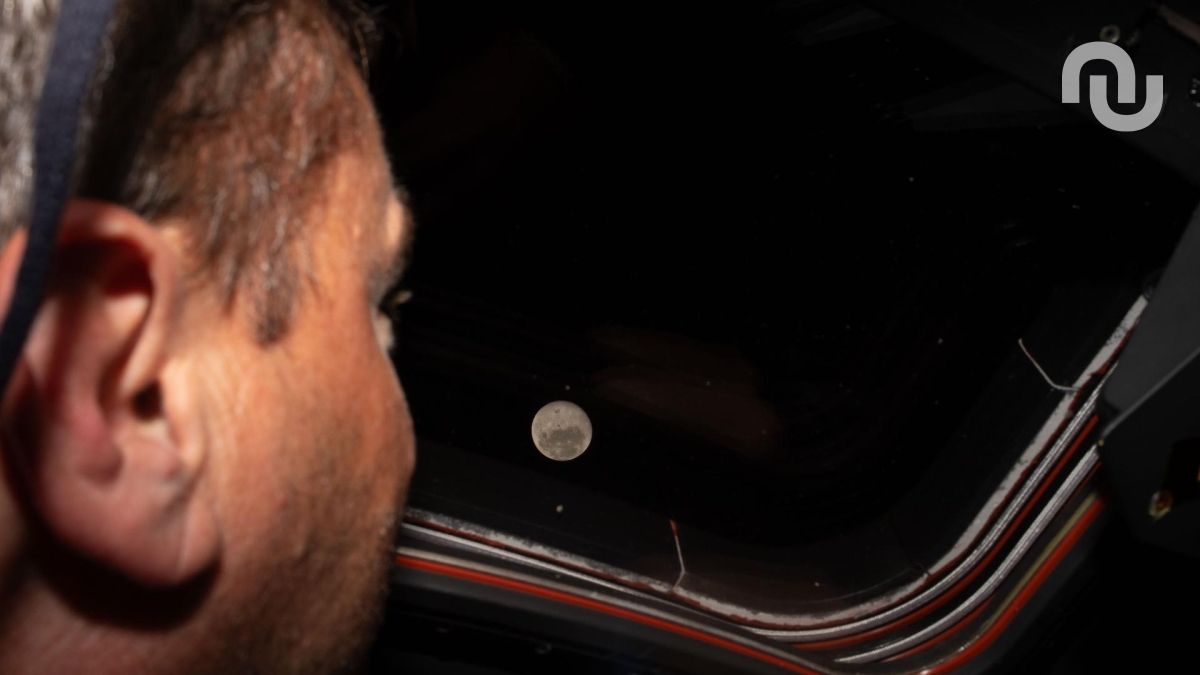
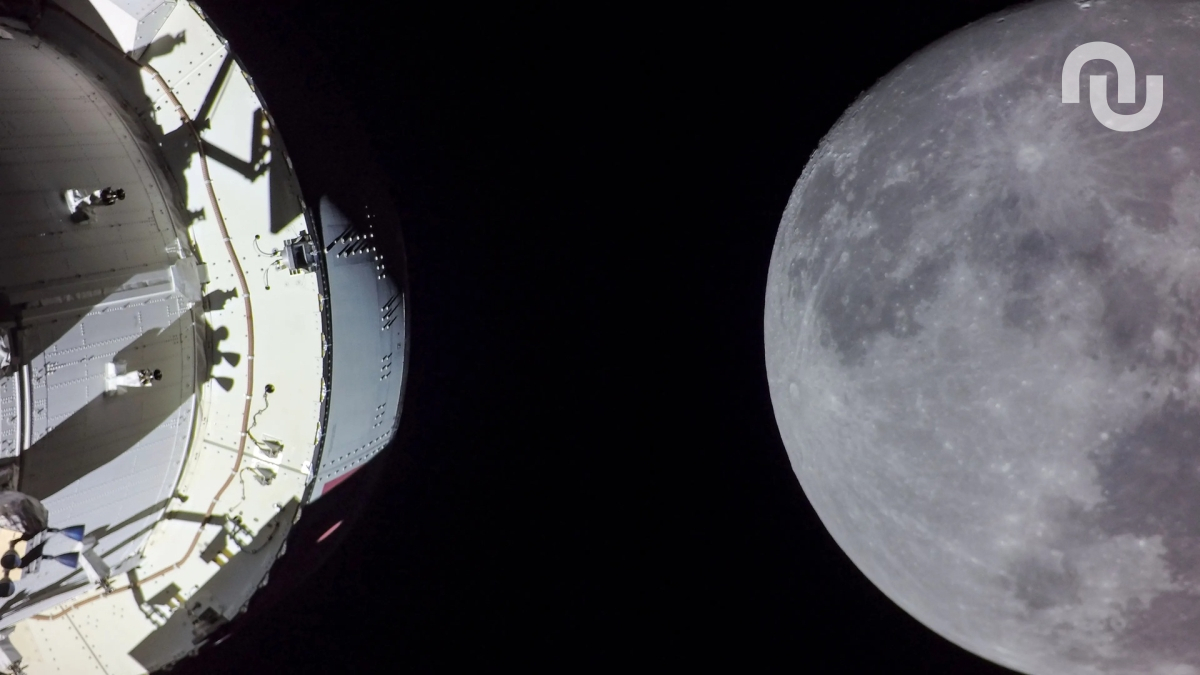
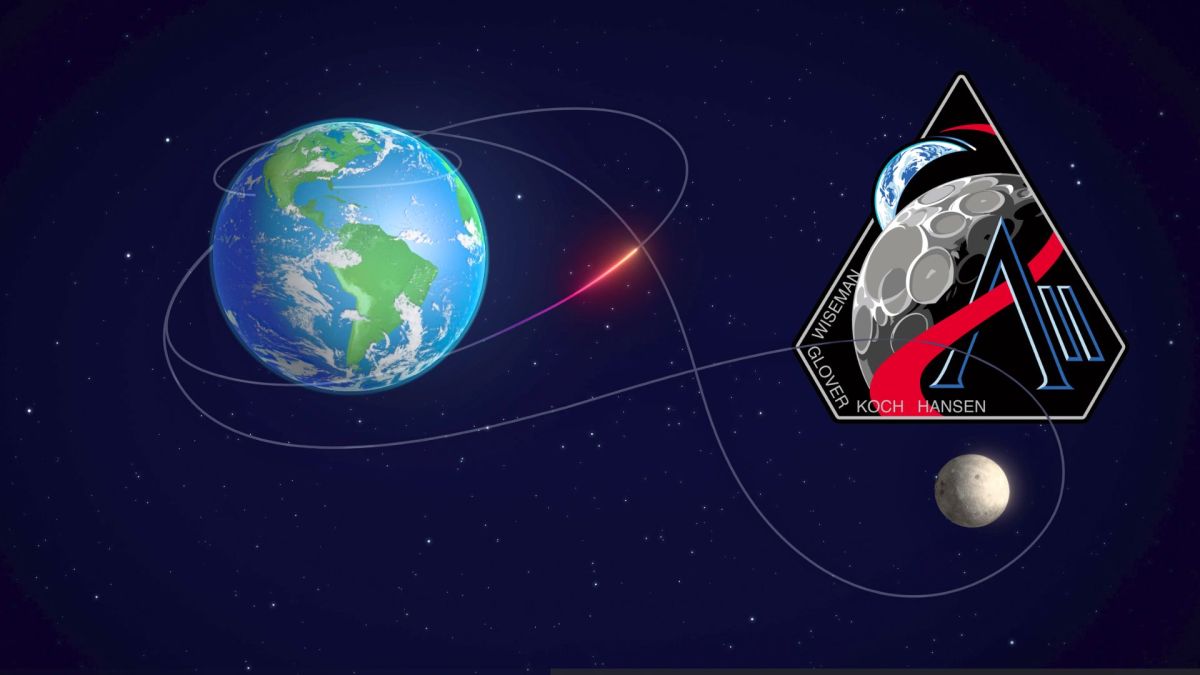
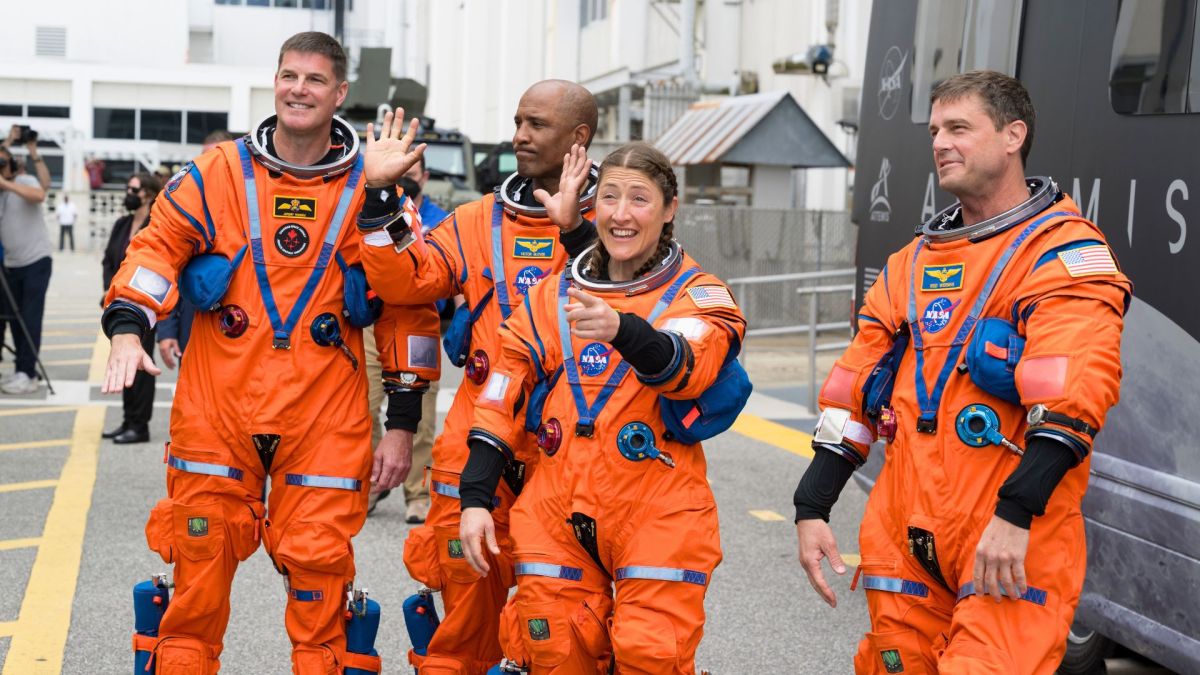
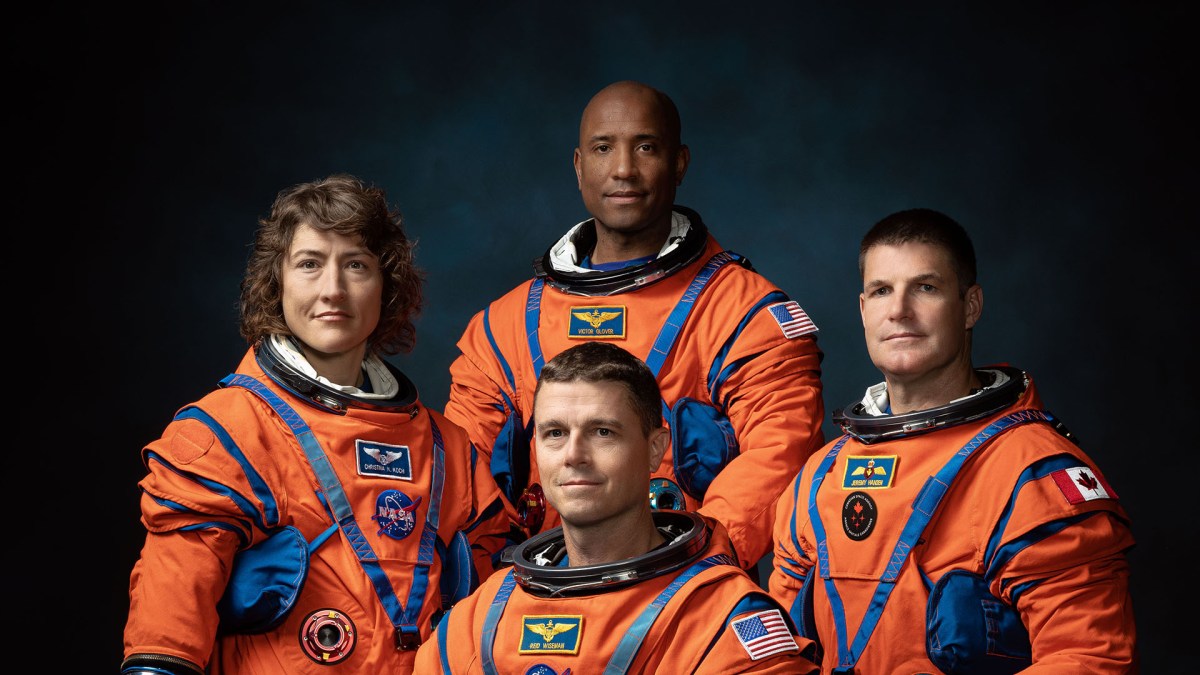
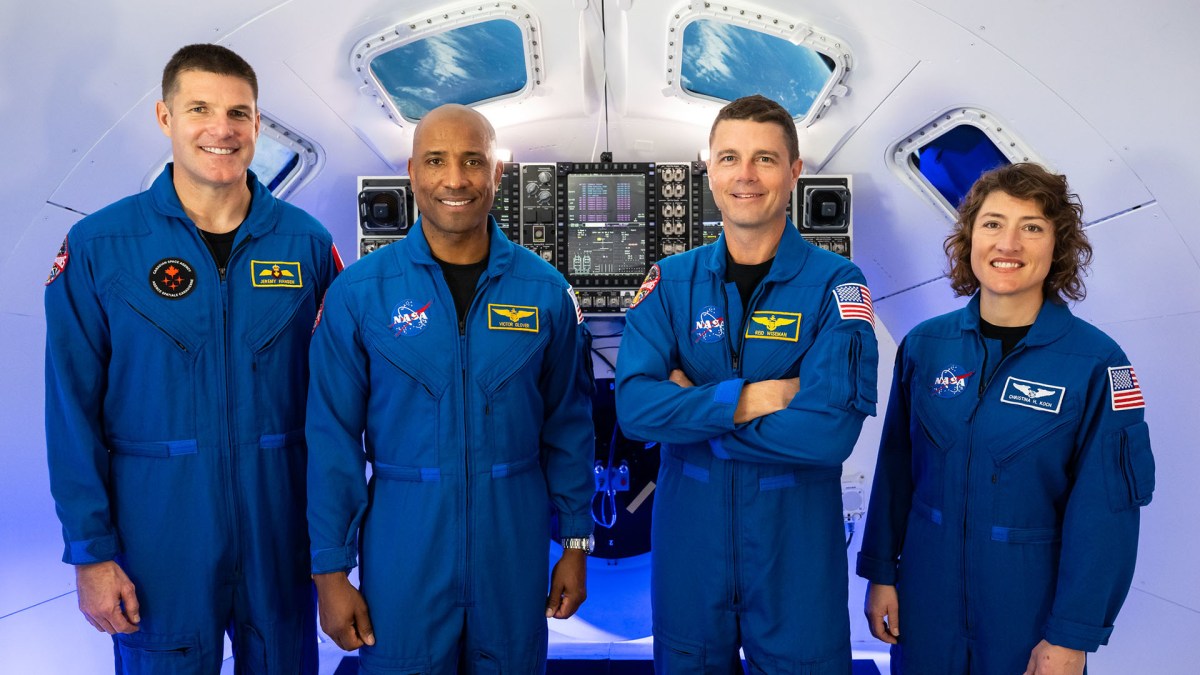
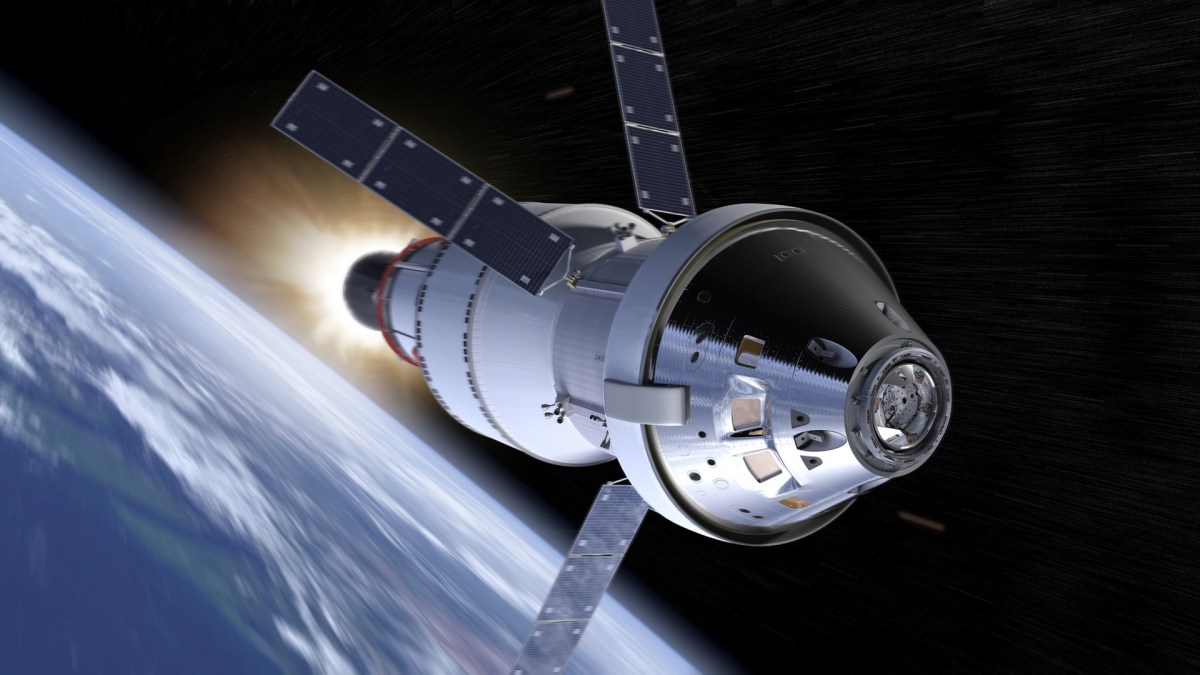
The Artemis II crew has passed 100,000 miles from Earth and is now on a "free-return" path around the moon after a successful "translunar" injection burn. "Ladies and gentlemen, I am so, so excited to be able to tell you that for the first time since 1972 during Apollo 17, human beings have left Earth orbit," NASA's Dr Lori Glaze told a news conference. The Guardian reports: The astronauts -- the Americans Reid Wiseman, Victor Glover and Christina Koch, and a Canadian, Jeremy Hansen -- spent their first day in space performing checks on the spacecraft, which had never carried humans before. Later they had time to speak to US TV networks. "I've got to tell you, there is nothing normal about this," Wiseman told ABC News from the cramped interior of the capsule. "Sending four humans 250,000 miles away is a herculean effort, and we are now just realising the gravity of that."
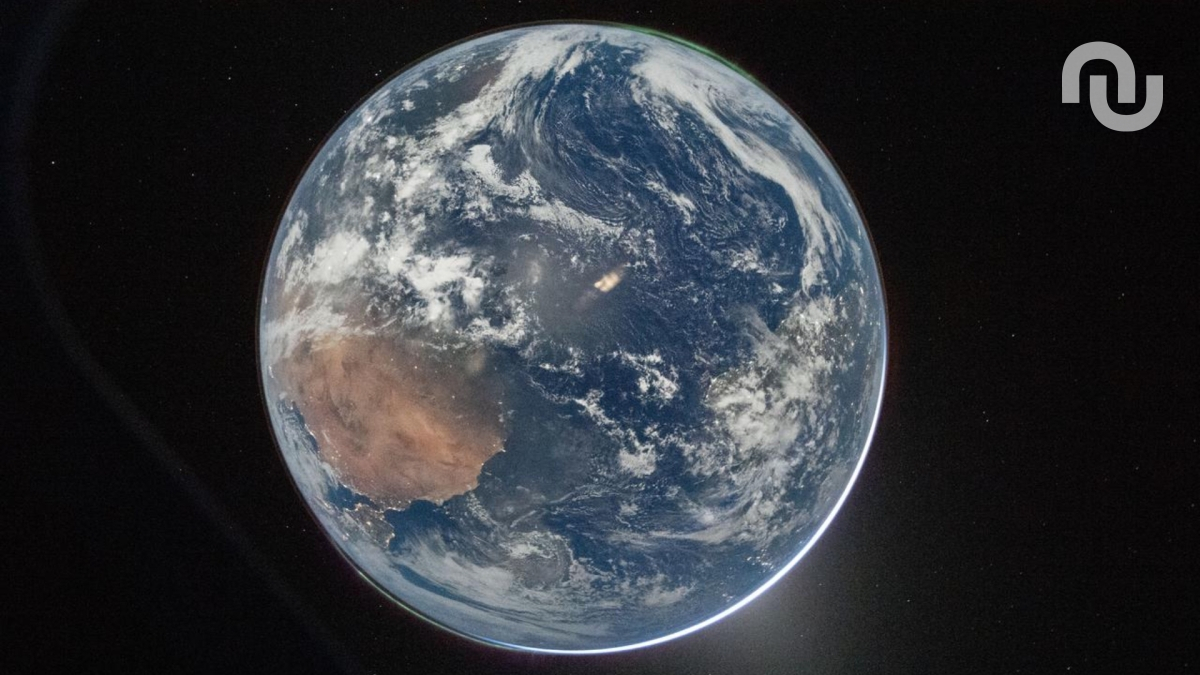
Orion will travel about 4,000 miles (6,400km) beyond the moon before turning back, providing unprecedented and illuminated views of the lunar far side. If all proceeds smoothly, the astronauts will set a record by venturing farther from Earth than any human before -- more than 250,000 miles. The mission is part of a longer-term plan to repeatedly return to the moon, with the aim of establishing a permanent base that will offer a platform for further exploration. After the final engine burn, NASA said Wiseman took two "spectacular" images of Earth.
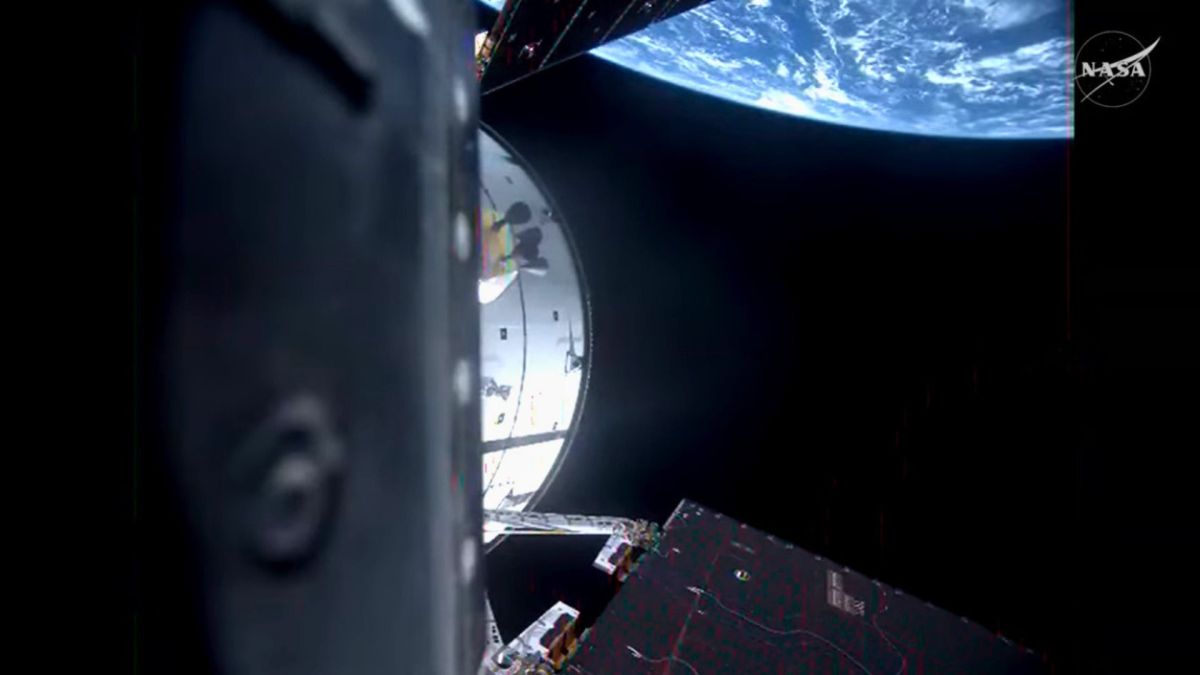
The first photo, called Hello, World, "shows the vast expanse of blue that is the Atlantic Ocean, framed by a thin glow of the atmosphere as the Earth eclipses the Sun and green auroras at either pole," reports the BBC. Another photo shows the view of Earth from inside the Orion spacecraft.


Read more of this story at Slashdot.

 Connexion