Vue lecture

Asteroid Ryugu Has All of the Main Ingredients For Life

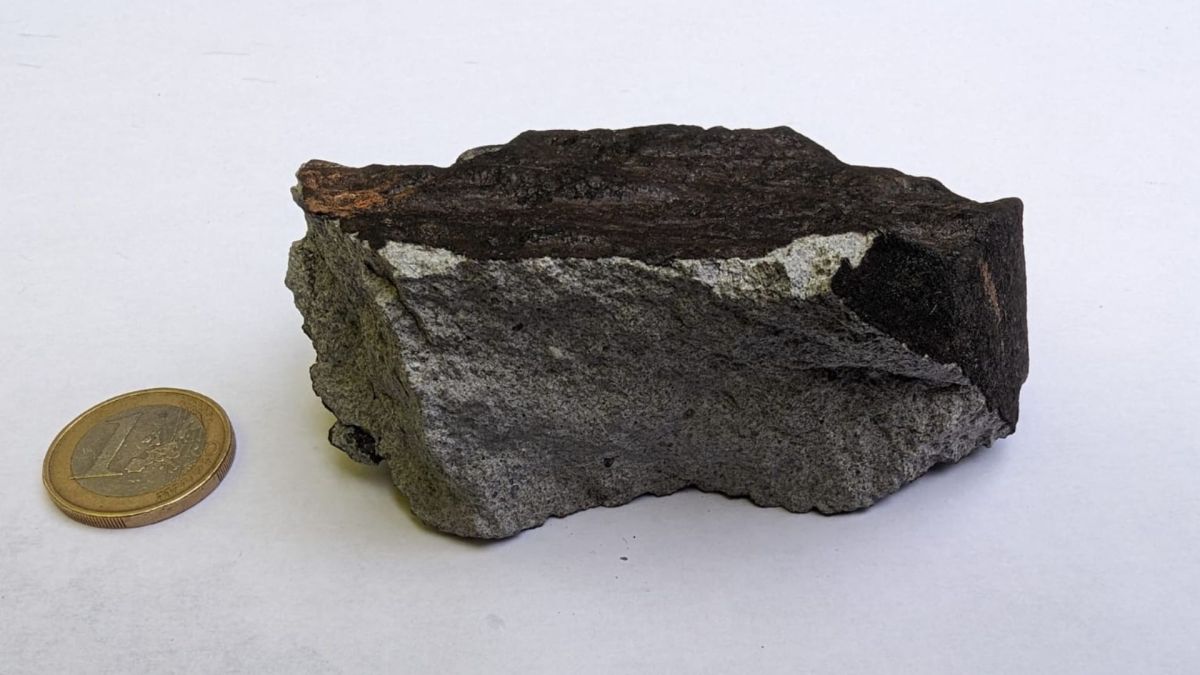
Samples from the asteroid Ryugu contain all five nucleobases -- the key building blocks of DNA and RNA. "This strengthens the idea that asteroids may have brought the ingredients for the first living organisms to Earth long ago," reports New Scientist. From the report: Japan's Hayabusa 2 spacecraft visited Ryugu in 2018, where it shot two projectiles -- one small and one large -- into the surface of the asteroid and collected the resulting debris. It arrived back at Earth with the samples in 2020 and researchers have been analyzing these in detail ever since. Yasuhiro Oba at Hokkaido University in Japan and his colleagues examined two samples, one from the asteroid's surface and one comprised of subsurface materials excavated by the projectiles. In both, the team found all five primary nucleobases, which are the compounds that make up the nucleic acids DNA and RNA when combined with sugars and phosphoric acid. This isn't the first time that nucleobases have been found in asteroid samples: they have been seen in meteorites, too, and in samples from the asteroid Bennu. The researchers did find different abundances of the various nucleobases among the various samples, though, which hints that these compounds might be useful for tracing asteroids and meteorites back to the parent bodies that they broke off from in the distant past, as well as understanding the evolution of those parent bodies over time. The findings have been published in the journal Nature Astronomy.

Read more of this story at Slashdot.

  •  

Startup Wants To Launch a Space Mirror

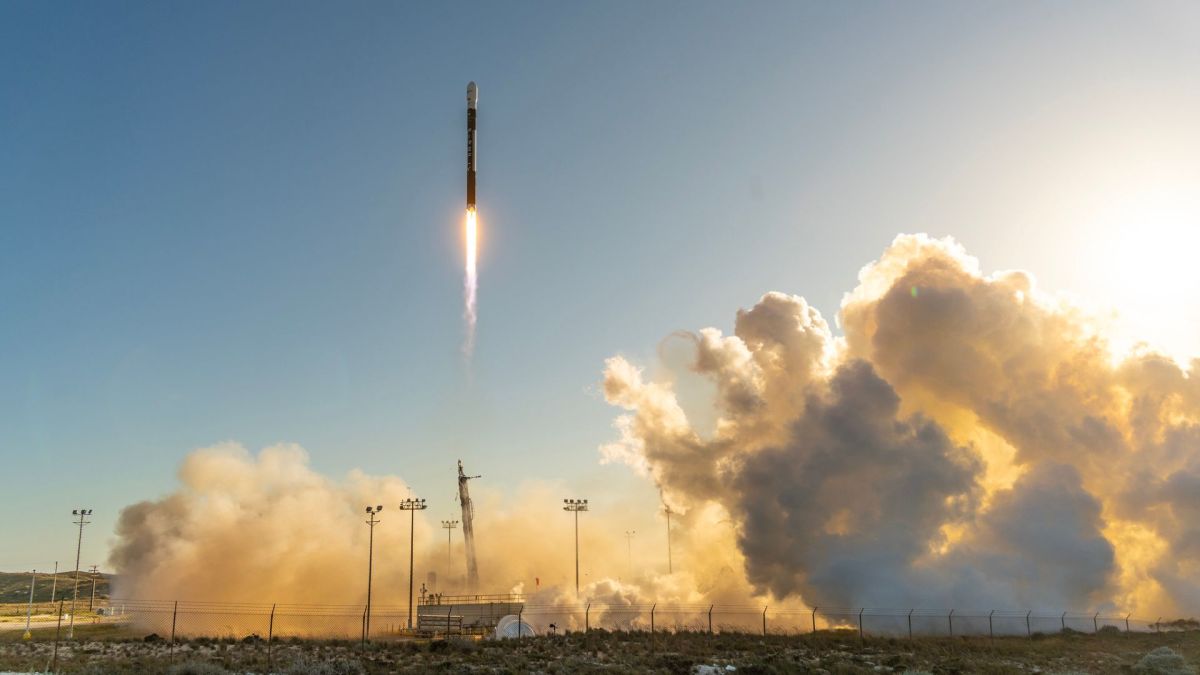
A startup called Reflect Orbital wants to launch thousands of mirror-bearing satellites to reflect sunlight onto Earth at night and "power solar farms after sunset, provide lighting for rescue workers and illuminate city streets, among other things," reports the New York Times. From the report: It is an idea seemingly out of a sci-fi movie, but the company, Reflect Orbital of Hawthorne, Calif., could soon receive permission to launch its first prototype satellite with a 60-foot-wide mirror. The company has applied to the Federal Communications Commission, which issues the licenses needed to deploy satellites. If the F.C.C. approves, the test satellite could get a ride into orbit as soon as this summer. The F.C.C.'s public comment period on the application closes on Monday. "We're trying to build something that could replace fossil fuels and really power everything," Ben Nowack, Reflect Orbital's chief executive, said in an interview. The company has raised more than $28 million from investors. [...] Reflect Orbital's first prototype, which will be roughly the size of a dorm fridge, is almost complete. Once in space, about 400 miles up, the test satellite would unfurl a square mirror nearly 60 feet wide. That would bounce sunlight to illuminate a circular patch about three miles wide on the Earth's surface. Someone looking up would see a dot in the sky about as bright as a full moon. Two more prototypes could follow within a year. By the end of 2028, Reflect Orbital hopes to launch 1,000 larger satellites, and 5,000 of them by 2030. The largest mirrors are planned to be nearly 180 feet wide, reflecting as much light as 100 full moons. The company said its goal was to deploy the full constellation of 50,000 satellites by 2035. How much does it cost to order sunlight at night? Mr. Nowack said the company would charge about $5,000 an hour for the light of one mirror if a customer signed an annual contract for 1,000 hours or more. Lighting for one-time events and emergencies, which might require numerous satellites and more effort to coordinate, would be more expensive. For solar farms, he envisions splitting revenue from the electricity generated by the additional hours of light.

Read more of this story at Slashdot.

  •  

New SETI Study: Why We Might Have Been Missing Alien Signals

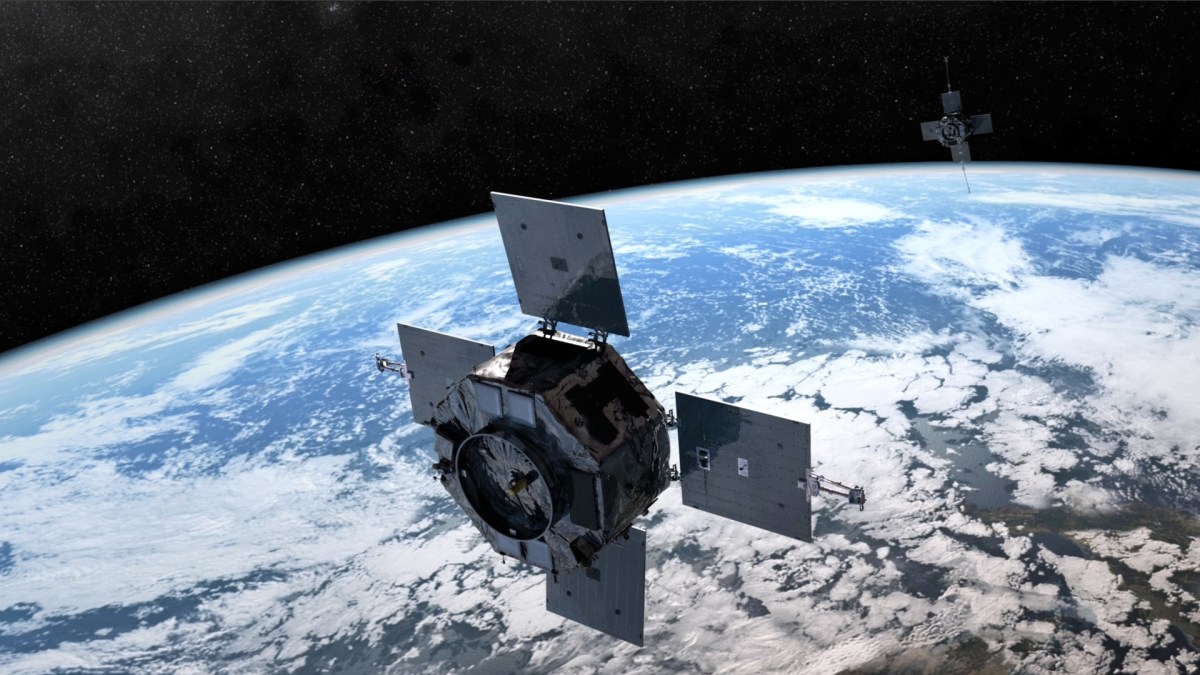
After decades of searching for extraterrestrial intelligence, the nonprofit SETI Foundation has an announcement. "A new study by researchers at the SETI Institute suggests stellar 'space weather' could make radio signals from extraterrestrial intelligence harder to detect." Stellar activity and plasma turbulence near a transmitting planet can broaden an otherwise ultra-narrow signal, spreading its power across more frequencies and making it more difficult to detect in traditional narrowband searches. For decades, many SETI experiments have focused on identifying spikes in frequency — signals unlikely to be produced by natural astrophysical processes. But the new research highlights an overlooked complication: even if an extraterrestrial transmitter produces a perfectly narrow signal, it may not remain narrow by the time it leaves its home system... "If a signal gets broadened by its own star's environment, it can slip below our detection thresholds, even if it's there, potentially helping explain some of the radio silence we've seen in technosignature searches," said Dr. Vishal Gajjar, Astronomer at the SETI Institute and lead author of the paper. The researchers created "a practical framework for estimating how much broadening could occur for different types of stars" — and accounting for space weather — by "using radio transmissions from spacecraft in our own solar system, then extrapolated to other stellar environments." The study's co-author (a SETI Institute research assistant) suggests this coud lead to better-targetted SETI searches. (M-dwarf stars — about 75% of stars in the Milky Way — actually have the highest likelihood that narrowband signals would get broadened before leaving their system...)

Read more of this story at Slashdot.

  •  
❌