Si vous suivez de près le monde du hardware PC, vous connaissez sans doute déjà la marque Thermal Grizzly. Fondée par Roman Hartung, plus connu sous son pseudo der8auer, elle est spécialisée dans le refroidissement avec des interfaces thermiques (pâtes thermiques et compagnie), mais aussi des waterb...
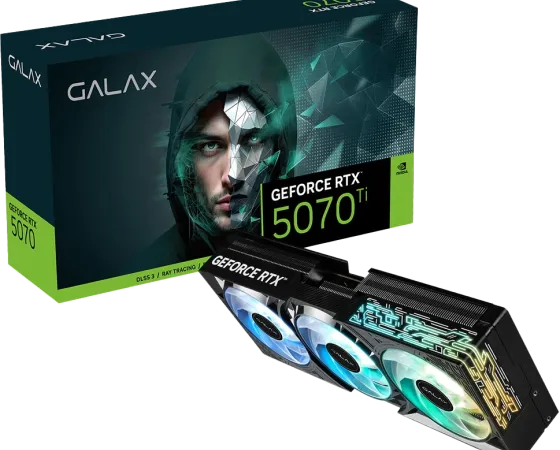
Les possesseurs de GeForce RTX 50 le savent bien : NVIDIA a été particulièrement strict quant à l'overclocking de la GDDR7 de ses cartes. Cet "offset" placé à + 3000 MHz, avec d'ailleurs des MHz virtuels comme on n'aime pas les voir puisque c'est en réalité + 375 MHz, est un couperet frustrant pour...
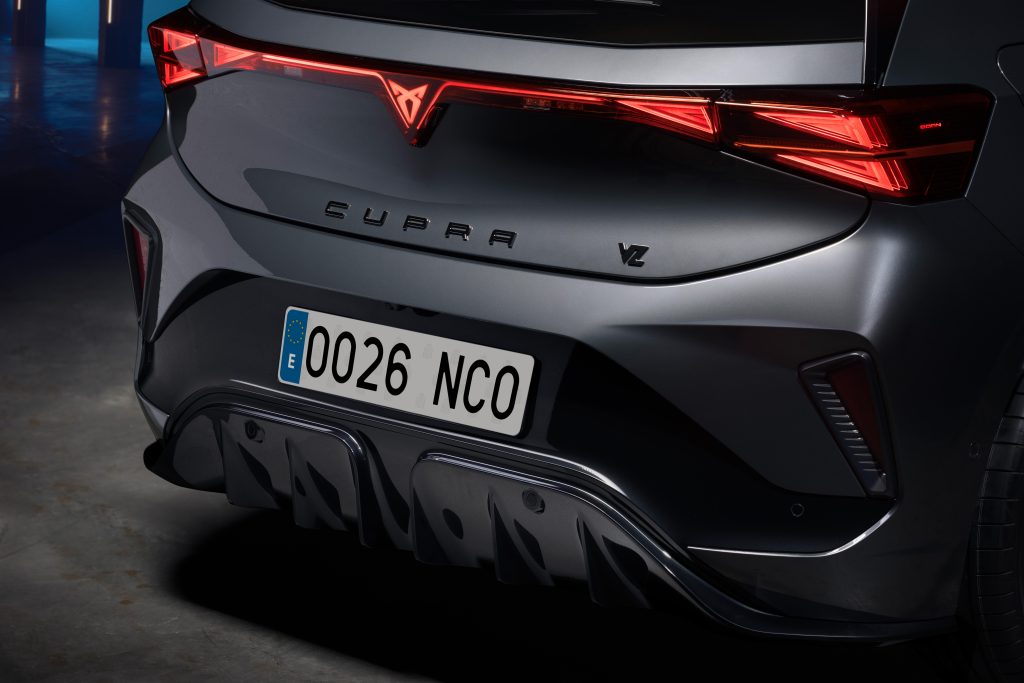
La nouvelle CUPRA Born arrive avec une mise à jour importante qui touche autant au design qu’à l’habitacle et à la technique, avec jusqu’à 240 kW 326 ch et environ 600 km d’autonomie annoncée. Produite à Zwickau à partir du deuxième trimestre 2026 et commercialisée à l’été 2026, elle repose toujours sur la plate forme MEB mais avec une gamme de motorisations simplifiée et une dotation technologique renforcée. Découvrez la en exclusivité dans notre reportage vidéo en cliquant sur lire la suite.
Un style encore plus affirmé
La Born est le premier modèle 100 pour cent électrique de CUPRA et occupe une place centrale dans la stratégie de la marque qui revendique plus d’un million de véhicules vendus en sept ans avec une gamme complète comprenant Leon Formentor Born Tavascan et Terramar. Dans cette logique la mise à jour de la Born doit consolider le rôle de compacte EV au caractère plus affirmé que la moyenne sur le marché européen où CUPRA se positionne comme un acteur anticonformiste. Elle s’inscrit aussi dans une chronologie qui verra arriver la Raval en 2026 interprétation radicale de la citadine électrique appelée à élargir encore l’offre.
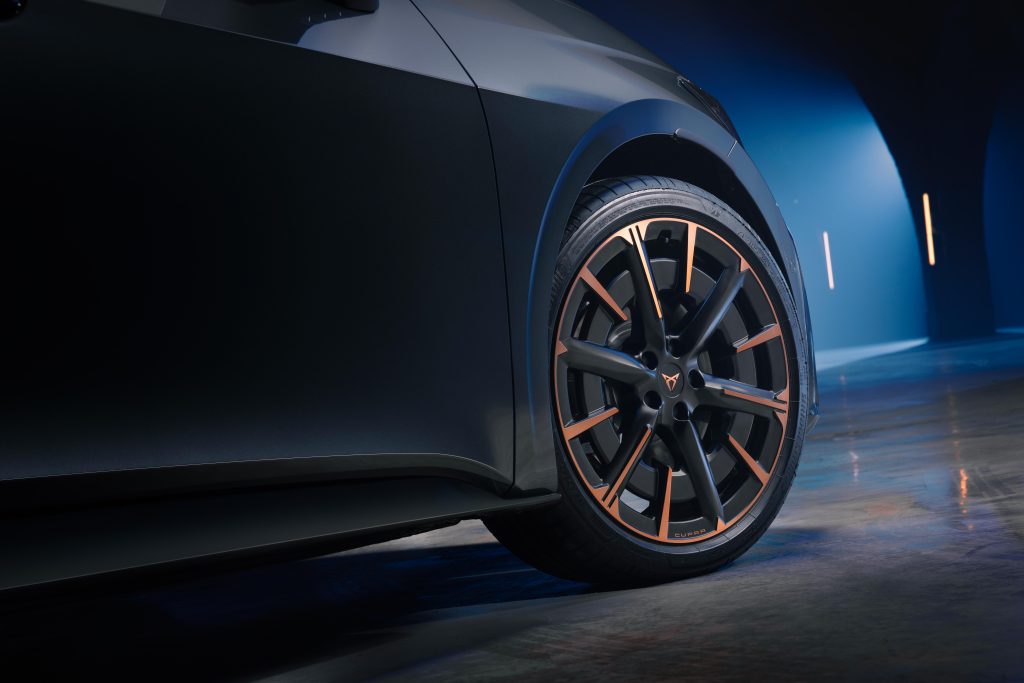
La Born adopte désormais une face avant dite shark nose avec bouclier redessiné et nouveaux projecteurs Matrix LED triangulaires qui signent la voiture de jour comme de nuit. À l’arrière le bouclier et le hayon évoluent le diffuseur gagne en présence et le logo CUPRA devient lumineux intégré dans une signature arrière en relief avec effet 3D et animation d’accueil coordonnée avec l’avant. Les poignées de portes avant et arrière sont désormais éclairées et cinq types de jantes sont proposés dont de nouvelles 19 pouces et des 20 pouces avec la Firestorm cuivrée montables en 235 mm de large pour optimiser adhérence et efficience aérodynamique. La palette de couleurs est complétée par le Gris Timanfaya qui rejoint le Blanc Nevada le Noir Minuit le Bleu Aurore le Gris Brume et le Vert Esterel pour renforcer les possibilités de personnalisation.
Un intérieur plus fonctionnel et mieux équipé
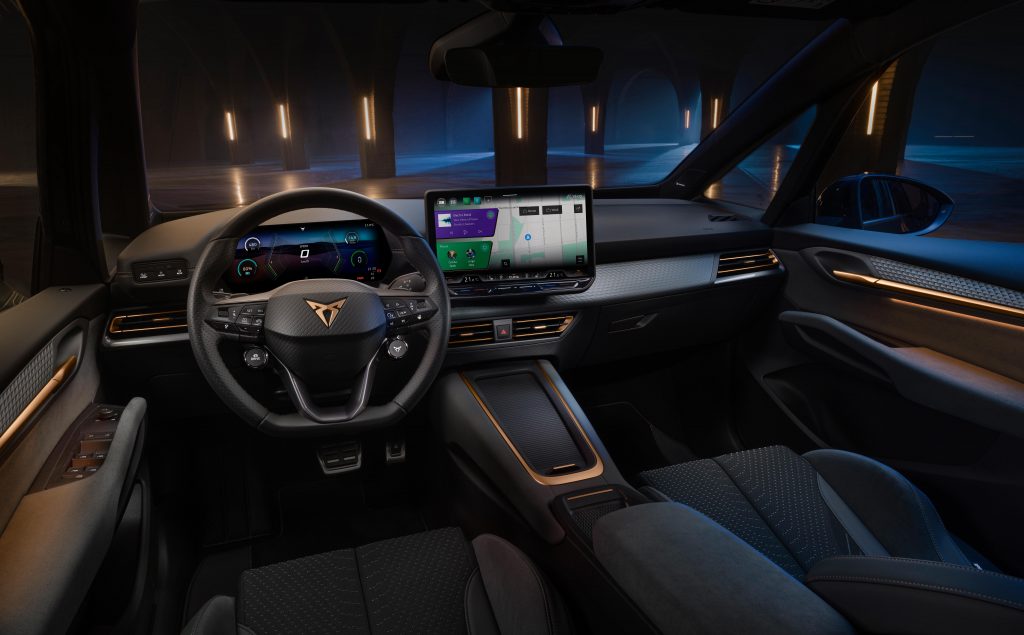
À bord le combiné numérique passe à 10,25 pouces contre 5,3 auparavant en association avec un écran central de 12,9 pouces doté d’un nouveau système d’exploitation Android et d’une barre tactile rétro éclairée. Le volant redessiné abandonne les commandes sensitives pour des boutons physiques plus intuitifs avec des satellites réservés aux modes de conduite et des palettes de régénération sur les versions 170 et 240 kW. Les sièges baquets de série ou CUPBucket sur VZ les panneaux de portes et les inserts paramétriques 3D ont été revus tandis que l’éclairage d’ambiance se prolonge sur les portes et le tableau de bord en s’adaptant au mode choisi.
CUPRA insiste aussi sur les matériaux avec un tableau de bord moulé intégrant jusqu’à 75 pour cent de matières recyclées et des tissus utilisant du fil SEAQUAL issu de plastiques marins ou du Dinamica contenant 73 pour cent de matière recyclée pour les zones centrales des sièges avant et arrière. La dotation en équipements comprend une clé numérique sur smartphone avec partage possible jusqu’à cinq clés une recharge filaire jusqu’à 90 W en USB C une recharge sans fil 15 W refroidie à l’avant et deux prises 45 W à l’arrière. Un système audio Sennheiser à 10 haut parleurs avec technologie Contrabass est proposé ainsi qu’une signature sonore intérieure spécifique en modes CUPRA et Performance et une fonction Vehicle to Load capable d’alimenter des appareils externes ainsi qu’un crochet d’attelage pour porte vélos.
Trois versions, des ADAS dernier cri
La gamme technique se structure autour de trois versions 140 kW 190 ch avec batterie de 58 kWh pour environ 450 km d’autonomie 170 kW 231 ch avec batterie de 79 kWh et une VZ à 240 kW 326 ch avec la même batterie de 79 kWh ces deux dernières visant environ 600 km. La Born VZ annonce 545 Nm un 0 à 100 km h en 5,6 s et 200 km h en vitesse maximale avec une recharge en courant alternatif jusqu’à 11 kW et en courant continu jusqu’à 185 kW selon les déclinaisons. Le châssis combine direction progressive ESC Sport et amortissement piloté DCC offrant jusqu’à 15 niveaux de réglage associés à cinq modes Range Comfort Performance CUPRA et Individual tandis que le mode One Pedal permet de gérer accélération et décélération avec la seule pédale d’accélérateur y compris jusqu’à l’arrêt complet en usage urbain. Un launch control réservé aux versions VZ et Endurance gère la délivrance du couple pour optimiser les départs arrêtés.
Sur le plan des aides à la conduite la Born reçoit le Travel Assist 3,0 qui exploite des données basées sur le cloud pour gérer ralentisseurs zones de feux passages piétons et vitesses en courbe en coordination avec le régulateur de vitesse adaptatif et le maintien de voie. Un Crossroad Assist surveille les intersections et peut déclencher un freinage automatique en cas de risque de collision et le Front Assist gère plusieurs niveaux d’alerte avec détection jusqu’à deux véhicules en amont avant un freinage d’urgence si nécessaire. Le système Precrash prépare le véhicule en cas de choc imminent en agissant sur les ceintures les vitres le toit ouvrant et les feux de détresse avec désormais une détection intégrant l’arrière tandis que les phares Matrix LED adaptent le faisceau pour préserver la visibilité sans éblouir les autres usagers complétés par des fonctions comme Side and Exit Assist aide au stationnement intelligent et caméra vue panoramique.
À découvrir sur la route
Cette évolution de la CUPRA Born met en avant un style extérieur plus marqué un habitacle modernisé et mieux fini et une offre technique élargie avec une version VZ nettement plus puissante tout en faisant progresser l’arsenal d’aides à la conduite. Reste à mesurer sur route l’effet de ces changements mais sur le papier la compacte électrique de CUPRA corrige plusieurs points faibles de la précédente mouture et renforce sa position sur le segment.
After decades of searching for extraterrestrial intelligence, the nonprofit SETI Foundation has an announcement. "A new study by researchers at the SETI Institute suggests stellar 'space weather' could make radio signals from extraterrestrial intelligence harder to detect."
Stellar activity and plasma turbulence near a transmitting planet can broaden an otherwise ultra-narrow signal, spreading its power across more frequencies and making it more difficult to detect in traditional narrowband searches. For decades, many SETI experiments have focused on identifying spikes in frequency — signals unlikely to be produced by natural astrophysical processes. But the new research highlights an overlooked complication: even if an extraterrestrial transmitter produces a perfectly narrow signal, it may not remain narrow by the time it leaves its home system... "If a signal gets broadened by its own star's environment, it can slip below our detection thresholds, even if it's there, potentially helping explain some of the radio silence we've seen in technosignature searches," said Dr. Vishal Gajjar, Astronomer at the SETI Institute and lead author of the paper.
The researchers created "a practical framework for estimating how much broadening could occur for different types of stars" — and accounting for space weather — by "using radio transmissions from spacecraft in our own solar system, then extrapolated to other stellar environments."
The study's co-author (a SETI Institute research assistant) suggests this coud lead to better-targetted SETI searches. (M-dwarf stars — about 75% of stars in the Milky Way — actually have the highest likelihood that narrowband signals would get broadened before leaving their system...)
En novembre 2025, lors de l'annonce de la Steam Machine et des nouveaux équipements Steam Hardware, le message de Valve était clair : lancement "début 2026", c'était écrit noir sur blanc. Début février 2026, la firme nous prenait un peu pour des jambons en écrivant "notre but de les lancer durant la...
System76 isn't the only one criticizing new age-verification laws. The blog 9to5Linux published an "informal" look at other discussions in various Linux communities.
Earlier this week, Ubuntu developer Aaron Rainbolt proposed on the Ubuntu mailing list an optional D-Bus interface (org.freedesktop.AgeVerification1) that can be implemented by arbitrary applications as a distro sees fit, but Canonical responded that the company does not yet have a solution to announce for age declaration in Ubuntu. "Canonical is aware of the legislation and is reviewing it internally with legal counsel, but there are currently no concrete plans on how, or even whether, Ubuntu will change in response," said Jon Seager, VP Engineering at Canonical. "The recent mailing list post is an informal conversation among Ubuntu community members, not an announcement. While the discussion contains potentially useful ideas, none have been adopted or committed to by Canonical."
Similar talks are underway in the Fedora and Linux Mint communities about this issue in case the California Digital Age Assurance Act law and similar laws from other states and countries are to be enforced. At the same time, other OS developers, like MidnightBSD, have decided to exclude California from desktop use entirely.
Slashdot contacted Hayley Tsukayama, Director of State Affairs at EFF, who says their organization "has long warned against age-gating the internet. Such mandates strike at the foundation of the free and open internet."
And there's another problem. "Many of these mandates imagine technology that does not currently exist."
Such poorly thought-out mandates, in truth, cannot achieve the purported goal of age verification. Often, they are easy to circumvent and many also expose consumers to real data breach risk.
These burdens fall particularly heavily on developers who aren't at large, well-resourced companies, such as those developing open-source software. Not recognizing the diversity of software development when thinking about liability in these proposals effectively limits software choices — and at a time when computational power is being rapidly concentrated in the hands of the few. That harms users' and developers' right to free expression, their digital liberties, privacy, and ability to create and use open platforms...
Rather than creating age gates, a well-crafted privacy law that empowers all of us — young people and adults alike — to control how our data is collected and used would be a crucial step in the right direction.
Du côté d'Apple, il semblerait qu'on ait décidé de ne pas spécialement communiquer sur l'impact de la hausse des couts de la RAM. Cela ne veut évidemment pas dire qu'il n'y en a pas, mais juste que le consommateur va se retrouver du jour au lendemain face aux décisions prises par la société. Et la p...
Colliding black holes were detected through spacetime ripples for the first time in 2015 by the Laser Interferometer Gravitational-Wave Observatory (LIGO), notes Space.com:
Since then, LIGO and its partner gravitational wave detectors Virgo in Italy and KAGRA (Kamioka Gravitational Wave Detector) in Japan have detected a multitude of gravitational waves from colliding black holes, merging neutron stars, and even the odd "mixed merger" between a black hole and a neutron star... During the first three observing runs of LIGO, Virgo and KAGRA, scientists had only "heard" 90 potential gravitational wave sources.
But now they've published new data from the LIGO-Virgo-KAGRA (LVK) Collaboration that includes 128 more gravitatational wave sources — some incredibly distant:
[Gravitational-Wave Transient Catalog-4.0, or GWTC-4] was collected during the fourth observational run of these gravitational wave detectors, which was conducted between May 2023 and Jan. 2024... Excitingly, GWTC-4 could technically have been even larger, as around 170 other gravitational wave detections made by LIGO, Virgo and KAGRA haven't yet made their way into the catalog.
One aspect of GWTC-4 that really stands out is the variety of events that created these signals. Within this catalog are gravitational waves from mergers between the heaviest black hole binaries yet, each about 130 times as massive as the sun, lopsided mergers between black holes with seriously mismatched masses, and black holes that are spinning at incredible speeds of around 40% the speed of light. In these cases, scientists think the extreme characteristics of the black holes involved in these mergers are the result of prior collisions, providing evidence of merger chains that explain how some black holes grow to masses billions of times that of the sun... GWTC-4 also includes two new mixed mergers involving black holes and neutron stars.
[LVK member Daniel Williams, of the University of Glasgow in the U.K., said in their statement] "We are really pushing the edges, and are seeing things that are more massive, spinning faster, and are more astrophysically interesting and unusual." The catalog also demonstrates just how sensitive the LVK detectors have become. Some of the neutron star mergers occurred up to 1 billion light-years away, while some of the black hole mergers occurred up to 10 billion light-years away.
Einstein's theory of general relativity can be tested with these detections, and "So far, the theory is passing all our tests," says LVK member Aaron Zimmerman, of the University of Texas at Austin. "But we're also learning that we have to make even more accurate predictions to keep up with all the data the universe is giving us." And LVK member Rachel Gray, a lecturer at the University of Glasgow, says "every merging black hole gives us a measurement of the Hubble constant, and by combining all of the gravitational wave sources together, we can vastly improve how accurate this measurement is."
In short, says LVK member Lucy Thomas of the California Institute of Technology (Caltech), "Each new gravitational-wave detection allows us to unlock another piece of the universe's puzzle in ways we couldn't just a decade ago."
Within the last month two U.S> judges have effectively declared AI bots are not human, writes Los Angeles Times columnist Michael Hiltzik:
On Monday, the Supreme Court declined to take up a lawsuit in which artist and computer scientist Stephen Thaler tried to copyright an artwork that he acknowledged had been created by an AI bot of his own invention. That left in place a ruling last year by the District of Columbia Court of Appeals, which held that art created by non-humans can't be copyrighted... [Judge Patricia A. Millett] cited longstanding regulations of the Copyright Office requiring that "for a work to be copyrightable, it must owe its origin to a human being"... She rejected Thaler's argument, as had the federal trial judge who first heard the case, that the Copyright Office's insistence that the author of a work must be human was unconstitutional. The Supreme Court evidently agreed...
[Another AI-related case] involved one Bradley Heppner, who was indicted by a federal grand jury for allegedly looting $150 million from a financial services company he chaired. Heppner pleaded innocent and was released on $25-million bail. The case is pending.... Knowing that an indictment was in the offing, Heppner had consulted Claude for help on a defense strategy. His lawyers asserted that those exchanges, which were set forth in written memos, were tantamount to consultations with Heppner's lawyers; therefore, his lawyers said, they were confidential according to attorney-client privilege and couldn't be used against Heppner in court. (They also cited the related attorney work product doctrine, which grants confidentiality to lawyers' notes and other similar material.) That was a nontrivial point. Heppner had given Claude information he had learned from his lawyers, and shared Claude's responses with his lawyers.
[Federal Judge Jed S.] Rakoff made short work of this argument. First, he ruled, the AI documents weren't communications between Heppner and his attorneys, since Claude isn't an attorney... Second, he wrote, the exchanges between Heppner and Claude weren't confidential. In its terms of use, Anthropic claims the right to collect both a user's queries and Claude's responses, use them to "train" Claude, and disclose them to others. Finally, he wasn't asking Claude for legal advice, but for information he could pass on to his own lawyers, or not. Indeed, when prosecutors tested Claude by asking whether it could give legal advice, the bot advised them to "consult with a qualified attorney."
The columnist agrees AI-generated results shouldn't receive the same protections as human-generated material. "The AI bots are machines, and portraying them as though they're thinking creatures like artists or attorneys doesn't change that, and shouldn't."
He also seems to think their output is at best second-hand regurgitation. "Everything an AI bot spews out is, at more than a fundamental level, the product of human creativity."
CNN reports on a company called Automated Architecture (AUAR) which makes "portable" micro-factories that use a robotic arm to produce wooden framing for houses (the walls, floors and roofs):
Co-founder Mollie Claypool says the micro-factories will be able to produce the panels quicker, cheaper and more precisely than a timber framing crew, freeing up carpenters to focus on the construction of the building... The micro-factory fits into a shipping container which is sent to the building site along with an operator. Inside the factory, a robotic arm measures, cuts and nails the timber into panels up to 22 feet (6.7 meters) long, keeping gaps for windows and doors, and drilling holes for the wiring and plumbing. The contractor then fits the panels by hand.
One micro-factory can produce the panels for a typical house in about a day — a process which, according to Claypool, would take a normal timber framing crew four weeks — and is able to produce framing for buildings up to seven stories tall... She says their service is 30% cheaper than a standard timber framing crew, and up to 15% cheaper than buying panels from large factories and shipping them to a site... She adds that the precision of the micro-factories means that the panels fit together tightly, reducing the heat loss of the final home, making them more energy efficient.
AUAR currently has three micro-factories operating in the US and EU, with five more set to be delivered this year... AUAR has raised £7.7 million ($10.3 million) to date, and is expanding into the US, where a lack of housing and preference for using wood makes it a large potential market.
There's other companies producing wooden or modular housing components, the article points out. But despite the automation, the company's co-founder insists to CNN that "Automation isn't replacing jobs. Automation is filling the gap."
The UK's Construction Industry Training Board found that the country will need 250,000 more workers by 2028 to meet building targets but in 2023, more people left the industry than joined.

 Connexion
 Si vous suivez de près le monde du hardware PC, vous connaissez sans doute déjà la marque Thermal Grizzly. Fondée par Roman Hartung, plus connu sous son pseudo der8auer, elle est spécialisée dans le refroidissement avec des interfaces thermiques (pâtes thermiques et compagnie), mais aussi des waterb...
 Les possesseurs de GeForce RTX 50 le savent bien : NVIDIA a été particulièrement strict quant à l'overclocking de la GDDR7 de ses cartes. Cet "offset" placé à + 3000 MHz, avec d'ailleurs des MHz virtuels comme on n'aime pas les voir puisque c'est en réalité + 375 MHz, est un couperet frustrant pour...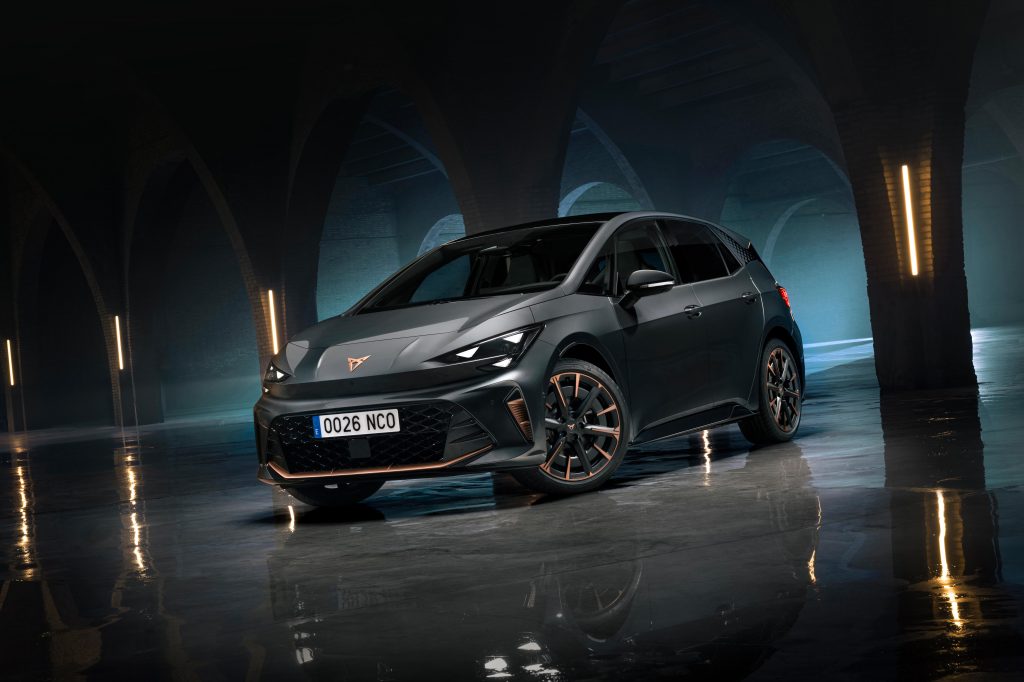


 En novembre 2025, lors de l'annonce de la Steam Machine et des nouveaux équipements Steam Hardware, le message de Valve était clair : lancement "début 2026", c'était écrit noir sur blanc. Début février 2026, la firme nous prenait un peu pour des jambons en écrivant "notre but de les lancer durant la...
 Du côté d'Apple, il semblerait qu'on ait décidé de ne pas spécialement communiquer sur l'impact de la hausse des couts de la RAM. Cela ne veut évidemment pas dire qu'il n'y en a pas, mais juste que le consommateur va se retrouver du jour au lendemain face aux décisions prises par la société. Et la p...