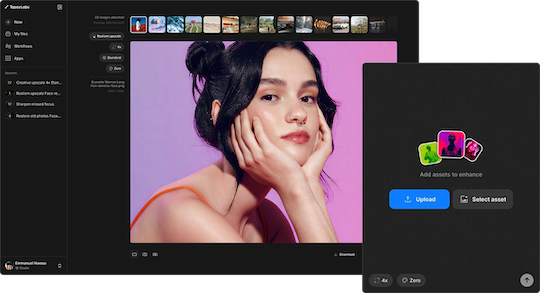
The Topaz May update is now available with a new SDR-to-HDR video upscale model, expanded access to recently released models on both desktop (Gigapixel) and web (Topaz Image Web), and a new streamlined experience for using video enhancement models in Adobe Premiere. This is the first time the latest image models, like Wonder 3 and Denoise Max, are available in a web browser via an all-new web app. Topaz also started a new sale (details at the bottom of this post).
Here are the details:
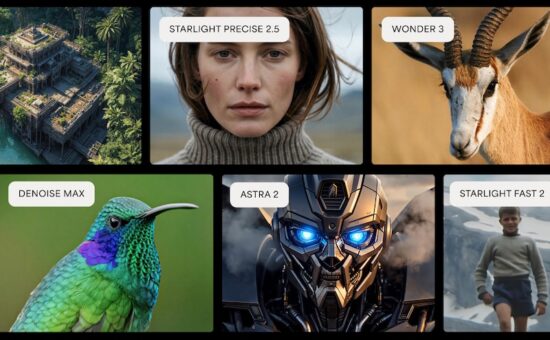
Recently released models, now available in Gigapixel.
Three of our newest and most popular models are now fully integrated into Topaz Gigapixel:
Wonder 2
Wonder 2 is our newest image enhancement model that denoises, sharpens, and upscales in a single step, with no sliders or tuning required. It is a giant, powerful model that now runs locally thanks to our proprietary NeuroStream technology, which dramatically reduces VRAM usage and allows powerful AI to run on standard creator hardware.
Wonder 3
Wonder 3 is a powerful, one-click sharpen, upscale, and denoise model. Unlike Wonder 2—which was built for ultra-low-resolution upscaling—Wonder 3 handles both high-quality inputs and heavily degraded images with consistent results.
High Fidelity 3
Built for technical precision. Optimized for clean, noise-free upscaling of high-fidelity images where accuracy matters most—especially for RAW files.
All your favorite Topaz image models, now in the browser.
Bring the power of Topaz image enhancement directly to your browser—no download required. Upload your images, choose from workflows like Autopilot, Creative Upscale, Photo Restoration, Sharpen, and more, then process everything in just a few clicks. Batch processing and side-by-side comparison make it easy to review your results, and all of your favorite Topaz image models are available in one place for the same high-quality enhancements you know from our desktop apps.
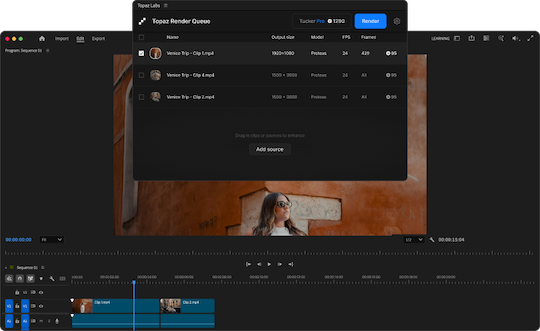
Topaz Video, now inside Premiere.
Topaz Labs for Premiere brings Topaz Video enhancement directly into your Premiere workflow. Process footage using cloud rendering without ever leaving your timeline—no export/import round trips needed.
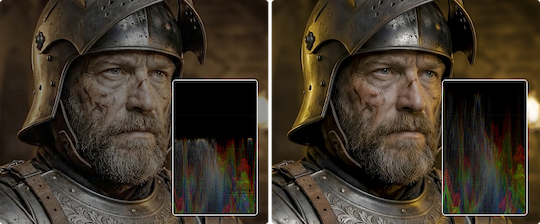
Hyperion 2 – SDR to HDR Model
Unlock HDR depth from SDR footage.
Hyperion 2 converts standard dynamic range video (SDR) to high dynamic range (HDR) by expanding luminance, bit depth, and contrast. It supports both PQ (cinematic/mastering) and HLG (broadcast) transfer functions, so it fits into a wide range of modern HDR pipelines. Hyperion 2 is now available in Topaz Video, and will be coming to Astra next week.

30% off all monthly plans (applied automatically in cart):
- Studio — $69/mo → $48/mo
- Studio Pro — $75/mo → $52/mo
- Topaz Video — $59/mo → $41/mo
- Topaz Video Pro — $59/mo → $47/mo
- Topaz Gigapixel — $29/mo → $20/mo
- Topaz Gigapixel Pro — $50/mo → $35/mo
- Topaz Photo — $39/mo → $27/mo
- Topaz Photo Pro — $58/mo → $40/mo
- Bloom — $39/mo → $27/mo
- Bloom Pro — $49/mo → $34/mo
50% off web plans (applied automatically in cart)
- Astra (400 credits/mo) — $39/mo → $19/mo
- Topaz Image Web Personal — $19/mo → $9/mo
- Topaz Image Web Pro — $59/mo → $29/mo
The post Topaz May update is now available with a new 50% off flash sale appeared first on Photo Rumors.

 Connexion