Vue lecture

For All Mankind rempile pour un énorme succès avec son spin-off soviétique

La plateforme à la pomme passe à la vitesse supérieure. Réputée pour ses productions soignées mais isolées, Apple TV cède à son tour à la fièvre des franchises pour fidéliser ses abonnés en ce milieu d'année 2026. Pour ouvrir le bal, le streamer a choisi de miser sur son plus ancien fleuron de science-fiction, For All Mankind, qui avec sa saison 5 devient top 1 en termes de succès sur la plateforme.

  •  

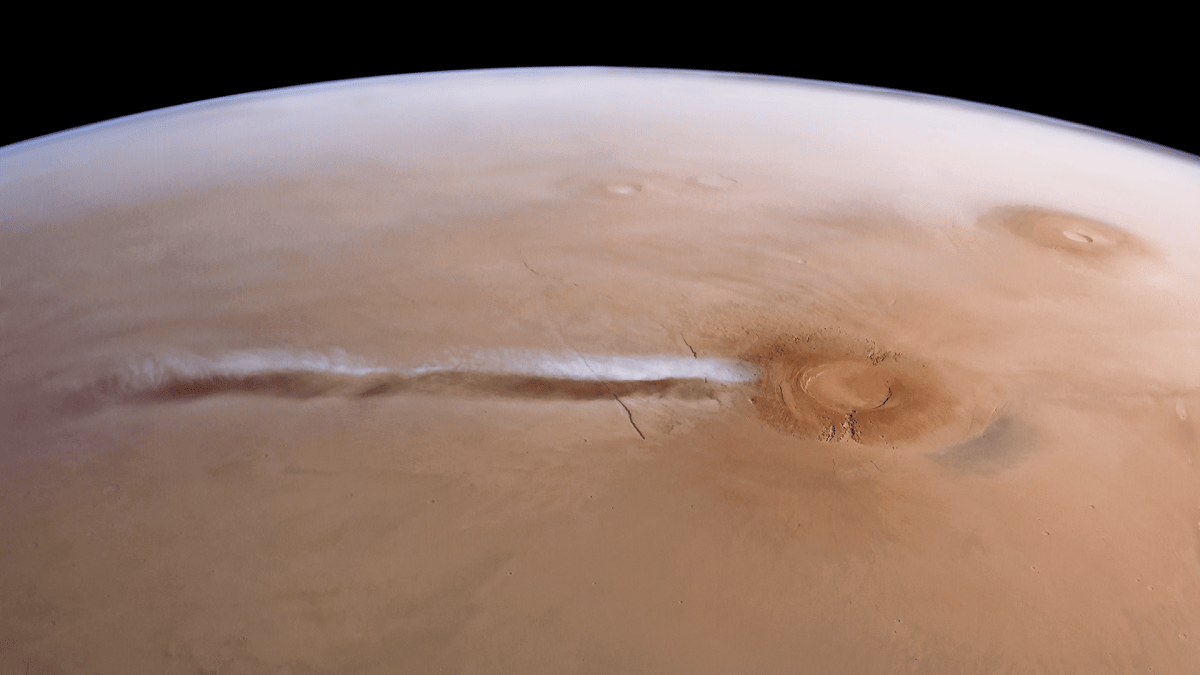
Mars Minerals Reveals an Ancient Ocean's Potential For Life - and a Possible Way to Make Oxygen

Researchers have identified a ring of minerals around the largest basin in the northern hemisphere of Mars (which past research suggests held a large body of water). Phys.org says the research provides new clues on when life may have been possible on Mars — and how future astronauts could make oxygen: Manganese oxides and hydroxides (collectively written as manganese (hydr)oxides) can act as geological proxies for past oceans... The team involved in the new study analyzed short-wave infrared (SWIR) data from China's Zhurong rover, ESA's OMEGA orbiter and NASA's CRISM orbiter to identify and quantify manganese (hydr)oxides... The team says the placement of the ring indicates that the ring formed during the Hesperian epoch — a geologic period on Mars that occurred roughly 3.7 to 3.0 billion years ago. The Hesperian epoch marked the transition from the warmer, wetter, and volcanically active Martian world to a cold, dry, and dusty planet... [when "the potential for further prebiotic evolution on the surface was significantly reduced."] "This yields a final estimated duration of 0.8-1.5 million years for the presence of stable aqueous conditions in Utopia Planitia. This timescale significantly exceeds what is typically expected for transient surface water activity on Mars, suggesting that Utopia Planitia hosted a long-lived and evolving aquatic system during the Hesperian epoch, rather than a short-lived or rapidly evaporating water body," write the study authors. The researchers say that although this does not provide direct evidence of early life, it does suggest that Mars may have provided an environment conducive to initiating early forms of life. The timeline of the ocean matches the minimal timescale required for prebiotic chemistry, and also temporally overlaps with the period on Earth in which scientists believe the earliest forms of life first arose, approximately 3.4 billion years ago. The study authors also note that the conditions for life may have also extended into the next Amazonian period on Mars. They write, "If MnOx formation or redistribution occurred during the Amazonian, this would suggest that Mars may have maintained episodic or localized liquid water environments significantly later than traditionally assumed." Interestingly, the authors also bring up the potential for future human habitation on Mars. They suggest that oxygen can be produced by using the manganese (hydr)oxides for water-splitting reactions that generate oxygen through photocatalysis, potentially supporting human activities or even terraforming. Of course, this would be a long way off.

Read more of this story at Slashdot.
  •  

Mars en croissant : la magnifique et surprenante photo capturée par la sonde Psyché

croissant mars

En route vers son mystérieux astéroïde de métal, la sonde Psyché a profité d'un survol de Mars le 15 mai 2026 pour s'offrir un coup d'accélérateur cosmique. Un « vol rase-motte » spectaculaire qui lui a aussi permis d'immortaliser la planète rouge sous un angle rare : un fin croissant lumineux sculpté par les poussières martiennes.

  •  

En plein vol rase-motte, la sonde Psyché de la NASA immortalise une vue inédite de Mars

croissant mars

En route vers son mystérieux astéroïde de métal, la sonde Psyché a profité d'un survol de Mars le 15 mai 2026 pour s'offrir un coup d'accélérateur cosmique. Un « vol rase-motte » spectaculaire qui lui a aussi permis d'immortaliser la planète rouge sous un angle rare : un fin croissant lumineux sculpté par les poussières martiennes.

  •  

New Lithium-Plasma Engine Passes Key Mars Propulsion Test

NASA engineers have tested a next-generation lithium-plasma electric propulsion system that reached 120 kilowatts, a new U.S. record and about 25 times the power of the electric thrusters on NASA's Psyche spacecraft. "Designing and building these thrusters over the last couple of years has been a long lead-up to this first test," said James Polk, who is a senior research scientist at NASA Jet Propulsion Laboratory. "It's a huge moment for us because we not only showed the thruster works, but we also hit the power levels we were targeting. And we know we have a good testbed to begin addressing the challenges to scaling up." Universe Today reports: While 120 kilowatts is a new record, NASA estimates it a future human mission to Mars will require 2 to 4 megawatts of power consisting of several thrusters and requiring more than 23,000 hours (958 days/2.6 years) of operation. To accomplish this, the thrusters would have to withstand more than 2,800 degrees Celsius (5,000 degrees Fahrenheit), which the thrusters achieved during testing. The reason for the extended operation is due to the estimated time of an entire human mission to Mars, which is estimated to be approximately 2.6 years. This is because the launch window to Mars only opens once every two years due to the orbital behaviors of both planets. While no mission has ever returned from the Red Planet, this same launch window works from Mars to Earth, too. When launched within this window, robotic spacecraft have traditionally taken approximately 6-7 months to reach Mars. However, a human mission would require a much larger spacecraft to accommodate the astronauts, food, fuel, water, and other mission-essential items. For the approximate 2.6-year mission, this would entail approximately 6-9 months traveling to Mars, followed by approximately 18 months on the surface of Mars until the next launch window opens, then another approximate 6-9 months back to Earth. However, having much less fuel due to the electric propulsion system could potentially alter this timeframe.

Read more of this story at Slashdot.
  •  

Le propulseur magnétoplasmadynamique, le moteur futuriste que la NASA vient d’allumer pour de vrai

MPD

Pour expédier des astronautes vers Mars, la NASA mise sur un moteur digne de la science-fiction. L'agence spatiale a testé un propulseur électromagnétique au lithium d'une puissance de 120 kilowatts. Une avancée technologique qui concrétise le virage nucléaire américain pour l'exploration du Système solaire.

  •  

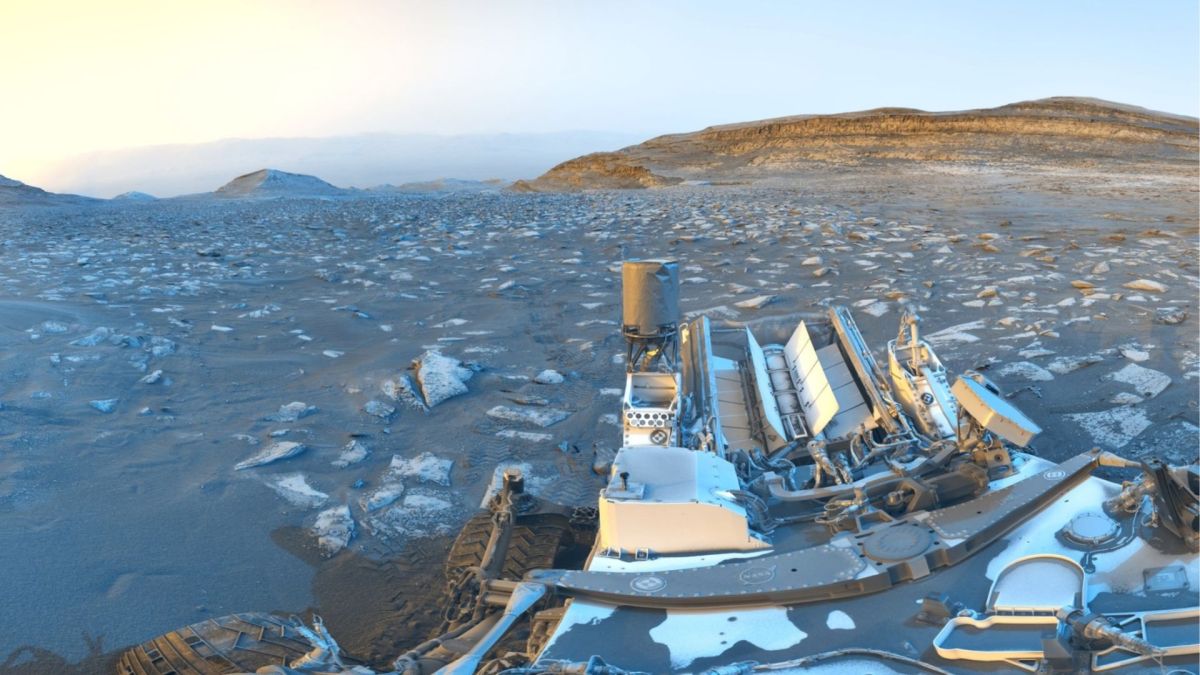
Mars Rover Detects Never-Before-Seen Organic Compounds In New Experiment

NASA's Curiosity rover has identified a diverse set of organic molecules on Mars, including a nitrogen-bearing compound similar in structure to DNA precursors. The finding strengthens the case that ancient organic material can survive in the Martian subsurface, though it does not prove past life because the compounds could also come from geology or meteorites. Phys.org reports: The study was led by Amy Williams, Ph.D., a professor of geological sciences at the University of Florida and a scientist on the Curiosity and Perseverance Mars rover missions. Curiosity landed on Mars in 2012 to find evidence that ancient Mars had conditions that could support microbial life billions of years ago; the Perseverance rover, which landed in 2021, was sent to look for signs of any ancient life that might have formed. Among the 20-plus chemicals identified by the experiment, Curiosity spotted a nitrogen-bearing molecule with a structure similar to DNA precursors -- a chemical never before spotted on Mars. The rover also identified benzothiophene, a large, double-ringed, sulfurous chemical often delivered to planets by meteorites. "The same stuff that rained down on Mars from meteorites is what rained down on Earth, and it probably provided the building blocks for life as we know it on our planet," Williams said. The findings have been published in the journal Nature Communications.

Read more of this story at Slashdot.

  •  

ExoMars 2028 : sauvée de la malédiction, la mission européenne s’envolera vers Mars sur un Falcon Heavy

Falcon Heavy

Longtemps considérée comme maudite, la mission européenne ExoMars voit enfin son horizon s’éclaircir. Épaulé par la NASA, le rover Rosalind Franklin s’envolera fin 2028 à bord du rare et surpuissant Falcon Heavy de SpaceX, prêt à traquer d'anciennes traces de vie sous le sol martien.

  •  
❌