An Anthropic engineering manager says he has stopped using traditional coding interviews because AI can now outperform candidates on the kinds of programming challenges they typically contain. "There's no more point in giving you a little React challenge than there is in quizzing people about assembly; Claude is now better at both," said Felix Rieseberg in a blog post. "Our most impactful builders are successful regardless of how good they are at these tests." The Register reports: "I don't think the coding interview is going to come back," said Rieseberg. "It's easy to get sentimental given how many copies of 'Algorithms and Data Structures' were bought in hopes of unlocking good jobs and a better future -- or how the death of the coding interview is another milestone in software engineering reaching a new level of abstraction."
At the same time, he's not certain what will replace it. "I'm probably not the only manager trying to figure out how to interview for people who build well with AI," Rieseberg wrote. "I haven't quite gotten there yet -- but I'm scanning resumes and portfolios for little prototypes that exhibit taste, empathy, and principled thinking. If you have figured out something better, I'd love to hear how."
In a response posted to social media, Jaana Dogan, principal engineer at Google, said: "I'm not doing a ton of coding interviews nowadays but I'd be interested to interview how people use coding agents," she wrote. "That itself gives me more signals about candidates' coding skills."
"We are not seeing tech companies abandon skills assessments widely across the industry -- at least not yet," added Nicole Bachaud, labor economist at ZipRecruiter. "In fact, based on our October 2026 Employer Survey of 1,500 employers, we see the tech industry (Information sector specifically) is actually the most likely to test for skills, with 62.5 percent of employers requiring formal skill tests on initial applications."
"The change at Anthropic might be reflecting a shift away from technical skills towards more human, soft skills," said Bachaud. "As AI becomes fully capable of writing code, tech employers may be pivoting away from rote technical testing and heavily toward human-centric soft skills." She argues that while AI may be able to code well, it can't replace critical thinking. "A staggering 61.5 percent of Information employers now report that 'critical thinking' is a primary skill lacking in today's candidate pool," she said.
An anonymous reader quotes a report from TechCrunch: Former Yahoo CEO and early Google engineer Marissa Mayer is catching a lot of flak for how she uses AI. In an interview about her new app Dazzle, an AI assistant that learns from your camera roll, Mayer poses what she believes is an impressive flex for the product: It helped her come up with three bullet points about her 10-year-old daughter for a birthday presentation at school, describing her as "empathetic, creative, and an animal lover."
It's a vague description, like a generic horoscope -- it could probably describe a lot of 10-year-olds. Some onlookers, like progressive activist Leah Greenberg, marveled that "the fact that Marissa Mayer would voluntarily disclose this to a reporter is a pretty good demonstration of how deeply the culture of Silicon Valley has diverged from the rest of humanity." [...] After publication, Mayer defended herself in a long X post. She claims she was not relying on Dazzle to explain her child to her, but rather, she was testing what her prototype could do -- it resurfaced photos of "forgotten kindergarten projects," like a "snake devenomer" or "sandcat playground," illustrating her daughter's creativity and care for animals.
Fair enough. But Mayer remarks in the same interview that people could also use her AI to outsource the mental load of "figuring out the theme for your child's birthday party." She says she's used her app to plan a playdate for her daughter, book family activities on vacation, and decide what to be for Halloween. She even proposes that her AI assistant could coordinate plans with her husband's AI assistant. When the reporter asks her if it's depressing to imagine this "frictionless future planned by AI," Mayer replies, "I haven't really thought that through." The bigger question is: What should we outsource to AI? "What feels like grunt work to someone might be a meaningful part of parenthood for someone else," says Fortune's Emma Hinchliffe.
Michael Tasner, Founder and CEO of No Joke Marketing, adds: "Customers are drowning in AI slop, and they can spot it. Use AI for the low-stakes work behind the scenes. Keep the moments that matter to your customers human. Human connection is becoming the new premium."
Ancient Slashdot reader Gilmoure shares a report from Tom's Hardware, adding: "Huh. Looks like consuming one's own slop does not turn the wheels of industry." From the report: Amazon wants its engineers to quit chasing token counts, warning that heavy AI usage does not automatically mean better work. In updated engineering guidelines published on October 27, the company laid out how developers and managers should gauge AI's real impact -- and the takeaway is blunt: consuming more tokens is not the same as delivering more value. [...]
According to the memo, metrics such as AI adoption rates, token consumption, code changes, and code reviews become "deeply flawed" when they are disconnected from actual results. Turning them into targets, Amazon says, encourages wasteful behavior that clashes with its emphasis on "frugality and simplicity" and can raise both compute bills and software complexity.
The company's preferred yardstick is long-term results. "We believe that it is best to measure, and be measured by, long-term outcomes," Amazon wrote. That does not mean managers should ignore usage data altogether, as input metrics remain useful when examined "with care and judgment" alongside other indicators. Amazon suggests looking at both the teams using AI the least and those using it the most to determine whether adoption is translating into better delivery.
[...] The memo also pushes back on the idea that every task needs an AI tool. If current tooling does not benefit someone's work, Amazon says, that is "a finding, not a failing." Engineers who can explain where today's tools fall short are demonstrating judgment rather than reluctance to adopt AI.
Les cinq physiciens à qui OpenAI a confié sa preuve de l'existence de la théorie de Yang-Mills ont annoncé ce mardi 27 octobre 2026 qu'ils ne publieront pas ses 1 147 pages avant d'être sûrs qu'elle tient. La veille, neuf mathématiciens réclamaient sa publication sans délai.
An anonymous reader quotes a report from TechCrunch: Google DeepMind released its newest world model, Genie 4, in research preview on Tuesday. The latest model generates the most photorealistic and interactive worlds yet, allowing users to type prompts mid-simulation to change the scene. The model also generates real-time audio that matches the simulated world, including music, ambient noises, and interactive dialogue.
[...] Google released its predecessor, Genie 3, as a research preview a little over a year ago. Aside from being far more photorealistic and featuring audio, Genie 4 allows for freeform edits, like changing the weather or camera angle in real time or adding new people or objects. It can maintain a consistent scene for up to two minutes, double its predecessor's limit, and offers better physics and more human-like characters. Gemini, Google's AI model, is also mo "What we'll increasingly see in the future are these hybrid world models, where you have a combination of Gemini writing code and text, and Genie ingesting that in real time and simulating reality at different levels of abstraction," Tejas Kulkarni, research director at Google, said during a briefing.
Genie 4 is now available to select testers, with a broader rollout planned in the coming weeks for Google AI Ultra subscribers.
You can watch a demo of Genie 4 on YouTube.
L'AGMAI, un groupe de neuf mathématiciens, demande à OpenAI de publier « sans délai » les preuves sur la théorie de Yang-Mills que l'entreprise a annoncées ce lundi 26 octobre 2026. OpenAI avait elle-même contacté une partie de ces chercheurs pour la conseiller.
OpenAI affirme ce lundi 26 octobre 2026 que ses modèles ont prouvé l'existence mathématique de la théorie de Yang-Mills en quatre dimensions. Ce résultat couvre la première des deux parties d'un problème du millénaire. Pour l'instant, seuls cinq physiciens ont accès à la preuve.
Certains problèmes sont-ils vraiment aussi longs à résoudre qu’on le pensait ? OpenAI affirme que son IA a réfuté l’hypothèse du temps exponentiel, un repère important de l’informatique théorique. Des spécialistes, dont deux chercheurs à l’origine de cette hypothèse, vont examiner le résultat.
"59% of maintainers report growing contribution volume since the rise of GenAI," according to a new study published by Linux Foundation Research. But 25% of their incoming pull requests "are estimated to be low-quality, also known as 'AI slop'." And on large projects, 69% see growing contributions — and estimate that 31% are low-quality/AI slop.
So what do these results show us? "Generative AI is fundamentally changing how people participate in open source," says the head of Open Source Ecosystem Development at Huawei's R&D subsidiary Futurewei, which helped support the study. Specifically GenAI is "lowering barriers to contribution" but also "creating new challenges" for maintainers and communities. Their recommendation? "Build the governance, transparency and trust mechanisms that allow AI-assisted contributions to strengthen, but not overwhelm, the open source ecosystem."
"Open source projects need to design for a growing AI-generated contributor base, not simply react to it," said Hilary Carter, SVP of Research at the Linux Foundation. "That means setting clear expectations for GenAI, putting responsibility for testing and disclosure on contributors and giving maintainers better tools to manage incoming pull requests. If we get those fundamentals right, AI can expand participation without overburdening and increasing costs for maintainers."
More from the blog It's FOSS:
LF Research is the Linux Foundation's research arm. It was set up in 2021 and publishes studies on how open source is built and used, drawing on surveys and project data. Its latest report, Navigating Open Source Software Development in the Generative AI Era, surveyed 234 contributors and maintainers on how generative AI is affecting the way open source gets made...
64% say reviews now take longer. Burnout is their top concern at 63%, narrowly ahead of contribution quality at 60%.
You will also find that policies have not caught up to the AI-assisted coding and vulnerability reporting trend. Of the 119 respondents who answered the question, 35% said their project has a formal policy permitting AI use. Another 32% have none and no plans for one, 23% plan to write one, and 10% ban AI contributions outright....
Most maintainers (71%) say AI makes it easier for newcomers to start contributing.
Other interesting findings:
"Respondents estimate average time reductions across all six OSS development activities measured, including proposal discussions (19%) and code authoring (52%). For high-complexity tasks, however, 21% of respondents report taking more time when using GenAI."
"71% of maintainers agree GenAI reduces barriers to entry for OSS, but 53% of maintainers disagree that GenAI has improved community trust."
Developers are reinvesting the time they save back into open source: 66% report using productivity gains to address technical debt, 63% to develop new features and 58% for learning and upskilling.
Continued investment in human mentorship remains important: 46% of maintainers say GenAI increases the need for mentorship of new contributors, compared with 32% who say it decreases that need.
OpenSSF and LF AI & Data also helped support the study.
"Despite massive investments and widespread hype around AI , the technology has delivered zero financial payoff to corporate America outside of tech," writes the chief economist at U.S. asset management firm Apollo Global.
He adds that "there are still no signs of AI boosting productivity growth... [M]ainstream corporate America is pulling back and starting to view token spending not as a source of growth but as a cost center that weighs on margins."
VC-backed companies are spending more and more on tokens, but mainstream corporate America does not need the latest model and is unwilling to pay for it. As long as agentic AI and token spending are confined to a small part of the economy, the macroeconomic effects of AI will be very limited...
The question looking ahead is whether, even as models become commoditized, mainstream corporate America can turn increasingly cheap intelligence into higher revenue growth and higher profit margins. That may be harder than it sounds. AI may be a great calculator, but in business, intelligence is mostly judgment. Judgment depends on context, and the answer varies with which human or which model you ask. Perhaps most importantly, AI does not understand accountability, trust, culture, unwritten rules, ethical trade-offs or fairness, all of which shape reputational risk and ultimately drive revenue growth and profit margins.
The bottom line is that the AI story will be decided in the S&P 493, not the Mag 7, and so far, there is no evidence that revenue growth or margins are improving outside the tech sector.
More details from TechCrunch:
Apollo's Torsten Slok focuses on what he calls the S&P 493 — the S&P 500, minus Alphabet, Amazon, Apple, Meta, Microsoft, Nvidia and Tesla — finding that profit margins and revenue per worker appear to be flat, with no evidence that AI is improving productivity...
Recent studies have also found that AI has yet to deliver significant productivity gains.
Comment empêcher des IA de franchir les limites qu’on leur impose ? OpenAI détaille ses protections après plusieurs incidents survenus récemment. Ses tests montrent notamment que des agents peuvent communiquer sans réseau, en détournant le matériel qu’ils partagent.
An anonymous reader quotes a report from TechCrunch: AI agents left to explore a virtual island without a specific task began inventing challenges of their own. MIT researchers say the behavior bears the hallmarks of play. The researchers put 13 AI agents called Eko, each running on Claude Opus 4.7, alone on a simulated desert island for 30 hours. They describe the experiment in a paper posted on arXiv, a site where researchers share studies before peer review. Afterward, they gave the agents specific challenges, like getting as many objects as possible onto the island's tallest rock spire. The Eko agents that had spent those 30 hours playing generally beat identical agents that had never set foot on the island.
Today, developers decide in advance what AI should practice and what counts as success. The researchers see this technique -- exploring without a goal -- as a different way for AI agents to learn skills, especially skills that could one day be used to control robots. "We normally develop artificial agents by deciding in advance what they should practice, what they should optimize, and what counts as progress," the researchers write in their report. "Play suggests another regime: give an agent a sufficiently rich and safe world, let it choose what is interesting, and allow useful knowledge to accumulate from the history that follows." UC Berkeley cognitive scientist Eunice Yiu told MIT Technology Review she was impressed with the findings but that more evidence is needed to determine whether AI models are genuinely playing. "It could be the case that the models are genuinely playing, but we don't know based on the paper," says Yiu. "If you only have the behavioral piece, it could be the case that they're just trying to abide by the prompt, trying to imitate humans."
MIT professor and coauthor of the paper, Phillip Isola, added: "It's not like this is a system that just suddenly magically decided to play. It's an artifact that learned from our culture, was trained by engineers at Anthropic, and was then placed on an island by us. It does things that surprise us and that are causally related to its future skillful behavior."
Ukrainian drone strikes have damaged three major Yandex data centers as well as facilities serving Sberbank and VKontakte (the country's equivalent to Facebook), disrupting cloud services, banking, e-commerce, ride-hailing and other digital services across Russia. The attacks may deal a longer-lasting blow to Russia's AI ambitions: Yandex's affected facilities housed its three top-500 supercomputers, and experts say sanctions and shortages of high-end Nvidia chips could make repairs difficult or even take years. "This effectively sets Russia far behind in the AI race, "said Mikhail Klimarev, head of the Internet Protection Society activist group. Fortune reports: Data centers are the latest targets of aerial campaigns waged by both sides against each other's vital infrastructure. [...] Kyiv's attacks on Russian data centers closely followed Moscow's recent strikes on data centers in Ukraine, which disrupted the internet and TV broadcasts. On Oct. 8, Ukrainian drones hit a Yandex data center in Sasovo in the Ryazan region that houses two of the company's three supercomputers. A data center in Kaluga was hit a day later and the one in Vladimir was struck Oct. 11.
The data center and AI hub for Sberbank was hit Oct. 14 in Balakovo in the Saratov region, and four days later, Kyiv struck a data center in St. Petersburg serving VKontakte. While oil refineries and warehouses are easy prey, data centers are even softer targets -- massive buildings packed with servers and supporting power and cooling infrastructure. Lasting damage can result from a drone carrying a relatively light load of explosives.
[...] Ukraine has stored critical data on servers in allied European countries, helping limit the damage from Russian attacks. But Moscow's strict digital sovereignty policy requires all data storage at home, making it extremely vulnerable. "Because all the infrastructure and all the data is located inside Russia, it's relatively easier to take down," [said Nick Reiners, senior geotechnology analyst at Eurasia Group]. Klimarev predicted the data center attacks could encourage many top Russian companies to move data abroad, while the authorities could ease their efforts to tighten internet controls to minimize the damage.
An anonymous reader quotes a report from Axios: Major U.S. banks are detecting unauthorized third-party AI agents operating inside customer accounts, with some agents attempting to take actions that appear to be independent of user instructions, sources tell Axios. The difficulty in distinguishing between a human and an unauthorized bot is forcing banks to block the technology and rapidly rewrite their terms of service. [...] This presents significant security risks: banking executives fear the steps agents with login access might take, especially if a user has granted purchase authority or the ability to shift funds. In other instances, some banks have tracked activity when agents -- programmed to fulfill requests or complete tasks on a user's behalf -- contact call centers or appear to take actions independent of user instructions, the people said.
Bank executives described the situation as horrifying, with one official saying the industry has grave concerns about agents gaining access to customer accounts and taking steps that could impact user finances. The concerns are at the root of the decision by several banks to restrict third-party AI agent access, the people said. Morgan Stanley has begun blocking third-party agents from accessing its platforms, sources familiar with the decision said. JPMorgan, Bank of America and Citi are also restricting agents. [...] Many banks are broadly not able to parse whether agent account activity is user-directed, sources said.
[...] On one hand, banks are best positioned to respond to the threats and opportunities of AI given their cash on hand and experience as critical infrastructure. But money isn't necessarily enough to solve this problem, one source said, because of how quickly the technology is developing and revealing new weaknesses in real time. Banks are investing in preventing worst-case scenarios, but they are also preparing for when those could happen, including with "day after" scenario planning that would allow them to quickly secure or restore customer access, sources said.
Anthropic has launched Claude Duet, an AI agent aimed at professionals and small businesses that competes with Meta's Muse and OpenAI's Dots. Here's Anthropic's description of what it can do: Each morning, it sends you a short brief on the most important items across your connected apps. Throughout the day, it keeps tabs on those apps and messages you only when something needs your attention. You can also hand it tasks of all shapes -- from simple administrative tasks of scheduling meetings to more complex ones, such as building dashboards with dozens of tools, creating financial or sales forecasts, prototyping, and building web apps. The Verge reports: Claude Duet pulls in memory, skills, and connected apps from Claude, and it has a virtual machine with a browser that it can use for completing work. Before any big step, like sending a payment or deleting something, Claude Duet messages you for approval. Given that Duet may be taking action on sensitive information, it has a new "new dedicated classifier and safety system prompt" that are "designed to reject requests to share the strictest tier of information," such as credit card numbers.
Anthropic says Claude Duet is currently an "early version" and that it "still might misread a thread or miscalibrate what's urgent." It's also not "as strong" at personal errands like booking tickets.
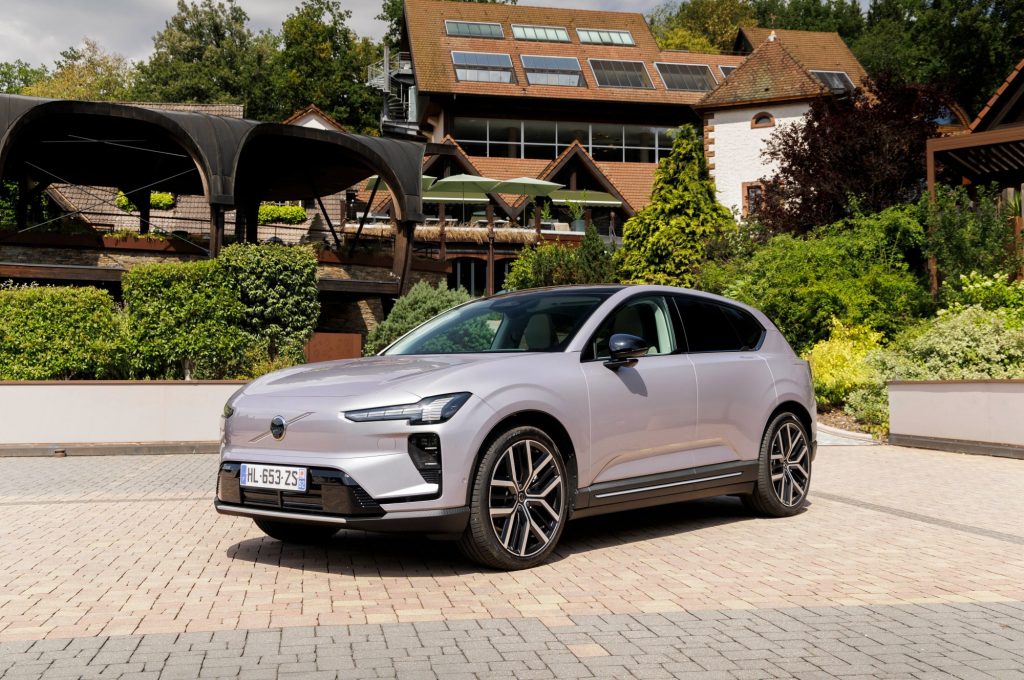
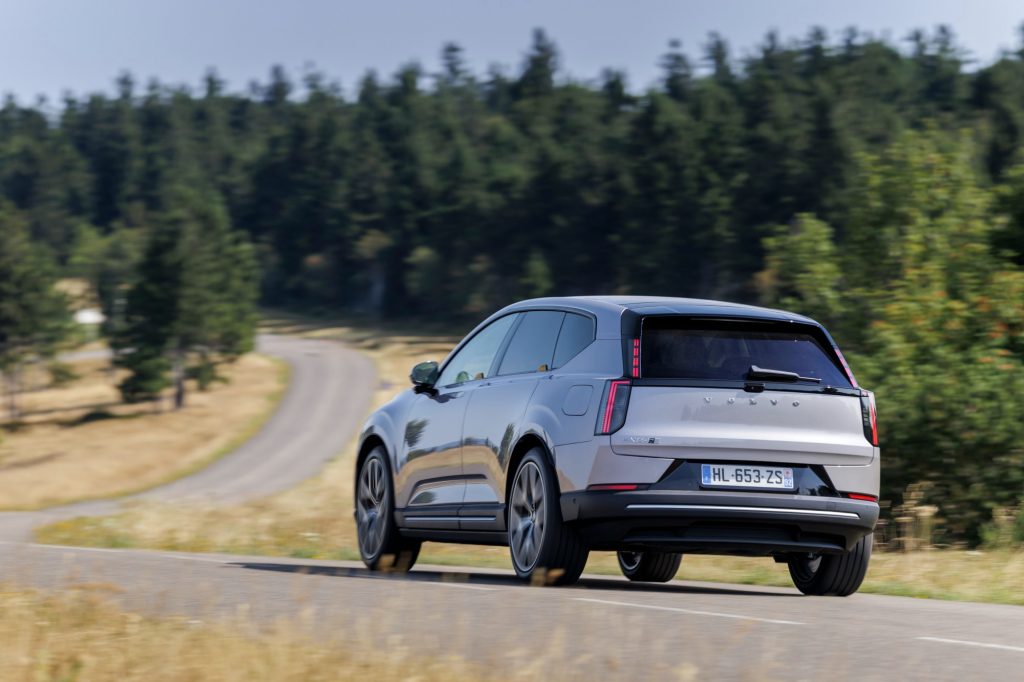
Depuis la reprise de Volvo Cars par le groupe chinois Geely, le constructeur suédois parvient à conserver son identité et tout son caractère, avec une culture automobile propre à la marque. Seulement voilà, son propriétaire semble disséminer de plus en plus ses technologies dans la plupart des modèles du groupe. Le nouveau Volvo EX60 perd-il de son âme scandinave ? Nous l’avons essayé sur les routes d’Alsace.
Le futur aujourd’hui
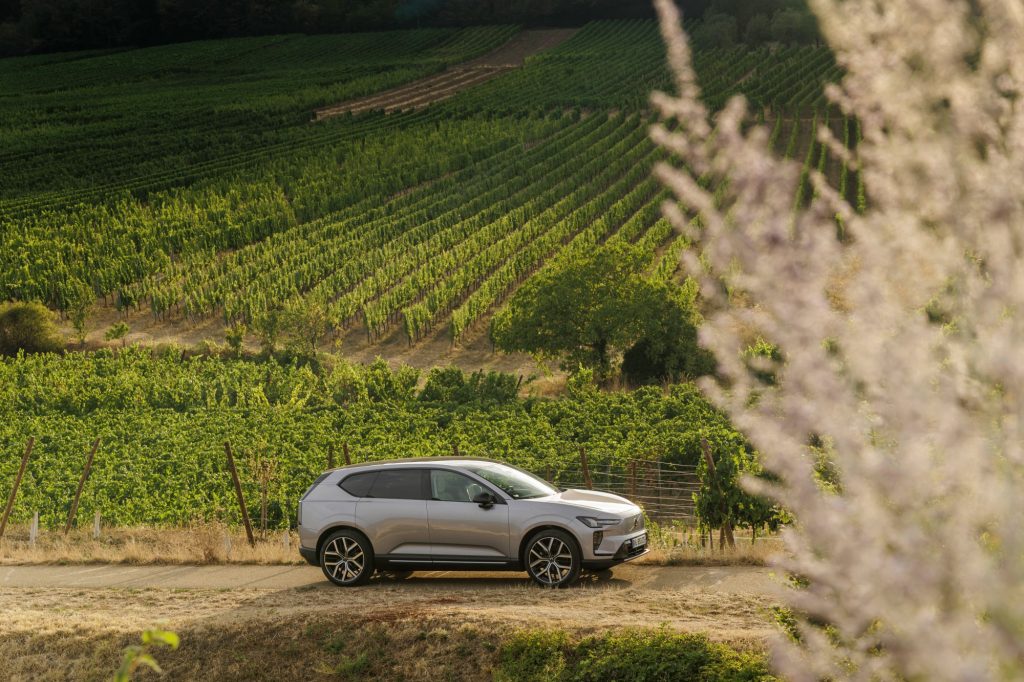
Avec son nouvel EX60, Volvo affronte des références de qualité en provenance d’outre-Rhin. Et ces dernières ont placé la barre très haut. Sur ce segment où les clients fortunés peuvent se permettre d’être particulièrement exigeants, le Suédois doit se démarquer, sans faire de compromis au regard des prix pratiqués sur le marché actuel. Cela commence par un design qui doit être statutaire, sans trop en faire. Sur ce point, la mission nous semble réussie. À Göteborg, on n’a pas renversé la table à coups de crayon. C’est dire à quel point les lignes des modèles précédents étaient avant-gardistes.
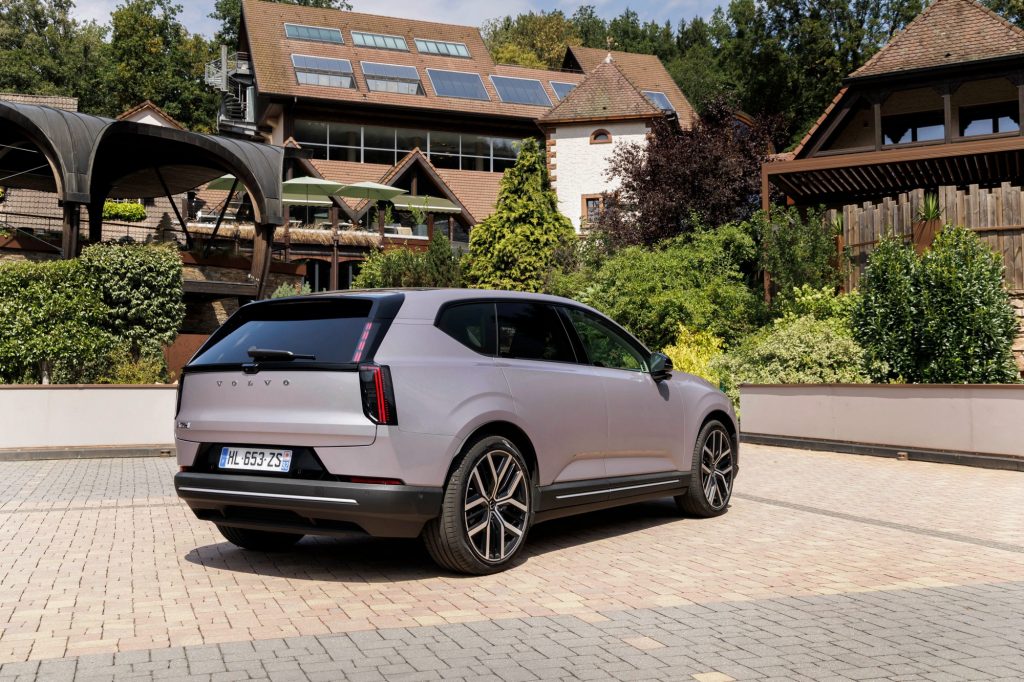
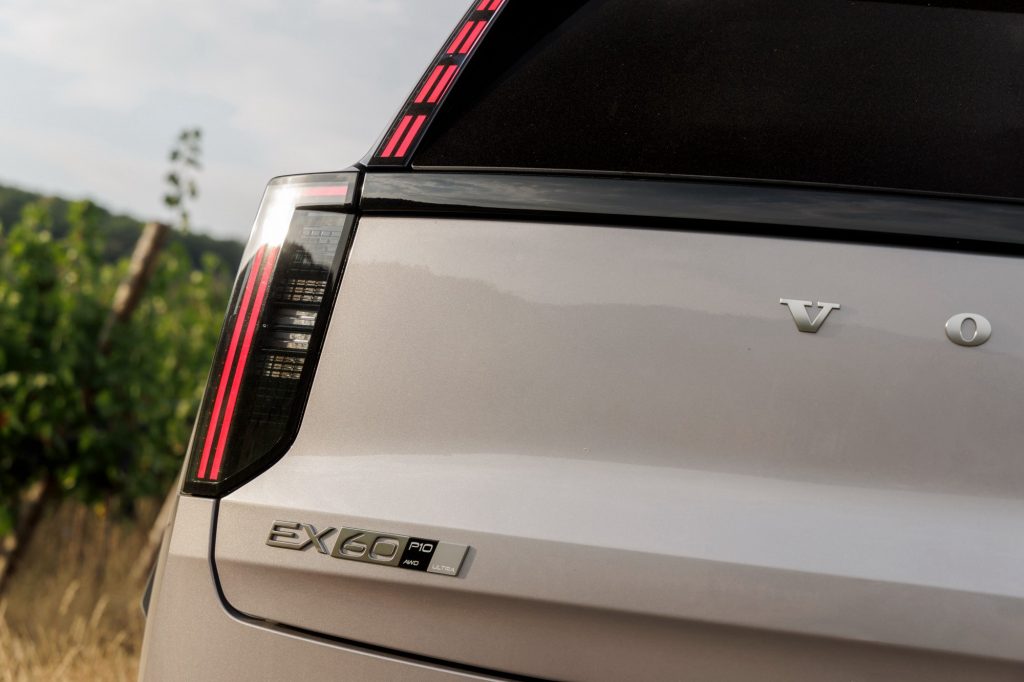
Son allure s’est largement modernisée, sans renier ce qui a été fait auparavant et qui était si apprécié. Les iconiques marteaux de Thor sont reconduits ici, aux extrémités d’une calandre fermée, littéralement barrée par les armoiries de la maison. Mais tous les détails nous apparaissent encore un peu plus futuristes, tandis que les lignes sont subtilement fluidifiées. Plus de poignées sur les portières, mais des mini-ailerons que l’on saisit du bout des doigts. Les roues de notre modèle d’essai sont énormes, avec un diamètre de 22 pouces. Si le XC60 fait très SUV, l’EX60 affiche une allure proche de celle d’un break légèrement surélevé, qui lui va à ravir. L’arrière a également été simplifié, avec une reprise en pointillés de la signature lumineuse verticale que l’on connaît tous.
Ambiance zen et technologique à bord
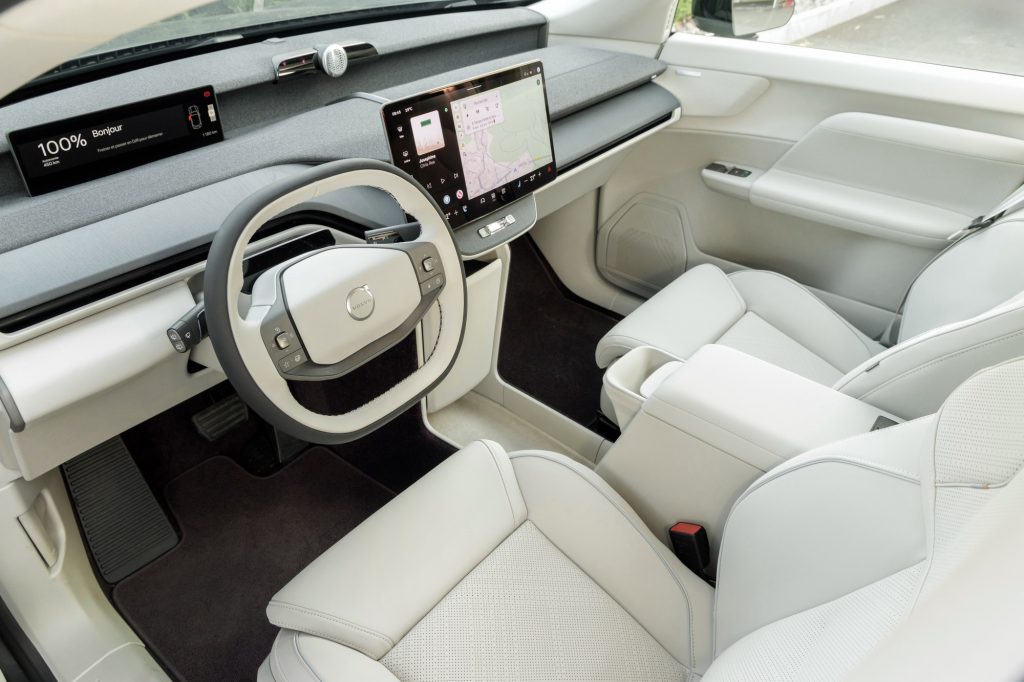
Après avoir été conquis par une telle élégance, quasiment à l’opposé des lignes proches de celles d’un délirant concept-car présenté par certains de ses premiers concurrents, nous attendions l’EX60 au tournant en pénétrant dans l’habitacle. D’abord, on remarque les vitres sans encadrement, une touche chic qui fait toujours son petit effet. Notre exemplaire aux couleurs claires renforce immédiatement le sentiment d’espace et contribue à créer un environnement plutôt chaleureux, mais surtout extrêmement zen. Derrière les lignes simples et horizontales de la planche de bord s’intègrent des matériaux doux au toucher et valorisants à l’œil, dans le plus pur style scandinave. On se retrouve assis sur des sièges en tissu, ce qui donne immédiatement le sentiment d’être dans une habitation plutôt que dans une voiture.
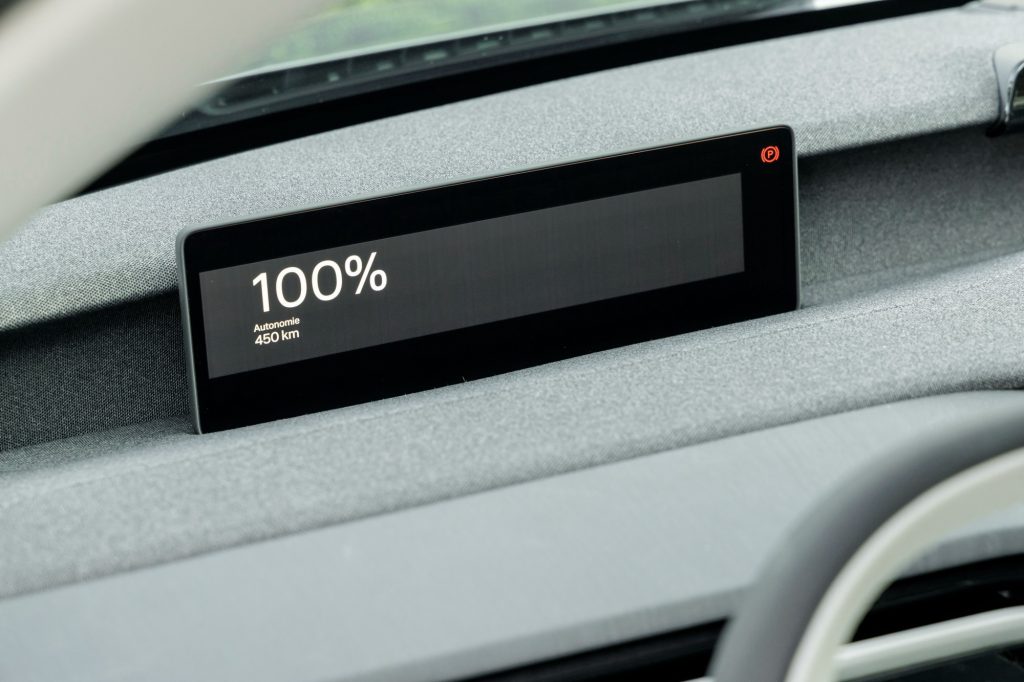
Volvo semble avoir ajouté un volant et une instrumentation uniquement parce qu’il le fallait dans cette agréable bulle de verre. Derrière le tout petit, mais non moins élégant volant, on trouve un écran très horizontal affichant l’essentiel des informations nécessaires, sans surcharger le champ de vision du conducteur. La très grande dalle tactile centrale en mode paysage, d’une diagonale de 15 pouces, semble pour sa part, tout droit héritée du propriétaire chinois de Volvo, comme sur les EX30 et EX90 avant elle. Nous y reviendrons, mais à quelques exceptions près, malheureusement pas toujours très logiques, tout se commande depuis cet écran. Pas de boîte à gants devant le passager, mais un tiroir profond et large, installé au milieu de la planche de bord. On se sent bien, quelle que soit sa place. Nous sommes littéralement tombés amoureux de ce bois teinté violet, assorti à la moquette et aux tapis. On manque cependant cruellement de poignées de maintien.
Le confort de la puissance
Avant de prendre la route, on jette un coup d’œil au coffre, dont la capacité atteint 523 litres, avec un faux plancher à ouverture 2/3-1/3. Un « frunk » de 52 litres permet tout juste de loger un câble, mais peut-être pas deux. Après avoir appairé notre téléphone à la voiture, malheureusement dépourvue de CarPlay, tandis qu’Android Auto ne sera disponible qu’au dernier trimestre, on constate qu’il n’y a toutefois pas de quoi s’inquiéter, le planificateur d’itinéraire est de qualité. En lançant notre musique dans l’excellent système Bowers & Wilkins, on boucle notre ceinture, qui, sachez-le, s’adapte à la morphologie de la personne, notamment en cas de grossesse, afin d’assurer une retenue plus adéquate en cas de choc. Peu de commandes physiques malheureusement, à l’exception des touches du volant, de la gestion de l’audio, et des vitres électriques. Devoir régler le volant et les rétroviseurs via l’écran reste une étape agaçante.
Ce nouveau Volvo EX60 repose sur une plateforme inédite du groupe Geely. Ce grand véhicule taillé pour avaler les kilomètres reçoit une batterie nickel-manganèse-cobalt de 95 kWh dans notre version P10. Bien entendu, vous vous en doutez, il pèse son poids, plus de 2,3 tonnes sur la balance. Avec ses deux moteurs, il développe 510 ch et un couple camionesque de 710 Nm. Dans notre canapé suédois, on peut s’enfoncer dans le siège lorsque l’on met le pied au plancher, comme en témoigne le 0 à 100 km/h réalisé en seulement 4,6 secondes. En réalité, nous avons finalement peu fait appel à toute cette puissance durant notre parcours, tant nous avons profité au maximum du confort de premier ordre. On relève bien quelques mouvements de caisse, mais on est loin du bateau ivre de certains SUV qui poussent trop loin le moelleux de l’amortissement.
Autonomie réelle prometteuse
Encore une fois, la quiétude à bord nous apparaît comme la principale qualité de ce nouvel EX60, en accord avec une conduite très douce, sans rogner, comme nous l’avons dit, sur les performances. La voiture se tient étonnamment bien en courbe, avec même un sentiment d’agilité auquel nous ne nous attendions absolument pas. Nous devons probablement cela au volant de petit diamètre, à la suspension pilotée et aux gommes très performantes, des Pirelli Scorpion marqués « VOL », développés pour ce modèle. Avec des jantes aussi grandes (22 pouces) et des pneus aussi fins, le travail de réglage des suspensions nous apparaît encore plus remarquable.
Le silence particulièrement soigné, meilleur que chez nombre de ses concurrents, est dû, au-delà d’un vitrage feuilleté de grande qualité, à un système de réduction active du bruit. Notre version P10, la version intermédiaire, nous a gratifiés d’une consommation comprise entre 15 et 16 kWh/100 km, avec une courte portion d’autoroute. En nous contentant du réseau secondaire, nous pourrions sans doute rallier Paris à Strasbourg d’une seule traite, si l’on en croit le chiffre de 610 km selon le cycle WLTP. Évidemment, l’autonomie baisserait probablement autour de 400 km en privilégiant l’A4. Mais il faudra refaire le trajet pour nous assurer d’une endurance qui nous semble, à première vue, compatible avec les longues liaisons. Contrairement à l’EX90 à son lancement, notre EX60 bénéficie d’une architecture 800 V qui, en théorie, assure une recharge de 10 à 80% en tout juste un quart d’heure. À cette vitesse de recharge, la pause pipi commence à devenir très courte. En courant alternatif, le chargeur embarqué permet de profiter d’une puissance de 22 kW.
Son atout: la discrétion
Le Volvo EX60 arrive juste à temps pour faire hésiter ceux qui considèrent les BMW iX3 et Mercedes GLC comme des choix évidents sur le segment des SUV premium taillés pour le voyage. S’il n’en met pas plein les yeux avec quatre écrans à bord et des technologies du XXIIe siècle, sachez que ces dernières sont bel et bien présentes, assurant notamment une conduite autonome de niveau 2. Cette fonctionnalité fait d’ailleurs partie des rares options présentes sur notre exemplaire en finition haut de gamme Ultra. Le Volvo EX60 se distingue par son confort remarquable, l’ambiance à bord la plus agréable de son segment et des performances qui le placent immédiatement face à ses rivaux. Et il faut bien l’admettre, il le fait aussi avec davantage de discrétion. La douloureuse ? La gamme démarre à 66 500 € pour la version P6 équipée de la plus petite batterie. Notre version intermédiaire P10, en finition haut de gamme Ultra et dotée de ses options, réclame 81 325 €. La voiture est assemblée en Suède, sur le site Volvo de Torslanda.
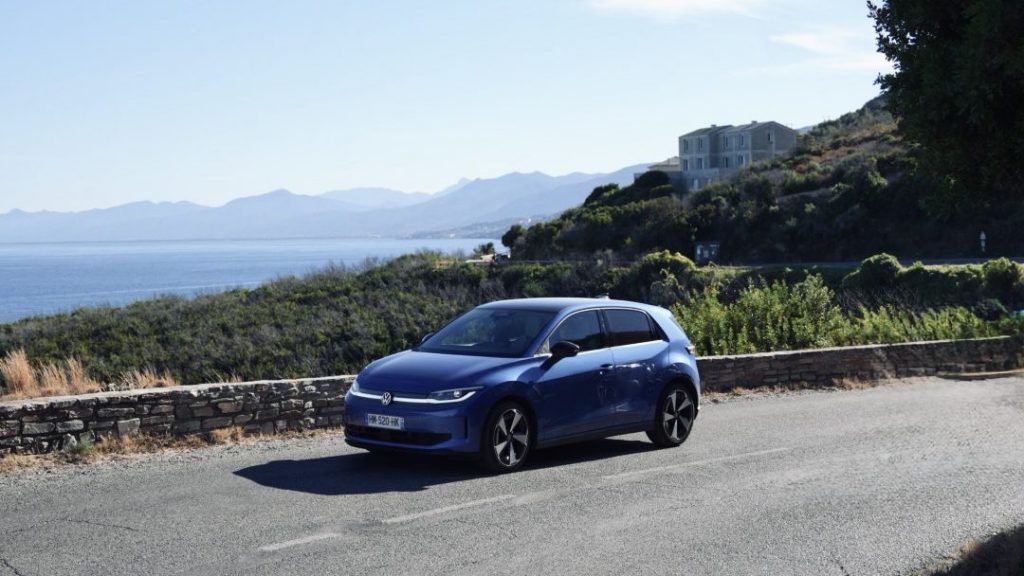
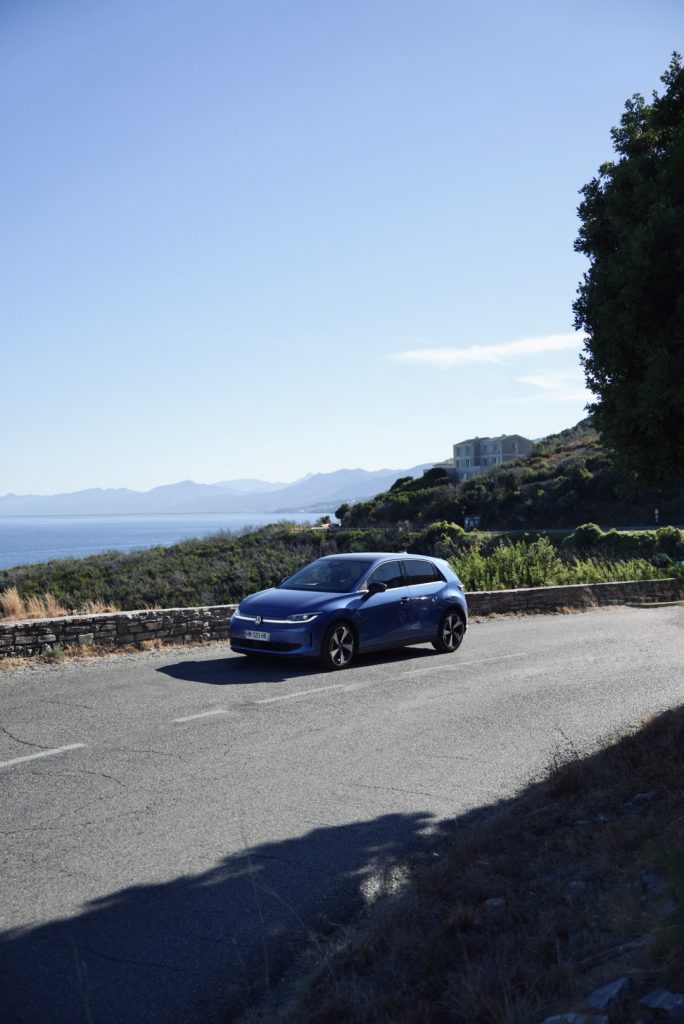
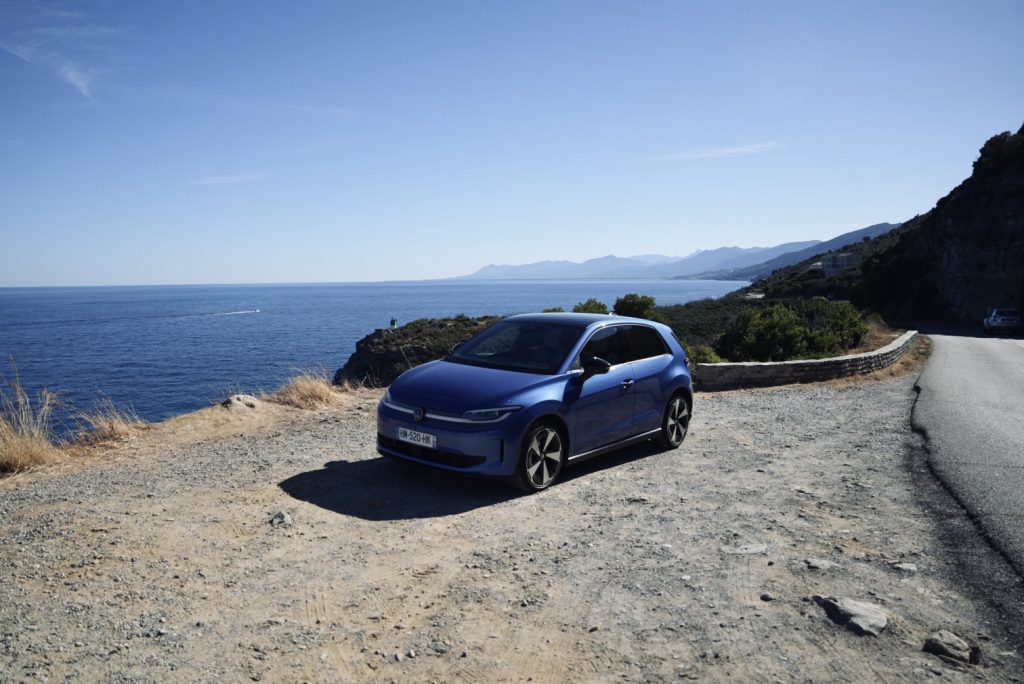
Volkswagen a lancé la version électrique de la Polo et nous avons eu l’occasion de tester l’ID. Polo dans des conditions que cette citadine ne connaîtra sûrement pas tous les jours.
Une petite citadine électrique qui suit les traces de sa cousine thermique
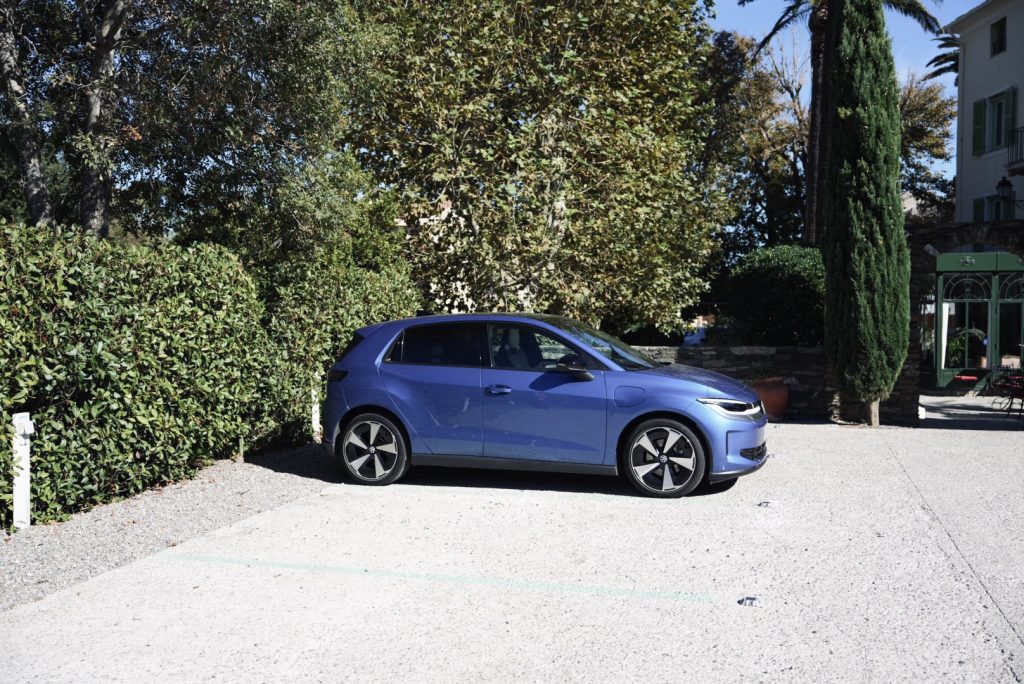
En termes de design, contrairement aux autres modèles de la gamme ID., comme les ID.3 Neo et ID.4, l’ID. Polo conserve les codes de la Polo que l’on connaît bien.
C’est une voiture électrique, certes, mais dont le design extérieur ne le met pas en avant plus que de raison. La Polo a plus de 50 ans d’histoire, et cette héritière en conserve les codes stylistiques.
L’intérieur est simple, mais ergonomique. En effet, on y retrouve enfin des boutons physiques sur la console centrale ainsi que sur le volant. Ces dernières années, les constructeurs avaient fait disparaître ces commandes physiques. Aujourd’hui, nous revenons un peu en arrière, pour notre plus grand plaisir.
Les écrans toujours plus grands et l’évolution de la technologie rendent la conduite et l’expérience à bord plus confortables, à condition de savoir intégrer ces équipements avec parcimonie. C’est le cas dans cette ID. Polo, qui dispose tout de même d’un écran de 10,25 pouces face au conducteur et d’un écran central de 13 pouces.
L’équipement se montre intéressant dès la finition Life, qui constitue le deuxième niveau de finition. Elle comprend notamment le régulateur de vitesse adaptatif ACC et une caméra de recul. Des équipements pratiques au quotidien, qui facilitent aussi bien les trajets urbains que les manœuvres. De quoi disposer d’un équipement déjà bien fourni sans nécessairement multiplier les options.
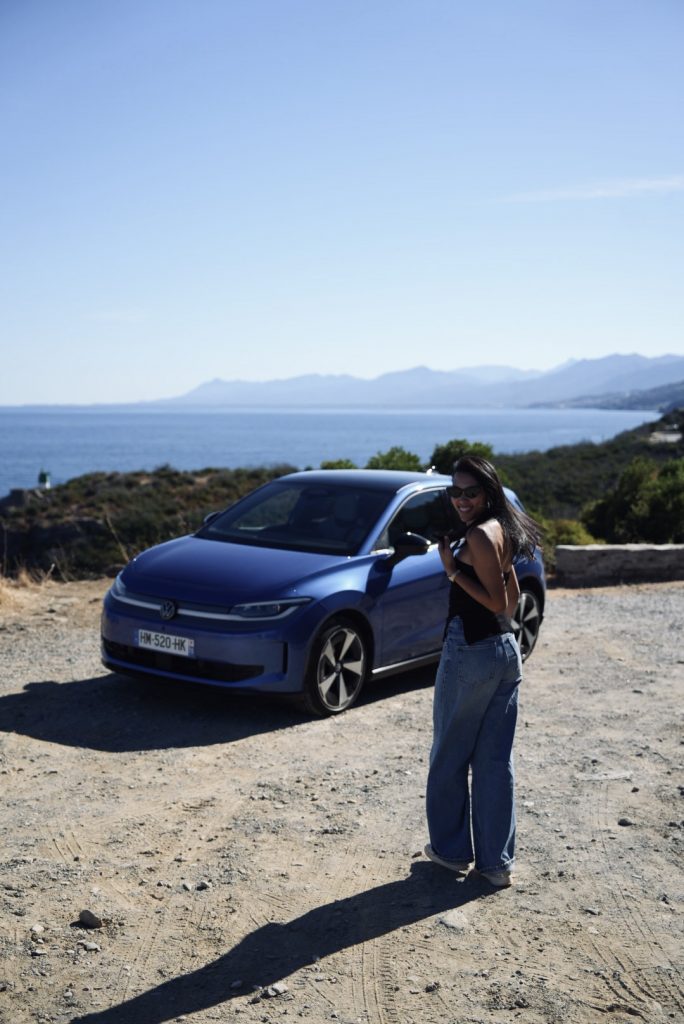
Notre voyage a débuté à Propriano, sur le littoral corse, dans un environnement urbain où cette petite voiture est parfaitement à l’aise. Avec ses 4,05 m de longueur et 1,82 m de largeur, elle mesure environ 2 cm de moins en longueur que la Polo thermique.
De Propriano à Bastia, 200 km au volant de l’ID. Polo
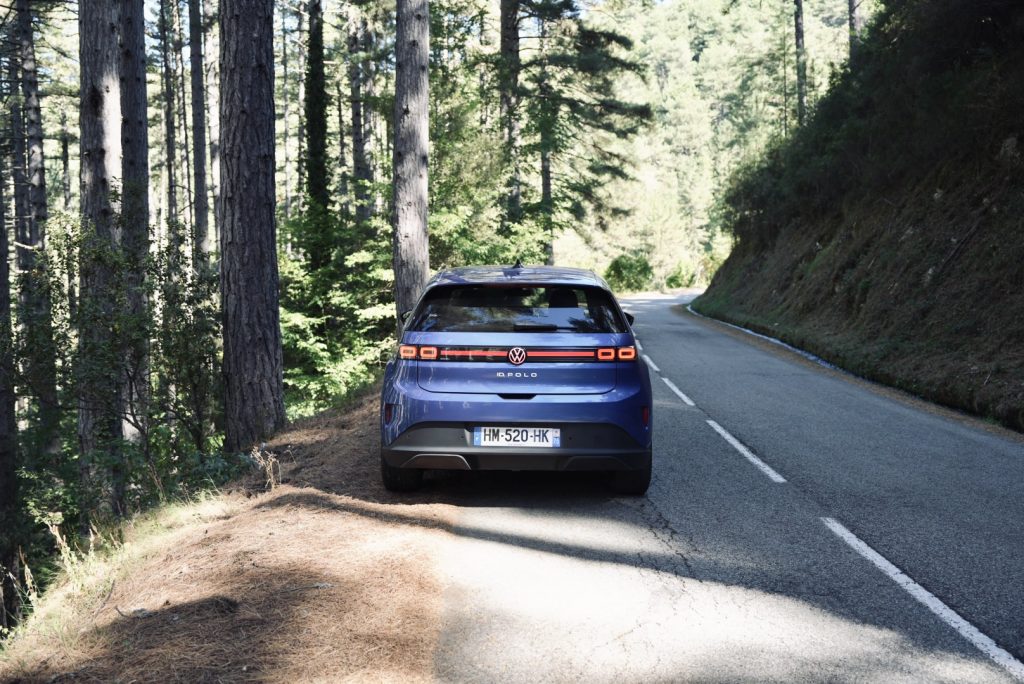
Volkswagen nous a proposé de ramener une ID. Polo sur le continent après l’essai et d’en faire une vidéo sur notre chaine YouTube Two Seats Only. Nous sommes donc partis pour quatre heures de route et 203 km, et très vite, le paysage corse a changé. La mer s’est éloignée pour laisser place aux routes de montagne sinueuses et peu fréquentées.
En tant que passager, ce genre de route peut vite devenir inconfortable, encore plus en voiture électrique. Mais, aussi bien en tant que passagers qu’en tant que conducteurs, l’ID. Polo nous a permis de profiter de ce voyage qui semblait ne pas lui être adapté.
Autour de nous, les rares voitures que nous avons pu croiser étaient plutôt des utilitaires ou des 4×4 tout-terrain. Mais, au prix actuel des carburants, finalement, cette voiture électrique s’est avérée être un bon choix.
Les routes de montagne riment avec vitesse moyenne basse et dénivelé. En électrique, chaque descente ou freinage est l’occasion de recharger la batterie. Quand le freinage régénératif n’est pas réglable, cela peut être inconfortable. Mais Volkswagen n’en est pas à sa première voiture électrique et les réglages disponibles nous ont permis de ne pas subir ce freinage, mais d’en profiter.
Après cinq heures sur les routes, dont plusieurs arrêts pour admirer l’île, nous sommes arrivés à Bastia sans avoir à nous inquiéter de l’autonomie et avec une consommation moyenne de 11 kWh/100 km.
L’ID. Polo existe en trois motorisations : 116 ch, 135 ch et la nôtre, la version de 211 ch. L’autonomie annoncée pour la version que l’on a essayé est de 453 km (cycle WLTP) pour une batterie de 52 kWh (l’autre batterie disponible fait 37kWh).
Sur le marché des citadines électriques, l’ID. Polo fait notamment face à la Renault 5 E-Tech electric et à la Peugeot E-208. Avec une autonomie annoncée pouvant atteindre 453 km (sur la version essayée) et un coffre de 441 litres, elle dispose d’arguments intéressants pour celles et ceux qui recherchent une voiture électrique polyvalente, capable de dépasser les simples trajets urbains. Son gabarit compact, son autonomie et son espace de chargement en font une alternative intéressante pour un usage quotidien, mais aussi pour des trajets plus longs, comme notre itinéraire à travers la Corse.
Le lendemain, nous avons repris la route, mais sans consommer cette fois-ci, car nous avons rejoint le port de Bastia pour embarquer avec l’ID. Polo sur le ferry, direction le continent.
Ceux qui ont déjà vécu l’expérience le savent : nous étions contents d’avoir une petite voiture maniable pour nous faufiler dans le ferry et nous garer. Chaque centimètre compte en fin d’été.
Côté espace intérieur, nous n’avons pourtant pas du tout exploité ce que cette voiture propose, avec son coffre de 441 litres.
Après sept longues heures de traversée, moi qui roule au quotidien en boîte manuelle à six vitesses, j’ai finalement apprécié le silence de la voiture électrique et le confort de la boîte automatique, notamment dans les bouchons du port de Nice, créés par l’arrivée du navire.
Finalement, cette ID. Polo s’est montrée une partenaire de voyage polyvalente, très discrète et agréable, avec une autonomie assez importante pour ne pas être une contrainte.
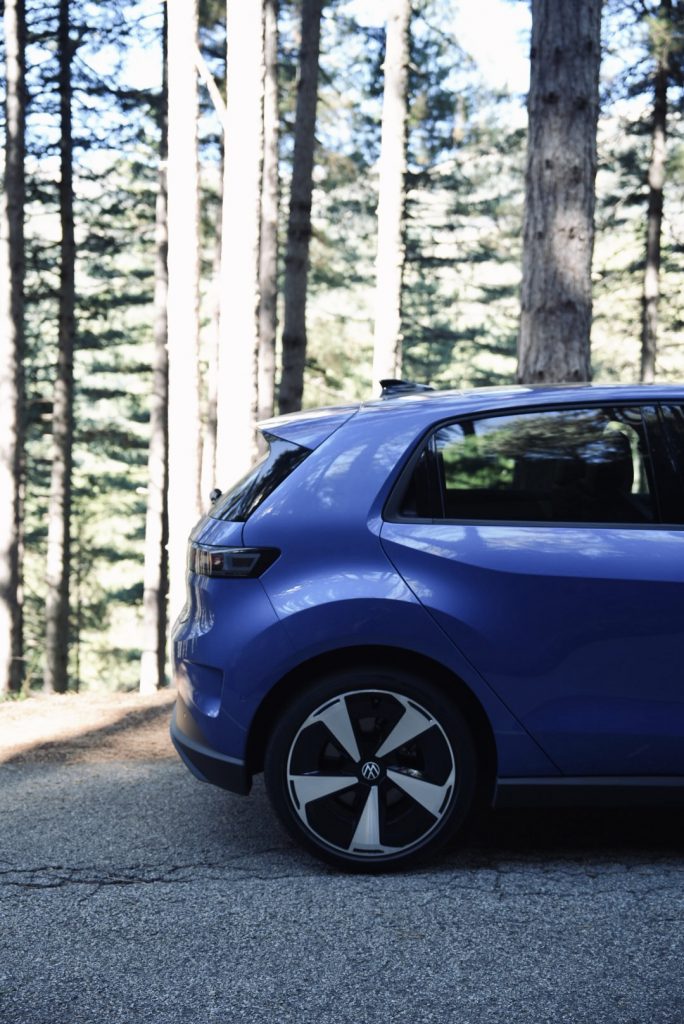
Notre version était équipée de jantes bicolores de 19 pouces, qui nous ont offert une bonne tenue de route sur les routes sinueuses, mais que je ne recommande pas forcément sur ce modèle, car, pour moi, elles ne sont pas nécessaires compte tenu de l’usage que j’en attends.
Cela dit, une version GTI a été présentée et, sur celle-ci, je comprends la démarche. L’ID. Polo GTI aurait tout à fait pu convenir pour ce voyage. Qui sait, peut-être à une autre occasion pour transformer ce voyage calme en quelque chose de plus sportif !
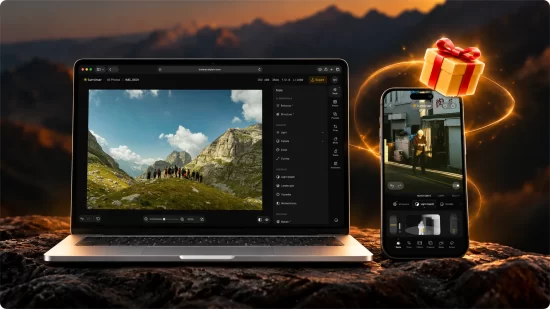
Here are the latest updates and offers from Topaz, DxO, Luminar, and Aftershoot:
You can now get 50% off Topaz Studio & Topaz Photo (50% off the first three months of a monthly or annual plan, or 50% off an annual plan paid up front):
Month-to-month: Topaz Studio $69 $34.50/mo | Topaz Photo $39 $19.50/mo
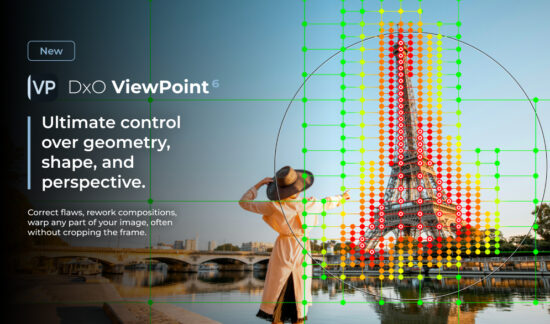
DxO released ViewPoint 6 and PhotoLab 10.2. The new version of ViewPoint introduces AI to help correct perspectives in specific areas of an image – here are the main new features:
AI Masks in ReShape Fusion: Precisely reshape individual objects or people with AI-assisted selection and adaptive mesh controls, without affecting the entire image.
Perspective correction without cropping: Make localized geometric adjustments while preserving the original framing, without generating or inventing image content.
Native RAW editing: Open and edit RAW files directly in the standalone application, without pre-conversion.
New exposure and white balance controls: Adjust exposure (±4 EV) and white balance before applying geometric corrections.
Non-destructive workflow: Edits are saved in separate sidecar files, preserving the original images.
Google is beginning to replace traditional support articles with "Ask Google Help," a Gemini-powered interface that summarizes documentation and lets users troubleshoot through a chatbot. 9to5Google reports: "Ask Google Help" will display a condensed version of the support article with direct troubleshooting steps, with the user then able to type in queries to have Gemini help figure out the next step forward. A "View Sources" button at the bottom of the AI response allows users to still access the original article, but direct links to any of these articles now defaults to the AI experience.
An example can be seen below on the "Secure a hacked or compromised Google account" page that Google's own support account directed users to within the past few days. It can also be seen on the "Fix common issues with 2-Step Verification" page and, as far as we can tell, any support pages on the Google Account Help forum.
Google, as of right now, appears to only be testing this on select support topics. The Google Pixel Help section, for instance, still defaults to articles, whereas the Google Chrome topic has also moved to the new experience. Beyond support pages alone, this new design also impacts the central hub, with links to topics no longer showing by default in exchange for an AI chatbot that helps you find the relevant page.
The Trump administration has banned DeepSeek AI from most US civilian federal agencies, ordering the removal of the Chinese company's models and technology developed using them. The Department of Homeland Security did not specify the security threats behind the decision. The BBC reports: The order (PDF) is broad, as it requires agencies to ditch "all DeepSeek and DeepSeek-affiliate products, and third-party products and services developed using DeepSeek implementations." Complying will be tricky as it is not clear which third-party products and services have been developed using DeepSeek's wares. Nor is it clear whether "developed using" means providing ongoing access to DeepSeek models via API or simply refers to any app vibe-coded with the help of DeepSeek.
It also leaves open the question of AI gateways. Services such as OpenRouter and Vercel AI Gateway make DeepSeek's models available through APIs. And those using gateway services may find themselves using DeepSeek models without meaning to do so. OpenRouter, for example, "routes requests to the best available providers for your model." It selects what the service deems to be the best fit provider of AI services. Vercel AI Gateway does the same by default. So federal civilian agencies could be using DeepSeek models inadvertently, if they haven't taken steps to constrain their AI providers.

 Connexion